Tag: Michelle Fairley

Small Things Like These (2024)

Small Things Like These (2024)

Profoundly sad film of the impact of small acts, with a soul-searching lead performance

Director: Tim Mielants

Cast: Cillian Murphy (Bill Furlong), Eileen Walsh (Eileen Furlong), Michelle Fairley (Mrs Wilson), Emily Watson (Sister Mary), Clare Dunne (Sister Carmel), Helen Behan (Mrs Kehoe), Zara Devlin (Sarah), Mark McKenna (Ned), Agnes O’Casey (Sarah Furlong)

Sometimes the only hope for change, is that the balance of small acts of kindness outweighs the mass of indifference and blind-eye-turning. Claire Keegan’s acclaimed novella is about exactly such a moment. In the small town of New Ross, Wexford, just before Christmas in 1985, coal merchant Bill Furlong (Cillian Murphy) works hard to provide for his family and look out for those around him. Bill is struggling with insomnia, haunted by memories of his mother’s (Agnes O’Casey) death when he was a boy. One day he witnesses something unsettling at the local convent: a young woman (Zara Devlin) begging not to be left there. A few days later he arrives at dawn to find her locked in the coal shed. The Mother Superior (Emily Watson) assures him it is nothing to worry about and sends him on his way with a giant tip. But Bill can feel in his bones something is not right.

Small Things Like These is a sombre investigation of how an appalling scandal like the Magdalene Laundries could continue for years. The convent’s influence touches every inch of the town. Social life revolves around the Church and even organise the town’s Christmas lights. They run the school – with the Mother Superior heavily implying Bill’s actions will have a profound impact on his children’s educational prospects – and they are treated with awed deference from everyone. You slowly realise many people know things are not right at the Convent – but no one wants to rock the boat (Bill’s wife even begs him not to and the pub landlady warns him to put his own family first).

In a world like this, bad things flourish because people don’t want to put themselves and their loved ones at risk. People must hear the wailing of babies from the convent and decide to keep walking. It’s not just the convent: New Ross is full of people looking the other way to poverty and misfortune. Bill quietly does his best to help people – a generous Christmas bonus for his workers, a handful of whatever change he has to a young boy walking home alone – but even he can only look on in slack-jawed sorrow when he sees a shoeless child in the middle of the night drinking from a cat’s bowl.

Mielant’s film brilliantly captures not only the drab, gloomy atmosphere of this poor Irish town – every shot is soaking in shades of grey, brown and coal dust black – but also the grim sense of things constantly being watched passively from a distance. The film is awash of shots that frame events through doorways or at a distance, be it from across the street or in mirrors or reflections. Small Things Like These is an oppressive, claustrophobic film, largely taking place in dusk or night-time darkness, where things go unspoken and unconfronted.

The burden of inaction has had a huge impact on Bill, in a mesmerising performance by Cillian Murphy. Quiet, awkward and shy, Murphy makes Bill weighed down by an impossible burden of sadness. Large chunks of the film simply allow us to study Murphy’s face, and few actors can convey inner turmoil as beautifully as Murphy can. You feel there is a poet’s soul buried in Bill, in Murphy’s eyes haunted with an impossible melancholia: Murphy brilliantly embodies a quiet, decent man who knows the world isn’t right but is deeply torn about what he can do about it, while haunted by his own lingering childhood pain at witnessing his mother’s death and never knowing his father.

It’s interesting that this past is one of the most brightly filmed parts of Small Things Like These. Bill’s natural empathy towards the young woman he encounters at the convent – and his desire to care and provide for his own family – is rooted in his own past. Growing up without a father, the child of the maid of a wealthy family, we realise it is only due to an act of decency that Bill’s life developed as it did. As a single, unmarried woman, his mother could easily have ended up in the Magdalene Laundries herself, with Bill taken at birth to be fostered by strangers. It’s only the kindness of her employer (a tender Michelle Fairley) that saved him – though Bill still grew up bullied and mocked for his illegitimacy.

Perhaps Bill realises more the lucky escape he had, when confronted by Emily Watson’s chillingly authoritarian (under a mask of genial indulgence) Mother Superior. What would his life have been like if his mother had been crushed by someone like this fierce woman, resolute in her self-righteousness? Bill’s shame and guilt is superbly conveyed by Murphy as he leaves with a previously disputed bill settled in full (and then some) and a promise of future favours to come. The message is clear: this is how the world works and Bill should get with the programme.

That’s how wicked deeds flourish among decent people. Small Things Like These may spin an old-fashioned Edmund-Burke-inspired line, but it’s hard not to argue with its honesty, conviction and the air of impossible sadness that drips from every frame of it. At points it’s decision to leave so much unspoken does create more ambiguity than I think it intends. In particular, the music choices for some flashbacks imply shocking revelations that never arrive. Which are in fact utterly counter to the film’s eventual, slightly open-ended, reveal of Bill’s past (contrary to the more explicit book) but this a refreshingly quiet, thoughtful and meditative film (with a brilliant, grief-stricken lead performance) – that in its gentle way carries real emotional force but leaves you feeling hopeful.

The Invisible Woman (2013)

Ralph Fiennes and Felicity Jones excel in the thoughtful and well handled The Invisible Woman

Director: Ralph Fiennes

Cast: Ralph Fiennes (Charles Dickens), Felicity Jones (Nelly Ternan), Kristin Scott Thomas (Mrs Ternan), Tom Hollander (Wilkie Collins), Joanna Scanlan (Catherine Dickens), Michelle Fairley (Caroline Graves), Tom Burke (George Wharton Robinson), Perdita Weeks (Maria Ternan), John Kavanagh (Reverend Benham), Amanda Hale (Fanny Ternan)

In 1865 Charles Dickens was involved in a train accident. While he worked tirelessly, tending to those caught up in the accident, he was also extremely careful to hide the fact he was travelling with a young actress called Nelly Ternan. Ms Ternan was his lover, had been for several years, and the couple were returning from Paris. Dickens managed to avoid the inquest and preserve the secret of his affair. Because, while he was happy to publicly announce his separation from his wife, the idea of the public hearing that he had an affair with someone 27 years younger than him was unthinkable.

The affair is deduced from careful deduction and the small remaining correspondence (both parties destroyed large numbers of letters) by the biographer Claire Tomlin. Her book forms the basis of Fiennes’ thoughtful, careful and intelligent film, with the director playing Dickens and Felicity Jones as Nelly Ternan. The Invisible Woman is restrained and unjudgmental film-making, that largely avoids obvious moral calls and weaves a beautifully constructed tale of two people who make themselves both happy and miserable.

And that misery is partly due to the times they live in. It’s an era of Victorian morals, where all that matters is the surface appearance and any real emotions underneath can go hang. But it’s also a world where very different rules apply to men and women. Dickens can leave his wife (in a press announcement) – but of course a woman could never do the same. It’s a world of strictly defined rules, with clear roles for both genders that cannot be deviated from. And it forces Nelly Ternan to travel to Paris, because the public shame that would come with her pregnancy by Dickens would destroy her. It’s why, years after Dicken’s death, she is lying about how well she knew the man (even changing her name and age to further distance herself) so that she can conform with the expectations of being a school-master’s wife (and ensure she will not be thrown out to the streets).

The rules are so strong that both Dickens and Ternan are as much in thrall to them as anyone else. Dickens is willing to bend the rules – but only so far. He would clearly never dream of living openly with his unmarried partner and their child as his friend Wilkie Collins (a perfectly cast Tom Hollander) would do. And Nelly Ternan is as outraged at this liaison – and as desperately uncomfortable in their home – as any prim housewife would be. In fact, in many ways, Nelly is even more conservative than Dickens.

But then she has to be. After all, he would be a rogue, she would be a whore. Choices aren’t great for women – and in her chosen career of actress, Nelly is clearly far more enthusiastic than she is talented. It’s worries about the career that leads to her mother – an excellent performance of motherly love mixed with a quiet understanding of the world from Kristin Scott Thomas – all but encouraging Dickens to seduce her daughter. Because, for an independently minded woman passionate about the art, if you can’t be an actress your other option is to be a muse.

Even Dickens seems quietly ashamed at his seduction of this woman, while she half-persuades herself it isn’t happening until it is. So, what draws them together? Refreshingly this isn’t a question of an older man excited by a younger woman – or a naïve woman swept up by a powerful man. Instead, these are kindred spirits. Both of them are passionate, intelligent and questioning. They both express an emotional honesty and openness. They have shared passions for literature, theatre and stories. It’s a romance that slowly blossoms and is based on a shared feeling. It would have been easier to tell a story of seduction and abuse – but this is a more intelligent film than that. At that fatal train accident, its Dickens who yearns to stay with Nelly and its Nelly that urges him to leave to preserve his secrets.

As these two, we have two actors with beautiful chemistry. Felicity Jones is inspired as Nelly Ternan. She both idolises Dickens, but is also drawn towards him on a very human level. She is astute, but conservative and at times even remote. Her older self, over a decade later, is both prickly and defensive – and those are qualities you can trace in her younger self, and not just because of her fear of disgrace. It’s a beautifully judged performance, both older than her time and also with a vibrancy and energy that entrances.

Fiennes, a more reserved actor, seems like an odd choice for the bon vivant Dickens – but he brilliantly excels in the role, full of energy and room-filling dominance. He marvellously conveys the charm and passion of Dickens, but also his thoughtlessness. This is after all a man who drops his wife by newspaper announcement and builds a barrier between their bedrooms. Who loves Nelly, but not enough to make her anything but a secret. Who is passionate and excited about his work, but can be turn distant and cool in his personal life. It’s a fabulous performance.

And the two leads are centred in a low-key, poetic film. You get the sense that there is a danger in getting to close to genius. Dicken’s wife Catherine – a beautifully sad and lonely performance from Joanna Scanlan – even warns Nelly about it (while delivering a gift from her husband, sent to her by mistake). It’s a danger that shapes Nelly’s whole life – but also her life is enriched by having Dickens in it. It’s a film that avoids obvious moral judgments – and while there are things done which cause pain, everyone is living in an imperfect society. Fiennes direction and use of visual language is wonderful and this is an impressive film.

Philomena (2013)

Judi Dench and Steve Coogan go on a road trip into the past in Philomena

Director: Stephen Frears

Cast: Judi Dench (Philomena Lee), Steve Coogan (Martin Sixsmith), Michelle Fairley (Sally Mitchell), Barbara Jefford (Sister Hildegarde), Anna Maxwell Martin (Jane), Mare Winningham (Mare), Sophie Kennedy Clarke (Young Philomena), Kate Fleetwood (Young Sister Hildegarde), Sean Mahon (Michael Hess), Peter Hermann (Pete Olsen)

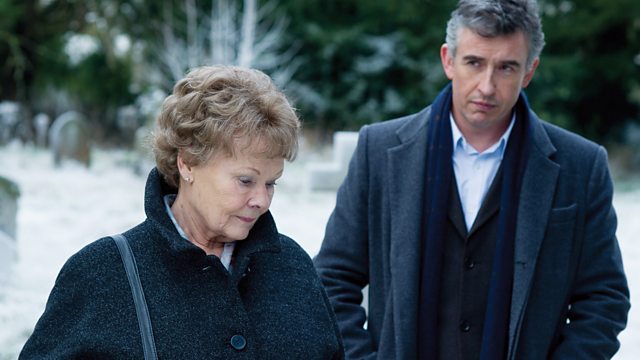
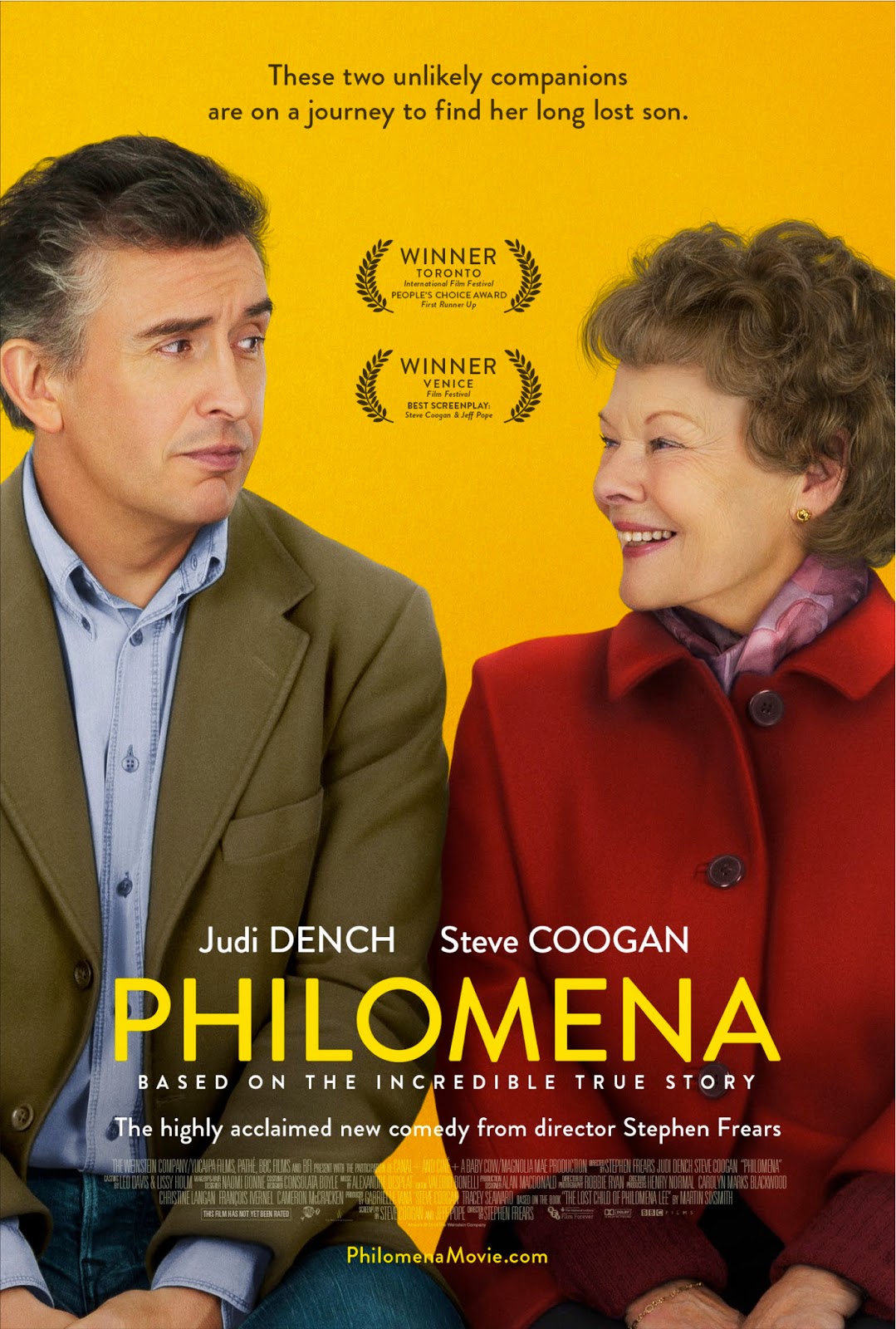
Describing Philomena as a sort of odd-couple buddy road movie with a heart seems like exactly the sort of trite journalistic spin that Coogan’s Martin Sixsmith spends most of the film deriding. But it’s a pretty accurate label, in this heartfelt and entertaining film that mixes looking at Irish church scandals, with both the shallowness and promise of journalism and a heartfelt meditation on the virtues of forgiveness.

Martin Sixsmith (Steve Coogan), a former government spin doctor, dismissed from his position is struggling to find a new purpose for himself in writing and journalism. After a chance meeting with waitress Jane (Anna Maxwell Martin) at his editor’s New Year party, he is introduced to her mother Philomena Lee (Judi Dench) an Irish woman whose son was given up for adoption by the convent Philomena had been sent to over 50 years ago. She has spent years trying to find him, but made no progress. At first Sixsmith is dismissive of this human interest story, but slowly begins to invest in the story, as he and Philomena travel to the US to try and find her lost son.

Philomena is a film that doesn’t pull punches in its moral outrage at the decisions made by convents in Ireland in the 1950s to separate ‘sinful’ mothers from their children and find them new homes. The distress of the young Philomena is clear, and the steps the church took to put barriers in the path of helping these children and their parents reuniting (from burning records to bare-faced lies) are as infuriating as their moral superiority is outrageous in its hypocritical cruelty. But it’s not a film that wants to make a simple or political point. 

If the film has a problem with religion, it’s with the institutions that run it, not the faith itself. For all her ill-treatment, Philomena’s faith has been unshaken by all that has happened to her, and she like the film can separate the flaws of individuals from the principle of faith. The film may take aim at the Catholic church for making people feel sex is something dirty and shameful, but it won’t turn its guns on God himself. Near the film’s conclusion, Philomena even rebukes Martin for his rage (on her behalf) against the nuns who treated her wrongly, pointing out that she is the victim not him and that how she chooses to respond to it is her business – and if she chooses reconciliation and forgiveness that is her choice.

It’s a part of the films light and shade, very well drawn out in Steve Coogan and Jeff Pope’s script that mixes serious reflections on such matters as truth, faith and forgiveness with some good jokes and entertaining banter. The film deviates considerably from the true story it was based on – Philomena in real life never went to America – but in doing so it unlocks the story as a filmic narrative. The odd mother-son type relationship that the distant and cynical Sixsmith and the warm and engaging Philomena develop as they travel America gives the film heart, not least as Philomena constantly surprises Sixsmith with her worldliness and socially moderate views. The two characters end up bonding in a way that is straight out of a Movie-101 but it stills very real and touching.

A lot of that works so well because of the chemistry between the two leads. Judi Dench is just about perfect as Philomena. Dench expertly mixes the twinkle and charm of Philomena’s incessant Irish patter and capacity for small-talk (and fascination with everything from Mills and Boon to hotel toiletry) with a devastating emotional vulnerability and aching pain at the loss of her child, which has clearly been part of her life for so long she has learned to a certain degree to live with it. In one of her greatest screen performances, Dench will have you laughing one minute then spin on a sixpence with genuine emotional devastation or a capacity for forgiveness and reconciliation that seems impossible after what she has been through. The film builds real affection for both her old-world politeness charm and Irish loquaciousness and her emotional strength of character.

She’s well matched with Coogan, who uses his deadpan archness to excellent effect as Sixsmith. Although the film is called Philomena, it’s Sixsmith who represents the audience, and it’s his expectation of being emotionally manipulated by the story that we share at the start – and his growing investment in it that we also share. Coogan keeps the details very small, but along with a skill at delivering deadpan one-lines, he also has a considerable capacity for moral outrage and genuineness (well hidden) that serves the film very well. Sixsmith starts the story as self-pitying, supercilious and interested only in selling the story – the fact he ends it so bound up in rage at the treatment of Philomena, is a testament to Coogan’s skills for subtle character development.

Frears’ directs with a small-scale sharpness of camera and lack of flash that has been at the foreground of so many of his films, letting the focus lie on story and character. The road movie sequences that this film highlights so much are little triumphs of small-scale character story-telling, and while the jokes they feature – and even the emotional points they make – are familiar they are delivered with such grace and feeling they nearly all land.

Perhaps reflecting Coogan’s experience with the British media, it’s Fleet Street that emerges as the most 2D here, with Michelle Fairley playing a tabloid editor interested only in the story, delighting in tragic twists as they will make for even better headlines. It’s the film’s only real crudeness, but packaged within such a well-acted and richly entertaining whole, that makes a strong case for forgiveness not vindication being the true path to inner peace, it doesn’t seem to matter.