Tag: Michelle Yeoh

Wicked: For Good (2025)

Wicked: For Good (2025)

Part 2 doesn’t match Part 1 for entertainment or depth, but has enough moments to work

Director: Jon M. Chu

Cast: Cynthia Erivo (Elphaba Thropp), Ariana Grande-Butera (Glinda Upland), Jonathan Bailey (Fiyero Tigelaar), Michelle Yeoh (Madame Morrible), Jeff Goldblum (The Wizard of Oz), Ethan Slater (Boq Woodsman), Marissa Bode (Nessarose Thropp), Bowen Yang (Pfannee), Bronwyn James (ShenShen), Colman Domingo (Cowardly Lion)
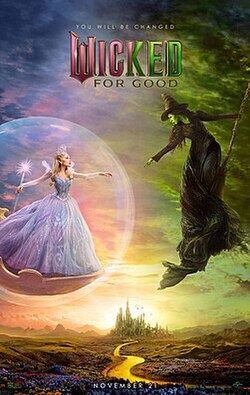
Act Two comes to the screen in Wicked: For Good, putting the finishing touches to a five-hour journey through a single stage musical. While there are literally hundreds of millions of reasons for splitting the film in two, you can’t doubt the passion and love for the source material from everyone involved. However, Wicked: For Good, while shorter than the first film, feels longer: more padded but also more aimless, exposing more of the flaws of the musical less apparent when Act Two breezes past in about an hour. It’s still an entertaining watch, but it lacks the explosive, glorious impact of the first film.

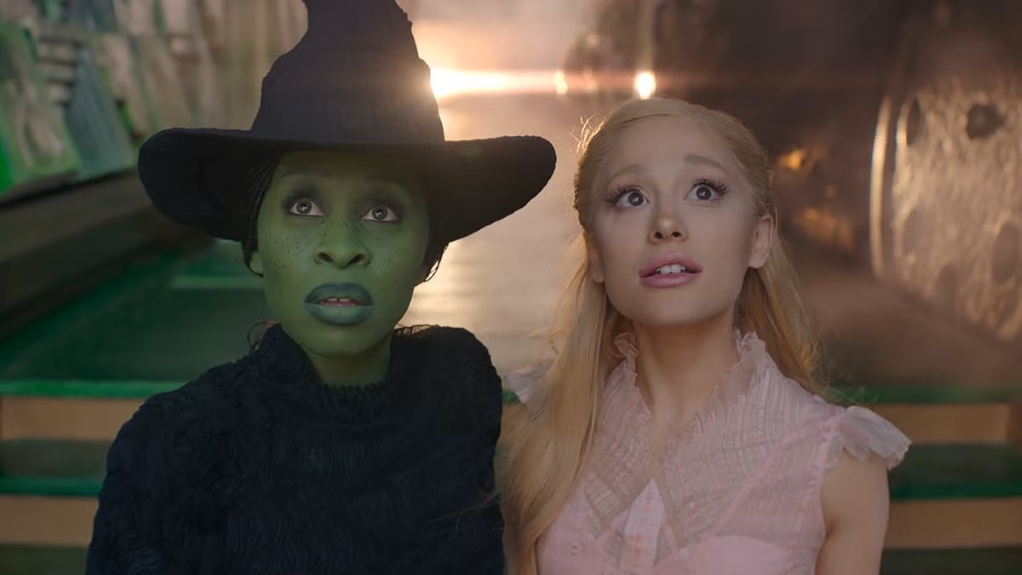
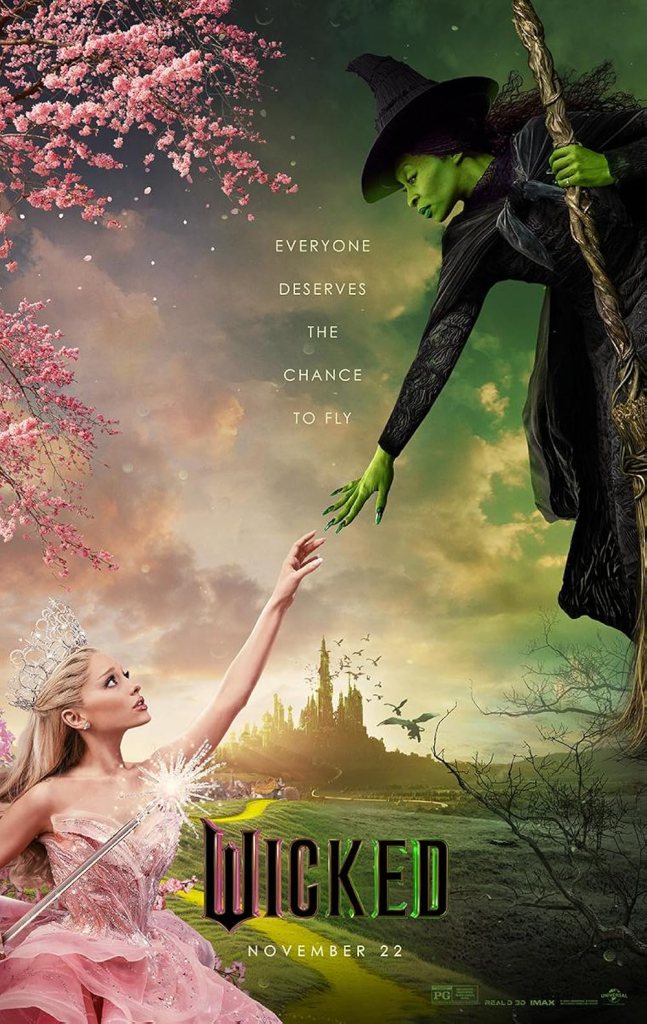
Elphaba (Cynthia Erivo) has been firmly branded public enemy number one as the Wicked Witch of the West. Meanwhile, her old friend Glinda (Ariana Grande-Butera) is the universally beloved face of the regime, showmanship and trickery hiding her complete lack of magic. Elphaba is fighting a losing battle for hearts and minds, failint at her attempts to expose the Wizard’s (Jeff Goldblum) lies and to protect the animals of Oz from persecution. Attempts at good deeds constantly go wrong and the arrival of a young girl from Kansas brings chaos. Will Elphaba and Glinda heal their relationship and will Oz be saved?

Wicked: For Good suffers for covering the weaker second act. Most of the best songs were in the first film. The first act also has more interplay between the two leads (whose relationship is the heart of the story) and had a clearer coming-of-age arc with Elphaba’s eyes being opened to the nature of Oz. Wicked: For Good tries to tackle an awful lot (Good and Evil! Animal rights! The Wizard’s oppression and guilt! Propaganda and manipulation! Backstory for every character in The Wizard of Oz! Elphaba and Glinda’s relationships with Fiyero!) But it often ends up under-cooking, hand-waving and fudging many of them. It chops and changes its focus so often, that developments seem sudden or under-explained.

This is where the extended run-time doesn’t help. The logic leaps that can be done in a few minutes of dialogue between songs in an hour of stage-time, make less sense when stretched over two hours plus. One of Elphaba’s main motivations is protecting the animal’s rights, with these creatures literally losing their voice. Despite opening with her trying to free slave-worker animals from building the Yellow Brick Road, eventually this plot-line feels lost in the shuffle. The motivations and mechanisms of the persecution are unclear, and then confusingly bunched in with racist laws against Munchkins. Similarly, Jeff Goldblum’s Wizard switches from a sociopathic arch-manipulator, into a drink-dependent man coated in guilt, without this journey being amply explained.

Wicked: For Good also awkwardly shoe-horns in events from The Wizard of Oz (there is a lot of Dorothy and her companions on the margins) and comes up with not-always-well-developed reasons why Elphaba and Glinda do the things-they-do as required by Wizard of Oz, without contradicting the more complex, interesting characters they are here. Again, these are flaws revealed by the extended run-time which gives more depth to the leads, but little of its added hour to giving more depth and context to the plot and themes the film is trying to handle, making them feel under-powered.

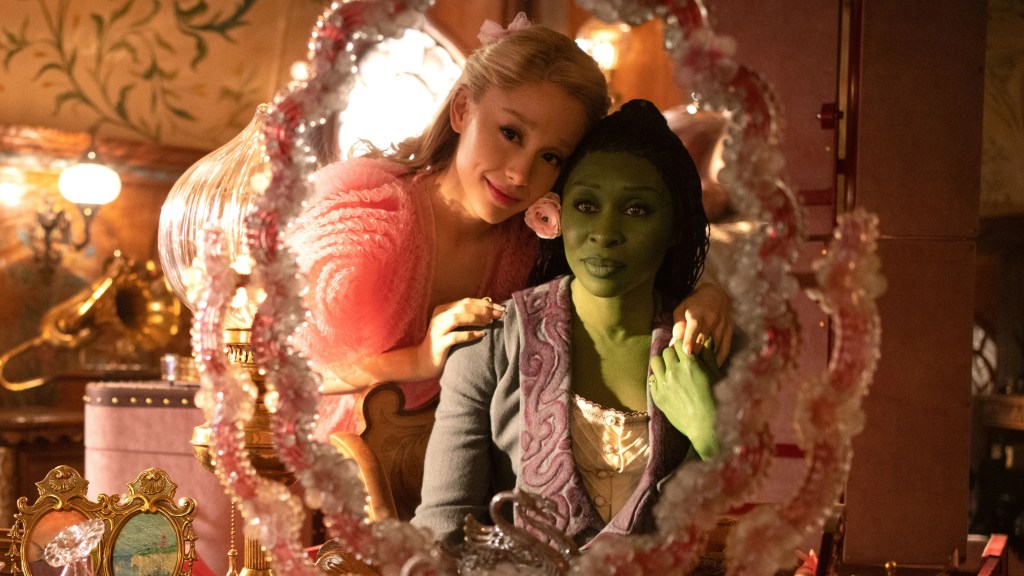
That’s not to say there are not plenty of positives. Wicked: For Good really understands its core strength is the relationship between its leads, and the chemistry between Erivo and Grande is still dynamite. It’s made very clear they are taking opposite approaches in interpreting ‘what’s best for Oz’ (for Elphaba it’s ending the lies, for Glinda it’s keeping people happy – very on brand for both). Their scenes are the film’s emotional heart, whether laughing or crying together, or even (in one laugh-out-loud moment) literally fighting. Just as in the first film, Wicked: For Good demonstrates the different perception an outsider and an insider brings to a situation and how this informs their loyalties and actions.

Erivo’s wonderfully draws on deep loneliness and growing frustration at her inability to change things, capturing the sense of someone certain she’s in the wrong, but who utterly lacks the ability to persuade (be that animals to stay and fight, or Ozians to take another look at the Wizard). Her deep need for friendship (and romance with Jonathan Bailey’s effortlessly charismatic Fiyero – rather short-changed by screen time here) is clear, even if her transition to embracing elements of ‘the villain’ seems rather forced. Her singing remains breathtakingly good with ‘No Good Deed’ an extraordinary show-stopper.

However, the film might just belong to Ariana Grande. If Wicked was Elphaba’s coming-of-age, this is Glinda’s. Grande brilliantly shows how fragile the bubble of happiness Glinda has built is. Glinda’s realisation that from an early age (an excellent childhood flashback scene helps here) she hid her feelings with an immaculate smile is very well explored – as is her realisation that she is universally beloved, but has no real friends. Grande finds a desperation, fragility and sense of pain that only just peak out – feelings covered well in the best of the film’s two new songs ‘The Girl in the Bubble’, with Chu using reflections to stress Glinda’s realisation of the lies she has told herself.

Of the many themes the film tries to cover in a broad sweep, this one comes out best while others fall by the wayside. Propaganda and dictatorship in Oz sort of sits there as a presence without getting real focus. The oppression of the animals (and imagery of them working in whips and chains) makes a big emotional swing the film isn’t willing to commit to. The other new song, ‘No Place Like Home’, is an unforgettable ballad that awkwardly stages Elphaba begging animal users of an Underground Railroad to stay and hope for the best (imagine telling that to real-life Railroad users). There are darker elements I liked (Marissa Boda’s Nessarose and Ethan Slater’s Boq explore jealousy, possessiveness and rage in a surprisingly daring way, told with an effective economy I wish Chu could have found more often).

When Wicked: For Good works, it works. The impressive visual design from the first film is still in place. Chu directs with energy and vibrancy and gets real emotion from the moments between the leads. But I miss the large choreographed numbers here (perhaps expected from a darker Act Two) and its plot is often unfocused, forced and manages to use double the time to barely extend (or make more interesting) the level of thematic exploration the original musical does. I didn’t enjoy it as much as the first one and becomes a little too trapped by fitting into Wizard of Oz but it’s still an entertaining ride.
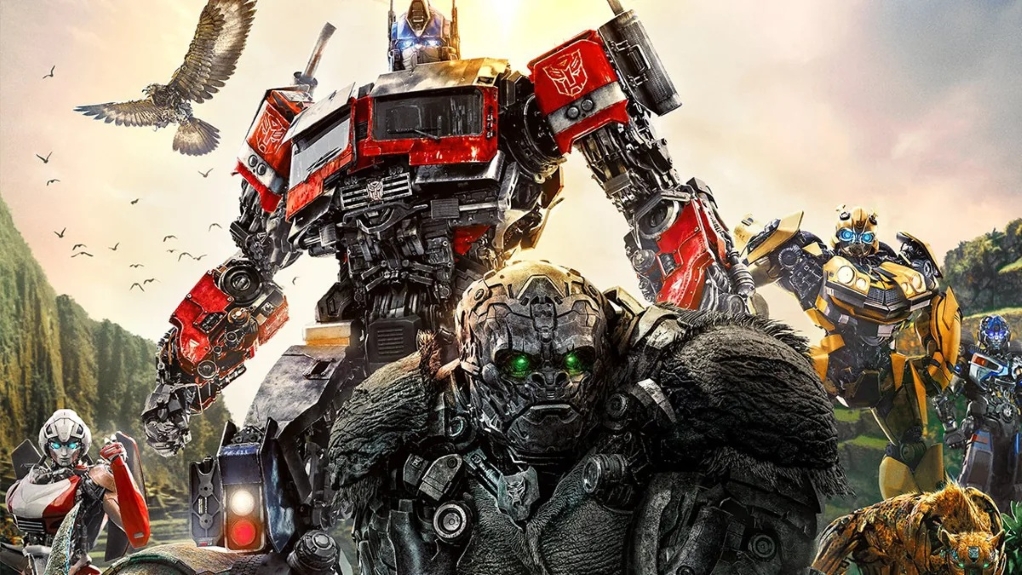
Transformers: Rise of the Beasts (2023)

Transformers: Rise of the Beasts (2023)

Transformers serves away from the charm of Bumblebee back to the tedious machismo of Bay

Director: Steven Caple Jnr

Cast: Anthony Ramos (Noah Diaz), Dominique Fishback (Elena Wallace), Dean Scott Vazquez (Kris Diaz), Luna Lauren Velez (Breanna Diaz), Peter Cullen (Optimus Prime), Ron Perlman (Optimus Primal), Peter Dinklage (Scourge), Michelle Yeoh (Airazor), Pete Davidson (Mirage), Liza Koshy (Arcee), Colman Domingo (Unicron)

Somehow the Transformers franchise lucked out and managed to make a film I actually wouldn’t feel awkward showing to a child. Bumblebee avoided the crude sexualisation and graphic violence (hidden by the fact you are watching CGI engine oil and bits of metal flying around, rather than blood and bits of human flesh) of Michael Bay’s films. I really enjoyed it. I can’t really say the same about this follow-up. I’d at least let a child watch it – although it’s the cinematic equivalent of letting them have a Big Mac for dinner.

Transformers: Rise of the Beasts could have continued in the tone of Bumblebee, a delightful mix of cartoon and Buster Keaton/Laurel and Hardy. Instead, it takes tiny elements of that, then mashes them up with the throw-it-all-at-the-screen style of Bay. It’s not a happy marriage, and Rise of the Beasts is tired and overly familiar, crammed with crude banter and the sort of mass smackdown we’ve seen done time-and-time again. Give me strength. Rise of the Beasts isn’t really a sequel to Bumblebee – the events of that film are referred to only in a blink-and-you’ll-miss-it reference. The boyish charm of Bumblebee is drenched in audio clip quotes from Scarface and the like. Instead, it’s another “end of the world seconds away from a giant robot monster” flick.

Far in the future Unicorn (voiced with regal indifference by Colman Domingo), the planet eating robot from the 1985 film (when he was voiced by a final pay-cheque collecting Orson Welles) is trapped in another dimension, but wants to break into ours. He sends his minion Scourge (Peter Dinklage, dialling it in big time) to 1990s Earth to hunt down the MacGuffin that will do it. Only Optimus Prime (Peter Cullen) and his Autobots can stop him, allied with an ex-soldier desperately trying to help his kid brother Noah Diaz (Anthony Ramos) and Elena Wallace (Dominique Fishback) a junior archaeologist who can unearth the MacGuffin from where it has been hidden centuries ago by the Maximals, a group of transformers descended from our Autobots who transform into giant mechanical animals (their leader Optimus Primal is a Kong style ape).

It all seems a million miles away from the charm of the first film, with a teenage girl bonding with her first car who just happens to be a clumsy robot. There is precious little charm at all Rise of the Beasts. The human characters are either faintly forgettable, loud and brash or serve only as plot points. Anthony Ramos has to do a lot of digging to find any depth in a character given only a cursory plotline of desperation to provide for his mum and brother. Dominique Fishback’s archaeologist has the faintest of backstories about being cheated out of the credit for her work, before she’s fiddling with MacGuffins with handwave lines. The action zips across two universes and two continents, but never seems to really find firm grounding for itself.

There’s also something rather sad about the film swopping out the fairy tale elements of Bumblebee with a far more conventional Bro-romance. Ramos’ street-wise ex-soldier is paired up with Peter Davidson’s Mirage, a loud-mouthed Autobot who, despite a few witty lines, basically comes across as a street-wise bro with a hot streak of immaturity. There is a streak of laddish banter throughout the film – none of it, thank God, as appallingly sexist or racist as what passes for this sort of chat in Bay’s films – that essentially doubles down on restoring the franchise to something that appeals only to teenage boys and adults who wish they still were teenage boys.

After the broadening out of Bumblebee with a female lead given actual agency, this feels like a retrograde step. Rise of the Beasts does manage to pay this Bros plotline off with a surprisingly effective scene of self-sacrifice – but does so while not shirking on red-blooded (or red-oiled) young men whooping and cheering as they blast stuff out of the sky. It’s a step firmly back towards a territory that places male relationships at a premium – be it bros or actual brothers – and the bonds between men a world that leaves women on the outside looking in.

Not to mention the plot continually readjusts its stakes and characters depending on the requirements from scene to scene. Scourge is an unstoppable killing machine… until the plot requires him not to be. Characters are killed off… until the plot needs them to come back to life. Characters are fixated on their own needs… until the plot needs them to be altruistic. It combines that up with a final battle sequence that feels painfully derivative of the end of Avengers: Endgame, with Scourge mustering an army of rent-a-baddies to slow down the heroes while he slowly plugs a thingamee into a do-hickey.

Even Optimus Prime takes a backward step. While Bumblebee salvaged some likeability out of this hero, Rise of the Beasts very much returns him to Bay form: a deeply flawed leader with anger-management issues, who slices and dices foes with reckless abandon, rips off heads and uses neat kiss-off lines like “Then DIE”. I suppose he doesn’t execute at point-blank range a surrendering foe begging for mercy (Bay did this twice!) but he still hardly feels like an admirable hero. Rise of the Beasts vaguely acknowledges this by having Prime go on a loose arc of learning to put the needs of humans on a level with the Autobots (yup he’s also a proto-racist at the start) but it’s a very loose peg to hang a hero on.

Rise of the Beasts gives up on any pretensions of doing something fresh, engaging or different with the series. Even the beasts, for all their animalistic looks, are basically barely characters, more different looking toys imported into a flagging cinematic universe (Ron Perlman and Michelle Yeoh lazily yawn their way through terminal dialogue). While Bumblebee took the starting principles of the franchise and found the joy in them, Rise of the Beasts is a teenage wet dream of toys hitting each other to no great purpose, that places male relationships at its heart and leaves you with nothing to really care about. It’s a callback to everything bad about this franchise.

Wicked (2024)

Wicked (2024)

Hugely enjoyable and electrically filmed (sung and danced) adaptation of the classic stage musical

Director: John M. Chu

Cast: Cynthia Erivo (Elphaba Thropp), Ariana Grande (Galinda Upland), Jonathan Bailey (Fiyero Tigellar), Michelle Yeoh (Madame Morrible), Jeff Goldblum (Wizard of Oz), Ethan Slater (Boq Woodsman), Bowen Young (Pfannee), Marissa Bode (Nessarose Thropp), Peter Dinklage (Dr Dillamond), Bronwyn James (Shenshen), Andy Nyman (Governor Thropp)

I might be the only person who missed the phenomenon of Wicked, a smash-hit musical that filled in the back story of The Wizard of Oz. Set long before the arrival of Dorothy and her march down that yellow brick road, it covers the meeting and eventual friendship of Elphaba (Cynthia Erivo) future Wicked Witch of the West and Galinda (Ariana Grande) future Glinda the Good, at Shiz University (a sort of Ozian Hogwarts). Wicked is a grand, visual spectacular crammed with memorable tunes and show-stopping dance numbers and it’s bought to cinematic life in vibrant, dynamic and highly enjoyable style by John M. Chu.

At Shiz, Elphaba is snubbed by all and sundry who can’t see past her green skin. Despised by her father (Andy Nyman) – who we know isn’t her true father (I wonder who it could be?) – she’s lived a life of defensive self-sufficiency. Galinda, in contrast, is effortlessly popular and has never found herself in any situation where she can’t get what she wants. But Elphaba has something Galinda wants – a natural talent for magic that makes her the protégé of Madame Morrible (Michelle Yeoh) – and circumstances end up with the two of them sharing rooms. Surprisingly, a friendship forms when these two opposites find common ground. But will this be challenged when Elphaba is called to the Emerald City to meet with the Wonderful Wizard of Oz (Jeff Goldblum)?

Wicked Part One covers (in almost two and half hours!) only the first act of Wicked, meaning the film culminates with the musical’s most famous number ’Defying Gravity’. The producers proudly stated this was to not compromise on character development by rushing – the more cynical might say they were motivated by double-dipping into mountains of box-office moolah. Despite this, Wicked Part 1 (despite taking pretty much as long to cover Act 1 as it takes theatres to stage the entire musical) feels surprisingly well-paced and the film itself is so energetic, charming and fun you quickly forget the fundamental financial cynicism behind it.

Wicked is directed with real verve and energy by John M. Chu – it’s easily the most purely enjoyable Hollywood musical since West Side Story and one of the most entertaining Broadway adaptations of this century. Wicked is expertly shot and very well edited, its camerawork making the many dance sequences both high-tempo and also easy to follow (Wicked avoids many musicals’ high-cutting failures that make choreography almost impossible to see). And it looks fabulous, the design embracing the bold colours and steam-punk magic of Oz.

It also perfectly casts its two leads, both of whom are gifted performers bringing passion and commitment. Cynthia Erivo’s voice is spectacular, and she taps into Elphaba’s loneliness and pain under her defensive, defiant outer core. It’s a fabulously sad-eyed performance of weary pain and Erivo beautifully conveys Elphaba’s moral outrage at the lies that underpin Oz. Just as fantastic is Ariana Grande. Grande says she had dreamed about playing Galinda since she was a kid (yup, that’s how old this musical is) – and it shows. It’s an electric, hilarious performance that embraces Galinda’s studied sweet physicality, her little bobs and flicks and blithe unawareness of her aching privilege and self-entitlement, but what Grande does stunningly well is really make you like Galinda no matter how misguidedly self-centred she is.

And she really is. Part of Wicked’s appeal is mixing Oz with Mean Girls with more than a dash of racial prejudice. Elphaba is immediately snubbed because she literally doesn’t look right (anti-green prejudice is an unspoken constant) compared to Galinda’s pink-coated, blond-haired perfectness. Galinda is Shiz’s queen bee, followed everywhere by two sycophantic acolytes (delightfully slappable performances from Bowen Young and Bronwyn James) who cheer everything she does and push Galinda to maximise her subtle hazing of the green-skinned outsider. After all, they see popularity as a zero-sum game: the more Elphaba might have, the less there must be to go around for them.

It’s not really a surprise that Elphaba has had a tough time. Oz is dripping with prejudice, racist assumptions and strict hierarchies. From the film’s opening number – ‘No one mourns the wicked’, where Munchkins wildly celebrate Elphaba’s future death – we are left in little doubt there is a culture of blaming those who are different for misfortunes. This sits alongside a purge of unwanted citizens: namely talking animals. Goat professor Dr Dillamond (a lovely vocal performance from Peter Dinklage) is subtly belittled for his goat-accent then dragged in disgrace from the school. A new professor extols the virtues of keeping frightened animals in cages. The casting of Jeff Goldblum helps with creating this genial but cruel world, his improvisational mumbling suggesting a man of arrogant, sociopathic distance under initial aw-shucks charm.

These secrets will impact the friendship between our leads. The extended runtime means it already takes a very long time for the ice between them to thaw (and, for me, their ballroom reconciliation doesn’t land with the cathartic force it needed for the transition from hostility to friendship to completely work), but the exceptional chemistry between Erivo and Grande helps sell it. What Wicked does very well though is show the fault-lines in this relationship. Galinda’s answer to all Elphaba’s problems is for her to be more like her, while Elphaba has clearly never had a real friend in her life and wants one more than anything. There is true kindness and love between them, but Elphaba remains an outsider with cause to be angry against the system while Galinda is the ultimate insider for whom the system has always worked. Wicked Part 1 does a very good job of never letting these facts escape your notice, for all the charm of an unexpected friendship.

Wicked Part 1 though is also a monstrously entertaining film. The song and dance numbers are spectacular – the pin-point choreography of ‘What Is This Feeling’ is superb, while the power ballad intensity if ‘The Wizard and I’ is perfectly nailed by Erivo. Jonathan Bailey comes close to stealing the limelight with a show-stopping turn as the charming, likeable but slightly rogueish Fiyero, his ‘Dancing Through Life’ routine in particular being a stunning display of athletic dancing matched with perfect vocals. Every number is given its own carefully judged tone, with wonderfully complementary photography and editing, to create a film that leaves you eagerly wanting more.

I didn’t really know the musical coming into it, but after Jon M Chu’s excellent production, I’m excited to see what happens in Part (Act) 2.

A Haunting in Venice (2023)

A Haunting in Venice (2023)

Branagh’s third Poirot outing lowers the scale but feels more real and involving than any others

Director: Kenneth Branagh

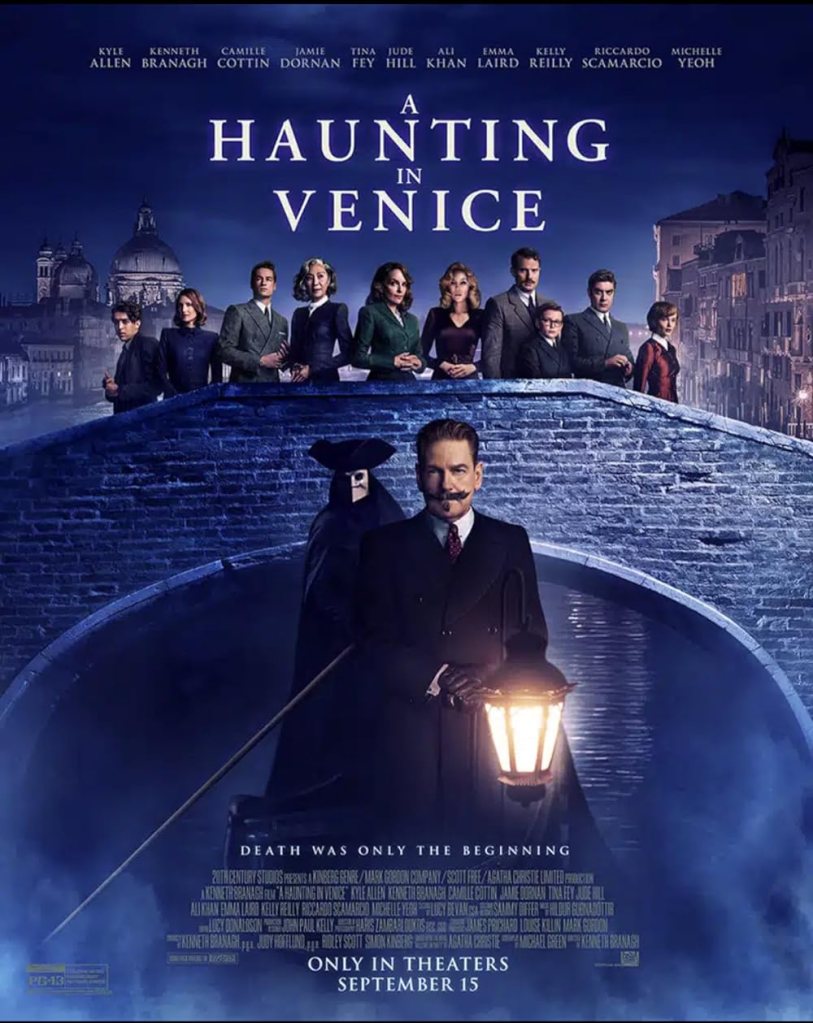
Cast: Kenneth Branagh (Hercule Poirot), Kyle Allen (Maxime Gerard), Camille Cottin (Olga Seminoff), Jamie Dornan (Dr Leslie Ferrier), Tina Fey (Ariadne Oliver), Jude Hill (Leopold Ferrier), Ali Khan (Nicholas Holland), Emma Laird (Desdemona Holland), Kelly Reilly (Rowena Drake), Riccardo Scamarcio (Vitale Portfoglio), Michelle Yeoh (Joyce Reynolds)

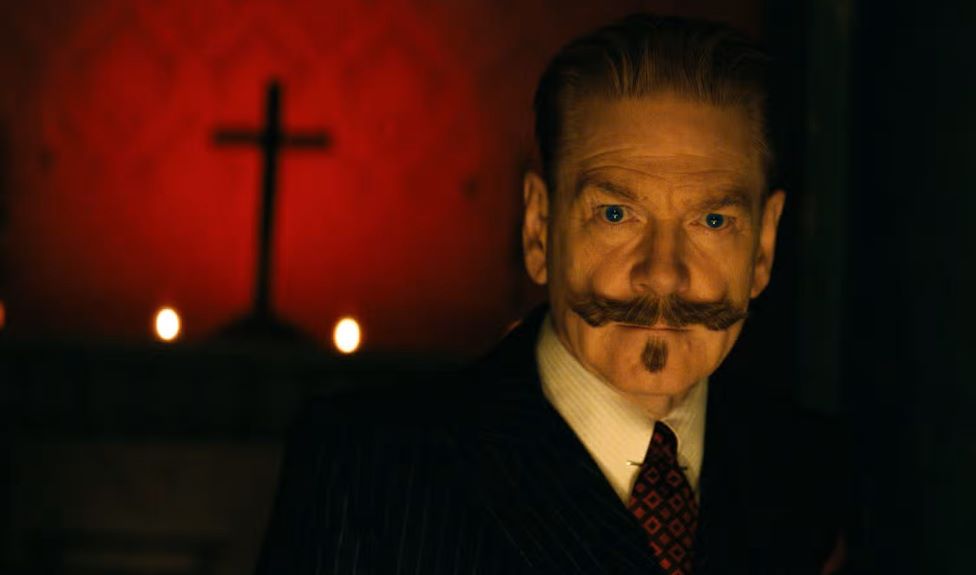
Branagh’s Poirot films have been a mixed bag. Big on starry cast and luscious locations, they’ve also succumbed too readily to bombast not to mention the sort-of tricksy directorial flourishes Branagh has such a weakness for. It’s a pleasant surprise then that A Haunting in Venice turns itself into the smallest-scale and tightest of his Poirot films and might just be the most successful of the lot.

It’s 1947 and a retired Hercule Poirot (Kenneth Branagh) lives as a recluse in Venice, studiously ignoring potential cases, his door firmly guarded by bodyguard (and retired policeman) Vitale Portfoglio (Riccardo Scamarcio). All this changes when he is visited by an old friend, crime novelist Ariadne Oliver (Tina Fey) who recruits Poirot to help debunk spiritualist Joyce Reynolds (Michelle Yeoh). Reynolds is conducting a séance for retired opera singer Rowena Drake (Kelly Reilly), still grieving the recent death of her daughter Alicia. With other guests including Alicia’s former fiancée Maxime (Kyle Allen), PTSD suffering Dr Ferrier (Jamie Dornan) and his precocious son Leopold (Jude Hill) and housekeeper Olga Seminoff (Camille Cotton), the stage is set when a storm and a murder all strike on the same night. Finally, Poirot takes up arms again.

A Haunting in Venice has a fair bit of latitude to work with since there is not an Agatha Christie Poirot mystery actually called that (or even set in Venice). Instead, this is a fast-and-loose adaptation of Hallowe’en Party (definitely one of the lesser-known books) which shifts its location, reshuffles the characters backgrounds, brings a few off-page murders very much “on page” and repackages the story to take place in a sadness-tinged, post-war misery which neatly reflects Poirot’s private grief and guilt at a life which has seen so much death.

This actually works rather well. Contrary to much of the publicity, which played up the horror elements, this is about a million miles away from The Exorcist (although Branagh clearly rewatched Don’t Look Now for Venice scares inspiration), offering instead a camp-fire spookiness and a couple of jump scares. A Haunting in Venice is actually the first Branagh Poirot that feels it would fit into the Suchet-Poirot mould: a slightly maudlin atmosphere mixed with gentle humour, a tight interview-based structure and a (thankful) reduction in gun-toting stand-offs.

A Haunting in Venice is predominantly set in one crumbling Venetian house over one night during a wild storm. The house is given a ghostly backstory of a medieval orphanage left walled-up to prevent a plague outbreak spreading – and there are suggestions of supernatural mischief (objects fall down seemingly on their own) at various points (most of which are swiftly debunked by Poirot). The film is shot and framed with a series of fish-eye lenses and some oblique angles (as per Branagh, the second shot of the film is a Dutch angle) to maximise the dimensions of the house but also at key points stress its claustrophobia, all of which works rather well. It’s moodily lit in a series of shadows (to maximise those spooky jump scares) but its horror elements are lite – a whirligig of screaming and bloodshot eyes at the séance are about as far as it goes.

Instead, it unfolds in a traditional manner, bookended by a prologue and epilogue that indulges the beauty of the location shooting (including a luscious final aerial shot over Venice). The film effectively uses its post-war setting to add emotional impact – after suffering through a war that claimed millions of lives, is it surprising that people are more susceptible to the attractions of taking to the dead? The impact of war blights several characters, from Jamie Dornan’s doctor (Dornan is very good in the role), forever scared by the sights he saw liberating Bergen Belsen to a pair of young Eastern European refugees who have fled the Nazis.

Poirot’s background as a soldier and his own traumatic familiarity with death are also rather neatly wrapped up in questions of his faith. In Branagh’s quiet, melancholic performance (where its clear moments of warmth are only covering deep regrets), it becomes clear his faith in God is as lost as his belief that the world can be improved by deduction. His rejection of spiritualism is pointedly based on a belief that there is nothing outside of the tangible.He fits in witha house awash with traumatised doctors, opera singers lost in grief, housemaids who feel their lives have no purpose and even a crime novelist who’s last three books were flops.

Tina Fey is very playful as this Agatha Christie self-portrait, bouncing effectively off Branagh’s more sombre Poirot. The cast is in fact uniformally strong – a reduced cast list from previous Branagh Poirot’s means each one feels slightly more developed. Yeoh bites into the juicy part of Joyce with movie-star confidence, Reilly is subtly fragile, Cottin and Scamarcio both effectively hiding secret depths. Jude Hill, fresh from playing the young Branagh in Belfast marks himself as a kid with a golden future with a stand-out turn as the mature, worldly-wise young Leopold, comforting and caring for his emotionally scarred Dad.

All of this is marshalled into a tight murder-mystery – we get a bit of Grand Guignal slaughter as well as an effective locked room mystery thrown on top (as well as a homage to the originals apple-bobbing murder) – with a Poirot who is unsettled and out of sorts (for reasons that I guessed but make perfect, secular sense when revealed). It even wraps up on a quietly affecting note of hope. By dialling down the flourishes, scale and action (even if Branagh can’t resist a snorricam shot of himself through the house), A Haunting in Venice actually becomes more rewarding than either of the previous films in the series – and Branagh’s Poirot remains a strong, very human interpretation of the character. Surprisingly, despite its playing with the supernatural, it feels more grounded and human and, despite effectively creating a new story, closer to Christie.

Everything Everywhere All At Once (2022)

Everything Everywhere All At Once (2022)

The multi-verse is at risk of ending – and only a disenchanted woman running a laundromat can save the day in this inventive science-fiction

Director: Dan Kwan, Daniel Scheinert

Cast: Michelle Yeoh (Evelyn Quan Wang), Stephanie Hsu (Joy Wang), Ke Huy Quan (Waymond Wang), James Hong (Gong Gong), Jamie Lee Curtis (Dierdre Beaubeirdre), Tallie Medel (Becky Sregor), Jenny Slate (Debbie), Harry Shum Jnr (Chad), Biff Wiff (Rick)

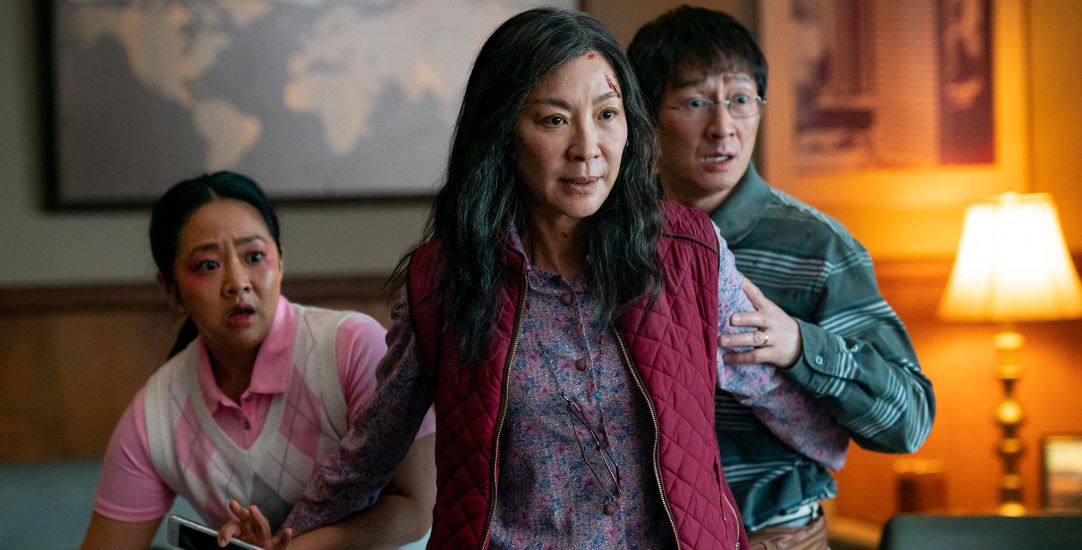
Evelyn Wang (Michelle Yeoh) has lots on her plate: running her laundromat, completing tax returns for a demanding IRS agent (Jamie Lee Curtis), her waning marriage to goofy husband Waymond (Ke Huy Quan) and drifting relationship with lesbian daughter Joy (Stephanie Hsu), not to mention her fear of the disapproval of her demanding father (James Hong) – its Everything Everywhere All at Once as it is: no wonder she struggles to cope when discovering from an alternate version of her husband that she, and she alone, is the key to saving the entire multi-verse from destruction.

Everything Everywhere All at Once is an endlessly inventive, imaginative and unique spin on everything from science fiction to philosophy, via the struggles of an immigrant family, familial dynamics and love, death and the universe itself. Did I mention it’s got jokes as well? There isn’t anything quite like EEAAO out there, and if the film does lose energy at an inflated runtime of 145 minutes, at least that’s because it must have been a struggle knowing what to cut.

In the mythology of EEAAO, Evelyn lives in just one of a myriad different realities. Every time a decision is taken, a new reality branches off, spawning innumerable different realities. If Evelyn can imagine it, then somewhere in another universe it happened. She should be a film star, a martial artiste, a chef, a blind singer, a pizza sign spinner…there are realities where mankind never evolved or where they evolved with hot dogs for fingers (a joke the film is a way too pleased with and seriously outstays its welcome).

With some technology from the “Alpha” universe – the first universe to discover alternate realities, where Evelyn and Waymond were pioneering scientists – Evelyn can access the memories and skills of her alternates. All she – and others with the right training and equipment – need to do to become experts at anything in seconds is to build a mental link to that reality by performing a highly improbable act. Whether that’s getting four consecutive papercuts, eating a lipstick, swallowing a model frog or – in a comic highlight – Evelyn fighting to stop an opponent shoving an “Employee of the month” award shaped like a dildo up their bottom in public (you’re not going to see that in many movies) – it’s a brilliant comic device that raises belly laughs a plenty.

EEAAO knocks spots off the recent Doctor Strange sequel (that made almost nothing of its parallel universe concept) by not only presenting radically different worlds (in this universe Evelyn is a pinata! Here she’s a rock!), but also exploring how the path-not-taken can have a mesmerising and inspiring/depressing impact. Evelyn – a woman who (justifiably?) believes she has achieved nothing, is both fascinated or heart-broken to see realities where her accomplishments are titanic. EEAO is superbly thought-provoking when it explores the emotional impact of questioning your choices, when you see turning right rather than left could have been the first step on a path of astonishing glory and success and, even, a completely different personality.

This leads into the film’s second half which, after the comic energy of the first, dives into a philosophical debate about the nature of choice. The villain attempting to destroy reality is motivated not by rage or power-lust – but simply by the fact that jumping to a billion realities has persuaded them it all means nothing. Everything is basically a combination of atoms that, with a few pushes and pulls, can turn from one thing to anything else. This nihilistic view of the world – what does it matter killing one person when there are billions of other versions of them, many of them ‘better’ – and balancing it with a more humanitarian view, becomes the film’s key debate.

It’s also rooted in the film’s opening, which is does a marvellous job of exploring universal family questions, while still grounded in the experience of an immigrant family. Evelyn and Waymond, having moved to America in search of their dreams as youngsters – and wound up running a laundromat – struggle to balance their relationship (her growing irritation at his perpetual optimism, his alienation from her cynicism) and, particularly in Evelyn’s case, understanding her more Westernised daughter. Two generations with very different experiences, struggling to understand each other.

On top of which, many of these problems are universal. Generational conflicts: the grandpa who can’t be told his granddaughter is gay, because her mother isn’t sure how he will react. The mother and daughter who have lost the ability to communicate and reduced to saying increasingly cruel things to each other (there is a shocking moment when Evelyn tries to tell her daughter she loves her but instead chastises her for getting fat). Waymond tries to hold things together but is too gentle and ineffective to do anything.

All of this is bundled together in a film stuffed with inventive and hilarious sequences. There are kick-ass fights (one involving Alpha-Waymond and a fanny-pack – bum-bag to us Brits – which has to be seen to be believed), hilarious segues, brilliant parodies of other films (2001, Ratatouille and In the Mood for Love for starters): and then the film will hit you for six with a genuinely heart-breaking moment. I will say there is almost too much good stuff here – ten minutes trimmed from the film would work wonders, and the continued trips back to Hot Dog Hands reality is a joke stretched to absolute breaking point – but better too much than too little.

At the heart of this fabulous work from The Daniels are superb performances, none more so than a career best turn from Michelle Yeoh. Channelling everything Yeoh has ever done in her career into a single film, she of course can handle the astonishing action but also displays an emotional depth and complexity that will break your heart. She’s bitter and trapped, then will shift on a sixpence to agonised guilt and longing. She’s astonishingly good. There is brilliant support from Hsu as her trapped and troubled daughter and Ke Huy Quan (last seen in The Goonies) is heart-breakingly endearing, funny and wonderfully sweet as her good-natured husband (like Yeoh he also plays multiple variants – from confident to cold and distant). James Hong is wonderful as her austere father and Jamie Lee Curtis is having a ball as a bullying IRS agent turned villain’s heavy.

When the major flaw in the film is that it is too damn long, you know you are onto a good thing. There are more ideas in a few minutes here than in the entire runtime of such things as the Doctor Strange sequel. Superbly directed with wit, energy and compassion by the Daniels and with a career-defining role for Michelle Yeoh, Everything Everywhere All At Once is destined to take its place as a year defining cult hit.

Memoirs of a Geisha (2005)

Memoirs of a Geisha (2005)

Lush romantic adaptation settles for tourism and pretty pictures instead of any emotional or narrative weight

Director: Rob Marshall

Cast: Zhang Ziyi (Sayuri Nitta/Chiyo), Ken Watanabe (Chairman Ken Iwamura), Michelle Yeoh (Mameha), Gong Li (Hatsumomo), Suzuka Ohgo (Young Chiyo), Kōji Yakusho (Nobu), Kaori Momoi (Kayoko Nitta), Youki Kudoh (Pumpkin), Kotoko Kawamura (Grandmother Nitta), Tsai Chin (Auntie), Cary-Hiroyuki Tagawa (the Baron), Samantha Futerman (Satsu Sakamoto), Mako (Mr. Sakamoto)

In 1920s Japan, 9 year old disgraced former geisha pupil Chiyo (Suzuka Ohgo) meets a businessman, Chairman Ken Iwamura (Ken Watanabe), who is kind to her. She resolves to one day become a geisha so she may see him again. As a young woman, Sayuri (Zhang Ziyi), as she is now known, masters the geisha arts under the tutelage of famous geisha Mameha (Michelle Yeoh). She encounters the Chairman again – but can she confess her love? And can she escape the attempts of her rival Hatsumomo (Gong Li) to destroy her?

Arthur Golden’s romantic novel was a major success in 1997, tapping into a fascination with Japanese culture. It was inevitable it would come to the screen. But in the journey, it has been stripped down into a beautiful but basically empty story, that seems trite and shallow and revolves around hard-to-invest in characters. By the time it’s finished you’ll wonder what the fuss was about.

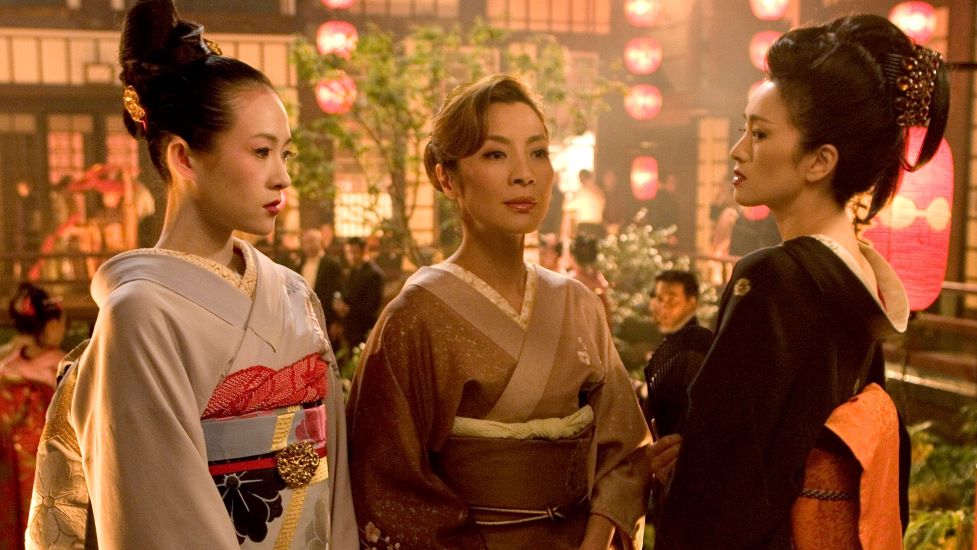
The reconstruction of 1920s-40s Japan does look radiant, even if the film focuses on the most chocolate-box, touristy view of Japan you could possibly imagine (think of a Japanese item, event or object and it’s in the film). But it’s radiantly shot and intricately put together – the geisha costumes are a gorgeous, multi-layered, decorative treat – and it’s not a surprise the film lifted three Oscars for cinematography, production and costume design.

It’s not a surprise as well that it was overlooked in all the majors. It’s well-directed by Rob Marshall (juggling a multi-lingual cast and framing the film beautifully), but fundamentally a mix of the highly predictable and the deeply troubling. It’s basically Geisha Expectations or Jane Geishyre. Our heroine is a poverty-stricken youth who makes a series of key encounters in her childhood that shape her whole personality as she comes into wealth as a young adult. Similarly, this quiet girl’s obsessive love for a distant businessman (whom, yuck, she meets as a child – and he compares her to his own children), suffering quietly while sacrificing everything to help him.

But it’s all much less interesting than either of those novels. Despite the narration by an older Sayuri, we never get inside the young woman’s head. Ziyi Zhang is given very little to work with: she either looks distressed, simpering or sad, and frequently fades into the background of her own story. All we really learn about her is that the Chairman gave her an ice cream when she was 9, and that this event influenced her entire life. Equally dull is the Chairman himself, whom Watanabe struggles to make anything other a mute and inscrutable character, terminally dull.

It’s hard to invest in a love-across-the-ages (in every sense) romance between these two, because the film fails to build them up as characters we care about and gives them hardly any time to be together. By the time we reach a late confession, that the Chairman decided (when Sayuri was 9) to turn her into his ideal geisha (um, grooming anyone? Oh yuck) and they finally kiss each other, they still feel like complete strangers. She never matures into a woman who can fall in love past her childhood obsession and he seems more like an oddly manipulative sugar daddy.

Memoirs of a Geisha flounders on the empty plot and non-characters at its heart. It ends up relying on the visuals and lovely design work, because there is no drive or interest in its plot. The film’s most compelling performance is Gong Li’s Hatsumomo and when she walks out of the picture three quarters of the way through, it never recovers. Gong is superb as an envious, embittered geisha being replaced by younger faces. She snipes and growls like a relic from a Bette Davis Hag-thriller, but in the next scene her face will crumple with fear and sadness. She gets all the best lines and the most interesting scenes, from sniping, to lost love to pyromaniac revenge.

Memoirs of a Geisha disappointed at the box office. It’s clumsy casting didn’t help: fine actresses as Zhang, Yeoh and Gong are, they were all Chinese (in Yeoh’s case Malaysian Chinese) rather than Japanese, and there was an uncomfortable feeling that the producers didn’t think this was really an issue. It opened up a can of worms about lingering Chinese hostility over Japanese war crimes, leading to a ban in China. In Japan, the casting was condemned and the film seen as more interested in a tourist eye on geisha culture than a truly Japanese one (and it does appear the film consulted virtually no Japanese people during its making).

All the glorious design in the world can’t hide the emptiness at the heart of Memoirs of a Geisha. World War Two is skipped over in about two minutes (Sayuri spends the time working in the hills, and sums up her whole wartime experience in a couple of sentences, delivered in voice-over while Zhang looks beautiful and pained washing fabric in a river). Other than their external glamour, we don’t learn much about what being a geisha actually means. Its central romance goes from bland, to anonymous, to deeply troubling. It looks wonderful, but if there was anything deeper to the novel than a luscious, gorgeous setting and a predictable, traditional romance, it’s completely lost in translation.

Shang-Chi and the Legend of the Ten Rings (2021)

Simu Liu deals with father-son issues in Shang-Chi and the Legend of the Ten Rings

Director: Destin Daniel Cretton

Cast: Simu Liu (Shang-Chi), Awkwafina (Katy), Meng’er Zhang (Xu Xialing), Tony Leung (Xu Wenwu), Fala Chen (Ying Li), Michelle Yeoh (Ying Nan), Ben Kingsley (Trevor Slattery), Benedict Wong (Wong), Florian Munteanu (Razor Fist)

Thousands of years ago Xu Wenwu (Tony Leung) discovered ten rings which gave him immortality and power. Sadly, he used these powers for evil – until in 1996 he falls in love with Ying Li (Fala Chen), the powerful guardian of a mystical village he has searched hundreds of years for. They have two children – but after she dies, Wenwu returns to darkness and trains his son Shang-Chi to become an assassin. Aged 14, Shang-Chi flees: ten years later, Shaun (Simu Liu) works as a hotel valet with his best friend Katy (Awkwafina), both accomplished students with no aims in life.

All that changes when his father’s heavies attack them in San Francisco, stealing the mysterious pendant Ying Li gave to her son. She also gave a pendant to his sister Xu Xialing (Meng’er Zhang) – so Shang-Chi and Katy head to Macau to find her. But Xu resents Shang-Chi for abandoning her and has trained herself into the martial super-fighter her father would never allow her to become.

Shang-Chi and the Legend of the Two Rings is a curiously mixed bag. First the good: it’s a huge amount of fun. There are some cracking gags and some of the fight scenes have to be seen to be believed. In particular, an early fight scene on a San Francisco bus is an absolute belter. A whirligig of movement, flicks, kicks and punches in, on and around a bendy-bus, using bars, doors, windows and bells to imaginative effect. Hugely exciting, its something the rest of the film struggles to live up to – although a vertigo inducing scaffolding bound fight in Macau comes close.

The film is also built around engaging characters. Shang-Chi is charmingly played by Simu Liu as a very reluctant hero, an extremely polite, decent guy with a wistful wish to just mess around and not grow up, but determined to do the right thing when pushed. He’s very well matched with Awkwafina, extremely funny but also heartfelt as his best friend, great with the one-liners but handling the serious content very well. The film dances rather neatly along a line of not-quite-deciding if these old friends are a potential romantic couple as well, which actually makes for a rather sweet dynamic.

Unfortunately, where the film is a bit weaker is in making it clear exactly what the character arc, or goal, for Shang-Chi is. While this is partly the intent of the film – he has, after all, effectively been drifting through life for a decade – the lack of a really compelling story line or a powerful sense of motivation from Shang-Chi slightly weakens the story. We never really quite get a grip on him as a character, other than knowing he’s a decent guy, out of his depth.

That’s partly because the film invests so much depth into his father, played superbly by Tony Leung making his English-language debut. Wenwu is conflicted, traumatised and motivated by a desire to bring his family together, unable to see that children’s upbringing has made them confused and vulnerable rather than strong. In every scene, I always understand what Wenwu wants and where he is going in a way I don’t with the hero – and this somehow feels the wrong-way round. Effectively, Wenwu is the protagonist of the movie, and Shang-Chi never quite steps up to take his place.

Instead, Shang-Chi has a fairly conventional “Daddy’s issues” plot line – can he overcome his fear and respect for his wicked father? I’d point out that his sister – well played by Meng’er Zhang – has exactly the same issue, but the film isn’t interested in her solving them, focusing instead on the father and son confrontation. Essentially, thematically, not a lot in Shang-Chi and the Legend of the Ten Rings is actually that new – it’s a fairly familiar coming-of-age Superhero origins story, with the loss of a parent and a clash with the surviving parent thrown into the mix.

Not that there is anything too wrong with that when it’s done well. Most of the film is done well, with jokes and fine set-pieces. Ben Kingsley enjoys himself hugely reprising his deluded actor from Iron Man 3. The film quite effectively builds in a Chinese aesthetic – large chunks of the dialogue is in Mandarin – and riffs charmingly off Chinese myths and legends and kung-fu inspirations. The Ten Rings themselves are barely explained at all, but an end-of-credits scene shows this was intentional.

Its weakest section is of course when we get to the final confrontation. This is a CGI over-loaded smack-down between two huge special effects – and carries significantly less impact than the emotional clash between father and son the film has been building towards. A braver film would have left it there without the CGI monsters – but the Marvel films have always been convinced that spectacle is what people want, and I guess they’ve not got much wrong so far.

Shang-Chi and the Legend of the Ten Rings introduces a charming hero, but by the end of the film I still wasn’t quite sure who he was or what he wanted from life. Maybe that doesn’t matter since sequels are inevitable, but there is something amiss when the villain makes such a dominant impression that he takes over the film, as Tony Leung does here. Fun, but a little too long and a little lacking in focus.

Tomorrow Never Dies (1997)

Pierce Brosnan and Michelle Yeoh take on big media in the fun Bond film Tomorrow Never Dies

Director: Roger Spottiswoode

Cast: Pierce Brosnan (James Bond), Jonathan Pryce (Elliot Carver), Michelle Yeoh (Wai Lin), Teri Hatcher (Paris Carver), Joe Don Baker (Jack Wade), Ricky Jay (Henry Gupta), Gotz Otto (Richard Stamper), Vincent Schiavelli (Dr Kaufman), Judi Dench (M), Samantha Bond (Miss Moneypenny), Colin Salmon (Charles Robinson), Geoffrey Palmer (Admiral Roebuck), Julian Fellowes (Minister)

For Pierce Brosnan’s second Bond film, they knew there was life in the old dog yet. GoldenEye’s success meant Tomorrow Never Dies could be all about bangs and fun, a Moore-esque caper with a modern touch. And fun it certainly is – exciting, amusing and with some top gadgets. This doesn’t re-invent the gun barrel, but it gives us a hell of a ride.

A British Navy ship is sunk in Chinese waters (the navy is always so luckless in Bond films!) and a Chinese MiG is shot down. Each side blames the other: but MI6 believe they are both being played against each other by a third party – media mogul Elliot Carver (Jonathan Pryce). There’s 48 hours to find the truth and stop a war. Best send Bond (Pierce Brosnan) to Carver’s HQ to shake things up, not least because he has a past relationship with Carver’s wife Paris (Teri Hatcher). Soon partnering with Chinese Intelligence agent Wai Lin (Michelle Yeoh), the two work to expose Carver’s dastardly schemes to start a war to increase his ratings and secure those lucrative Chinese broadcast rights.

Tomorrow Never Dies sometimes has a by-the-numbers feel to it – probably because the script was written on the go, with only locations and set-pieces decided in advance. Usually that’s a recipe for disaster, but with TND it works. Probably because everyone looks like they are having a whale of a time making it and the tongue is wedged so firmly in the cheek it’s practically touching the ear. And its concept of a mogul using fake news to manipulate the world seems alarmingly prescient today – think how powerful Elliot Carver would be if he ran Twitter (as he surely would today).

You can forgive Tomorrow Never Dies almost anything because it has so many stand-out sequences. The film has a (literally) explosive start, with Bond racing against time to fly some nuclear missiles out of a terrorist trading camp, before a British cruise missile blows the base sky high (and “make Chenoboyl look like a picnic”). Naturally the destruction as Bond lays waste to the camp makes you wonder why they wasted the money on a cruise missile when Bond can destroy the place for free.

Front-and-centre though is the “Bond drives a car through a shoot-out on the back-seat with a remote control” sequence. Which when written down, captures only about 5% of the sequence’s delight. Narrated by an over-cautious sat nav (constantly warning about hazards ahead, while the car is pummelled by bullets), we get all the gadgets we expect (bullet-proof glass, rockets, caltrops, a buzz saw that conveniently rises to the exact height required to cut through a steel wire obstacle) while also watching Bond masterfully steer a car around a multi-storey car-park on his phone from the back seat. Of course, Brosnan knows it’s silly and telegraphs his enjoyment, letting out a chuckle when he reinflates his tyres after driving over his own caltrops (I love this moment).

Tell me he’s not having fun.

There is a cursory sense of mystery, but TND wisely doesn’t have much patience with that. Bond is nominally under-cover at Carver’s HQ as a banker (inevitably using his own name) but, just like his Moore-heyday, Bond’s undercover skills are hilariously bad and his hints clankingly blunt. Fortunately Carver follows Bond villain form, confirming any suspicions by ordering his goons to beat Bond black-and-blue (more fool them, as Bond uses every instrument in a sound proof recording studio to best the baddies).

This was Brosnan in absolutely top form. He’s extremely charming, handles the action very well and gets more than a few grins. He looks like a guy just delighted to be there, living the dream of playing Bond. He’s both self-deprecating and cocksure and manages to be both a believable ruthless killer and a sort of charming little-boy-lost when needed. He loves a pun in a way no other Bond apart from Moore has done (“brushing up on a little Danish” indeed…) and his chemistry with Michelle Yeoh is superb, the two playing off each other like a sort of all-action Morecambe and Wise.

It’s a Bond where comedy is to the fore. An expensive satellite at Carver’s HQ is introduced (“It’s worth $300 million. You break it, you bought it”) solely so Bond can trash it without a second glance. A hitman (hilariously played in a cameo by Vincent Schiavelli) assures Bond he could “shoot him from Stuttgart” and still make it look like a suicide then apologises with embarrassment when he has to delay the hit to ask Bond how to unlock his car (“I don’t know what to say. I feel like an idiot.”). Moneypenny even calls Bond a “cunning linguist” after she interrupts by phone Bond’s tryst with a Danish professor (a joke which I certainly didn’t get when I first watched the film at a young age).

The lighter side of the script works more successfully than some of the attempts at emotion. The script bluntly states Bond had deep feelings for Paris Carver, but this never comes across at all in the performances. Probably because the emotions were torpedoed by the blatantly obvious lack of chemistry between Brosnan and Hatcher (allegedly they couldn’t stand each other). This is made all the more obvious by contrasting it to the delightful chemistry between Brosnan and Yeoh (watch the motorcycle chase with them handcuffed together – brilliant stuff, and Yeoh is excellent in this). When Paris is dispatched early in the film, Bond is cut up about it for literally 10 seconds before he’s having a whale of a time in that car park chase.

“There’s no news…like BAD news!”

Like many Bond films you can see how the franchise had become besotted with the latest “cool thing” in cinema. In this case, the film seems deeply in love with John-Woo-Hong-Kong-action gunplay. Bond probably fires more automatic machine guns in this film than he does in all the rest of the franchise put together, and the film’s finale (the dullest set-piece) is a run-of-the-mill shoot-out on a stealth boat, that feels pretty familiar from the series’ countless “face off in a sub” endings.

Spottiswoode directs with a straightforward lack of flair. Pryce has fun going OTT (and channelling Gus Hedges from Drop the Dead Donkey) as Carver even if the part is a bit under-written. But the main joy is in watching Brosnan have a huge amount of fun running around, blowing things up and shamelessly smirking through some dodgy puns. His Bond may never have been the most complex interpretation, but at his best I’m not sure anyone else was as purely enjoyable. Much like the film.

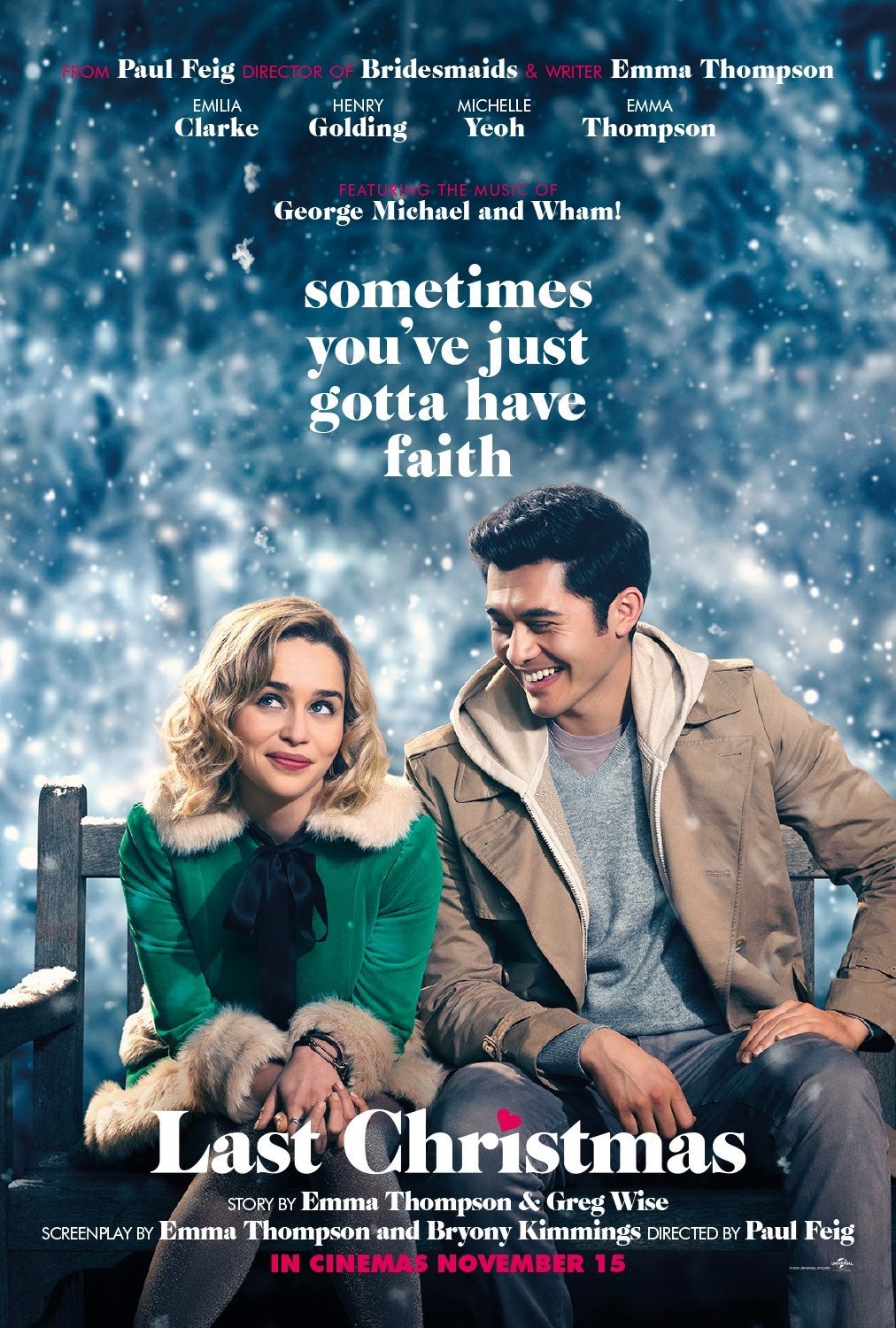
Last Christmas (2019)

Emilia Clarke and Henry Golding in a Christmassy romance with a twist

Director: Paul Feig

Cast: Emilia Clarke (Kate), Henry Golding (Tom Webster), Michelle Yeoh (“Santa”), Emma Thompson (Petra), Lydia Leonard (Marta), Peter Mygind (“Boy”), Rebecca Root (Dr Addis), Patti LuPone (Joyce), Ingrid Oliver (PO Crowley), Laura Evelyn (PO Churchill), Rob Delaney (Director), Peter Serafinowicz (Producer)

Last Christmas has been savaged by critics and held up by many like it was some sort of embodiment of everything that’s wrong with cinema. Jeez louise guys, take a chill pill why don’t you? Feig’s London based comedy, working with an Emma Thompson script, does exactly what it says on the tin – an It’s a Wonderful Life-inspired Christmassy story, that ticks all the Christmas boxes. It has no pretentions for doing anything else. And there is nothing wrong with that!

Kate (Emilia Clarke) is recovering from a heart transplant last year, and she’s heading off the rails. She takes no responsibility for anything, she’s selfish, lazy, demanding and making a car-crash of her life and health. Working as a full-time Elf in a Covent Garden Christmas store (run by Michelle Yeoh as “Santa”), Kate’s life is heading down the toilet until one day she meets Tom Webster (Henry Golding), an almost supernaturally decent guy, kind, considerate, friendly and caring. With his guidance can Kate start to turn her life around?

Well there is a twist in Last Christmas and, to be honest, it’s pretty easy to see coming. Anyone with half an eye on costumes or numbers of interactions will see it coming and anticipate what they are going to get. But you know, that’s fine. This is a film that knows what it is, a fairly unchallenging rom-com that’s spiced with a little touch of Capra-esque whimsy and a conventional morality tale of a selfish person turning round their life.

There are some good jokes, there are some reasonably charming performances, there is a good sense of fun driving through the whole film and it manages to capture at least a little touch of that Christmas-movie alchemy (a la Love Actually) where you can imagine people happily sitting down to watch it, in a light, fun, unchallenging way, for years to come. Its Feig’s offering for the Christmas movie cannon and it’s a perfectly acceptable entry. In fact its cosy predictability and familiar structure is pretty much a key part of its appeal. Because at Christmastime we don’t really want anything that’s going to stretch us or demand things from us. We kind of want to sit around and watch something a little predictable, a little fluffy but basically well-meaning and fun.

Emilia Clarke does a terrific job as light comedienne in the lead role, a role perhaps far more suited to her quirky, klutzy, off-the-wall charm than years of playing Daenerys Targaryen on Game of Thrones ever was. She throws herself into it here, happy to be silly, and shows both a good skill for pratfalls and also for drawing out a vulnerability from her character as well as being extremely charming. Henry Goulding makes a very good match as a character who could very easily tip over into smugly perfect, but again remains just the right side of charming.

Thompson writes herself a decent role as Kate’s Yugoslavian mother, a typical sort of nightmare domineering mother from films of this time, but laced with a sadness and isolation in the modern world and her adopted country. Moments that show the reaction of the characters to Brexit and the growing hostility to immigrants sometimes lean a little too heavily on the liberal conscience of the audience, but it fits in with the generally gentle, liberal attitudes of the film.

It’s a film that knows it’s a guilty pleasure, but it seems to have been designed to give you a sort of pre-Christmas glow. Catch it in the wrong mood and you will consider it one of the worst things you have seen. Take it in the right mood and you might even be charmed by it.

Sunshine (2007)

Astronauts head out to restart the sun in Danny Boyle’s Sunshine

Director: Danny Boyle

Cast: Cillian Murphy (Robert Capa), Chris Evans (James Mace), Rose Byrne (Cassie), Michelle Yeoh (Corazon), Cliff Curtis (Searle), Troy Garity (Harvey), Hiroyuki Sanada (Kaneda), Benedict Wong (Trey), Chipo Chung (Icarus), Mark Strong (Pinbacker)

Spoilers: Last act surprises are discussed here. Although they did put them in the trailer at the time as well

What would we do if the sun decided to pack it in? To be fair, probably not build a bomb the size of Manhattan out of all the world’s fissile material and then fly it up to the Sun in a huge spaceship to jump start the sun’s core. Because that idea is pretty much like trying to restart a volcano with a match. To be fair, Professor Brian Cox (for it was he) did come up with an actual concept that did work – something involving a Q-Ball in the sun, whatever the hell that is – that the film never mentions. But then who really cares about the science, we only care about the simple idea of restarting the sun’s engine with a massive nuke. That’s an idea I don’t need a staff pass at the Large Hardron Collider to understand.

Mankind’s final fate is in the hand of a team pulled from across the world’s space agencies, with Professor Robert Capa (played by Cillian Murphy as a figure inspired heavily by Brian Cox himself in looks and style) as the boffin whose job is to blow the bomb when the time comes. The mission, Icarus II, is under the command of Captain Taneka (Hiroyuki Sanada), with engineer Mace (Chris Evans), pilot Cassie (Rose Byrne), biologist Corazon (Michelle Yeoh) whose job is to maintain the oxygen garden, psychiatrist Searle (Cliff Curtis), navigator Trey (Benedict Wong) and second-in-command and comms officer Harvey (Troy Garity). Entering the final days of the mission, near Mercury, the crew discover traces of the first missing mission that carried the first payload to restart the sun, Icarus I. Deciding two payloads are better than one, the crew divert to intercept – and of course from there everything slowly falls apart into increasing chaos, destruction and horror.

Boyle’s film was marketed as a sort of slasher-in-space – which to be fair it only really becomes in its final act, as the crew accidentally take on board captain of Icarus I, Pinbacker (Mark Strong), a man driven mad by proximity to the sun, deluded in the belief that it is God’s will that mankind perish with the sun. In fact for the bulk of its runtime – and its primary themes – are really about the psychological impact of prolonged isolation in space with only a small group of people for company (a heightened submarine claustrophobia), the dangers and damage that obsession can cause and the moral complexities that emerge when the fate of mankind is literally in the hands of eight people.

With an intelligent script by Alex Garland, Boyle’s film is smart, superior sci-fi which asks searching questions of how we might respond in the situations this crew are thrown into. How quickly would you make decisions about who is expendable and who is not when you are mankind’s last chance? How quickly would you be willing to sacrifice yourself? What moral qualms would you feel if the fate of the one was balanced against the many? And how are all these feelings heightened by the intense claustrophobia and isolation of prolonged space travel, interacting with the same few people day-in and day-out in a ship of which every inch you would be intimately familiar within the first few months of a mission lasting years?

It’s a wonder more people don’t go crazy in the film. Boyle’s film makes excellent use of the terrifyingly awesome, good-like power of the sun. Its rays are so intense at the range of the ship, that any exposure over about 2% of its full strength is lethal. But there is something about its mighty power, its all-consuming presence, that draws characters too it like moths to a flame. Psychiatrist Searle (impressively played by Cliff Curtis) already seems to be becoming slowly a slave to an obsession with our star, his skin peeling from too many hours in the ship’s solar observation lounge. Pinbacker (a curiously accented performance of intense insanity from Mark Strong) lost his mind in sun worship, his mind seemingly snapped by coming face-to-face with the powers of the heaven compared to the mini-presence of man.

But it’s that presence of mankind that drives the mission, and lies behind all decisions. Hard-ass engineer Mace (Chris Evans, very good) seems like a jerk, but he simply applies Spock’s maxim of the needs of the many to a logical extreme (correctly) objecting to every course of action that invites unknowns into the equation that endanger the mission. And Mace doesn’t hesitate at any time in the film when asked to balance his own safety against the success of the mission. Each crew member – with the exception of Harvey – places their own survival a distant second behind the completion of the mission, and the film is littered with moments of self-sacrifice and self-imperilment.

It’s this humanistic core to the film, of accepting the world is it and that mankind must be preserved within that, which leads to some of the film’s more weighted points around faith and religion. The film has little time for anything away from pure science, and an interest in higher powers and staring too closely at the bright light, is mixed in heavily with a dangerous fundamentalism that eventually leads to the film’s only spiritual figure Pinbacker becoming a psychopath determined to follow what he sees as God’s plan at the cost of all human life. It’s not a subtle picture of religion – and the film could have balanced it with at least one of these characters expressing some faith in some sort of religion on the ship or gently questioning how humbling being this close to the face of God might feel. The film has no time for that.

But then I suppose this is really a psychologically intense mission film, a sort of big-themes action sci-fi that is the sort of ideas based film you wish was made more often. Boyle’s direction is pinsharp as always, and the moments of dreamy awe and shattering power of the sun (as bodies are vapourised, parts of the ship crumble) or the freezing vastness of space (as one character discovers to their cost) provide a series of haunting scenes. Shooting Pinbacker with a juddering out-of-focus intensity – intended to ape the feeling of starring directly at the sun – is effective in making the character chillingly unknowable.  This moments work very well, as does the superb cast which has not a weak link among them (Cillian Murphy in particular anchors the entire thing extremely well). Sunshine is a thought-provoking and blistering science-fiction film that manages to balance big themes and ideas with horror house jumps and haunting moments of tension.