
 |
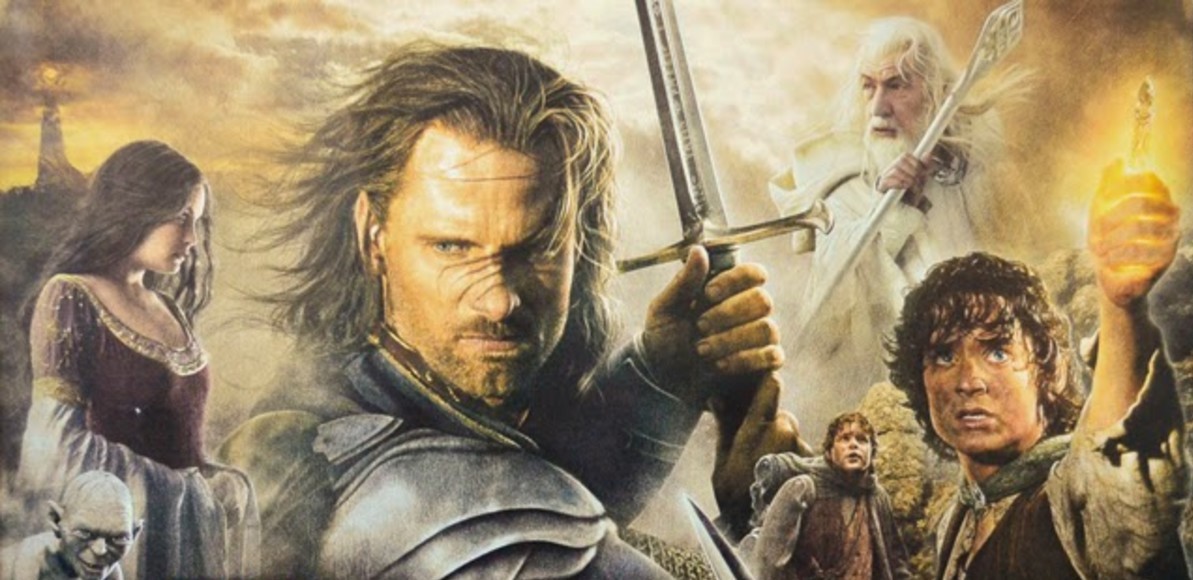
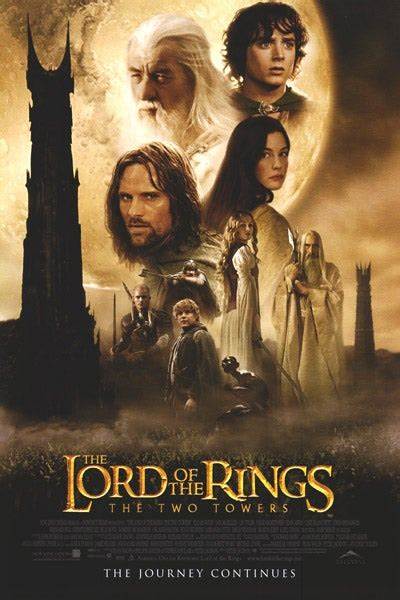
The Fellowship face one final battle in the conclusion of Jackson’s stunning trilogy |
Director: Peter Jackson
Cast: Elijah Wood (Frodo Baggins), Ian McKellen (Gandalf), Viggo Mortensen (Aragorn), Sean Astin (Samwise Gamgee), Andy Serkis (Gollum), Billy Boyd (Peregrin Took), Dominic Monaghan (Meriadoc Brandybuck), John Rhys-Davies (Gimli), Orlando Bloom (Legolas), Bernard Hill (Theoden), Miranda Otto (Eowyn), David Wenham (Faramir), Karl Urban (Eomer), Hugo Weaving (Elrond), Liv Tyler (Arwen), Cate Blanchett (Galadriel), John Noble (Denethor), Ian Holm (Bilbo), Christopher Lee (Saruman), Brad Dourif (Grima Wormtongue), Sean Bean (Boromir)
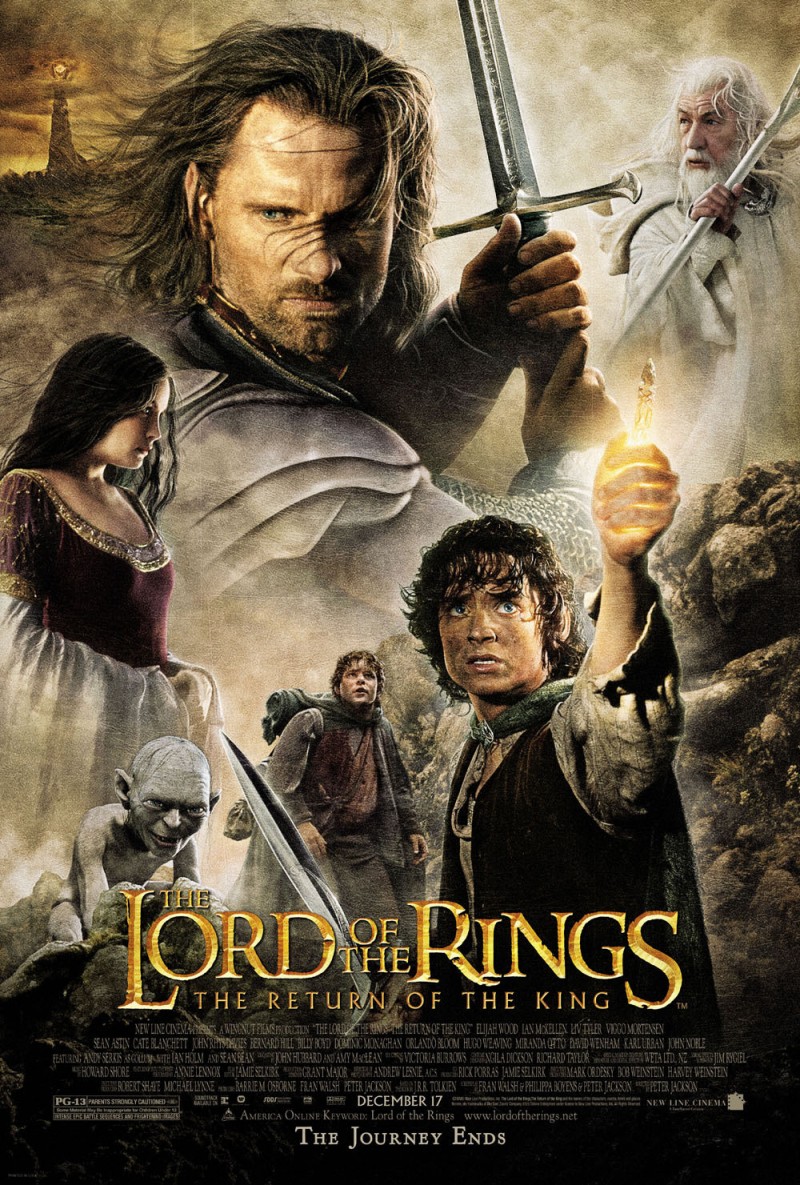
By the time the third film in Jackson’s Lord of the Rings trilogy came out, we all knew this was something very special. Readers of Empiremagazine voted it the 9th Best Film Ever Made the month it was released. It was showered with awards, winning every Oscar it was nominated for (11, including three for Jackson) and grossed over a billion dollars worldwide. The Return of the King is a landmark – and it’s a stunning sign-off for a triumphant trilogy.
Frodo (Elijah Wood) and Sam (Sean Astin) are even closer now to Mount Doom, guided by the treacherous former ring-bearer Gollum (Andy Serkis). While they must negotiate the dangers of Mordor, Sauron has sent his forces out to conquer Middle Earth. The city of Minas Tirith is his target. Facing an army of thousands of orcs, the city’s only hope is if Gandalf (Ian McKellen) can defend it long enough to allow Aragorn (Viggo Mortensen) – the man destined to become king of Gondor – to lead a relief force. Will Frodo resist temptation and destroy the ring? And will Aragorn be able to defend the city and become its king?
I think it’s fair to say, with books as widely loved as this, no one is going to agree with every single decision Jackson and fellow writers Fran Walsh and Phillipa Boyens made. Here again, changes have been made – famously the scouring of the Shire that closes the novel has been cut (with Saruman dispatched in the opening scenes of the extended edition). What the screenplay seeks to do is increase the pace and tension – it’s probably why Denethor, leader of Gondor, is reinvented as an antagonist (of which more later) and events charge ahead with a relentless forward motion. There is no stopping to catch breath here: there is always a new crisis to solve.
Where changes have been made, they largely have a positive impact. For example, the film takes the decision to introduce conflict between Frodo and Sam – as well as increasing further the scheming malice of Gollum – by having the disturbed ring-addict manipulate the two hobbits into a falling out. This allows Frodo to enter the lair of the giant spider Shelob (a disgustingly visceral creation) alone. Not only does this make Frodo more vulnerable, it also increases the bravery and nobility of Sam, by having him return to save the day (and allow for a classic Hollywood nick-of-time entrance).
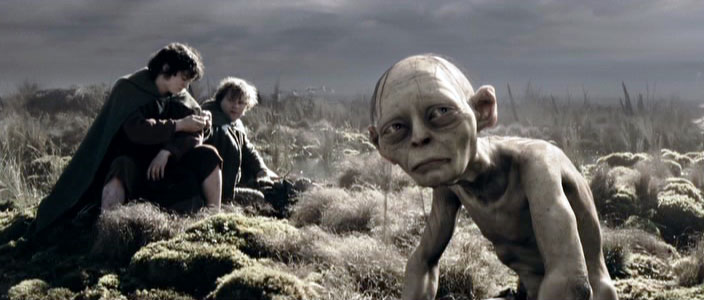
The change also adds to the devious brilliance of Gollum, once again superbly played by Andy Serkis. After spending much of The Two Towers bringing out the depth and sadness in this fragile character, The Return of the King carefully shows how this doesn’t excuse his fundamental ruthlessness. The film opens with a flashback showing Smeagol finding the ring, serving as a neat reminder of the Ring’s fundamental wickedness: within seconds its pushes Smeagol to murder his best friend. The sequence following Smeagol’s moral and physical collapse neatly reminds us of its danger and also how close Frodo is to all this happening to him.
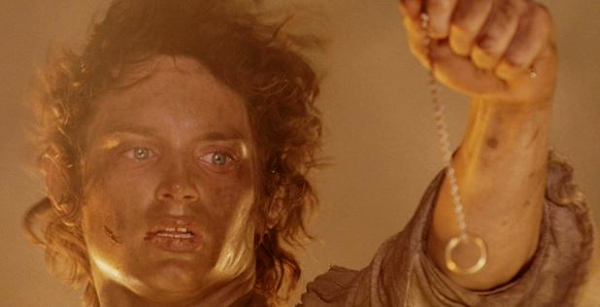
Frodo’s suffering and painful growing maturity is more central here. Wood brilliantly charts Frodo’s continuing moral and emotional decline under the Ring’s influence. Increasingly a physical wreck, Jackson carefully lets the suspicion grow that Frodo’s not going to be capable of chucking the ring away. Balancing this, Astin’s Sam Gamgee (the most heartfelt and affecting performance) becomes the moral centre, self-sacrificing, optimistic and fundamentally decent – a beacon of light in the grimness of Mordor.
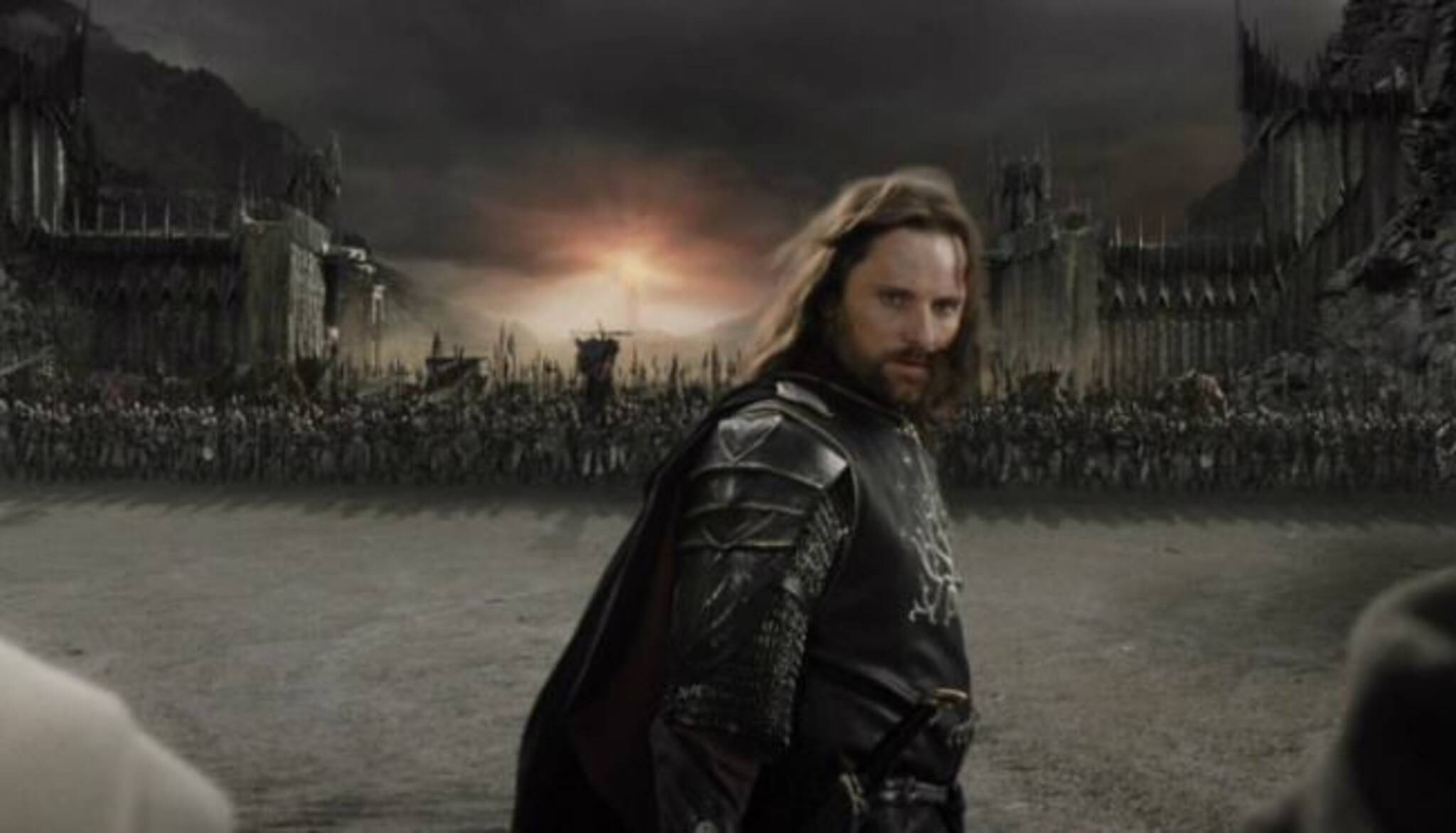
Again, Jackson ups the stakes, with TROK taking place on the grandest scale you could imagine. The battle sequences are breath-taking in their depth and ambition. But, as with the other films, Jackson knows the scale counts for nothing if you didn’t care about the characters at its heart. So, while the events are epically earth-shattering, the film always brings us back to simple emotion. Even in the siege of Gondor, it finds time for a quiet moment of humanity between Gandalf and Pippin.
But those battle scenes are still stunning. The orc armies are terrifyingly vast, while the strafing run of the airborne Nazgul (soldiers snatched from towers are thrown hundreds of feet to their deaths) adds to the sense that victory is hopeless. Soldiers fight desperately for their, and others, lives. The film even tops the Two Towers’ charge of the Rohirrim with a stunningly rousing charge involving thousands of horses into the massed ranks of Orc (and tops that minutes later with a second change accompanied by a sweeping camera movement and swelling musical cue that is just about perfect).
Jackson brilliantly communicates how much the stakes are against our heroes. We really feel their bravery and desperation as they take on impossible odds – and it’s that which really gives the scenes their power, not the scale or the special effects. No moment is lost without bringing us back to moments of bravery and vulnerability from our leads. There are powerful moments of warmth, kindness, loyalty and generosity throughout. It’s finally what makes the film so effective – it’s a tribute to the power of friendship.
It’s all powered with a beautifully operatic score by Howard Shore. Shore’s music captures perfectly the world of Tolkien. A few years after this, an ill-fated musical version of LOTR was launched – and flopped. Because, essentially, Shore has already turned these novels into a sort of opera-slash-concerto, with perfect themes for everything from martial orcs to whimsical hobbits. Some of the musical cues are so luscious and stirring, they make you want to stand and applaud. The music accompanying Gandalf’s rescue of the retreat from Osgiliath is a wonderful highlight, the triumphant and tense music for the Rohirrim charge is stunning, the score for our heroes leaving for the Undying Lands beautiful. LOTR is so beautifully scored, Shore’s work so gorgeous, LOTRis a film you could certainly watch with just the music playing and still understand it perfectly.
Of course, there are things you can criticise. Denethor – in the novel a portrait of corrupted nobility, his intelligence and pride turned to despair – is repositioned here as a sort of heartless WW1 General, gobbling food while his soldiers die and embracing a nihilistic death wish (although this change does allow for the absolutely beautiful Gandalf/Pippin beacon lighting sequence, in defiance of Denethor). It’s not helped by Noble’s lip-smacking performance, stripping the character of nuance. It’s gives Gandalf more to struggle against, but it’s a crude approach for a character who would have worked better as a mis-guided elitist rather than a crass, hissable villain.
Lots of people have had a pop at the multiple endings as well. Jackson certainly teases us a little too much with fades to black. But I’d argue the lack of a definitive full stop adds greater depth to the story. Tolkien was partly inspired by his experiences in WW1. In that war, the hell of the trenches came to an end, but people’s lives didn’t end with a triumphant parade. Instead, they needed to return home and adjust back into civilian life. I think it’s powerfully affecting that the hobbits return to an unscoured Shire, which hasn’t changed at all while they (and us) have seen Middle Earth torn apart. And it adds real force to why Frodo, in particular, can’t return to “life as normal”.

It gives a powerfully moving, bitter-sweet ending and, I think, brings out a rich, emotional message from Tolkien’s story often missed: Frodo and his friends are fighting to protect their home, but find that they have changed so much they can never settle back into that home in the same way again. It’s something soldiers serving in WW1 experienced, and it feels fitting echoed in Jackson’s LOTR.
Jackson’s LOTR will always spark conversations around faithfulness and otherwise to the source material. Not everyone will agree with every choice. But surely no one can argue with the majesty, scale and wonder of these films, the sublimely perfect casting choices, or the loving detail in every touch of the design. When I first saw Return of the King in the cinema, the audience got to their feet and applauded. You can’t blame them: watch this and you are watching something very special, a true landmark in cinema.



 Movie Musings