Tag: Morgan Freeman

Glory (1989)

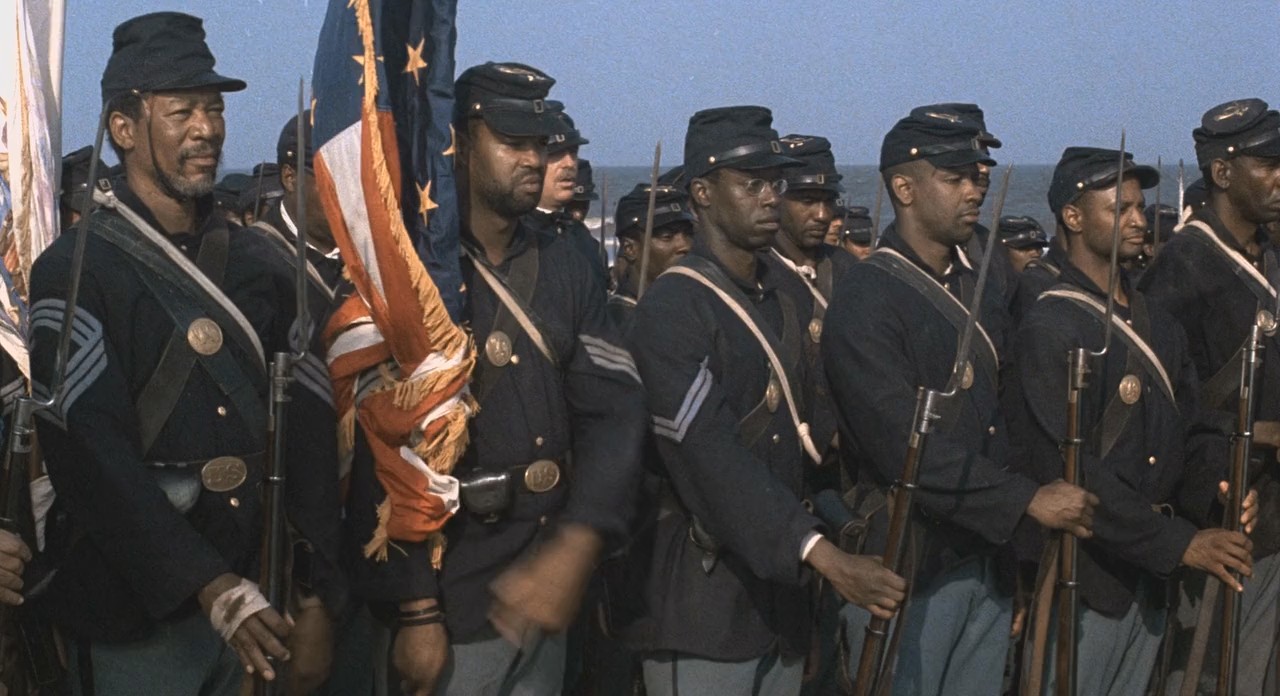
Morgan Freeman and Denzel Washington are among the first black American soldier in Glory

Director: Edward Zwick

Cast: Matthew Broderick (Colonel Robert Gould Shaw), Denzel Washington (Pvt Silas Trip), Cary Elwes (Major Cabot Forbes), Morgan Freeman (Sgt Major John Rawlins), Andre Braugher (Cpl Thomas Searles), Jihmi Kennedy (Pt Jupiter Sharts), Cliff De Young (Colonel James Montgomery), Alan North (Governor John Albion Andrew), John Finn (Sgt Mulcahy), Bob Gunton (General Charles Garrison Harker), Jay O Sanders (General George Crockett Strong)

The American Civil War started over slavery, but it took a long time for either side to admit it was a fight about slavery. Racism abounded on both sides, and it was a fight in which black Americans may have been the subject, but were rarely invited to join. Glory covers this point of history, and specifically the first all-black regiment and its struggle to be recognised as equal to the other regiments in the army. 

Wounded at the Battle of Antietam in September 1862, Robert Gould Shaw (Matthew Broderick) returns home to Massachusetts and accepts command of the first all-black regiment, which is currently being raised by abolitionists in the state. With his friend Cabot Forbes (Cary Elwes) as second-in-command (no one was progressive enough to actually allow black officers for the regiment), he recruits a wide range of black Americans, from free-man and bookish intellectual Thomas Searles (Andre Braugher) – an old friend of Robert and Cabot – to former slaves such as the wise John Rawlins (Morgan Freeman) and the resentful Silas Trip (Denzel Washington). Training is a struggle, with the army denying the regiment supplies and support, and it’s an equal struggle when they reach the front line to be recognised for duties other than looting and latrine digging. Will the Massachusetts 54th be given the chance to prove itself in the front line – and establish a black man can fight as hard and bravely as a white man can?

Edward Zwick’s beautifully filmed, carefully re-created historical epic set the tone for much of his future career. It’s an often overly-sentimental film straining for a very self-conscious sense of importance, weighed down by the pride at the “message” it is carrying. It often does hit the mark with presenting scenes that carry emotional force – but then seeing as it treats nearly every scene as being a “moment” that should move us (with James Horner’s choral manipulation working double time to get us experiencing feelings), it’s no wonder that it succeeds sometimes.

Which is not to say the message it presents isn’t an important one. Black Americans have often been pushed into the margins of American Civil War history. Or worst of all presented as the victims, reliant on the courage and bravery of the abolitionists of the North to save them from slavery in the South. Until Glory it was very rare for anything to push their stories front and centre – or to tell a story where former slaves were allowed to fight their own battles and choose their own destinies. 

It’s one of the strongest marks of the film: these are soldiers unlike any other, who enter battles with less concern about their own survival, and more about having the chance to live as freemen and to make a mark on the world. To show that they, and people like them, could do just as a white man could do. And if they had to die to do that, better to live a day on their feet as freemen then a lifetime on their knees. It’s the principle emotional message of the film, and something Zwick translates with some skill, even if he frequently overeggs the pudding while doing so.

However, with such a strong message, it’s a shame so much of the film is filtered through the experience of its white lead character. For many of the films of the 80s and 90s dealing with these issues – Cry Freedom, the Steve Biko biopic, with Biko as a supporting character to his white South African journalist friend, being perhaps the key example – it was essential to have a white man at the centre, as if worried that audiences couldn’t understand the story they were seeing unless they had it filtered through the perception of someone who looks a bit more like them.

Matthew Broderick takes on the lead role here of Shaw – with the film giving a significant slice of its running time to its coming-of-age theme of Shaw learning to become a leader of men – and while the character is meant to be callow and an unlikely Colonel, it doesn’t help that Broderick lacks the charisma for the part. Perhaps he is a little too lightweight an actor for such an enterprise, for a film that demands greater force of character (you can imagine Tom Cruise doing a much finer job in the role).  Similarly, the familiar beats of a young man learning how to lead feel trivial compared to the life-and-death issues facing his soldiers.

But too often Zwick’s film returns us to Shaw’s point-of-view, the narrative filtering so much of the action through his perceptions and decisions that the black soldiers become supporting actors in their own stories. Broderick is not helped by the soldiers being played by some of the finest American actors of the last 30 years. Braugher is fabulous in the thankless role of the bookish man who must grow a spine. Morgan Freeman established a persona – the wise and level headed older man, who will not let hate and fury define his life and his choices – that would last him for the rest of his career, and is superb (his Oscar nomination for Driving Miss Daisy is probably the only thing that led to him not getting a nod for this film).
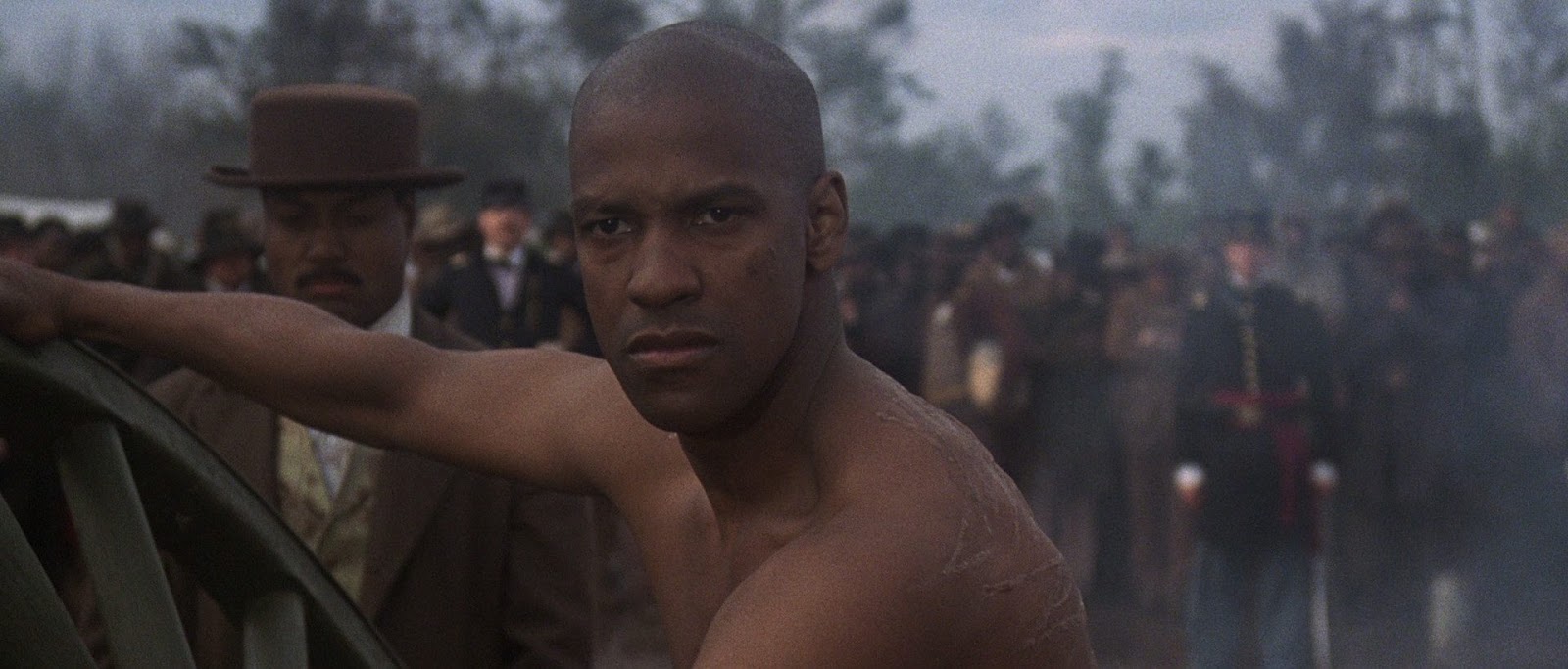
Denzel Washington took home an Oscar as the bitter, angry Trip – and it’s the sort of role an actor seizes with relish. Washington fills every frame with his rage at the system, his inarticulate, indiscriminate anger lashing out in every direction. It’s the fury of a man who has had all his choices taken from him in life, and would rather destroy things than run the risk of allowing himself to become committed to something, or form a bond. Washington probably won the Oscar alone for the astonishing scene where he silently, defiantly accepts a whipping (on a body covered with scars) for missing a curfew. He’s an elemental force of nature in the film.

There is plenty of strong stuff in Zwick’s work, but the film itself overplays its hand frequently. Moments of emotion are played so heavily to the hilt they sometimes fail to have an impact. It wants you to know at every turn that you are watching a film with an important social message – and the speechifying at points put into the mouths of the characters runs dry. While superbly made – veteran photographer Freddie Francis’ work is beautiful (and Oscar winning) – it’s a heavy-handed, overly pleased with itself film that knows all too well that it is about an important subject. While sometimes it lands – often in quieter moments, particularly those where Freeman and Washington are allowed to simply be human without overindulgent music cues hammering home the emotions – at others it comes across as too much.

Batman Begins (2005)

Christian Bale redeems the Batman in Batman Begins

Director: Christopher Nolan

Cast: Christian Bale (Bruce Wayne/Batman), Michael Caine (Alfred Pennyworth), Liam Neeson (Henri Ducard), Katie Holmes (Rachel Dawes), Gary Oldman (Lt James Gordon), Morgan Freeman (Lucius Fox), Cillian Murphy (Dr Jonathan Crane/Scarecrow), Tom Wilkinson (Carmine Falcone), Rutger Hauer (William Earle), Ken Watanabe (Ra’s al Ghul), Mark Boone Jnr (Detective Arnold Flass), Linus Roache (Thomas Wayne), Colin McFarlane (Commissioner Loeb)

In the mid-2000s, Batman on film was a joke. A series that started with the Gothic darkness of Tim Burton had collapsed into the pantomime campness of Joel Schumacher. The franchise was functionally dead, so why hot burn it all down and start again from scratch. It was a radical idea – one of the first big “reboots” of a comic book saga. It was a triumphant success, changing the rule book for a host of film series and one of the most influential movies from the last 15 years. 

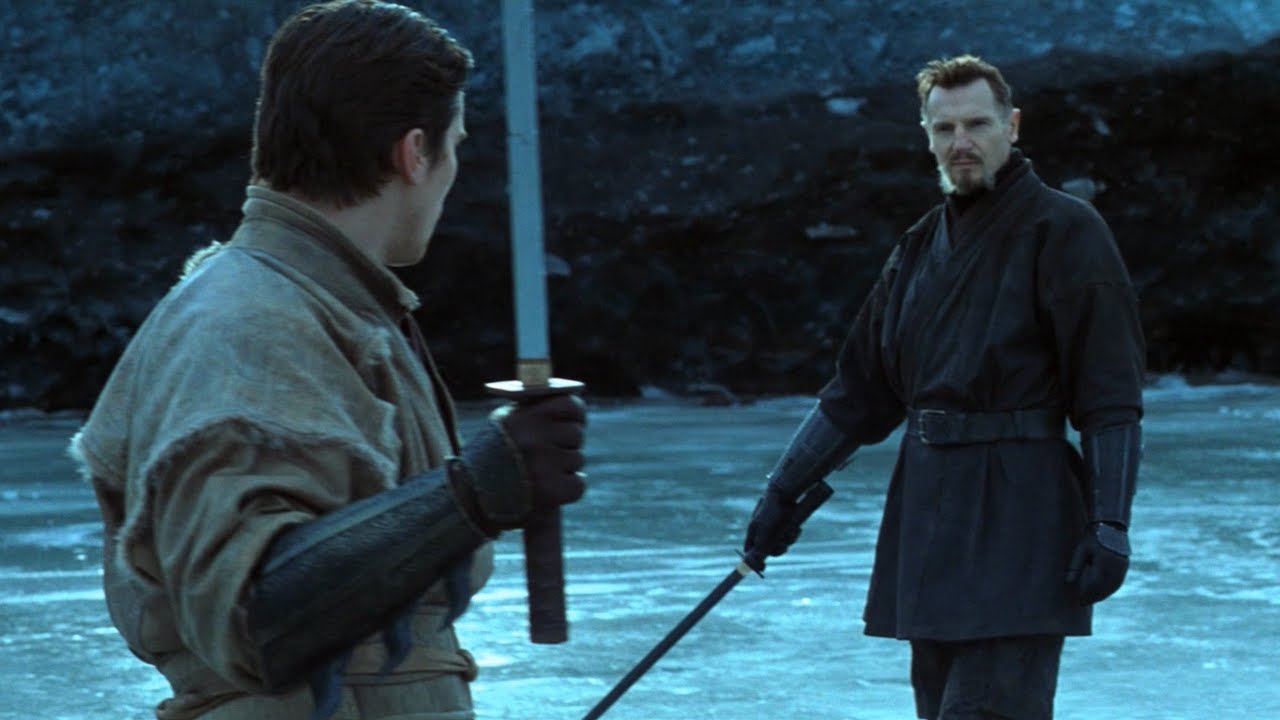
After the death of his parents, Bruce Wayne’s (Christian Bale) life drifts as he is unable to get over his own guilt at believing he was partly responsible for getting his parents into a situation where they were killed. In a Gotham run by organised crime boss Carmine Falcone (Tom Wilkinson), Bruce exiles himself for years to try and learn the skills he will need to return and try and find some peace and deal with his fears by tackling crime head on. Recruited by his mentor Henri Ducard (Liam Neeson) into the League of Shadows – a dark group of ninja inspired vigilantes – Wayne eventually rejects the group’s ruthlessness and returns to Gotham. There, working with his old guardian and family butler Alfred (Michael Caine), he starts to build a new identity: by day shallow playboy Bruce Wayne, by night The Bat Man ruthless vigilante, fighting crime. 

Why did it work so well? Because Christopher Nolan understood that the key to making a film that will kickstart a series and win the love of both the casual viewer and the fan is ‘simple’ – just make the film good. Make it a film powered by ideas, characters, a deliberate story and intriguing beats and audiences will love it. Make it a lowest common denominator film offering only bangs and crashes and ‘fan service’ and audiences will reject it. Because at the end of the day we know when we are being manipulated, and the assumption too many people behind making films like that is that people don’t really want intelligent films. They do.

Batman Begins works so well because it places character front-and-centre in a way no other Batman film – and very few superhero films – had before. Unlike all the other Batman films, here Bruce Wayne (and it is definitely Bruce Wayne) was the lead character, not a staid stick-in-the-mud around whom more colourful villains danced. Combine that with Nolan’s inspired idea to return Batman to something resembling a real-world, a more grounded, recognisable version of Gotham which has problems with organised crime that we could recognise from the real world. This are intelligent, inspired decisions that instantly allowed the film to take on a thematic and narrative depth the other Batman films had lacked. 

It’s Bruce Wayne’s psyche at the centre of the film – in an excellent performance of emotional honesty and physical commitment by Christian Bale – and his attempts to find solace in a sense of duty from his fears and his loss of a father figure. It’s Fear that is possibly one of the central themes of Batman Begins and the power it has over us. Fear is what Bruce must master – on a visceral level his fear of bats, on a deeper level his fear that he has failed his parents by failing the city they loved – and fear is the weapon all the villains use. Fear is the petrol for Falcone and his gangsters. Fear is the weapon Batman utilises. Fear is the study of choice of disturbed psychologist Joanthan Crane (a smarmily unsettling Cillian Murphy). A weaponised Fear gas is the WMD that the film’s villains intend to introduce into Gotham.

Understanding fear, working with it, finding its strengths and using these for good is at the core of the film. It’s there from the first beat – a traumatised young Bruce attacked by bats after falling into an abandoned well they nest in – and it’s there at the very end. Bruce’s training with mentor Ducard is as much about understanding and living with these terrors as it is physical prowess. His impact as Batman on the city is central towards channelling his own fears – bats, the dark, violence on an empty street – into universal fears he can use to terrorise criminals. 

It’s all part of the film’s quest to work out who Bruce Wayne is. With Bale superb at the centre, the film throws a host of potential father characters at Bruce, all offering different influences. He has no less than three father figures, in his father (a fine performance of decency by Linus Roache), the austere and understanding Ducard (Neeson channelling and inverting brilliantly his natural gravitas and calm) and the firm but fair and caring Alfred (Michael Caine quite brilliantly opening up a whole new career chapter). 

The influences are all there for Bruce to work out. Should he follow a path of compassionate justice as his father would do? How much muscular firmness and earnest duty, such as Alfred represents, should this be spiced with? How does Ducard’s increasingly extreme views of justice, combat and social order play into this? Which influence will win out over Bruce – or rather how will he combine all this into his own rules? It’s telling that the film’s villain turns out to be a dark false-father figure – the entire film is Bruce’s quest to come to turn with his own legacy and allow himself to accept his father and forgive himself.

It’s also telling that both hero and villain are driven by similar (but strikingly different) agendas. Both are looking to impose justice on the world. But where Bruce sees this as compassion with a punch – a necessary evil, protecting the good in the world while bringing down the evil – the League of Shadows see their mission as one of imposing Justice through chaos, of letting a world destroy itself so that a better one can rise from the ashes. 

Its ideas like this that pepper Christopher Nolan’s film. Throw in his superb film-making abilities and you have an absolute treat. Nolan’s direction is spot-on, superbly assembled with a mastery over character and story-telling. Beautifully designed, shot and edited it’s a perfect mixture of comic book rules and logic – the very idea of the League of Shadows – with the real world perils of crime, vigilanteeism and violence. With a superb cast led by Bale – and Gary Oldman also deserves mention, Nolan finally unleashing the decency, honesty and kindness in the actor that revitalised his career – Batman Begins relaunched Batman as a serious and intelligent series, that matched spectacle and excitement (and there is tonnes of it) with weighty themes, fine acting and superb film making. There is a reason why it’s been a touchstone for every reboot of a series made since.

Now You See Me (2013)

A gang of magicians get up to all sorts of antics in light and empty caper Now You See Me

Director: Louis Leterrier

Cast: Jesse Eisenberg (J Daniel Atlas), Woody Harrelson (Merritt McKinney), Isla Fisher (Henley Reeves), Dave Franco (Jack Wilder), Mark Ruffalo (Agent Dylan Rhodes), Mélanie Laurent (Agent Alma Dray), Morgan Freeman (Thaddeus Bradley), Michael Caine (Arthur Tressler), Michael Kelly (Agent Fuller), Common (Agent Evans)

Sometimes the simplest tricks are the best. Remember David Blaine? All his huge illusions and stunts weren’t worth thruppence compared to the simple awe of watching him perform card tricks in front of stunned regular folks in the streets. This film is pretty much the same, a dazzlingly shot con-trick of a film that wants to reveal a stream of tricks that it was holding up its sleeves over its runtime, each twist being less and less impactful. The most magic thing in this is the sleight of hand card trick Jesse Eisenberg performs at the start of the film – after that it’s like watching your soul drain away over two hours under an onslaught of wham-bam twists.

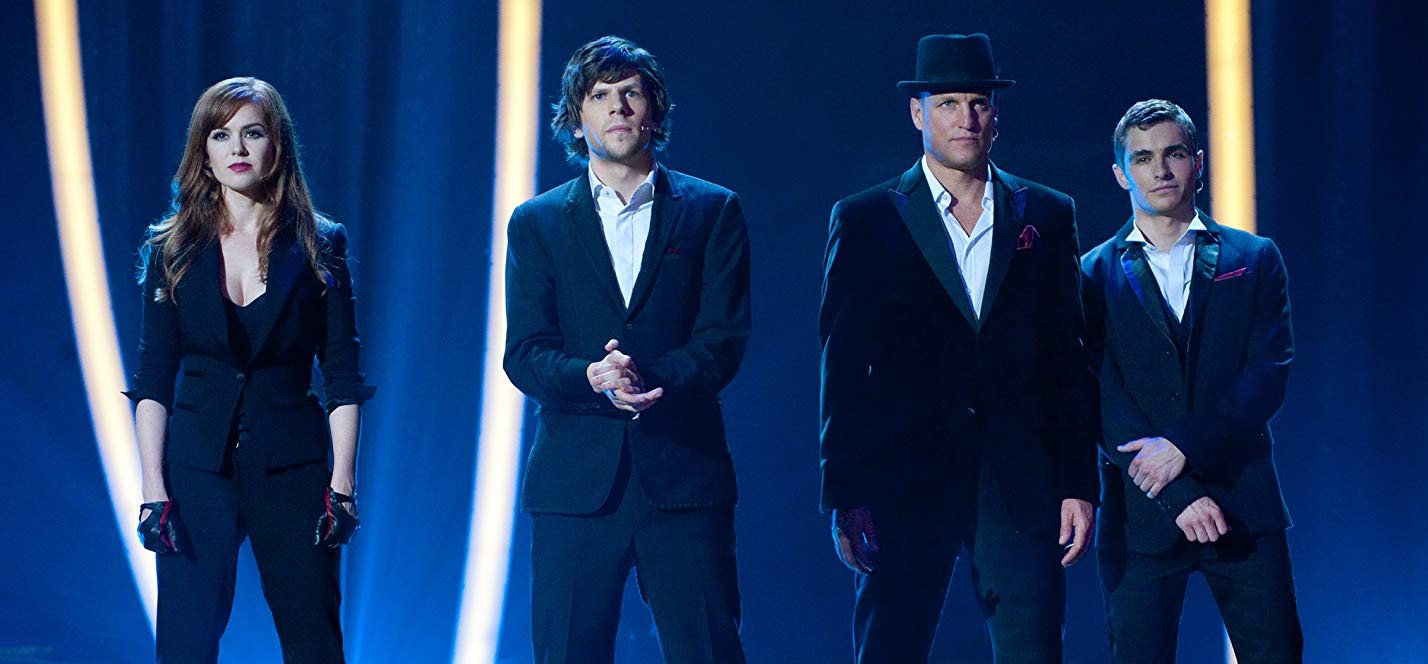
Anyway, J Daniel Atlas (Jesse Eisenberg), Merritt McKinney (Woody Harrelson), Henley Reeves (Isla Fisher) and Jack Wilder (Dave Franco) are a ragtag bunch of professional magicians, hypnotists, stunt performers and conmen who are recruited by a shadowy magical organisation known only as The Eye for reasons unknown. One year later they are performing huge stadium gigs, with the support of millionaire insurance man Arthur Tressler (Michael Caine), as The Four Horseman. During their first show they magic millions of Euros out of a bank in Paris while performing in Las Vegas – a stunt that attracts the attention of the FBI and Interpol who send agents Dylan Rhodes (Mark Ruffalo) and Alma Dray (Mélanie Laurent) to investigate. Meanwhile, the Horsemen are on the run from the law, and still working towards ends unknown, while dodging magic debunker Thaddeus Bradley (Morgan Freeman). But is anything as it seems?

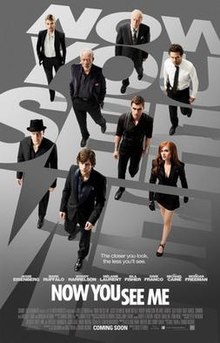
The answer of course is no. But then what do you expect from a film that proudly announces (frequently) “the closer you look, the less you will see”. It’s a pretty good message for the film – but not in a good way – as Now You See Me is as insubstantial as air, a puff of showmanship so pleased with its twists and tricks that it completely fails to have a heart. By the time we get to the end of the film and realise almost everything we saw over its runtime wasn’t real you’ll feel disconnected rather than engaged.

In fact, as a heist/con movie, this isn’t that good. The formula depends on you thinking you’ve got it worked out and then BOOM you realise you didn’t. It also by and large depends on charming, playful leads (think Newman and Redford in The Sting) and on a sort of consistent logic where you get the satisfaction of pieces you didn’t even notice falling into place as vital clues. Now You See Me does none of this.

In fact, it’s so pleased to tell you that it pulled the wool over your eyes that it rushes several of its reveals with an indecent haste. It largely fails to sprinkle clues throughout the film and basically plays unfair with the whole audience. There are things you can never hope to work out as they are based on not being shown vital clues early on. Characters and the film carefully never reveal any hints of true allegiances or motivations until the last possible minute.

In fact it’s one of those films where most of the characters are, for large chunks of time, really pretending to be someone else. This can work, but it doesn’t here as most of the Horsemen are basically rather unlikeable arrogant arseholes. The four actors mostly coast through basic set-ups, and you’ll be pleased when they fade into the background in the second half of the move (all four of them are basically decoy protagonists, and the film shelves them when it can no longer think of a way of hiding their true motivations in plain sight any more). The real lead is actually Mark Ruffalo’s FBI agent, and Ruffalo is a charming, likeable, schleppy presence that you can root for, even if the plot takes us on a character journey with him that makes no real sense (the clue for this is the film’s references to a magician who buried a card in a tree years earlier for one trick). 

It’s flashy in its film making, and Leterrier has a workmanlike touch with making things look cooland putting the camera in interesting places. He has no real idea of character or pacing – the film is frequently quick, quick, slow – and he creates a film here that has nowhere near the brains it thinks it has. It’s all flash and no substance. Look too closely and you’ll see nothing there.

Oblivion (2013)

Tom Cruise goes all Top Gun (Olga Kurylenko is along for the ride, pretty much all she does in the movie) in would-be intellectual sci-fi thriller Oblivion

Director: Joseph Kosinski

Cast: Tom Cruise (Jack Harper), Morgan Freeman (Malcolm Beech), Olga Kurylenko (Julia Rusakova), Andrea Riseborough (Victoria Olsen), Nikolaj Coster-Waldau (Sykes), Melissa Leo (Sally)

Spoilers: I’m going to discuss the entire content of the plot from the third paragraph. You’ve been warned!

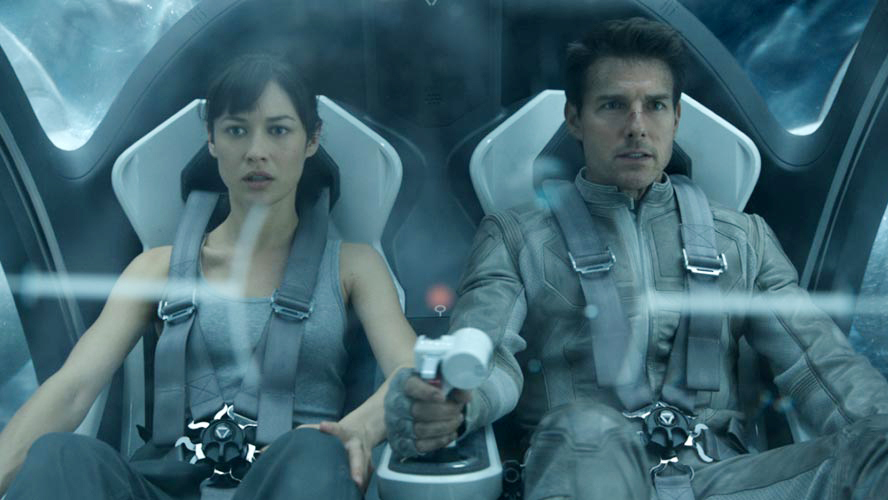
It’s 60 years after an alien attack. The world has been destroyed, cities lie in ruins, and mankind has fled to Jupiter’s moon Titan. Earth is being drained of its last few resources to power the new civilisation on Titan by massive machines. Drones fly around the planet, protecting the machines from the last surviving alien forces still on Earth. The drones are tended by Jack Harper (Tom Cruise) and Vika Wilson (Andrea Riseborough), whose memories have been wiped for security reasons and who are dedicated to keeping the drones functioning. 

Or is this all a lie?

Well it won’t be a huge surprise to hear that it is, of course. And there are some decent ideas in Kosinski’s film: the twist reveal that the organisation Harper and Wilson are working so hard to preserve is in fact the very alien invaders they so hate, or that the strange figures on the planet they are helping the drones to kill are actually the last surviving remnants of mankind. Harper and Wilson are clones of NASA astronauts captured 60 years ago and replicated over and over again in order to serve the robots. The “Tet” in space that they believe is their HQ is the alien mothership. These are all decent twists. So why do they combine together to have so little real impact?

I think it’s because Kosinski rushes the film. He’s so pleased with the narrative rug pulls that he seems to want to reveal many of them one after the other. Additionally, the biggest twist – Tom Cruise is actually working for the baddies! – immediately makes most of the rest easy to predict. Not least the constant references to Base 49 where he and Vika work – sure enough it’s a clone number, so the planet is filled with clones of this pair. The only thing stopping them bumping into each other is that they have been told everything outside of their “patrol zone” is irradiated and they must never enter it. 

All of this world building – and the film does take its time establishing it a piece at a time early on – is interesting stuff. But it loses its way once the film surrenders itself to a string of reveals that overwhelm it. By the time we are watching super-man Jack shooting down drones from his helicopter, the film seems to have lost the more meditative start. With Jack at first we get a sense of a guy longing to find more depth to live with. But the film loses this sense, with Jack become steadily less interesting the more we find out about him.

Then once you accept the idea of Cruise and Riseborough being endlessly cloned, the logic gap starts to click into place. It’s never explained why the aliens are so reliant on human engineers for their drones – if they have conquered loads of planets before without them, why do they need them here? Furthermore, we are told the first wave of Jacks were mindless soldiers who killed everyone on the planet – why then are these engineer Jacks and Vikas given so much independent thought? Why not just make them automatons? Why clone them and then lie to them about who they are working for – why not just program them to obey the robots?

Then after a slow build of questions and revelations about Jack’s world, we get a standard Independence Day style mission up into space to “blow up the mother ship”. Of course this is a mission that only your man Tom can do. And do it he does, because Tom Gotta Do What Tom Gotta Do. It’s all a rather disappointing resolution to a film that toys around with being something a bit more complex and interesting earlier on.

Ah, Tom Cruise. To be honest he’s probably miscast here. There is something so incredibly, movie-star strong about Cruise that he somehow overpowers the shocks and make them seem silly. On top of which, the part is another ego-stroke. Jack is the ultimate man’s man – he fixes things, he loves sports, he builds a cabin in the woods, he’s clearly dynamite in the sack; but he’s also sensitive and caring and in touch with his feelings. On top of which both female characters in the film – Riseborough’s sadly besotted Vika and Kurylenko’s mysterious astronaut who lands on Earth and awakens strange memories in Jack – are both pathetic ciphers who need Tom’s help for everything, while of course also being way, way, way too young for the Cruiser.

But the film still looks good, and still has some very interesting twists. The design and visuals are faultless – in fact they seem to become the main focus, all those long shots of deserted, sand consumed parts of New York. Its main problem is that it’s low on themes – I guess it’s trying to make a case that humanity can’t be bashed out of us, no matter how many times we try and clone it out of someone – but it gets lost a bit in plot mechanics and the delight the director has in executing them. For a film that only really has four characters in it, I still felt they were hazy and undefined. A lot is left to the viewer’s own suppositions, so the film gets pretty reliant on your adding the depth it needs. If you are inclined to do so, this works. But the essential dramatic thrust of the film itself isn’t compelling enough to make you willing to make the effort the film needs.

Oblivion wants to be the next big, thoughtful, twist-filled, sci-fi epic. But it just doesn’t have enough interest and complexity to really engage the viewer. Instead it all becomes a bit forgettable – not because it’s bad but because, at the end of the day, it’s nothing special.

The Sum of All Fears (2002)

Morgan Freeman and Ben Affleck save the world from nuclear armageddon

Director: Phil Alden Robinson
Cast: Ben Affleck (Jack Ryan), Morgan Freeman (William Cabot), Bridget Moynahan (Dr. Catherine Muller), James Cromwell (President J. Robert Fowler), Liev Schreiber (John Clark), Ciarán Hinds (President Alexander Nemerov), Alan Bates (Richard Dressler), Michael Byrne (Anatoly Grushkov), Colm Feore (Olson), Ron Rifkin (Sidney Owens), Bruce McGill (Gene Revell), Philip Baker Hall (David Becker) 

In the aftermath of 9/11, people debated whether that atrocity would lead to a change in how Hollywood made blockbusters. Would the public still have the taste for American landmarks being destroyed in the name of entertainment? I guess the answer was “sure they would”, because less than a year later Baltimore was being wiped out by a nuke in The Sum of All Fears. And people generally did find it entertaining. As they should: this is not a smart film, but it is fun, and with hardly any violence or swearing it’s a perfect “all generations” viewing thriller.

The fourth entry in the on-again, off-again Jack Ryan franchise, a series of loosely connected but enjoyable films based on Tom Clancy’s novels, this reboots the saga after two entertaining airport-novel style films starring Harrison Ford. Ryan (Ben Affleck) is now a young CIA analyst who is suddenly thrust centre stage in the Agency when Alexander Nemerov (Ciarán Hinds) rises to power in Russia. Before he knows it, he is working closely with CIA chief William Cabot (Morgan Freeman) and briefing the President (James Cromwell). Working with agent John Clark (Liev Schreiber), Ryan investigates rogue nuclear weapons in Russia, little knowing that it is part of a fiendish plan by European neo-Nazis, led by Richard Dressler (Alan Bates), to plunge Russia and the US into a nuclear confrontation.

First off the bat, Tom Clancy hated this film. He even does a commentary on the DVD which is a scene-by-scene breakdown of all the things he doesn’t like and the terrible changes he felt had been made from his book. I can see why he’s upset, but this is actually a very entertaining, solid, slightly old-fashioned piece of film-making. Clancy’s books aim to be “a few degrees to the left” of reality, to present something that could happen. This film is more of a Bond movie, not least in its choice of baddies. The book uses Arab terrorists. Wisely (I think) the film changes this to a set of Bond-villain like Nazis, embodied by Alan Bates’ enjoyable scenery-chewing performance as a slightly camp chain-smoking Nazi (“Ze Fuhrer vasn’t crazee. He vas stoopid”). There is even a scene where one of the plotters, Goldfinger-style, announces ’I will have no part in this madness’ only to be swiftly bumped off. Clancy hated it, but it’s something a little different and also enjoyably silly.

Besides, you might have felt there was enough vibe of reality in there for Clancy with the reaction to the big one being dropped on Baltimore. The build-up to this sequence is very well done, cut and shot with tension, and Jerry Goldsmith’s score really effectively helps with this build. It’s also quite shocking to actually see the plan succeed: and the shots of a mushroom cloud over the city are presented with a sombre sorrow. There is probably more Clancy criticism for Ryan’s effortless travel around the irradiated city (and his totally unaffected cell phone) but this sequence is still damn good.

Similarly skilfully done is the reaction of the politicians. Daringly, the US politicians are to a man sweaty, stressed old white guys (Air Force One takes off to the accompaniment of them screaming at each other). One of them even has a heart attack. The American politicians may be reluctant – but they are the fastest to rush towards pushing the button. They are also shown to be hopelessly lacking judgement when it comes to appraising the likely reactions to their decisions: one reassures the President that the Russians won’t respond to a full nuclear strike against military targets! The fast build from angry words to a bombers is terrifically done.

The Russians are similarly twitchy – and unlike the Americans, far more susceptible to bribery and collaboration with our villains – but interestingly their President is the “reasonable man”, whom Ryan (and the audience) respects. Charismatically embodied by that wonderful character actor Ciarán Hinds (the film deservedly brought Hinds to America’s attention and he hasn’t looked back since), Nemerov is the wisest, smartest guy in the room – a realist and level-headed man. Hinds is actually the stand-out in the film, superbly backed up by Michael Byrne as a shady (but surprisingly cuddly) KGB fixer.

The build-up to the remorselessly exciting nuke and aftermath sequences is pretty traditional fare but well directed by Phil Alden Robinson and a very good cast of actors largely deliver in their roles. Affleck at the time was heading into the height of his Bennifer unpopularity: he gives a decent performance as Ryan, but Ford is a tough act to follow and Affleck doesn’t quite have the same “ordinary-joe” quality Ford and Baldwin brought to it earlier. He also doesn’t quite have the leading man charisma the part needs to carry the film (Affleck’s best work is as a character actor, but he is trapped by his leading man looks). Fortunately Morgan Freeman, calmly contributing another of his wise mentor roles, offers sterling support. Schreiber and Cromwell are also good in key roles.

This is a very traditional, quite old-school thriller, inspired by a combination of Goldfinger and 1970s political thrillers. It’s not a special film – and not even the best in the franchise – but it is invariably entertaining, has a host of well-done scenes, and barrels along. Robinson also has an eye for tension in smaller sequences – a marvellously tense scene simply involves Ryan trying to get a card swipe machine to work – although he is less confident with some of the action. But in showing how quickly our trigger happy masters can push towards Armageddon, this is a film that seems to be endlessly relevant. And wouldn’t you rather have Nemerov of even Fowler running the US than Trump?

London Has Fallen (2016)

Rather appropriately Gerard Butler takes aim at us. After all the viewer is just about the only person he doesn’t kill in this film.

Director: Babak Najafi
Cast: Gerard Butler (Mike Banning), Aaron Eckhart (President Benjamin Asher), Morgan Freeman (Vice President Allan Trumbull), Alon Moni Aboutboul (Aamir Barkawi), Angela Bassett (Director Lynne Jacobs), Robert Forster (General Clegg), Melissa Leo (Secretary McMillan), Radha Mitchell (Leah Banning), Charlotte Riley (‘Jax’ Marshall), Jackie Earle Haley (DC Mason), Waleed Zuaiter (Kamran Barkawi), Colin Salmon (Com Kevin Hazard), Patrick Kennedy (John Lancaster)

Devoid of any sense of humour, decency,  charm or emotions at all this is a brainless and tasteless action film crammed to the gizoids with extreme knife based violence,  growled threats and paper thin characters none of whom are remotely interesting or engaging. It’s cast iron certainty, it’s self righteousness and brutality make it a deeply unpleasant, off-putting and unlikeable film.

Basically the UK PM is slain and the G8 assemble like besuited Avengers for the funeral. Unfortunately some terrorists have hatched a plan to wipe them out in revenge for a pre-credits missile strike and sure enough we have a series of assassinations in the opening seconds by villainous shady terrorists. Spreading the stereotypes fairly BTW the French leader is a yacht based dilantte, the Italian a geriatric lothario and the German a sour faced deadly serious Angela Merkel type.

The main problem with this is Gerard Butler. The film sinks completely under the weight of Butler’s self importance and chronic lack of humour . At no point in this film does Butler’s Mike Banning make any mistakes or offer up any form of human reaction such as fear or uncertainty. Compare him instead to John McClane and the moments of terror Willis dips into that role to humanise it. Also remember that Willis is charming and witty in that film. Butler however thinks alpha male certainty and grim faced contempt for everyone he meets (bar his bosses and a Scottish SAS captain) will endear us to his character. Instead it makes him border line terrifying – it would surely only take a wrong word, for Banning to turn his fury on an innocent bystander.

Mike Banning however is a violent psychopath, Butler thinking that brutally murdering a captive with a knife while growling some zenophobic one liner counts as wit. To be honest I’d be scared shitless if I was protected by this psycho who growls brutally from start to finish, all too clearly enjoying the mass killing. There is a vague attempt to humanise him with the introduction of a pregnant wife at home but instead you dread what values Banning is likely to invest the infant with in the future.

In fact the whole film has a horrible jingoism, xenophobia and racism running through its centre. It’s attitude to anything not American (or at a push British) is at best suspicion, at worst outright hatred. Anyone with a beef against America is twisted, evil, riven with jealousy and hatred of freedom and shucks we should cheer as Banning brutally tortures one of them in his final moments. America! Fuck Yeah! It gives patriotism a bad name.

The film passes the time if you enjoy seeing London destroyed (again) on film, and the body count of gruesome kills is high enough to satisfy anyone’s needs for violence, although the killing is so graphic and the film lingers so leeringly on each knifes plunge with the perversity of snuff film. A load of Brits (Colin Salmon, Charlotte Riley and Patrick Kennedy) dial in worried expressions from a control room (needless to say one of them is a traitor) while sportingly Morgan Freeman, Melissa Leo, Robert Forster and Jackie Earl Haley do similar jobs in a bunker in America.

But the film is almost proud of the fact it has nothing new to say at all and seems totally unaware of its fundamental unpleasantness. It’s actually a nasty, bigoted, small minded, cruel film that hates anything different. It thinks it has a Die Hard lightness of touch – but it really, really doesn’t. Butler is charmless and horrible and the film is revolting. Avoid it.