Tag: Mykelti Williamson

Con Air (1997)

Con Air (1997)

Big bangs and silly action abounds in Nicolas Cage’s enjoyable action epic

Director: Simon West

Cast: Nicolas Cage (Cameron Poe), John Cusack (US Marshal Vince Larkin), John Malkovich (Cyrus ‘The Virus’ Grissom), Steve Buscemi (Garland ‘The Marietta Mangler’ Greene), Ving Rhames (Nathan ‘Diamond Dog’ Jones), Colm Meaney (DEA Agent Duncan Malloy), Mykelti Williamson (Mike ‘Baby-O’ O’Dell), Rachel Ticotin (Guard Sally Bishop), Monica Potter (Tricia Poe), Dave Chappelle (Joe ‘Pinball’ Parker), MC Gainey (‘Swamp Thing’), Danny Trejo (‘Johnny 23’)

A rickety plane full of the worst of the worst and very low security. Battles to the death over the fate of a cuddly bunny. A car dragged after a flying plane. On any other day, that might all be considered strange. In Con Air it’s just grist to the mill. Made in the heart of Cage’s post-Oscar swerve from off-the-wall indie star to pumped-up, eccentric action star, Con Air is loud, brash, makes very little sense, feels like it was all made up on the spur of the moment and is rather good fun.

Cameron Poe (Nicholas Cage) is an Army Ranger who ends up in jail after he is forced to protect himself and his wife (Monica Potter), with deadly consequences, in an unprovoked bar brawl. Seven years later he is finally about to be released from prison to meet his young daughter for the first time. To get him to his release though, he’ll need to hitch a ride on a prison transfer plane that is shuttling the ‘worst of the worst’ to a high security prison. With criminal genius Cyrus ‘The Virus’ Grissom (John Malkovich) and his number two ‘Diamond Dog’ (Ving Rhames) on board, what could go wrong? Needless to say, the criminals seize the plane – can Cameron, with help on the ground from US Marshal Vince Larkin (John Cusack) protect the hostages and save the day?

There isn’t really any way of getting around this. Con Air is a very silly film. Nothing in it really bears thinking about logically. To the tune of a soft rock score and Leann Rimes (actually, How Do I Live is a damn good song, and I won’t hear a word otherwise), Simon West shoots the entire thing like it was a primary-coloured advert for action movies. It’s the sort of film that feels like the action set-pieces were written first – “The plane will crash on the in Las Vegas! Right, how do we get the plane to Las Vegas and out of fuel?” – and where the actors thrash around trying to make a plot that feels made-up on the spot full of try-hard dialogue work.

But despite this, Con Air seems to work. Whether it’s because of its brash confidence in its own ridiculousness or because it hired enough scribes to pen one-liners and character quirks to just about give the film a sense of wit and character (Poe’s ongoing effort to protect the cuddly bunny he intends to give his daughter is just one of a decent set of running gags – “Put the bunny. Back. In the box.”). You suspect watching it that there was the intention somewhere along the line to make something darker and more violent – the criminals’ seizure of the plane is surprisingly bloody – that just got forgotten about when it was decided it worked best as a dumb end-of-term panto.

A large part of its success stems from Cage’s droll performance. Turning himself into a sort of every-day action hero with just the odd trace of his famed grand guignol eccentricity here and there, Cage’s Cameron Poe makes for an intriguing lead for a balls-to-the-wall action film. Poe is softly-spoken, invariably polite, sweetly excited about seeing his daughter and pretty much encounters every unlikely event he sees with a laconic dead-pan (“On any other day that might be considered strange” he murmurs when witnessing the plane drag a sports car behind it through the air).

Cage of course looks ridiculously pumped up and spends most of the film in an obligatory Die Hard style vest. He hands out ruthless beatings of ne’er-do-wells – although only Cage could impale a serial killer on a pipe and sadly intone “Why couldn’t you just put the bunny back in the box”. Only Cage would take a part clearly intended as a Bruce Willis smirker and turn it into a sort of kick-boxing Paddington Bear. His stubborn refusal to take the film seriously means he cancels out Simon West’s ridiculously macho aesthetic that otherwise infects almost every frame. While everything else is loud, sharply cut and features actors spouting try-hard tough dialogue, the film’s central character spends the opening of the film learning Spanish and exchanging surprisingly sweet letters with his daughter and strolls around earnestly trying to do the right thing.

John Cusack similarly runs counter to the tone. Clearly counting the minutes until he can cash his cheque, Cusack turns his US Marshal into a laid-back, sandal-wearing boy scout, quietly exasperated about the wildness around him. I suspect half of Cusack’s drily low-key dialogue was written by him just to keep himself interested. Malkovich is cursed with the film’s worst try-hard tough-guy dialogue, but even he enjoys downplaying the role into softly spoken comedy. The three leads leave the blow-hard silliness to their foils Colm Meaney (as a permanently angry DEA agent) and Ving Rhames (as a violent would-be revolutionary).

With most of the people in it not taking it seriously, it generally means the ridiculousness of the plot – an aimless capture of a plane built around a series of set-pieces – and flashes of violence get watered down in favour of comic nonsense that of course ends with a rammed slot machine hitting a jackpot and the villain being stabbed, launched, electrocuted and crushed in a super-display of overkill. Whether this is what West intended who can say? But it’s certainly a lot better this way.

After all who cares if the villain’s masterplan depends on the sudden appearance of a sandstorm or that no war hero would ever go to jail for protecting his wife in a bar (Poe must have the worst lawyer in the world). It’s all about the jokes (a body at one point has a message scrawled on it and is literally posted into thin air), the bangs and, above all, the weary, half-smirking performances of the leads who can’t believe the nonsense they are sitting in the middle of.

Ali (2001)

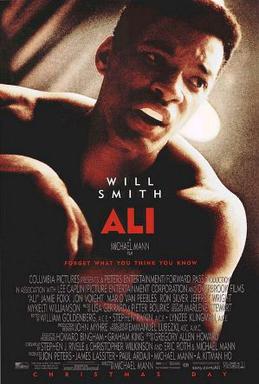
Ali (2001)

Will Smith captures The Greatest in a film that misses the fire and passion of Muhammad Ali

Director: Michael Mann

Cast: Will Smith (Muhammad Ali), Jamie Foxx (Drew Bundini Brown), Jon Voight (Howard Cosell), Mario van Peebles (Malcolm X), Ron Silver (Angelo Dundee), Jeffrey Wright (Howard Bingham), Mykelti Williamson (Don King), Jada Pinkett Smith (Sonji Roy), Nona Gaye (Khalilah Ali), Michael Michele (Veronica Porché), Michael Bentt (Sonny Liston), James Toney (Joe Frazier), Charles Shufford (George Foreman), Joe Morton (Chauncey Eskridge), Barry Shabaka Henley (Herbert Muhammad)

There is perhaps no greater sportsman of the 20th century than Muhammad Ali. Not for nothing did he call himself “The Greatest”. His impact on his sport is unrivalled, and his impact on our culture almost matches it. He’s one of those titanic figures that, even if you don’t care a jot for boxing, you know exactly who he is. Ali approved the film – and even more so, Smith’s performance – in Mann’s film that covers ten turbulent years in Ali’s life, from winning the title and changing his name, to refusing the Vietnam draft and losing his boxing licence and title, to reclaiming the title again in  the legendary “Rumble in the Jungle”.

If there is a major flaw about Ali, it’s that Ali was a man who was about so much more than just boxing – but Ali struggles to be more than a film about a boxer. It’s hard today to look at the film and not think that a black director would have had more connection with the emotional, cultural and political turmoil that defined Ali’s life in the 60s and 70s. Mann mounts all this well – and gives it plenty of empathy in the film – but his outsider perspective perhaps contributes to the film’s coldness.

Coldness is the prime flaw of the film. There was no sportsman larger than life than Ali. No public figure who demanded attention more, no boxer who fought his battles as much with wit, convictions and passion as well as fists as Ali. A film of his life needs to capture some of this magic alchemy: it needs to feel like a film that conveys the man Ali was. While there is no doubt there was a melancholy in Ali, a quiet inscrutability behind the pizzazz, this film leans too much into this. It does this while never really telling us anything about Ali’s inner life.

As two marriages are formed and collapse, we don’t get an understanding of what drew Ali to, and caused him to turn away from, these women. His relationship with the Nation of Islam ebbs and flows throughout, but other than a few on-the-nose statements from Ali, we don’t get an idea of how his faith defines him. We get his brave stand against serving in the Vietnam war, but not the emotional and intellectual conviction behind it (other than parading a series of famous quotes).

The film is packed with famous black figures – from Malcolm X to rival boxers and Ali’s support team – his father and family, not to mention three of his wives, but the relationship the film is most invested in is Ali’s mutual appreciation/attention-feeding verbal duels with boxing correspondent Howard Cosell (a pitch-perfect vocal and physical impersonation by Jon Voight). There feels something wrong about this film about a black icon, that his relationship with a white man feels the best defined.

But then it’s also a flaw with the film that its most striking, inventive and memorable sequences are all pitch-perfect recreations of filmed events. Will Smith perfectly captures the vocal and physical grace of Ali, and brilliantly brings to life his interviews with Cosell and his larger-than-life press conferences. The boxing matches are compellingly filmed, a perfect mix of slow-mo and immersive angles (they were largely fought for real, with few punches pulled). Ali’s final KO of Foreman in the Rumble in the Jungle, after several rounds of exhausting Rope-a-dope, is punch-the-air in its triumphal filming and scintillating excitement. But all of this stuff you could actually watch for real today. How essential is a film that uses actors to recreate, with better camera angles and superior editing, stuff that was filmed when it actually happened? Essentially if I want to see Ali stunning the world with his words, or sending Foreman to the canvas, would I choose to watch the man himself, or Will Smith’s perfect impersonation of him doing it?

There is nothing wrong with Will Smith’s performance though. For all his Oscar-winning work in King Richard, this is his finest performance. Bulked up to an impressive degree (Smith spent a year preparing for the film), he’s got Ali’s movements in and out of the ring to a tee and the voice is an unparalleled capture of The Greatest’s. It’s a transformative, exact performance – Smith has just the right force of character for the patter, but also brings the part a soulful depth that the film struggles to explore further. It’s a superb performance.

Enough to make you wish this was in a better, more passionate film. Ali was at the centre of a storm of civil rights and class war in America. He became the public face of a black community struggling to make its voice heard, sick of tired of being treated like second-class citizens by a country they were expected to die for in battle. The politics of the time is lost – Mario van Peebles has a wonderful scene as a troubled Malcolm X, but even he feels like a neutered figure – and the cultural impact of Ali is diluted.

The film ends with captions that dwell on Ali’s later boxing career and his marriages. That’s fine. But this a man who was so much more than what he just did in the ring. He used his position to take a stand on vital issues in America, at huge personal cost, when thousands of others would have settled down to mouth platitudes and make money. He took on the government and refused a compromise that would have allowed him to continue boxing, because he felt the war and America’s domestic policies were wrong. He was a brave leader of men, at a time of furious injustice. The film conveys the facts, but none of the glorious passion. It’s a photocopy of Ali, which is why its best bits are recreations of filmed events. It can’t quite understand or communicate the tumultuous feelings behind racial injustice in the 60s and 70s. It could – it should – have been so much more.

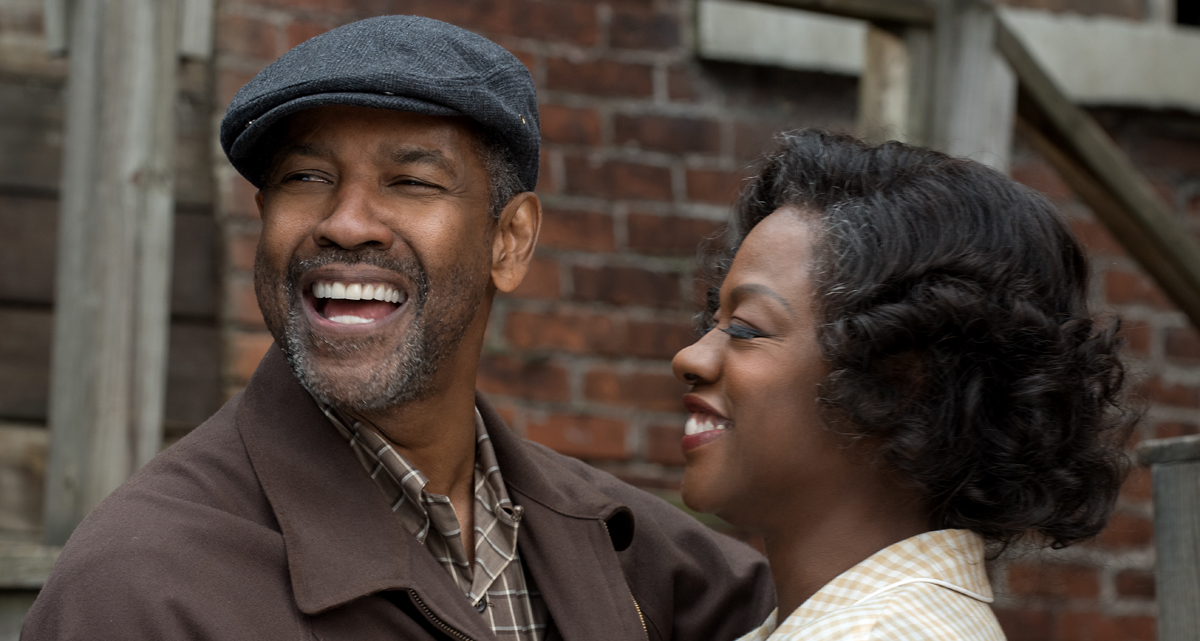
Fences (2016)

Denzel Washington and Viola Davis triumph in an overly theatrical version of August Wilson’s Fences

Director: Denzel Washington

Cast: Denzel Washington (Troy Maxson), Viola Davis (Rose Lee Maxson), Stephen McKinley Henderson (Jim Bono), Jovan Adepo (Cory Maxson), Russell Hornsby (Lyons Maxson), Mykelti Williamson (Gabriel Maxson), Saniyya Sidney (Raynell Maxson)

Pittsburgh in the 1950s. Troy Maxson (Denzel Washington) works as a garbage collector after his dreams of becoming a professional baseball player came up against the colour bar. Troy lives with his second wife Rose (Viola Davis). Troy had a troubled upbringing, turning to crime (and serving time in prison – lost time Rose quietly believes may have had more of an impact on his failed baseball career) and claims to have beaten Death in a wrestling match. Proud of his self-made status and certain, always, that he is right, Troy has difficult relations with his two sons Lyons (Russell Hornsby), a musician he believes is forever sponging money and Cory (Jovan Adepo), a teenager being scouted by an American Football team.

Fences follows a couple of years (with a coda that jumps forward five years) in the lives of these characters, and principally the impact that Troy’s mixture of pride, selfishness and bull-headed self-righteousness has on the family. It’s adapted from August Wilson’s award-winning stage-play, with a script prepared before his death by the playwright himself (earning him a posthumous Oscar nomination). Washington, Davis and most of the cast all starred in a hugely successful Broadway production of the play a few years before, and the film is a careful restaging of this production.

Perhaps a little too careful. If there is a problem with Fences, it is that it falls rather awkwardly between two stools. It’s neither particularly filmic – few of the scenes have been adjusted from the single-set locations of the play, and it’s filmed with an unobtrusive conventionality that makes it look and feel pretty similar to watching a National Theatre Live production – nor is it sufficiently theatrical. I can well imagine the power – and they are undeniably powerful – performances by the cast, principally Washington and Davis, would have blown you away live: but on screen, they can’t quite capture that same impact, in a film that feels slightly constrained by its theatricality.

Most of this comes from Washington’s determination that Wilson’s words would be the star, and all other factors in the production would service that. To that end, the film is a clear success – and you can’t argue Wilson doesn’t deserve a certain reverence, particularly as transfers of his plays to film had been almost non-existent before Fences. Wilson’s plays have rarely crossed the Atlantic, so watching this – a play I was not familiar with – I was enraptured by the working-class poetry of Wilson’s language, not to mention the empathy with which he explores his characters.

At the heart is Troy, a fascinatingly flawed human being. Played with huge charisma, which masks a deep bitterness, cynicism and self-pity, by Denzel Washington, Troy manages to be both admirable and destructive at the same time. You can’t not admire the way he has built his own life from scratch, or the “go-out-and-grab-it” balls that helps him become the first black garbage truck driver in Pittsburgh. He’s witty, warm-hearted and loves his family deeply. He’s also domineering, proud and so convinced his view is right that he sees no problem with cheating on his wife or forcing his children, often against their will, to conform with exactly his ideas of how they should live their lives.

So, he’ll tell his son that because Troy’s dreams of becoming a professional sportsman came to nothing, so will his: so there isn’t even any point trying. He loves his mentally handicapped brother Gabe (Mykelti Williamson), and rages at the Government that failed to support this wounded veteran – but he also takes Gabe’s disability payout and uses it to buy himself a house and charge Gabe rent for living in it. He’ll talk endlessly about putting duty and family first – but that fence of the title, which Rose asks constantly him to build, is a job he’ll put off time and time again in favour of holding court in his backyard. Troy’s built the family – but he’s also the main factor holding it back from moving forward any further. He’s a classic tragic figure.

Equally superb is Viola Davis as Rose, endlessly patient and caring, holding the entire family together and quietly and carefully cleaning up after Troy’s outbursts or bad temper. Davis won the Oscar, and Rose is a dream of a part a woman who closes her eyes to problems, believing she lives a perfect family life, until it is too late. When finally confronted with the selfishness of Troy’s actions, Davis’ emotional devastation – her resentment and fury at having benched her own dreams and desires to service Troy – is hugely moving, perfectly showcasing Davis’ skill to play deep emotions while simultaneously holding those emotions in.

These two actors are both extraordinary – and there are also fabulous performances from Henderson, Adepo, Williamson and Hornsby. What stops it from being an outstanding film though is that its more of a theatrical event pushed into a cinema. With the majority of the scenes taking place in Troy and Rose’s backyard, you can picture the single-set theatre production. The camera moves calmly from close-up to medium shot but does very little else. Very little has also been changed or reworked in the play – compare to Arthur Miller’s reworking of The Crucible or Peter Shaffer’s re-imagining of Amadeus for the screen. It’s a film with a slightly worthy, mission quality to it. But as a showcase for the play – and the performances – it’s very fine.

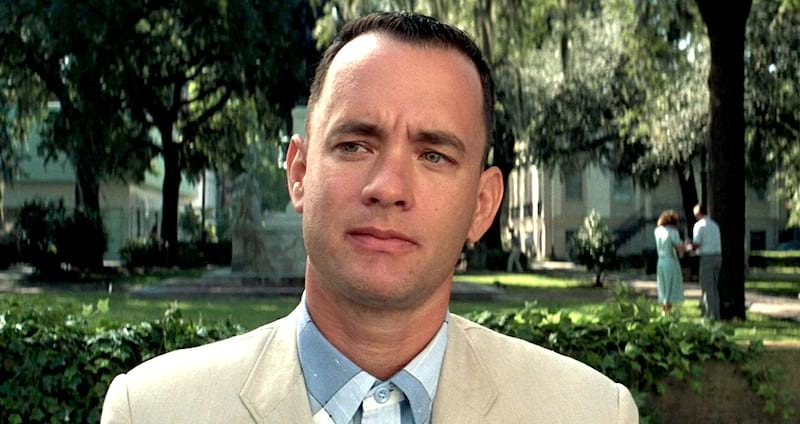
Forrest Gump (1994)

Tom Hanks unleashes some cloying charm in Forrest Gump

Director: Robert Zemeckis

Cast: Tom Hanks (Forrest Gump), Robin Wright (Jenny Curran), Gary Sinise (Lt Dan Taylor), Mykelti Williamson (“Bubba” Blue), Sally Field (Mrs Gump), Haley Joel Osmont (Forrest Gump Jnr)

Oh dear God. It’s worse than I remembered. I hadn’t watched Forrest Gump since maybe 1995. I hadn’t liked it much then. But that might just have been my contrariness: sure I was going to find faults in the film that became a cultural phenomenon. Rewatching it today: actually no, I had good taste. This must be one of the worst films to ever win the Best Picture Oscar – and certainly one of the most unsettlingly twee, sentimental, conservative-minded pieces of feel-goodery to ever come out of Hollywood.

You surely know the plot. Forrest Gump (Tom Hanks, who to do him credit plays this one note character with real charm) is a good-hearted man with developmental difficulties (IQ below the 75 mark) who lives through some of the most turbulent times in American history. From racial violence in the 1950s, to Vietnam, the Cold War, the political turmoil of the 1970s, Forrest lives through it all. And largely lets it wash over him, never letting it intrude on his simple, folksy, homespun gentleness. Although that might mostly be because he also doesn’t really understand most of the things happening around him. He’s quite a contrast with the girl he’s loved since their childhood, Jenny (Robin Wright) who embraces everything the modern world brings (protest, politics, drugs) but of course finds her life much less rewarding and happy than Forrest’s “go-with-the-flow” acceptance.

Just writing it down I can feel my stomach turning again. At the time the filmmakers were very keen to promote the film as stridently apolitical. Yeah sure the film never praises, say Kennedy or Nixon, just as it goes out of its way not to state an opinion on either George Wallace or the Black Panthers. But the film is, at its heart, a large, beating, reassuring lump of rank conservatism.

It looks back at America’s past with rose-tinted glasses, portraying a world which would have all better if they had taken a leaf out of Forrest’s book. If we had all been just as uninvolved, decent, kind and stayed at home where we were happy rather than getting engaged in major social and political issues, everything would have been better. Forrest is a celebration of all-American virtues of honesty, bravery and loyalty – but the film is also an implicit criticism of other all-American virtues like curiosity, scepticism and challenging the status quo. Basically, the film celebrates the cosy attitudes conservatives adore and has nothing good to say about more liberal values. Sure, it doesn’t roll out a banner for Nixon – but you can also see this playing well at a Trump rally, with people saying we would be a happier country if we could all be a bit like Forrest.

That’s really tough on the film – and I imagine Zemeckis and co would be rightly horrified about that very idea – but it’s a film that doesn’t once challenge the audience at all. I was reminded throughout of Being There which took a similar concept: a man with low IQ finds himself at the centre of major events. But while that film was a satire – where the characters invest Chance’s gnomic utterings with profound wisdom – this film is a serious drama which encourages the audience to see a “deeper wisdom” in Forrest, to effectively treat him as a sort of prophet. There is a reason bland nonsense like “life is like a box of chocolates” caught on.

The original book was far more of a satire on the shallowness of modern culture. This instead plays like a sort of holy fool pilgrimage, with Forrest’s interaction with historical figures played for laughs. From showing Elvis how to dance, to (in the film’s most cringing moment) inspiring John Lennon with the lyrics of Imagine (another reason to hate Forrest), the film is crammed with gags like this. While the insertion of Tom Hanks into newsreel footage with Kennedy, Johnson and Nixon is impressive (although it has not aged quite so well), it’s not made with any point. This is because Forrest has no real appreciation of what’s happening around him. He’s merely moving from one event from the next – but this lack of engagement and understanding is held up as a virtue. And the very fact that it is, speaks to the film’s underlying conservatism and love for simple, small-town American ideals that shouldn’t be sacrificed to all that uncomfortable social and political change.

The film is particularly harsh on Jenny, decently played by Robin Wright, who is portrayed as someone succumbing to every trend and popular movement of the era. And whom the film consistently punishes for this by showing her emptiness, shallowness and unhappiness, until it finally consigns her to death from AIDS. Just in case we’ve missed the point, Forrest repeatedly urges her to come home – to stop engaging with the wider world and the problems in it and bury her head back into the sands of home, where everything is simple, safe and nothing changes.

The world of Forrest Gump is one where corruption and war mongering don’t matter because it happened a long time ago. A world where racial politics are too distasteful to mention (although since Forrest’s Granddaddy was a leading member of the KKK – a flashback played for laughs – that clearly wasn’t the case). Where the only black people Forrest encounters are the outsider soldier Bubba (who of course dies in ‘Nam – even in serious films, the Black Guy dies first) and his servile family whose names don’t even merit a mention, but who become the grateful beneficiaries of Forrest’s oblivious generosity. But there is no sense here of the dangers and violence of America (bar some nasty jocks at Forrest’s college) – which considering the film has a cameo from George Wallace of all people is really striking.

But then the problems of the world I guess don’t seem that bad if you just don’t think about them and instead go through life with a smile on your face, blissfully unaware of what’s happening around you. The closest the film gets to giving Forrest an opinion on something is when he is asked to speak at a rally against Vietnam – and even then the sound cuts out meaning we can’t hear him (though it seems to have been profound). A wittier film, like Being There, would have made this a moment for satire. Here it seems more like the magic of Forrest’s simplicity mustn’t be shattered for the audience by daring to suggest he actually has a view on something.

The film is a warm and comforting hug, that tells people the past wasn’t that bad and would have been better still if we’d just been nice to each other. That wanting to change the world is dangerous and greater rewards can come from going with the flow. For all Forrest is bereft by Jenny’s death, the film still rewards him with family, home and friends. It’s sentimental, empty, depressing crap. Well made, but simply dreadful. You may not know what’s in a box of chocolates, but you sure as shit will remember after you’ve vomited them all back up after watching this.

Primary Colors (1998)

John Travolta and Emma Thompson are definitely not the Clintons in Primary Colors

Director: Mike Nichols

Cast: John Travolta (Governor Jack Stanton), Emma Thompson (Susan Stanton), Adrian Lester (Henry Burton), Billy Bob Thornton (Richard Jemmons), Kathy Bates (Libby Holden), Larry Hagman (Governor Fred Picker), Stacy Edwards (Jennifer Rodgers), Maura Tierney (Daisy Green), Diane Ladd (Mamma Stanton), Paul Guilfoyle (Howard Ferguson), Kevin Cooney (Senator Lawrence Harris), Rebecca Walker (March Cunningham), Allison Janney (Miss Walsh), Mykelti Williamson (Dewayne Smith)

In 1998, America was engrossed in what seemed like a never-ending series of scandals around Bill Clinton, with Clinton facing impeachment. The news was filled with Clinton-Lewinsky Scandal catch-ups seemingly non-stop. Surely in the middle of that, a film that charted earlier scandals about Slick Willie would be a hit? Well Primary Colors proved that wrong. A thinly veiled portrait of the Clinton run for the White House, based on a novel written by Joe Klein who followed the Clintons on the campaign, it tanked at the box office. Possibly due to audiences having Clinton-fatigue – but also perhaps because it’s a stodgy, overlong and slightly too pleased-with-itself piece of Hollywood political commentary.

The film sticks pretty close to real-life timelines. John Travolta is Arkansas Governor Jack Stanton (Travolta does a consistent impersonation of Bill Clinton both vocally and physically during the whole film), who’s running for the Democratic Presidential nomination, supported by his (perhaps) smarter, ambitious wife Susan (Emma Thompson, doing a neat embodiment of Hillary without impersonation). Eager young black political operator Henry Burton (Adrian Lester) is recruited to help run the campaign – and finds himself increasingly drawn into the secrets of the Stantons, not least Jack’s persistent infidelities that seem to go hand-in-hand with his empathy and genuine passion for helping people. As scandal builds on scandal, the campaign to run for President becomes ever more unseemly.

Primary Colors asks questions that, to be honest, are pretty familiar to anyone who has ever seen a Hollywood film about politics. We’re presented with a Clinton-Stanton who wants to help America to re-educate itself in a modern world, who weeps with emotion when hearing a man recount his struggles with literacy (a fine cameo from Mykelti Williamson), who wants to rebuild America’s economy and build opportunities for all. And at the same time, he can’t keep it in his pants, is quite happy to dodge as much as possible the consequences of his actions, and is blithely disinterested in the impact his infidelities have on other people. Essentially the film wants to ask: at what point does a man’s personal behaviour and morals start to outweigh his good intentions?

It just takes a long time to ask it. A very long time. Primary Colors is a film that could easily be half an hour shorter, and you would miss very little. It’s a stodgy, overlong, smug drama that takes a gleeful delight in how clever it’s being making a film about the Clintons that-isn’t-about-them. It’s weakened as well by using an overly familiar device of putting a naïve and well-meaning audience surrogate character at its centre. We’ve seen this growth of disillusionment before, but Adrian Lester (in a break out role) fails to make Henry Burton a really interesting character – he’s little more than a cipher that we can project our views onto, and Lester is too reserved an actor to make him a character we can effectively invest in as a person. Instead he becomes a largely passive observer that more interesting characters revolve around.

Those characters being largely the Stantons themselves. John Travolta does a very good impersonation of Clinton, but he offers very little insight into the sort of person Clinton is, his motivations or his feelings. Like the character, the role is all performance and you never get a sense of how genuine his goals are and how much ambition is his main driver. As scandals pile up, Travolta is great at capturing Clinton’s sense of hurt that anyone would question his morals (even as his actions display his fundamental lack of them), but the role is short on depth. 

Emma Thompson gets less to play with as Hillary. In fact, she disappears from the second half of the film, after an affair plotline between her and Lester was cut completely from the film (something that makes certain scenes, where actors are clearly responding to this non-existent plotline, amusing to watch). But she manages to make the role something a little more than impersonation, delivering a whipper-sharp, ambitious woman who has buried her resentments about her husband’s betrayals under a wish to achieve a higher goal.

The rest of the cast deliver decent performances, but the stand-out is Kathy Bates as a long-time Stanton friend turned political fixer, who sees her idealisation of the Stantons turn to bitter disillusionment. Bates at first seems to be delivering another of her custom-made “larger than life” roles, but as the stuff hits the fan she layers it with a real emotional depth and complexity. It’s a caricature role that she turns into something real, a woman who feels genuine pain at seeing her deeply held political convictions and ideals being slowly disregarded by her heroes.

But then we get her point. Don’t we all feel a bit like that when we think back about Bill Clinton? The more we learn about his affairs and sexual scandals – and the more that #MeToo develops our understanding of how powerful men can abuse their power to take advantage of star-struck young women – the less sympathetic he seems. The film too suffers from some really out-of-date views of male sexuality. Billy Bob Thornton’s political fixer exposes himself early on in the film to a female worker, but this is shrugged off as “banter”, as opposed to a criminal offence – and the film largely avoids giving any air time to Stanton’s principal victim, the teenage daughter of a black restauranter whom he may or may not have impregnated. Stanton uses his power to gain sexual favours – one of his earliest acts is casually picking up a gawky English teacher who’s giving him a guided tour of her school (a funny cameo from Allison Janney) – but this is largely categorised as a personal weakness that doesn’t impact his suitability for the Presidency, something that feels more and more uncomfortable.

However, Primary Colors’ real problem is that it is overlong and a little bit too pleased with its intricate reconstruction of semi-true events. Although there are funny lines and decent performances, the film lacks any real zip and it gives no real insight into modern politics (other than perhaps deploring the compromises politicians must make) or the Clintons themselves. Instead it settles for telling us things we already know at great length and making safe but empty points about modern America. Far from exploring a Faustian pact where we accept deep personal failings in politicians because we believe that, overall, they could be a force for good, instead Primary Colors is all about turning shades of grey into obvious clear-cut moral choices.

Heat (1995)

De Niro is packing Heat

Director: Michael Mann

Cast: Al Pacino (Lt Vincent Hanna), Robert De Niro (Neil McCauley), Val Kilmer (Chris Shiherlis), Jon Voight (Nate), Tom Sizemore (Michael Cheritto), Diane Venora (Justine Hanna), Amy Brenneman (Eady), Ashley Judd (Charlene Shiherlis), Mykelti Williamson (Sgt Drucker), Wes Studi (Detective Sammy Casals), Ted Levine (Detective Mike Bosko), Dennis Haysbert (Donald Breedan), William Fichtner (Roger van Zandt), Natalie Portman (Lauren Gustafson), Tom Noonan (Kelso), Kevin Gage (Waingro), Hank Azaria (Alan Marciano), Danny Trejo (Trejo), Xander Berkeley (Ralph)

In the mid-90s, Heat was the cinematic event of the year. De Niro! Pacino! Together! In one scene! The two acting heavyweights – wildly proclaimed and popular since the 1970s – had of course made The Godfather Part II together but had shared no scenes. Here, however, we’d see them both at the same time riffing off each other. The great thing is that there is so much more to Heat than just that one scene. Heat is a sort of poetic cops and robbers flick, part stunning action adventure, part profound exploration of the internal souls of men chasing down leads, both good and bad.

Neil McCauley (Robert De Niro) is a skilled career criminal who lives his life with a monastic self-denial, saying you can have nothing in your life “that you cannot walk out on in 30 seconds flat if you spot the heat around the corner”. Vincent Hanna (Al Pacino) is a bombastic, egotistical, workaholic detective with a self-destructive family life. Naturally, these two men find themselves on opposite sides, as McCauley plans his next job and Hanna works to stop him. But the men, with their similar codes dedicated to their chosen career, find that they have an increasing mutual respect – not that that will stop either of them “putting the other one down” if push comes to shove.

Heat is the pinnacle of Michael Mann’s career, and his most triumphant exploration of the conflicted, complex, masculine personalities at the heart of the high-adrenalin worlds of crime and police work. Mann has a gift for giving the simple rush and tumble of cops and robbers a sort of epic poetry, like a metropolitan Beowulf, and he achieves this again here. Heat is a film that throbs with meaning, it’s cool blue lensing and chilly, modern architecture serving as a perfect counterpoint to the cool, professional and focused personalities of its characters.

Heat also goes the extra mile by building this playground confrontation into a mythic battle of wills, a battle of principles and ways of living that seem separated only by a few degrees. Mann invests this with such sweep, such grandiosity (without pomposity), such scale that it becomes a sort of modern epic, a film where intense meaning can be mined by the viewer from every scene. Whether there is in fact any meaning there – avoid listening to Mann’s commentary which drills down so many of his elliptical character beats and open-ended scenes into the dullest, most predictable tropes that he had in mind while filming – is another issue, but Mann’s trick as always with his best work is to make something really quite small and everyday seem like a grand, timeless epic.

It all boils down to that famous coffee shop scene, where De Niro and Pacino for a few magic moments come together. It’s a scene that explicitly asks us to see cop and criminal and understand that there is in many ways very little to choose between them. It hinges on the gentle competitiveness of the actors, and the way they subtly play off each other. It also plays on our own histories of these two actors, of decades of seeing them as two sides of the same coin, both carrying so much cultural baggage for a string of iconic roles that saw them rule Hollywood for over a decade. It’s the sort of scene given extra investment, where you sense the mutual respect of the actors fuelling the strange bond that powers the scene. 

It’s also the one scene of the film that Pacino underplays in. The rest of the film he goes way bigger, powering through each scene with an explosion of shouting and drama. It’s a performance ripe for parody, with more than an edge of ham, but it just about works. Pacino turns Hanna (hilariously the character shares a name with a BBC political journalist of the 1980s) into the purest form of adrenalin junkie, a larger-than-life personality who tears through people and cases with a focused determination that allows no room for a personal life. De Niro downplays far more by contrast, apeing a sort of 1940s noir cool, a monkish insularity that prevents anyone from getting close to him, mixed with a laser-guided determination to do whatever it takes to make his score.

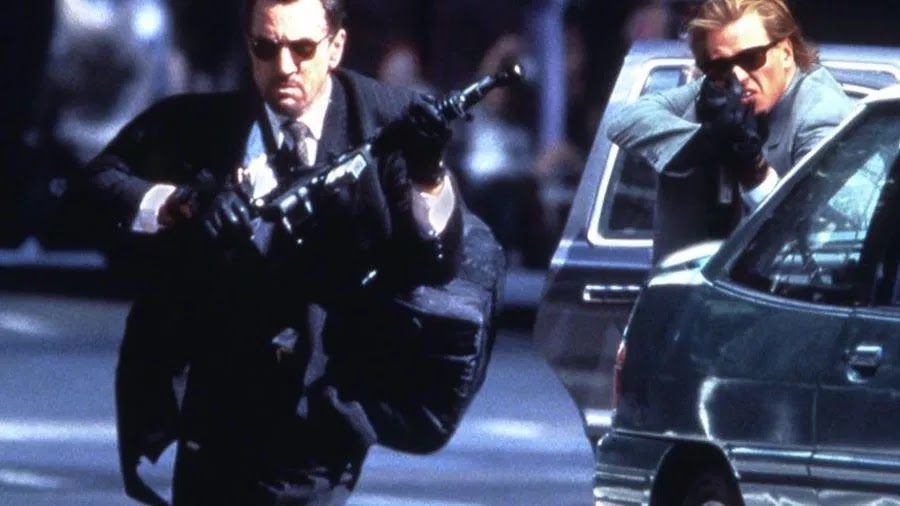
Mann’s film throws these two characters into a series of stunning set pieces with the bank robbery at the centre (“the one last score” that McCauley can’t pass up no matter the danger). The robbery – and the shoot out that follows it – is a triumph of action cinema, brilliantly shot and edited. The gun play is stunning, with Andy McNab having served as a consultant for the actors on the use of automatic weapons. The scene rips through the screen, spewing bullets all over the place in a ruthless, no-onlooker-spared rampage that also really pushes the limits of effective sound design. That’s just the highlight of several scenes that – with guns or otherwise – hum with tension, danger and excitement.

Mann also has enough room in this film though to skilfully establish a number of supporting characters with compelling story lines of their own. Val Kilmer is a tad wooden as McCauley’s number two, but his storyline of troubled marriage is mined for unexpecting pathos (thanks also to Ashley Judd’s fine work as his wife). Kevin Gage is very good as a psychopathic criminal unwisely brought on board to fill a slot in an early robbery. Dennis Haysbert has his own tragic plotline as a criminal trying to turn straight. Diane Venora is excellent as Hanna’s neglected wife, as is Portman as his vulnerable daughter-in-law. This isn’t to mention excellent performances from a rogues gallery of character actors, from Jon Voight to William Fichtner. 

Mann keeps all these plotlines perfectly balanced in a film that is very long but never drags for a minute. Crammed with exciting set pieces and brilliant sequences, it’s a film that manages to feel like it is about a very masculine crisis – the failures of men to balance the personal and their career, selfishly harming those around them because of their addiction to action. Mann’s film looks brilliantly at the essential emptiness and sadness this leads to – as well as the blinkered drive that never prevents men from stopping for a second and changing their lives, no matter how many reflective cups of coffee they have. Mann partners this existential, poetic feeling drama with the ultimate crash-bang cops and robbers and thriller, which will leave you on the edge of your seat no matter how many times you see it. Quite some film.