Tag: Naomi Ackie

Mickey 17 (2025)

Mickey 17 (2025)

Indulgent, over-long satire that mixes painfully obvious political targets with on-the-nose comedy

Director: Bong Joon-Ho

Cast: Robert Pattinson (Mickey 17/Mickey 18), Naomi Ackie (Nasha Barridge), Steven Yeun (Timo), Toni Collette (Ylfa Marshall), Mark Ruffalo (Kenneth Marshall), Patsy Ferran (Dorothy), Cameron Britton (Arkady), Daniel Henshall (Preston), Stephen Park (Agent Zeke), Anamaria Vartolomei (Kai Katz), Holliday Grainger (Red Haired recruiter)

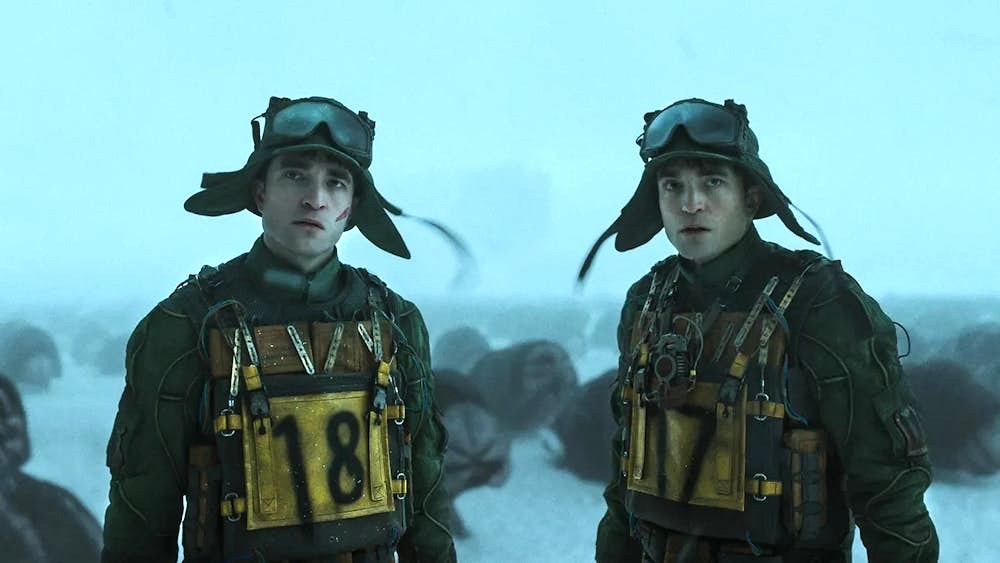
In 2050, everyone on the colony ship to the planet Niflheim has a job. Even a washed-up loser like Mickey (Robert Pattinson). His job is the most loserish of all: he’s an ‘expendable’, hired to die repeatedly in all forms of dangerous mission or twisted scientific and medical experiments, with a new body containing all his backed-up memories rolling out of the human body printer. The one rule is there can never be more than one Mickey at a time – so it’s a problem when 17 is thought dead and the more assertive 18 is printed: especially as they are flung into a clash between the colonisers and Niflheim’s giant grub-resembling lifeforms ‘Creepers’. Can Mickey(s) prevent a war that the colony’s leader, a failed politician and TV-star Kenneth Marshall (Mark Ruffalo) and his socialite wife Ylfa (Toni Collette), want to provoke?

It’s all thrown together in Bong Joon-Ho’s follow-up to Parasite which trades that film’s sharp, dark social satire and insidious sense of danger for something more-like a brash, loud, obvious joke in the vein of (but grossly inferior to) his Snowpiercer. Mickey 17 is awash in potentially interesting ideas, nearly all of which feel underexplored and poorly exploited over the film’s whoppingly indulgent runtime of nearly two-and-a-half hours, and Bong lines up political targets so thuddingly obvious that you couldn’t miss these fish-in-a-barrel with a half-power pea-shooter.

Mickey 17 actually has more of a feel of a director cutting-lose for a crowd-pleaser, after some intense work. Mickey 17 is almost a knock-about farce, helped a lot by Robert Pattinson’s winning performance as the weakly obliging Mickey 17 who grows both a spine and sense of self-worth. A sense of self-worth that has, not surprisingly, been crushed after a lifetime of failure on Earth leads him to series of blackly-comic deaths (the film’s most successful sequence) that has seen him irradiated and mutilated in space, gassed with a noxious chemical, crushed, incinerated and several other fates.

Not surprisingly, there is a bit of social commentary here: Mickey is essentially a zero-hours contract worker, treated as sub-human by the businessmen and scientists who run this corporate-space-trip. It’s an idea you wish the film had run with more: the darkly comic idea of people so desperate to find a new life that they willingly agree to have that life ended over-and-over again as the price. It’s not something Mickey 17 really explores though: right down to having Mickey sign on due to his lack of attention to contract detail (how interesting would it have been to see a wave of migrant workers actively pushing for the job as their only hope of landing some sort of green card?).

Mickey 17 similarly shirks ideas around the nature of life and death. Questions of how ‘real’ Mickey is – like the Ship of Theseus, if all his parts are replaced is he still the ship? – don’t trouble the film. Neither does it explore an interesting idea that each clone is subtly different: we’ve already got a clear difference between the more ‘Mickey’ like 17 and his assertively defiant 18, and 17 references that other clones have been more biddable, anxious or decisive. Again, it’s a throwaway comment the film doesn’t grasp. Neither, despite the many references to Mickey’s unique experience of death (and the many times he is asked about it) do questions of mortality come into shape: perhaps because Mickey is simply not articulate or imaginative enough to answer them.

Either way, it feels like a series of missed opportunities to say something truly interesting among the knock-about farce of Mickey copies flopping to the floor out of the printer, or resignedly accepting his (many) fates. Especially since what the film does dedicate time to, is a painfully (almost unwatchably so) on-the-nose attack on a certain US leader with Mark Ruffalo’s performance so transparent, they might as well have named the character Tonald Drump. Ruffalo’s performance is the worst kind-of satire: smug, superior and treats it’s target like an idiot, who only morons could support. It’s a large cartoony performance of buck-teeth, preening dialogue matched only by Toni Collette’s equally overblown, ludicrous performance as his cuisine-obsessed wife.

Endless scenes are given to these two, for the film to sneer at them (and, by extension, the millions of people who voted Trump). Now I don’t care for Trump at all, but this sort of clumsy, lazy, arrogant satire essentially only does him a favour by reminding us all how smugly superior Hollywood types can be. So RuffaTrump fakes devout evangelical views, obsesses about being the centre of attention, dreams of his place in the history books while his wife is horrified about shooting Mickey because blood will get on her Persian carpet. It’s the most obvious of obvious targets.

It’s made worse that the film’s corporate satire is as compromised and fake as the conclusion of Minority Report. It’s a film where a colonialist corporate elite defers to a preening autocrat, keeps its colonists on rationed food and sex and sacrifices workers left-and-right for profit. But guess which body eventually emerges to save the day? Yup, those very corporate committee once they learn ‘the truth’. Mickey 17 essentially settles down into the sort of predictably safe Hollywood ending, with all corporate malfeasance rotten apples punished. For a film that starts with big anti-corporate swings, it ends safely certain those in charge will always do the right thing when given the chance.

Much of the rest of Mickey 17 is crammed with ideas that usually pad out a semi-decent 45 minute episode of Doctor Who. Of course, the deadly, giant insect-like aliens are going to turn out to be decent, humanitarian souls – just as inevitable as the mankind bosses being the baddies. It’s as obvious, as the film’s continual divide of its cast list into goodies and baddies.

Mickey 17’s overlong, slow pacing doesn’t help. An elongated sequence with Anamaria Vartolomei’s security guard who has the hots for Mickey 17 (every female in the film, except maybe Collette, fancies him proving even losers get girls if they look like Robert Pattinson) could (and should) have been cut – especially as that would also involve losing an interminable dinner-party scene with Ruffalo and Collette. The final sequence aims for anti-populist messaging and action – but is really just a long series of characters saying obvious things to each other. Despite Pattinson’s fine performance – and some good work from Ackie – Mickey 17 is a huge let-down which, despite flashes of Bong’s skill, feels like a great director cruising on self-indulgent autopilot, taking every opportunity for gags over depth or heart. Not a success.

Lady Macbeth (2016)

Lady Macbeth (2016)

Florence Pugh is either a feminist icon or a ruthless monster in this Gothic drama

Director: William Oldroyd

Cast: Florence Pugh (Katherine Lester), Cosmo Jarvis (Sebastian), Naomi Ackie (Anna), Christopher Fairbank (Boris Lester), Paul Hilton (Alexander Lester), Golda Rosheuvel (Agnes), Anton Palmer (Teddy)

On a rural estate in Northumberland in 1865, Katherine (Florence Pugh) enters a loveless marriage with Alexander (Paul Hilton), son of landowner Boris (Christopher Fairbank). The marriage is a disaster, with the couple incompatible and Katherine bored and trapped with no friends or allies. When Alexander and Boris travel for business, she finally gets the chance to explore her surroundings and enters into a passionate sexual relationship with estate worker Sebastian (Cosmo Jarvis). When Boris – but not Alexander – returns, Katherine begins a chain of events that will see her commit a series of increasingly shocking crimes to hold onto the things she wants.

Oldroyd’s film is adapted by Alice Birch from a Russian short story, and is told with an icy, observatory coldness that doesn’t flinch from the increasingly sociopathic ruthlessness of its lead character. The film at first seems like it will set out a feminist fable, of a trophy wife struggling against the neglect and imprisonment of forced marriage. But, as it progresses, any pretence that Katherine is a feminist hero is stripped away: she is modern only in the most dreadful sense – a woman who will willingly commit almost any act of ruthlessness to safeguard her interests.

Playing Katherine, the film is blessed with a star-making turn from Florence Pugh. Only 19, Pugh gives a performance of such stunning depth and intelligence from a young actress that possibly hasn’t been seen since Kate Winslet in Heavenly Creatures. She’s a master of outward stillness and inscrutability, while always communicating the raging whirlpool of emotions underneath the surface. She’s fiercely intelligent, viciously ruthless, frequently observes other characters silently and can twist her face into a mocking defiance. Pugh also communicates the desperate emotional need for connection that motivates this woman, her willingness to go to such shocking lengths motivated by that yearning for a love that she has never known.

Oldroyd is careful not to present her a Gothic monster (would certainly be easy to do so!). The film is careful to outline how unwanted and ill-treated she is by Alexander and his father. Boris (a bullying Christopher Fairbank) ignores and talks down to this person-as-a-piece-of-property, basically just an unlooked-for freebie with some land, who is failing to get on with the production of an heir. Alexander (Paul Hilton, superbly weak and dripping with contemptuous bitterness) has no interest in his wife, his sexual interest restricted to ordering her to strip and face the wall while he pleasures himself. Neither of these characters ever have anything like a conversation with her, instead speaking to her like a dog or malfunctioning appliance.

So, you can see why she is so drawn to the passion of Sebastian – and also, perhaps, why she might find this cocky but not-exactly-sharpest-tool man an attractive chance for her to wear the trousers for once. Their couplings have a sexual urgency and passion to them that is lacking for anything else in the film. But we never see them as emotional or intellectual equals. There is no scene of romance, bonding or conversational or unsexual emotional connection with them. Katherine becomes obsessed with Sebastian – but it seems to be at least as much an obsession with the sex and the sense of control he brings her, as much as it is Sebastian himself.

As Sebastian, Cosmo Jarvis is initial bluster and wide-boy charm that strips away to reveal a man far more timid, scared and increasingly out-of-his-depth with what he’s got caught up in. For all his Lady Chatterley’s Lover physicality, Jarvis has a real vulnerability in his eyes and a certain little-boy lost quality. His panic and shock as event balloon become increasingly tragic.

Equally affecting is the terror of Naomi Ackie’s maid, torn between different sides. Like Pugh, Ackie is superb at suggesting emotional torment under a still surface and her character Anna frequently finds herself the mute observer of increasingly dangerous events, unable to influence them.

The film is shot with a coolness that at times makes it hard to connect with emotionally. In many ways this is a horror film, with a creeping intimidation, scoreless backdrop and a chilly aesthetic of empty rooms and muted colours. There are some bravura scenes: a life-changing breakfast scene is shot with a terrifying but suggestive stillness, just as it is played by Pugh with a chilling unreadability. Oldroyd’s film masterfully uses a number of simple and unflashy camera set-ups that build up to an overwhelming feeling of dread.

And some of this stuff is hard to watch. Two killings are shown in disturbing detail, enough to haunt your dreams. But the film wisely just presents the facts and avoids judgement – however implied that might be. It also makes for an intriguing condemnation of avarice – everyone in the film seems to be longing for something, but none of them find that struggle was worth it. And at its centre is a intriguingly unknowable and unreadable woman, who only becomes more alarming the more we find out about her.

Lady Macbeth is sometimes a little cold and distant for its own good. But its hauntingly grim and has a stunning, career-making performance from Florence Pugh. Filmed with creeping dread, it’s a cold, disturbing film that will linger with you.

Star Wars: The Rise of Skywalker (2019)

Our heroes prepare for one final adventure in Star Wars: The Rise of Skywalker

Director: JJ Abrams

Cast: Carrie Fisher (Leia Organa), Mark Hamill (Luke Skywalker), Adam Driver (Kylo Ren), Daisy Ridley (Rey), John Boyega (Finn), Oscar Isaac (Poe Dameron), Ian McDiarmid (Palpatine), Billy Dee Williams (Lando Calrissian), Anthony Daniels (C-3PO), Naomi Ackie (Jannah), Domhnall Gleeson (General Hux), Richard E. Grant (Allegiant General Pryde), Lupita Nyong’o (Maz Kanata), Keri Russell (Zorii Bliss), Joonas Suotamo (Chewbecca), Kelly Marie Tran (Rose Tico)

When Disney took over the control of the Star Wars franchise, they had in mind an epic continuation of George Lucas’ space opera that would take in everything from more tales from the renamed “Skywalker saga” to standalone entries like Rogue One and Solo. Well, we are almost seven years into this journey now, and the series has delivered some hits but also the first flop Star Wars film (Solo) and the most divisive entry for the fandom ever in The Last Jedi. So where does Rise of Skywalker fall in its plans to cap the third (and they claim final, but let’s see…) trilogy?

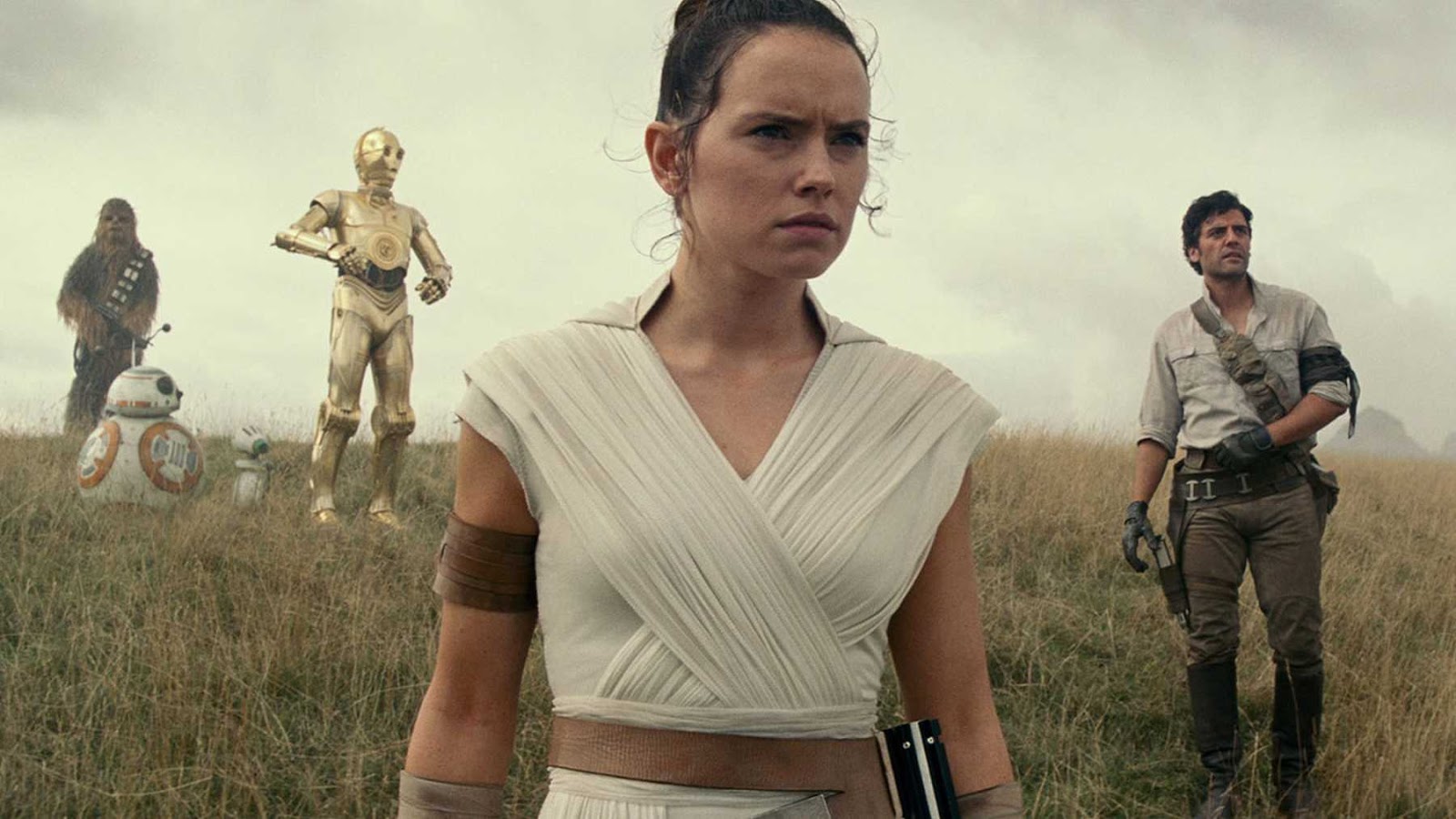
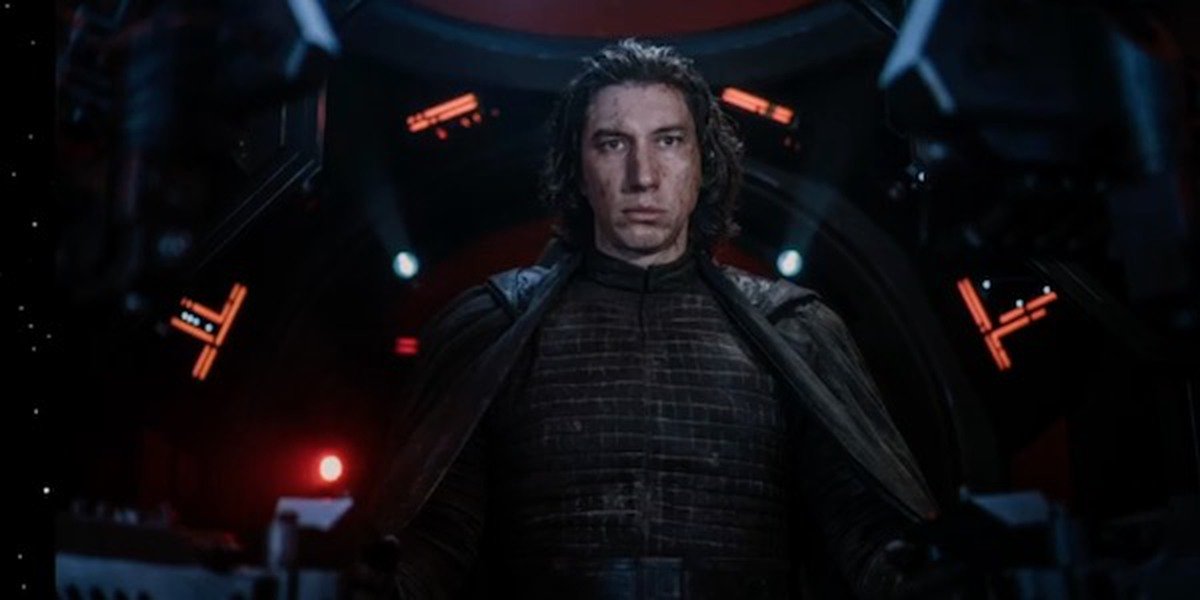
Set a year after The Last Jedi, the Resistance has rebuilt itself under the leadership of Leia Organa (Carrie Fisher), who has also been training Rey (Daisy Ridley) in the Jedi arts. Imagine their horror when a message from the not-so-late Emperor Palpatine (Ian McDiarmid) rings out across the Galaxy, threatening revenge. Kylo Ren (Adam Driver) has been searching for Palpatine and forms a deal – Palpatine will make him emperor of the galaxy, if Ren will kill Rey. Meanwhile Rey heads out into the galaxy with Finn (John Boyega) and Poe (Oscar Isaac) in a race against time to find the location of Palpatine and his armada, before the late Emperor can launch a deadly attack.

JJ Abrams’ return to the franchise is also a return to the fun-focused, action-packed, fast-paced explosion of entertainment and thrills that he offered with the excellent (and still best film in this new trilogy) The Force Awakens. It will excite you, entertain you, and offers some terrific work from many of its players, not least Daisy Ridley (who has grown and grown with each film as an actress confident in carrying a huge franchise) as Rey and Adam Driver as a morally conflicted Kylo Ren. JJ Abrams gently handles the death of Carrie Fisher, skilfully using off-cuts and deleted scenes from past Star Wars films to retroactively create a series of scenes using what dialogue they had from the actress to give her arc some sort of resolution.

It’s one of many things the film gets right here, along with its electric pace and sense of excitement, that never lets up and takes you on such a gripping thrill ride that you hardly notice that most of the film makes very little if any sense (so little sense, I didn’t really understand whether the baddies were the First Order, the old Empire or the Final Order or whatever they were meant to be). It’s a top-to-bottom piece of entertainment, designed to thrill the initiate and the casual fan and give all that you might want to the superfan.

In fact you could say it’s more or less a course correction from the deeply unpopular (with certain elements of the fandom, although its box office success was huge) The Last Jedi. Rise of Skywalker lacks all the iconoclastic “forget the past” attitudes of Rian Johnson’s film. In fact it goes out of its way to ignore as much as possible everything that happened in that film – to the extent that, apart from the growing bond between Rey and Ren and the initial training of Rey, you could more or less skip over it if you wished when viewing the trilogy. I’m not sure how I feel about this – or the fact that the franchise feels it has effectively side-stepped by-far-and-away the most interesting and different film it has produced in favour of a safe-return to familiar stories.

It does mean that Rise of Skywalker is a far less brave film than Johnson’s – and one that avoids doing anything new as well. Many elements from The Last Jedi are disregarded, and all the plot hooks that film are ignored are firmly, and hurridly, reinstated. It means that Rise of Skywalker rushes from revelation to revelation, from plot point to plot point, hardly stopping to draw breath, so eager it is to give the fans what it feels they want. It’s probably a testament to fan power – but also to the savviness of film producers, working out the vast majority of people will come and see any Star Wars film, but the hardened fans will only support a film that matches their agenda.

So it reckons the fans wanted to see answers to questions raised in Force Awakens, lots and lots of cameos and call backs, and plenty of action and space battles. So Rise of Skywalker is a film almost exclusively made up of these things. While there are flaws in this approach, it does mean that this film is a joyfully fun piece of excitement, with lots of great set pieces and some terrific gags among the screenplay. JJ Abrams is a wonderfully confident director of this sort of action, and while the film often feels like it never takes a second to really explain any of its plot dynamics, he is also able to create a narrative that is much more fun and exciting than The Last Jedi, for all its faults of pacing, narrative and characterisation.

What this film does the most is hammer home the bizarre fact that Disney set about making a franchise of three films – guaranteed three films! – with no coherent thought at all about how all these three films would work together either in terms of tone or plot. Now that all three are assembled there is no sense of them having any particular themes, or that they connect together to form an overarching story. The conclusions reached in this film are only faintly threaded in Force Awakens and all but contradicted in The Last Jedi. It’s this lack of planning that underwhelms the film – fun as it is, these are more like three loosely linked films rather than ones that progress one to the other, or feel connected to the original three films.

It’s of course made worse by the ignoring of The Last Jedi – Rose Tico, a character that film spent a lot of time building and establishing gets less than three minutes of screen time – and a re-focusing of the film on the “family of three” in Rey, Poe and Finn that mirrors the first film. This relationship is now far warmer and closer than we ever saw developing in Last Jedi (a film they never appeared in together until the final seconds) – and also laced with an odd, almost queer-baiting sexual tension, where they seem at times like a borderline thruple. (The film offers a cop out on LGBTQ people in Star Wars by having two background characters kiss at one point, a blink-and-you’ll-miss-it shot, cut in China.)

It’s part of a general lack of imagination in the film as a whole, which leans often on bringing back people from the previous trilogy and even sidelines the villains of the rest of the trilogy to shoe-horn back in Palpatine (a reintroduction that is barely explained – like much of the film – and also rather undermines the ending of Return of the Jedi) as the big-bad, and which again doubles down on many of the tropes of the first trilogy. JJ Abrams often mistakes bigger for better – and this film is big, with races against time, fleets beyond imagining, planet destroying tech that can be put into a single star destroyer, Sith powers that can stretch over thousands of miles etc. etc. He takes the same approach with the film, throwing so much of the old trilogy in that it becomes more of a surprise that stuff is missing rather than appearing (I was shocked Yoda wasn’t in this one).

But it’s what the film is going for, offering something safe and recognisable, something that is a thrill ride like you remember rather than the different path the trilogy seemed to be heading towards. There is nothing wrong with that of course at all, but it feels like a missed opportunity. For all its faults, The Last Jedi tried to do something new. This doubles down on the things it knows fans will love, and offers all the entertainment it suspects the casual viewer wants. And maybe that’s enough.