
Tag: Natascha McElhone

The Truman Show (1998)

Jim Carrey starts to wonder if there is more to his life than meets the eye in The Truman Show

Director: Peter Weir

Cast: Jim Carrey (Truman Burbank), Ed Harris (Christof), Laura Linney (Hannah Gill/Meryl Burbank), Noah Emmerich (Louis Coltrane/Marlon), Natascha McElhone (Sylvia/Lauren Garland), Holland Taylor (Alanis Montclair/Angela Burbank), Brian Delate (Walter Moore/Kirk Burbank), Paul Giamatti (Simeon), Peter Krause (Truman’s boss), Harry Shearer (Mike Michaelson), Philip Baker Hall (Network executive), John Pleshette (Network executive)

Have you ever fantasised that your whole life was a movie? It would be great wouldn’t it? You’re the star of every scene, the story lines always have a happy ending and you always emerge as the hero. But what if your life really was a massive TV series? What if everyone you had ever met was an actor playing a role? What if every experience in your life had been carefully scripted? What if nothing you knew was a real or even remotely true? That’s no-where near as fun.

Of course the odd thing today is that I suspect there are more than a few people out there who would still consider that a decent pay-off – even if they couldn’t know that they were on television, at least they would be on it. The Truman Show predated much of the surge of reality TV that was to come in the 00s, when shows like Big Brother made putting everyday (at least at first) people into situations and simply watching what happens became TV gold. Truman Burbank (Jim Carrey) is approaching his 30th birthday. Little does he know that his entire life he’s been at the centre of an elaborate TV show and that the hometown he has never left is a giant self-contained film studio. But as incidents begin to pile up, Truman suddenly questions his reality – while the show’s cast and production team work to keep him in ignorance. After all, we can’t let this ratings cash cow die!

With a precise, sharp and intelligent script by Andrew Niccol, Peter Weir’s film is a triumph. It’s partway between drama and satire, but never lets the one compromise another. It could have become a lumpen message film about the intrusion of media into our lives. Instead it’s an acute satire of TV gone mad, with a very real, sympathetic character who we invest in. Effectively the movie works on the same premise as the fictional TV show: the viewers know the world they are seeing is larger than life, but they know the character of Truman is grounded and true. It works as it bases its satirical attacks around a heartfelt story of a man (unwittingly at first) on a quest for freedom.

It’s two horses the film rides extraordinarily well – and even effectively comments on. Throughout the action we cut to the same regular joes watching the show: people in a bar, security cops, a pair of old ladies on a sofa. These people are aware they are watching a show – and watching a man effectively imprisoned – but have their emotions manipulated with ease, first by the producers then by the excitement of Truman’s very real quest. As they gasp and cheer as Truman works his way out of his prison, there is not a shred of acknowledgement to them that buy ‘booing’ the TV network they should also be booing themselves for watching in the first place. Instead they treat it just as another episode of their favourite show, the celebrations as transient and hollow as their tears of joy as the producers reintroducing Truman’s long-lost father in an attempt to ‘explain’ the strange circumstances he’s seen.

The Truman Show itself takes place in a perfect, unintimidating slice of 50’s inspired nostalgia. It’s a perfect picture of Americana – and its conservatism is itself a satire. Of course the producers set the show in the most cosy, comforting setting they could imagine. The rose-tinted past is always something we turn to for comfort viewing (take a look at the success of Downton Abbey). Alongside that, it’s a world run by advertising: Truman’s wife frequently stops to deliver scripted adverts, singing the praises of household products; a pair of old buffers have the job of pushing Truman up against a different advert hoarding every day; Truman’s friend Marlon praises their beer with every sip.

And in the sky: we have the studio itself, run by the shows creator Christof. Superbly played by Ed Harris, as part hipster artist, part messianic genius (“I am the creator” he tells Truman near the end, his voice coming through a beam of skylight, adding after a half-beat “of a television show”), Christof has carefully plotted Truman’s entire life from birth. He partly sees himself as Truman’s father – but he as much sees Truman as a tool he can manipulate for his own ends. A hands-on show-runner, Christof believes himself a genius whose will cannot be questioned. This softly-spoken dictator is a terrifying insight into what happens when self-appointed artistic geniuses can explore their ideas with no regard for morality and no restraints.

Truman himself is a charming, sweet, decent fellow – I suppose if nothing else Christof has done a superb job of bringing him up. But his entire life is a manipulated lie. The whole town is full of subconscious messages encouraging him to stay – as is the advice from his wife and best friend. Most cruelly of all, he has been deliberately traumatised into a terror of water by being made to feel responsible as a boy for the drowning of his father. Christof even boasts of his ingenuity in this “plot line” to help insure Truman would be too scared to ever consider leaving his home.

Jim Carrey was a revelation as Truman – Weir was the first director to refocus his comic mania into something more intimate and true. The part still makes a lot of hay from Carrey’s rubbery comedic chops – its part of Truman’s charm – but he matches it with a Jimmy Stewartish decency and earnestness. As the illusion begins to crack, his bemusement turns to something between disbelief and anger, but never compromises his humanity. You can see why billions of people watched him – and also understand why a man so accommodating and decent has not questioned his life before. Witty, gentle and human it’s a great performance.

But perhaps the film’s greatest strength is Weir’s sharp, clear-eyed, largely unobtrusive direction. The film makes nifty use of all the thousands of cameras contained in Truman’s world – with shots taken from button cams, CCTV, dashboards and all sorts. Its intermixed with normal camera angles, but gives us a beautiful sense of Truman’s world, and the TV world coming together throughout. The pace of the film is perfect and its slow reveal of information delicately done. Weir’s intercutting between ‘fictional’ and real world is superbly judged and the film wears its satire very lightly as well superbly mixing what could have been a dark film of imprisonment and abuse with a lightness and charm. Above all, it manages to both be a compelling story with a sympathetic hero and a sharp-pronged criticism of the shallowness of media and its viewing public.

It might well have been far too ahead of its time when it was released. It looks smarter and smarter each passing year. Truman’s world is an Instagram paradise, and with social media we’ve got even more used to spending our leisure time looking through other people’s lives rather than our own. It’s all part of what helps make Niccol’s script so sharp and prescient. Directed superbly by Weir and wonderfully acted – perhaps most of all by Harris’ Warhol turned dictator – it keeps you entertained, invested and leaves you cheering. Just like the viewers watching Truman being manipulated. Which makes you realise: is the film attacking its audience as much as anyone else? After all, we’d all watch this stuff in real life: look at how we rubberneck at accidents. What’s wrong with us eh?
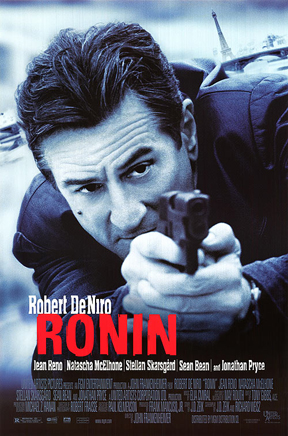
Ronin (1998)

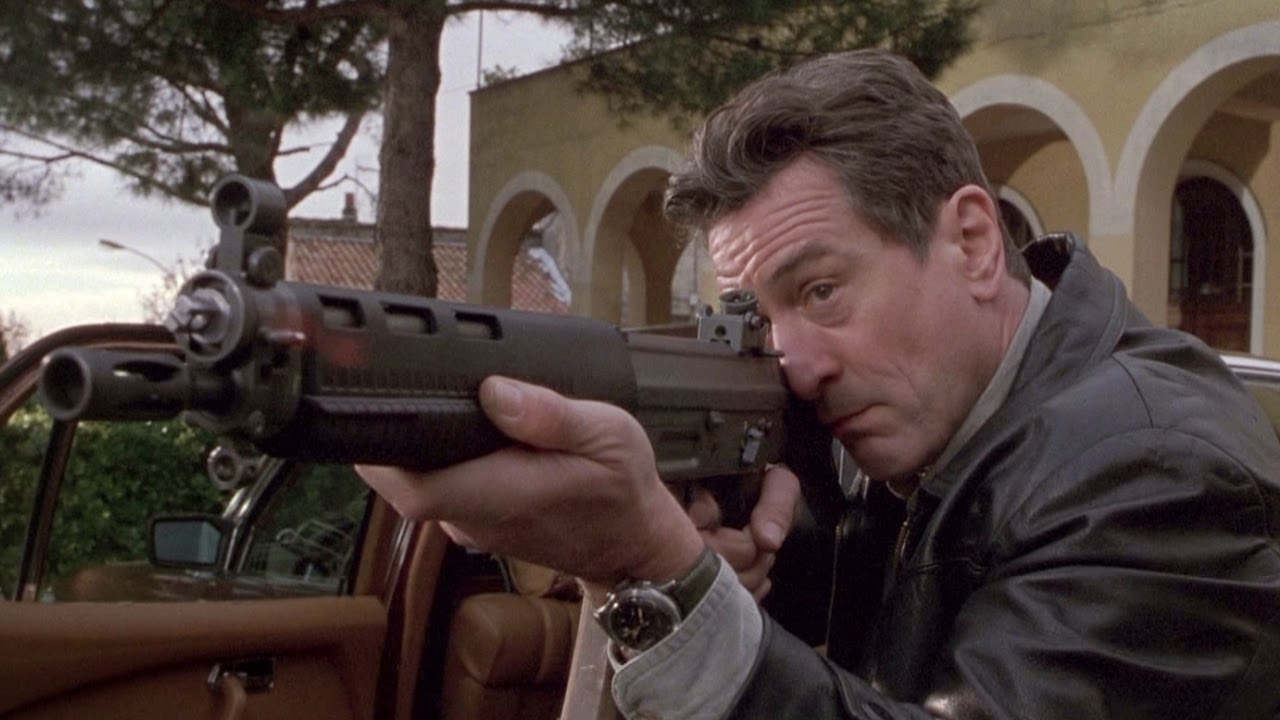
Robert De Niro takes aim in super cool car-chase classic Ronin

Director: John Frankenheimer

Cast: Robert De Niro (Sam), Jean Reno (Vincent), Natascha McElhone (Dierdre), Stellan Skarsgård (Gregor), Sean Bean (Spence), Skipp Sudduth (Larry), Michael Lonsdale (Jean-Pierre), Jonathan Pryce (Seamus O’Rourke), Jan Triska (Dapper Gent), Féodor Atkine (Mikhi)

Sam (Robert De Niro), Vincent (Jean Reno), Gregor (Stellan Skarsgård), Spence (Sean Bean) and Larry (Skipp Sudduth) are ex-intelligence operatives from the Cold War (or “the late unpleasantness”). Now working as mercenaries, they are hired by IRA operative Dierdre (Natascha McElhone) to steal a mysterious case. The operation becomes increasingly complex as trust is betrayed, new competitors emerge, and a stream of gun battles and car chases soon bursts out.

I don’t think there are enough words to say how much I love this film. I have seen it I honestly don’t know how many times. Some films just connect with you, or something about them so completely works for you that you can’t help but enjoy them. Ronin is quite simply one of my favourite ever films – others may poke at it, but to me I think this is a perfectly structured piece of film-making, a 1970s-style thriller produced in the 1990s, the last flourish of old-school, Cold War spy film-making. In fact, I genuinely think the further we move away from the bombastic 90s, the richer this film looks. It’s becoming less and less of a guilty pleasure and more and more of a pleasure.

First and foremost you have to talk about what Ronin is most famous for: its jaw dropping car chases. What’s particularly exciting about these is that everything you are seeing was done for real. There is barely a spot of trickery in this – they simply hired the best stunt men in the world, got hold of some cool looking cars, and let them go to town all over France.

Of course, watching cars going round and round in itself isn’t massively interesting: what makes it compelling in Ronin is the skilled story-telling. Not only do we always know what’s going on, but the characters are kept in the forefront (most of the actors’ terrified faces were real, as they tore round the streets of Paris for real at 90+ miles an hour). In addition to that, the editing and shooting of these scenes is simply superb. The film gets a perfect balance of sound effects and musical cues: the soundtrack of the final car chase is split 50/50 between revving engines and music. A combination of low angles (putting us practically on the front of the car) and medium and long shots keep the visuals of each chase fresh. You’d actually have to be without a pulse to not be gripped by these sequences. These are without a doubt the best car chases ever committed to screen.

But it’s not just about car chases. This is a brilliant mood piece, filmed in a drained out colour palate that makes the whole thing feel like the characters have been transplanted intact from the 1970s. Frankenheimer’s direction is crisp and cool, and he has an eye for an excellent shot. He also allows plenty of subtle character and mood building to counterpoint the action, as in the excellent, almost wordless, opening sequence following De Niro’s arrival at a café. Carefully he cases the joint while the others arrive, putting in place a possible escape route (we later discover) before heading in. Later, the film builds a moment of exquisite tension and excitement about a drawing on a board and the colour of a boat house. We even get a scene where De Niro guides some of the characters through performing surgery on him to remove a rogue bullet.

The whole film is packed full of excellent vignettes like this: I love the moment when De Niro pretends to have lost his nerve and carelessly knocks a coffee cup off a table to see how Skarsgard’s slightly sinister Gregor may respond (he catches it before it hits the ground and then immediately looks sheepish as if he has given something away). The film also sprinkles dark hints throughout of a wider world (“Where do I know you from?” “Vienna” “Of course…” an example of exposition-free dialogue that establishes a back story), while the characters’ backgrounds and their recruitment by “the man in the wheelchair” remain deliberately obscure.

It’s also one of the best Macguffin films you are going to see ever. What’s in the case? Who knows? Who cares? The film’s structure totally understands that it doesn’t matter to us what’s in the thing at all. It’s only important in that it matters to the characters: and that most of them are willing to go to any lengths to secure it (preferably for free).

The other major strength of the film is its cracking dialogue, the work of an uncredited David Mamet (allegedly pissed off that the Writer’s Guild of America declared he had to share billing). The dialogue is endlessly quotable, and deftly sketches out character: for instance, we understand immediately De Niro’s cool confidence and Bean’s blustering faux machismo from exchanges like this: 

Spence: You worried about saving your own skin?
Sam: Yeah I am. It covers my body.

That only scratches the surface of the film’s dialogue, which crackles – this exchange between Vincent and Sam sums up its wit, and lived-in quality:

In fact the film is full of cool lines like this that seem to carry a flavour of working in intelligence, and stick in the imagination (“The map is not the territory” or “Either you’re part of the problem or you’re part of the solution or you’re just part of the landscape”). The best moments sizzle with an effortless cool, with dialogue that you find yourself (or I do anyway) regularly dropping into everyday conversation. It also helps to slowly build relationships within the film, with Sam and Vincent’s dialogue quickly finding itself in sync, a clever little indicator of their building friendship.

The relationship between Sam and Vincent is in many ways the heart of the film – while other characters fall by the wayside, events ruthlessly exposing their weaknesses, it’s these two who form a close bond. Vincent may believe “Everyone’s your brother until the rent comes” but their friendship develops a real warmth and trust – they are the real romantic link in the film (despite a flirtation with Natasha McElhone’s steely IRA gun runner Dierdre).

All this content comes together brilliantly into a tightly contained and carefully paced thriller. It’s also strikingly well-acted in a tight, stripped down manner. This is probably the last engaged, “serious” role De Niro did before his career drifted into decades of self-parody. He gives Sam a brilliant lived-in quality, with a wry sense of humour. Jean Reno is equally well cast as the laconically cool Vincent, while Natasha McElhone is engaging and intriguing as Dierdre. Stellan Skarsgård is a stand-out as the ice-cool Gregor. Of the no-less than three Bond-baddy actors, Michael Lonsdale probably has the best part as a model-building fixer, though Sean Bean does decent work as twitchy poseur. Jonathan Pryce is, I have to say, not completely convincing as an IRA heavy, but does a decent job.

Okay I’ll concede the final reveal and resolution of the film’s plot is not the best moment (a particularly heavy-handed, plumbily voiced BBC radio voiceover explains much of the ending), but that’s a bump in the road of gripping, smart and old-school thriller. It’s accomplished in its filming, and its mood sizzles from the screen. The car chases are edge-of-your-seat gripping, and there is barely a false beat in acting or dialogue. The direction is full of character and has a brilliant eye for little details. Above all else, I really love this film – probably more than is healthy – and I have seen it a crazy number of times. I can’t imagine not enjoying watching it – and I don’t think I ever haven’t, even though I must know it frame-by-frame. Brilliant stuff!

Love's Labour's Lost (2000)


Shakespeare meets Musicals in Kenneth Branagh’s Love’s Labour’s Lost

Director: Kenneth Branagh

Cast: Alessandro Nivola (King Ferdinand of Navarre), Alicia Silverstone (Princess of France), Kenneth Branagh (Berowne), Natascha McElhone (Rosaline), Carmen Ejogo (Maria), Matthew Lillard (Longaville), Adrian Lester (Dumaine), Emily Mortimer (Katherine), Timothy Spall (Don Armado), Nathan Lane (Costard), Richard Briers (Nathaniel), Geraldine McEwan (Holofernia), Richard Clifford (Boyet), Jimmy Yuill (Constable Dull), Stefania Rocca (Jaquenetta)

Love’s Labour’s Lost is one of Shakespeare’s lesser-known comedies. There is a reason for that – it’s simply not that good (it’s certainly the weakest Shakespeare play Branagh has brought to the screen). I’ve sat through some turgid, and terminally unfunny, stage productions of the play in the past – but this movie version presented something different, as Branagh plays fast and loose with the script and turns it into an all-singing, all-dancing musical, with only the barest sprinkling of Shakespeare dialogue.

LLL isn’t really about anything. The King of Navarre (Alessandro Nivola), invites his three best friends (Kenneth Branagh, Adrian Lester and Matthew Lillard) to join him in three years of academic study, during the course of which they will forsake all female company. Of course, no sooner than the deal is made but the Princess of France (Alicia Silverstone) and her three companions (Natascha McElhone, Emily Mortimer and Carmen Ejogo) arrive in Navarre. Will love blossom to prevent the plans of the King? You betcha.

It’s slight stuff. The play always feels a little bit unfinished – it ends with the lovers separated (or as the play puts it “Jack hath not Jill”) but with hints of hope. It’s oddly structured – more like the first part of a series of plays than a standalone (the lovers don’t get together until almost Act 4, and the men and women spend very little time together). There is a series of dull sub plots revolving around the academics of Navarre, with whole scenes made up of obscure Latin jokes. As the icing on the top, a clown and a foppish Spaniard form a bizarre love triangle with a busty country wench. None of these plots is really resolved at the end. It’s a play that focuses a lot more on floral dialogue and intricate poetry rather than narrative.

Branagh addresses a lot of these problems by simply trimming the play to the absolute bone. I would guess at least 65% of the dialogue has been cut – probably more. Although this means some roles are now so small they feel like sketches (in particular many of the more working-class characters and academics), it does mean that this has a bit more narrative thrust and energy than most productions. Moving the setting to 1939 also gives a good context to the play, and places the political issues into an understandable context. It also gives a tension to underlie the lightness of the rest of the play. Branagh manages to remove most of the cumbersome exposition dialogue by replacing it with a series of 1930s-style cine-news reels (spryly voiced by Branagh himself). He even resolves the “cliffhanger” ending of the play with a similar device (reflecting the tonal shift at the end of the original play), which helps to ground the otherwise lightweight play in a very real world, where war carries a cost.

Of course, the main invention was to replace the intricacy (and obscurity!) of some of the dialogue with song and dance routines. The songs are carefully chosen from the great musical composers of the 1930s and 40s, and are delicately interwoven with the dialogue. Now for the purist this could of course be a source of fury, but when the material is one of the weaker plays, getting this “greatest hits” version of the text alongside some excellent songs works really well.

The song and dance numbers also have a certain charm about them. Most of the cast are not especially talented singers and dancers – only Nathan Lane and Adrian Lester have song and dance experience (and it certainly shows when Branagh allows them to let rip). The actors went through an extensive “musicals boot camp”, which certainly taught them the steps, but the musical numbers still retain a charming amateurishness about them. Sure it helps a truly gifted dancer like Adrian Lester stand out, but it’s also quite sweet to see actors like Richard Briers tripping the light fantastic. (Check Lester out at around 3:10 in the video below).

The real issue with some of the actors chosen is less with their song-and-dance strength, but that their acting strength doesn’t quite cut the mustard. Branagh’s delivery and comic timing is spot on, and McElhone is a worthy adversary cum love interest for him; but Nivola and Silverstone are a little too out-of-their-depth to bring much more than blandness to their key roles. Amongst the supporting roles, Nathan Lane stands out in making Costard actually quite funny, but Lillard mistakes gurning for wit. Mortimer and Ejogo are engaging but have precious little screentime.

The film is shot with Branagh’s usual ambition on a set that has a deliberate air of artificiality about it, evoking the classic 1930s studio musical. All exteriors deliberately feel like interiors, and there are homages aplenty, from Singin’ in the Rain to Ethel Merman. Each musical number has its own unique feel and the majority are shot with Branagh’s usual love of long-take. Some of the numbers stick in the head longer than others – but that’s just the nature of musicals. Particularly good are I Won’t Dance, I Get a Kick Out of You, I’ve Got a Crush on You, Cheek to Cheek and a steamy tango to Let’s Face the Music and Dance.

LLL doesn’t want to do anything more than entertain – and sometimes it probably tries a little too hard to be light and frothy, as if Branagh was consciously kicking back after the mammoth undertaking of his uncut Hamlet. Perhaps that is why LLL appealed to him – Shakespeare comedies don’t get less treasured or more inconsequential than this, so he had total creative freedom to do what he liked, in a way that a Twelfth Night or a Much Ado About Nothing wouldn’t allow him. It’s the sort of film you need to plug into the mindset of – and some aren’t going to be able to do that. It’s not a perfect film, but the lightness Branagh handles things with pretty much carries it through.

Perhaps that lightness however is slightly the problem: in Branagh’s previous films he found a perfect mixture between influential reimaginings (Henry V), wonderful crowd-pleasers (Much Ado) and reverential labours of love (Hamlet). People probably expected something else from him than a high-budget, lightly amateur musical with precious little Shakespeare in it. I think this partly explains the hesitant response this has received from the public and critics since: it’s just such an unlikely ideal that people didn’t seem to know how to respond to it.

Of course, as anyone who has sat through an average production of the play can tell them, they weren’t missing much from what has been cut – and this is still an infectiously funny, frothy concoction. It may have a slightly mixed acting bag – some of the leads are underpowered, while some strong actors like Timothy Spall are underused – but the actors do seem to be enjoying themselves, and this enjoyment basically communicates to the audience. It’s not a concept that could have worked with a long running time, but it sure works for the short term. It’s an odd concept – and it was a huge box office bomb – but it’s one that works.