Tag: Nicholas Meyer

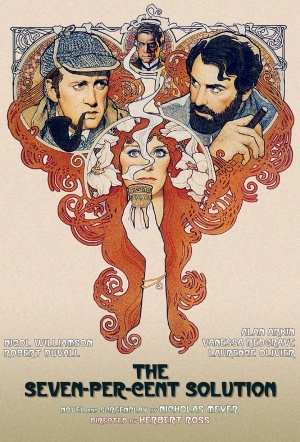
The Seven-Per-Cent Solution (1976)

The Seven-Per-Cent Solution (1976)

Affectionate and faithful Holmes pastiche that shines an interesting light on the Great Detective’s character

Director: Herbert Ross

Cast: Nicol Williamson (Sherlock Holmes), Robert Duvall (Dr John Watson), Alan Arkin (Dr Sigmund Freud), Laurence Olivier (Professor Moriarty), Vanessa Redgrave (Lola Devereaux), Joel Grey (Lowenstein), Jeremy Kemp (Baron Karl von Leinsdorf), Charles Gray (Mycroft Holmes), Samantha Egger (Mary Watson), Jill Townsend (Mrs Holmes), John Bird (Berger), Anna Quayle (Freda)
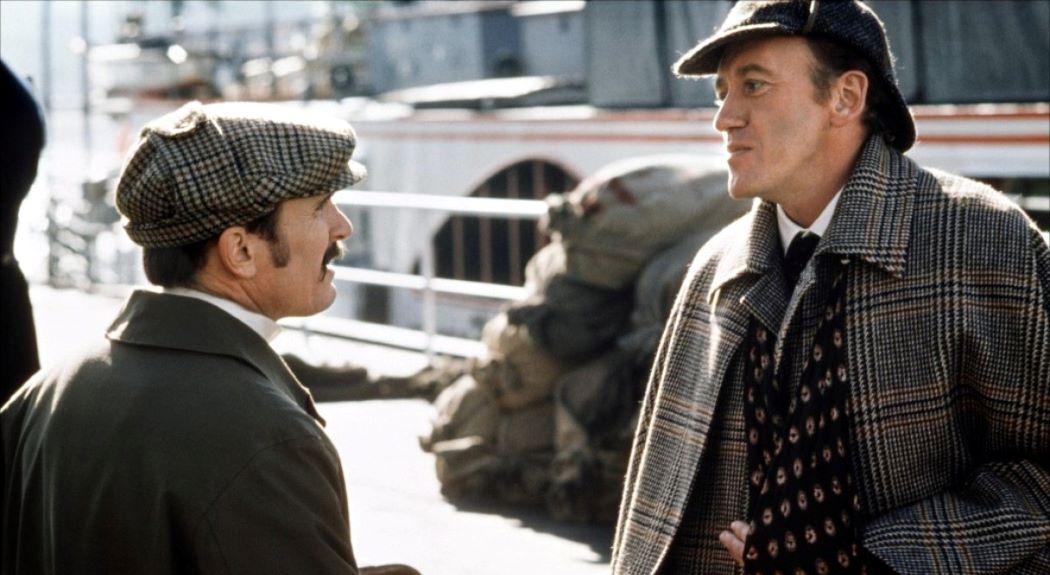
The magic of Sherlock Holmes is he is immortal. Doyle’s detective has been reshaped so many times since the publication of the canonical stories, that we’re now used to seeing him presented in myriad ways. It was more unsettling to critics – particularly British ones – in 1976, who didn’t know what to make of an original, inventive Holmes story that treats the characters seriously but is playful with the canon. Was this a parody or a new story? (Why can’t it be both!) Today though, The Seven-Per-Cent Solution stands out as a Holmesian treat, a faithful slice of gap-filling fan fiction.

Based on a best-selling novel by Nicholas Meyer (who also adapted it), The Seven-Per-Cent Solution expertly reworks Doyle’s The Final Problem. Professor Moriarty (Laurence Olivier) is not the Napoleon of Crime, but a mousey maths tutor, the subject of Holmes’ (Nicol Williamson) cocaine-addled idée fixe. Worried about his friends dissent into addiction, Dr Watson (Robert Duvall) tricks Holmes into journeying to Vienna to receive treatment from an up-and-coming specialist in nervous disease and addiction, Dr Sigmund Freud (Alan Arkin). The treatment is a slow success – and the three men are drawn into investigating the mysterious threat to drug addicted glamourous stage performer Lola Devereaux (Vanessa Redgrave) that may or may not be linked to her fierce lover, the arrogant Baron Karl von Leinsdorf (Jeremy Kemp).

As all we Holmes buffs know, seven per-cent refers to Holmes’ preferred mix of cocaine, taken to stimulate his brain between cases and see off boredom. But what if that persistent cocaine use wasn’t a harmless foible – as Holmes tells the disapproving Watson – but something much worse? Kicking off what would become a decades long obsession with Holmes the addict – Brett and Cumberbatch would have their moments playing the detective high as a kite and a host of pastiches would explore the same ground – Meyer created a version of Holmes who was definitely the same man but losing control of himself to the power of the drug.

This short-circuited some critics who didn’t remember such things from school-boy readings of Doyle and hazier memories of Rathbone (those films, by the way, were basically pastiches in the style of Seven-Per-Cent Solution as well). But it’s a stroke of genius from Meyer, shifting and representing a familiar character in an intriguing way that expands our understanding and sympathy for him. Holmes may obsessively play with his hands and have a greater wild-eyed energy to him. He may sit like a coiled spring of tension and lose his footing. But he can still dissect Freud’s entire life-story from a few visual cues in a smooth and fluid monologue and his passion for logic, justice – as well as his bond with the faithful Watson (here bought closer to Doyle’s concept of a decent, if uninspired, man) – remain undimmed.

It helps that the film features a fantastic performance from Nicol Williamson. Few actors were as prickly and difficult – so could there have been a better choice to play the challenging genius? Williamson’s Holmes is fierce in all things. Introduced as a wild-eyed junkie, raving in his rooms and haring after leads, his behaviour oscillates between drug-fuelled exuberance to petulant paranoia. But there are plenty of beats of sadness and shame: Holmes is always smart enough to know when he no longer masters himself. When the mystery plot begins (almost an hour into the film), Williamson’s does a masterful job of slowly reassembling many of the elements of the investigative Holmes we are familiar with – the focus, the energy, the self-rebuke at mistakes and the excitement and wit of a man who loves to show he’s smarter than anyone else.

The film is strongest as a character study, in particular of Holmes. Its most engaging sections take Holmes from a perfectly reconstructed Victorian London (including a loving, details-packed recreation of 221B from production designer Ken Adam) to waking from a cold turkey slumber full of apologies for his cruel words to Watson. Seeing Watson’s quiet distress at Holmes state, and the great efforts he takes to help him, are a moving tribute to the friendship at the book’s heart. The clever way Meyer scripts Holmes’ ‘investigation’ into Moriarty (an amusing cameo from Laurence Oliver, his mouth like a drooping basset hound) sees him apply all his methods (disguise, methodical reasoning, unrelenting work) in a way completely consistent with Doyle but clearly utterly unhinged.
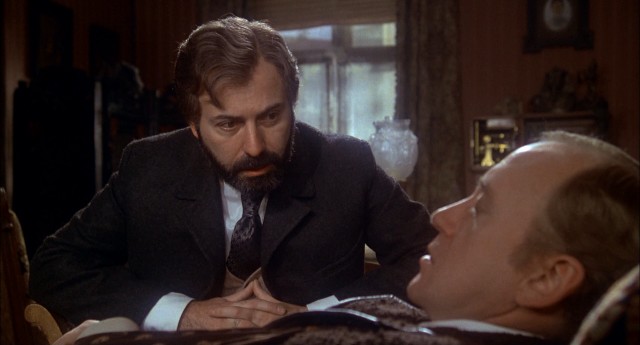
That first half serves as a superb deconstruction of the arrogance of literature’s most famous detective, who won’t admit the slightest flaw in himself. It’s still painful to see a frantic Holmes, desperate for a hit, causing a disturbance in Freud’s home and denounce Watson as “an insufferable cripple” (a remark met with a swift KO and later forgiven). Holmes’ cold turkey sequence is a fascinating sequence of nightmareish hallucinations, as he is plagued by visions of cases past (The Engineer’s Thumb, Speckled Band and Hound of the Baskervilles among them) and the eventual awakening of Holmes as a contrite, humbled figure very affecting.

Bouncing off Williamson we have the traditional “Watson” role split between that character and Freud. Robert Duvall is a very unconventional choice as Watson – and his almost unbelievably plummy accent takes some getting used to – but he gives the character authority without (generously) giving him inspiration. Limping from a war wound (another touch of the novels often missed until now), he’s dependable, loyal and goes to huge lengths to protect his friends.

But most of the traditional role is actually given to Freud, played with quiet charm and authority by Alan Arkin. Intriguingly the film places Freud as a combination of both men’s characters. He has the analytical mind of Holmes, investigating the subconscious. But he also chases after errands for Holmes, “sees but does not observe” during the case in the manner of Watson and eventually becomes an active partner in confronting the villains.

The actual mystery (taking up less than 40 minutes of the film’s runtime) can’t quite maintain the momentum, being a rather trivial affair (greatly simplified from the book) revolving around a cameo from Vanessa Redgrave as a fellow drug addict Holmes feels a touching sympathy for. Jeremy Kemp makes a fine swaggering bully, but his greatest moment is actually his pre-mystery anti-Semitic confrontation with Freud at a sports club, culminating in a Flemingesque game of real tennis between the two. If the film has any moment that tips into outright comedy, it’s a closing train chase that involves Holmes, Watson and Freud dismantling the train carriage to burn the wood as fuel.

But the real heart of the film is Holmes. Throughout the film we are treated to brief visions of the boyhood Holmes slowly climbing a staircase. What he saw at the top of that staircase is buried deep in his subconscious, with the final act of the film revealing all under hypnosis. It’s an intriguing motivator for all Holmes has become, just as it is surprisingly shocking. As Watson comments, the bravest act is sometimes confronting ourselves: The Seven-Per-Cent Solution treats the detective with huge respect, while pushing him into psychological waters Doyle would never have dreamed of. It’s why the film (and Meyer’s book) is a fascinating must-see for Holmes fans: it takes the material deeper, but never once forgets its loyalty to the source material.

Time After Time (1979)

Time After Time (1979)

HG Wells zooms through time on the trail of Jack the Ripper in this surprisingly charming time travel romantic thriller

Director: Nicholas Meyer

Cast: Malcolm McDowell (HG Wells), David Warner (Dr John Leslie Stevenson), Mary Steenburgen (Amy Robbins), Charles Cioffi (Lt Mitchell), Kent Williams (Assistant), Patti d’Arbanville (Shirley), Joseph Maher (Adams)

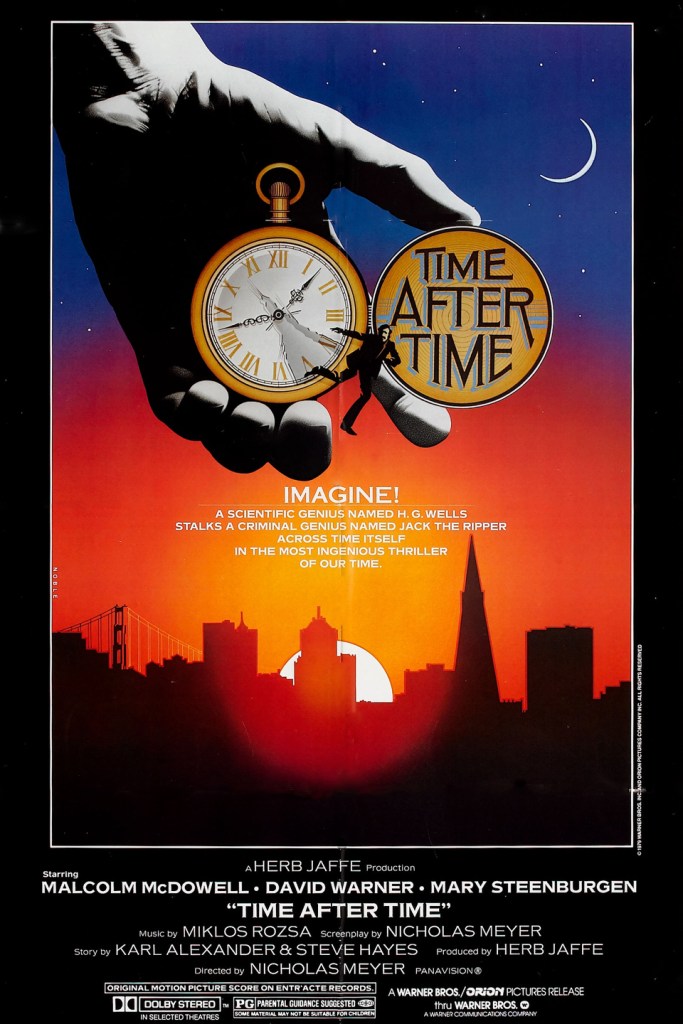
1979 was clearly the Year of the Ripper. New conspiracy theories abounded on his mysterious identity. In Murder By Decree, Sherlock Holmes took on the investigation. And in Nicholas Meyer’s Time Travel fish-out-of-water drama, he pops up in 1970s San Francisco, still up to his wicked ways. How did he get there? Well, imagine instead of just writing The Time Machine, HG Wells had actually built it: and that, during a dinner with a doctor friend, he not only discovers his friend is the infamous killer, but watches him pinch his time machine to escape the long arm of the law.

HG Wells is played by Malcolm McDowell – who surely when he was sent the script assumed he was being asked to take a look at the role of the Ripper – who uses his machine to follow the Ripper to the 1970s to find him. The Ripper is played by David Warner (one of the few actors even more demonic than McDowell), and he’s rather more at home in the 1970s than Wells, who expected to find a utopia. Wells is helped by Amy Robbins (Mary Steenburgen), who is drawn to this charming Englishman, who she believes is a Scotland Yard detective on the hunt for a serial killer.

Meyer’s first film is a little raw – you can see he’s still learning his craft, a few shots are a little rough around the edges in their framing and some plot points and transitions are not easy to follow – but rather charming, for all it’s about the hunt for a serial killer. Meyer gets a lot of affectionate comic mileage from Wells – the quintessential gentle Englishman, timid but determined when riled – working out the social rules of the 1970s. From crossing the road, to hailing a taxi, from consuming a McDonalds (“Fries are pomme frites!” – some silver presumably crossed Meyer’s hands to show the novelist chomping down thrilled on the fast food chain’s merchandise) to working out the rate of exchange for his fifteen Victorian pounds doesn’t translate to many dollars, it’s got a fish-out-of-water delight and a shrewd comic energy.

It’s helped a great deal by McDowell’s gentle, playful and thoroughly engaging performance – Time After Time leaves you sad he doesn’t get to play more roles like this. Wells is optimistic, polite, gentlemanly and admirably brave: even more so, because he’s so hesitant about risk. He travels around the 1970s with a wide-eyed wonder and has a humanitarian streak a mile wide. He’s one of the nicest guys you could meet.

No wonder Amy falls for him so swiftly. There is an electric chemistry between Mary Steenburgen – full of Southern sweetness but with a very modern (but never grating) feminism – and McDowell (and clearly off screen as well, as they married almost immediately after). Meyer plays this romance like a classic rom-com, with meet-cutes at the bank and McDowell’s playing of this shy Victorian gentleman’s courtly manners (he touchingly stops a kiss to make absolutely sure he has full consent – which Amy makes clear he more than does!) works like a charm.

The jokes are genuinely well-thought out and keep the film brisk. I love the alias Well’s plucks out of the air when pretending to the police to be a Scotland Yard detective: he seizes upon what he guesses will be a long forgotten popular fiction character of his day and calls himself Sherlock Holmes. McDowell and Steenburgen have an affinity for physical comedy – watch McDowell hail a taxi with a jaunty wave or Steenburgen sitting frustratedly on a sofa waiting for Wells to make a move. The fish-out-of-water elements work a treat (you can see the clear groundwork for gags Meyer would take even further in his next time-travel hit Star Trek IV: The Voyage Home).

Time After Time sits this comedy next to a genuine Ripper-flick. The film opens with a long POV shot as the Ripper strikes in the streets of London. David Warner gives a very good performance as a world-weary psychopathic, who can hide his depravity but not control his urges. Unlike Wells, the Ripper adjusts very naturally to the modern world – probably because he’s more used to pretence than the honest Wells – dressing in progressively more relaxed 70s garb. His murders are shot with discretion – mostly off screen with the inevitable splash of scarlet on a surface or face from off camera. The actual historical elements of the Ripper are bunkum, but the handling is well done.

The time travel elements are rather laboriously explained, with much talk of keys, return-prevention locks and stabilisers. Wells points out the various features of the machine with a bluntness that all but has Meyer tapping you on the shoulder and saying “remember that it will be important later” – you can utterly (correctly) guess the eventual ending purely from this lecture. But the time travel effects use a mixture of 2001-ish camera tricks rather effectively and the film plays a little bit with paradox and timeline tweaking (although without any depth).

Meyer’s film is an enjoyable ride, even if some plot developments gear shift swiftly (the Ripper seems to have had a sudden emotional breakdown at some point between his penultimate and final scene and the reasons for the time machines physical shift to San Francisco are barely explained) and it at times loses its drive (the Ripper is all-too-obviously presumed dead at one point and his determination to grab a key that controls the time machine oscillates with urgency from act to act). But as a debut, it’s an enjoyable piece of pulp. And it’s got a hugely likeable performance from McDowell and very assured support from Steenburgen and Warner. It’s a very enjoyable romp.

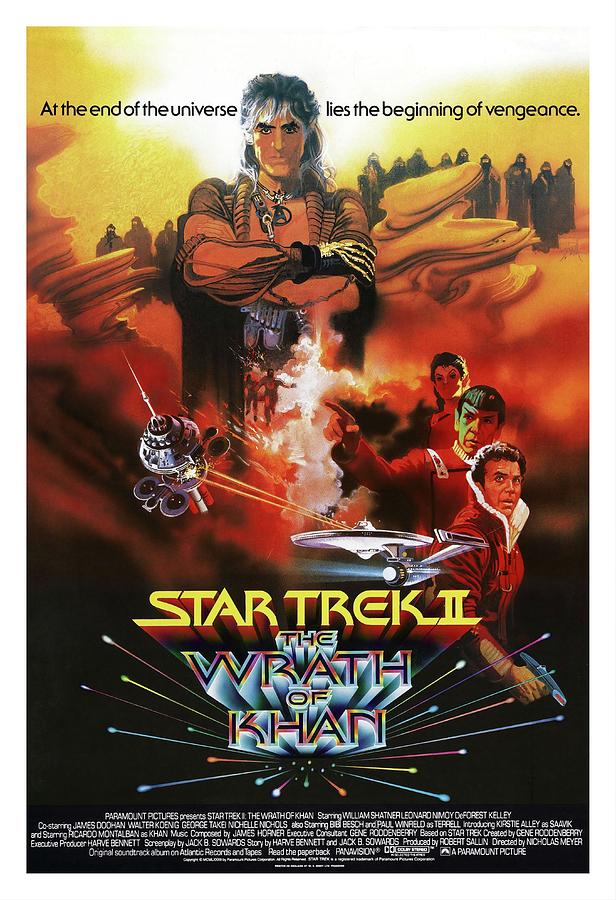
Star Trek II: The Wrath of Khan (1982)

The Enterprise crew re-unite to face The Wrath of Khan

Director: Nicholas Meyer

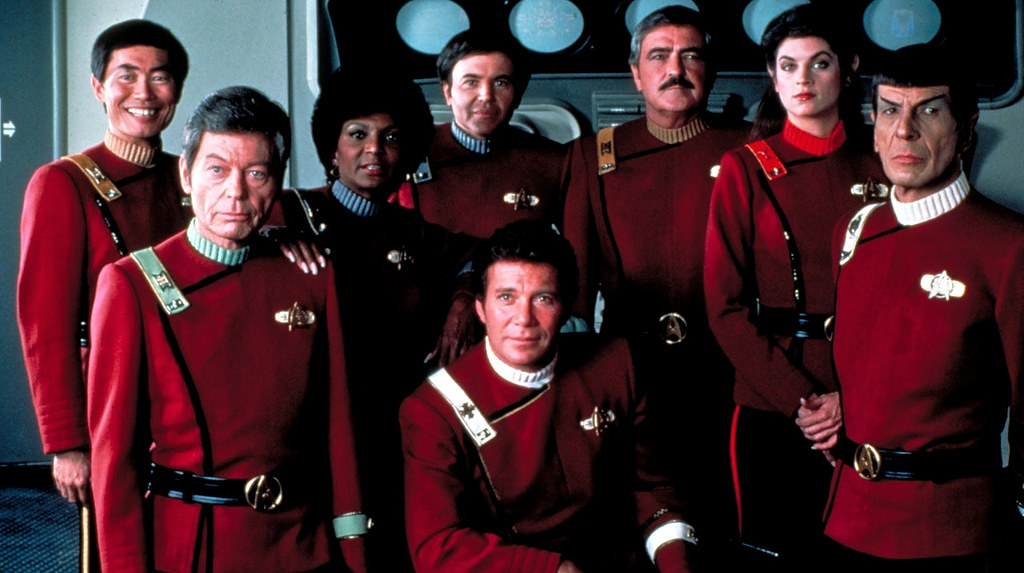
Cast: William Shatner (Admiral James T Kirk), Leonard Nimoy (Spock), DeForest Kelley (Dr Leonard McCoy), Ricardo Montalban (Khan Noonien Singh), James Doohan (Montgomery Scott), George Takei (Hikary Sulu), Walter Koenig (Pavel Chekov), Nichelle Nichols (Uhura), Bibi Besch (Dr Carol Marcus), Merritt Butrick (Dr David Marcus), Paul Winfield (Captain Terrell), Kirstie Alley (Saavik)

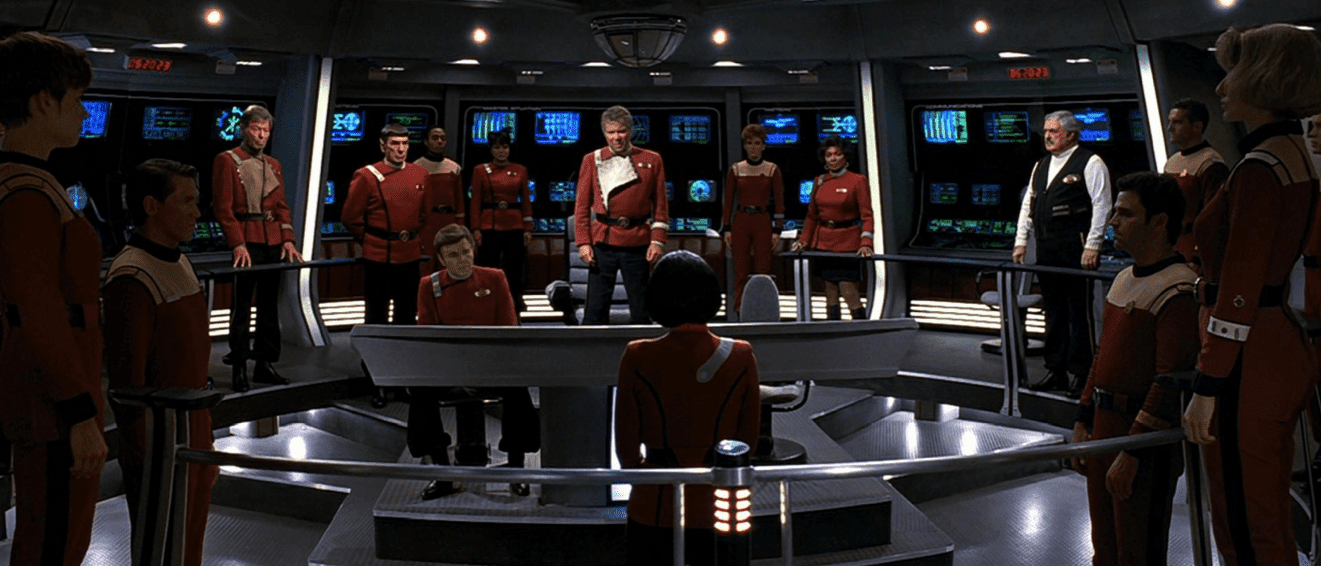
After the overblown, slow and tedious The Motion Picture, you’d have been forgiven for thinking that we had seen the Enterprise crew boldly go for the very last time. If there was going to be a sequel Paramount had very clear guidelines for what it wanted: more entertaining, exciting, don’t involve Gene Roddenberry and above all make it for a fraction of the price. I think it’s fair to say that the decision to bring producer Harve (“I could make three movies for the cost of that first one!”) Bennett and above all writer and director Nicholas Meyer on board, saved the franchise.

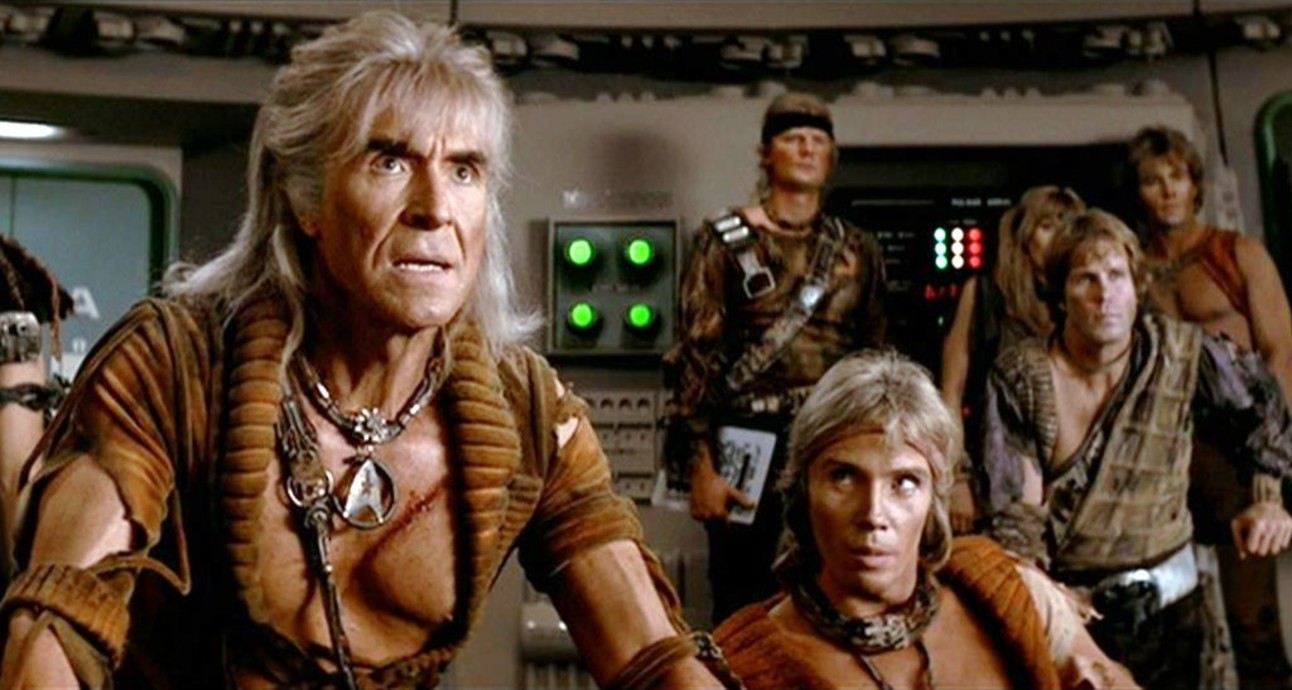
Neither Meyer or Bennett were familiar with the franchise in advance. But they did what those involved in the first film should have considered doing (looking at you Robert Wise!) – they went back and rewatched all the previous episodes and tried to work out exactly what people enjoyed about the show to begin with. And then tried to make a movie based around that. So first and foremost they decided they needed a villain – so after running through all the previous episodes they decided genetically-engineered superman Khan Noonien Singh, left abandoned on a planet with his followers after the episode Space Seed – was the best pick. Giving the film a simple “revenge” structure, it became a taught battle of minds and wills between Khan and the man he blames for all his problems – Admiral James T Kirk (William Shatner).

Star Trek II opens with an ageing Kirk, unsure of his place in the world while stuck in a desk job and scared about getting old. Running a cadet training voyage with his old crew, Kirk is called back into action after Starfleet loses touch with Federation scientists working on the Genesis device, a terraforming rocket that will help the Federation build new worlds and civilisations. The problems with Genesis are directly linked – without Kirk’s knowledge – with Khan’s (Ricardo Montalban) hijacking of the USS Reliantafter brainwashing the ship’s captain Terrell (Paul Winfield) and his first officer Chekov (Walter Koenig). Khan blames Kirk for the disasters that have taken place on the planet he was marooned on – and is determined to exact revenge on Kirk no matter the cost.

Unlike the dry Motion Picture, Wrath of Khan builds is action around a compelling, emotionally charged, story that gives each character a clear and relatable motive for their actions. Building a film about revenge may not exactly be in Roddenberry’s ideal for the 23rdcentury: but by heck it makes for a much better film. Because, if nothing else, while we may struggle to understand what the hell V’Ger wanted in the first film, everyone understands the dangerous obsession of revenge. It helps that the film has an excellent villain – a scowling, unbalanced but still strangely honourable and decent Khan, played with a grandstanding relish by Montalban who is clearly having a whale of a time. Despite never sharing the screen (or even being on set at the same time) Montalban and Shatner go at the rivalry and its impact on both characters with a real intensity that makes for compelling viewing.

Meyer also tightened and refocused the entire franchise. Roddenberry may have struggled with the increasingly naval view of Starfleet in this film – it’s at least twice referred to explicitly as the military – but Meyer recognised that if the franchise was partly Hornblower in Space, then why not redesign the film with that in mind. The ship is run with naval precision, including yeoman whistling to signal shifts and orders, uniforms that have a stylish naval formality to them, a greater focus on the ship’s movements being described in strictly naval terms – even the photon torpedo bays are prepped by enlisted men in what Meyer called his “running out the guns” sequences. This makes the entire operation not only easier to relate to, but interesting and entertaining in its own right.

It also adds huge tension to the duel that develops between the Reliant and the Enterprise that plays out part naval battle and late on – when battle turns to the Mutara nebula where systems and sensors work only intermittedly – part classic submarine drama, with Meyer practically throwing in depth charges. The battle scenes are filmed with simplicity and economy – but because the personal clashes between Kirk and Khan are so compelling and involving, they absolutely drip with tension, as these two go through move and counter move.

Meyer’s film is lean, engrossing and thrilling, and superbly well directed. It goes from skilled set-piece to set-piece, and never for a moment overlooks character. Unlike the first film, we get the moments of Kirk-Spock-McCoy discussing key themes together so beloved from the series, while most of the main cast also get their moment in the sun, most especially Walter Koenig who, as a brainwashed Chekov, gets more to work with here than he got in the whole original series. 

But this isn’t just an action adventure in space. Meyer’s literate and intelligent script has far more depth and thematic interest in it than the faux intellectualism of The Motion Picture. Taking as its starting point Kirk’s fear of on-setting age (the film opens with his 50th birthday, and McCoy’s gift of antique spectacles), it expands into an engrossing mediation of how we react to the impacts of our actions and lose-lose situations. Kirk has also to face the mortality of age and the impact of past actions – like his son (Merritt Butrick channelling Shatner’s impulsiveness) – coming back to bite him. All this while flying a ship of young cadets round – who need to shepherded into the risks of conflict. Khan meanwhile is confronted time and again with the damaging impact of his choices to follow revenge and obsession rather than settling for a winning hand.

Meyer gets his best work ever out of Shatner (allegedly after realising Shatner over committed to early takes, he made Shatner take multiple takes in order to focus his energy). This is a Kirk getting old, dealing with inner resentments and made to face up to the consequences of his actions – both with Khan and meeting the son he fathered. Shatner tackles all this with a world-weary resignation and touch of sadness that many felt were beyond him, while still making room for the fireworks that are his calling card (I suppose the famous “Khan!” was Meyer’s one major indulgence of Shatner’s exuberance).

However the other element the film is well known for is of course it’s tragic ending – the sacrifice of Leonard Nimoy’s Spock. Lured back to the film, but not convinced about ever returning, Nimoy agreed to the final reel shocker (although he enjoyed making the film so much he willingly agreed to leave the door open for Spock’s resurrection). It gives the film an emotional heft that none of the others in the franchise has. For the first time, our heroes would not magically escape unharmed to fly off onto the next adventure. Just as the film started with the cadets learning that sacrifice and facing a lose-lose scenario is a part of command (a lesson Kirk cheated on in his day, and a situation he has never faced or understood, as the film teaches him), so the film ends on the same beat. The ship can escape – but only if Spock takes a fatal radiation dose to restart the engine.

Both Nimoy and Shatner play the heck out of these scenes, probably the most emotional in the franchise – a low-key but deeply affecting moments of two old friends sharing their last moments together. It’s this successful switch into showing the real cost and loss associated with adventures like this that cap the thematic depth Meyer bought to the film.

Star Trek II succeeds on every count. Meyer’s intelligent script quotes and riffs everything from CS Forrester to Dickens via Moby Dick, while giving both heroes and villains deep and rich character arcs. It’s grippingly filmed – you wouldn’t believe how much cheaper it was than the first film, as it looks ten-times better with not a penny gone to waste – and hugely exciting. It carries real emotional force, and it’s hugely benefited by a fantastic score by a young James Horner. Even now it’s still the high point of Star Trek on screen – and probably a highlight of the franchise as a whole.

Star Trek VI: The Undiscovered Country (1991)

Kirk has to overcome a lifelong prejudice against Klingons in the marvellous, best-in-series film Star Trek VI: The Undiscovered Country

Director: Nicholas Meyer

Cast: William Shatner (Captain James T Kirk), Leonard Nimoy (Captain Spock), DeForest Kelley (Dr Leonard ‘Bones’ McCoy), James Doohan (Scotty), Walter Koenig (Commander Pavel Chekov), Nichelle Nichols (Commander Uhuru), George Takei (Captain Hikaru Sulu), Christopher Plummer (General Chang), Mark Lenard (Ambassador Sarek), David Warner (Chancellor Gorkon), Kim Cattrell (Lt Valeris), Rosana DeSoto (Azetbur), Kurtwood Smith (Federation President), Brock Peters (Admiral Cartwright), Michael Dorn (Colonel Worf), John Shuck (Klingon Ambassador), Iman (Martia)

This will sound ridiculous, but there are few films that have had such an impact on me as Star Trek VI: The Undiscovered Country. How bizarre is that? But not only can I trace my love of all things Trek to this film, but it was also my basic introduction to Shakespeare, whose plays in various shapes and forms have been a big part of my life ever since. Throw into the mix that it sparked an interest in the Cold War and you’ve got quite a coup for this sixth film in (I’ll be honest!) a hit-and-miss franchise.

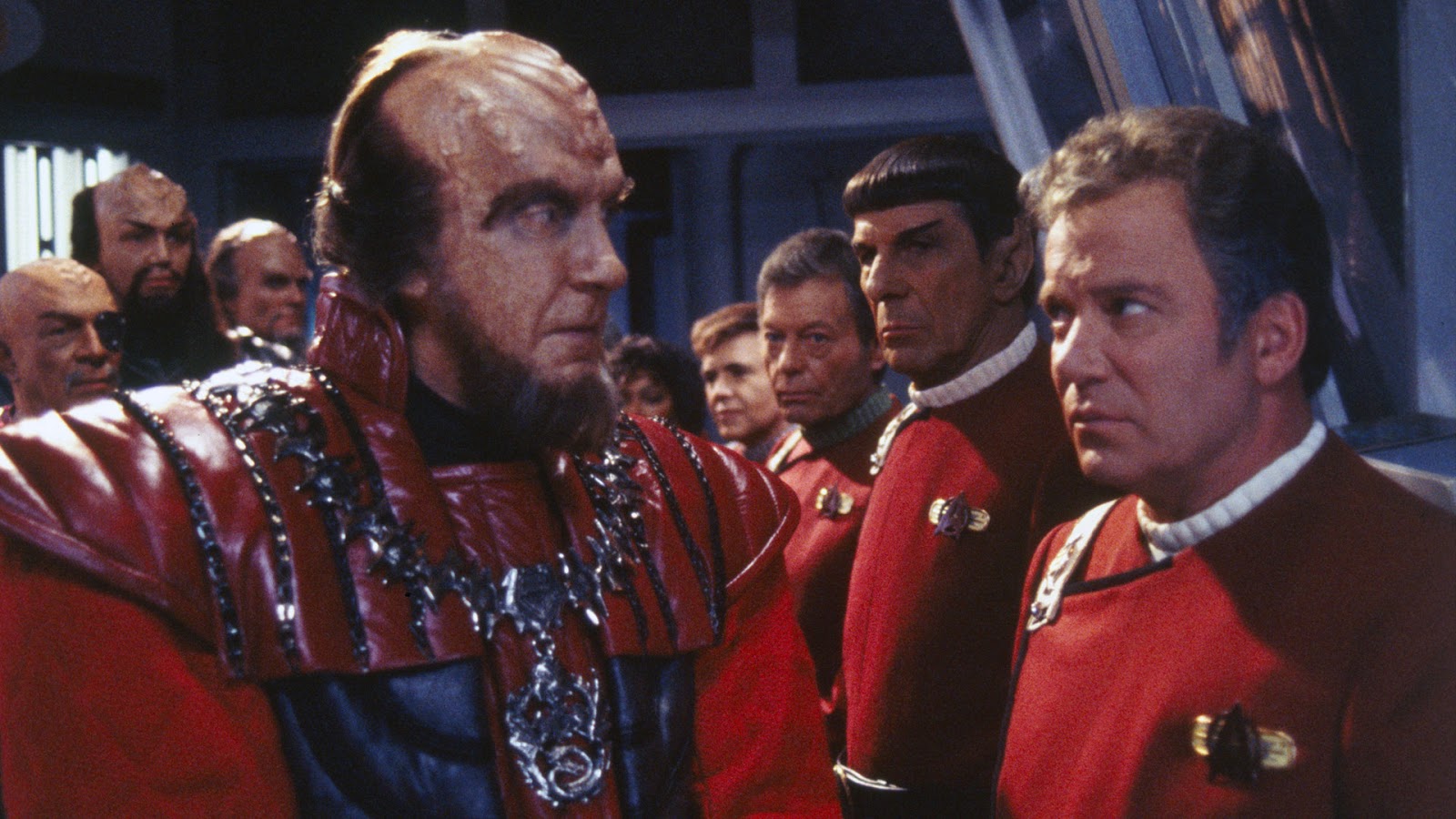
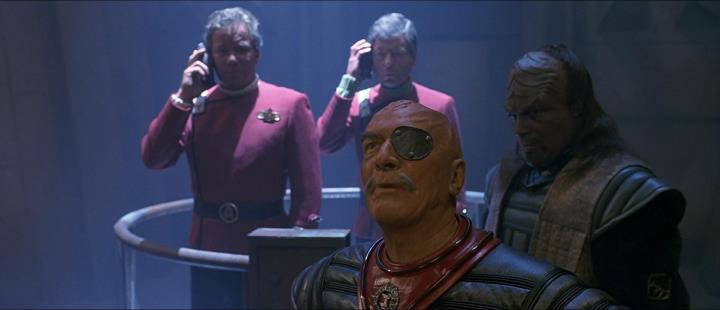
This film follows the final mission of Kirk (William Shatner) and company. There has been a disaster on the Klingon moon Praxis, which has devastated the Klingon economy and left them with no choice but to enter peace negotiation with the Federation, to try and end the Cold War that has existed for generations between the two powers. Sound familiar? While Spock (Leonard Nimoy) has been one of the leading negotiators with Klingon Chancellor Gorkon (David Warner), Kirk is reluctantly roped in to provide an escort for the Klingons to a peace conference. Kirk, and many of his crew, are weighed down with decades of prejudice and suspicion of Klingons (attitudes that erupt in a tense dinner between the Enterprisecrew and many of the equally suspicious Klingons). Kirk and McCoy (DeForest Kelley) however find themselves in trouble when Gorkon is assassinated and the two men are arrested and put on trial by the Klingons. Will Spock save them? Can they save the peace talks? Time for one last adventure.

Star Trek VI very nearly didn’t happen. The previous film, written and directed by Shatner, was a disaster, a messy, strange, flat-footed, cheap-looking adventure that was a huge flop, won several Razzies and nearly killed the series off. So it’s great that the cast got a chance to have one final swan-song in their parts – and that this basically turned into the most intelligent film they had made since Star Trek II. No surprise that Nicholas Meyer, an articulate, literate and intelligent novelist turned film-maker, was the common link between them. Not weighed down by Star Trek lore, nor the breezy “I’m above this” contempt that other directors in the series have had, Meyer understands what makes good Trek – a strong story, compelling character arcs, intelligent writing and a good balance between adventure and themes that resound with contemporary depth.

Star Trek VI was written as the Berlin Wall fell, and it’s a neat commentary on the sort of attitudes you would have seen in America and Russia at the time. Gorkon’s name even echoed Gorbachev (and Lincoln as well). But this isn’t just a historical parallel with the modern world. Instead Meyer also uses this to explore the attitudes of his characters. Like Star Trek II, this works into a neat deconstruction of Kirk’s persona. Kirk has to confront not age here (as in that film) but instead his own out-of-step anger, prejudices and refusal to change. At the same time, the film also explores Kirk as a man who can overcome his instinctive hostility, to make himself a better man. It’s such rich complexity that it’s no wonder I got sucked into a life-long love for Star Trek.

All this makes a fabulous framework for the strongest, most high-stakes entry in the franchise. Meyer’s direction is spot on: simmering with tension in the first half, investing every scene with a creeping intensity and rumbling sense of disagreement. He also works brilliantly with the regular cast, who turn in some of their best performances in this film: Shatner in particular reins in (mostly) the ham for a thoughtful and intelligence performance, while Kelley mixes deadpan snarks with a world-weary resignation. Nimoy also goes further than he has for a long time with Spock, who struggles under the surface with a host of emotions, from hope, pride, guilt and fury all bubbling away under that cool Vulcan façade. The rest of the cast also get moments to shine. 

This is a film that barely puts a foot wrong in its entire first act. From the opening explosion of Praxis – with a hugely exciting sense of danger as Sulu’s Excelsior starship gets caught up in the shockwave – through to the trial of Kirk and Bones, this film is tonally spot on. We understand completely the hostility and distrust Kirk feels towards the Klingons, just as we appreciate on a deeper level his desire to make the peace talks work. The awkward encounters with the Klingons simmer with an unspoken racism from the Federation characters (many of the cast reported being uncomfortable with the imperialist and superior tone their characters had to take), and a hostile resentment from the Klingons. The eventual assassination attempt has a grim inevitability about it, but is expertly shot and edited (a zero-gravity assault by two assassins on Gorkon’s disabled ship). The show-trial itself is like a nightmare of injustice. It’s scintillating and compelling stuff.

While the pace does slacken slightly when Kirk and McCoy find themselves in a Klingon prison camp – we are, by the way, introduced to the prison camp via a speech from the commandant eerily reminiscent of the greetings handed out in Bridge on the River Kwai – it never loses the audience’s attention. And it powers back up for a brilliant all-action, at first totally one-sided, fight between the Enterprise and a Klingon ship en route to the peace conference. A large measure of the film’s atmospheric success should also be given to the extraordinary score by Cliff Eidelman, a brilliant combination of familiar themes and fast-paced orchestral work, one of my favourite film scores.

And Shakespeare? Where does he come into it? Largely through Christopher Plummer, playing General Chang, the man who emerges as principal antagonist. Plummer’s exuberant performance is perfect for this larger-than-life warrior – a man who loves nothing more than reading Shakespeare “in the original Klingon” (one of many examples of the film’s wit). Plummer lets rip throughout the film, quoting endlessly from virtually every Shakespeare play you could imagine, just this side of ham. Plummer is also, for my money, the best villain this series had. But how could you not love a film where the villain rotates round in his command chair shrieking gleefully “Cry havoc and let loose the dogs of war!” Or says farewell to Kirk early on with a cheeky “we have heard the chimes at midnight…”. It’s possibly the best introduction to how great Shakespeare is that you can have.

But then that’s just part of Meyer’s witty, literate script, which throws in quotes from Conan Doyle and JM Barrie to Adlai Stevenson and Neville Chamberlain, and has Spock tells Kirk he’s the perfect choice for a mission to the Klingons as “there is an old Vulcan saying: only Nixon can go to China”. With stuff like that how can you not enjoy the film? It also understands the warmth between the main cast, their sense of character. The whole film combines an elegiac tone with a triumphant final mission, the passing of an era – with the final moments of the film capturing this, from its Peter Pan quote (“First star to the left and straight on until morning”), to the signatures of the cast appearing on the screen, literally signing off on their Star Trek careers.

The whole film is perfectly pitched like this. Every moment works from the off, and the action and adventure is balanced by some wonderful comic moments and beats of high tension and drama. The film’s use of the Cold War in Space as a backdrop works really well, and sheds a new light on attitudes in the franchise that have never really been touched before. It’s well acted, directed with flair and skill (the final space battle is brilliantly assembled), and the score is fantastic. There is a reason why I inflicted this film on my best man and ushers the morning before my wedding: it’s got a special place in my heart and it always will.