Tag: Omar Sharif

Juggernaut (1974)

Juggernaut (1974)

Disaster film masquerading as a sort of state-of-the-nation political satire of 70s Britain

Director: Richard Lester

Cast: Richard Harris (Lt Com Anthony Fallon), Omar Sharif (Captain Alex Brunel), David Hemmings (Charlie Braddock), Anthony Hopkins (Supt John McLeod), Shirley Knight (Barbara Bannister), Ian Holm (Nicholas Porter), Clifton James (Corrigan), Roy Kinnear (Social Director Curtain), Caroline Mortimer (Susan McLeod), Mark Burns (Hollingsworth), John Stride (Hughes), Freddie Jones (Sidney Buckland), Julian Glover (Commander Marder), Cyril Cusack (O’Neil), Michael Hordern (Baker)

Based on an event that almost happened – a bomb threat against the QE2 that led to a bomb disposal team parachuting onto the ship at sea, only to discover it was a haux – Juggernaut was a popular 70s thriller that today looks surprisingly dry. The ship here is the SS Britannic, caught in stormy seas. A calm man calls the firm’s director (Ian Holm) and to state he’s placed multiple high explosives onboard. Bomb disposal expert Anthony Fallon (Richard Harris) and his crew fly to the ship, captained by Alex Brunel (Omar Sharif), to try and disarm the bombs while Superintendent John McLeod (Anthony Hopkins) – whose family, naturally, is onboard – races against time to find the bomber.

Juggernaut can feel as sluggish as the cruise liner it’s set on, with large chunks feeling like they are being played for surprisingly low stakes. The passengers feel strangely impassive about their imminent deaths. When a member of the bomb disposal crew drowns on arrival no one seems to care. There is a strangely sombre mood everywhere, a general air of misery that seems in place long before the bombs are even announced. The police investigation is carried out by a team that thinks its hopeless and the captain retreats to his cabin to fiddle with executive desk toys.

Then you realise. This isn’t The Towering Inferno full of can-do action. This is a British disaster film, which is really about the depressing, dreary, dead-end feeling a lot of people in Britain had about their country (seemingly permanently in the grip of strikes, economic depression and political crisis) throughout the 70s. Juggernaut reflects this completely, the ship a weird state-of-the-nation place where even a bomb threat can’t shake the general feeling of grim acceptance that life doesn’t get any better than this, everyone and everything in charge is useless, so best get used to it.

Richard Lester appropriately then directs events in a very distanced way – perhaps he also wanted to put behind him his Hellzapoppin’ style that bought him fame and success with the Beatles. Most of the moments of action and tension are presented in a deliberately prosaic style (the culmination of the film happens in a distant long-shot with the final dialogue mumbled quietly) with a journalistic lens (there are obvious debts to Fred Zinnemann’s The Day of the Jackal in its forensic laying out of procedure, but with that film’s pace or urgency carefully compromised, despite the clock ticking down). As part of this, the characters become devoid of exactly that – character.

Juggernaut actually is more about taking rebellious swings at British politics than solving a crisis. The British government – embodied by a smugly self-satisfied John Stride’s three-piece-suit apparatchik – makes it quite clear the 1,200 souls on the Britannic are expendable if the cost compromises the government. Juggernaut has more discussion of government subsidies than every other disaster film alive. The navy is run by fusty rules-bound types (interestingly, the private enterprise company is presented much more favourably – Holm, as its representative, is principled, decent and the only guy who really cares about the passengers). The bomber is a disillusioned former government worker, shafted on retirement by the cheapskate MOD (he even asks for an embarrassingly small amount of money). Fallon, in his cynical style, constantly bemoans how nothing in the country works and how useless his bosses are.

Juggernaut flings together an American style disaster and action plot, with a kitchen-sink drama about British society. While its interesting, personally I feel mashing these two genres together creates a slow, dry action-adventure and a shallow, social commentary. The tone seems to have confused some of the actors: Omar Sharif seems literally all-at-sea. A potential romance with Shirley Knight’s character deliberately goes nowhere – the film so takes the unconventional route with plots likes this that you state to wonder why on earth Knight even agreed to do it). Anthony Hopkins permanently feels like his attention is elsewhere. The smaller roles tend to come out best: Stride’s uncaring official, Roshan Seth as waiter who pretends to speak less English than he does (a neat social commentary on cultural expectations in the 70s), Michael Hordern in a scuzzy cameo as a bomb expert – all of them make more impact.

Lester does treat himself to several amusing background events. A nameless passenger who doesn’t let the ship’s imminent explosion get in the way of his exercise regime (he runs into almost every single main character at some point). Throw-away gags (very much in the style of The Three Musketeers) are common, such as market stall owner turning to place something on his stall, not noticing it’s been sent flying by a speeding police car or a flustered Holm feeding Rice Krispies to his kid then his dog. You could make the surrealist argument the real hero is Roy Kinnear’s entertainment officer, relentlessly continuing the good cheer. From umpiring half-hearted badminton matches in a squall to jollying the passengers through a fancy dress party that could also be their last evening on earth, Officer Curtain is determined ‘civilisation must be preserved’. Is there a better vision of what it felt like living in 70s Britain, clinging to the fading memory of the Blitz spirit?

Richard Harris – in a neat and no-doubt-boozy pairing with David Hemmings – is the only one of the leads seemingly allowed to inject life in this, or able to marry up the counter-culture harrumphing and tense wire-cutting action in a performance of amusing cynicism and cocky pride. Juggernaut – for all it boils down to our maverick hero having to choose between the red and blue wire – is actually fairly detailed (and praised by experts) on the process and teamwork of bomb disposal, even if Harris’ less-than-steady hands are not what I would want standing between me and death.

Away from him though Juggernaut is a curiously unhurried, slow and sometimes-less-than-gripping thriller that really shines a light on the slightly run-down, depressed and bewildering place Britain was to many people in the 70s. A land it seems where everything felt a bit hopeless and pointless and nothing seemed to work – except the bombs used to blow the place up. Expect that and you’ll find stuff to enjoy: expect The Towering Inferno and you are in for a disappointment.
Funny Girl (1968)

Funny Girl (1968)

A star-turn is the main interest in this grand-scale but so-so musical

Director: William Wyler

Cast: Barbra Streisand (Fanny Brice), Omar Sharif (Nicky Arnstein), Kay Medford (Rose Brice), Anne Francis (Georgia James), Walter Pidgeon (Florenz Ziegfeld), Lee Allen (Eddie Ryan), Mae Questel (Mrs Strakosh), Gerald Mohr (Branca), Frank Faylen (Keeney)

Fanny Brice was the major pre-war star of Broadway, the leading lights of the Ziegfeld Follies, the sort of all-singing, all-dancing spectaculars they just don’t make any more. A fictionalised version of her life became a Broadway smash, produced by her son-in-law Ray Stark. Hollywood came knocking, leading to this film version. Shepherded to the screen by William Wyler (his first ever musical, a genre he’s avoided due to being deaf in one ear) it would tell of Brice’s early success, her relationship with Ziegfeld (Walter Pidgeon) and her marriage to dodgy gambler Nicky Arnstein (Omar Sharif). And to play Brice? It could only be the woman who created the role, a young sensation called Barbra Streisand.

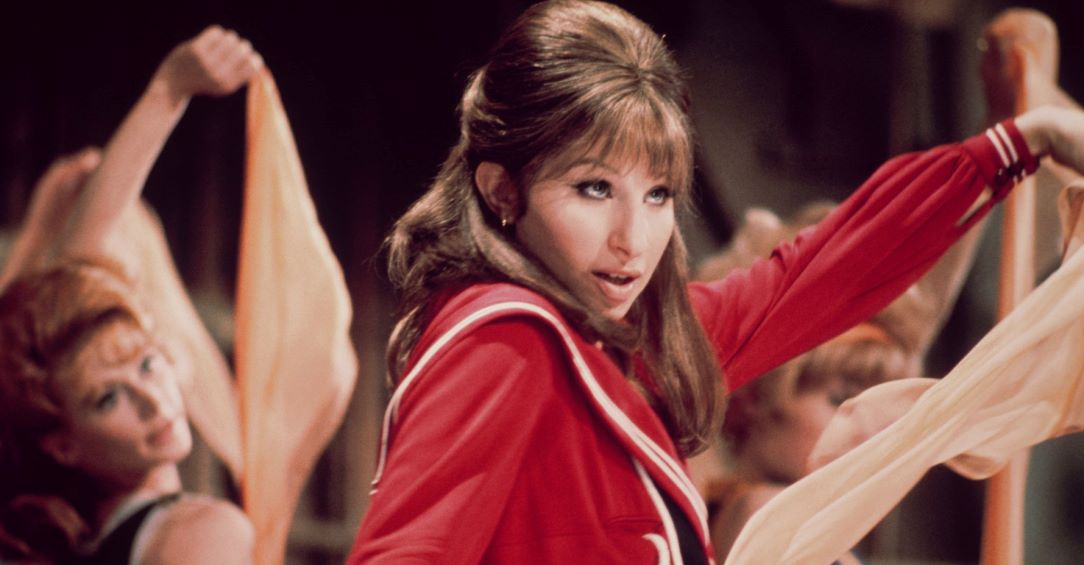
Funny Girl begins, ends and is exclusively about Barbra Streisand. Making her film debut, Streisand is, not to put too fine a point on it, absolutely sensational. This is charismatic, star-making stuff from an actress who knew exactly how to tailor the part (already basically written for her) to her strengths. Streisand is funny, kooky, witty but also vulnerable, shy, preoccupied with her low-opinion on her looks. She totally convinces as a charismatic figure who can dominate the room with cheek, won’t think twice at bluffing she can roller-skate to land a role or pigeon-hole Zeigfeld and argue against being asked to do something in performance. But she equally easily embodies a vulnerable woman, worried she is an unlovable ugly duckling, so certain she is destined to be alone she zeroes in on the first man who shows interest in her.

That’s not even mentioning the magnetism of Streisand. A truly confident, unique performer you couldn’t imagine anyone else so brilliantly mixing power-ballad notes with this sort of quirky character comedy. She can belt out Don’t Rain on My Parade or I’m the Greatest Stars with an awe-inspiring voice. She can add layers of pathos and tragedy to songs like People and Funny Girl. But few other performers could be both a diva and a pratfall artist on roller-stakes or mix arch-wit with low-comedy by stuffing a pillow up her dress in performance to turn her bride character pregnant in His Love Makes Me Beautiful, the Ziegfeld number she desperately doesn’t want to perform (because she can’t see herself as a beautiful bride).

Streisand is so central to Funny Girl’s success that I’m not sure that so much as three minutes go by without her appearing. It’s not a surprise as, subtract her from the mix, and Funny Girl is a fairly bland, unoriginal and at times slightly flat musical that struggles to do or say anything interesting. It’s had millions poured into its elaborate sets, it’s grandiose costumes and its vintage, sepia-tinged photography. But it’s an overlong, overblown, poorly paced film blessed with a star turn.

Wyler’s main strength as a director on mega-budget spectaculars like this was his professionalism and control, the gifts a producer likes. Visually though, Funny Girl frequently looks lost in widescreen, sets shot in a way that magnifies their emptiness and lacking the sort of affinity for timing and musicality that something like Minnelli, Donen and Kelly made look so natural (Most of the larger musical numbers were worked on by Herbert Ross). There is the odd strong shot – a showy helicopter shot pans down to Fanny on a tug steaming past the Statue of Liberty during Don’t Rain on my Parade or a sunset that pops up between the faces of Sharif and Streisand during a dockside embrace. But too many shots favour getting the money on the screen or struggle to frame two people interestingly in widescreen.

Mind you the story is a bit of a struggle. Fanny’s ascent to success is fast-paced and untroubled by conflict. Every gamble she takes pays-off, every cheeky trick goes unpunished. She can’t roller-skate when hired to do so? She sabotages the closing number of Ziegfeld’s show with her pregnancy flourish? Doesn’t matter – everyone loves it. She teeters for a few minutes on being fired, then jumps to promotion and glory. Ziegfeld – the sort of elite, New England aristocratic role perfect for Walter Pidgeon – just sighs and acknowledges talent gonna talent.

There are a few more clashes in her personal life. Her marriage to Nicky is the core emotional plotline of the film, but Nicky’s rough edges (in real life he was a conman and a swindler) are shaved off. Instead, he is played as a charming rogue, a professional gambler who bamboozles Fanny’s manager into giving her a stonking payrise and plays with honour and grace at the card table. When his business dealings go south, it’s never really his fault and he’s so noble he works to save Fanny’s honour by taking the rap for a collapsed business and arguing she should divorce him forthwith.

It doesn’t help that Nicky is played by Omar Sharif. Sharif, while a striking screen presence, had an acting range pretty much restricted to playing Sherif Ali. He’s unable to give the role any depth or interest, he can’t sing (thankfully he only tries once) and he’s overly reliant on his expressive eyes. He’s no match for Streisand, with whom he has less chemistry than rumour suggests was the case.

Streisand though was one-in-a-million here. Rumours abound she was a difficult and demanding presence, who fought tooth-and-nail with Wyler. She requested endless retakes to get her performance just right and “contributed” to script cuts (Anne Francis, playing a blousy Ziegfeld singer, was furious that her role effectively ended on the cutting room floor). Her perfectionism made her a controversial figure in Hollywood – but it’s also the brilliant fine-tuning of her own skill that won her the Oscar she shared with Katherine Hepburn. On a side note, Streisand had been controversially invited to join the Academy before she made a film, meaning the vote I assume she cast for herself was the one that guaranteed her the Oscar.

Funny Girl is large, overlong, largely visually and narratively uninteresting film that has a bright, shining, tour-de-force superstar in the lead who is in absolute, total control of her talent. Without Streisand it would be a tedious turkey – with her, it’s a strange landmark.

Doctor Zhivago (1965)

Julie Christie and Omar Sharif are star cross’d lovers in Lean’s epic but flawed Doctor Zhivago

Director: David Lean

Cast: Omar Sharif (Dr Yuri Zhivago), Julie Christie (Lara Antipova), Geraldine Chaplin (Tonya Gromeko), Rod Steiger (Victor Komarovsky), Alec Guinness (Lt General Yevgraf Zhivago), Tom Courtenay (Pasha Antipov/Strelnikov), Siobhan McKenna (Anna Gromeko), Ralph Richardson (Alexander Gromeko), Rita Tushingham (The Girl), Bernard Kay (Bolshevik), Klaus Kinski (Amoursky), Noel Willman (Razin), Geoffrey Keen (Professor Kurt), Jack MacGowan (Petya)

Boris Pasternak’s Doctor Zhivago is one of the seminal 20th century novels. Smuggled out of the USSR after being refused publication, it became an international sensation and led directly to Pasternak winning the Nobel Prize (although the USSR insisted he turn it down). A film was only a matter of time – and who else would you call but David Lean, master of the pictorial epic, to bring the novel about the Russian Revolution to the screen. Lean – with his masterful Dickensian adaptations – was perfect in many ways but Doctor Zhivago, for me, is the least satisfying of his ‘Great Films’. It’s strangely empty and sentimental, lacking some of the novel’s strengths zeroing in on its weaknesses.

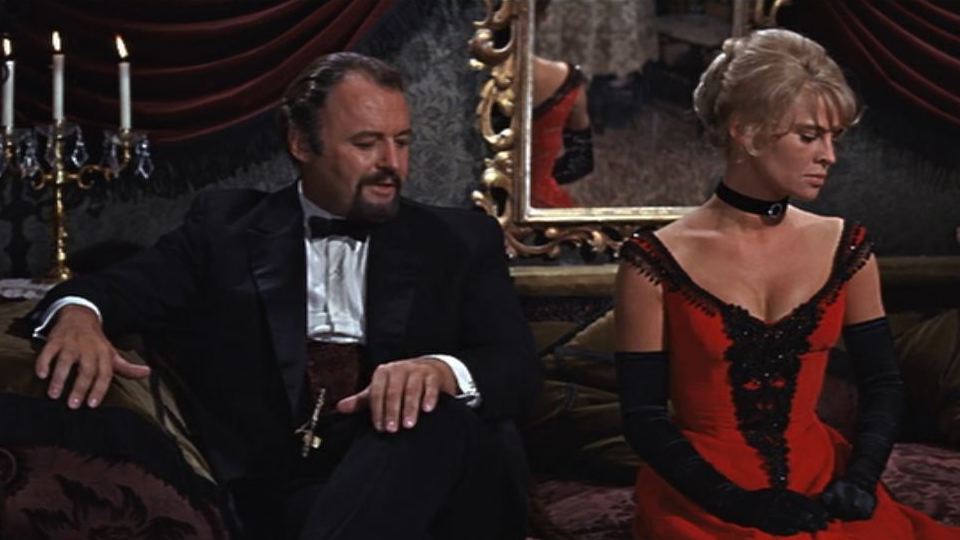
Yuri Zhivago (Omar Sharif) is training to be a Doctor in the years before the outbreak of the First World War. Married to Tonya (Geraldine Chaplin), the daughter of his father’s old friend Gromeko (Ralph Richardson), Yuri is part scientist, part poetic free-thinker. Events throw him together with Lara (Julie Christie), a young woman whose fiancé Pasha (Tom Courtenay) has ties to the revolutionaries, while she is trapped in an abusive relationship with the amoral Komarovsky (Rod Steiger). But are all these troubles worth a hill of beans in a country about to tear itself apart?

There are many things you can’t argue with in Lean’s film. It is of course unfailingly beautiful. Ironically filmed in Fascist Spain, it’s gorgeously lensed with a luscious romanticism by Frederick Young (who won his second Oscar for a Lean film). It’s not just pictorial beauty either: Young frequently makes wonderful uses of splashes of Monet red to dapple the frame. From poppies in a field to the ubiquitous communist imagery on uniforms and walls. There are some wonderfully cool blues employed for the snow, while slashes of light pass across eyes with a gorgeous lyricism.

Romance is the name of the game, with everything working overtime to stress the star cross’d lovers plot. Maurice Jarre’s score – in particular its balalaika inspired Lara’s Theme – mixes Russian folk inspirations with an immortal sense of longing. It plays over a film that, while very long, often feels well-paced, even if (just as the novel) its episodic and at times rambling. Lean’s direction of epic events revolving around personal loves and tragedies is still exquisite in its balance between the grand and intimate. The film is wonderfully edited and a fabulous example of long-form storytelling.

So, what’s wrong with Doctor Zhivago? In a film with so much to admire, is it possible Lean and co spent years working on something only to bring the word but not the spirit to the screen? The key problems come round to Zhivago himself. This is man defined by his poetic soul. His poetry becomes a sensation after his death. His balalaika is a constant companion, and his playing of it an inherited gift (which even has major plot implications). Inexplicably, the film has not a single word of poetry in it (when it had Pasternak’s entire back catalogue to work with) and Zhivago never so much as strums the strings of his balalaika. It’s like filming Hamlet and then making him a mute.

The problem is, removing the character’s hinterland makes him a rather empty character. Zhivago is a liberal reformer, in sympathy with the revolution but not it’s methods. This should be at the heart of understanding his character, but like his poetry the film has no time for it. Instead, Zhivago is boiled down into a romantic figure, nothing more. He has no inner life at all, a blank canvas rather than an enigma.

Suddenly those long lingering shots of Sharif’s puppy-dog eyes end up carrying no real meaning. They aren’t the windows to his soul, only a big watery hole with not much at the bottom. Sharif is awkwardly miscast – and lacks the dramatic chops O’Toole bought to Lawrence – but it’s not completely his fault. His character has had his depth removed. When we see him struggling at the front, trapped on a long train ride to Siberia or forced to work with partisans, he’s not a man who seems to be considering anything, but just buffeted by fortune, neither deep or thoughtful enough to reflect on the world around him. That’s not really Pasternak’s intention.

Instead, the film boils the novel down to his plot-basics and, in doing so, removes the heart of what got the book banned in the first place. Lean misunderstood the future of Soviet Russia so much, he even chose to end the film with a romantic rainbow at the foot of a waterfall. The horrors of the civil war and the revolution are largely there briefly: a gang of deserting soldiers unceremoniously frag their officers and Zhivago frequently stares sadly at villages burned out by Whites or Reds (or both). But the film is more of a romance where events (rather than politically and social inevitability) gets in the way of the lovers – like Gone with the Revolution.

By removing the more complex elements – and the poetic language of Pasternak – you instead have the rather soapy plotline (with its contrivances and coincidences) left over. Again, it’s Hamlet taking only the events and none of the intellect or language. (And Pasternak’s novel didn’t compare with Hamlet in the first place.) Both Zhivago and Lara are shot as soft-focus lovers, with Julie Christie styled like a perfectly made-up slice of 60s glamour. It’s a grand scale, but strangely empty romance, because both characters remain unexplored and unknowable – in the end it’s hard to care for them as much as we are meant to do. For all the epic scale, small moments – such as an aging couple sharing a cuddle late at night on a train floor – carry more impact. How did the director of Brief Encounter – a romance that speaks to the ages for its empathy – produce such an epic, but empty, posture filled romance as this?

Julie Christie does fare better than Sharif – she’s a better actor, and her character has a bit more fire and depth to her. But she’s not in the picture enough, and Lean quietly undersells the terrible trauma of her eventual fate. Ironically, the smaller roles are on surer ground. Geraldine Chaplin is rather affecting as Zhivago’s wife, a dutiful and caring woman who her husband loves but is not besotted with. Ralph Richardson is witty and moving in a tailor-made role as her eccentric father. Tom Courtenay landed the films only acting Oscar nomination as the reserved and conflicted Pasha. Rod Steiger is very good as the mass of greed, selfishness and barely acknowledged shame as Komarovsky. Alec Guinness is bizarrely miscast as Sharif’s younger brother (!) but handles some of the film’s duller scenes well (Lean’s decision to have him never speak on screen except in the film’s framing device works very well).

There is a lot of good stuff in Zhivago, but this is a neutered and even slightly shallow film, that’s far more about selling a romance than it is telling a true adaptation of the themes of the novel. In Lawrence, Lean showed us multiple aspects of a conflicted personality to leave us in doubt about who he really was. In Zhivago, he just presents a rather empty person and seems unsure if he wants to use to ask who he is. The film concentrates on making the romance sweeping and easily digestible. What it doesn’t make us do is really care for them as people.