
Tag: Orson Welles

The Lady from Shanghai (1947)

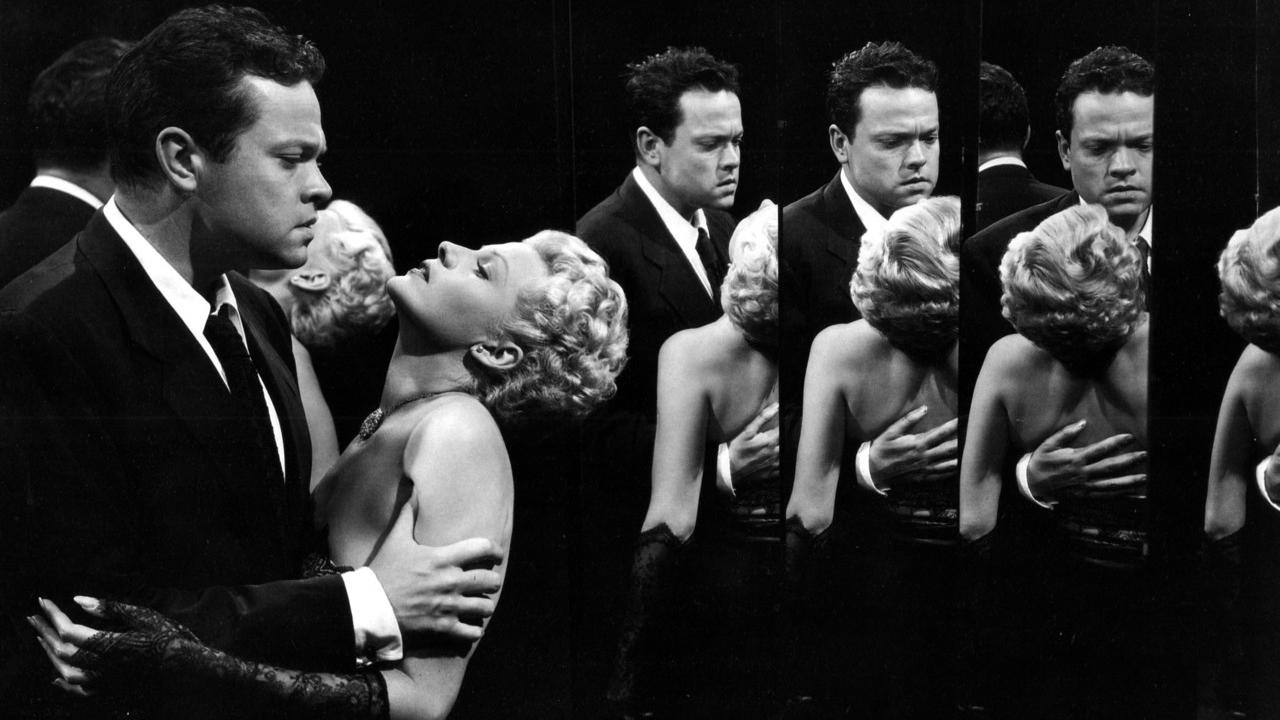
Orson Welles and Rita Hayworth in hall of mirror mystery The Lady from Shanghai

Director: Orson Welles

Cast: Rita Hayworth (Elsa Bannister), Orson Welles (Michael O’Hara), Everett Sloane (Arthur Bannister), Glenn Anders (George Grisby), Ted de Corsia (Sidney Broome), Erskine Schilling (“Goldie” Goldfish), Carl Frank (DA Galloway)

Orson Welles’ career is littered with coulda, woulda, shoulda moments. The Lady from Shanghai is perhaps the most telling lost opportunity in all his extensive CV of recut products and studio interference. Unlike Touch of Evil, there remains no trace of the footage removed from the film by the studio – instead we are left with the remains of the picture that escaped rejigging.

Michael O’Hara (Orson Welles) is an Irish drifter, who saves the glamourous Elsa Bannister (Rita Hayworth) from muggers in a park. Attracted to him (perhaps), as he is to her, she hires him to work on a yacht she and her husband, famed lawyer Arthur Bannister (Everett Sloane), are sailing around the coast. During the voyage, O’Hara is approached by Bannister’s business partner George Grisby (Glenn Anders) with a deadly proposition – and is sucked into a web of cross and double cross.

The Lady from Shanghai is an odd curiosity. At the time it was condemned by critics as a scarcely coherent film noir, struggling to involve the audience in its ins and outs. Today it’s seen more as a missed opportunity classic, which Welles nearly managed to turn into a landmark film before the studio heads recut the entire thing over his head. The reality is probably somewhere in between.

Welles agreed to do the movie for nothing, in return for funding for his stage production of a Cole Porter musical based on Around the World in 80 Days. Stories change depend on who you talk to, but essentially Welles agreed to do the first piece of work that was chucked his way – which happened to be this moderate plot-boiler. Welles shot a lot of the film with an imaginative eye and provided several fascinating set-pieces. But was he really that interested in the film?

It’s hard to say. Certainly it makes you wonder when you look at his rather disengaged performance. Welles (unwisely) takes on an Irish accent and basically feels distracted and bored throughout – as if he felt the whole thing was beneath him. O’Hara becomes a pretty bland character whom it’s impossible to really develop an affinity for. Welles hardly looks cut out for the fighting he’s called on to do – has an actor in a good movie thrown a less convincing punches in a scuffle before?

Because the rest of the film is fairly good, by and large. The plot is almost impossible to follow, but that is partly the point – the growing number of double crosses are designed to feel like we are spiralling down a rabbit hole with O’Hara. But it’s the style it’s told with – brash and exciting camera shots, and an edgy jaggedness in performance and storytelling that alternates with a dreamy sense of unreality. Welles throws this all the wall, but somehow manages to hold it more or less together – perhaps helped by the fact that he treated it like a slightly disposable piece of pulp.

The film’s final act culminates in an extraordinary shoot-out in a hall of mirrors, with characters replicated over and over again in reflection, lines of them appearing as if from nowhere. There is a quirky surrealness about this, with reflections superimposed over each other, or armies of a single character marching towards the camera. Bannister’s walking stick movement, stiff and awkward, also really helps here as he starts to look like a pack of spiders. 

Of course Welles intended this sequence to be almost twice the length, but it was cut down by a bewildered studio. They also insisted that Welles insert a parade of close-ups of characters, in particular of Rita Hayworth, which was exactly contrary to Welles’ intention to use as many distancing long and medium shots. Welles’ original plan for the score was also ditched in favour of a rather flat, dull, traditional score.

But then there are the moments of exotic, heated sex that Welles managed to leave in. As our heroes sail off into the tropics, the bubbling sexual tension between O’Hara and Elsa boils over. It bubbles over into other relationships as well – does every man desire Elsa? Or are there other elements at play? The final offers for murder and money are almost deliberately hard to follow – is it all a summertime madness? As the plot becomes more and more odd, so the film begins to become more bizarre in its setting, finally heading into Chinatown and then an abandoned funfair.

Away from Welles’ weaker turn in the lead, there are some strong performances. Everett Sloane is fantastic as the sinister lawyer, propelling himself forward with walking sticks, his motives impossible to read. Glenn Anders is wonderfully slimy as a creepy lawyer, whose every line has some sort of cackling insinuation. Rita Hayworth brings a sexual charge to the film, mixing manipulation and genuine feeling.

These performances fit neatly into the film, which continues forward with its bamboozling plot. This story never quite engages the audience – and there isn’t quite enough in the film itself that has been left us to be sure that, even with the cut material put back in, it could have been a classic. But there are enough interesting notes in there to keep you watching – and the final sequence is extraordinary and haunting in its extravagant oddness. But I’m still not sure this is a major work – rather it seems to be a curiosity from a great director.
A Man For All Seasons (1966)


Paul Scofield ways up a difficult demand from a not-so merry monarch

Director: Fred Zinnemann

Cast: Paul Scofield (Sir Thomas More), Wendy Hiller (Alice More), Robert Shaw (Henry VIII), Orson Welles (Cardinal Wolsey), Leo McKern (Thomas Cromwell), Susannah York (Margaret More), Nigel Davenport (Duke of Norfolk), John Hurt (Richard Rich), Corin Redgrave (William Roper), Colin Blakely (Matthew)

Writing these film reviews is sometimes harder when it’s a film you know so well. I was probably in my very early teens when I first saw this and I’ve seen it dozens of times since. I know all the scenes, all the beats, and I love it. This is a brilliant film, and its depth, richness and intelligence are ingrained. It’s a wonderfully written, played and directed piece that transforms a historical event from a history lesson into an endlessly relevant and affecting parable.

Paul Scofield (simply becoming the man) is Sir Thomas More. With Queen Catherine unable to bear Henry VIII (Robert Shaw) a son, wheels are in motion to ditch the Queen and marry the king to Anne Boleyn (a split second cameo from an unpaid Vanessa Redgrave, making you believe in a moment Anne could split a kingdom). More, however, can’t agree to the divorce – his faith in the Catholic church is non-negotiable, and the church won’t recognise the marriage. So while the rest of the kingdom falls in line, More is arrested and takes refuge in his complete silence – having never spoken of his reasons, he can never be tried for them.

Re-watching this masterful film for the first time in a few years on a newly released, fully restored Blu-ray, I was immediately reminded what a thoughtful, interesting and enjoyable film it is. Having read the play again, I genuinely think (and I’m not alone) Bolt’s script is superior to the original. Several changes have been made, most notably the removal of the “Common Man”, a theatrical device whereby one actor played all the smaller working class roles, while delivering a commentary on the action. It’s a very theatrical device, which Bolt believed wouldn’t work on screen, but its removal also purifies the story, tightens the focus and allows us to focus on More. The commentary on More’s conflicted character is instead provided by Paul Scofield’s superlative performance in close-up. Bolt also removed much of the political background, making the film more of a parable of conscience rather than a “history play”.

The film is a beautiful celebration of old-fashioned Hollywood film making. Fred Zinnemann is sometimes forgotten today, extremely unfairly for a man with a hugely impressive back catalogue. A Man for All Seasons was perfect for a director whose best work saw one man stand alone against a system – be that at Pearl Harbour or the Wild West. Zinnemann was an “actor’s director”, and draws out a series of impressive performances. But his often simple set-ups never feel staged.

He and John Box (production designer) understand the power of claustrophobia, of life and death conversations in small rooms – from Wolsey’s imposing red office that seems an extension of his personality, to Cromwell’s poky office and More’s cell, the sense of being trapped builds throughout the film. By contrast, the final courtroom’s spaciousness only underlines the fact that it’s a fix. Throughout the film looks wonderful and its spare score is a beautiful Tudor-style series of compositions that carry a perfect pitched of awe and doom. It’s so beautiful (and often overlooked) I’ve put a link to the opening here.

 In fact, Zinnermann constructs the film throughout with wonderful beats and telling shots. The first appearance of Henry VIII, his head obstructing the sun, More blinking looking up, is one of the best visual impressions you’ll see of the Icarus nature of the Tudor court. A beautiful cut takes us from More (in a windswept garden, a lovely commentary on the turbulence of his life) wondering if he can find a way to sign the oath, to a shot of the view from behind his prison bars – pages and pages of story told to us in one simple cut. Later, from the same position, we’ll see a whole year pass by in a few moments – simple, unfussy, very effective. The film is packed with small, subtle moments like this that never intrude by themselves, but build to create the effect of the film wonderfully.

And this is a great film, there’s no doubt about that. The story is surprisingly simple, but Bolt and Zinnermann make it feel truly universal: the man against the state, the individual standing for what he believes is right despite all the pressure bought to bear against him. It’s a timeless parable and could be applied to virtually any time or place you could name. It’s also extremely well written: nearly every other line is memorable, the speeches are extraordinary. Every moment of reflection and observation sounds (and is) universal in its application. Its straightforwardness also helps make the story very moving, and it successfully carries out the trick of telling a movie about a saint while making him a living, breathing man we can relate to.

Of course, a large part of its success is due to Paul Scofield’s performance in the lead role. Honed after years of performing the role, it’s again almost hard to talk about individually as Scofield is so central to the film; talking about its success is in many ways to talk about Scofield’s success. Scofield’s performance is one where the actor disappears and the character remains: his More is totally real. You feel throughout not only his dignity and wisdom and his sharply defined sense of private and public morality – but also his warmness, his wit, his benevolent regard for people and those around him. He’s a caring master and friend – but not a push-over; and is adamantine in his decisions. Scofield is also able to show the contradictions of the man: a private man who cannot give up the lure of the limelight. Every beat of the performance is brilliantly observed, a list of highlights would fill a book. He carries the entire film from start to finish and never lets it slip for a second.

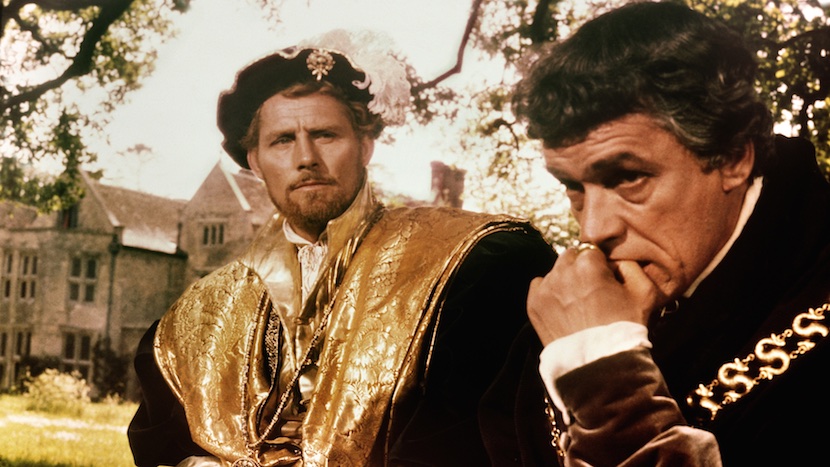
He’s helped by some wonderful support (and it’s a testimony to his generosity as an actor that he cedes the screen several times). Robert Shaw’s Henry VIII is a scene stealing tour-de-force. It’s up there with Robert Duvall’s Kilgore as cameos that wrench control of the movie. He’s on-screen for about 12 minutes, but he perfectly captures Henry’s charisma and his childish temper and fury. He’s intelligent (but not that intelligent – I love his sulky response when he is quickly bested by Margaret More in knowledge of Latin) and friendly but not that friendly – the sort of man who literally rips flowers from a tree to show someone how beautiful they are: destruction and excitement combined in one moment. You totally believe that this is a man who could shatter a country in a fit of pique.

Wendy Hillier also deserves notice for what might be the trickiest role in the film as Lady Alice, a woman who lives happily in the shadow of her husband. Ill-educated and lacking any understanding of her husband, it’s a part that could be almost yokel like. But Hillier brings it a world of dignity and fiery defiance, and she brings a completely convincing fury to Alice as she rails against  injustice. The final scene between her and More is a masterclass from both of simple, uncomplicated love that has held two people with very little in common together for a lifetime.

There is literally not a bad performance in this film. Every actor is perfectly cast and completely understands their roles. Nigel Davenport masterfully portrays the pride and dimness that lies under Norfolk’s bluff domineering persona. John Hurt nails Rich’s weakness, selfishness and greed and layers it with a convincing note of underlying self-loathing: a star marking performance. Orson Welles seems to have prepared his whole life for the bloated, corrupt Wolsey. Leo McKern (the only other cast member from the original production) invests Cromwell with a low viciousness and a deadly political savvy that is based exclusively on realpolitik and devoid of decency. Susannah York, Corin Redgrave and Colin Blakely all also excel.

Historically, the character of More has faced far more criticism and scepticism recently. Several historians have bought attention to More’s rigid Inquisition-like Catholicism and his willingness to execute heretics; Hilary Mantel’s equally brilliant Wolf Hall was partly written as a response to Bolt’s presentations of More and Cromwell, lauding the latter at the expense of the former.

But these controversies are not what this film is about – and it’s never trying to be a history lesson. It presents its version of the story on its own terms (very little is ever leaned about the “King’s Great Matter” or the reasons for it) – instead, like The Crucible, it turns a historical event into a deeply moving and profound parable. In doing this it transcends being a simple recounting of events, and instead becomes an independent work of art. Historical accuracy is of no relevance to the audience when viewing Henry IV Part 1: it is of no matter here either, and is something the film never claims. And it’s all the better for it. Still one of my all-time favourites.

Touch of Evil (1958)

Orson Welles investigates (though the real mystery is probably Charlton Heston’s Mexican heritage)

Director: Orson Welles
Cast: Charlton Heston (Ramon Miguel Vargas), Janet Leigh (Susan Vargas), Orson Welles (Police Captain Hank Quinlan), Joseph Calleia (Pete Menzies), Akim Tamiroff (Uncle Joe Grandi), Marlene Dietrich (Tanya), Joanna Cook Moore (Marcia Linnekar), Ray Collins (District Attorney Adair), Mort Mills (Al Schwartz), Dennis Weaver (Night Manager)

Has any director ever cast himself in such a physically unflattering role as Welles takes on here? Hank Quinlan is a grotesque, sweaty, grossly obese, lame, mumbling copper with a hinterland of loneliness in his past and a background of missed chances. Yet despite this, it’s Quinlan’s film and despite the terrible things he does in the film (kidnap, two murders, suspect framing) it’s very hard not to feel empathy and sorrow for him. Welles’ immense charisma as a performer is a large part of this, but I think he also recognises the sadness of being the genius who has surrounded himself with mediocrities, the man who knows he could have achieved more in life but for whatever reason never did. If that’s not Welles’ career, what is?

Of course Quinlan isn’t actually the lead. Charlton Heston, curry-coloured but otherwise actually pretty good, plays Vargas, a Mexican law agent (“He don’t look like a Mexican” Quinlan correctly observes) with a new American wife, caught up in an investigation into a bombing of an American citizen in a US-Mexico border-town. Quinlan investigates, finds his culprit quickly and produces evidence – evidence Vargas knows for a fact wasn’t there minutes ago. Accusations of corruption fly and, before you know it, Quinlan (a man flirting with corruption) is forced into alliance with a jumped-up Mexican gang leader to frame Vargas for corruption via implicating his wife in drugs and murder.

The plot, however, largely takes second place to Welles’ virtuoso film-making. The opening sequence of the film – an extended three and a half minute single take that tracks in and out of streets, from close-ups to crane shots – has an astonishing “how did they do that?” quality. But it’s matched by Welles’ brilliance with both actors and camera placement during the equally long continuous takes set in bomb suspect Sanchez’s apartment. He’s adept at jinglingly unsettling imagery, with the murder scene 2/3rd of the way through the film almost queasily twitchy in its fragmented shooting style. The final sequence of the film, as Vargas tracks Quinlan through a filthy oil yard, should be silly but is completely compelling.

Welles of course dominates the film as Quinlan. I love the half smile on his face as his praises are sung by besotted partner Menzies early in the film – the “aw shucks, are you talking about me?” non-modesty – but I also adore the unspoken sadness of his early scene with Dietrich, where he sadly attempts to flirt with this (presumably) lost love (we are never told for certain) only for her to literally not recognise him. Quinlan in many ways is a good copper – he frames the guilty, he doesn’t take bribes, he is reasonably loyal – but he’s also selfish, egotistical and needs the adoration of his position to fill the void in his life. He’s a man who’s corrupt almost without realising it, who sinks into bemused maudlin depression when accused without even recognising that he is in fact guilty.

There are some other equally strong performances in the film. Heston of course looks ridiculous – but look past that and this is one of his best performances, Vargas demonstrating the stand-up, straight-shooting honesty of many of Heston’s roles, combined with arrogant short sightedness and narrow minded determination. Janet Leigh is also absolutely terrific as his wife, despite being saddled with a bizarre subplot of being terrorised in a motel. A note for trivia fans – Leigh actually broke her arm before shooting and it’s in a cast throughout the movie bar one shot (where she doesn’t move her arm) – you can’t spot it until you know.

I was particularly enthralled by a beautiful performance of hero-worship from Joseph Calleia as Menzies, Quinlan’s adoring partner whose entire life has been one of loyal service to Quinlan. In many ways he is the moral centre of the film, and as the film shifts its focus to Quinlan, so it equally explores the changes in how Menzies views his boss. Akim Tamiroff gives a lovely performance of puffed up pomposity as a ridiculous small time gangster with a dodgy wig. Dennis Weaver’s hotel manager is an eccentric collection of manners that is more likely to split opinions, but he doesn’t half go for the oddness. Marlene Dietrich is marvellous in her few brief scenes.

Touch of Evil is one of those films that lingers with you and rewards constant reflection and rewatching. I re-watched large chunks of it again immediately the next morning. As a piece of film making it’s a master class, an immersive, tightly framed, wonderfully shot film that brilliantly uses its filthy, litter strewn locations. The acting is terrific and the final moments strangely moving. Welles was a terrible self-promoter and later he ballooned to the very Quinlan proportions that padding and make-up create here. But when he was on his game, and fully focused, he was terrific. As is the film, which is surely one of the greatest (and last) film noirs ever.

CODA: The coda to this? Of course Welles wasn’t fully focused. He cut the film once, then shot off to Mexico to explore a new film possibility. Studio hands recut the film again. Welles sent a famous 58 page memo suggesting changes. Most of them got ignored for the third cut. Three versions of the film now exist – the two studio recuts and a 1998 recut using the memo (Welles’ original was wiped). I watched the 1998 recut. But it’s always the problem with Welles – a man I always felt who largely lacked the focus to actually finish something. The film bombed on release. Welles never worked in Hollywood again.