
Tag: Patricia Arquette

Boyhood (2014)

Ellar Coltrane grows up before our eyes in Richard Linklater’s 12-years-in-the-making Boyhood

Director: Richard Linklater

Cast: Ellar Coltrane (Mason Evans Jr), Patricia Arquette (Olivia), Ethan Hawke (Mason Evans), Lorelei Linklater (Samantha Evans), Libby Villari (Catherine), Marco Perella (Bill Welbrock), Brad Hawkins (Jim), Zoe Graham (Sheena)

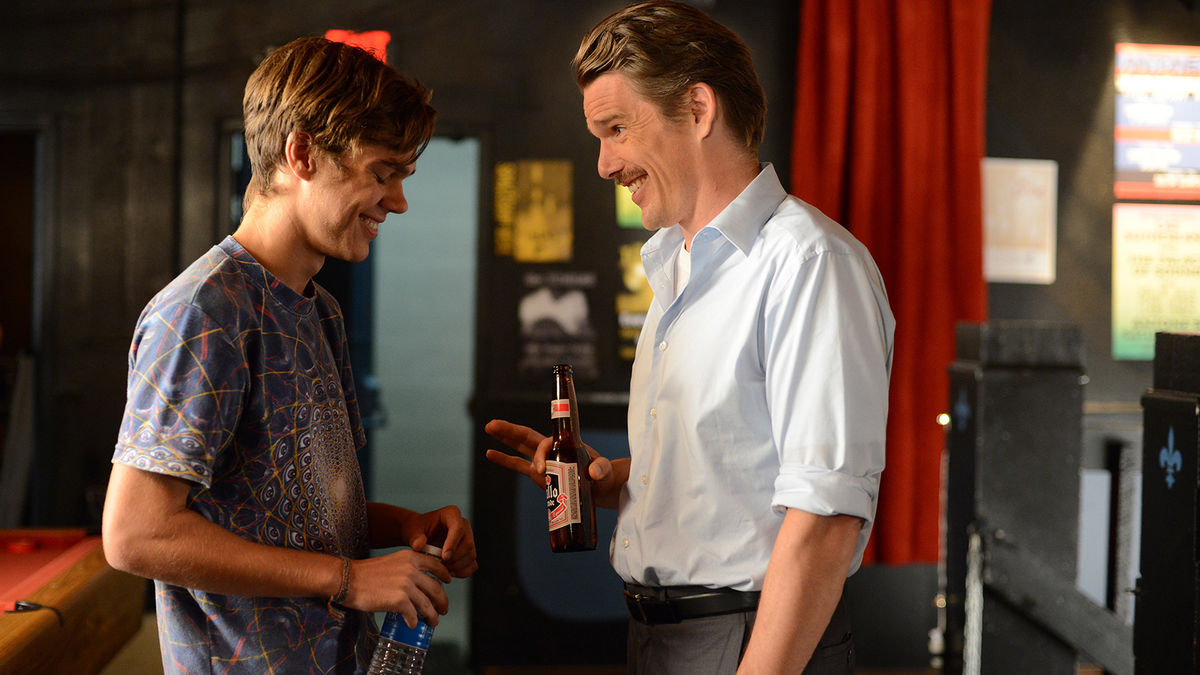
If there is one thing we can all relate to, it’s the trials and tribulations of growing up, that shift from being a child to an adult. It’s the subject of Richard Linklater’s film Boyhood, which follows the growing up of Mason Evans (Ellar Coltrane) from the age of 6 to 18 and his relationship with his divorced parents Olivia (Patricia Arquette) and Mason (Ethan Hawke) and his sister Samantha (Lorelei Linklater). What is however most striking about Linklater’s film is that it was shot over a staggering period of time, 12 years in fact, meaning that Ellar Coltrane and Lorelei Linklater literally grow up on screen before our eyes.

It makes for an almost unrepeatable power over any other film dealing with the same subject, by letting all the actors naturally grow older over the length of the film. Suddenly it becomes not just a film dealing with an idea, but instead a real life dramatisation of the process of ageing, becoming some sort of emotional scrap-book or album, a type of film version of the trick of making a drawing move by quickly flicking the pages of a notebook. It adds an air of depth and reality to the whole film that gives it a universal strength and appeal. It’s an actual slice of real life, it’s unrepeatable and profoundly well done and immersive.

Linklater was given near creative freedom to shoot the film – with the small yearly budget for shooting the film being squirrelled away into various studio accounts. Linklater creates a film with a lack of actual drama that makes it feel even more like a part of life. There are precious few “narrative points” or dramatic tools in the overall film, with the exception maybe of Olivia’s hard drinking second husband Marco (Bill Welbrock). Instead, the issues that Mason (and Samantha) deal with have a universal relevance. These are the sort of events – the sort of conversations – that any child could have growing up. Far from making the film dull, this serves to increase its power.

Linklater based each year’s filming script on the events and feelings that were going on in the life of Ellar Coltrane at the time (although he had a clear idea of the final scene and shot), which perhaps also helped to draw such a series of deeply felt and real performances from Coltrane. The intimacy of the story also brilliantly makes each scene feel engrossingly real, precisely because everything is grounded in reality and nothing in some sort of overarching film narrative.

It’s a film entirely about capturing the rhythms and beats of real life and Linklater’s style allows moments of spontaneity, of naturalness and reality. Nothing in the film ever feels forced. You could argue that it also leads to a film that is almost restrainingly unambitious – it’s about as grounded as you can get, and barely has a structure as such at all beyond time passing. But that would be to miss the point – and the very fact that the film ignores virtually all the clichés of filmmaking narrative and storytelling is something to be praised than to be criticised. 

The film works so well due to the commitment of all involved, not least Arquette and Hawke as the parents. Arquette won nearly every award going (including the Oscar) as the mother, and her performance is a testament to the film’s strengths. It totally eschews the loud moments of acting, the look-at-me Oscar bait that the role could have had, to instead focus on a quiet, sad dignity – but also warmth and loving regard for her children. There is no studied pretence to the role at all, but instead Arquette seems to play instead the moments of joy, tinged with disappointment at moments and chances lost from early motherhood, that you can imagine everyone feeling. It’s a bravely real performance, stuffed with moments of searing, heartfelt emotional truth.

Hawke is just as good as the father, a man who slowly comes to terms with his own responsibilities and adulthood over the course of the film. Starting as still something of a would-be beatnik and playboy, we see him slowly – especially after a second marriage – grow up and accept the role of an adult and a parent, while still clinging to the idea of dispensing fatherly/brotherly wisdom to his son.

If Linklater’s film does have a flaw it’s on this focus of father-son. There really was nothing to stop this from being Childhood rather than Boyhood, but instead it’s the story of the son (and with a particular stress on his bond with his absent father) that is at the heart of the film. It’s perhaps reflecting the angle that Linklater himself bought to the story, but its shame the film doesn’t try and be more even handed by allowing us to get a greater sense of how time and childhood affected both Mason and Samantha, rather than filtering Samantha’s experience through Mason’s perspective. It also means that Mason’s relationship with his mother is downplayed in favour of the bond between father and son, a general preoccupation with male relationships that runs through the film.

It’s a minor flaw I suppose, more of a missed opportunity – and less tasteless than a clumsy sequence where Oliva inadvertently motivates a Mexican immigrant to change his life, something he is profoundly grateful for years later but which she seems uncomfortably unaware of – but then this is a film that gets so much else right. Linklater’s live-action time-lapse film is a work of art that is probably unrepeatable, and is so low-key and normal that it carries a force and relevance few other films can.

Lost Highway (1997)


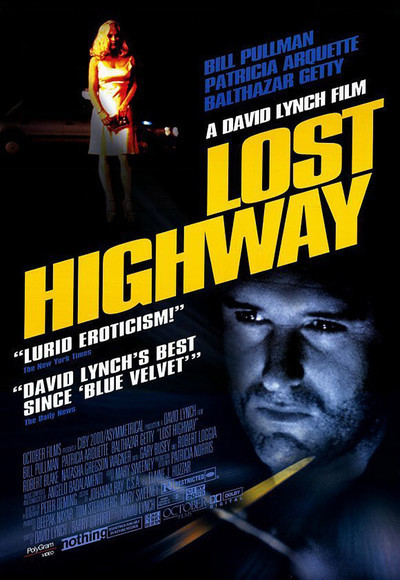
Bill Pullman goes out of his mind in David Lynch’s deliberately weird Lost Highway

Director: David Lynch

Cast: Bill Pullman (Fred Madison), Patricia Arquette (Renee Madison/Alice Wakefield), Balthazar Getty (Pete Dayton), Robert Loggia (Mr Eddy/Dick Laurent), Robert Blake (The Mystery Man), Gary Busey (Bill Dayton), Lucy Butler (Candace Dayton), Michael Massee (Andy), Richard Pryor (Arnie)

It wouldn’t be a David Lynch film unless the plot was impossible to explain, but here goes. Fred Madison (Bill Pullman) and his wife Renee (Patricia Arquette) marriage is on the rocks. The couple start receiving packages containing camcorder videos of their home. These videos become increasingly more and more personal and intimate. The final video shows Fred murdering Renee. Imprisoned, Fred suffers from headaches and then overnight he transforms into another person, Pete Dayton (Balthazar Getty). Released back into the world, Dayton encounters the glamorous Alice Wakefield (Arquette again). Then things get even weirder. Yup that’s right: weirder.

Lost Highway is probably Lynch at his most obscure and baffling. Like a lot of Lynch films, it’s a question of taste. What do you want to get out of a film? If it’s a puzzling mystery then this might be the film for you. Lost Highway is like an impossible jigsaw, or a landscape with no frame of reference: trying to judge what the overall actual picture is, is nearly impossible. Traditional film making elements, such as story and character, are subservient here.

So whether you like Lost Highway will probably come down to how much you are willing to accept everything you see is constantly being dismantled and repositioned by the film. It strikes a less successful balance between this “Lynchian” material and more traditional storytelling than Blue Velvet or Mulholland Drive (both, I would argue, superior films). However, for those willing to run with a mystery, Lost Highway is a baffling but intriguing watch – unsettling, unnerving, but fascinating.

So what is it about? Now I confess I needed to read up a little bit, but the best way to understand the film is as some sort of elliptical, dreamlike fantasy created by its lead character. It seems pretty clear that the majority of the film is, at best, subjective recollection or out-and-out fantasy. A little too much attention is paid in the film to a line from Fred Madison that he dislikes video cameras as he prefers to “remember things my own way rather than how they happened”. A fairly on-the-nose statement, but a clear mission statement for a film if I ever I saw one.

In fact, Fred Madison is so keen to remember the world only as he sees it that, he literally becomes someone else to build some sort of internal fantasy world where he can win the girl. But Fred/Pete is such a screwed up, confused person he can’t even get his own fantasy world right –impressions from the real world keep draining in. At least, that’s a fair interpretation. The film of course deliberately keeps things open: is this some fantasy Fred has while trapped in his cell? Or is there some sort of metaphysical transformation that fades into the real world? Is there an element of this story being circular and self-perpetuating? Is there any reality to it at all? How much you engage with these questions is a pretty good indication of what you’ll make of this film.

Whatever your response to it, as a piece of film-making it’s a very impressive piece of work. All the usual Lynchian touches are here: the strident and discordant lighting at key moments, the intelligent and daring use of music, the intermingling of design from the modern world and Americana of the 1950s, not to mention the moments of extreme violence and graphic sex. Lynch uses unsettling camera angles and sudden tilts of angle and sound to constantly keep the audience on their toes and questioning what they are seeing. Disturbing and haunting imagery, a testament to Lynch’s painter’s eye, is perfectly judged. Confusing as this film is, it offers a parade of intriguing images.

It’s an important landmark in Lynch’s filmography: a flowering of ideas he had been dabbling with since Twin Peaks, of mysticism, perversion and human darkness, and a jumping off point for haunting, almost illogical films to come like Mulholland Drive. The Mystery Man (unsettlingly played by Robert Blake – not least as this is the last film Blake made before his conviction for murdering his own wife) is a haunting, perfect Lynchian character – unsettling in appearance and confusing in intention. Is he a real person, or a mystical force? Is he some sort of external expression of evil driving Fred on, or is he part of Fred’s fractured mind?

Patricia Arquette plays two very different femme fatales, but to what extent are they reimaginings or reversionings of each other? It’s a very good performance from Arquette, playing someone who is not quite a real person, nor quite a fantasy, who feels like a character from a film moving into a real world, which itself is probably a fantasy. Just writing this sentence shows what a crazy film this is.

For the rest of the performances, there is a good mix of the genuine and the artificial. Bill Pullman, at his most understated, is perfect to ground the film, while Balthazar Getty gives a fine, detailed performance as a character who is similar and slightly different to Fred. Robert Loggia mixes ferocity and a bizarre tenderness as a character who may or not be a foul-mouthed gangster. These performances add a level of heart to the film, allowing a bit for freedom for the strangeness.

Lynch’s Lost Highway isn’t a masterpiece – it’s perhaps too self-consciously oddball and unusual, too reliant on mood and atmosphere to make up for its lack of story and characterisation. It is however intriguing, a brilliant puzzle, even though it doesn’t really allow you to invest emotionally in it at all. You can admire it as a mystery, but you can never really open your heart to it. It’s a film that is daring and dangerous, but it’s also one that, for all its erotic sex and tortured psyches, never really feels like it’s about real people with real feelings. It’s a mixture that, as I’ve said, works better in Mulholland Drive. But this is a very good staging post to that film.