Tag: Patrick McGoohan

Escape from Alcatraz (1979)

Escape from Alcatraz (1979)

Siegel’s quietly observed prison break drama masters the small details

Director: Don Siegel

Cast: Clint Eastwood (Frank Morris), Patrick McGoohan (The Warden), Fred Ward (John Anglin), Jack Thibeau (Clarence Anglin), Larry Hankin (Charley Butts), Frank Ronzio (Litmus), Roberts Blossom (Chester “Doc” Dalton), Paul Benjamin (English), Bruce M Fischer (Wolf Grace)
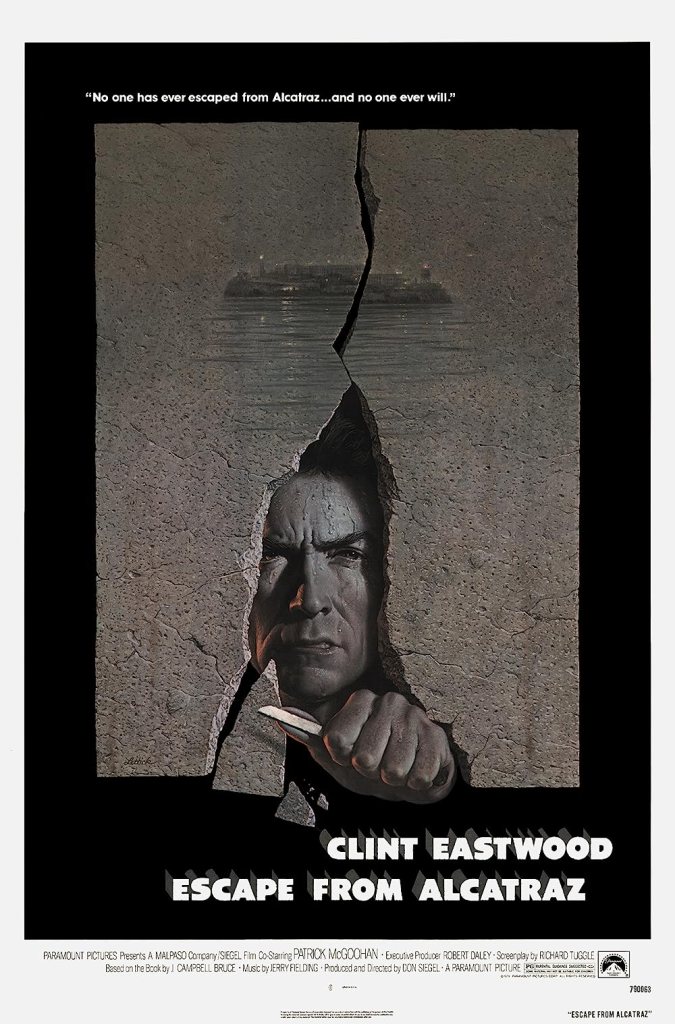
In 1962, three men dug their way out of the cells in Alcatraz, climbed into a raft made of raincoats and sailed into San Francisco Bay and mystery. Not a trace was ever seen again of Frank Morris (Clint Eastwood), John Anglin (Fred Ward) or Clarence Anglin (Jack Thibeau), but their story became a cause celebre. Some say they disappeared to South America – many more believe they drowned in the freezing cold water of the Bay. Siegel’s film covers the details of the escape attempt – and leaves more than a hint that they escaped.

Escape from Alcatraz is a quintessential prison movie. It’s got the complete genre checklist: sadistic wardens, bullying in the courtyard, the threat of rape in the showers, solitary confinement, boring routines and jobs, unfair access to privileges, cagey alliances, the little details of a plan coming together, hair’s-breadth escapes from being caught and a “we go now or not at all” climax. It’s all mounted extremely well by Siegel, shot on location with such a searing coldness you can practically feel the chill the prisoners suffered all the time.

Alcatraz is made up of two things: quiet and time. Siegel’s film therefore delves into both of these things. From its opening montage detailing Morris’ arrival at the prison – on the boat, checking-in, cavity searches and tramping naked down to his cell – images and silence tell their own story. For the guards, words are formulaic and repetitive. Eastwood as Morris is barely ever out of shot but doesn’t speak for ten minutes. It’s the same for many other sequences, detailing prison life: quiet conversations in the yard, the pointless moves from place to place, the grinding procedure.

Time stretches without meaning in Alcatraz, so it’s no great sacrifice for Morris to work out that he can scratch away the brickwork around the drain in his cell and create a hole large enough to allow him to get to the unguarded ventilation corridors on the other side. (He works out it connects – eventually – to the outside by observing a cockroach crawl out of his cell.) Morris then reckons he’s got nothing better to do than to scratch away at that wall with a stolen nail pick, a labour that will take him months to extend the hole to something he can climb through.

Siegel also makes a great deal of this through his long-earned knowledge of how best to work with his star. This is one of Eastwood’s finest performances, a slate of determined, dry-witted stillness that communicates great thoughtfulness and ingenuity behind a stoic exterior. Morris maybe a compulsive thief, but he’s no fool – and he doesn’t suffer them either. He’s contemptuous of the self-importance of many of the warden and unrelenting in his determination to use whatever he can lay his hands on to help facilitate his escape attempt.

You’d be desperate to escape from Alcatraz too. Grim, very cold and crowded with bullies like Wolf (Bruce M Fischer), a puffed-up psychopath looking for a new punk (though as Quentin Tarantino said in a recent book, no one alive would look at Clint Eastwood and believe he’d be an easy shower victim). Meals are vile and the punishment of solitary is beyond tough: pitch black cells, only interrupted by the door being flung open so a high-pressure hose can ‘shower’ you with cold water (even Morris is reduced to something close to trembling wreck after a month of this treatment in the hole). It all leads into his determination to use anything he can to get out.

Siegel’s film loves the tiny details of small, inconsequential items converted into the means to escape. Unwanted magazines from the library become papier-mache to craft dummy heads to disguise the gang’s absence from their beds while they make preparations the other side of their wall. An accordion case smuggles goods around the prison. Makeshift candles are assembled. A set of portrait paints are used to paint the dummies and create a cardboard fake wall to place over the newly created hole. We see the painstaking effort to assemble enough coats to create their life-raft, the puzzling out of what is needed to get them from the ventilation roof to the other side.

Escape from Alcatraz presents these Herculean labours with simplicity but a patient eye for detail that makes them become strangely noble and hugely tense. You put aside your knowledge that these are hardened criminals – the film does everything it can to downplay their offences – and instead focus on them as victims of an unjust system, with “the man” crushing any hope from them.

As such, Patrick McGoohan has a huge amount of fun in a lip-smacking role as the prison warden. (It’s fun to see the world’s most famous Prisoner as the man handing out the numbers.) McGoohan’s unnamed warden has everything the men have not – not least words. He’s not starved by silence, but pontificates at pompous length about his theories of incarceration and the inevitable pointlessness of rehabilitation. Just to make sure our sympathy for the prisoners is complete, he’s also a vindictive bully, stripping prisoner “Doc” (Roberts Blossom) of his painting privileges because he doesn’t like a portrait made of him (tipping Doc into depressive self-harm), then provoking old-timer Litmus (Frank Ronzio) into a risky physical altercation. He’s unjust, unfair and mean.

So when he says at the end that he’s certain the prisoners died, of course we don’t want to believe him. Not least since we’ve been with the prisoners every minute of their desperate throw of the dice. In real life, they almost certainly froze to death in the Bay, their raft not being strong enough to help them complete the mile long swim before the icy water paralyzed them. But Escape from Alcatraz makes you want to believe they could have got away.

Braveheart (1995)

Braveheart (1995)

Gibson’s Oscar-winning epic mixes great action and bad everything else – how did it win?

Director: Mel Gibson

Cast: Mel Gibson (William Wallace), Sophie Marceau (Princess Isabelle), Patrick McGoohan (Edward I), Angus MacFadyen (Robert the Bruce), Brendan Gleeson (Hamish), David O’Hara (Stephen), James Cosmo (Campbell), Peter Hanly (Prince Edward), Catherine McCormack (Murron MacClannough), Ian Bannen (Bruce’s Father), Sean McGinley (MacClannough), Brian Cox (Argyle Wallace)

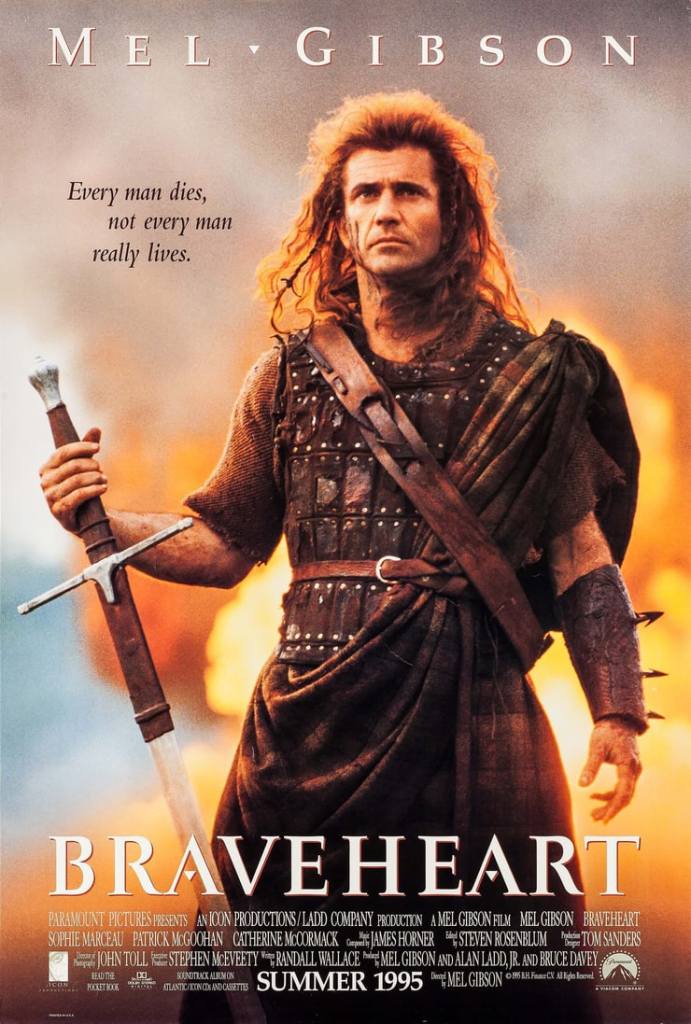
Think back to 1994 and a time when no one really knew who William Wallace was and Mel Gibson was the world’s favourite sexy bad-boy. Because by 1995, William Wallace had become the international symbol of Scottish “Freedom!” and Mel Gibson was an Oscar-winning auteur. Can you believe a film like Braveheart won no fewer than five Oscars, including the Big One? History has not always been kind to it – but then the film was hardly kind to history, so swings and roundabouts.

It’s the late 13th century and Scotland has been conquered by the cruel Edward I (Patrick McGoohan) – a pagan apparently, which just makes you think that Gibson and screenwriter Randall Wallace simply don’t know what that word means. William Wallace (Mel Gibson) saw his whole family killed, but now he’s grown and married to his sweetheart Murron (Catherine McCormack). In secret, as the wicked king has introduced Prima Nocte to Scotland, giving English landlords the right to do as they please with brides on the wedding night. When Murron is killed after a fight to avoid her rape, Wallace’s desire for revenge transforms into a crusade to win Scotland its freedom. A brilliant tactician and leader of men, battles can be won – but can Wallace win the support of the ever-shifting lords, such as the conflicted Robert the Bruce (Angus MacFadyen)? Will this end in freedom or death?

Even in 1995, Braveheart was a very old-fashioned piece of film-making. You can easily imagine exactly the same film being made (with less sex and violence) in the 1950s, with Chuck Heston in a kilt and a “Hoots Mon!” accent. In fact, watching it again, I was struck that narratively the film follows almost exactly the same tone and narrative arc as Robin Hood: Prince of Thieves – with the only difference being if that film had concluded after the Sheriff’s attack on Sherwood Forest with Robin Hood gutted alive in the streets of Nottingham.

This is a big, silly cartoon of a movie, that serves up plenty of moments of crowd-pleasing violence, low comedy, heroes we can cheer and villains we can hiss. Mel Gibson, truth be told, sticks out like a sore thumb with his chiselled Hollywood looks and defiantly modern mannerisms. The film takes a ridiculously simplistic view of the world that categorises everything and everyone into goodies (Wallace and his supporters) and the baddies (almost everyone else).

It’s also far longer than you remember it being. It takes the best part of 50 minutes to build up to Wallace going full berserker after the death of his wife. A later section of the film spends 30 minutes spinning plates between Wallace being betrayed at the Battle of Falkirk and then being betrayed again into captivity (you could have combined both events into one and lost nothing from the film). There is some lovely footage of the Scottish (largely actually Irish) countryside, lusciously shot by John Toll and an effectively Celtic-influenced romantic score by James Horner. In fact, Toll and Horner contribute almost as much to the success of the film as Gibson.

Gibson is by no means a bad director. In fact, very few directors can shoot action and energy as effectively as the controversial Australian. The best bits of Braveheart reflect this. When he’s shooting battles, or fights, or brutal executions he knows what he’s doing. Even if I’d argue that Kenneth Branagh managed to make much less than this look more impressive in Henry V. The battles have an “ain’t it cool” cheek to them, that invites the audience to delight in watching limbs hacked off, horses cut down and screaming Woad-covered warriors ripping through stuffy English soldiers. It’s probably not an accident that the film channels more than a little bit of sport-fan culture into its Scottish warriors.

Where Gibson’s film is more mundane is in almost everything else. The rest of the film is shot with a functional mundanity, mixed with the odd sweeping helicopter shot over the highlands. Its similarities to Robin Hood: Prince of Thieves are actually really strong, from the matey bonhomie of the gang at its heart, its pantomime villain, the moral certainty of its crusades and the fact that Mel Gibson is no more convincing as a 13th-century Scot than Kevin Costner was as Robin Hood. But at least Prince of Thieves knew it was a silly bit of fun. Braveheart thinks it’s got an important message about the immortality of Freedom.

Alongside that, it’s a film that focuses on giving you what you it thinks you want. Gladiator – in many ways a similar film – is a richer and more emotional film, not least because it has the courage to stick to being a film where the hero is faithful to his dead wife and whose triumph is joining her in death. In this film, there are callbacks throughout to the dead Murron – but it doesn’t stop Wallace banging Princess Isabelle, or the film using the same sweeping romantic score to backdrop this as it did for the marriage of Murron and Wallace. What on earth is it trying to say here?

It goes without saying that the real Wallace did not have sex with Princess Isabelle and father Edward III – not least because the real Isabelle was about ten when Wallace died and I’m not sure putting thatin the film would have had us rooting for Wallace. Almost nothing in the film is historically accurate. Wallace is presented as a peasant champion, when he in fact was a minor lord (the film even bizarrely keeps in Wallace travelling Europe and learning French and Latin – a big reach for a penniless medieval Scots peasant). Even the name Braveheart is taken from Robert the Bruce and given to Wallace. The Bruce himself – a decent performance by Angus MacFadyen – is turned into a weak vacillator, under the thumb of his leprous Dad (a lip-smacking Ian Bannen).

The historical messing about doesn’t stop there. Even Wallace’s finest hour, the Battle of Stirling Bridge, is transformed. The film-makers apparently felt the vital eponymous bridge “got in the way” – a sentiment shared by the English, who in reality were drawn into its bottleneck and promptly massacred. Instead we get a tactics free scrap in a field – fun as it is to watch the Scots lift their kilts, it hardly makes sense. The Scots culture in this film is a curious remix of about five hundred years of influences all thrown into one. Prima Nocte never happened. The real Edward II was a martial superstar – but here is a fey, limp-wristed sissy (the film’s attitude towards him stinks of homophobia). Almost nothing in the film actually happened.

But the romance of the film made it popular. It’s a big, crowd-pleasing, cheesy slice of Hollywood silliness. The sort of film where Wallace sneaks into someone’s room at the top of a castle riding a freaking horse and no-one notices. It tells a simple story in simple terms, using narrative tricks and rules familiar from countless adventure films since The Adventures of Robin Hood. It looks and sounds great, enough to disguise the fact that it isn’t really any good. Because it has a sad ending, scored with sad music, it tricked enough people to think it had depth and style. In fact is a very mediocre film, hellishly overlong, that turns history into a cheap comic book. It remains in the top 100 most popular films of all time on IMDB. It’s about as likely an Oscar winner as 300.

Ice Station Zebra (1968)

Rock Hudson takes command in the rather turgid cold war thriller Ice Station Zebra

Director: John Sturges

Cast: Rock Hudson (Commander James Farraday), Ernest Borgnine (Boris Vaslov), Patrick McGoohan (David Jones), Jim Brown (Captain Leslie Anders), Tony Bill (Lt Russell Walker), Lloyd Nolan (Admiral Garvey), Alf Kjellin (Colonel Ostrovsky)

Rumour has it that Howard Hughes loved this movie so much, he insisted on the Las Vegas TV broadcaster he owned to screen the film over 100 times. For most of the rest of us, once will probably be enough to take in all the fun that can be pulled out of this sub-par Alistair MacLean Cold War thriller, a poor relation to The Guns of the Navarone and Where Eagles Dare.

It’s the middle of the Cold War and US submarine commander James Farraday (Rock Hudson) is ordered to the North Pole to rescue a British scientific team. However that mission is just a cover for the real goal – something to do with retrieving a top secret gizmo from a crashed satellite. Farraday is ordered to transport British intelligence agent “David Jones” (Patrick McGoohan) to the Pole, who has bought Soviet defector Boris Vaslov (Ernest Borgnine) along with him. En route, sabotage nearly downs the sub, and on arrival the base has been nearly destroyed. Looks like there is a traitor on board – but is it Boris or recently arrived marine Captain Leslie Anders (Jim Brown)? Who can tell?

To be honest most people watching the film. It’s one of many not-particularly-intriguing mysteries in a hopelessly over-extended film that takes nearly two hours to get going, and then crams its paper-thin characters into a series of adventures that bounce from dull to cliché with giddy haste. Directed with a professional lack of engagement by John Sturges (who could believe the director of Bad Day at Black Rock and The Great Escape could have made something as flat as this?).

It’s a film that mistakes lack of explanations and rushed conclusions for intriguing mystery. There is barely enough actual plot here to sustain an hour and a half let alone the nearly two and a half hours the film takes to get nowhere in particular. The middle of the film is given over to a series of submarine escapades that would have already felt familiar at the time from The Enemy Below and have been bettered since in countless submarine films. From deep dives to furiously leaking compartments, there isn’t anything particularly new here.

When we finally arrive at the polar base, there is finally some decent mystery – as well as a haunting atmosphere – as the characters explore the badly damaged base and its traumatised residents (You can see how this film influenced John Carpenter as he directed The Thing). Sadly, what the film hasn’t managed to do up to this point is make us care at all about any of the characters. Rock Hudson, never a particularly inspiring performer, makes a dry and unengaging lead (first choice Gregory Peck would have made the world of difference). Patrick McGoohan does his best as the mysterious British agent, but the character is so lightly written that you never really feel particularly intrigued by his mystery. Ernest Borgnine chews the scenery as the ex-Pat Soviet while Jim Brown is serviceable as the marine captain. Virtually no other character makes any real impact.

The film culminates eventually in a confusing stand-off between the Americans and the Soviets, until the villains reveal themselves and a détente that doesn’t end up destroying the world is revealed. That’s about the sum total of interest the film can spark. Other than that, it’s slow pace, unengaging characters, uninvolving plot and unoriginal action make it a great deal of fuss about nothing in particular. Howard Hughes may have wanted to watch it a hundred times. You probably won’t want to.

Mary, Queen of Scots (1971)

Vanessa Redgrave and Glenda Jackson are the feuding queens in Mary, Queen of Scots

Director: Charles Jarrott

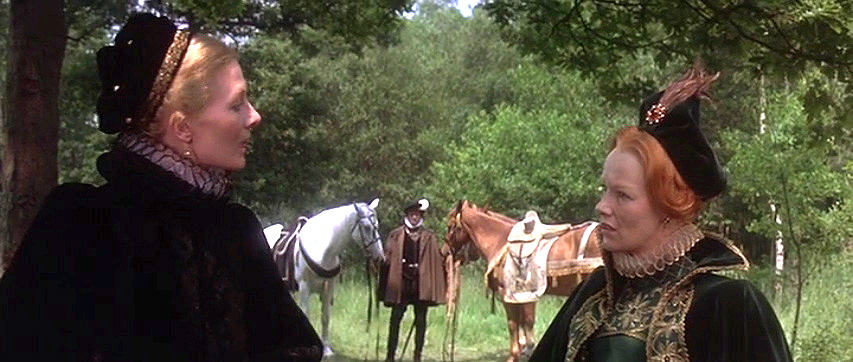
Cast: Vanessa Redgrave (Mary, Queen of Scots), Glenda Jackson (Elizabeth I), Patrick McGoohan (James Stuart, Earl of Moray), Timothy Dalton (Lord Henry Darnley), Nigel Davenport (Earl of Bothwell), Trevor Howard (Sir William Cecil), Daniel Massey (Robert Dudley, Earl of Leicester), Ian Holm (David Rizzio), Andrew Keir (Ruthven), Robert James (John Knox), Katherine Kath (Catherine d’Medici), Frances White (Mary Fleming), Vernon Dobtcheff (Duke of Guise)

So here we are, back in the Tudor history craze of late 1960s Hollywood. Charles Jarrott directed, following up his efforts in Anne of the Thousand Days with this professionally mounted, handsome and rather personality-free film adaptation. It occasionally falls a bit too much in love with its luscious romanticism – and it falls hard for Mary herself, surely one of the worst queens ever – but despite all that, it has an entertaining quality that never lets you down.

The film picks up with the recently widowed Mary (Vanessa Redgrave) essentially being chucked out of France after the death of her husband the King, and swiftly being sent back to Scotland to take up the throne there. Problem is: the very Catholic Mary isn’t exactly the choice of the lords of Scotland – led by her bastard brother James Stuart (Patrick McGoohan). Mary’s Catholicism also threatens to destabilise the relationship with Protestant England – particularly because she is the nearest successor to Elizabeth I (Glenda Jackson). But Mary lacks Elizabeth’s tactical understanding of ruling and is guided by her heart – leading her into a disastrous marriage with feckless alcoholic Henry Darnley (Timothy Dalton).

Mary Queen of Scots is a stately picture, which uses its location shots, costumes and production design to tell its familiar story with a sweep and relish that effectively hides the lack of inspiration in its film-making. Just as in Anne of the Thousand Days, Charles Jarrott shows he’s a fine producer of middle-brow entertainment, safe costume dramas that aren’t going to challenge anyone’s perceptions or give you any real wow moments of filming. He’s happy to set the camera up and let the actors do their thing, with the script ticking off the great events.

That’s what you get here. It’s a film that could have been a lot more of an exploration of the rivalries and different life philosophies of its feuding queens. But it doesn’t quite connect with that. This is partly because it can’t quite bring itself to engage with the reality of Mary herself, preferring the popular romantic image. The film doesn’t want to admit that many of Mary’s decisions were, to put it bluntly, completely misguided bordering on wrong. It is in love with her romantic image – and not as enamoured with Elizabeth’s wiser, more pragmatic, manipulative rule. It’s this rule by heart rather than head the film finally holds up for praise.

It doesn’t help that Vanessa Redgrave feels miscast in the lead role. Redgrave is too sharp an actor to convince as someone as easily led and foolish as Mary. She looks too shrewd, she feels too smart. Redgrave compensates by speaking softly and giving a lot of love-struck eyes to various male actors (principally Nigel Davenport’s bluff, masculine Bothwell), but it doesn’t quite work. It’s like she’s struggling to find the character – and to find the balance in a film that doesn’t want her to be seen as too stupid, while the viewer is left slapping their foreheads at every action she carries out.

This feeling stands out all the more with Glenda Jackson’s casting as Elizabeth. Having just finished playing the same role in a landmark six-part TV series, Elizabeth R(which covered a lot of the same ground), Jackson here confirms that she was the definitive Elizabeth. As smart and shrewd an actress as Redgrave, Jackson’s natural firmness marries up very well with these qualities to make the perfect Virgin Queen. There have been so many others who have taken on the role, but Jackson is simply perfect in this role – she becomes Elizabeth. Her Elizabeth is clever, manipulative, cunning but also quick tempered, capable of great wisdom but prone to moments of passionate lashing out.

The rest of the cast is a familiar parade of character actors – British actors of this generation made a living from films like this! Timothy Dalton stands out as a foppish, clearly useless Darnley (here reimagined as a syphilitic bisexual with anger management issues), as does Ian Holm as a cool-headed, would-be power behind the throne David Riccio, who meets a tragic end. Daniel Massey does a decent job as Leicester (though I can’t shake memories of Robert Hardy in the same role in Elizabeth R – was he busy at the time?), Trevor Howard gets saddled with a lot of plot as Burghley. Up in Scotland, Patrick McGoohan has a lot of fun as a scheming Earl of Moray.

All of these actors fit comfortably into the slightly browned, grainy photography style of films of this type, and the screenwriters hammer together plenty of incident alongside dramatic invention. The focus on the soap opera of Mary’s three marriages (she’s widowed in the opening moments of the film) leaves plenty of scope for invention, from Darnley and Riccio’s affair to the inevitable non-historical meeting between Mary and Elizabeth – it seems like every drama going from Schiller onwards has invented a meeting between these two as a dramatic highpoint.

This final scene captures the lack of thematic depth to the film. In a film that had focused more on really comparing the differences between the two, this could have been the culmination of a debate running through the film (can you rule with a brain but not a heart?). Instead it misses the trick, and becomes a final game of one-up-man-ship, which the film allows Mary to win because she is the more romantic figure. 

It’s well mounted and assembled like many other films like this – but it’s not the best of its genre, and you do sometimes wish for something that had a little more meat on its bones.