Tag: Paul Newman

Cat on a Hot Tin Roof (1958)

Cat on a Hot Tin Roof (1958)

Excellent acting almost saves a neutered, inverted version of Williams’ powerhouse play

Director: Richard Brooks

Cast: Elizabeth Taylor (Maggie Pollitt), Paul Newman (‘Brick’ Pollitt), Burl Ives (‘Big Daddy’ Pollitt), Jack Carson (‘Gooper’ Pollitt), Judith Anderson (‘Big Mama’ Pollitt), Madeleine Sherwood (Mae Flynn ‘Sister Woman’ Pollitt), Larry Gates (Dr Baugh), Vaughn Taylor (Deacon Davies)

There is a fun little anecdote of Tennessee Williams running into a crowd of people lined around the block to catch Cat on a Hot Tin Roof at their local multiplexes and loudly begging them “Go home! This movie will set the industry back 50 years!” You can sort of see why Williams was a bit pissed. It’s a miracle really that Cat on a Hot Tin Roof works at all. The studio snapped up this Broadway mega-hit and promptly instructed Richard Brooks to remove all the content that worked with a bunch of New York Times readers, but wasn’t going to fly in a mid-West fleapit. What we end up with is a curious, mis-aligned, neutered work that arguably inverts several of Williams’ points and is reliant on its incredibly strong, charismatic acting to work.

Brick (Paul Newman) is a former College sports star, now adrift in life, trapped in an unhappy marriage with Maggie (Elizabeth Taylor) who he resents and blames for the suicide of close friend Skipper. All Maggie’s attempts to rediscover any love is met with cold, blank disinterest as Brick hits the bottle big-time. Maggie keeps up the front of wedding bliss, as she is determined they will win their share of the inheritance from Brick’s father ‘Big Daddy’ (Burl Ives) who believes he’s merely under-the-weather, but is in fact dying. This news is also being kept from his devoted (but privately barely tolerated by Big Daddy) wife Big Mama (Judith Anderson), while Brick’s brother’s Gooper (Jack Carson) and his wife Mae Flynn (Madeline Sherwood) makes aggressive pitchs to cement Big Daddy’s fortune for themselves.

This simmering Broadway adaptation of a Southern family weighted down by lies (or mendacity as they love to call it), concealments and barely disguised resentments, was a smash hit but a very mixed film. It’s weighed down by both too much respect of the theatrical nature of the play, and too little interest in its actual message. Richard Brooks’ production largely restricts itself to interspersing wider shots with some reaction shots and sticks very much to its ‘same location for each act’ set-up. It’s a surprisingly conservative and safe re-staging of a hit play.

Despite Brooks’ liberal re-writing of the dialogue (of which more later), it remains a very theatrical rather than cinematic piece, largely devoid of imaginative editing or photography. The attempts to ‘open up’ the piece introduced by Brooks feel pointless or add very little (such as witnessing the accident where Brick breaks his leg or travelling to the airport to see the arrival of Big Daddy’s plane). Compared to the inventive and dynamic use of single-location shooting in Lumet’s 12 Angry Men, Cat on a Hot Tin Roof feels considerably more stately and reserved, and is far less successful in using the tricks of cinema to successfully build tension and conflict.

What it shares however with 12 Angry Men is the electric acting. Elizabeth Taylor gives one of her finest performances, her Maggie bubbling with sexual and emotional frustration, reduced to hurling physical and verbal punches at Brick in an attempt to get any sort of emotional rise out of him. She makes Maggie, for all her desperation and confusion, surprisingly sympathetic. Taylor manages to be both selfish and domineering while also showing how broken up Maggie is with shame and guilt. It’s a detailed, intense, passionate performance.

It also works perfectly opposite Paul Newman’s brooding intensity as Brick. This is the handsome, blue-eyed legend inverting his charisma into something insular, at times merely starring in self-loathing into the middle distance as other speak at him, only rarely rising to let rip at others with contempt and fury. Newman is a force of quiet, emotional anger, even if (stripped of his character’s primary motivation) he comes across at times like a spoilt child who never really grew up rather than the tortured man trapped in a lie of a life, that Williams intended (Brooks even frames him at one point with a high-school football of himself behind him, his past literally haunting him).

Burl Ives would certainly have won an Oscar for this, if he hadn’t won that year for The Big Country. Recreating his Tony Award winning role, he’s a whirligig force of nature as Big Daddy, bullishly insistent on getting his own way, shrugging off with irritation his wife’s affection (an effectively unsettled Judith Anderson) and hiding his own fear at oncoming death in a relentless pursuit of the future. Ives also nails Big Daddy’s outstanding late speeches, investing them with a deep sense of melancholy and sadness under the bombast and strength. It’s a great performance. Jack Carson is perfectly, anonymously uninteresting as ‘other son’ Gooper and Madeline Sherwood hits the beats of shrill hostility she’s asked for as his wife Mae Flynn.

That these performances work so well is a tribute to the underlying strength of a play that has been radically, almost disastrously, lobotomised by Brooks into something that flattens, blurs and (at points) radically inverts the intention. Putting it bluntly, Williams’ original used Brick’s unspoken (perhaps even subconscious) homosexual attraction to Skipper as the root cause of his disastrous marriage and booze-laden depression. Maggie, all too-aware of her husband’s sexual orientation, fumes in frustration at his lack of interest in making the inheritance-required babies. Even Big Daddy suspects this massive unspoken secret at the heart of a family. The fact this remains unspoken to the end, that the characters carry on with the fake fiction of the Pollitt dynasty is a damning indictment of the hypocrisy of American family life.

That wasn’t going to wash in Hollywood. No hint of Brick’s homosexuality could be allowed: in fact, Newman’s heteronormative virility is repeatedly stressed (at one point he even embraces Maggie’s dressing gown in romantic longing). It weakens both characters – for all the skill of Newman and Taylor, it makes both characters shallower, two people letting sulks and pride stand between happiness, rather than two people trapped into a doomed cycle. The film resolutely associates happiness with love and duty to the family unit, emphatically not what Williams’ play suggested.

No wonder he was pissed. A daring play about Southern family hypocrisy and buried secrets, where the burden of the family is a deadweight crushing people is turned into a straight (in every sense) celebration of it. It makes the play a conservative, reassuring lie, as much as a mendacity as the characters talk about. So maybe Williams was right to berate that crowd. Still it pissed Brooks off mightily: he pithily retorted it was a bit rich of Williams to kick up such fuss over a film which made him very wealthy. I guess at least there Brooks makes a strong point.
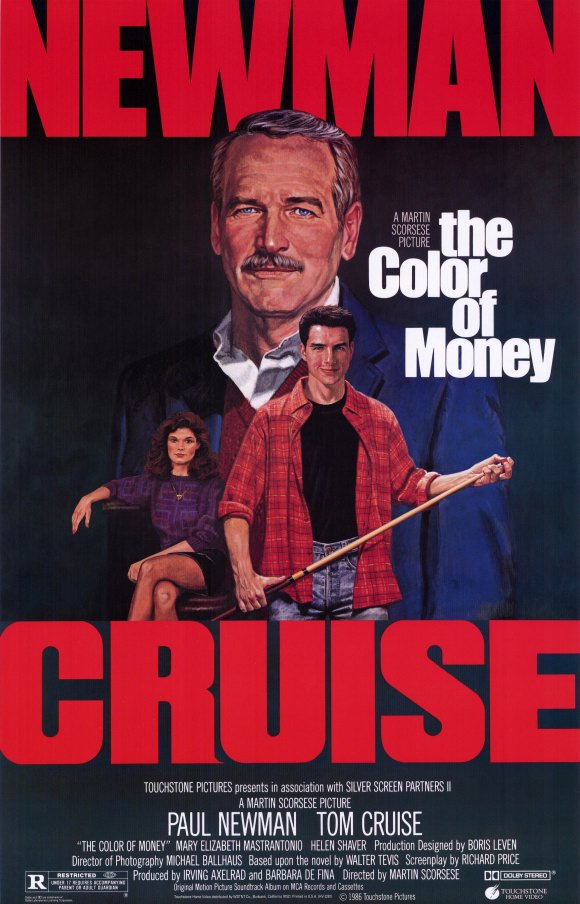
The Color of Money (1986)

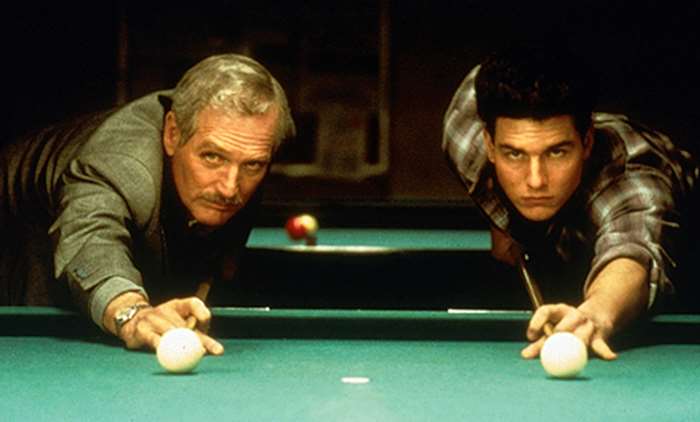
Newman and Cruise set the table in The Color of Money

Director: Martin Scorsese

Cast: Paul Newman (“Fast” Eddie Felsen), Tom Cruise (Vincent Lauria), Mary Elizabeth Mastrantonio (Carmen), Helen Shaver (Janelle), John Turturro (Julian), Bill Cobbs (Orvis), Forest Whitaker (Amos), Keith McGready (Grady Sessions)

The Hustler is one of Newman’s most iconic roles. It’s remembered for his cocksure cool, leaning across the table and dispatching balls with a twinkling smirk. What people don’t remember is that The Hustler is actually more of a kitchen-sink drama than a Rat Pack party. It deals with depression, assault, corruption, injustice and suicide. It’s not even remotely a laugh a minute. The Color of Money is a belated sequel, that feels made by people who remember their impression of what The Hustler was, but don’t actually remember the tone of the film itself. But then, Scorsese intended from the very start to make an entertainment to showcase a star, so I’m sure he knew that making a real tonal companion to the original film was always going to be a no-no.

It’s 25 years since “Fast Eddie” Felsen (Paul Newman) was banished from pool clubs throughout the land by gangsters. He now earns a living selling booze to clubs, largely so he can hang out pool clubs and mentor and stake the ‘hustler’s and stars of tomorrow. The kid who catches his eye is Vincent Lauria (Tom Cruise) an exceptionally gifted pool player with a cocksure confidence and a love of the game, that perhaps reminds Eddie more than a little of himself. Vincent, and his girlfriend Carmen’s (Mary Elizabeth Mastrantonio) grifting skills leave a lot to be desired: but Eddie sees promise and takes them out on a road trip to train them up and make a fortune.

It’s a fitting title, as it’s pretty clear that The Color of Money was the main thing on Scorsese’s mind when he made this. Don’t get me wrong, this is an enjoyable and well-made star vehicle, but it’s also the only time Scorsese was a hired gun working for a star who made films he grew up watching. Scorsese has spoken openly that his main aim here was to bring it in on time and on budget (he made it faster and cheaper than that), in order to help win studio backing for The Last Temptation of Christ. (Ironically of course, most people have far fonder memories of The Color of Money than that film, but then this is a film designed to entertain not challenge.)

It’s a fairly traditional and even predictable storyline. The mentor and the mentee, the latter jaded but rediscovering some of his old fire from the callow exuberance of the other. To be honest not very much actually happens in the film other than pool games and some predictable feuds before the final reconciliation. Inevitable lessons are learned and understandings are achieved. Compared to The Hustler, this is a very callow piece of work indeed, a straight entertainment vehicle that takes the fun, memorable beats of the original and crafts a whole film around them. In many ways you could argue it’s as much a sort of spiritual sequel to Newman’s work in The Sting as anything else.

But Scorsese shoots the hell out of it, so there is always something to look at. No end of editing and camera tricks are used for the pool games, which are shot like action sequences. Swift pans, tracking shots, sharp camera spins are all used to turn a game of knocking nine balls into pockets into something epic. Interesting shots abound, especially several sequences where a camera is mounted on a car bonnet to product an odd Steadicam effect. This is work way beyond a journey-man-pro director, but compared to Scorsese’s other works it’s minor. Scorsese opens the film by delivering a voiceover introducing nine-ball-pool, but the film never feels personal.

What it is, is a triumph for its two leading men. The year before Newman had won an honorary ‘career’ Oscar, which he accepted with a slight air of surprised resentment. No wonder, since he won a ‘real’ Oscar a year later for this reprise. To be honest, the film doesn’t ask anything particularly demanding of Newman, compared to the heights he had achieved in, for instance, The Verdict. It’s a lot of charm and aged confidence, mixed with a mentor exasperation and an unspoken concern that his powers are fading. Newman does spice things up with some interesting character work – there is a great scene when Eddie berates himself for being suckered by pool shark Amos (also a beautiful cameo from Forest Whitaker), humiliated for having lost his touch. But, whereas the first film was a below-the-skin character study, this is more like a victory parade for a charismatic star who even signs off the film by stating “I’m back!”. He’s great but not challenged.

Cruise raises game as he always does when working with legends (see also his work with Hoffman and Nicholson). The film captures perfectly both his cocksure confidence and the gentleness and vulnerability that Cruise manages to hide beneath it. You only need to see how vulnerable and scared Vincent is of being abandoned by the more sophisticated Carmen, to know that his karate moves with a pool cue while singing along to Werewolves of London is a front of a young man wanting to look like a big one to the world. Mastrantonio is pretty good in a fairly simplistic role, that is essentially a twist on a hooker-with-a-heart-of-gold.

The Color of Money offers up fairly predictable charms and plot twists and no real surprises at all. While its original film was a piece of neo-realism tinged social drama, this is a brash entertainment, stuffed with pop songs and charismatic actors doing their thing. All pulled together by a director who wanted to prove he could make something as glossy and empty as the next man. Entertaining but forgettable.

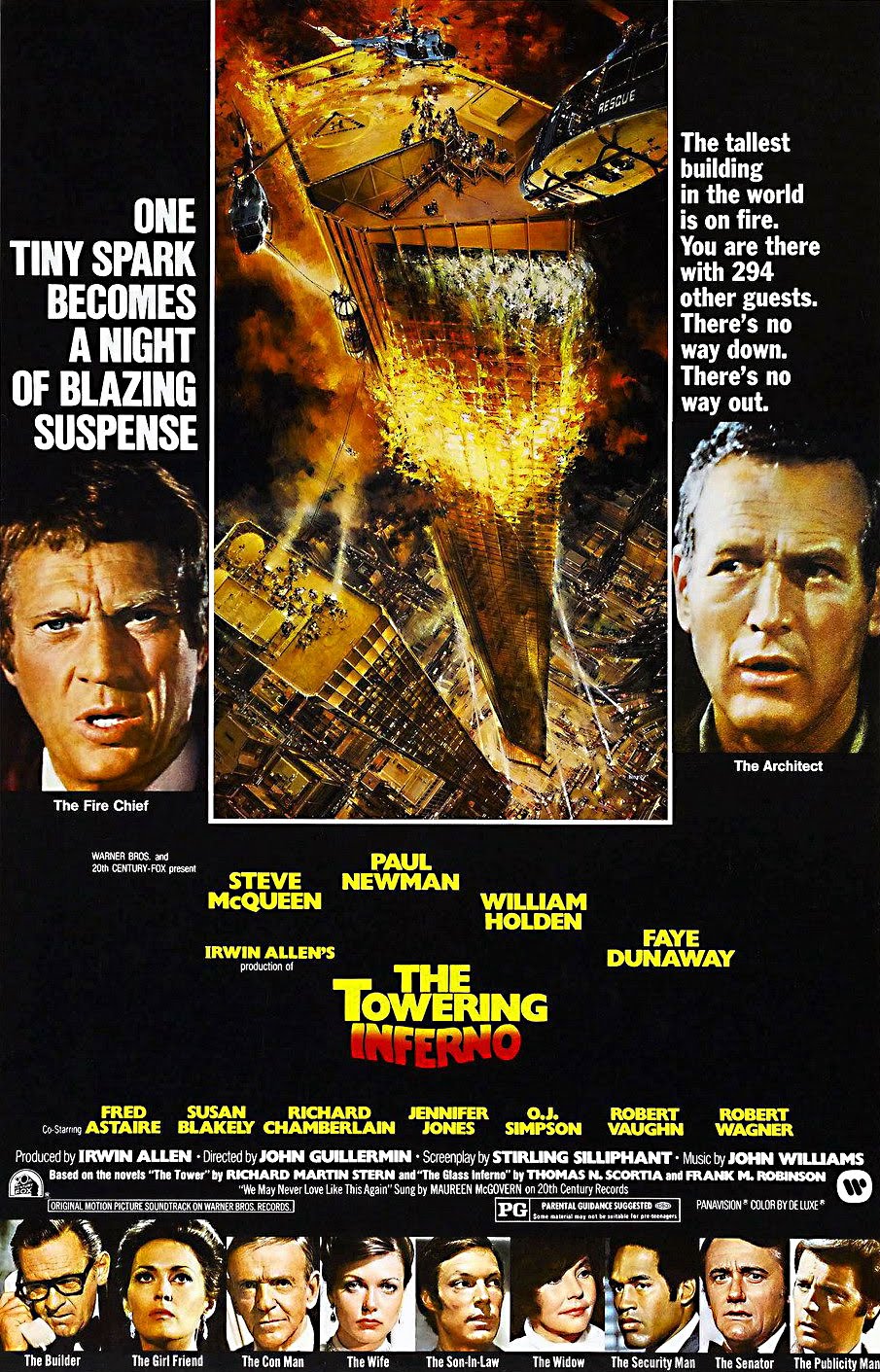
The Towering Inferno (1974)

Newman and McQueen tackle a huge blaze in The Towering Inferno

Director: John Guillermin, Irwin Allen

Cast: Steve McQueen (Fire Chief Michael O’Halloran), Paul Newman (Doug Roberts), William Holden (James Duncan), Faye Dunaway (Susan Franklin), Fred Astaire (Harlee Claiborne), Susan Blakely (Patty Duncan Simmons), Richard Chamberlain (Roger Simmons), Jennifer Jones (Lisolette Mueller), OJ Simpson (Harry Jernigan), Robert Vaughn (Senator Gary Parker), Robert Wagner (Dan Bigelow), Susan Flannery (Lorrie), Shelia Matthews Allen (Paula Ramsay), Jack Collins (Mayor Ramsay)

Architect Doug Roberts (Paul Newman) flies into San Francisco for the grand opening of The Glass Tower, the newly constructed tallest building in the world which he has designed for developer James Duncan (William Holden). A celebration with the rich and famous is planned – too bad Duncan’s rogueish son-in-law Roger Simmons (Richard Chamberlain, smarming like his life depends on it) has saved a few dollars by stuffing the building with sub-standard wiring. Surely the world’s largest building can’t catch fire? You bet it could – and only heroic Fire Chief Michael O’Halloran (Steve McQueen) has the expertise to put it out.

The Towering Inferno was the peak of the “all-star disaster” genre. It was bought to the screen by Producer (and “Master of Disaster”) Irwin Allen, and pretty much ticks all the boxes you expect from the genre. A star at every turn! A huge running time! Constant denials that anything could go wrong (of the “This building can’t burn down!” variety)! Kids in peril! Death-defying stunts! A brave pet! An elder statesman of Hollywood risking life and limb! A scoundrel we can boo! A tear-jerking death! The Towering Inferno pretty much has it all, and it plays every single beat with the sort of po-faced seriousness that was already starting to look a bit silly by 1974.

Films like this work because audiences – as we’ve seen time and time again – never lose their taste for watching things get trashed. In the 1970s every studio wanted its own mega-budget disaster film. The Towering Inferno’s real uniqueness is the story behind its making – two studios had competing “Skyscraper on Fire!” projects but, instead of competing, pooled their resources to make one mega hit. So, Warner Brothers The Tower and 20th Century Fox’s The Glass Inferno became this.

Irwin Allen was handed the keys – because no-one did it better – and each studio contributed a star. McQueen and Newman spent almost as much time negotiating equal terms as acting in the movie. Both were paid 10% of the gross and agreed they would have exactly the same number of lines (many of Newman’s final scenes sees him perform stunts wordlessly, as he burned through his allotted lines during the 40 minutes he spends on screen before McQueen turns up). The billing was negotiated carefully: their names would appear on screen together with Newman slightly higher, but McQueen’s name to the left (both could therefore claim they were “first billed”).

Their interest in the film pretty much ended there. Newman was famously disparaging of what he called “a piece of shit” and the only time he did something purely for the money. He coasts through on those blue eyes and twinkly grin. Eager that his character be absolved of responsibility (he has designed a tower that will claim 200 lives!) Newman’s architect is continuously absolved of any responsibility by the rest of the cast and leads on saving lives. McQueen grabbed the better role as the all-action fire-chief, riding in after 45 minutes (thus wisely missing out the tedious build-up of the soapy plot lines), takes charge and does nothing but manly action, but he also looks like someone going through the motions.

But then they know the things that will be remembered are the set-pieces. As flames stretch up the building, our star names dodging explosions, climbing up shattered staircases, dodging collapsing ceilings and taking on vertigo-inducing heights, it’s hard not to be excited. As in all disaster films, the disaster takes a strong moral stance. Of all the characters who die only one ‘doesn’t deserve it’. Aside from that, the actors playing philanderers, swindlers and bastards inevitably bite the dust, while the upstanding and noble pretty much see their way to the end.

The disaster sequences are impressive – and the fire-effects are really well done. Allen directed the ‘action sequences’ – aka the only bits of the film you really remember – while Guillermin handled ‘the acting’ (the dull, soapy, badly written bits you forget). The cardboard characters (no wonder they catch fire so easily!) could have had their personalities scribbled on the back of a stamp, and are pretty much dependent on the charms of the actors playing them. Fred Astaire’s gentle conman (the sweetest grifter you’ll ever meet) is a ludicrous character, but works because of Astaire’s twinkle-toed charm (Astaire grabbed a wave of affectionate awards nominations). Jennifer Jones plays off him rather well in the film’s ‘heroic elder statesman of Hollywood’ role, as a woman who puts herself at huge risk to save two kids (and their deaf mum) from immolation.

But pretty much all the character-based stuff in Towering Inferno is ludicrously silly, with some strikingly bored actors (Faye Dunaway looks like she wants to be anywhere else) but it hardly matters as we are there to watch the world burn. Which it does to spectacular effect, and the reassuringly, camp predictability of the film’s events is endearing – and raises a few good-natured laughs (you have to laugh at something like this, even though it wants to take itself so seriously). The Towering Infernowas the largest of all the disaster flicks of the 1970s. Allen shoehorns in a few points about fire safety in tall buildings for the ‘serious bits’, but his heart is in consigning most of the second tier of his all-star cast to dramatic, firey deaths. Overlong, very silly but rather sweet.

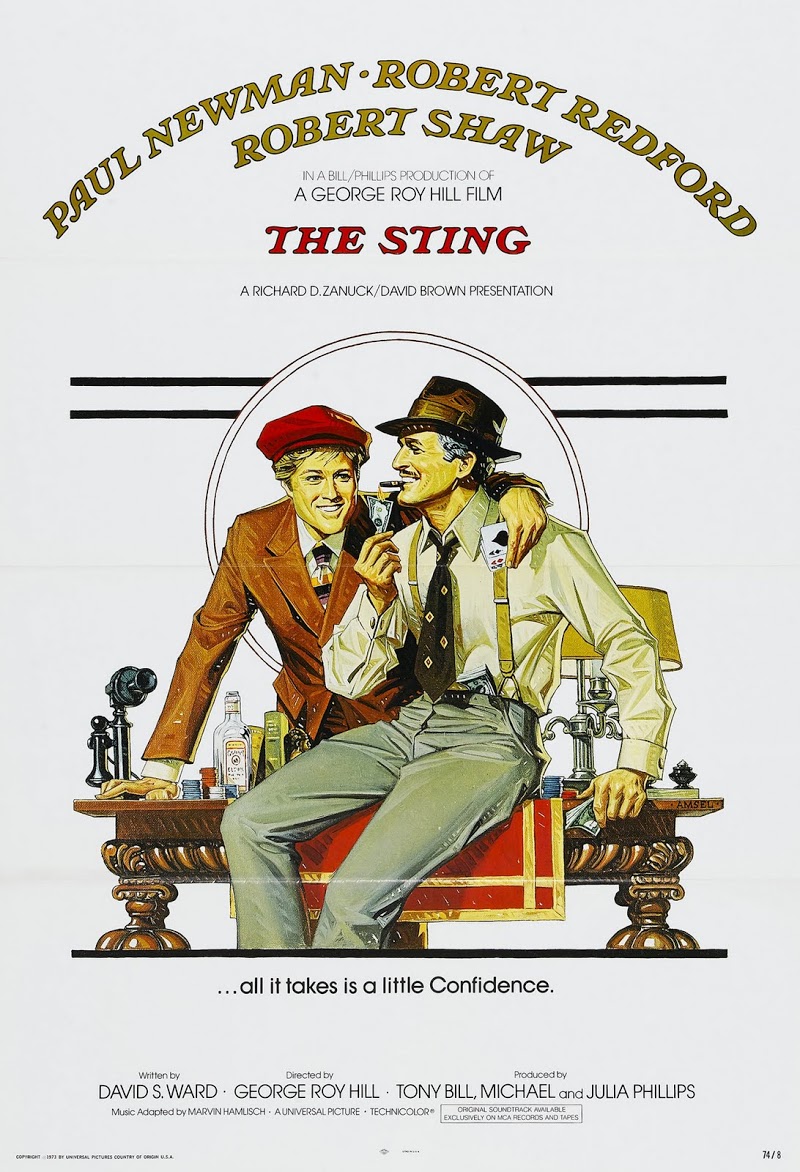
The Sting (1973)

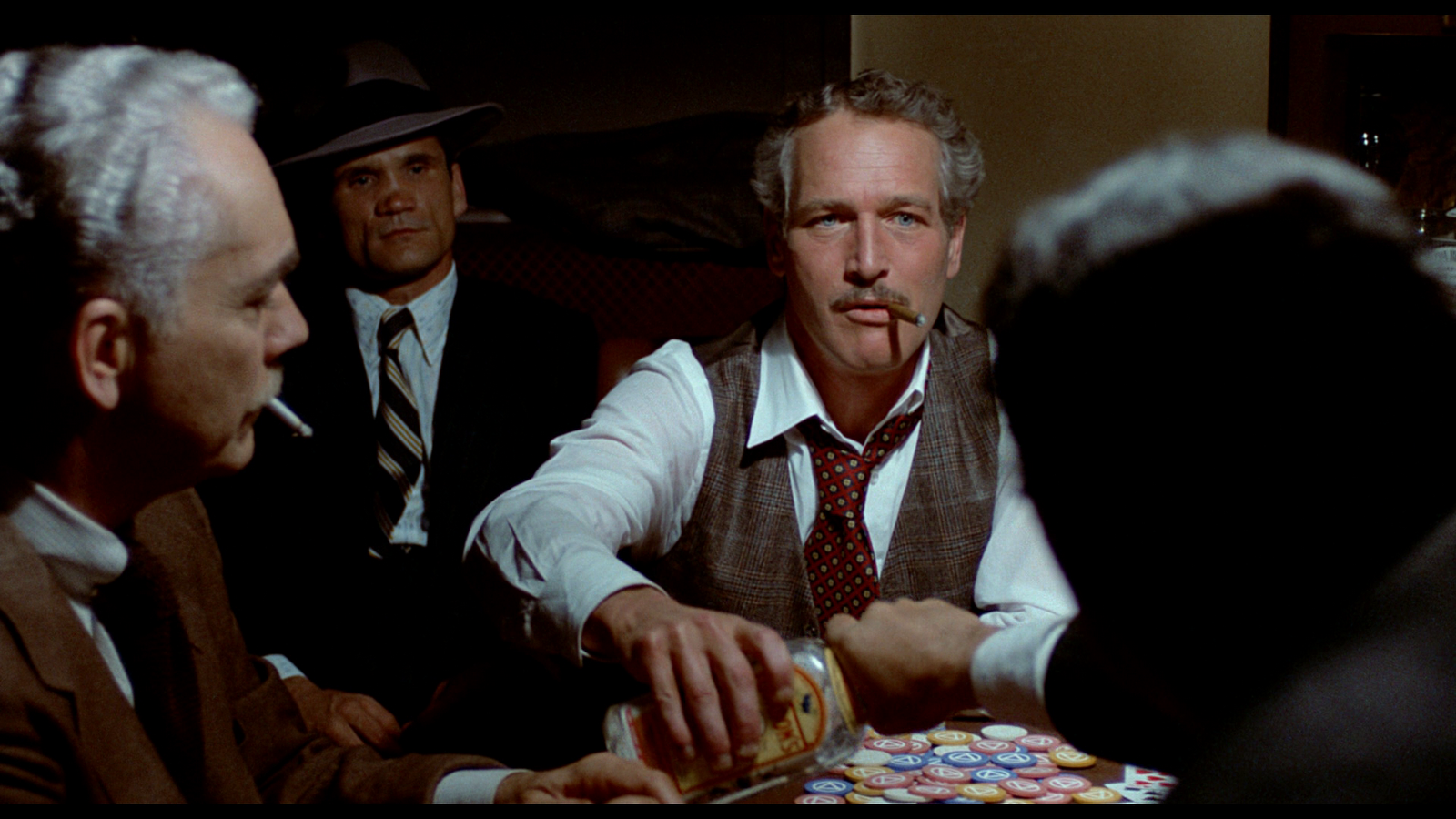
Newman and Redford pull the mother of all confidence tricks in The Sting

Director: George Roy Hill

Cast: Paul Newman (Henry Gondorff), Robert Redford (Johnny Hooker), Robert Shaw (Doyle Lonnegan), Charles Durning (Lt William Snyder), Ray Walston (JJ Singleton), Eileen Brennan (Billie), Harold Gould (Kid Twist), John Heffernan (Eddie Niles), Robert Earl Jones (Luther Coleman), Jack Kehoe (Erie Kid), Dimitra Arless (Loretta Salino), Sally Kirkland (Crystal)

From its opening, to the ragtime charm of Joplin’s The Entertainer, it should be pretty clear what you are in for with The Sting. A nostalgia-tinged star-vehicle, The Sting is gloriously unpretentious, a film that means only to entertain. Charming and good-natured, you can forgive it an awful lot because it wants so little from you: other than to put a smile on your face (a real “aw shucks I never saw that coming!” grin). A slice of pure entertainment, with more than a hint of nostalgia, it hoovered up seven Oscars (in an admittedly weak year – its nearest competitor was The Exorcist and it says something for how eclectic American cinema can be that those two films hailed from the same year) at a time when the nation needed a lift.

The Sting is perhaps the ultimate confidence-trick, caper movie. It’s been effectively remade so many times (it’s basic plot was copied exactly for the first episode of BBC’s confidence trick dramedy series Hustlers among others) it’s likely that you will recognise some of its tricks long before viewers at the time did. But that doesn’t really matter, because like all tricksters, it tells a great story. In 1930s Illinois Johnny Hooker (Robert Redford) is a grifter who makes a score off the wrong guy: a courier for vicious crime boss Doyle Lonnegan (Robert Shaw). In the violent aftermath, his partner and mentor Luther (Robert Earl Jones) is murdered. Hooker heads to Chicago to partner up with famous grifter Henry Gondorff (Paul Newman) to get his revenge. The plot comes together – but can they stay ahead of Lonnegan, the cops (led by Charles Durning’s Lt Snyder) who are after Hooker and the FBI who are hunting Gondorff? Or will they fool everyone?

Well what do you think? Directed with a professional (Oscar-winning) smoothness by George Roy Hill, this is basically Butch and Sundance Go Grifting. The film follows pretty much exactly the same nostalgia soaked journey following two charming Hollywood mates thumbing their nose at authority. The recreation of the period is extremely detailed (it won Oscars for production design and costumes), but above all safe and cosy. For all that it grifts in the rough-end of town, it’s a very clean and uncrowded world (the street scenes are notably empty) and very little reality is allowed to get in the way of what is effectively a shaggy-dog story.

The vision of the past it presents is designed from top-to-bottom to be comforting and the film is devoid of any sense of danger connected with grifting, or any sense of moral complexity around people who make their living from conning others. It’s a world where the only people conned are them-what-deserves-it and the conmen are plucky underdogs, making a buck off the crooked big man while fighting the corner of the little guy. It basically repackages conmen as fairytale heroes – and does so, so successfully most conmen films since have followed its lead.

It’s fairy-tale style is carried across in the chapters (with some lovely nostalgic hand-drawn chapter opener pages) that the film is split into, not to mention the structure of a callow youth, a rough but wise mentor, a hissible villain and righteous mission. The only thing it really misses is a princess to save (although there is the gentlest femme fatale you’ll ever see). But then there isn’t really room as, even more so than Butch and Cassidy this is a bromance played out in the same sepia-toned “good-old-days” warmth.

Newman and Redford are of course huge fun, using every inch of star-power gusto and cool. Newman has great fun as the sort of cigar-chomping, hard-drinking maverick only ever seconds away from bounding up from a scruffy sleep to perform all manner of tricks with assured cool. Newman generously cedes most of the richer material to Redford, but he can hardly have minded when he gets such glorious set-pieces as his faux-drunken card-sharp routine when he muscles in on Doyle’s cross-country train card game. I’ll also give a shout out to a wonderful moment when Gondorff goes through an elaborate show-off run-through of his card-sharp skills – only to get over-confident and spill the deck. It’s a good laugh, but also adds a little beat of tension (needless to say he performs flawlessly on the night).

Redford got his only acting Oscar-nomination here and, while it’s not his most challenging role, it’s certainly one where his magnetic Hollywood charm was used to its best effect. He gets the meat of the plot, walking a difficult line between being both an audience surrogate and keeping us uncertain about how much of what we are seeing is true. Redford’s handsome boy-next-door charm works perfectly for Hooker – and he’s got a sweet shocked horror at violence when it comes – and he has a rather winning naivety mixed in with a youthful energy. Sure, it’s hardly Hamlet, but as a riff on his WASPY version of counter-culture cool, it’s pretty much spot-on. (Redford is also of course a very safe presence – there’s nothing dangerous to him, which is of course perfect for the film’s tone.)

These two energetic and charismatic performers – both having a whale of a time – are the main selling point of a movie that rattles through fun set-pieces. Like all the best con movies, it lays out all its pieces and only assembles them all into a picture right at the very end. It makes for something little more than a fairground entertainment – Marvel as Gonrdorff and Hooker Hoodwink a Man Before Your Very Eyes! – but when it’s told with such zip, charm and lightness as this it hardly matters. Even the heavy – a growling Robert Shaw – gets a bit of light-banter under the menace (“What was I supposed to do” he bemoans after Gondroff swops out the crooked cards he’s dealt him “call him for cheating better than me?”).

The Sting isn’t trying to reinvent the wheel or tell you anything serious. It just wants you to grin. While we might be told grifting can be dangerous, the main impression of the film is that it’s matey boys-own blast. And it wants us to enjoy the entertainment as much as the conmen do. It knows that, like a good magic trick, we love to see how the illusion works and there are few things more engrossing than watching professionals execute a difficult task flawlessly. It’s one of the lightest Best Picture winners, but then it’s also one of the most purely enjoyable.

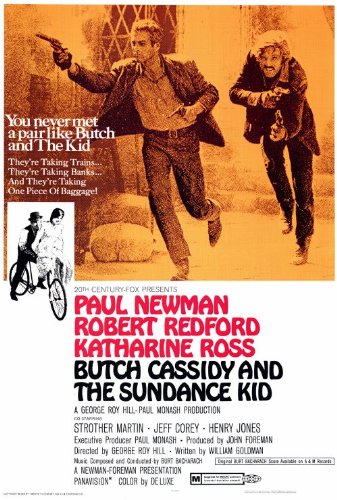
Butch Cassidy and the Sundance Kid (1969)

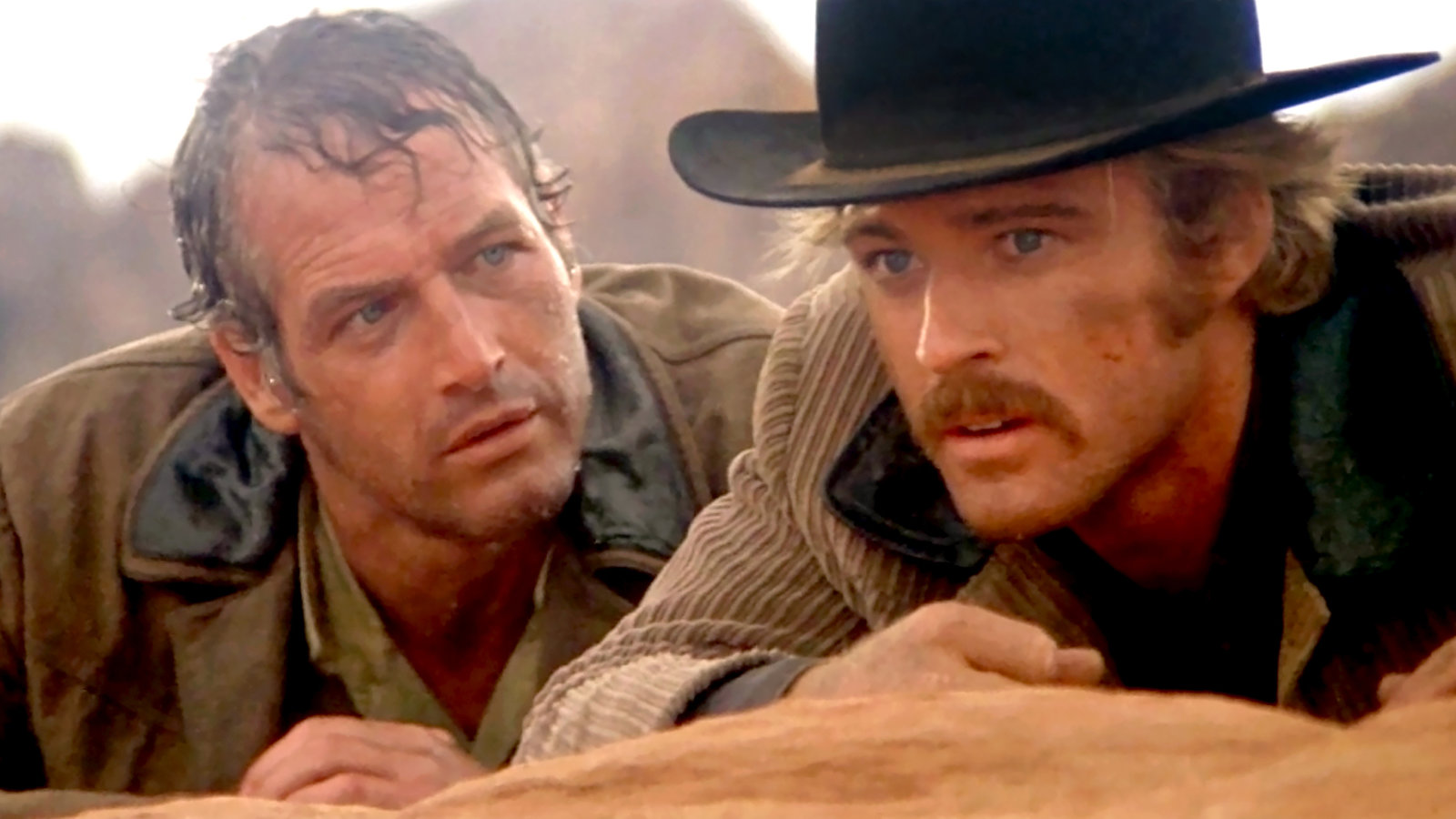
Paul Newman and Robert Redford in the perfect partnership in Butch Cassidy and the Sundance Kid

Director: George Roy Hill

Cast: Paul Newman (Butch Cassidy), Robert Redford (The Sundance Kid), Katharine Ross (Etta Place), Strother Martin (Percy Garris), Henry Jones (Bike Salesman), Jeff Corey (Sheriff Bledsoe), George Furth (Woodcock), Cloris Leachman (Agnes), Ted Cassidy (Harvey Logan), Kenneth Mars (Marshal)

Butch Cassidy and the Sundance Kid was a monster hit in 1969. It struck cinematic gold by combining Newman (originally first choice for the Sundance Kid) and Redford (fourth choice at best after Jack Lemmon – and what a different film that would have been! – Warren Beatty and Steve McQueen) and got the tone just about spot on between old school charm and hit 1960’s chic. It reinvents no wheels, but it’s a prime slice of classic Hollywood entertainment.

In the dying days of the Old West, the Hole in the Wall Gang is finding trade tough. The banks are wising up to how easy they are to rob, and the new idea of holding up trains is fraught with danger. Not least from the powerful backers who don’t like to see their money and goods being half-inched off the tracks by a gang of desperados. The leader of the gang, affable, fun-loving Butch Cassidy (Paul Newman) and his sidekick sardonic ace-shot the Sundance Kid (Robert Redford) continue to ply their trade of stealing, but they are fighting a losing battle. Hounded out of the states by a crack squad of lawman they make their way to Bolivia – but find the life of crime isn’t easier there either, what with no one speaking English and the Bolivian army being even more trigger happy than the American law and order forces. What’s a couple of guys to do?

Butch Cassidy and the Sundance Kid is really a celebration of nostalgia, repackaged with a wry sense of 60s cool that merrily seizes on its lead characters as the sort of anti-authoritarian, free-spirited, jokers who were bucking the rules of Vietnam-era America. But fundamentally at heart, it’s a joke filled sad reflection on a lost America and a lost sense of freedom – even if it was the freedom for two basically decent guys to make a living from robbing banks – that even shoots most of its opening segment in a romantic sepia. 

Because this is all about Butch and Sundance being two guys left behind by progress. Their way of life is dying out around them – the opening sequence sees Butch walk around a new bank, with its impressive new security measures. What happened to the beautiful old bank? Asks Butch: “People kept robbing it” comes the cold response. This follows on from a recreation of old sepia newsreal footage that states that the entire membership of the Hole in the Wall Gang is now dead – meaning that we know where the film is heading from day one. It’s a world where the train and modern communications are leaving our heroes behind. Even the humble bicycle is a sign of the future – “the horse is dead!” crows a bike salesman to a crowd of red necks.

The film may be cool and whipper-sharp in its style and the characterisation of its lead characters, but it’s a firmly nostalgic film that sentimentalises the Wild West and our heroes. No wonder at its conclusion it freeze frames (famously) as the heroes charge out to certain death in a shoot-out with the Bolivian army. It’s like Hill can’t bear seeing these guys torn apart ala Bonnie and Clyde or The Wild Bunch by the cold hard truth of a bullet. 

The film makes an interesting comparison with The Wild Bunch released the same year. In many ways the latter is a more traditional western, both in its style and its content. But in every other way it’s a far more radical piece, really embracing the lack of rules, the cruelty and the lack of glamour of life in the west – and ending with its heroes being shot to pieces on screen in a prolonged bloody shoot out that set a new record for use of squibs. Compared to this, Butch Cassidy is very light stuff, with its final image almost hopeful in its sepia toned romanticism.

Not that it’s not entertaining for all that. Its sense of sixties defiance is perfectly captured in the film’s lightness and playfulness – and in the fine lines and gags in William Goldman’s well structured (and Oscar winning) script. From its opening lines “Most of what follows is true” through the offbeat wisecracks of its lead, it’s a lot of fun. Newman and Redford are both just about perfect. Newman is the very picture of relaxed, casual cool while Redford’s style of handsame smartness works perfectly for the more plugged in Sundance. The two of them also form a very swinging sixties sexfree-Thruple with Katharine Ross as Sundance’s girlfriend, but essentially a companion to both men.

Not that Etta isn’t aware that the good times are coming to end. She makes it clear she won’t stick around to watch them die, and when (late in the film) she announces she will return to the US, it’s a clear sign to everyone that things are near the end. But then Butch and Sundance have already faced the cold realities, as an attempt to go straight protecting bank money from robbers see them gun down a group of bandits (the first real bloodshed in the film), an action that leaves them both slightly stunned.

It’s very different from the hijinks of the film’s first three quarters. The two of them spend a chunk of the film trying to evade the lawmen chasing them, each attempt failing, ending in them making a desperate jump off a cliff into water (because no one would follow unless they had to) and even their early career robbing banks in Bolivia is hampered by their inability to speak Spanish (cue a series of lessons from Eta on the rudiments of larceny in Spanish). The film’s lightness and warmth early on lies behind its popularity.

Butch Cassidy is a film that is designed to please and for you to love it. It has two fine actors giving superbly entertaining performances. It has some wonderful scenes, not least the introduction of each character, two superb scenes (Butch’s facing down of a challenge against his leadership of the gang is a scene so good I don’t think the film bests it). But Hill’s film is also a cosy and safe picture, that drips with sentimentality towards its leads and nostalgia for its era. It’s successful because it’s such an unchallenging and safe film.