Tag: Paul Reiser

Concussion (2015)

Will Smith takes on the NFL in solid but uninspired true-life story Concussion

Director: Peter Landesman

Cast: Will Smith (Dr Bennet Omalu), Alec Baldwin (Dr Julian Bailes), Albert Brooks (Dr Cyril Wecht), Gugu Mbatha-Raw (Prema Mutiso), David Morse (Mike Webster), Arliss Howard (Dr Joseph Maroon), Mike O’Malley (Daniel Sullivan), Eddie Marsan (Dr Steven T DeKosky), Adewale Akinnuoye-Agbaje (Dave Duerson), Stephen Moyer (Dr Ron Hamilton), Richard T Jones (Andre Waters), Paul Reiser (Elliot Pellman), Luke Wilson (Roger Goodell)

In 2002, Pittsburgh pathologist Dr Bennet Omalu (Will Smith) carried out an autopsy on deceased former Pittsburgh Steelers centre (and American Football legend) Mike Webster (David Morse). What he discovered – that the high speed impacts of American football massively increased the chances of players suffering serious brain damage and debilitating mental conditions – was to change his life, and lead to a six-year battle to get his research acknowledged by the NFL. This film dramatizes this story – with the obligatory inventions and dramatic changes (Landesman describes the film as “emotionally true” if not “factually true”).

Concussion is a fairly straight-forward, rather uninspired “one man’s struggle” kind of film. There isn’t much in it, to be honest, that is particularly unique or different from films of this type we’ve seen before. We’ve pretty much all seen the trope of a man pushing to get himself heard against the scorn, disbelief and anger of those who need to hear him the most. Does Concussionadd anything new to that? No not really.

Peter Landesman shoots the film with a methodical, workmanship that hits all the expected beats. The whole film plays like Michael Mann’s The Insider-lite: with the difference that the NFL never really convinces as an actual threat in the way Big Tobacco does in that film. The film falls over itself to repeatedly tell us how powerful the NFL is but never really shows us in the film how that power might work. When the FBI drum up charges against Omalu’s mentor, you never get the sense that this is being directed by the NFL themselves. They are simply never that dangerous an opponent.

Maybe because this is a film that doesn’t want to run the risk of saying America’s beloved sport is dangerous. It wants to blame bad eggs rather than an institutional failure – hence the repurposing of former player Dave Duerson as a sort of braggart bully. The characters playing the NFL heads are relegated to TV screens in the corner. It never wants to really look at the risks of this institution wilfully burying evidence their sport is dangerous, or question whether this sport is even a good idea. Throughout the world of sport, there are ungoing debates about the health risks of sport, from the danger of heart conditions to early onset dementia in football players from heading the ball. This film fails to really tap into any of this.

As such, there isn’t really any dramatic force behind the film: it doesn’t manage to suggest Omalu is in danger and it doesn’t want to turn the NFL into actual antagonists. It treads a weary middle ground. If the NFL was really positioned as a threat, then the pervasive presence of its stadium in Pittsburgh would be sinister. It isn’t for all Landesman tries to shoot it in that way.

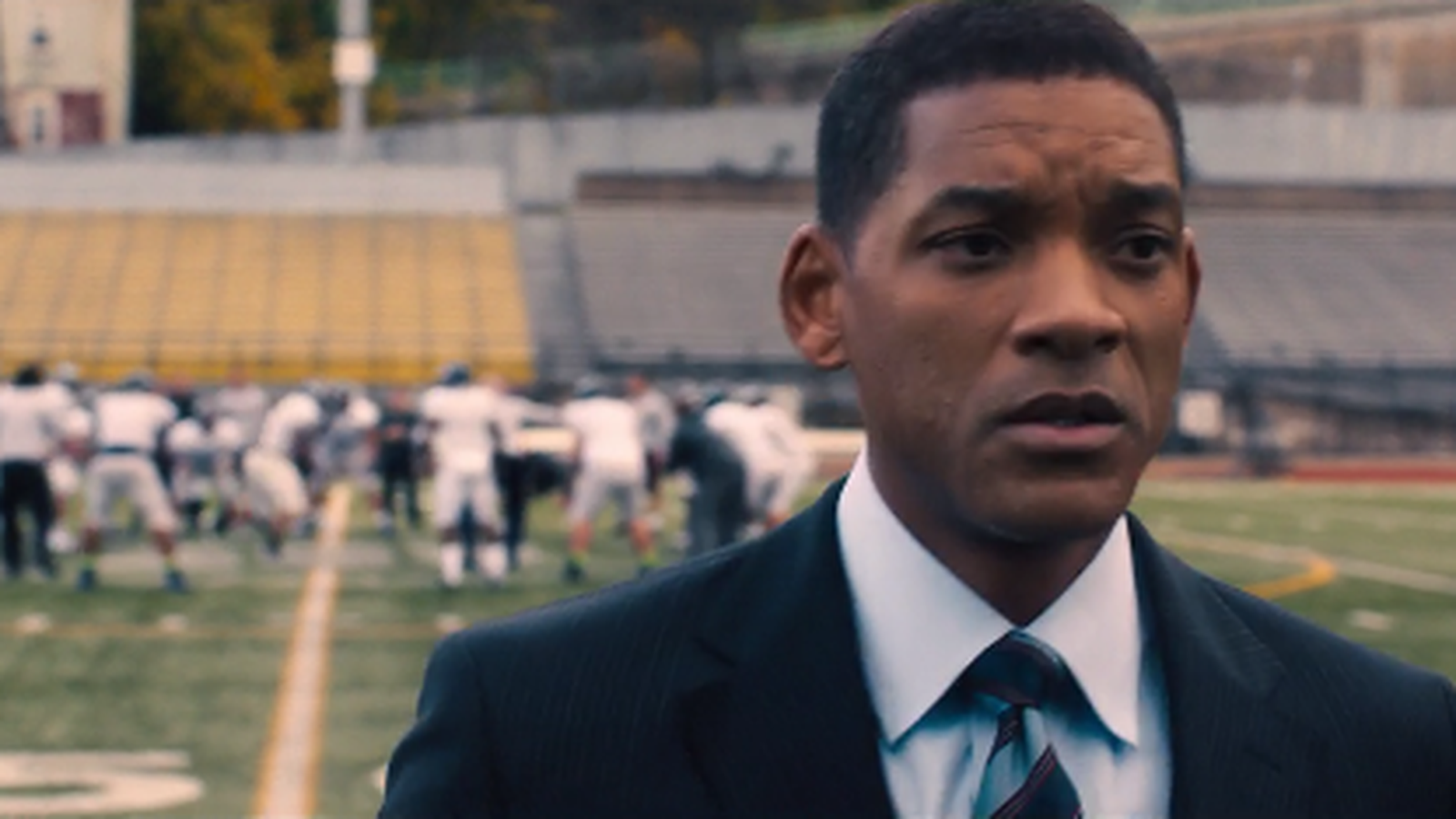
Despite this though, Will Smith is very good as Omalu. The film’s version of the doctor seems a little different from the quirky, socially awkward real-life Omalu. But Smith nails the home-run scenes of Omalu raging at his research being disregarded. (In real life it was easy for the NFL to dismiss Omalu by using his Nigerian heritage (his ‘otherness’) quietly against him. The film doesn’t touch upon this by the way.) Smith has all the charisma the role needs and brings it a certain James-Stewartish moral decency.

The rest of the cast don’t get much else to play with. Alec Baldwin is pretty good as a former NFL doctor trying to ease his conscience (although his accent got some criticism). Gugu Mbatha-Raw has a fairly thankless role as the supportive wife, but does it well. Albert Brooks might be a bit too much at times as Cyril Wecht, but David Morse plays Mike Webster with sensitivity.

The film is not always that subtle. Shots of Webster haunting Omalu are a bit much. Omalu’s unhappiness and frustration are telegraphed using familiar clichés, from raging impotently at stony faced law officers, to trashing a room in his still-under-construction dream home in Pittsburgh (having read the source book it’s hard to believe the real Omalu ever did something like this). The timeline of the film isn’t always clear. There is a little too much lingering on funerals and tear-stained relatives for easy emotional hits.

The main issue is that Concussiondoes nothing special and doesn’t manage to make its familiar structure feel particularly fresh. It’s just a very, very familiar type of story told with no real unique imagination. Although Smith is very good, it’s not quite enough.

Aliens (1986)


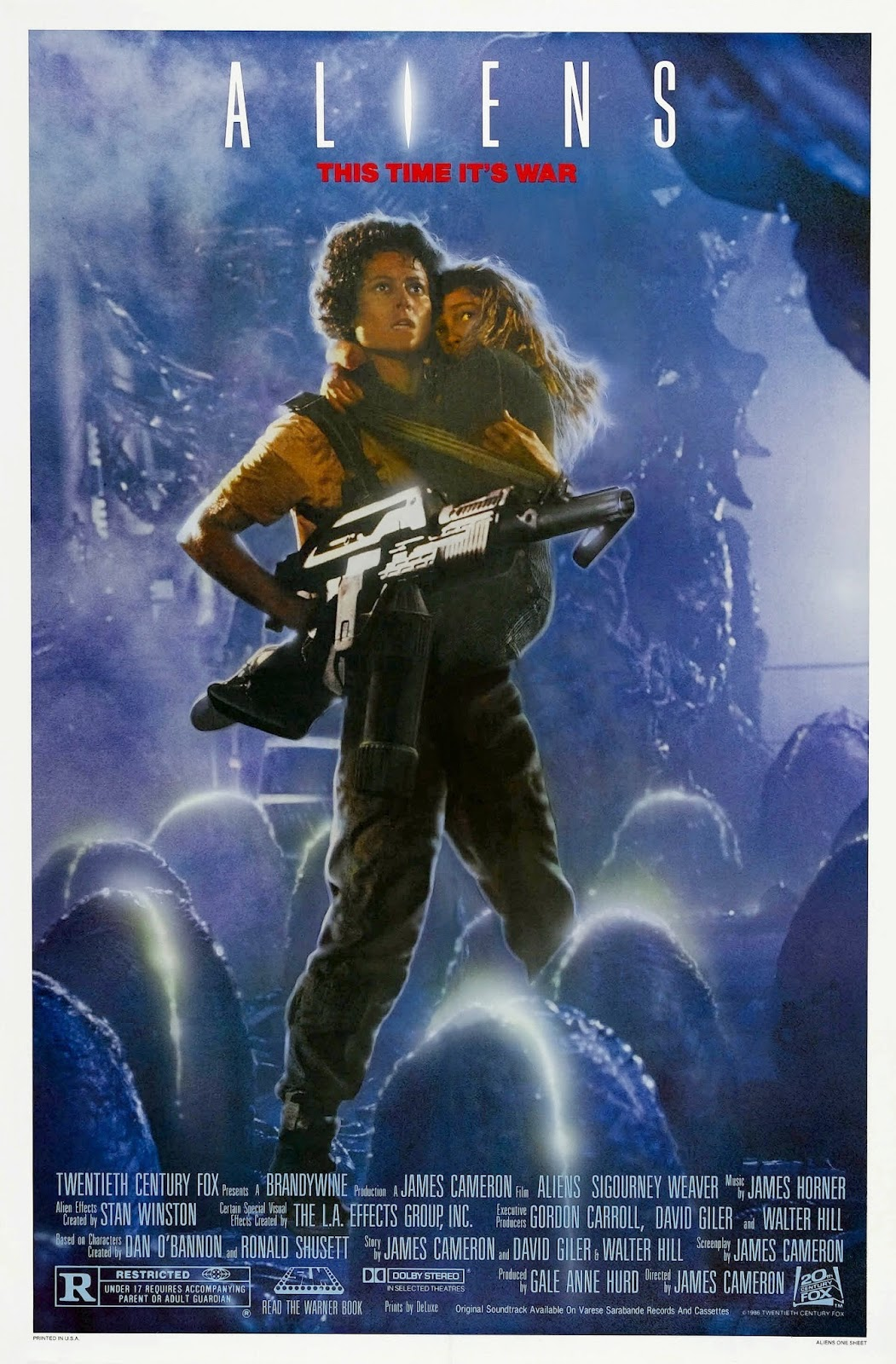
Sigourney Weaver takes on the terrifying alien hordes in Aliens

Director: James Cameron

Cast: Sigourney Weaver (Ellen Ripley), Michael Biehn (Corporal Dwayne Hicks), Paul Reiser (Carter Burke), Lance Henriksen (Bishop), Carrie Henn (Newt), Bill Paxton (Private Hudson), William Hope (Lieutenant Gorman), Jenette Goldstein (Private Vasquez), Al Matthews (Sergeant Apone), Mark Rolston (Private Drake)

When any list of greatest-sequels-ever-made is put together, you get the familiar names: Godfather Part II, Toy Story 2, The Empire Strikes Back – but no such list is complete without James Cameron’s groundbreaking Alien sequel, Aliens. In fact, Aliens is so bloody good no list of great action films, science fiction films or even war films is complete without it. 

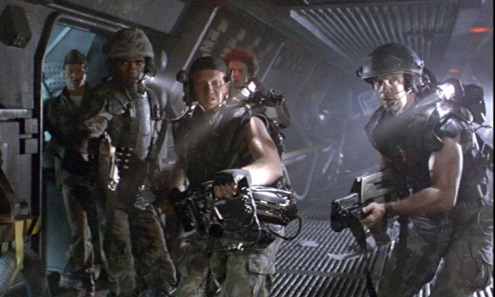
Set 57 years after Alien, Ripley (Sigourney Weaver) is awakened from hypersleep and returns to Earth. Her warnings of the hideous Alien threats on LV-426 go unheeded by the soulless Weyland-Yutani company – until all contact is lost with the terraforming colony there. At which point, company man Burke (Paul Reiser) recruits a troop of marines to head to LV-426 on a rescue mission. However, the over-confident marines find themselves on a devastated base with only one survivor, a traumatised young girl called Newt (Carrie Henn), and are quickly out of their depth fighting against a ferocious enemy whose tactics and motivations they don’t understand. 

Can this really only be the second large-scale movie James Cameron ever made? The guy may be (allegedly) a demanding, perfectionist dick, but you are left in no doubt of his mastery of genre film-making – or the thematic depth and emotional weight he can bring to what in the hands of thousands of other film-makers would have been a cheap-shock, monster-schlock thriller. Aliens is quite simply magnificent, one of the best Hollywood films you are likely to see. I’ve seen it I don’t know how many times, but it never, ever loses its impact. It’s always gripping, the action is always compelling and it never ever fails to scare and thrill you. 

Cameron’s trick is that he is so good at build-up. Nary a single Alien is seen on screen for the best part of an hour. Instead Cameron invests time in establishing the characters and their relationships. We begin to understand each of the marines as individuals. We feel our empathy for Ripley grow as we discover she has lost her daughter while in hypersleep, that she still feels traumatised by the events she witnessed, but that she has a strength of character, integrity and will that helps her weather the storms she has endured. You understand these characters so well – and the world that they inhabit – that when they start getting torn apart by slathering xenomorphs, it carries real weight and impact.

All the weapons the marines have and their tactics are carefully explained. We spend a good 15 minutes in the base itself before any Aliens arrive: the entire complex is quickly established as basically a huge haunted house. The wonderful production design makes it feel like the industrial zone on The Crystal Maze if a desperate hand-to-hand battle had been fought there (it’s also great that Cameron leaves what actually happened there to our imagination). Cameron has a mastery of small details – so the marines’ motion detectors have an electronic bleeping that increases in intensity as movement gets closer. It’s a brilliant tension builder that works time and again. The over-confident marines also makes their later fear all the more realistic and strangely affecting.

Then of course when things do kick off, it goes absolutely mental. Not for nothing is poor Hudson (a career establishing performance of bravado hiding fear from Bill Paxton) screaming “It’s game over man! GAME OVER!” after the first foray into the Alien nest. Paxton by the way has a perfect part in this film – every single line is endlessly quotable, largely because of his pitch-perfect delivery (I love “What so you mean they cut the power? They’re ANIMALS man!”), and despite being a cocky blow-hard, you end up loving him. Jenette Goldstein is similarly excellent as an almost impossibly hard-as-nails marine – she’s full of good advice, such as “Just nerve gas the whole fucking nest”.

The rest of the film is a helter-skelter of high octane, perfectly paced action. Every single sequence in this film is a stand-out, with stakes that feel impossibly high. Cameron really understood just how terrifyingly, inhumanly, remorselessly brutal the Aliens are – they are relentless and brilliantly single-minded, as well as having a ruthless cunning. They look and sound incredibly unsettling, and their darker, more animalistic design works wonders. It’s actually amazing, considering how this film is over 30 years old, that the Alien effects look better here than in Ridley Scott’s Alien: Covenant. Technically this film hasn’t aged a day – even the model work makes the film look real and lived in, rather than electronic and shiny.

James Horner’s score is sombre, unsettling and foreboding. It makes brilliant use of near ambient sound, before building into crashing, threatening crescendos in sequence with the action. Mix that in with the film’s brilliant sound design, and you’ve got a marvellous soundscape. The Aliens sound unnatural in their hissing fury. The military equipment is just the right side of futuristic and modern. The lighting is a dark mixture of shadows and reds. Everywhere seems unsettled. The editing is hugely influential – fluid, calm, brilliantly communicating the story and the geography of the action, everything.

Cameron’s greatest triumph, though, is to ground the story so well in a sense of family. The marines, for all their arguments and feuds, are a functional family unit – part of the reason William Hope’s useless Gorman struggles is because he doesn’t have the confidence to impose himself on such a tight group. But the real family theme is the mother-daughter relationship between Ripley and Newt. This is a bond that grows throughout the film, and feels really genuine and warm. It’s also a relationship that gives an emotional basis for all the actions we see. Cameron recognised that we can all relate to a basic family and that protecting this against the Aliens is what defines us in relation to them.

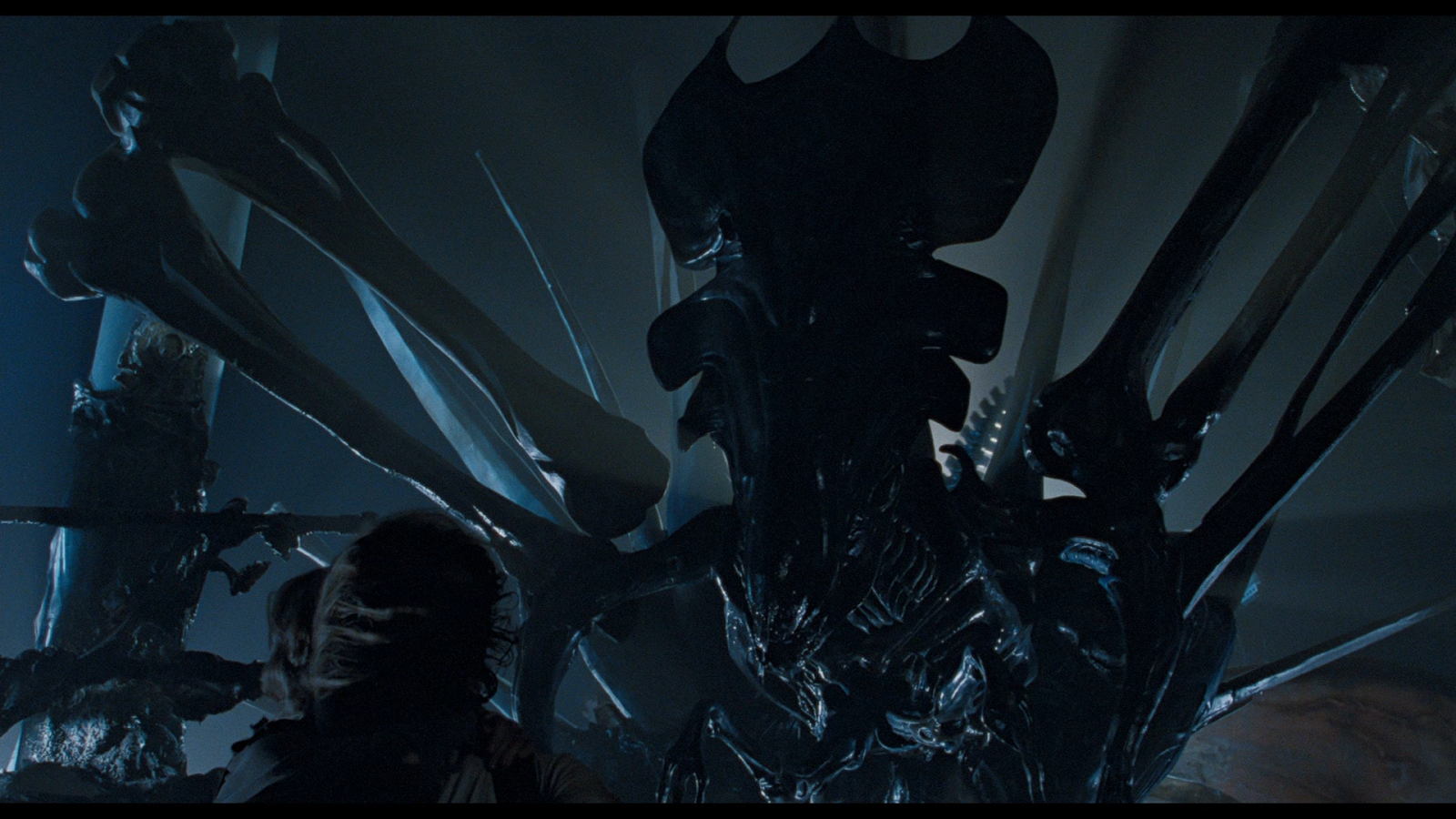
Of course, it also allows some clever thematic contrasts later when we are introduced to the Queen Alien. While it would be easy to blame this film for the tired cliché of the “Alien Queen” which we’ve seen time and time again, it’s used really well here. The Aliens may be conscienceless killers, but they’re still someone’s children: and we get a really neat contrast between Ripley and the Alien Queen’s determination to protect their children (as well as the best use of the word “Bitch” until Molly Weasley in Harry Potter).

The film’s secret weapon however is Sigourney Weaver’s outstanding performance in the lead. Not many actors get Oscar nominations for sci-fi or action films: Sigourney Weaver is one. And she deserved it because this is an iconic performance. Ripley isn’t an action hero – she’s strong and resourceful and she survives because of that. She’s not skilled at expressing herself or communicating – largely because it’s clear she’s suffering from PTSD. She completely fails to win over the corporate board with her story, and it’s clear the marines don’t hold her initial briefing in high regard. But even before they arrive on the planet, she’s beginning to win their respect. By the time of the initial encounter, her principled, strong-willed, sensible resourcefulness effectively makes her the expedition’s leader. 

Alongside this, Weaver does a fantastic job with Ripley’s growing maternal feelings towards Newt – the bond between these two is immediately clear, and her maternal protection of Newt becomes one of her core motivations. With Weaver, Hicks and Newt we end up with a strange family at the centre – a curious closeness that makes the film feel unique. It adds a strong emotional core to the film, and gives Weaver a depth to play with that enlightens her relationships throughout the film – she’s clearly got a strong protective feeling, and her desire to protect the marines is as much a part of this as her feelings for Newt.  It’s a terrific performance, full of feeling and strength. She fully deserved the Oscar nomination – arguably she could have won.

Aliens is one of those landmark films that never lets you down. Cameron’s direction of it is pitch-perfect, there’s hardly a fault in the whole film. It’s a masterpiece of design and construction and totally gripping from start to finish. It’s not only one of the best sequels of all time, as a purely enjoyable and affecting piece of cinema it may well be superior to the original. Even more than the first film, it made Ellen Ripley one of the great iconic characters of cinema. It will never get old and it’s never going to get tired. If you haven’t seen it, you really, really should.