Tag: Paul Rudd

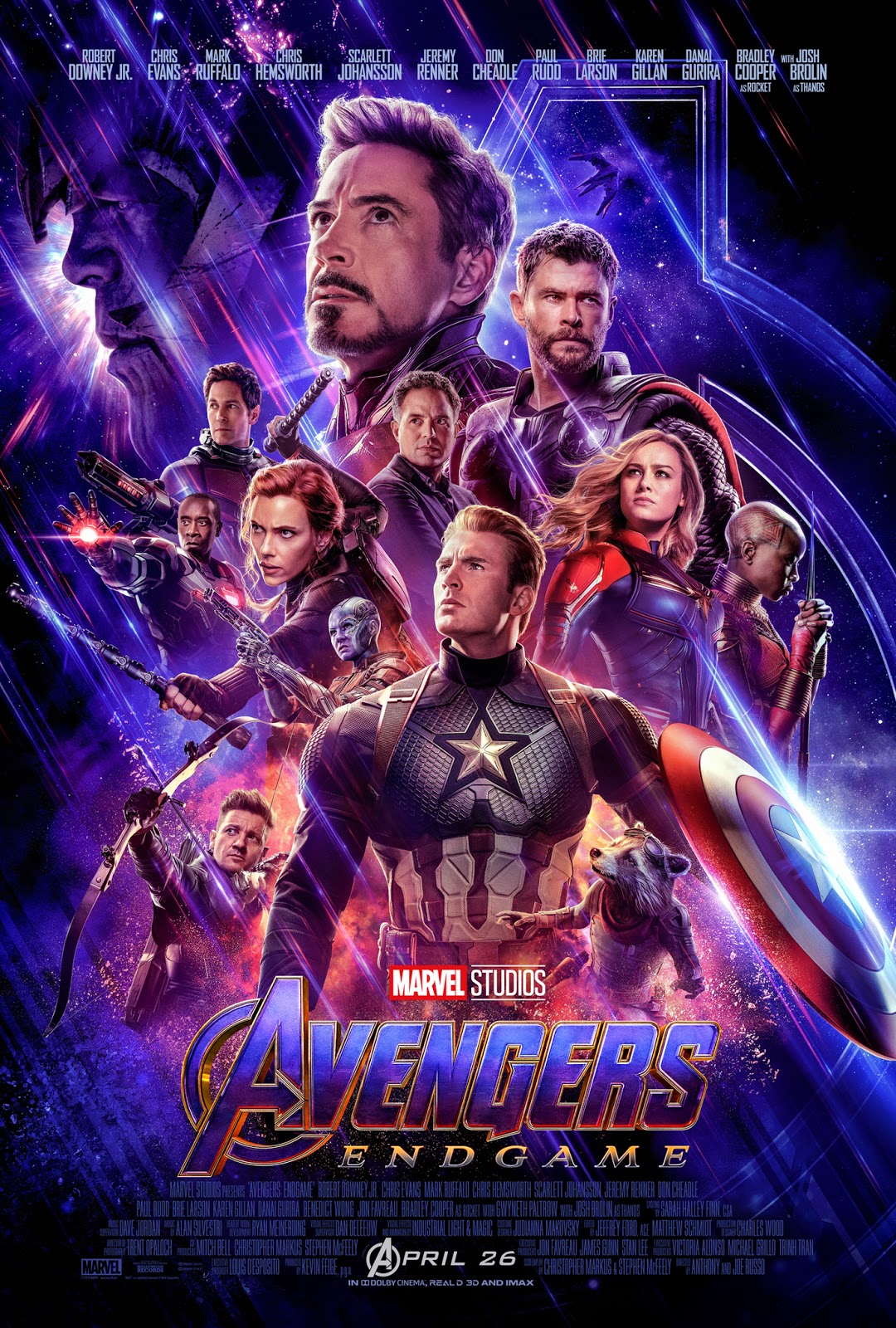
Avengers: Endgame (2019)

Time to got to work: Avengers: Endgame caps off a 22 film series

Director: Anthony and Joe Russo

Cast: Robert Downey Jnr (Tony Stark), Chris Evans (Steve Rodgers), Mark Ruffalo (Bruce Banner/Hulk), Chris Hemsworth (Thor), Scarlett Johansson (Natasha Romanoff), Jeremy Renner (Clint Barton), Don Cheadle (Rhodey), Paul Rudd (Scott Lang), Karen Gillan (Nebula), Bradley Cooper (Rocket), Gwyneth Paltrow (Pepper Potts), Josh Brolin (Thanos), Zoe Saldana (Gamora), Danai Gurira (Okoye), Brie Larson (Carol Danvers), Chadwick Boseman (T’Challa), Benedict Cumberbatch (Dr Stephen Strange), Tom Holland (Peter Parker), Evangeline Lilly (Hope van Dyne), Anthony Mackie (Sam Wilson), Elizabeth Olsen (Wanda Maximoff), Chris Pratt (Peter Quill), Sebastian Stan (Bucky Barnes), Rene Russo (Frigga), John Slattery (Howard Stark), Tilda Swinton (Ancient One), Robert Redford (Alexander Pierce), Linda Cardellini (Laura Barton), Tom Hiddleston (Loki), Tom Vaughen-Lawlor (Ebony Maw)
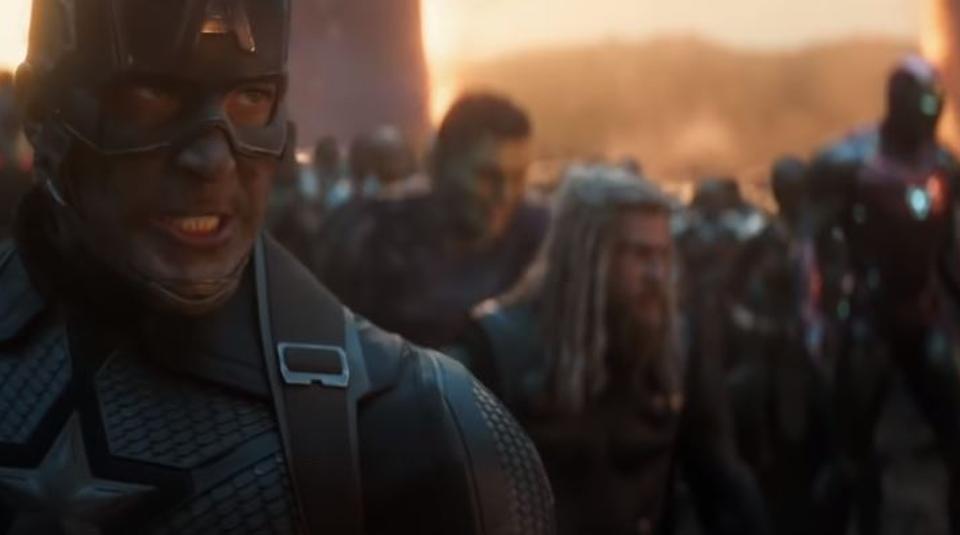
So this really is it. For now. As Dr Strange says at one point “we are into the Endgame now”. Avengers: Endgame is Act Two of the Marvel Cinematic Universe’s ten-years-in-the-making finale. It’s also a sequel that, for me, enriches and improves the “bangs before brains” Infinity War. Where that film played too hard to the fanboy wet dream of seeing X teaming up with Y and lots of bashing, Avengers: Endgame focuses more on the intelligent character work and decent acting and writing that has underpinned what has turned what used to be the preserve of geeks into a franchise now almost universally beloved across the world.

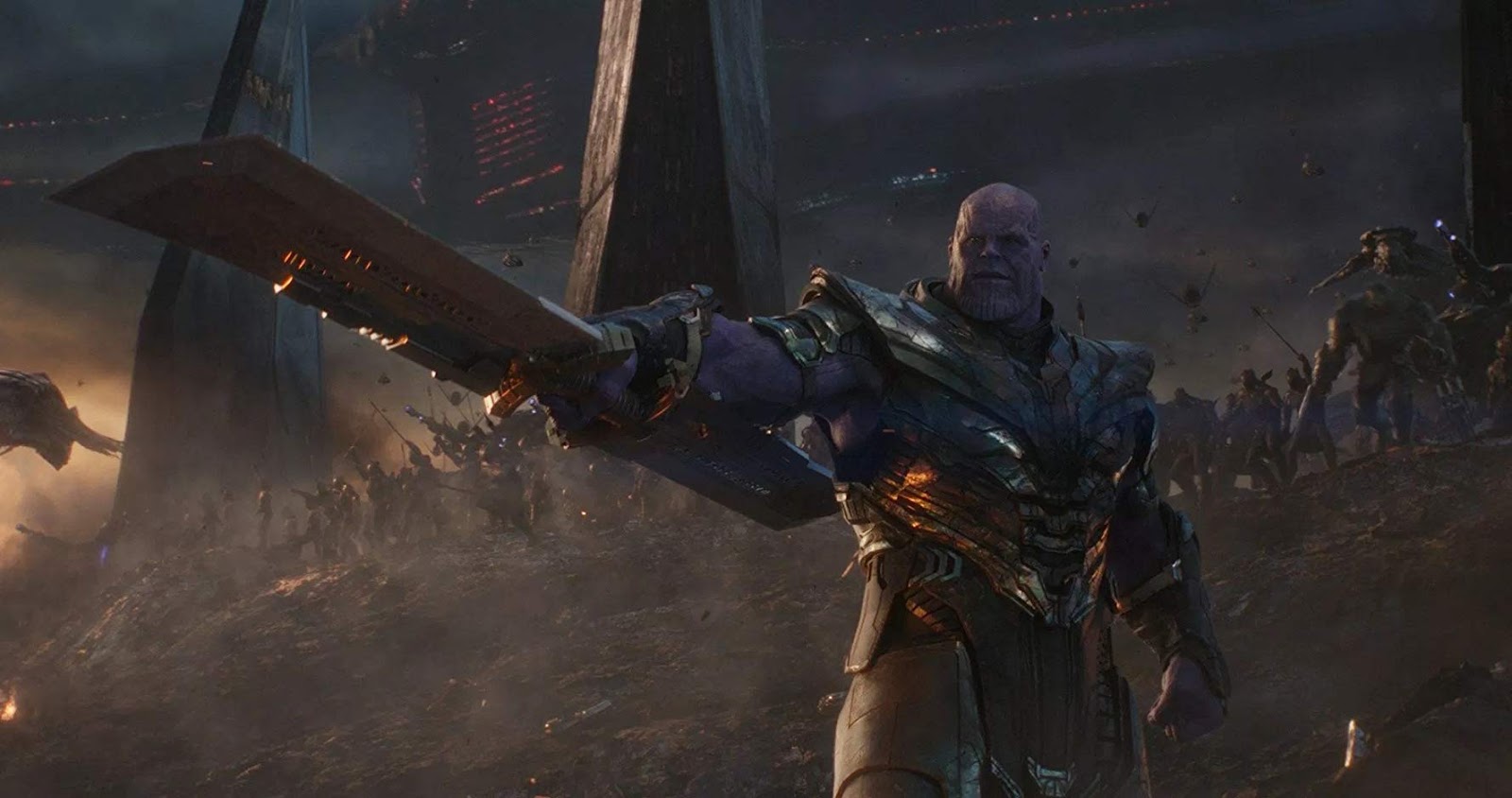
The film picks up almost immediately after über-Baddie and misguided-humanitarian Thanos (James Brolin) has successfully used the powers of the infinity stones (a series of mystical macguffins that have been omnipresent in the series so far) to wipe out half of the population of the universe to save it from overpopulation, including dozens of our heroes. Those that remain – predominantly the original roster from the first Avengers film – must work together to find a way to overturn this destruction that Thanos has wrought. But more sacrifices are inevitable along the way.

Avengers: Endgame is a film that the less you know about where it is going, the more you are likely to enjoy its twists and turns. Viewers who may have been anticipating a series of increasingly brutal smackdowns between the Avengers and their nemesis Thanos will however be disappointed. This is not a film of acative avenging: it’s a film where our heroes cope with the burden of unbearable failure, survivor guilt, PTSD and are desperate to try anything to try and make amends. Surprisingly, for the biggest budget entry in the whole cannon, this feels like a smaller-scale, character driven film which carries far bigger (and realistic) stakes than several films earlier in the franchise.

For the opening two hours of this three hour epic, there is actually precious little in the way of action. Instead we explore individual reactions and struggles of each of our heroes. Some have slumped into depression. Some are struggling to move on. Others have shut down and focus on their work. Some have managed to put their past failure and loss behind them to rebuild their lives. Others have embraced the darkness altogether to extract a revenge upon the world that they feel has taken everything from them. It’s a real change of pace from the high octane action and smart banter of the first film. This feels more earned, more invested and more designed to engage our brains and emotions rather than pound us into joyful submission with its bangs and crashes.

In fact it builds back into what has made this franchise so successful and so beloved. It turns these heroes into people, rather than just monoliths of action. Way back in the day, when making the first Iron Man film, Kevin Feige said if they got the film right the name “Tony Stark” would become as famous as “Iron Man”. It sums the aims of the franchise up – that these should be real people to us rather than just comic book cartoons. If we think of Chris Evans, we think of him as being “Steve” not Captain America. Jeremy Renner is as well-known as Clint Barton as “Hawkeye”. If Scarlett Johansson is addressed as Natasha we don’t blink an eye in the film, in the way we would if she was called “Black Widow”. The Hulk can be calmly addressed as Bruce or Ant Man as “Scott” and we never think it strange. In fact it would feel odd to have them calling each other by their cartoon names. It’s normalised the personalities behind the badges and masks.

And that works so well because the writing, when it works, focuses on making these characters feel real – and the actors they have brought on board to fill out the roles have excelled at adding depth and shading to the roles. Chris Evans will probably forever by the noble, dedicated humanitarian Steve Rodgers and rightly so as he has turned this potential stick-in-the-mud into a person we deeply respect and love. He’s terrific here, marshalling a plot arc that brings his time in this crazy franchise to an end with a neat bow that feels fitting and fair (even if it’s got some logic gaps).

Robert Downey Jnr also does some excellent work in his final sign off from the series. The role here plays to all the strengths Downey Jnr has brought to the role:  the smartness, the intelligence, the slight smugness, the charisma. But also the vulnerability and longing to be genuinely loved and to build a family around him. The desire to protect people. The nobility under the off-the-cuff exterior. Downey Jnr’s departure was well advertised and again it works a treat here.

But then the whole cast are marvellous. Hemsworth gets to stretch his comic muscles even more than his regular ones, and balances marvellously a plot about a hero who has lost his way. Scarlett Johansson gets some of her meatiest material as Natasha, unable to fully take on board what has happened but determined to make amends. Jeremy Renner has some of the film’s darker material – and confirms that he has always been the heart of the team – with a plot line that hinges on the loss of his family. Mark Ruffalo’s Bruce Banner is presented in an intriguing new light that both delights and feels like a real rounding up of his character arc.

The eventual plan to underdo the work of Thanos revolves, it’s not a spoiler to say, around Time Travel. With a run, jump and leap the Russo Brothers acknowledge every cliché of time travel lore from dozens of films (Rhodes and Lang at one point hilariously name check virtually every time-travel-based film ever as back-up for their concerns about the mission) before basically throwing it all out of the window by making up its own rules (since, hey, time travel is impossible anyway so why not say all that “you could kill your own grandfather” stuff is bollocks?).
The time travel allows us to fly back into the plots and events of several other Marvel films, principally the first Avengers film, Guardians of the Galaxy and (hilariously considering it might be the worst one) Thor: The Dark World. This flashback structure works extremely well, with our heroes woven neatly into the events of films past – as well as allowing for “unseen” moments from those films to be staged here for the first time.

For a film that, up until now, has dealt with the pain of loss it also makes for a playful series of missions (or at least until one of them turns out to carry huge personal cost) that contrasts really well with the first half. The missions focus on a “heist” structure also gives us the chance for our heroes to work through the demons, often with the help of several (deceased) characters from past films living again (Rene Russo in particular gets easily her best ever scenes in the series as Thor’s mother in the past urging her son to come to terms with his guilt).

All this intelligent and emotional character work, mixed with sequences that are focused less on action and more on adventure and capery means that when we get the inevitable battle scenes at the end of the film – and I don’t think it’s a spoiler to say most of the film’s final act returns us to the action beats that governed Infinity War – actually feel really earned. Having reminded ourselves why we loved many of these characters in the first place, seeing them fight for good and do incredibly cool things while doing it suddenly feels both really earned and also hugely entertaining. Investment in these action scenes grows from the detailed work earlier.

It’s also a testament to the Russo Brothers direction. I will say right away that while I found part of Infinity War lacking in personality and identity behind the camera, I think I massively overlooked how effortless the Russo brothers make balancing all these plot lines, characters and events seem. Never once does the film seem to dip or droop the ball, and I don’t think there are many directors who could even begin to manage what they achieve here: a fusion of popcorn action with character study, which juggles 20-40 characters at various points. My hat sirs.

Avengers: Endgame is a delightful film. I went into it sceptical after Infinity War left me a little cold, but I needn’t have been so concerned. This is a film that, on its own merits, is almost a sort of masterpiece. Have you ever seen a film that juggled so much – not least the crushing expectation of its fans – and delivered so superbly? Chalk that up as another success for the Russos just turning in a film that the huge fanbase loved. Avengers: Endgame isn’t Citizen Kane – but just as the Russos couldn’t make a film as great as that, you can’t imagine Orson Welles would ever have managed to direct a film like it.

Ant-Man (2015)


Paul Rudd springs into action as Ant-Man

Director: Peyton Reed

Cast: Paul Rudd (Scott Lang), Michael Douglas (Hank Pym), Evangeline Lilly (Hope van Dyne), Corey Stall (Darren Cross), Bobby Cannavale (Paxton), Michael Peña (Luis), Anthony Mackie (Sam Wilson/Falcon), Judy Greer (Maggie), Hayley Atwell (Peggy Carter), John Slattery (Howard Stark)

Back into Marvel’s Cinematic Universe, as yet another comic book hero comes to the big screen. Is there going to be anyone who has appeared in a Marvel comic at any point who isn’t going to find their way into a live action film at some point? It’s looking unlikely!

Hank Pym (Michael Douglas) was formerly Ant-Man, a super-hero who can shrink himself to the size of an ant, with superhuman strength. In the present, he has been forced out of his own company by his former protégé Darren Cross (Corey Stoll) and his estranged daughter Hope van Dyne (Evangeline Lilly). When newly released thief Scott Lang (Paul Rudd), desperate to provide for his daughter, steals Pym’s Ant-Man suit, Pym identifies him as the man who he can train up to take his place as Ant-Man and help to protect the shrinking technology from being misused by Cross.

Ant-Man was a project developed for many years by Edgar Wright, dynamic director of the Cornetto Trilogy with Simon Pegg and Nick Frost. But our old friend Creative Differences reared its head, and studio and director went their separate ways. Which is a real shame as you can’t shake the feeling a director with genuine invention and imagination might have been able to craft something truly original out of this, rather than the essentially solid piece of craftwork it is.

There’s nothing particularly wrong with Ant-Man. It’s just a rather average, forgettable film with moments of interest. It’s a jolly, inoffensive little caper, which goes through the motions of the origins story of a hero without offering anything that different from what we’ve seen dozens of times before now. It’s all very professionally done, and even witty in places, but it’s nothing special.

This is particularly a shame since there are genuine moments of originality. A battle between Lang and Cross, both shrunken, takes place in a child’s train set, with the film cutting between the different scales of events for some effective comic impact (so we see the train crash with seismic impact on small scale, then see the same event at normal scale where it seems laughably minor). Similarly, Michael Peña’s character tells a series of anecdotal stories in voiceover in a laid back, hipster patter, with his words and phrasing exactly lip-synched by the people in the story. It’s a neat little piece of cinematic invention.

The heist structure of the film is good fun, and the pseudo-science of shrinking is entertainingly (and consistently) explained. Even our hero’s ability to control ants doesn’t seem too silly (which is really saying something).

It’s just all pretty much what you would expect. Corey Stoll’s villain in particular seems a slightly contrived after-thought, an antagonist whose existence serves as a contrast to Lang and Pym rather than a character who seems to be organically developed. Their final confrontation is amusingly done – but it’s a familiar Marvel trope now: a hero and villain with the same powers facing off. We’ve seen it done many times since the first Iron Man film.

Saying that, Paul Rudd is a decent and engaging lead (even though he seems to be effectively playing himself) and he makes Lang into a character it’s easy to root for (even if we’ve seen the sort of “Dad wants to prove himself” narrative many, many times before). Michael Douglas could do his mentor role standing on his head, but brings the role a nice lightness of touch. Evangeline Lilly brings a nice mix of resentful and caring to a tricky role as Pym’s overlooked daughter.

The problem you always have is that everything in the film feels a little bit too straight-forward and easy. It’s not a bad thing that this is a film that simply sets out to entertain, but somehow, enjoyable as it is, you want something a little bit more rather than the rather safe concoction that we have here. It’s fun while it lasts but then it disappears from your mind almost completely once it’s finished. Is that a good thing? Well it makes good escapism. But plenty of these films have managed to be more than just something to enjoyably pass the time. Which is all Ant-Man really is.

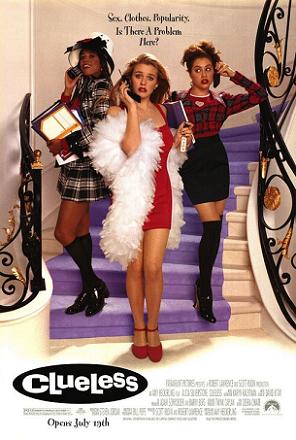
Clueless (1995)


Alicia Silverstone leads her in crowd troop in neat Jane Austen reimagining Clueless

Director: Amy Heckerling

Cast: Alicia Silverstone (Cher Horowitz), Stacey Dash (Dionne Davenport), Brittany Murphy (Tai Frasier), Paul Rudd (Josh Lucas), Dan Hedaya (Mel Horowitz), Elisa Donovan (Amber Mariens), Justin Walker (Christian Stovitz), Wallace Shawn (Mr Hall), Twink Caplan (Ms Geist), Breckin Mayer (Travis Birkenstock), Jeremy Sisto (Elton Tiscia)

The 90s saw a rash of films that reworked classics into US high-school settings, aimed squarely at the teenage market. One of the most successful of these was Clueless: a decent, just-smart-enough reimagining of the plot of Jane Austen’s Emma.

Austen’s wealthy, match-making heroine here becomes Cher Horotwitz (Alicia Silverstone) – queen bee of the in-crowd in her high school. Like Emma Wodehouse, Cher is smart, beautiful and taken to meddling in the lives of those around her, sure she knows best about how they should behave – and whom they should date. She can be selfish and self-obsessed, but beneath it is fundamentally good-natured. When new girl Tai (Brittany Murphy) arrives at the school, Cher sees the scope for a makeover project – but it’s Cher herself who undergoes the greatest transformation.

The obsessions with status that populate Austen’s world actually translate very well into the high school setting, with its in and out crowds. It also a very neat restructuring of the novel, hitting all the basic plot points of Austen’s story, with some smart translations into the modern world (Christian – the Frank Churchill role – is particularly well updated). The film is sprinkled with sharp lines and snappy dialogue exchanges, and the cast are certainly in on the joke, walking a fine line between parody and playing it straight. This all contributes to the film’s fizzing energy and its charming momentum – you can see why teenagers loved it, as Heckerling has a wry wink at the camera at the concerns of teenagers, but also celebrates their potential for fun and friendship.

Watching the film over 20 years on, it’s remarkable how successfully it used the limitations of Alicia Silverstone to such great effect. It’s a bit bizarre to think Silverstone was considered the next big star of Hollywood, considering how few of her films have made any impact since this. However, here her lack of depth and shading, her unmodulated voice and rather bland style somehow work perfectly with a character who is superficial and who believes she is far cleverer than she actually is.

Clueless is that strange thing – a star-making turn that didn’t make a star, but Silverstone clicks perfectly into this role, making Cher engaging and rather charming despite her self-obsession. She delivers what the film requires in spades, even if Cher’s late character blossoming seems something required for the film’s plot rather than growing truly organically over the course of the film.

This abrupt burst of “learning and growing” partly clunks because Heckerling shies away from Emma’s more negative characteristics – tellingly, Emma’s public shaming of another character is here given to a different character. Can’t have anyone not liking the heroine for a second can we? In fact this determination to make Cher constantly as likeable as possible does rather miss the point of the original novel. It also reduces the “tension” (we all know how stories like this end!) of whether the heroine has driven her love interest away through her mistakes and missteps – and with less for the heroine to learn about herself, and less damage to repair in the relationship with the object of her affections, there’s proportionally less emotional impact to the final happy ending.

Speaking of that romantic plotline, you also can’t talk about the film without also commenting on the fact that it makes a bit of a fudge around the attraction between Cher and Josh, who (the film is at very great pains to point out) are not actuallysiblings, but do share the same father/step-father. It’s actually quite a weird twist, but I suppose just as retrospectively unsettling as Mr. Knightley loving Emma from afar from a ludicrously young age. It’s funny though to watch the film fall over itself to hammer home the non-family relationship between the two characters early on, so we don’t start shrieking “incest” by its conclusion.

All in all, the film – like its heroine – is a sweet, but superficial, candyfloss concoction, without the depth that could have lifted it from pleasing popcorn fare to satisfying story.

The Cider House Rules (1999)


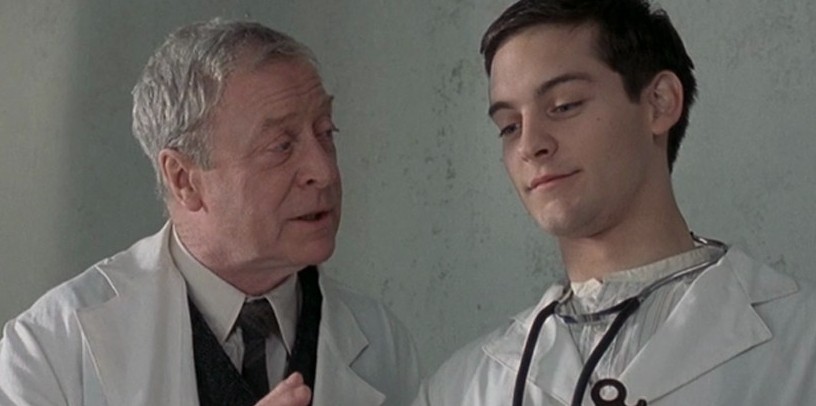
Michael Caine and Tobey Maguire deal with moral dilemmas in this handsome adaptation of John Irving’s Dickensian novel

Director: Lasse Hallström

Cast: Tobey Maguire (Homer Wells), Michael Caine (Dr. Wilbur Larch), Charlize Theron (Candy Kendall), Paul Rudd (Lt. Wally Worthington), Delroy Lindo (Arthur Rose), Erykah Badu (Rose Rose), Heavy D (Peaches), K. Todd Freeman (Muddy), Kieran Culkin (Buster), Jane Alexander (Nurse Edna), Kathy Baker (Nurse Angela), Kate Nelligan (Olive Worthington), J.K. Simmons (Ray Kendall) 

The Cider House Rules is the sort of well-constructed literary adaptation that Hollywood excels at producing: a well-crafted script (Irving adapted his own novel extremely well), juggling serious affairs without hectoring the audience, handsomely mounted, with a Dickensian style and a cast of heavyweight actors delivering performances that speak of their investment in the film.

In a Maine orphanage in the 1940s, Homer Wells (Tobey Maguire) is raised by Dr Wilbur Larch (Michael Caine) as a surrogate son. Larch is a domineering autocrat with a passionate love for his charges, whose humanitarian instincts lead him to perform illegal abortions. Troubled by this – and feeling pressured into succeeding Larch’s as director – Homer leaves with a young woman (Charlize Theron) and her fiancée (Paul Rudd) after she visits for an abortion. Working as an apple picker in their orchard, under Mr Rose (Delroy Lindo), Homer learns important lessons above love and duty.

There are many similar films that feel like dull awards-bait, and the fact that this one avoids that is a major point in its favour. It’s very easy with material like this – cute orphans and tear-jerking speeches – to feel Cider House is a manipulative film (and I guess in a way it is) but it’s put together with such commitment and sincerity I found it genuinely moving. Hallström’s warm and beautifully paced direction creates a marvellous coming-of-age tale with characters whose flaws can be as deep as their warmth is vibrant.

The film also manages to move beyond its ‘coming-of-age’ roots with intelligent (but not too heavy-handed) mulling on the nature of “rules” – both those imposed on us and those we impose on others. Dr Larch (a magnetic performance by Oscar-winner Michael Caine) is a maverick, disregarding the abortion laws as he believes it is better he does abortions rather than someone untrained; he is also perfectly willing to impose his own rules on Homer as testaments to be followed without question. Similarly the “Cider House Rules” written on the wall of the apple workers’ lodgings are rejected outright by the working gang for their own unspoken code of conduct, no more effective than the system it replaces. All the characters are forced to draft their own rules (or principles) they can live with, matching their circumstances and actions.

The film also looks gently at the conflict between our desires and our duties, with Homer and Candy both yearning for freedom from their natural inclinations to have something to serve. This is presented as a struggle without a natural “right or wrong”, even if the apple orchard is a loose Garden of Eden, into which evil is admitted with tragic (and life-changing) consequences. A small criticism would be that the charismatic warmth of Caine’s performance and the family atmosphere of the orphanage are so endearing that it does unbalance the dilemma Homer eventually faces – instead of the audience feeling as torn as Homer about whether he should stay or return, most audience members I think would want him to return to the orphanage forthwith!

Tobey Maguire is so perfectly cast as the naïve in some ways, wordly wise in others, old-boy-young-man that he effectively reprised Homer Wells as Peter Parker a few years later. His sweet face –uncomplicated innocence and charm are in every twitch of his smile – carries the film, and his easy-going desire for a simple life makes perfect sense of the character’s rebellion against Larch’s benevolent dictation. Equally good for me though is Theron as Candy. She is a wonderfully expressive performer: midway through the film she is caught off-guard by an overlong hug from Homer, and a series of conflicted emotions from shock, to guilt, to attraction play across her face.

There is hardly a weak performance in the film, with Hallström drawing excellent work from the young orphans. Amongst the sprawling, Dickensian feeling cast, Caine is marvellous as the part dictator, part humanitarian Larch making a larger-than-life character feel real and grounded. Lindo captures the pride mixed with arrogance of Mr Rose. There are plenty of other excellent performances, not least from Baker and Alexander as two contrasting nurses in the orphanage.

I almost feel slightly guilty for the impact Cider House Rules had on me. In many ways it’s exactly the sort of safe, middle-of-the-road “serious” drama that seems designed to attract the notice of Oscar voters. But it’s told with a great deal of skill and dedication, and delivers so many emotional moments with warmth and feeling, I found myself genuinely moved by it. In fact I felt a bit teary at least twice. This is closely linked to some excellent performances – and a wonderful swelling musical score by Rachel Portman – but despite being the sort of middle brow Hollywood film it’s fashionable (and easy) to attack, I thought this was engaging, moving and thought provoking from start to finish.