Tag: Paul Stewart

Champion (1949)

Champion (1949)

Kirk Douglas is a boxing heel in this noirish melodrama full of excellent moments

Director: Mark Robson

Cast: Kirk Douglas (Midge Kelly), Marilyn Maxwell (Grace), Arthur Kennedy (Connie Kelly), Paul Stewart (Tommy Haley), Ruth Roman (Emma), Lola Albright (Palmer), Luis van Rooten (Harris), Harry Shannon (Lew), John Day (Dunne), Ralph Sanford (Hammond), Esther Howard (Mrs Kelly)

What does it take to get to the top? Skill, luck, ambition, determination – and sometimes just being a ruthless bastard. Midge Kelly (Kirk Douglas) as all five of those skills in spades, flying from bum to champ in just a few short years, burning every single bridge along the way. Champion tells the ruthless story of how Kelly alienated his devoted lame brother Connie (Arthur Kennedy), dropped the trainer (Paul Stewart) who discovered him in a heartbeat and used and tossed aside a host of women: dutiful wife Emma (Ruth Roman), would-be femme fatale Grace (Marilyn Maxwell), artistic, sensitive Palmer (Lola Albright) wife to his new manager. As he enters the ring to defend his title against old rival Johnny Dunne (John Day), will all these chickens come home to roost?

Champion is deliciously shot by Franz Planer with a real film noir beauty, in particular the vast pools of overhead light that fill spots of the backstage areas of the various venues Midge fights in. Its boxing is skilfully (and Oscar-winningly) edited into bouts of frenetic, enthusiastic energy – although you can tell immediately that no one in this would last more than 90 seconds in a real ring – and it manages to throw just enough twists and turns into its familiar morality tale set-up to keep you on your toes and entertained. In fact Champion is a gloriously entertaining fists-and-villainy film, full of well-structured melodrama and decently drawn moral lessons. It’s the sort of high-level B-movie Studio Hollywood excelled at making.

For a large part it works because Douglas commits himself so whole-heartedly to playing such an absolute heel, the kind of guy who knows he’s a selfish rat but just doesn’t give a damn. Douglas was given a choice of a big budget studio pic or playing the lead in this low-budget affair, chose Champion – and his choice was proof he knew where his strengths lay as an actor. Midge Kelly is the first in a parade of charismatic, ruthless exploiters that Douglas would play from Ace in the Hole to The Bad and the Beautiful. Kelly is all grinning good nature until the second things don’t go his own way: and then you immediately see the surly aggression in him.

Its why boxing is a good fit for him. He doesn’t quit a fight – pride won’t let him. It’s the quality that Tommy sees in him, after Midge is literally pulled in off the street to pad up the under-card at a challenger’s fight night. Clueless as he is about boxing technique, he refuses to stay down and picks a fight with the promoter on the way out when cheated out of his fee. Champion shows how, for resentful people like Kelly, pugilism is a great way of getting your own back when you feel life has screwed you in some way. Perhaps that’s why he goes for his opponents with such vicious, relentless energy and why he takes such a cocky delight in beating the hell out of them. In fact, Champion could really be a satire on the ruthless, put-yourself-first nature of much of Hollywood, with both Connie and Tommy commenting that the fists-and-showbiz world is a cutthroat one.

What Champion makes clear though is that Kelly isn’t corrupted by fame. For all Douglas’ charming smile, there is a cold-eyed sociopathy in him from the start. Kelly performs loyalty, but it’s always a one-way street. He’ll assaults those who call his weak-willed, more cynical, crutch-carrying brother Connie ‘a gimp’, but he has no real sense of loyalty. He doesn’t even pause for a second when seducing Emma (daughter of the diner the brothers end up working at on arriving in LA) for a quick fumble despite knowing Connie’s feelings for her. Later, criticised by Connie, he’ll just as angrily lash out at Connie, mocking his disabilities, the second his brother starts to make decisions of his own.

Kelly’s ruthlessness towards women is also clearly something innate. He’ll whine like a mule when forced (virtually at gunpoint) to marry Emma, who he’ll immediately leave behind with no interest of hearing from again (until she finally develops some feelings for Connie of course, at which case he seduces her as a point of pride). His sexual fascination for the manipulative Grace – a purring Marilyn Maxwell – quickly burns out, again not pausing for a second in chucking her aside, all but flinging dollar bills on a table as he goes. Even more heartlessly, after showing some flashes of genuine courtliness in his romantic interest in Palmer (a very sweet Lola Albright), he happily takes a cheque from her husband (right in front of her) to never see her again. None of this comes from fame: it’s the sort of guy Kelly is.

And, as Douglas’ smart, self-absorbed performance makes clear, it’s because deep down Kelly always thinks he is the victim and the world owes him a living. There is a strong streak of self-pity in Douglas’ performance, bubbling just below the surface combined with a narcissistic need to be loved by strangers even while he’s reviled by everyone who knows him. There is an escape from inadequacy for Midge in fighting: something he keeps coming back to time-and-again in complaints about the unjust treatment the world has given him in the past, used to justify any number of lousy actions.

Champion unfolds as an interesting study of a deeply flawed, increasingly unsympathetic character with a huge drive to destroy other people, either by words or fists. An excellent performance by Douglas is counter-poised by a host of other strong turns, especially from Arthur Kennedy, whose Connie effectively trapped in an abusive relationship and Paul Stewart’s unromantically realistic trainer who knows the score long before anyone else. Handsomely shot and directed with a melodramatic flair by Mark Robson, it can enter the ring with any number of other boxing films.
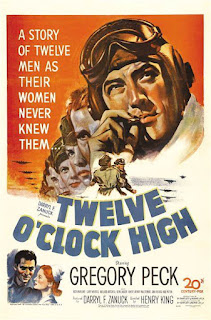
Twelve O'Clock High (1949)

Twelve OClock High header
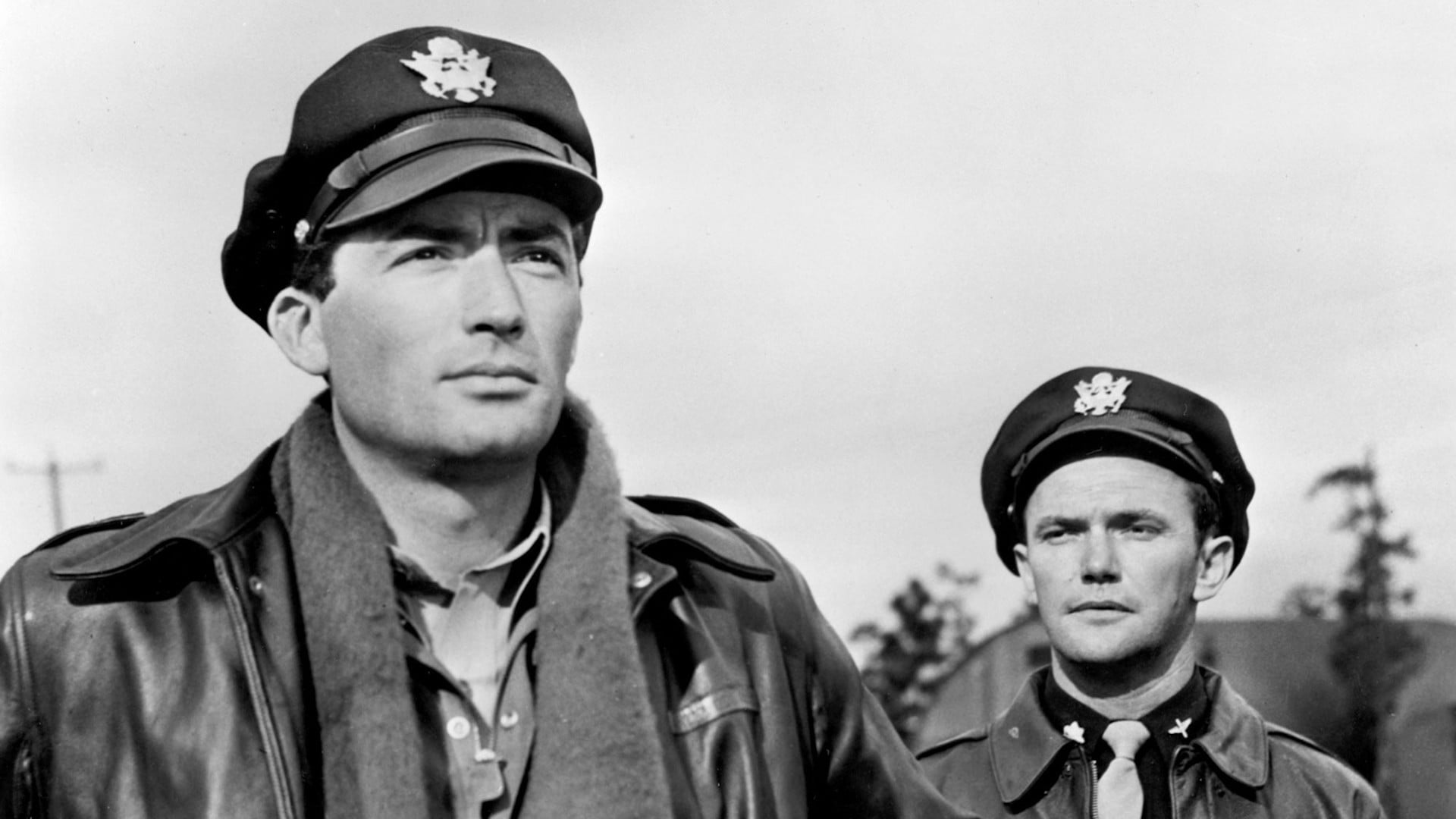
Gregory Peck takes on the burden of command in Twelve O’Clock High

Director: Henry King

Cast: Gregory Peck (Brg General Frank Savage), Hugh Marlowe (Lt Colonel Ben Gately), Gary Merrill (Colonel Keith Davenport), Millard Mitchell (Mj General Pritchard), Dean Jagger (Major Harvey Stovall), Robert Arthur (Sgt McIllhenny), Paul Stewart (Major “Doc” Kaiser), John Kellogg (Major Cobb)

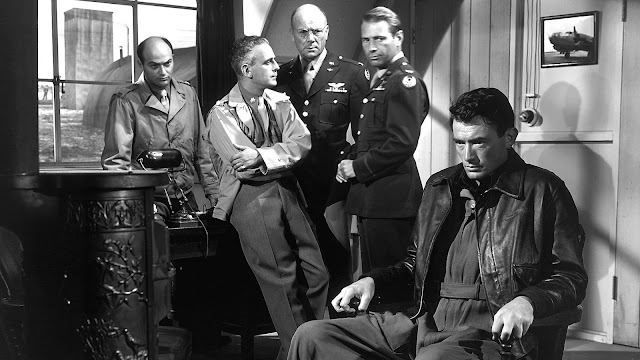
It’s tough at the top. Imagine how much tougher it would be if you job involved pushing people to their limits, and then a little bit further, in a job that puts their lives at daily risk? It’s the sort of burden commanders of American Bomber wings faced during the Second World War. It’s already got to Lt Colonel Keith Davenport (Gary Merrill), a decent guy and much-loved officer, who has grown so close to his men he can’t face sending them off to get killed over Europe any more. He’s replaced by Brigadier General Frank Savage (Gregory Peck), a by-the-book tough son-of-a-bitch who won’t tolerate men who can’t or won’t do their duty. But will the pressure of constant action, escalating casualties and a growing bond with his men also get to Savage?

With Peck at the top of his game, in one of his finest performances of stoical dependability and Lincolnonian authority concealing a carefully nurtured warmth and humanity, Twelve O’Clock High is a very different war film. Here the focus is much less on derring-do and heroism and more on the unbearable psychological pressure a life on the front lines brings. It’s all presented with a documentary style realism – so much so, that the film was used for decades in the USAAF as a training film on successful styles of command.

It’s about the impact that sustained trauma has – how it can make even the toughest man eventually paralysed by over-thinking, uncertainty and doubt. Davenport is a very popular CO – and good in the job in many ways – except the key one: he’s lost the ability to push the men and his willingness to sacrifice them. Essentially, in the nicest possible way, he’s damaging morale by letting the company reflect his own exhaustion, depression and amiable defeatism. He’s lost the ability to push men to want to achieve everything they can for the cause: meaning they are now doing the military equivalent of punching the clock, delivering the barest minimum an attack requires. Mistakes and errors are tolerated and, perversely, casualty rates are rising.

It’s what Savage is sent in to fix. Which he does by essentially blowing apart the cozy, boys-club feel of the Bomber Group. Air Exec, Lt Colonel Ben Gately (a great performance from Hugh Marlowe), is stripped of his command (for not leading from the front) and assigned to commanding the “The Leper Colony” a plane crewed by those Savage believes least likely to pull their weight. Drills are bought in and under-performance is no longer tolerated. Dropping out of formation for whatever reason – a move that puts the rest of the Bomber Group at risk – is punished harshly (a pilot is demoted to the “Leper Colony” for breaking formation to support another a plane, a decision that could have doomed the Group to death). Savage is the ultimate heartless drill sergeant.

Only of course he’s not: as Peck makes clear, the burdens of command weigh as heavy on him as they did on Davenport. But Savage is a professional who knows tough love is what’s going to keep most of the Group alive, accomplishing their missions and bringing the war to an end. And Savage’s policies work: the Bomber Group starts to achieve well above their previous performance. The pilots greet Savage by handing in a group transfer request, but by the time the request is heard by the army (Savage’s adjutant Stovall having delayed the requests with red tape) as a man they back the General. Savage gets then to take pride in themselves and their unit – so much so that, during their first strike on German soil, off duty men smuggle their way onto planes to be part of the mission. (Savage of course doesn’t let slip his pride, rebuking men for abandoning their posts on the base).

Underneath it all, Savage is starting to feel closer to his men. A young pilot, decorated but starting to get worried about flying, is mentored and encouraged by him. Gately responds to the tough love from Savage by aiming to prove to him he is indeed the best pilot in the squadron – winning Savage’s respect, not least when he flies several missions concealing a spinal injury. The pressure inevitably builds on Savage as he finds it harder and harder to maintain his professional demeanour while becoming closer and closer to his men (he even refuses a transfer back to his original job in HQ, as he feels the group isn’t ready for him to leave yet).

It all builds to one of the most famous breakdowns in film, as Savage goes from physically unable to climb into the cockpit to a confused state on the runaway and then catatonic until the Group returns home. This is beyond daring stuff for a 1940s Hollywood film, a true portrait of the effects of wartime pressure on a hero, which never once questions his competence and cowardice but in fact holds up the qualities that led to his breakdown as admirable ones. Peck plays all this with great power and control – and if Savage shrugs off his catatonic state later and the film doesn’t really explore the long-term impacts, the very fact that it showed someone as admirable, competent and professional as this suffering psychological damage from war was quite something.

It’s not a perfect film. King’s shooting style is often unimaginative and the film takes too long to get going – much of the first half an hour is a slow chug towards Davenport being relieved and Savage taking the post. More could be made of the impact of the war on the rest of the men on the group: it’s telling that only Jagger’s Stovell gets a scene where he also is allowed to let off steam against the pressure, getting drunk the night of a big raid, and he won an Oscar for it. But as something very different in Hollywood’s approach to the War, it really stands out as a companion piece to The Best Years of Our Lives.

Citizen Kane (1941)

Orson Welles changes film history as Citizen Kane

Director: Orson Welles

Cast: Orson Welles (Charles Foster Kane), Joseph Cotton (Jedediah Leland), Dorothy Comingore (Susan Alexander Kane), Agnes Moorehead (Mary Kane), Ruth Warwick (Emily Monroe Norton Kane), Ray Collins (Jim W Gettys), Erskine Sanford (Herbert Carter), Everett Sloane (Mr Bernstein), William Alland (Jerry Thompson), Paul Stewart (Raymond), George Coulouris (Walter Parks Thatcher), Fortunio Bonanova (Signor Matiste), Harry Shannon (Kane’s father)

Writing about Citizen Kane is rather like writing about the Mona Lisa. Both are works of art so famous and influential that you are intimately familiar with them even if you’ve never seen them. But what makes them such constant delights is that, leaving everything else aside, the Mona Lisa is beautiful to look at – and Citizen Kane is hugely enjoyable to watch. Welles’ masterpiece – frequently hailed as the greatest film ever made – is about as close to perfection as you can get.

Entire books have been written about seemingly every aspect of the film’s creation. Welles’ original intention was to call the film American. It’s a fitting title. Citizen Kane is perhaps the finest film ever made on the corruption that ambition, money and power bring to the American spirit. Kane starts out as a pioneering idealist, but his fatal flaw his is need for power. That need to seize control of everything extends from buying all the art he can find in Europe to controlling the lives of all around him. It’s the mentality that will force his second wife into an opera career she is hopelessly unsuited for. It will eventually leave him sitting alone in his huge mansion, surrounded by wealth but bereft of friends. A large part of the American Dream is about “making it big” – and few make it bigger than Kane, and have so little to show for it at the end.

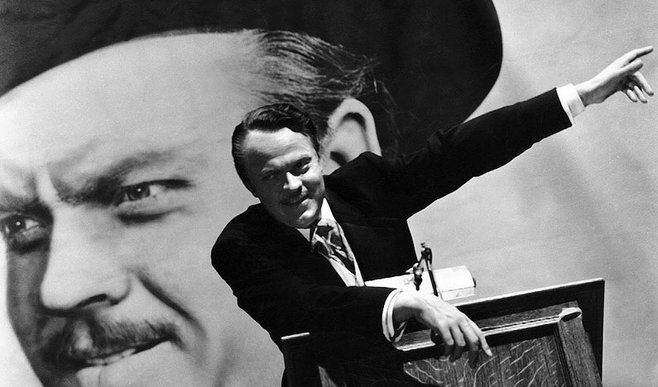
The film is a character study of ambition and power, using a framing device of the late Kane’s final word: “Rosebud”. What did he mean? Will finding out provide the key to understanding this powerful, elliptical man? A reporter (William Alland) aims to find out by interviewing key people from Kane’s life. From their recollections, the story of Kane’s life slowly comes together in a non-linear style. Charles Foster Kane (Orson Welles) as a young child inherits one of the world’s largest gold mines. Coming of age, Kane decides to use his wealth to become a press baron. He builds a news empire and runs for Governor – but the public revelation of his affair with amateur singer Susan (Dorothy Comingore) ruins his campaign. He builds a mansion on a man-made mountain, Xanadu, but is isolated and friendless in the echoing rooms of his own mausoleum.

You can argue the same thing happened to Welles himself. Citizen Kane is his own mausoleum, the only time in his life when everything went right. Also, probably the only time Welles’ attention stuck to something long enough to deliver. Welles memorably called working on a film set “the biggest electric train set any boy ever had”, and the entire film is saturated in his creative glee at trying so many new tricks. Citizen Kane bought to the forefront so many methods of film-making, its influence has been so pervasive on film today, that it’s hard to see how revolutionary it appeared at the time.

Welles worked with cameraman Gregg Toland to push the film into a whole new visual language, deeply influenced by German expressionistic film. It’s a beautiful film to look at, and each shot is covered with meaning, Welles’ eye for the theatrical image matched with Toland’s genius for visual language.

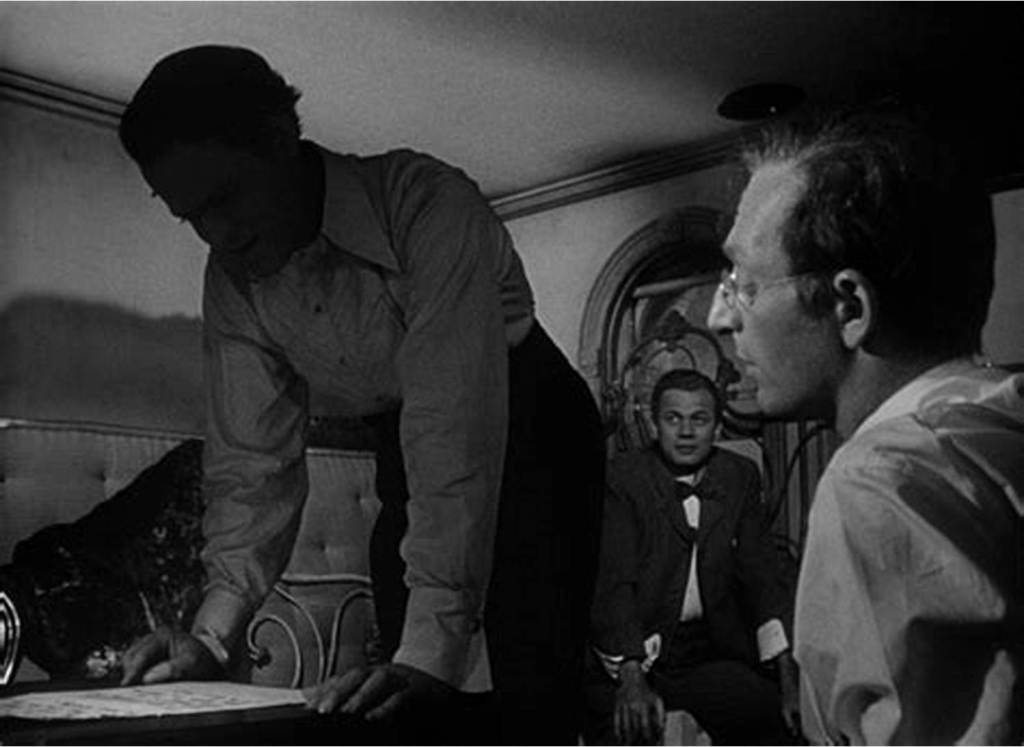
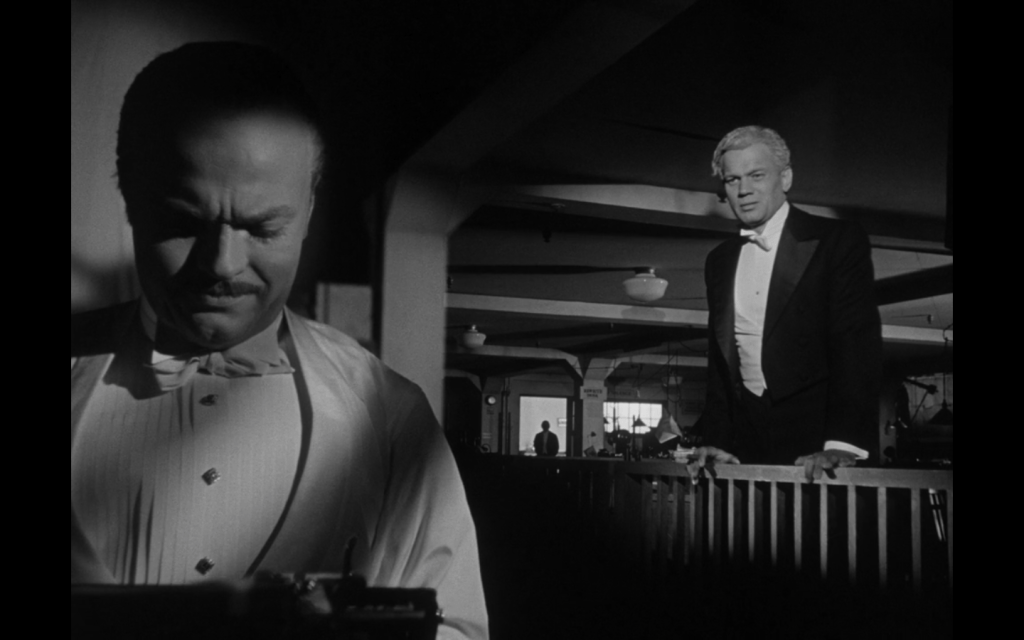
Citizen Kane is rarely thought of as a noir film, but it’s possibly the most noirish film you’ll ever see. Watching it again I was struck with how often shadows dominate the screen. Faces are frequently obscured, most famously in the projection room scene, where Thompson receives his instructions to find out what “Rosebud” means. But at key moments, faces disappear into black – while preparing his “Statement of principles” that will fill the front page of Kane’s first edition at the Inquirer, his face is lost in murky darkness. We hear what he is saying, but what is he thinking at this moment? It’s impossible to tell. Long shadows and inky black segments fill the frame frequently – it’s a film that gives a true feeling of darkness and unknowability at its heart.

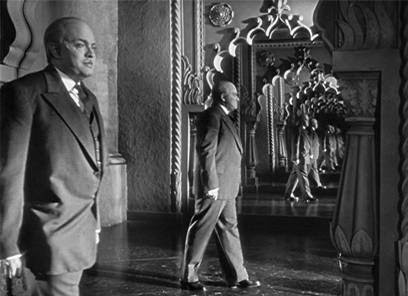
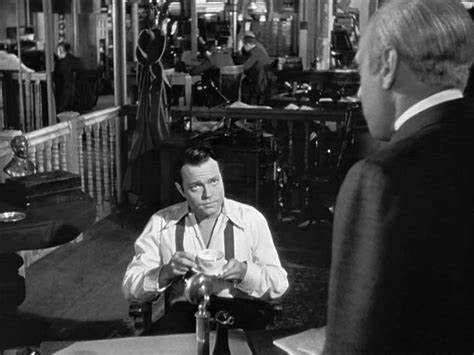
This is mixed with the theatrical flourish of its constant deep focus. Almost unheard of at the time, every shot of Kane is in perfect focus. It makes for visual compositions inspired by theatre, and ripe with dramatic meaning. Kane’s parents and his guardian William Parks Thatcher (George Coulouris) organise the future of the young Kane in the foreground, while we see the child playing outside in the show through a window. The deep focus turns Xanadu into a museum of lost chances and dreams, and the Inquirer newspaper office into an increasingly dark corridor of ambition, with people’s fates decided in foreground while we see them trapped in the background.

If that wasn’t enough, Toland uses angles Hollywood films hadn’t dreamed of. For some scenes, trenches were dug into the set and the camera placed in it, allowing the camera to stare up, with the actors towering over us. Citizen Kane is often claimed to be the first film where ceilings needed to build for the sets, as Toland’s angles and camerawork frequently made them visible. It’s not completely true, but it speaks to the visual impact of the film. Nothing really like this had been widely seen before. And I’ve not even mentioned the soaring, swooping tracking shots that pass through signs and buildings, the sort of inspired movement of the camera so many directors before had avoided in favour of stationary recording of the story. It’s visionary stuff.

The same was true for the film’s sound and music. Welles used his experience from radio to turn the soundscape of the film into something truly different. In radio, all cuts are managed by sound, but film had traditionally used only visuals to mark edits. Here, sound is used as often as visuals. When Kane runs for Governor, the sound and vision cut seamlessly from Leland on the stump for Kane to Kane finishing the same speech at a cavernous rally. Early in the film, the words “Happy Christmas” are skilfully cut together to leap forward years. Bernard Herrmann’s spare but perfect score, rather than laid over every scene, only comes in (as on radio) where emotional or transitional change is needed.

But then this is a film that uses editing as a way to tell story that few films before had tried. The sequence showing the collapse of Kane’s marriage to President’s niece Emily Monroe Norton (Ruth Warwick) is the perfect example. Over about two minutes of screen time we see several short scenes, all set at the breakfast table. Each scene shows a progressive step in their relationship collapsing, from loving exasperation to annoyance to anger to mute loathing. The scenes are no more than 20-30 seconds each, but the film perfectly moves from one to the other. The music slowly changes from a romantic waltz to a cold discordant rhythm. Transitions are marked by wipes. In each scene the actors move further apart at their breakfast table, the dialogue becomes harsher, sharper and more confrontational as the room they sit in becomes grander. In a few moments, an entire marriage story is told. It’s quite simply marvellous. The sequence is bookended by matching camera movements, gliding in and then out from the room.

You could speak for pages and pages (as indeed people have) about what a marvel Kane is. Welles’ vision and willingness to push the boundaries created an environment where all his collaborators worked to achieve their best, set free from the restrictions of more traditional moviemaking to stretch themselves as artists in a way rarely allowed. But it’s easy to forget what a marvellous story Citizen Kane is, what an entertaining and brilliantly constructed film it is and how every scene has something that delights and enthrals.

There’s controversy over who wrote the script. Welles and Herman J Mankiewicz are credited – although arguments have been made that each deserved the lion’s share. Whoever did create it, the script is quite simply superb. Economic, but packed with wonderful lines and some extraordinary speeches (Mr Bernstein’s speech about a powerful memory of a young woman he saw once from a distance is quite simply one of the best small-scale speeches you’ll see). Every scene is brilliantly assembled, and gives fabulous material to an extraordinary cast of actors.

It makes for a compelling character study, wrapped into a series of brilliantly done vignettes. Each set of recollections – from Thatcher, business manager Mr Bernstein (Everett Sloane), old friend Jedidah (Joseph Cotton) and ex-wife Susan (Dorothy Comingore) – makes for a fabulous series of self-contained scenes, each gaining richer and deeper meaning with every subsequent reflection that follows. There are so many sensational scenes I hardly know where to begin: you could write an essay about each one. Thatcher’s serio-comic reflections of the roguishly cheeky Kane are wonderful. Bernstein’s memories of the chancer coming good – with a brilliantly playful celebration scene – wonderfully entertaining. Jedidah and Susan’s far more tainted reflections of the man’s flaws make for wonderfully constructed drama, presenting a corrupted and bullying Kane. In every scene there is a beautiful moment of dialogue or drama which sticks in the memory.

The acting is equally good. Cotton settles into the groove many of his finest roles would fit into – the never-quite-grew-up schoolboy, who slowly realises his hero has feet of clay. Comingore is wonderfully fragile and then increasingly bitter as Kane’s ill-used second wife, forced into a humiliating career because Kane won’t be married to a failure. Sloane is charmingly loyal, with beautiful moments of profound sadness, as Bernstein. Coulouris is brilliantly funny as the exasperated Thatcher. Ray Collins’ is smooth and unabashed as Kane’s political rival. Agnes Moorehead is tinged with sadness and ambition for her son as Kane‘s mother.

But at the heart of Citizen Kane – in every sense – is Welles. His handpicked crew was some of the best in the business – but it was Welles’ inspiration, his willingness to imagine techniques and approaches un-attempted before, that encouraged them to their finest work here. With the magnetic force of personality that was his hallmark, he inspired everyone to give their very best. And he led from the front. The film is a triumph of drama, tragedy and comedy, directed with sublime grace. Welles the actor is perfectly cast, the part almost a riff on his own cult of personality, the mix of pride and overweening ambition and little-boy cheek crossed with self-destructive laziness. Welles’ performance is faultless in the film, taking Kane from the smirking chap happy to lose a million dollars a year (“at the rate of a million dollars a year I’ll need to close this place…in 60 years”) to the bloated old man, trashing his wife’s room after she walks out. Perfect.

The only tragic note about Citizen Kane is that this wasn’t the first in a career of non-stop genius from Welles. Instead, flaws in his own personality, combined with his ability to make enemies and lack of ability to focus on the task in hand, increasingly consumed Welles, making him eventually a lost great, a man wandering from film set to film set, taking on small roles for cheques that might one day help him make a film. But he’ll always have Kane, the sort of film that is a marvel which can never, ever disappoint. With every scene a classic, every moment compelling, every beat in it perfectly judged, its influence stretching to almost every film made since the late 1940s – it deserves its place as the greatest film of all time.