Tag: Penelope Ann Miller

Awakenings (1990)

Awakenings (1990)

Decent performances from the leads can’t save a shamelessly manipulative, saccharine movie

Director: Penny Marshall

Cast: Robert De Niro (Leonard Lowe), Robin Williams (Dr Malcolm Sayer), Julie Kavner (Eleanor Costello), John Heard (Dr Kaufman), Penelope Ann Miller (Paula), Max von Sydow (Dr Peter Ingham), Ruth Nelson (Mrs Lowe), Alice Drummond (Lucy), Judith Malina (Rose), George Martin (Frank), Dexter Gordon (Rolando), Keith Diamond (Anthony), Anna Meare (Miriam), Mary Alice (Margaret)

There can be few things more terrifying than being trapped inside your own body, unable to engage with the world, but to be in a sort of waking coma for years. Imagine how wonderful – and how terrible – it might be if you briefly woke to normality, only to return to your catatonic shell? This actually happened to patients of Dr Oliver Sacks – here re-imagined as Dr Malcolm Sayer (Robin Williams) – in a Bronx hospital in 1969. Looking after catatonic survivors of the encephalitis lethargica epidemic of 1919-30, Sayer discovered they responded to certain stimuli: their name, music, catching balls etc. With an experimental drug he discovers he can restore the patients to ‘life’ – foremost among them Leonard Lowe (Robert De Niro), just a boy when afflicted – only to discover the effects won’t last and they are doomed to return to their coma-like state.

It’s such a terrible thing to think about that it even gives genuine emotional force to Awakenings an otherwise hopelessly manipulative, sentimental film that plays like a TV-Movie weepie. It certainly didn’t need the naked emotional manipulation that washes over the whole thing like a wave, with Randy Newman’s sentimental, tear-jerking score swells with every single heart-string tucking moment. Awakenings is so determined to make you feel every single moment it eventually starts to make the story less affecting than it really is. A simpler, less strenuous film would have been more moving rather than this film almost genetically engineered into ‘life-affirming’.

Everything in Awakenings feels like it is always trying too hard. Every moment is laid on for maximum emotional impact. Adapted from Oliver Sacks’ book chronicling individual cases, it presents a stereotypical Hollywood ‘feelings’ film, with lessons for all. Worse, there is a tedious ‘seize the day’ message that keeps ringing out of the film. The awakening is, of course, not only literal but metaphorical – the patients (and their doctors) ‘awoke’ to appreciate life and living more. It’s hard not to think at times there is something rather patronising about partially using Leonard’s brief experience as a lesson for Dr Sayer to stop being so damn timid and ask a nurse out on a date. As traumatic as it is for Leonard to return to his coma, at least Dr Sayer learned to live a little!

It’s a very fake attempt at a hopeful ending to an otherwise down beat true-story. Dr Sayer is a retro-fitted version of Oliver Sacks, sharing many of his characteristics – but not his sexuality or decades long celibacy – and the film presents him, as Hollywood loves to with geniuses, as a shy, awkward type who no-one of course could expect anything of. He combines this with quiet maverick tendencies, putting the patients first against the ‘numbers-first-risk-free’ obstructionist bureaucrats (represented, of course, by John Heard, though he does thaw a little) who run the hospital and poo-poo his ideas.

Awakenings is full of sickly moments of heavy-handed sentimentality – its opening shot of Leonard as a boy carving his name in a bench under the Brooklyn Bridge tells you immediately one of the first places he’ll go as an adult for a wistful smile – that keep trying to do the work for you. (Of course, all the nurses and cleaning staff offer up cheques to help pay for the patients drugs!) The story doesn’t need it. Just seeing the facts of these vibrant adults emerge for a brief time in the sun is moving enough. Leonard quietly, but with dignity, asking the hospital board for permission to go outside alone is more moving than watching him forcibly dragged from the door by porters or seeing him rant on the mental ward he’s been consigned to as a punishment. We don’t need Sayer to literally tell us some things are too sad for him to film, when we can see it on Williams’ face.

The leads are not always immune to the try hard nature of the film, but they do some decent work. De Niro (Oscar-nominated) brings a touching sweetness to Leonard, essentially a boy who wakes in the body of an adult. There is a genuine wonder in his eyes at the world around him – wonder that transforms into frustration at the continued restrictions placed on his freedom. There is something slightly studied about the physical effects (especially in the film’s final act) but De Niro understands that underplaying and quiet honesty is more moving than when the film pushes him towards grandstanding.

Williams is also very good – if at times a little mannered – as the quiet, awkward Sayer. With the less flashy – but potentially more complex role – he again shows how close humour is to pathos. It’s a performance with several little eccentric comic touches, but wrapped up in a humanitarian shell of earnestness that is quite affecting. It’s a shame that the film constantly undermines his restraint by using every conceivable trick of framing, scoring and composition to wring sentiment from him.

But then that’s Awakenings all over. You can imagine the script covered with annotations along the lines of ‘make them cry here’. And it worked with a great many people, the mechanical nature of the film working overtime to tickle the tear ducts. But the film’s utterly unnatural sense of artifice constantly prevents you from really feeling it. You are always aware of Marshall nudging you to remind you of the unbearable emotion and the tragedy of lives not lived. All easily washed down in a narrative structure as old as the hills – Sayer is an outsider who proves himself, he and Leonard fall out then come back together stronger than ever etc. etc. – that continually reminds you of its functional, manipulative nature.

The Artist (2011)

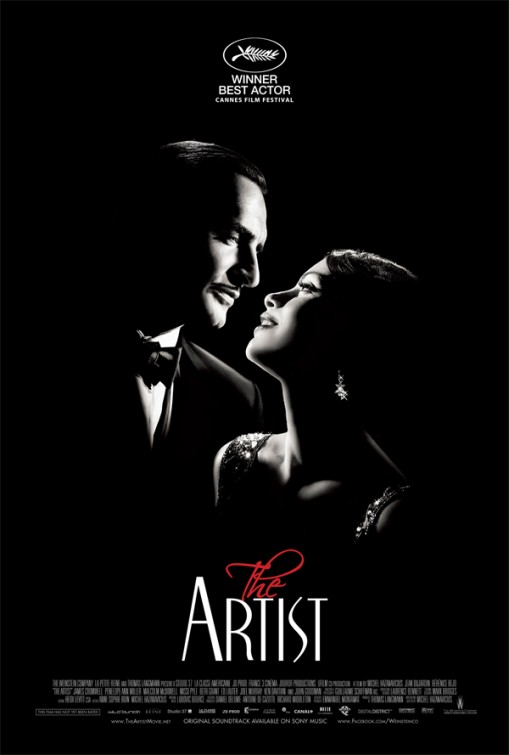
Jean Dujardin and Bérénice Bejo delight in the light, frothy, charming Best Picture winner The Artist

Director: Michel Hazanavicius

Cast: Jean Dujardin (George Valentin), Bérénice Bejo (Peppy Miller), John Goodman (Al Zimmer), James Cromwell (Clifton), Missi Pyle (Constance), Penelope Ann Miller (Doris Valentin), Malcolm McDowell (Butler)

In 1920s Hollywood George Valentin (Jean Dujardin) is King of the Silver Screen. Why would he want anything to change? Surely these ‘Talkies’ are just a passing fad, right? Ooops. Before he knows what has happened, Valentin has gone from top of the world to the very bottom, left behind (like so many real-life silent stars) by change. Meanwhile, Peppy Miller (Bérénice Bejo), the young extra from his glory days whom Valentin briefly mentored, become a star of the Talkies. But Peppy still loves Valentin – and maybe he loves her – even while Hollywood pulls them apart.

Plot-wise, The Artist is pretty conventional. What really makes it stand out is that it’s a silent film about silent film. Perhaps that’s why the whole world went gaga for it (gifting it five Oscars, including wins for Hazanavicius, Dujardin and the Big One) – it was a genuine burst of nostalgia-tinged novelty. Everything old is eventually new again: I remember the novelty myself – sitting in a cinema and suddenly, after the music stops, hearing nothing but silence. Match that with the undeniable charm and energy the story is told with and, boom, you had a hit.

Does The Artist survive repeated viewings? Just about – though it looks increasingly like a slight film, that raises warm feelings but makes little lasting impact (I was surprised how much of it I had forgotten). Hazanvicius’ study of silent cinema has clearly been thorough, and this is undeniably a wonderful love letter to Hollywood’s history. Every technical detail is carefully reproduced, and the pastiche Fairbanks-style adventure stories Valentin stars in is spot on. The actors fully embrace the slightly exaggerated mannerisms of silent acting, telegraphing emotions with urgency.

Hazanvicius uses sound, when it comes, brilliantly. The opening of the film is bathed in music as we watch the premiere of one of Valentin’s films – only for all the sound to drop out the second the film-within-a-film ends. (We even see a “Silence behind the screen” sign before it does). We only hear everyday sounds twice – once in a hilariously haunting dream of Valentin’s where objects make noise but he cannot – and at the end of the film as Valentin finally finds a place in Talking Hollywood. Other than that, it’s scores, speaking cards (some of them witty, like Valentin’s wife’s question “Why do you refuse to talk?”) and all the style of silent cinema.

It’s a sweet and gentle film. There is no trace of the ruthless business Hollywood is, and not a trace of the darkness that touched many of this era. There is never any prospect of Valentin turning into, say, Sunset Boulevard’s Norma Desmond or any of the other washed-up waxworks in her house of broken dreams. Valentin loses everything, but remains a generous and decent guy, firing the loyal chauffer he hasn’t paid in a year (and giving him his car for free!) because otherwise he’ll never leave him. And of course, his dog loves him, so he must be a great guy. (The dog by the way was the break-out star, this charming, brave canine even getting a campaign for best supporting actor).

The film centres a love story between Valentin and Peppy. The two of them have an instant connection – but Valentin is the star, with Peppy the ingenue. This bond can survive nearly everything, even while Valentin resents her success. Hazanavicius manages to make this very sweet, even though Peppy is sometimes tediously saintly in her devotion. Valentin may have mixed feelings about his protégé – but in a housefire, the only thing he saves is footage of the two of them messing around in outtakes from one of his old films.

The film seems unbothered as well by the fact that Valentin is married. The wife (a thankless role for Penelope Ann Miller) doesn’t get a name, let alone any sense of a personality other than (it seems) being some sort of shrew.

You could also see Peppy, if you wanted to be uncharitable, as a bit of a stalker. She buys up (by proxy) all of Valentin’s goods when he goes broke, practically abducts him from the hospital after he is caught in a fire, hires his staff. Tip your head to one side and you can see her boiling a few bunnies. The Artist though sees her as more of a “Guardian Angel” (as per the title of one of Peppy’s movies) – and you can argue that there is something old-fashioned (not always in a good way) about a film where the female lead defines her success only by how it can help the man she loves.

The tinge of creepy to the Valentin-Peppy relationship isn’t helped by using a huge chunk of the Bernard Herrmann Vertigo score to underscore the film’s conclusion, not to mention the left-field melodrama of Peppy racing across town to prevent Valentin from committing suicide (motivated it seems by realising Peppy is his Guardian Angel). It’s an odd mis-step – and the sequence not only feels radically different from the rest of the film, it also seems to heavy for such a light confection.

But, negatives aside, it’s a decent little film. Jean Dujardin is the epitome of charm and old-school Hollywood wit as Valentin – it’s a master-class in physicality and he oozes matinee idol cool, and a certain boyishness. Bejo is very good as the well-meaning, kindly Peppy. The film is a puff of air, and once you get over the novelty, you’ll be amazed how little there is to it. But it’s told with such energy, charm and nostalgic wit (and ends with a lovely dance routine) as well as affectionate nods to old-school Hollywood, you won’t mind too much, even if you’re surprised it won as many awards as it did.

Carlito's Way (1993)


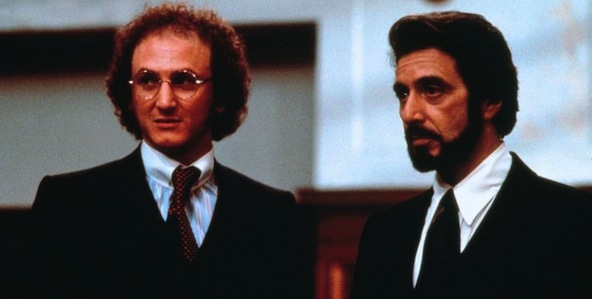
Sean Penn and Al Pacino struggle with the impact of a life of crime in Carlito’s Way

Director: Brian de Palma

Cast: Al Pacino (Carlito Brigante), Sean Penn (David Kleinfeld), Penelope Ann Miller (Gail), John Leguizamo (Benny Blanco), Luiz Guzmán (Pachanga), Jorge Porcel (Saso), James Rebhorn (Bill Norwalk), Joseph Siravo (Vincent Taglialucci), Frank Minucci (“Tony T” Taglialucci), Adrian Pasdar (Frank Taglialucci), Viggo Mortensen (Lalin)

Every so often from the 1990s onwards, Al Pacino actually bothered to act rather than rage in an orgy of self-parody. It’s the films where he does really embrace the challenge, like Carlito’s Way, that reminds you what a damn fine actor he is. Carlito’s Way may also be a reminder of what an overtly flashy director Brian de Palma is, but it’s a fine American gangster thriller.

In 1975, Carlito Brigante (Al Pacino) is released from prison after five years on a legal technicality, exposed by his friend and lawyer Dave Kleinfeld (Sean Penn). Carlito makes a speech at his hearing, claiming he is a reformed man who wants leave his criminal past behind him – and to the shock of Kleinfeld and his colleagues in the underworld, he’s telling the truth. Carlito attempts to go straight, and to rebuild a relationship with Gail (Penelope Ann Miller), the young woman he left behind. Unfortunately, Kleinfeld is not only becoming increasingly unpredictable due to his cocaine addiction, but he is starting to blur the lines between criminal lawyer and plain criminal. His actions continually threaten to drag Carlito back into the crime industry.

Carlito’s Way is a fine semi-morality tale, a modern tragedy of a man who, every time he thinks he’s out, “they pull me back in”. And of course we know that he’s on a hiding to nothing, as the film opens with Pacino gunned down by an unknown assailant and recounting most of the film’s plot (presumably) from beyond the grave. His attempts are doomed largely because, in order to go straight quick and easy, he has to raise money the only way he knows how – working in the very same flashy nightclubs and among the career criminals that he should absolutely be avoiding.

Carlito narrates the film with a weary reluctance, carefully recounting the mistakes he made and why. It’s a device that largely manages to avoid telling us the obvious, and actually gets us closer to, and like, Carlito. It also helps that Pacino’s voice itself has a gruff poetry to it, and he adds a Shakespearean grandeur to this familiar old-school tale of the crook who wants out.

Pacino’s intensity works fantastically for the part. He largely keeps the Pacino fireworks for the moments where they carry the most impact. He and de Palma carefully sketch out a portrait of Carlito as a world-weary man, who (try as he might) can’t leave behind the code and rules that have governed his life as a criminal. He can’t escape the confines of thinking like a criminal. Most terribly, his old-school sense of honour (few actors convey dishevelled personal morality better than Pacino) is what will doom him – he can’t break the code of the streets. It’s a terrific, empathetic performance from Pacino.

Pacino also develops a sweet, loving relationship between him and Penelope Ann Miller’s Gail. In the way of these films, Gail is a stripper – she alternates between sweetly loving and overtly sexually flirtatious as the plot demands – but Miller makes her feel like a real person. She and Pacino have great chemistry (which, rumour has it, also carried over into real life) and de Palma shoots their scenes with an old-school romanticism and a steady camera, which contrasts with the disjointed sweep and Dutch angles he uses elsewhere.

Sometimes these flashy angles get on my nerves. de Palma often feels like he’s trying too hard, rather than stretching his muscles. Saying that, he’s a master of the set-piece. The film has two action set-pieces and both simmer with tension and inventiveness. One involves a bungled drugs deal in a dingy bar. The other a thrilling chase sequence in Grand Central Station, a deliciously shot mixture of great editing and daring extended single shots. Sequences like this bring memories, inevitably, of Scarface and it’s tempting to see Carlito’s Way as a spiritual sequel – as if Tony Montana had been arrested and changed his ways.

Perhaps a testament to how good Carlito’s Way is (or rather how much I enjoy it) is that I even think Sean Penn is terrific in it. Penn is one of those actors I find tryingly self-important (both professionally and personally). But his weaselly lawyer, a hair-trigger addict, nowhere near as smart and adept as he thinks he is, is marvellous. Penn’s performance is a whipper-cracker mix of slimy self-confidence and arrogant blindness, with moments of curiously underplayed vulnerability that makes it make sense why Carlito remains so loyal to him. It’s one of Penn’s best, most controlled performances, a virtuoso performance of whining weakness.

Carlito’s Way is part pulp gangster thriller, part character study humanely outlining the impossible difficulty of changing our stars. Carlito may be ready to jack in the criminal world – but he continues to live the life of the criminal while persuading himself he isn’t. The whole film has a tragic inevitability about it – and would do even without the framing device. Carlito wants out – but he wants to rush to get the investment he needs, and walking the shadow line is the only thing he knows how to do. It’s a great modern tragedy.