Tag: Peter Berg

Hancock (2008)

Hancock (2008)

Will Smith goes against type as an arrogant superhero in this deeply flawed would-be satire

Director: Peter Berg

Cast: Will Smith (John Hancock), Charlize Theron (Mary Embrey), Jason Bateman (Ray Embrey), Eddie Marsan (Kenneth “Red” Parker Jnr), Jae Heard (Aaron Embrey)
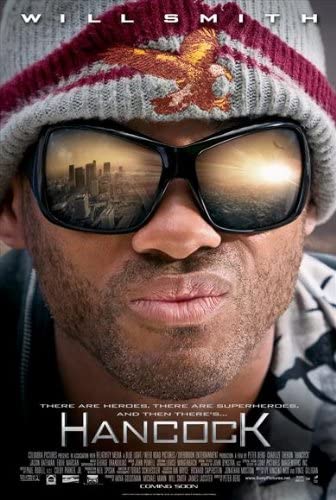
Back in 2008, everyone was entertained by the idea that the most charming man in the world was pretending to be an arrogant, entitled arsehole. Sadly, in 2022, when Will Smith is synonymous with entitled public slapping, the joke feels a little different.

In Hancock, Smith plays the eponymous superhero, a drunken dickhead, who saves people without giving a damn about them or the millions of dollars of damage he causes while doing so. When he saves the life of PR man Ray (Jason Bateman) – wrecking a train in the progress – Ray decides to help Hancock change his image. His wife Mary (Charlize Theron) is less than happy about it – but is there a deeper mystery to her discomfort?

Needless to say there is: and the reveal of what it is marks a tonal shift in a messy film that never quite knows what it is. But that’s because the entire film is basically a sketch thinly stretched out over 85 minutes. What if Superman was real and also a complete arsehole? What would an irresponsible, drunken, unpleasant hero be like? And hell, wouldn’t we stop thanking him and instead start getting really pissed off when he trashes a freeway and several buildings, while chasing some trigger-happy bank robbers?

That’s basically the core of the film: setting up the unlikeable hero, watching him tell people to go to hell and use his powers against people who annoy him. See him get humiliated by going to prison (Ray’s genius PR idea to get people on Hancock’s side) and then eventually resolving a bank robbery with excessive, awkward politeness. It’s one joke. Don’t get me wrong, it’s a good joke. It would make a great recurring gag on Saturday Night Live or something. But it never manages to be anything more than that.

Peter Berg’s film radically shifts gear for the final thirty minutes or so. A second superhero is introduced, a poorly explained and illogical backstory is shoe-horned in and info dumps of character background start to get dropped in (the entire backstory, plot and motivation of Eddie Marsan’s nominal villain is explained in an overheard TV broadcast). What had been a farce suddenly turns into a clumsily intense relationship drama between two people with no chemistry. It ends in a final fight in a hospital which features blood, shooting, tears and a joke about a hand being sliced off. It’s all over the place.

Will Smith just about holds it together: and the fact that he managed to make this not-particularly-funny or rewarding film into the fourth biggest hit of its year is a tribute to what Box Office Gold he was at the time. It’s a decent role for him, and Smith does the humour well. But, after his frank autobiography on his dark side (not to mention that infamous slap), it feels less like Smith playing against type, and more him exposing parts of his own personality. But he carries the entire film with gusto, even if he can’t make the final tonal mess work.

Berg’s direction pitches between way-too-intense and flatly-comedy-free. He drills into emotion in the final act, as if he’s forgotten that this was supposed to be a super-hero satire – but totally fails to bring enough character or reality to the story for its seriousness to work. For the first half, he struggles to bring much personality to the film (I suppose that is Smith’s job). It becomes a film that raises the odd smile but, despite its very short length, outstays its welcome.

Bateman is good value as the do-good PR man (strangely, he’s introduced as a real hotshot, even though it seems he’s completely useless based on nearly everything we see him do). He has a strange chemistry with Charlize Theron, wasted in an incoherent part. No one else gets a look in.

Tonally, Hancock is a mess with a few good gags (Hancock casually tossing a beached whale back into the sea, hitting a yacht, is funny). Its novelty appeal in 2008 – “Look! Will Smith can be mean!” – has disappeared today. Nothing in it is remotely memorable, making a decent joke never anything more than functional. It falls apart in the final stretch as it reaches for a depth it isn’t strong enough to deliver. Can you believe this was one of the biggest hits of 2008? Has anyone really watched, or thought about it, since?
Collateral (2004)

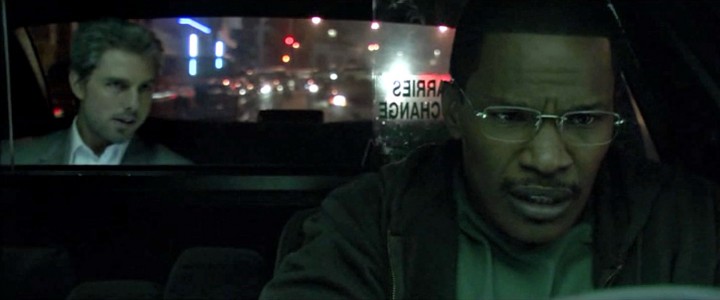
Tom Cruise and Jamie Foxx take a long taxi ride in Michael Mann’s thriller Collateral

Director: Michael Mann

Cast: Tom Cruise (Vincent), Jamie Foxx (Max Durocher), Jada Pinkett Smith (Annie Farrell), Mark Ruffalo (Detective Ray Fanning), Peter Berg (Detective Richard Weidner), Bruce McGill (Frank Pedrosa), Irma P. Hall (Ida Durocher), Barry Shabaka Henley (Daniel Baker), Javier Bardem (Felix Reyes-Torrena)

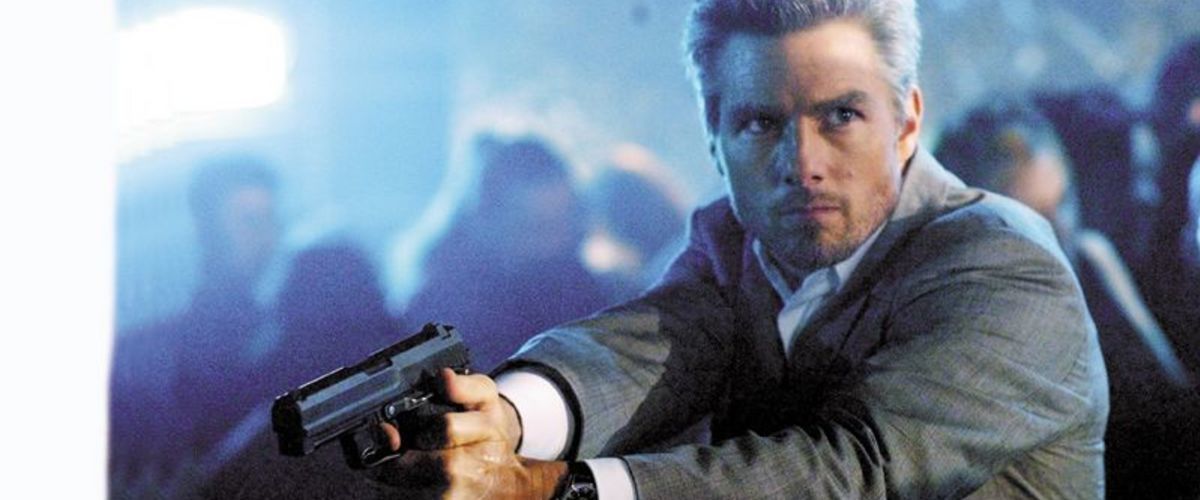
Tom Cruise enjoys throwing us film-goers curveballs every now and again. In Collateral he pops up as a sociopathic hitman, grey of hair and suit (like a buzzcut, rampaging John Major) leaving bodies strewn about the place. It’s great to see him in Michael Mann’s lean, very enjoyable action thriller, looking as sleek and soulless as the rest of LA.

Cruise’s Vincent is a hitman in LA to knock off a list of targets. But how will he get from hit to hit? Why by hiring a taxi driver for a night: risk-averse dreamer Max (Jamie Foxx) who has been working “temporarily” as a taxi driver while he builds plans for his dream limo business for a mere 12 years. Max is thrilled to have a big spender in his car – until something goes wrong on hit #1 and a body lands on his cab. Max no has no choice but to assist Vincent – although Vincent ends up becoming more attached to Max than he might ever have imagined.

Mann shot his film on a high-definition video and it gives a very unique look at LA, really capturing the hazy yellows and cool blues of the city and giving everything in the picture a slightly grainier, starker look. But that would count for nothing if the story of the film wasn’t pretty good, and Collateral is a very effective action thriller, which doesn’t reimagine the genre but offers more than enough freshness to enliven the familiar elements it’s made up from. 

Its main assets (along with Mann’s cool, detached and pin-point sharp direction) are the performances of its two leads. Cruise is just about bang-on as a professional hitman, devoid of empathy, who finds surprising possibilities of friendship open in front of him. He’s a fascinating character, like someone who has spent so long studying people that he can just about replicate human reactions, without understanding the humanity behind them. Cruise’s obsessive preparation for his roles also help makes him flawlessly convincing as this lethal ubermensh.

Foxx however is just as good as a basically decent, friendly, low-key guy who is kidding himself that he is not drifting through life. It’s Max’s story we follow throughout the film – and it’s his sense of personal morality, his strict belief in right and wrong, that gives the film its dramatic force. Foxx also avoids undermining or laughing at Max, who is basically a man so buttoned up and cautious that (without a major push) he’ll clearly die of old age in that cab. 

These two characters thrown together have a curious chemistry – a sort of riff on the casual bonds that can develop between driver and passenger as they talk about their lives, views and interests. It’s not a friendship – certainly not in Max’s case – but it’s a strange sort of bond nevertheless. Vincent, you feel, hasn’t talked to many people like this – and while he’s still willing to threaten Max or put him at great risk, he still develops a strange protectiveness about him. It’s this quirky and different relationship that powers the film and finally makes it unique. This odd couple don’t overcome boundaries to become bosom friends, but they also don’t come together as fierce rivals. Instead they sort of work out a co-existence in that cab.

It’s the most interesting thing about a film that otherwise – to be honest – deals a pretty familiar deck with confidence. Sometimes the film plays its cards so well you overlook them – the first time I watched it, I was semi-surprised at the reveal of the final victim, but really it should be pretty obvious to anyone who has seen a movie before. The plot is full of moments like this that are played with a freshness – or with a cunning – that stops them from feeling familiar.

But that’s really what it is. The journey around LA from hit-to-hit is a familiar sounding idea. The encounters between Vincent and the targets are pretty familiar – the exception being a fascinating, and hard to read, encounter with Barry Shabaka Henley’s jazz player turned informant, which sizzles with tension – and the action scenes, while well staged, are the sort of shoot-outs we’ve seen before. Mann shoots them with a vibrant excitement, but it’s mostly B-movie stuff presented freshly.

What it comes down to is that relationship between those two characters, and the skill of director and actor in drawing out subtleties in performance. (Don’t listen by the way to the director’s commentary, which ruthlessly strips these subtleties away as Mann bangs on about heavy-handed, predictable backstories which thankfully don’t make it into the movie, but make it sound dumber than it is). Cruise and Foxx are both fantastic, Mann’s direction of this sort of icy-cold, impersonal, dangerous city is impeccable and the film itself doesn’t fail to entertain.