Tag: Peter Boyle

Hardcore (1979)

Hardcore (1979)

Familiar ideas from better films are mixed together in this revenge thriller

Director: Paul Schrader

Cast: George C Scott (Jake van Dorn), Peter Boyle (Andy Mast), Season Hubley (Niki), Dick Sargent (Wes De Jong), Leonard Gaines (Bill Ramada), Dave Nichols (Kurt), Gary Graham (Tod), Larry Block (Detective Burrows), Ilah Davies (Kristen van Dorn), Marc Alaimo (Rattan)

A man prowls the urban streets, his face fixed with disgust at their degeneration, looking for a soul to save, the whiff of potential violence strong on him. He hunts for a lost family member, in an obsessive quest where it’s not even sure he will want to take her back even if he finds her. If that makes Hardcore sound like a remix of Taxi Driver and The Searchers… well that’s because it is. Schrader’s film is a well-made, initially well-executed riff on familiar themes that eventually tries to settle for something far easier to digest, with an ending that stinks of a shallow Chinatown.

Jake van Dorn (George C Scott) is a devoutly Calvinist businessman in Michigan. A single father, whose wife has left him, his beloved daughter Kristen (Ilah Davies) disappears one day after a church-sponsored visit to California. Van Dorn leaves no stone unturned to investigate, eventually hiring sleazy PI Andy Mast (Peter Boyle), who discovers an 8mm porno film starring Kristen. Was she kidnapped? Is she in danger? Van Dorn will find her, throwing himself into the seedy world of porn in an obsessive quest where no line will be uncrossed until he brings his daughter home.

There are many things to admire in Hardcore. Shot by Taxi Driver veteran Michael Chapman, it’s immersive seedy view of the underbelly of California is extremely striking. Schrader also quite neatly counterpoints this with the picket-fence conservatism of van Dorn’s stomping grounds at home. Van Dorn starts as a man who expresses hesitation that a shade of blue in his office might be too garish, and ends donning fake wig and moustache alongside loud shirt to pass as a porn baron.

What’s interesting about Hardcore is that, even though its actually Schrader’s second film, it feels like an over-anxious debut. It’s blatant stylistic and thematic call-backs to Taxi Driver­ – hammered home as we watch van Dorn cruise the streets of California, the porn shops and theatres neon signs reflected in his windows – makes you feel Schrader wished he had held on to the rights to direct that film himself. It’s extremely on-the-nose pinching of most of the structure of The Searchers feels like a loving tribute from a director yet to find his own voice.

Schrader however does an excellent job with much of the film’s first half. The oppressive tension build-up from the moment Mast arrives (Boyle’s casting, of course, being another eerie reminder of Taxi Driver) really grips. Scott’s stunned, shattered and increasingly appalled, primal reaction to watching his daughter in a porno is delivered with the sort of gusto and commitment that only a great actor can pull off. His increasingly-obsessive, won’t-take-no-for-an-answer delve into the world of porn – from knocking shops to porn film sets – has just the right sense of van Dorn slowly developing into a time bomb that could go off, while never losing our sympathy.

Hardcore is contemptuous of porn. Sharing van Dorn’s perspective of the industry, the film cements the industry as being based in a Danteish circle of hell, with violence, exploitation and misery round every corner. Schrader also enjoys poking fun at the porn industry and the film industry (a flashy porn director trained at UCLA, much like Schrader’s contemporaries). Searching for witnesses, van Dorn sets up fake auditions for a new porn movie, attended by a series of optimistic, hopeful guys with show reels and CVs. The money-first producers look and sound like any other Hollywood executive – it’s just they openly trade in skin.

The problem is Hardcore can’t settle for this: as if worried that poking some fun at the seedy industry might get in the way of us relating to the gut-punch horror van Dorn feels. In the second half, Schrader sets up (out of the blue) a snuff film premise, with an anonymous big bad behind it all (a figure so undeveloped that the most interesting thing about him is he’s played by Marc Alaimo who played Deep Space Nine’s villain Gul Dukat) just so we can have someone so obviously unspeakable that we have no mixed feelings at all when the violence kicks off.

Which is a shame because Hardcore looks, for a moment, like it is about to go somewhere more interesting. Van Dorn is broken from his obsessive focus only by meeting with Niki (played with just enough ballsy cuteness by Season Hubley), a girl on the margins of the industry dreaming of an escape. The two of them are drawn together in unexpected ways: she respects his religion in a way no-one else does, while van Dorn becomes the only man who doesn’t see her as a sex object, treating her with a fatherly gentleness you suspect he never showed his actual daughter. The film’s ruthless jettisoning of this plotline strives for hard-nosed reality, but ends up feeling like a too obvious attempt at pathos.

Despite all this Hardcore has its moments, not least thanks to George C Scott’s fire-cracker performance in the lead. Scott may have hated Schrader (allegedly begging him to never direct a film again), but he breathes life into this Ethan Edwards-Travis Bickle clone, making van Dorn just the right mix of pained, aggrieved and dangerous. Unfortunately, the film settles for something far more conventional, a revenge thriller with an obvious and inarguably horrible character created solely to make us feel good when he is dispatched.

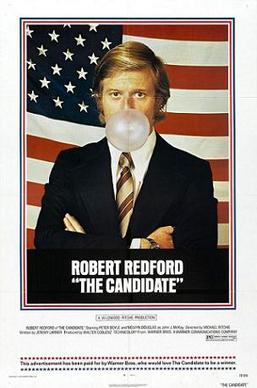
The Candidate (1972)

Robert Redford as a political puppet in The Candidate

Director: Michael Ritchie

Cast: Robert Redford (Bill McKay), Peter Boyle (Marvin Lucas), Melvyn Douglas (Former Governor John J McKay), Don Porter (Senator Crocker Jarmon), Allen Garfield (Howard Klein), Karen Carlson (Nancy McKay), Quinn Redeker (Rich Jenkin), Michael Lerner (Paul Corliss), Kenneth Tobey (Floyd J Starkey)

Bill McKay (Robert Redford) has it all – the looks, the charm, the ideals, and he’s the son of former California governor John McKay (Melvyn Douglas). Who else could stand a chance as the Democratic candidate against long-time incumbent Senator Crocker Jarmon (Don Porter)? McKay is reluctant to run – but he’s promised by Marvin Lucas (Peter Boyle), election specialist, that he has no chance of winning so sure, he can say whatever he wants. But Lucas has another plan, to turn the good-looking, charismatic McKay into his ideal candidate – workshopped, bland, generic and with as wide (and shallow) an appeal as possible. And as the election goes on, McKay turns from not caring, to not wanting to get humiliated, to wanting to win. What price idealism in a political game like this one?

Today, The Candidate looks considerably less fresh and inventive than it seemed in 1972. Back then it caught the wave of an America becoming increasingly disillusioned with its leaders and elections. Then, the idea of mass media manipulating focus-grouped candidates into something pliable, bland and uncontroversial to appeal to as many people as possible, seemed revelatory. Today, when even the optimistic The West Wing chronicles how even the good guys are obsessed with being on message and putting together political ideas into simple, repeatable soundbites with image as everything, The Candidate hardly looks ground breaking.

It won an Oscar for its screenplay, but it looks behind the times now – or even telling us only what we know already. So politics is all about image? Well big news there. In its Faustus-like structure, with McKay being corrupted away from his initial principles into the sort of cookie-cutter candidate focus group organisers dream of, it should be compelling. It isn’t really, part of the problem being that, even with his ideals, McKay is not really an interesting character.

He’s a character that can almost be defined as “looks like Robert Redford”. That’s what makes him appealing – the script spends no time at all on establishing any political or social ideas in McKay early-on beyond a vague wish to “do good” with his low-key law consultancy representing only the poorest. There is a half-hearted attempt to add some daddy issues, with the son determined to never become the principle-free politician his father (a blithely uncaring Melvyn Douglas) is. But these don’t really come into shape. Perhaps that’s the point? What makes McKay so appealing to Lucas from the start is he looks like a Kennedy, but has no real personality or ideas of his own.

He is, basically, a weak person who is quickly shuttled from place to place, told what to say and what to do and willingly converted one step at a time into an even greater non-entity. McKay clings to the idea of his political videos being about an idea, but quickly accepts “ideas don’t work” in these short pieces and allows them to be turned into puff pieces praising his youth and vigour. The film does get some fun out of the emptiness of campaigning – the slogan “McKay: The Better Way” means nothing at all – not to mention McKay becoming so dependent taking direction he can’t even do a broadcast without asking if his jacket should be buttoned or unbuttoned. But it lacks a real oomph.

Perhaps that’s because the film doesn’t really have a plot or characters as such. Every person in the film is there to fill an objective, no more and no less. Even Lucas, the arch manipulator, is little more than a cipher to represent spin doctors (years before the term was coined) for whom the competition and battle is all that matters and principles count for nothing. Ritchie shoots the film with a sort of sub-Altmanesque observational style with overlapping dialogue, but never really immerses the viewer in the quick-moving world of politics, instead serving up a series of mediocre images and scenes that serve as sketches or statements (Campaign ads are empty! Politicians are pre-packaged! They don’’t answer questions!) that eventually become a bit wearing.

Without this sense of narrative, events drift by and character developments just seem to happen with no logic. Redford supplies no real character to the part, unable to convey a sense of growing corruption and ambition in his performance. So when McKay starts doing things – like the mistress he takes during the course of the campaign – it just feels like the film has a nihilistic loathing for politicians rather than the ability to make any actual points that carry weight. 

It’s a disappointment as this is a good idea, and could have really worked if the writers and directors had allowed the film to have some heart alongside its cold cynicism, or even had allowed some clear story to play alongside. Instead we simply watch McKay becoming even more empty and artificial – taking part in a debate with his rival on air, in which he skilfully never answers a single question but parrots quotes from his briefings – only addressing at the very end that all this leaves us with politicians good at winning elections but with no idea about how to run the country. While it is one of the first films of its type, you feel it has long since been surpassed.

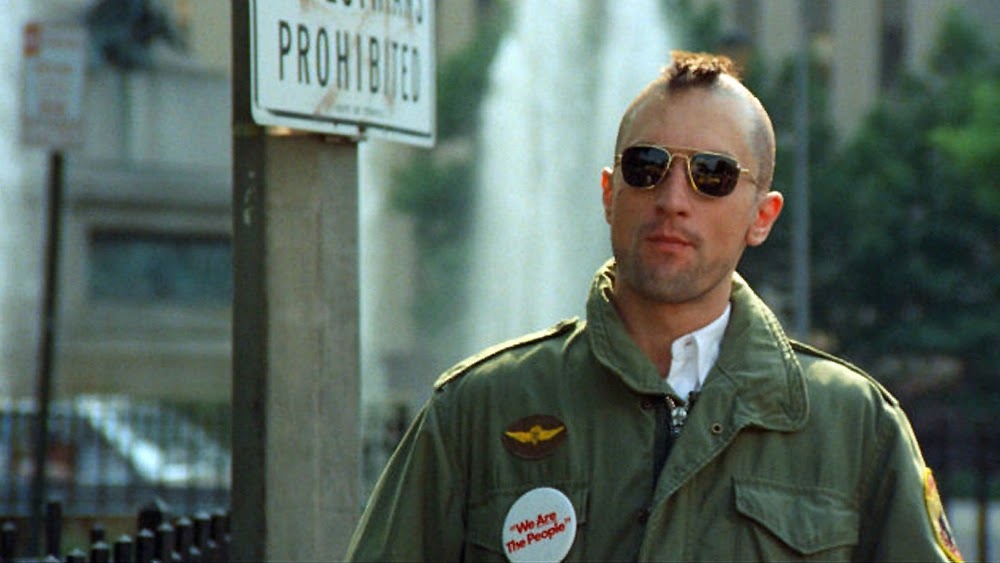
Taxi Driver (1976)

Robert De Niro embodies dangerous loners everywhere in Taxi Driver

Director: Martin Scorsese

Cast: Robert De Niro (Travis Bickle), Jodie Foster (Iris), Cybill Shepherd (Betsy), Albert Brooks (Tom), Harvey Keitel (Sport/Matthew), Leonard Harris (Charles Palantine), Peter Boyle (Wizard), Harry Northup (Doughboy), Steven Prince (Easy Andy), Martin Scorsese (Passenger)

A grungy taxi ploughs through the neon-lit back alleys of New York, the glow of stop signs and tail lights washing the car in a hellish red glare. Inside that taxi, the interior monologue of its driver tips ever closer towards paranoia and fantasy. It’s no surprise that something is going to give. Martin Scorsese’s influential Taxi Driver is the definitive exploration of fractured psyches, the key text in film for exploring how isolation, loneliness and an inability to connect with people can tip someone into being a danger to others.

Travis Bickle (Robert De Niro) is our taxi driver, an honourably discharged Vietnam vet who can’t sleep so works the night shifts. He’s seemingly quiet, shy, self-contained but this hides a desperation to connect with the world, a horror at what he sees around him that he can’t understand, a paranoid disgust at the crime and dirt he feels infect the street and a desire to be someone or do something. His failure to understand to or relate to the world on any level will eventually lead to a gradual collapse as Bickle determines that he must lash out at something, must attack something, to make himself a place in the world.

Taxi Driver is such a brilliant analysis of disaffection and confusion at the world, such an insightful understanding of how feeling separate and locked out from events around them can make a person feel they must act to make their mark, that it profoundly influenced the motivations of Ronald Reagan’s would-be-assassin John Hinckley Jnr in 1981. The film was even screened for the jury as part of Hinckley’s (successful) defence that he acted due to insanity (Hinckley claimed he was trying to impress Jodie Foster). Tragic as that is, it speaks something to the power of the film and its acute understanding (but not excuse) for lonely, fractured, potentially violent souls like Hinckley.

Scorsese’s direction is pitch-perfect. The film uses a series of tightly held shots – and some go on for a very long time, staring at trivial events (such as the shot of an empty corridor while we hear Bickle being rejected on the phone by his stalking target Betsy) – or stately intercutting between actors that brilliantly serve to establish both Bickle’s isolation and his lack of connection. This is intermixed with tighter editing that captures Bickle’s undirected fury and paranoia towards the real world, presented as he drives as a concussive collection of sounds and images that seem to hammer down on the taxi, combined with Bernard Herrmann’s superb classically tense score, lyrical but haunting. 

Every scene Scorsese constructs is designed to show Bickle’s isolation, his weakness and continual succumbing to fantasy and false perspectives. His internal monologue has a monotone fluency to it, but talking to people he’s tongue tied, clumsy or prone to tip into the rantings of a crazy man. Slow motion camera tracks show Bickle moving through crowds like an alien, unable to comprehend or understand what he is seeing, later prowling the frame like a misguided hunter. New York is a hellish underworld – although you are certain we are seeing it largely as Bickle sees it, every scene filtered through his disturbed POV (Michael Chapman’s photography by the way is faultless). 

It works so well because De Niro himself is so restrained, and at first feels rather sweet, even handsome, like someone who you want to look after or feel sorry for – a million miles from the mohawked gun totter he will become by the film’s end. He’s quiet, shy and desperate for friends. He can manage bursts of seeming like a compelling person – his fooling of Cybil Shepherd’s Betsy into a date is a tribute to his ability in short bursts to appear charmingly eccentric. The date of course flounders on his inability to understand human norms (buys her a record she says she has, takes her to a porn film, points out he has a taxi when she tries to get into one to leave), and his response to it is of course to get angry and make a scene, to blame the other person for his own failings.

De Niro immersed himself in the dark psyche of this man, and never loses touch of the gentleness and vulnerability that underpin his violent actions. Bickle talks the talk often of a crazy person, but by his own lights he’s a well-meaning man. It’s just that his well-meaning actions involve multiple murders, and it’s only by a twist of fate that he guns down a house full of pimps and gangsters rather than putting a bullet through a Presidential candidate.

And that’s the scary thing about the film: Bickle is strangely sympathetic, for all his obvious psychosis. Who hasn’t felt alone and lost in the world? Who hasn’t felt scared by events around them or dangers unknown? Who hasn’t wondered “why don’t people like me”? We just deal with it a lot better than Bickle and his messianic sense of mission that he develops.

Bickle channels what human emotions he can muster or understand into ciphers he barely knows. These people become totems, or stalking targets, who he becomes persuaded must be “saved”. With Cybil Shepherd’s Betsy, the delusion is clear: here is a confident, career woman, independent and smart, for whom Bickle can feel an attraction but clearly no understanding at all beyond her being an object he cannot have. The awkwardness and later stunningly poor judgement and reactions he shows when around her mark him immediately as a weirdo and danger to others.

But the film’s smarts – and it has a terrific script by Paul Schrader, whose understanding of dark psyches was never better captured than here – is that these fixations have a totally different impact when targeted on a child prostitute. Suddenly, Bickle’s unwanted attentions have the air of righteousness, even though intellectually he makes no distinction between either Betsy or Jodie Foster’s Iris (a performance of staggering emotional maturity from an actress barely 12 at the time). For all Iris is clearly a victim of society and abuse (in a way Betsy isn’t), for Bickle she’s pretty much the same, someone he must ‘rescue’ – and from her pimp Sport (a disturbingly fey and incestuous turn from Harvey Keitel).

So Bickle takes up the guns, and eventually does what we all wish we could do sometimes. Because who hasn’t stood in front of the mirror and dreamed about saying “you talkin’ to me” to our enemies – the difference being most of us don’t fantasise about blowing them away, let alone actually go on to do it. De Niro’s brilliance is the chilling emptiness behind the exterior, the way he captures universal fears and doubts but shows us a character who has no personality of his own but only collects titbits from those around him (like his would-be murderous passenger – played by Scorsese himself – who eagerly talks about how he wishes he could murder his cheating wife).

So the violence comes – and it is horrific – as Bickle shoots up a lowlife prostitute den with sickening graphicness (nothing this violent had really been seen before). But it’s only fate that has turned him away from his real target, Senator Palatine (George Lucas must have had this film in the back of his mind when naming his Evil Emperor!), reverting to his secondary target and killing a group of people far more acceptable to Joe Public to be wasted.

Scorsese’s genius final epilogue asks us questions about truth but also perceptions. The camera takes on a “God’s view” POV overhead shot as Bickle’s slaughter ends (and De Niro’s jerky, terminator like physicality here is stupendous), tracking back through the house. Is this his soul leaving a dying body? But then we flash forward and there is Bickle in the taxi again, hailed as a hero by society for rescuing the girl – the same society that would have condemned him as psychopath if he had taken his first target. He even gets a sympathetic conversation with Betsy.

But he hasn’t changed. And the world hasn’t changed. And Bickle may be a hero now but the same dark impulses still ride within him – and they will, the film suggests, lead him to kill again. Scorsese’s film is a masterpiece of alienation and disaffection, a brilliant analysis of what makes a killer kill – and how vagaries of fate can see us miss the signs – with a wonderful script and a superb performance from De Niro, a landmark turn that manages to tap into such existential fears we all have on our place in the world that we completely miss we are starting to relate to a psychopath. Dark and brilliant, a landmark.