Tag: Peter Mullan

Children of Men (2006)

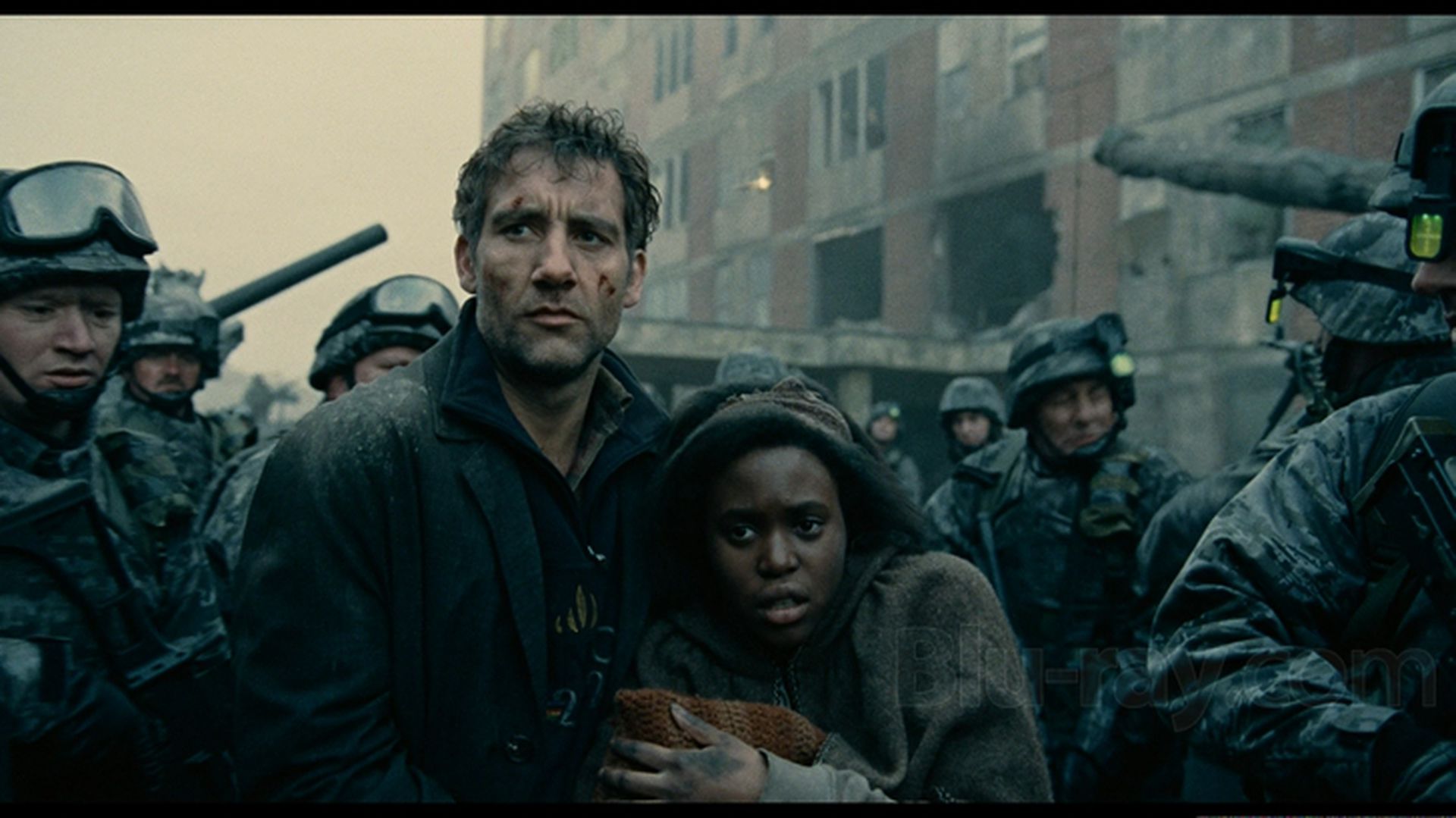
Clive Owen and Claire-Hope Ashitey could be the last hope for mankind in the masterful Children of Men

Director: Alfonso Cuarón

Cast: Clive Owen (Theo Faron), Julianne Moore (Julian Taylor), Claire-Hope Ashitey (Kee), Michael Caine (Jasper Palmer), Chiwetel Ejiofor (Luke), Charlie Hunnam (Patric), Pam Ferris (Miriam), Peter Mullan (Syd), Danny Huston (Nigel)

Children of Men was overlooked on release. But the more it ages, the more it clearly hasn’t aged it at all. Criminally ignored at the major awards, this might well be the finest film of 2006 and certainly one of the best movies of the noughties. Rich in thought-provoking content and cinematic skill, this is truly great-film-making from Alfonso Cuarón. Dark, grim, edgy but also laced with hope, faith and kindness, Children of Men grows in statue with each viewing, rewarding you more and more.

It’s 2027 and the world has gone to hell. Mysteriously mankind became infertile 18 years ago, and faced with the despair that the extinction of the human race is inevitable, society has collapsed. Cities lie in ruins and war has torn countries apart: Britain “stands alone”, one of the few with a functioning government – even though that government is a totalitarian, nationalist police state. Aggressive campaigns are waged against refugees from around the world, who are herded into hellish concentration camps. In this chaos, Theo (Clive Owen) is a disaffected civil rights activist, now plodding through a dead-end job and smoking weed with his friend, ex-newspaper cartoonist Jasper (Michael Owen). All this changes when he is entrusted by his activist/’terrorist’ estranged wife Julian (Julianne Moore) to protect Kee (Claire-Hope Ashitey) who carries inside her something that could change the whole of humanity: an unborn child.

Today Children of Men seems alarmingly prescient. In a world of migrant crises, Brexit, Trump and coronavirus (the film even refers to a flu pandemic of 2008!) the vision of the future it presents seems only a few degrees away from our reality. Rather than a hellish view, it seems more and more like something that could happen. Everything is worn out and grubby. Streets are lined with rubbish, buildings coated with graffiti. Televisions and advertising screens alternate between demands to report immigrants with promotions for “Quietus”, a suicide pill. Fences, armed police, barbed wire and crowds of filthy, terrified and brutalised people are common. Humanity has given-up: there is no hope in the world.

It’s that collapse of any sense of hope and optimism that has driven this collapse of society in Cuarón’s vision. In a world where the extinction of mankind is inevitable, what’s the point contributing to society or worrying about your legacy or the future? Why preserve anything when no-one will be around to see it in a hundred years? By such fragile threads, does society hold itself together. The crushing depression of knowing you live in the final days of humanity is everywhere. There is not a single person alive in their teens: a fact hammered home by the characters visiting a deserted and derelict school. Everyone has lost any sense of purpose, with life a grim daily grind.

Perhaps that’s also why physically the world hasn’t changed much. Unlike most “future set” dramas, this view of 2027 could be 2006, just dirtier and with a few more electronic screens (in fact this has helped hugely in not dating the film). It’s like all life has stagnated. And liberals like Theo have turned into apathetic drunks, drifting blithely through life not bothering to engage or change anything about the shit show all around them

All this makes the film sound impossibly grim – and Cuarón is superb in building this world (including the genius stroke of never explaining, even in the smallest detail, what has caused this pandemic of infertility – the film is refreshingly free of any clumsy scene setting) – but it works because it’s a film laced with hope and a belief in the fundamental goodness of people. The story has overtones of a religious fable: Theo and Kee as a sort of Joseph and Mary travelling to protect an unborn child whose birth could save the world. Specially composed choral music, rife with religious overtones, underplays key moments and scenes subtly leaning into this spiritual journey.

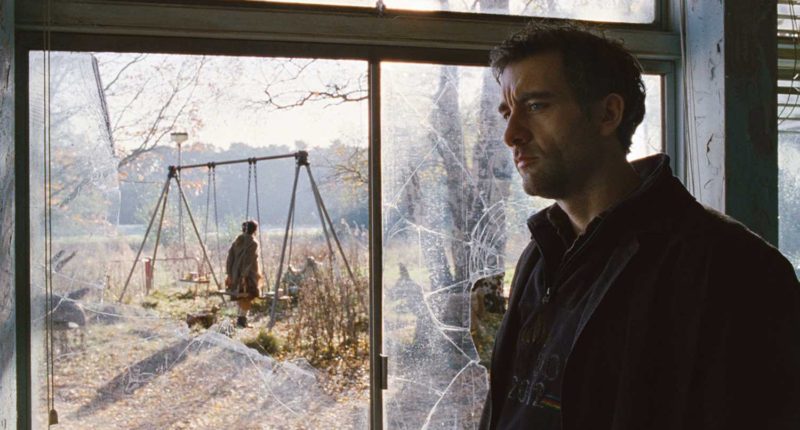
And the goodness that people find in themselves is inspiring. Theo, brilliantly played by Clive Owen who has just the right dissolute cynicism hiding crusading courage, may have given up but actually he’s a deeply empathetic and caring man. Animals instinctively love him. He’s a natural protector, who shows concern in all sorts of ways for people him, who puts himself at risk to protect people and refuses to ever accept defeat. But he’s a million miles away from a super-man, getting increasingly dishevelled, bashed and brutalised, while his struggles with footwear (he carries out action sequences  wearing just socks, then flip-flops and finally barefoot) is both a neat little gag and also a sign of how vulnerable he is in this dangerous world.
Cuarón’s film builds brilliantly on his empathy to carefully and beautifully build the growing understanding and trust between Theo and Kee (equally well played by Claire-Hope Ashitey). Again, it stems first from his protectiveness (Theo also works hard to protect people around him from disturbing sights, twice urging Kee not to look back and that whoever has been left behind is fine), but also from her instinctive trust in him as a good man and above the only one who seems to have her interests at heart (everyone else is concerned only with what Kee can symbolise – Ejiofor’s vigilante Luke can’t even get the sex of the baby right). Kee is vulnerable, but strong and determined, someone trying to carry the burden of being the hope of mankind.

She’s also brilliantly a member of the very migrant community that the government is trying to destroy. Cuarón’s film wants us all to remember that we are all the same deep down, that what happens to one affects us all. The horrors of what the British government are doing in the war-torn slums of migrant prisons (all of Bexhill has become a lawless hell hole, where executions and riots are daily occurrences) reek of everything from Auschwitz to Guantanamo. But amongst these migrants come the only strangers who seek to help Theo and Kee out of simple goodness and humanity. Strangers put themselves at huge risk, and in many cases sacrifice their lives, to help them. It makes a stark contrast with the revolutionaries who claim to fight for the migrants (but show no compunction in shooting them when needed), but really are only interested in their own selfish battles with no understanding of the bigger picture.

This bigger picture is very much like the thematic richness of the film that was missed on its released. It’s almost a victim of its own technical brilliance, which attracted much more attention at the time. Cuarón constructs several sequences to appear as single-takes, and the stunning camera work really helps establish this grimy, brutal world. It’s a wonderfully immersive film, a technical marvel. Every single part of the photography and design is pitch-perfect, and the key sequences are stomach-churningly tense, inspired by everything from The Battle of Algiers to A Clockwork Orange.

But the film works because it is underpinned by faith and trust in the human spirit. Mankind is being challenged like never before, but Cuarón shows us that the human spirit can survive. That simple acts of kindness can still happen. That there is a chance of hope. The final conclusion of the film is both sad but also upliftingly hopeful. Cuarón’s direction is just-about perfect, as are the performers (not just Owen and Ashitey but also an almost unrecognisible Caine as an ageing Hippie). With its acute and brilliant analysis of humanity – both in its grimness and capacity for goodness and selflessness – and with its prescient look at how easily our world could collapse, Children of Men is vibrant, brilliant, essential film-making.

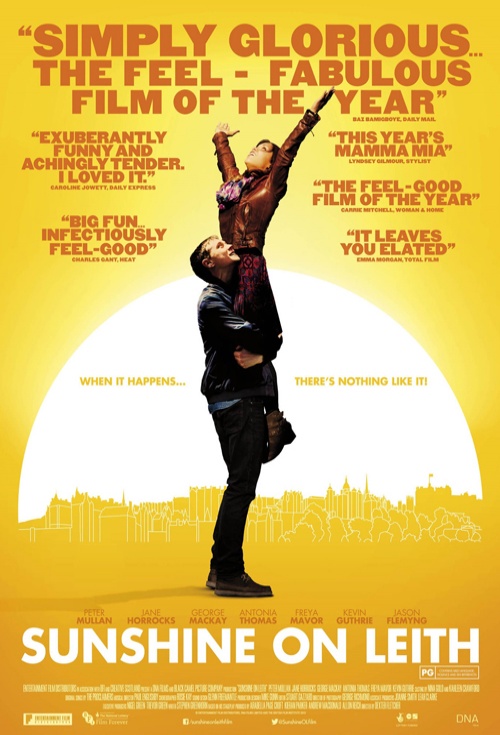
Sunshine on Leith (2013)


Peter Mullan hits the right notes in crowd-pleaser Sunshine on Leith

Director: Dexter Fletcher

Cast: George MacKay (Davy Henshaw), Kevin Guthrie (Ally), Freya Mavor (Liz Henshaw), Antonia Thomas (Yvonne), Jane Horrocks (Jean Henshaw), Peter Mullan (Rab Henshaw), Jason Flemyng (Harry Harper), Sara Vickers (Eilidh)

Sunshine on Leith is a jukebox musical that really works, because its story feels natural, its characters are engaging and the songs don’t feel too shoehorned in (even if, of course, we have a character called Jean to allow Oh Jean to be sung, and another moving to Florida which will of course require a Letter from America). It’s a really good reminder of how many really toe-tappingly, hummable, great songs The Proclaimers came up with. It’s not a masterpiece of course – but as a piece of solid, competent, crowd-pleasing cinema it’s hard to beat. 

The plot follows two soldiers returning from Afghanistan. Davy (George MacKay) is keen to start a new life, Ally (Kevin Guthrie) wants to marry Davy’s nurse sister Liz (Freya Mavor). Davy founds himself drawn to Liz’s colleague Yvonne (Antonia Thomas), while Liz struggles to reconcile her love for Ally with her desire to spread her wings and see more of the world. Meanwhile Davy and Liz’s father Rab (Peter Mullan) discovers, on the eve of his 25th wedding anniversary to Jean (Jane Horrocks), that a brief affair in his early marriage led to the birth of a daughter (Sara Vickers) he never knew he had. Love and family problems play out to a string of Proclaimers hits.

Sweeping camera-work from Dexter Fletcher helps to create a romantic, vibrant image of Edinburgh – you’ll want to book your tickets as soon as the film ends, this is such a good advert for the city – and he draws some wonderful performances from the cast, all of whom I suspect had the time of their lives making this film. How lovely is it to see Peter Mullan moving away from gruff hardmen, to play a man as sensitive and humane as Rab – and also to hear him croon with feeling some top songs? He makes a superb partnership with Jane Horrocks, who not surprisingly is the most accomplished singer, and who channels her natural bubbly mumsiness into a genuinely moving portrayal of a wife dealing with completely unexpected betrayal.

The film keeps the humanity of its characters very much at the centre, never over-complicating the plot or overloading us with extraneous detail or drama. The quietly tense opening sequence of Davy and Ally on tour in Afghanistan (with a rendition of Sky Takes the Soul) swiftly helps us invest in their safety – and sets us up to really feel their release once they return to the safety of civilian life. Nothing hugely unexpected happens in the film at all – it can be pretty accurately predicted from the start – but the whole thing is told with genuine warmth and feeling.

There are some stand-out musical sequences. Over and Done With, told as a pub story-telling session, works really well – it’s wonderful up-beat, vibrant sequence. Jason Flemyng has a great dance cameo during a fun-filled number set in the Scottish National Gallery (Should Have Been Loved). Davy and Ally dance thrillingly down the street to I’m On My Way as they celebrate their discharge. The final number – it’s not a surprise – sees what seems like most of Edinburgh corralled into a massive rendition of a song about walking a very long distance…

George MacKay demonstrates he’s a pretty decent song and dance man – and he also has the every-day ordinariness that makes him a perfect audience surrogate. His chemistry with Antonia Thomas is also fantastic. As the secondary couple, Freya Mavor is headturningly watchable as Liz, while Kevin Guthrie gives a nice air of bemused immaturity to Ally.

Sunshine on Leithis a brilliant crowd-pleaser, and has clearly been made with love and affection for the material and the songs, which seeps off the screen. It’s a perfect advert for everything in it. I would say that I am not sure Fletcher is the perfect film director – he’s afraid to let the camera stand still for too long in the larger dance set-pieces, which means we lose the impact of some of these numbers (or the chance to really appreciate the choreography). But he totally gets the tone of the film, and delivers that in spades.

It’s much pretty guaranteed that you’ll laugh, you’ll cry, you’ll fall in love. And you’ll want to watch it over again.

Trainspotting (1996)

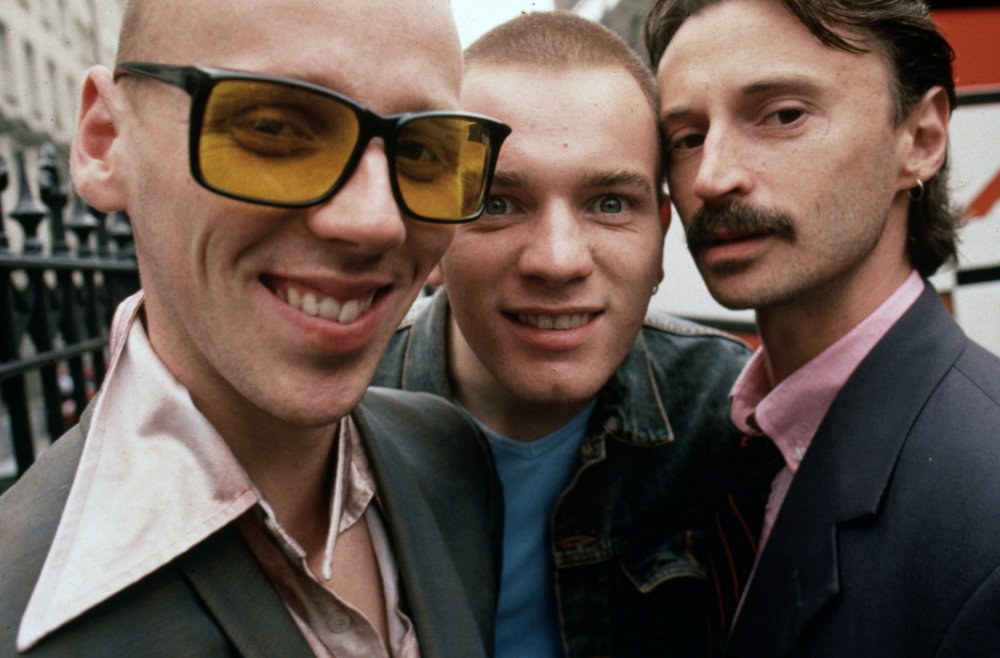
Another happy day in Edinburgh… Ewen Bremner, Ewan McGregor and Robert Carlyle define their careers in the mid-1990s phenomenen

Director: Danny Boyle

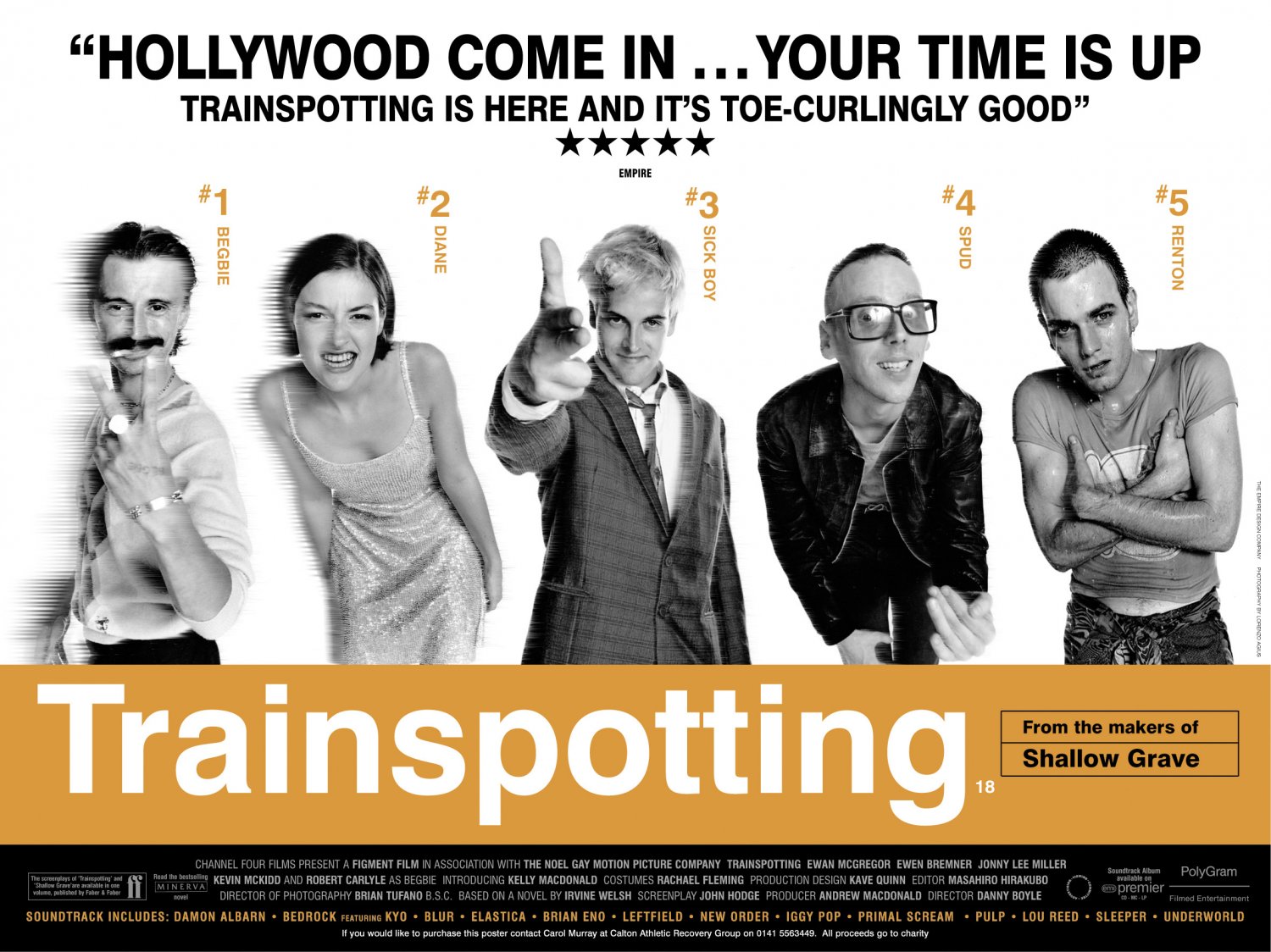
Cast: Ewan McGregor (Renton), Ewen Bremner (Spud), Jonny Lee Miller (Sick Boy), Robert Carlyle (Begbie), Kevin McKidd (Tommy), Kelly Macdonald (Diane), Peter Mullan (Mother Superior), Eileen Nicholas (Mrs. Renton), James Cosmo (Mr. Renton), Shirley Henderson (Gail Houston), Stuart McQuarrie (Gav), Irvine Welsh (Mikey)

Surprise, surprise the Drug’s Don’t Work. They just make you worse. Honestly, watching Trainspotting you would have to be a Grade A moron or wilfully missing the point to ever imagine that this film could, in any way what-so-ever, be endorsing the life of heroin addiction. The unbalanced, unreliable, sickly-looking, soul crushingly blank-eyed losers in this film are no-ones idea of an aspiration. The fate of Tommy alone, starting the film as a health freak and ending it as a smacked out, paper thin, wasting AIDS victim could only encourage the truly unbalanced to take up drugs.

You must know the story: Ewan McGregor is our “hero” Renton, a junkie with delusions every so often (the film implies this has occurred multiple times) of going clean, kicking the habit only to find that he is always drawn back in – largely it seems due to his own weak personality. Fellow junkies include Spud (Ewan Bremner), Sick Boy (Jonny Lee Miller) and later (tragically) Tommy (Kevin McKidd). On the edge of their junkie circle (not a user) is psychotic Begbie (Robert Carlyle) who doesn’t need drugs when he can get a high from starting a bar fight. The basic plot is slim in this whipper sharp film where experience is all – Renton goes clean, gets sucked back in, misses prison, goes cold turkey, escapes to London, gets sucked back into a drug deal. That’s basically it. What’s important here is the experience.

This is possibly one of the best films about addiction ever seen (I watched it in a double bill with The Lost Weekend which actually works out as a pretty natural combo). Boyle and screenwriter Andrew Hodge aren’t scared to show that drugs at times can be fun (after all if they didn’t make you feel good part of the time why would you do them?) and they can give colour to life (particularly to the shallow non entities this film centres on). The is even a strange family warmth to Renton and friends getting smacked out in an otherwise disgusting dilapidated drug pit, listening to Sick Boy dissect the Sean Connery Bond films. This is then brilliantly counterbalanced by the appalling lows – from the truly unsettling dead baby, abandoned and unfed in said drug den, to Renton’s appalling cold turkey. 

Perhaps the most remarkable thing here is that Danny Boyle directs with such verve and with a gleeful delight for every single shooting and editing trick in the book, but the film never feels like a triumph of style over substance, or as if the tricks are the centre of the director’s attention. Instead throughout the whole film you can tell the heart of the film makers – and therefore the heart of the viewer – is also focused on the story and the characters. So we get a film that crackles with energy, with a sense of youthful vitality (that is vital to understanding its characters), has an attractive anti-society message – but also reminds us that the perils of following this kind of counter culture life can be truly horrifying.

At the centre of this film is Ewan McGregor, who I don’t think has ever found a role that he could seize and bring to life as successfully as he did with this one. McGregor is captivating, managing to skilfully demonstrate without any judgement a man who believes he is strong, but is in fact desperately weak. His performance is so charismatic that you hardly notice that Renton is, actually, a pretty nasty person. High or not he has a barely concealed contempt for nearly everyone around him, his reaction to the baby death is shockingly cold, his treatment of Tommy laced with indifference, his pronouncements to the audience overflow with self-regard and delusion. But you just don’t notice.

What you do notice is that Robert Carlyle’s Begbie is a total nutter. Just like McGregor, I think Carlyle struggled to find a role that matched this one, probably not helped by the string of psychos he was offered by casting directors. Carlyle again actually isn’t in the film that much, but he nails how terrifying total self belief can be when matched with a complete lack of any moral sense. In fact most of the cast have hardly ever been better. Excellent support also comes from Peter Mullan, Eileen Nicholas, James Cosmo, Shirley Henderson and Stuart McQuarrie while Irvine Welsh pops up as low rent dealer.

Electric film making with a heart, I don’t think even Danny Boyle has topped this. There is something strangely perfect about this film – anything more and it might out stay it’s welcome, but every scene has something magic in it, some little touch that stays in the mind – either performance, dialogue, direction or all three. It looks fantastic and seemed to define its era. So fingers crossed for the sequel. No pressure…