Tag: Phil Davis

Another Year (2010)

Another Year header
Ruth Sheen and Jim Broadbent are either a blissfully happy and kind or rather smug couple in Another Year

Director: Mike Leigh

Cast: Jim Broadbent (Tom Hepple), Ruth Sheen (Gerri Hepple), Lesley Manville (Mary Smith), Peter Wight (Ken), Oliver Maltman (Joe Hepple), David Bradley (Ronnie Hepple), Karina Fernandez (Katie), Martin Savage (Carl Hepple), Michele Austin (Tanya), Phil Davis (Jack), Imelda Staunton (Janet)
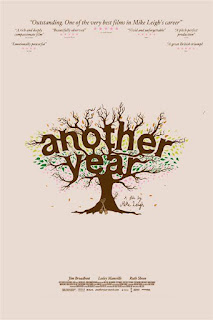
Tom (Jim Broadbent) and Gerri (Ruth Sheen) are a blissfully content middle-class London couple. He’s a successful geologist, she’s an attentive NHS counsellor. They divide their time between work, their allotment and socialising with friends. But many of their friends are disaster zones. Gerri’s work colleague Mary (Lesley Manville) is a divorcee who falls over herself to tell people how happy she is, but is clearly depressed with a drink problem. Similarly, Tom’s old uni friend Ken (Peter Wight) is a lonely alcoholic, seriously overweight and equally depressed.

The fascinating question at the heart of Mike Leigh’s heart-felt and beautiful film is: are Tom and Gerri a sweetly loving couple who go out of their way to support friends – or are they a desperately smug pair, facilitating those around them in self-destructive patterns? It’s hard to say either way: and that’s the beauty of Leigh’s honest, subtle character study which presents a single year in the lives of these characters.

It’s also, of course, superbly acted by the cast – all of them regulars in the work of Leigh. Broadbent and Sheen are brilliant as a couple completely content and happy in themselves and confident that they essentially have life sussed. They are kind, considerate and supportive of everyone. But how much is this genuine and how much is it performative? They fuss and smile to each other around the depressed and fragile Mary – but do nothing to help her change and improve her life, and merrily continue to fill the glasses of both her and the even more alcohol ravaged Ken.

When Tom’s sister-in-law dies, they rush to support his quiet, reserved brother Ronnie (David Bradley). They arrange every detail of the funeral and do everything they can to remove any burden from him. Tom is furious at the selfish and uncaring attitude of Ronnie’s son Carl (a grimly chippy Martin Savage) who seems convinced he is somehow being cheated by them. They bring Ronnie back to stay with them for a few weeks – but frequently leave him alone or allow him to sit watching their own insular conversations. Sure, they give him a home and support, but do they really care or are they going through the motions of people who want to believe they really care?

Wouldn’t a real friend of Ken, tell the obviously over-weight, permanently drunk, desperately self-loathing man that he has serious problems and help him change his life, rather than refill his glass at every opportunity? Or is it a sign of Tom and Gerri’s decency that they don’t see it as their place to tell other people to live their lives? In addition, Tom sticks loyally by Ken in a way very few people would – its clear during a golf game with Ken, Tom, son Joe (Oliver Maltman) and pal Jack (Phil Davis) no-one else wants Ken there – and gives him more warmth and attention than you suspect anyone else ever has. Does it just not occur to him a real friend would help Ken change his life?
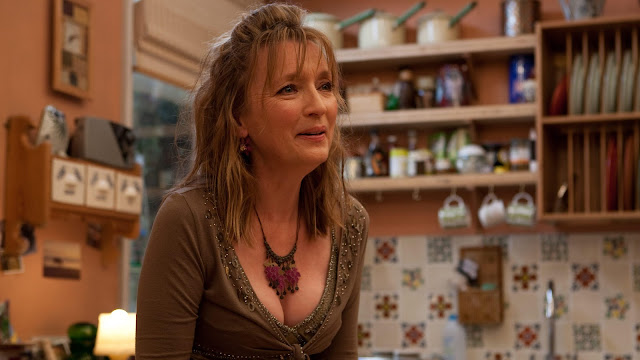
Above all, we see the frantic desperation and all-consuming anxiety, fear and neediness of Mary, played with a heartfelt and deeply moving frankness by a never-better Lesley Manville. Mary is a very sweet woman, who has lost her place in the world and clings to the idea – now long since departed from reality – that she is a young glamour puss, rather than a desperate, divorcee in her fifties. Tom and Gerri support Mary, making her a part of their lives. She is a frequent overnight guest in their house, has known Joe since he was little and relies on Gerri utterly for friendship.

But there is also a slight air of judgement with their treatment of Mary. Does having this all-too-obviously tragic case, this failure who is utterly emotionally dependent on them, make them feel better about themselves? What have they done over the years, for all those sympathetic ears and shoulders to cry on, to help Mary deal with the root cause of problems? While they are willing to listen at great length to her (often tedious and repetitive) conversation, they never once really step into help her effect real change.

Events bubble up as the lonely Mary begins to fixate on a fantasy of her forming a relationship with Joe. It’s implied everyone is aware of this, but politely do their best to hope the situation will go away. Manville is of course brilliant in playing the tragically self-deluded hope under this longing for a never-will-be relationship – particularly as she never once looks down on Mary, but plays with a real empathetic warmth, that helps us feel an immense sorrow for this woman, while still acknowledging she can be deeply frustrating.

And Mary perhaps has more warmth, and ability to connect naturally with people, than Tom and Gerri. This is suggested during a wonderful late scene with Ronnie (a brilliantly quiet David Bradley), where in a long conversation she forms more of a bond of him than we’ve seen Tom and Gerri, for all their patience, ever form. It’s impossible not to relate to Mary as she’s so clearly such a vulnerable person, desperate for love and human connection. Seeing her slow-motion collapse across the film is heart-rending. For all her flaws, she’s someone you are desperate to see happy.

Mike Leigh is able to capture all this in his beautifully observant film, perfectly placed, low-key but deeply affecting. There are never obvious beats and he is willing to show the positives as well as the flaws in every character. He never tips the deck either for or against Tom and Gerri, allowing us to judge them by their actions: they could be warm, friendly, open-house people who stick loyally to troubled friends most people would drop immediately; or they could be subconsciously using these tragic cases to feel even more blissfully happy with their own perfect lives. Leigh never tips it either way, and the breathtakingly emotional performances and beautifully played and written scenes mean that, even though the film is short on plot, it feels rich in character and emotion. It ends with a beautiful held long shot on Mary that, like the rest of this film, is deeply moving but also leaves you with more questions than answers. A triumph.
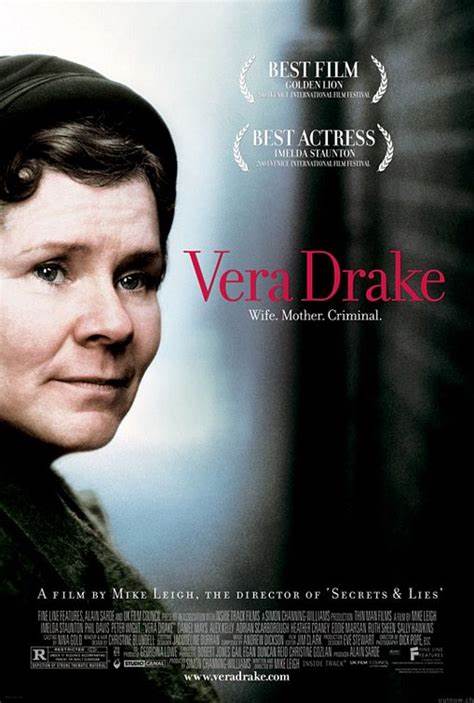
Vera Drake (2004)

Phil Davis and Imelda Staunton are superb in Mike Leigh’s masterpiece Vera Drake

Director: Mike Leigh

Cast: Imelda Staunton (Vera Drake), Phil Davis (Stan Drake), Peter Wight (Inspector Webster), Daniel Mays (Sid Drake), Alex Kelly (Ethel Drake), Eddie Marsan (Reg), Adrian Scarborough (Frank Drake), Heather Craney (Joyce Drake), Sally Hawkins (Susan Wells), Ruth Sheen (Lily), Lesley Sharp (Jessie Barnes), Liz White (Pamela Barnes), Martin Savage (Sergeant Vickers), Helen Coker (WPC Best), Vincent Franklin (Mr Lloyd), Lesley Manville (Mrs Wells), Jim Broadbent (Judge)

If you passed her on the street, you’d be sure to say hello and she’d be sure to ask after your family – and really mean it. She has a kind word for everyone and never thinks about herself. And, as far as the law is concerned, she’s a multiple murderer. Vera Drake mixes warmth and goodness with anger at social injustice and is stuffed with perfectly observed detail and marvellous acting. It might just be Mike Leigh’s masterpiece. Certainly, few other of his films carry such an emotional wallop.

In London in 1950, Vera Drake (Imelda Staunton) spends her life helping those around her and is a devoted wife and mother. But what her husband Stan (Phil Davis) and children Sid (Daniel Mays) and Ethel (Alex Kelly) don’t know is that for decades she has been “helping young girls out” who find themselves unwillingly in the family way. All Vera wants to do is help – but with abortion illegal, her actions are a ticking timebomb, which explodes when Vera is arrested.

Vera Drake is a film about “the family way” – in every sense. Leigh’s unique film-making technique is familiar now: long weeks of research and intensive, improvisational rehearsals help the actors to create fully-fleshed characters who they know so well, they can predict their reactions in any circumstances. During rehearsals, none of the actors in the family knew Staunton was playing an abortionist until the actors playing the police knocked on the door mid-rehearsal – and even Staunton was completely unaware she was to be arrested. The genuine shock the actors felt feeds this intensely powerful scene – and every moment that follows.

In perhaps no other film has Leigh’s technique been more successful: every single character feels completely and utterly real. You could look in any direction and find a character with such a rich hinterland you want to know their stories. Just as intriguing films could be formed around the lives of the young women Vera helps out – Sinead Matthews ‘very young woman’ (and the boyfriend who waits outside), Tilly Vosburgh as a mother of seven with a sick husband, Rosie Cavaliero as a nervous married woman or Vinette Robinson’s scared Jamaican girl – as has been about Vera.

These women have fallen through the cracks – unable to support a family, but deprived any chance of making choices about themselves and bodies. There is a clear social gap – Sally Hawkins gives a sensitive, gentle performance as an upper-class woman, raped by her boyfriend, who obtains an abortion through psychiatric loopholes available only to the rich. No fault of hers – you can imagine she’d be horrified at how others suffer – but for the poor, their only option is Vera. It’s a huge flaw in the system – and removing Vera won’t solve the ‘problem’. It only means women will turn with more desperation to the sort of uncaring sleazy abortionists Denholm Elliott played in Alfie.

The film works because of its tenderness and the raw emotion of the performances. Leigh’s camera is a largely stationary and observatory, but that immerses us in the domestic charm of the first half as much as it does the horrifying coldness of the legal system in the second half. The Drake family home is small and cramped, reflecting their poverty, but also because it feels stuffed with love. Their children – the extremely shy Ethel and her outgoing son Sid – both reflect their intensely loving home, and her husband Stan is full of kindness, generosity and decency.

Leigh carefully demonstrates the warmth of this family. There’s a tear-inducingly sweet romance between Eddie Marsan’s Reg (a beacon of human decency) and the shy Ethel. Stan’s brother Frank (Adrian Scarborough, marvellous) and middle-class wife Joyce (Heather Craney, wonderfully torn in her feelings) struggle to conceive a child. The family laugh and joke together, every day ending in smiles and expressions of love. It’s beautifully immersing and deeply moving – and makes the wait for this world to shatter even more dreadful.

As Vera, Imelda Staunton gives an astonishing performance. A quiet, polite, open-hearted lady whose greatest pleasure is other people’s happiness. Leigh’s film follows her acts of caring around the community – cleaning neighbours houses, looking after her ill mother, inviting lonely newcomer Reg to dinner – showing she applies the same heart-felt but unshowy care to those, as she does to her abortions. It’s twenty minutes before we see one of these, and what’s striking is the well-practised calmness Vera goes about this work, carefully repeating the same reassuring instructions. She never asks for anything (the posh doctor treating Sally Hawkins’ character takes £100). Lily, who puts her in touch with those in need, has no qualms charging £2 without Vera’s knowledge.

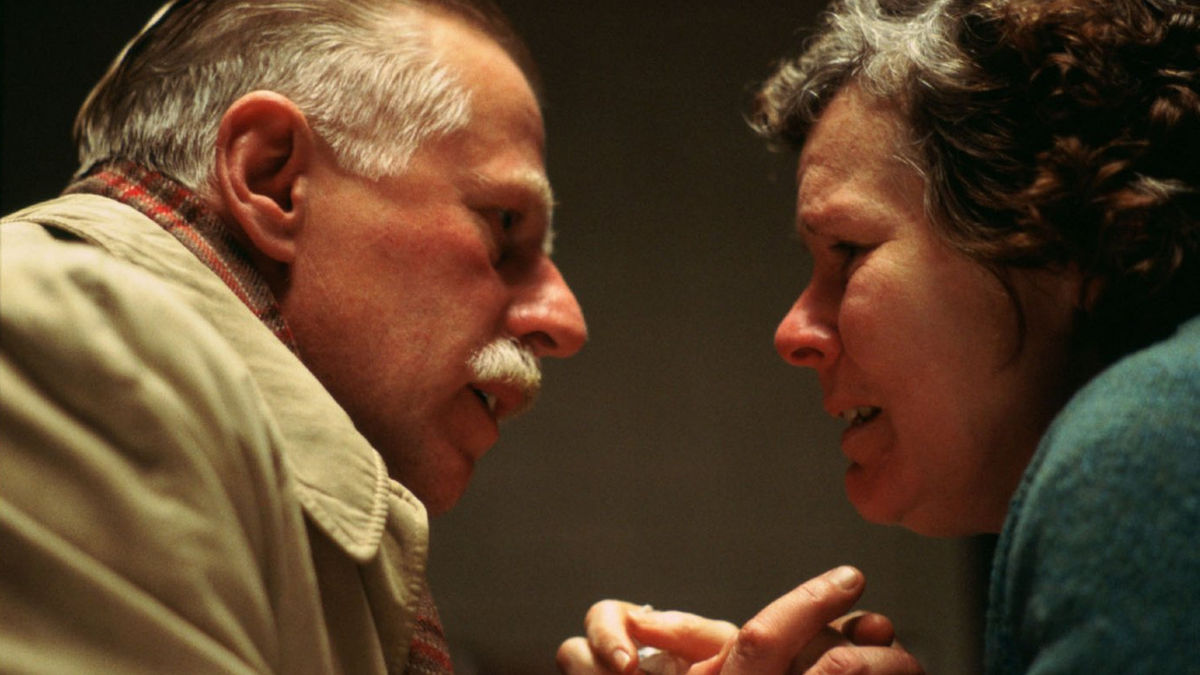
Then the arrest comes. This sequence – and the rest that follows – is frankly extraordinary. Staunton’s face when she sees police is a heart-breaking thing of wonder – a horrified realisation that what she has dreaded for decades has finally happened and the realisation that the world as she knew it is over. Throughout she is astoundingly fragile. Barely able to speak, mute with shock – and horrified to hear one of her girls nearly died (it’s never revealed what went wrong). Her first thought is the girls health and how this will ruin her family’s celebration of Ethel’s engagement. So warm and joyful has the first half of the film been, we feel the shocking coldness as the law goes about – albeit with a regret, beautifully underplayed by Peter Wight’s sympathetic detective and Helen Coker’s gentle WPC – the black-and-white business of cataloguing wrongs.

Staunton is extraordinary: she shrinks and diminish, terrified and mortified. The reactions of her family – confused then stunned and in some cases appalled – feel immensely true: some jump forward in support, others in anger. Phil Davis’ deeply moving performance sees Stan suppress his anger under love. Mays’ Sid rages, Heather Craney’s Joyce is resentful, Scarborough’s Frank is a pillar of support, Alex Kelly’s Ethel quietly holds her mother and will not her go. The emotion of this is so affecting as it feels so real: when Reg quietly shows his support and later gently says the disastrous post-arrest Christmas is the finest he has ever had, you’ll feel tears spring to your eyes.

The relentless march of the law is chronicled perfectly by Leigh. This is a director at the top of his game, creating a low-key film that switches on a sixpence from warmth and familial love to shattering emotional impact. Staunton’s performance is breathtakingly brilliant, avoiding all histrionics and will break your heart. The entire cast is astounding. The research and filming is exquisite. The film will quietly devastate you, but also remind you that nothing is more reassuring than the fundamental goodness of people. A beautiful, moving, masterpiece of a film.

The Bounty (1984)

The Bounty (1984)

Hopkins and Gibson present a more historically-accurate Bounty movie that’s serious but solid

Director: Roger Donaldson

Cast: Mel Gibson (Fletcher Christian), Anthony Hopkins (Lt William Bligh), Laurence Olivier (Admiral Hood), Edward Fox (Captain Greetham), Daniel Day-Lewis (John Fryer), Bernard Hill (William Cole), Phil Davis (Edward Young), Liam Neeson (Charles Churchill), Wi Kuku Kaa (King Tynah), Tevaite Vernette (Mauatua), Philip Martin Brown (John Adams), Simon Chandler (David Nelson)

The story of the mutiny on The Bounty has intrigued for centuries. It’s been made into plays, novels and no fewer than three films. Most versions have been inspired by a 1932 novel that painted Bligh as an ogre and Christian as a matinee idol. That image was cemented by the classic Best Picture winning Laughton/Gable version. The real story is far more intriguing – and operates much more in shades of grey – and this 1984 film tries to find a middle ground, with mixed success.

In real life, Bligh was a prickly, difficult but fundamentally decent man, who had worked his way up the naval ranks through merit. He was a superb sailor – as seen by his feat of navigating a small open boat of loyalists over hundreds of miles back to a British port. Cleared of any guilt for the mutiny, he had a successful career and retired as Vice Admiral. Fletcher Christian, on the other hand, was an entitled young man who owed everything to his rich family, rather than merit. The truth has been lost in fictionalised versions who were devil and saint. The truth was far more complex.

This film was a long-standing dream of David Lean, who planned the film for many years, before pulling out at the last moment. The script was written by long-time collaborator Robert Bolt (although ill health meant it was finished by an uncredited Melvyn Bragg). Producer Dino de Laurentis – not wanting to write off the money invested – bought in Australian Roger Donaldson to direct. The final product is a competent, if uninspired, middle-brow history film with a slight air of stodge, and a haunting – if incredibly 80s – electronic score from Vangelis. Where the film really lucked out is the superb cast of actors assembled, with Gibson on the cusp of mega stardom and the cast stuffed with future Oscar winners and nominees.

Anthony Hopkins had been attached to the film for almost seven years, and his carefully researched performance as Bligh is what really gives makes the film work. He gets closer to the personality of the real Bligh than anyone else ever has. Awkward, shy, uneasy with men under his command, insecure at his poor background and the West Country burr to his accent, Hopkins’ Bligh is a world away from a bad man. But he is a demanding and rigid leader, who inspires fear but not respect. He’s far from cruel, but he’s short-tempered, inflexible and has trouble empathising. All too often, he relies on his position alone to ensure obedience, rather than building respect. You sympathise with him, at the same time becoming deeply frustrated at his intransigence. You can understand why many would find him an extremely difficult man to work with (let alone work for).

Fletcher Christian is young, naïve and impetuous, a man whose experiences in Tahiti lead him to become surly and impatient with the confines of a naval life. Gibson later said he felt the film didn’t go far enough to depict Christian as selfish and motivated by a desire for the ‘good life’, and the film does try to show him standing up for the crew against Bligh’s demands for perfection. But Gibson is willing to embrace Christian’s darkness. He hurls himself into the (historically attested) near mental collapse, consumed with violent and unpredictable emotion, that Christian demonstrated during the mutiny, losing all control of himself in an explosion of self-pity and frustration.

The film’s highpoints revolve invariably around these actors. Hopkins’ demanding Bligh sets the tone on the ship. The roots of the mutiny can be seen in Bligh’s public bawling out (and demotion) of his first officer Mr Fryer (a disdainful Daniel Day-Lewis) in front of the entire ship, setting a precedent for disrespect. Every action he intends to build spirit and health in the crew has the exact opposite effect (from pushing them to excel, to enforced dancing sessions for exercise). Hopkins is perfect as man believing he is acting for the best but constantly getting the tone wrong, either too distant and reserved to inspire affection, or too enraged to inspire loyalty. Similarly Gibson, in the less intriguing part, really sells the growing self-absorption of Christian, especially his feckless weakness, easily manipulated into actions that go a step beyond his desires (Phil Davis is very good as a darkly Iago-ish Ned Young, using Christian’s popularity to his own ends).

However, the film itself is a little too traditional. Using Bligh’s trial (all captains who lost their ship were placed on trial to judge their responsibility) as a framing device brings us slightly too many interjections of the “and then you did this” variety – even if it allows actors as impressive as Olivier and Edward Fox to narrate us through the film. This stodgy structure carries us into a narrative that is professionally handled but lacks inspiration, ticking off events but not giving them a force outside of the performances of the actors. The film is competently but not inspiringly made, and never quite captures the sense of the epic that the location and scale should bring.

Perhaps this is because a true-to-life version of the mutiny is a little less traditionally dramatic. Despite some truly impressive performances from the leads (and the rest of the superbly chosen cast), it never quite shakes off the feeling of being a history lesson.

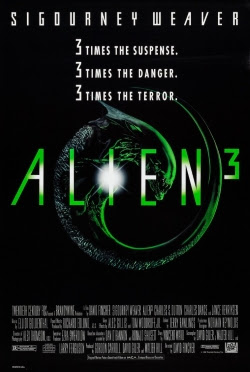
Alien 3 (1992)

Sigourney Weaver goes through the motions again in Alien 3

Director: David Fincher

Cast: Sigourney Weaver (Ellen Ripley), Charles S. Dutton (Leonard Dillon), Charles Dance (Dr Jonathan Clemens), Brian Glover (Warden Harold Andrews), Ralph Brown (Aaron), Paul McGann (Golic), Danny Webb (Morse), Lance Henriksen (Bishop), Pete Postlethwaite (David), Peter Guinness (Gregor), Christopher Fairbank (Murphy), Phil Davis (Kevin), Niall Buggy (Eric)

Few films feel more like a grim contractual obligation than Alien 3. If you want a real blood bath, you’d get more entertainment from reading about the tortured history of its production. Over nearly six years it saw off several scripts, at least two directors (including David Fincher resigning over continual studio interference) and Sigourney Weaver only agreeing to do the film if she was killed off at the end (well that and a big pay cheque).

All of this ended up as a depressing, grim and largely unenjoyable mess that goes over the same old ground as the first two films, but with diminishing returns. After the events of Aliens, our heroes ship crash-lands on a prison planet. Everyone on board is killed other than Ripley (we’ll come back to that…). The planet is populated by criminals who have embraced religion, led by Dillon (Charles S. Dutton) and a small staff of warders (Brian Glover and Ralph Brown) and Dr Clemens (Charles Dance). The company orders Ripley to sit tight and get picked up. But did an Alien on the ship lead to its crash? Is there now an alien on the planet? And is Ripley carrying an Alien inside of her?

It won’t surprise you to hear that the answers to all these questions are of course “yes”. And the film takes a painfully long time to get there. This is made all the more painful by the shockingly, uninvolving grimness of the story’s telling. Nowhere is this more clear than in the ruthless killing off of the surviving characters from Aliens. After the warmth and humanity of that story – and Cameron’s skilled creation of a family dynamic between Ripley, Hicks and most especially the mother-daughter bond between Ripley and Newt, it’s hard not to feel that their brutal off-screen deaths are a real slap-in-the-face. At a stroke all the character development of the previous film is negated. And so we get back on the treadmill of another monster hunt.

It’s not helped either by the fact there is hardly a character here you could give two hoots about. The prison is almost completely staffed by British character actors, peppered with the odd American. The script totally fails to give any of these people really distinctive personalities at all, before the Alien starts munching through them. On top of which the lazy script is littered with effing and jeffing, that serves to make the characters very angry all the time and even less engaging. The film’s most interesting new character, troubled Dr Clemens (a decent performance of world-weary sadness from Dance) is dead by Act Two, and the rest are basically an identikit pile of same-old-same-old. Dutton gets some good speeches as the prisoner’s morally complex leader, but he’s fighting an up-hill battle against turgid dialogue and tired old plotting.

Already by Alien 3 it feels like the franchise was out of ideas. Yet again “the company” is up to no good, only interested in making a buck off the creature. A post-industrial landscape again sees a number of people killed off in ever more familiar ways. The alien looks a bit like a dog this time (or an Ox if you watch the longer and even duller extended cut), but that’s about the most original thing here. And at the centre of the misery we have a grimly resigned and disinterested Weaver, who seemingly can’t wait for that Alien to burst out of her chest and end her association with the franchise for good.

It’s very hard to find anything enjoyable at all about this film. And it feels odd to say that about a film which is about people being brutally murdered one-by-one by an alien. But the others had touches of hope, humanity and demonic poetry to them. This is just a parade of slumming it British character actors, playing foul-mouthed rapists and murderers, getting torn apart. And then the film ends with a colossal downer even more downier than all the rest of the sludge you’ve had to sit through.

Basically Alien 3 reminds us that, with the monster as a motiveless killing machine, there weren’t many places to go with it. It’s not like it could suddenly reveal a motivation or something. So it seems the franchise was doomed – as it has been almost ever since this – to be a familiar parade of facehuggers, dark rooms, slow builds as people meander towards death down corridors, blood splatter and people who barely qualify as characters meeting grisily ends. Alien 3 is depressing and unrewarding in so many ways.

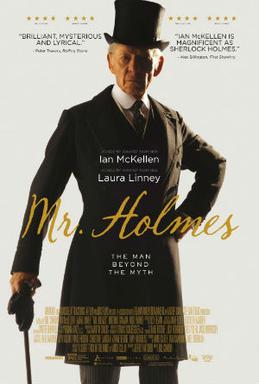
Mr Holmes (2015)

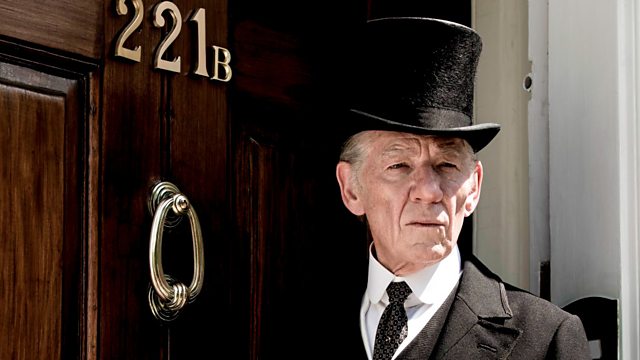
Ian McKellen is an ageing Sherlock trying to understand his past in Mr Holmes

Director: Bill Condon

Cast: Ian McKellen (Sherlock Holmes), Laura Linney (Mrs Munro), Milo Parker (Roger Munro), Hiroyuki Sanada (Taiki Umezaki), Hattie Morahan (Ann Kelmot), Patrick Kennedy (Thomas Kelmot), Roger Allam (Dr Barrie), Phil Davis (Inspector Gilbert), Frances de la Tour (Madame Schirmer)

It’s 1946 and over 35 years since Sherlock Holmes (Ian McKellen) last investigated a case. Living in retirement with his bees in Devon, with his housekeeper Mrs Munro (Laura Linney) and her inquisitive son Roger (Milo Parker), 93-year-old Holmes’ final “case” is to try and combat the deterioration of his own mental faculties. This focuses on his attempts to remember the details of his final case, investigating the wife (Hattie Morahan) of a client, a case where he knows something went terribly wrong, but cannot recall the exact details.

Condon’s film is a quiet, gentle piece which primarily becomes a character study of the Great Detective, trying to locate the man inside the thinking machine. This is a Holmes unlike any other, haunted by past mistakes and scared of losing the intellectual abilities that have been his principal purpose. Condon’s film also makes clear that much of what we know about Holmes was a cheeky “embellishment” by Watson in his stories – from the pipe and deerstalker to the address of 221B. This is a Holmes who failed all his life to form personal connections, and found this problem magnified by becoming a real-life fictional character, a person who knows no-one but is known by everyone.

This fascinating re-evaluation of Holmes is helped by Ian McKellen’s superb performance (in his second collaboration with Condon after Gods and Monsters). McKellen’s ability to convey the intellectual sharpness of Holmes is matched by his vulnerability and fragility as he feels those same powers begin to fail. This is a Holmes who can still sharply deduce where someone has been from a quick analysis, but needs to write Roger’s name on his cuff to help him remember whom he is talking to. McKellen’s performance slowly reveals the longing for emotional connection and his own regrets at the isolation that has dominated his own life.

The expressiveness of Ian McKellen’s eyes comes into play here, both their capacity for joy – and this is a Holmes who takes an intense pleasure in his own acuity – and the way McKellen is able to allow these eyes to glaze over with forgetfulness and flashes of senility. He also forms a wonderful bond with Milo Parker (very good, genuine and real) as Roger, the two of them forming an odd couple relationship that also gives Holmes a beginning of an understanding of what he has missed from a life without family and friends. 

Alongside this fascinating character study, the actual storyline is fairly tame – but then that’s hardly the point. The modern day plotline takes in physical and mental decline, isolation, fracturing family bonds and post-war Japan (where Holmes travels in search of “Prickly ash” a plant he hopes will help to counteract his mental decline). But it’s really a quiet framework to change this Holmes into a man who sees the world only in terms of logic and puzzles, and must learn to see the humanity and emotions that underlie people’s actions. It’s a Holmes who must learn to appreciate feelings, to express them and to tell “white lies” to save people from pain.

It’s no surprise that the past sequences – where a spry McKellen also plays Holmes in his late 50s – also revolve around this. The investigation cheekily features spiritualism (the pseudo-science that obsessed Conan Doyle in his later days) but the real point is Holmes failing to understand the pain and loss that underlie the desire to believe in the possibility of life after death – that loss is a traumatic event that cannot be hand-waved away with a presentation of facts, but a has a real lasting impact on people. Hattie Morahan captures this wonderfully, in a quietly emotional performance as a grieving mother.

The final resolution of this I found slightly less satisfying – perhaps because I thought of actual “canon” stories that showed Holmes expressing far more emotional intelligence than this film gives him the credit for understanding here (e.g. The Yellow Face). I’m also not sure if this failure would really have left any Holmes punishing himself with 35 years of isolation with bees. But it fits with the film’s concept of a Holmes who finds himself pained by loneliness.

This loneliness is hammered home throughout. Mycroft, Hudson and Watson are long dead. Watson himself is implied to be a man who never understood Holmes, that the “fictionalised” Holmes became more real to him than the flesh-and-blood man. That on Watson’s part the friendship became about the stories, with Holmes always triumphant, rather than reflecting who he was. Holmes finds this disconnection between his inner self and the world’s perception hammered home at every turn – at one point the film shows him watching a Rathbone-esque film (where he is played by Nicholas Rowe, the actor from Young Sherlock Holmes), where the case that haunts him plays out with a traditional ease. Completing this disconnection, Watson remains unseen in the film: a stranger whom Holmes was tied to forever.

All this makes for a thought-provoking film, with a delightful performance from McKellen making a truly unique and original screen Holmes. There are a host of fabulous supporting performances – Laura Linney does fine work as his insecure, lonely housekeeper who feels she is losing her son to the detective – and the film is a gloriously entertaining Sunday afternoon treat, which will make you think again about a man whom the whole world knows, but who may not know himself.

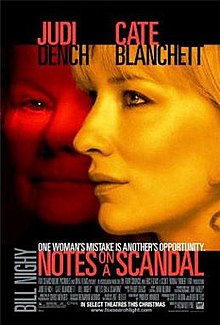
Notes on a Scandal (2006)

Cate Blanchett and Judi Dench battle with obsession in Notes on a Scandal

Director: Richard Eyre

Cast: Judi Dench (Barbara Covett), Cate Blanchett (Sheba Hart), Bill Nighy (Richard Hart), Andrew Simpson (Steven Connolly), Phil Davis (Brian Bangs), Michael Maloney (Sandy Pabblem), Joanna Scanlan (Sue Hodge), Tom Georgeson (Ted Mawson), Shaun Parkes (Bill Rumer), Emma Williams (Linda), Julia McKenzie (Marjorie), Juno Temple (Polly Hart)

Zoe Heller’s novel Notes on a Scandal makes superb use of an increasingly unreliable narrator to reveal the complications in the affair between a female art teacher and a young male student. It’s a device that doesn’t always carry across as well to film, but Richard Eyre and screenwriter Patrick Marber have still crafted a fine story about obsession and envy in all its different ways.

In an inner-city school, bohemian art teacher Sheba Hart (Cate Blanchett) is a new arrival, struggling to learn how to control her students. It’s a skill long-since mastered by jaded and bitter history teacher Barbara Covett (Judi Dench), who soon finds herself fascinated by the attractive and engaging Sheba. This relationship is complicated when she discovers that Sheba has begun a sexual relationship with one of her 15-year old students, Steven Connolly (Andrew Simpson), a student with a difficult record who has shown a surprising interest in art. As Barbara positions herself as Sheba’s only trusted confidant, the danger of discovery begins to become ever more likely as Sheba’s behaviour becomes more and more reckless.

The real strength of Eyre’s film are the two lead performances from Dench and Blanchett, a match-up surely made in casting heaven. Dench is superb in one of her best film roles, turning Barbara Covett into exactly the sort of shrivelled up, bitter spinster you are not surprised to learn has led a life of loneliness. Dench laces the performance with a sharp nastiness, masked behind a chilly professionalism, but she also makes clear the aching loneliness, the desperation and the ability to deceive herself that Barbara has, the longing to be loved but also the possessive obsession that drives love away.

She’s equally well-matched by Blanchett, at her most glamourous and natural as Sheba. One of the film’s strengths is the way it avoids giving spurious psychological reasons for Sheba’s obsession for this basically fairly unpleasant young lout. Blanchett identifies this sense of being trapped in Sheba, this desire to rebel and taste a little bit of freedom (in every home scene she is shown undertaking most if not all the housework and childcaring duties), feelings that mutate into a sexual obsession with Connolly. Blanchett is desperate, self-deceiving and hugely tragic, unable to fully express the reasons for her feelings herself, but unable to let go of her addiction to a new wildness and danger in her life that you feel she has never really felt before.

These two performances power a film that explores obsession and envy, with Barbara obsessed (to a scarily possessive and manipulative degree) with Sheba, exploiting Sheba’s own reckless and sexual obsession with Connolly. These feelings are shown to be often beyond the understanding of other characters, and both women ret-con events and reactions from the target of their obsessions to build elaborate fantasy worlds. It’s the danger of obsession here, the way we shape the facts to meet our desired preconceptions. It doesn’t matter what reality, or what anyone else, says – you want to believe what you want to believe.

And it’s these obsessions that lead people both to take unbelievable risks and also to feel a crushing sense of envy and possession. Both Barbara and Sheba can barely tolerate the idea of their loves focusing attention elsewhere, and despite seeming to have so much control in their relationships are helpless victims. Sheba is reduced to begging tears when it feels like her relationship with Connolly is burning out. After all is revealed, Barbara’s efforts to take control of Sheba’s life are revealed to be powered by an almost desperately sad need to believe that Sheba and she are starting a new life together. So deep is Barbara’s denial about her own lesbianism (and so extreme her unhappiness about herself), it’s a romantic vision she is so deep in denial feels unable to even begin to put any sexual dimension onto.

Envy and human frailty run through the whole film. Most of the teaching staff, especially Phil Davis’ sad-sack maths teacher in love with Sheba, carry their own small obsessions and envies. Sheba’s husband himself left his first wife for Sheba when she was one of his students. The students have more than enough rivalries to deal with. 

It’s a deadly circle, with contact breeding obsession, breeding envy. To get such an effect, Marber’s adaptation needs to streamline the book. The biggest loss as a result is the book’s slow, creeping, realisation that Barbara is a deeply arrogant, bitter, unlikeable person who views most of the people around her with contempt. Here Dench’s waspish voiceover immediately makes it clear to the viewer that she is not that nice a person. It’s a shame, as it rather signposts for the viewer where the film may be heading. 

The storyline also races through the book (the film is less than 90 minutes) which means it often feels more like a melodrama. While I think it’s a strength that the film doesn’t try and give a real reason for Sheba’s decision to seduce (or be seduced) by her student, other than to hint at her own sense of bohemian freedom being lost at home, I can see how others will find the reasons for why the radiant Sheba is so drawn to such a surly kid rather hard to accept.

But it still works, because the film is so well-played. With Dench and Blanchett at their best (and excellent support from Bill Nighy, quietly superb as Sheba’s husband, a decent guy who can’t believe his luck that he is married to such a wonderful woman, and whose world falls apart in bitter recrimination), it’s a film that gives more than enough rewards. The film gives us a decent ending from the book, with more hope for Sheba – but the balance suggests that for Barbara the cycle of obsession will only continue. Heaven help anyone who sits down on a park bench next to her.