Tag: Political dramas

Vice (2018)

Christian Bale slaps on the make-up as Dick Cheney in Vice

Director: Adam McKay

Cast: Christian Bale (Dick Cheney), Amy Adams (Lynne Cheney), Steve Carell (Donald Rumsfield), Sam Rockwell (George W Bush), Alison Pill (Mary Cheney), Lily Rabe (Liz Cheney), Jesse Plemons (Kurt), Tyler Perry (Colin Powell), Justin Kirk (Scooter Libby), LisaGay Hamilton (Condoleezza Rice), Eddie Marsan (Paul Wolfowitz), Bill Camp (Gerald Ford), Don McManus (David Addington)

There is a film to be made about the turmoil of the Bush presidency. It’s not this film. Adam McKay’s flashy, clumsy, cartoonish, smug, tedious, overlong, arrogant and polemical film quickly outstays its welcome, drowning any legitimate ideas and theories it has under a wave of high-minded, angry shouting at the viewer, frequently mistaking flash and bombast for actual political insight and producing the sort of heavy-handed, angry political commentary that wouldn’t look out of place in a cheap student review. And flipping heck I’m on the liberal left!

Anyway, the film follows the career of Dick Cheney (Christian Bale under an impressive pile of make-up) from his early wash-out days. Told by his wife Lynne (Amy Adams) to buck his ideas up or lose her, Cheney becomes an intern for Congressman Donald Rumsfeld (Steve Carell), rising through the ranks due to his ruthless efficiency and loyalty, becoming Chief of Staff under Ford and Secretary of Defence under Bush. So he’s a natural choice for the inexperienced George W Bush (Sam Rockwell) to balance the presidential ticket. In return, though, Cheney wants control over a few areas – energy, foreign policy, defence etc. etc. – that the lazy Bush has no interest in overseeing. So a quiet, backroom politician changes the office of the Vice President to become the most powerful man in the world. Boo hiss.

McKay’s intention with this film is to reveal the hollowness, greed and utter lack of integrity in its subject. Well he never lets us forget this aim – I don’t think I’ve ever seen a film that so openly hated its lead character, which so completely refused to see any redeeming qualities in him whatsoever. Christ, even Downfall took a few minutes to show Hitler was generally kind to those who worked for him. The film is so unrelenting in its loathing for Cheney that it starts to feel like a being shouted out for over two hours by an “it’s the end of the world” fanatic on a street corner. This does not make for good entertainment.

The film has no subtlety whatsoever. Not for a single second does it even consider the remote possibility that anyone in the Republican party might, perhaps, just maybe, even if it was only some of the time, believe that they were doing something for a principled reason, even if it was a principle those on the left don’t agree with. Instead, all the characters are shown as selfish, greedy and corrupt, using ideology solely to gain power and then using power only to enrich themselves. It’s the sort of lazy political views that turn people off liberals – the idea that anyone who doesn’t share a liberal viewpoint is by definition evil. Some of us grew out of this kneejerk assumption that everyone who doesn’t agree with us is self-serving and cruel. Not McKay. 

On top of which, McKay’s film is made with the overt flash and brio that is the hallmark of the hack director using the tools of cinema with no understanding of their proper use. Wonky camerawork, cutting between timelines, throwing in newsreel footage, breaking the fourth wall, using strange camera angles, chucking in cameo actors to amusingly comment on events (Alfred Molina and Naomi Watts principally) and editing it with flash don’t make you a great director. They make you someone who has seen a lot of films and lot of techniques, but has no understanding of how to use them to craft an overall effect, instead thinking that if you throw all of them at the wall at once, you’ll be a master craftsman.

The film is full of studenty bits of invention that must have seemed oh-so-clever on paper in McKay’s script. Forty minutes in, with Cheney’s career looking over with the end of the Bush presidency, McKay starts running the credits – only to snap back into the film with the fateful phone call from Dubya. It’s clever and raises a quick chuckle, but doesn’t add anything to a sense of turning point in Cheney’s life. It’s followed by a clumsy metaphor of moments being like tea cups balanced on top of each other (inevitably these are later shown tumbling down) to represent how key moments of history build on each other. The real nadir is a moment when Dick and Lynne fall back into cod-Shakespearean dialogue in the bedroom as they discuss a possible vice presidency. ‘We don’t have Shakespeare’s psychologically insightful dialogue’ (I paraphrase) says the voiceover, before this skin-crawling hand-in-mouth sequence that shows McKay knows as much about Shakespeare as he does subtle political commentary.
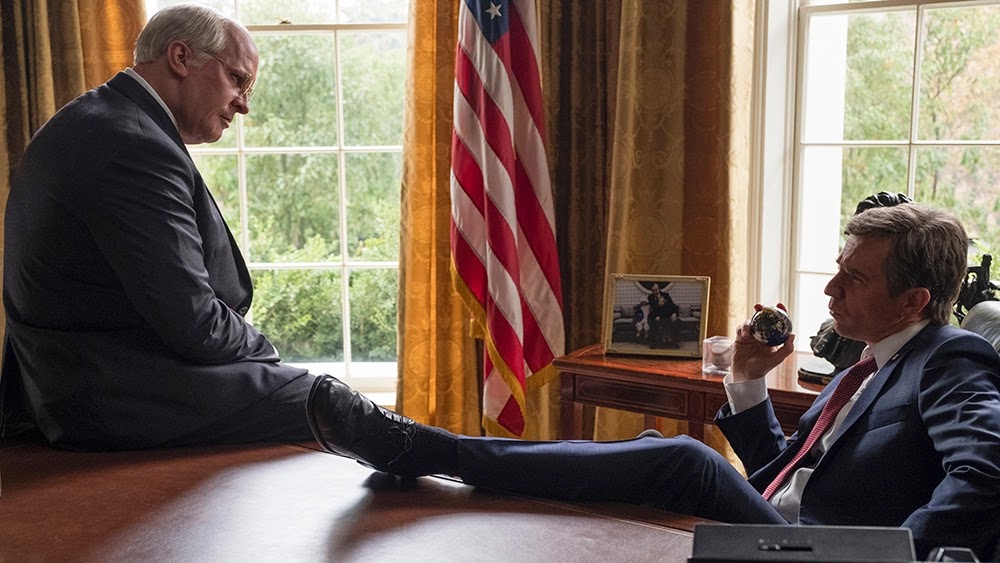
Ah yes the voiceover. Perhaps not knowing how to marshall his childish political points in actual scenes and dialogue, McKay uses a voiceover from Jesse Plemons’ ground-forces marine to spell out as bluntly and crudely as possible the basic and trivial points it wants to make. The damn film already feels like being hectored by a crank, so why not make it feel even more like a polemic by having a character bitterly explain why everything is wicked and evil at you? The narration bores – and joins the general feeling of the rest of the film, that it goes on forever and ever and ever and never, ever, ever says something really interesting or revealing.

The performances are a mixed bag. Bale gives a decent turn as Cheney, capturing his mannerisms and conveying a sense of dark ambition, but it’s a role he could play standing on his head. Amy Adams turns Lynne into a Lady Macbeth, in a reheat of her performance from Paul Thomas Anderson’s The Master. Every other performance is a crude cartoon – Carell’s Rumsfeld a putty-faced joke, Sam Rockwell’s Bush (an impossibly generous Oscar nomination) a cartoonish buffoon. Everyone else coasts through it, patting themselves on the back.

There is an argument to be made that Cheney’s legacy is far from good, and it’s certain that we are paying a heavy price for interventions in Iraq. Many of the policies were less than savoury and left a less than positive benefit. But this film hammers these points home with all the charm of a ranting, drunk politics student who has read one book and watched a lot of YouTube videos. With McKay’s soulless, clumsy, look-at-me direction layered on top, this is a flat out terrible film. Save yourself what feels like much more than its two hour run time. In fact I’ll summarise it for you: CHENEY IS EVIL AND HORRIBLE AND HE (LITERALLY) HAS NO HEART. There you go. You don’t need to see it now.
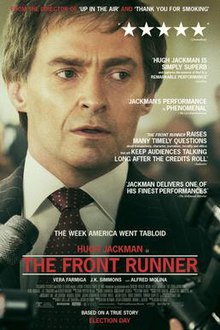
The Front Runner (2018)

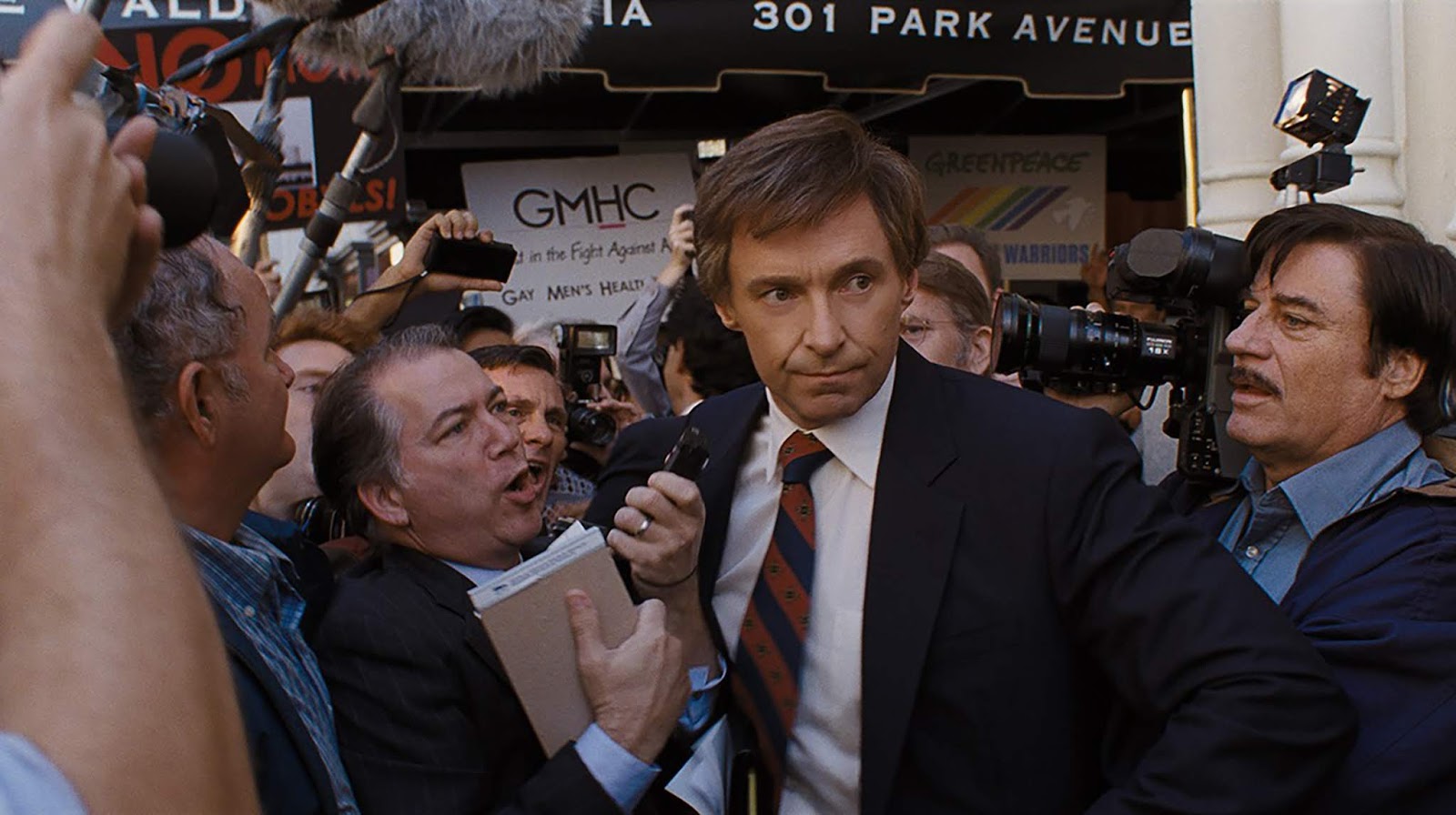
Hugh Jackman in the centre of a media scrum in misfiring biopic The Front Runner

Director: Jason Reitman

Cast: Hugh Jackman (Gary Hart), Vera Farmiga (Lee Hart), JK Simmons (Bill Dixon), Alfred Molina (Ben Bradlee), Sara Paxton (Donna Rice), Mamoudou Athie (AJ Parker), John Bedford Lloyd (David S Broder), Spencer Garrett (Bob Woodward), Steve Coulter (Bob Kaiser), Ari Garynor (Ann Devroy), Steve Zissis (Tom Fiedler), Bill Burr (Pete Murphy), Mike Judge (Jim Savage), Kevin Pollak (Bob Martindale)

In the 1988 Democratic primaries, Gary Hart (Hugh Jackman) was the man to beat: a telegenic liberal with an attractive programme of policies and a forward-thinking vision for America. No one could beat Hart. Except for Hart himself. A man with a history of affairs, he became embroiledin a sex scandal after an ill-advised friendship (the film is coy on taking a stance on whether this friendship was sexual or not) with a young woman, Donna Rice (Sara Paxton). Angrily denying anything was going on, Hart unwisely challenged journalists to follow him: which the Miami Herald did, soon finding Hart had skipped campaign events to invite Rice to come and stay with him at his Washington home for a long weekend… Cue a media snowstorm and an imploded campaign.

Reitman’s film is a pretty decent chronicle of this early media sex scandal. I say pretty good because it does what it sets out to do with a solid observation of the facts and a general even handedness between Hart and the media. However it never really quite sparks into life, and Reitman’s attempt to make this story into something with huge relevance for how the modern media has developed, and how the world of politics has led us to Trump, just doesn’t really work. 

What the film instead becomes is a slightly dry but enjoyable enough docu-drama, that covers a period of history that should feel tumultuous and should create a sense of setting the table for the future but doesn’t. The idea that it was only at this point that American politicians suddenly had interest from the press in their personal lives is nonsense for anyone who had even a passing knowledge of the careers of Kennedy and Nixon. The film’s attempt to make us sympathise with Hart is also undermined by the high-handed arrogance with which he treats even the slightest inquiry into his personal life from anyone, be it press to members of staff who simply want an explanation of why their leader consistently demonstrates such astonishing poor judgement.

This is despite a decent performance of charisma from Hugh Jackman, possibly better than Hart deserves. The film does demonstrate – amidst its general sympathy for Hart – his willingness to throw Donna Rice under the media bus and his stubborn refusal to acknowledge any wrong-doing on his own part. I can’t say I actually really felt much sympathy for him over the course of the film, which I’m not sure was the film’s intention.

Neither did I really feel the film really skewered journalism. I think it wants to lay a suggestion that this was the first descent on a slippery slope, where gutter press, personality led journalism led to only egotists of mediocre talent wanting to take on the challenge of running the country. Or rather, that we get the politicians we deserve. While you could say there is some merit in this, I’m not sure this film manages to present that fully (Hart’s behaviour is at least partly self-destructive and would have been in any era) or that it really establishes that we are living in the shadow of times like this. And the investigation into Hart’s lies and evasions is hardly gutter press journalism. Neither does the film make a real case for Hart being some sort of potential great leader: while he has some decent, liberal, ideas he’s also short-tempered, lacks focus and has a tendency to snap at or cold shoulder underlings.

A bit of spin in the movie is got out of Jack Kennedy’s numerous affairs not being covered by the press. And while that is true, this seems less because of a natural shyness of the press, but rather because Kennedy was more astute at making friends in the fourth estate, and more willing to share parts of his life outside politics with them for stories (essentially, he made news for the press, making them more willing to keep quiet about his adulteries, while Kennedy avoided doing anything too blatant that the press would find impossible to ignore). Hart’s real problem was less that he was in a more censorious or gutter press era, and more that he was inept at press (and people) management, treating those around him with high handed contempt, mixed with challenges and threats. The film could almost be a textbook on how not to use the media.

It’s telling Hart’s only real relationship with a reporter in the film is with a young, impressionable (and fictional) Washington Post journalist (played very well by Mamoudou Athie). Hart comforts him through a mild panic attack during a flight and they develop a friendship, which I think the film wants us to think the journalist betrays by asking Hart the difficult questions about his lack of faithfulness and proclivity for affairs (all pretty well documented historically). I’m not sure that is the case. Surely, by this stage almost any thinking human beingin the States was asking these questions, and by putting them to the candidate, surely this journalist was simply doing their job? The “tragedy” of Hart was his incompetence at working with people, rather than his questionable private activities being brought to light.

The film struggles with all these themes and I don’t think it really successfully tackles any of them. The case it tries to set out doesn’t really work and, despite some fine observational moments of politics in action and a good performance from Jackman, it never really takes flight as it should. It’s a decent effort but a misfire.

The Motorcycle Diaries (2004)

Gael Garcia Bernal and Rodrigo de le Serna go on a road trip in Che Guevera biopic The Motorcycle Diaries

Director: Walter Salles

Cast: Gael Garcia Bernal (Che Guevera), Rodrigo de le Serna (Alberto Granado), Mia Maestro (Chichina), Mercedes Moran (Celia de la Serna), Jean Pierre Noher (Ernesto Guevara Lynch), Facunda Espinosa (Tomas Granado), Lucas Oro (Roberto Guevera), Marina Glezer (Celita Guevara)

In 1952, Che Guevara – posters of whose face are as synonymous with students as baked beans and debt – is a young man in his early 20s, heading out for one final adventure with his friend Alberto Granado. They intend to motorbike the entire length of South America, from Buenos Aires to a leper colony in Peru. The journey will solidify Che’s views on socialism and help to shape him into the legendary idealist socialist revolutionary he will become. That’s the story of Salles’ film, the sort of film that will have a never-ending appeal to anyone who ever had a romantic interest in revolution history.

Sadly I don’t have that sort of passion, so I found it hard to be swept up in the romance of Guevara’s views, and Salles’ ambling, largely plotless film struggles to give you a real reason to care if you haven’t got a pre-existing admiration for its subject. Which isn’t to say this is a bad film – it’s certainly not – but it’s the sort of film that requires the viewer to have an investment from the start. It’s certainly a lot better – and gives a much better sense of Guevara’s character – than Steven Soderbergh’s thuddingly average Che double bill, but it’s still a rather drifting road movie.

The nature of all road movies is of course that they go from location to location, with each one throwing up a different collection of characters. I’ve got to be honest, none of these characters are particularly engaging or interesting, falling as they do into three categories: duped middle classes, attractive women who are duped or charmed by our two heroes, or sickly, poor or dying working classes whose suffering helps shape Che. It’s decent enough, but once you’ve seen it repeated a couple of times you don’t really engage in it much further.

It doesn’t help that the two leads don’t really change that much themselves over the course of the movie. I suppose that is at least a reflection of real life – and it does avoid the film cliché of “one life-changing journey”, but it also has a tendency to suck drama from the film. The real changes you see are that both characters’ pre-existing political views are both solidified – the difference being that for Guevara this will become his life’s work, whereas for Granado it will become a driver for his decision about where to take his work.

All this is no comment on the twin lead performances by Bernal and de la Serna, both of which are excellent. Bernal is wrapped in charisma and youthful idealism, humane concern and empathy in every pore of his character, mixed with a genuine warmth and enthusiasm as well as an excellent sense of humour. You can see why the latter attributes have drawn Granado to Che – and de la Serna is equally wonderful as a charming bon vivant with a heart and conscience. 

Salles’ film is told with sweep and beauty, crammed with excellent camerawork. The road trip looks beautiful, and the film is extremely well cut and paced. While Salles does not quite extend the journey into a real interior exploration of his lead character, it does really capture the romantic poetry both of idealistic socialism and this On the Road type journey. Salles also mixes the tone extremely well of a film that turns from moment to moment from a social issue drama to a near knock-around comedy.

What he does slightly less well is to open the drama up to the unconverted. The moments used to demonstrate the poor and downtrodden essentially boil down to sad scenes where the sick and dying talk through their pain with Che. At several moments, the actors portraying the poor gather in monochrome line-ups to stare soulfully down the lens of the camera. It’s hardly a real search for the reasons or causes of poverty in South America, or an insight into the reasons for the differences between the working classes and the middle classes. It’s not a film that is trying to develop a political understanding, which is ironic considering it explores (or claims to) the life of one of the most political figures of the twentieth century.

Saying that, The Motorcycle Diaries has many, many strengths – even if I didn’t bond with it as much as I imagine many others will do. It’s an extremely well-made, dressed up, road movie that is full of events and a certain level of character insights – but doesn’t scratch down far below the surface to help you really understand the man or the times. It’s beautifully made and wonderfully performed – and it has real moments of youthful joy – but I just didn’t feel as strongly about it as I felt I should.

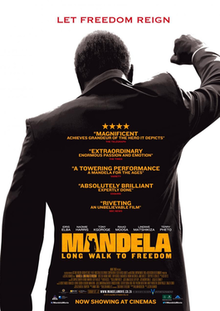
Mandela: Long Walk to Freedom (2013)

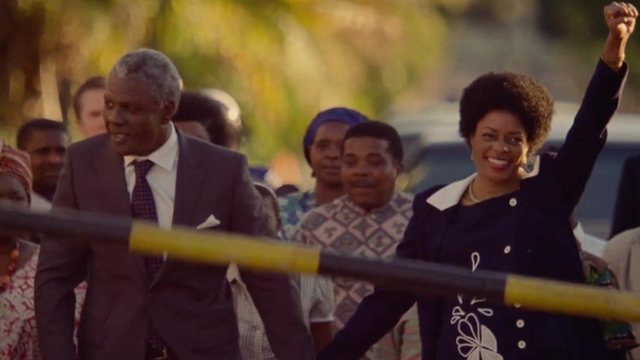
Idris Elba and Naomie Harris reconstruct the life of Nelson Mandela in illustrated slide-show movie Mandela: Long Walk to Freedom

Director: Justin Chadwick

Cast: Idris Elba (Nelson Mandela), Naomie Harris (Winnie Mandela), Tony Kgoroge (Walter Sisulu), S’Thandiwe Kgoroge (Albertina Sisulu), Riaad Moosa (Ahmed Kathada), Zolani Mkiva (Raymond Mhlaba), Jamie Bartlett (James Gregory), Simo Mogwaza (Andrew Mlangeni)

In the 1980s, hagiographic epic biopics that aimed to tell the story of the subject’s whole life were all the rage. In fact they were frequent Oscar behemoths. It’s easy to imagine that, if it had been released 20 years earlier, Mandela: Long Walk to Freedom would have been garlanded with awards for its attempt to capture every major moment in Nelson Mandela’s life from birth to his becoming President of South Africa. Sadly for the film, it wasn’t.

The fashion nowadays, for biographical films about major figures like Mandela, is to make a focused story about one key incident in their lives and from that build up an understanding of what made the man. Spielberg’s Lincoln focused on the immediate struggle to get the abolition bill passed. Du Vernay’s Selma looked at Martin Luther King’s involvement in the Selma marches. Eastwood’s Invictus looked at a newly-elected Mandela trying to use the Rugby World Cup to bring a nation together. Mandela: Long Walk to Freedom ironically goes the opposite way and tries to sprint through every single event of Mandela’s life. Doing so, it manages to be a less affecting, less involving and less engaging film than Invictus.

The rush is so intense to get through events that every scene feels like it has been cut down to deliver the vital bullet points and nothing more. Scenes rarely go over a couple of minutes, and most are comfortably under a minute. The general structure of most of them is roughly the same: a character will argue with Mandela (if black) or say something distasteful or racist (if white), Mandela will say something wise and inspiring that sounds like a direct quote from the book. Cut to the next scene.

This means that events fly by with little context and no real understanding. In fact, it feels like without having read the book and boned up on South African history in advance, most of it will mean nothing to you. Years can go by with a single snip of the editor’s scissors. Clashes and riots – particularly in the final third of the film – take place, but we are given no idea why or what the root causes of them were. 

Other events skim by so quickly that they lose all meaning or dramatic impact – in about 15 minutes of the film we cover Mandela arriving at Robben island, ill treatment and contempt from the guards, Mandela’s resolution that they will gain the right to wear proper trousers as a step towards being treated as humans, abuse from the prison governor, Mandela learning to control his anger, the prison governor leaving, a new governor arriving off camera, the regime lightening and finally the prisoners celebrating getting their trousers. If you think that sounds rushed here, imagine what it feels like watching it. All the narrative links between the scenes are severed – how did Mandela win the right to wear trousers? We have no idea. It sounds like a little thing, but it’s symptomatic of the problems of the film. 

This is despite a promising start, with a young Mandela fighting for justice and against prejudice in the courts of South Africa (winning cases because the racist whites refuse to be questioned by a black lawyer). The film is quite daring in showing the warts and all of the younger Mandela – his affairs, his ill-treatment of his first wife, his flirtations with violence – and there are flashes later on in the increasingly troubled relationship with his second wife, Winnie. But it soon loses these humanising touches under the pressure of ticking off events.

Justin Chadwick’s direction is largely flat – hamstrung as well by the film being cut so tightly to the bone. He fails to add any real epic sweep to the story, and largely struggles to convey the huge social and political issues that were tearing South Africa apart. As such, he’s often forced into holding a largely static camera in place to capture the four or five speeches that form each scene.

The  main bright spark in the film is the two lead performances. Idris Elba captures Mandela’s mannerisms and voice perfectly, but also brings a real humanity and empathy to the role – he largely manages to defy the film’s attempt to turn Mandela into a lofty marble carving of a man, not letting the human realism of his story escape. It’s a performance that feels very real and human – which is a far harder achievement than it sounds. Naomie Harris is all fiery radicalism and growing fury as Winnie (even more striking since she starts so young and naïve). One of the film’s real disappointments is that it rushes so fast through events that we never get a real, clear picture of the turbulent ups and downs of their marriage (the film is reduced to throwing some Mandela dialogue on his feelings into voiceover).

When the film finally ends it feels more like a sprinter with a stitch, too worn out to run any further through more years, than because it feels like it has made a point. It really wants to be Gandhi – but that film, despite its school-boy history faults, was patient, well paced, more focused and (crucially) an hour-plus longer. Mandela: Long Walk to Freedom compounds its feeling of being old-fashioned with being rushed and confused. For all Idris Elba’s admirable efforts, Mandela deserved better.

Peterloo (2018)

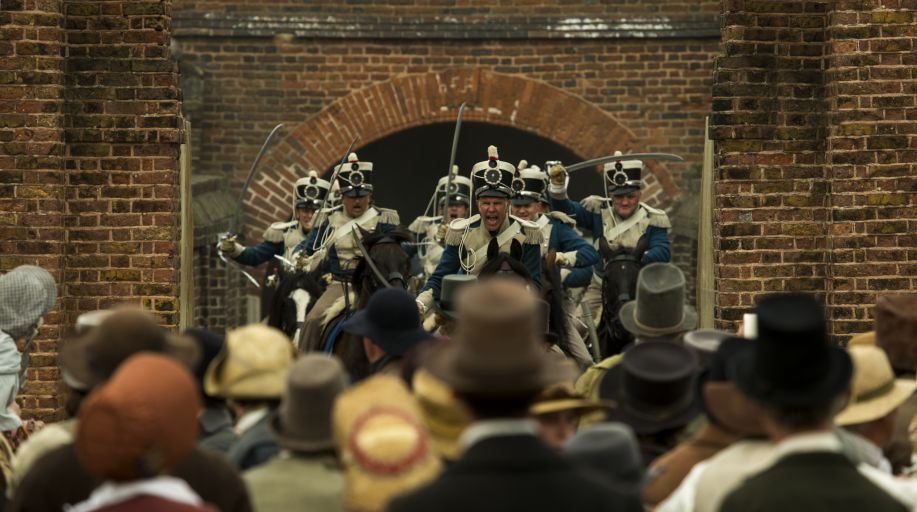
Mike Leigh’s passionate but dry, overlong film brings the Peterloo massacre to life

Director: Mike Leigh

Cast: Rory Kinnear (Henry Hunt), Maxine Peake (Nellie), Pearce Quigley (Joshua), David Moorst (Joseph), Rachel Finnegan (Mary), Tom Meredith (Robert), Simona Bitmate (Esther), Karl Johnson (Lord Sidmouth), Sam Troughton (Mr Hobhouse), Roger Sloman (Mr Grout), Alastair Mackenzie (General Byng), Neil Bell (Samuel Bamford), Lisa Millet (Jemima Bamford), Philip Jackson (John Knight), John-Paul Hurley (John Thacker Saxton), Tom Gill (Joseph Johnson), Lizzie Frain (Mrs Johnson), Ian Mercer (Dr Joseph Healey), Nico Mirallegro (John Bagguley), Danny Kirrane (Samuel Drummond), Johnny Byron (John Johnston), Tim McInnerny (Prince Regent), Vincent Franklin (Reverend Etlhelstone), Jeff Rawle (Hay), Philip Whitchurch (Colonel Fletcher), Martin Savage (Norris), Al Weaver (Hutton)

Perhaps one of the most pivotal moments in the struggle of the working classes to gain political and social rights was the Peterloo massacre of 16th August 1819, at St Peter’s Field in Manchester. At a meeting of over 60,000 people, officials ordered first the mounted yeomanry and then soldiers to attack and break up the crowd. At least 15 people were killed and hundreds more wounded, either from the indiscriminate sabre blows from the yeomen (probably drunk) and soldiers (unable to control the panic), or crushed in the frantic attempt to escape from the confined square. The immediate reaction from the authorities was praise at breaking up this “Bonapartist” piece of revolutionary nonsense. The lasting effect was condemnation of the brutality shown towards a peaceful demonstration and the massacre becoming a major cause celebre. It was ultimately influential in the passing of the Great Reform Act, which greatly extended the franchise and rebalanced much of Parliament (at this point so unbalanced by age old tradition that while some tiny hamlets returned MPs, the whole of Manchester had no representation).

It’s still an emotive subject for many today, and with this reverent film, overflowing with anger at the hypocrisy and injustice of the ruling classes, you can’t doubt that Mike Leigh and the makers of Peterloo are among them. But however sincere their personal passion about the subject is, what they fail to bring to the film is any real dramatic impetus to make us care. Instead this is an inert, over-long, often (if I am being completely honest) tedious film that takes nearly an hour to get going and then only offers flashes of dramatic interest before culminating in the massacre itself (very well shot and staged, but still itself a rather distant viewing experience).

 A large reason for this is the film is so reverential towards the campaigners for liberty, that the overwhelming majority of their scenes are given over to very good actors giving spirited renditions of actual speeches and pamphlets at a series of political meetings, shot with a reverent simplicity by Leigh. Much as it is can be interesting to hear quotes from things like this, by the time we are onto our twelfth political speech covering similar ground, delivered with another bout of fiery passion, you’ve started to glaze over. What we don’t get from many of these campaigners is any reason to really care about them – either as people or as part of a movement. Instead the film ends up like a cinematic Rushmore, carving their representations into celluloid for us to gaze up at in awe.

A similar fate befalls the working-class characters in the film, who are lacking any real character or story at all and whose main function seems to be to exist so we can experience both their misery and their awakening political awareness. Our main family is a group of mill workers, with Maxine Peake (does anyone do “hard-pressed working class stoicism hiding pain” better than Peake?) as the matriarch, welcoming her son home from Waterloo. These people talk at each other, quoting various current issues and bemoaning the hardness of living at a time of near universal poverty – but other than the fact that they are poor and suffering we are given very little reason to care for them. Like the rest of the working-class characters, they seem more like passengers in the film, meaning when the swords start flying, it’s actually very hard to get worked up as much as we should as members of this family are hacked down. 

The one exception in the entire campaign-side of the narrative comes with the introduction of “Orator” Henry Hunt, a prosperous middle-class man who became a famed agitator for working men’s rights. Wonderfully played, with a an air of arrogant grandiosity mixed with genuine commitment to the cause, by Rory Kinnear, Hunt shakes up the pattern the film settles into over its first hour. Acutely aware of his position as the nominal head of a national movement, Hunt has little patience (and even a touch of class-based distance) from the mostly lower middle-class campaigners he mixes with in Manchester (while never being anything less than scrupulously polite), and his fish-out-of-water awkwardness around them raises several laughs (the only ones of the film). Scenes in which he imposes his own conditions on the internal politics of the Peterloo meeting (who will speak, who will be on the podium, will there be weapons in the ground) not only feel more real than anything else we’ve seen in the film, but they are also far more entertaining and engaging than anything else connected to the massacre’s build-up.

Leigh was perhaps so hidebound by wanting to honour the men who campaigned for liberty that, other than with the larger-than-life Hunt, he seems too restricted dramatically – as if adding too much of that essential for drama, conflict, would somehow undermine them. Ironically he has far greater freedom with the authorities – and the film’s more engaging sequences (outside of those with Hunt) are all based around the arguments, clashes, plots and fury of the various levels of authority in the country, from the corpulent Prince Regent through the Home Office to the local magistrates.

The film gets more juice from its righteous anger at the unfairness, arrogance and hypocrisy of these men than it does from almost everything else. It also gives the actors playing these roles far more to work with. Karl Johnson stands out as a stammering but adamantine Home Secretary Lord Sidmouth, paternalistic but totally unwilling to budge an inch. The real stars, however, are the magistrates we follow in Manchester, each introduced trying a trivial case (drinking an employer’s wine, an argument over a watch, stealing a coat) with ludicrous hard-line punishments (flogging and imprisonment, transportation and execution respectively). Played with a lustful relish by Philip Whitchurch, Jeff Rawle, Martin Savage and most expressively of all Vincent Franklin (who nearly goes too far with the lip smacking, until a scene later we see even the Home Office officials eagerly reading his latest dynamite dispatch with a barely suppressed chuckles at his OTT rhetoric), these characters argue the fine points of law and lustily denounce the working classes with such fire and energy that you conversely get more wrapped up in their scenes than almost anything else in the film. Maybe Leigh felt he had greater freedom to create characters and drama here, but it does feel unbalanced.

All that said, the massacre itself when we reach it is brilliantly staged, immediate, deadly, meticulously reconstructed and filmed with a documentary anger at its brutality. You can sense the creeping tension throughout the film and the explosion of violence afterwards, for all the problems of the film, is genuinely horrifying. In fact it wraps you up so much, I wish the film had dealt more with the aftermath of the clash (there is a very good scene as stunned journalists walk St Peter’s Field with horrified fury) and the impact it had, rather than the film wrapping up swiftly with funeral of one of its working-class characters (it’s not a surprise which one).

But then that’s part of the whole film’s problem. It feels like a missed opportunity. It’s a stately civics lesson, a film that hammers home the importance of what it is presenting to you, but never really gives you a reason to invest in the real stories and passions behind the history. Instead it presents everything as important, because it is, rather than making it important to us. It feels at the same time a film that is preaching to the choir who already know this history back-to-front, and also a dry history lesson introducing it to a new audience. Either way it fails. Despite one or two good scenes, a dull, underwhelming, preachy disappointment.

The Post (2017)

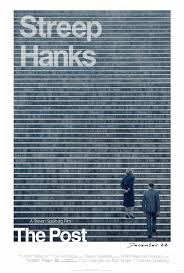
Hanks and Streep bust Watergate in advance in Spielberg’s too dry The Post

Director: Steven Spielberg

Cast: Meryl Streep (Katharine Graham), Tom Hanks (Ben Bradlee), Sarah Paulson (Tony Bradlee), Bob Odenkirk (Ben Bagdikian), Tracy Letts (Fritz Beebe), Bradley Whitford (Arthur Parsons), Bruce Greenwood (Robert McNamara), Matthew Rhys (Daniel Ellsberg), Alison Brie (Lally Graham), Carrie Coon (Meg Greenfield), Jesse Plemons (Roger Clark), David Cross (Howard Simons), Michael Stuhlbarg (AM Rosenthal)

There are few things newspaper journalists like more than old-fashioned films about the glory days of the press, showing journalists to be uniformly noble, upstanding, seekers of truth. There are few things Hollywood likes more than films the feature Streep and Hanks and/or are directed by Spielberg. As such, it’s not really a surprise that The Post received laudatory reviews, or that it crept into the Best Picture list of 2017 (it only got one other nomination, inevitably for Streep).

The film covers the Washington Post’s decision in 1971 to publish details from the Pentagon Papers, originally leaked to the New York Timesby former Defence Department official Daniel Ellsberg (Matthew Rhys). The papers detail the American government’s deceptive public messages on Vietnam, a war they knew to be unwinnable for almost ten years. The Nixon administration has blocked publication in the New York Times, but when the Post gets the same papers, owner and publisher Katharine Graham (Meryl Streep) and editor Ben Bradlee (Tom Hanks) have a difficult decision to make – suppress the truth or publish and face crippling legal penalties that could destroy the business.

The Post is quite similar in some ways to Spielberg’s far more successful Lincoln – a po-faced history lesson, told with panache, but essentially a dry civics lesson which draws some neat, but a little too on point, parallels with current events. Certainly it’s clear whom we are meant to be thinking of when the camera shows a shadowy Nixon in long shot from outside the White House, ranting into a phone in the Oval office late at night (admittedly, in a nice touch, the film uses the actual audio from Nixon’s Oval Office recordings). The parallels between press freedom and the spin of politics (or the charges of Fake News flung at any story the powers that be don’t like) are pretty clear. They are also pretty obvious.

Part of the film’s problem is that, unlike All the President’s Men (where the story covers full investigative journalism and Woodward and Bernstein need to piece the story together against the odds), this film hands everything to the journalists on a plate. It doesn’t even try to put a puzzle or some form of mystery before the viewers. Instead, the history is painstakingly (and drily) explained to give us the context, then each stage of the Post getting the papers is shown in simple and rather undramatic steps. There isn’t a sense – despite Bob Odenkirk’s deputy editor doing a bit of legwork – that the Post needed to work that hard to land the story. Crikey, you can see why The Times (who really did the crack the story) were a bit pissed at the film stealing their glory.

Once the papers are in the Post’s hands, the story almost immediately jumps to one night in which the papers are read and the board and the journalists squabble over whether they can legally publish or not. After that we get a swift coda where everything turns out fine, backs are slapped and the Supreme Court says it’s all good. There just isn’t quite enough drama. In fact we feel like we are watching a footnote, rather than the real story, which seems to be happening on the margins (for starters, the scandal of government lies on Vietnam, how The New York Times broke the story, and the Watergate break-in, a recreation of which rather clumsily closes the picture).

And I get that the film is trying to tell a story about how important a free press is and, yes, it’s great – but despite having a number of characters talk at length about this, I’m not sure what the film really tells us that we don’t already know. Instead it moves methodically but swiftly through events, carefully telling us what happened but never turning it into a really compelling story. Pizzazz for its own sake is not a strength, but a little more oomph in delivery here might have helped.

Alongside this, the film also wants to make points about the struggle of a woman in a man’s world and the institutional sexism (that probably hasn’t changed that much) of many boardrooms. Meryl Streep’s Katharine Graham – having inherited the company after the suicide of her husband – is a brow-beaten woman struggling to impose herself in a room of men whom she feels inferior to. Even this plotline though feels slightly rushed – we have Graham cowering in a boardroom meeting and struggling with paperwork, next thing we know she hesitantly makes the call to publish and is facing down her chief opponent (Bradley Whitford, rolling out another of his arrogant men of privilege). It’s all a bit rushed, perfunctory and all as expected – and Streep can clearly play this sort of role standing on her head.

But then the whole film has this slight comfort job feeling about it – everyone clearly invested in the story and the importance of the film’s points, but clearly without being challenged by the content. By the end of the film we’re are awash with clichés, from newspaper print rolling through old machines, to Graham walking through a crowd of admiring women outside the Supreme Court. The interesting and well assembled cast don’t get enough to do, with many of them feeling slightly wasted, not least Sarah Paulson in a thankless role as “the wife”.

The Post wants to be a big, world-changing film that talks about our modern age. Instead it’s a very middle brow, middle of the road history lesson that flatters to deceive, entertaining enough just about, but immediately forgettable.

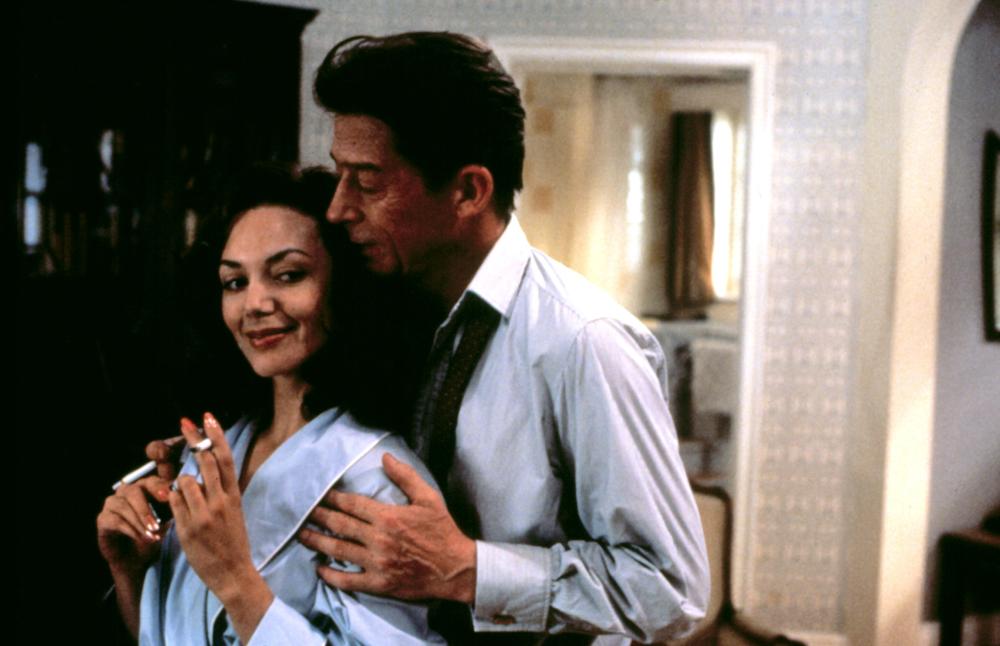
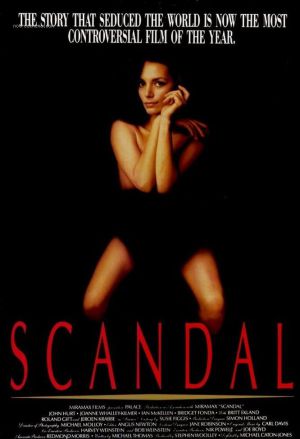
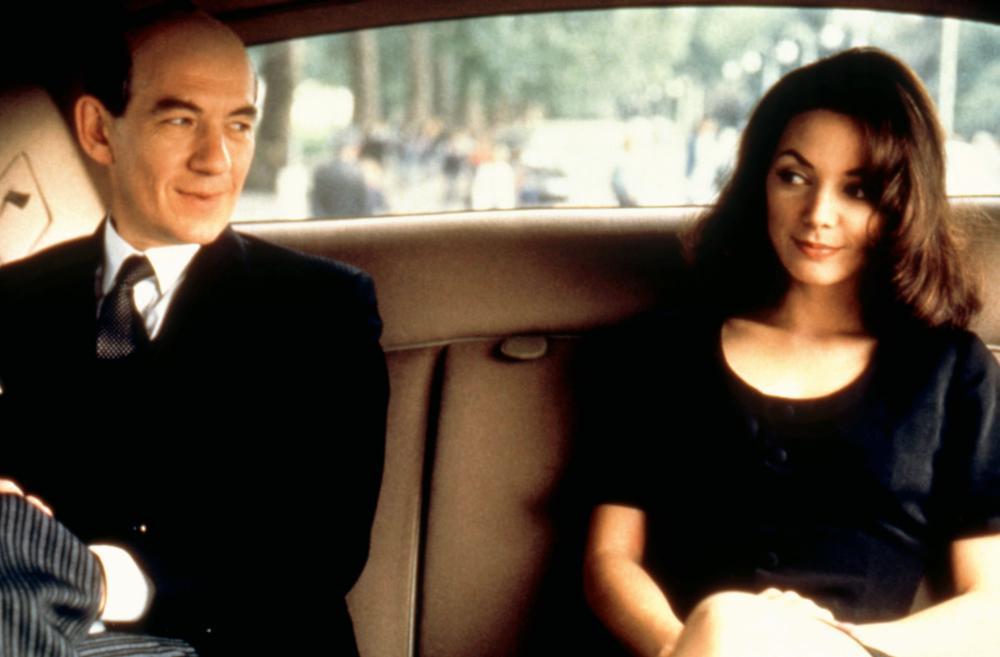
Scandal (1989)

Joanne Whalley and John Hurt get unwisely wrapped up in the Profumo affair in Scandal

Director: Michael Caton-Jones

Cast: John Hurt (Stephen Ward), Joanne Whalley (Christine Keeler), Bridget Fonda (Mandy Rice-Davies), Ian McKellen (John Profumo), Leslie Phillips (Lord Astor), Britt Ekland (Mariella Novotny), Jeroen Krabbé (Eugene Ivanov), Daniel Massey (Mervyn Griffith-Jones), Roland Gift (Johnny Edgecombe), Jean Alexander (Mrs Keeler), Deborah Grant (Valerie Hobson), Alex Norton (Inspector), Ronald Fraser (Justice Marshall), Paul Brooke (Sergeant), Keith Allen (Reporter)

In 1963 the British Government was nearly destroyed by a sex scandal. John Profumo, Minister for War, was widely suspected of conducting an affair with Christine Keeler (a former show girl turned society figure) at the same time as she was sleeping with Russian naval attaché Eugene Ivanov. Profumo denied it to the House of Commons. A few weeks later he confessed he had lied and resigned from Parliament. The scandal shook the country to the core, and led to an exhausted Harold MacMillan’s resignation as PM. As the scandal span out to reveal sex parties in country homes, the country couldn’t get enough of the discovery that large numbers of the upper classes enjoyed nothing more than swinging, orgies and indiscriminate sex laced with sado-masochism. 

Scandal reconstructs the build-up to and eventual explosion of controversy around this affair, focusing on Keeler (Joanne Whalley) and Stephen Ward (John Hurt), the society osteopath and friend to the rich and famous who had worked out that if he found and coached attractive young girls, Henry Higgins-style, into engaging and fun companions, he could swiftly move up the social ladder by giving the rich and powerful people they could sleep with. When the Profumo affair blew up, it was Ward who was left holding the parcel: abandoned by his rich and powerful friends, Ward was placed on trial as a pimp, vilified in court and in the press, and eventually committed suicide the night before the court case finished (which convicted him in absentia of living off immoral earnings).

It’s this miscarriage of justice that Scandal zeroes in on – and the film does a good job of showing that Ward basically didn’t really do anything that wrong. He didn’t mistreat the girls, he thought he was helping them improve their lives and he didn’t attempt to blackmail his friends. His own sex drive seems curiously disconnected (he was clearly more of voyeur) and if anything, John Hurt (excellent as always) plays him as a slightly sad social-climber. A sort of Horace Slughorn of sex, far more excited by his bulging address book, access to the exclusive clubs of London and calling lords of the land by their matey nicknames, than by all the nooky.

Scandal however is a rather unemotional, unengaging and distant film. It’s hard to get too wrapped up in, as it too often goes for documentary checklist rather than real character engagement. On top of that, it’s often rather unclear – it’s tricky to tell the exact timelines, it’s hard to see often how some events relate to others, it’s unclear in particular how Christine Keeler’s relationship with jazz promoter and drug dealer Johnny Edgecombe led to exposure. It’s a film that’s both in love with telling the facts and so blinded by them that it doesn’t turn them into an engaging story.

But then perhaps part of this is because looking back today, it’s hard to see what all the fuss was about with the Profumo affair. After generations where government ministers have been accused of everything from toe-sucking to performing a sex act on a dead pig, it’s hard not to look at the Granddaddy of all government sex scandals and not think it rather quaint. Today it would barely merit more than few news cycles: and Profumo would certainly have been back in the cabinet within two years. Even the spy angle (was Profumo leaking secrets to Keeler, who in turn leaked them to Ivanov?) was widely (and almost immediately) discredited at the time. 

Not that the seismic impact really comes across anyway in the film. This is partly because the film focuses on Ward and Keeler in particular. For the two of them, there wasn’t much at stake – until their lives were destroyed. In fact, for most of these people at the various dodgy parties – other than embarrassing tittle-tattle – there wasn’t much at stake. A film that gave more space to Profumo – and really made-clear what he was running the risk of losing here, particularly after he lied to Parliament – might have made it clearer the dangers that all involved were inadvertently running.

But that would have been to dent the film’s purpose of showing Ward and Keeler as essentially innocents abroad. Joanne Whalley has a particularly difficult job as a Keeler so thoughtless, short-sighted and self-obsessed, she verges on the dim. Whalley makes her bright, engaging and fun-loving, but never with a whiff of sense. By the time Keeler is blurting out totally unconnected Profumo facts when speaking to the police about her relationship with Edgecombe, you can tell she doesn’t have a chance.

The film’s real strength though is John Hurt’s masterful performance as Stephen Ward. Hurt’s pock-marked face and ruddy complexion (going through a difficult divorce he allegedly spent most of the filming struggling with alcoholism) and slightly sweaty desperation are perfect for the role. A natural victim as an actor, he makes Ward always slightly desperate, always trying too hard, always the grammar-school boy pushing his nose up against society’s window. He’s a super creepy Henry Higgins grooming girls for a “better life” (his genuine belief!) and getting himself an entrée into posh society at the same time.  

Ward, the film argues, didn’t feel he was ever doing anything wrong – and he realises far too late that society, his posh friends and the government don’t agree. “It’ll blow over” he reassures Ivanov: totally wrong. Ward basically was a hedonist who wanted people to have a good time – and was thrilled to be invited to the party. When the shit hit the fan, he was dumped with the blame. It’s an angry note that the film – with its obsession with covering so much ground – fumbles slightly: it wants to be a searing indictment of the hypocrisy of the upper classes, but it fudges the emotional connection so much that you can’t feel it as much as you should.

Instead Scandal just sort of simmers rather than boils. It doesn’t communicate what a sea change this was in how Britain viewed its politicians and upper classes – from hereon they were always seen as men with feet of clay – and it doesn’t get the audience feeling as angry or engaged with things as you might expect. It has a lot of sex in it but (perhaps deliberately) it’s not sexy – the orgy scenes would make a great mood killer – and it seems to miss the hedonistic tone that dominated the class at the time. 

There is some decent directing – a scene of Mandy Rice-Davies and Christine Keeler preparing for a night on the town is particularly well done – and some strong acting, not least from Ian McKellen is a slimy Profumo (rumour has it a recently de-closted McKellen was keen on the role as it was the most hetrosexual role he could imagine playing!). But it never quite clicks together into something really emotionally engaging. And it isn’t quite as clear and easy to follow as you need. Structuring the story as a kind of love story between virtually the only people in the story who don’t have sex together is interesting – and Hurt and Whalley are good – but it’s just not quite a good enough film for what it wants to do.

J. Edgar (2011)


Leonardo DiCaprio is excellent in Clint Eastwood’s decent J. Edgar

Director: Clint Eastwood

Cast: Leonardo DiCaprio (J. Edgar Hoover), Armie Hammer (Clyde Tolsen), Naomi Watts (Helen Gandy), Judi Dench (Anne Marie Hoover), Josh Lucas (Charles Lindbergh), Dermot Mulroney (Norman Schwarzkopf), Damon Herriman (Bruno Richard Hauptmann), Jeffrey Donovan (Robert F. Kennedy), Zach Grenier (John Condon), Ken Howard (General Harlan F Stone), Stephen Root (Arthur Koehler), Denis O’Hare (Albert S Osborn), Geoff Pierson (A Mitchell Palmer)

J. Edgar Hoover holds a unique place in American history. As the first ever director of the FBI he ruled it as his own personal fiefdom from 1935 to his death in 1972. A workaholic, he revolutionised the investigation of crime in the USA, centralising records, introducing and championing scientific techniques, and working to change the image of lawmen into heroes. On the other hand, Hoover frequently abused his position, used the FBI to investigate rivals and stamp out groups he judged as dissident, and put together secret files of unpleasant and damaging material on political opponents.

Eastwood’s film actually does a pretty good job of balancing these two J. Edgar Hoovers, and of presenting a fairly even-handed portrait of a man most people see now as the worst example of a power-abusing policeman. The film follows the career of Hoover (Leonardo DiCaprio), focusing in particular on the Lindbergh kidnapping, clashes with Presidents, and his relationships with his deputy (and probably long-term lover) Clyde Tolsen (Armie Hammer) and with his domineering mother (Judi Dench). 

The film’s main advantage is a typically power-house performance from Leonardo DiCaprio. His Hoover blusters with insecurity, resentment and a monomaniacal obsession with his own sense of right and wrong. He’s the sort of guy who takes a woman on a date because he thinks it’s time to get married and then takes her to see his filing system. Hoover was a man whose life was work and power – but DiCaprio doesn’t forget that amidst the maniacal power grabbing, he had a confused personal sexuality.

The film suggests Hoover repressed his homosexuality due to the influence of his mother (“I’d rather have a dead son than a daffodil”), and contrasts this painful struggle with the preppy, tender, manly Clyde Tolsen, played with equal skill by Armie Hammer. Tolsen was Hoover’s long-term friend and companion, they holidayed together, ate meals together, lived opposite each other, and Tolsen even accepted the flag after Hoover was buried – neither man married. The film creates a fairly sweet love story of a man who couldn’t fully accept his own feelings falling in love with a man comfortable with who he was. 

The old-married feeling of this couple – whose physical contact never really goes much further than the occasional hand holding – is the emotional heart of the film. Although the repressed Hoover never admits his love openly (to the occasional hurt of Tolsen), it’s actually a fairly good expression of a normalised same-sex marriage, and Eastwood never succumbs to some of the odder gossip about Hoover’s cross-dressing (except in grief at the death of his mother) or sexual preferences.

His relationship with his mother (whom he lived with his whole life until her death) is more predictable: she is demanding and controlling, he is loving, placid and deferential to her. It’s what we’ve seen before several times – and Judi Dench can play this role standing on her head – but it gives us a nice context to get inside Hoover’s head and understand why he behaved the way he did. 

The film doesn’t lose track of Hoover’s ongoing political clashes. We get showpiece senate hearings as Hoover struggles to establish the FBI with the powers it needs to combat crime (DiCaprio is pretty electric in these scenes). Repeated shots show Hoover watching various inauguration parades, or stopping to stare at the same portrait of Washington as he heads in to meet with (and intimidate) various (unseen) presidents. The film hits these beats hard at times – did we need Hoover telling Robert Kennedy that he has information on “your brother, the President of the United States”? But it’s not afraid to show Hoover unsympathetically, particularly in his vindictive campaign against Martin Luther King.

What Dustin Lance Black’s screenplay, and Eastwood’s professional, smooth direction, do well is explain why Hoover may have hated these people so much. The film focuses on Hoover’s early days – full of anarchist bombings, wildfire communist strikes that led to clashes with the police, years of bank robbers and gangsters carrying on unrestricted in America – that makes you at least understand why he felt America was under threat. 

The film’s reconstruction of period detail is exquisite, and much of the photography has a brilliantly murky, sepia tone to it I really liked. The reconstruction of details from the Lindbergh kidnapping is very well done. All this is much better than some of the wonky “old age” make-up Di Caprio, Hammer and Watts (playing Hoover’s faithful secretary) have to labour under towards the end of the film (Hammer in particular looks slightly ridiculous under laboured liver patches). 

In structure, this is a fairly traditional biopic, and in trying to cover Hoover’s entire career it often skips over or misses key incidents. In an era where “modern” biopics tend to focus on dramatizing one key moment in their subject’s life (such as Selma or Lincoln), J. Edgar feels a bit more like a 1990s biopic. It crams so many events in, it sometimes feel like an “and then this happened” sort of film, rather than the more interesting thematic film under the surface.

It’s also struggling to bring more interesting depths out. It has a neat structure of Hoover dictating his biography to a string of indistinguishable “trusted” FBI agents (each scene has a different one, and there is neat visual gag as Eastwood cuts to a series of these guys in a row offering the “wrong” answer to Hoover’s question as to who was the most famous American of the 20th century – the answer being Lindbergh). Interestingly a final speech from Tolsen suggests much of what we have seen is Hoover’s vainglorious “legend building” rather than the “true story” – a theme that you feel could have been explored more.

It’s stuff like this that makes J. Edgar stand out a bit more. That and the wonderful performances from DiCaprio and Hammer, as the truly rather sweet married couple-who-weren’t. The film could make more of exploring the psychology of Hoover – the man who hated anyone different, including homosexuals – but who carried this open secret. But there isn’t time. It’s a film with good ideas and scenes, which could be more than it is. But it’s a decent film for all this. Many won’t like the fact that it takes a sympathetic angle on Hoover. But it shows every life has its right and wrongs.

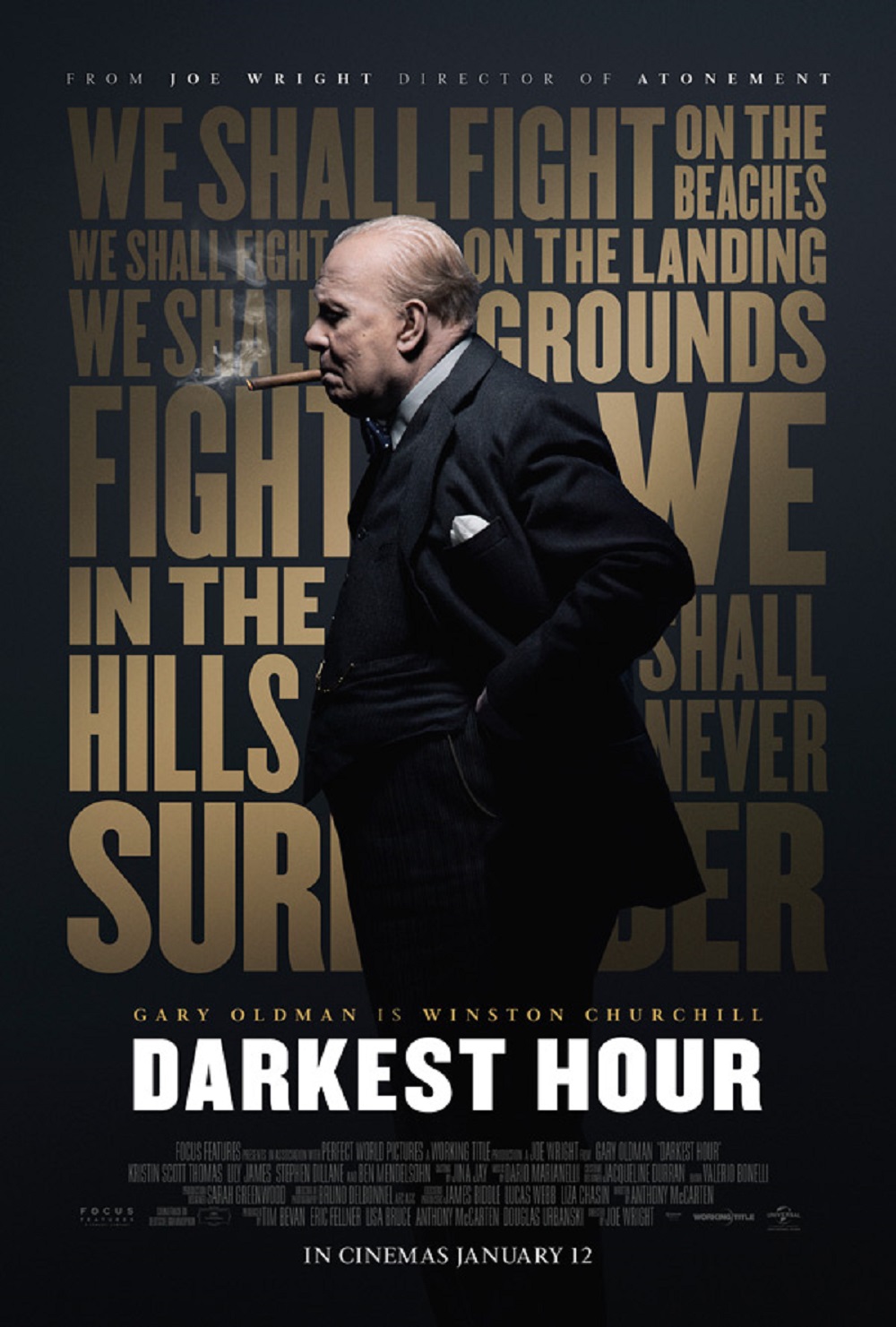
Darkest Hour (2017)


Gary Oldman, rather surprisingly, rather is Churchill during his Darkest Hour

Director: Joe Wright

Cast: Gary Oldman (Winston Churchill), Kristin Scott Thomas (Clementine Churchill), Lily James (Elizabeth Layton), Ben Mendelsohn (George VI), Stephen Dillane (Lord Halifax), Ronald Pickup (Neville Chamberlain), Samuel West (Anthony Eden), David Schofield (Clement Atlee), Malcolm Storry (General Ironside), Richard Lumsden (General Ismay), Joe Armstrong (John Evans), Adrian Rawlins (Air Chief Marshall Dowding), David Bamber (Vice-Admiral Ramsay)

One of my favourite ever TV series is Winston Churchill: The Wilderness Years, a chronicle of Churchill’s time out of government (basically 1929-1939). It covers the political clashes between Churchill and his rivals brilliantly, as well as giving us a real feeling for Churchill’s own personality and flaws and featured a brilliant performance from Robert Hardy. Darkest Hour takes off almost where that series ends – and I think it might just be a spiritual sequel. And, for all its flaws, I might even grow too really like it.

Joe Wright’s Darkest Hour is a beautifully filmed, imaginatively shot retelling of the crucial first month of Churchill’s premiership. Wright uses a great device of flashing the date up (in an imposing screen-filling font) as each day progresses. Apart from brief moments, the action rarely leaves Whitehall, with the focus kept tightly on the politics at home. Will Churchill win over the war cabinet to continue the war, or not? It revolves around dialogue shot with tension and excitement, and is structured key Churchill speeches: each carrying all the emotional impact you could expect and beautifully performed, with goose-bump effect by Gary Oldman.

Because yes, this film’s one piece of genuine excellence, and what it is really going to be remembered for, is the brilliance of Oldman’s performance. This is one of those transformative performances where the actor disappears. Of course it’s helped by the make-up, but there is more to it than that. The voice, the mannerisms, movement, emotion – as a complete recreation of the man it’s just about perfect. Whatever the film’s flaws, Oldman nails it. Sure it’s larger than life – but so was Churchill.

Oldman’s Churchill is irascible, demanding and temperamental – but he’s also warm and humane. In one beautiful moment he conducts a conversation with an un-encouraging Roosevelt, where his features seems to shrivel and shrink with despair, while his voice keeps up the optimism. Moments of gloom hit home, but there is also humour (and Oldman is actually rather funny in the lead role). There’s moments of pain, guilt and depression – it’s terrific.

However it does mean some of the other actors scarcely get a look in. Kristin Scott Thomas in particular gets a truly thankless part, no less than four times having to counsel a depressed Churchill with variations on “You’re a difficult but great man and your whole life has been leading to this moment” speeches. Lily James actually gets a more interesting part as Churchill’s admiring secretary, getting the chance to be frightened, awed, amused and frustrated with the Prime Minister – and she does it very well, even if her part is a standard audience surrogate figure.


The characters are neatly divided in the film: they are either pro- or anti-Churchill. The “pro” characters largely get saddled with standing around admiringly around the great man (Samuel West gets particularly short-changed as Eden becomes Churchill’s yes man). The “anti” characters mutter in corridors about how unpredictable and dangerous he is, how he could wreck the country etc. etc.

To be fair to the film, it does at least treat the doubts of Halifax (Stephen Dillane – all clipped repression, he’s excellent) and Chamberlain (Ronald Pickup – serpentine and tactical, although Chamberlain’s hold over the Tory party was nowhere near as great as this film suggests) as legitimate concerns. It does weight the dice in favour of Churchill, and we don’t get enough time to fully understand the reasons why peace with Hitler might have seemed reasonable in 1940 (tricky to get across to a modern audience so aware of Hitler’s status as evil incarnate). But Halifax’s stance that it was better to cut your losses than fight on to destruction is at least treated sympathetically, rather than making him a spineless weasel (as others have done).

The film really comes to life with the conflict between the Halifax-Chamberlain alliance and a (largely alone) Churchill. The cabinet war room clashes have a fire, energy and sense of drama to them that a lot of the rest of the film doesn’t always have. It sometimes drags and gets lost in filling the time with “quirky” moments with Churchill. There is a bit too much domesticity that feels irrelevant when we know the fate of the nation is at stake.

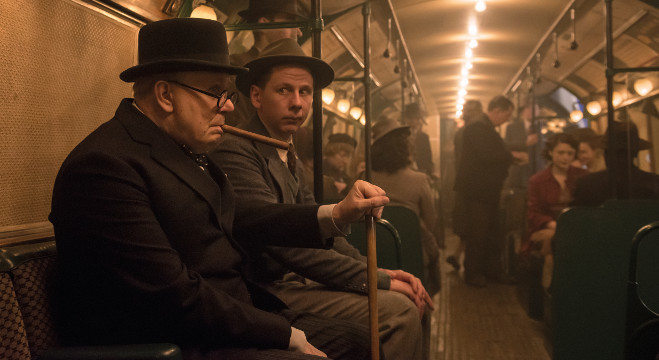
But then this is a sentimental film. Not only is it in love with Churchill (we see some blemishes, but his air of perfection goes unpunctured), but it uses devices that feelas you are watching them like sentimental film devices. None more so than Churchill bunking down on a tube train to exchange encouraging words with regular people and for them to tearfully recite poetry at each other. In fact it’s a testament to Oldman that he largely gets this hopelessly fake-feeling scene working at all.

Wright’s film makes a point later of demonstrating that – reporting back to the Tory party the results of this conversation – Churchill uses the names of the people he met, but completely replaces their words with his own. But it still gets itself bogged down in this sentimentality – including a teary end caption on Churchill being voted out of office. Every scene with Churchill and Clementine has a similar chocolate box feel, as does a late scene with George VI (who seems to flip on a sixpence between pro and anti-Churchill – although Ben Mendholsen is very good in the role).

Darkest Hour is an extremely well-made film. It’s told with a lot of energy – and it has a simply brilliant lead performance. Joe Wright finds new and interesting ways to shoot things: there are some great shots which frame Churchill in strips of light surrounded by imposing darkness. But its not brilliant. It will move you – but that is largely because it recreates actual real-life, moving events (who can listen to Churchill without goosebumps?). But it’s given us one of the greatest Churchill performances and it’s worth it for that if nothing else. And, for all its flaws, and the safeness of its storytelling, I actually quite liked it – and I think I could like it more and more as I re-watch it.

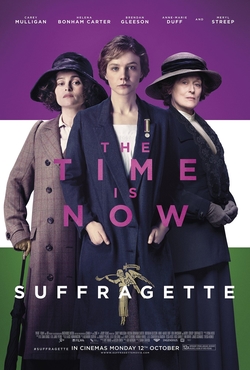
Suffragette (2015)


Votes for Women is the cry in this bad movie made about an important issue

Director: Sarah Gavron

Cast: Carey Mulligan (Maud Watts), Helena Bonham Carter (Edith Ellyn), Anne-Marie Duff (Violet Miller), Romola Garai (Alice Haughton), Ben Whishaw (Sonny Watts), Brendan Gleeson (Inspector Steed), Samuel West (Benedict Haughton), Meryl Streep (Emmeline Pankhurst), Adrian Schiller (David Lloyd George), Geoff Bell (Norman Taylo r), Finbar Lynch (Hugh Ellyn)

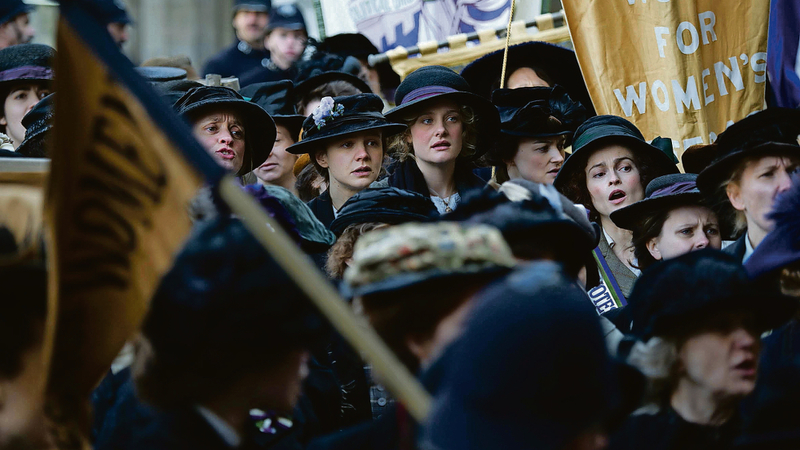
Votes for Women was a historic movement that looked to settle a gross injustice. It’s a major issue brimming with importance: and Lord doesn’t Suffragette know it. In fact, Suffragette is practically a textbook example of an important issue being turned into a bad film. Clunky, weighed down with its own bombast and stuffed to the gills with clichés, Suffragette fails to move and makes its vital political points seem leaden and dull.

Maud Watts (Carey Mulligan) is a young washerwoman, who one day finds herself accidentally swept up in a suffragette protest. Before she knows it, her friend Violet Miller (Anne-Marie Duff) has inveigled her to give testimony at a parliamentary hearing, where she meets Edith Ellynn (Helena Bonham Carter). Ellyn believes that peaceful struggle will lead nowhere and violent action is the only way to get what they want. As the violence escalates, Inspector Steed (Brendan Gleeson) is tasked to infiltrate and bring down the suffragette movement.

It should be more interesting. But Suffragette is a sluggish “issue drama” whose every frame drips with the self-importance of people who feel they aren’t just making a film, they’re making a “statement”. This feeling infects everything, from the heavy-handed dialogue (too many scenes feel like speechifying rather than dialogue) to the obvious characterisations. Nothing in the film ever really rings true, and nothing ever really grips. On top of that sloppily written, it doesn’t really have any dramatic structure and events eventually peter out.

Mulligan’s saintly character – as a kind of suffragette every woman – goes through everything from abuse from her boss, to losing her home and children, to being force-fed in prison. It strains credulity – particularly as she’s playing some fictional archetype. The truly noble suffragettes are all working-class and put-upon, while Romola Garai’s upper-class wife quickly turns her back on the cause when things get risky. Bar Brendan Gleeson’s humane Inspector and Finbar Lynch’s decent husband (and even he performs an act of betrayal), every single man in this is a bastard – a paternalistic liar, a wife-beater, a bullying husband or an abusive boss. It’s just too bloody much. The film seems not to trust its audience to understand the story unless it’s acted out by a series of caricatures, as if we can’t appreciate that gender equality is a good thing in itself without a saintly sad-faced girl being mistreated by a series of misogynist ogres.

Mulligan is rather good but her angry denunciations and points during her scenes with Gleeson just sound like she’s mouthing research from the writer. The end result is, despite all the things Maud goes through, you just don’t really care about her. She feels like an empty character. Even the end of the film doesn’t revolve around her: Emily Davison is reintroduced just in time for the conclusion at the Derby. Why not just make a film about Davison? Why did they feel the need to place this uninteresting fictional character at the heart of it? Did they just feel it had to be a working class hero?

Because the script tries to cover every single element of the suffragette movement, it often feels like a box-ticking exercise. Meryl Streep gets the best tick, popping up to deliver a single speech as Emmaline Pankhurst before disappearing. But the collection of events thrown together don’t convince. Helena Bonham Carter does her very best to make Edith’s radicalism seem compelling and thought-through, but even that seems like a tack-on rather than something that really teaches us about any of the characters. Moral questions around violence and protest are almost completely ignored, and the film doesn’t really distinguish between those (essentially) willing to kill and those who wanted to protest within the law.

On top of its mediocre writing, the film is also only competently directed – its pace is often way off and sluggish, and most of the scenes are shot with an unimaginative televisual eye, mixed with standard “throw you into the action” shots for major protests. It all contributes to the entire venture not coming to life at all. For such a huge issue, and for all the importance it’s being treated with here, it just seems lifeless and rather dull.

This is despite the decent acting (Anne-Marie Duff is excellent, as are most of the rest of the principals) and the efforts of all involved. But it’s just not engaging. The most moving and gasp-inducing moment is the end credits roll of dates where countries gave women the vote (1970 for Switzerland!) – but when the most moving thing you see in the film could have cut and pasted from a Wikipedia page you are in trouble.

But what can you say about a drama about women’s rights where the male Inspector comes out as the most interesting and nuanced character? That just doesn’t feel right. And that’s the problem with Suffragette. Nothing feels right. Everything feels off. The history doesn’t ring true, the characterisations feel forced, the events seem predictable and clichéd. There’s nothing to really get you impassioned here – other than with frustration about a bad movie fudging an important subject.