Tag: Prison Camp

The Great Escape (1963)

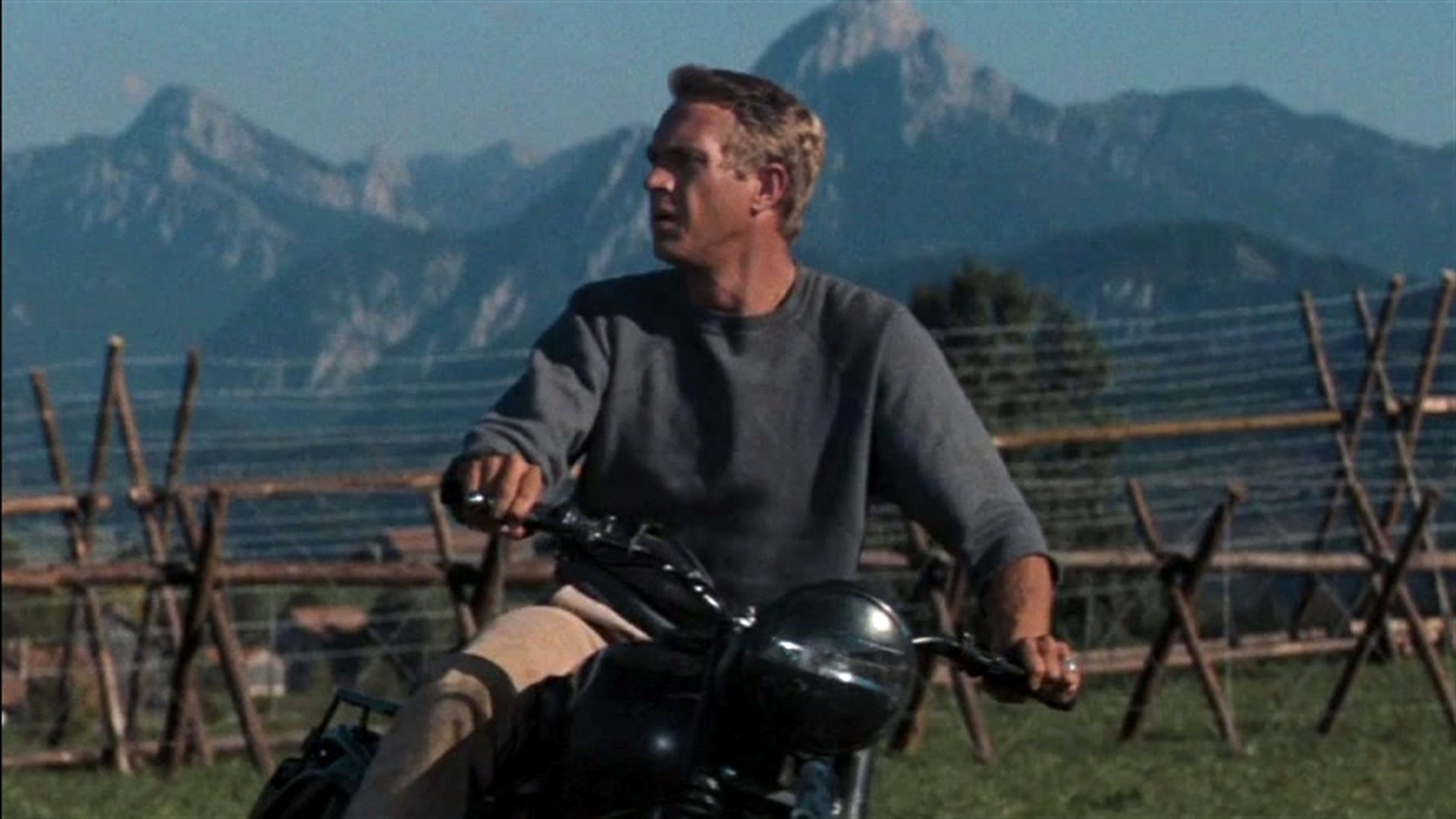
Steve McQueen is the Cooler King (King of Cool?) in The Great Escape

Director: John Sturges

Cast: Steve McQueen (Captain Virgil Hilts), James Garner (Flight Lt Bob Hendley), Richard Attenborough (Sqd Leader Roger Bartlett), James Donald (Group Captain Ramsey), Charles Bronson (Ft Lt Danny Welinski), Donald Pleasance (Flt Lt Colin Blythe), James Coburn (FO Sedgwick), Hannes Messemer (Oberst von Luger), David McCallum (Lt-Commander Eric Ashley-Pitt), Gordon Jackson (Ft Lt Andy MacDonald), John Leyton (Ft Lt Willie Dickes), Angus Lennie (FO Archie Ives), Nigel Stock (Ft Lt Dennis Cavendish), Robert Graf (Werner)

Is there a film in Britain more associated with holidays than The Great Escape? While I was growing up it felt like a day-off wasn’t complete unless the BBC screened it as part of their afternoon schedule. In Britain is has a status as a sort of cosy uncle, a part of the furniture of many people’s filmic lives. There is always something comforting and reassuring about The Great Escape. So much so, people forget it ends with a large bodycount and the majority of our heroes further away from freedom than when they started.

But it doesn’t really matter, because The Great Escape is one of the last hurrahs of effective, nostalgic war-films. The sort of hugely enjoyable caper that recognises the cost of war, but also celebrates the pluck, ingenuity and guts of Allied servicemen, running rings around those dastardly cheating Nazis. Where we would all like to look back and remember those days when men-were-men and worked together towards a common goal. Sturges has created a marvellous tapestry of a movie, that pulls together several striking scenes, characters and snippets of dialogue into a true ensemble piece that reflects the camaraderie and unity that exists between the prisoners as they work towards their escape.

In some ways, The Great Escape is such good fun, such well-packaged entertainment and telling such an exciting, uplifting and (in the end) moving story that it’s almost immune to criticism. You’d have to have a pretty hard heart not to enjoy it. And you’d have to be pretty cynical not to enjoy the way it presents a series of obstacles and then carefully demonstrates the fascinating and rewarding ways the prisoners resolve these. It’s also notable that, aside from the shadowy Gestapo types, the film doesn’t really have an antagonist. The enemy is that fence. Most of the Germans are just regular soldiers doing a job – it’s only the brutal final-act Gestapo who are aren’t playing this eccentric game. But this helps us sit back and enjoy the film as a caper – just as it makes the burst of machine-gun fire that (nearly) ends the film even more impactful and shocking.

Sturges’ gets the tone of the film spot-on, and also draws a series of perfectly balanced performances from his all-star cast. I think it’s fair to say a lot of the film’s success was connected to Steve McQueen’s casting in the crucial role of Hilts. McQueen channels a sense of 1960s anti-establishment cool into the film (unlike the rest of the POWs, he seems to be wearing basically his own clothes in t-shirt, chinos and bomber jacket). Iconically bouncing his ball against the wall in a cooler, a natural loner (who of course still does his bit), with a cocky sense of defiance and some exceptional motor-bike skills, Hilts is undeniably cool. He’s the face of the film – and the one you walk away wanting to be.

He also gets the film’s definitive claim to fame, with a series of daring motorbike stunts as he races across Germany to escape. Mostly performed by McQueen himself (although not the most famous fence jump, done by a stuntman) this last act chase is a gripping, action counter-point to the more cagey, paranoid runs of the other escapees. It’s so exciting and feel-good, it’s a surprise to remember that Hilts actually gets caught. But then, if he hadn’t, we’d have lost McQueen’s cool, wry shrug of acceptance as he and his mitt were sent back to the cooler in the camp for another 20 days.

The film tees up plenty of sub-plots for the rest of the cast, with Sturges’ spreading the love very effectively. Charles Bronson gets perhaps the best plot as “tunnel king” Danny Welinski who holds back his crippling claustrophobia almost long enough. I think this might be Bronson’s finest hour, giving a real vulnerability to Danny, with genuinely quite affecting whimpers and fear at confronting the tunnel – making his struggle all the more moving. Bronson makes a wonderful double-act with John Leyton as fellow tunneller Willie Dickes, the two of them forging an affecting bond of loyalty.

A similar bond also forms between James Garner’s suave and playful scrounger Jack Hedley and Donald Pleasance’s professorial forger Colin Blythe (has there ever been a more “Colin” Colin on film than Pleasance?). The final moments between this pair carry perhaps the biggest gut-punch of a film that has a surprising large number of them. Pleasance’s sad attempts to hide and combat growing blindness are genuinely affecting, while Garner is a master at conveying depth beneath a light surface. Sturges’ film taps into the nostalgic memories most of us have (or have picked up) of this war being one where life-long friendships were formed against horror and adversity.

Attenborough does most of the thankless heavy-lifting as Big X, but the film uses his Blimpish authority well. Gordon Jackson has a memorial role as the number #2 famously caught out by his own vocal trap (the sort of irony films like this love). Fans of the TV show Colditz can enjoy seeing David McCallum in a very similar role as a daring young escapee. James Donald channels British reserve as the senior officer. The film’s single truly bizarre performance is from James Coburn, with an Australian accent from the Dick van-Dyke school of ineptitude, so terrible even Sturges surely noticed it when cutting the film.

The Great Escape marshals all these cards extremely well. Any combination of any of these actors produces fireworks. It’s one of the best boys own adventure you can imagine. It in fact gets the perfect balance: you can spend a large chunk of the film thinking that being locked up in a German POW camp looks like the best time ever – and then it chillingly reminds you with its sad coda of the terrible cost of war. But it’s that first hour and half and its celebration of grit, guts, determination and ingenuity that really works – and it’s so entertaining that it solves immediately any mystery as to why any public holiday you’re 10-1 to find this popping up on your afternoon TV listings.

Unbroken (2016)

Jack O’Connell does fine work in the middlingly impactful Unbroken

Director: Angelina Jolie

Cast: Jack O’Connell (Captain Louis Zamperini), Domhnall Gleeson (Lt Russell Phillips), Garrett Hedlund (Lt Commander John Fitzgerald), Miyavi (Sgt Mutsuhiro “The Bird” Watanabe), Finn Wittrock (Sgt Francis McNamara), Jai Courtenay (Lt Charlton Cupernell), Luke Treadaway (Miller), Spencer Lofranco (Harry Brooks)

Angelina Jolie’s directing work doesn’t get the acknowledgement it perhaps deserve and it’s easy to think, watching the confident and imaginative framing of much of the film, that if, say, Brad Pitt had directed the film it might have got a more positive reaction from people. Anyway, perhaps part of the problem might be for all the extraordinary courage of Louis Zamperini’s life story, the general ideas behind the film are now so common in film-making that – and it feels terrible to say it – perhaps we are at last too familiar with these stories for them to have a real lasting impact. 

Louis Zamperini (Jack O’Connell) was an Olympic athlete, who set a world record for the fastest lap in his final lap of the 1936 Olympics 5000 metres final (despite finishing 8th overall). Signing up for service in the war, his bomber crashes and (after surviving 47 days in an open lifeboat in the Pacific) he is captured by the Japanese. There he experiences the brutality of the POW camps – and earns the enmity of Mutsuhrio Watanabe (Miyavi) one of the camp’s officers, who beats him mercilessly. But through it all his determination never wavers, neither does his humanity. He remains Unbroken.

The attraction of the resilience of the human spirit never wavers – and many of us suspect we would break, making our admiration and respect for those that don’t all the greater. That admiration is easily bound up in O’Connell’s wonderful performance as Zamperini, dripping charisma powered by kindness, humanity, decency and self-respect. O’Connell dominates the film, and is also the key to its successful moments – the camera always comes back to him, and his eyes wind up telling much of the story. Without him the film would struggle to make a real impact.

Which is part of the problem with it – it doesn’t make the impact you feel it should. Jolie’s direction is technically accomplished and very skilful, and the film is beautifully shot and filmed by Roger Deakins. There is barely a foot wrong anywhere in its make-up – but for some reason it doesn’t come together into something that carries real force. Maybe this is overfamiliarity with these stories, maybe this is too much professionalism and expertise crowding the emotion out, maybe it’s just that there isn’t enough story here for it to really work. But for whatever reason, this is a film that winds up leaving you colder than it should.

Its finest sequence coves the isolation on the boat, the struggle with sun and sea, without sufficient food or water, a marathon endurance test that claims the life of one of the three men who undergo it. Jolie’s film captures the strange claustrophobia of a tiny world – one lifeboat – in a huge expanse of nothingness. These scenes are compelling in a way the later prison camp scenes just aren’t. 

The camp scenes are of course tough and brutal in a way (although some have – perhaps justly –  complained that they are so beautifully and elegantly filmed that their impact is dramatically reduced, with every shot of the camp turned into some sort of renaissance-lit masterpiece) but they don’t hit like they should. Yes what Zamperini and the soldiers go through is dreadful and awful beyond measure, but nothing here seems to really capture that. It’s sort of something we understand but don’t wind up feeling from the film. 

Perhaps that’s because the one thing the film does capture really well is the powerless drift of POW life. The soldiers have no control over their fates and no way of escaping it, This all gets captured in the brutal bullying of Watanabe – but the film never manages to make either him or his rivalry with Zamperini compelling, leaving me unsure whether he was intended as a representative cipher of the appalling system rather than a real character.

Unbroken won’t exactly disappoint but it won’t exactly thrill either. While I do feel not enough credit is given to Jolie – and a male star would have got more praise – this is also a film that feels too much like a Hollywood prestige picture, too much like an important film straining for those Oscars. It forgets the heart and doesn’t engage our feelings.

Stalag 17 (1953)

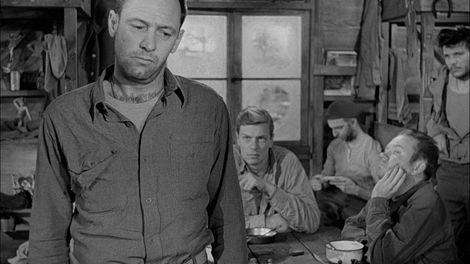
William Holden is the untrusted fixer in Billy Wilder’s prison camp drama Stalag 17

Director: Billy Wilder

Cast: William Holden (JJ Sefton), Don Taylor (Lieutenant Dunbar), Otto Preminger (Colonel von Scherbach), Robert Strauss (Stanislas ‘Animal’ Kuzara), Harvey Lembeck (Harry Shapiro), Peter Graves (Price), Sig Rumann (Sgt Johann Sebastian Schulz), Neville Brand (Duke), Richard Erdman (Hoffy)

A sort of cross between The Great Escape and Colditz (but not as good as either), Stalag 17 is a relatively minor entry into Billy Wilder’s illustrious cannon: but that makes it more than good enough to be a stand-out movie in anybody else’s. Set in a German prisoner of war camp for captured American NCOs, it follows the hunt for a traitor leaking escape plans to the Germans. The suspicions of the other inmates quickly turn to camp fixer JJ Sefton (William Holden), a self-serving, cynical outsider, despite his protestations of innocence. When a saboteur and POW is betrayed to the Germans, Sefton decides he needs to locate the stool pigeon himself.

The main historical interest in Stalag 17 is William Holden’s Oscar-winning performance. Holden apparently walked out of the original Broadway production of the play, but such was his trust in Wilder’s judgement he agreed to play the substantially rewritten role. Just as well he did, as Holden’s drawling cynicism, air of bitterness and the marvellous impression he is able to give of a man of commitment and principle under the veneer of a self-serving egotist are perfect for it. Holden won the Oscar (he believed it was a consolation for his failure to win for Sunset Boulevard) – and co-incidentally gave the shortest acceptance speech ever (due to TV coverage rules), a simple “thank you.”

Holden’s character slowly dominates the narrative more and more, but is often shot on the margins of the film. Wilder shoots a film where the lead character is on the periphery of the action, with Holden on the edge of frames, or just being caught by the camera as it drifts towards him. He feels like a supporting character for a large chunk of the first half of the film, while Wilder focuses on the daily life and bonhomie of the camp: two things Sefton deliberately exiles himself from. But you keep coming back to him, and are always aware of what he is thinking and planning.

The focus on the atmosphere of the camp allows a number of fun scenes around the isolation of the men. There are joyful celebrations for Christmas (including tree decorations and a full dance in the barracks, with men eagerly grabbing each other for a whirl in a way you can’t imagine them doing back home). We get the games and in-jokes that keep them sane, the cheeking of the guards, and the obsessive interest in the women held in the Russian camp next door.

This also allows a number of colourful performances from a solid group of character actors. Robert Strauss was Oscar-nominated as the scruffy, Betty-Grable-obsessed “Animal”, and his comic antics provide much of the film’s humour. There are fine performances from Harvey Lembeck as his confidante (Lembeck and Strauss had both played the same roles in the stage production), while Peter Graves, Neville Brand and Richard Erdman contribute performances as very different POWs.

The film also deals with mob dynamics: the group turns on Sefton, it seems, because he dares to bet against an escape and, as a fixer, he has access to luxuries the rest of the group don’t have (and charges them to access). Throw in his distance and his happiness not to make friends and it’s clear why they suspect him. But that doesn’t make their brutal punishment of him (on no evidence) and their cruel ostracism any easier to watch. You can’t help suspecting that Wilder had more than half his mind on the McCarthy trials taking place at the time when he was filming this mob-justice film.

The film is also notable for making the Germans reasonably fully-formed characters. Sure, our two main characters are, to varying degrees, ruthless buffoons, but they are not vicious or cruel. Otto Preminger’s camp commandant is a puffed-up martinet who puts his boots on when calling a General merely so he can click the heels together (and immediately removes them when the call is complete). Sig Rumann’s barracks guard is a decent cove and bluff braggart, who actually runs a fairly efficient spy system with the traitor.

The film is partly a study of men under pressure and partly a mystery – obviously Sefton isn’t the traitor, and the film slowly reveals who is before an impressive sequence where we see the traitor in action planting a message. There is a noir-ish quality to this mystery element, and the film holds a balance fairly well between a war comedy and an adventure where lives really are at stake (it’s book-ended by characters being machine gunned by the Germans after all). It’s not the greatest war film ever, but it has more than enough going for it.