Tag: Ray Collins

The Heiress (1949)

The Heiress (1949)

Is it love or is it avarice? Wyler’s sumptuous costume drama is a brilliant translation of Henry James to the screen

Director: William Wyler

Cast: Olivia de Havilland (Catherine Sloper), Montgomery Clift (Morris Townsend), Ralph Richardson (Dr Austin Sloper), Miriam Hopkins (Lavinia Penniman), Vanessa Brown (Maria), Betty Linley (Mrs Montgomery), Ray Collins (Jefferson Almond), Mona Freeman (Marian Almond), Selena Royle (Elizabeth Almond), Paul Lees (Arthur Townsend)
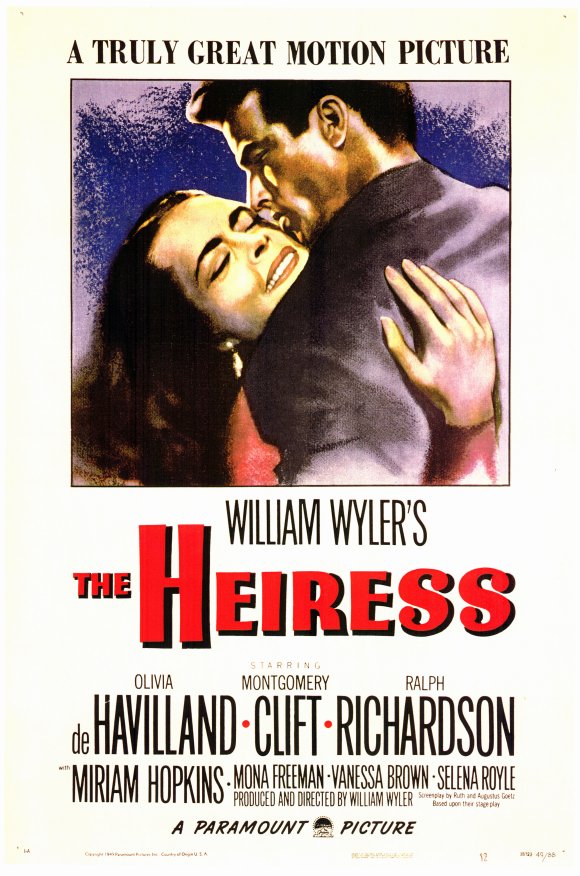
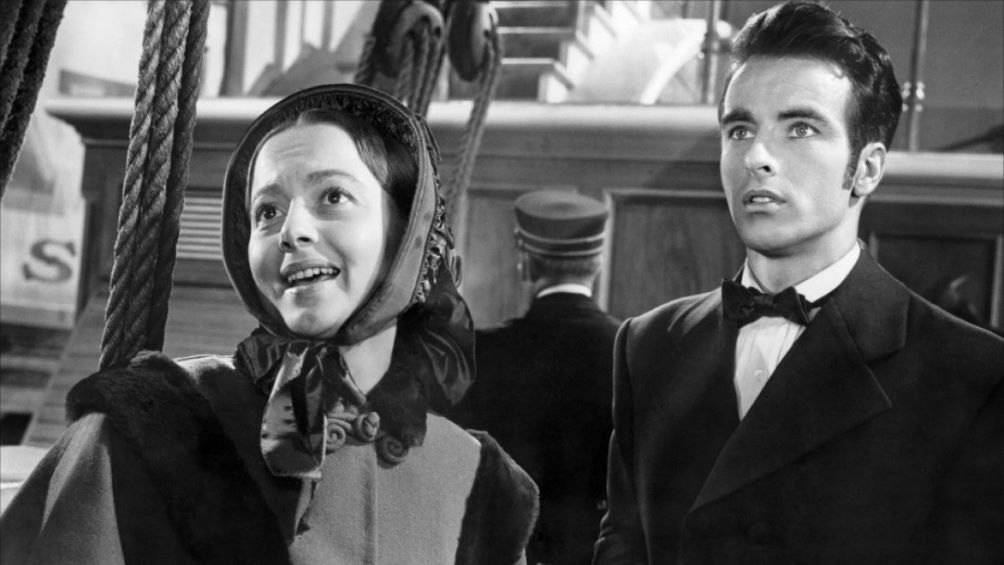
Pity poor Catherine Sloper (Olivia de Havilland). She’s seems destined forever to be the spinster, the last person anyone glances at during a party. Her father Dr Sloper (Ralph Richardson) can’t so much as walk into a room without gently telling how infinitely inferior she is to her mother. And when a man finally seems keen to court her, her father tells her that of course handsome Morris Townsend (Montgomery Clift) will only be interested in her inheritance. After all, there is nothing a young man could love in a forgettable, dull, second-rate woman like Catherine. He’s cruel, but is he right – is Morris a mercenary?

The Heiress was adapted from a play itself a version of Henry James’ Washington Square. It’s bought magnificently to the screen in a lush, sensational costume drama that comes closer than anyone else at capturing those uniquely Jamesian qualities of ambiguity and contradictory motives among the New American elites. Magnificently directed by William Wyler, it brilliantly turns a theatrical character piece into something that feels intensely cinematic, without once resorting to clumsy ‘opening up the play’ techniques. And it marshals brilliant performances at its heart.

Sumptuously costumed by Edith Head, whose costumes subtly change and develop along with its central character’s emotional state throughout the story, it’s largely set in a magnificently detailed Upper New York household, shot in deep focus perfection by Leo Tover, which soaks up both the reaction of every character and the rich, detailed perfection of decoration which may just be motivating some of the characters. Not that we can be sure about that, since the motives of Morris Townsend and his pursuit of Catherine remain cunningly unreadable: just as you convince yourself he’s genuine, he’ll show a flash of avarice – then he’ll seem so genuinely warm and loving, you’ll be sure he must be telling the truth or be the world’s greatest liar.

Catherine certainly wants it to be true – and believes it with a passion. The project was also a passion piece for de Havilland, and this is an extraordinary, Oscar-winning performance that delves deeply into the psyche of someone who has been (inadvertently perhaps) humiliated and belittled all her life and eventually reacts in ways you could not predict. Catherine is clumsy, naïve and lacking in any finesse. With her light, breathless voice and inability to find the right words, she’s a doormat for anyone. She even offers to carry the fishmonger’s wares into the house for him. At social functions, her empty dance card is studiously checked and her only skill seems to be cross-stitch.
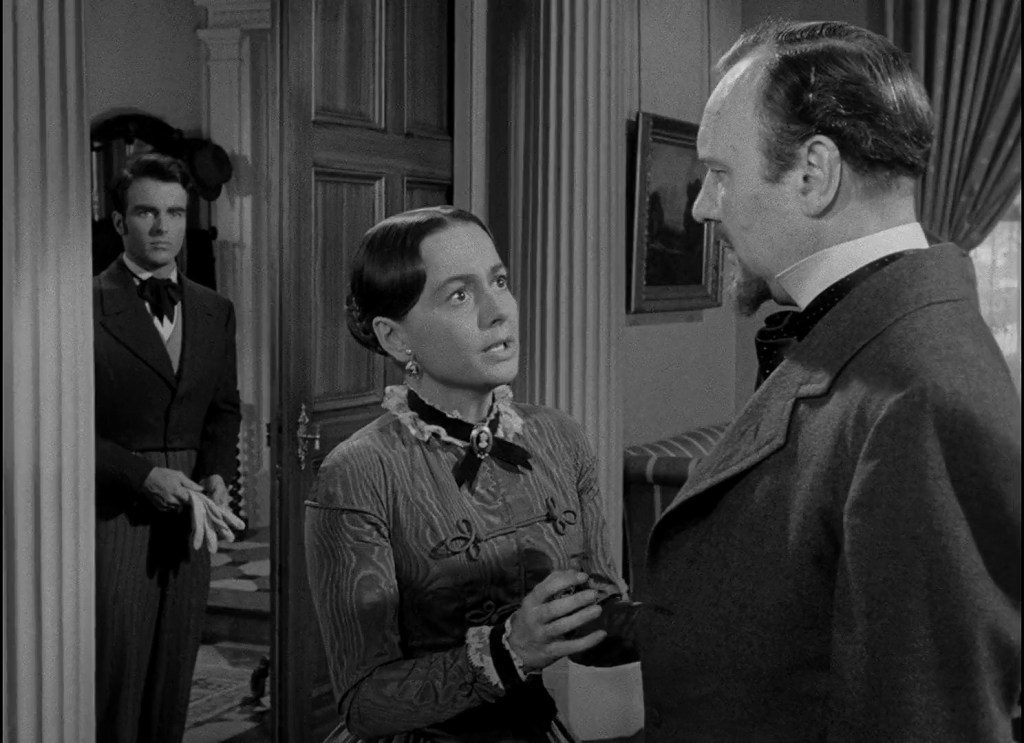
She is an eternal disappointment to her father, who meets her every action and utterance with a weary smile and a throwaway, unthinking comment that cuts her to the quick. Richardson, funnelling his eccentric energy into tight control and casual cruelty, is magnificent here. In some ways he might be one of the biggest monsters in the movies. This is a man who has grown so accustomed to weighing his daughter against his deceased wife (and finding her wanting) that the implications of the impact of this on his daughter never crosses his mind.

Catherine is never allowed to forget that she is a dumpy dullard and a complete inadequate compared to the perfection of her mother. Richardson’s eyes glaze over with undying devotion when remembering this perfection of a woman, and mementoes of her around the house or places she visited (even a Parisian café table later in the film) are treated as Holy Relics. In case we are in any doubts, his words when she tries on a dress for a cousin’s engagement party sum it up. It’s red, her mother’s colour, and looks rather good on her although he sighs “your mother was fair: she dominated the colour”. Like Rebecca this paragon can never be lived up to.

So, it’s a life-changing event when handsome Morris Townsend enters her life. There was criticism at the time that Clift may have been too nice and too handsome to play a (possible) scoundrel. Quite the opposite: Clift’s earnestness, handsomeness and charm are perfect for the role, while his relaxed modernism as an actor translates neatly in this period setting into what could-be arrogant self-entitlement. Nevertheless, his attention and flirtation with Catherine at a party is a blast from the blue for this woman, caught mumbling her words, dropping her bag and fiddling nervously with her dance card (pretending its fuller than of course it is).

Her father, who sees no value in her, assumes it is not his tedious child Morris has his eyes on, but the $30k a year she stands to inherit. And maybe he knows because these two men have tastes in common, Morris even commenting “we like the same things” while starring round a house he all too clearly can imagine himself living in – by implication, they also have dislikes in common. (And who does Sloper dislike more, in a way, than Catherine?) Morris protests his affections so vehemently (and Sloper lays out his case with such matter-of-fact bluntness) that we want to believe him, even while we think someone who makes himself so at home in Sloper’s absence (helping himself to brandy and cigars) can’t be as genuine as he wants us to think.

As does Catherine. Part of the brilliance of de Havilland’s performance is how her performance physically alters and her mentality changes as events buffet her. A woman who starts the film mousey and barely able to look at herself in the mirror, ends it firm-backed and cold-eyed, her voice changing from a light, embarrassed breathlessness into something hard, deep and sharp. De Havilland in fact swallows Richardson’s characteristics, Sloper’s precision and inflexibility becoming her core characteristics. The wide-eyed woman at the ball is a memory by the film’s conclusion, Catherine becoming tough but making her own choices. As she says to her father, she has lived all her life with a man who doesn’t love her. If she spends the rest of it with another, at least that will be her choice.

Wyler assembles this superbly, with careful camera placement helping to draw out some gorgeous performances from the three leads – not to forgetting Miriam Hopkins as a spinster aunt, who seems as infatuated with Morris as Catherine is. The film is shaped, at key moments, around the house’s dominant staircase. Catherine runs up it in glee at the film’s start with her new dress, later sits on it watching eagerly as Morris asks (disastrously) for her hand. Later again, she will trudge up it in defeated misery and will end the film ascending it with unreadable certainty.

The Heiress is a magnificent family drama, faultlessly acted by the cast under pitch-perfect direction, that captures something subtly unreadable. We can believe that motives change, grow and even alter over time – and maybe that someone can love somebody and their money at the same time (perhaps). But we also understand the trauma of constant emotional pain and the hardening a lifetime of disappointment can have. It’s the best James adaption you’ll ever see.
The Best Years of Our Lives (1946)

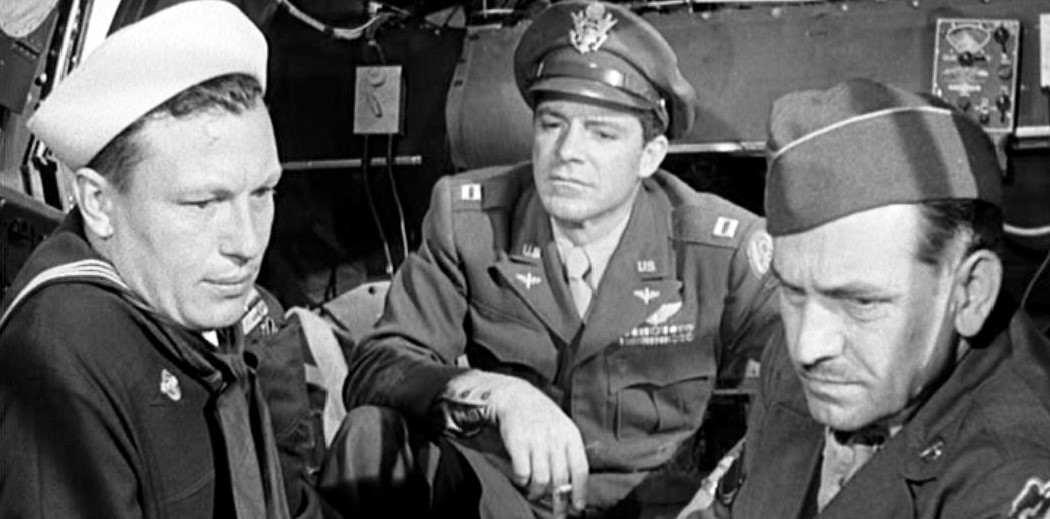
Harold Rusell, Dana Andrews and Fredric March find coming home can be as tough as war in The Best Years of Our Lives

Director: William Wyler

Cast: Myrna Loy (Milly Stephenson), Fredric March (Sgt Al Stephenson), Dana Andrews (Captain Fred Derry), Teresa Wright (Peggy Stephenson), Virginia Mayo (Marie Derry), Cathy O’Donnell (Wilma Cameron), Harold Russell (PO Homer Parish), Hoagy Carmichael (Butch Eagle), Gladys George (Hortense Derry), Roman Bohnen (Pat Derry), Ray Collins (Mr Milton)

Three men return from the Second World War. They’ve changed, but everything around them seems the same. How do they even begin to adjust when no one really understands what they’ve been through? The Best Years of Our Lives was a sensation when it was released, speaking to a whole country reeling from the shock of war. Many films focus on the gruelling experience of war, but few take on the struggle to find a place for veterans and help them reintegrate into normal life.

Our three veterans all meet at the airport, trying to home to the same small (fictional) city in the Midwest. Normally they would probably have never met: but war has given them a shared bond they will find hard to replicate back home. Al Stephenson (Fredric March) is a banker, who has developed something of a drinking problem to the surprise of his wife Milly (Myrna). Fred Derry (Dana Andrews) was a café worker who became an Air Force Captain – but finds that doesn’t interest employers back home. He also now has nothing in common with the flighty, flirty wife Marie (Virginia Mayo) he married before shipping out – and far more in common with Al’s thoughtful daughter Peggy (Teresa Wright). Homer Parish (Harold Russell) lost both his hands, replaced with mechanical hooks. Can he overcome the adjustments – and allow himself to be loved by Wilma (Cathy O’Donnell)?

What The Best Years of Our Lives explores brilliantly is how quick we are to praise heroes, but how slow we can be to offer them practical help and support. These problems aren’t just restricted to an unlucky one or two – the film goes out of its way to demonstrate the problem is universal. Our three leads are from different services, and radically different walks of life: an important businessman who served as a sergeant, a wash-out who found a purpose in the air force and an athletic sailor who returns without his hands. Rich or poor, it’s tough to find your place whoever you are.

Wyler shoots all this with a documentary realism, with extensive use of deep focus photography. It helps make this a frequently moving film. It sometimes feels like Wyler just captured real events. Flying home our heroes see “people playing golf like nothing happened”. They are all so nervous going home that both Al and Homer both suggest going for a drink rather than leave the cab they are sharing. Everyday problems about going to the office or looking for a job seem more affecting because we know they’ve come back from the war and don’t deserve knock-backs like this.

The heart of this film is Fred’s struggles to find some sort of purpose on civvie street. War offered more opportunities to him more than anyone else. He is a nobody who became a respected somebody. Now he can’t get a job in a department store. As a potential employer tells him, his CV is stuffed with irrelevant experience and his years out of the job market mean he’s fallen behind the rest. This is how a man with a chest full of medals, winds up serving ice cream and busting a gut trying to flog perfume to housewives who let their children run wild around his stand.

Dana Andrews is the heart of this film, giving a marvellous performance of great depth and sadness. Haunted by nightmares, Fred’s optimism drips away the longer he fails to find proper work. Perhaps most heart-breakingly of all, he increasingly makes himself the target of his dry wit. By the time he has surrounded to the indignity of taking back his old soda jerk job (and reporting to the spotty kid who used to be his assistant), Fred is disparagingly belittling his own wartime accomplishments.

If someone as matinee idol handsome, with a wonderful war record, as Fred can’t get ahead, what chance does anyone have? Fred’s wife (Virginia Mayo, marvellously smackable as this shallow girl) isn’t even interested in him, only the idea of him – begging him to wear his uniform (medals and all) for as long as possible so she can show him off like a new handbag. Fred is knocked back so many times, he comes to believe he deserves it. In a beautiful scene, late in the film, he walks through a field covered in old air force bombers. It’s a striking visual metaphor – one Fred is all too aware of – that he’s as much on the scrap heap as them.

The Best Years of Our Lives shows time and again how quick we are to forget. Al is hauled over the coals for offering a loan to a collateral-free GI who wants to start a farm. But Al feels a loyalty to men like this – and he recognises, unlike his superiors, there are qualities you just won’t find in a bank account. Homer is confronted at Fred’s workplace by an arrogant anti-Commie, who suggests the entire war was a waste of time, spent fighting the wrong foes. Calling Homer “a sucker” for losing his hands in the wrong war leads to a fight – and Fred losing his job for punching the guy out. Where is the sense of debt to these people?

Homer not only has to deal with disability – but also the metallic claws which get him all the wrong attention. The army trained him how to use the claws – but as Al observes, watching Homer’s awkward homecoming “couldn’t train him to put his arms round his girl”. They can solve the practical problem, but there is no support for actually coming to terms with the emotional impact.

Homer is played by real-life veteran paraplegic (and non-actor) Harold Russell, in a poignantly sincere, unstudied performance. It becomes even more heart-breaking, as his torment clearly rooted in Russell’s own experiences. When Homer demonstrates to Wilma how vulnerable he is without his hands –  if a door shuts, he’s trapped in a room, he can’t dress himself– it’s almost unbearably sad (O’Donnell is equally good in this scene). Russell’s simple, matter-of-factness is more moving than any histrionics.

The only plot that doesn’t get fully explored is Al’s implied drinking problem. He gets pissed the first night home (and his wife comments several times on his growing reliance). Everything to Al feels a little different – his kids are older, his bankwork seems stuffier. Today the film would dive more into Al’s probable survivor guilt. But Al makes a stand when others won’t to help his veterans – and March has a superb, low-key speech at a banquet in his honour where he vows to invest small loans into returning GIs. The film also gently probes – and in some ways leaves open – the ongoing problems he and Milly (warmly played by Myrna Loy) have had in their marriage, problems which Al’s absence and drinking have not helped solve.

Wyler pulls these threads together in a restrained style that largely avoids melodrama (though Hugo Freidhofer’s score is frequently overblown – Wyler apparently hated it). Instead, dilemmas are grounded in reality. Al might like Fred, but the last thing he wants is for Fred to get his daughter Peggy (Teresa Wright in a gentle, touching performance) caught up in a divorce. In a perfect example of Wyler’s restrained, documentary style, Al and Fred have a quiet man-to-man discussion, before Fred calls Peggy to see he can’t see her anymore. He does this in the back corner of the frame while the foreground shows Al listening to Homer and his uncle play the piano. It’s a perfect example of the way Wyler uses deep focus to give the film a fly-on-the-wall quality.

There is something extraordinarily modern about The Best Years of Our Lives. It feels calm and un-histrionic – and of course many veterans still struggle today. The camera feels observational and unobtrusive and the characters respond to situations in a very natural way. It’s also helped by the wonderfully natural acting. It all comes together in a film that is important without feeling like it’s trying to be important. An observant, sensitive exploration of the experience of veterans (made by a veteran), that never feels false and looks at our world with affection but realism.

Citizen Kane (1941)

Orson Welles changes film history as Citizen Kane

Director: Orson Welles

Cast: Orson Welles (Charles Foster Kane), Joseph Cotton (Jedediah Leland), Dorothy Comingore (Susan Alexander Kane), Agnes Moorehead (Mary Kane), Ruth Warwick (Emily Monroe Norton Kane), Ray Collins (Jim W Gettys), Erskine Sanford (Herbert Carter), Everett Sloane (Mr Bernstein), William Alland (Jerry Thompson), Paul Stewart (Raymond), George Coulouris (Walter Parks Thatcher), Fortunio Bonanova (Signor Matiste), Harry Shannon (Kane’s father)

Writing about Citizen Kane is rather like writing about the Mona Lisa. Both are works of art so famous and influential that you are intimately familiar with them even if you’ve never seen them. But what makes them such constant delights is that, leaving everything else aside, the Mona Lisa is beautiful to look at – and Citizen Kane is hugely enjoyable to watch. Welles’ masterpiece – frequently hailed as the greatest film ever made – is about as close to perfection as you can get.

Entire books have been written about seemingly every aspect of the film’s creation. Welles’ original intention was to call the film American. It’s a fitting title. Citizen Kane is perhaps the finest film ever made on the corruption that ambition, money and power bring to the American spirit. Kane starts out as a pioneering idealist, but his fatal flaw his is need for power. That need to seize control of everything extends from buying all the art he can find in Europe to controlling the lives of all around him. It’s the mentality that will force his second wife into an opera career she is hopelessly unsuited for. It will eventually leave him sitting alone in his huge mansion, surrounded by wealth but bereft of friends. A large part of the American Dream is about “making it big” – and few make it bigger than Kane, and have so little to show for it at the end.

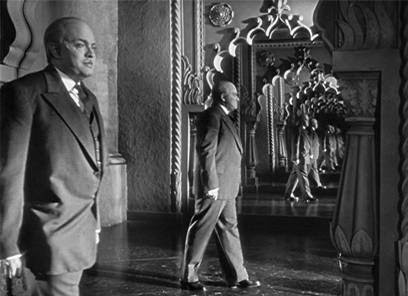
The film is a character study of ambition and power, using a framing device of the late Kane’s final word: “Rosebud”. What did he mean? Will finding out provide the key to understanding this powerful, elliptical man? A reporter (William Alland) aims to find out by interviewing key people from Kane’s life. From their recollections, the story of Kane’s life slowly comes together in a non-linear style. Charles Foster Kane (Orson Welles) as a young child inherits one of the world’s largest gold mines. Coming of age, Kane decides to use his wealth to become a press baron. He builds a news empire and runs for Governor – but the public revelation of his affair with amateur singer Susan (Dorothy Comingore) ruins his campaign. He builds a mansion on a man-made mountain, Xanadu, but is isolated and friendless in the echoing rooms of his own mausoleum.

You can argue the same thing happened to Welles himself. Citizen Kane is his own mausoleum, the only time in his life when everything went right. Also, probably the only time Welles’ attention stuck to something long enough to deliver. Welles memorably called working on a film set “the biggest electric train set any boy ever had”, and the entire film is saturated in his creative glee at trying so many new tricks. Citizen Kane bought to the forefront so many methods of film-making, its influence has been so pervasive on film today, that it’s hard to see how revolutionary it appeared at the time.

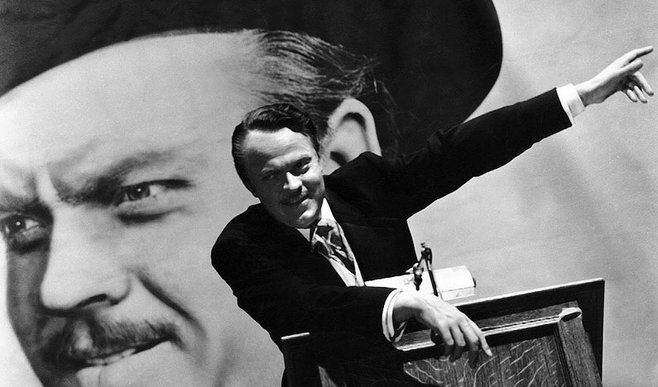
Welles worked with cameraman Gregg Toland to push the film into a whole new visual language, deeply influenced by German expressionistic film. It’s a beautiful film to look at, and each shot is covered with meaning, Welles’ eye for the theatrical image matched with Toland’s genius for visual language.

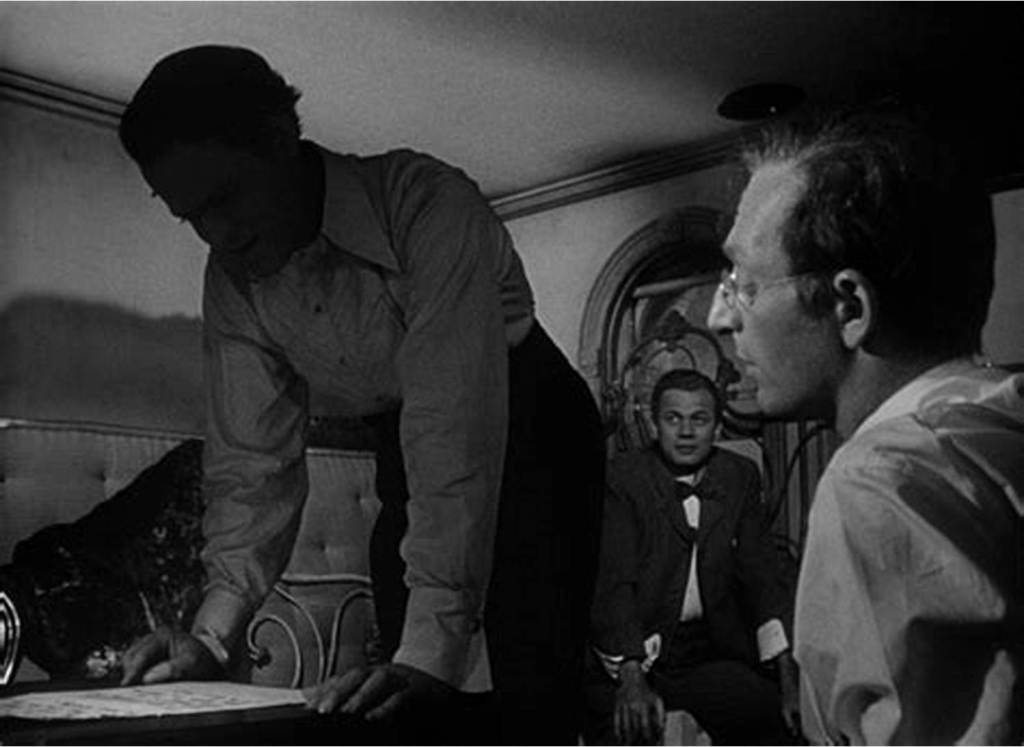
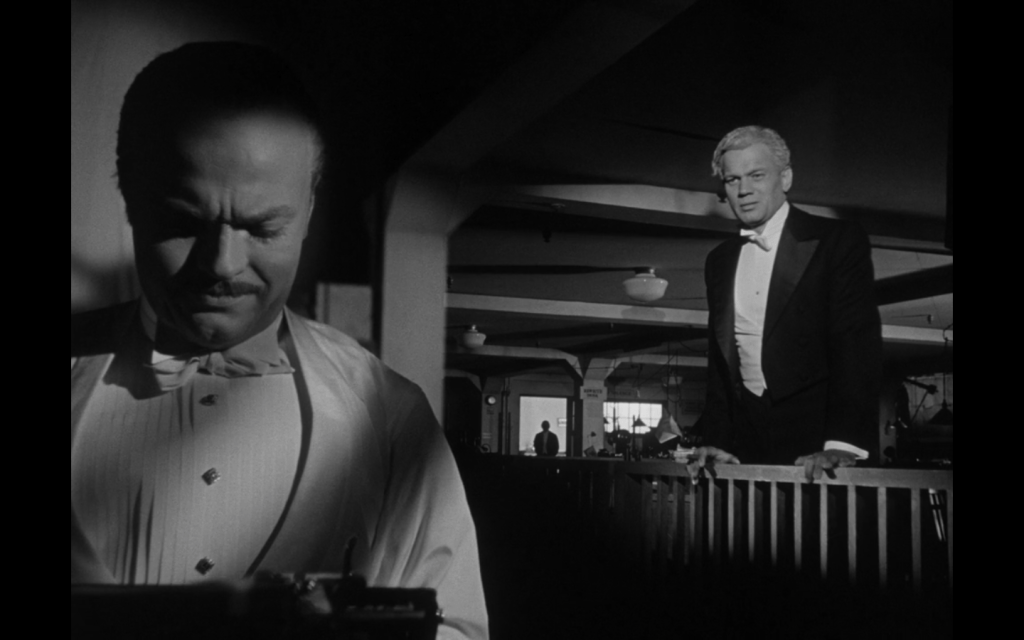
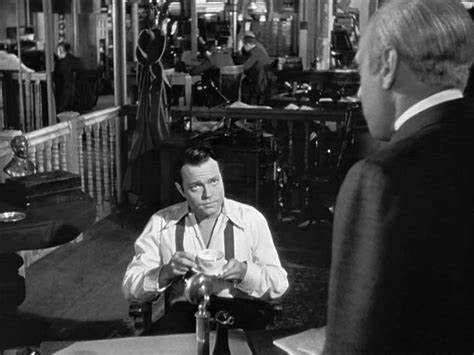
Citizen Kane is rarely thought of as a noir film, but it’s possibly the most noirish film you’ll ever see. Watching it again I was struck with how often shadows dominate the screen. Faces are frequently obscured, most famously in the projection room scene, where Thompson receives his instructions to find out what “Rosebud” means. But at key moments, faces disappear into black – while preparing his “Statement of principles” that will fill the front page of Kane’s first edition at the Inquirer, his face is lost in murky darkness. We hear what he is saying, but what is he thinking at this moment? It’s impossible to tell. Long shadows and inky black segments fill the frame frequently – it’s a film that gives a true feeling of darkness and unknowability at its heart.

This is mixed with the theatrical flourish of its constant deep focus. Almost unheard of at the time, every shot of Kane is in perfect focus. It makes for visual compositions inspired by theatre, and ripe with dramatic meaning. Kane’s parents and his guardian William Parks Thatcher (George Coulouris) organise the future of the young Kane in the foreground, while we see the child playing outside in the show through a window. The deep focus turns Xanadu into a museum of lost chances and dreams, and the Inquirer newspaper office into an increasingly dark corridor of ambition, with people’s fates decided in foreground while we see them trapped in the background.

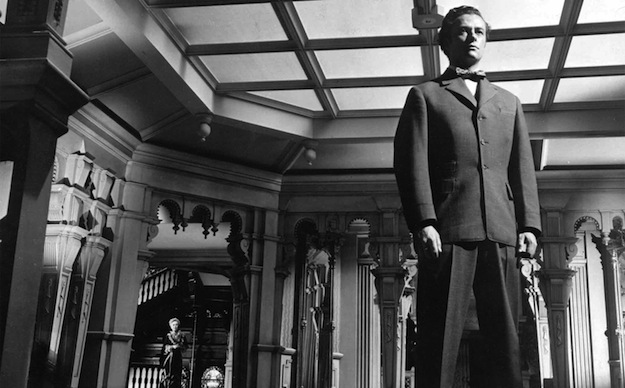
If that wasn’t enough, Toland uses angles Hollywood films hadn’t dreamed of. For some scenes, trenches were dug into the set and the camera placed in it, allowing the camera to stare up, with the actors towering over us. Citizen Kane is often claimed to be the first film where ceilings needed to build for the sets, as Toland’s angles and camerawork frequently made them visible. It’s not completely true, but it speaks to the visual impact of the film. Nothing really like this had been widely seen before. And I’ve not even mentioned the soaring, swooping tracking shots that pass through signs and buildings, the sort of inspired movement of the camera so many directors before had avoided in favour of stationary recording of the story. It’s visionary stuff.

The same was true for the film’s sound and music. Welles used his experience from radio to turn the soundscape of the film into something truly different. In radio, all cuts are managed by sound, but film had traditionally used only visuals to mark edits. Here, sound is used as often as visuals. When Kane runs for Governor, the sound and vision cut seamlessly from Leland on the stump for Kane to Kane finishing the same speech at a cavernous rally. Early in the film, the words “Happy Christmas” are skilfully cut together to leap forward years. Bernard Herrmann’s spare but perfect score, rather than laid over every scene, only comes in (as on radio) where emotional or transitional change is needed.

But then this is a film that uses editing as a way to tell story that few films before had tried. The sequence showing the collapse of Kane’s marriage to President’s niece Emily Monroe Norton (Ruth Warwick) is the perfect example. Over about two minutes of screen time we see several short scenes, all set at the breakfast table. Each scene shows a progressive step in their relationship collapsing, from loving exasperation to annoyance to anger to mute loathing. The scenes are no more than 20-30 seconds each, but the film perfectly moves from one to the other. The music slowly changes from a romantic waltz to a cold discordant rhythm. Transitions are marked by wipes. In each scene the actors move further apart at their breakfast table, the dialogue becomes harsher, sharper and more confrontational as the room they sit in becomes grander. In a few moments, an entire marriage story is told. It’s quite simply marvellous. The sequence is bookended by matching camera movements, gliding in and then out from the room.

You could speak for pages and pages (as indeed people have) about what a marvel Kane is. Welles’ vision and willingness to push the boundaries created an environment where all his collaborators worked to achieve their best, set free from the restrictions of more traditional moviemaking to stretch themselves as artists in a way rarely allowed. But it’s easy to forget what a marvellous story Citizen Kane is, what an entertaining and brilliantly constructed film it is and how every scene has something that delights and enthrals.

There’s controversy over who wrote the script. Welles and Herman J Mankiewicz are credited – although arguments have been made that each deserved the lion’s share. Whoever did create it, the script is quite simply superb. Economic, but packed with wonderful lines and some extraordinary speeches (Mr Bernstein’s speech about a powerful memory of a young woman he saw once from a distance is quite simply one of the best small-scale speeches you’ll see). Every scene is brilliantly assembled, and gives fabulous material to an extraordinary cast of actors.

It makes for a compelling character study, wrapped into a series of brilliantly done vignettes. Each set of recollections – from Thatcher, business manager Mr Bernstein (Everett Sloane), old friend Jedidah (Joseph Cotton) and ex-wife Susan (Dorothy Comingore) – makes for a fabulous series of self-contained scenes, each gaining richer and deeper meaning with every subsequent reflection that follows. There are so many sensational scenes I hardly know where to begin: you could write an essay about each one. Thatcher’s serio-comic reflections of the roguishly cheeky Kane are wonderful. Bernstein’s memories of the chancer coming good – with a brilliantly playful celebration scene – wonderfully entertaining. Jedidah and Susan’s far more tainted reflections of the man’s flaws make for wonderfully constructed drama, presenting a corrupted and bullying Kane. In every scene there is a beautiful moment of dialogue or drama which sticks in the memory.

The acting is equally good. Cotton settles into the groove many of his finest roles would fit into – the never-quite-grew-up schoolboy, who slowly realises his hero has feet of clay. Comingore is wonderfully fragile and then increasingly bitter as Kane’s ill-used second wife, forced into a humiliating career because Kane won’t be married to a failure. Sloane is charmingly loyal, with beautiful moments of profound sadness, as Bernstein. Coulouris is brilliantly funny as the exasperated Thatcher. Ray Collins’ is smooth and unabashed as Kane’s political rival. Agnes Moorehead is tinged with sadness and ambition for her son as Kane‘s mother.

But at the heart of Citizen Kane – in every sense – is Welles. His handpicked crew was some of the best in the business – but it was Welles’ inspiration, his willingness to imagine techniques and approaches un-attempted before, that encouraged them to their finest work here. With the magnetic force of personality that was his hallmark, he inspired everyone to give their very best. And he led from the front. The film is a triumph of drama, tragedy and comedy, directed with sublime grace. Welles the actor is perfectly cast, the part almost a riff on his own cult of personality, the mix of pride and overweening ambition and little-boy cheek crossed with self-destructive laziness. Welles’ performance is faultless in the film, taking Kane from the smirking chap happy to lose a million dollars a year (“at the rate of a million dollars a year I’ll need to close this place…in 60 years”) to the bloated old man, trashing his wife’s room after she walks out. Perfect.

The only tragic note about Citizen Kane is that this wasn’t the first in a career of non-stop genius from Welles. Instead, flaws in his own personality, combined with his ability to make enemies and lack of ability to focus on the task in hand, increasingly consumed Welles, making him eventually a lost great, a man wandering from film set to film set, taking on small roles for cheques that might one day help him make a film. But he’ll always have Kane, the sort of film that is a marvel which can never, ever disappoint. With every scene a classic, every moment compelling, every beat in it perfectly judged, its influence stretching to almost every film made since the late 1940s – it deserves its place as the greatest film of all time.

The Magnificent Ambersons (1942)

Tim Holt can’t understand how the world is changing in The Magnificent Ambersons

Director: Orson Welles

Cast: Joseph Cotton (Eugene Morgan), Dolores Costello (Isabel Amberson Minafer), Anne Baxter (Lucy Morgan), Tim Holt (George Amberson Minafer), Agnes Moorehead (Fanny Minafer), Ray Collins (Jack Amberson), Erskine Sanford (Roger Bronson), Richard Bennett (Major Amberson), Don Dillaway (Wilbur Minafor), Orson Welles (Narrator)

In early 1940s, Orson Welles was given the sort of contract by RKO directors normally only dream of. The freedom to write, direct and star in films of his choice and, most of all, the power of “Final Cut” – the dream of all his contemporaries. All this for a 25-year-old who had never made a film. It was unheard of – and it was never heard of again. The reaction to Citizen Kane had been full of praise from the critics but that hadn’t saved it from box office disappointment – nor the savages of the Hearst press or the jealousy of his peers. The chickens would well and truly come home to roost on The Magnificent Ambersons, the second picture in Welles’ deal.

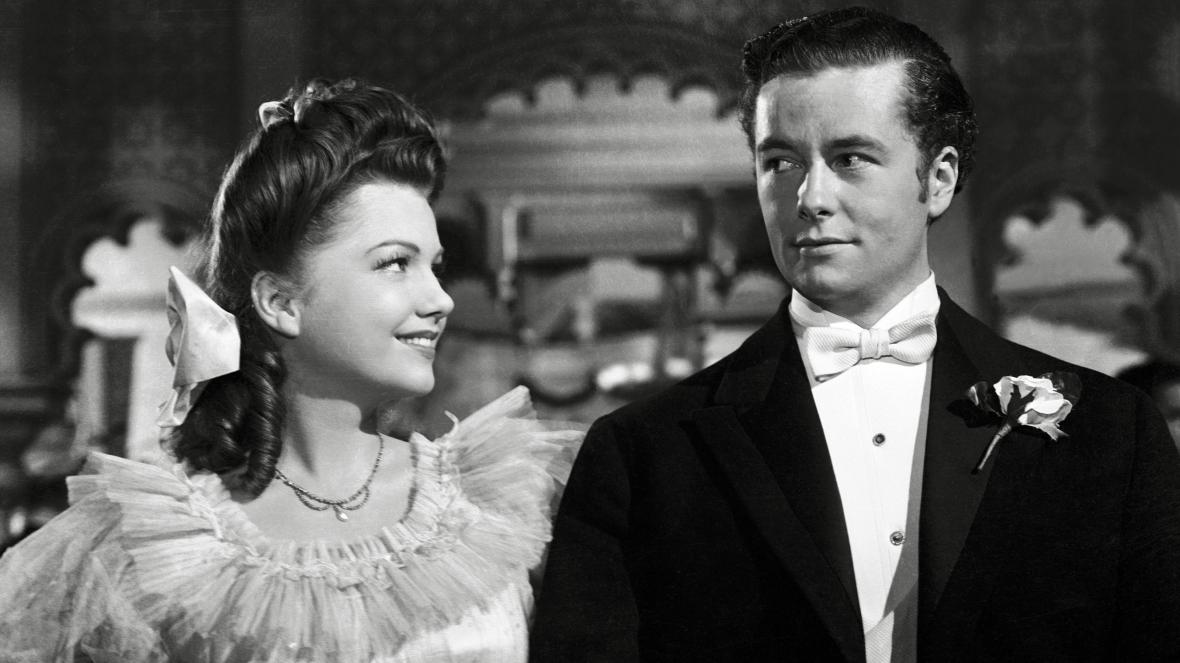
The film itself is an adaptation of Booth Tarkington’s Pulitzer prize-winning novel. The Ambersons are a powerful and rich Midwestern family at the turn of the century – but the film charts their decline and fall as the modern age (represented by the motor car) slowly leads their world of genteel wealth and entitlement to a close. It’s a particularly challenging concept for the youngest member of the clan, George Amberson Minafer (Tim Holt) to come to term with, the spoilt young son of Isabel (Dolores Costello), who has grown up expecting his every whim to be met without question. His hostility focuses on Eugene Morgan (Joseph Cotton), his mother’s rejected suitor (now renewing his interest with her widowhood) and inventor who has patented a new form of motorcar. Things are complicated by George’s own love for Eugene’s daughter Lucy (Anne Baxter), a young woman who expects George to want more from life than just to live off his family’s wealth.

It’s impossible to discuss The Magnificent Ambersons without mentioning its status as perhaps the greatest “lost film” ever. Welles’ original cut of the film was a little over two hours long. He completed the cut and then flew to Brazil to begin collecting footage for his next project, It’s All True a part-documentary, part-fiction film (which in the end was abandoned). While he was out of the country, the film was roundly rubbished at a test screening. RKO panicked and demanded cuts. Welles had foolishly surrounded his right to final cut for the film and sent back a list of suggested changes (some have argued the list was deliberately bad to force the studio to make no changes), but refused to fly back to supervise things. 

So his editor Robert Wise (later a two-time Academy award winning director) cut the film down to just over an hour and twenty minutes. Cotton and Moorehead were corralled into filming some new scenes to hurriedly wrap the story up and give it the studio mandated “happy ending”. Welles wasn’t happy, but still wouldn’t come back to fight his corner. His notes were destroyed and eventually the remaining negative of the deleted scenes were burnt. So the truncated shadow is all we have.

I call it a shadow, because that is what the film feels like – an afterimage of a true masterpiece, like a dream you can almost completely remember. In some ways it’s an even more confident and controlled piece of film-making than Kane, a wonderfully assured and graceful piece of film-making that mixes luscious long-takes with a triumph of techniques and little details (both of performance and technical work). Welles captures this all within a triumphantly impressive set, an elephantine house of at least three stories with a winding grand staircase, that allows him to film from different, heights and angles as well as indulge a series of graceful tracking shots that all proceed and accompany the actors through the house.

Welles matches this with a storyline that captures a sense of a country in a state of change – a tipping point of modern America as the Henry Jamesian Old Americans, with their wealth and inherited English-class system, gave way to industrialist new money. These two worlds sit awkwardly against each other, constantly compared and contrasted – Eugene’s car factory is a noisy, piston filled Ford-ist church, a world away from the formal gentility of the Amberson home. 

Welles also captures this in a series of wonderful vignettes, not least an early scene featuring Morgan driving Isabel and her siblings through the snow bound countryside in his prototype motor car, at first passed by an arrogant George with Lucy in a horse and sleigh, then having to bail George out when the sleigh turns leaving him and Lucy stranded. George is reduced to pushing the car to getting it started – getting a face full of fumes for good measure – a humiliation that hardens his stance against the modern world (and Eugene) all the more.

Because for George – superbly played with a fragile ego and utter lack of self-awareness by a preeningly weak Tim Holt – the world has a certain order that places Ambersons at the top and the rest of the world at various levels on the way down. And anything that might threaten to change that is rejected at all costs. George expects the world to march to his tune without him putting in the faintest effort – and when it doesn’t, his whole life is a desperate raging of petty attempts to assert his control.

This focuses above all on exerting a bullying moral force on his mother, a woman who loves her son but also wants to explore the romantic feelings she has for Eugene (and by extension her understanding that the world is changing). George makes this choice stark – him or Eugene – a choice no mother can be expected to make. Dolores Costello is superb as a woman who has spent her life shutting her eyes to her son’s selfish nature until it’s too late to change, who sacrifices her own desires for the good of her family.

The whole film is a feast of sublime acting, a reminder of how Welles could get the best out of actors (all regular collaborators of his). Joseph Cotton’s earnestness is perfect for the upright and decent Eugene, too proud to let his resentment and anger show. Ray Collins is wonderfully sweet and endearing as Jack, George’s generous and open-minded uncle. Anne Baxter has a radiant honesty that hides a determined spine of moral certainty as Eugene’s daughter Lucy. Perhaps finest of all is Agnes Moorehead (Oscar nominated) as Aunt Fanny, George’s spinster aunt, who has worn a mask of contentment over her own frustrations and resentments for so long she only slowly begins to work out what she actually feels about anything at all. Moorehead’s performance walks a brilliant line between careful underplaying and explosive dynamics – she has at least three striking emotional breakdown scenes of such brittle honesty that it’s enough to move you to tears.

All of this comes together into a superb package of sublime film-making and intelligent story telling. The problem is it’s too short. The later scenes really bear the brunt, with Wise’s cutting trimming much of the connecting meat between the key scenes. Events towards the end seem to happen with no build up – characters suddenly die, fortunes are swiftly lost, years disappear from one scene to the next. As the film accelerates through its final half hour, narratively it begins to make less and less sense. Then the studio caps on a functionally filmed happy ending (Wise does at least ape Welles’ tracking shot techniques – he was a very capable director) which rings utterly untrue with the sadly elegiac story we’ve been watching (superbly narrated by the way by Welles).

It makes The Magnificent Ambersons a wonderful, incomplete masterpiece. It’s the filmic equivalent to those parts cut off from The Night Watch or Ucello’s Battle of San Romano. What we are left with is still awe inspiring. But it could have been even more.