Tag: Ray Stevenson

Thor (2011)

Thor (2011)

Branagh lives his dream by making the most comic-book, bombastic Shakespeare-homage ever

Director: Kenneth Branagh

Cast: Chris Hemsworth (Thor), Natalie Portman (Dr Jane Foster), Tom Hiddleston (Loki), Anthony Hopkins (Odin), Stellan Skarsgård (Dr Erik Selvig), Kat Dennings (Darcy Lewis), Clark Gregg (Phil Coulson), Rene Russo (Frigga), Colm Feore (Laufrey), Ray Stevenson (Volstagg), Idris Elba (Heimdall), Jaimie Alexander (Sif), Josh Dallas (Fandral), Tadanobu Asano (Hogun), Jeremy Renner (Hawkeye)

If you’d told people after Henry V that one day Kenneth Branagh would direct a high-octane comic book movie about a Norse God who bashes things with a hammer, you’d have been laughed outta town. But Branagh was who Marvel called to launch the Thor franchise – and doncha know it turned out to be a pretty shrewd choice.

Thor (Chris Hemsworth) is the arrogant son of Odin (Anthony Hopkins) and heir to the throne of Asgard, the planet that keeps peace in the Universe. After an attempt by Asgard’s old enemies, the Frost Giants, to re-capture a stolen super-weapon, Thor leads a reckless attack on their homeworld that threatens to shatter a hard-won peace. Disappointed and furious, Odin strips Thor of his powers and banishes him to Earth, where the fallen God of Thunder must learn humility to be worthy of regaining his powers. On Earth, he falls in love with gifted scientist Jane Foster (Natalie Portman), while on Asgard the realm falls under the control of his brother Loki (Tom Hiddleston), who manipulates events to make his own claim for both the throne and their father’s love.

You can sort of see the Shakespearean bits bubbling away there. Fathers and sons, ambition and power, tragic flaws. Destiny verses desire. Loki as a mix of Edmond, Iago and Cassius. Thor as a Prince Hal earning the maturity to lead. Odin as a kindly Lear. Hell, you could see Thor washing up on the shores of New Mexico, like Twelfth Night’s Viola, forced to pretend to be something he isn’t. He even has his own mini-Falstaff, in gluttonous warrior Volstagg. It’s a heightened story of Kings and Queens, Tempest-style magic and Hamlet­-style family intrigue. Marvel, of course, partly hired Branagh to bring attention to this (effectively, paying Branagh for his Shakespeare-street-cred to make an otherwise snigger-worthy concept of Norse Gods in space get taken seriously), Thor does a great job of bringing this out without drowning the fun.

And of course, for those paying attention, Branagh had been dying to do bombastic nonsense for years. Shakespeare had disguised that Branagh adored loud crashes, big bangs, showy camera work (half of Thor is done in Dutch angles, apeing comic books) and pounding soundtracks. His Hamlet is crammed with half a dozen genres, from romance to action and Mary Shelley’s Frankenstein showed he could fly over the top with the best of them. But he’s also an actor’s director, and he draws performances here from Hemsworth and Hiddleston in particular that would lay the groundwork for making these two of the most popular actors in the whole damn franchise.

Thor above all does a brilliant job of making us care for a lead character initially presented as a likeable but arrogant, immature and cocky hit-first-think-later warrior, cavalier about people’s lives. There is a very funny humiliation conga inflicted upon Thor on arriving on Earth (a classic rule-of-three gag) leaving him successively tasered, tranquilised by a syringe in the ass and knocked over by reversing car. It’s a brilliant way of breaking the haughty – the Mighty Thor, who trashed an army of Frost Giants, laid low by a middle-aged doctor yanking down his hospital pants. But it all sets us on a path for caring about him, helped by how chivalrous and polite he is with Portman’s winning Dr Foster. Sure, he’s still dripping with hubris – assuming once he gets his hands on his hammer Mjolnir again, everything will be as it was – but at wider traces of humanity emerge we start to care for him.

It’s cemented by a very effective scene where Branagh proves his worth as a director of actors. After failing to lift said hammer – being, at this point, unworthy due to having not really learned anything – Thor sits alone in an interrogation room, visited by a disguised Loki. Hemsworth is very good in his scene: he suddenly makes Thor humbled, fragile, accepting his failures, not lashing out but tearfully apologising for his past behaviour, meekly asking to just be allowed to come home then bravely accepts his permanent banishment. It’s actually an effectiveportrait of overcoming hubris: Thor’s true heroism isn’t trashing Loki’s rent-a-robot that is the film’s penultimate foe. It’s accepting, in his depowered state, his role in the battle is to stay out of the way and help get people out of the way before offering his own life as a sacrifice if he will end the robot’s rampage.

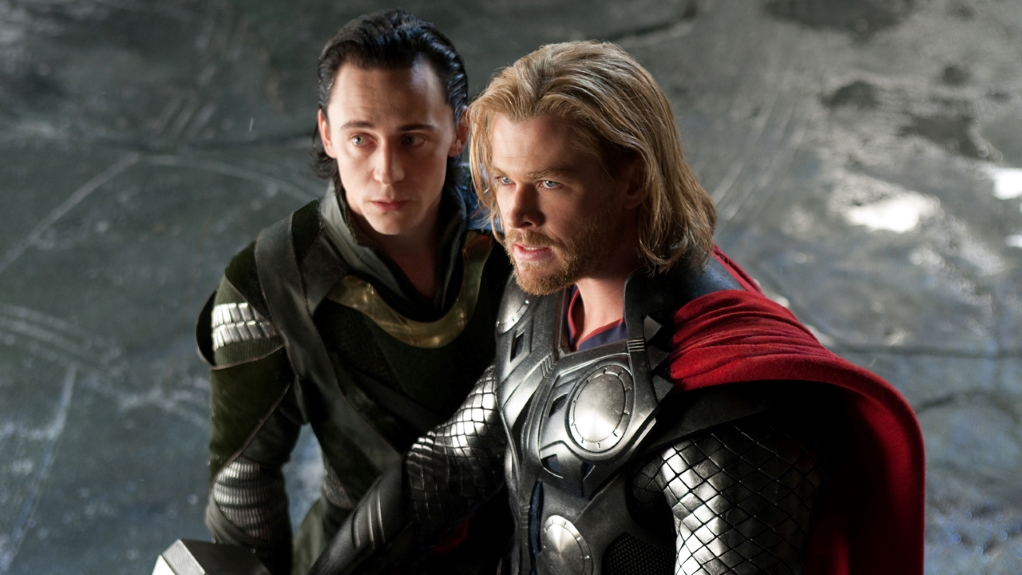
If Thor, in Hemsworth’s gently sweet and funny performance, overcomes hubris, Loki succumbs to it. Tom Hiddleston’s charisma here (cemented by his excellent turn in The Avengers) helped him become Marvel’s most popular anti-hero. Like Thor, he’s a complex character: a second brother who secretly resents his brother’s prominence, wants his father’s love, learns things about his past which make him lean into his worst instincts, all to try and be what he mistakenly thinks his family wants. Hiddleston carries all this angst and tragedy with real skill, while also filling the role with wit and playfulness: it’s a great, star-making turn.

It’s a sign of the film’s surprising complexity that it’s hero and villain switch perspectives over its course. Thor starts by dreaming of destroying the Frost Giants to impress Odin while Loki counsels restraint. He ends it by making enormous personal sacrifices to protect them from a genocidal plan unleashed by Loki who wants to prove he’s as tough as Thor. The film ends not with a hero triumphant, but alone and grieving losses. It’s stuff like this that makes Thor a truly interesting, engaging film in a way other MCU outings are not.

And a lot of it comes from Branagh’s skill with actors. Thor might not offer the greatest acting challenges to the rest, but Hopkins in particular was better here than he had been for years (he credited Branagh with helping him rediscover his passion for acting) and Portman and Skarsgård bring a lot of humanity to thinly written roles. Sure, in other ways Thor is less special: it’s action set-pieces are, by and large, fairly uninspired and run-of-the-mill, the small town trashed by a robot looks and feels like a backlot stunt show, some of the comedy lands flatly. But when it focuses on the character drama of two contrasting brothers and their love for their father it’s feels more real and engaging than a host of more technically adept comic book movies.

Thor gets over-looked in the MCU rankings. But it’s a surprisingly thoughtful, well drawn character study about worthiness not being about muscle and force, but on your wisdom, compassion and humility and putting other people before your own needs and desires. All captured in a magic hammer that is otherwise impossible to pick up. Branagh’s film gets that, with added bombastic comic book thrills. Thor has entertained me each time I’ve seen it and will go on doing so.

King Arthur (2004)


Clive Owen leads his merry men in clumsy would-be Arthurian epic King Arthur

Director: Antoine Fuqua

Cast: Clive Owen (Arthur), Ioan Gruffudd (Lancelot), Keira Knightley (Guinevere), Stellan Skarsgård (Cerdric), Ray Winstone (Bors), Mads Mikkelsen (Tristan), Joel Edgerton (Gawain), Hugh Dancy (Galahad), Ray Stevenson (Dagonet), Stephen Dillane (Merlin), Til Schweiger (Cyrnic)

The story of King Arthur has entertained generations for so long, it’s actually a bit of a surprise that there hasn’t been a great movie made about it. Sure there have been entertaining guilty pleasures (like my love for the bobbins Excalibur) but there hasn’t been a great action adventure made about the legendary king. And this Jerry Bruckheimer actioner sure ain’t it. But it re-enforces my seemingly never-ending appetite for distinctly poor, big-budget, epic films.

Arthur (Clive Owen) is a half-Celtic Roman cavalry officer who commands a Sarmatian cavalry unit, serving a fixed term of service with Rome. They help to guard Hadrian’s Wall against rebel native Britons. Before their discharge, the knights are given one last job: go behind enemy lines to rescue a prominent Roman citizen living beyond the wall. Once they arrive, they find he has enslaved the local Brits – including imprisoning a young woman named Guinevere (Keira Knightley). Knowing a Saxon invasion force lead by the fearsome Cerdric (Stellan Skarsgård) is ravaging Britain – and that the Romans are withdrawing from the empire – Arthur decides to lead the whole group back to the wall and safety.

King Arthur isn’t a terrible film, just a totally mediocre one. It’s an uninspired coupling together of half-a-dozen other better movie: from its Dirty Dozen line-up, through its Gladiator style score (Hans Zimmer rips himself off again), to its remix of a thousand period sword epics from Spartacus on, mixed with its Braveheart style design and battle scenes. It’s almost completely unoriginal from start to finish. There is no inspiration here at all – it’s made by people who have seen other films and based everything on that rather than wanting to make a film themselves.

It even wraps itself up with an unseemly haste, as if all involved knew they hadn’t nailed it so decided the best thing to was to knock the whole thing on the head and call it a bad job.

The film probably stumbles from the start with its claim to present a sort of “true historical story” of King Arthur. Now I’m not one to get hung up on historical accuracy too much – except when it’s making extravagant claims which are just not true – but the “true story” here is bobbins. Nothing really feels right – from the Roman politics to the idea of a group of loaded Roman settlers setting up a huge estate deep into Scotland (I mean what the fuck was Hadrian’s Wall for eh?). The knights bear very little resemblance indeed to their legendary counterpoints. In fact it’s almost as if they had a script about a brave band of Roman soldiers and just stuck the name King Arthur on it for the name recognition (perish the thought!).

The idea of a group of seasoned, grizzled warriors isn’t a bad one – and it works rather well here because most of the actors in these roles are pretty good (particularly Mads Mikkelsen as a sort of Samurai Tristan). It makes for some interesting dynamics and always some fine character work – the best arc going to Ray Stevenson’s Dagonet as a knight who finds something to fight for. It also contrasts rather well with Stellan Skarsgard’s world-weary villain, who’s seen it all and finds it hard to get excited about ravaging and pillaging anymore.

But it’s a shame that this promising set-up gets wasted. After a good start, when we get to see all our heroes’ personalities reflected in their fighting styles as they repel an attack on a bishop, these dynamics quickly settle down into the usual tropes: you’ve got the joker, the cocky one, the reluctant one who’s only out for himself… Fortunately the Director’s Cut (which I watched) deletes the worst of Ray Winstone’s comic “banter”, but it’s still pretty standard stuff.

The mission behind the wall then pretty much follows the pattern you would expect: the guy they go to rescue is an unsympathetic bastard, they find themselves protecting the weak, it’s a dangerous journey back to safety, blah-blah-blah. Although a battle on the ice has some genuine excitement to it, there isn’t anything new here at all. Everyone just feels like they are going through the motions. 

When the battles kick off in earnest, they are pretty well mounted – even if they are hugely reminiscent of the opening battle of Gladiator and the low-camera, immersive battles of Braveheart. Sure there is a smoky immediacy about them, like a sword wielding Saving Private Ryan, but it’s still pretty much what you would expect. The action pans out with no real surprises – our heroes and villains even match up for the expected clashes.

Clive Owen is a fine actor, but he is manifestly wrong for the role of a classical hero and the awe-inspiring battlefield heroics he is called to carry out here. He’s too modern an actor, with too much of the world-weary smoothness to him, for him to really convince as this hardened medieval warrior. Owen’s delivery and style is so restrained he can’t bring the bombast or elemental force the part requires. Allegedly he was cast because Bruckheimer believed he would be the next James Bond – the actor they turned down for Arthur? Daniel Craig… 

Nope. Sorry.

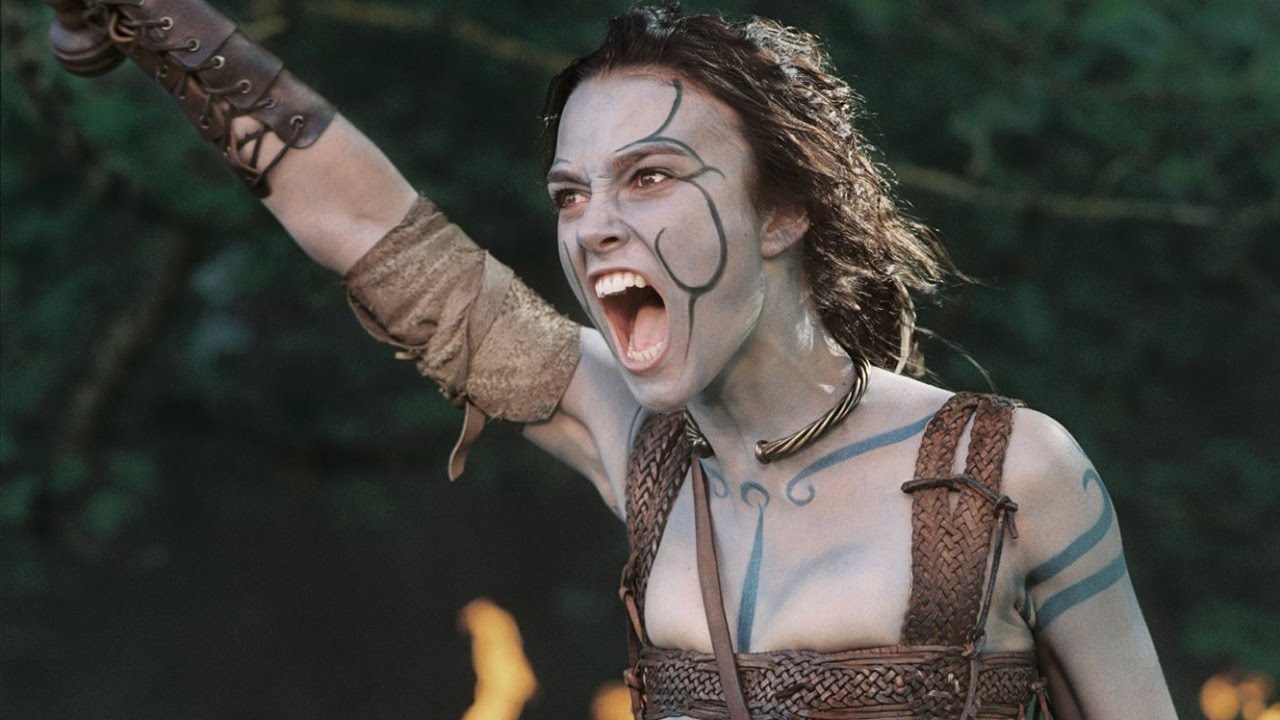
Similarly Kiera Knightley is just as miscast. Let’s put aside the fact that she is half Owen’s age. There is a prep school headgirlishness to her that just doesn’t work when we are asked to buy her as woad-covered warrior princess. She’s too strait-laced, too polite, too sophisticated. When she does step into the full-on Boudicca look, you’ll giggle rather than tremble. For all her exertion, she’s not convincing in the role either.

But then that’s King Arthur all over: trying hard but not convincing, with such a tenuous link back to the original myth that the fact they are just using the Arthur name to flog some more tickets is all the more obvious. Major elements of the legend are missing – in particular the Arthur-Lancelot-Guinevere love triangle is cut down to the merest of suggestions, enough for it to be noticed but not enough for it to feel like a real plot – and other elements (Merlin, the Sword in the Stone, the Round Table) seem shoe-horned in for no real effect. It’s basically just a bombastic B-movie, a sort of Gladiator rip-off without the poetry. Moments of fun, but still not that good.

GI Joe: Retaliation (2013)


Channing Tatum and Dwayne Johnson wonder how they landed in this mess in GI Joe: Retaliation

Director: Jon M. Chu

Cast: Dwayne Johnson (Roadblock), Bruce Willis (General Joe Colton), Channing Tatum (Duke), Jonathan Pryce (President of the US), Adrianne Palicki (Lady Jaye), DJ Controne (Flint), Ray Park (Snake Eyes), Byung-hun Lee (Storm Shadow), Ray Stevenson (Firefly), Arnold Vosloo (Zartan), Walton Goggins (Warden James), RZA (Blind master)

Back in 2009, Hasbro (flushed with success from its Transformers franchise) released GI Joe: a humble, straightforward nonsense actioner (almost exactly the sort of film spoofed by Team America) in which gung-ho American action heroes save the world, destroying major cities on the way. It was harmless, Stephen Sommers-directed fun. Critics hated it. Audiences saw it, but were basically meh. It left us on a cliff-hanger. The cliff-hanger led to this joyless, “by-contractual-obligation” reboot.

The villainous Zartan (Arnold Vosloo) has changed his entire DNA to make him an exact physical match for the President of the United States (Jonathan Pryce) and taken his place. Using his powers, he orders a surprise attack on the GI Joe force, wiping out their base. All the Joes, including Duke (Channing Tatum) are killed, except for Roadblock (Dwayne Johnson), Lady Jaye (Adrianne Palicki) and Flint (DJ Controne). Now they need to form a team to take revenge, defeat Zartan and prevent the plans of the newly escaped Cobra Commander.

Oh dear God this is an awful film: a truly dire comic book disaster, terribly written and practically incoherent in its plot and storyline, peopled from top to bottom with bored looking actors. It’s barely a sequel at all to the original film. In fact, it disregards most of the plot of GI Joe: Rise of Cobra altogether, barely acknowledging its existence. None of the plot threads of the first film are carried across at all, with the exception of the replacement of the President. On top of that, all the characters the first film spent time establishing as our heroes are unceremoniously dispatched (mostly off-screen) to be replaced with a trio of new heroes, none of whom make any real impact. Is it just me who feels cheated that all the characters the first film tried to build up just get wiped out like so many wasps when a pest controller comes calling?

Was it really necessary to totally dump the previous film? It wasn’t that bad. And if they were going to do that, could they not have come up with a fresher reboot than this? Who on earth thought the way to make the series fresher was to introduce Bruce Willis (at his most breezily, contemptuously disengaged) as a new hero? The film barely has time to introduce its new heroes: Lady Jaye has Daddy issues and is looking for approval (her Daddy, by the way, sounds like a sexist asshole with his “women shouldn’t serve in the military” attitudes and I was waiting for another character to point this out – they don’t of course), while Flint barely has a character beyond being a cheeky-chappie. When even Dwayne Johnson can barely be bothered to bring his C-game to a role, you know you’re in trouble: this film turns the most engaging action star of our age into a dull rent-a-muscle.

Then the plot. Yawn. Oh dear God yawn. Is there a plot? Not really. Events happen. They keep happening. Occasionally characters (like the “Blind Master”) pop up to essentially blurt out a load of plot, in between rushed character introductions. Turgid fight scenes are given extended screentime – but since they usually involve people we don’t really know fighting people we’ve barely been introduced to, it’s pretty hard to get engaged in them. Nothing really links together or carries any meaning. In fact, the film is about so little – and what plot there is, so clumsily and irritatingly spoonfed to the audience while our heroes take a frustratingly long time to catch-up – that you’ll be surprised the run time is as long as it is. I’ve already forgotten most of it and I watched it two days ago.

I say watched it, because I’m not sure “letting it pass before my eyes” on a Saturday morning over breakfast really counts. Certainly the final battle scenes – involving the storming of a bunker, something blowing up in space, world leaders in peril, and embarrassingly trite “personal rivalry” stories coming to a head – are so unimaginatively filmed, so dully predictable in their execution, that I fast forwarded through them. I just wanted the fucking thing to end. In fact I bemoaned the failure of Cobra to knock off all the Joes to start with. Not that the villains are much better themselves.

Pity poor Channing Tatum. Actually on reflection don’t: he’s well out of it. Tatum and Johnson’s double bill is the most likeable thing in the movie, the only thing that feels remotely real. Tatum was called back for reshoots (as he became more famous in between finishing filming and the planned release date, after the success of Magic Mike) and it’s a neat reminder of what an engaging, off-the-cuff performer he can be: when he kicks the bucket, the film’s most likeable, interesting character goes with it. The other actors just seem interested in picking up a cheque.

GI Joe: Retaliation isn’t a reboot. It’s an execution. It’s not even an execution you can get worked up about. In fact, I would have happily knocked off some of its characters myself. Did we create the language of cinema to come up with something as stodgy and insipid as this? Where is the magic and inspiration, where is the fun? What looking glass did we fall through, that anyone thought this pile of crapparoo was the way to restart a franchise?