Tag: Rhys Ifans

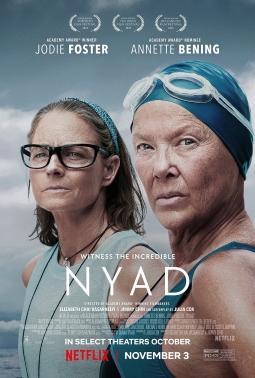
Nyad (2023)

Nyad (2023)

Swimming biopic relies on strong performances as it delivers expected strokes

Director: Elizabeth Chair Vasarhelyi, Jimmy Chin

Cast: Annette Bening (Diana Nyad), Jodie Foster (Bonnie Stoll), Rhys Ifans (John Bartlett), Karly Rothenberg (Dee Brady), Jeena Yi (Angel Yanagihara), Luke Cosgrove (Luke Tipple), Eric T Miller (Jack Nelson)

Diana Nyad was a champion endurance swimmer in the 1970s, but one major achievement eluded her: the 110-mile swim from Cuba to the tip of Florida at Key West. Estimated to take about 60 hours, it involves wild currents, difficult weather conditions and wild sea creatures with a support crew who can do nothing to help other than advise, keep her on course and provide food. The swim must be completed unassisted and without rest. A failed attempt in 1978 aged 28 was one of her last swimming feats for almost 30 years. Turning 60, Diana decides to dive back into the water and attempt it once again.

Nyad brings this story to the screen, refashioned into a comfortably feel-good sports biopic that presents Diana’s story within the expected framework of the cliches of the genre. There is almost nothing in Nyad that you haven’t seen before. Lessons are learned, people walk from the swimming campaign only to return for “one more adventure”, we discover there is no I in team and no solitary athlete ever truly works alone. Settle down for seeing the same sort of material you’ve seen in many other films before, and you won’t be disappointed.

The thing that makes Nyad different is the performances at its heart. Annette Bening (Oscar-nominated) trained for a year in preparation for this role, large chunks of which are spent watching Nyad charge forward through choppy open waters. On land, Bening skilfully balances Nyad’s prickly self-obsession with a vulnerability and fear of defeat. A demanding perfectionist who accepts no compromise, Nyad frequently rubs her team up the wrong way, but Bening never makes her unsympathetic. She’s a woman keen to prove something to the world and to herself, not least that age doesn’t define our horizons.

Our warmth to the tunnel-focused Nyad largely comes from the delightful chemistry between Nyad and her coach, ex-girlfriend and best friend Bonnie Stoll, delightfully played by the Oscar-nominated Jodie Foster. This is some of Foster’s finest work in years, an exuberant, playful, incredibly natural performance of a woman who is, in her way, as driven as Nyad, determined to protect her charge. It’s Bonnie who frequently needs to salve the wounds left by Nyad, hold the team together and make the difficult calls to continue or abort Nyad’s attempts. Foster’s performance is a burst of life in the film, providing its real heart.

The two dominate much of the film, although there is a room for a fine performance of curmudgeonly decency from Rhys Ifans as late navigator John Bartlett. But this is film that works best when focused on the two leads, be it Bonnie surprising Nyad with a birthday party, the two unashamedly celebrating watching a competitor’s attempt fail on television, Bonnie tending Nyad’s injuries, or the two arguing with the honesty that platonic life partners have. All of the film’s most memorable moments feature Foster and Bening bouncing off each other on land.

So, it’s a bit of a shame that a large part of the film takes place in the water. One of Nyad’s major failings is that it never really finds a way to make the act of swimming either truly dramatic of visually interesting. It is a tough challenge – after all, marathon solo swimming is (by its very nature) silent, monotonous, and in long stretches not exactly compelling to watch. But Nyad falls back too often into sequences that feel either artificial – look out there are sharks in the water! – or reliant on Life of Pi style visuals (no coincidence surely that film’s Claudio Miranda also shoots this one) to try and bring to life the hallucinations long-distance swimmers can suffer from after over 50 hours of non-stop physical effort. We get Bening swimming through magical light shows and an underwater Taj Mahal, but this feels like an attempt to give us something to look at rather than a flourish that gives insight into theme or character.

It’s a common theme of the film. Nyad often has watery-framed flashbacks to her younger self, pushed to achieve great things at an early age and suffering sexual abuse from her coach as a teenager. But, again, these revelations feel unconnected with the drama we are watching, making the repeated flashbacks to it feel unnecessary. The only time the subject comes up in the main plot line, Nyad brusquely closes the conversation down, insisting she has not been made into a victim and briskly moving on.  The film concurs in wanting to avoid defining Nyad in any way by this abuse. But it does leave you wondering why in that case the film so frequently returns to the issue.

At times it feels like Nyad has struggled to turn the act of someone swimming into drama. Instead, it relies on those standard sporting movie events. The initial success, the struggle, the break-up, the lessons, the heart-warming triumph. Nyad doesn’t find any time to explore the on-going debate around Nyad’s achievement (her poor record-keeping led to Guinness Book of Records refusing to recognise it) but that would get in the way of the triumphant ending. It’s a middlebrow film that relies pretty much exclusively on its actors for spark: fortunately, especially in Foster’s case, they provide it.

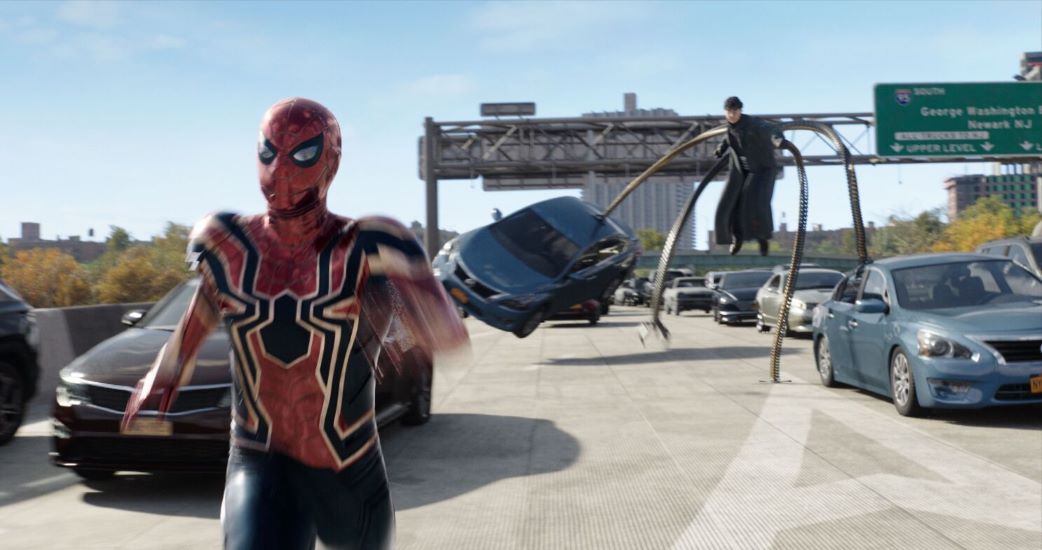
Spider-Man: No Way Home (2021)

Spider-Man: No Way Home (2021)

Tom Holland’s Spider-Man encounters friends and enemies from another franchise or two

Director: Jon Watts

Cast: Tom Holland (Peter Parker/Spider-Man), Zendaya (MJ), Benedict Cumberbatch (Dr Stephen Strange), Jacob Batalon (Ned Leeds), Marisa Tomei (May Parker), Jon Favreau (“Happy” Hogan), Jamie Foxx (Max Dillon/Electro), Willem Dafoe (Norman Osborn/Green Goblin), Alfred Molina (Otto Octavius/Doctor Octopus), Benedict Wong (Wong), Tony Revolori (“Flash” Thompson), Andrew Garfield (Peter Parker/Spider-Man), Tobey Maguire (Peter Parker/Spider-Man), Rhys Ifans (Dr Curt Connors/Lizard), Thomas Haden Church (Flint Marko/Sandman), JK Simmons (J Jonah Jameson)

It’s been out long enough now – and Marvel are even advertising the Guest Stars – so I guess we can worry slightly less about spoiling this massive crossover event. Spider-Man: No Way Home became one of the biggest hits of all time. It’s not hard to see why, in our nostalgia-loving times. But its not just about nostalgia – lovely as it is to see all those old characters once again. It’s also a hugely entertaining, rather sweet film, crammed with slick lines and jokes, while also, like the best of Marvel’s films, having a heart. We’ve got a hero here so humanitarian he goes to huge risks to try and save the villains. That’s refreshingly human.

Picking up after the conclusion of Spider-Man: Far From Home, Peter Parker’s (Tom Holland) secret-identity is known. Parker finds himself at the centre of a massive, world-wide scandal, which ends the college chances of him and his friends MJ (Zendaya) and Ned (Jacob Batalon). Peter asks Dr Strange (Benedict Cumberbatch) for help: namely can the world forget who he is? When the spell goes wrong, people who know Parker’s identity from other realities start appearing. And these guys aren’t happy, with villains like Dr Otto Octavius (Alfred Molina), Electro (Jamie Foxx) and psychopath Green Goblin (Willem Dafoe) arriving. But, when Peter discovers sending them back will condemn them to die in the battle against their Spider-man, he decides to do everything he can to try and save them.

No Way Home’s success partly lies on the nostalgia factor, especially for those of us who loved the early Maguire films. And you can sign me up to that: I can’t believe it’s been 20 years since the first one came out! No Way Home throws in characters from all five pre-Holland films and zeros in on the best of the bunch. The films has a lot of fun shuffling and realigning these characters in interesting new combinations, often allowing them to moan about things like origin stories (there is a very funny exchange between Electro and Sandman on the danger of falling into experiments) or just to get on each other’s nerves (Molina’s Doc Ock is spectacularly grumpy).

You pretty much have to have a heart of stone not to enjoy seeing most of these characters again – particularly as they are played with such lip-smacking aplomb. Above all, Dafoe relishes the chance to cement his place as one of the great villains, switching perfectly between gentle and psychotic as the schizophrenic Norman Osborn/Green Goblin (and becoming the nemesis of no-less than two Spider-men). Molina is equally good: pomposity and rage turning into avuncular decency. These two landmark villains from the two best films take most of the limelight, with a smaller share for Jamie Foxx (far more comfortable here than he was in Amazing Spider-Man 2). But every villain is given moments of tragic depth and seeing them react to news of their deaths is strangely moving.

It sets the table rather nicely for a film about redemption. Peter believes he can save these villains from death if he can cure them and restore their humanity. While the pragmatic Strange sees this as pointless, Peter can’t turn his back on a chance to save people. On top of this, No Way Home also serves as a meta-redemption arc for the two previous franchises: Maguire gets a third film worthy of the first two and Garfield is given the sort of rich material he was denied in his failed series.

Which brings us nicely to the biggest returns. Denied by both actors for the best part of a year, this film throws not one, not two but three Spider-men at us, with Maguire and Garfield reprising their incarnations. All three delight in sparking off each other, riffing on everything from web-slingers to making normal life work (“Peter time”) alongside Spider-manning. Maguire settles nicely into the Big-Brother role, giving a worldly experience to the others without losing his gentle idealism. Garfield is sensational – lighter, funnier and warmer than he was in his own films, with a hidden grief that plays out with genuine impact.

Who couldn’t get excited about seeing these three together – or to see the film make these scenes work as well as it does? It shuffles and reassembles things we are familiar with, but presents them in new and intriguing combinations and above all feels true to the characterisations established in previous films. Maguire, Molina and Dafoe in particular feel like they’ve not been away since their own films, while Garfield and Foxx deepen and improve their characters. But it became a mega-hit because it has a truly strong story behind it.

A story staffed by strong, relatable characters. There is a genuine sense of alarm around how Peter and his friends in the film’s opening act are hounded and persecuted by a population scared of them. Even here redemption is key, with Peter going to dangerous lengths to try and get his friends a second chance at getting into MIT. These three characters have a sweet, warm friendship and the chemistry, in particular between Holland (who is sensational, endearing, funny but bringing the role great emotional depth) and Zendaya is stronger than it’s ever been.

And that’s before we hit the film’s genuinely endearing message. Holland’s still-optimistic hero (another excellent contrast with his more damaged alter-egos) is motivated by saving people. And that includes the villains. Maybe it’s the years of Covid, but there is something hugely lovable about a hero who wants to give people a second chance. It’s a living demonstration of “with great power comes great responsibility” (words this film introduces into the Marvel universe with powerful effect, in a mid-film climax). In fact the film is, in some ways, the origin-story Holland’s Spider-Man never had: it gives him a foundational tragedy, leaves him in an isolated position, strips him of his Iron Man style tech and leaves him in a set-up (alone in a cheap apartment, struggling to make ends meet and superheroing on the side) familiar from the comics.

Watts directs the film with real confidence and zest, especially outside the action set-pieces: there is frequent use of ingenious-but-not-flashy single takes and the film’s patient momentum for much of its first half, focusing on character and emotion, really pay off in the second half of fan-service and fights. The camera effects used for Peter’s web-slinging and his spider-sense have a delightful quirky invention. What he really does well though is zero in on the emotion and when events get tragic, he isn’t afraid to commit to that. It gives the film an emotional force that really connected with people.

That heart is what sustains it. It’s a joyful nostalgia trip – that redeems elements of the previous films – but this is a film that really cares about its characters – all of them – and wants you to as well. That gives difficult, emotional struggles to all its Spider-Men, that searches of the humanity in its villains, even the worst of them, making us sympathise with them even as they do dreadful things. Combined with the action and adventure – and the electric pace of the best of Marvel – No Way Home rightly stands as one of the best entries so far.

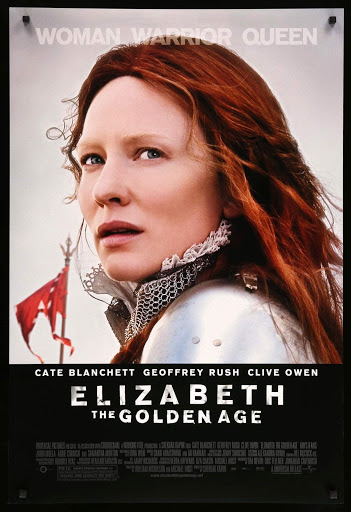
Elizabeth: The Golden Age (2007)

Elizabeth the golden age
Cate Blanchett returns as Elizabeth I in the slightly underwhelming Elizabeth: The Golden Age

Director: Shekhar Kapur

Cast: Cate Blanchett (Elizabeth I), Geoffrey Rush (Sir Francis Walsingham), Clive Owen (Sir Walter Raleigh), Abbie Cornish (Bess Throckmorton), Samantha Morton (Mary Queen of Scots), Jordi Molla (King Philip II), Susan Lynch (Annette Fleming), Rhys Ifans (Robert Reston), Eddie Redmayne (Anthony Babington), Tom Hollander (Amias Paulet), David Threlfall (John Dee), Steven Robertson (Sir Francis Throckmorton), Adam Godley (William Walsingham), Laurence Fox (Sir Christopher Hatton), William Houston (Guerae de Espes)

Its 1585 and the reign of Elizabeth I (Cate Blanchett) has seen England enter a Golden Age. But tensions are rising with the Spanish and their king Philip II (Jordi Molla). The Spanish plot to replace the protestant Elizabeth on the throne with the catholic Mary Queen of Scots (Samantha Morton), sending their agents (including the likes of Rhys Ifans and Eddie Redmayne) to England to ferment rebellion. Can Elizabeth’s trusted advisor Sir Francis Walsingham (Geoffrey Rush) root out this potential rebellion? Or could this be a trap to lure England into a naval war with Spain and its chilling armada of ships?

Elizabeth: The Golden Age is a late sequel to the more influential Elizabeth, which mixed in the ruthlessness of The Godfather, with a sprinkling of sex in a darkly tinged Elizabeth England which seemed to drip conspiracy (setting the tone for costume dramas for the next ten years at least). Compared to its original, Elizabeth: The Golden Age seems a much more traditional piece of filmmaking. It’s luscious and handsomely filmed, with the darkness and oppression of the original replaced with golden hued lighting, sumptuous (Oscar-winning) costumes and some very impressive set-designs, all of which help to point up the glamour of the past in a way that seems much more similar to a 1970s epic than the more inventive work of the original.

It’s a part of the film’s idea of the country now enjoying the glory Elizabeth’s reign has bought, with the dark corridors replaced by the bright lights of peace and opulence. The film’s reimagining of Tudor history does still present some interesting perspectives, not least in the character of Elizabeth. Now firmly in middle-age – and committed to a life of celibate singledom – Cate Blanchett’s regally imperious Elizabeth is still emotionally vulnerable with a deep sense of longing in her. Unable to live the life of romantic freedom she could in her youth, she now lives an emotional life vicariously through her ladies in waiting, particularly Abbie Cornish’s sharp and knowing Bess Throckmorton.

This focuses on Elizabeth alternating between encouraging and discouraging (due to her own half-realised romantic longing) a romance between Bess and famed explorer Walter Raleigh. Played by Clive Owen at his most buccaneering (with an accent that playfully lies between Norfolk and New England, suggesting the American accent came from Raleigh), Raleigh bewitches the Queen with exciting tales of abroad – but with her unable to flirt with him fully as she wishes, Bess is encouraged to dance intimately with him among other romantic gestures. The most important thing throughout for Elizabeth is that it is she controls and dictates the relationship – and when the couple start to make their own decisions, it leads to disaster.

It’s all part of Michael Hirst’s (here sharing script writing duties with William Nicholson) imaginative reinvention of Tudor history (remixed into an exciting version of what could have happened). This also comes together very nicely in an interesting conspiracy thriller take on the Babington plot and the goals of the Spanish to use it to manipulate both Elizabeth and Mary Queen of Scots. The film is at its strongest when playing with historical expectations.

However, too often it plays into the sort of “Britain Triumphant” nonsense that made Michael Gove on release (and you imagine Laurence Fox today – here popping up as Christopher Hatton) thrilled. The British characters – Elizabeth, Raleigh, Walsingham – are brave, charismatic, ingenious and attractive. The villainous Spanish are thick-lipped, spittle flecked, bad-haired meanies with Philip II literally a sinister limping hunchback. No scene in Spain is complete without dark lighting, chanting monks, massive crucifixes and a general air of oppression. When ships sink, the camera doesn’t miss the chance to capture a crucifix sinking to the bottom of the briny. The Babington conspirators plot out of a dyers shop, where blood red dye drips all around them. The plot culminates in a “just missed her” point blank gun confrontation (the film’s most silly flourish). Subtle it ain’t.

And also it feels more Little Englander than its predecessor. Whereas the first film saw as much darkness and dirty dealing among the British as it did Europe, this film feels like a “Britain Stands Alone” against treacherous, lecherous, sanctimonious (or all three) Europeans. Sure the Armada was a terrific win for Britain – here with much of the credit reassigned to Raleigh who steers fire ships into the path of the Spanish ships (Drake is reimagined as a lumpen bureaucrat dazzled by Raleigh’s pizzazz) – but it owed as much (as even the Tudors themselves admitted) to the weather and luck as it did bravery and skill. Unlike the first film, Elizabeth: The Golden Age seems determined to define European and Catholic as suspiciously “other”. It makes for a less rewarding film.

And a less interesting one. For all its playing with psychology, this is a very much more traditional costume drama, celebrating Merrie Olde Englande where the original film challenged us to question our expectations. Kapur and Hirst settle for spectacle and style, over drama and truth. Blanchett is impressive as always – and the rest of the cast very sound – but this is a sequel that only lives as a counterpoint for the original.

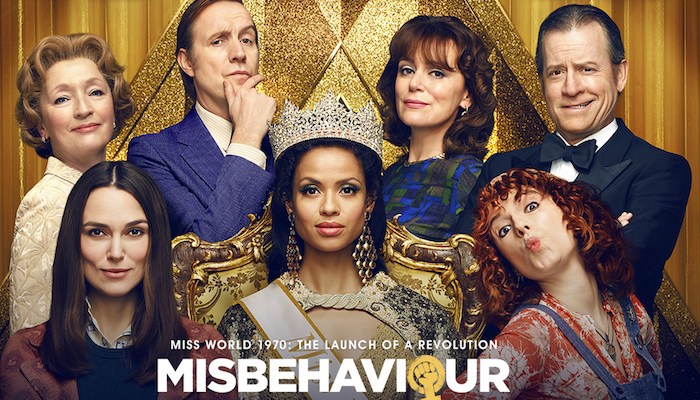
Misbehaviour (2020)

What price progress in Misbehaviour?

Director: Philipa Lowthorpe

Cast: Keira Knightley (Sally Alexander), Gugu Mbatha-Raw (Jennifer Hosten, Miss Grenada), Jessie Buckley (Jo Robinson), Greg Kinnear (Bob Hope), Lesley Manville (Dolores Hope), Rhys Ifans (Eric Morley), Keeley Hawes (Julia Morley), Phyllis Logan (Evelyn Alexander), Loreece Harrison (Pearl Jansen, Miss Africa South), Clara Rosager (Marjorie Johansson, Miss Sweden), Suki Waterhouse (Sandra Wolsfield, Miss USA), John Heffernan (Gareth Stedman Jones)

In 1970, the Miss World Competition in London was disrupted before a world-wide TV audience by Women’s Liberation campaigners, furious at the competition being the public face of a world that judged women on appearance rather than personality. The disruption was led by post-graduate UCL student Sally Alexander (Keira Knightley) and commune radical Jo Robinson (Jessie Buckley), and rather overshadowed for many the fact that, for the first time in history, black female competitors like Miss Grenada Jennifer Hoosten (Gugu Mbatha-Raw) were treated as genuine contenders for the title. Misbehaviour recreates all this wonderfully, but also makes an intriguing exploration of the different ways women can make themselves a place in the world.

It would have been very easy for Philipa Lowthorpe’s engaging film to have designated villains – after all with the casual sexism and objectification of the Miss World competition, you could easily have assigned the competition runners as baddies. Instead the film is richer than that, full of people who genuinely feel they are doing their best in the roles they’ve been given in life. If there is a villain, it’s society itself which traps women into certain roles, and doesn’t allow them to grow.

The film follows three plot lines – the women’s liberation movement, the background of staging the Miss World Competition, and the lives and expectations of the contestants themselves. Of these three plots, the women’s liberation movement is surprisingly the least engaging. Keira Knightley and Jessie Buckley do decent jobs, but their characters are more one-dimensional and lack real development (they start the film as passionate rebels and end the film the same way), with this lack of plot being padded out by movie clichés of the “you’re off the protest” variety. 

The real interest surprisingly is the competitors themselves. Like the protestors, the film is keen to not blame the contestants. The ones we follow are smart, intelligent, passionate women who are, by and large, willing to play the game to get their future ambitions realised. We see this most of all for Miss Grenada and Miss “Africa South” (a black South African shoe-horned into the competition to counter accusations of legitimising apartheid): the competition places them in the position of representing victimised minorities, groups that have their options sharply restricted. Having spent their lives being told that only being white, blonde and blue-eyed is beautiful, the chance to set an example to others is important to them – and the film doesn’t downplay or demean this at all.

This is captured particularly in the exploration of Gugu Mbatha-Raw’s Miss Grenada, Jennifer Hoosten. A woman willing to use the competition as a springboard to try and build herself a professional career, she is an intelligent and dedicated woman who understands the nature of her competition. Hoosten however rejects being positioned as a victim, as well as the way Women’s Liberation crams all women’s aims into a single homogenous goal. Why should another group of women tell her what is best for her – isn’t that what men have been doing all her life? As a black woman, her only way to get the opportunities that someone like Sally Alexander has – education and career – is to play the hand that nature has given her the only way she can. Mbatha-Raw captures this all extremely well in a quietly judged and affecting performance.

Similar feelings motivate the rest of the competitors. Miss Africa South (an engaging Loreece Harrison) just wants to keep her head down and get home to her family, letting her presence alone make her statements. Miss Sweden (a fiery Clara Rosager) rails against the control and management of the organisers on every aspect of her life while at the competition. It’s a film where women are working to find their place in the world, but accepting that not all those goals will be the same. Keeley Hawes does excellent work as Julia Morley (co-runner of the competition with her husband, a brash Rhys Ifans), a woman trying her best to reform the competition from within.

Lowthorpe juggles these interesting themes – giving oxygen to all these points of view – within a fascinatingly precise reconstruction of the competition itself and the protest. As part of this Greg Kinnear contributes a spot-on performance as Bob Hope, here a sexist comedian from a different era who can’t understand the changing world. The film gets a lot of comic mileage as well from the jaw-dropping sexism of the BBC coverage and the drooling perviness of the reporters rushing to interview the competitors.

“This isn’t the end of anything, but this could be a start” says Lesley Manville in her waspishly delightful cameo as Hope’s wife. She’s right, the world didn’t change overnight. But as the film captures it started getting people thinking, even if it accepted that not all women will have the same view. Sally Alexander and her mother can disagree on women’s roles – “Why would I want to grow up like you?” Sally berates her housewife mother (very well played by Phyllis Logan) – but the two characters can still come together and agree that having opportunities is still better than not. And perhaps that’s what the film is arguing for: all these women are stretching for opportunities. And if that means the world needs to change so half the population gets the same chances as the other half, so be it.

Harry Potter and the Deathly Hallows Part 1 (2010)

Harry and friends are on the run in the excellent Harry Potter and the Deathly Hallows Part 1

Director: David Yates

Cast: Daniel Radcliffe (Harry Potter), Rupert Grint (Ron Weasley), Emma Watson (Hermione Granger), Helena Bonham Carter (Bellatrix Lestrange), Robbie Coltrane (Rubeus Hagrid), Ralph Fiennes (Lord Voldemort), Michael Gambon (Albus Dumbledore), Brendan Gleeson (Mad-Eye Moody), Richard Griffiths (Vernon Dursley), John Hurt (Mr Ollivander), Rhys Ifans (Xenophilius Lovegood), Jason Isaacs (Lucius Malfoy), Bill Nighy (Rufus Scrimgeour), Alan Rickman (Severus Snape), Fiona Shaw (Petunia Dursley), Timothy Spall (Peter Pettigrew), Imelda Staunton (Dolores Umbridge), David Thewlis (Remus Lupin), Toby Jones (Dobby), Tom Felton (Draco Malfoy), Peter Mullan (Yaxley), Evanna Lynch (Luna Lovegood), Julie Walters (Molly Weasley), Mark Williams (Arthur Weasley), Bonnie Wright (Ginny Weasley), Helen McCrory (Narcissa Malfoy), George Harris (Kingsley Shacklebolt), Clémence Poésy (Fleur Delacour), Domhnall Gleeson (Bill Weasley), Warwick Davies (Griphook), Nick Moran (Scabior), Guy Henry (Pius Thicknesse), David O’Hara (Albert Runcorn), Sophie Thompson (Malfada Hopkirk), Steffan Rhodri (Reg Cattermole), Simon McBurney (Kreacher)

The final book of the Harry Potter series made its own slice of film history: it was the first time a book was adapted in two films to “get the whole story of the book across” (or to make double the box office cash – take your pick). There was scepticism about creating a film about the first half (or so) of The Deathly Hallows, as a large chunk revolves around our heroes walking around the countryside, confused, lost and adrift. Instead, Harry Potter and the Deathly Hallows Part 1 turns this material into one of the richest, most engaging and best films in the series. Any film that expands a throw-away reference from the books to Hermione removing her parents memories of her, into an affecting opening scene showing Emma Watson doing the same is really inventively playing with the original source material.

David Yates takes on his third Harry Potter film – and this is possibly the best he filmed. In fact, the whole film feels fresher and different – perhaps because it’s the only film to not have a single scene at Hogwarts. Instead our characters are out in the forest and on the run – and the film has completely different vibe, immediately lending it a uniqueness. Equally, it isn’t shy about pointing out our heroes are all-at-sea. Harry doesn’t really know what he is doing, or where to start with his self-imposed quest: and surely when Ron angrily asks why Dumbledore didn’t tell him more (or if Harry wasn’t even listening properly) he’s voicing some of the questions of the audience.

This film, more than any other, focuses on the relationship between the leading three characters. While getting an idea of their friendship and loyalty to each other, we also get a sense of the tensions and envy between them. Not least in Ron’s grudging acceptance that he is the number two. Rupert Grint has been slowly building under David Yates’ films from a comic relief character to an increasing (slightly surly) teenage insecurity and troubled sexual maturity. 

This really pays off in this film: Ron is bitter and jealous. These feelings might be exacerbated by the necklace the characters must take turns wearing, but it’s just bringing to the surface Ron’s darker feelings of inadequacy: and Yates even brings them to the screen in a necklace-induced vision of a naked (but artfully concealed in smoke!) Harry and Hermione alternately making out and rubbishing Ron. It’s a plot point that covers Ron overcoming his resentment and cementing his position in the gang. It’s very well done – and Rupert Grint is very good.

Equally good is the gently sad, mutually affectionate relationship between Harry and Hermione. Alone together for large chunks of the film, the characters’ bond is firmly established, the chemistry between the two actors never clearer. The film plays with the subplot it’s been suggesting for a while of a potential deeper relationship between Harry and Hermione: not least in its beautiful silent dancing sequence to Nick Cave in the tent (one of the best ever entirely invented scenes in the series) that is friendly, but with a hint of the possibility of something more – something the characters seem to consciously decide to bench. This sort of emotional reality is what makes the film really stand out. It turns the “camping trip” of the novel into something more profound and engrossing – I’d say this is the only sequence that really outdoes the books altogether in the entire series.

But of course there is still plenty of action, and humour, a highpoint for both being our heroes infiltrating the Ministry of Magic, disguised as ministry employees. Playing the adult disguises of our heroes brings out three hilarious and sharply observed physical performances from David O’Hara, Steffan Rhodri and Sophie Thompson. In fact, the film has a bit of a thing for disguises, from a disfigured Harry (who may or may not be recognised by Draco, in another piece of excellent acting from Tom Felton as a terminally out-of-his depth and terrified Malfoy), to the opening scenes featuring half the cast being disguised as Harry. Daniel Radcliffe excels in this sequence, playing versions of most of the young cast with real wit and skill.

Yates allows a creeping sense of imminent danger to hang over the whole picture, straight from the off. A “conference of baddies” at Malfoy manor shows us Voldemort (the ever sinister Ralph Fiennes) re-establishing his murderous villainy from the start – and also belittling and mocking poor Lucius Malfoy (a crushed Jason Isaacs). From there, via a gripping escape from Harry’s home, to a wedding scene that quickly collapses into a terrifying attack from Death Eaters, it’s a film full of excitement.

Yates shoots this with tension and edge. A sequence with Harry and company fleeing through the forest from snatchers is so well-done, so intense and immersive, that they used it for the poster. This sequence uses really interesting camera work and tracking shots – in fact the whole film is very well filmed and extremely well-paced. It’s also got an eye for the real nastiness of regimes like Voldemort’s: people like Umbridge (an increasingly Himmlerish Imelda Staunton) flourish, while bullying thugs like Yaxley (an intimidatingly excellent Peter Mullan) rule the roost.

Kloves script sets up a lot of the fascinating back-story from the novel, not only around Dumbledore but also the Deathly Hallows themselves (I’ll not mention for now that most of this build-up is fumbled in the last film). There is a beautiful animation sequence establishing the history of the Deathly Hallows, which is an artistic highlight. The slow unveiling and revealing of facts is wonderfully done – and rewards the patient viewer.

The film culminates in a final sequence at Malfoy manor that carries a great wallop of emotional torment and dread (first torture scene in a Potter movie for those interested…). Surprisingly a lot of this emotional force comes from Dobby the elf – irritating as he was in Chamber of Secrets, here he gets a few scenes that carry real emotional force. 

Harry Potter and the Deathly Hallows Part 1 is possibly the only Harry Potter film that is an actual improvement on its original source material (there I said it). I think it’s a brilliant film, a film which carries real emotional weight and has genuine things to say, not just about good and evil, but also about the sort of teenage angst and yearnings we’ve all had. The three leads are all excellent, and there is barely a bum note in the whole thing.

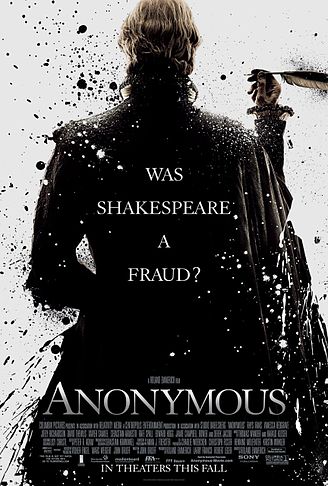
Anonymous (2011)


Did the Earl of Oxford write Shakespeare (spoilers: No of course he didn’t.)

Director: Roland Emmerich

Cast: Rhys Ifans (Edward de Vere, Earl of Oxford), Vanessa Redgrave (Queen Elizabeth I), Sebastian Armesto (Ben Jonson), Rafe Spall (William Shakespeare), David Thewlis (Lord Burghley), Edward Hogg (Robert Cecil), Xavier Samuel (Earl of Southampton), Sam Reid (Earl of Essex), Jamie Campbell Bower (Young Oxford), Joely Richardson (Young Elizabeth I), Derek Jacobi (Himself), Mark Rylance (Henry Condell), Helen Baxandale (Anne de Vere)

Many people would say that, for as long as there has been Shakespeare, there have been arguments about who wrote him. But that would be wrong. Because at the time everyone knew it was Shakespeare. Murmurings grew in the nineteenth century, but it’s only in our bizarre more recent times, when everyone wants to feel that they are smarter than anyone else, that conspiracy theories have taken hold. This film dramatizes one of the most famous conspiracy theories – and takes it to the bonkers extreme, chucking in royal incest, bastard claimants to the throne and blood purity, like it’s desperate to be some sort of poetry-circle Game of Thrones.

Edward de Vere, Earl of Oxford (Rhys Ifans) is a genius. He has written hundreds of plays, despite never (it seems) setting foot in a theatre. When he does one day, he suddenly thinks – hang about I should get these on the stage! Looking for someone to put their name to the work, he approaches a reluctant Ben Jonson (Sebastian Armesto) before credit is high-jacked mid performance by drunken dullard William Shakespeare (Rafe Spall). Oxford continues producing the plays through Shakespeare, carefully using them to influence the crowd to support the Earl of Essex’s (Sam Reid) campaign to succeed Queen Elizabeth (Vanessa Redgrave) and win her away from the influence of the Cecils (David Thewlis and Edward Hogg). 

It’s not often you get a film that is both a stinking, insulting piece of propaganda garbage, but on top of that is also a terrible film full stop. Anonymous is such a film. This mind-numbingly stupid, childishly idiotic film is probably the best case that Shakespeare wrote Shakespeare to come out of Hollywood. Because, after watching this film, you’ll sure as shit be convinced it wasn’t someone as tedious, pompous and arrogant as Edward de Vere, Earl of Oxford. Unbelievably Emmerich and co thought they were making a film that would reset the table of Shakespeare debate. The only thing that will need resetting will be your table after you’ve overturned it in fury.
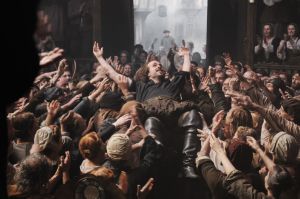
Our film’s Shakespeare goes crowd surfing in an Elizabethan mosh pit. Seriously.

The Oxfordian theory is yet another garbage “alternative history” that puts forward a candidate claimed to have “really wrote Shakespeare”. The central conceit usually goes something like this: Shakespeare was from a middle-class background, grammar school educated, never travelled and generally lacked the academic chops to write the plays. He was simply too common to be a genius. Ergo someone super smart must have done so instead.

The Oxford theory was put forward at the turn of the last century by (and I’m not making this up) Thomas Looney (yes it is literally a Looney Theory). It argues that Oxford was well travelled, well-educated and known as a poet so must have written the plays and poems. Shakespeare was hired to put his name on the plays because it was too shameful for an Earl to write for the theatre. Of course this doesn’t explain why Oxford had the sonnets released under Shakespeare’s name while allowing his own (not so good) poems to circulate freely – but facts never stopped these people. Oxford also inconveniently died in 1604, before the likely composition (and first performance) of over a third of the plays, but again never mind eh? 

Anyway, I’ll get into the film in a second, but I’ll leave you with this. All contemporary evidence points to Shakespeare being the author of Shakespeare’s plays. All evidence we have indicates he was recognised as the writer by his contemporaries. The much vaunted travel knowledge rests on a few well-known city names and landmarks (who could possibly have known Venice had a bridge called the Rialto? Oh I don’t know, maybe anyone hanging out in taverns in international trading-hub London?) and includes howlers like Bohemia having a coastline and it being possible to sail between Milan and Verona. All evidence of research (far too hard work for the Looneys) into typography and the composition of the plays points to Shakespeare or at least that many of the works were composed after Oxford’s death. I would also add that the bollocks (which this film explores) of Shakespeare not spelling consistently is no great surprise when standardisation of spelling was still over 100 years away. Anyway…

The clueless bumbling playwrights of the time.

Anonymous is well designed. It’s well shot. There are some decent costumes. Rafe Spall is okay as a ludicrously crude, shallow and dumb Shakespeare. Nothing and nobody else emerges from the film with any credit. It’s got the intellectual rigour of a child. It understands virtually nothing about the Elizabethan state. It even turns Elizabeth I (played direly by Vanessa Redgrave and a little bit better by Joely Richardson in flashback) into a hormonal idiot, a sex-obsessed harlot banging out bastards left, right and centre while wailing about how much she needs the man she loves. Even its understanding of theatre is crap. It is crap.

At the forefront of this steaming pile of manure is Rhys Ifans, utterly mis-cast from start to finish as super-genius Oxford. Ifans is bland, disengaged and bottled up, his manic potential completely wasted. Oxford comes across as an arrogant arsehole, talking down to fellow playwrights, ignoring his daughter, soaking up vicarious adulation from the crowd as if it was his right, and merrily putting his full weight behind an agenda stressing government should be left to those born to it, rather than the nouveaux rich Cecils. If an unpleasant prick like Oxford was soul of the age, it’s just as well time has moved on.

This viewpoint is all part of the film’s charmless embracing of the Looney theory that the plays are all a carefully constructed pro-Essex, pro-elitist propaganda machine, designed to manipulate the masses into staying in their place. To make this work, the film plays merry hell with history. Because nothing works better for a film claiming to be “true” history than to change established historical facts to better fit its story. Essex is repositioned as anti-James VI of Scotland, while the Cecils are shown to be advocates for his succession from day one. It hardly seems necessary to say that this was the complete opposite of their positions. The film can’t claim to be telling us the “real story” while simultaneously changing events left, right and centre to better fit its agenda.

Historical fast-and-looseness continues with Elizabeth I. Needless to say, half the male cast are her children – Essex, Southampton and (of course) even Oxford. This allows for lots of icky sex as an unknowing young Elizabeth and Oxford bump-and-grind. Even without the incest, this scene would still be revolting beyond belief. If this film has any claim to fame, it will be remembered as the film where the Virgin Queen performed fellatio on young Oxford (a weaselly Jamie Campbell Bower, dire as ever) while he recited Shakespearean sonnets. I watched this with a group of friends and this scene was met by horrified mass shrieking.

Mother and son share a post-coital moment

The land of the Elizabethan theatre doesn’t fare much better. Shakespeare’s contemporary playwrights are, to a man, plodding mediocrities dumb-founded that a play can be written entirely in verse. Poor Ben Johnson (Sebastian Armesto struggling manfully with a terrible part) in particular gets it in the neck, Oxford haughtily telling him he “has no voice”. Shakespeare is not only an idiot, he’s also money-grubbing, illiterate and (the film heavily implies) even murders Christopher Marlowe when he “works out the truth”. 

But that’s the thing about this film: it really doesn’t give a shit about facts. By the time we reach the Essex rebellion and the film has changed the one categorical fact we have linking Shakespeare to the rebellion (his company performed Richard II privately for Essex’s friends the night before) you’ll have ceased to care. (The film substitutes Richard III instead and claims the hunchbacked king was created as a portrait of Robert Cecil – never mind that the character had already appeared in two plays by this point…) The Tower is the centre of some sort of all-powerful police state that alternates between scarily efficient and ludicrously incompetent depending on the demands of the script.

Amidst this firebombing of history, the film weaves its pointless conspiracy theory. So of course, Oxford is not only the greatest writer ever, but as Elizabeth’s son he’s also the true King of England. He is such a special snowflake genius, he’s even (in the film’s most stupid scene) shown writing and performing (as Puck) A Midsummer Night’s Dream aged 14. In a skin-crawlingly shite scene, Oxford searches for a play to give to Johnson while the camera pans along shelves of masterpieces he has casually knocked out. I would argue the plays have clearly been written by someone with an intimate understanding not only of theatre but the strengths and weaknesses of the company of actors originally performing them – but then this is a film that turns Richard Burbage into a harassed theatre manager, so what would be the point. By the end of the film, the announcement is made that all evidence linking Oxford to the plays will be destroyed and he will be forgotten. So you see the very fact that there is no evidence that this ever happened, is in itself evidence.

I realise I’ve not even mentioned the framing device of this film. The film opens in a Broadway theatre – and rips off the idea from Henry V that we are watching a play performance that becomes ever more realistic. Notable Oxfordian Derek Jacobi (playing himself) even narrates, neatly shitting on the memory of the same function he served in Branagh’s Henry. I love Sir Derek, but honestly a little of that love died during this film as he sonorously intones this lunatic nonsense. He’s not the only one of course – Mark Rylance (another believer) shamelessly pops up for a cameo. Needless to say, at the end of the “performance” the crowd in the Broadway theatre leave in stunned silence. I like to think that, rather than having their perceptions of the world shaken, they were just stunned such an epic pile of fuckwitterey garbage made it to the stage.
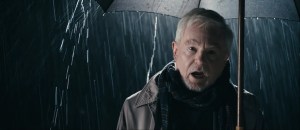
Oh Sir Derek. How could you? How could you?

Or the screen for that matter. This is a dire, stupid film, poorly acted and woefully directed by a tone deaf director. Roland Emmerich, hie thee back to disaster porn! Everyone in it is pretty awful, the script not only stinks, it makes no sense, half the scenes are borderline embarrassing. Even if it wasn’t about a pretty distasteful Shakespearean authorship theory, this would still be a truly terrible film, a narrative and performance disaster. The only good thing about it is, the film is so bad, its conspiracy theory so unbelievably ludicrous, its fast-and-looseness with history so plain that, far from re-setting the table for Shakespearean studies, it seems to have fatally holed the Oxfordian theory below the water line. It’s offensive because it wants to peddle its bizarre agenda as true history, while simultaneously changing the historical events at every opportunity. Just fucking awful.