Tag: Richard E. Grant

Nuremberg (2025)

Nuremberg (2025)

Terribly handled drama that accidentally deals a favourable hand to a leading Nazi

Director: James Vanderbilt

Cast: Rami Malek (Dr Douglas Kelley), Russell Crowe (Herman Göring), Leo Woodall (Sgt Howie Triest), Michael Shannon (Justice Robert Jackson), Richard E Grant (David Maxwell Fyfe), John Slattery (Colonel Burton C Andrus), Mark O’Brien (Colonel John Amen), Colin Hanks (Dr Gustave Gilbert), Wrenn Schmidt (Elsie Douglas), Lydia Peckham (Lila), Lotte Verbeek (Emmy Göring)

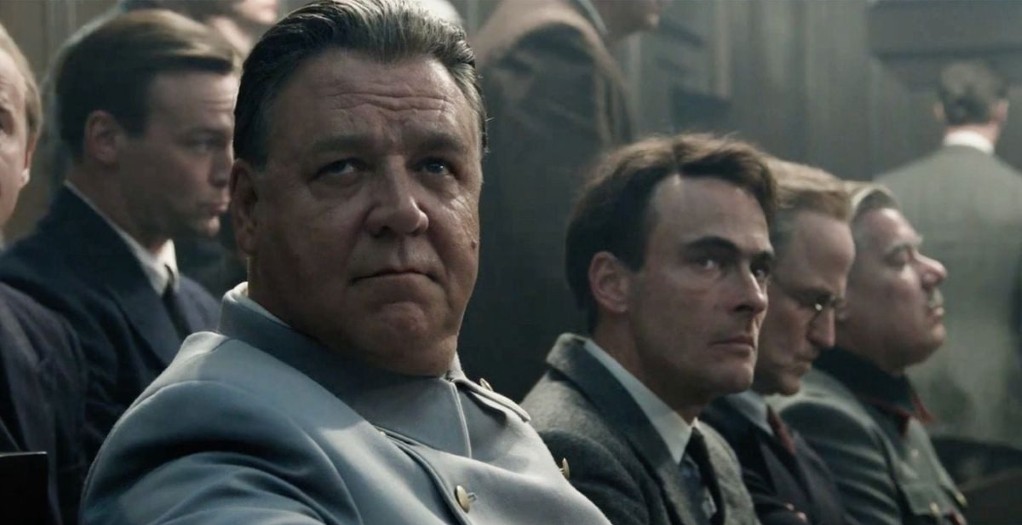
If one thing captures what a miserable failure James Vanderbilt’s Nuremberg is it’s this: if Herman Göring rose from the bowels of whatever Hell he currently resides in and saw it, he’d probably freaking love it. The misguided history lesson has a political and moral message that is obscured and fudged, its points either lost or delivered with thudding obviousness. But the one thing it’s consistent in doing is presenting the most infamous Nuremberg defendant as a fiendishly clever Hannibal Lecter, multiple steps ahead of everyone, whom the film allows to fudge (without sufficient correction) his responsibility for the Holocaust and who goes down due to his loyalty to his lost leader. Ye Gods.

Vanderbilt’s film is an old-fashioned film that simultaneously gives a spotlight to the relationship between Göring (Russell Crowe) and psychiatrist Douglas Kelley (Rami Malek) and attempts to tell the entire history of the set-up, planning, prosecution and judgement of one of the longest trials in history. It succeeds at neither of these things, and does so while cramming dry, exposition-heavy dialogue into its actors’ lips (the sort of speeches where people launch into lists of the Nuremberg Laws or the trial’s legal framework). Much of it is dramatically inert – at least those parts you’ll be able to see through the film’s impossibly murky camerawork (I expected the lights to shoot up in the courtroom in a standard ‘truth-bought-to-the-light’ cliché, but even here it’s hard to see).

The material around the trial set-up essentially takes a fascinating subject – the wrangling of four allies (three of whom didn’t really trust the fourth) to create a legal framework for an international tribunal never attempted before – and makes it dull as ditchwater. Michael Shannon does his best as Justice Jackson, architect of the trial, but the vast majority of his scenes are little more than exposition (his best is a meeting with Pius XII, whom he effectively blackmails into supporting the trial, in recompense for Pius’ lack of action against the Nazis). Richard E Grant adds a little flavour, even though this film’s whisky-from-a-teacup Maxwell Fyfe (in reality, a stern man in his 40s) feels more like Grant-101 than a real person.

While the trial is a drag, the rest is a farce. Rami Malek flails as Douglas Kelley, in a poorly written role. I suspect, based on the film’s final ham-fisted scene, the intention was to suggest Kelley got too close to Göring and bought a little of what he was selling until the scales fell from his eyes during the trial (and the Holocaust evidence). That Kelley would serve as a dark warning that even the brightest can get seduced by charismatic Nazis. This would have added real fire to the film’s closing vision of Kelley as a drunken Cassandra, desperately railing on US public radio that it could happen here. But clearly someone was worried positioning our hero as someone who admired Göring for a while was going to be hard for regular viewers to sympathise with.

Instead, we get a clumsy dance, where its repeatedly stressed Kelley is only getting close to Göring because he wants to exploit him for a best-selling book. That his sticking up for Göring (including giving credence to Göring’s argument that he couldn’t possibly know about the Holocaust, because that was Himmler’s department) and being nice to his wife and child was all part of this.

It then awkwardly tries to have this cake and eat it, by suggesting Kelley also realising the trial is about real people not just turning a buck. It spectacularly lacks the skill to pull this off. Even worse, it hilariously keeps providing evidence that Kelley is a terrible psychiatrist. Göring manipulates him with ease and, in the real low-point, we cut from Kelley blithely saying he spoke to previously-depressed prisoner Robert Ley and he seemed calm – straight to the aftermath of Ley’s grisly suicide.

This is as nothing to the film’s strange admiration for Göring. Not helped by Russell Crowe giving the film’s best performance, it feels like Vanderbilt never realises how quietly favourable the cards he gives Göring are. (It even actively absolves Göring of antisemitism, arguing he was just an opportunist supporting it for advancement.) He has all the best lines and dominates his scenes. The film draws attention to his fiendish cunning (allowing himself to be captured so he can manipulate the trial, hiding his ability to speak English etc.), shows him effortlessly running rings around everyone he talks to, weaning himself off a pills addiction through will alone… It wants the sort of Hans Gruber like villain who controls the whole trial from his cell.

It undersells small moments, such as Göring’s nervous reaction before, and complete denial after, the Holocaust film played in the trial. Even worse it gives Göring wiggle-room, unquestioned, to deny his responsibility for the Holocaust. Let’s not beat about the bush: Göring signed the order authorising it. In the real trial, his charisma butted up against the damning facts of his involvement from everything from petty art thefts, to murder of allied airmen, setting up the Gestapo and ordering the Holocaust. Nuremberg is brave enough to show Jackson’s real-life poor cross-examination of Göring – but allows Göring’s weasel words on a debatable mistranslation of his order on the Final Solution to go unexposed for the bollocks it was.

The film’s ‘gotcha’ moment in the trial is feeble, reduced down to Fyfe getting Göring to say he continued to support Hitler. This is played as the key moment that would turn Germany away from the Nazis, but surely was hardly off-putting to many in a country that had almost literally fought to the death for Hitler less than year earlier. Göring would call it loyalty – another thing he’d be thrilled the film showed him displaying.

It gets worse. A final shot of the executed Nazis’ bodies is in such staggeringly poor taste I almost can’t believe I saw it: laid out exactly like Holocaust victims, they are driven in the back of a van to be incinerated in a concentration camp. I can see Vanderbilt was going for “poetic justice” – but it’s awful. After that gut-punch, watching a drunken Kelley in a coda all-but-say ‘Watch out Trump’s-a-comin’ and he’s a Nazi!’ almost feels okay (except of course it’s awful in a different way, as subtle as every other point in the film).

Nuremberg is terrible. It’s at its best when it’s merely slow and boring. At its worst when it borderline admires Göring. If you want to watch this story, search out the 2000 mini-series Nuremberg with Alec Baldwin as Jackson and a (possibly) career-best Brian Cox as Göring (Cox, and the series, succeed in showing him with surface charm, smart, but full of vicious cruelty and staggering bombastic overconfidence). Don’t watch this.
Saltburn (2023)

Saltburn (2023)

Dreadfully pleased with itself and full of shallow insights and stunt clickbait moments

Director: Emerald Fennell

Cast: Barry Keoghan (Oliver Quick), Jacob Elordi (Felix Catton), Rosamund Pike (Lady Elspeth Catton), Richard E Grant (Sir James Catton), Alison Oliver (Venetia Catton), Archie Madekwe (Farleigh Stuart), Carey Mulligan (“Poor Dear” Pamela), Paul Rhys (Duncan), Ewan Mitchell (Michael Gavey), Sadie Soverell (Annabel), Reece Shearsmith (Professor Ware), Dorothy Atkinson (Paula Quick)

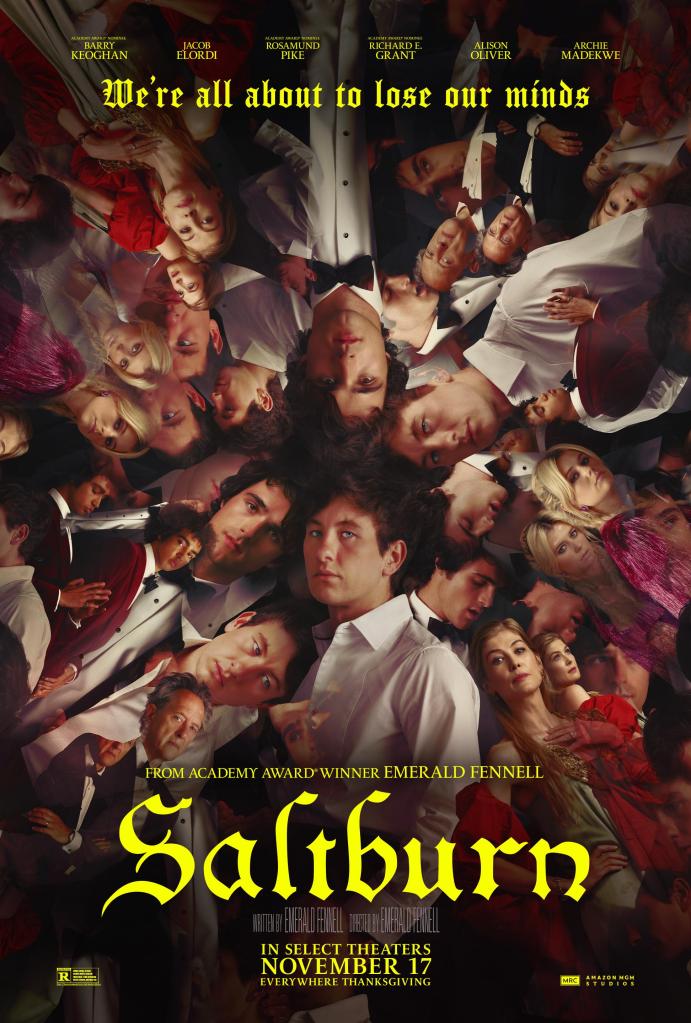
Promising Young Woman was a thought-provoking, very accomplished debut. It’s odd that Emerald Fennell’s sophomore effort plays more like a first film: try-hard, style-over-substance, very pleased with itself and its punky attempts to shock. Crammed full of moments designed to be snipped out and talked about – in a “you will not fuckin’ believe what just happened” way – Saltburn is a fairly trivial remix of ideas much, much better explored elsewhere, predictable from its opening minutes.

It’s 2006 and Oliver Quick (Barry Keoghan) is a scholarship student at Oxford University, socially awkward and very conscious of his Liverpudlian roots, struggling to fit in among the wealthy set that dominates his college. At the centre is Felix Catton (Jacob Elordi), fundamentally decent but blithely unaware of his privilege, who takes a shine to Oliver with his shyness, troubled working-class background and grief at the recent death of his alcoholic father. Felix invites Oliver to spend the summer at Saltburn, his luxurious family seat. There Oliver is welcomed – or does he inveigle his way? – into the lives of the Cattons, from seducing Felix’s sister Venetia (Alison Oliver) to charming his parents Sir James (Richard E Grant) and Lady Elspeth (Rosamund Pike). But is Oliver all he appears to be?

The answer, of course, is no. Which shouldn’t surprise anyone who has ever really encountered any form of unreliable narrator before. Fennell opens the film with a clearly older, well-dressed Oliver recounting the film’s story to an unseen person. It’s not much of a deduction from this alone, that Oliver is at best not to be trusted, is definitely potentially dangerous and is probably a lot worse. All that, inevitably plays out, in a film that so nakedly rips off Brideshead Revisited (or Recycled) and The Talented Mr Ripley that Oliver might as well be called Ripley Ryder.

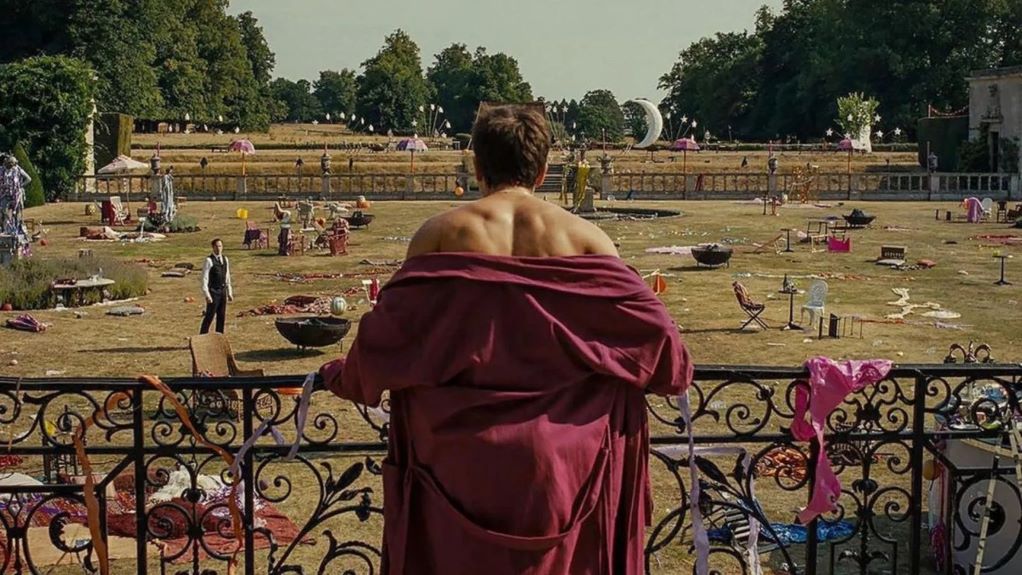
“Ryder” would at least have been a witty name for a character who spends most of the film putting his (apparently) well developed manhood to effective use in manipulating and controlling people. Saltburn assembles a series of “shocking” moments of sexual weirdness from stalker-like sociopath Oliver – so much so, that the moments he merely wanders (or dances) around in the buff feel almost normal. Surely there was more than half an eye on hashtags when the film presents scenes like Oliver drinking spunky bathwater, performing oral sex on a woman during her period or dry humping then wanking over a grave. It’s not big and it’s not clever.

“Not clever” also sums up the film’s inane social commentary. Set in 2006, it seems to take place in a version of Oxford that probably hasn’t existed since 1956. Having been in a state-school kid at Oxbridge at this time, its vision of a university 98% populated by poshos jeering at working-class kids with the wrong sort of tux just isn’t true (in fact there were more state school students than private school kids at Oxford that year). In this fantasy, all the students are either from Old Etonians or maladjusted weirdos from state schools. It’s hard not to think this is Emerald Fennell (a woman so posh, her 18th birthday party was featured in Tatler) guiltily looking back at how her “set” at Oxford might have behaved to the less privileged students.

It boils down to a view of Oxford as an elitist social club laughing openly at anyone who can’t trace their descendants back to the House of Lords, where tutors are entranced by the idea that a place like “Liverpool” exists and snort at the working class student for being a clumsy try-hard by actually reading the books on the reading list with student life flying by in a series of hedonistic raves, hosted by the rich and famous. Maybe I was just in the wrong circles back in the day.

This portrait of Oxford as a play pen for the super elite is as damaging (it’s exactly the sort of false image that stops deserving people from wanting to go) as it is lazy, tired and false. But then, Saltburn compounds its boringly seen-it-all-before social commentary by trudging off down other, all-too-familiar paths as it turns its fire on those with their nose pressed up against the window of privilege. The film’s vilest member of the elite, Farleigh, is himself an interloper, turned aggressive gate-keeper. And, as is not a surprise, Oliver’s roots turn out to be far more comfortable than he is letting on. Oliver is a Charles Ryder who yearns for Brideshead so much, he starts destroying the Marchmain family to get it. Because, in his eyes, as an aspirant middle-class type he appreciates it more.

On top of this is layered a clumsy, Ripley-esque madness to Oliver, who can’t decide himself whether he is infatuated with the charming Felix (very well, and sympathetically, played by Jacob Elordi) or just wants to suck his soul dry. Barry Keoghan plays this Highsmith-styled sociopath with just enough flash and sexual confusion – and he does manage to successfully turn on a sixpence from wide-eyed wonder, to vicious anger. But the character again feels like a remix of something done better elsewhere, trading emotional depth for cartoonish bombast and clumsy on-the-nose point scoring.

The on-the-nose-ness runs through the whole film. It’s a film screaming to be taken seriously, from its 4:3 framing, to its jarringly satirical music choices, arty Gothic fonts, visual quotes from Kubrick and look-at-me love of tricksy camera shots (some of these, I will admit, are gorgeously done, even if the film frequently lingers on them so we can “see the work”). But it makes very little sense. How does Oliver manage to exert an influence, so profound and complete, over Felix’s parents? Why does the wool fall from everyone’s eyes one-at-a-time in quick succession? Does Saltburn feel sorry for the generous but emotionally dysfunctional Cattons or does it feel they deserve their fate?

Because so many of these ideas are so half-heartedly explored, it becomes a collection of scenes designed to shock, tricksy directorial decisions, some flashy performances (Rosamund Pike can certainly wittily deliver a slew of lines dripping with blithely unaware privilege) and twists that will only surprise those who have never seen a story about an outsider before. Jacob Elordi emerges best, creating a character of surprisingly revealed emotional depth, but most of the rest of Saltburn settles for flash and instant gratification. To use its own terms of reference, it’s as satisfying as premature ejaculation: fun for an all-too-brief second, then a crushing, shameful disappointment.

The Lesson (2023)

The Lesson (2023)

Sinister family mystery, full of good moments that don’t come together into something that really works

Director: Alice Troughton

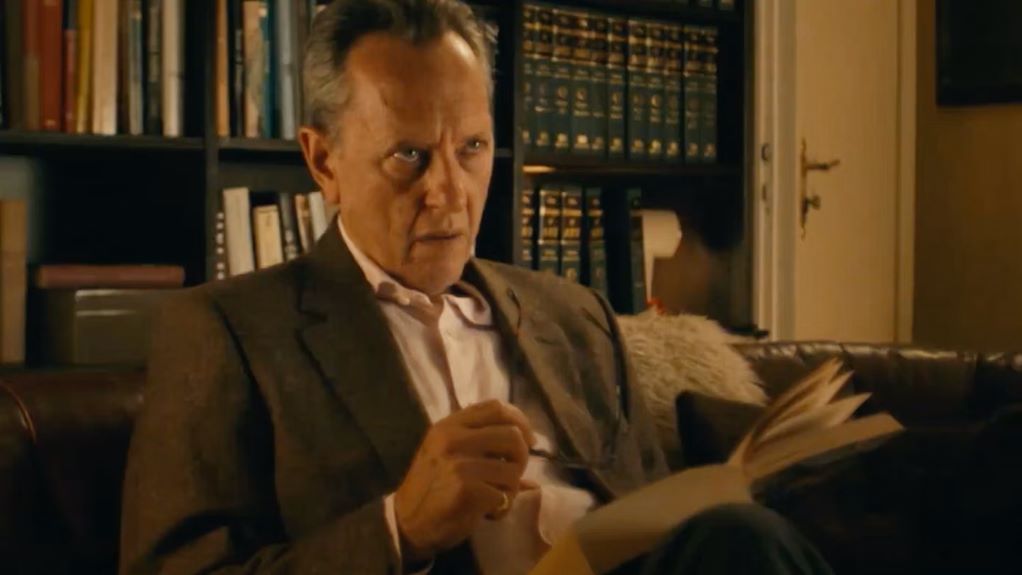
Cast: Daryl McCormack (Liam Sommers), Richard E. Grant (JM Sinclair), Julie Delpy (Hélène Sinclair), Stephen McMillan (Bertie Sinclair), Crispin Letts (Ellis)

Liam Sommers (Daryl McCormack) strides onstage for an interview about his literary debut, that has set the world alight. How did he get the inspiration to write about a domineering patriarch in a rich country house? Flashback to Liam’s summer spent as an English tutor to Bertie (Stephen McMillan), who is trying to get into Oxford to impress his domineering father JM Sinclair (Richard E Grant), Britain’s leading literary novelist. The Sinclair household bubbles with suppressed grief over the accidental drowning of JM and Hélène’s (Julie Delpy) older son Archie in their private lake. As Sinclair puts the finishing touches to his new novel – and ropes in Liam to help him as “final lap amanuensis”, what secrets will Liam uncover about this family?

The Lesson revolves heavily around its oft-repeated pithy mantra from JM Sinclair – “Great writers steal”. So often is this repeated, that it drains much of what little surprise there might be about the true origins of JM Sinclair’s latest tome. It’s a fitting mantra from the film that feels like a mood piece, assembled from little touches of other filmmakers (Kubrick for starters), reassembled into something just a little too pleased with its reveals and secrets-within-secrets structure, but is well enough made that you are willing to cut it some slack.

Effectively all filmed in a single location, the Sinclair’s luscious house (a mix of the modern and the classical) set amongst rich private grounds, it’s well directed by Alice Troughton, who makes effective use of angles and transitions (particularly its cuts back and forth between the working practices of Sinclair and would-be novelist Liam, which subtly stress both their similarities and differences) to enhance mood and an air of unknowable menace. The camera drifts with a chilling intimacy across the fateful lake, giving it a sense of ominous power and mystery.

The film is at its strongest in its opening sections (like Sinclair’s novel, it is divided into three parts with short prologues and epilogues). Within a self-contained theatrical space, tensions and resentments between the family are carefully but not pointedly outlined. The father who switches between indifference, annoyance and gregarious enthusiasm. The mother who feels like both a dutiful supporter and a resentful slave. The prickly, difficult son scared of affection, who attempts (unsuccessfully) to ape his father’s authoritarianism, but is crying out to be hugged. Troughton skilfully cuts between these characters, frequently positioning them at opposing sides of the frame, setting them at visual odds with each other.

In the middle of this, Liam becomes an out-of-place, equally unreadable presence. Very well played by Daryl McCormack, full bluntness mixed with inscrutability, Liam is impossible to categorise and totally outside the upper-class formality of the Sinclair home (with its servants, home fine-dining accompanied with classical music and casually displayed artwork). He’s Irish, working-class, Black and sexually ambiguous. But he’s also hard for us to read: is his admiration for Sinclair something that could tip into resentful violence? Does he really like Bertie, or does he see him as a tedious, brattish child? As the prologue sets up, is he an innocent or a destructive, vampiric presence?

These beats are neatly set up in The Lesson’s opening parts, added to by the presence of a Pinteresque butler (a fiercely polite Crispin Letts) whose status and loyalties prove equally hard to read. Liam’s slowly becomes an intimate figure in the house, moving from a servant occasionally allowed to dine with the family, to Sinclair’s IT consultant, proof-reader and one-sided sounding-board for conversations about his novel, becoming an object of sexual fascination for Bertie and Hélène and given the late Archie’s clothes to wear (adding an Oedipal frisson to his flirtation with Hélène).

Ambiguity however slowly gives way as The Lesson continues, as it fails to weave its initial jarring mood into a reveal that feels truly satisfying, logical or surprising. This effect is magnified by the fact the more time we spend with Sinclair, the more it’s made clear he is less complex than we think, but simply an egotistical monster. Richard E Grant has huge fun with this larger-than-life braggart, a man so competitive that he feels compelled to aggressively slap down Liam’s draft novel as “airport trash” and smilingly telling him he has “done him a favour” by encouraging him not to write. But Sinclair’s monstrous, bullying self-importance sign-posts a little too clearly where the plot is heading.

The final reveal that we have been witnessing a secret plot unfold in front of us feels like a flawed attempt to add a narrative coherence to a series of events that would be impossible to pre-plan. This also relies on chance events and skills (events hinge on Liam’s near-photographic memory). The final ‘answer’ is also too clearly sign-posted from the opening, leaving you expecting a rug-pull that never comes.

The Lesson has a good sense of atmosphere in its opening half and some strong performances – Julie Delpy is very effectively unreadable as the enigmatic Hélène – but for all its sharp direction, its plot is too weak to be truly rewarding on a first viewing or give you a reason to want to return for a second lesson. Despite some good scenes, a bravura Grant and a subtle McCormack, the resolution of its quiet atmosphere of tension and inscrutability doesn’t quite ring true.

The Player (1992)

Tim Robbins is the ultimate heartless Hollywood exec in Altman’s vicious satire The Player

Director: Robert Altman

Cast: Tim Robbins (Griffin Mill), Greta Scacchi (June Gudmundsdottir), Fred Ward (Walter Stuckel), Whoopi Goldberg (Detective Susan Avery), Peter Gallagher (Larry Levy), Brion James (Joel Levison), Cynthia Stevenson (Bonnie Sherow), Vincent D’Onofrio (David Kahane), Dean Stockwell (Andy Sivella), Richard E. Grant (Tom Oakley), Sydney Pollack (Dick Mellon), Lyle Lovett (Detective Paul DeLongpre), Gina Gershon (Whitney Gersh), Jeremy Piven (Steve Reeves)

Hollywood: it’s a hell of a place. Sharks ain’t got nothing on studio power-brokers, hunting product to sell. After all, not a single letter of “Art” appears in “Hollywood”. Griffin Mill (Tim Robbins) hears 50,000 pitches a year and gives the green light to ten or twelve. Mill is plagued with death threats. Confronting the writer (Vincent D’Onofrio) he believes responsible, he kills him in a fight. Can he get away with murder and successfully romance the writer’s artist girlfriend June (Greta Scacchi)? And, even more importantly, can he protect his job from hotshot executive Larry Levy (Peter Gallagher)?

Robert Altman had been working outside of the studios for well over two decades after negative experiences creating his critically acclaimed but hard-to-digest masterpieces (including McCabe and Mrs Miller and The Long Goodbye, the sort of films only Altman could make). His career had drifted during the 1980s, as his edgy, ‘disciplined ill-discipline’ approach (with overlapping sound and roving cameras) moved out of fashion. The Player was not only his payback expose on the studio system, with the exec a sociopath, but also his triumphant comeback to the frontline of film-making (he earned several awards, including a nomination for Best Director).

The Player is nominally a comedy, but in the way of Altman it also fits half a dozen other labels: from film noir to corporate satire. Above all it’s a maverick’s view of a system designed to produce product (Mill constantly speak of his films like this – he would love our modern age of “content”). The studio’s offices are lined with posters from classic Hollywood – but the studio produces the most crowd-pleasing cookie cutter movies you can imagine. It’s all about squeezing in all the ideal elements a film must have: “Suspense, laughter, violence. Hope, heart, nudity, sex. Happy endings. Mainly happy endings.” (In a neat subversive twist, these are of course all present in The Player – but then it’s to be expected when what we are seeing might actually be a film within a film).

Film pitches all have an air of desperation, every idea boiled down to simple, easily digestible slogans. It’s nearly always a combination of two other films – “Out of Africa meets Pretty Woman!” – or involves the biggest stars (“Julia” and “Bruce” were those two stars – and both actors hilariously spoof themselves in the film’s climactic sequence). Ahead of its time, the film even features a pitch (from a cameoing Buck Henry) for The Graduate 2, a nostalgia tinted exploitation of the IP with all the original cast, that basically sounds like the sort of thing they’d actually make today.

There is no place for film-making as an art – any idea that can’t be compressed into 30 seconds is worthless. Mill’s knowledge of film is patchy at best, his attempt to make small talk about Bicycle Thieves boiling down to “Perhaps we should remake it?”. The film (possibly the film within a film within a film), Habeas Corpus, pitched by Richard E Grant’s pretentious writer (“No stars! No pat Hollywood endings!”) is only attractive because it has the wisp of Oscar about it (and Oscars mean Big Bucks). Even then, Mill plans to rework the whole film into exactly the sort of pat-Hollywood romantic thriller Grant’s character claims to hate (no character will support this decision more than Grant’s sellout writer). The only person who seems to actually watch films is Fred Ward’s studio head-of-security – and at least half of his references are met with blank incomprehension. When Griffin makes a speech donating the studio’s old films to a cultural library, his words about art and culture are incredibly hollow.

This vicious satire of the shallow culture of Hollywood – Larry Levy’s up and coming executive attends AA solely to network, not because he has a drink problem – is wrapped up in a beautiful noir framework, that’s brilliantly a few degrees off reality (for reasons that later become clear). Deluged by death threats from (he surmises) a disgruntled writer, Griffin meets the man he suspects – a pretentious holier-than-thou wannabe, played with chippy fury by Vincent D’Onofrio – who he beats to death in a neon-lit carpark, after a dig too far about Mill’s job security (as nothing threatens these guys more than the prospect of being drummed out of town).

Altman’s film wonderfully echoes the neon lit shadows of classic noir, while building a homage filled trap around Mill, desperate to escape punishment. Mill of course has killed the wrong man – and his stalker knows it – and his own heartless-but-effortlessly-cool business dealings are contrasted with his efforts to avoid the dogged pursuit of a police department (led, in a curious but just-about-effective piece of casting, by Whoopi Goldberg) correctly convinced he is guilty. The film asks, how much does morality intrude on Mill, when he’s led his whole life trampling people: isn’t literally killing someone only the next step up from all that metaphorical killing he’s been doing?

His one weakness is falling in love with his victim’s girlfriend, an artist played with a breezy sexiness by Greta Scacchi. Scacchi’s June is intriguingly unknowable – how much does she suspect Mill, and how much does she even care? – and the dance of seduction and suspicion between them is highly effective, culminating in a tastefully, imaginatively but highly sensually shot sex scene (built from Scacchi’s refusal to do a nude scene – instead the nudity comes from a full frontal of Robbins emerging from a mud bath).

Scacchi’s June feels like halfway between a real person and a movie construct – and that’s a deliberate effect in a film which, the ending suggests, may well have been a movie within a movie. Mill takes a pitch in the final moments from his actual blackmailer, who outlines the very film we have been watching, a pitch Mill accepts on condition the film (he?) gets a happy ending: cue Mill arriving home to June and the two of them using the same pat Hollywood pay-off lines to greet each other, we just saw Bruce Willis and Julia Roberts mouth in Mill’s happy-ending for Habeas Corpus. Apply the logic of a film to all the action and it suddenly makes sense on a whole new level, as a beautifully judged exploration of the very crowd-pleasing elements Mills praises, repackaged in a sharp and bitter satire.

Tim Robbins performance of restrained amorality is vital to the film’s success. In his career, any weakness is deadly – a mantra he applies to his interactions with the police and with June. Mill is so eerily controlled – fear is the only emotion he categorically shows, guilt never crosses his mind – you start to wonder if he even has a real personality. But, in the movie’s structure, he’s both a real person and also a construct whose life echoes scenes from the movies whose posters fill his office.

Altman balances these ideas of truth and reality perfectly within the studio satire. The film is astonishingly well-made, all Altman’s trademarks of overlapping dialogue and roving camera present and correct. It opens with a hugely confident seven-minute tracking shot around the studio, which feels like a real “I’m back!” statement – and is beautifully and wittily done. The film is crammed with dozens of celebrities playing themselves (they were given no dialogue and encouraged to improvise scenes), all of them keen to show they were in on the joke.

The Player is dark, witty and very clever, one of Altman’s sharpest and most enjoyable films. Crammed with echoes of film noir and a brutal expose of Hollywood business practice, it’s very well performed and keeps just enough lightness and humanity (it encourages to empathise, but not sympathise, with Mill, for all his amorality) to also be entertaining. One of the great films about Hollywood.

Bram Stoker's Dracula (1992)

Gary Oldman prowls the night as Bram Stoker’s Dracula

Director: Francis Ford Coppola

Cast: Gary Oldman (Count Dracula), Winona Ryder (Mina Murray), Anthony Hopkins (Professor Abraham van Helsing), Keanu Reeves (Jonathan Harker), Richard E. Grant (Dr Jack Seward), Cary Elwes (Lord Arthur Holmwood), Billy Campbell (Quincy P Morris), Sadie Frost (Lucy Westenra), Tom Waits (Renfield)

In the 90s Francis Ford Coppola planned a series of high Gothic films of classic monster stories, kick starting the plans with his own production of Dracula (the only other film that came of this was Kenneth Branagh’s equally operatically overblown Mary Shelley’s Frankenstein). Going back to the story of the original novel (more or less), Coppola presented a deliberately high-intensity, theatrical, over-the-top version of Stoker’s tale that becomes as overbearing as it is visually impressive.

In 1462 Vlad the Impaler (Gary Oldman) renounces God and becomes Dracula, after false news of his death leads to his wife (Winona Ryder) committing suicide and being damned by the church. Over four hundred years later, the immortal vampire Dracula plans to travel to England, with his plans unwittingly aided by his solicitor Jonathan Harker (Keanu Reeves). His interests are peaked all the more when he sees a picture of Harker’s fiancée Mina (Winona Ryder again) – the reincarnation of his dead wife. Dracula heads to England, preying on Mina’s friend Lucy (Sadie Frost) leading to an alliance of Lucy and Mina’s friend, led by Professor van Helsing (Anthony Hopkins) to combat Dracula’s villainy and save Mina from her own dark temptations to join the besotted Vampire.

Coppola’s film doubles down on Gothic romance, thundering through the action with everything dialled up to 11. The (rather good) score hammers home every beat, the camera swoops and zooms through a parade of tricks, wipes and dynamic angles with cross fades frequently throwing two images on screen at the same time. It makes for a sensual – in more ways than one – overload, but also a rather oppressive viewing experience, with no respite or sense of calm but every single scene delivered with stomach churning acceleration.

It’s a film directed with a deliberate operatic style, that celebrates (and makes no attempt to hide) its set-based theatricality. The opening sequence sets the tone with its Kurosawa inspired costumes in front of an Excalibur style blood-red sky, with battle scenes (and impalings) staged as an elaborate puppet show. Oldman – with a hammy Eastern European accent that you could wade through like treacle – then rages and roars over his wives crumpled body, stabbing a cross that leaks blood all while images are cross-cut showing his wives demise and the beginnings of his own monstrous transformation. The film doesn’t ease up from there.

To be honest Coppola massively over-eggs the pudding, producing an over-blown monstrosity of a film that shouts and shouts and shouts and drains all subtlety from every frame. In particular the sexual undertones of Vampirism – and the harsh male judgement of female sexuality – that the book explores are placed unsubtly front and centre. Every vampire attack is presented as a positive ravishing, Frost and Ryder writhing orgasmically (poor Frost has to undergo the indignity of being humped and bitten by a Dracula in part human-part wolf form) while boobs are left on display after every single assault. From an early scenes that sees Lucy and Mina gawping at a pornographically illustrated Arabian Nights, we are left in no doubt that IT’S ABOUT SEX YOU KNOW.

Coppola shows no restraint at all in his directing, which leaves nothing to the imagination, and ends up leaving the actors adrift between a film that is part serious attempt to film the book and part ludicrous bodice ripper, like the cheapest 60s salacious horror film from the worst excesses of Hammer.

It certainly leaves the actors adrift. Oldman gives it a go with gusto, even if he seems completely lost as to what tone this character should hit (is he a monster, a lost soul, a conflicted lover, a megalomaniac – who knows?). Anthony Hopkins channels Orson Welles with the sort of ham that was to become more-and-more his go to in later years. Winona Ryder does her best with a role that oscillates wildly between Good Girl and Minx. She’s saddled with an English accent, which restrains like a straitjacket. Tom Waits has fun as the insane Renfield (here imprisoned in a crazy asylum that resembles a medieval dungeon).

The rest of the performances are pretty much abysmal. Poor Keanu Reeves is left ruthlessly exposed, horrendously miscast as a stiff-upper lip English lawyer in a performance that surely goes down somewhere in history as one of the worst ever. His acting here would barely scrap by in a school play, his delivery of the dialogue wooden beyond belief and some talcum powder added to his hair for the film’s later sections only makes him look ridiculous. Reeves is a decent performer in the right role, but he was never worst case than this. But then the rest of the cast are pretty much just as bad: Frost is out-right awful, hopelessly unable to make Lucy anything other than a slut, while Grant, Campbell and Elwes are all wooden and dull to a man.

The film does get some points for reverting closer to the plot of the book – unlike many versions – although the addition of the love story between Dracula and Mina is marred by tonal problems and the utter lack of chemistry between Oldman and Ryder (they famously fell out on set and the film never recovers). Coppola directs the film with no discipline at all, and no sense of balance between spectacle and story. While it has many merits in its design – it won no less than three Oscars and the costumes, make-up for Oldman and much of its look and style are flawless – it’s basically a pretty over-bearing and dreadful film that shouts at the viewer so long and so hard that it becomes easier in the end to laugh at it rather than with it. A sad misfire.

Star Wars: The Rise of Skywalker (2019)

Our heroes prepare for one final adventure in Star Wars: The Rise of Skywalker

Director: JJ Abrams

Cast: Carrie Fisher (Leia Organa), Mark Hamill (Luke Skywalker), Adam Driver (Kylo Ren), Daisy Ridley (Rey), John Boyega (Finn), Oscar Isaac (Poe Dameron), Ian McDiarmid (Palpatine), Billy Dee Williams (Lando Calrissian), Anthony Daniels (C-3PO), Naomi Ackie (Jannah), Domhnall Gleeson (General Hux), Richard E. Grant (Allegiant General Pryde), Lupita Nyong’o (Maz Kanata), Keri Russell (Zorii Bliss), Joonas Suotamo (Chewbecca), Kelly Marie Tran (Rose Tico)

When Disney took over the control of the Star Wars franchise, they had in mind an epic continuation of George Lucas’ space opera that would take in everything from more tales from the renamed “Skywalker saga” to standalone entries like Rogue One and Solo. Well, we are almost seven years into this journey now, and the series has delivered some hits but also the first flop Star Wars film (Solo) and the most divisive entry for the fandom ever in The Last Jedi. So where does Rise of Skywalker fall in its plans to cap the third (and they claim final, but let’s see…) trilogy?

Set a year after The Last Jedi, the Resistance has rebuilt itself under the leadership of Leia Organa (Carrie Fisher), who has also been training Rey (Daisy Ridley) in the Jedi arts. Imagine their horror when a message from the not-so-late Emperor Palpatine (Ian McDiarmid) rings out across the Galaxy, threatening revenge. Kylo Ren (Adam Driver) has been searching for Palpatine and forms a deal – Palpatine will make him emperor of the galaxy, if Ren will kill Rey. Meanwhile Rey heads out into the galaxy with Finn (John Boyega) and Poe (Oscar Isaac) in a race against time to find the location of Palpatine and his armada, before the late Emperor can launch a deadly attack.

JJ Abrams’ return to the franchise is also a return to the fun-focused, action-packed, fast-paced explosion of entertainment and thrills that he offered with the excellent (and still best film in this new trilogy) The Force Awakens. It will excite you, entertain you, and offers some terrific work from many of its players, not least Daisy Ridley (who has grown and grown with each film as an actress confident in carrying a huge franchise) as Rey and Adam Driver as a morally conflicted Kylo Ren. JJ Abrams gently handles the death of Carrie Fisher, skilfully using off-cuts and deleted scenes from past Star Wars films to retroactively create a series of scenes using what dialogue they had from the actress to give her arc some sort of resolution.

It’s one of many things the film gets right here, along with its electric pace and sense of excitement, that never lets up and takes you on such a gripping thrill ride that you hardly notice that most of the film makes very little if any sense (so little sense, I didn’t really understand whether the baddies were the First Order, the old Empire or the Final Order or whatever they were meant to be). It’s a top-to-bottom piece of entertainment, designed to thrill the initiate and the casual fan and give all that you might want to the superfan.

In fact you could say it’s more or less a course correction from the deeply unpopular (with certain elements of the fandom, although its box office success was huge) The Last Jedi. Rise of Skywalker lacks all the iconoclastic “forget the past” attitudes of Rian Johnson’s film. In fact it goes out of its way to ignore as much as possible everything that happened in that film – to the extent that, apart from the growing bond between Rey and Ren and the initial training of Rey, you could more or less skip over it if you wished when viewing the trilogy. I’m not sure how I feel about this – or the fact that the franchise feels it has effectively side-stepped by-far-and-away the most interesting and different film it has produced in favour of a safe-return to familiar stories.

It does mean that Rise of Skywalker is a far less brave film than Johnson’s – and one that avoids doing anything new as well. Many elements from The Last Jedi are disregarded, and all the plot hooks that film are ignored are firmly, and hurridly, reinstated. It means that Rise of Skywalker rushes from revelation to revelation, from plot point to plot point, hardly stopping to draw breath, so eager it is to give the fans what it feels they want. It’s probably a testament to fan power – but also to the savviness of film producers, working out the vast majority of people will come and see any Star Wars film, but the hardened fans will only support a film that matches their agenda.

So it reckons the fans wanted to see answers to questions raised in Force Awakens, lots and lots of cameos and call backs, and plenty of action and space battles. So Rise of Skywalker is a film almost exclusively made up of these things. While there are flaws in this approach, it does mean that this film is a joyfully fun piece of excitement, with lots of great set pieces and some terrific gags among the screenplay. JJ Abrams is a wonderfully confident director of this sort of action, and while the film often feels like it never takes a second to really explain any of its plot dynamics, he is also able to create a narrative that is much more fun and exciting than The Last Jedi, for all its faults of pacing, narrative and characterisation.

What this film does the most is hammer home the bizarre fact that Disney set about making a franchise of three films – guaranteed three films! – with no coherent thought at all about how all these three films would work together either in terms of tone or plot. Now that all three are assembled there is no sense of them having any particular themes, or that they connect together to form an overarching story. The conclusions reached in this film are only faintly threaded in Force Awakens and all but contradicted in The Last Jedi. It’s this lack of planning that underwhelms the film – fun as it is, these are more like three loosely linked films rather than ones that progress one to the other, or feel connected to the original three films.

It’s of course made worse by the ignoring of The Last Jedi – Rose Tico, a character that film spent a lot of time building and establishing gets less than three minutes of screen time – and a re-focusing of the film on the “family of three” in Rey, Poe and Finn that mirrors the first film. This relationship is now far warmer and closer than we ever saw developing in Last Jedi (a film they never appeared in together until the final seconds) – and also laced with an odd, almost queer-baiting sexual tension, where they seem at times like a borderline thruple. (The film offers a cop out on LGBTQ people in Star Wars by having two background characters kiss at one point, a blink-and-you’ll-miss-it shot, cut in China.)

It’s part of a general lack of imagination in the film as a whole, which leans often on bringing back people from the previous trilogy and even sidelines the villains of the rest of the trilogy to shoe-horn back in Palpatine (a reintroduction that is barely explained – like much of the film – and also rather undermines the ending of Return of the Jedi) as the big-bad, and which again doubles down on many of the tropes of the first trilogy. JJ Abrams often mistakes bigger for better – and this film is big, with races against time, fleets beyond imagining, planet destroying tech that can be put into a single star destroyer, Sith powers that can stretch over thousands of miles etc. etc. He takes the same approach with the film, throwing so much of the old trilogy in that it becomes more of a surprise that stuff is missing rather than appearing (I was shocked Yoda wasn’t in this one).

But it’s what the film is going for, offering something safe and recognisable, something that is a thrill ride like you remember rather than the different path the trilogy seemed to be heading towards. There is nothing wrong with that of course at all, but it feels like a missed opportunity. For all its faults, The Last Jedi tried to do something new. This doubles down on the things it knows fans will love, and offers all the entertainment it suspects the casual viewer wants. And maybe that’s enough.

The Age of Innocence (1993)

Daniel Day-Lewis and Michelle Pfeiffer have a love that cannot survive the morals of society in The Age of Innocence

Director: Martin Scorsese

Cast: Daniel Day-Lewis (Newland Archer), Michelle Pfeiffer (Countess Ellen Olenska), Winona Ryder (May Welland), Miriam Margolyes (Mrs Mingott), Geraldine Chaplin (Mrs Welland), Michael Gough (Henry van der Luyden), Richard E. Grant (Larry Lefferts), Mary Beth Hurt (Regina Beaufort), Robert Sean Leonard (Ted Archer), Norman Lloyd (Mr Letterblair), Alec McCowen (Sillerton Jackson), Sian Phillips (Mrs Archer), Jonathan Pryce (Rivière), Alexis Smith (Louisa van der Luyden), Stuart Wilson (Julius Beaufort), Joanne Woodward (Narrator), Carolyn Farina (Janey Archer)

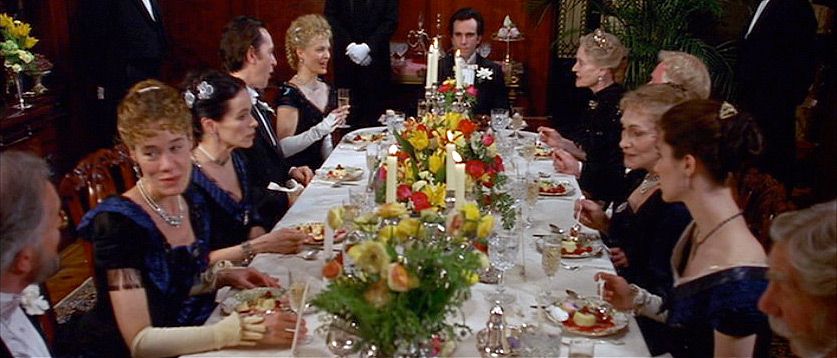
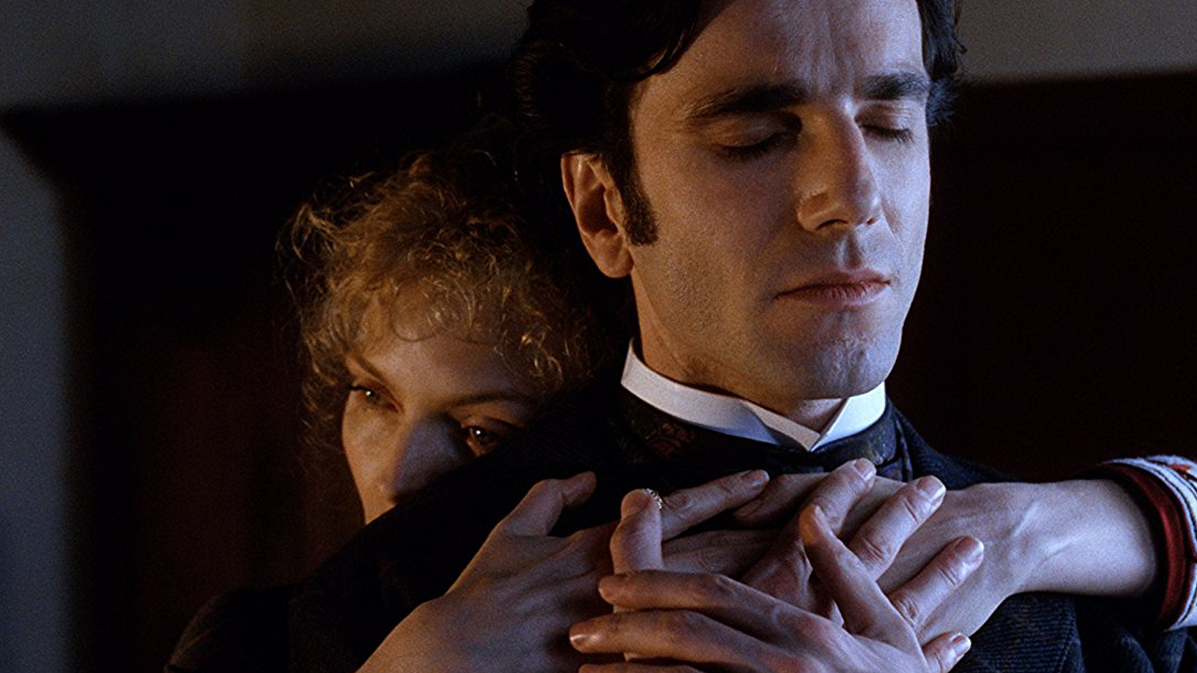
In 1870’s New York, Newland Archer (Daniel Day-Lewis), is a fastidious connoisseur of the arts, part of the super-rich elite of New York society. He’s engaged to be married to young May Welland (Winona Ryder), but finds his world view and values turned upside down when he meets May’s cousin, the Countess Ellen Olenska (Michelle Pfeiffer). Ellen is a scandalous figure, a woman separated from her philandering European husband, trying to make her way in New York society. Newland and Ellen are irresistibly drawn together, but do they have a chance to be together in the oppressive society of the New York upper classes?

That’s one question. The one more people were asking was: how would Scorsese follow up Goodfellas? Probably very few people would have bet on an adaptation of Edith Wharton’s The Age of Innocence. In fact, in 1993, there was more than a little annoyance among some viewers at the idea of the master of gangster movies, the guy who directed Raging Bull and Taxi Driver, turning his hand to the realm of Merchant Ivory. The film bombed at the box office – but did it deserve that reaction? Was Scorsese a director out-of-place?

Well the reaction is slightly unfair, because The Age of Innocence is a marvellously filmed, exact, brilliantly constructed piece of film-making, that so lays on the opulence and wealth of New York society that it turns everything in the film into feeling like a gilded cage. That’s a cage carefully controlled and monitored by the inmates, with their strict, inflexible rules about every single social interaction, unbreakable rules of decorum and etiquette covering everything, with any deviation from these rules met with instant expulsion. Put it like that, and this doesn’t sound a million miles away from the gangster families Scorsese is more associated with.

Inspired by the films of Powell and Pressburger in its intricate construction, and flashes of artifice in filming and editing, as well as its rich colour palette, with touches of everyone from Visconte, Ophüls, Truffaut to name but a few, this is a film-maker’s love letter to cinematic classics. A beautiful sequence of Newland watching Ellen from behind and a distance on a jetty, yearning for her to turn around before a boat passes a lighthouse, using that landmark as the point when he will stop looking and accept something is not to be. The scene is bathed in a Jack Cardiff-ish red, with the objects in the light given a sharp definition in contrast to the colours. It’s a beautiful image, and one of several that run through the film. Inspired by paintings of the era, Scorsese also layers in Viscontish scenes of opulence, with The Leopard very much in mind as every detail of the vast wealth, and huge accumulation of objects in every room of these people’s houses, seems to crush and entrap the people in them. The rooms themselves become metaphors of the oppressive, rule-bound society the characters are trapped in, like the people have been designed to fit into the rooms rather than vice versa. The one exception is Ellen’s rooms, which have a sense of personality to them.

This marvellous construction – with its beautiful photography, inspiring design and costumes – contains a storyline of frustrated love, a love triangle between three people where the man has to make a choice between what he wants and what is expected of him. Newland Archer clearly loves Ellen in a way he can never love May – indeed, he is dismissively cruel in his thoughts towards May, who he clearly considers nothing more than an extension of the mindless gilded objects of beauty around him, a woman he sees as lacking an imagination or daring. In Ellen, he sees far more opportunities for a world of change, of difference, or being something he does not expect. She is far more of a free-spirit, a more bohemian figure, confident in herself and something far more modern than May, who is very much a product of her time and place.

The film, carefully demonstrates the growing unease and unsettlement of Archer as he begins to feel things he has never done before, to start to react and aim for a style of living he would never previously consider. All his life before now is a careful studying and collection of moments, or savouring experiences in the way that a collector would place them in a glass box. From seeing only the moments of plays he wishes to see, to carefully collecting shipments of books from London and reading the choice moments, Archer is a coldly controlling figure who believes he guides and directs his own life. Ellen not only demonstrates to him that in many ways he is as conventional as anyone else, but also that there are other options in his life. Archer struggles to build the emotional language that he needs in order to express these feelings bubbling in him – key moments indeed seem reminiscent of the operas that this New York society spends so much time watching, and it is only late in the film in little, genuine moments of affection can he find something real.

Scorsese’s film artfully and carefully shows this developing affection between the two, a love that the two of them speak of surprisingly early, but fail to find a genuine way of expressing it. The film captures the attempt by New York society at the time to be more British than the British, and the hidebound restrictions this brings. Scorsese uses cinematic tricks to show Archer’s striving to escape. Spotlights zero in on Archer and Ellen in the middle of society, as if to drain out all other moments. Letters from his respective love interests are delivered with the actors addressing the camera, as if speaking to Archer direct. Flashes of screen colour cover key cuts, as if all this colour was just on the edges of his life but he is unable to access them. He is a man who feels himself trapped and committed to one form of life, but who still feels the longing for another.

The Age of Innocence is a beautifully made film, but there is a coldness to it. Perhaps this is why it doesn’t quite capture the heart in the way of other films. So much as Scorsese captured the cold and restrictive world of this society, that it seems to permeate the film and make the whole thing somehow colder and more restrictive. There is such artistry and effort in the film-making, that the film seems a coldly detailed piece of art. Perhaps this is why the use of narration – beautifully spoken by Joanne Woodward – becomes overbearing here in the way it doesn’t in other Scorsese films. It’s another distance from the entire experience, as if the film is keeping the audience at arm’s length as much as society is. 

Daniel Day-Lewis’ performance is expertly assembled, a masterful, brilliantly observed, intricately detailed masterclass in micro-expression, of layered frustrations and repression. But it’s such a marvellously constructed, detailed and well observed performance that it feels a masterful piece of art to be admired rather than loved. For all the film centres Archer in the story, he is a hard man to care for or invest in. Pfeiffer gives a wonderful performance as the far freer, intelligent and daring Ellen – but there is a slight lack of spark between them, for all the brilliance of both actors the feeling of an overpowering, obsessive love just doesn’t quite come out of the picture.

This coldness of the construction, carries through every frame. It is perhaps an easier film to admire than love, for all its brilliant construction. It is perhaps too successful in establishing the sharp rules of its society, and does not invest enough time in looking at the raw passions that bubble under the surface of its characters. It never quite explores the inner life of its characters, and they remain slightly distant objects from us. To be fair, this works very well in some cases: Winona Ryder as May carefully plays her hand throughout the film, so that it is a shock in the final scenes where she reveals depths of determination, strength of character and manipulation that far dwarf anything Archer is capable of. Where he is a man with a wistful longing for what he wants, but lacks the will to take it, she knows what she wants and is determined to take it.

The film uses its mostly British cast very well, their understanding of period and these sort of society rules crucial to its success. Margolyes, Wilson and McCowen in particular are very impressive as very different types of society bigwigs. Scorsese’s film contains many other things to admire, but it’s such a wonderfully made piece of film-making, so overburdened with intelligent interpretation of the novel that it fails to make a real emotional connection with the viewer. You will respect and enjoy scenes from it, but perhaps find its running time as overbearing as the characters find the society they are in, and eventually find yourself needing to come up for air.

The Hitman's Bodyguard (2017)

He’s a hitman. He’s a bodyguard. Let the predictable hilarity ensue!

Director: Patrick Hughes

Cast: Ryan Reynolds (Michael Bryce), Samuel L. Jackson (Darius Kincaid), Gary Oldman (Vladislav Dukhovich), Salma Hayek (Sonia Kincaird), Elodie Yung (Amelia Roussel), Yuri Kolokolnikov (Ivan), Joaquim de Almedia (Jean Foucher), Kirsty Mitchell (Rebecca Harr), Richard E. Grant (Mr Seifert)

The buddy movie. Two mismatched people from two very different walks of life – ideally opposing ones – are thrown together to do something or, better yet, go somewhere and along the way (guess what!) they slowly put all their initial hostility behind each other and found out that, hey, perhaps they have more in common than they thought becoming mismatched pals for life. I’d love to say The Hitman’s Bodyguard does something different. But no, it doubles down on this plot. And doubles down hard.

Michael Bryce (Ryan Reynolds) is an elite UK-based private bodyguard – but after the sudden assassination of one of his clients (and if you can’t guess who the assassin turns out to be, you’ve clearly never seen a movie) his career falls apart and he ends up guarding drug fuelled corporate executives in London (a frankly demeaning cameo for Richard E Grant). All this changes when he is brought in – of course! – by his ex-Girlfriend Amelia (Elodie Yung), an Interpol agent charged with delivering to the Hague notorious hitman Darius Kincaid (Samuel L Jackson). Turns out Kincaid has agreed to testify against Slobodan-Milosevic-style-dictator Vladislav Dukhovich (Gary Oldman, clearly using his recent Oscar to pick up a big pay cheque). But Dukhovich’s men are out to stop them, helped by turncoats in Interpol, so Bryce and Kincaid must hit the road together to get to the Hague – not helped by their obvious loathing for each other. Let the sparks fly!

If you didn’t notice just from that plot description that this is as familiar and overworn a plot as a moth eaten old coat, let me confirm for you. This film does literally nothing new, original, different and interesting than a hundred films before it. In fact it’s almost a work of art to make something so completely and utterly lacking in any form of originality. The entire film plays out, almost beat for beat, as a straight knock off of Midnight Run, but lacking its charm, comic chops, absurdity and heart.

Instead The Hitman’s Bodyguard is exactly the sort of film actors take on when they have a bit of a loose end and want to pick up a healthy cheque so that they can consider popping off afterwards to do something a little more interesting. To say the actors could play these roles standing on their head is an understatement: they could play them in a coma. 

Reynolds is charming as always, but the part barely stretches him. Jackson sprays swear words around like confetti, essentially playing his public personae and looks like a man shooting a film in between trips to The Belfry for a few rounds of golf. Salma Hayek plays a sweary, sexualised “bad girl”, in a role that I think she is embracing as a lark but in fact feels demeaning as the camera leers over her body as she does bad ass things (the part also lacks any charm whatsoever). As mentioned, surely the only thing that attracted Gary Oldman to this totally bland villain role was a stonking pay cheque – and who can blame him for that.

I suppose it passes the time okay, but the film frequently mistakes vast amounts of swearing and moments of violence for actual wit. Just hearing characters drop f-bombs and shout isn’t actually in itself that funny. There is nothing actually smart about the film at any point what-so-ever. No wonder the actors coast through it effectively playing versions of their own public personaes. 

The story line is so rammed full of ludicrous events and thumping clichés that, despite the enjoyment of a few bits of pieces, you can pretty much predict everything that will happen in the movie. If you can’t spot the second the Interpol characters appear on screen which of these guys is a mole for the baddies, then you’ve clearly never seen a movie. Every single beat and every single scene that this mismatched duo go through to get from enemies to frenemies is like reading a B-movie plot creation text book. 

But then if you’ve never seen a film before this might all seem rather enjoyable. If you are thinking about watching this film, I’d urge you to watch Midnight Run. It’s like this – it’s exactly like this – but much, much better. But then I guess the stars of this film will say the same. Even as they limber up to make a sequel: but then they’ve got bills to pay.

Can You Ever Forgive Me? (2018)

Melissa McCarthy and Richard E. Grant excel in Can You Ever Forgive Me?

Director: Marielle Heller

Cast: Melissa McCarthy (Lee Israel), Richard E. Grant (Jack Hock), Dolly Wells (Anna), Jane Curtin (Marjorie), Anna Deavere Smith (Elaine), Stephen Spinella (Paul), Ben Falcone (Alan Schmidt)

There is a certain pleasure in seeing the pretensions of the pompous being pricked. Is there anyone more pompous than the self-conscious exhibitionism of the literary collector? You know the sort – the kind who talk about how witty and true “dear Noël and Dorothy” were, and will pay a fortune in order to prominently display (show off) typewritten and signed epistles from their literary heroes, eager to be touching just a hint of the greatness of others. It’s a market failed writer Lee Israel managed to find herself immersed in – the difference being Israel was turning out brilliantly written pastiches, with forged signatures, that she was selling on to dealers.

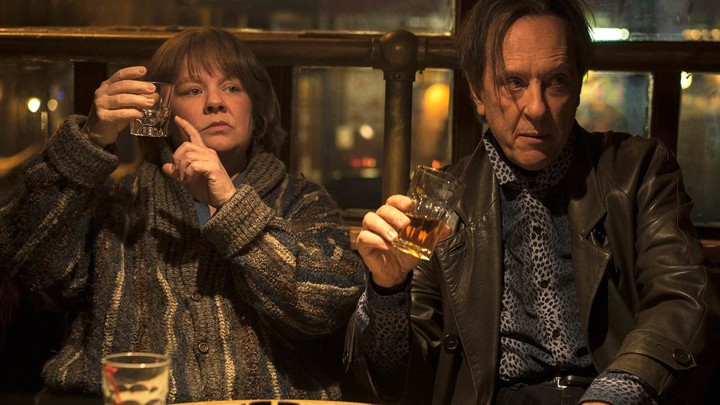
Lee Israel (Melissa McCarthy) is a bad-tempered, difficult personality with a chip on her shoulder and a horror at the idea of letting anyone get too close to her. Struggling to make ends meet, she stumbles across some letters from Fanny Brice. Trying to sell them, she finds they sell for a lot more if she uses the blank space at the bottom of the letter to add a witty, more personal PS. From there she starts writing whole correspondences from scratch, covering authors as varied as Noël Coward, Dorothy Parker and Ernest Hemingway, her dedicated research producing letters that feel real and genuine. She’s aided and abetted by her sole friend, a drunken, seedy British homosexual Jack Hock (Richard E. Grant), who mixes genuine warmth and friendship with casual lies and betrayals. But how long can this criminal enterprise last?

Can You Ever Forgive Me? is an entertaining, well made part caper, part comedy, part sad little tragedy of a lonely woman struggling against the world. Lee Israel is blunt, rude, aggressive and speaks her mind and steadfastly refuses to live the kind of life required to get ahead in the literary world. She’s barely tolerated by her agent, and almost impossible to make friends with. Saying that, McCarthy’s trick is to make her far more of a Victor Meldrew character, railing against the petty rudeness and snobbery of the world, rather than an outright bully. It’s notable that the people she is most rude to are all cruel to her first.

All this helps you to invest in Israel, and feel sorry for a frightened, lonely woman who won’t let anyone into her life apart from her cat and feels only bitterness and frustration at where her career has taken her. Sure she may be difficult and even irritating to know personally, but Marielle Heller’s well-made film invests her with a great deal of empathy. Heller’s direction is shrewd, gentle and manages to turn a difficult woman into someone we end up feeling sorry for.

It also helps that this is a really warm, rather touching, relationship film that covers two best friends – and that it might well feature career best performances from the Oscar-nominated pair Melissa McCarthy and Richard E Grant. McCarthy (looking like a frumpy Annette Badland) is exceptional as Israel, vulnerable but defiant who makes more trouble for herself than she needs. Heller introduces a fictionalised semi-romantic interest from one of her literary dealers, a sensitive, kind would-be writer Anna (played well by Dolly Wells). It’s a relationship that shows Israel’s emotional frostiness, her instinctive defensiveness towards any personal interest – as well as hints of her guilt for essentially defrauding this woman. McCarthy’s performance – often caustically funny – is also deeply affecting for its fragility and desperation, too socially awkward to build relationships.

It also sparks brilliantly well off Grant’s superb performance as transient semi con-man Jack Hock. Grant channels elements of Withnail in the character’s bohemian alcoholism, but Jack is far more complicated than that. A wonderful contrast with Israel, Hock is immediately able to form bonds with people, patient, kind, gentle, an amusing raconteur and a man who takes pride in dressing up. Grant’s performance is humane, sensitive but also deeply funny with a long streak of selfishness and self-destructive compulsion. The relationship between these two is the heart of the film, an entertaining and endearing odd couple, with Hock getting closer than anyone to thawing Israel’s defences. Grant’s not only wildly funny, but also deeply moving – often in smaller moments, where he gently comforts Israel or (later) asks for forgiveness.

The warmth between the two friends is what makes the film work above anything else. It’s the heart of the movie – and the film is perhaps reliant on the excellence of the two actors and their chemistry. The story around them is, at times, rather slight and generally the film itself is so gentle to verge on being a little forgettable – but you never lose your focus because it has more than enough wit and those two brilliant lead performances to keep it going. Career best work in a well made film, makes this film more than worth catching.

Their Finest (2016)


Gemma Arterton and Bill Nighy do their bit for the war effort by making movies in Their Finest

Director: Lone Scherfig

Cast: Gemma Arterton (Catrin Cole), Sam Claflin (Tom Buckley), Bill Nighy (Ambrose Hilliard), Jack Huston (Ellis Cole), Helen McCrory (Sophie Smith), Eddie Marsan (Sammy Smith), Jack Lacy (Carl Lundbeck), Rachael Stirling (Phyl Moore), Richard E Grant (Roger Swain), Paul Ritter (Raymond Parfitt), Henry Goodman (Gabriel Baker), Jeremy Irons (Secretary of War)

During World War Two, Catrin Cole (Gemma Arterton) is hired by the Ministry of Information to write dialogue for propaganda films – to be specific “the slop” (the women’s dialogue). She pitches the semi-true story of two young women who take a boat to Dunkirk to rescue soldiers, and is hired to work with Tom Buckley (Sam Claflin) to write a screenplay. Among the cast of this film is Ambrose Hillaird (Bill Nighy), an ageing matinee idol having trouble accepting his days of playing young heroes are behind him. Together they overcome initial difficulties to create a film that moves the nation.

Their Finest is a gently amiable piece of film-making, totally predictable but still rather entertaining for all that. You won’t exactly be gripped or compelled by it, but you certainly won’t feel cheated out of your time watching it. It doesn’t have much in the way of originality about it – and you can see most of its jokes and events coming a mile off – but it’s still got a certain charm and warmth about it. And it’s crammed full of some very fun “film-within-a-film” scenes, both seeing the film the team create and the work (and backstage politics) that go into making it. There are also some neat gags (and wry comments) about the casual sexism of the day – and the film (without dwelling on the issue) makes a number of heartwarming moments out of its lead character succeeding against the odds on her own merits.

It also has a couple of fine performances, not least from an engaging and bright Gemma Arterton, who brings a great deal of quiet depth and dignity to Catrin. Catrin has a sweet lack of self-confidence about her – a gentle doubt, that she must learn to overcome over the film. She makes an affecting and empathetic lead. It also helps that she has a great screwball comedy chemistry with Sam Claflin. Claflin’s part is far more conventional – the gruff man with the heart of gold – but he nails the part’s humanity and its comic grumpiness.

The film’s main weapon of entertainment is Bill Nighy, in a part almost certainly written for him so well does it match his strengths. Hilliard is just the sort of vain, pompous, arrogant preener that Nighy can play in his sleep – a man who needs to be flattered and praised into doing anything, who assumes when he first reads the script he’s being offered the role of the young hero not the drunk uncle. What Nighy does so well with parts like this, though, is bring them depth and pathos. Hilliard may be an egotist, but he’s gently comforting in tragedy and has a profound sadness and insecurity behind him about where his career and life is going. So, while he brings a lot of the film’s comedy, he’s also a large part of its heart, elements that emerge increasingly as the film progresses.

The sequences that follow the making of the film are very funny. Jack Lacy is wonderfully sweet and genuine as an actual war-hero, an American serving in the RAF, parachuted in by the Ministry of War to send a propaganda message to the USA. Lacy’s Carl is well-meaning and loves films (not least his hero worship of Hilliard) but a hopeless actor, who can’t help smiling at the camera after every line. It’s a neat indication of the film’s well-judged tone that he is never a butt: the crew work hard to improve him, he’s eager to learn, he’s completely lovely – and when a character does complain about the extra work he is causing, Henry Goodman’s Alexander Korda-ish producer simply states “he has done things none of us would be brave enough to do”.

Because there is a harder realism about this film. It doesn’t shy away from the dangers and brutality of war – there are bombings and people die. Some deaths are characters we know, others are on the edges of the story. “I’m a bit emotional today. My landlady was killed last night” one character states. Each of our lead characters encounters a dead body, or knows someone who has been killed. There is a genuine danger of obliteration or invasion just on the edges of the comedy. It’s a neat balance that the film keeps, between pathos and light comedy.

The film-within-a-film, The Nancy Starling, is a brilliant pastiche of 1940s British war films, instantly recognisable and affectionately amusing. But it’s also, when we finally see parts of the film, rather moving. It has a real emotional force to it – the film-makers achieve the difficult balance of giving us a pastiche we can chuckle at it, but also a pastiche that feels like it would genuinely move the people watching it in the film. 

Their Finest’s main problem might be that partly because it’s so quietly unassuming and gentle, it is almost completely bogged down in predictability. Most of the character arcs can be seen coming a pile off – my wife and I were able to practically write the scenes ourselves as they happened. There is very little original here. Even the stories of actors’ pretensions and film-making disasters have a breezy air of familiarity about them – the sort of stuff we’ve seen in films about film-making hundreds of times before. In fact, what’s striking is that a film so predictable and familiar remains entertaining and endearing – which is surely some sort of testament to the acting and direction.

Their Finest is perfect for what it is: an entertaining, weekend-afternoon film that will pop a gentle smile on your face. There is nothing particularly deep or memorable about it beyond that. It has some fine performances, some good jokes and it will make you laugh. But will you remember much about it within a few hours? Probably not. Is it a film that you can imagine revisiting to discover new gems in it? Again probably not. Is it a film that will entertain you on a Sunday afternoon? Absolutely.