Tag: Richard Fleischer

Doctor Dolittle (1967)

Doctor Dolittle (1967)

The biggest crimes of this musical disaster is that is both hugely dull and thuddingly charmless.

Director: Richard Fleischer

Cast: Rex Harrison (Dr John Dolittle), Samantha Eggar (Emma Fairfax), Anthony Newley (Matthew Mugg), Richard Attenborough (Albert Blossom) Peter Bull (General Bellowes), Muriel Landers (Mrs Edie Blossom), William Dix (Tommy Stubbins), Geoffrey Holder (Willaim Shakespeare X)

Sometimes you think a film can’t possibly be as wretched as its reputation says. And then you watch Doctor Dolittle. This musical monstrosity, charmlessly adapted from a series of children’s novels, nearly sunk 20th Century Fox, losing millions (but still gaining nine Oscar nominations due to relentless lobbying by the studio). It’s not aged well: syrupy, over-long, lacking in any magic and, most damningly of all, crashingly dull over its bum-numbing runtime. Nearly everything either went wrong or is wrong with this.

Its plot is both tediously straightforward and frustratingly vague. In 1845, in the postcard-village setting of Puddleby-on-the-Marsh, eccentric Doctor John Dolittle (Rex Harrison) has become fluent in every animal tongue there is. Some think he’s a crazy misanthrope – after all his house is packed with every type of animal you can name and he spends the day chatting to them and being rude to humans – but others think he’s charming. (Sadly, you may find yourself siding with the former.) He dreams of finding the legendary Great Pink Sea Snail (for reasons that are never quite clear) and eventually heads on a whimsical journey with some new-made friends.

Doctor Dolittle’s principal crime, perhaps the reason why it has so few defenders, is that it’s at heart a very boring film. It takes nearly fifty minutes for even a trace of the plot to kick-in, then it meanders around a side quest of returning a seal to the sea before rushing the final act about the Great Pink Sea Snail. Really nothing much happens, and the stakes feel tiny: there is the vague danger that the unflappable Dolittle might get banged up in an asylum and (I suppose) the outside chance the native tribe of the floating island they encounter might sacrifice them, but that’s about it. Essentially, the film assumes that to entertain the family market, a bit of whimsy, a lot of Harrison nodding and “I see”-ing to animals and a few tunes (some of which are hummable) was enough to keep the kids happy. It’s not.

Any poor child strapped down to watch this light-weight confection, puffed up with an epic run-time and large-scale sets, will find themselves wading through as much animal shit as the film’s stars did on set. There is, at a push, one memorable sequence in Doctor Dolittle: Richard Attenborough’s circus master launching into a high-tempo musical number as he marvels at the pushmi-pullyu Dolittle is trying to flog him (the animal itself is so painfully obviously the front of two panto horses stitched together, I can only assume Attenborough was stunned by Dolittle’s cheek). Attenborough sells the heck out of this (to be honest) bland ditty, committing no end to its high-kicking energy (I like to think Fleischer immediately thought “that’s the guy I need to play John Christie”).

Attenborough can’t really sing or dance but at least he can give a good impression of someone who can. Harrison doesn’t bother. Of course, Harrison was arriving on this fresh from the glory of My Fair Lady where he had worked out it was possible to become a rich musicals star by talking with a bit of rhythm. Doctor Dolittle is set up for him to do the same, talking through his numbers – the problem being none of them are as good as anything by Alan Jay Lerner (who was supposed to write this, before he pulled out). Harrison murders a series of songs that might just have passed muster with an actual song-and-dance man. The low-point is early on as “Talk to the Animals” degenerates to Harrison literally bellowing at point blank range to a field of sheep and cows.

Dolittle has been further set up for Harrison to coast by essentially retrofitting his character into Henry Higgins #2. Dolittle shares all of Higgins’ misanthropic, obsessive tendencies only this time without someone like Audrey Hepburn to make us like him. His character is infuriatingly inconsistent, not least in his attitude to animals. The guy respects animals so much, he won’t eat meat but is perfectly happy to sell the pushmi-pullyu to a circus but then rescues a trapped female seal from the same circus? (I really hope this isn’t due to any feelings he has for said seal. Harrison whispers what sounds suspiciously like a love song to the seal while it’s dressed as a lady, even kissing the poor animal. This is probably the only kids film you’ll see to softly imply bestiality is a way to live your life).

There isn’t really a single interesting or particularly likeable character in Doctor Dolittle. Presumably thinking every kids’ film needs a kid, Dolittle (and we) are saddled with William Dix’s Tommy Stubbins, the sort of vomit-inducing stage-school brat most kids actually watching the film would love to pinch lunch money from. Anthony Newley can at least sing and dance, even if he is stuck with a bland Orisih accent (not helped by Harrison’s envy on-set leading to several of Newley’s scenes being cut). Samantha Eggar is utterly hamstrung by playing a character whom no one involved in the film can decide is Newley’s love interest (age-appropriate) or Harrison’s (because he’s the star) so sort of makes her the partner of both of them (so Dolittle can also claim to be the first kids’ film that promotes polyamory, making it quite advanced).

Oddly the animals themselves feel like rather minor characters. I assume this is because the production wanted to use real animals (since the times it uses puppets, they are breathtakingly unconvincing) but real animals have the unfortunate problem of not being actors. The most prominent animal, an irritating macaw called Polynesia, talks fluent English anyway so the others hardly need Dolittle’s skills. This even caused a slight kerfuffle on launch: the promotion had led with pictures of Dolittle riding a giraffe, a scene first cut then hurriedly shoved back in as part of a pointless montage on the island, after complaints.

Most of all, Doctor Dolittle feels like a charmless chore to watch. Nothing is sweet, nothing is charming, the hero is frequently a stand-offish jerk and you get no sense anyone really wants to be there. Which is, apparently, the case as during its hideously long production, the animals caused nightmares (everyone got shat on multiple times, which at least prepared them for the film’s critical reception), the Wiltshire village used for the location collectively lost its rag as over-running shooting meant no trace of the modern world was allowed in for months on end, and Harrison (allegedly) behaved like a total tit (at one point Christopher Plummer was signed up to replace him, then paid his full agreed salary after Harrison agreed to continue).

Doctor Dolittle trudges, inevitably, towards its chocolate-box finale – but anyone still watching will surely long-since ceased to care about anyone or anything involved in this mess. A later stage adaptation did salvage some of Leslie Briscusse’s songs, but nothing else was saved from this disaster that killed stone-dead nearly everyone’s careers. It really is as bad as they say.

The Vikings (1958)

Kirk Douglas has a whale of a time as one of The Vikings

Director: Richard Fleischer

Cast: Kirk Douglas (Einar), Tony Curtiz (Eric), Ernest Borgnine (Ragnar Lodbrok), Janet Leigh (Morgana), James Donald (Egbert), Alexander Knox (Father Godwin), Maxine Audley (Enid), Frank Thring (Aella of Northumbria), Eileen Way (Kitala), Dandy Nichols (Bridget), Edric Conner (Sandpiper), Orson Welles (Narrator)

There’s a big market for stories about Vikings. Perhaps there is something attractive in our more staid world for a “noble savage” culture, with warriors romantically travelling far and wide. Perhaps a race of brave warriors just seems rather cool. Either way, despite their reputation for ravishing and raiding, Vikings often get a decent deal from films, usually positioned as a race of anti-heroes. That’s definitely what we get from Richard Fleischer’s enjoyable swashbuckler, which has a nodding acquaintance with history.

After the King of Northumbria is killed by fearsome Viking Ragnar Lodbrok (Ernest Borgnine), his queen is raped by Ragnar. Northumbria name a new King, the corrupt Aella (Frank Thring), while the queen sends her baby son (who she knows is Ragnar’s son) to Italy for his protection. Jump forward twenty odd years and, wouldn’t you know it, that young boy turns up as Eric (Tony Curtis) a slave of Ragnar’s, loathed by his unknown half-brother Einar (Kirk Doouglas), Ragnar’s son. The only person who knows who Eric is, is exiled Northumbrian load Egbert (James Donald). Things get even more complex when Aella’s intended Morgana (Janet Leigh) is kidnapped in a raid, and both Eric and Einar fall in love with her….

The Vikings is a great deal of fun, its tongue stuck firmly in its cheek. The plot veers from scene-to-scene from being too dense (various complexities around the rightful king of Northumbria get so confusing the film eventually abandons them) too being shunted off to the sides in favour of the action. But then it’s more about broad, brightly coloured action (very handsomely filmed by Jack Cardiff) with its stars having a good time fighting and shouting.

It’s interesting watching the film as almost a dry run for Spartacus, where Douglas and Curtis would re-unite. Here the film revolves around a rivalry between the two that turns into an alliance of mutual self-interest. Douglas clearly has a whale of a time playing a semi-baddie with depth, his Einar a typical “Viking’s Viking” who drinks hard, fights hard and wants a life of adventure on the high seas. But he’s also got a strange sense of nobility about home and – even though he makes a half-hearted attempt to rape her – he seems to fall genuinely in love with Morgana. Even his eventual comeuppance comes from a moment of decency. It makes for a villain more complex than normal, while Douglas roars through the movie.

Curtis is left with the duller part as the noble son-of-a-king. Looking rather too pampered for a life of serfdom, Curtis feels like a slightly too modern, New Yorkish presence for period pieces (Spartacus would use his pampered prissiness to better effect) but he charges into the sword swinging, high romance of the story with relish, while also shining during Eric’s several moments of brave principle. Morgana, very well played by his real-life wife Janet Leigh, sees a character who could have been a victimised love-interest turn into an independent and strong-minded woman, brave enough to take a stand on the things she believes in.

But the film’s real interest is in the world of the Vikings. There has been some very impressive historical research into their culture and shipping, while the battles and scenes of drunken merriment are well staged and carry a lot of boozy buzz. Most of the cast enter into relish, following Douglas and Ernest Borgnine’s lead (Borgnine, playing Douglas’ father, was at best a few months older) with plenty of shouting, ale swallowing and axe throwing. While the film’s score makes a number of odd choices – this really needed a Goldsmith or Morricone rather than the odd mix we get here – Fleischer’s direction is crisp and adept and keeps things charging forward.

The politics at the Northumbrian court gets a bit forgotten about, with Alan Thring turning Aella into a sneering, unprincipled villain who barely gets much of a look-in. However, the savage punishments that Aella meets out to his rivals – and his ruthless condemnation of anyone seen as being against him – makes a neat contrast with the Vikings who, for all their blood-curdling violence, do at least have some sort of nominal sense of justice and some willingness to compromise.

But the film’s heart is in the action. Douglas, acting as producer, jumped at the chance to take on as many of the stunts as possible – including famously walking across the oars of a Viking longboat while it is at sea (he nearly falls in twice, but it has the sort of excitement of seeing the star doing something for real that you still get with Tom Cruise). He and Curtis eagerly take part in assorted sword battles, while balancing a love/hate relationship (well probably mostly hate) that keeps the film powering forward. All in it makes for some really enjoyable B-movie shenanigans.

Ten Rillington Place (1971)


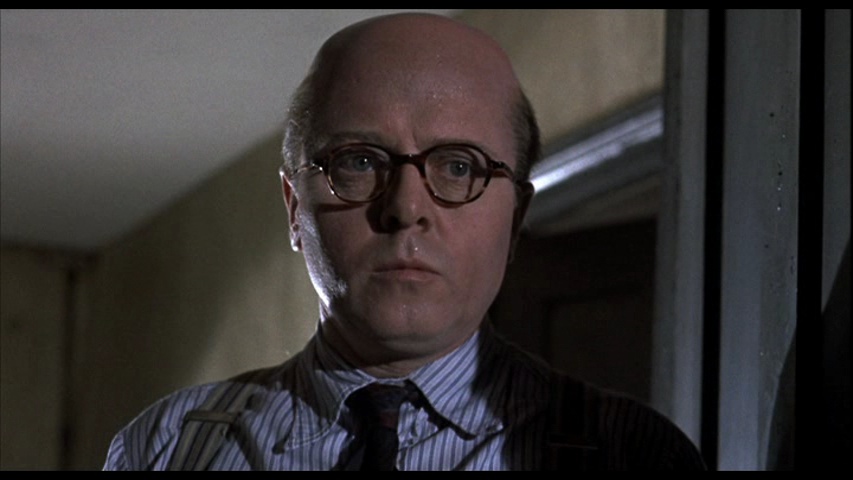
Richard Attenborough brings the killer John Reginald Christie to life in Ten Rillington Place

Director: Richard Fleischer

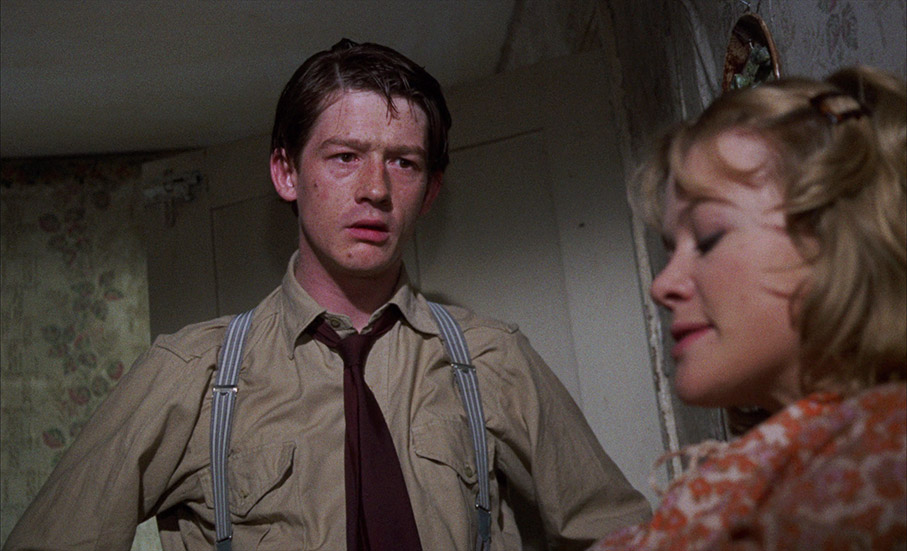
Cast: Richard Attenborough (John Reginald Christie), Judy Geeson (Beryl Evans), John Hurt (Timothy Evans), Pat Heywood (Ethel Christie), Isabel Black (Alice), Robert Hardy (Malcolm Morris), Geoffrey Chater (Christmas Humphreys), André Morell (Judge Lewis), Tenniel Evans (Detective Sergeant)

Films about real-life serial killers have that eternal problem: how far can they go in giving us answers? How much can we ever really understand why a killer does what they do? Is there any way of really putting ourselves in their shoes – and do we really want to? Ten Rillington Place avoids a lot of these issues by making no attempt to give understanding to Christie at all, simply presenting his actions, and by putting the focus on the tragic death of Timothy Evans.

In a miscarriage of justice Timothy Evans (John Hurt) was tried and executed for the murder of his wife Beryl (Judy Geeson) and their baby daughter in 1950. The real murderer? The man who lived downstairs, John Christie (Richard Attenborough), a socially maladjusted, softly spoken man who confessed to killing at least eight people three years later at his trial for murdering his wife. Christie had an uncanny gift for gaining the confidence of desperate women, would offer to perform illegal (and free) medical procedures (such as abortions), during the course of which he would gas them with carbon monoxide, strangle them, possibly carry out acts of necrophilia and then bury them in his garden or in the walls of his house. Evans never suspects until far too late that Christie is the killer and, scared that he will be accused, follows Christie’s advice to the letter – advice that will only make him look all the more guilty.

Richard Fleischer’s chillingly documentary-style film-making goes into forensic detail on the events of the murder of Beryl Evans and her daughter, and the wrongful conviction of Timothy Evans for the crime – largely on the basis of Christie’s testimony at Evans’ trial. Fleischer shoots the film with a deeply disciplined restraint, a calm documentary style that avoids any sensation lingering on the crimes, but still carries great emotional impact.

The film covers the period from Evans moving into the flat above Christie, Christie’s murder of Beryl, Evans panicked flight to Wales on Christie’s advice, his series of confessions to the police, his trial and execution. Book ending the film we get a scene with Christie murdering his neighbour Muriel Eady – a terrifying demonstration of Christie’s murder rituals, as well as an indicator of how easily he could gain the trust of his victims. What it strikingly doesn’t try to give us is any psychological explanation for why Christie did what he did. There are no revealing flashbanks, no cod-psychology. Instead we just see a killer, kill people. We might get an idea of what he gets out of it, but no explanation of what turned him to it. The film is all the more powerful for it. 

Instead the focus is on the victims, and the Evans story is heart-rending, partly because of Fleischer’s calm, sensitive direction, but mainly due to John Hurt’s astonishingly powerful performance. The film, and Hurt, don’t shy away from the qualities that made Evans seem like such a natural fit for a murderer at his trial. He’s a compulsive liar. He brags. He fights and argues with a fury. He’s not really that sympathetic a guy at first. But he’s certainly innocent. Hurt brilliantly demonstrates his vulnerability and simplicity – Evans was illiterate and almost unbelievably trusting, a liar who fell victim to a superb, manipulative liar.

His shock and slowly growing realisation of the nightmare he is in are incredibly moving, as is his powerful grief when he finds his wife killed – and his trusting innocence when he turns (unknowingly) straight to his wife’s killer for advice on what to do. Every action Evans takes in the film makes you want to jump in and urge him to do something – anything – different.  Unsympathetic as he is at the start, by the conclusion you almost can’t bear to watch him incriminate himself with each action. Hurt is sublime, with his weak manner, his confusion, his touching faith that it will all be okay and his feeble mantra of “Christie Done It” – it’s one of the greatest performances in his career.

Judy Geeson gives a marvellously emotional performance as Beryl Evans. Geeson has the perfect look for the part, and she completely embodies a woman who has found herself in a difficult situation, in love with a weak man. You understand completely how she is drawn towards Christie as a confidant, and why she would feel the desperation to abort a child she and Evans could never afford. Her eventual murder is horrifying in its struggle and desperation, the growing horrible realisation in her eyes that she is in mortal danger – this is a particularly strong sequence, difficult to watch for the viewer, as we know what a terrible series of decisions she is making. 

Fleischer’s film was motivated by a very firm anti-death sentence stance. The scene of Evans’ execution is shocking in its brutal suddenness. Shot with a handheld camera and in a single take (in near silence other than Hurt’s deep breathing), the execution is over and done with in less than a minute – from Evans sitting in a room, to the reveal of the executioner’s noose next door and the terrible drop (with a jump cut straight to Christie stretching his back). It’s a brilliantly low-key, but resoundingly powerful scene that sticks with you for all time.

All this way and we’ve not mentioned Richard Attenborough’s transformative performance as Christie. Attenborough presents the softly spoken monster as a bland, empty non-entity, a man who has almost nothing to make him stand out from the crowd. He never makes the part into a great monster or any sort of domineering force of nature. In partnership with Fleischer, he shows Christie was a total blank canvas of a man, “evil” only in the most mundane and uninteresting way. He’s so mild-mannered, you can see why so many women trusted him. Attenborough is chillingly blank throughout, in a deeply unsettling performance of crushing mundanity. He’s brilliant in this film – Attenborough was completely committed to its anti-death penalty stance – and he avoids the temptation of trying to explain or make sense of Christie. 

That’s the trick of the film – Christie is not a special man. He performs dreadful acts, but he is a nothing of a person, devoid of motive (the lack of motive is something those at Evans’ trial use most to argue against Christie’s possible guilt), a totally forgettable man who committed crimes memorable only for their cruelty. Fleischer, and Clive Exton’s careful, thoroughly researched script, is simply superb in presenting Christie with all his filthy blankness, Rillington Place in all its crushed lack of colour, and the murders in un-flashy documentary sadness. Ten Rillington Place is an engrossing true-life story that turns a miscarriage of justice into a Greek tragedy. It’s a much overlooked classic.