Tag: Richard Linklater

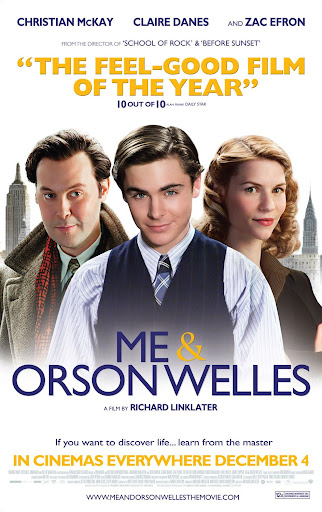
Me and Orson Welles (2008)

Me and Orson Welles (2008)

A star-turn from McKay and a brilliant theatrical reconstruction makes a charming comedy

Director: Richard Linklater

Cast: Zac Efron (Richard Samuels), Claire Danes (Sonja Jones), Christian McKay (Orson Welles), Ben Chaplin (George Coulouris), James Tupper (Joseph Cotton), Eddie Marsan (John Houseman), Leo Bill (Norman Lloyd), Kelly Reilly (Muriel Brassler), Patrick Kennedy (Grover Burgess), Travis Oliver (John Hoyt), Zoe Kazan (Gretta Adler)

In the 1930s Orson Welles was the Great Man of American theatre, a genius blessed with Midas’ skill to turn everything he touched to Gold. He had conquered the stage and his success on radio transmitted his fame into households across America. All this and he was not even thirty. On top of his boundless charisma, creativity and magnetic leadership qualities, he was also vain, selfish, boundlessly ambitious and self-obsessed, seeing other people as little more than extras in his drama. It’s an exploration of the man central to Linklater’s Me and Orson Welles, combined with the film’s wonderfully fond exploration of that magical world behind the curtain in the theatre.

Me and Orson Welles charts Welles’ landmark Broadway production of Julius Caesar: a modern-dress marvel (‘the fascist Caesar’) that reimagined a sharply cut, pacey production set in a world of jackboots, black shirts and Nuremberg-esque beams of light. Welles (Christian McKay) was, of course, front-and-centre as Brutus with his Mercury theatre players (nearly all of whom followed him to Hollywood for Citizen Kane) all around him. Newest to the cast is 17-year-old Richard Samuels (Zac Efron), away from school, dreaming of being an actor and falling in love with older production manager Sonja Jones (Claire Danes). As the production stumbles towards the stage under Welles’ mercurial hand, Richard worships Welles and loves Sonja – but will his hero-worship survive sustained contact with Welles?

Linklater’s film is set in a gorgeous recreation of 1930s Broadway theatre, full of love for the greasepaint, backstage gossip and theatrical tricks that create a world on stage. It also features an astonishingly accurate recreation of this seminal production, staged and lit to perfection, which gets as close as we can to capturing some sense of the astonishing experience the first night audience had watching the sort of Shakespeare production they had never seen before (Dick Pope, harnessing his experience of recreation Gilbert and Sullivan in Topsy-Turvy deserves major credit for his cinematography here, perfectly capturing Welles’ pioneering use of light).

Welles’ flaws are slowly discovered by Richard Samuels – a charming, deceptively light and winning performance by Zac Efron. Samuels is at first bowled over by Welles charisma – and Welles enjoys the ego-trip of taking a star-struck young man under his wing, who he can tutor and mould (who, after all, doesn’t love having a disciple). What Me and Orson Welles interestingly does is to have its young lead slowly work out that Welles may be a genius – but he’s also a fundamentally, principle-free shit who never means what he says, doesn’t think twice about dropping people when they have served their purpose and largely sees conversation as a one-way street where Welles monologues and the other person listens (and certainly never, ever, contradicts – Welles never forgives correction).

But Welles dominates the film, like he dominated life. He’s brilliantly portrayed by Christian McKay in his first major film role. McKay, an unknown, was selected after Linklater was wowed by his one-man show about the Great Man. (Linklater refused calls from the producers to replace him with a more famous actor). McKay dominates the film in what is not only a superb capturing of Welles vocal and physical mannerisms, but also a capturing of his mix of utter charisma, God-given talent and overwhelmingly selfish egotism. McKay roars through every scene with the same force-of-character you imagine Welles had, bowling over everyone around him and shaping the world into what he wishes it to be. Problems of money, timing and people are waved away (or left to be fixed by Eddie Marsan’s put-upon version of John Houseman) and McKay’s Welles uses sheer force of will to turn every event, outcome and single moment into an intended triumph (whether it is or not). Me and Orson Welles brilliantly captures Welles ability to shape his world.

We see the way he overwhelms the personalities of those around him. People like Joseph Cotton (a superbly captured performance by James Tupper) both love him and know that’s he’s a selfish, arrogant git who doesn’t seem to care about anyone but himself. Others, like Ben Chaplin’s tortured George Coulouris, allow themselves to be mothered by Welles, even though they know his motivations are more for the show itself (and the glory that shall be Welles’). Welles is the guy who gives the same heartfelt pep-talk to multiple actors, and writes identical jovial thank-you cards to all on opening night. The guy who uses nicknames for those around him because it’s a way to subtly assert control. Linklater’s film recognises his genius, makes him overwhelmingly attractive in his gung-ho confidence, but – and this is the brilliant thing about McKay’s stunning performance – also exposes his deep character flaws.

It superbly captures his vanity, selfishness and self-occupation. Welles cares little for anyone, assuming he can brow-beat or overwhelm them to fulfil his wishes. That could be a set designer, furious at Welles hogging credit for his work in the programme (Welles promises this will be amended, forgets about it and then later – when it’s too late to do anything about it – bluntly says he has no intention of not taking credit). It could be the radio show he turns up to record, clearly having not read the script, walking in seconds before live broadcast and promptly improvising a superb monologue (based on The Magnificent Ambersons) which at first puzzles, frustrates and then stuns into fawning admiration his fellow actors. What’s clear is that this is the sort of behaviour you can only get away with when you are flying high and all is perfect – Welles after all would self-destruct like few others in the next few years, never again able to yield such charismatic power again.

Me and Orson Welles uses a familiar structure – a love triangle of sorts – to bring this to life. Claire Danes gives a marvellously winning performance as an ambitious and super-confident woman, trying to make her way in a male world, perhaps drawn towards young Richard because he’s more thoughtful than the rest of the men around her. (Me and Orson Welles makes clear we live in a world where the actors of the company feel comfortable taking bets on who can bed Sonja, while she is also accepts that Welles can use the women of the company like a room-service menu). Both she and Richard are perhaps the forerunners of those who will finally be pushed too far by Welles, that would leave him a perpetual outsider.

This is a fun musing on the personality of one of the greatest film-makers of all time, brilliantly set in a luxurious recreation of classic Broadway. Directed with pace and wit by Linklater, with a fine cast giving it their all (and a career-defining turn from McKay), Me and Orson Welles is light, frothy but fascinating work.

Hit Man (2024)

Hit Man (2024)

Inventive, playful, funny, sexy and dark this fabulous dark comedy changes gears with confident ease

Director: Richard Linklater

Cast: Glen Powell (Gary Johnson), Adria Arjona (Madison Figueroa Masters), Austin Amelio (Jasper), Retta (Claudette), Sanjay Rao (Phil), Molly Bernard (Alicia), Evan Holtzman (Ray Masters)

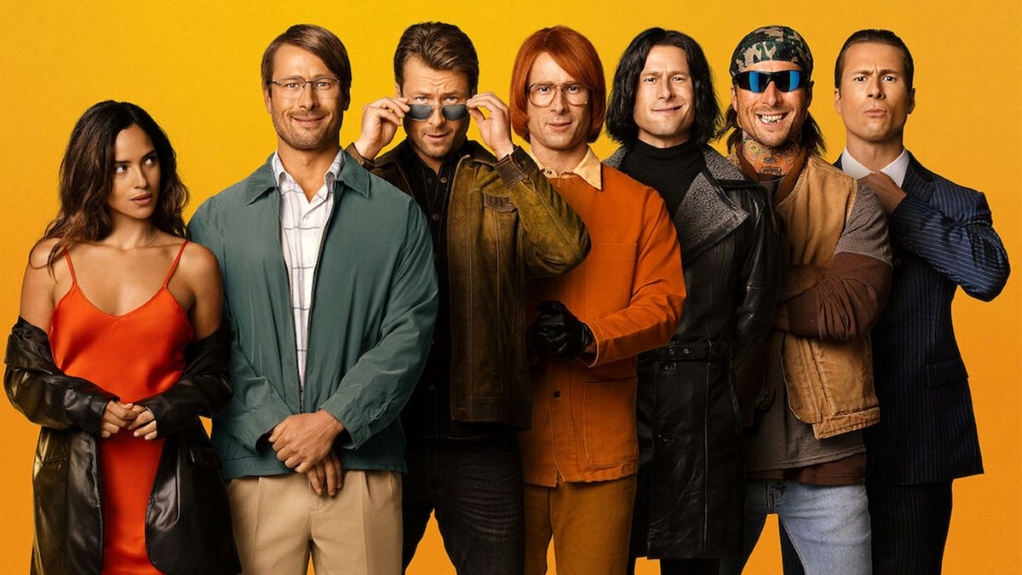
You might not want to hear it, but despite what the movies say there is no such thing as a hit man. In New Orleans, if you are talking to a mysteriously charismatic man who offers to take care of your ‘personal problems’ for a wedge of cash, you are probably confessing your desire to conspire to murder to a police agent. That agent would be mild-mannered psychology professor Gary Johnson (Glen Powell), a bland forgettable person who discovers a hidden talent for charismatic role-play, using his psychological skills to create a persona specific to his target. On a job, Gary becomes attracted to Madison (Adria Arjona), first dissuading her from ‘hiring him’ to kill her husband and then starting a relationship with her ‘in character’ as ‘Ron’. But relationships prove to be as risky for fake hit men as they would be for real ones.

To say where Hit Man, Linklater’s darkly twisted rom-com, heads would be to spoil it (let’s just say I didn’t see where it’s going) and the journey is a fabulous ride. Linklater and Powell collaborated on a (heavily) fictionalised version of this true story and pull together a smart, sexy, witty and at times surprisingly dark film, which make some shrewd points about the extent to which we choose and shape our own identities. Hit Man sees Linklater so confidently shift tone and mood within scenes, that you almost don’t notice how smoothly the film travels from farce to psychological insight to Postman Always Ring Twice sexiness to screwball wit to morally shady action. It’s a terrific ride.

It’s also a superb showcase for Glen Powell, who co-wrote the screenplay with Linklater. This should be a star-making role for Powell, in which he deftly plays mild-mannered and timid and darkly charismatic, often in the same scene. What’s so superb about Powell’s performance is how fluid it is, his two personalities (mild Gary and confident Ron) overlapping and merging into each other from moment-to-moment, or switching in response to sudden changes of situation. Powell and Linklater carry this out with real subtlety from moment to moment but watch the first scene and the last and you immediately notice the difference in our lead from the man we met at first.

Powell is both extremely funny – sequences showing the dizzying array of characters (from red necks to prissy Snape-ish goths) he becomes to lure in his targets are hilariously done – but also wonderfully engaging. Beneath the surface, it’s clear Gary is thrilled by how differently he is perceived when he becomes ‘Ron’, grinning as he overhears his police colleagues confess how exciting and sexy ‘Ron’ is compared to boring bird-watcher Gary. He finds he takes on a whole new confidence – and accompanying sexual prowess – as he throws himself into a dizzyingly sexual fling with Madison, who is also far more excited about the prospect of illicit sex with a killer than she probably would be with sweet rumpy-pumpy with a tenured psychology professor. Powell captures this all wonderfully, throwing himself into a tangled web of deceit with gleeful gusto.

Adria Arjona is similarly excellent as Madison, a woman who becomes harder and harder to read as the film continues. Its early stages really feels like a traditional rom-com – except the ‘meet cute’ features one person trying to hire another for murder, before they charm each other with cat puns – but the relationship shifts as much as the film itself does. Madison seems to come to life, filled with sexually excited recklessness, as she spends time with Ron. But Arjona is able to imply half a dozen things under the surface: is Madison a downtrodden girl enjoying a brush with danger, or is she some sort of manipulative femme fatale?

Linklater uses this to maintain a real high-wire tension in the film, which increasingly becomes impossible to predict. Both Gary and Madison are playing with fire here. If Gary’s dalliance with a former ‘client’ is discovered by his superiors – or if a chance encounter unmasks him to Madison – hell knows what might happen next. And can he keep the pretence that he is capable of ruthless, skilled violence, something much harder to do when your date takes you to a firing range and asks you to teach her? And what is Madison’s game, as it emerges that her break with her boyfriend isn’t as clean as she suggests it is – does she have something in mind that Gary isn’t prepared for?

Hit Man balances this brilliantly with the comedy, in one of Linklater’s most delightfully off-beat films, expertly played by Powell and Arjona. It’s underpinned with a deftly layered thematic message. Throughout we are reminded, by Gary’s psychology lectures to his increasingly engaged students, that people balance their own ids and egos and eventually ‘choose’ where they land. In doing so they create their own personality. It’s what we realise we are watching in this film. Both Gary and Madison decide they like more than a few of the elements of the people they are pretending to be – so why not mix them into their own personality? Suddenly they find themselves effortlessly capable of things they never thought possible – yet still embracing passions their playful alter-egos would find dull beyond belief.

It leads to a surprisingly ending that comes from left-field, but we realise we have been prepared for by Linklater and Powell almost from the film’s opening moments. It makes for a supremely entertaining and rewarding film, brilliantly played by its two leads (and it bears repeating that Powell is sensational here), with excellent support from Austin Amelio as a sleazy cop and Retta and Sanjay Rao as Gary’s more playful police colleagues. Hit Man is a dynamic, funny, sexy and surprising treat.

Boyhood (2014)

Ellar Coltrane grows up before our eyes in Richard Linklater’s 12-years-in-the-making Boyhood

Director: Richard Linklater

Cast: Ellar Coltrane (Mason Evans Jr), Patricia Arquette (Olivia), Ethan Hawke (Mason Evans), Lorelei Linklater (Samantha Evans), Libby Villari (Catherine), Marco Perella (Bill Welbrock), Brad Hawkins (Jim), Zoe Graham (Sheena)

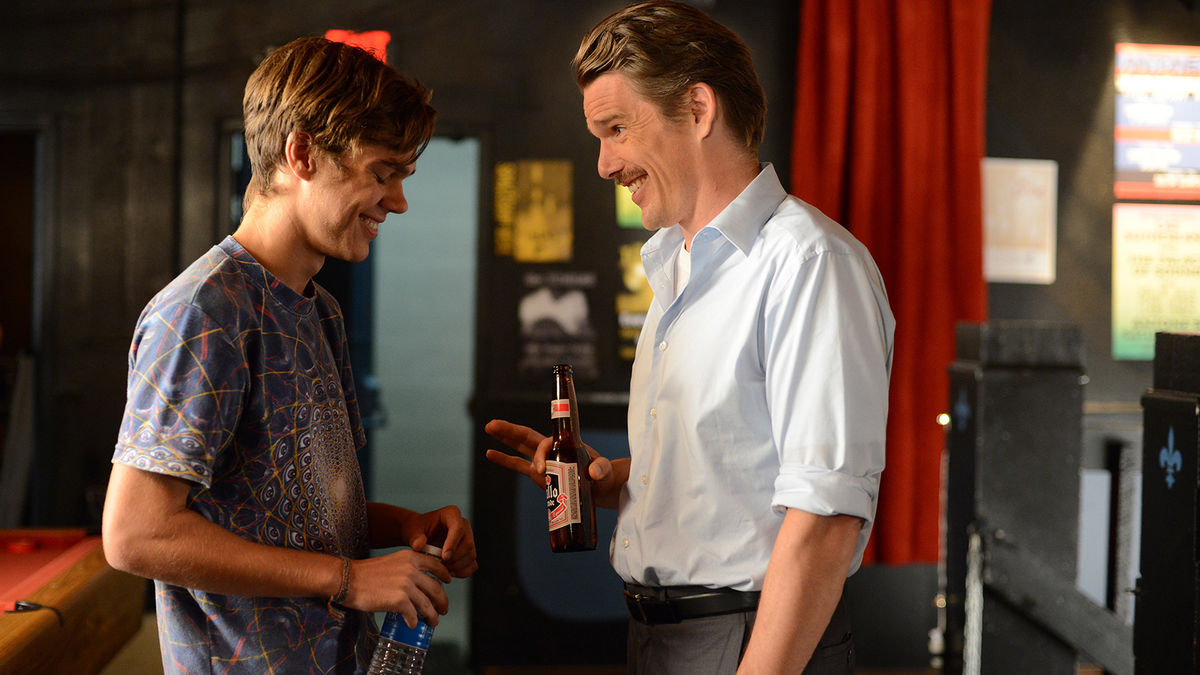
If there is one thing we can all relate to, it’s the trials and tribulations of growing up, that shift from being a child to an adult. It’s the subject of Richard Linklater’s film Boyhood, which follows the growing up of Mason Evans (Ellar Coltrane) from the age of 6 to 18 and his relationship with his divorced parents Olivia (Patricia Arquette) and Mason (Ethan Hawke) and his sister Samantha (Lorelei Linklater). What is however most striking about Linklater’s film is that it was shot over a staggering period of time, 12 years in fact, meaning that Ellar Coltrane and Lorelei Linklater literally grow up on screen before our eyes.

It makes for an almost unrepeatable power over any other film dealing with the same subject, by letting all the actors naturally grow older over the length of the film. Suddenly it becomes not just a film dealing with an idea, but instead a real life dramatisation of the process of ageing, becoming some sort of emotional scrap-book or album, a type of film version of the trick of making a drawing move by quickly flicking the pages of a notebook. It adds an air of depth and reality to the whole film that gives it a universal strength and appeal. It’s an actual slice of real life, it’s unrepeatable and profoundly well done and immersive.

Linklater was given near creative freedom to shoot the film – with the small yearly budget for shooting the film being squirrelled away into various studio accounts. Linklater creates a film with a lack of actual drama that makes it feel even more like a part of life. There are precious few “narrative points” or dramatic tools in the overall film, with the exception maybe of Olivia’s hard drinking second husband Marco (Bill Welbrock). Instead, the issues that Mason (and Samantha) deal with have a universal relevance. These are the sort of events – the sort of conversations – that any child could have growing up. Far from making the film dull, this serves to increase its power.

Linklater based each year’s filming script on the events and feelings that were going on in the life of Ellar Coltrane at the time (although he had a clear idea of the final scene and shot), which perhaps also helped to draw such a series of deeply felt and real performances from Coltrane. The intimacy of the story also brilliantly makes each scene feel engrossingly real, precisely because everything is grounded in reality and nothing in some sort of overarching film narrative.

It’s a film entirely about capturing the rhythms and beats of real life and Linklater’s style allows moments of spontaneity, of naturalness and reality. Nothing in the film ever feels forced. You could argue that it also leads to a film that is almost restrainingly unambitious – it’s about as grounded as you can get, and barely has a structure as such at all beyond time passing. But that would be to miss the point – and the very fact that the film ignores virtually all the clichés of filmmaking narrative and storytelling is something to be praised than to be criticised. 

The film works so well due to the commitment of all involved, not least Arquette and Hawke as the parents. Arquette won nearly every award going (including the Oscar) as the mother, and her performance is a testament to the film’s strengths. It totally eschews the loud moments of acting, the look-at-me Oscar bait that the role could have had, to instead focus on a quiet, sad dignity – but also warmth and loving regard for her children. There is no studied pretence to the role at all, but instead Arquette seems to play instead the moments of joy, tinged with disappointment at moments and chances lost from early motherhood, that you can imagine everyone feeling. It’s a bravely real performance, stuffed with moments of searing, heartfelt emotional truth.

Hawke is just as good as the father, a man who slowly comes to terms with his own responsibilities and adulthood over the course of the film. Starting as still something of a would-be beatnik and playboy, we see him slowly – especially after a second marriage – grow up and accept the role of an adult and a parent, while still clinging to the idea of dispensing fatherly/brotherly wisdom to his son.

If Linklater’s film does have a flaw it’s on this focus of father-son. There really was nothing to stop this from being Childhood rather than Boyhood, but instead it’s the story of the son (and with a particular stress on his bond with his absent father) that is at the heart of the film. It’s perhaps reflecting the angle that Linklater himself bought to the story, but its shame the film doesn’t try and be more even handed by allowing us to get a greater sense of how time and childhood affected both Mason and Samantha, rather than filtering Samantha’s experience through Mason’s perspective. It also means that Mason’s relationship with his mother is downplayed in favour of the bond between father and son, a general preoccupation with male relationships that runs through the film.

It’s a minor flaw I suppose, more of a missed opportunity – and less tasteless than a clumsy sequence where Oliva inadvertently motivates a Mexican immigrant to change his life, something he is profoundly grateful for years later but which she seems uncomfortably unaware of – but then this is a film that gets so much else right. Linklater’s live-action time-lapse film is a work of art that is probably unrepeatable, and is so low-key and normal that it carries a force and relevance few other films can.

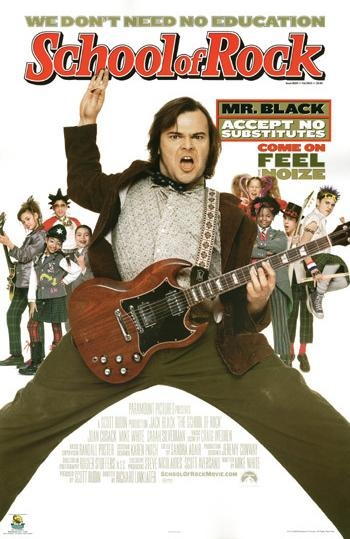
School of Rock (2003)

Jack Black triumphs in high-school comedy School of Rock

Director: Richard Linklater

Cast: Jack Black (Dewey Finn), Joan Cusack (Principle Roz Mullins), Mike White (Ned Schneebly), Sarah Silverman (Patty DiMarco), Miranda Cosgrove (Summer Hathaway), Joey Gados Jnr (Zack Mooneyham), Kevin Clark (Freddy Jones), Rebecca Brown (Katie), Robert Tsai (Lawrence), Maryam Hassan (Tomika), Caitlin Hale (Marta), Brian Falduto (Billy)

The early 2000s saw the rise of a new force in American comedy films: rotund, rock ‘n’ roll, John Belushi-light Jack Black. Following his breakout role as a music-obsessive with purist tastes in High Fidelity, School of Rock saw the legend of Jack Black hit its peak. And it deserves to, as School of Rock is the sort of perfectly-formed treat that achieves everything it sets out to do.

Dewey Finn (Jack Black) is the sort of slacker man-child beloved of indie filmmakers, who has never grown up from his dreams of being a rock star. The only thing really holding him back? Fate and his own selfishness. Dewey’s expelled from his own band, due to his penchant for extended guitar solos and distracting stage antics, and his old bandmate-turned-respectable-supply-teacher, Ned Schneebly (Mike White, also the film’s writer) is pressured into finally asking Dewey for his share of the rent by Ned’s domineering girlfriend Patty (Sarah Silverman). Desperate for money, Dewey impersonates Ned and takes a role as a supply teacher for a group of 12-year-olds at a prep school. At first Dewey just wants to leave the kids to their own devices and pick up his cheque – but when he hears his new students in their music classes, he suddenly has a brainwave: they could be his new band, and help him win The Battle of the Bands competition. 

School of Rock is an immensely heart-warming film that manages to never sell out to become sentimental or depend on its characters learning “lessons” that improve them. Sure lessons are learned, and the film is very sweet, but it manages to wear this all with a cool lightness. In fact the whole film becomes a rather touching paen to the transformative power of music, and the way it gives people confidence and a voice. 

Linklater directs with a breezy cool, drawing some fantastic performances from the whole cast (I can’t give enough praise to a director who gets such relaxed, natural and funny performances from children as Linklater does here) and totally embracing the clichés of the “inspirational teacher” genre, with a comedic bent. The kids are the expected combination – the precocious ambitious one, the shy ones who hide skill, the brash wannabe bully who finds the joy of being part of the group – but they are all portrayed with such freshness and energy that the clichés hum with joy.

Linklater’s real stroke of genius is letting Jack Black rip in the lead role. The part is so perfectly tailored to Black that it feels like almost an extension of his own personality. Black is a force of nature in the role, a perfect combination of showboating and carefully thought out character work – and he works brilliantly with the kids. He’s hilarious as well, first as a wannabe rock star layabout, later as a band leader for the kids who discovers in himself a work ethic and ability to inspire. 

The character works because, deep down, under the selfishness and laziness, Dewey is basically a pretty decent guy. He cares about people’s happiness and he has a romantic view of rock and roll as a source of self-expression and celebration of life. (Although fortunately for the film, he’s no fan of the whole drugs side of many of the musicians he worships – having no time for the “poseurs” who attempt to impress the kids with the smoking and gambling at one Battle of the Bands audition.) And he’s so passionate about this that he can actually turn himself, if not into a teacher, at least into the sort of inspiring mentor who can bring his students out of their shells.

And he does this without really changing fundamentally who he is. Sure he’s touched by the kids, just as he’s touched them (to slightly misquote the film’s cheeky paedophile misunderstanding gag, when Dewey is busted by his charges’ parents!), but the warmth under the bluster is there all the time. And Dewey doesn’t suddenly turn into a high achiever or perfect guy – he just learns to channel his enthusiasm into encouraging musical skills in others (and there is something really sweet in his genuine, warm enthusiasm for talent from the very start). The film even allows the headmistress of the school (very well played by Joan Cusack as an under-pressure uptight woman yearning to cut lose a little) to be a spiritual ally and well-meaning obstacle rather than an opponent.

It’s this good natured warmth that runs through the whole film, and which at the end finds every character contented and united. (Well nearly every character – the film can’t shake its love of wistful man-childishness sufficiently to resist turning Ned’s girlfriend into a humourless, nagging shrew, in the film’s only real misstep). Plus the film rocks really well, and seeing the band together and perform is both fun and really sweet. No one puts a foot wrong here, and a lot of its success is due to Linklater’s ease and Black’s dynamic, verging just the right side of cartooney, comic tour-de-force at the centre.