Tag: Ridley Scott

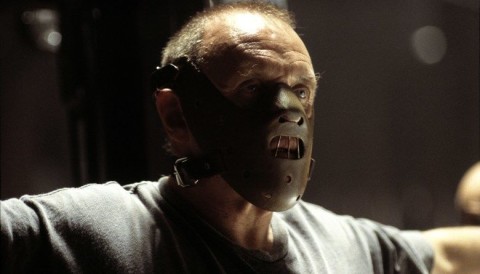
Hannibal (2001)

Anthony Hopkins rides again in the terrible Hannibal

Director: Ridley Scott

Cast: Anthony Hopkins (Hannibal Lecter), Julianne Moore (Clarice Starling), Gary Oldman (Mason Verger), Ray Liotta (Paul Krendler), Frankie R Faison (Barney Matthews), Giancarlo Giannini (Chief Inspector Rinaldo Pazzi), Francesca Neri (Allegra Pazzi), Zeljko Ivanek (Dr Cordell Doemling)

For Dino De Laurentis, The Silence of the Lambs was always the one that got away. Owning the movie rights to the Lecter character, de Laurentis allowed Orion, producers of The Silence of the Lambs, to use the character name for free. De Laurentis was desperate to make his own Hannibal Lecter film, to cash in on Lambs success – so much so he would have put any old crap on the screen so long as it was connected to Lecter. Perhaps Thomas Harris wanted to test that out with his novel Hannibal, a blatantly for-the-money piece of pulp.

Hannibal is everything that Silence of the Lambs is not. Where Jonathan Demme’s film was subtle, insidious and unsettling this is brash, gory and garish. Harris’ serial killer works always circled around the possibility of tipping into a sort of Poesque-Gothic netherworld. Hannibal dives in head first, reinventing its central character as a sort of Robin Hood of murderous psychopaths and introducing everything from vengeful faceless paedophiles, to Dantesque murders and man-eating hogs. The plot, such as it is, sees Hannibal Lecter (Anthony Hopkins) living under an assumed identity in Florence. Back in America he is being hunted not only by Clarice Starling (Julianne Moore) but also Mason Verger (Gary Oldman, unbilled under a host of make-up) who wants revenge after being hideously disfigured by Lecter. Will Lecter turn the tables on these adversaries?

Both Jonathan Demme and Jodie Foster were offered more money than they knew what to do with for this film. Both turned it down, citing the book – and its grotesque and bizarre outcome that see Lecter and Starling becoming lover-killers together – as the major factor. Foster in particular was out-spoken about how she saw the books extremity as a betrayal of the work she did with the character in the first film. 

No such concern for Hopkins though, who took a bumper pay cheque to return. Hopkins always said Lecter was an easy role to play – basically a creepy voice and a lot of actorly tricks – and it certainly makes it easy for Hopkins to coast through the part here. Really Hopkins treats the role no differently from the countless chat shows where he had been asked to say “Hello Claressse”, the only real difference being he was paid about $20million to do it here. This is Hopkins on unthinking autopilot, in a film that tries to play up the black comedy but instead becomes a ludicrous, offensive farce, drowning in blood.

Ridley Scott directs and his painterly visuals and mastery of the epic shot strips comes at the cost of the very things that made the original film so involving and tense. The Hitchcockian suspense and intimacy of Demme’s direction is jettisoned. Instead everything is a dialled up to a brightly coloured 11. The entire film mistakes gore, blood and overblown, cartoonish villainy for horror. Watching people being mauled by wild hogs, or some more unfortunate being lobotomised and made to eat his own brain isn’t scary it’s more gross. And because nothing feels remotely real in this film, it doesn’t even carry much impact.

The entire film is based around the fact that it’s Hannibal we’re paying to see – especially Hopkins reprising the role – so by Jiminiy we better work a little bit to make this lethal killer from Lambs into something a bit closer to an anti-hero. So instead, Lecter is rejigged as a sort of charming, amoral cannibal. The sort of guy who prefers to eat the rude and unmannered, who loves art and is only really dangerous when provoked. The film carefully gives us reasons to dislike everyone Lecter kills, and slowly falls in love with his sinister magnetism. 

This reduces Julianne Moore – in a truly thankless task – trying to both forge some sort of identity for Clarice from the story that is both unique and a continuation of what Jodie Foster did so well in the first film. It’s not entirely her fault that she fails. This is a film that depowers Clarice, that goes as far as it dares to turn her into a moth around Hannibal’s flame. The film backs away from the romance of the book (even if the film hints at it enough), replacing the eventual ending with something almost as stupid but at least doesn’t turn Clarice into a brain guzzling serial killer.

The plot flies around two arcs, one set around Hannibal in Florence the other on his return to America. Both carry no resemblance to the real world. The first does at a least have a decent performance of nervy greed from Giancarlo Giannini as the Italian detective who (wrongly) feels he can go toe-to-toe with Hannibal. The second revolves around Gary Oldman’s (unbilled – due to an argument over billing or a sly joke, depending on who you talk to) repulsive Mason Verger, a villain so revoltingly gothic you can’t believe in him for a second.

The film looks good and has a decent score, but it’s basically a claret splashed mess that can’t decide whether it’s a horror or some sort of black comedy. It settles for being nothing at all. A truly terrible movie, where everyone is there for the money and I imagine no one thought about the movie for a second once their work on it was done.
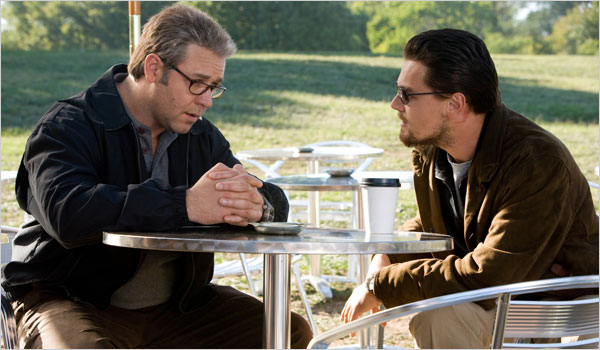
Body of Lies (2008)

Russell Crowe and Leonardo DiCaprio fail to master the Middle East in Ridley Scott’s spy thriller Body of Lies

Director: Ridley Scott

Cast: Leonardo DiCaprio (Roger Ferris), Russell Crowe (Ed Hoffman), Mark Strong (Hani Salaam), Golshifteh Farahani (Aisha), Oscar Isaac (Bassam), Ali Suliman (Omar Sadiki), Alon Abutbul (Al-Saleem), Vince Colosimo (Skip), Simon McBurney (Garland), Lubna Azabal (Cala)

Ridley Scott is a bit of a curate’s egg as a director. You can always expect a film with a certain visual flair, as well as a story that attempts to tackle big themes and engaging topics. However, it doesn’t always produce an end result that really grips or feels like something that particularly stands out from the crowd. That’s what you end up with Body of Lies, a film that constantly feels like it is on the cusp of saying something important or interesting about the relationship between East and West, but constantly falls back on the sort of spy movie tropes it initially feels like it wants to debunk.

In the Middle East, Roger Ferris (Leonardo DiCaprio) is a dedicated CIA operative, with an intricate knowledge of the cultures and issues of the region. He constantly finds himself frustrated and undermined by his boss Ed Hoffman (Russell Crowe), based in Langley, who is constantly willing to sacrifice long-term gains for short-term political pay-offs. Assigned to Jordan, Ferris begins an investigation into a terrorist cell, working closely with head of Jordanian security Hani Salaam (Mark Strong) – but Hoffman’s intercessions increasingly cause tension.

Scott’s film is stylish and well assembled, with a great sense of pace and place. The contrasts between DiCaprio on the ground (in the dirt, facing dangers and tackling everything from terrorists to rabid dogs) and Crowe back in the States (rarely if ever seen without a hands-free phone set dangling from his ear, viewing everything at a distance with no understanding of the intricacies) is well drawn. The sense of complete cultural misunderstanding and lack of connection between East and West is established early, and attempts to cross it generally lead to disaster. The patience and expertise of the Jordanian security forces is contrasted constantly with the more slap-dash, hasty efforts of the CIA to meet the same goals. It’s all set for something quite interesting.

But then the film somehow doesn’t quite come together. Its episodic structure increasingly stretches out as action moves back and forth from Jordan to Langley and back again. A particularly wild scheme by Ferris (which, to the viewer not the film, suggests he is as incompetent and reckless as Hoffman) turns the film towards the sort of kidnap/torture/nick-of-time-rescue plotline that wouldn’t look out of place in 24 or James Bond. Basically, the plot turns on the film transitioning from something with a genuine political statement to make into the sort of disposal rent-a-spy-thriller that you forget pretty quickly. 

DiCaprio gets a lot of “big” moments to juggle with, as well as a rather forced romance with a Jordanian nurse (something that he and Golshifteh Farahani play very well, but seems to have wandered in from an even more conventional film) but the film works hard to paint him as the “hero” who knows better than his superiors, despite the film chronicling a string of mistakes. Crowe enjoys himself as self-important windbag behind a computer, as uncaring as the institutions he represents.

The real star of the show however is Mark Strong, excellent as the suave head of Jordanian intelligence, seemingly the only character who has any understanding about what is going on. With a cool sharpness, slightly playful politeness and a slight chill of threat, Strong is the film’s most interesting character. There is a striking point made here that the most effective person in the film is a Jordanian spy chief with a mixed reputation – but the film largely shirks the possibility of really using this to demonstrate how out-of-their-depth the CIA agents are, as if worried that flagging up their manifest incompetence at every turn would sell badly Stateside.

It’s part of the film’s general lack of soul behind the skill of its construction. I know Scott is deeply interested in these themes of East vs West and the culture clashes that develop from it, but it just doesn’t come out here at all. There was a film to be made here about how the war on terror has thrown the CIA and the West into a setting they don’t understand, playing by rules they haven’t been briefed on. But all too often the film instead settles for telling us the same-old-same-old, padding out its runtime with spy story clichés and thriller plotting. Scott himself even uses visual tricks – surveillance drone shots and 24 style action – which suggest that somewhere along the line his heart wasn’t really in it. Body of Lies could have been a really interesting thriller about the world today. Instead it’s just another spy thriller about the war on terror.

All the Money in the World (2017)

Christopher Plummer dominates (at short notice!) Ridley Scott’s pedestrian true-life kidnap thriller All the Money in the World

Director: Ridley Scott

Cast: Michelle Williams (Gail Harris), Christopher Plummer (J. Paul Getty), Mark Wahlberg (Fletcher Chace), Romain Duris (Cinquanta), Timothy Hutton (Oswald Hinge), Charlie Plummer (John Paul Getty III), Andrew Buchan (John Paul Getty II), Marco Leonardi (Mammoliti)

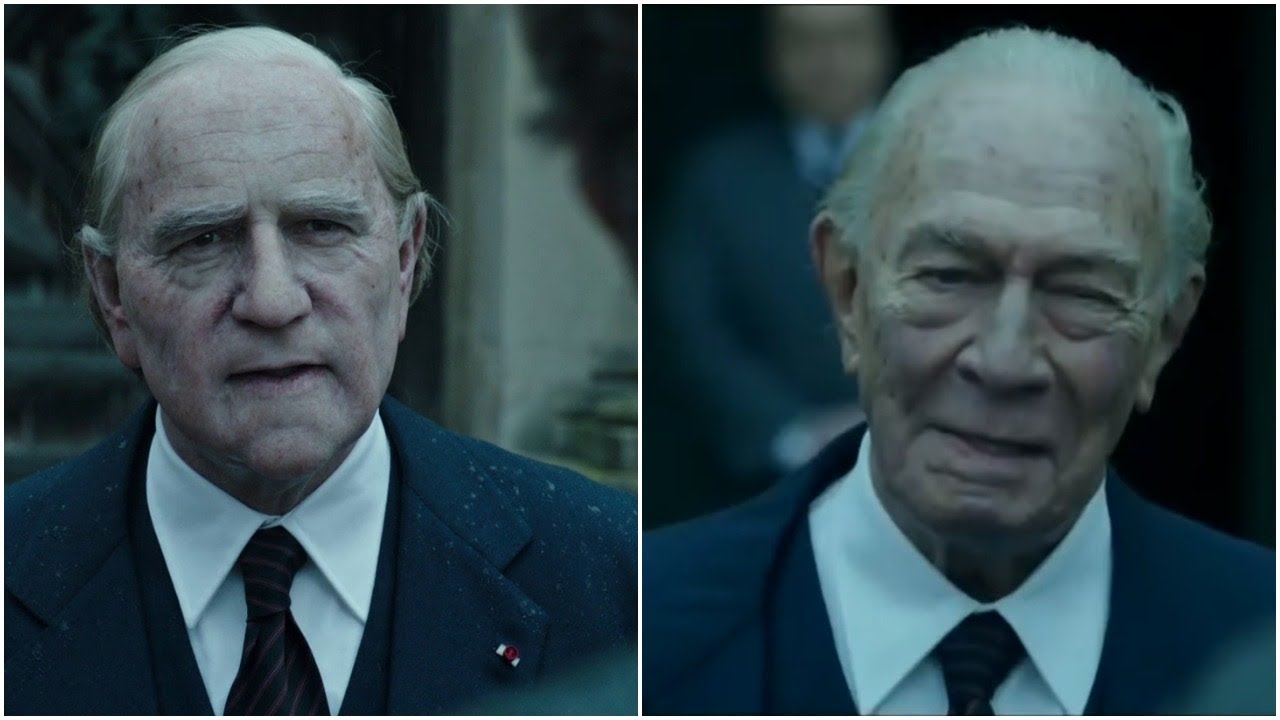
In 2017 something quite extraordinary happened. A string of unpleasant allegations emerged about Kevin Spacey, turning him overnight from the toast of Hollywood into a pariah. Not good news for Ridley Scott’s Getty kidnap drama All the Money in the World, which was only a month away from opening – and had Kevin Spacey in a central, Oscar-bait role as J. Paul Getty. The film looked like box office poison – until Scott decided to reshoot large chunks of the film four weeks before opening, with Christopher Plummer taking over the role of Getty. And of course they would still make the release date.

John Paul Getty (Christopher Plummer) is an oil tycoon, and the richest man in history, worth at least a billion dollars (the film opens with a dry history lesson showing how Getty gained a monopoly for selling Saudi oil for the Saudis, thus becoming richer then Croesus and Midas rolled into one). Scott’s drama follows the kidnapping of Getty’s grandson John Paul Getty III (Charlie Plummer – no relation) in Rome in 1973. The kidnappers want $17 million dollars. The famously frugal Getty’s response is that he’s got 13 other grandchildren and won’t run the risk of seeing them all being kidnapped for cash, so he won’t pay a dime. This leaves the kidnapped boy’s mother Gail Harris (Michelle Williams) in despair – after a divorce from Getty’s son, she agreed to not take a penny and can’t pay the ransom. Getty does send his fixer Fletcher Chace (Mark Wahlberg) to work with the police and negotiate – but basically Gail hasn’t a hope unless Getty relents.

Spot the difference: Spacey (left) heavily made up and Plummer

It’s astonishing Scott managed to completely recast, re-shoot and re-edit the second most important part in the film at such short notice – and apparently in eight days. It’s also brilliant that this gives us another vintage Christopher Plummer performance. With cold firmness, gimlet-eyed focus, and a dark twinkly charm which switches in a moment to disengaged indifference, Plummer is so perfectly cast as Getty you wonder why they didn’t get him in the first place. Plummer set a record as the oldest Academy Award nominee for his work on this film – and surely also set some sort of record in being nominated for an Oscar less than two months after he signed on to make the film!

We should be glad that Plummer got this great role – particularly as, to be honest, his performance and the story of how it came about is literally the only reason to remember this film. If it lasts at all it will solely be because of such chutzpah at defying the odds – as a film, this is a dud almost from start to finish.

Long, turgid, dull, lacking in any emotional or human interest, no sense of drama – rarely has a kidnap victim been so boring, or his fate carried so little tension – shot with a lazy blue filter that seems to say “it’s the 1970s, everything was a bit faded”, this turns a compelling story into a viewing chore. How can this happen? How can such an interesting story be made so bloody flat?

A film like this should either be a pressure-cooker, against-the-clock drama or a Faustian journey into the darkness of a man (Getty) who sold his soul for riches, or a sort of dark comedy wherein a billionaire refuses to pay out comparative peanuts. What it becomes is none of those things. It relishes Getty’s greed, but never really gets under the skin of what makes him like this. It gets bogged down in the mechanics of kidnapping but never makes them interesting. It enjoys (and most of this is down to Plummer) Getty’s indifference and selfishness, but doesn’t have the guts to go for black comedy. It’s a nothing film.

Part of it is the film’s odd opening structure. Much of the first 30 minutes is a confusing series of flashbacks and flashforwards, establishing multiple events – Getty’s fortune rising from the 1930s, the story of young Getty’s parents’ divorce in the 60s, the kidnapping of young Getty in 1973 – all are cut together with such a lack of regard for narrative drive that it’s both difficult to follow what is happening and when, and also hard to engage with anyone involved in the story. From there, when we reach a conventional timeline, events feel like they are being ticked off rather than being fashioned into a compelling and tense drama. It’s all just flat and lifeless.

It should be a film where Michelle Williams’ Gail comes to the fore, and we feel her pain, fear and frustration at being unable to save her son. Instead she is competing with so many alternative viewpoints that her story gets truncated down into the sort of performance we admire as being basically good, but develop no real empathy for. It’s a real shame, but she’s a victim of this being such a dry and lifeless film. 

It’s not helped that she also has to share screen time with Wahlberg. The two actors have virtually no chemistry whatsoever, and Wahlberg is way out of his depth here, totally unable to bring anything to the part other than his earthy chippiness. Chase is a dull character who ends up feeling increasingly irrelevant – eventually an invented scene showing him threatening Getty to stump up the cash is thrown in, you feel to give Wahlberg a “moment” rather than because it grows out of a sense that Chase has grown closer to Gail and her family.

But then that’s the whole film – it feels perfunctory and routine where it should be compelling. Rather than building a terrifying momentum as the kidnapping becomes more and dangerous for the young Getty, the tension seems to leak out of the edges. By the end you barely care about anyone involved in it. It really says something that, with only a week’s notice or so, Plummer blows most of the rest of the cast out of the water with his performance. He and his casting are the only reason to ever remember this turgid disappointment.

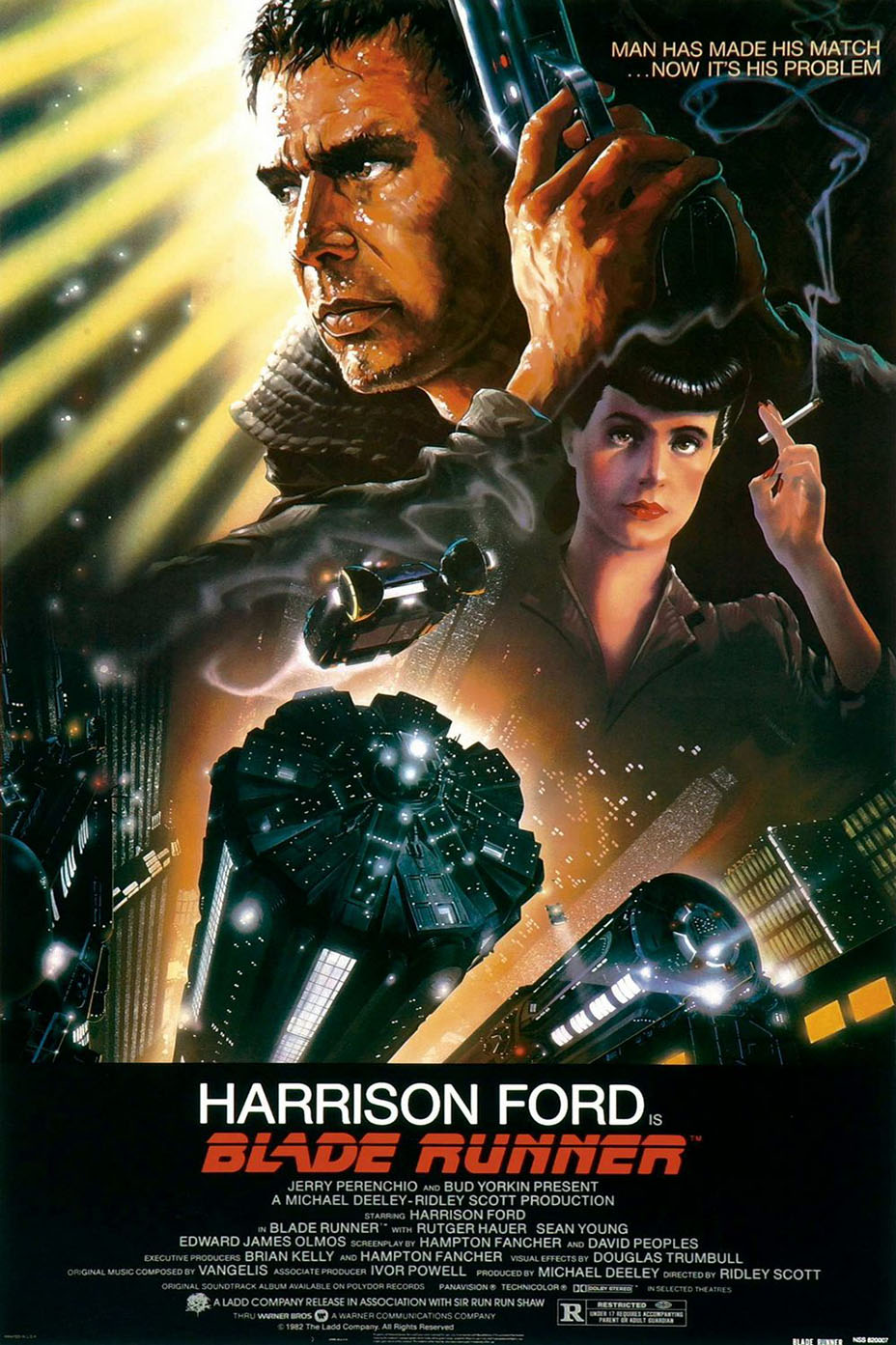
Blade Runner (1982)


Harrison Ford hangs on for dear life in Blade Runner

Director: Ridley Scott

Cast: Harrison Ford (Rick Deckard), Rutger Hauer (Roy Batty), Sean Young (Rachael), Edward James Olmos (Gaff), M. Emmet Walsh (Harry Bryant), Daryl Hannah (Pris Stratton), William Sanderson (JF Sebastian), Brion James (Leon Kowalski), Joe Turkel (Dr Eldon Tyrell), Joanna Cassidy (Zhora Salome)

Everyone knows Blade Runner surely? And everyone has a viewpoint on its central mysteries. Why for a film largely ignored on release? Because as well as being tight and engaging, this is a rich thematic film, crammed with mystery and enigma. And there are few things more engaging than a film that succeeds in being as open to interpretation as possible.

In 2019 a dystopian, polluted Los Angeles is a launch pad for the wealthy to head out into the new colonies in the stars. Off-world, the unpleasant tasks are carried out by artificial humans known as replicants. Replicants are banned from returning to Earth – but a group of five led by soldier Roy Batty (Rutger Hauer) have come to Earth looking to extend their pre-programmed limited lifespans (no more than five years). On Earth, Rick Deckard (Harrison Ford) is reinstated as a Blade Runner, an agent whose job is to ‘retire’ (i.e. kill) replicants on Earth. Deckard is reluctant, having an increasing distaste for his work, but begins to hunt and eliminate the replicants.

Blade Runner may be one of the most influential science fiction films ever made. Its look and style influenced virtually every other dystopian future you’ve seen in any other film since. Tall, run-down buildings. Overbearing corporate advertising. Flashing neon lights. Terrible weather. Everything dark all the time. Poverty and degeneracy on every corner. You’ve seen it in every dystopian future since. Visually, the film is a landmark, a testament to Ridley Scott’s graphic artistry.

But that wouldn’t be enough for Blade Runner to last the course. When released it was perhaps too elliptical and hard to categorise – equal parts dystopian thriller, noir detective story, sci-fi morality tale, dark romance – for audiences to really understand. Certainly the studio didn’t. After disastrous test screenings, it was re-cut. So began a fable of slice and dice that made Blade Runner perhaps second only to Brazil in the annals of re-versioned films.

The release included an overtly “happy ending” (bizarre images of our heroes driving into a blissful countryside, totally at odds with the rest of the film) and a disengaged voiceover from Harrison Ford that eradicated all the film’s subtlety. This was the only version for 10 years until a “Director’s cut” was released. This removed these elements, retooled scenes and introduced the famous “unicorn dream” sequence (of which more later). Fifteen years after that, Scott finally found the time to work on a “Final cut” which presented the film as Scott had intended it – with all its mysteries and questions intact. Has there been any other film with so many different “official” versions?

Anyway, was it worth the struggle? Certainly. While you could argue it is predominantly a triumph of style, Scott laces the film with a sense of mystery and profundity that makes it a rich and rewarding viewing experience. It’s a trim detective thriller that also questions the nature of humanity. It is a perfectly formed elliptical mystery, an archetypal cult film that engrosses the viewers to such an extent that 30 years later there is still a healthy debate about what the film means.

Humanity is =the key issue. The human characters are functional, cold, distant and unengaging. The hunt for the replicants (who are basically slaves) is brutally and unremorsefully executed. The replicants have been designed to learn and grow but cruelly had their lives capped to stop them taking advantage of this. Their world is polluted, tawdry, soulless and lost.

Meanwhile, the replicants exhibit far more (whisper it) humanity than the aloof human characters, ]despite the fact we are repeatedly reminded they cannot feel empathy. Clearly this is not completely true. And, the film argues, if an artificial human can display loyalty, fear, love, anger and pain, what actually is the difference between that and a “real” person. If a replicant can only be identified after dozens of questions in a test, can they really be that different from a human being?

Questions about this coalesce around Deckard. If the film has remained such a part of cultural discussions, it’s partly because of the fun of theorising about his true nature. Is he a replicant? Scott’s insertion of Deckard’s unicorn dream (implying the origami unicorn left by Gaff at the film’s end shows Gaff knows Deckard’s dream, meaning the dream is an implant in an artificial mind) very much suggests so. There is a case to be made either way, both of which work.

Deckard’s ruthless replicant hunt is deliberately juxtaposed with their own warm feelings. Deckard grows in humanity and reluctance as the film progresses – is this him becoming more human, or is it is humanity emerging? His coldness and reserved hostility contrast with the vibrancy of Batty, Pris and the replicants. In many ways, he fits in as the quintessential human in this world – a vague discomfort with what he is doing, but no real hesitation about continuing. Thematically, it makes more sense if Deckard is human – that he represents dehumanisation (and gradually realising it) while the replicants become more human.

However, clues are sprinkled throughout that Deckard is not what he appears. His distance from other characters. The treatment he receives from his co-workers. The photographs that fill his apartment (replicants enjoy photos as it gives them a sense of a past). His bond with Rachael. His relentlessness – and the fact that he is clearly considered expendable by the police. Then there is the rich irony: the best way of hunting down replicants is to create a hunter replicant. Either way, it’s a debate and conversation that sustains the film – and allows multiple interpretations of every scene.

It’s a debate that feeds into the main theme of the film: humanity, free will and our God complex. Batty, the dying replicant searching for new life, confronts his maker – a distant, arrogant man with no interest in his creation. And kills him. But Batty feels more human than any other character. He shows more affection, frustration, anger and grief than anyone else. His last words (the famous “tears in rain” speech) had such cultural impact because it has such poetic joy and depth to it. They are lines enthused with a desire to live, a romantic vitality. It’s the most poetic moment in the film and it comes from someone who isn’t “real”. What more sign do we need that the replicants are human? If we can create poetry in a machine, does it stop being a machine?

Empathy is the quality the replicants are judged on – but as we see replicants dispatched with little sense of regret, and then witness Batty and Leon’s grief for their fallen comrades, or Pris’ ease with man-child Sebastian, the lack of empathy from humans is all the more clear. Deckard is a fascinating character as he falls between two stools – either a human who has buried empathy, or a replicant discovering empathy. Strange and disjointed as the relationship between Deckard and Rachel is (and there is an uncomfortable moment where Deckard gets too physically forceful) it fits into this – are these two artificial people discovering the ability to bond? Or is it an emotionally stunted human finding himself drawn towards someone who feels more real than the other humans?

What makes the film work is that it doesn’t hammer home, these issues. It allows us to make our own minds up. It frames the action within a noirish detective thriller, laced with mood and awesome visuals. It’s sharply and sparingly written, with real intelligence. For all its discussions about humanity, it does feel at times a cold film – but it’s so rich in suggestion and implication that it doesn’t really matter. Yes you could argue the implication and playful suggestion imply more depth than actually exists, – but the film gets away with it, because it works so well.

Rutger Hauer gives easily the finest performance as Batty (he allegedly wrote the famous speech on the day). Batty is the most vibrant and dominant force in the film, who goes on the most engaging emotional arc. For me the dark secret of the film is Harrison Ford is slightly miscast– he’s aiming for moody, Bogartish disillusionment, but he comes across more disengaged (he’s strikingly better in Blade Runner 2049). I think Ford struggled with the character – it’s a role better suited to a John Hurt or James Caan, rather than Ford’s more conventional (if world-weary) magnetism – he’s not a natural fit for a bitter cynic. Olmos, Cassidy, Walsh, Sanderson and James give strong support.

Blade Runner is a visual triumph and a rich experience. Its story is compelling, but the real richness is the thematic layers under its skin. Scott created a film open to interpretation, and that’s what really grabbed the imagination. It marries mystery with curiosity and avoids pretension, becoming intriguing and engrossing. Scott has rarely made a film with such intense ideas and poignant confusion before. You could argue the final cut leans too far one way in the central mystery, but there is more than enough eerie richness under that – helped by Vangelis’ unsettlingly grand score – to keep people viewing and talking about it for another 30 years.

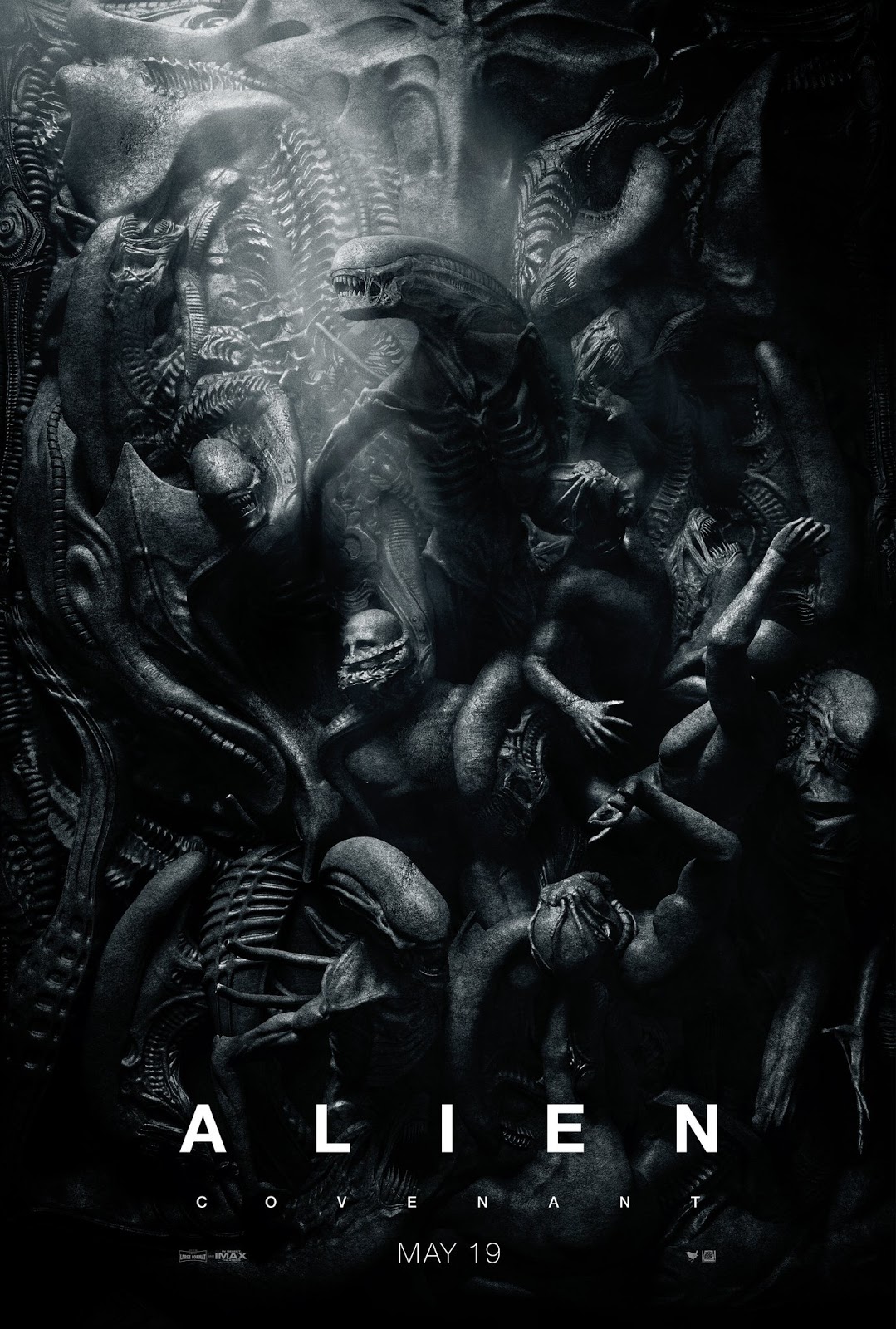
Alien: Covenant (2017)


The xenomorph rises again, in prequel Alien: Covenant

Director: Ridley Scott

Cast: Michael Fassbender (David/Walter), Katherine Waterston (Daniels), Billy Crudup (Oram), Danny McBride (Tennessee), Demián Bichir (Lope), Carmen Ejogo (Karine), Amy Seimetz (Faris), Callie Hernandez (Upworth), Guy Pearce (Peter Weyland), Noomi Rapace (Elizabeth Shaw), James Franco (Jacob)

The Alien franchise is a series I’ve always had a lot of time for. Perhaps I just enjoy the carnage and blood letting of these movies, but at their best there is a sinister poetry behind the pure destructiveness of this rampaging beast, with a perfect mix of haunting nihilism and stirring action. In 2012, Scott returned to the franchise to explore its roots. His prequel film, Prometheus, had a mixed reception (and it’s a film I’ve found weaker with repeated viewings) but it still had that mixture of nihilistic poetry and gore. So where does Alien: Covenant fall?

Set 10 years after Prometheus, a solar flare hits the colony ship Covenant. To repair the damage, the ship’s android Walter (Michael Fassbender) wakens the crew, although the captain (an unbilled James Franco) is killed by a malfunction. Command passes to Oram (Billy Crudup), although many of the crew look to the captain’s wife Daniels (Katherine Waterston) as their moral leader. After the damage is repaired, the crew investigate a signal from an abandoned world, where they find the marooned android David (Fassbender again) and a planet with a terrible virus, that infects its hosts to create brutal Xenomorph monsters. But is all as it seems?

Alien: Covenant is a mixed bag. It has a haunting and unsettling tone and gives us plenty of aliens in all their various forms. Many of the sequences of alien attacks are exciting. It’s trying to build a mythology around the creation of the aliens, and tie that in with a thematic exploration of our needs to create and destroy. It wants to explore the potential dangers of artificial life, and how it could judge us and find us wanting. At the same time, it’s a flawed and rather predictable film, which never really surprises you. It might give you some things to think about – but it won’t provoke your interest enough to make you really think about them for long after the credits roll.

Its main weakness is in its large cast. Most of the characters are referred to throughout by non-descript surnames, hammering home their lack of individuality. The film is so resolutely invested in the establishment of its mythology, it has no time to build characters or a story around the crew. They are little more than ciphers, plot tools to deliver specific points rather than for us to relate to them, or feel concern for their fate. Even Waterston’s Daniels, nominally our surrogate character, feels distanced and undefined. Like the rest of the cast, she suppresses the loss of a loved one (there are at least three bereaved partners in this film) with a suddenness that speaks less of her professionalism and more of the film’s shark-like need to always moving forward.

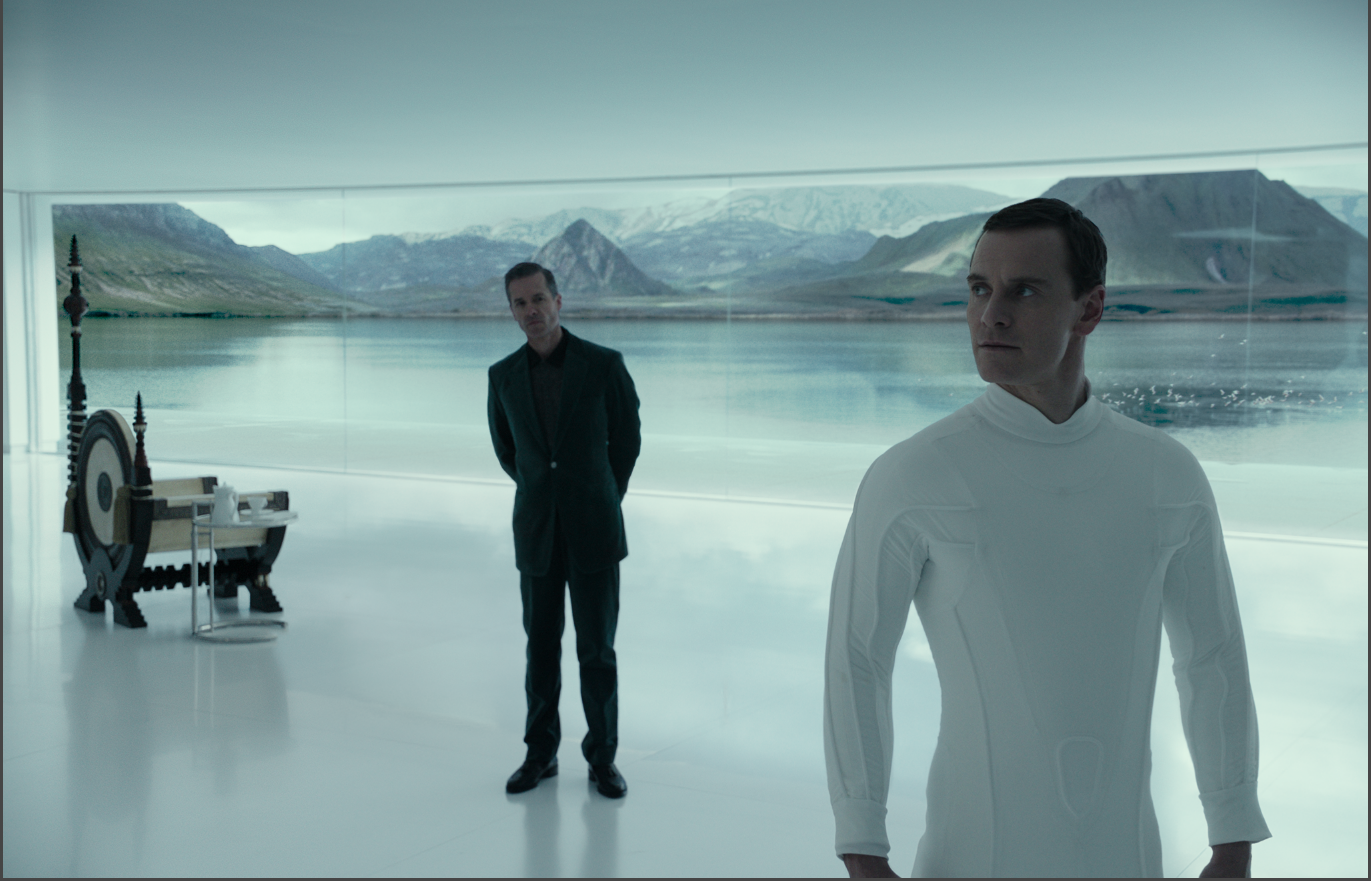
The one exception to the blandness is Fassbender’s dual role as androids David and Walter. It’s an actor’s bread and butter to play different roles, so we shouldn’t be surprised that a great actor like Fassbender executes it here with such skill. But he clearly distinguishes both the loyal, straightforward Walter and the darkly oblique David, and manages to craft the two most impressive performances in the film. This also gives Fassbender several chances to act oddly with himself, including a scene where David (rather suggestively) teaches Walter to play a pipe (it’s all about the fingering) and even a creepily possessive kiss scene between the two androids.

It helps that the film positions David as a protagonist-antagonist, and spends time exploring his fractured psyche (because it is central to the creation of the aliens, the film’s main interest). From its dark prologue, which shows David awkwardly questioning his nature with his creator (a swaggering cameo from Guy Pearce), David carries much of the film thematic interest. He is a creation of mankind, who believes he has surpassed his creators. Learning that Walter, a second generation, has been programmed to be less ‘human’ in his emotional capability as David, only confirms his belief that he is perfect. David is fuelled by a homicidal rage towards his creators, matched with an insane fixation on his own perfection.

The film wheels out a host of literary big guns to suggest a richness and depth to its exploration of these themes, from Milton to both Shelleys, but these points are really window dressing, as David is really closer in spirit to a Mengele crossed with a mad scientist from an old Hollywood B-movie. Despite this though, Fassbender’s David feels like a fully-rounded, absorbing character. His ‘Walter’ performance is equally good – gentler, compassionate, less grandstanding but quietly engaging.

Alien: Covenant is a film that aims high and wants to add some intellectual heft to its “slasher” roots. I think it’s probably a film that “hangs out” with ideas rather than enters into a proper conversation with them, but at least it’s aiming for thematic depth and richness, even if it often misses. I’m not sure it carries the sense of wonder and awe, and near-religious parallels, Prometheus (a deeply flawed, but more haunting film than this) managed. But it wants to make us question our place in the universe, and how our blind overconfidence could one day doom us. These ideas may just be window dressing to the blood and guts that the film delights in, but it at least shows that Scott is trying to make something a little deeper, and trying to make points about human nature.

It may be this focus on philosophical musing and the mythology of the alien’s development, distracted the film-makers from creating a plot to wrap around all this. The characters actions are too are often determined by the requirements of the plot, rather than logic or characterisation. So many dumb decisions are made, it stretches credibility: deflecting on a whim to a strange planet, charging around this alien world with careless abandon, following a clearly demented android you don’t trust into a room full of alien eggs – the plot requires each of the characters to perform various acts of stupidity in order for it to get anywhere.

The plot is also a hybrid that remixes beats from the previous films. No death (and there are loads of them) carries any surprise or shock value, and the alien itself (impressively filmed as the action is) behaves pretty much as you would expect. The familiarity of the events also makes the characters feel (to the audience) even more stupid and careless. There is excitement, but the film never really gets you to the edge of your seat – with its familiar action, and bland characters most of whom are little more than alien-fodder, you just never feel a tension or investment in their fates.

I wanted to like Alien: Covenant more than I actually did – but the truth is that it’s a film that lets itself down. There are moments of awe and wonder in there. It has a very good villain, whose motives and reasoning are interesting and thought-provoking. It has a terrific pair of performances by Michael Fassbender. But it’s also got too much flatness – plot and characters seem rushed and thinly sketched out. It’s clear where Scott’s and the writers’ focus was – and it means chunks of this movie just glide past the eyes and ears. Not the worst Alien film by a longshot – but still someway off the greatness of the first two films.

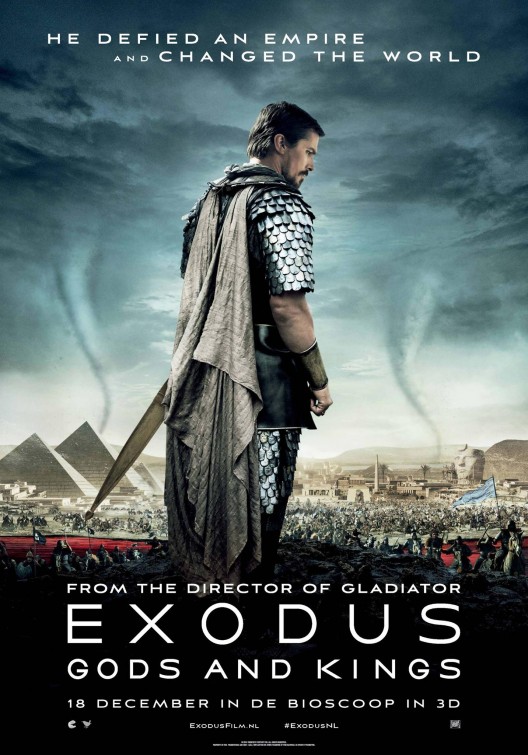
Exodus: Gods and Kings (2014)


Brothers in arms? Christian Bale and Joel Edgerton struggle for chemistry

Director: Ridley Scott

Cast: Christian Bale (Moses), Joel Edgerton (Ramesses II), John Turturro (Seti I), Aaron Paul (Joshua), Ben Mendelsohn (Hegep), Maria Valverde (Zipporah), Sigourney Weaver (Tuya), Ben Kingsley (Nun), Indira Varma (High Priestess), Tara Fitzgerald (Miriam), Hiam Abbass (Bithiah), Dar Salim (Khyan)

There is something quite reassuringly old fashioned about Biblical story films. They have a sweet Sunday reliability about them, an old-fashioned bombastic self importance, mixed with spectacle and often heavy-handed moral messages. They are just quite fun. Biblical epics have always been popular with Hollywood as there can never be any judgement passed on the amount of violence and sex the stories often contain as, hey, it’s all in “the good book”. It worked for Cecil B DeMille and it continues to work today.

Exodus: Gods and Men is an exception to this rule of Hollywood Bible stories because it is neither fun, nor does it have a clear message. It seems to have been made by people doing their very best to pretend the story of Moses has as little to do with the Bible as possible. In effect, if God is the star of the Bible, then this is an adaptation that tries to minimise the star as much as possible. The story has beats (probably the most interesting parts) where Moses and God warily question each other’s motives, but these scenes don’t have enough weight to them, the philosophical arguments are never clearly expressed. Bluntly, if Scott (an aethist) and Bale (a man who described Moses as “one of the most barbaric figures that I ever read about”) don’t have any connection to the story and its themes – why should we?

Exodus is instead a feeble attempt to recapture the magic of Gladiator. Firstly it is an astonishingly badly written film, full of tin-eared, clumsy dialogue (“Listen, from an economic standpoint alone, what you’re asking is problematic to say the least” is Rameses’ response to the let-my-people-go message of Moses). Secondly, it makes little or no attempt to build up its characters. It’s aiming for a “brothers divided” plotline with Moses and Rameses – but neglects to ever show these characters as friends at any point. From the start they are divided, with the introduction of a stupid prophecy plotline at the start of the film existing only to justify a dull battle, a stylistic retread of the Gladiatoropening battle. Having failed to show any reason why these two characters should ever care for each other, the film settles into familiar patterns: Rameses the jealous, petty tyrant, Moses the gruff man with a temper, hiding his morality. Not once is there the feeling of a fractured relationship.

Exodus is also highly confused about its feelings towards Christianity. God is literally voiced by a petulant child. Simultaneously Scott also seems keen to attribute as many of the plagues and partings of the red sea as he can to pseudo-scientific reasons – so some sort of meteor causes a tsunami to part the red sea, crocodiles going crazy leads to the Nile turning into a river of blood, that sort of thing. The most interesting moments involve the debates between Moses and God, the vengeful lord favouring shock and awe over Moses’ long-term guerrilla campaign. There are moments here where the film touches upon a point, questioning if God even needed Moses in the first place. But it never really tackles it properly. I suspect we are supposed to see meaning in the weight given to the point that Hebrew means “he who wrestles with God” and see Moses as a man struggling to understand God’s plans for him – but this never really comes together coherently.

Leaving aside all that, it’s a plain badly structured film. From the pointless opening battle scene, screen time is lavished on massive events, but no time is spent on the characters and motivations. Dialogue scenes seem rushed and heavily cut. As such, bizarrely, the film seems both very long and too abrupt. Characters come and go – Bens Mendelsohn and Kingsley drift in and out of the story, Aaron Paul has barely a line of dialogue and Sigourney Weaver’s character seems little more than a cameo. Bale barely moves out of first gear as Moses, Edgerton does his best with a character that is laughably one-note. The film tries to do far too much, without making us invest in anything that is happening.

Instead there are big events, beautiful photography (you’d expect nothing less from Scott) and little else going on. Plagues in themselves are not interesting – people are, and if the characters aren’t developed as people, we can’t be interested in seeing events happen to them. If the film had something unique to say about religion (as it tries to do at times) it might have survived, but instead it’s a rather portentous action film that isn’t about anything – it’s not clear what we are supposed to think of God, it’s not clear what motivated Moses, we’re not clear how he feels about his mission.

Under the surface of Exodus are the beats you need to make an interesting film. A streamlined film that chose to do one thing could probably have done it well. But the storytelling and plotting are so fudged that the film just rolls from spectacle to spectacle, with no heart.