Tag: Rina Morelli

Senso (1954)

Senso (1954)

Visconti’s grand tale of romantic obsession is an engrossing film to lose yourself in

Director: Luchino Visconti

Cast: Alida Valli (Livia Serpieri), Farley Granger (Franz Mahler), Massimo Girotti (Roberto Ussoni), Heinz Moog (Court Serpieri), Rina Morelli (Laura), Christian Marquand (Bohemian official), Sergio Fantoni (Luca)
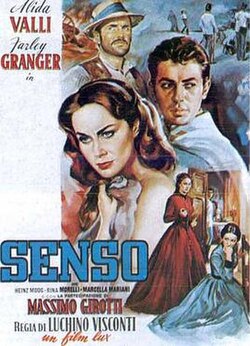
It probably felt like a real shock when Visconti made a sharp turn from neorealism into luscious costume drama. But, in a way, isn’t it all the same thing? After all, if you wanted to get every detail of a peasant’s shack just so, wouldn’t you feel exactly the same about the Risorgimento grand palaces? So, it shouldn’t feel a surprise that Visconti moved into such stylistic triumphs as Senso – or that an accomplished Opera director made a film of such heightened, melodramatic emotion as this. Chuck in Senso’s political engagement with the radicals fighting for Italian independence, and you’ve got a film that’s really a logical continuation of Ossessione.

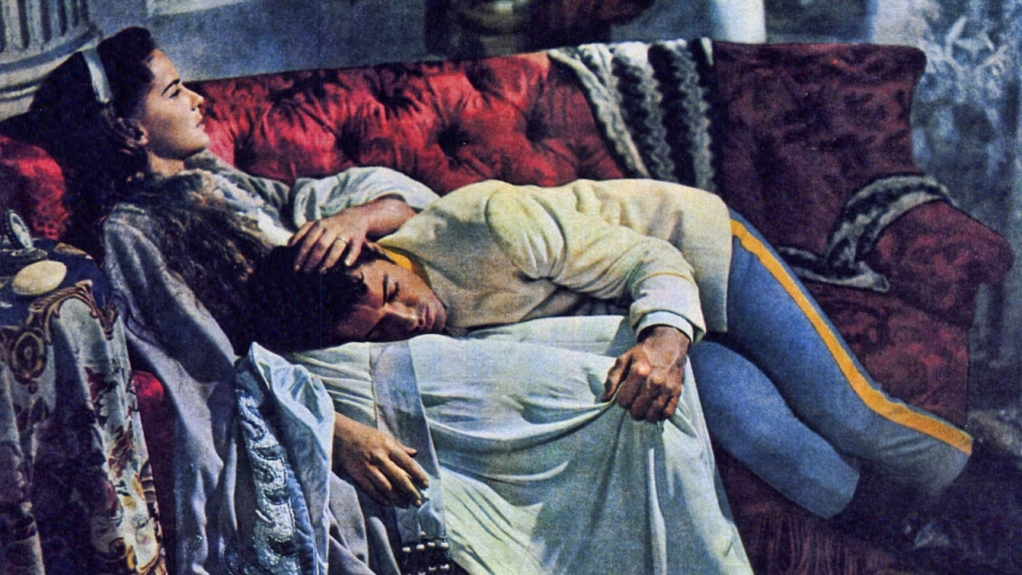
Set in 1866, the rumblings of unification roll around the streets of Venice – the city still under the control of the Austrian empire, despite the city’s Garabaldi-inspired radicals. In this heated environment, Countess Livia Serpieri (Alida Valli), cousin of radical Roberto (Massimo Girotti) finds herself falling into a deep love (or lust?) for imperiously selfish Austrian officer Franz Mahler (Farley Granger). It’s an emotion that will lead her to betray everything she believes she holds most dear and lead to catastrophe.

It’s fitting Senso opens at a grand recreation of La Traviata at the Venetian Opera. Not only was Visconti an accomplished director of the genre, but as Senso winds its way towards its bleakly melodramatic ending, it resembles more and more a grand costume-drama opera, with our heroine as a tragic opera diva left despairing and alone, screaming an aria of tormented grief on Verona’s streets. You’ll understand her pain after the parade of shabby, two-faced treatment the hopelessly devoted Livia receives at the hands of rake’s-rake Franz, a guy who allows little flashes of honesty where he’ll confess his bounder-ness between taking every chance he can get.

What Senso does very well is make this tragic-tinged romance so gorgeously compelling, that you almost don’t notice how cleverly it parallels the political plotlines Visconti has introduced into the source material. Because Franz’s greedy exploiting of Livia for all the money he can get out of her, the callous way he’ll leave her in dire straits or the appallingly complacent teenage rage where he shows up and inserts himself into her country palace (with her husband only a few rooms away) is exactly like how Austria is treating the Italians, stripping out their options, helping themselves to what they like and imposing themselves in their homes.

Livia’s besotted fascination with Franz kicks off at the same opera where the Garabaldi inspired revolutionaries disrupt events by chucking gallons of red, white and green paper down from the Gods onto the Austrian hoi-polloi. And their destructive relationship will play out against an outburst of armed revolutionary fervour, both of them stumbling towards a dark night of death and oppression in the occupied streets of Verona. Livia’s obsession will damage not only herself, but these same revolutionaries who be left high-and-dry when Livia prioritises Franz’s well-being over the revolution’s survival, by funnelling the gold she’s concealed for the purchase of arms into Franz’s wastrel pockets.

But it’s impossible to not feel immensely sorry for Livia, because her desperation and self-delusion is so abundantly clear. Alida Valli is wonderful as this woman who only realises how lonely she is when she finds someone who can provide the erotic fire her detached, self-obsessed husband never has. It’s a brilliantly exposed performance: Valli actually seems to become older as time goes on, as if collapsing into the role of wealthy sugar-mummy to an uncaring toy boy.

Before she knows it, she will be wailing that she doesn’t care who knows of her feelings, before dashing across town to where she believes Franz is staying (it turns out instead to her revolutionary cousin, her husband assuming her feelings are revolutionary sympathies not infidelity). She knows – God she clearly knows! – Franz is not worth the love she is desperately piling onto him, but her need for him is so intense, that we can see in her eyes how desperate she is to persuade herself otherwise. Valli sells the increasingly raw emotion as she can no longer close her eyes to Franz’s selfishness and cruelty and her final moments of raging against the dying of her light are riveting.

Opposite her, Farley Granger (dubbed) may not have enjoyed the experience (he refused to come back and film his final scene, which was shot instead with a partially concealed extra) but his selfish youth and cold-eyed blankness is perfect for a man who cares only for himself. There are parts of him that need to be mothered, and he’s not above throwing himself on her covered in gratitude. Sometimes he’ll advise her he’s not worth it, or sulk like a petulant kid if he feels he isn’t getting enough attention. But he’ll always come back for more wealth.

His shallow greed is appalling. His eyes light up when Livia gives him a locket with a lock of her hair in it. Sure enough, she’ll find that hair discarded in his apartment when she searches him, the locket sold. His fellow soldiers know all about his roving, careless eye – he’s “hard to pin down” one knowingly says, so clearly indicating Franz’s lothario roaming that it’s hard not to feel desperately sad for Livia. The vast risks she takes for him, he’ll chuck away on the next shiny thing (or woman) to catch his eye. But he can also be charming or vulnerable – or at least fake these qualities – so well that Livia continues to persuade herself he is someone she can ‘save’ from his flaws.

It leads to disaster for all, a personal tragedy swarming and soaking up thousands of others. Her revolutionary cousin Roberto will be collateral damage, Visconti capturing this in two exquisitely staged battle sequences (one utilising a stunning near 360 camera turn to take in the catastrophic after-effects of a failed advance by the revolutionaries). This is the grand destruction that wraps around the Operatic failed romance at the height of Senso: it’s a sign that the all-consuming lust that consumes its lead has reached out and crushed almost everything around it.

It makes sense then that the luscious colour and gorgeous design of Visconti’s film comes to its conclusion in dreary streets, nighttime confrontations and a final mood that feels nihilistic and destructive. Senso is a wonderful exploration not only of the senseless destruction of romantic obsession, but also of the wider damage where this negative energy shatters a host of high-flown, optimistic political ideals leaving only ruins and disaster behind. Visconti’s masterful balancing of all of this makes Senso a shining example of both gorgeous film-making and a wonderful mix of compassion and the high-blown. A wonderfully engrossing film to soak in.
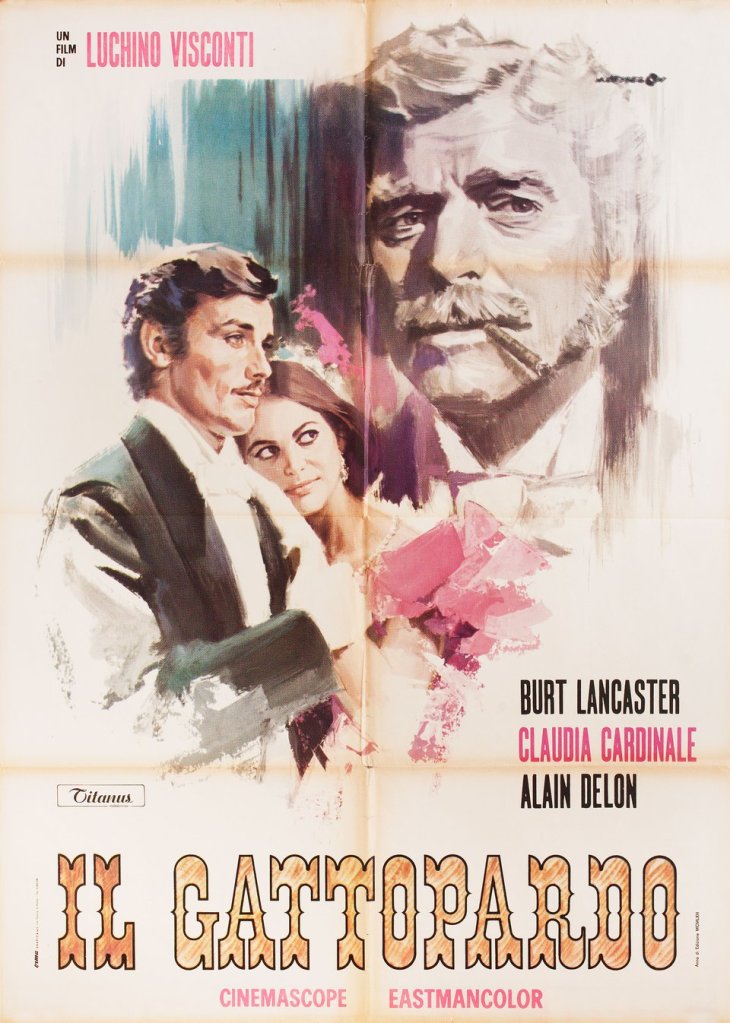
The Leopard (1963)

The Leopard (1963)

Possibly the most luscious film ever-made, Visconti’s epic is a beautiful film of rage against the dying of the light

Director: Luchino Visconti

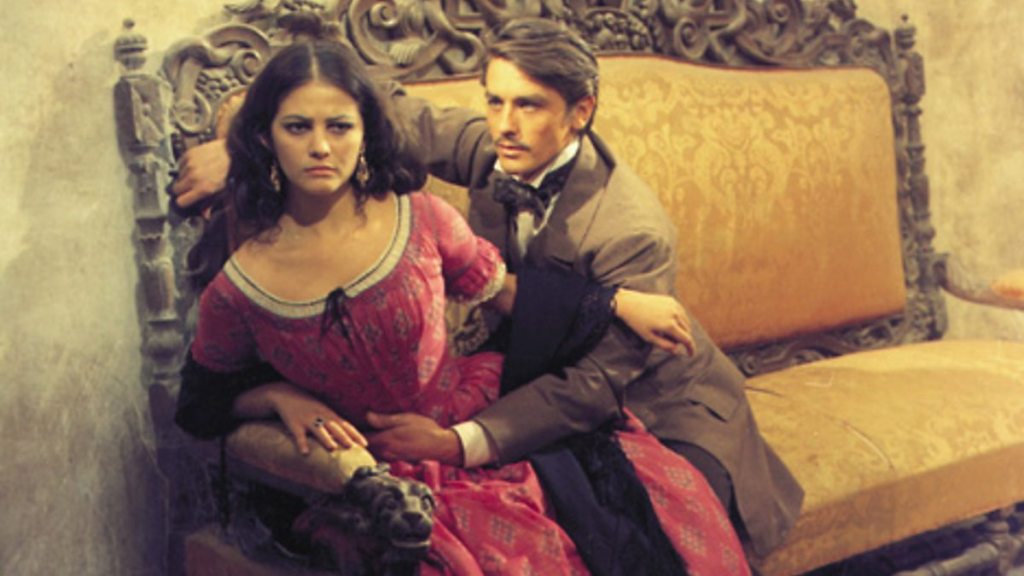
Cast: Burt Lancaster (Don Fabrizio Corbera), Alain Delon (Prince Tancredi Falconeri), Claudia Cardinale (Angelica Sedara), Paolo Stoppa (Don Calogero Sedara), Rina Morelli (Princess Maria Stella of Salina), Romolo Valli (Father Pirrone), Terence Hill (Count Cavriaghi), Serge Reggiani (Don “Ciccio” Tumeo), Leslie French (Cavalier Chevalley), Pierre Clémenti (Francesco Paolo Corbera), Lucilla Morlacchi (Concetta Corbera), Ida Galli (Carolina Corbera), Ottavia Piccolo Caterina Corbera)

There might not be a more visually ravishing film than Visconti’s The Leopard. Every detail of costume and set design is perfect in this gloriously stately, carefully crafted adaptation of Giuseppe Tomasi di Lampedusa’s only novel. It’s a perfect match for the autumnal melancholy of Visconti’s elaborate work, as an ageing prince in the Risorgimento rages quietly against the dying of the light. The Leopard is a delicate and carefully-paced film that carries a sweeping romanticism.

It’s 1860 and if the Sicilian aristocracy “want things to stay as they are, things will have to change”. Italy is forming itself into a nation and Sicily is in a state of civil war. On one side, the forces of the revolutionary republican Garibaldi – on the other, the old-guard of Francis II of the Two Sicilies, clinging to keep Sicily part of the Bourbon empire. Watching all this, Don Fabrizio Corbera, Prince of Salina (Burt Lancaster), scion of a noble family, watching the inevitability of change but clinging to tradition. His nephew Tancredi (Alain Delon) embraces first the fervour of Garibaldi, then Angelica (Claudia Cardinale) the radiant daughter of nouveau riche Don Sedara (Paolo Stoppa). But is there a place for the prince in this new world of democracy and the power of the middle classes?

The Leopard hails from the same wistful remembrance of things past that powers Brideshead Revisited in the English language. In Visconti, son of Milanese nobility, it found its perfect director. Visconti didn’t just know the world behind the declining place for the nobility: he’d lived it. He brings every inch of that to the luscious beauty of The Leopard, a mournful final hurrah of a generation and way of living that has no place in the present and is only an echo of the past.

The Leopard is crammed with simply stunning period detail. Visconti shoots this with a calm, controlled, observant camera, that moves and pans slowly through sets, carefully following its players. It’s set in a world of elaborate drawing rooms and stunning vistas. Costumes are intricate in their period detail. Dinners are grand celebrations of the opulence of this bygone era. Every detail in the set is perfect to the minutest detail – you feel a drawer could be pulled open and only period-appropriate props would be contained inside.

Visconti though never makes the film a slave to its period trappings. The careful details of the prince’s life serve to stress how bygone and dying these days are. It’s a film full of moments of small but telling undercutting that stress how this world is crumbling. In church, wind blows dust across the gathered Corbera family, coating them in dirt. They mock the newly empowered Don Sedara – and the pompous chap’s ineffectiveness is hammered home when a band keeps interrupting his attempt to declare the results of a rigged unification plebiscite – but Fabrizio is desperate to secure a marriage alliance with him and it’s clear Sedara is very much in the political ascendancy.

Could Fabrizio have done more to preserve his way of life if he wasn’t so clearly entering the twilight of his years? He’s virile enough, dashing from the family home (priest in tow) to spend a night in town with his mistress. He can climb the hills and hunt with the best of them. He half considers that it’s not outside the realm of possibility for him to have a crack at Angelica himself. But this is truly the Lion in Winter. He’s powerless to defend the traditional position that guarantees his influence and lacks the drive and youth Tancredi has to fashion himself a new one. For all his wry wit and handsome features, he becomes a sweaty, mournful figure at a celebration ball watching the young people dance all night and musing on where his own vitality went.

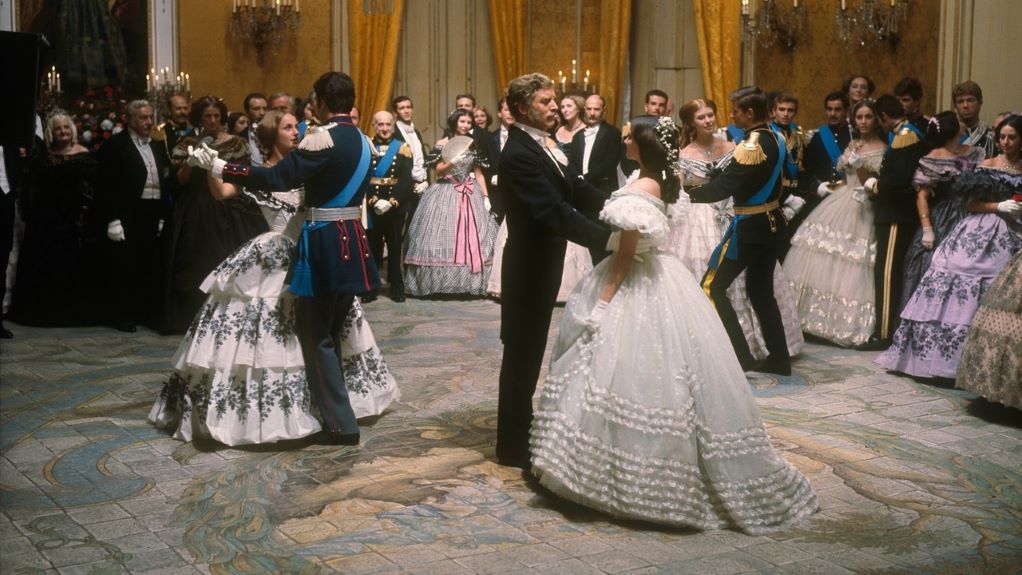
That long ballroom sequence – a near 45-minute extended scene that ends the film – is one of the triumphant tour-de-forces of cinema. A gorgeous culmination of the beauty of the entire piece, Visconti also manages to present it as a final hurrah of a whole way of life. This celebration is crammed with military figures who call the shots and filled as much with older people struggling to keep the pace as it is young ones with an eye on something far more modern than the pleasures that thrilled their parents. At the heart of this, Visconti’s camera carefully follows the prince as he moves from room to room, a quiet, lonely observer, tears in his eyes at moments, reflecting on his mortality and rousing his youthful fire only for a single dance with Angelica.

As this rusting monument to the old ways, Visconti was gifted with a Hollywood star. To be honest, at first he was far from happy when he received Burt Lancaster. But – once you get over the oddness of Lancaster being dubbed by a plummy Italian accent – it’s a near perfect marriage of actor and role. Always a graceful and elegant actor, Lancaster becomes Italian – there is more than a foreshadow of the Godfather to him – and his genteel, noble face is perfect for this bastion, just as his expressive eyes are perfect for the part’s delicacy and sadness. It should be a bizarre miscasting, but it lands perfectly and much of the success of the final ball sequence is his ability to communicate so much from such small moments.

Visconti places him at the heart of this languid, precise film and contrasts the prince’s gentle moving out-of-step with the future with the dynamism and openness to compromise of his nephew. Tancredi – a youthful and passionate Alain Delon – is energetic and with a casual ease switches passions personal and political. Starting the film as a red-shirted revolutionary, he ends it as a uniform-clad member of the elite. Professing his love for the prince’s daughter, he ditches her on a sixpence for Angelica. Not that anyone can blame him: Claudia Cardinale is gorgeous but also shows the elemental charisma that Leone was to use to such great effect in Once Upon a Time in the West. Cardinale also feels like someone between two eras: attracted to the casual and flexible Tancredi but perhaps more drawn to the elegant grandeur of the prince.

The Leopard works as extraordinarily well as it does because it is so well paced. This is a film that requires an inordinate length, lingering shots and scenes, and for action to be happening elsewhere. Our single burst of action is to see Garibaldi’s forces fight in the streets of Palermo: other than this, momentous events happen elsewhere off-screen. The camera moves instead to study the scenery or the passing of normal people on the streets. We are always given the sense of this family and its world being cut off and left behind by real events. Tancredi starts the film explaining his conversion to Garibaldi in detail: later he will barely mention why he’s changed uniforms or feel the need to say why he is accepting positions the revolutionaries reject.

It’s not a surprise that a cut-down version of The Leopard was a major bomb when released in America. The three-hour run time is needed to truly understand the drift and ennui Visconti’s film is exploring. It does it in a film dripping with gorgeous period detail and full of scenes awash with interest, but the point is this is a film of slow, deceptive but finally overwhelming impact. The quiet, controlled, predictable life that generations of the prince’s family has known, dies with the same polite, grand silence as it largely lived. The Leopard is a stunning tribute to the passing of an era.