Tag: Rita Moreno

The King and I (1956)

The King and I (1956)

Deliberately artificial adaptation, powered by star performers and sumptuous set-design

Director: Walter Lang

Cast: Deborah Kerr (Anna Leonowens), Yul Brynner (King Mongkut), Rita Moreno (Tuptim), Terry Saunders (Lady Thiang), Martin Benson (Kralahome), Rex Thompson (Louis Leonowens), Patrick Adiarte (Prince Chulalongkom), Carlos Rivas (Lun Tha), Alan Mowbray (Sir John Hay), Geoffrey Toone (Sir Edward Ramsey)

In its glistening, stagy exactness The King and I is the most traditional adaptation of Rodger and Hammerstein to hit the screen. A (questionably accurate) memoir by Anna Leonowens (Deborah Kerr) about her experiences as a tutor to the children of King Mongkut of Siam (Yul Brynner) in the 1860s, was repackaged by the musical hit-machine duo into a charming culture clash, with a garland of unspoken romance across the top. Anna wants to help the king improve and develop his kingdom – but also clashes with his ideas about his antiquated ideas and (above all) his treatment of concubine Tuptim (Rita Moreno), who is in love with servant Lun Tha (Carlos Rivas). Can the King and Anna reach an understanding?

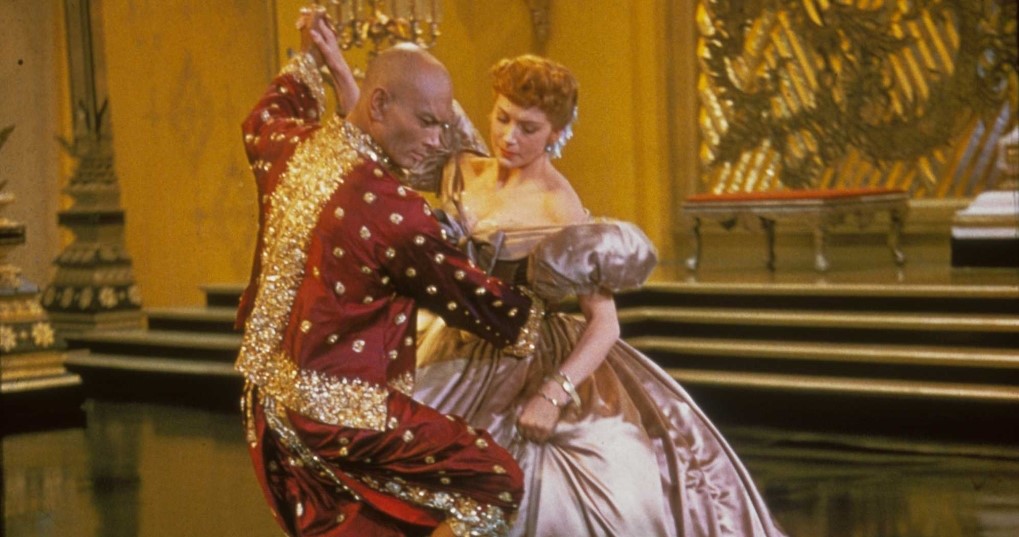
The King and I is one of the grandest, most artificial looking films you will see. No attempt has been made by anyone to even pretend we are not watching events play out on a series of massive, elaborately decorated soundstages. It all looks gorgeous of course, brightly coloured sets filling the frame. Even the scenes ‘outside’ – on Anna’s ship or the palace grounds – drip with ostentatious artificiality.

This impression is only increased by the mediocre direction of Walter Lang. A reliable studio B-movie hack, Lang sets the camera up in the equivalent of the front row of the stalls. While he can frame a scene efficiently (his centring in the final shot of the king’s hand is neatly done), Lang provides no originality, flair or real visual interest, all that supplied solely by the sets. He either misses beats or misunderstands jokes (the accidental flashing of the English ambassador is crying out for a beat of titillation from the old guy). It’s quintessential widescreen hackwork of the 50s, where the focus is on wowing the people with the money, bright colours and massive sets they couldn’t get from the little box in the corner. On that basis, a director who sets the camera up to get as much of that seen as possible all the time, fits the bill.

Besides, the film’s two most distinctive features didn’t really rely on Lang anyway. The King and I’s grand Thai-style ballet based on Uncle Tom’s Cabin was visualised and choreographed by Jerome Robbins (with Lang setting the camera stationary in mid-shot to capture it all). This ballet is, by the way, a masterclass of expressive visual originality (with its swirling use of masks, sheets and banners) that sticks out like a sore thumb in a film as visually flat as this one.

The other was of course Yul Brynner’s star-turn as the King. Brynner’s performance of the role on Broadway had transformed his career and years of honing it on stage meant he was the master of every beat of its eccentric energy. Brynner is magnificent, bombastic, proud, grand but also subtly playful, surprisingly timid and strangely shy. Brynner’s performance with its theatrical touches (the striking pose and the “et ceteras”) could be seen as overplaying, but actually fits perfectly with a man constantly, deliberately, putting on a show.

Brynner really shows the more thoughtful, quiet man under the surface, worried about his kingdom’s future. The earnest autodidact, who lies on the floor reading books. The eager-to-impress man who swots up on topics of conversation to impress the English ambassadors and hands a prompt sheet to Anna to work them into conversation. The careful flirt who only allows flashes of his romantic interest in Anna show. It’s a clever, grand but very human performance. Brynner had wanted to direct (and, rumour has it, partially did so) but settled for a Best Actor Oscar instead.

He also sparks extremely well off Deborah Kerr, buried under some truly might dresses (so heavy, that Kerr allegedly lost twelve pounds over the course of filming). Kerr turns a potentially stodgy part into a woman who is independent but not judgemental, forward-looking but diplomatic and very careful about allowing any expression for romantic feelings. Although her singing is dubbed by Marnie Nixon, it’s Kerr’s engaging sprightliness that carries a lot of the drama. She and Brynner’s chemistry also ensures the scenes between the two of them are by far the film’s highlights.

Most of the faults of The King and I can be traced to the musical itself. There isn’t much in the way of plot. The quiet will-they-won’t-they bond between Anna and the King is partly because that’s the nature of these things, but partly because the musical doesn’t really give them much material to work with. Virtually every character other than these two feels like either a sketch, a plot function or a stereotype, with the actors given almost nothing to work with. Impressive as the ballet is, it essentially takes up almost 15 minutes of screentime without advancing the plot or the themes of the film at all. Thematically the film explores very little, either on social progress in Siam or its place in the world. The film rushes towards a conclusion that feels like it comes out of the blue.

But then people aren’t watching The King and I for its social commentary or thematic depth. They are watching it for some hit songs, impressive production values and charismatic performers. You certainly get that and if the overall shape of the film feels rather loosely plotted and doesn’t go anywhere, that’s neither here or there. And of course, it’s a triumph for Brynner (who, late in life, dedicated his final years to performing the role, racking up over 4,600 performances), whose confidence and star-quality carries thing. Pretty, fun, not deep but pleasant – but then that’s Rodgers and Hammerstein for you and if that’s for you, this is the film for you.
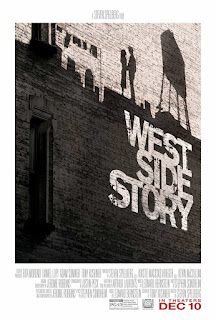
West Side Story (2021)

West Side Story header
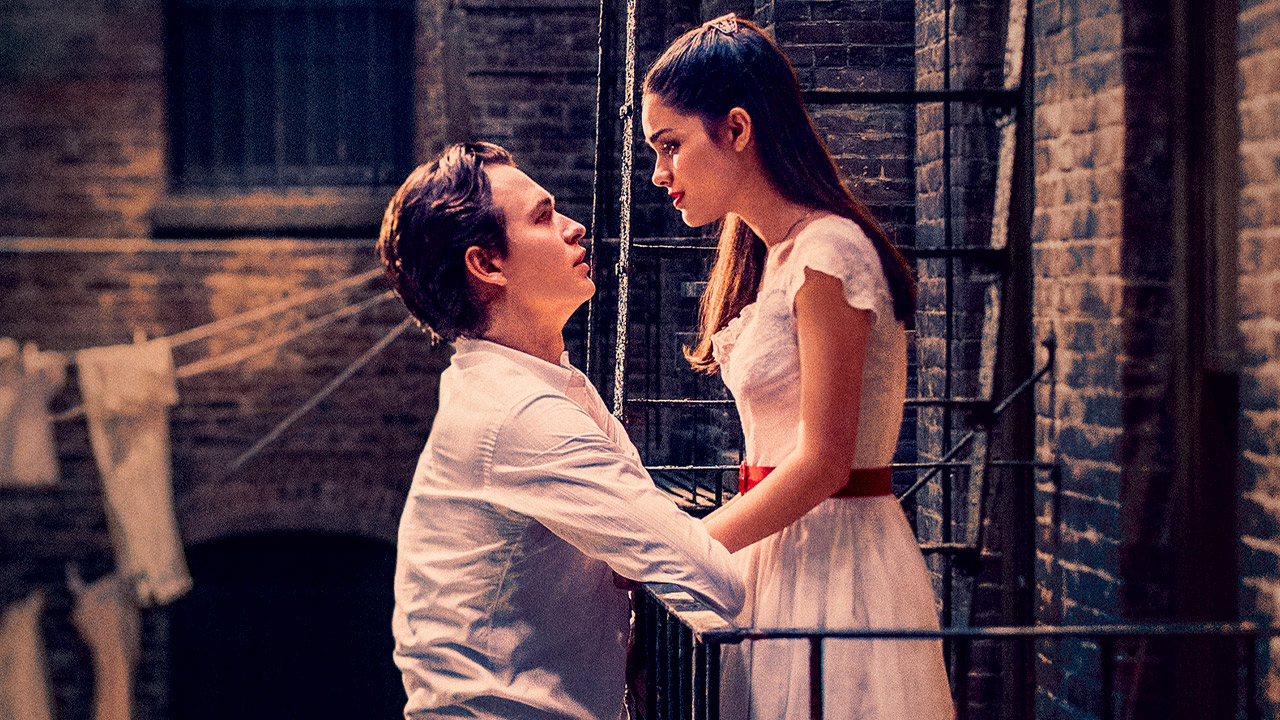
Ansel Elgort and Rachel Zegler are star cross’d lovers in Spielberg’s triumphant West Side Story

Director: Steven Spielberg

Cast: Ansel Elgort (Tony), Rachel Zegler (Maria), Ariana DeBose (Antia), David Alvarez (Bernardo), Mike Faist (Riff), Rita Moreno (Valentina), Brian d’Arcy James (Officer Krupke), Corey Stoll (Lt Schrank), Josh Andres Rivera (Chino), Iris Menas (Anybodys)

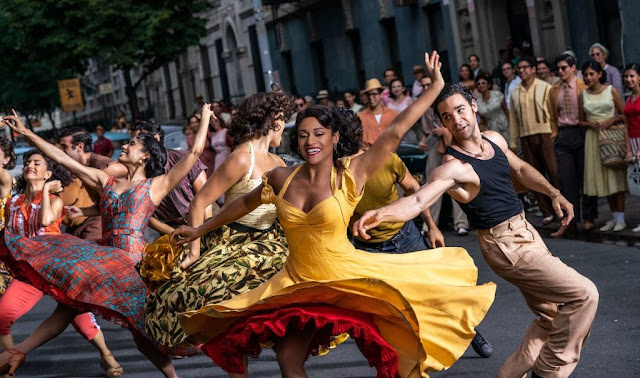
Was there actually a need to remake West Side Story? It’s the question everyone was asking before the film’s release. Judging by the disaster at the Box Office (also connected to our old friend Covid), it’s a question people are still asking. Well, you remake it by refocusing and partially reinventing it while remaining loyal to the roots of what makes this one of the greatest 20th century musicals. Spielberg’s triumphant film does exactly this, in many places even exceeding the Oscar winning original. This West Side Story is full of toe-tapping, heart-breaking numbers, gloriously choreographed numbers and scenes of high emotion and social insight.

In 1957 in Manhattan’s West Side, it’s the dying days of the San Juan Hill district, which is being slowly bulldozed to build the Lincoln Centre. Scrambling to retain control of what’s left are two gangs of youths: the Jets, a group of white rough kids led by Riff (Mike Faist) and the Sharks, a migrant Puerto Rican gang led by would-be boxer Bernardo (David Alvarez). The two groups plan a ‘rumble’ to settle matters forever. A fight that ends up carrying even more importance when both communities are outraged by the burgeoning romance between former Jet leader Tony (Ansel Elgort) and Bernardo’s sister Maria (Rachel Zegler). Will love triumph over hate? Well, it’s based on Romeo and Juliet, so I’ll leave it to you to work that out.

The original, Oscar-laden, West Side Story is a ground-breaking and brilliant musical. Based closely on the triumphant original Broadway production, it showcased earth-shatteringly brilliant choreography by Jerome Robbins. The sort of grace, power, passion and beauty in movement that very few productions of anything have got anywhere near matching. Spielberg’s remake can’t match that – and wisely doesn’t try, rejigging and reinventing the choreography with touches of inspiration from Robbins’ work. But, in many ways, it matches and even surpasses the other elements of the original.

The musical’s book is radically re-worked by playwright Tony Kurshner to stress the racial and social clashes between these two very different communities. Helped as well by the racially accurate casting (memories of Natalie Wood passing herself off as Puerto Rican are quickly dispatched), Spielberg’s film transforms West Side Story into a film exposing the kneejerk jingoism and xenophobia of the Jets (who are often deeply unlikeable) and the touchy, insecure defensiveness of the Puerto Rican Sharks.

Everything in the film works to establish the difficulty the Pueto Rican community had in settling in America. From language problems – most of the characters are still mastering English, with Spanish exchanges untranslated – to the obvious bias of police officers like Corey Stoll’s bullying Lt Schrank (officers and others frequently order the Puerto Ricans to “speak English”). Maria and Anita no longer work in a dress shop, but as cleaners in a department store. Racial slurs pepper the dialogue (Spic and Gringo litter the dialogue). The Jets are first seen defacing a mural of a Pueto Rican flag. Loyalty to your community – both of whom see themselves as under siege – is more important than anything. The film bubbles with an awareness of time, place and the dangers and troubles faced by migrant communities far more than the original.

For that choreography, Justin Peck keeps the inspiration of Robbins, but mixes it with his own fast-paced, electric dynamism. The big numbers dominate the screen, from opening confrontation of the Jets and Sharks to the carnivalesque America, the playful Office Krupke, the frentic Gym Dance and the ballet inspired Cool. The choreography is earthier and punchier (in some cases literally so) more than Robbins, with a rough and tumble physicality and strenuous attack that contrasts with the balletic perfection of the original. It’s both a tribute to the original and also very much its own thing – and works perfectly.

Balancing tribute and forging its new identity is also at the heart of Spielberg’s brilliant direction. He’s confident enough to shoot many of the musical numbers with a Hollywood classic style – which allows us to see and admire all the choreography. But he also mixes this with sweeping, immersive camera work, thrilling tracking shots and beautiful images – there is a great one of Tony standing in a puddle surrounded with apartment window reflections, which looks like he’s surrounded with stars. Spielberg brings the demolished buildings very much into the visual design, part of making this West Side Story, earthier and rougher. The film is electrically paced and lensed with an expert eye.

The film’s two leads are both superior to the originals. Ansel Elgort is a fine singer (with a heartfelt rendition of Maria) and dancer (he excels at Cool), even if he at times struggles to bring his slightly bland character to life. He gives Tony a puppy dog quality – that does make hard to believe this version of the character killed a man in a brawl – as well as a wonderful sense of youthful impetuousness. Opposite him Rachel Zegler – plucked from YouTube by an open casting call – is sensationally wide-eyed, youthful radiance as Maria, naïve and in love, a superb singer.

Even better though are the supporting roles. Finest of all is Ariana DeBose, for whom this film feels like the unearthing of a major talent. Her singing and dancing is awe-inspiring, but it’s DeBose’s ability to switch from warm and motherly, to flirtatious and sexy, to grief, rage and confusion and all of it feeling a natural development from one to another is extraordinary. Her major songs are the films main highlights, stunningly performed. David Alvarez is a passionate, head-strong Bernardo, convinced that he is acting for the best (like DeBose his singing and dancing is extraordinary). Mike Faist is brilliantly surly and enraged (and struggling with repressed feelings for Tony) as Riff.

And, of course, there is Rita Moreno, now playing Valentina, a re-invention of the original production’s character of Don. Moreno worked closely as a consultant with Spielberg and Peck, and gives her scenes a world-weary sadness and desire for hope. She sparks beautifully with Elgort and to see her save Anita from gang rape (still a shocking scene, as it was when Moreno played it) and then angrily spit her contempt and rage at these boys is very powerful.

West Side Story needed to justify its existence. It does this in so many ways. Wonderfully performed by the cast, Spielberg pays homage to the original and classic Hollywood musicals but mixes this with electric film-making and a far greater degree of social and racial awareness (without ever hammering the points home) that allows you to see this tragedy from a new perspectives. It reimagines without dramatically reinventing and sits beautifully alongside the original. It’s more than justified its existence: in many ways it’s even better than the original.

Singin' in the Rain (1952)

Singin' in the Rain (1952)

The most beloved of all musicals gives you a burst of pure enjoyment no matter when it plays

Director: Stanley Donen, Gene Kelly

Cast: Gene Kelly (Don Lockwood), Debbie Reynolds (Kathy Selden), Donald O’Connor (Cosmo Brown), Jean Hagen (Lina Lamont), Millard Mitchell (RF Simpson), Cyd Charisse (Woman in the green dress), Douglas Fawley (Roscoe Dexter), Rita Moreno (Zelda Zanders)

Is there a more loved musical than Singin’ in the Rain? Is there a more famous musical from Hollywood’s golden age? That second point is particularly interesting, as this was possibly the last of the big Hollywood song-and-dance films – most of the rest that followed were film versions of Broadway hits. Singin’ in the Rain also has that “late discovery” quality: inexplicably not nominated for Best Picture (or hardly any other Oscars), it was for many years considered a second tier musical behind works like An American in Paris. Now it stands tall over the lot of them.

Singin’ is a film assembled from a collection of songs MGM held the rights to. The songs were given to Kelly, Donen and the screenwriters with the instruction to “come up with a movie”. What they came up with was this delightful film-about-films. Don Lockwood (Gene Kelly) and Lina Lamont (Jean Hagen) are the biggest stars of the silent screen in Hollywood, whose careers are in trouble overnight when sound is introduced. He can’t really act and she has a voice like nails on a blackboard. But Lockwood can sing and dance – so why not make their latest film a musical? Especially since the talented Kathy Selden (Debbie Reynolds), who Lockwood has fallen in love with, can sing and act and can dub Lina’s voice. What could go wrong?

There are few more purely enjoyable films than Singin’ in the Rain. Nearly every scene has a moment designed to make you burst out in a smile, be it a cracking line of dialogue, a piece of prodigious dancing skill or the simple warmth and joy of the leading actors. Every second something delightful seems to happen. The entire film is an explosion of gleeful joy in the sheer exuberance of singing and dancing. Kelly’s choreography brilliantly uses everyday props and pieces of furniture to give the numbers an exciting everyday charm. It gives the songs an immediate “gotta dance” energy. How could you not like it?

Threading these songs around a structure of Hollywood taking on sound for the first time was a brilliant idea. The recreation of the acting styles and technology of Hollywood is brilliant. Lockwood is a hopelessly stagy actor, hideously artificial in his gestures, while poor old Lina Lamont is horrendously wooden with an awful voice, and a complete lack of any talent. Jean Hagen as Lina Lamont is in many ways the butt – but she’s so demanding, bullying and selfish we don’t mind that most of the jokes are on her.

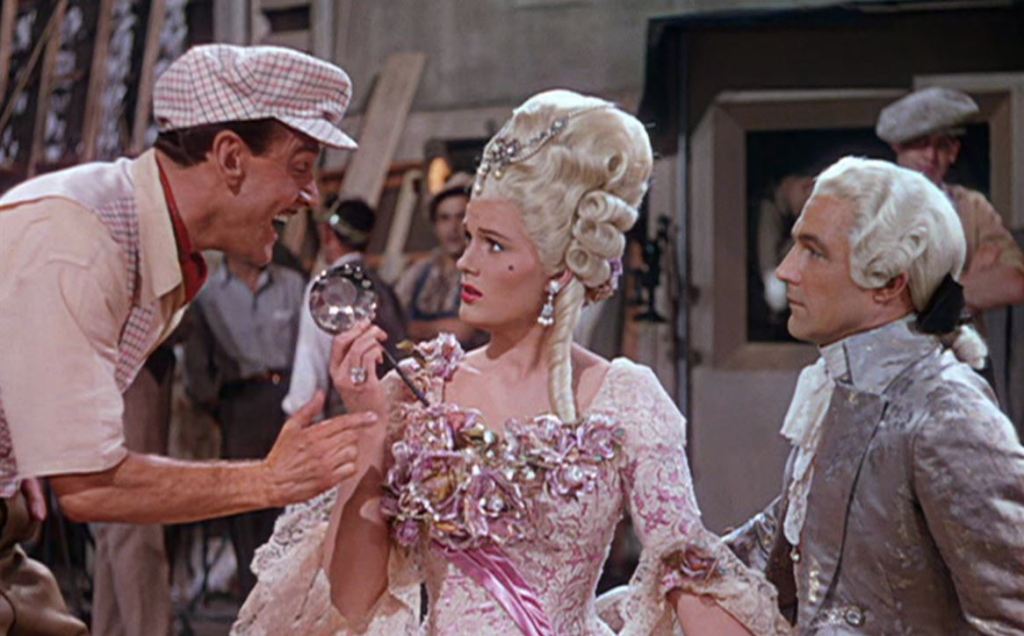
The shift towards sound in Hollywood is actually interesting as well as hilarious. Where do we place the mikes? How should the actors get used to speaking into a mike? How do we cancel out the background sound? What do we do with loud props? One of the highlights is the screening of this film-within-a-film to an audience for the first time. All the terribleness Lockwood and Lamont gets revealed. In a particularly genius moment, the sound of the picture gets out sync with the picture, with the voices seeming to come out of the young actors’ mouths to hilarious effect.

Alongside this we get some of the finest song-and-dance routines in the history of the movies. Donald O’Connor is electric as Cosmo and his dance routine for “Make ‘em Laugh” is an astounding early pace-setter in the film: how does he do what he does here? O’Connor goes bouncing off walls, swirling in circles on the floor, springing from place to place without a single pause for breath. Most of this number (like many of the others) is done in one take with electric pace. And that’s the film just warming up.

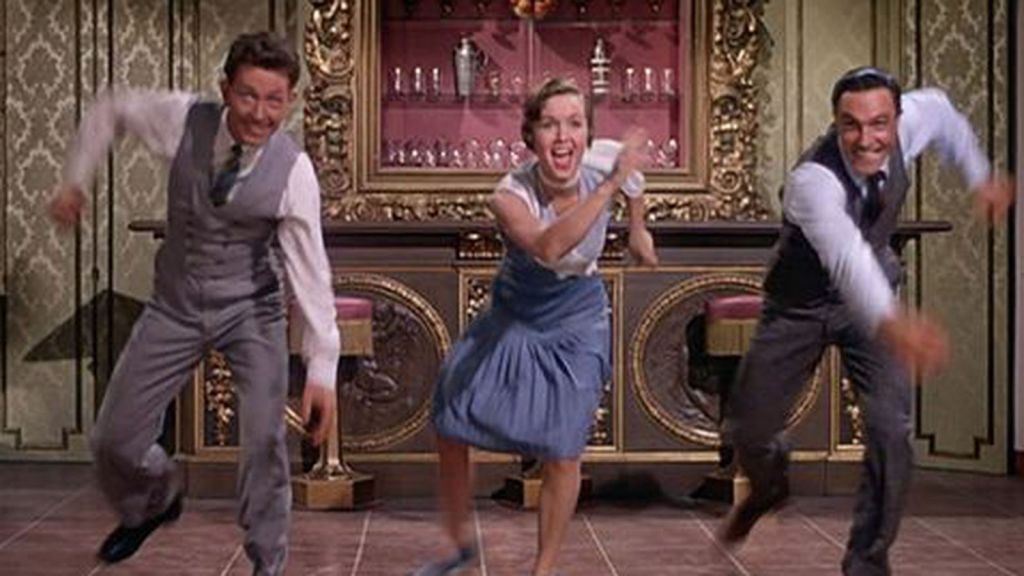
Debbie Reynolds famously described doing Singin’ as being (along with childbirth) one of the hardest things she’d ever done in her life. You can see that in ‘Good Morning’, another electric three-way number with herself, Kelly and O’Connor – she is pounding the floor to keep up with these two masters (and does a brilliant job). She was pushed to the extremes by Kelly who privately considered her a not quite strong enough dancer. Kelly dropped her from Broadway Ballet Medley, a complex ballet-heavy (as per all Kelly films from On the Town onwards – a sequence that I must confess I find a little dull). She’s still excellent – charming, sprightly, light, glorious fun – but it did mean Kelly re-worked the main number to showcase just himself.

Ah yes. ‘Singin’ in the Rain’. This sequence of the film is probably wedged in everyone’s mind. Even if they’ve never seen the film, people are familiar with Gene Kelly, soaked to the skin, dancing through puddles and swinging around lampposts. Kelly is of course marvellous in this sequence (hard to believe he was apparently suffering from the flu at the time) and the number has complete charm to it – that carefree vibrancy of realising you are falling in love. Especially as Lockwood’s ego is finally being put to one side in order to celebrate feelings he’s having for another person. But the whole scene is just sheer cinematic magic. And for something so famous, you never get tired of it. 

But then Kelly has pure star-quality here. Lockwood is a charming, handsome and smooth film star – but the film is happy to puncture his pomposity, or demonstrate in its opening sequence the self-aggrandising version of his early career (“Always dignity!”) with the reality of faintly embarrassing and dignity-free stage and stuntman work. Kelly is so charming you don’t mind that the film gives him an easy ride, considering Lockwood is actually quite selfish.

Singin’ in the Rain is pretty close to perfect. Even though I find some of the ballet stuff a little boring myself, it’s still filmed and shot with skill. It’s a pet discussion between film experts to ask how much of the film was directed by Kelly and how much of it was done by Donen. I guess it doesn’t really matter except to cinephiles, as the film is just beautifully directed: light, frothy, fun and with real technical expertise – the slow crane shot at the end of the famous number is justly famous. The pace is spot on, and the film is hilarious. Its understanding of filmmaking really pays off in the sequences that chronicle early film making.

So why did this film not get recognised at the time? Well to be honest, there were probably too many movies like this out at the time. It was a lot easier to miss in the crush of mega-MGM movies. It followed on the coat-tails of An American in Paris which had worn a huge number of Oscars (and was pushed back into cinemas in place of Singin’ in the Rain). Singin’ was still a big hit – but it perhaps needed film-fans to embrace it because it so perfectly married a love of Hollywood with the technicolour delight of 1950s musicals. Either way, Singin’ in the Rain is a delightful masterpiece which is guaranteed to pop a smile on your face. No matter the weather.

West Side Story (1961)


Dancers defy gravity and physics in the triumphant West Side Story

Director: Jerome Robbins, Robert Wise

Cast: Natalie Wood (Maria Nunez), Richard Beymer (Tony Wyzek), Russ Tamblyn (Riff Lorton), Rita Moreno (Anita Palacio), George Chakiris (Bernardo Nunez), Simon Oakland (Lieutenant Schrank), Ned Glass (Doc), William Bramley (Officer Krupke)

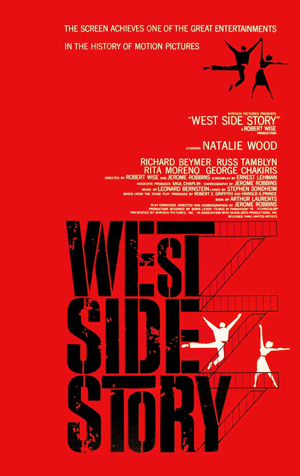
It’s strange to think now, but when it debuted on Broadway, West Side Story failed to win the Tony for Best New Musical (it went to The Music Man). Today, Bernstein and Sondheim’s masterpiece is a touchstone of musical theatre. Part of that surely must be connected to the fact that it’s so well known as a film – and that this triumphant movie production took 10 Oscars as well as holding a place in any list of Greatest Musicals on Film.

The story is of course Romeo and Juliet crossed with intricate ballet and light opera. On the streets of New York, the Jets (working-class white boys) and the Sharks (Puerto Rican immigrants) are two rival gangs fighting a street battle to control their district (via the medium of dance). But danger is about to explode when former leader of the Jets Tony (Richard Beymer) falls in love with Maria (Natalie Wood), the sister of Sharks leader Bernardo (George Chakaris). Will it end well? Surely not with these star-crossed lovers…

You can’t really begin to talk about West Side Story without first talking about the dancing. Not since Astaire and Rogers has a movie been defined so much by its physical grace and rhythmic control of movement. It’s awe-inspiring. Honestly, show-stoppingly, jaw-droppingly impressive. As the dancers defy gravity, physics and the limitations of a normal person’s body, you can’t help but want to spring to your feet and join in (don’t – I guarantee you are not as good). It’s simply amazingly good.

The opening Prologue sets the scene perfectly. It’s not easy to make a film about tough street gangs, where every fight scene is largely expressed through dance – the Prologue, however, does this perfectly, a stylised slow build of increasing musical tempo. From the simple device of clicking fingers, we build continually into an explosion of carefully controlled group choreography, where each of the twenty-odd dancers feels like an individual.

The camera choices are sublime: some shots hover in dramatic aerial shots. Tracking shots highlight the skill of the dancers. The crew dug pits into the tarmac to bury the cameras in so that they could stare straight up at the dancers at some points – during one brilliant sequence Chakiris and the Sharks seem to loom, God-like, over the viewer while moving in perfect synchronicity. It’s beyond a tour-de-force, it’s simply unlike anything else you’ve ever seen on film. The film would’ve deserved Oscars even if it had ended after ten minutes, it’s probably one of the best openings ever.

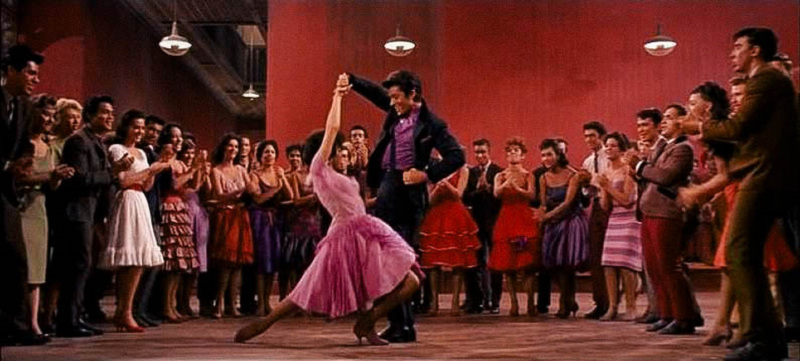
Fortunately it doesn’t, because there is more exquisite stuff to come. Moreno and Chakiris probably won their Oscars off the back of the scintillatingly “America”, a beautiful whirlygig, part debate, part argument, high-kicking joy of twirling dresses and pirouettes. It’s possibly the most exciting number in the whole film. “Cool” is an unbelievably wild and challenging dance number in a garage, that seems to throw in half a dozen different styles – the set itself seems to be struggling to survive under the rampant pace and passion of the dancers. It’s a deliriously giddy, passionate, dirty number with the actors clearly pushed way beyond their natural ease.

Famous Broadway choreographer Jerome Robbins directed the original production, and was the logical choice for the studio to choreograph the film. Robbins insisted he would only do so if he was also allowed to direct the entire film. A deal was eventually done where Robbins would direct everything involving music and dance, and seasoned professional Robert Wise would handle the rest. Robbins carries most of the credit for why this film really is unique – everything special and different about it is connected to his mastery of choreography.

As it happened, Robbins’ search for perfection was so great he ended up leaving the film running weeks behind and far over budget. After months of rehearsal, when the time came to film, Robbins would dramatically re-work the choreography to exploit locations. This was particularly expensive for the location. As take after take on expensive 65mm film mounted up, the producers eventually dismissed Robbins from the project after filming four numbers (“Prologue”, “Cool”, “America” and “I Feel Pretty”). Although the rest of the numbers used his choreography (and were directed by his assistants) they lack the inspired genius of the other four stand-out numbers. Wise, a skilled hired gun, took care of the rest of the filming.

It’s the weakness of West Side Story that very few things in the rest of the film live up to the heady, exhilarating joy of those core numbers. Both Beymer and Wood are uninspiring as the two leads. Wood is not remotely convincingly Puerto Rican, while Beymer is too clean-cut and nice-guy for a kid who was running a street gang not so long ago. The scenes focusing on these two drag– and are rather flatly shot considering the dynamism around anything involving dancing. Wood’s songs are at least memorable – largely because an uncredited Marnie Nixon supplies the singing – but Beymer’s voice replacement isn’t particularly inspiring and both “Maria” and “Tonight” get a bit lost here (he’s no Michael Ball, put it like that).

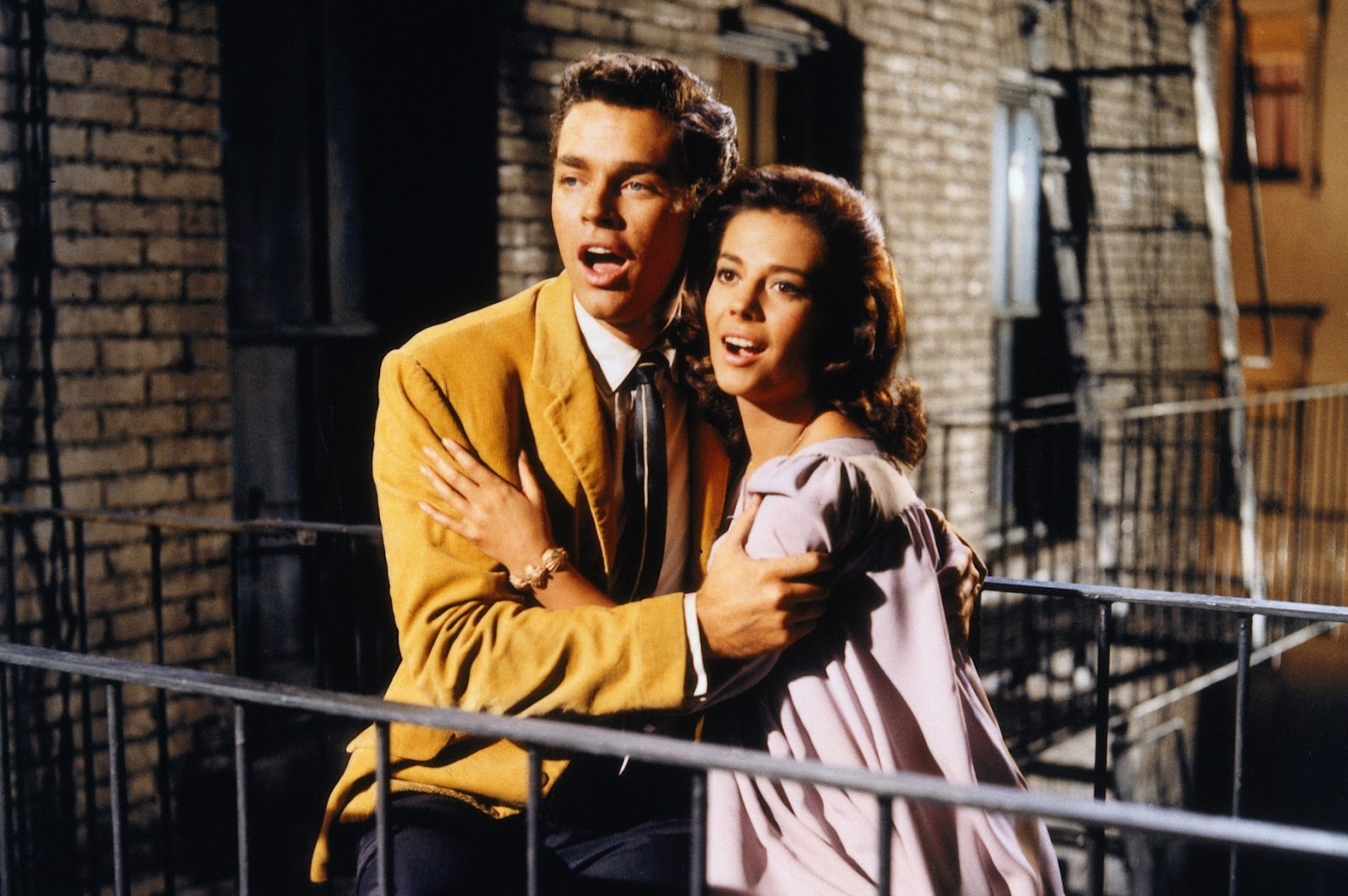
The script and storyline aren’t always the strongest. It’s a difficult to really remember any of the purely dramatic sequences. Tony and Maria’s meeting on the balcony summons up very little in the way of romantic frisson, let alone any favourable comparisons to Romeo and Juliet. (Truth be told, there is very little chemistry at all between the two performers). You get the feeling the film is reaching for a big socio-political message – hey kids, why don’t we all get along? – but never really quite gets there. It’s not quite got enough thematic weight behind it for the cultural acceptance angle it’s trying to push. But heck, Romeo and Juliet is a tough act to follow, so it’s not a surprise that the film works best as just a romance.

The big exception to the rule that the dramatic moments don’t hold a candle to the dance sequences is Anita’s assault by the Jets late on in the film – an unsettlingly visceral near gang-rape, which isn’t easy to watch, but works brilliantly. In fact any dramatic scene involving Rita Moreno stands out – she burns up the screen as the fiery Anita, a woman bubbling with passion but also with an emotional intelligence and sensitivity that nearly helps our heroes avoid disaster. Moreno’s dancing and singing are first class, but her acting throughout is similarly outstanding – any scene featuring her, your eyes are immediately drawn to her. She’s well matched as well by George Chakiris, another Oscar-winner, who’s a magnetic dancer and singer but also gives Bernardo a brilliant kindly pride laced with arrogance.

All this takes places in a regular technicolour wonderland of a setting. Daniel L. Fapp’s photography is marvellous, creating a rich palette that soaks up colour. Shots of a blood red sky at night set just the right ominous tone. He makes masterful use of colour and shade throughout. I’ve already talked about how the photography brilliantly helps build the impact of the dancers. But every scene is really carefully framed and presented, with the cages and barriers of the playground the gang fights over helping to hammer home the feeling of our heroes being trapped by fate. As you’d expect from Wise (the editor of Citizen Kane) the film is also brilliantly assembled in the editing room.

Parts of West Side Story are of course a bit dated. The dancers, for all their undeniable brilliance, are a little camp for rough and tumble street kids. The film’s costumes and settings look undeniably clean to modern eyes. The casting of Wood in particular as a Puerto Rican is odd today. It’s also probably too long a film – while the musical numbers could happily go on forever, other scenes drag a little. Most of the really strong, memorable material happens in the first half of the film. And like all brilliant works of art, it’s so distinctive it’s almost a little too ripe for parody. Some of the visual flourishes used to indicate fantasy sequences look slightly dated.

But these are niggles in a way, because even if parts of the film are a little bit below par, the overall impact of the film is quite extraordinary. There has never been – and I think never will be – a musical quite like this. I simply can’t imagine such a triumph of group choreography being made, or a film-maker spending such time and money to push the envelope of what it is possible for the human body to do in dance scenes. Despite its faults, I can’t imagine a viewer not being electrified by several sequences in this movie. And at the end of the day, what else is cinema for if not to bring our emotions and feelings to life in vibrant flashes?