Tag: Robbie Coltrane

Harry Potter and the Half-Blood Prince (2009)


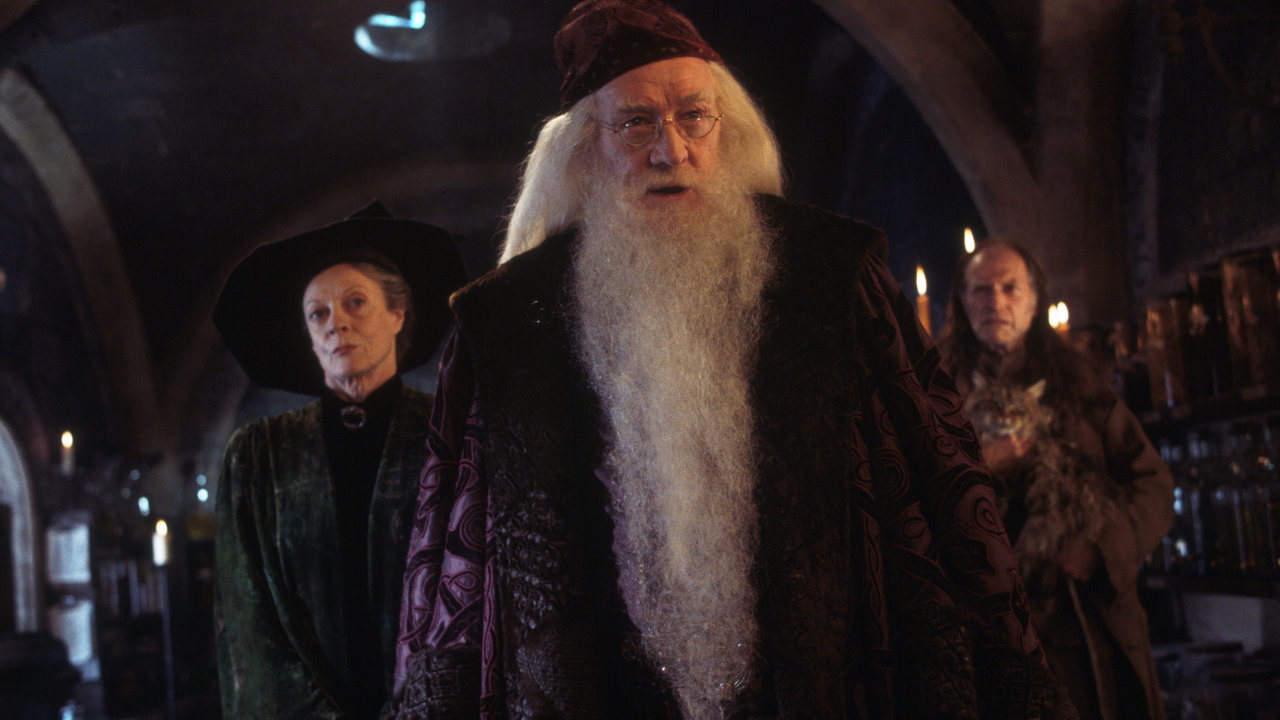
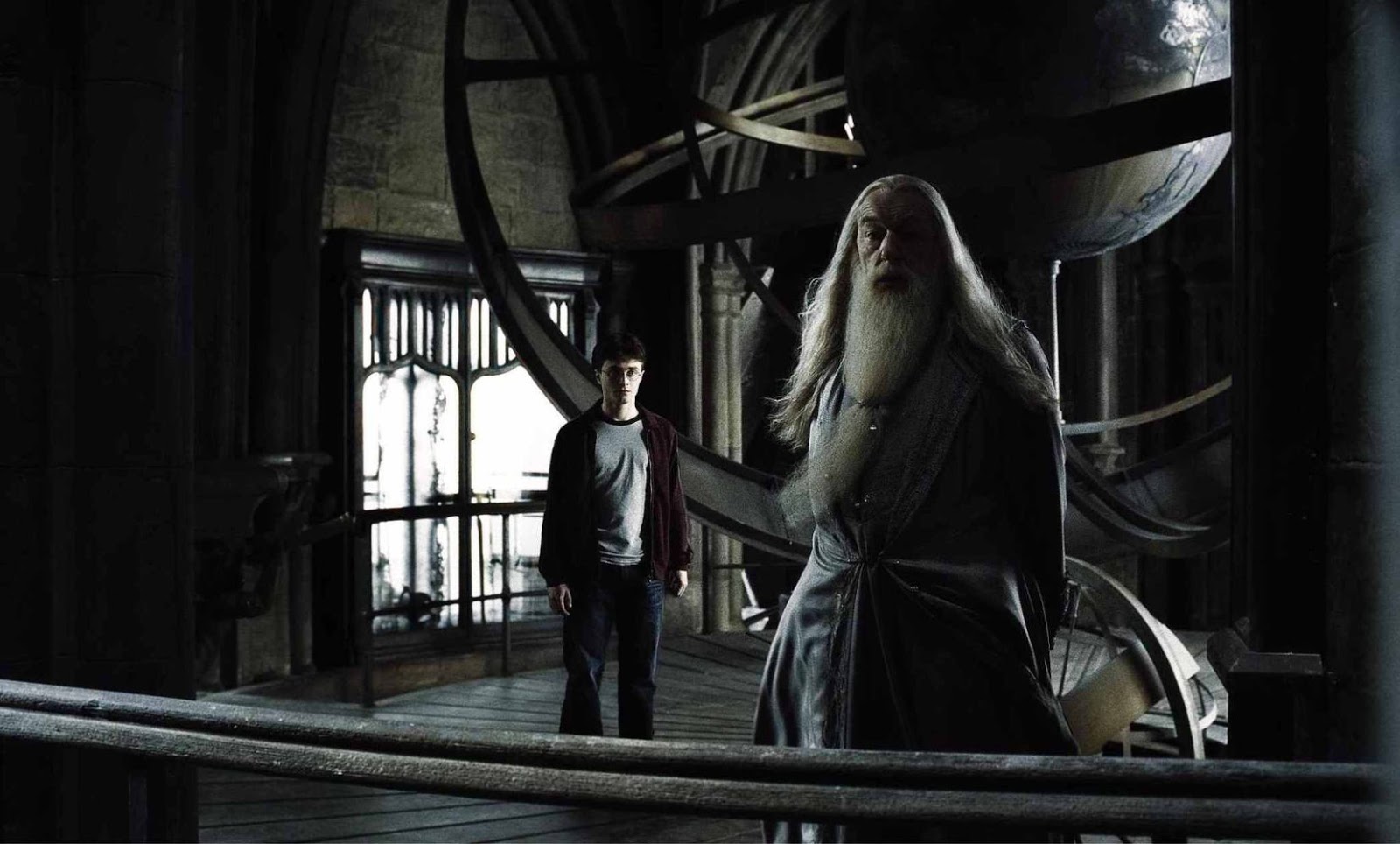
Harry and Dumbledore prepare for war in Harry Potter and the Half-Blood Prince

Director: David Yates

Cast: Daniel Radcliffe (Harry Potter), Rupert Grint (Ron Weasley), Emma Watson (Hermione Grainger), Helena Bonham Carter (Bellatrix Lestrange), Jim Broadbent (Horace Slughorn), Robbie Coltrane (Rubeus Hagrid), Michael Gambon (Albus Dumbledore), Alan Rickman (Severus Snape), Maggie Smith (Minerva McGonagall), Timothy Spall (Peter Pettigrew), David Thewlis (Remus Lupin), Julie Walters (Molly Weasley), Mark Williams (Arthur Weasley), David Bradley (Argus Filch), Tom Felton (Draco Malfoy), Gemma Jones (Madam Pomfrey), Evanna Lynch (Luna Lovegood), Helen McCrory (Narcissa Malfoy), Natalia Tena (Tonks), Bonnie Wright (Ginny Weasley)

Harry Potter and the Half-Blood Prince is perhaps the least stand-alone of the Harry Potter novels. Intended as a bridge into the final book (and carrying a lot of mystery), for obvious reasons it also has no Dumbledore-explains-the-plot-to-Harry chapter at the end (making it unique in the series). It also has the series’ least interesting MacGuffin – the identity of the Half-Blood Princehimself being considered of such little note here that it barely gets a mention in the film. But despite all this, the highly experienced Harry Potter crew deliver another exciting, dramatic and fully engaging film.

While I may not have thought David Yates was a natural film director, I have to say in this film his cinematic craft has really kicked into gear. There are images of fascinating depth and beauty here, and the film is beautifully shot by Bruno Delbonnel (Oscar-nominated). Like never before, Hogwarts seems like a place of inky greens and deep soulful shadows. The camera often allows characters’ faces to fill the middle of the frame, while still giving us depth of vision of the world around them. Carefully composed shots show the rich detail of plenty of objects, from dead birds to photographs. It’s a luscious film.

It also has a sad nostalgia to it: it feels like it’s about things coming to an end. Unlike any other film in the series, there are very few scenes of hi-jinks in Hogwarts. Comic relief characters like Neville and Hagrid are noticeable by their (mostly) absence. 

Instead the film looks at that sad half-way house between being a child and an adult. Or rather, the responsibilities and duties of an adult being thrust onto a child. Obviously Harry is scarcely ready to take on his mantle of chosen one – and feels bereft and lonely. But, in a neat contrast, Draco Malfoy is also being pushed into a task he is far too young for, and ill-suited to. The film could have actually made more of pulling out the contrasts between these two characters – although time is always at a premium in these films, with so much of Rowling’s plot to squeeze in.

Despite this, Tom Felton gives his finest performance in the series as a tortured and deeply scared Draco Malfoy, who for the first time seems like just a normal, insecure boy terrified of the dark acts he feels he has to do. The film gets a lot of emotional mileage out of this (more than it does, actually, from Harry’s predicaments) and Felton’s expressive agony and tearful lack of control for the first time make him someone we can relate to, and feel sorry for.

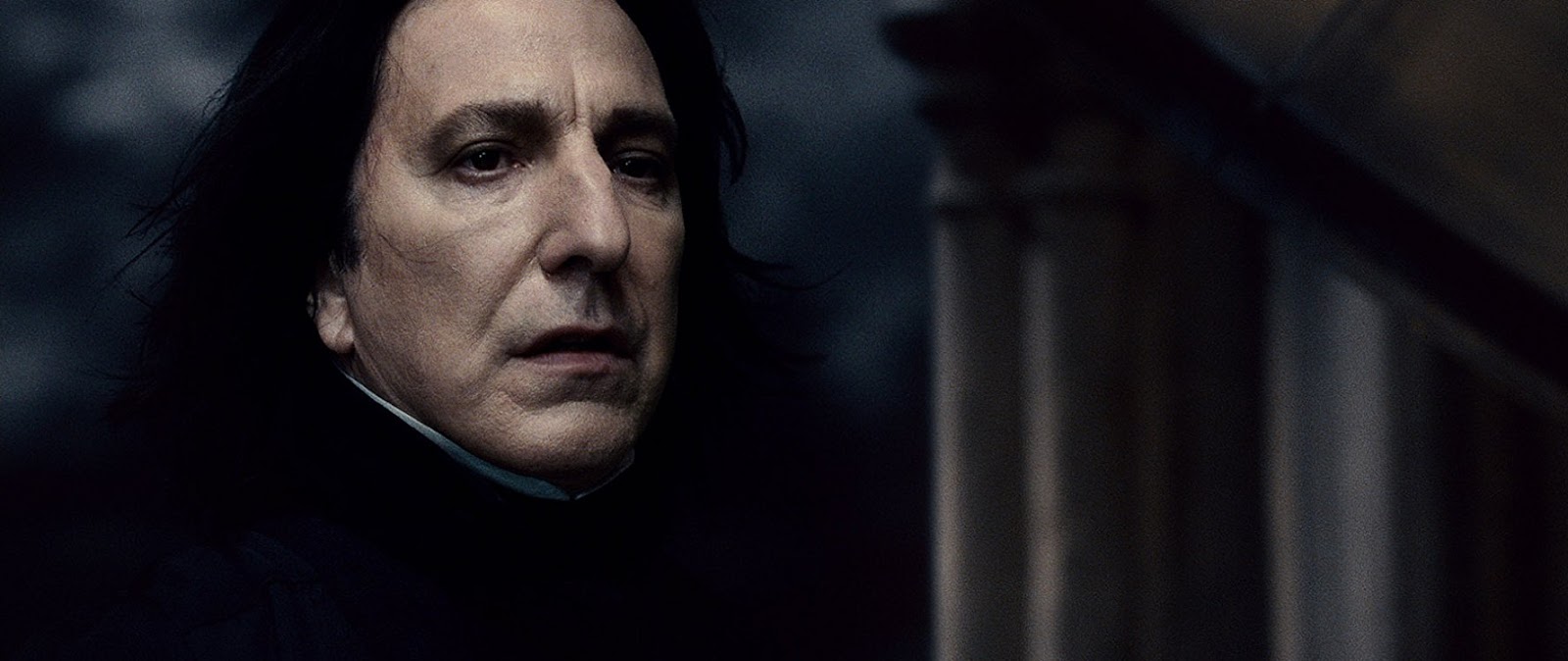
It also brings out different character traits in other characters, not least the protective side of Snape. Alan Rickman gets one of his meatiest roles in the series here, wonderfully playing multiple different emotions and motivations under a cold inscrutable surface. His character is a constantly intriguing shift of feelings – but it’s clear he does, in his way, care for Draco’s safety (just as he does for the other children in his care). Rickman also gives a brilliant sense of Snape’s moral uncertainty, and his every look suggest waves of emotion under tight control. It’s a wonderful performance of suggesting a lot under the surface while not doing a lot. Not to mention Rickman also manages to skilfully leave everything open for debate as to Snape’s true motives.
It’s striking how many of the series regulars come into prominence here. Not just Felton and Rickman, but this is also Gambon’s finest performance. By now Gambon had pretty much nailed Dumbledore, giving the part a great deal of compassion and quiet moral force. His sad urging for Draco to ask for his help near the end of the film is rather moving, as are the soft, sad tones Gambon drops throughout the film suggesting Dumbledore’s pain and guilt. Gambon gets a perfect balance between a twinkly charm and a quiet authoritativeness that works wonderfully.

Surprisingly however, what works less well is Harry’s plotline. Daniel Radcliffe is underpowered and slightly underwhelming, a little too sullen and sulky to really win our sympathy (Radcliffe himself has named this as his least favourite performance). It doesn’t help either that there is no chemistry between him and Bonnie Wright as Ginny Weasley. Wright, bless her, is not a strong actor and she constantly undersells each of these scenes – unable to bring the sort of bright, sexy playfulness her book equivalent has. Instead both she and Radcliffe feel sulky and awkward, and the romantic scenes between them (of which there are many) fall flat time and time again. Once you notice this total lack of spark between them you can’t see anything else!

Radcliffe has far more chemistry with Emma Watson – but she and Rupert Grint (along with many of the rest of the younger cast) have very little of any real consequence to do. The dysfunctional middle of the film, with Radcliffe and Wright flirting, drifts all the time, meaning the focus of the film zeroes in on the “adult-character” plots. Yates and screenwriter Steven Kloves do their best to add drama and excitement to a book where most of the dramatic high points are Dumbledore and Harry either watching memories, or Harry using a book to do much better at potions.

And by and large they succeed. Action sequences are added: the opening attack on the Millennium Bridge by Death Eaters is terrific, and there is an exciting (if totally plot free) attack by Death Eaters on the Weasley home. Yates again sells the moments of awe: there are some beautiful shots in Voldemort’s cave hideaway, and once again he makes Dumbledore’s power a true jaw-hits-the-floor moment. 

Half Blood Prince is beautifully filmed and well directed, even if one of its primary sub-plots doesn’t really work. There are some terrific performances: Felton, Rickman and Gambon possibly do their best work here, while Jim Broadbent is wonderfully funny but also touchingly sad and rumpled as Slughorn. It’s not Radcliffe’s finest hour, but it’s a film that works very well as an entrée to the series’ final arc. And it really captures a sense of morose sadness, mourning and regret wonderfully effectively – the final sequences carry real emotional weight. It’s a fine film – and one of Rowling’s favourites as it turns out.

Harry Potter and the Prisoner of Azkaban (2004)


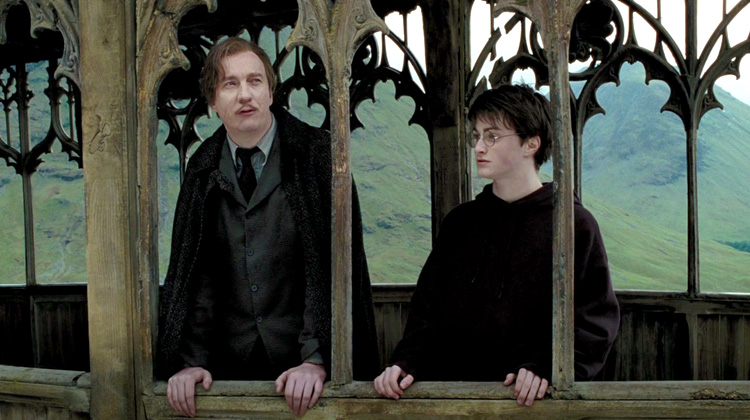
Harry Potter friends confront wanted killer Sirius Black in Harry Potter and the Prisoner of Azkaban

Director: Alfonso Cuarón

Cast: Daniel Radcliffe (Harry Potter), Rupert Grint (Ron Weasley), Emma Watson (Hermione Granger), Julie Christie (Madam Rosmerta), Robbie Coltrane (Rubeus Hagrid), Michael Gambon (Albus Dumbledore), Richard Griffiths (Vernon Dusley), Gary Oldman (Sirius Black), Alan Rickman (Severus Snape), Fiona Shaw (Petrunia Dursley), Maggie Smith (Minerva McGonagall), Timothy Spall (Peter Pettigrew), David Thewlis (Remus Lupin), Emma Thompson (Sybill Trewlawney), Julie Walters (Molly Weasley), Mark Williams (Arthur Weasley), Tom Felton (Draco Malfoy), David Bradley (Argus Filch), Robert Hardy (Cornelius Fudge), Pam Ferris (Marge Dursley)

Well this is more like it. The first two films set the tone and established the universe. But Prisoner of Azkaban – filmed after a year’s break from the back-to-back filming of the first two films – is such a notable step-up in quality from the previous films, it completely stands alone as a marvellous piece of cinematic storytelling, not just as part of a franchise.

Why is this? Well I think the answer is pretty clear. After the solid, but unspectacular, direction from Chris Columbus, the reins were handed to a gifted filmmaker in Alfonso Cuarón. Harry Potter and the Prisoner of Azkaban has all the visual invention and dynamism the first two films lacked. Alongside that, Cuarón tells the story with a brilliant mixture of light and dark. For the first time, the adaptation also escaped the need to dramatise everything in the book onto the screen – this film is a good 20 minutes shorter than Chamber of Secrets but immeasurably superior.

Prisoner of Azkaban looks fantastically gorgeous, and is brilliantly shot. The production and costume design has been spruced up, to give the film a sort of steam-punk 1950s look, as if the wizarding world had slightly arrested a few decades behind the rest of the world. Cuarón was also one of the first directors in the series who seemed relaxed enough to let the children act like children – so we get scenes of them mucking around in the dormitory or dressed with a teenage coolness. Hogwarts becomes a castle of shadows and gloom, in a magical, wintry whiteness and Scottish Highlands shades of greens and blues. More than any of the previous films, its a world that feels ‘real’ and lived in. It’s a style that would dominate all the remaining films: Cuarón essentially set the tone for the rest of the series to come.

It also helps that Cuarón was blessed with perhaps the strongest of Rowling’s stand-alone stories, a tight and taut thriller that reaches a surprising conclusion and features playful use of things like time travel and illicit magic. Cuarón, however, really embraces the emotional core of that story, and allows all these characters to expand in richness and depth. Harry faces real torment and anger when confronted with the story of the death of his parents, and his desperate yearning to have some sort of connection with them is a key thread that runs through almost every scene.

The film highlights the growing flirtation and connection between Ron and Hermione. Hermione herself is increasingly shown as a level-headed, empathetic young woman, who really understands the feelings of her friends. Several other characters are allowed to show depths: don’t forget this is the film where we see Snape’s first reaction when confronted with a werewolf is to put himself between it and the children. Rickman, by the way, is brilliant in this film, giving us the first hints of the deep and abiding feelings Snape held for Harry’s mother in his bitter anger at Sirius.

As always the film introduces some fantastic new characters into the mix. Gary Oldman is simply superb as Sirius Black, bringing to life his torment and rage, but most especially Blacks warmth and generosity (as well as his boyish enthusiasm). It was a major change of pace for Oldman, who has credited the film with changing his image in Hollywood away from one-note villain. Emma Thompson is very funny as (possibly) delusional divination teacher Sybil Trelawney. David Thewlis though waltzes off with the movie as a sad-eyed Remus Lupin, a man who clearly has known great losses. Thewlis plays Lupin with a caring, scruffy charm, an ideal teacher and mentor – generous but also firm when needed. It’s impossible not to end the film caring deeply for him. He’s terrific – it’s a real shame he never got another real showpiece scene in the rest of the franchise.

This is also our first introduction to Michael Gambon as Dumbledore – a replacement for the late Richard Harris. Gambon plays the part with a curious twinkly cheekiness, and a greater physical robustness, along with a faint Irish twang which feels like a homage to Harris. It’s a slightly uncertain start, but Gambon’s unusual, slightly-faded-hippie take on the part stands out from Harris’ austere wise-man very nicely. His lightness makes the moments of power all the more awe-inspiring. It also rather fits in with the tone of Cuarón’s slightly off-beat style.

Cuarón has a real eye for the offbeat gag – from a cleaner almost being blown away by a monster’s howl in the Leaky Cauldron, to the kids eating animal sweets in their dormitory, to Dumbledore’s off-camera delay tactics with Fudge (“Well it is a very long name minister” he says when asked to sign something), there are many delightful sight and sound gags throughout the film to make it a joy to discover. His balance of this with the heart of the story is brilliant: the inflation of Pam Ferris’ vile Aunt Marge is both brilliantly funny, but also clearly motivated by the revolting things she openly says to Harry about his parents. It’s a great balance the film pulls off time and time again.

The film is wonderfully structured and beautifully paced. It’s got a very clear five act structure, and thematic thread running through the whole film of grief and needing friends to help cope with this. The parts of the book that don’t contribute to this have been skilfully trimmed down. Cuarón then brilliantly interweaves set-piece moments, many of them introduced with an off-the-wall inventiveness, such as the umbrella dancing in the wind before the storm-swept Quiddich match (is there any health and safety in this school at all by the way?).

By the time you hit the final sequences, thanks to the film’s structure, you’ve no doubt about the revolting dangers of the Dementors. These spectral creatures are returned to again and again by Cuarón’s careful editing, as we see them drifting around the borders of Hogwarts, killing flowers and freezing lakes by their very presence. These terrifying creatures are the creepy stuff of nightmares – and Cuarón doesn’t flinch from this. It also makes Harry’s successful conjuring of a Patronus at the film’s conclusion a stirring and triumphant moment, a suitable triumphal ending to the film.

Cuarón’s direction of this film re-set the table for the entire franchise. Both Mike Newell and David Yates would follow in his footsteps, and present the world as Cuarón imagined it: dark blacks, and muted primary colours, as much a world of creepy, unsettling threat and danger, as it was of delight and wonder. From this point on the films would start to stand on their own feet, focusing on exploring the themes and emotions of Rowling’s story, rather than covering every scene. Prisoner of Azkaban is the best of the Harry Potter films and the most important landmark in the series. It’s not just a great Harry Potter film, or a great fantasy film or kids’ film. It’s a great film.

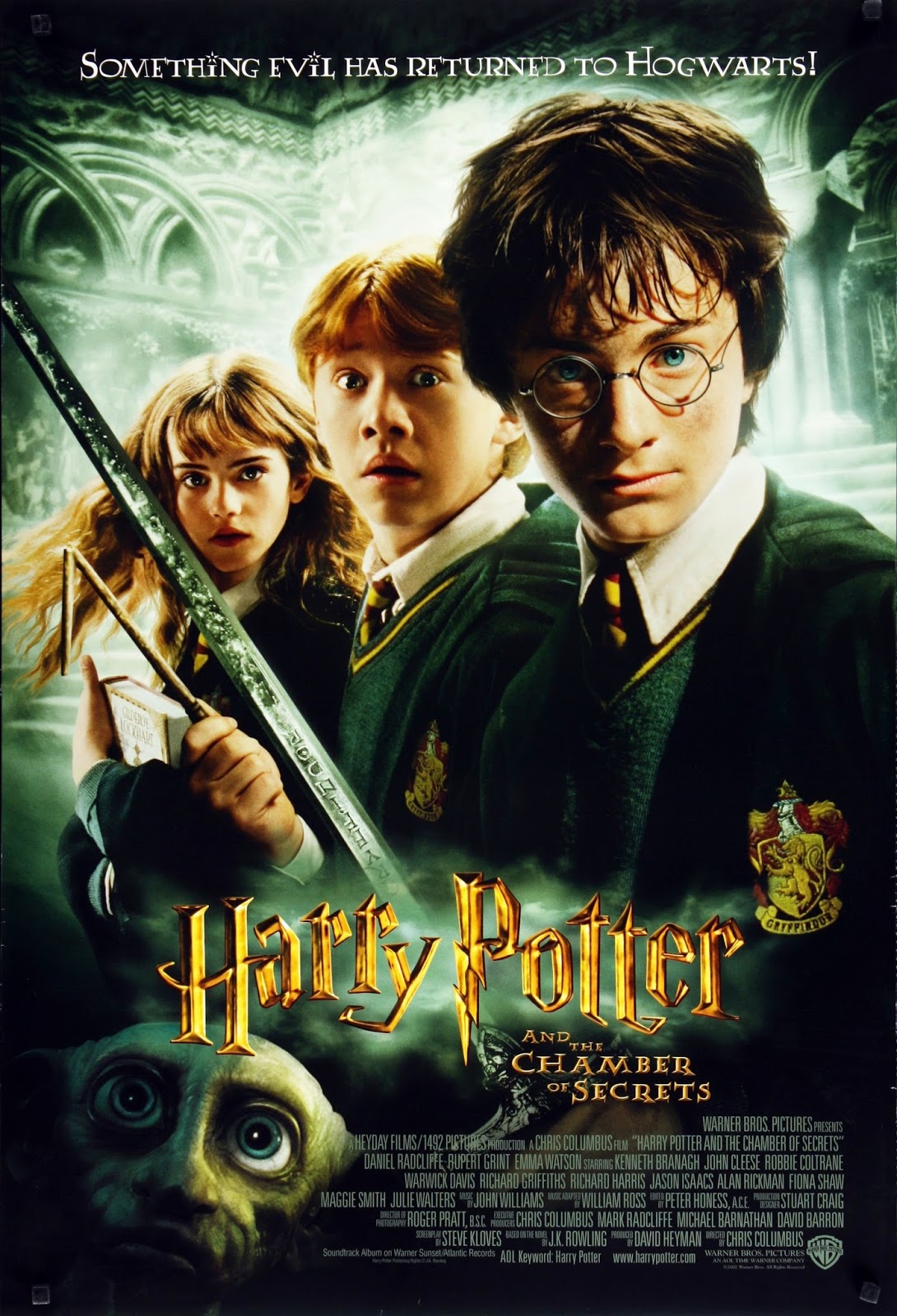
Harry Potter and the Chamber of Secrets (2002)


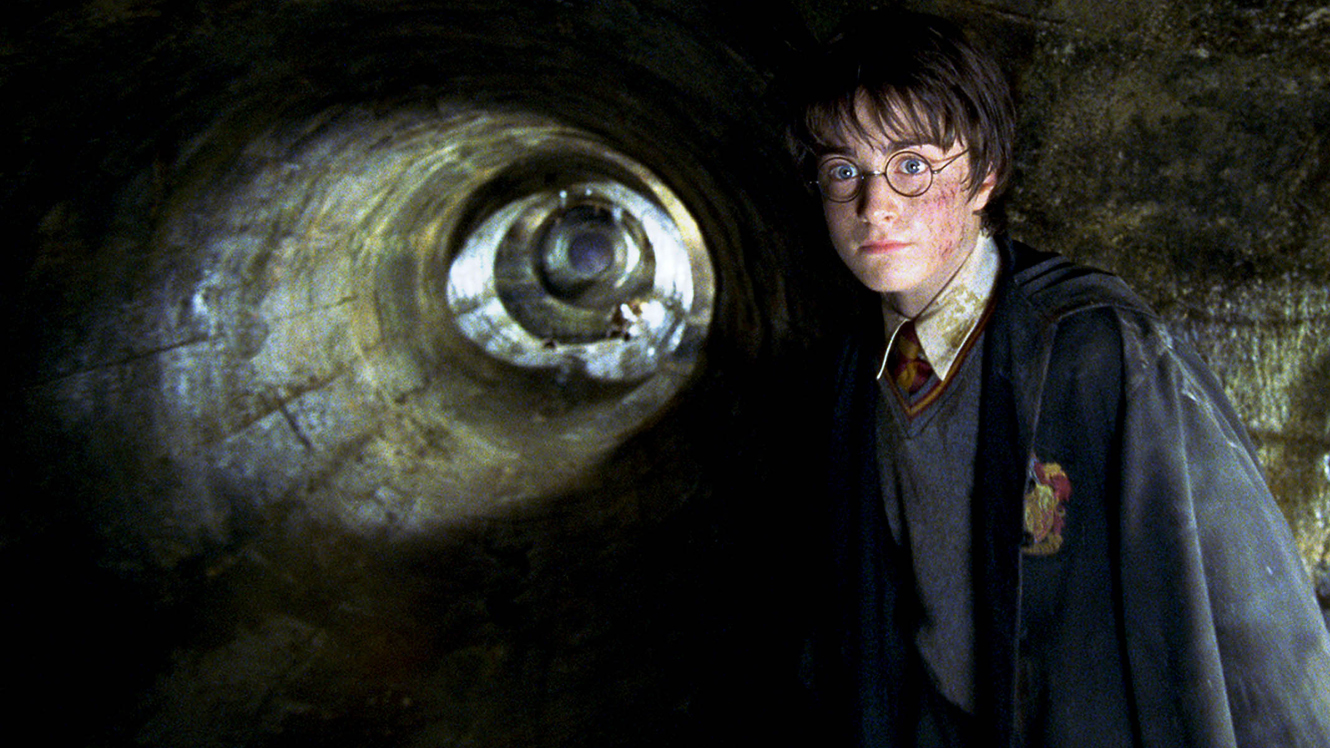
Daniel Radcliffe discovers dark goings on in the bowels of Hogwarts in Harry Potter and the Chamber of Secrets

Director: Chris Columbus

Cast: Daniel Radcliffe (Harry Potter), Rupert Grint (Ron Weasley), Emma Watson (Hermione Granger), Kenneth Branagh (Gilderoy Lockhart), John Cleese (Nearly Headless Nick), Robbie Coltrane (Rubeus Hagrid), Christian Coulson (Tom Riddle), Richard Griffiths (Vernon Dusley), Richard Harris (Albus Dumbledore), Jason Isaacs (Lucius Malfoy), Miriam Margolyes (Professor Snout), Alan Rickman (Severus Snape), Fiona Shaw (Petrunia Dursley), Maggie Smith (Minerva McGonagall), Julie Walters (Molly Weasley), Mark Williams (Arthur Weasley), Tom Felton (Draco Malfoy),  David Bradley (Argus Filch), Toby Jones (Dobby), Gemma Jones (Madam Pomfrey), Robert Hardy (Cornelius Fudge), Matthew Lewis (Neville Longbottom), Julian Glover (Aragog)

Another movie, and time for another everyday school year for Harry and friends: classes, exams, sports days and saving the entire population of the school from a grisly death. It’s a tough job but someone has to do it right? So welcome to the second Harry Potter film, that mixes the fun of flying cars and tricky elves with giant spiders and ferocious snakes.

Chris Columbus and team went virtually straight from the first film into making this one, and it’s pretty clear they had learned a lot from the last one. Sure, Columbus is still a safe pair of hands rather than an inspired director, but there is a bit more flair from cast and crew here. It also manages to look a lot less like a primary colour explosion or an illustrated version of the book, and more like a piece of film-making. Maybe this can be attributed to new cinematographer Roger Pratt, who gives the film a far more imaginative palette of darks blacks mixed with beautiful core colours (no surprise he returned to shoot Goblet of Fire). In addition, both design and costumes are far more adult and less Dickensian-robey than I remembered (though there’s still a way to go until we get to the steampunk 50s look of Prisoner of Azkaban that would dominate the rest of the films).

It also helps that the introduction to the wizarding world was covered so well in the first film. In fact, this is the last film where anyone felt it necessary to shoe-horn recaps into the dialogue, reminding us of who (and what) everything is. A particular moment of irritance for me is the first entry of Dumbledore and McGonagall: met with Harry breathlessly saying their names – just in case you were one of those people who didn’t contribute to the $1billion the first film made worldwide, or who hadn’t read any of the books by this point.

Anyway, Columbus got the principles out of the way in the first film so he could focus a bit more on this slightly darker, more developed story (just as Rowling was able to do in the books). The mystery of the Chamber of Secrets is more compelling than that around the Philosopher’s Stone in Potter’s first outing, and this is the film where we properly meet the series antagonist Voldemort – here played with a smarmy, casual cruelty by Christian Coulsen (it’s a shame this didn’t lead to bigger things for Coulsen). Radcliffe gets the chance to get his teeth into a decent final confrontation – and also the series’ first big action set-piece, quite well-shot with a creepy menace – as he takes on a basilisk.

In fact Radcliffe is much stronger in this movie – more relaxed, more confident and embracing Harry’s essential decency and sense of honour (the qualities that are always duller to play as an actor). He’s still struggling a bit at the moments that call for real emotion – but he does very well here indeed. Most importantly, you believe him and everything he does – which is quite something for a child actor to accomplish. 

He gets more depth and range to play with than Rupert Grint who was already being shoehorned into being gurning comic relief. There are few faces Grint isn’t asked to pull in this movie – and get used to that sad-sack downward grin, or the teeth-clench of terror, because these are going to become major weapons in his arsenal. Watson doesn’t actually get a lot in this movie, but even by this point it was becoming clear that she was pretty much a perfect fit for the character. 

The series also confirmed it had great roles for the cream of British acting – and that it was going to be a fine pension plan for most of Equity. Jason Isaacs plays the wicked Lucius Malfoy with relish and a scowling, patrician pride – no wonder he became not only a regular in the series, but one of its champions. He’s very good here indeed, as is other new addition Mark Williams, a perfectly charming shambolic dad as Arthur Weasley.

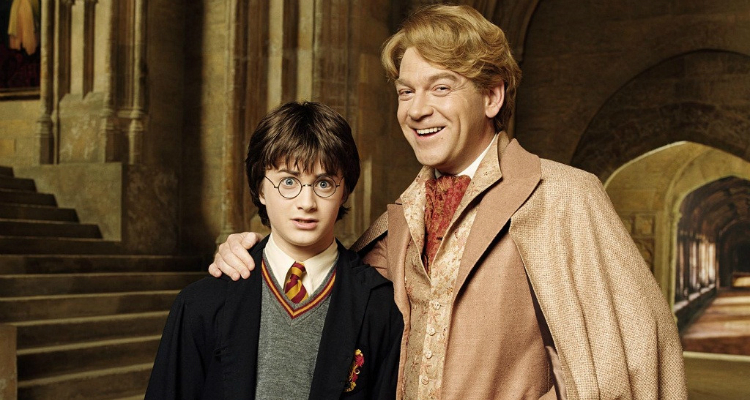
The show however is carried off by Kenneth Branagh as Gilderoy Lockhart. Branagh offers a performance close to of self-parody of his public perception, as a swaggering self-promoter, a preening egotist who can’t help but brag about his (almost non-existent) achievements and accomplishments. Branagh is deliriously funny as Lockhart, not only getting a lion’s share of the best scenes, but also bringing out some delicious comic rebuttals from the rest of the teachers – not least Rickman and Smith – who clearly can’t stand Lockhart. It’s a great performance – cocky, old-Etonianesque, full of surface charm and puffed up pride, but with a nasty selfish mean steak just below the surface.

It all feels part of the generally more free and engaging direction this film takes compared to the first one. Some of the best actors from the first film get relegated in screentime, but it shows the greater confidence the filmmakers have in the kids. The film really begins to introduce the ideas of good vs evil and the principles of friendship, humanity and love that differentiate Harry from Voldemort. Columbus isn’t quite the director to bring all this together into an epic vision, but he is good enough to deal the cards effectively. He gives it enough pace and shine so that we are never bored, though we’re also never wowed.

Despite the increased darkness and greater emotional depth, Columbus never loses track of the sense that he is making a family entertainment. He may still not be able to bring an artistic flourish to events, but he balances the light and dark very well. Not least the fact that the racism under the surface of the wizarding world emerges here. In the first film Voldemort alone was the villain, but in this one we first hear the term “mud blood” bandied about to describe Muggle-borns. We also find out that the wizarding world has its own slave class in elves (given a sometimes irritating Jar-Jar Binks-lite face by Dobby, a character with far more appeal to the kids than the parents). These are complex ideas – and all part of the world becoming richer.

Harry Potter and the Chamber of Secrets is still in the lower tier of Harry Potter films, but it’s a significant step-up from the first film. Visually it’s richer and more interesting. The stakes are higher, the themes deeper and more intriguing. It’s still very much a children’s film, and it still inclines towards being an over-faithful adaptation – it’s a bum-numbing 2 hours and 40 minutes so keen is it to not leave anything out – but this has far stronger material in it than the first film, and is a sure sign that this series was building a foundation it could flourish from.

Harry Potter and the Philosopher's Stone (2001)


Daniel Radcliffe gets sorted in the first of the franchise Harry Potter and the Philosopher’s Stone

Director: Chris Columbus

Cast: Daniel Radcliffe (Harry Potter), Rupert Grint (Ron Weasley), Emma Watson (Hermione Granger), John Cleese (Nearly Headless Nick), Robbie Coltrane (Rubeus Hagrid), Richard Griffiths (Vernon Dusley), Richard Harris (Albus Dumbledore), Ian Hart (Professor Quirrell), John Hurt (Mr Ollivander), Alan Rickman (Severus Snape), Fiona Shaw (Petrunia Dursley), Maggie Smith (Minerva McGonagall), Julie Walters (Molly Weasley), Tom Felton (Draco Malfoy),  Zoe Wanamaker (Madame Hooch), David Bradley (Argus Filch), Warwick Davis (Filius Flitwick)

In 2001, I was in my first year at university. I went to the cinema to watch this new, much-hyped children’s-fantasy film. I’d never heard of this Harry Potter fella going into it – so must have been one of the few people watching who was coming to it completely fresh. I was swept up in the film’s story when I first saw it. But how does it stand up watching it again decades later?

Well it’s a long bloody film. I was actually amazed this is nearly two-and-a-half hours long. Strewth. I mean this is the slightest and most childlike of Rowling’s books. Did it really need such a bum-numbing run-time to bring it to the screen?  I guess it needed a lot of that time, because there is a heck of a lot of backstory and wizarding world to introduce very early on – and the film explains this in very careful, loving detail. 

But Columbus’ world building here is excellent. I think it’s easy to forget how much pressure must have been riding on this film. How many imaginations worldwide did this need to satisfy? Not only that, but this had to cater for, and build towards, a host of sequels, some of which hadn’t even been written yet (other than in Rowling’s brilliant mind). But the film succeeded in bringing this wizarding world enchantingly to life. There is a delight in every magical sequence, or trick, produced in the film – so many that poor Daniel Radcliffe must have swiftly exhausted his repertoire of “awe-inspired” faces. But the film’s loving reconstruction of the world of the book is perfect, and the fact that it not only didn’t alienate people, but that so much of it has become integral to the popularity of the books as well, says a lot.

Later films would get more daring and imaginative in bringing book to screen – with Rowling’s full support – but this first one probably did need to hew pretty close to the original book in order to hook and secure that fan-base. So while Kloves’ screenplay may feel at time like a mixture of transcription and rewording rather than a true work of adaptation, it meets the needs of this first film.

The design elements of the film were also spot on. Much of the wizarding world would be radically overhauled design-wise in The Prisoner of Azkaban, but the foundations are all here. John Williams’ score was also pretty much perfect from the start so winningly constructed and so perfectly matched with the mood of the book that it has also become an integral part of the Harry Potter world.

But, watching the film back, it’s clear still that this is one of the weakest films in the series. Part of this is of course is that it’s also the most simple and childish of the books – Rowling would immeasurably enrichen and deepen the series with each book – but when placed in context with the rest of the franchise efforts, this does seem like a brighter, more colourful, Roald Dahlish, traditional children’s film. Again, a lot of this is faithful replication of the book – but considering how children embraced the later more emotionally mature films, it would not have been a disaster to include more of that material here.

The other main issue with the film is quite simply that it is averagely directed and rather mundanely filmed. It’s a bit of a shock to be reminded that Oscar-winning photographer John Searle shot this film, as it’s ludicrously over-bright and conventionally framed. In fact, it lacks any real visual interest at all, looking more like a child’s picture book than any form of motion picture. There is hardly a shot or visual image in the film that sticks in my head – and I am literally writing this as the credits roll on the movie. As a piece of visual storytelling, it’s pretty mundane.

Similarly, Chris Columbus is a solid but uninspired film maker. He marshals events on camera with a reliably safe pair of hands, unspectacular and undemonstrative. But he doesn’t have any real dynamism as a film maker – perhaps that’s why the material never really feels like his own. When the series did have a film maker with vision in Alfonso Cuaron (in Prisoner of Azkaban), the difference in imagination and vision was immediately striking – so much so the two directors who followed Cuaron effectively trod in his footprints.

But Columbus may well have been what this franchise needed at this stage: a safe pair of hands, who could work with the studio and the producers and shepherd to the screen a series of films that would be running for over a decade. Much as other names bandied around to direct at the time would have been better film-makers, I can’t imagine them having the “safe pair of hands” quality that Columbus did, providing the solid foundation from which the series could later grow – let’s be honest could you imagine Terry Gilliam successfully kick-starting a huge-franchise series like this?

And let’s not forget either the casting gifts Columbus left the film-makers with here. Have three child stars ever been better chosen than Radcliffe, Grint and Watson? And indeed all the other young actors, all but one of whom stayed with the series to the end? The triumph of choosing not just the talent, but the level headedness, was quite something. And the three actors here are very good. 

Grint probably wasn’t better than he was here – his natural comic timing becoming an overused tool in later films, but here he’s charming, likeable and endearing. Watson is raw but a good mix of know-it-all and vulnerable feeling. Radcliffe gets a rough ride in a hugely challenging part – and yeah he’s not yet an actor here – but he does very well, considering how often he is called on to look amazed, and how many deep feelings of isolation, loneliness and confusion he is called upon to show during the film. Not one kid in a thousand could do what he does here. Columbus got magnificent work from the entire child cast – and that alone is enough to give him a pass.

The adult cast is of course pretty much perfect. Robbie Coltrane is a stand-out as a loveable Hagrid, immensely cuddily and endearingly sweet – perfect casting. Rickman was of course similarly inspired casting, Smith was perfect, Harris an unusual choice but one that worked. Ian Hart’s twitchy nervousness gets a bit wearing, but it’s not an easy part. Griffiths and Shaw embrace the cartoonish Roald-Dahl-bullying of the Dursleys. Pretty much every casting choice is spot on.

Harry Potter and the Philosopher’s Stone is the least deep and rich of the Harry Potter films, but it had a hell of a difficult job to do. And what I have to remember is that I was one of the uninitiated who sat in the cinema to watch it and needed all that introduction. Any film that has to get Muggles like me up-to-speed while keeping the die-hard fans happy faces a very difficult task. I think you can say, for all the later films surpassed it, that Philosopher’s Stone managed that in spades.

Caravaggio (1986)

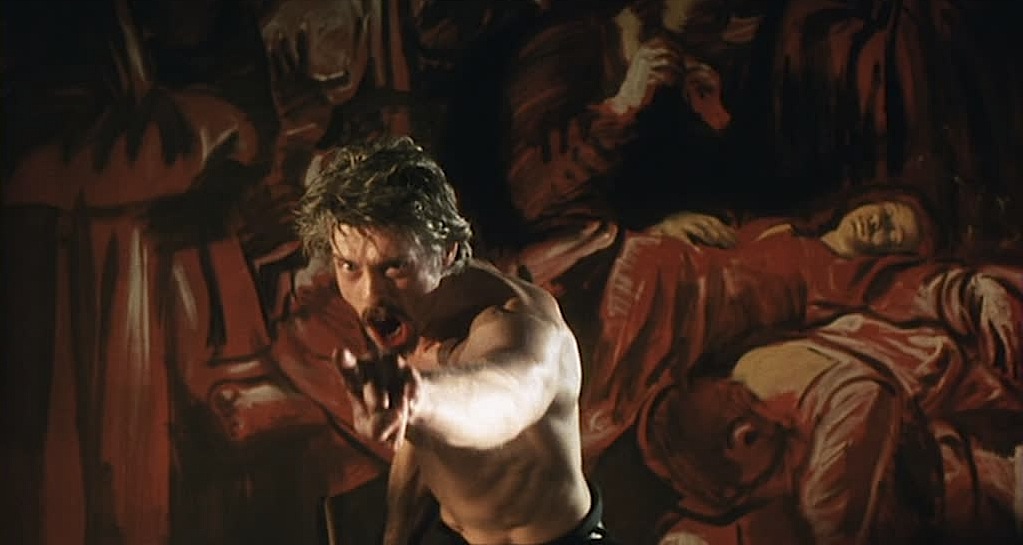
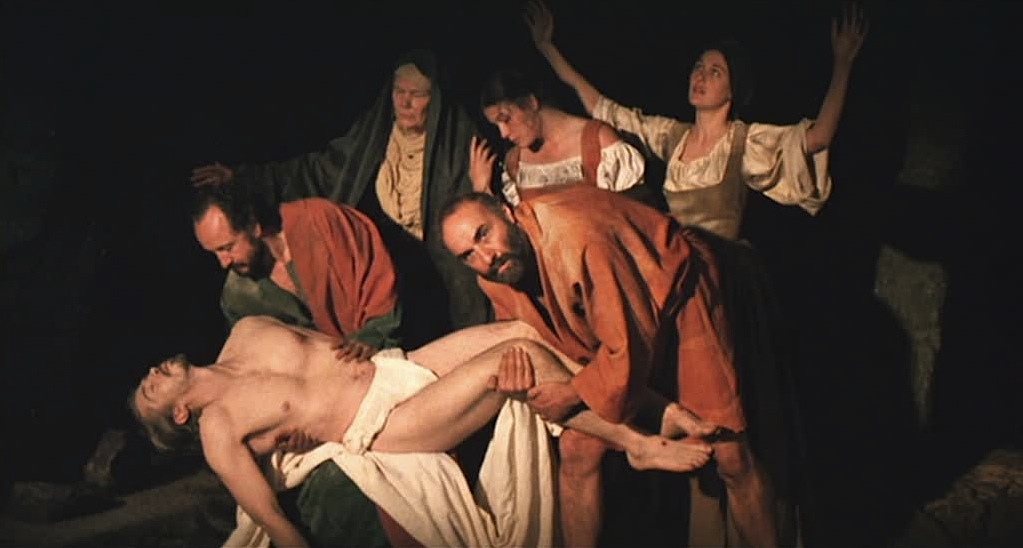
Nigel Terry is Caravaggio in Derek Jarman’s extraordinary meditation on art Caravaggio

Director: Derek Jarman

Cast: Nigel Terry (Michelangelo de Caravaggio), Sean Bean (Ranuccio Thomasoni), Tilda Swinton (Lena), Garry Cooper (Davide), Dexter Fletcher (Young Caravaggio), Spencer Leigh (Jerusaleme), Michael Gough (Cardinal del Monte), Nigel Davenport (Giustinani), Robbie Coltrane (Cardinal Scipione Borghese), Dawn Archibald (Pipo), Jonathan Hyde (Baglione), Jack Birkett (Pope)

Derek Jarman started his career as a painter, before he began making his own eccentric, art-house films, shot through with a fascination with visual imagery, colliding time periods, abuse of power and homosexuality. For years, Jarman had sought funding to make a biographical film about Caravaggio – one of his (and my) favourite artists. The film he eventually produced, Caravaggio, is quite simply not like anything you’ve really seen before – partly a masterpiece of striking imagery and inventiveness, partly a groaningly semi-pretentious, self-conscious piece of art cinema. What it never is though is dull.

Told in a disjointed series of flashbacks, in which not every scene necessarily connects with the scenes preceding and following it, Caravaggio as a young boy (Dexter Fletcher) is taken under the wing of Cardinal del Monte (an imperiously controlling Michael Gough): creepy part art patron, part pervert. Caravaggio (Nigel Terry) becomes a successful painter, while never losing his taste for the wildness and violence of the streets of Rome. He becomes fascinated by street fighter Ranuccio Thomasoni (Sean Bean) and Thomasoni’s lover Lena (Tilda Swinton), the three of them forming a sensually suggestive menage-a-trois, which eventually leads to tragedy. All this is framed with the dying Caravaggio, remembering in a semi-poetic voiceover feelings and moments from his life.

Firstly, for any fan of Caravaggio, this film is a visual treat. Every frame is lit and framed to be as reminiscent as possible of the style of the master. Many scenes are framed either in bare, stone rooms with single windows, or in sets emerging out of an inky blackness. Lighting often strikes diagonally across the frame, just as in Caravaggio’s best work. A number of scenes seem lit from a single source, such as a candle. On top of this, a number of scenes feature either the creation of, or inspiration for, a number of Caravaggio’s most memorable artworks: for those familiar with his work, it’s a delight to see these either recreated in the studio by models, or suggestively composed out of scenes. For an art lover, it’s a visual treat.

Jarman also has an intricate understanding of the creation of art, and when we watch Caravaggio at work it genuinely feels like watching a real artist, engaging with the world, recording images in his mind’s eye, and preparing his next work. The scenes watching Caravaggio create his masterpieces are fascinating in their detail and the careful build-up of paint to create an effect. The effort of models to stay still for the painter is constantly stressed. It’s a tribute to the work that goes into creation, even if the film succumbs to a few pretentious clichés (at one point Caravaggio and Ranuccio fight playfully with knives and Ranuccio cuts Caravaggio: of course Caravaggio smears the blood over Ranucci’s face. That tends to be what artists in films do). 

Jarman, however, makes a film that is deeper and more suggestive than that. This is a fascinating meditation on power and patronage in the world of art. Caravaggio is a genius, but also a tool of the people above him in the pecking order. One of the first things we see is the teenage Caravaggio selling first a painting, then his body, to a pervy art collector. The patrons call the shots here, and if they want to put your work on their wall, or their hands down your pants, the artist just needs to fall into line. Caravaggio himself is little different – the models he works with are treated with a certain warmth, but there is a clear hierarchy here. His relationship with Ranuccio and Lena is rooted initially in power – he can effectively buy them or their bodies, because he controls the money available to them. The renaissance was not a time of equality: everyone is in hock to someone else, and everyone is defined by what they can trade, be that their art, their body or both.

The film has a clear sensual charge to it in every frame, despite not containing a single scene of sex. There are highly suggestive moments of sexual abuse and desire throughout. It’s heavily implied Cardinal del Monte’s interest in the young Caravaggio is not completely innocent, as del Monte sits with him in bed teaching him to read. During their first modelling session, Caravaggio tosses a series of coins at Ranuccio, each of which the man inserts suggestively into his mouth. Every scene with Lena tingles with sensuality – either with Caravaggio, Ranuccio or the mysteriously powerful Cardinal Borghese (a corrupt looking Robbie Coltrane). 

Perhaps the most striking feature of the film though is its highly unique look. Taking his cue from Caravaggio himself – who painted the subjects of his historical pictures in contemporary dress and locations – Jarman and costume designer Sandy Powell dress the cast in a series of shabby, 1940s-1970s clothing (with the exception of a scene in the Vatican, which is established as a fancy dress party). Caravaggio is barely seen without a cigarette in his mouth, and dresses like a bohemian from Montmartre. Plenty of modern props are introduced – a banker fiddles with a pocket calculator, the writer Baglione hammers his criticisms into a typewriter while flicking through a luscious magazine of Caravaggio prints. Ranuccio cleans a motorbike.

All this manages to not only make the film continually visually striking, but also playfully reminds the audience all the time that they are watching a version of a reality – not a true story but a fictionalisation of the painter’s life. It gives Jarman an artistic licence that he exploits to the full, and makes this a film that really sticks in the memory. It’s an inventiveness you wish you saw more in films rather than slavish historical recreation.

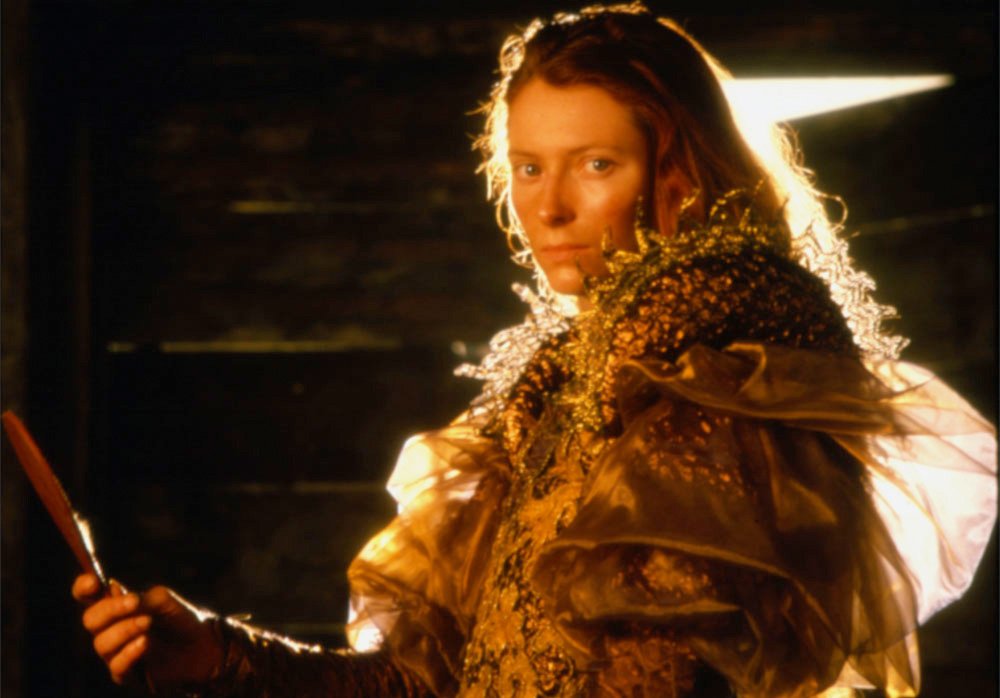
Caravaggio is not a masterpiece – it’s a little too self-consciously arty for that. It almost delights at times in being disjointed and hard to follow. Some scenes leap over what seems like years of events. There is no real narrative through-line. The poetic voiceover can start to wear you down – I searched it for meaning, but I’m not sure if there was much there. Saying that, although this is very much a director’s film, there are some fine performances. Terry does a very good job as the artist himself, capturing a sense of the creative spark behind the eyes. Bean is excellent in one of his first roles as the earthy, insecure Ranuccio. Tilda Swinton however steals the film (it’s easy to see why she became Jarman’s muse) as the beguiling and mysterious Lena.

Caravaggio is that rare thing: a film about an artist that seems to understand art, and feel like a work of art itself. It’s unique and eye-catching and memorable as well as having a neat eye for the tragic. I was strangely mesmerised by it throughout. It’s not a perfect film, but it’s a very good one.

The World is Not Enough (1999)


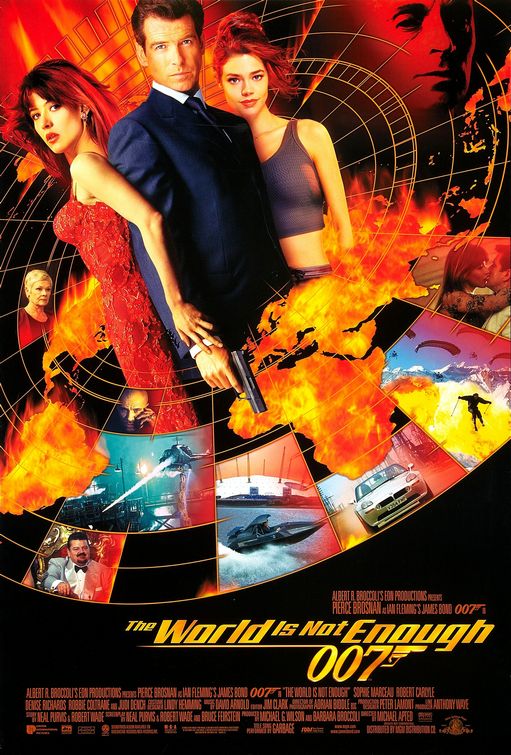
Pierce Brosnan falls into Sophie Marceau’s clutches. Time for one last screw.

Director: Michael Apted

Cast: Pierce Brosnan (James Bond), Sophie Marceau (Elektra King), Robert Carlyle (Renard), Denise Richards (Dr Christmas Jones), Robbie Coltrane (Valentin Zukovsky), Judi Dench (M), Michael Kitchen (Bill Tanner), Colin Salmon (Charles Robinson), Desmond Llewelyn (Q), John Cleese (R), Samantha Bond (Miss Moneypenny), Ulrich Thomsen (Sasha Davidov)

I’ve long been of the belief that Pierce Brosnan’s Bonds were each a decline from the last, no matter how much money and action were thrown at the screen. TWINE in no way shakes that opinion. It’s a film I remember when I saw it in the cinema twenty years ago being a little, well, disappointed by.

After the assassination of an oil tycoon in MI6 headquarters, James Bond (Pierce Brosnan) is assigned to protect his daughter Elektra (Sophie Marceau) as she vows to complete the pipeline her father started. MI6 believes her life is endangered by her former kidnapper Renard (Robert Carlyle). Heading to Eastern Europe, Bond soon finds himself in the middle of a complex game, with a mysterious string puller, that seems to revolve around the stealing of a nuclear warhead and the kidnap of M (Judi Dench), with only nuclear scientist Dr. Christmas Jones (Denise Richards) to help.

TWINE is all about its electrifying opening sequence. It’s possibly the biggest, most exciting introduction to a Bond movie yet. Not only does it have a truly compelling action sequence in the boat chase down the Thames, but there’s plenty of plot, tension, mystery, revelation and humour – Bond straightens his tie under water – to match the entire content of some Bond capers. Brosnan is deadly in the Bilbao sequence – you believe he’s a killer – he’s working out of the money trap is Bond at his most ingenious and the beautifully filmed and edited boat chase is an absolute wonder. It’s edge of the seat stuff and when it finishes, you can just imagine a cinema full of people letting out a sigh of relief and kicking back to enjoy the rest of the film.

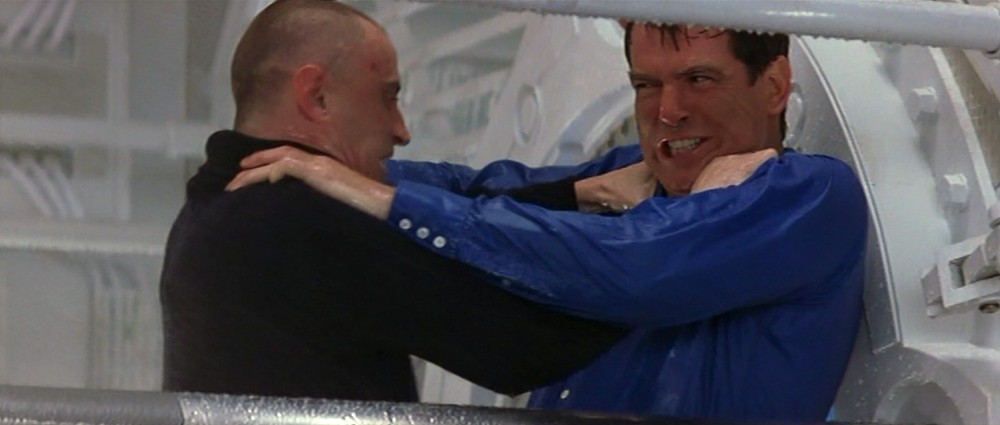
In fact that’s part of the problem. As Anthony Lane said in his review of the film “It’s the best 15 minutes in film this year. Let’s pack up and go home”. The problem is literally nothing in the film that follows can even hope to live up to this – and by the end, it’s practically given up trying. How does a film that started so vibrantly end with such a hackneyed fight on a submarine, with our heroes squabbling over something so fiddily it looks like an ink cartridge?

In between the phenomenal start and the damp squib ending, the film pings off to a lot locations – Azerbaijan! Turkey! Bilbao! – but everywhere still has the same bland, identikit feel to it, for all the shots of the odd famous landmark. That’s not to mention the rather laborious plot that ties the film together. It’s a film that feels like it’s trying to make a series of big statements about our hidden selves, revenge, manipulation – but falls short each time. It’s wrapped inside the most elliptical villain scheme I can remember. I only watched it a few days ago and even I’m not sure why Elektra wanted to blow up that damn submarine in Turkey.

Bond and Renard face off in the underwhelming sub sequence

Increasingly it becomes bogged down in machinations that feel recycled from previous films in the series. Shady Russians, corrupt security guards, chases down the snowy mountains, fiddily endings in old style nuclear subs. The film’s second biggest set piece – the attack on a cavier factory – has a rather formulaic inevitability about it. 

It has its moments of cool and charm, but in many ways it’s a blunt and crude film. What sort of eclectic film casting selects people as wildly diverse as Goldie and Ulrich Thomson as sidekicks? Robbie Coltrane returns as Zukovsky, but his character has been broadened from his first outing in GoldenEye into some sort of comic relief, a cane carrying buffoon a million miles from the ruthless ex-hitman in his first appearance. We even get a return of the “MI6 accidentally stumbles in on Bond doing the nasty” closing gag so beloved of the Roger Moore era. By the end of the film it really feels we’ve come a million miles from the ruthless efficiency and dynamic action it opened with.

The film’s most interesting beat, without a doubt, is Elektra King. It’s a stroke of inventiveness to turn the character established as the Bond girl, into the film’s villain.  Elektra uses many of the tropes of traditional Bond girls – vulnerability, sensuality, playfulness, a certain gutsiness – and repackages them as villainous tools, weapons of manipulation and deceit. Sophie Marceau is very good as possibly the most intriguing villain of the whole series, and the film neatly leaves open the question of how far her experiences twisted her, or whether her sociopathy was a deep lying trait. Her chemistry with Brosnan seems at times a little forced, but she gets most of the meaty content of the story and handles it with gusto. It’s especially neat to see how Marceau adjusts and adapts her performance for each person she encounters – with Reynard she’s playful and infatuated, with Bond she’s more aloofly sensual.

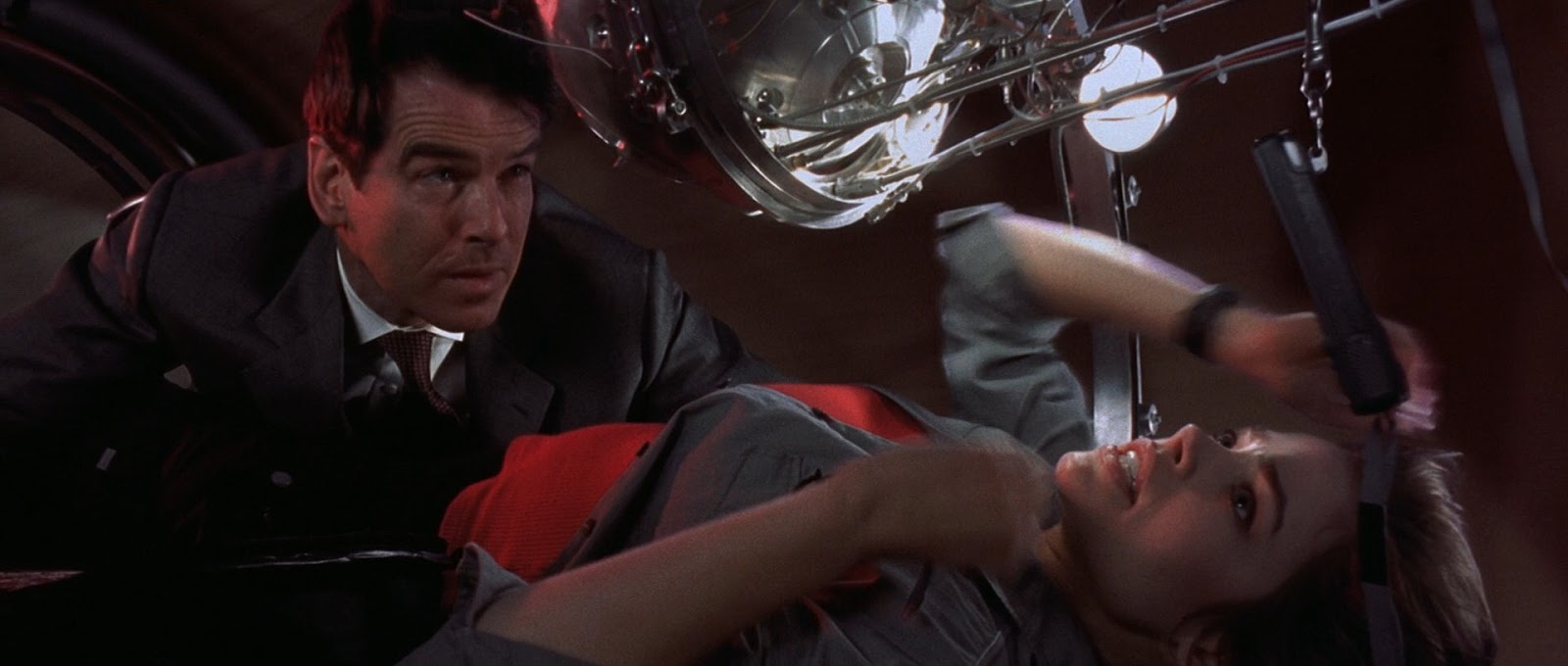
Denise Richards gets all nuclear physicist

She certainly fares better than poor Denise Richards, playing a character who feels like she was written backwards from the film’s closing punchline (“I thought Christmas only comes once a year” indeed). As if the producers wanted to counterbalance the innovativeness of Elektra, Richards feels like she’s wandered in from a classic Moore film: nominally an expert in something grand sounding (nuclear physics – and you can have a £1 from me if you ever meet anyone who believes Denise Richards has a PhD in rocket science) but really a damsel in distress dressed in hot pants. I’d further add that Brosnan already looks far too old for her.

The film’s best asset though is Brosnan’s Bond. The more I rewatch Brosnan’s efforts, the more I feel sorry the guy didn’t get more of the sort of material Dalton and Craig received either side of him. He clearly has the acting chops to do something a bit more interesting with the character, but his Bond is always a bit tonally confused – one moment he will stare viciously at a fallen opponent, the next he’ll be wearing a shit-eating grin and perving over ladies’ underwear in a nightclub. Brosnan does both these things, I hasten to add, extremely well: this film is probably his peak action performance, and at several points (not least his first encounter with Reynard) his sense of physical danger is jaw dropping. TWINE is a kind of perfect embodiment of his era: 1/3rd Connery to 2/3rd Moore.

For all that the big picture of the film gets away from Apted, he does have a good eye for smaller moments that stick with you – the tie moment, Brosnan’s look into the camera after his first kill. Moments like this appear throughout the film: a cut back to Zukovsky’s grin when Bond’s car is destroyed, the pinpoint bullet shot that hits a plate of glass right in front of an unblinking Reynard. Moments like this get increasingly lost as the film pushes on and becomes more and more formulaic and traditional, but they are still there.

That’s what it all comes back to: the film is not the sum of its parts. Moments stand out, but the whole thing really doesn’t. Everything feels a little too pre-packaged. Even an actor as brilliant as Robert Carlyle (the sort of actor everyone said should play a Bond villain) is lost in the mix, his performance as forgettable as a million other “ruthless anarchist” types we’ve seen before. There are some neat homages – I like the painting of Bernard Lee in MI6 HQ – but too much of it feels like more of the same, told with a professionalism that crushes the life out of individualism. So while it has moments that excite and entertain, as well as elements (such as Elektra King) that feel unique and original, too much of it also feels like, well, any other Bond film. For all its energy, it feels like watching a world-class athlete run on the spot.

FINAL COMMENT:This film does get some credit however for how tastefully it handles the final scenes of Desmond Llewelyn as Q. Tragically Llewelyn died in a car crash shortly before the film was released, but his work here is possibly some of the best he contributed to the series. Never let them see you bleed and always have an escape route.

Great Expectations (2012)


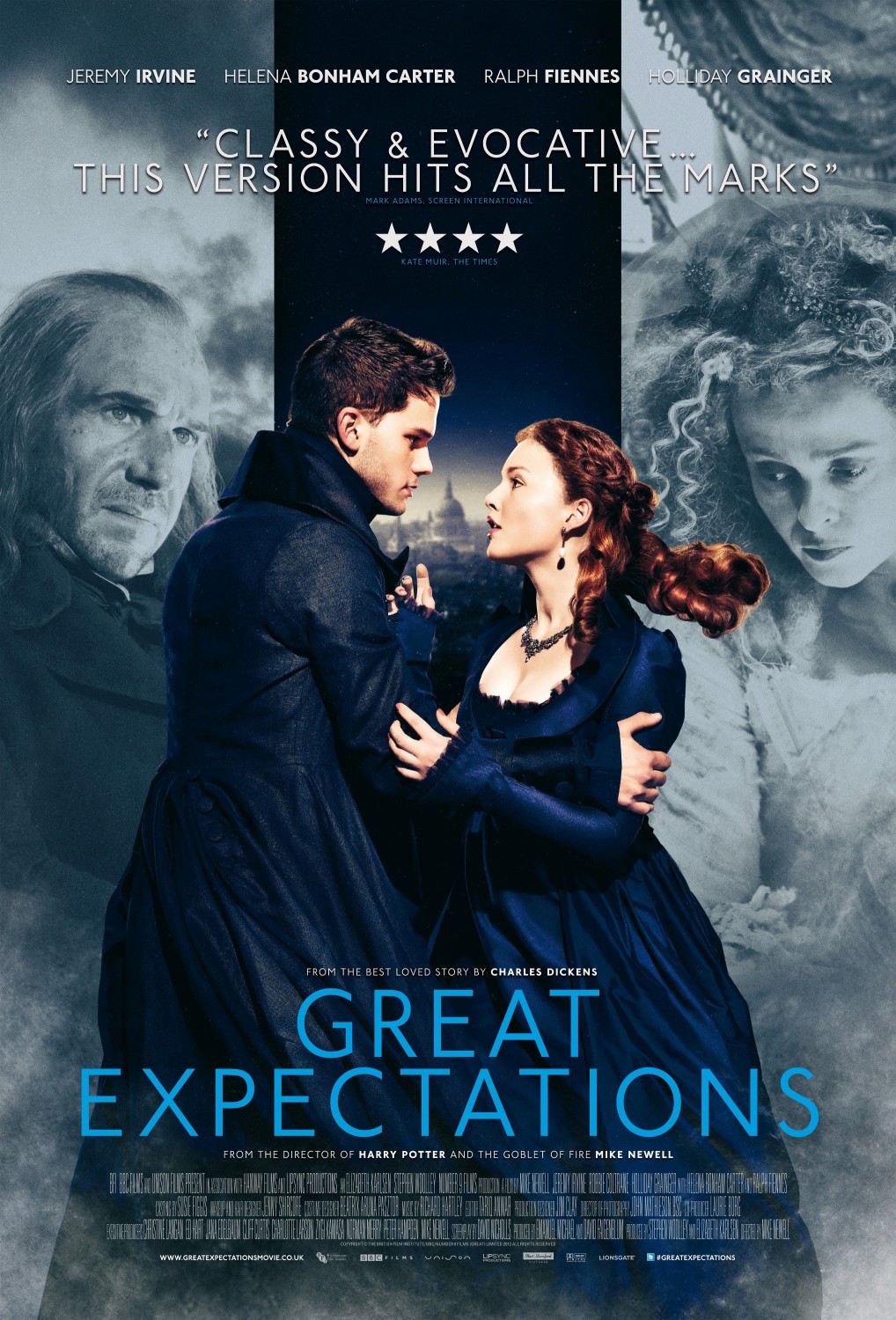
Ralph Fiennes is ‘Ungry

Director: Mike Newell

Cast: Jeremy Irvine (Pip), Holliday Grainger (Estella), Helena Bonham-Carter (Miss Havisham), Ralph Fiennes (Magwitch), Robbie Coltrane (Jaggers), Jason Flemyng (Joe Gargery), Ewen Bremner (Wemmick), Sally Hawkins (Mrs. Joe), David Walliams (Pumblechook), Tamzin Outhwaite (Molly), Ben Lloyd-Hughes (Bentley Drummle)

There is one major problem with Mike Newell and screenwriter David Nicholl’s faithful adaptation of Great Expectations, one of Charles Dickens’ best loved novels. It’s such a faithful adaptation that it largely fails to say or do anything unique or interesting with the actual source material itself. Thus it basically joins the parade of adaptations of this novel on film, struggling to define itself from the competition.

For those who don’t know the story: young Pip has two defining encounters in his childhood. One is with escaped convict Magwitch (Ralph Fiennes), to whom he provides some help; the other with eccentric, secluded spinster Miss Havisham (Helena Bonham-Carter), who brings him in as a playfellow for her ward, Estella. As a young man, Pip (Jeremy Irvine) finds himself coming into “great expectations” from a mysterious benefactor, and moves to London where he encounters Estella (Holliday Grainger) once more.

Nicholl’s screenplay is a careful ticking off of all the events you would expect to see from either the book or previous versions: “I’m hungry boy”? Check. Mrs Joe? Check. Boxing with young Herbert Pocket? Check. Jaggers and Molly? Check. Wemmick, the Aged P and the cannon? Check. Bentley Drummle? Check. Joe Gargery in London? Check. Fire? Check. And so on, and so on. What’s really missing from the film is any sense of identity, any sense of a story it wishes to tell, or angle it wants to take on the source material. Instead it’s a picture book accompaniment to the novel. A beautifully filmed one, I will say (John Mathieson’s photography is lavishly good, and brilliantly captures the wide-open spaciousness of Kent compared to the dank, claustrophobic confines of London) but still a picture book.

It’s also decently acted throughout, with Jason Flemyng a stand-out as a decent, kind and loveable Joe (a part I think it’s almost impossible to fail in). Robbie Coltrane makes Jaggers a creepy charmer. Helena Bonham-Carter is, as one reviewer said, “almost too perfect casting” as Miss Havisham – her performance is a bit too familiar as a remix of her parts in Tim Burton films and Bellatrix Lastrange – but she is still very good in this role.

The closest the film gets to putting a twist on the novel is to front and centre the love-story angle between Pip and Estella. Even this, though, is not completely successful, largely due to time. Irvine and Grainger are fine performers (Grainger in particular does an awful lot with what can’t be more than 10-15 minutes of screentime), but adult Pip and Estella don’t have a scene together until halfway through the film. The film also is reluctant to lose anything major from the Gargery or Magwitch plotlines, meaning these get equal weighting with the Estella scenes. It’s possibly the only area where this adaptation is weaker than the BBC adaptation of a few years later, which effectively repositioned the story with a focus on father-son relationships, adding greater prominence to the Pip-Gargery-Magwitch relationships.

Mentioning that BBC adaptation makes a key point about the lack of individuality this production has. Casting my mind back to it, I found it very hard to remember or distinguish the differences between the two – both looked very similar, took similar decisions and featured similar casts. In fact, it became very hard to remember who was in what – an internet search for images for this film throws up plenty of images of Douglas Booth from the mini-series. It’s a small point, but I think captures the lack of uniqueness about this film.

I’ve been very hard on this film, which I feel a bit bad about as it is a very watchable and loyal adaptation and a perfect entry point for Dickens. It also has, in Ralph Fiennes, one superb performance. Of all the versions of Magwitch on screen, this surely has to be the best. Fiennes has the physicality and danger the role needs, but he also has an ethereal, almost child-like quality to him. You can believe this is a dangerous man, but also understand how he can be so passive and easily led. Fiennes’ Magwich takes a delight in the seeing the pleasures of others and has a sweet dedication to his own codes of loyalty. It’s a terrific performance – and actually emerges as the one unique and defining thing the film has to offer.