Tag: Robert Carlyle

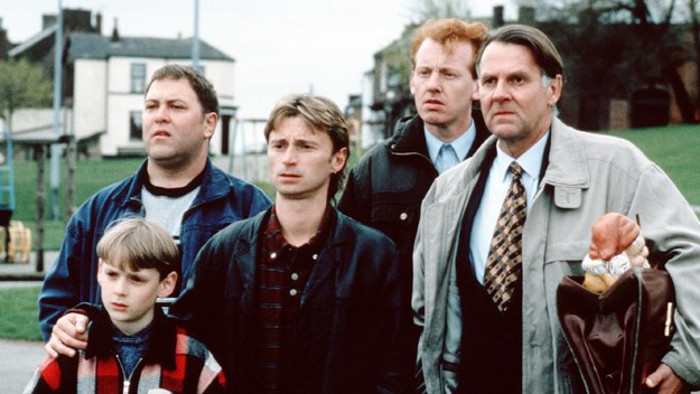
The Full Monty (1997)

Steelworkers from Sheffield have no options but to turn their hand to stripping, in British phenomenon The Full Monty

Director: Peter Cattaneo

Cast: Robert Carlyle (Gaz), Mark Addy (Dave), Tom Wilkinson (Gerald), Lesley Sharp (Jean), Emily Woof (Mandy), William Snape (Nathan), Steve Huisan (Lomper), Paul Barber (Horse), Hugo Speer (Guy)

In the summer of 1997, Britain was a depressed place. The country was in the middle of an intense mourning for the death of Princess Diana. Perhaps that’s why a film all about overcoming despair and to turn it into heart-warming triumph suddenly gripped the whole nation and emerged from nowhere to become the most successful British film of all time. No one expected a film about Sheffield strippers to do that.

The economy has dropped out of the Sheffield steel market, and hundreds of people are out of work and desperate. Gaz (Robert Carlyle), a genial waster, needs £700 to pay his child maintenance and not lose access to his son Nathan (William Snape). Dave (Mark Addy) has serious self-image problems, his disgust at his own weight is leading him to push away Jean (Lesley Sharp), the wife he can’t believe loves him. Gerald (Tom Wilkinson), their ex-foreman, is so ashamed of losing his job he hasn’t told his wife that he’s been unemployed for six months and is facing financial ruin. Together with three other men with no other options, they decide one way to get money quick is to follow the example of the sell-out male-strippers at the local working club – with the unique selling point that they will go “the full monty”.

It’s been nearly a decade since I saw The Full Monty. Over-exposure made it an easy film to feel a bit sniffy and dismissive about, like it was a happy accident that the film came from nowhere to achieve staggering success. But that’s hugely unfair. Watching it back now, it’s amazing how much it’s a comedic film grounded in a sense of desperation and pain, and then how brilliantly it uses this to create empathy for its characters, and how wonderfully this helps you to share their joy and triumph when they are finally taking control of their own destinies.

The Full Monty emerged from a troubled production history. It was hugely difficult to find funding for the film. It took years to get the filming sorted, and casting was difficult – in a parallel universe Nicholas Lyndhurst and Russ Abbott played the lead roles. Robert Carlyle has described the making of the film as being totally chaotic (he further claimed he was convinced the film was “pish” and heading for disaster). The first cut was met with such negativity from the distributors that it nearly ended up direct-to-video, until the producers begged for one more shot at editing the film. But then it emerged as one of the most widely loved UK films of the 1990s, eventually being nominated for four Oscars (Picture, Director, Screenplay and a win for Best Score). That’s what I call a turnaround!

It’s also strangely fitting for the film itself. The opening footage showing a prosperous and bustling Sheffield in the 1960s is a perfect set-up for the Sheffield of the 1990s with unemployment rampant, and our characters confined to endless days of drifting around the city and failing to gain any benefits from a workshop at the unemployment office. Every frame of Cattaneo’s well shot film stresses the relative bleakness of the environment, the run-down world the characters inhabit, and that sense that all promise is missing from the future of this city.

In the middle of this, the film doesn’t shy away from looking at – with plenty of jokes – plenty of themes which are hardly your default expectations for a comedy movie. We’ve got depression, self-loathing, body-image, fathers’ rights and suicide: if that’s not a comic gold on paper I don’t know what is!  However, what is so perfect about the film is how well it judges the tone when dealing with these themes. Simon Beaufoy’s script is warm, humane and above all immensely empathetic. Never – not once – are any of these characters the butt of the humour. While we may see the dark comedy that can occur, we never laugh at the characters.

The script gets a perfect balance between all this desperation and pain and well-worked, down-to-earth, honest and affecting humour. It’s also genuinely funny, with several stand-out gags. As an interesting side note, perhaps the film’s most famous comic moment – the boys standing in the dole queue, involuntarily practicing their routine when Hot Stuff starts playing in the radio – nearly didn’t make the film, as the producers felt it was unrealistic. Just as well they left it in, as it perfectly captures the mood of the movie.

On top of which, the film taps into the human bonds that can grow in adversity. One of the film’s principal delights is seeing this odd bunch slowly begin to come together like a family. We see them confide in each other, listen to each other’s problems, accept each other for what they are. It’s a film about the triumph of the human spirit and the rewards that can come from opening your heart to other people when all seems lost.

It further helps that Simon Beaufoy’s script draws such terrific performances from the actors. Carlyle (for all his doubts about the film) plays Gaz with a perfect, low-key, commitment and empathy. Carlyle in many ways makes the film work as well as it does because he plays the truth of each scene and is willing to be the film’s loadstone. He plays every moment truthfully and is as effective showing Gaz’s chancer wasterness as he is at allowing the real pain and fear Gaz feels at the prospect of losing his son.

The film also changed the careers of Addy and Wilkinson, turning the two into character actor superstars. Addy is fabulous as the self-loathing Dave: having had problems myself with being concerned about my own image, seeing the psychological damage Dave inflicts on himself through his own inadequacies is very moving, and perfectly played by Addy – who also brings a great deal of comic mastery to the film. Wilkinson is perhaps the pick of the bunch as the seemingly proud and haughty Gerald, who hides intense fragility and pain under the surface. He has a truly affecting breakdown scene after a job interview gone wrong – and the reaction acting to this from Carlyle and Addy is also by the way marvellous. It’s a terrific (BAFTA winning) performance.

And then you hit the final stripping scene – and all that empathy the film has been building pays off, because the triumphal dance and strip down is hugely heart-warming. After seeing the men go through such difficulty and despair it’s really affecting and joyful to see them finally take control of their own destinies. How could you not be wrapped up in it? How could a whole nation not take the whole thing to their hearts? Put out of your mind all those thoughts that this can’t be that good, or that we were all mistaken in 1997: this is genuinely very good, thought-provoking and hilarious stuff.

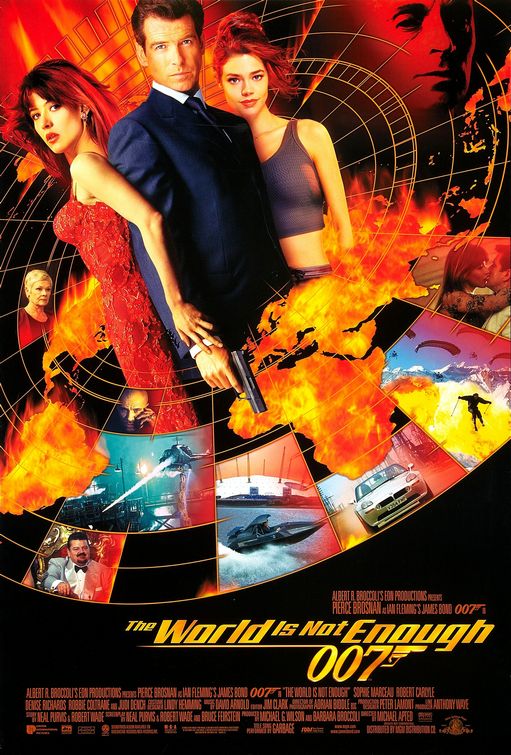
The World is Not Enough (1999)


Pierce Brosnan falls into Sophie Marceau’s clutches. Time for one last screw.

Director: Michael Apted

Cast: Pierce Brosnan (James Bond), Sophie Marceau (Elektra King), Robert Carlyle (Renard), Denise Richards (Dr Christmas Jones), Robbie Coltrane (Valentin Zukovsky), Judi Dench (M), Michael Kitchen (Bill Tanner), Colin Salmon (Charles Robinson), Desmond Llewelyn (Q), John Cleese (R), Samantha Bond (Miss Moneypenny), Ulrich Thomsen (Sasha Davidov)

I’ve long been of the belief that Pierce Brosnan’s Bonds were each a decline from the last, no matter how much money and action were thrown at the screen. TWINE in no way shakes that opinion. It’s a film I remember when I saw it in the cinema twenty years ago being a little, well, disappointed by.

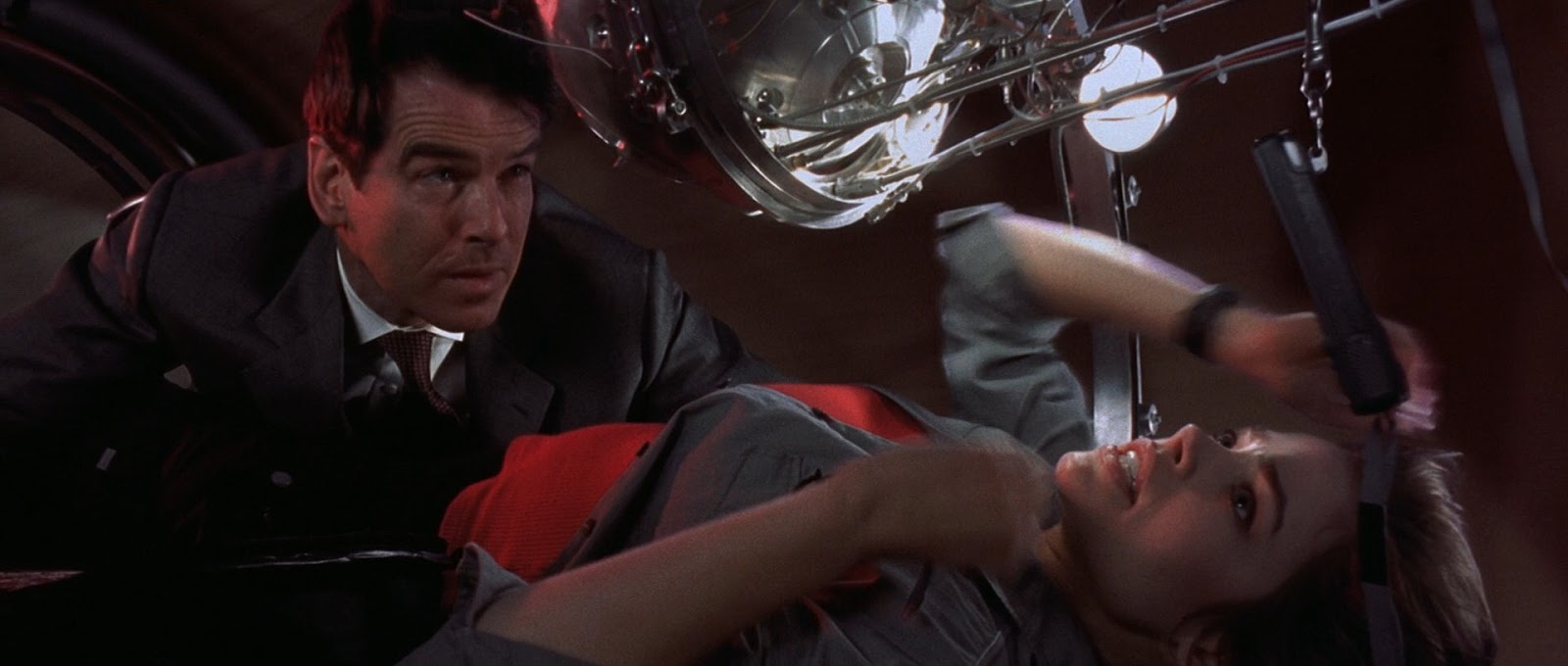
After the assassination of an oil tycoon in MI6 headquarters, James Bond (Pierce Brosnan) is assigned to protect his daughter Elektra (Sophie Marceau) as she vows to complete the pipeline her father started. MI6 believes her life is endangered by her former kidnapper Renard (Robert Carlyle). Heading to Eastern Europe, Bond soon finds himself in the middle of a complex game, with a mysterious string puller, that seems to revolve around the stealing of a nuclear warhead and the kidnap of M (Judi Dench), with only nuclear scientist Dr. Christmas Jones (Denise Richards) to help.

TWINE is all about its electrifying opening sequence. It’s possibly the biggest, most exciting introduction to a Bond movie yet. Not only does it have a truly compelling action sequence in the boat chase down the Thames, but there’s plenty of plot, tension, mystery, revelation and humour – Bond straightens his tie under water – to match the entire content of some Bond capers. Brosnan is deadly in the Bilbao sequence – you believe he’s a killer – he’s working out of the money trap is Bond at his most ingenious and the beautifully filmed and edited boat chase is an absolute wonder. It’s edge of the seat stuff and when it finishes, you can just imagine a cinema full of people letting out a sigh of relief and kicking back to enjoy the rest of the film.

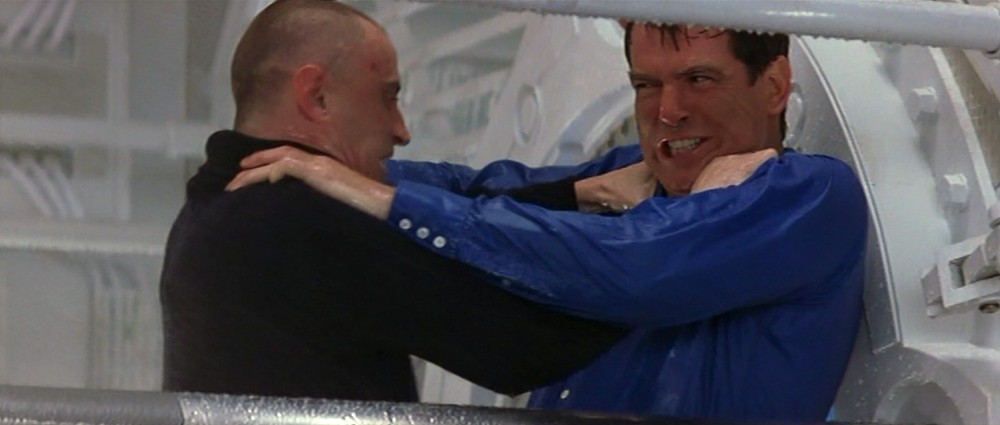
In fact that’s part of the problem. As Anthony Lane said in his review of the film “It’s the best 15 minutes in film this year. Let’s pack up and go home”. The problem is literally nothing in the film that follows can even hope to live up to this – and by the end, it’s practically given up trying. How does a film that started so vibrantly end with such a hackneyed fight on a submarine, with our heroes squabbling over something so fiddily it looks like an ink cartridge?

In between the phenomenal start and the damp squib ending, the film pings off to a lot locations – Azerbaijan! Turkey! Bilbao! – but everywhere still has the same bland, identikit feel to it, for all the shots of the odd famous landmark. That’s not to mention the rather laborious plot that ties the film together. It’s a film that feels like it’s trying to make a series of big statements about our hidden selves, revenge, manipulation – but falls short each time. It’s wrapped inside the most elliptical villain scheme I can remember. I only watched it a few days ago and even I’m not sure why Elektra wanted to blow up that damn submarine in Turkey.

Bond and Renard face off in the underwhelming sub sequence

Increasingly it becomes bogged down in machinations that feel recycled from previous films in the series. Shady Russians, corrupt security guards, chases down the snowy mountains, fiddily endings in old style nuclear subs. The film’s second biggest set piece – the attack on a cavier factory – has a rather formulaic inevitability about it. 

It has its moments of cool and charm, but in many ways it’s a blunt and crude film. What sort of eclectic film casting selects people as wildly diverse as Goldie and Ulrich Thomson as sidekicks? Robbie Coltrane returns as Zukovsky, but his character has been broadened from his first outing in GoldenEye into some sort of comic relief, a cane carrying buffoon a million miles from the ruthless ex-hitman in his first appearance. We even get a return of the “MI6 accidentally stumbles in on Bond doing the nasty” closing gag so beloved of the Roger Moore era. By the end of the film it really feels we’ve come a million miles from the ruthless efficiency and dynamic action it opened with.

The film’s most interesting beat, without a doubt, is Elektra King. It’s a stroke of inventiveness to turn the character established as the Bond girl, into the film’s villain.  Elektra uses many of the tropes of traditional Bond girls – vulnerability, sensuality, playfulness, a certain gutsiness – and repackages them as villainous tools, weapons of manipulation and deceit. Sophie Marceau is very good as possibly the most intriguing villain of the whole series, and the film neatly leaves open the question of how far her experiences twisted her, or whether her sociopathy was a deep lying trait. Her chemistry with Brosnan seems at times a little forced, but she gets most of the meaty content of the story and handles it with gusto. It’s especially neat to see how Marceau adjusts and adapts her performance for each person she encounters – with Reynard she’s playful and infatuated, with Bond she’s more aloofly sensual.

Denise Richards gets all nuclear physicist

She certainly fares better than poor Denise Richards, playing a character who feels like she was written backwards from the film’s closing punchline (“I thought Christmas only comes once a year” indeed). As if the producers wanted to counterbalance the innovativeness of Elektra, Richards feels like she’s wandered in from a classic Moore film: nominally an expert in something grand sounding (nuclear physics – and you can have a £1 from me if you ever meet anyone who believes Denise Richards has a PhD in rocket science) but really a damsel in distress dressed in hot pants. I’d further add that Brosnan already looks far too old for her.

The film’s best asset though is Brosnan’s Bond. The more I rewatch Brosnan’s efforts, the more I feel sorry the guy didn’t get more of the sort of material Dalton and Craig received either side of him. He clearly has the acting chops to do something a bit more interesting with the character, but his Bond is always a bit tonally confused – one moment he will stare viciously at a fallen opponent, the next he’ll be wearing a shit-eating grin and perving over ladies’ underwear in a nightclub. Brosnan does both these things, I hasten to add, extremely well: this film is probably his peak action performance, and at several points (not least his first encounter with Reynard) his sense of physical danger is jaw dropping. TWINE is a kind of perfect embodiment of his era: 1/3rd Connery to 2/3rd Moore.

For all that the big picture of the film gets away from Apted, he does have a good eye for smaller moments that stick with you – the tie moment, Brosnan’s look into the camera after his first kill. Moments like this appear throughout the film: a cut back to Zukovsky’s grin when Bond’s car is destroyed, the pinpoint bullet shot that hits a plate of glass right in front of an unblinking Reynard. Moments like this get increasingly lost as the film pushes on and becomes more and more formulaic and traditional, but they are still there.

That’s what it all comes back to: the film is not the sum of its parts. Moments stand out, but the whole thing really doesn’t. Everything feels a little too pre-packaged. Even an actor as brilliant as Robert Carlyle (the sort of actor everyone said should play a Bond villain) is lost in the mix, his performance as forgettable as a million other “ruthless anarchist” types we’ve seen before. There are some neat homages – I like the painting of Bernard Lee in MI6 HQ – but too much of it feels like more of the same, told with a professionalism that crushes the life out of individualism. So while it has moments that excite and entertain, as well as elements (such as Elektra King) that feel unique and original, too much of it also feels like, well, any other Bond film. For all its energy, it feels like watching a world-class athlete run on the spot.

FINAL COMMENT:This film does get some credit however for how tastefully it handles the final scenes of Desmond Llewelyn as Q. Tragically Llewelyn died in a car crash shortly before the film was released, but his work here is possibly some of the best he contributed to the series. Never let them see you bleed and always have an escape route.

Trainspotting (1996)

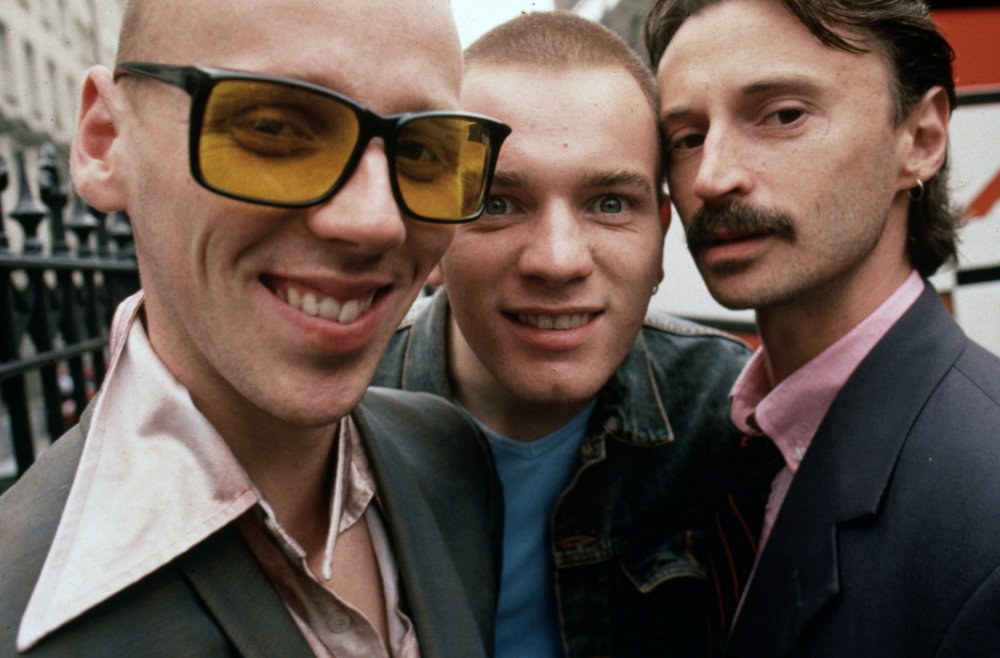
Another happy day in Edinburgh… Ewen Bremner, Ewan McGregor and Robert Carlyle define their careers in the mid-1990s phenomenen

Director: Danny Boyle

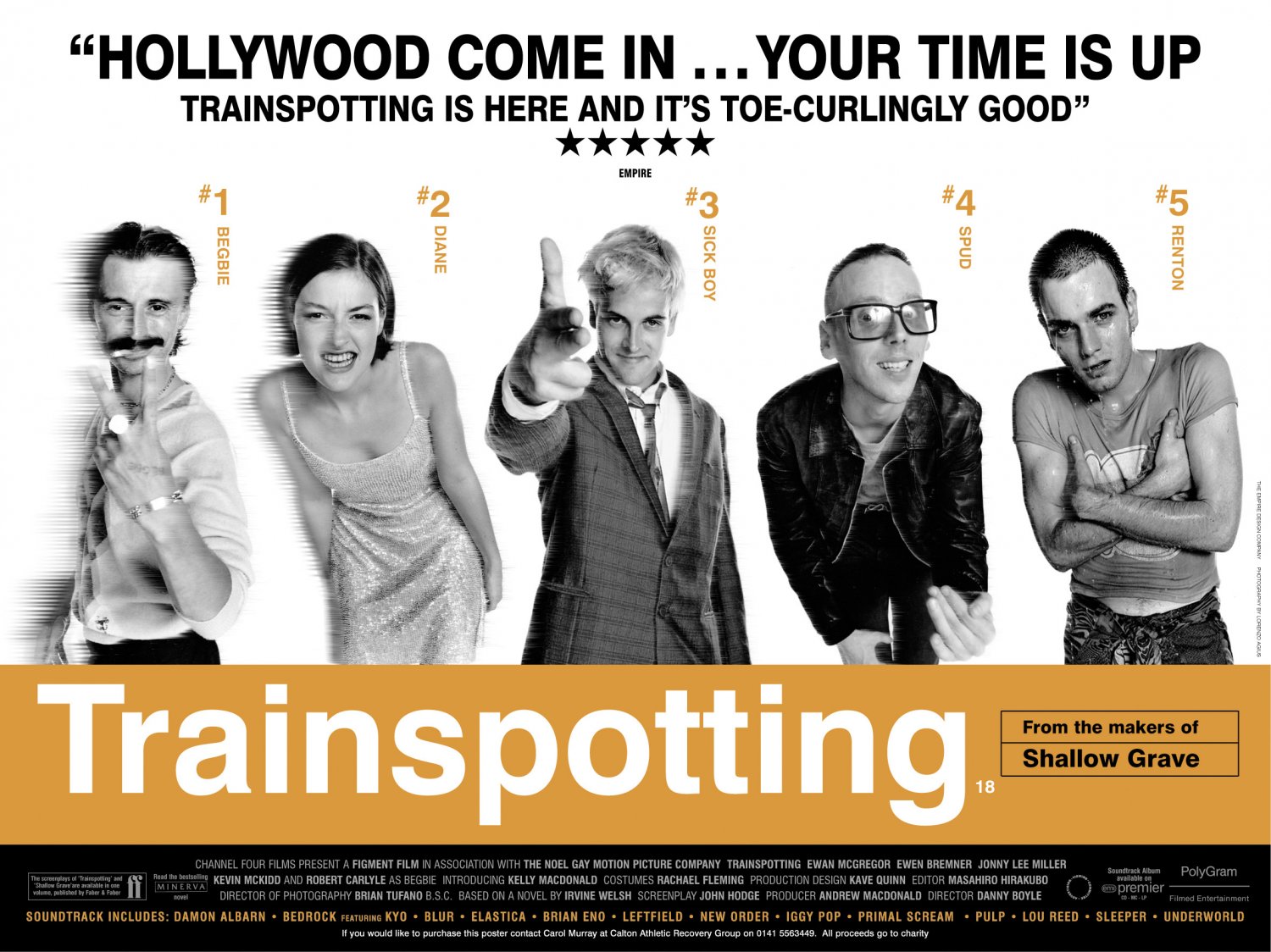
Cast: Ewan McGregor (Renton), Ewen Bremner (Spud), Jonny Lee Miller (Sick Boy), Robert Carlyle (Begbie), Kevin McKidd (Tommy), Kelly Macdonald (Diane), Peter Mullan (Mother Superior), Eileen Nicholas (Mrs. Renton), James Cosmo (Mr. Renton), Shirley Henderson (Gail Houston), Stuart McQuarrie (Gav), Irvine Welsh (Mikey)

Surprise, surprise the Drug’s Don’t Work. They just make you worse. Honestly, watching Trainspotting you would have to be a Grade A moron or wilfully missing the point to ever imagine that this film could, in any way what-so-ever, be endorsing the life of heroin addiction. The unbalanced, unreliable, sickly-looking, soul crushingly blank-eyed losers in this film are no-ones idea of an aspiration. The fate of Tommy alone, starting the film as a health freak and ending it as a smacked out, paper thin, wasting AIDS victim could only encourage the truly unbalanced to take up drugs.

You must know the story: Ewan McGregor is our “hero” Renton, a junkie with delusions every so often (the film implies this has occurred multiple times) of going clean, kicking the habit only to find that he is always drawn back in – largely it seems due to his own weak personality. Fellow junkies include Spud (Ewan Bremner), Sick Boy (Jonny Lee Miller) and later (tragically) Tommy (Kevin McKidd). On the edge of their junkie circle (not a user) is psychotic Begbie (Robert Carlyle) who doesn’t need drugs when he can get a high from starting a bar fight. The basic plot is slim in this whipper sharp film where experience is all – Renton goes clean, gets sucked back in, misses prison, goes cold turkey, escapes to London, gets sucked back into a drug deal. That’s basically it. What’s important here is the experience.

This is possibly one of the best films about addiction ever seen (I watched it in a double bill with The Lost Weekend which actually works out as a pretty natural combo). Boyle and screenwriter Andrew Hodge aren’t scared to show that drugs at times can be fun (after all if they didn’t make you feel good part of the time why would you do them?) and they can give colour to life (particularly to the shallow non entities this film centres on). The is even a strange family warmth to Renton and friends getting smacked out in an otherwise disgusting dilapidated drug pit, listening to Sick Boy dissect the Sean Connery Bond films. This is then brilliantly counterbalanced by the appalling lows – from the truly unsettling dead baby, abandoned and unfed in said drug den, to Renton’s appalling cold turkey. 

Perhaps the most remarkable thing here is that Danny Boyle directs with such verve and with a gleeful delight for every single shooting and editing trick in the book, but the film never feels like a triumph of style over substance, or as if the tricks are the centre of the director’s attention. Instead throughout the whole film you can tell the heart of the film makers – and therefore the heart of the viewer – is also focused on the story and the characters. So we get a film that crackles with energy, with a sense of youthful vitality (that is vital to understanding its characters), has an attractive anti-society message – but also reminds us that the perils of following this kind of counter culture life can be truly horrifying.

At the centre of this film is Ewan McGregor, who I don’t think has ever found a role that he could seize and bring to life as successfully as he did with this one. McGregor is captivating, managing to skilfully demonstrate without any judgement a man who believes he is strong, but is in fact desperately weak. His performance is so charismatic that you hardly notice that Renton is, actually, a pretty nasty person. High or not he has a barely concealed contempt for nearly everyone around him, his reaction to the baby death is shockingly cold, his treatment of Tommy laced with indifference, his pronouncements to the audience overflow with self-regard and delusion. But you just don’t notice.

What you do notice is that Robert Carlyle’s Begbie is a total nutter. Just like McGregor, I think Carlyle struggled to find a role that matched this one, probably not helped by the string of psychos he was offered by casting directors. Carlyle again actually isn’t in the film that much, but he nails how terrifying total self belief can be when matched with a complete lack of any moral sense. In fact most of the cast have hardly ever been better. Excellent support also comes from Peter Mullan, Eileen Nicholas, James Cosmo, Shirley Henderson and Stuart McQuarrie while Irvine Welsh pops up as low rent dealer.

Electric film making with a heart, I don’t think even Danny Boyle has topped this. There is something strangely perfect about this film – anything more and it might out stay it’s welcome, but every scene has something magic in it, some little touch that stays in the mind – either performance, dialogue, direction or all three. It looks fantastic and seemed to define its era. So fingers crossed for the sequel. No pressure…