Tag: Robert Coote

Othello (1952)

Othello (1952)

Welles distinctive Shakespeare epic is a masterpiece of turning the Bard into film

Director: Orson Welles

Cast: Orson Welles (Othello), Michéal Mac Liammóir (Iago), Robert Coote (Roderigo), Suzanne Cloultier (Desdemona), Hilton Edwards (Brabantio), Nicholas Bruce (Ludovico), Michael Laurence (Cassio), Fay Compton (Emilia)
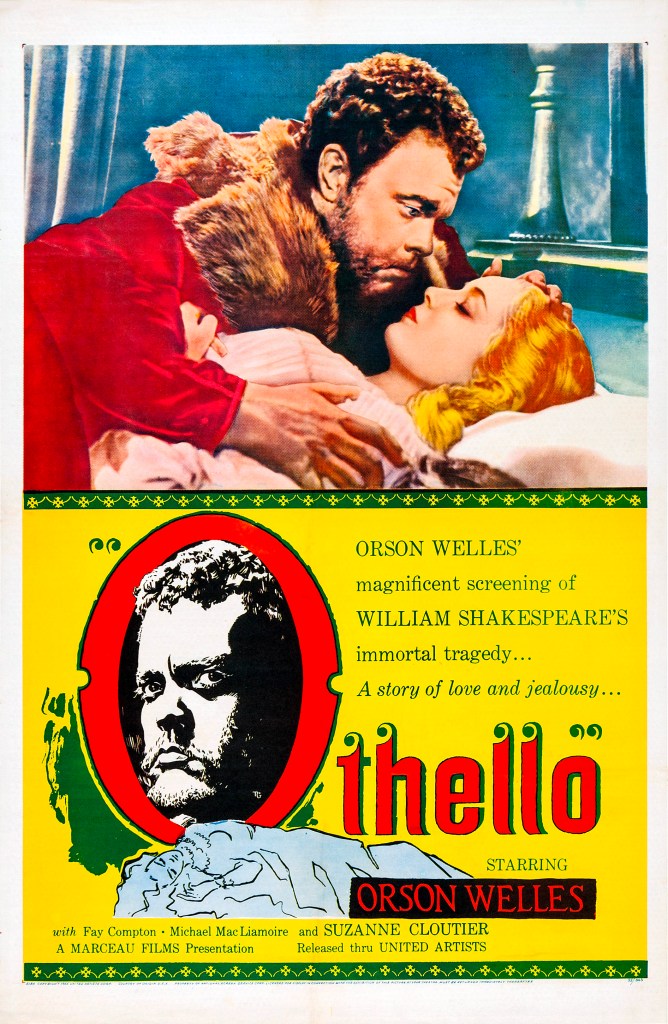
In the early 1950s Orson Welles was in the wilderness. After the implosion of his career in Hollywood, he was grifting a living in Europe, juggling multiple ventures and paying for things (or not) with cheques from quick film cameos. But the fire was still there. Welles wanted a project which he would have complete control over. Shakespeare was the ideal collaborator: both free and dead, here was a man who offered an ocean of ideas and not a word of criticism, who would make no demands he re-cut the picture. A marriage of convenience but it led to cinematic triumph.

Othello would be an Welles production from top-to-bottom. Largely self-funded, a few investors chucked in liras for a share of profits (you can imagine Welles as Shakespeare in Love’s Fennyman grinning that was fine because “there never are any”) it became a labour of love over years. Welles begged, borrowed and flat-out stole film stock and camera equipment from assorted productions, kept costumes from for-the-money roles he did to keep the operation flowing (famously his Othello coat was a costume which he’d requested a fur-lining added to, that went unseen in the film it was made for but came rolling out in Othello). Actors were summoned, sometimes months apart, to shoot. Scenes would start filming in one location and finish filming months later somewhere completely different. Welles sat in the middle holding the entire film in his head.

It’s extraordinary that Othello is even coherent. The fact that it’s also a masterpiece of film Shakespeare is a miracle. But, cut loose from the bonds of Hollywood studio execs and not giving a damn about the bills (he had the cheek of genius so never picked up a tab) allowed Welles the scope to experiment and do things “his way”. Othello is the most purely “Welles film” since Citizen Kane, and a tour-de-force of cinematic inventiveness with poverty and lack of resources drawing the best out of a director who marshalled all his gifts of editing and lighting to make resourceful use of limited resources. It’s guerrilla film-making that looks like an epic.

What you could argue Othello is not is a truly original look at Shakespeare’s play – or really an actor’s piece. Welles’ passions for Shakespeare always felt as much about having a grand canvas of poetic language to impose his own vision on, cutting and changing as needed. Thematically, Othello is pretty much what you would expect. Welles’ Othello is the noble Moor pushed into a spiral of jealousy. Michéal Mac Liammóir’s (the finest performance) Iago is a dastardly liar, with faint hints of sexually motived envy. Desdemona is as pure as the driven snow, Emilia a faithful servant, Rodrigo a simpering idiot, Cassio a pretty boy. Our sympathies lie firmly where Shakespeare would expect.

Everything that is unique about the film lies in its telling. Othello is a breath-takingly beautiful film, which uses its locations to astonishing effect. Column lined castle rooms and towering walls create caverns of light and shadow. Welles uses the fixed points of columns to add a dizzying level of speed to camera movements that see these columns whip past the frame. The shadows of grills are frequently cast across faces and light creates looming shadows across the floor. Welles plays into this with the creation of light pools, concentrating it on single fixed points, often faces, with the surroundings bathed in black. The film presents real locations in defiantly expressionistic ways, giving each of them an elemental power that heightens the tragedy.

It’s a film made up of stunning set-pieces. It’s opening funeral cortege – like Citizen Kane, Othello starts at the end with Othello and Desdemona dead and Iago in chains – follows a march over city walls, playing out in striking shadow against the brightness of the sun, with booming, Gothic music giving the sequence an imposing sense of inevitability. Iago is paraded by a mob and placed in a cage, lifted above the city wall (this same cage frequently appears throughout the movie – including, once, having Iago walk nonchalantly under it – as a grim reminder of where this is heading). It’s a perfect marriage of sound and music, disguising the small scale with cinematic force.

Taking advantage of limitations time-and-again makes Othello great. Another striking sequence was born from necessity. With most of the costumes impounded for non-payment of shipping bills, the attempted murder of Cassio is re-staged in a Turkish bath (who needs costumes when we have towels!) a decision that turns the sequence into a masterpiece of light through steam, increased by the frenetic energy Welles shoots the sequence with culminating in its Lang-inspired super-imposing as Iago thrusts his sword down into the floorboards to dispatch Rodrigo.
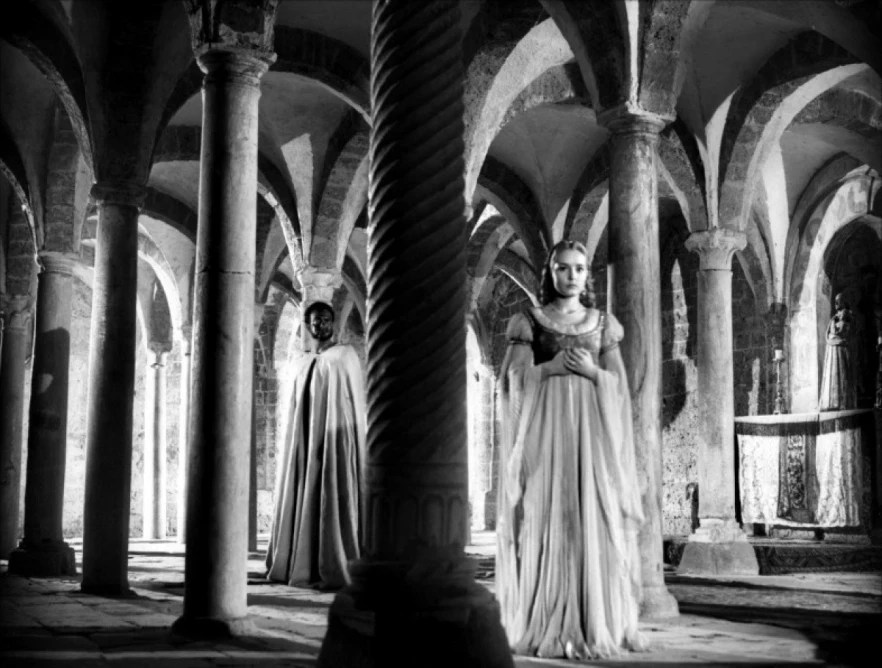
Othello is frequently filled with imaginative camera angles. Often characters observe others from great heights – twice through sky lights, starring down at conflicts, murders and suicides. Iago and Rodrigo spy on Othello’s gondola romance with Desdemona from a distant bridge. The ramparts of Cyprus provide towering angles, over soldiers or wave-crashed rocks below. The camera also takes a number of low-angle positions, making characters (often Othello) tower over us. Clever angles and perspective work create whole ships out of sheets of fabric and basic models.

It’s also a triumph of editing. Welles assembled the film from a never-ending supply of fragments. Frequently actors appear with their backs to the camera while we hear them speak – as Welles said, a sure sign the actual actor wasn’t there. Like few other films, Othello feels like a film excavated from its shooting. It’s a film almost constantly in motion, rarely stopping to focus on an actor delivering a line (Othello’s first speech, parts of Iago’s speeches and Emilia’s speech to Desdemona being the main moments the film focuses on actor’s delivery – no doubt connected to those three actors being the ones Welles trusted).

Away from that, the camera often fast cuts and delivers scenes in motion, with actors speaking off camera as we focus on the events around them. This means the dialogue is repeatedly chopped, changed and trimmed to meet the needs of the scene. It helps make the film even more pacey and frighteningly interior – conversations become snatched and fast, words flung from angles we cannot see, ramping up the paranoia. Large chunks of it is redubbed by Welles himself – a light version of his distinctive tones clearly emerges from Robert Coote’s mouth and Michael Laurence’s Cassio has a familiar cadence. In some cuts, Welles also replaced Suzanne Cloultier’s voice with Gudron Ure (with whom he played the role on stage).

If there is a major flaw in Othello it’s probably the acting, frequently looking under rehearsed, with Welles himself a leading culprit. His Othello is underpowered and feels under-defined. There is little sense of an interior to his mind and Welles’ surprisingly somnolent delivery tends to crush much of the emotion. It’s hard not to think Welles was so focused on juggling every other factor, that he compromised on his acting. Only Mac Liammóir, Compton and Edwards look truly comfortable with their roles – and even they offer traditional readings.

But Othello is about turning Shakespeare to cinema and if Shakespeare himself is slightly sacrificed in the push, it doesn’t detract from the stunning theatrical beauty we get instead. Othello becomes a lean, pacey thriller, crammed with stunning imagery and imaginative flourishes (Rodrigo’s faithful dog, following sadly after his master, is a gorgeously little playful touch). It’s a film where light and shadow are major plays, where footsteps in subterranean water pools create ripples of motion and echoes of noise, that shows the greatness that can be born from necessity. It’s one of the greatest Shakespeare films.

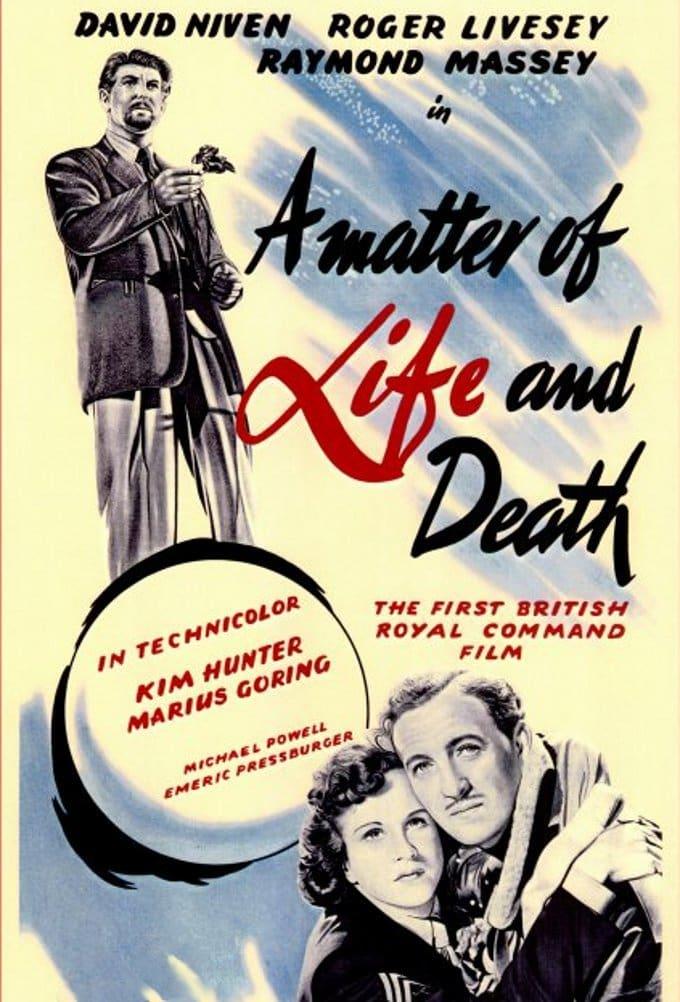
A Matter of Life and Death (1946)

A Matter of Life and Death (1946)

A pilot is stranded between Earth and…somewhere else in this brilliant romantic fantasy

Director: Michael Powell, Emeric Pressburger

Cast: David Niven (Peter David Carter), Roger Livesey (Dr Frank Reeves), Raymond Massey (Abraham Farlan), Kim Hunter (June), Marius Goring (Conductor 71), Robert Coote (Bob Trubshaw), Kathleen Byron (Officer Angel), Joan Maude (Chief Recorder), Abraham Sofaer (Judge/Surgeon), Richard Attenborough (Pilot)

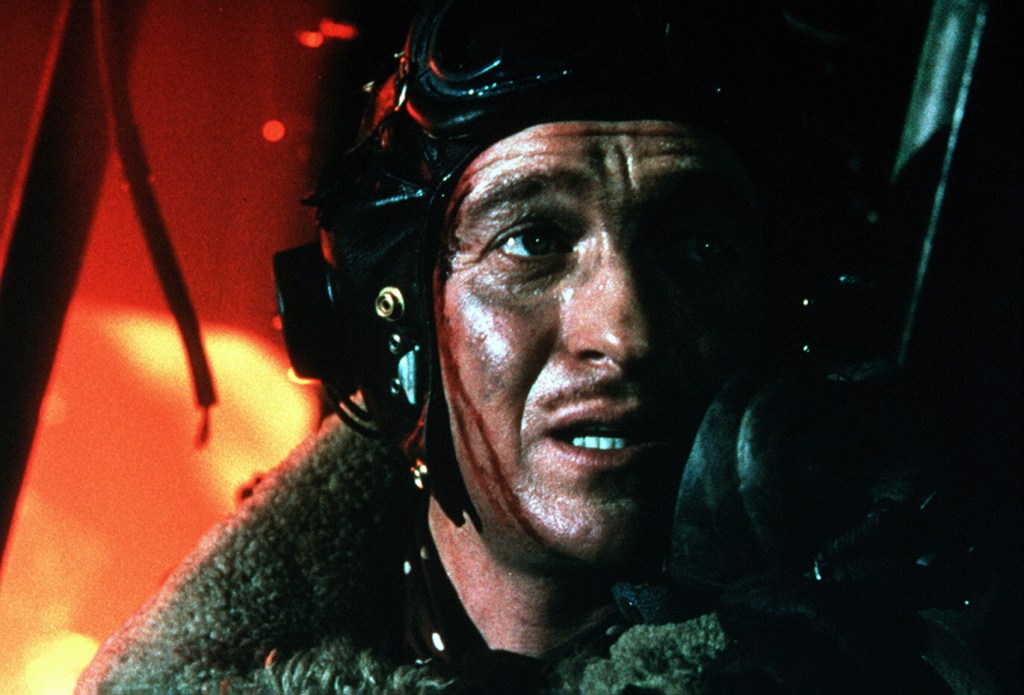
In the final days of World War II, a plane glides across the Channel in flames. The crew has bailed out, leaving only their skipper behind. Unknown to them, he’s not got a parachute – and is facing a choice between jumping or crashing to certain death. With only moments left to live, when is there a better time to fall in love? Quoting poetry and embracing what life he can in his final moments, Peter Carter (David Niven) falls in love with American radio operator June (Kim Hunter), the last person he expects to talk to. It’s stirring, sweeping, hugely romantic – and then Peter jumps at 50,000 feet.

So that’s it, right? Wrong. Peter washes up on the shores of Britain, not dead and practically on June’s doorstep. Happy ending? Perhaps not: at the end of a huge escalator linking our world to another (maybe the next?) Peter was expected. His “conductor” (Marius Goring), a French fop executed during the Revolution, whose job it was to take his soul “up” lost him in the fog. Now a man who isn’t supposed to be alive is walking around on Earth falling in love. Can it be allowed? Or will Peter need to head up that staircase? Or is all of this in fact in Peter’s head, a product of a head injury diagnosed by Dr Frank Reeves (Roger Livesey)? Either way, Peter faces two trials: life-saving surgery on Earth and a tribunal in that other place to decide whether he stays on Earth or not.

When released in America, AMOLAD was renamed Stairway to Heaven – a title rightly hated by Michael Powell. Part of the magic – and there is a lot of magic realism here in the most beloved of all British filmic fables – is the film’s carefully measured ambiguity. The film superbly doesn’t give any answers. The two worlds are clearly, visually distinguished and when Goring’s Conductor and others descend to Earth to freeze time and converse with Peter, their appearance is always foreshadowed with the same symptoms (smells and headaches) Frank diagnoses as part of Peter’s condition.

The beauty of AMOLAD is how wonderfully gently it explores the struggle of two nations – here represented by Peter and June – to emerge from the trauma of war and return to everyday life. From a world where death lies around every corner – where your plane can plummet to fiery doom in moments – they must readjust to one of romantic picnics, amateur theatricals and games of table tennis. Peter’s struggle to survive his surgery is a beautiful metaphor for returning to a life full of hope, possibility and looking forward rather than backward.

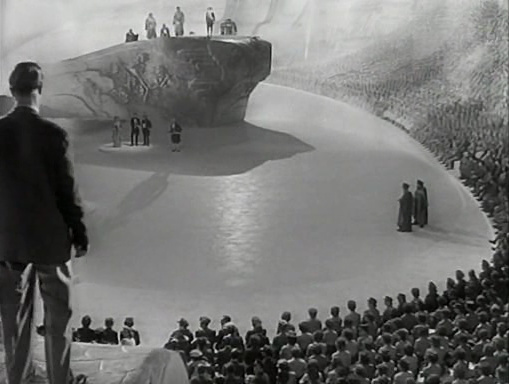
It’s why the visual impact of the film is so important. “Heaven” is shot in crisp black-and-white. As the Conductor says when travelling down to Earth, “one is starved of Technicolor up there”. This Heaven is a place of peace, but also of bureaucratic efficiency. Arrival lounges are staffed with decent but practical Angels (Kathleen Bryon is marvellous as the first of these we meet – and there is a fabulous shot from Powell that frames her in front of a clock, making the edges of its face appear like a halo around her head). There are rules and paperwork – in fact a whole city of clerks and arrival lounges. What it doesn’t have is the warmth and passion – the colour – of Earth. Down here, everything is in luscious, gorgeous Technicolor. Up there life is restful, but monochrome.

Jack Cardiff’s photography of AMOLAD – combined with Powell’s astute visual eye – crafts one of the most ravishing films you’ll ever see. Blues, oranges and reds practically pour off the screen into your eyes. Filters add a golden hue to much of what we see. The ramshackle details of locations – Frank’s cluttered library with its piles of books, June’s country-house-base – see every single detail captured in painterly beauty, colours popping out. Only Peter’s surgery room feels like a bridge between ”Heaven” and Earth, cooler filters stressing their blues and cool icey whites.

This is what Peter is fighting to stay in. A world of colour, of joy and poetry. Perhaps “Heaven” is just his imagination of what the afterlife could be like. It resembles the military operations he has spent the last few years emersed in. It’s filled with the historical generations he taught at university. Familiar faces up there fight his corner and represent him at the great trial to decide his fate. His surgeon on Earth shares the face of his judge in “Heaven”. Powell and Pressburger don’t lean too far either way – it’s all gloriously left open to our imagination.

And who, in 1946, wouldn’t want to believe in a heaven as reassuringly welcoming as this. (On a side note it’s refreshing to see a film from the 40s that depicts such a racially diverse after life). One where all are equal and questions of colour and creed are left aside. “Heaven” is packed with soldiers from all across the world – and the sheer volume of uniforms up there reminds us of the trauma down here.

AMOLAD is all about the world we might decide to live in after the trauma of war. It’s also about forging lasting bonds between two nations bought together to fight. No one feels more English than David Niven: and AMOLAD is, arguably, his finest performance. He makes Peter a man of casual wit and lightly worn intelligence, but with hints of the burdens he has carried across years of war. He’s the best of us Brits – and now he has fallen in love with the best of America. June, wonderfully played by Kim Hunter, is practical, brave and grounded. Their love (and the life they could spend together) becomes the battleground at the heavenly trial.

On the one side: a prejudiced revolutionary American (played with gusto by Raymond Massey) – on the other the perfect embodiment of English decency. There could have been no better choice of actor for this than the glorious Roger Livesey. Livesey’s Frank Reeves becomes a mix of English eccentric, master surgeon and Prospero-like magus. It’s no coincidence that among his hobbies is a large camera obscura with which he observes events on his village streets with a protective, grandfatherly care. His study is lined with books, his knowledge is infinite and he is always open to Peter’s tales of heavenly staircases and visitations from mysterious conductors. Then as his advocate in “Heaven” it is he who has the clear sight and judgement to focus the jury not on what divides us, but what unites us – what makes us all human, not what drives us apart.

AMOLAD is about what brings us together. It’s open about the flaws of Britain – the first trial jury is awash with Boers, Indians and other victims of Empire – but also a celebration of its virtues. It celebrates the melting pot of America – the second trial jury is made-up of an incredibly diverse selection of American citizens – and is a hymn to personal freedoms. Farlan picks up on what divides Britain and America – cricket vs American dynamism – but what unites us is our desire for life. So what does it matter if Brits can be austere or Americans so brash they raid a coke dispenser on arrival in “Heaven”. We’re still cousins.

All this helps capture the film as a universal fable, of love being discovered in the magical boundaries between worlds (its no coincidence we see Midsummer Night’s Dream being rehearsed by an American cast under a British vicar). This is a quiet, decent struggle about emerging from the horrors of war into the chance of a new world of love. It’s a struggle for Peter and June that is both very personal and hugely universal.  Powell and Pressburger’s film captures this perfectly in a film that’s sublimely directed and never-endingly rich in dialogue and visuals. It perfectly offers up a universal fable that speaks to the heart. It’s perhaps why this is their most beloved – and finest – hour.