Tag: Robert Hardy

Sense and Sensibility (1995)

Emma Thompson and Kate Winslet are superb in probably the greatest Austen adaptation on film, Sense and Sensibility

Director: Ang Lee

Cast: Emma Thompson (Elinor Dashwood), Kate Winslet (Marianne Dashwood), Alan Rickman (Colonel Brandon), Hugh Grant (Edward Ferrars), Greg Wise (John Willoughby), Gemma Jones (Mrs Dashwood), Harriet Walter (Fanny Dashwood), James Fleet (John Dashwood), Robert Hardy (Sir John Middleton), Elizabeth Spriggs (Mrs Jennings), Imogen Stubbs (Lucy Steele), Hugh Laurie (Mr Palmer), Imelda Staunton (Mrs Palmer), Emilie Francoise (Margaret Dashwood), Tom Wilkinson (Mr Dashwood)
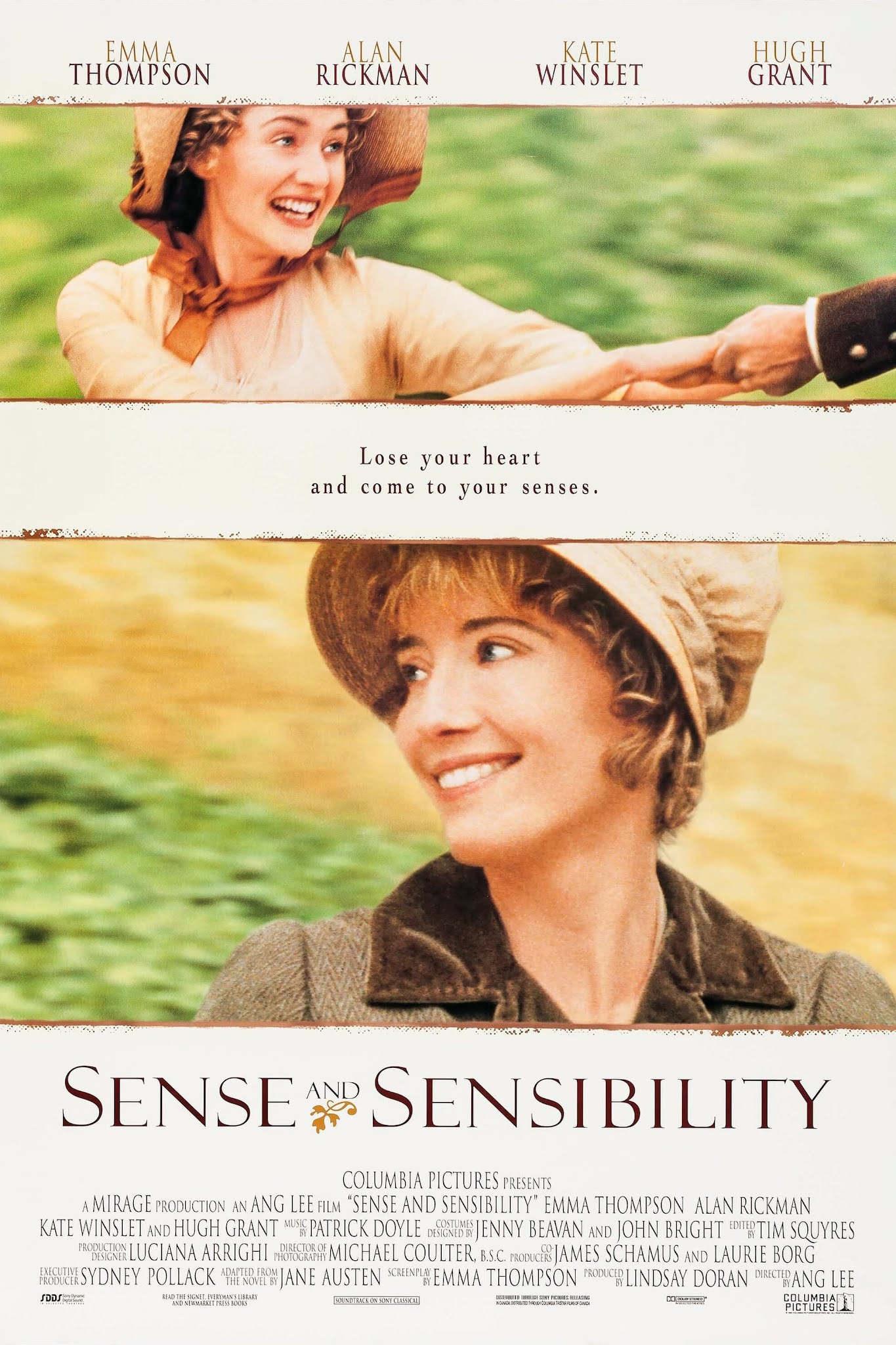
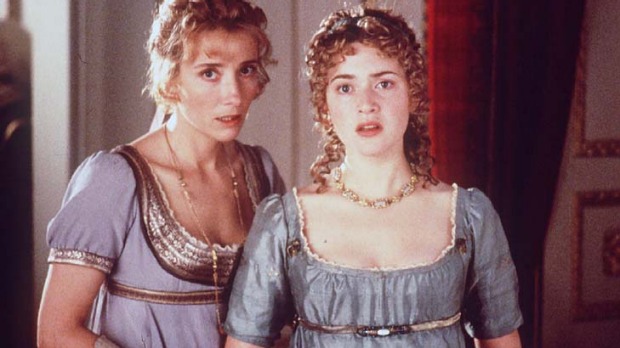
The world of Austen adaptations stands on two pillars – and both of them date from 1995. One is the BBC Pride and Prejudice, the other this luminous adaptation of Austen’s first novel, written by and starring Emma Thompson. It’s hard to pull together a review when a film pretty much plays its hand perfectly: and that’s exactly what Sense and Sensibility does. The film is a complete delight, in which Thompson takes surprisingly large liberties with many of the details of the novel, but brings to the screen a version that never once loses the spirit and heart of Austen’s work. It’s an immensely impressive achievement, and one of the finest literary adaptations ever made.

After the death of Mr Dashwood (Tom Wilkinson), the Dashwood estate passes into the hands of his son John (James Fleet) and John’s ambitious wife Fanny (Harriet Walter), leaving his second wife (Gemma Jones) and their daughters sensible Elinor (Emma Thompson), passionate Marianne (Kate Winslet) and giddy schoolgirl Margaret (Emilie Francoise) suddenly homeless. However, this does bring Fanny’s gentle and kind brother Edward Ferrars (Hugh Grant) into Elinor’s life, and an unspoken romance builds between the pair. There is passion in the air for Marianne at their new home, when she is rescued from a fall in the rain by the dashing Willoughby (Greg Wise). But are there secrets in the pasts of both men that could threaten the sisters’ happiness? And how did Willoughby’s life intersect with the reserved Colonel Brandon (Alan Rickman)?

Thompson’s superbly written script is a faultless adaptation that makes not a single poor choice, and expands and enriches several characters (in particular the three men) to great effect. Thompson not only brings much of the humour and wit in Austen to the fore – the film is frequently very funny – she also understands here truth and tenderness. Which is why the film is so beloved: it’s a film overflowing with empathy and heart for its characters which builds the emotional investment as skilfully as it does the comedy. It culminates in a proposal scene which I don’t think has ever not placed a lump in my throat.

To list all the excellent adaptation ideas would take forever so I’ll use one example. The film wisely expands much of the early character interactions, in particular deepening and exploring the early meeting between Elinor and Edward. A section that takes up barely one of the book’s (very short) chapters here fills the first 20 minutes of the film. It’s vital as it superbly establishes the natural warmth and intimacy between these two, and their perfectly complementing personalities.

It also allows Grant – in one of his most romantically winning performances – to display some deeply endearing light comedy, as well as establishing Edward as a thoughtful, sympathetic and decent man, who forms bonds quickly with all the family (especially young Margaret) through his genuineness. It also keeps us rooting for a relationship – and for a character – who the film often has to leave off screen for vast stretches, and leaves us in no doubt that his (later revealed) engagement to Lucy Steele (a woman he does not love, and who is interested in him solely for his position) comes from the same motives of decency, duty and the desire to do the right thing.

If that’s an example of one of Thompson’s most successful changes in her adaptation, she also unerringly identifies the things it’s most important to keep. Just like the novel, the film places the warmth of the sisters’ relationship at its heart. Helped by the natural chemistry and ease between Thompson and Winslet, the film carefully contrasts the personalities of these two sisters (one sensible and reserved, the other spontaneous and passionate) but takes no sides and also shows the sisters themselves are united by their love for each other. The film frequently features scenes of confidence and intimacy between the two, and continually brings us back to each other as the key relationship in their lives. It also shows how both need to meet in the middle ground: Elinor needs some of Marianne’s sensibility, just as Marianne needs to take on some of Elinor’s sense.

Although sense would not have necessarily helped Marianne uncover the dangerous selfishness of Willoughby. Perhaps the only wrong call in the BBC Pride and Prejudice (like most adaptations of that novel), is that it makes the rogueish Wickham insufficiently handsome and too blatantly smarmy from the start, tipping the audience the wink that this man can’t be trusted. Not so here, with Greg Wise giving Willoughby so much charm, regency handsomeness, dash and warmth that you would not imagine for a moment he could be anything but what he seems. He makes a clear contrast with Marianne’s other suitor, the older, more distant Brandon – superbly played by Alan Rickman – whose qualities of kindness and decency are hidden behind his coolness and lack of flash (Rickman is, again, wonderful here as a man hoping against hope for  a second chance at love).
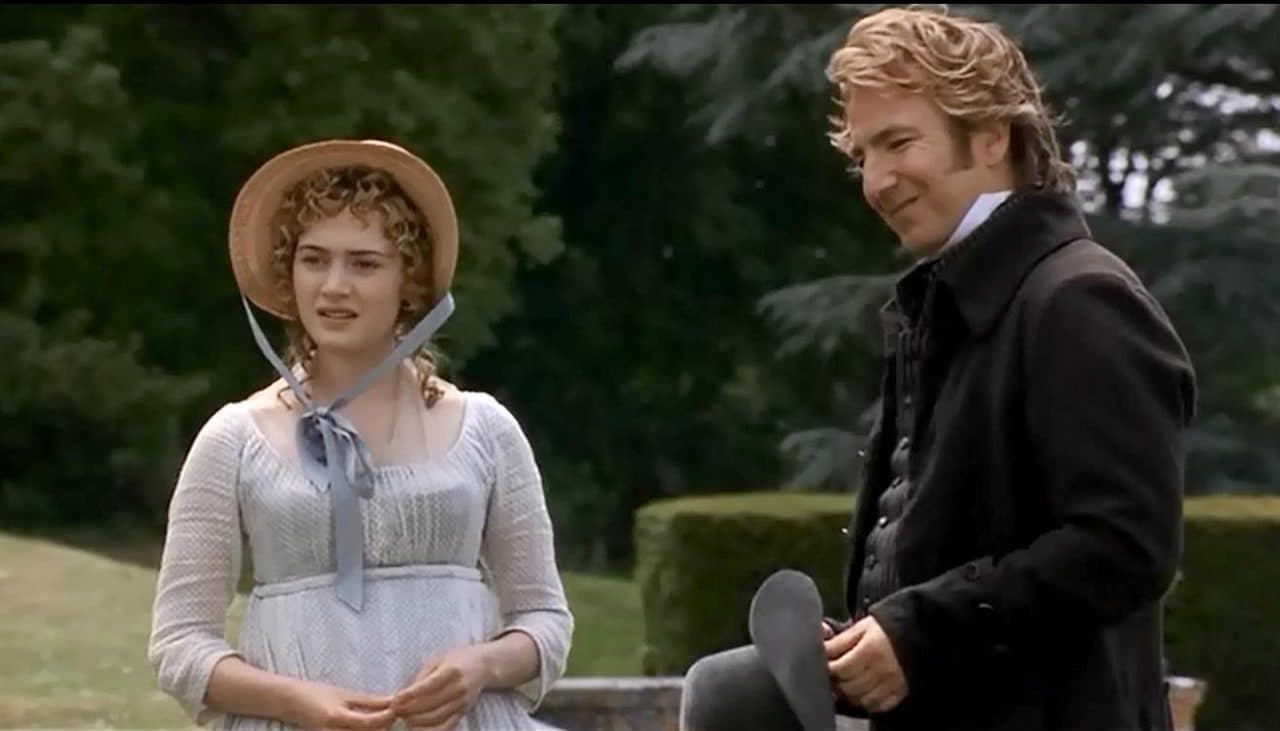
But then the film is filled with perfectly cast actors. Thompson is a brilliant and natural fit for Elinor (even if she is too old for the part, something she acknowledged herself) giving her acres of emotional torment under an exterior she must keep calm and controlled for the sake of her family. Winslet became a star for her enchantingly free-spirited performance, grounded by a warmth and desire for the best for others that keeps the character from ever becoming irritating or overbearing.

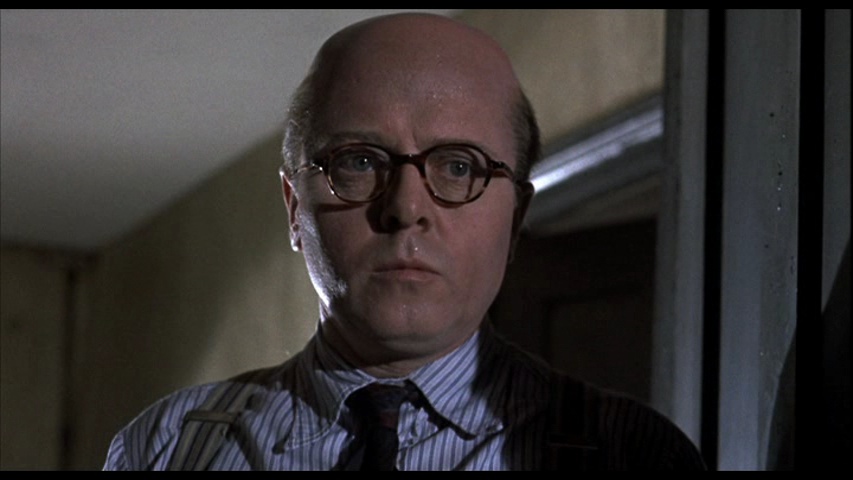
Among the rest, there isn’t a bum note. Walter is hilarious as the washpish Fanny, Hardy full of bonhomie as Sir John. Elizabeth Spriggs is perfect as a gossipy old maid who is a pillar of strength when her friends are ill-treated. Hugh Laurie is hilarious in a gift of a part as the dry, cynical Mr Palmer whose nearly every line is laugh-out-loud funny, but who also proves his nobility in a crisis. Staunton is equally good as his flighty, mismatched wife. Imogen Stubbs brings out the simpering manipulative scheming of Lucy Steele perfectly.

The whole is bought together expertly by wonderfully paced and constructed directing by Ang Lee, whom it’s surprisingly easy to over-look. Lee was a considered an odd choice for the film – he barely spoke English at the time and was a stranger to Austen. But the film is an inspired match for him, tapping into his sensitivity, the warm eye he brings to families and their dramas, and also the observer’s wit he brings to social comedy and dynamics. Lee also brings an outsider’s eye to England – it’s a film that looks wonderful, but not simply romantic, with Lee not afraid of a stormy sky or a muddy street. Interiors are shot with a candlelit beauty, and there is a sense throughout of all this taking place in a real world. Patrick Doyle’s perfectly judged score also works wonders to help create the mood.

Sense and Sensibility is a masterful film and a, perfect adaptation of Austen. It’s hard to imagine that it will be bettered for some time. Indeed, like the BBC Pride and Prejudice, it feels like it has made all other adaptations of the book redundant. With a brilliant adaptation, superb acting, sensitive and insightful direction and a true understanding of the spirit and heart of Austen, this is one of the greatest adaptations ever made.

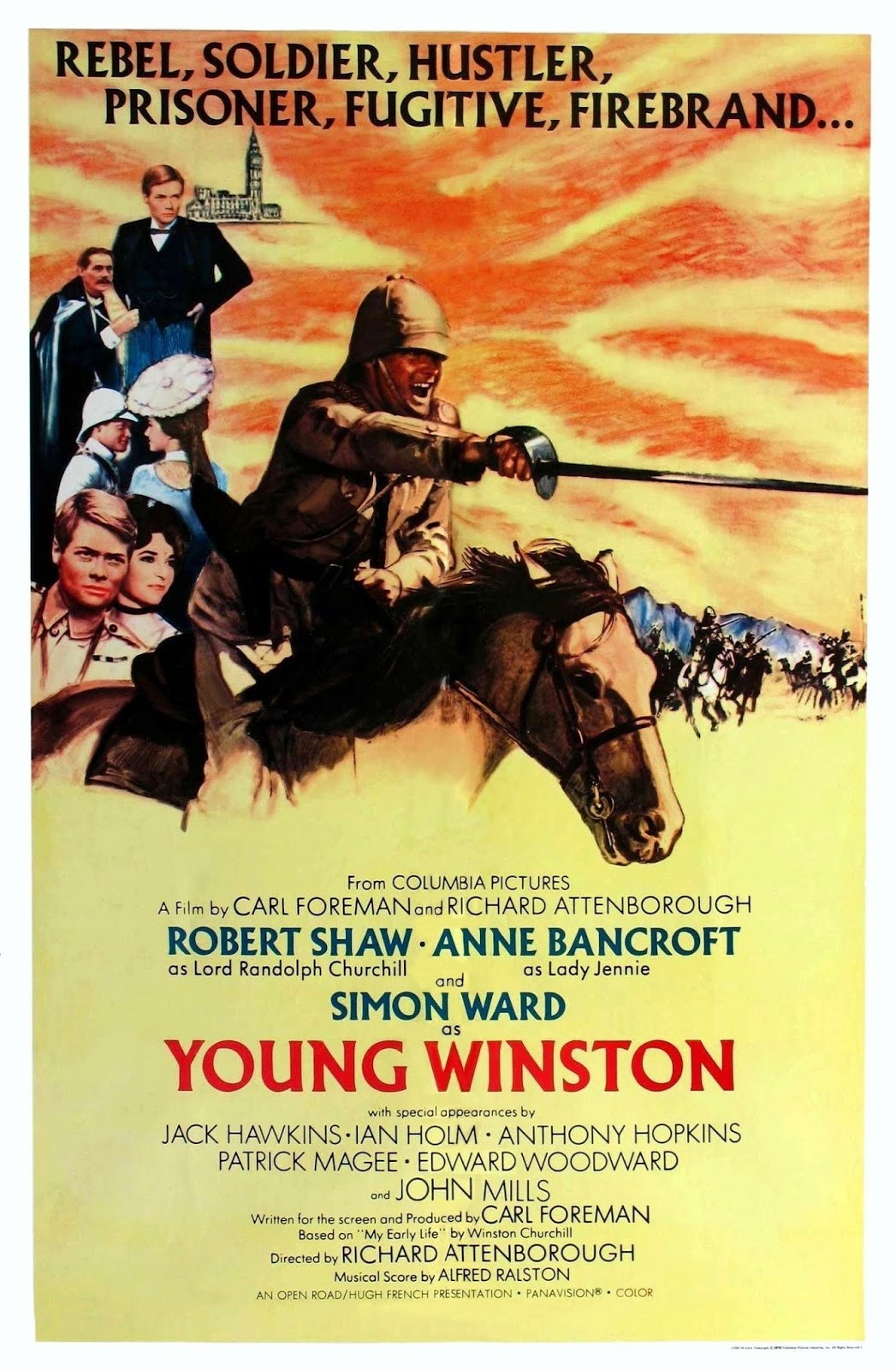
Young Winston (1972)

Simon Ward as the Young Winston: episodic but fun look at the early life of the Greatest Briton

Director: Richard Attenborough

Cast: Simon Ward (Winston Churchill), Robert Shaw (Lord Randolph Churchill), Anne Bancroft (Lady Jennie Churchill), John Mills (Lord Kitchener), Jack Hawkins (James Welldon), Ian Holm (George Earle Buckle), Anthony Hopkins (David Lloyd George), Patrick Magee (General Sir Bindon Blood), Edward Woodward (Captain Aylmer Haldane), Pat Heywood (Elizabeth Ann Everest), Laurence Naismith (Lord Salisbury), Basil Dignam (Joseph Chamberlain), Robert Hardy (Headmaster)

Any poll of the Greatest Briton is bound to throw up, near the top, Winston Spencer Churchill. So famous is he, that his surname isn’t even required for Attenborough’s biography of the Great Man – just that name Winston gives you a pretty good idea of what you’re going to get. And you’d be right, because this film gives you a pretty straightforward rundown of Winston Churchill’s early years, in an episodic breakdown that gives us some small insight into what shaped the chap who went on to implore us to “fight them on the beaches”.

Simon Ward is the Young Winston, with Robert Shaw and Anne Bancroft as his parents Lord and Lady Churchill. Lord Randolph is the high-flying MP who throws away his career, catches syphilis, loses his mind and dies aged 37 – all the time disappointed with the son desperate for his approval. Lady Jennie is his loving, supportive but slightly distant mother. Winston himself? A bright lad, but a hopeless academic, struggles at school, needs umpteen attempts to scrap into Sandhurst for a career as a cavalry officer (a dunce’s career in the opinion of Randolph), serves in the Sudan under Kitchener (John Mills) and starts writing books and newspaper articles – because hopeless academic he might be, he’s still gifted with words. A career in Parliament is his dream – helped no end by his escaping captivity during the Boer War, making him a popular hero. 

You can probably tell from that plot summary that this is a somewhat episodic film. Although initially throwing us into a clash in North-West India between the 35th Sikhs regiment and Pashtun rebels – an action during which embedded journalist Churchill wins a mention in dispatches – the film quickly settles into a straight narrative run down of Churchill’s early life, filtered through the great man’s own writings. This makes for an episodic, at times rather dry, box ticking exercise of key moments in his life although it gets enlivened with some decent scenes and some good performances.

The one fact that comes out most strongly from the film is the wretchedly unhappy childhood of Winston himself. A borderline dunce, Churchill is a hopeless student from an early age. His school days are miserable, dispatched to some ghastly boarding school where thrashings from the headmaster (ironically played by later regular – and definitive – Churchill performer Robert Hardy) are handed out as regularly as dollops of gruel. There is a certain emotional impact throughout these scenes, with extensive quotations from the pre-teen Churchill’s letters barely concealing pleas for his parents to visit him (save him) under protestations of his happiness at school.

But this emotional connection doesn’t really last once we get into the adventures of the younger Churchill. This is despite an excellent performance from Simon Ward, who perfectly captures the mood and manner of the more famous older man while splicing in plenty of youthful exuberance and naivete. Ward does a terrific job of holding the film together – so well in fact you are left feeling slightly sorry that he never got a part as good as this ever again. His final speech is a perfect capturing of the speech-making prowess of the young statesman.

The film takes a mixed attitude to Churchill’s parents. It’s very open about the syphilis that afflicted Lord Randolph, and even before that makes clear his career is one governed by rashness and poor judgement. Robert Shaw is excellent as Churchill’s father – a stern taskmaster, constantly disappointed in his dullard, lazy son, but spicing it with enough small moments of affection to make you understand why Churchill worshipped this man whom he surpassed by every measurable factor. Shaw also makes a pre-illness Churchill, sharp, witty and strikingly intelligent: making his later descent into illness and unpredictability all the more affecting. Randolph’s final speech in the House – raddled by syphilis he looks awful and can barely remember his train of thought for longer than a few seconds – is remarkably moving.

The film takes far more of a conventional view of Lady Sarah, presenting her far more as the idealised mother figure she must have been for Churchill. Anne Bancroft is saddled with a rather dull part that never really comes to life, as the more interesting aspects of her colourful life are largely left on the cutting room floor.

Attenborough’s film does try to drill down into the personalities of these three people with a curious device where each character has a scene speaking (direct to the camera) to an unseen journalist asking them questions about themselves and the events around them. This interrogational style looks like a rather dated 1970s innovation today – look how we put the spotlight on these people! – but it does give a chance to see them from another perspective, and give the all-seeing author of the screenplay (Carl Foreman) a chance to ask questions viewers are probably asking. It’s on the nose, but still kind of works, even if the revelations we get barely seem to give us any shocks.

It’s about the only slight moment of invention anyway in a film that is another example of Attenborough’s excellence at marshalling a huge number of actors and locations into something very reassuringly safe and professional that is going to have a long lifespan on Sunday afternoon TV schedules. Young Winston is a decent, enjoyable mini-epic, but it’s not the film for those really wanting to either understand the times or understand the personalities involved.

The Spy Who Came In From the Cold (1965)

Richard Burton lands in Cold War trouble in classic Le Carre adaptation The Spy Why Came In From the Cold

Director:  Martin Ritt

Cast: Richard Burton (Alec Leamas), Claire Bloom (Nan Perry), Oskar Werner (Fiedler), Sam Wanamaker (Peters), George Voskovec (East German Defence Attorney), Rupert Davies (George Smiley), Cyril Cusack (Control), Peter van Eyck (Hans-Dieter Mundt), Michael Hordern (Ashe), Robert Hardy (Dick Carlton), Bernard Lee (Patmore)

Spy stories fall into two camps. You get the wham-bam blast of James Bond and then you also get the grimy, isn’t-this-a-damn-dirty-trade stories that John Le Carré helped to turn into a major alternative. The book that really kicked off Le Carré’s career was The Spy Who Came in From the Cold, a slim, brilliantly written story of spies working exclusively in shades of grey. The book was a smash, the film was inevitable, and a damn fine film it turned out to be.

Richard Burton plays Alec Leamas, a former head of Berlin Station for the British Secret Service, who is recruited by the services’ leader Control (Cyril Cusack) as part of an elaborate scheme to discredit the cunning and dangerous head of the Stasi office in Berlin, Hans-Dieter Mundt (Peter van Eyck). Leamas will go through a pretence of disgraced dismissal, alcoholism, jail time and half a dozen other indecencies to attract the attention of the East German defector recruiters in the UK. But will the relationship he develops during his disgrace with librarian and idealistic communist Nan Perry (Claire Bloom) endanger the whole mission?

The Spy Who Came in From the Cold is shot in a grimy, gloomy black-and-white which is completely appropriate for the morally questionable escapades its characters get up to. Like Le Carré’s novel, the ends justify any means here, and questions of morality and justice are best benched. Characters who can’t let themselves to forget justice are doomed in this film. Genuine shows of real emotion and feeling are generally signs in this film that a person is doomed.

Martin Ritt’s literate script captures the style and tone of Le Carré extremely well – this is still one of the best, truest and most faithful capturing of Le Carré on the screen – and his direction also has a wonderful mixture of shabby kitchen-sink realism and classic Hollywood film noir class that makes for a brilliantly involving package. The pace of the film holds pretty well, beautifully carrying us through a parade of agents recruiting Leamas for the East Germans (each of which are dismissed with a shocking curtness by the next one along), and the final court room trial of Mundt (with its intricate exploration of the complex plotting of the novel) is extremely involving.

The film also has the benefit of a number of terrific performances, led by Richard Burton in the lead. By this stage of his career, Burton was already felt by many to be lost to serious acting in favour of big budget, Liz Taylor-starring pictures and Hollywood entertainment. But he rouses himself here to give one of his best ever performances. Leamas is a shabby, beaten down, little man (despite being played by Burton!) whose chippiness, dissatisfaction and aggression make him perfect as a possible defector. Ritt’s camera often focuses on Burton’s unflinching stares, his eyes seem to bore into the person he’s talking to, little oceans of anger and resentment.

Burton’s Leamas is deep down sick and tired of the world of spying, its betrayals and lies, and sickened with self-disgust at his own involvement in it. Burton skilfully underplays the role throughout, largely ignoring any temptation for grandstanding or big acting moments – instead he is as compromised, grey and lost as the rest of the film, in a superb performance of cynical disaffection. Bunched up, his grand voice dialled down, his eyes flickering with resentment – a great performance.

Claire Bloom is rather affecting as Nan (hilariously, her name was changed from Liz in the book as the producers feared she would be confused with the rather more famous Liz in Burton’s life) and Oskar Werner gives the film a major burst of energy just as it is flagging from one interrogation of Leamas too many, as a chippy, eager, sharp Stasi officer, who is determined to see justice done. The rest of the cast are filled out with some classy Brit character actors, who excel from suave (Robert Hardy) to seedy (Michael Hordern), while Cyril Cusack brings “Control” to cynical life and Rupert Davies gets to the be the first actor to play George Smiley on screen (even if he is only really an extra here).

Spy is a film of atmosphere. Frequently it trusts the viewer to catch up the plot as they go. Leamas actions are not always explained until late on – and we are constantly suspecting that we are only seeing half the story. Its a film that plays its cards close to the chest. This might alienate some, but it’s a true representation of Le Carre – and fits perfectly with the weary sense Leamas has of not being in control of his own life.

But what Ritt does so well is keeping that tonal sense of there always being another shady, compromising twist around the corner. All is never what it seems, and the film ends with an especially bleak series of footnotes as we find out just how ruthless both sides are prepared to be in this soulless chess game of Cold War politics. It’s the moments like this that Spy Who Came in From the Cold really nails. For Le Carré fans the film is a must: for those less interested in the world of espionage, they may find it takes a little too much time.

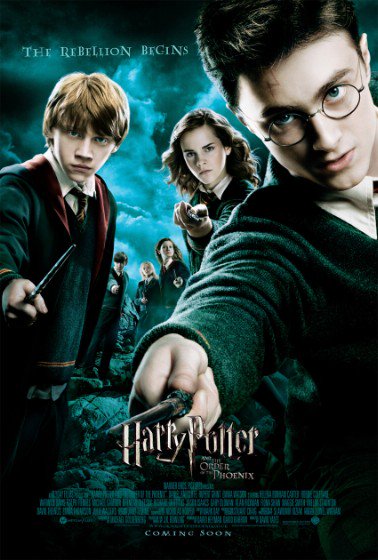
Harry Potter and the Order of the Phoenix (2007)


Harry Potter and friends prepare to face the Dark Lord in Harry Potter and the Order of the Phoenix

Director: David Yates

Cast: Daniel Radcliffe (Harry Potter) Rupert Grint (Ron Weasley), Emma Watson (Hermione Grainger), Helena Bonham Carter (Bellatrix Lestrange), Robbie Coltrane (Hagrid), Ralph Fiennes (Lord Voldemort), Michael Gambon (Albus Dumbledore), Brendan Gleeson (Mad-Eyed Moody), Richard Griffiths (Vernon Dursley), Jason Isaacs (Lucius Malfoy), Gary Oldman (Sirius Black), Alan Rickman (Severus Snape), Fiona Shaw (Petunia Dursley), Maggie Smith (Minerve McGonagall), Imelda Staunton (Dolores Umbridge), David Thewlis (Remus Lupin), Emma Thompson (Sybill Trelawney), Julie Walters (Mrs Weasley), Mark Williams (Arthur Weasley), Robert Hardy (Cornelius Fudge), Tom Felton (Draco Malfoy), Matthew Lewis (Neville Longbottom), Evanna Lynch (Luna Lovegood), Katie Leung (Cho Chang), David Bradley (Argus Filch), Natalie Tena (Tonks), George Harris (Kingsley Shacklebolt)

By the fifth film, the Harry Potter franchise was really on a roll – and a lot of the core creative team that would carry the series through to the final film were in place. It’s particularly striking how much a distinctive look and tone the series now had, that is both different from the books and a logical extension of them. It’s also the film where I think the series finally decided it would tell it’s own version of Rowling’s story, rather than an exact staging. 

Rather than simply tightening the plot of Rowling’s mammoth book, Order of the Phoenix decided to rework the story to deliver what it wanted to do. Vast amounts of Hogwarts material is ruthlessly cut, including large sections of Ron and Hermione’s sub-plots. The film streamlines the story, reducing Harry’s feelings of isolation in the story (the film instead centres the importance of friendship and loyalty). And despite turning one of the longest books in the series into the shortest film, this captures the sense of the book excellently. It clearly identifies the key themes that drive Rowling’s series and runs with these very effectively. This film, more than any others so far, shows the deep bonds of loyalty that connect not just the central trio, but also the other members of the school. The Dumbledore’s Army sequences have a wonderful sense of camaraderie about them – these people genuinely feel like a group of friends.

These sequences also give Daniel Radcliffe some great material to play with. Harry clearly would make a hell of a teacher – Radcliffe makes him encouraging and supportive, capable of drawing the best out of his students. Radcliffe does his expected excellent job all the way through this film. His ability to play scenes of grief and longing has increased dramatically – his reaction to the death of Sirius Black is really well done. But he also presents Harry as essentially a warm and caring person – exactly the polar opposite of the man Voldemort has become. It’s another terrific performance.

Order of the Phoenix was David Yates’ first film as a director of the series – Yates has gone on to direct all the subsequent outings in the Potterverse – and part of the reason he seems to have cemented the role is that he gives a perfect mixture of Columbus, Cuarón and Newell. He can juggle elements of Rowling’s story, he works very well with actors, he has enough creativity and vision as a director to present this world in interesting new ways. He’s a perfect combination of a number of skills from the previous directors – and he really runs with that legacy here.

Order of the Phoenix is a dark and gorgeously shot movie, with a tight story structure (it’s the only film not written by Steven Kloves, and Michael Goldenberg’s fresh take on the film I think really helps). Every scene has a painterly brilliance, and scenes simmer with tension and paranoia – Yates doesn’t lose track of the fact that Harry is being persecuted by the authorities for taking an unpopular stance on Voldemort’s return. 

Yates establishes his intention to turn this into a notably darker episode from the very start, opening with a vicious Dementor attack (redesigned to make them more fluid). This is followed quickly by a show trial at the Ministry. Then to a darker, gloomier Hogwarts now a den of unjust rules (the expulsion of Thompson’s gentle Sybil Trelawney is a particular fine heartstring-tugging moment), and cruel punishments. It’s a film that never allows us to forget death has entered Harry’s world. By the time we hit the final battle sequences in the Ministry of Magic, we know our heroes are putting their lives on the line. Scary as this is, we also appreciate the bonds of love that have taken them there all the more.

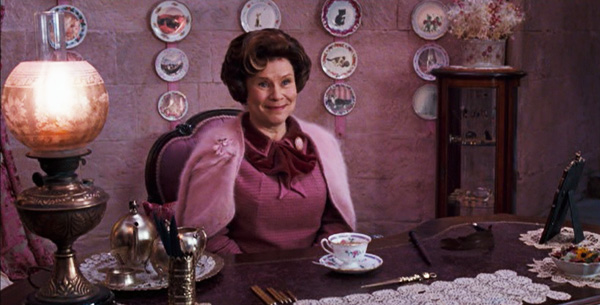
A lot of the creep and cruelty of the film emerge from Imelda Staunton’s Dolores Umbridge. Staunton is brilliantly cast as the twee ministry official who hides a ruthless viciousness, buttressed by a sociopathic conviction that whatever she does must be right. Staunton’s soft politeness is the perfect vehicle for showing Umbridge’s sadistic cruelty. Umbridge is the worst form of politician –blindly following the orders of any authority figure who can promote her on their coat-tails. The design of her character is similarly spot-on: she dresses almost exclusively in fluffy pink knitted suits, and her office is an explosion of pink, china plates and fluffy animal pictures. Staunton is almost unbelievably vile in her smug, condescending moral emptiness.

It’s further evidence of what a brilliant job this series did with casting. By this point, truly great actors were appearing in this film while sharing less than a dozen lines between them: Thewlis, Gleeson, Smith, Thompson and even Coltrane get remarkably little do in this film, but still seize your attention. Wonderful performances also come from the less famous names: George Harris gives a brilliant twinkly wisdom and gravity to Kingsley Shacklebolt while Robert Hardy (quietly excellent in the previous films) gets some more material to showcase his skills as the wilfully blind Fudge.

Of the other stand-outs, Helena Bonham Carter is brilliantly malevolent as the psychotic Bellatrix. Jason Isaacs gets some marvellous moments of smooth patrician wickedness as Malfoy. Gary Oldman is the ideal roguish father-figure as Sirius, the actor’s obvious bond with Radcliffe really coming across. Gambon is very comfortable now as Dumbledore, really showing the authority behind his Dumbledore’s eccentricity.

Then you have actors who dominate from mere minutes of screen-time. Fiennes again delivers in a short scene at the close of the picture. And then of course we get Rickman: he makes so much of such brief moments as Snape. He has probably the two biggest laugh-out-loud moments (both totally reliant on his delivery of non-descript words like “Obviously”). His occlumency classes with Harry showcase him at his best: trying to help, but unable to overcome his essential bitterness and resentment. These sequences are wonderfully contrasted with Harry’s comfort as a teacher to his friends: by contrast Snape is dismissive, impatient and unsympathetic.

The film finds moments of humanity and comedy throughout. Rupert Grint finally gets to show another side of Ron, as Ron matures slightly into a loyal wing-man , who makes it clear he will not countenance criticism of Harry in his hearing. And while this is a dark film, it’s also the one that deals with Harry’s growing romantic feelings for Cho – and he gets a beautifully played little romance that reminds us that Harry is (at the end of the day) still a nervous kid. It’s a film that understands friendship and love and their importance.

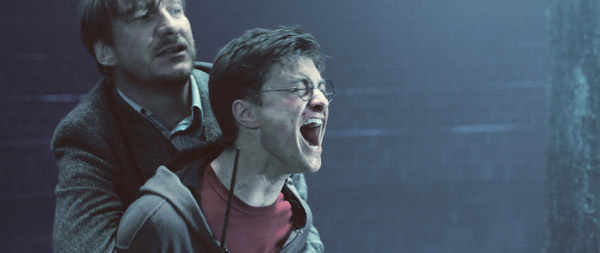
So it’s why the final battle sequence in the Ministry of Magic works so well. Tense and dangerous, we also root overwhelmingly for the courage of the kids. The work Yates had done on the wizard battles really pays off – they have a greater sense of choreography than ever before, while the apparating (in a trailing, misty, fast-moving cloud) really adds a fantastic visual element. Little shots work so well – I love the cut from Harry fighting alongside Sirius to his friends crouching behind a rock staring up at their friend in awe. It’s a beautiful reminder that what Harry is doing is so brave.

Of course, the film ends in the series’ first truly gripping wizard fight as we finally get Dumbledore taking on Voldemort. It was a great sequence in the book – and is translated wonderfully to the screen with a series of gripping visuals. There are brilliant beats throughout and we learn about the characters. We see Voldemort’s targeting of the defenceless Harry throughout, the way Dumbledore puts himself in the way of danger (including angrily throwing Harry backwards with magic when he steps forward). Above all you see Harry’s own courage (and his impulsiveness motivated by caring so much).

Order of the Phoenix is another excellent entry into a series that flourished and became richer the longer it went on. Yates showed that he was in tune with the fundamental ideas of Rowling’s writing and that he was able to marry excellent performances with impressive visuals. It’s brilliantly made – shot wonderfully, very well edited with a marvellous score – and is an impressive and muscular piece of film making. Very impressive.

Ten Rillington Place (1971)


Richard Attenborough brings the killer John Reginald Christie to life in Ten Rillington Place

Director: Richard Fleischer

Cast: Richard Attenborough (John Reginald Christie), Judy Geeson (Beryl Evans), John Hurt (Timothy Evans), Pat Heywood (Ethel Christie), Isabel Black (Alice), Robert Hardy (Malcolm Morris), Geoffrey Chater (Christmas Humphreys), André Morell (Judge Lewis), Tenniel Evans (Detective Sergeant)

Films about real-life serial killers have that eternal problem: how far can they go in giving us answers? How much can we ever really understand why a killer does what they do? Is there any way of really putting ourselves in their shoes – and do we really want to? Ten Rillington Place avoids a lot of these issues by making no attempt to give understanding to Christie at all, simply presenting his actions, and by putting the focus on the tragic death of Timothy Evans.

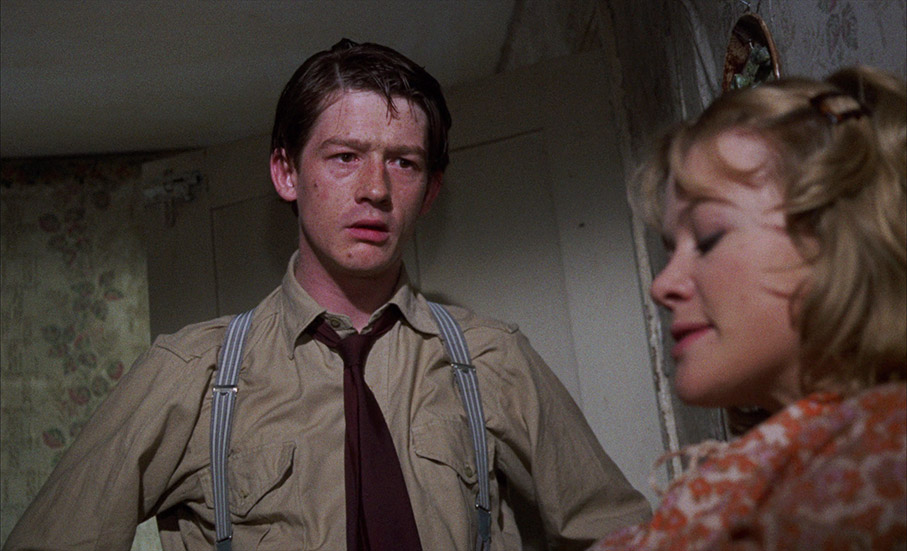
In a miscarriage of justice Timothy Evans (John Hurt) was tried and executed for the murder of his wife Beryl (Judy Geeson) and their baby daughter in 1950. The real murderer? The man who lived downstairs, John Christie (Richard Attenborough), a socially maladjusted, softly spoken man who confessed to killing at least eight people three years later at his trial for murdering his wife. Christie had an uncanny gift for gaining the confidence of desperate women, would offer to perform illegal (and free) medical procedures (such as abortions), during the course of which he would gas them with carbon monoxide, strangle them, possibly carry out acts of necrophilia and then bury them in his garden or in the walls of his house. Evans never suspects until far too late that Christie is the killer and, scared that he will be accused, follows Christie’s advice to the letter – advice that will only make him look all the more guilty.

Richard Fleischer’s chillingly documentary-style film-making goes into forensic detail on the events of the murder of Beryl Evans and her daughter, and the wrongful conviction of Timothy Evans for the crime – largely on the basis of Christie’s testimony at Evans’ trial. Fleischer shoots the film with a deeply disciplined restraint, a calm documentary style that avoids any sensation lingering on the crimes, but still carries great emotional impact.

The film covers the period from Evans moving into the flat above Christie, Christie’s murder of Beryl, Evans panicked flight to Wales on Christie’s advice, his series of confessions to the police, his trial and execution. Book ending the film we get a scene with Christie murdering his neighbour Muriel Eady – a terrifying demonstration of Christie’s murder rituals, as well as an indicator of how easily he could gain the trust of his victims. What it strikingly doesn’t try to give us is any psychological explanation for why Christie did what he did. There are no revealing flashbanks, no cod-psychology. Instead we just see a killer, kill people. We might get an idea of what he gets out of it, but no explanation of what turned him to it. The film is all the more powerful for it. 

Instead the focus is on the victims, and the Evans story is heart-rending, partly because of Fleischer’s calm, sensitive direction, but mainly due to John Hurt’s astonishingly powerful performance. The film, and Hurt, don’t shy away from the qualities that made Evans seem like such a natural fit for a murderer at his trial. He’s a compulsive liar. He brags. He fights and argues with a fury. He’s not really that sympathetic a guy at first. But he’s certainly innocent. Hurt brilliantly demonstrates his vulnerability and simplicity – Evans was illiterate and almost unbelievably trusting, a liar who fell victim to a superb, manipulative liar.

His shock and slowly growing realisation of the nightmare he is in are incredibly moving, as is his powerful grief when he finds his wife killed – and his trusting innocence when he turns (unknowingly) straight to his wife’s killer for advice on what to do. Every action Evans takes in the film makes you want to jump in and urge him to do something – anything – different.  Unsympathetic as he is at the start, by the conclusion you almost can’t bear to watch him incriminate himself with each action. Hurt is sublime, with his weak manner, his confusion, his touching faith that it will all be okay and his feeble mantra of “Christie Done It” – it’s one of the greatest performances in his career.

Judy Geeson gives a marvellously emotional performance as Beryl Evans. Geeson has the perfect look for the part, and she completely embodies a woman who has found herself in a difficult situation, in love with a weak man. You understand completely how she is drawn towards Christie as a confidant, and why she would feel the desperation to abort a child she and Evans could never afford. Her eventual murder is horrifying in its struggle and desperation, the growing horrible realisation in her eyes that she is in mortal danger – this is a particularly strong sequence, difficult to watch for the viewer, as we know what a terrible series of decisions she is making. 

Fleischer’s film was motivated by a very firm anti-death sentence stance. The scene of Evans’ execution is shocking in its brutal suddenness. Shot with a handheld camera and in a single take (in near silence other than Hurt’s deep breathing), the execution is over and done with in less than a minute – from Evans sitting in a room, to the reveal of the executioner’s noose next door and the terrible drop (with a jump cut straight to Christie stretching his back). It’s a brilliantly low-key, but resoundingly powerful scene that sticks with you for all time.

All this way and we’ve not mentioned Richard Attenborough’s transformative performance as Christie. Attenborough presents the softly spoken monster as a bland, empty non-entity, a man who has almost nothing to make him stand out from the crowd. He never makes the part into a great monster or any sort of domineering force of nature. In partnership with Fleischer, he shows Christie was a total blank canvas of a man, “evil” only in the most mundane and uninteresting way. He’s so mild-mannered, you can see why so many women trusted him. Attenborough is chillingly blank throughout, in a deeply unsettling performance of crushing mundanity. He’s brilliant in this film – Attenborough was completely committed to its anti-death penalty stance – and he avoids the temptation of trying to explain or make sense of Christie. 

That’s the trick of the film – Christie is not a special man. He performs dreadful acts, but he is a nothing of a person, devoid of motive (the lack of motive is something those at Evans’ trial use most to argue against Christie’s possible guilt), a totally forgettable man who committed crimes memorable only for their cruelty. Fleischer, and Clive Exton’s careful, thoroughly researched script, is simply superb in presenting Christie with all his filthy blankness, Rillington Place in all its crushed lack of colour, and the murders in un-flashy documentary sadness. Ten Rillington Place is an engrossing true-life story that turns a miscarriage of justice into a Greek tragedy. It’s a much overlooked classic.