Tag: Robert Redford

All the President’s Men (1976)

All the President’s Men (1976)

The greatest film about journalism ever made? This dense, detailed conspiracy thriller is a marvel.

Director: Alan J Pakula

Cast: Robert Redford (Bob Woodward), Dustin Hoffman (Carl Bernstein), Jason Robards (Ben Bradlee), Jack Warden (Harry M Rosenfeld), Martin Balsam (Howard Simons), Hal Holbrook (“Deep Throat”), Jane Alexander (The Bookkeeper), Stephen Collins (Hugh W Sloan Jnr), Ned Beatty (Martin Dardis), Meredith Baxter (Deborah Murrah Sloan), Penny Fuller (Sally Aiken)

If anything, even remotely, dodgy happens in politics than, quick as a flash, you can bet the suffix “gate” is added to it. It all stems from Watergate, the Washington building that was the location of the most disastrous attempted burglary in political history. Agents from the Committee to Re-Elect the President (CREEP to you and me) broke into the Democratic office on a dirty tricks mission. They got caught, Nixon and his cronies decided to cover it up and obstruct justice – and when the story broke, it broke Nixon and his Presidency as well.

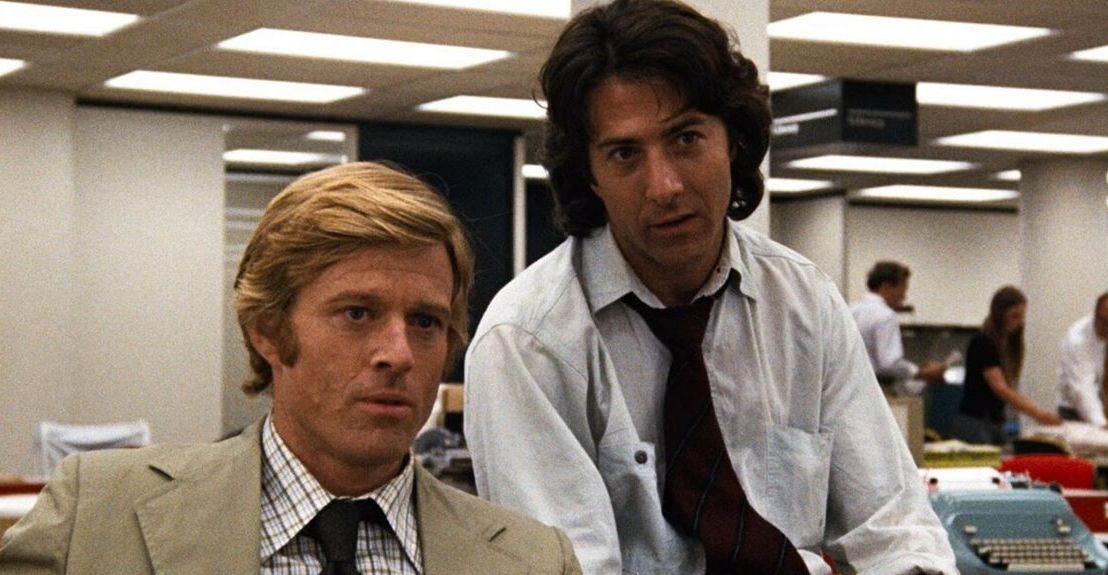
All the President’s Men covers the early days of how that story was broken by two junior reporters on the Washington Post: Bob Woodward (Robert Redford) and Carl Bernstein (Dustin Hoffman). Involved in the case from the night of the break-in, the film (adapted from the book by ‘Wood-stein’) covers their pain-staking investigation to work out what lies behind this burglary and, if there is a conspiracy of silence, how far up the chain of the Presidency it reaches. As well as winning the trust of sources, they must also persuade editor Ben Bradlee (Jason Robards) their reporting is rigorous and worth placing the full might of the paper behind them.

Produced by Redford, All the President’s Men is grounded in realism and the painstaking, methodical series of telephone calls, knocked doors, flicked reference books and sleepless sorting of facts and theories that lies behind investigative reporting. While never once slacking on the patience-defying, unglamourous, exhausting work, All the President’s Men may just have inspired more journalists to choose their career than any other film. This is journalism in all its freedom-of-speech, speaking-truth-to-power might and with Woodward and Bernstein already the most famous journalists alive, their glamour could only be doubled by being played by Redford and Hoffman.

The main obstacle All the President’s Men faced during its development was, how do you make the most famous political scandal in history suspenseful? After all (particularly in 1976) everyone watching the film knew more than the characters at every single step. The solution was fascinating. Not only does the film only focus on the second half of Woodward and Bernstein’s book – culminating in one of their biggest blunders – but the film would try and match the same confusion the journalists felt. All the President’s Men takes an already dense conspiracy – with a plethora of names and uncertain links – and works hard to make it more obtuse and obscure at every turn. Just like the journalists, mist surrounds us. Leads peter out. The focus shifts from scene-to-scene, from people to money. Nothing has been simplified or stream-lined. Instead, the film brilliantly captures the confusion the reports felt, making each revelation a beam of light.

It should, therefore, make the film disengaging and alienating. It’s quite the opposite. Alan J Pakula was already a master of 1970s American paranoia noir, and All the President’s Men is awash of the tension of questions answered and threats and dangers left hanging. There are shadowy implications throughout of dark forces at work, blocking our heroes. Potential witnesses seem terrified – in particular a CREEP book-keeper (a superb, Oscar-nominated, cameo of suppressed fear and nervy strength of purpose by Jane Alexander) who sits rigidly still, willing herself to share revelations.

Pakula’s film is tightly paced and frequently jumps over what could be otherwise clumsy narrative structures – the journalists frequently jump from A to C with the film avoiding functional scenes showing how they passed through B. With its quiet air of looming, indefinable menace – Gordon Willis’ photography makes for a superb mix of light and shade – All the President’s Men makes the unspooling of this conspiracy into pre-tension filled cinema.

It’s also a triumph of sound-mixing and editing. Sound levels drop in and out on key conversations – sometimes phrases are deliberately missed, at other times background sound drops out to sharply narrow our focus. The office of the Washington Post is a hive of background noise. Bernstein talks to a source and literally has to shout over a passing plane. The film sets its sound stall out with an opening eighteen seconds of grayish silent screen – until a crash like a gunshot reveals we have been starring at paper in a typewriter, the keys hammering letters in with earth-shattering impact.

It’s attention to journalistic detail is stunning. The offices of the Washington Post were recreated in detail, shot by Gordon Willis with a low-ceilinged brightness that contrasts completely with almost every other location in the film (in particular the car park, laid out with pillars that echo the office, where Woodward meets with shady informer “Deep Throat” it’s darkness where secrets are hid the polar opposite of a newsroom where secrets are revealed). In gripping single-takes, we watch Woodward conduct phone calls juggling sources (Redford even flubs a line at one point but works it seamlessly into the take) or Bernstein desperately track down sources for last-minute confirmations.
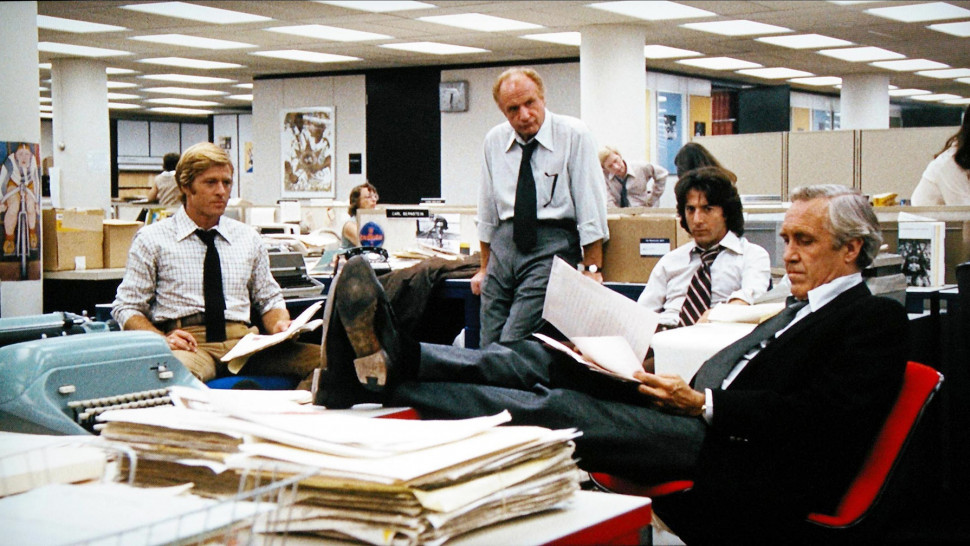
Willis uses a split dopter to brilliant effect. Effectively, this splits the lens in two – one half becomes a close-up, the other long-distance focus. It makes the screen a deeply unsettling mix of blur and crystal-clear clarity. So, while Woodward sits at his desk, we see blurred distance immediately around him – but on the other side of the screen far away other journalists clearly. Not only does this brilliantly create a sense of the endless bustle of the newsroom (also helped by the sound designs superb mix of typewriters and office noise) but also adds a visual metaphor of misty confusion that literally envelops our heroes.

All the President’s Men is a resolutely unflashy film for all of this. Its brilliance is all in its mastery of small details. It means more attention-grabbing shots – like the aerial shot of a circular library – carry even greater impact. The lack of flash also carries across to its stars, who have arguably never been better. Initially presented in two-shot exchanges (particularly in their first encounter over Bernstein rewriting Woodward’s text without his agreement), the two increasingly share the frame. Redford and Hoffman even learned each other’s lines so they could complete each other’s sentences – they almost become one character (‘Woodstein’).

The two actors were also wonderful contrasts, reflecting the two men they played. Redford, who worked hard to keep the project grounded, has a WASPY boy-scout decency and a relaxed unfussy star delivery, Hoffman the twitchy fiddling of the working-class reporter made good. Both actors have rarely been better. Equally good is the Oscar winning Robards who perfectly captures Bradlee’s avuncular professionalism while Holbrook is superbly enigmatic as the shadowy ‘Deep Throat’.

All the President’s Men demands attention like few other films – but it’s deliberately dense plot exactly matches the mystifying journey of the journalists themselves. It also turns journalism itself into a cause for typewriter knights (you could argue the downside of its legacy is journalism focused on ‘gotcha’ rather than informing). Pakula’s marvel is crammed with stunning sound and visual design and a lingering sense of paranoic fear. The film wants us to be as uncertain about what is happening as the characters – but in doing so it makes the greatest argument in favour of the power of journalism ever made by cinema.

Out of Africa (1985)

Robert Redford and Meryl Streep in this sweepingly empty romance Out of Africa

Director: Sydney Pollack

Cast: Robert Redford (Denys Finch Hatton), Meryl Streep (Karen von Blixen), Klaus Maria Brandauer (Bror von Blixen), Michael Kitchen (Berkeley Cole), Michael Gough (Lord Delamere), Suzanne Hamilton (Felicity Spurway), Rachel Kempson (Lady Belfield), Shane Rimmer (Belknap), Malick Bowens (Farah Aden), Joseph Thiaka (Kamante), Donal McCann (Doctor), Leslie Phillips (Sir Joseph Byrne)

In the 1980s Hollywood faced an identity crisis. Throughout the 1970s, the films the Oscars honoured and those that topped the box office were often one and the same. The industry saw itself as the purveyor of classy, intelligent, popular entertainment. But in the 1980s, people flocked to see the latest Rocky or Rambo film, instead of the likes of Kramer vs Kramer. Hollywood wanted to carry on feeling good about itself: so it honoured as “Best Picture” the sort of sumptuous, prestige products it wanted to shout from the rooftops about, even if people weren’t flocking to see them at the cinema in the same way. So something as mundane, average, tasteful and empty as Out of Africa hoovered up eight Oscars.

Based on Karen Blixen’s memoir of her 17 years (from 1913) owning and running a coffee farm among the British community in Kenya, the film reorganises a deliberately non-linear memoir (full of impressions and reflections, thematically arranged) into a simpler narrative, and throws in content from at least two biographies of Blixen (played by Meryl Streep). As such, the film charts her life, specifically her relationship with philandering and unreliable husband Bror (Klaus Maria Brandauer) and love affair with British game-hunter Denys Finch Hatton (Robert Redford).

Pollack directs this epic with a clean, smooth, professional and lifeless tastefulness that makes it a long film full of pretty things, but a fundamentally empty experience. At the film’s conclusion, Karen is invited into the Men Only club for a drink where she is toasted. It feels like it should be the culmination of plot threads running throughout the film. But instead, its under-explored and unfocused, struggling for any attention. Rather than a culmination of a nearly three-hour experience, the moment feels unearned.

That’s about par for the course for a film ticking all the boxes of “prestige” movie making, but which tells us nothing at all. It’s clear Pollack has only a limited understanding of the intricate rules of the British upper-class community. We learn nothing about Africa, or the role of Empire there or the impact this had on the Kenyan people. Instead, the Kenyan people are seen as exotics or charming superstitious eccentrics.

The film is only interested in how beautiful colonial Britain was – the lovely clothes, the sumptuous set-design, the detailed props – and the gorgeous scenery. There is some focus given to the Kenyans – particularly Karen’s relationship with her servant Farah, very well played by a stern but wise Malick Bowens – but it is always defined as Karen visiting them, encouraging their education and pleading for their rights. There is more than a touch of the white saviour, and the film fails to really give us a sense of Karen gaining an understanding of the Kenyan people on their own terms, rather than hers.

That might be because the film is determined to turn the story into a straight-forward romance, giving most of its focus to Karen’s relationship with Denys. This is the root cause of most of the film’s problems, as Pollack casts two fundamentally unconnected actors. Streep gives a performance of such technical detail, you find yourself admiring the work while never really connecting with the character. Her Danish accent is perfectly studied, she has clearly read everything on Blixen she can find, and every single beat is perfectly observed. You can’t miss she is acting in every frame: there is nothing relaxed or truly intimate in the performance. It’s the work of a master craftsman.

This detailed excellence literally feels like it is happening in a different movie to the one Redford is in. Redford looks like he just stepped off the plane and started shooting. Pollack was convinced no English actor could play Denys in the sweeping romance he had in mind (Charles Dance anyone? Michael Kitchen – very good as Denys’ best friend – is far closer to what the part actually required, and would have been excellent). Redford was parachuted in and encouraged to play the role with his natural accent (is he still meant to be British? No idea).

The two performances never click together, and Redford’s Californian approach feels totally wrong for the Houseman-quoting, Mozart-playing, Great White Hunter he is meant to be. Not for one second can you forget this is the Sundance Kid – making it nearly impossible to buy into this relationship the film is trying to sell you, as well as making Streep’s Danish accent sound out of place (I mean why is she going to so much trouble when Redford can’t be arsed?).

All the romantic hair washing in the world can’t make these two stop being a chemistry free, jarring couple. Take away the sort of epic romance the film needs – the sort of thing The English Patient would do so right 11 years later – and all you really have left are two handsome actors in a very picturesque setting. Out of Africa looks lovely – but in a National Geographic way. The African Plains look wonderful, you’d have to do a poor job to make them look bad. Really the film is visually dull.

Pollack’s limitations as a director are revealed – he can’t give this the sweep and sense of the epic it needs and he can’t find depth in this canvas. Instead, everything is painted in the broadest brush strokes and any sense of romance it gets is from John Barry’s exquisite, luscious score. The film crams in as many shots of Africa as possible – but is bored witless by the story-telling and poetry that are supposed to be at the heart of Denys and Karen’s relationship. It rips the heart out of these two characters and their romance.

Out of Africa won all those Oscars – but feels like a box-tick exercise. Like the voters just thought everything in it musthave been Oscar-worthy. 1985 was a poor year for movies – perhaps only Ran, Brazil and Back to the Future have really grown in stature – but Out of Africa feels like the emptiest, least interesting, least effective prestige picture that ever scooped the Oscar. Nothing sticks in the memory – other than the repeated “I had a farm in Africa” line in Streep’s tongue rolling accent. Kitchen, Suzanne Hamilton and Brandaurer (charming and likeable as Blixen’s husband, despite playing a complete shit) are good, but nearly nothing else really works beneath its surface impact. Middle-brow, tasteful and pointless.

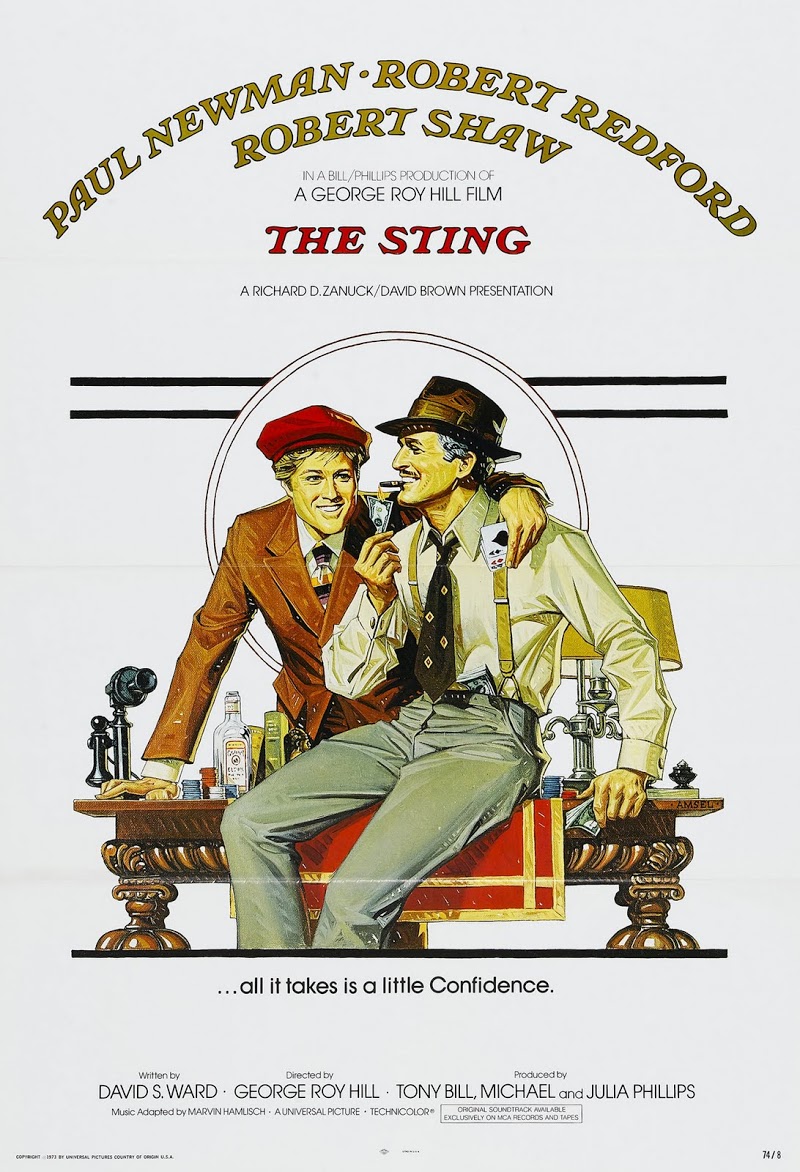
The Sting (1973)

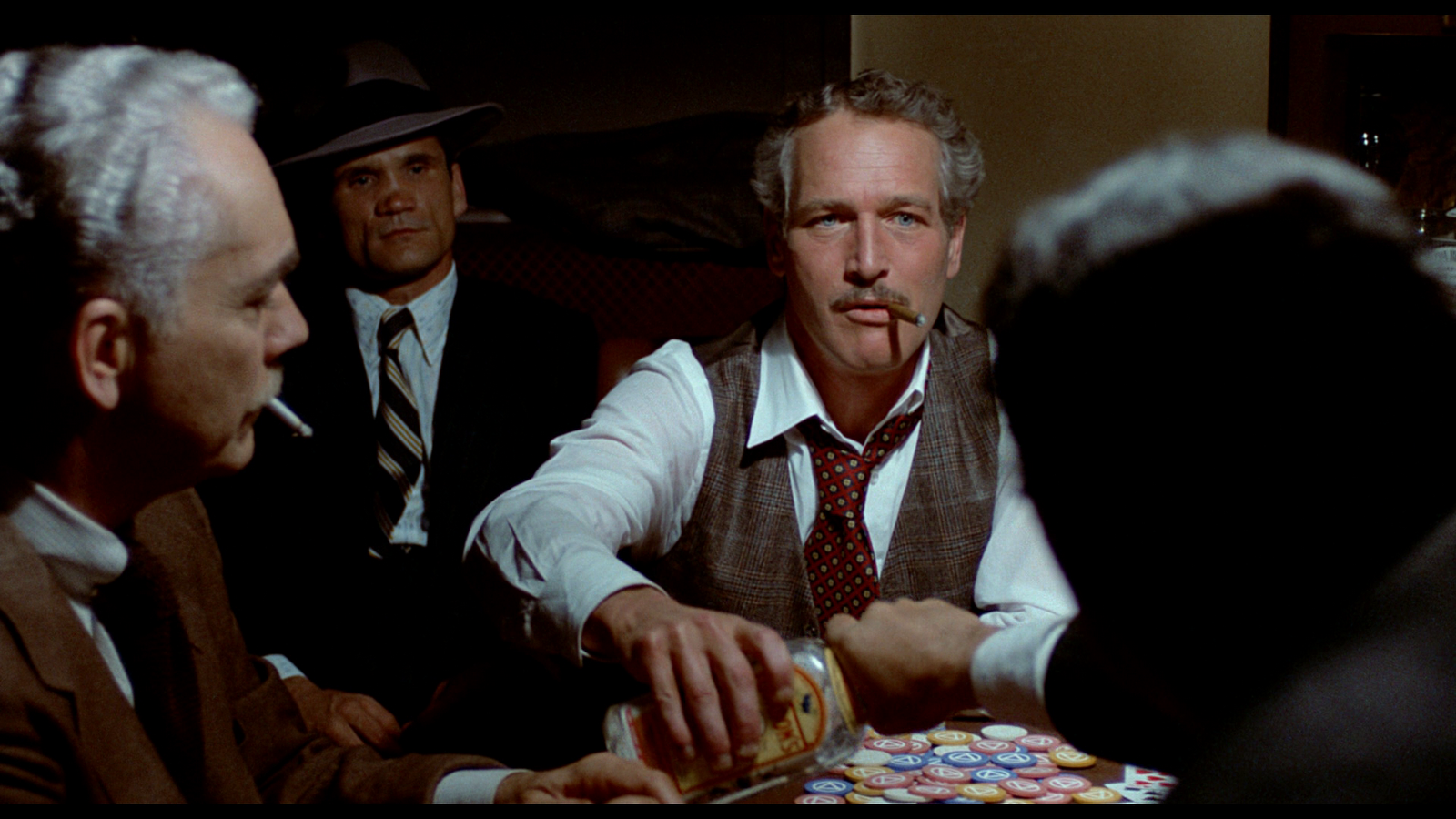
Newman and Redford pull the mother of all confidence tricks in The Sting

Director: George Roy Hill

Cast: Paul Newman (Henry Gondorff), Robert Redford (Johnny Hooker), Robert Shaw (Doyle Lonnegan), Charles Durning (Lt William Snyder), Ray Walston (JJ Singleton), Eileen Brennan (Billie), Harold Gould (Kid Twist), John Heffernan (Eddie Niles), Robert Earl Jones (Luther Coleman), Jack Kehoe (Erie Kid), Dimitra Arless (Loretta Salino), Sally Kirkland (Crystal)

From its opening, to the ragtime charm of Joplin’s The Entertainer, it should be pretty clear what you are in for with The Sting. A nostalgia-tinged star-vehicle, The Sting is gloriously unpretentious, a film that means only to entertain. Charming and good-natured, you can forgive it an awful lot because it wants so little from you: other than to put a smile on your face (a real “aw shucks I never saw that coming!” grin). A slice of pure entertainment, with more than a hint of nostalgia, it hoovered up seven Oscars (in an admittedly weak year – its nearest competitor was The Exorcist and it says something for how eclectic American cinema can be that those two films hailed from the same year) at a time when the nation needed a lift.

The Sting is perhaps the ultimate confidence-trick, caper movie. It’s been effectively remade so many times (it’s basic plot was copied exactly for the first episode of BBC’s confidence trick dramedy series Hustlers among others) it’s likely that you will recognise some of its tricks long before viewers at the time did. But that doesn’t really matter, because like all tricksters, it tells a great story. In 1930s Illinois Johnny Hooker (Robert Redford) is a grifter who makes a score off the wrong guy: a courier for vicious crime boss Doyle Lonnegan (Robert Shaw). In the violent aftermath, his partner and mentor Luther (Robert Earl Jones) is murdered. Hooker heads to Chicago to partner up with famous grifter Henry Gondorff (Paul Newman) to get his revenge. The plot comes together – but can they stay ahead of Lonnegan, the cops (led by Charles Durning’s Lt Snyder) who are after Hooker and the FBI who are hunting Gondorff? Or will they fool everyone?

Well what do you think? Directed with a professional (Oscar-winning) smoothness by George Roy Hill, this is basically Butch and Sundance Go Grifting. The film follows pretty much exactly the same nostalgia soaked journey following two charming Hollywood mates thumbing their nose at authority. The recreation of the period is extremely detailed (it won Oscars for production design and costumes), but above all safe and cosy. For all that it grifts in the rough-end of town, it’s a very clean and uncrowded world (the street scenes are notably empty) and very little reality is allowed to get in the way of what is effectively a shaggy-dog story.

The vision of the past it presents is designed from top-to-bottom to be comforting and the film is devoid of any sense of danger connected with grifting, or any sense of moral complexity around people who make their living from conning others. It’s a world where the only people conned are them-what-deserves-it and the conmen are plucky underdogs, making a buck off the crooked big man while fighting the corner of the little guy. It basically repackages conmen as fairytale heroes – and does so, so successfully most conmen films since have followed its lead.

It’s fairy-tale style is carried across in the chapters (with some lovely nostalgic hand-drawn chapter opener pages) that the film is split into, not to mention the structure of a callow youth, a rough but wise mentor, a hissible villain and righteous mission. The only thing it really misses is a princess to save (although there is the gentlest femme fatale you’ll ever see). But then there isn’t really room as, even more so than Butch and Cassidy this is a bromance played out in the same sepia-toned “good-old-days” warmth.

Newman and Redford are of course huge fun, using every inch of star-power gusto and cool. Newman has great fun as the sort of cigar-chomping, hard-drinking maverick only ever seconds away from bounding up from a scruffy sleep to perform all manner of tricks with assured cool. Newman generously cedes most of the richer material to Redford, but he can hardly have minded when he gets such glorious set-pieces as his faux-drunken card-sharp routine when he muscles in on Doyle’s cross-country train card game. I’ll also give a shout out to a wonderful moment when Gondorff goes through an elaborate show-off run-through of his card-sharp skills – only to get over-confident and spill the deck. It’s a good laugh, but also adds a little beat of tension (needless to say he performs flawlessly on the night).

Redford got his only acting Oscar-nomination here and, while it’s not his most challenging role, it’s certainly one where his magnetic Hollywood charm was used to its best effect. He gets the meat of the plot, walking a difficult line between being both an audience surrogate and keeping us uncertain about how much of what we are seeing is true. Redford’s handsome boy-next-door charm works perfectly for Hooker – and he’s got a sweet shocked horror at violence when it comes – and he has a rather winning naivety mixed in with a youthful energy. Sure, it’s hardly Hamlet, but as a riff on his WASPY version of counter-culture cool, it’s pretty much spot-on. (Redford is also of course a very safe presence – there’s nothing dangerous to him, which is of course perfect for the film’s tone.)

These two energetic and charismatic performers – both having a whale of a time – are the main selling point of a movie that rattles through fun set-pieces. Like all the best con movies, it lays out all its pieces and only assembles them all into a picture right at the very end. It makes for something little more than a fairground entertainment – Marvel as Gonrdorff and Hooker Hoodwink a Man Before Your Very Eyes! – but when it’s told with such zip, charm and lightness as this it hardly matters. Even the heavy – a growling Robert Shaw – gets a bit of light-banter under the menace (“What was I supposed to do” he bemoans after Gondroff swops out the crooked cards he’s dealt him “call him for cheating better than me?”).

The Sting isn’t trying to reinvent the wheel or tell you anything serious. It just wants you to grin. While we might be told grifting can be dangerous, the main impression of the film is that it’s matey boys-own blast. And it wants us to enjoy the entertainment as much as the conmen do. It knows that, like a good magic trick, we love to see how the illusion works and there are few things more engrossing than watching professionals execute a difficult task flawlessly. It’s one of the lightest Best Picture winners, but then it’s also one of the most purely enjoyable.

The Candidate (1972)

Robert Redford as a political puppet in The Candidate

Director: Michael Ritchie

Cast: Robert Redford (Bill McKay), Peter Boyle (Marvin Lucas), Melvyn Douglas (Former Governor John J McKay), Don Porter (Senator Crocker Jarmon), Allen Garfield (Howard Klein), Karen Carlson (Nancy McKay), Quinn Redeker (Rich Jenkin), Michael Lerner (Paul Corliss), Kenneth Tobey (Floyd J Starkey)

Bill McKay (Robert Redford) has it all – the looks, the charm, the ideals, and he’s the son of former California governor John McKay (Melvyn Douglas). Who else could stand a chance as the Democratic candidate against long-time incumbent Senator Crocker Jarmon (Don Porter)? McKay is reluctant to run – but he’s promised by Marvin Lucas (Peter Boyle), election specialist, that he has no chance of winning so sure, he can say whatever he wants. But Lucas has another plan, to turn the good-looking, charismatic McKay into his ideal candidate – workshopped, bland, generic and with as wide (and shallow) an appeal as possible. And as the election goes on, McKay turns from not caring, to not wanting to get humiliated, to wanting to win. What price idealism in a political game like this one?

Today, The Candidate looks considerably less fresh and inventive than it seemed in 1972. Back then it caught the wave of an America becoming increasingly disillusioned with its leaders and elections. Then, the idea of mass media manipulating focus-grouped candidates into something pliable, bland and uncontroversial to appeal to as many people as possible, seemed revelatory. Today, when even the optimistic The West Wing chronicles how even the good guys are obsessed with being on message and putting together political ideas into simple, repeatable soundbites with image as everything, The Candidate hardly looks ground breaking.

It won an Oscar for its screenplay, but it looks behind the times now – or even telling us only what we know already. So politics is all about image? Well big news there. In its Faustus-like structure, with McKay being corrupted away from his initial principles into the sort of cookie-cutter candidate focus group organisers dream of, it should be compelling. It isn’t really, part of the problem being that, even with his ideals, McKay is not really an interesting character.

He’s a character that can almost be defined as “looks like Robert Redford”. That’s what makes him appealing – the script spends no time at all on establishing any political or social ideas in McKay early-on beyond a vague wish to “do good” with his low-key law consultancy representing only the poorest. There is a half-hearted attempt to add some daddy issues, with the son determined to never become the principle-free politician his father (a blithely uncaring Melvyn Douglas) is. But these don’t really come into shape. Perhaps that’s the point? What makes McKay so appealing to Lucas from the start is he looks like a Kennedy, but has no real personality or ideas of his own.

He is, basically, a weak person who is quickly shuttled from place to place, told what to say and what to do and willingly converted one step at a time into an even greater non-entity. McKay clings to the idea of his political videos being about an idea, but quickly accepts “ideas don’t work” in these short pieces and allows them to be turned into puff pieces praising his youth and vigour. The film does get some fun out of the emptiness of campaigning – the slogan “McKay: The Better Way” means nothing at all – not to mention McKay becoming so dependent taking direction he can’t even do a broadcast without asking if his jacket should be buttoned or unbuttoned. But it lacks a real oomph.

Perhaps that’s because the film doesn’t really have a plot or characters as such. Every person in the film is there to fill an objective, no more and no less. Even Lucas, the arch manipulator, is little more than a cipher to represent spin doctors (years before the term was coined) for whom the competition and battle is all that matters and principles count for nothing. Ritchie shoots the film with a sort of sub-Altmanesque observational style with overlapping dialogue, but never really immerses the viewer in the quick-moving world of politics, instead serving up a series of mediocre images and scenes that serve as sketches or statements (Campaign ads are empty! Politicians are pre-packaged! They don’’t answer questions!) that eventually become a bit wearing.

Without this sense of narrative, events drift by and character developments just seem to happen with no logic. Redford supplies no real character to the part, unable to convey a sense of growing corruption and ambition in his performance. So when McKay starts doing things – like the mistress he takes during the course of the campaign – it just feels like the film has a nihilistic loathing for politicians rather than the ability to make any actual points that carry weight. 

It’s a disappointment as this is a good idea, and could have really worked if the writers and directors had allowed the film to have some heart alongside its cold cynicism, or even had allowed some clear story to play alongside. Instead we simply watch McKay becoming even more empty and artificial – taking part in a debate with his rival on air, in which he skilfully never answers a single question but parrots quotes from his briefings – only addressing at the very end that all this leaves us with politicians good at winning elections but with no idea about how to run the country. While it is one of the first films of its type, you feel it has long since been surpassed.

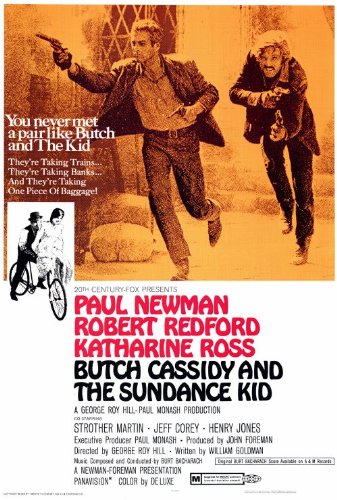
Butch Cassidy and the Sundance Kid (1969)

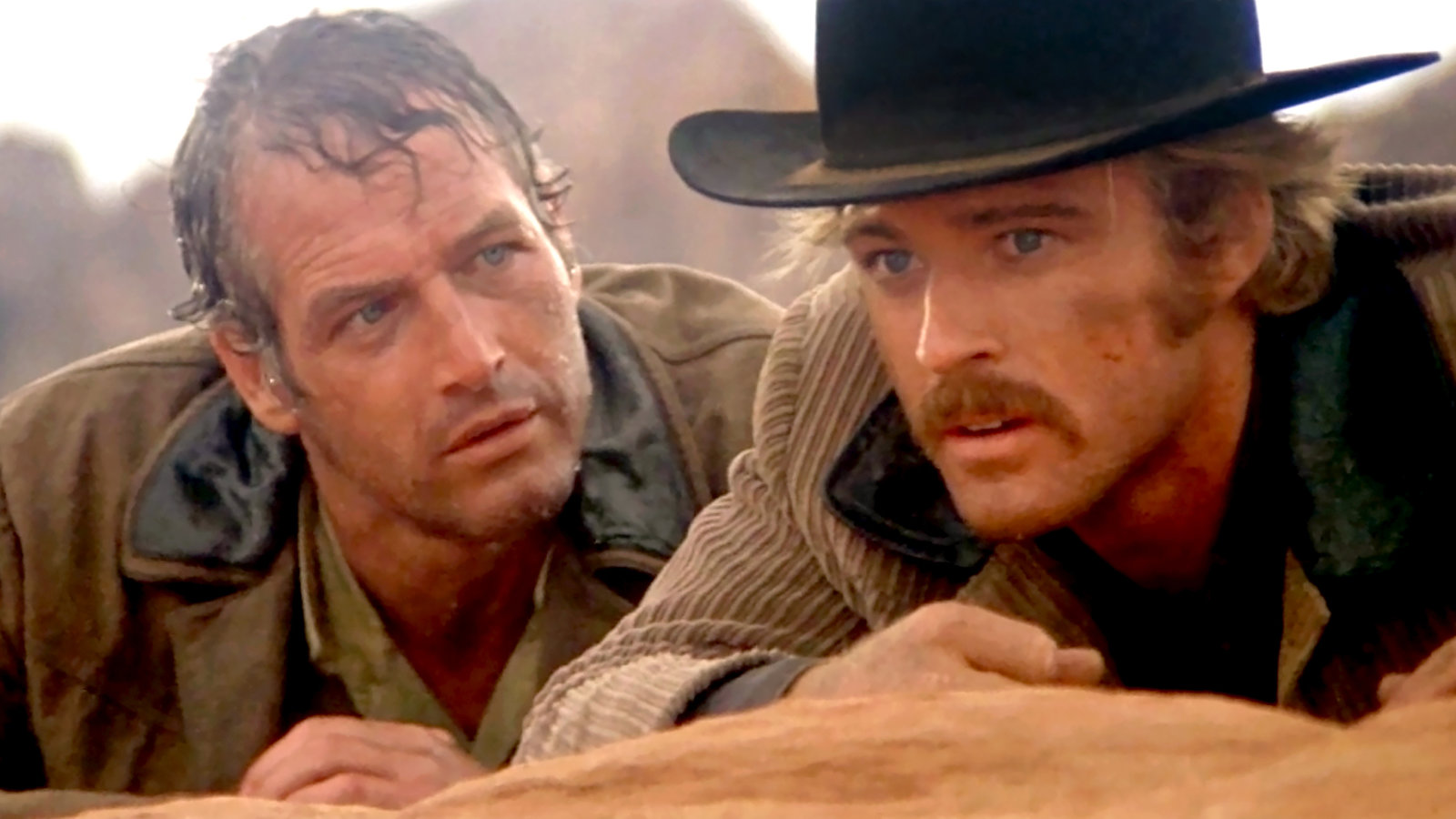
Paul Newman and Robert Redford in the perfect partnership in Butch Cassidy and the Sundance Kid

Director: George Roy Hill

Cast: Paul Newman (Butch Cassidy), Robert Redford (The Sundance Kid), Katharine Ross (Etta Place), Strother Martin (Percy Garris), Henry Jones (Bike Salesman), Jeff Corey (Sheriff Bledsoe), George Furth (Woodcock), Cloris Leachman (Agnes), Ted Cassidy (Harvey Logan), Kenneth Mars (Marshal)

Butch Cassidy and the Sundance Kid was a monster hit in 1969. It struck cinematic gold by combining Newman (originally first choice for the Sundance Kid) and Redford (fourth choice at best after Jack Lemmon – and what a different film that would have been! – Warren Beatty and Steve McQueen) and got the tone just about spot on between old school charm and hit 1960’s chic. It reinvents no wheels, but it’s a prime slice of classic Hollywood entertainment.

In the dying days of the Old West, the Hole in the Wall Gang is finding trade tough. The banks are wising up to how easy they are to rob, and the new idea of holding up trains is fraught with danger. Not least from the powerful backers who don’t like to see their money and goods being half-inched off the tracks by a gang of desperados. The leader of the gang, affable, fun-loving Butch Cassidy (Paul Newman) and his sidekick sardonic ace-shot the Sundance Kid (Robert Redford) continue to ply their trade of stealing, but they are fighting a losing battle. Hounded out of the states by a crack squad of lawman they make their way to Bolivia – but find the life of crime isn’t easier there either, what with no one speaking English and the Bolivian army being even more trigger happy than the American law and order forces. What’s a couple of guys to do?

Butch Cassidy and the Sundance Kid is really a celebration of nostalgia, repackaged with a wry sense of 60s cool that merrily seizes on its lead characters as the sort of anti-authoritarian, free-spirited, jokers who were bucking the rules of Vietnam-era America. But fundamentally at heart, it’s a joke filled sad reflection on a lost America and a lost sense of freedom – even if it was the freedom for two basically decent guys to make a living from robbing banks – that even shoots most of its opening segment in a romantic sepia. 

Because this is all about Butch and Sundance being two guys left behind by progress. Their way of life is dying out around them – the opening sequence sees Butch walk around a new bank, with its impressive new security measures. What happened to the beautiful old bank? Asks Butch: “People kept robbing it” comes the cold response. This follows on from a recreation of old sepia newsreal footage that states that the entire membership of the Hole in the Wall Gang is now dead – meaning that we know where the film is heading from day one. It’s a world where the train and modern communications are leaving our heroes behind. Even the humble bicycle is a sign of the future – “the horse is dead!” crows a bike salesman to a crowd of red necks.

The film may be cool and whipper-sharp in its style and the characterisation of its lead characters, but it’s a firmly nostalgic film that sentimentalises the Wild West and our heroes. No wonder at its conclusion it freeze frames (famously) as the heroes charge out to certain death in a shoot-out with the Bolivian army. It’s like Hill can’t bear seeing these guys torn apart ala Bonnie and Clyde or The Wild Bunch by the cold hard truth of a bullet. 

The film makes an interesting comparison with The Wild Bunch released the same year. In many ways the latter is a more traditional western, both in its style and its content. But in every other way it’s a far more radical piece, really embracing the lack of rules, the cruelty and the lack of glamour of life in the west – and ending with its heroes being shot to pieces on screen in a prolonged bloody shoot out that set a new record for use of squibs. Compared to this, Butch Cassidy is very light stuff, with its final image almost hopeful in its sepia toned romanticism.

Not that it’s not entertaining for all that. Its sense of sixties defiance is perfectly captured in the film’s lightness and playfulness – and in the fine lines and gags in William Goldman’s well structured (and Oscar winning) script. From its opening lines “Most of what follows is true” through the offbeat wisecracks of its lead, it’s a lot of fun. Newman and Redford are both just about perfect. Newman is the very picture of relaxed, casual cool while Redford’s style of handsame smartness works perfectly for the more plugged in Sundance. The two of them also form a very swinging sixties sexfree-Thruple with Katharine Ross as Sundance’s girlfriend, but essentially a companion to both men.

Not that Etta isn’t aware that the good times are coming to end. She makes it clear she won’t stick around to watch them die, and when (late in the film) she announces she will return to the US, it’s a clear sign to everyone that things are near the end. But then Butch and Sundance have already faced the cold realities, as an attempt to go straight protecting bank money from robbers see them gun down a group of bandits (the first real bloodshed in the film), an action that leaves them both slightly stunned.

It’s very different from the hijinks of the film’s first three quarters. The two of them spend a chunk of the film trying to evade the lawmen chasing them, each attempt failing, ending in them making a desperate jump off a cliff into water (because no one would follow unless they had to) and even their early career robbing banks in Bolivia is hampered by their inability to speak Spanish (cue a series of lessons from Eta on the rudiments of larceny in Spanish). The film’s lightness and warmth early on lies behind its popularity.

Butch Cassidy is a film that is designed to please and for you to love it. It has two fine actors giving superbly entertaining performances. It has some wonderful scenes, not least the introduction of each character, two superb scenes (Butch’s facing down of a challenge against his leadership of the gang is a scene so good I don’t think the film bests it). But Hill’s film is also a cosy and safe picture, that drips with sentimentality towards its leads and nostalgia for its era. It’s successful because it’s such an unchallenging and safe film.

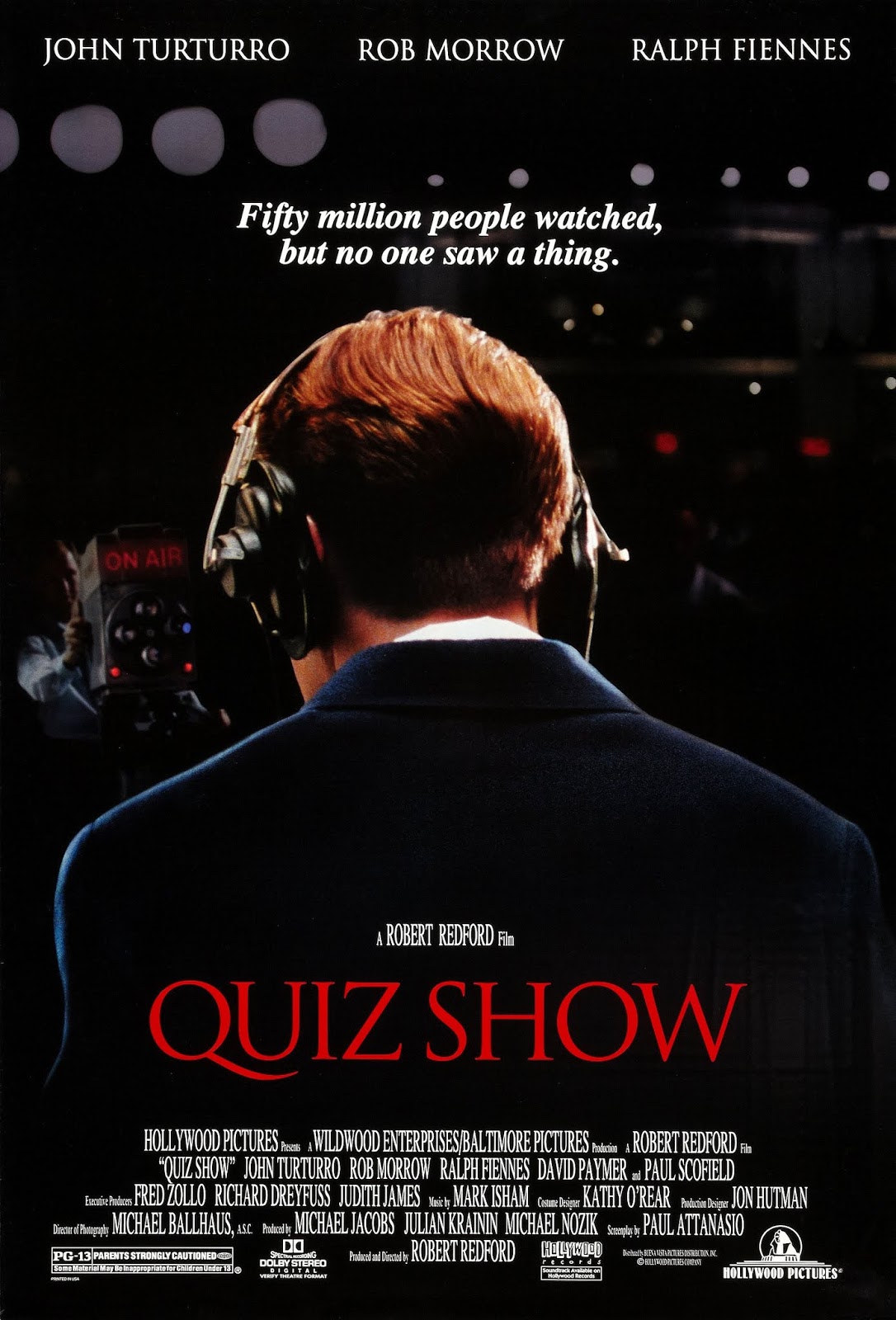
Quiz Show (1994)

Ralph Fiennes excels as the man who as the answers he shouldn’t have in Quiz Show

Director: Robert Redford

Cast: John Turturro (Herb Stempel), Rob Morrow (Richard Goodwin), Ralph Fiennes (Charles Van Doren), David Paymer (Dan Enright), Paul Scofield (Mark Van Doren), Hank Azaria (Albert Freedman), Christopher McDonald (Jack Barry), Elizabeth Wilson (Dorothy Van Doren), Mira Sorvino (Sandra Goodwin), Allan Rich (Robert Kintner), George Martin (Chairman Oren Harris), Paul Guilfoyle (Lishman), Martin Scorsese (Martin Rittenhome), Barry Levinson (Dave Garroway)

Imagine, if you can, a time when we trusted everything we saw on television. When whole nations crowded around to watch a show, and would run home to make sure they didn’t miss it. When the people appearing on the box in the corner were like members of the family invited into our home. In our cynical age of streaming and distrust, such ideas are impossible to imagine. Now we doubt anything we are shown on the box – and the first brick in that wall fell into place with the rigged quiz show scandals on American television in the 1950s.

Twenty-One is the biggest hit on NBC, with reigning champion Herb Stempel (John Turturro) correctly answering every question that comes his way. But the show’s sponsor, Geritol, is worried: Stempel’s ratings are at a plateau, and they feel the show needs a new champion. So producers Dan Enright (David Paymer) and Albert Freedman (Hank Azaria) look to recruit the sort of face of Twenty-One the sponsors want – and find him in clean-cut, Ivy league, charming Columbia League instructor (or “Professor” as they insist on calling him – and Van Doren’s move from reminding him he hasn’t qualified for that title, to happily accepting it is telling in itself) Charles Van Doren (Ralph Fiennes). 

They offer Van Doren the chance to win the show by telling him the answers in advance, while offering Stempel a career in television if he will agree to throw the next edition of the programme. Both men are plagued with indecision, but Stempel throws the game and Van Doren provides the correct answer to his final question – the exact same question he had been asked at his audition. Van Doren, seduced by the fame, quickly agrees to be given the answers in advance of the show, but the unreliable Stemple is dropped by NBC and instigates Grand Jury proceedings. The records are sealed but this piques the interest of Congressional lawyer Richard Goodwin (Rob Morrow), who begins to see the potential to “put television on trial” – while being deeply conflicted by his growing friendship with Van Doren, keen to be seen as co-operating with any investigation.

Quiz Show remains Redford’s finest directorial achievement by far, a rich, fascinating, beautifully made film with a profoundly rewarding and engrossing reflection on fame, television and the media in 20th-century America. Told at a gentle but compelling pace, probably the strongest weapon in its arsenal is a fantastically literate, well-constructed, dryly amusing and affecting script by Paul Attanasio. Scenes are beautifully assembled, crammed with well observed character beats and wonderfully quotable lines. It’s a script that would stand up extraordinarily well as a play itself, and Redford allows it plenty of room to breathe in his assured, unshowy and perfectly judged direction.

This is a film that analyses exactly how truth and entertainment are supposed to be inter-related. The rigging of quiz shows – and it was systematic across a range of shows on all channels – was a detailed lie to the American people. But, the film asks, what was the real harm of this? What are these quiz shows for? Tests of intellectual attainment or pieces of entertainment for the masses? As Scorsese’s Geritol executive says, people weren’t watching the questions, they were watching the money. 

And money is where the villainy lies in this film. For a film rich in period detail, Redford makes clear that there is a definite sense of class that underlies all the action. Decisions are made on the show based on selling things – advertising hours and Geritol products. And there are people in this show – the heads of corporations like NBC – who are making millions out of peddling rigged entertainment shows to the people. And when the chips come crashing down, it’s not these executives who are in the firing lines; it’s the little people who were the face of the enterprise – the contestants themselves – who pay the price.

It’s the exact opposite of what Goodwin wishes to achieve when he starts his investigation. He wants to add some moral force, some legislative control, to what you can and cannot present as fact and fiction on television. What he fails to understand – and what the film does – is that deep down people don’t want this. They want the excitement and the thrills – and at the end of the day wouldn’t care less if they never found out everything presented to them was carefully scripted. This lasts today: do we care that comedy sketches are not improvised but carefully scripted? Do we care if game show contestants are carefully pre-selected? Again, as Scorsese’s sponsor representative states, all any investigation will accomplish is TV shows figuring out other ways to get the high ratings: and simpler questions and less erudite competitors will be the way to go.

Because it’s all the glamour and excitement and drama we like to watch, not displays of intellectual accomplishment. It’s something the film understands – and something that comes across very clearly in Ralph Fiennes’ exquisitely well-judged performance as Charles van Doren. A genuinely intelligent, decent man, Fiennes’ performance works so well because he makes clear that under the WASPish, patrician decency of van Doren is a fundamental shallowness, a laziness and hunger for the quick buck and easy success. Constantly, Fiennes’ confident grin and easy manner hide his unease and guilt at his conduct. But he clearly can’t help himself, a Faust wrapped up in his pact.

After all what would his father – the famous poet and academic Mark van Doren, played with a beautiful ease, grace, intelligence and iron-clad honesty by Paul Scofield, a sublime actor at the top of his game – think of this all if he found out? The scenes between the two men – one the proud, loving but quietly demanding father, the other the successful, shallow, quietly desperate son – are the film’s strongest moments, consumed with the tension of the unspoken. We can see the pressure of familial expectations reflected elsewhere in Herb Stempel’s wife’s disappointment at finding that Stempel himself was a coached as much as van Doren.

John Turturro goes larger as Stempel, a bitter and frustrated man addicted to the attention and glamour TV has bought him which he has always felt has been denied him. Stempel’s desire for fame, his assumption of a persona in the public eye which is part studied, part eagerness to please his audience, gets to the heart of TV’s power. It’s the box in every room, and it can turn the ordinary into the extraordinary. It’s a box with the potential to weave magic – and it’s the tricks behind the magic that are difficult to see. For all we know the magician doesn’t saw the assistant in half (as Hank Azaria’s crude producer puts it), it makes it hard to enjoy the trick when you know it is one.

It’s ideas like this that the film gets to  so cleverly, and which turns the American quiz show into an intelligent metaphor for the corrupted ambition of America itself. The dream is to get to the top, and this was a way of offering a short cut for it – and all to help big business sell its products and make money. This is the subversive truth at the heart of Quiz Show, but it’s easy to forget as we, like the American people, have the obvious villains of the ordinary contestants be crucified by the media, rather than those who really profited. Redford’s film is smart enough to constantly remind us of this, to humanise the contestants and to show the darker elements underneath. Quiz Show is a great film.

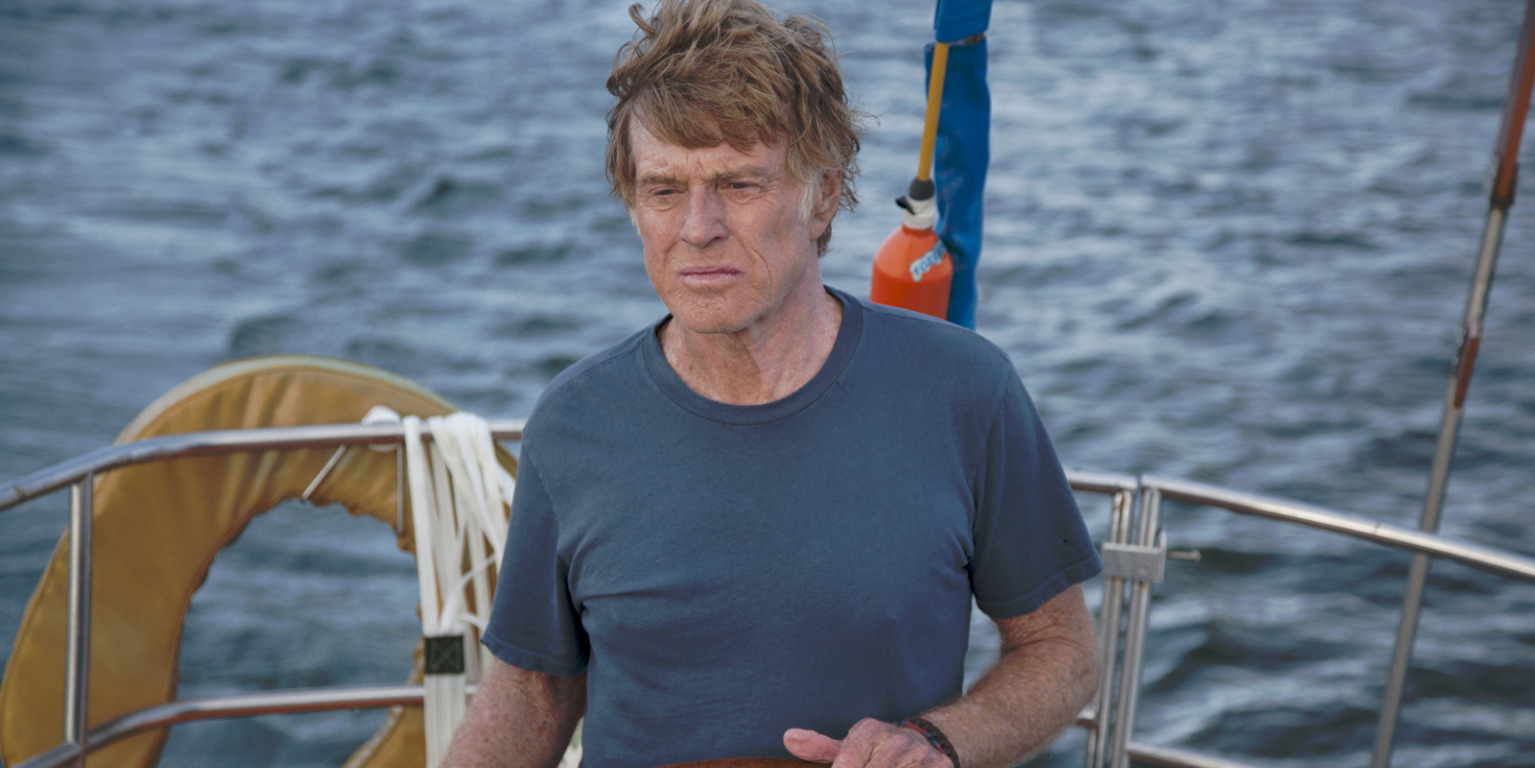
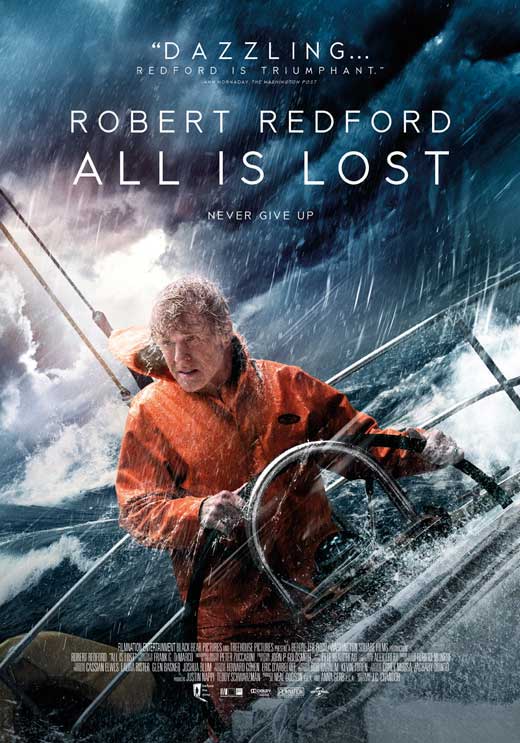
All Is Lost (2013)

Robert Redford is in trouble at sea in All Is Lost

Director: JC Chandor

Cast: Robert Redford (Our Man)

Imagine the horror of facing death alone in the middle of nowhere. To what ends would we go to try and avoid it? All Is Lost is a film all about that seemingly impossible struggle to defy the odds. It’s a gripping survivalist story, brilliantly assembled with a wonderful, near wordless, performance from Robert Redford.

Redford is our man in more ways than one, a nameless sailor on a voyage in the Indian Ocean. When his yacht is struck by an abandoned shipping container, he wakes up to find water pouring in from a hole in the side of the boat. With stoic determination, he sets about attempting to repair and salvage the ship, in the face of fierce storms, hull breaches, dwindling supplies, equipment failures and practically everything else the gods can throw at him. 

JC Chandor’s film is a marvellously assembled and directed film that deals brilliantly with the intense claustrophobia of being alone in a small boat in the middle of a seemingly never-ending ocean. Despite being nearly wordless – after an opening monologue, Redford speaks no more than seven words throughout the rest of the film, one an exasperated end-of-his-tether scream of “Fuck!” after one more disaster – the film is full of sounds, and the never ending slap and lapping of ocean water is a constant reminder of the danger that surrounds the boat.

Chandor shoots the film with an immaculate intimacy: he carefully planned each shot so that the camera was never more than a certain distance away from the hero. The effect is to completely connect us with him –we feel as if we are right next to him, as immersed in his survivalist story as he is. It really makes the story feel as much like our struggle as Redford’s. 

Redford is also a perfect choice as the hero. An actor who has (deliberately) worked very little over the last 20 years – focusing on his directing and producing projects – Redford’s cache is unpolluted by overexposure as so many other of his contemporaries are (could you imagine Al Pacino in the role?). Redford – amazingly for such a famous actor – disappears into the role. His performance is a masterclass in stoic underplaying, of grim determination. The film is a series of tasks that the actor is required to execute – repairing holes, trying to fix a radio, steering the boat through a storm, preparing meals – and Redford performs them all with an unshowy realism. 

So committed is the film to the mastery of these details, that the entire story becomes increasingly engrossing. The bizarre thing is that the strange excitement of watching all these tasks being executed makes you want to jump in a boat yourself and head out to sea – even while watching Our Man face near certain death alone in the middle of the ocean. (Although I never, for one minute, could face adversity with such stoic determination – I’d be punching the walls of the boat and raging against the ocean). 

It’s that threat of near certain death that hangs over the film. Opening with a narration from Redford that sounds a hell of a lot like a last will and testament, while the camera passes by what will soon be revealed to be the abandoned shipping tanker that doomed the yacht, the expectation from the start is that it will not end well. How much does the man accept this over time? How much does the fear that this could be the end play on his mind (and for how long). The film ends (without wanting to give away too many spoilers) with a question hanging over the man’s fate, that you can decide depending on your optimism or realistic pessimism. 

Chandor intended the film, I believe, as spiritual journey. The man goes through great hardship – in near wordless silence – facing a string of obstacles like some sort of biblical parable. The aim is for him to come to terms with himself – and to find peace with his fate and what his life has been. It’s a hard and difficult journey, but one that the man must travel in order for the journey to have meaning.

But it’s also about the desire we have to cling to life – to not let go no matter what obstacles are placed before us. How our best qualities sometimes emerge when we meet adversities like triumphs, about never letting despair enter our souls.  The man’s journey is engrossing and overwhelming because we all feel (or like to feel) that we would never despair or give up in the face of these odds. All Is Lost maybe the title, but it never really is until we give up.

Three Days of the Condor (1975)

Robert Redford goes on the run in conspiracy thriller Three Days of the Condor

Director: Sydney Pollack

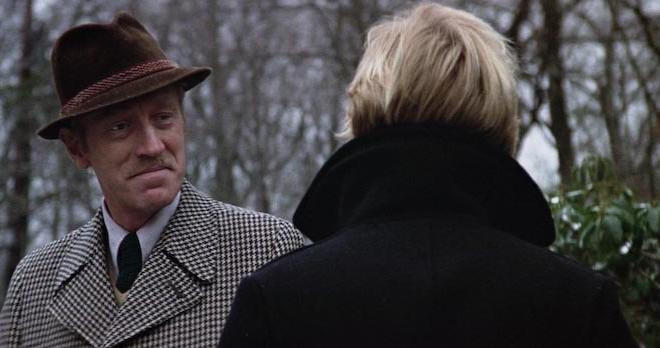
Cast: Robert Redford (Joseph Turner), Faye Dunaway (Kathy Hale), Cliff Robertson (Director Higgins), Max von Sydow (Joubert), John Houseman (Wabash), Addison Powell (Leonard Atwood), Walter McGinn (Sam Barber), Tina Chen (Janice), Michael Kane (SW Wicks), Don McHenry (Dr Lappe)

Three Days of the Condor never leaves you in any doubt that the real villains are those in power – and the possibility of escaping the reach of organisations like the CIA is beyond all of us. Condor is damn well-made though – Pollack’s direction is nearly faultless in its taut claustrophobia – even if the film itself gets a bit lost in its confusing obliqueness.

Joseph Turner (Robert Redford) is a quiet, boyish, Robert-Redfordish academic whose job is to read books published all over the world and report back to the CIA any familiarities with any secret operations past or present, or any good ideas from operations. One day, while out fetching lunch for his colleagues, he returns to find they have all been murdered by a hit-team led by a shadowy foreigner (Max von Sydow). Calling in the CIA, he finds he can’t trust anyone – and is forced to hide out by kidnapping a woman, Kathy Hale (Faye Dunaway), whom he bumps into in a shop.

Three Days of the Condor opens with an electric pace. The build-up to the assassination of Turner’s co-workers is extremely tense, while the immediate after effects – and Turner’s lost, confused terror – is brilliantly involving. The stream of conspiracy-laced events, and the unsettling lack of security about who to trust creates a terrific mood of paranoia. Pollack’s editing is tight, and the photography keeps the action naturalistic and eerily involving. It creates an unsettling drama where no one can be trusted. 

It taps perfectly into that 1970s vibe of the state being omniscient and inhumane – Turner’s CIA contact will only talk to him using his code name, shows no human interest in his deceased comrades and only asks if Condor himself is “damaged”. Later Turner chippily asks why a senior agent is addressed by his name, while he is only called Condor. 

Redford is very good as Turner – perfectly convincing as the bookish man thrust into circumstances where he is out of his depth, but whose innate abilities to think fast and adapt allow him to believably keep one step ahead of those pursuing him. The film has a love for the grimy Le Carre-ish detail of espionage, which it mixes well with its James Bondish elements of hitmen, violence and sex. The script has good lines, and several excellent set-pieces that trade in that queasy feeling of being out-of-depth.

The momentum of the first half however eventually gets bogged down in the “working out” of the conspiracy. This is a bit hampered by the early acts of the movie being focused more on atmosphere than on plot build-up. With the exact purpose and function of Redford’s CIA role only really being loosely explained quite late on – and the various inter-relationships of the assorted CIA bigwigs we see also not really being that clear – the final reveal of the wrong uns is murky and doesn’t quite justify the build-up. 

Part of this is the film’s 1970s vibe – its sense that the resolution is, in a way, less important than the downer atmosphere and conspiracy tension – but it’s also a bit of a narrative flaw. It’s hard to invest in a story that never really gets put together or explained properly, and doesn’t really give us a sense of the major stakes at play or the reasons why various characters do what they do. 

Other factors also have dated the film, principally the relationship of Faye Dunaway’s Kathy and Redford’s Turner. Now there is an odd Stockholm syndrome relationship if ever I saw one. From Kathy tearfully fearing rape and assault for most of the first ten minutes of their screen time together – and with no reason to believe the story Turner is peddling – sure enough within a few hours of knowing each other this pair end up in bed together. The film attempts to suggest Turner’s ability to understand her personality (in a way no-one else ever has naturally) through her photographs brings them together –but nevertheless it’s basically a hostage falling into bed with her kidnapper, about 20 seconds after she stopped crying, after he has just released her from being tied up and gagged in her own bathroom. 

I guess it helps when your kidnapper looks like Robert Redford – and the film uses Redford’s innate trustability well – but it’s a little unsettling. Kathy swiftly becomes Turner’s little helper – but you never really get a sense that the she is an actual character, or that the film even really needs her that much. Dunaway is a good actress and plays the part very well – but there is an unsettling submissiveness and even exploitation to her character that dates the movie (not that we have moved past films where female character’s principal role is to have sex with the hero to ease his pain). The best you can say for this character is that she has “pluck”.

It’s dumping Turner down into Kathy’s home where the momentum leaks out of the film slightly. It’s a film that feels like it’s going to be set-up as a chase movie with a spy tinge, but it never really turns into that. On top of which, it takes time away from properly developing Turner’s enemies. His possible CIA opponents, led by Cliff Robertson and John Houseman, don’t really come into focus as characters. The performer who does stand out – largely because of the wry world-weariness he brings to the role – is Max von Sydow as the hitman Joubert, a character I’d happily see more of (where was his spin off?). 

Three Days of the Condor is a well-made triumph of atmosphere – but the later sections of the film don’t quite live up to the build-up, and the film doesn’t quite snap together as much as you would like in the second half. It gets lost in its labyrinthine schemes and then doesn’t have a resolution that seems interesting enough to make satisfying narrative sense.  It’s got some great moments in it, but it’s a flawed film.

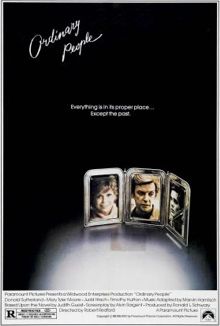
Ordinary People (1980)


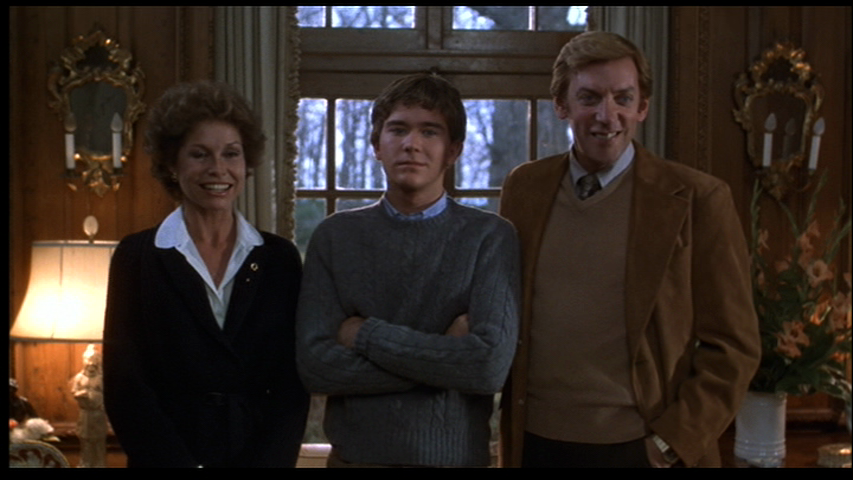
Mary Taylor Moore, Timothy Hutton and Donald Sutherland pose for an awkward picture in family troubles drama Ordinary People

Director: Robert Redford

Cast: Donald Sutherland (Calvin Jarrett), Mary Taylor Moore (Beth Jarrett), Timothy Hutton (Conrad Jarrett), Judd Hirsch (Dr Tyrone Berger), Elizabeth McGovern (Jeannine Pratt), M. Emmet Walsh (Coash Salan), Dinah Manoff (Karen Aldrich), Fredric Lehne (Joe Lazenby), James B Sikking (Roy Hanley)

In 1980, Robert Redford became the first big Hollywood stars to parlay acting success into producing and directing small scale, independent films that otherwise might never have been made. Ordinary People was the first of these – with Redford focusing on staying behind the camera – and it was a big success. It even won four Oscars – best picture, screenplay, supporting actor for Timothy Hutton (despite the fact Hutton is really the lead) and best director for Redford himself (beating out David Lynch for The Elephant Man and Martin Scorsese for Raging Bull). It was a great story for 1980 – the matinee idol turned artist. But is Ordinary People that great a film?

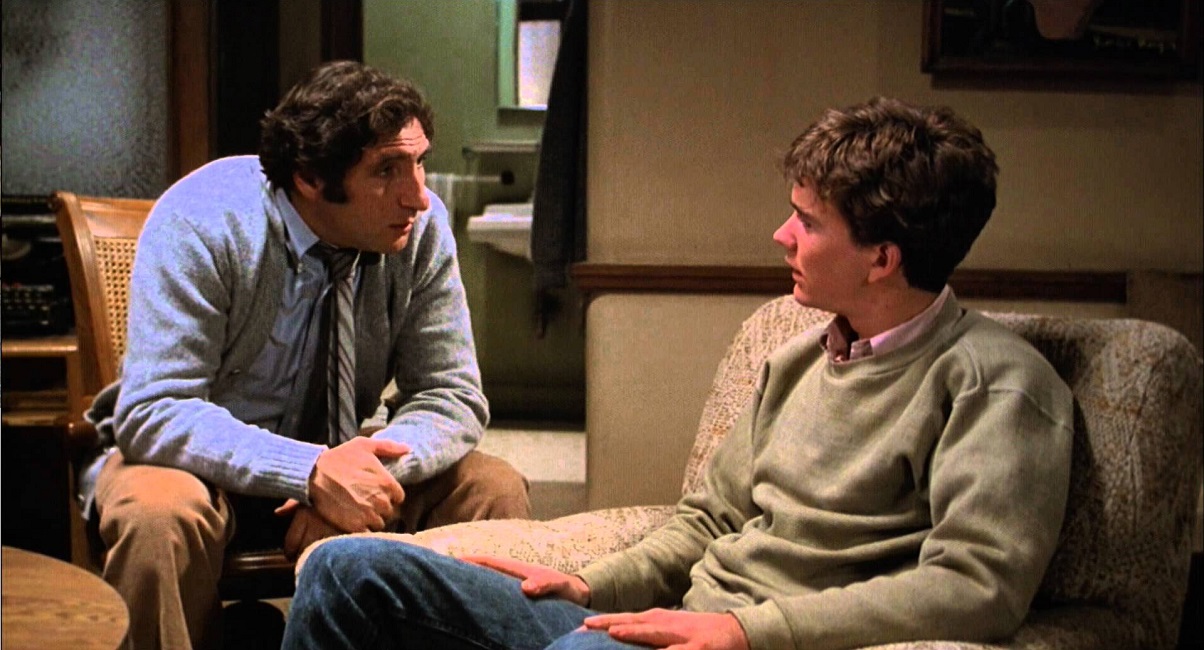
The film covers the emotional collapse of a wealthy middle-class American family after the eldest son Bucky is killed in a boating accident. Younger son Conrad (Timothy Hutton) has had trouble coming to terms with the accident, which he survived, and has only just left an institution after a suicide attempt. His father Calvin (Donald Sutherland) is desperate to try and relate to his son again, while his mother Beth (Mary Taylor Moore) remains emotionally distant attempting to put the accident behind them. Conrad starts seeing psychiatrist Dr Berger (Judd Hirsch), to adjust – but the after effects of Bucky’s death continue to tear the family apart.

Nobody really talks about Ordinary People any more do they? Out of all the 1980s Best Picture winners it’s perhaps the most easy to overlook (except maybe for Terms of Endearment). Why is this? Well truth be told it’s just a pretty ordinary picture. There really isn’t much to it. The story it tells of a wealthy family (only a millionaire like Redford could consider these loaded people ordinary) suffering emotional trauma and psychiatry finding the answer has been told so many times before, and since, that there isn’t anything particularly unique or interesting about it. 

In fact Ordinary People is exactly the sort of small-scale, quiet, middle-brow independent film that awards ceremonies slather over and a few years later (never mind over 30!) people struggle to see what the fuss was about. Redford directs the film with a quiet professionalism – the sort of competent craftsmanship and skill with actors that dozens of other directors could have done just as well. His Oscar for best director is especially galling when you consider the artistry and imagination of Scorsese’s direction of Raging Bull, or the unbearable sadness and tragedy Lynch gave The Elephant Man. It’s the sort of direction a non-famous director wouldn’t even have been nominated for.

This film uses shot-reverse-shot like it’s going out of fashion, most of the scenes are conversations across tables that are weighted down so heavily with meaning you start to lose interest in them. The score uses Pachelbel’s music in such an overwhelming style, it makes that sound as anodyne as much of the rest of the movie. Maybe it’s just because this is such well-trodden ground, but the revelations towards the end of the movie are so blindingly obvious you wonder why it takes so long to get to them (the son blames himself, the mother blames the son and doesn’t love him as much as the dead son, the father wants the two to kiss and make-up). 

This rotates around a series of psychiatrist scenes which at least have the feeling of actual sessions, even if Judd Hirsch (good as he is here) basically plays the sort of revelation inspiring psychiatrist that only appears in movies. The film has a touching faith in the power of analysis being able to solve all problems, and spends so long luxuriating in scenes like this it virtually forgets to put actual living, breathing characters in the middle of them. With the possible exception of the father, none of these characters feel particularly real – they are just mouthpieces for the plot.

Not that it’s badly acted at all. Timothy Hutton made his film debut here and he brings a real fire and passion to the role, as well as a moving emotional vulnerability and anger directed only at himself. The supporting actor Oscar feels a bit of a cheat, as he’s clearly the lead, but he’s very good here as Conrad, struggling to express himself, bottling up his feelings and lashing out at those around him. It’s a part that feels drawn together from bits and pieces of plot requirement, but Hutton plays it to the hilt – it just doesn’t feel like a really real person, more a collection of sad traits.

Mary Taylor Moore is in a similar situation as a mother so cold and distant from her son, so repressed and controlling her distance starts damaging the entire family. She’s unable to process what has happened so almost wants to pretend nothing has (and blames her son for not doing that same), that it again feels like something from a psychiatric case-study rather than real person. Moore gained particular attention at the time as she was best known for comedy (much like Judd Hirsch, famous for the sitcom Taxi) – so the performance at the time might have looked stronger than it actually was.

The best performance might well come from Donald Sutherland in the least flashy role as the father trying to puzzle out what is going on – and trying to work out his own feelings. It’s the only character that feels less like a construct and more a genuine person, whose answers aren’t easily worked out by a bit of psychology study. Sutherland is low-key, tender, gentle and carries all his emotion on the inside – it’s a subtle and excellent performance, overlooked way too much. 

Redford essentially directed an actor’s film here (it’s all about the big moments of acting) so it’s not a surprise that it seized the attention of the Academy (largely made-up of actors) but really it’s not that far away from a well-made “movie of the week”,  with its obvious beats and not particularly surprising revelations. Perhaps it’s the point that the family’s problems seem a lot more apparent to the viewer than they do to the characters – and there is some interesting development of perceptions, not least from Sutherland’s father who starts to come to profound realisations about his wife and son. 

But Ordinary Peopleis an uninspiring and even rather tame drama, that today looks even more low-key and insubstantial. While it tries to break free from the confines of “social drama” it actually wants to tie everything up with a neat bow psychologically – and despite the fact it has an ending that suggests not everything is perfect, it really concludes with a safe full stop. There is a reason why it’s surely one of the best pictures which has been most forgotten about.

A Bridge Too Far (1977)


Dirk Bogarde, Sean Connery, Ryan O’Neal and Gene Hackman are among the Generals aiming to go A Bridge Too Far

Director: Richard Attenborough

Cast: Dirk Bogarde (Lt-Gen Frederick “Boy” Browning), James Caan (Staff Sgt Eddie Dohun), Michael Caine (Lt-Col J.O.E. Vandeleur), Sean Connery (Maj Gen Roy Urguhart), Edward Fox (Lt Gen Brian Horrocks), Elliot Gould (Col Robert Stout), Gene Hackman (Maj Gen Stanislaw Sosabowski), Anthony Hopkins (Lt Col John Frost), Hardy Krüger (SS Maj Gen Karl Ludwig), Laurence Olivier (Dr. Jan Spaander), Ryan O’Neal (Brig Gen James Gavin), Robert Redford (Major Julian Cook), Maximilian Schell (SS Gen Wilhelm Bittrich), Liv Ullman (Kate ter Horst), Michael Byrne (Lt Col Giles Vandeleur), Denholm Elliott (RAF Officer), Jeremy Kemp (Briefing Officer), Wolfgang Preiss (Feldmarchall Gerd von Rundstedt), Stephen Moore (Maj Robert Steele)

You’ve got to love a good war film. In fact, there are few things more cinematic than the old-school, star laden Hollywood war film. A Bridge Too Far is for me one of the finest examples of this genre, and it’s a film I come back to time and time again. Is it perfect? No of course it isn’t – in fact I probably love this film more than some of the people actually in it do. But it’s a damn fine piece of big-screen, big-budget film-making, and it’s got a cast of stars. And more than perhaps any other film of this genre, it’s a film about how overwhelmingly awful and gut-wrenching war is. This is a film about a defeat – and not the sort of triumphant defeat that Dunkirk feels like. It’s just a gut-punch. The Allies threw the dice big time, and they lost.

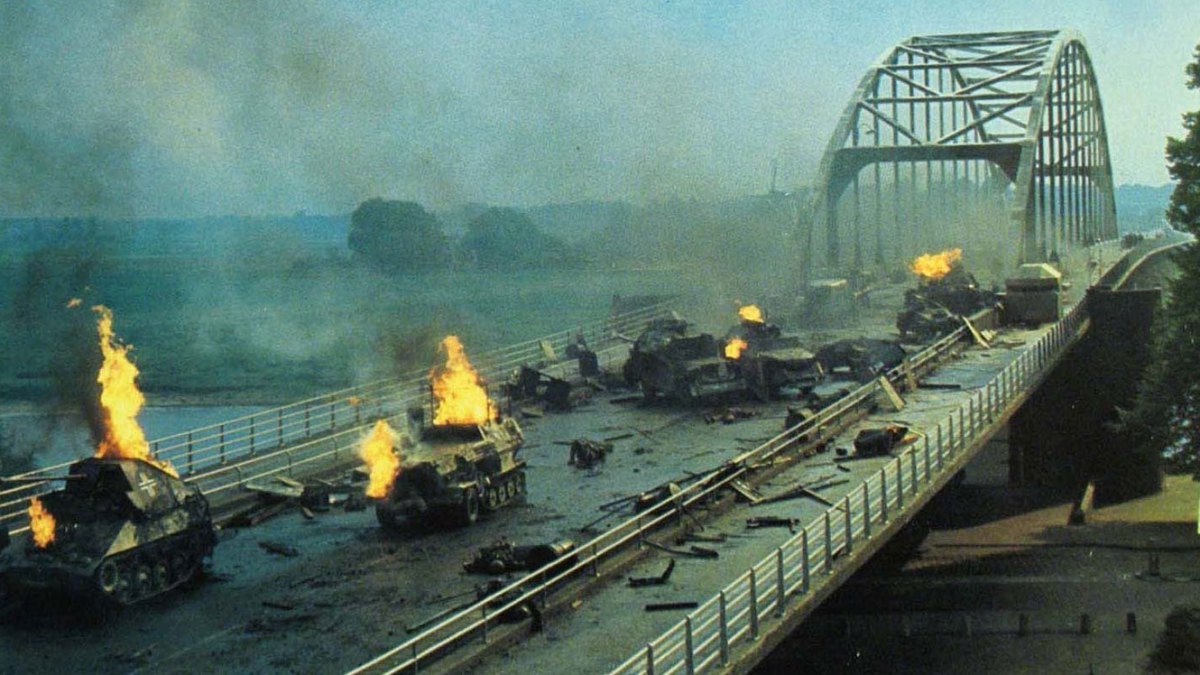
The Battle of Arnhem was one of those “end the war by Christmas” plans. The brainchild of British war-hero Field Marshall Montgomery (noticeably absent from the film), Operation Market Garden was a lightning strike into the heart of the Ruhr to capture Germany’s industrial capability. This involved a series of paratrooper drops into towns in the Netherlands, culminating in Arnhem, to cross the Rhine. While the paratroopers seized key bridges, British Tank Division XXX Corp would power through, cross the bridges and into Germany. It was bold, daring and radical. It was a disaster. Arnhem, far from being undefended, was being used as a rest place for a Waffen-SS Panzer division. The British paratroopers found themselves not seizing a lightly defended bridge, but fighting a tank division with machine guns and limited supplies. Meanwhile XXX Corp’s progress became bogged down in traffic jams and higher than expected German resistance. 

It’s quite something to make a war film about possibly the biggest military disaster on the Western Front during the Second World War. The entire plan is a misconceived tactical blunder, and the film never shies away from this, demonstrating time and again the numerous errors that led to it: from Generals ignoring reconnaissance that suggests this won’t be a cake walk, to paratroopers failing to seize bridges quickly, to tanks crawling down crowded roads, fighting every step of the way. Alongside all this, the film never loses track of the horrifying impact of war on both soldiers and civilians caught in the crossfire. It’s a huge budget, all-action, anti-war film.

Richard Attenborough is the perfect marshal for this film. He has the experience and understanding of scope to handle the action scenes. At the time, this film was possibly the most expensive film ever made. Not only that, it was independently funded – producer Joseph E. Levine thought the film was so important he pumped millions of pounds of his own money into it. The attention to detail is extraordinary – the film consulted nearly every single surviving commander from the battle on the script – and all the stops were pulled out creating the military features of the film. 

This is of course particularly striking now as we know everything in the film is real – no special effects in those days. If you see it in the film, then you know that it was really there. In the sequence showing the planes taking off to deliver the paratroopers to their destinations, there were so many planes in the air that Attenborough could literally claim to command the world’s seventh largest air force. Every military blow of the battle is carefully reconstructed. The tactics are carefully explained and followed. Attenborough can shoot compelling action.

But what makes the film so good (for me anyway) is the way the heart-breaking horror of war never gets lost. In all this action, we are always shown the cost. Attenborough will frequently cut back to the after-effects – several times we hear wounded soldiers whimpering on smoke-filled, body-littered battlefields. Many acts of courage (on both sides) by individual soldiers result only in pointless, gut-wrenching deaths. Arnhem isn’t just damaged by the battle, it’s flattened. The impact on the civilian population is terrible – in a powerful sequence, we see characters we were introduced to earlier mercilessly caught in the crossfire of the German tanks. We return continually to locations increasingly shredded by weapons fire. More and more soldiers are wounded – some horrifically.  Near the end, the remaining British paratroopers, encircled and surrendering, sing a deeply moving quiet rendition of Abide With Me. No one could come out of this wanting to go to war.

Attenborough’s humanity is key to the film’s success. It helps as well that he is a brilliant actor’s director. Want to dispel any doubt on the horrors of Arnhem –then train the camera on the Laurence Olivier’s tear-stained face as he drives through the destroyed streets. Want to understand the sacrifices and the courage? Well just let Anthony Hopkins – simply excellent as the commander of the only forces to reach the bridge at Arnhem – with calm, restrained Britishness request support and supplies late in the film as his men are butchered around him. It’s a film full of brilliant moments of acting like that, where Attenborough points the camera at them and lets them act. 

The sequences around Arnhem and the British paratroopers there are the heart of the film. Sean Connery is terrific as Major General Roy Urquhart, commander of the British paratroopers. His growing frustration as events spiral far out of his control is a great contrast with his initial professional confidence. Gene Hackman, as commander of the Polish forces (slightly odd casting but good once you tune up to it), gets the role of the “one man talking sense” who can smell disaster early on, but works harder than anyone to get the plan to work. A number of the regular soldiers in Arnhem are faces the film returns to again and again – giving us people to relate to as their numbers are increasingly decimated by the savage, desperate combat. John Addison’s score also helps a huge amount with building the emotion in these scenes.

The Arnhem sequences are so good that the other sequences around the American paratroopers feel like they come from a slightly different movie. It doesn’t help that the likes of Elliot Gould are playing slightly clichéd “Brooklyn Yankee” types, chomping cigars and ribbing the stiff-upper-lip Brits. Ryan O’Neal as General Gavin is slightly dull. The XXX Corp material is a little dry (essentially driving up a road or waiting), although Edward Fox is superb (and BAFTA-winning) as their charismatic commander Lt Gen Brian Horrocks. Attenborough puts together at least one terrific set-piece tank battle on the road – but it’s not quite enough.

The two biggest American stars are also given the feel-good, up-beat material. James Caan gets the best part in what is effectively a stand-alone story of a Staff Sergeant going to impossible lengths to save the life of his Captain (Caan had his choice of part and chose well). Robert Redford is a little too starry (bizarrely in a film full of stars!) as a Major tasked to seize the vital bridge at Nijmagen via a daylight river-crossing. This sequence feels like it’s been put in the film to (a) give us something to cheer and (b) to allow an American victory for the box office. Of course, we need the biggest star in the world at the time to play the most straight-forward heroic part!

The film does have a tendency to shuffle its characters into “good” and “bad”. So after Redford seizes the bridge, the character sent to tell him that XXX Corp won’t be rushing across to Arnhem after all isn’t Caine’s Vandeleur, but a nameless Colonel played by Polanski’s villainous Ross from Macbeth himself, John Stride. The most sympathetic generals and commanders are all (coincidentally) the people who served as military advisors on the film.

On the other hand, the film ends up laying most of the “blame” on Dirk Bogarde’s Lt Gen Browning. Browning’s widow, Daphne du Maurier, threatened to sue the film-makers for the portrayal of Browning here (she got an apology). Browning is portrayed as the ultimate “non-boat rocker” – over-confident and arrogant, he disregards intelligence suggesting the Arnhem plan is dangerous, seems shocked and clueless once the scale of the disaster is revealed, and by the end of the film seems to be most interested in positioning himself as always opposed to the plan in the first place. Bogarde (the only actor in the film who actually served in Market Garden) was similarly angry when he saw the film – and he has a point. It’s grossly unfair.

It’s a problem with this film and it does annoy me. The parts not set in Arnhem are not as memorable or compelling as the rest. But huge chunks of the film are brilliant, and never fail to move or (sometimes) excite me. Its anti-war stance is striking. The acting from the cast is very good across the board – say what you like, cast every part with a star and you never get confused about who is who. Attenborough also draws great performances from the non-stars – Stephen Moore is a particular stand-out as a signals man unwilling to voice his doubts about the equipment (and who pays a heavy price). 

I can watch A Bridge Too Far at any time. I always love it. It’s a film of great moments and performances. It carries real emotional weight. Attenborough is a very good director of actors, but also a skilled commander of scale. It’s a film that gets emotion in there. It’s a film that isn’t afraid to present a military disaster. It doesn’t demonise the Germans. Sure it plays goodies and baddies with the Allies, and parts of it to drag on a bit too much or deal with cliché. But at its best is the core of a great film. I love it. It’s a favourite. And always will be.