Tag: Robert Warwick

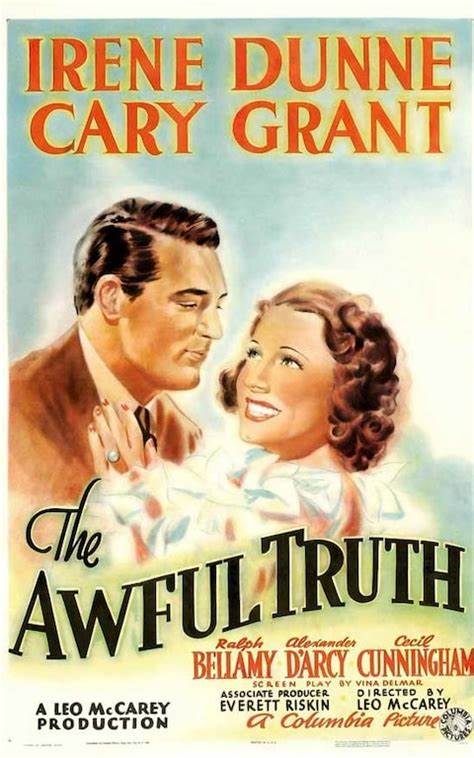
The Awful Truth (1937)

Irene Dunne and Cary Grant flex their comic muscles to outstanding effect in The Awful Truth

Director: Leo McCarey

Cast: Irene Dunne (Lucy Warriner), Cary Grant (Jerry Warriner), Ralph Bellamy (Dan Leeson), Alexander D’Arcy (Armand Duvalle), Cecil Cunningham (Aunt Patsy), Molly Lamont (Babara Vance), Esther Dale (Mrs Leeson), Joyce Compton (Dixie Belle Lee), Robert Allen (Frank Randall), Robert Warwick (Mr Vance), Mary Forbes (Mrs Vance), Skippy (Mr Smith)

Lucy (Irene Dunne) and Johnny (Cary Grant) Warriner divorce because both of them are constitutionally incapable of being faithful. But yet, they also pretty much can’t stand the idea of the other being with anyone else. Can they face The Awful Truth that they are, in fact, perfect for each other? This is a feuding husband and wife who enjoy the horrified looks on the faces of other people as much as they enjoy seeing how far they can push each other.

When winning the Oscar for Best Director for this film, Leo McCarey believed he actually deserved it for his more serious melodrama about the struggles of the elderly, Make Way for Tomorrow. While Make Way for Tomorrow might well be a more serious work, and not the souffle of The Awful Truth, I’m pretty sure far fewer people over the past 80 odd years have found revisiting it such a delight as going back into The Awful Truth. Perhaps the eponymous truth for McCarey was that we are never the best judges of our own work.

The Awful Truth is possibly the best, funniest, remarriage comedy ever made. It was pulled together almost from nothing onset. Nominally an adaptation of a play by Arthur Richman, McCarey effectively dumped almost the entire plot and instead largely improvised the film and its plot on set as he went, throwing in jokes, plot developments and bits of business depending on what worked with the actors on the day. Producer Harry Cohn would arrive on set to find McCarey plinking on a piano, swopping stories and coming up with ideas for what they would shoot that day. From this the director would decide on the structure of the scene, the jokes and most of the dialogue. No wonder Cohn was pulling his hair out.

Sounds like chaos right? The stars certainly thought so. Grant was terrified. Prior to this a reliable Studio actor, used to being given the lines and standing where he was told. Finding out here that McCarey wanted something loose and improvisational, at first he was all at sea – even offering instead to buy himself out of the film. But McCarey saw something in him: in fact what he saw was “Cary Grant”. The Awful Truth is the moment the Grant we all know came to be: sophisticated, arch and a masterfully relaxed light comedian (rumour has it, at least partly based on McCarey himself). From hating the experience, Grant suddenly realised it was inspired. The same went for his co-stars: Dunne, Bellamy and the rest all excitedly contributed their own ideas and business into what became one of the greatest comedies of all time.

The Awful Truth is frequently laugh-out loud funny, a perfect combination of witty lines delivered with pin-point perfection. Many of the best lines fall to Irene Dunne’s Lucy, from denying an affair with her latest beau (“That’s right Armand. No one could ever accuse you of being a great lover. That is, I mean to say…”), to archly responding to Jerry’s “I know how I’d feel if I was sitting her with a girl and her husband walked in” with a “I’ll bet you do”. Grant though gets plenty of his own – “The car broke down? People stopped believe that one before cars started breaking down.” – and only he could make “I only just met her” a laugh-out loud moment. Nearly every scene has a perfect bon mot, brilliantly delivered.

McCarey’s direction also adds hugely to the comic effect. The Awful Truth is so smooth, polished and assured you can overlook how skilfully and brilliantly it’s been put together to accentuate the comic effect. From cuts that reinforce or set up gags, to characters entering and leaving at the edges of frames at the perfect moment for a laugh, the entire film is a masterclass in how to shoot and frame comic business. The film is a triumph of reaction shots: watch Grant, Dunne and Bellamy respond to the appalling singing of Jerry’s new girlfriend Dixie Bell (Lucy: “I guess it was easier for her to change her name than her whole family to change theirs”). Best of all a superb sequence where we hear Jerry and Armand fight off screen (with crashes aplenty) while Lucy attempts to maintain a banal ‘nothing to see here’ conversation with Daniel and his mother.

The entire film is a triumph of comic set-pieces, with Grant and Dunne sparking off each other like two whirligigs of static electricity. Both actors are absolutely sublime. Grant manages to make everything not only funny, but also effortlessly cool and his archness and confidence are hilarious. Dunne throws herself comedy with a full-blooded commitment and a total willingness to look silly. Like Grant, she also has the ability to tip the wink to the camera and flag up just how ridiculous many of these situations are. Ralph Bellamy, on paper, has the dullest role as the straight man but as well as being winningly naïve, he also has two show-stopping moments, most strikingly his hilariously enthusiastic dancing (made even funnier by Dunne’s increasingly uncomfortable efforts to keep up with him).

It’s all wrapped up in a plot light as air, perfect for the jokes to latch themselves onto. You’ll laugh almost from the first, but you’ll also care about these two dotty eccentrics who are clearly perfect for each other. With Grant creating his entire screen persona in front of your eyes and Dunne absolutely radiantly hilarious, The Awful Truth will carry on entertaining the masses for decades to come. Hopefully McCarey doesn’t regret that Oscar decision too much.

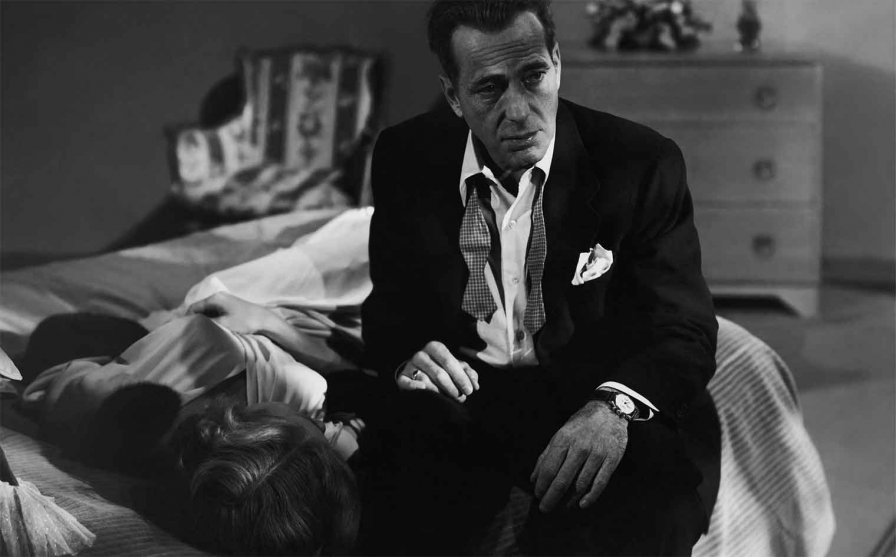
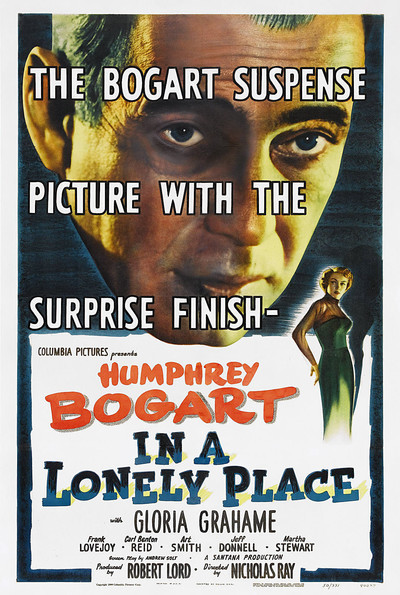
In a Lonely Place (1950)

Humphrey Bogart struggles with a dark capacity for rage In a Lonely Place

Director: Nicholas Ray

Cast: Humphrey Bogart (Dixon Steele), Gloria Grahame (Laurel Gray), Frank Lovejoy (Sergeant Brub Nicolai), Carl Benton Reid (Captain Lochner), Art Smith (Mel Lippman), Martha Stewart (Mildred Atkinson), Jeff Donnell (Sylvia Nicholai), Robert Warwick (Charlie Waterman)

Hollywood: it’s a dark town. When movie makers turn their lens on themselves you’ve just as likely to see the dark underside of showbusiness, as you have a celebration. In a Lonely Place was made in the same year as Sunset Boulevard, and it’s even darker and less hopeful than that movie. It focuses on a person with a certain level of kudos, that has led others to overlook his deep personal flaws. In a Lonely Place reveals itself as a quite ahead of its time in its unflinching look at why people find themselves drawn into potentially abusive, controlling relationships with people who talk endlessly about how much they love you even while they try and control every aspect of your life. Overlooked at the time, it’s seen more and more as a classic.

Dixon Steele (Humphrey Bogart) is a successful screenwriter but has gone a few years since his list hit. Hired to adapt a plot-boiler he’s so contemptuous of the synopsis he invites a waitress at his favourite restaurant, Mildred (Martha Atkinson), to his flat one night to describe the story to him. Becoming as bored with her as he is with the cliched plot, he sends her home. When she is murdered later that night, Dixon is number 1 suspect. He’s alibied by his neighbour, aspiring actress Laurel Gray (Gloria Grahame) and the two start a relationship. But the pressure from the investigation and his writing assignments bring Dixon’s barely controlled rage more and more to the surface – with Laurel slowly fearing that he could be capable of anything if pushed to it.

It would be expected for a movie of this period – say something like Suspicion where of course Cary Grant is just misunderstood not a would-be killer – for all this to simmer and then resolve itself as a terrible series of errors (mostly of course from the woman). In a Lonely Place doesn’t do this. Instead, from the start we are given no reason to doubt Dixon’s capacity for near-murderous rage. Practically the first thing we see him do is assault a producer – albeit avenging an insult to an alcoholic actor friend. His first resort is violence. It’s something he’ll resort to time and time again, his capacity for anger joined with a self-pity that makes preemptive violence more likely.

It bleeds into the relationship with Laurel, which at first is all goodness and light. The two of them are well-suited, and an excellent tonic for each other: she’s a combination of muse and amanuensis, helping Dixon turn out his script; he opens doors in Hollywood she has spent years pushing against. But Dixon’s possessiveness, resentment and suspicion become clearer, accentuated by Laurel’s reserve and caution to emotional commitment. The relationship becomes tortured as Dixon resents any trace of suspicion against him, alternating with desperately possessive pleading for love. Any deviation from his idea of their relationship is seen by him as an act of betrayal.

Then there’s that temper. It’s there all the time, a sadistic streak that suggests a damaging lack of empathy. Dixon – while vaguely sorry for Martha’s death – is also perfectly happy discussing her demise with a clinical academic interest. He’s unphased by crime scene photos. He feels no guilt about not driving her home. Later, at the house of his friend (one of the detectives) he theorises how the crime was committed with an animation that turns into unsettling excitement. After a row with Laurel he drives a car (with both of them in it) with reckless fury and then nearly beats to death someone whose car he clips. Dixon follows these moments with futile half-apologies – anonymous flowers for Martha’s family, anonymous cheques to pay for car damages. But he never addresses his deep psychological problems.

This relationship becomes one ripe with the unspoken capacity for violence. Gloria Grahame is excellent as a careful, guarded woman who opens herself romantically, only to become terrified that the man in her life could just as easily kill her as kiss her. It’s a tension we feel too. Making breakfast, Dixon may talk about how they will be together always– but his vulnerable voice underlines his own doubts, and his furious insistence that they marry ASAP carries the capacity for fury if denied.

As Dixon, Humphrey Bogart gives one of (if not the) greatest performances of his career. Playing a character who, with his dark rages, allegedly had similarities with himself, his Dixon is a bleak figure. Capable of wit and charm, Bogart also makes him a cruel, seedy and sinister in his excitement at murder, while never preventing us finding him vulnerable and weak in his fear at being abandoned. But not sympathetic enough for us to worry he may end things by murdering Laurel. He’s never sympathetic – his late, motiveless, slapping around of his decent agent ends our chance of finding him that for good – but he’s understandable.

And he lives in a dysfunctional town. Where Hollywood intrudes on the action, Ray makes clear it is dark, unsettling, alien and unfriendly town – a truly lonely place. There are no confidantes or friends: only colleagues and potential rivals. You are only as good as your last credit: when your last few credits are poor, you’re no-one. On the other hand, rage and misbehaviour will be tolerated if you can produce the goods. It’s not a place for humanity or goodness.

Ray’s overlooked classic is a beautiful fusion of film noir and Hollywood insider movie. With superb performances from the two leads, it also feels way ahead of its time in looking at abusive relationships. Abusive partners don’t arrive twirling moustaches. They seem decent, loving and passionate – its only when you start to disappoint them they start to turn angry, controlling and abusive. By the time the film’s end come – and it’s a bleak one – you’ll be hard pressed to find some hope in it. But you will certainly find some great film-making.

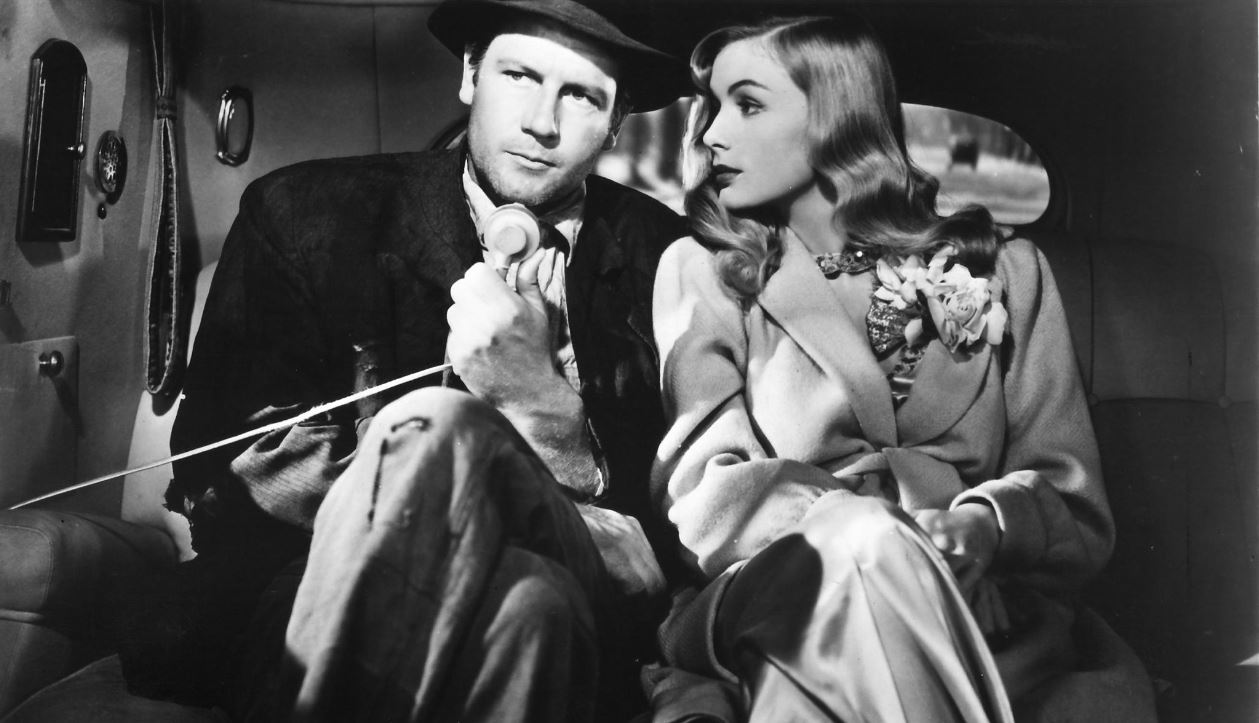
Sullivan's Travels (1941)


Joel McCrea and Veronica Lake go on a journey of discovery – with a lot of jokes

Director: Preston Sturges

Cast: Joel McCrea (John L. Sullivan), Veronica Lake (The Girl), Robert Warwick (Mr Lebrand), William Demarest (Mr Jonas), Franklin Pangborn (Mr Casalsis), Porter Hall (Mr Hadrian), Byron Foulger (Mr Johnny Valdelle), Robert Grieg (Burrows), Eric Blore (Sullivan’s Valet)

Sullivan: I’m going out on the road to find out what it’s like to be poor and needy, and then I’m going to make a picture about it. 
Burrows [his butler]: If you’ll permit me to say so sir, the subject is not an interesting one. The poor know all about poverty and only the morbid rich would find the topic glamourous.

Preston Sturges was one of Hollywood’s first writer-directors, a whip-sharp satirist. In Sullivan’s Travels he turned his guns firmly on Hollywood, satirising the industries self-importance. However, what he did so well was to counterbalance this with a genuinely insightful look at the urban poor and a celebration of the magic of the movies. The fact that he managed to cover this all in one movie – without making the film feel wildly inconsistent in tone – is quite some accomplishment.

John L. Sullivan (Joel McCrea) is a Hollywood director tired of making shallow crowd-pleasers. He wants to make a serious, social-issue film (called O Brother Where Art Thou?). When studio heads point out he knows nothing about the working man, Sullivan declares he will head to live the life of a drifter until he understands them. After several false starts, it isn’t until he meets a girl (Veronica Lake) that he starts to truly experience the life of the poor.

I’ve mentioned Sullivan’s Travels shifts in tone. In many ways, it’s a film that wants to have its cake and eat it – to be a satire of self-important move-making, and at the same time be an important movie. The extent to which it succeeds is a matter of taste: I can imagine plenty of people being thrown by the sudden shift in tone that kicks in for the final 40 minutes, after the slapstick and screwball comedy of the opening hour. But that’s partly the point. Sullivan’s Travels works because it puts all the objections you could make to a film “teaching” real people about their lives in that first hour – so you feel disarmed heading into the final half hour when the film does just this.

So that first hour first: it’s very funny. The scattergun satire of Hollywood folks is brilliantly done. The fast-paced dialogue of Sullivan and his studio bosses discussing his plans is wonderfully funny – how could you not like an exchange like this:

Sullivan: I want this picture to be a commentary on modern conditions. Stark realism. The problems that confront the average man!
Studio head #1: But with a little sex in it,
Sullivan: A little but I don’t want to stress it.

What’s sparkling about the exchanges is that Sullivan is just as out-of-touch and elitist as the suits, but with a higher degree of self-delusion. His attempts to head off onto the open road and live the life of the drifter are hilariously inept – his first sees him travelling with a “support team” (including a doctor, chef and media man); the second sees him accidentally return back to Hollywood. Sullivan wants to make a film about real people, but Sturges stresses he is as clueless and confused about the subject as any other rich Hollywood snob. The film has a glorious mixture of verbal acrobatics and slapstick pratfalls to demonstrate the comedy of this extraordinarily rich man (who at one point off-handedly runs through the features of his vast home) trying to relate at a distance to the poor.

It takes his meeting with Veronica Lake’s unnamed Girl for him to begin to understand the drifter’s life. Lake’s character remains unnamed, which is another joke on Hollywood – earlier Sullivan discusses women in films with the phrase “There’s always a girl in the picture”, so the plot shoe-horning a Girl in (without even naming her) as a sort of beggar Viola is, in itself, a neat parody of the structural conventions of Hollywood films. Anyway, it’s the introduction of this character that serves as Sullivan’s gateway into seeing what the world is like. Disguised as a boy (which allows plenty of neat gags in itself) the Girl takes Sullivan on a tour of shanty-towns and soup kitchens.

It’s here the tone of the film slowly shifts towards seriousness as we finally get to see the lives of paupers, in a film satirising a Hollywood director who wants to make a film about that subject. It’s wonderfully meta! Sturges shoots these scenes with tenderness and simplicity, without dialogue and scored only by gentle music. There are some small laughs on the way – but we never laugh at the poor and the overall impression is of the quiet dignity of these people just struggling to get by. It couldn’t seem further away from Sullivan’s privileged expectations. It’s quiet and it’s dignified.

Sullivan ends the film (for various reasons) as part of a chain-gang, and finally true suffering and gains the strength of character to acknowledge his own vanity. In one of the film’s most magical sequences, Sullivan watches a film with his fellow convicts and a poor black congregation. Unlike a sequence earlier where he watched a film with the urban middle class (hilariously then every possible breach of cinema etiquette is made, from crunching loud food to babies wailing) this audience are transported by the magic of a Walt Disney cartoon.

This sequence is justly famous, not only for its innocent charm, but also its ahead-of-its-time treatment of the black congregation. The congregation is open-hearted, intelligent and generous. There is a marvellous (and moving) rendition of Go Down Mosesand the black working class is contrasted with the dehumanising conditions of the chain gang. The whole sequence points out the underlying social injustice of America during this era. It’s wonderful – so well done you forget the film (in its jauntier first half) had a crude “white face” gag with its forelock-tugging black chef.

That’s the kind of film this is – a real mixture of genres, of views, of satire on social commentary mixed with real social commentary… Sturges throws almost everything at the wall here, and nearly all of it sticks. The underlying theme, if there is one, is the nature of class and privilege in America. Sullivan is well-off, from a rich background. He finds himself on a chain-gang when he is mistaken for the bums he is attempting to find out more about – but when he is revealed as a rich film director he is immediately released, despite still being guilty of the offence he was arrested for in the first place. In America, money talks and everyone else walks.

Sullivan’s Travels is probably not going to be everyone’s taste. Watching it, I missed the comedy of the first half during the more serious second half, cleverly done as the build of expectations was (how can you criticise the film, when the film is already criticising itself successfully?). Sure parts of it are dated, but it contains so many different types of film-making (screwball wit, Chaplin-esque pratfalls, animation, social realism, melodrama, romantic comedy) it’s almost a film school essay. It also manages to make its changes of tone throughout feel like natural developments.

All this and I’ve hardly mentioned the performances. The cast is full of brilliant character players, all of whom get their moments to shine – Sturges cast from a pool of regular actors, and he was a superb judge of distinctive faces and unique vocal delivery. Veronica Lake is very good – endearing but also sharp and smart as the Girl – but the film is totally anchored by Joel McCrea’s superb, low-key, straight-forward performance which resists all temptations to wink at the camera. 

Sullivan’s Travels feels like a little known masterpiece – but it deserves being known better. It’s original, it’s funny, it’s moving, it’s clever and it’s packed full of great moments. It’s a wonderful example of old-school Hollywood looking harshly at itself – not only at its shallowness and formulaic nature, but also at its self-importance and self-satisfaction – but still acknowledging that the escapist pleasure it can give to people is valuable, that it can be a force for good, for all its faults. It tries to have its cake and eat it – but do you know what? It’s probably one of the very few films that pulls that off.