Tag: Robert Wise

The Sound of Music (1965)

The Sound of Music (1965)

It’s the classic, feel-good film that seems to divide people than few others

Director: Robert Wise

Cast: Julie Andrews (Maria von Trapp), Christopher Plummer (Captain van Trapp), Eleanor Parker (Baroness Elsa von Schraeder), Richard Haydn (Max Detweiler), Peggy Wood (Mother Abbess), Charmian Carr (Liesl), Nicholas Hammond (Friedrich), Heather Menzies (Louisa), Duane Chase (Kurt), Angela Cartwright (Brigitta), Debbie Turner (Marta), Kym Karath (Gretl), Daniel Truhitte (Rolfe)
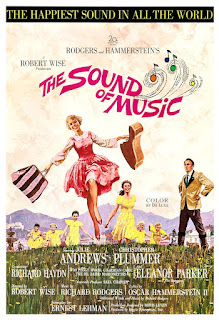
Has there been any film in history that has aroused feelings as strong as this one? Busloads of tourists conduct pilgrimages to Salzburg to follow in its footsteps – it’s a bigger draw than Mozart. Sing-along performances are attended by people in costume who know every nuance of Do-Re-Mi. On the other side, those who loath this musical, do so with the burning heat of a thousand suns, practically cheering the Nazis on or choking back vomit at the opening note of Edelweiss. It was ever thus: The Sound of Music was slaughtered by critics – Pauline Kael called it “the sugar-coated lie people seem to want to eat” – but became a box-office phenomenon, one of the most popular films ever and gilded with Oscars aplenty.

It’s loosely based on the real-life experiences of the von Trapp family. Maria (Julie Andrews), a young novice, arrives at the home of the widowed Captain von Trapp (Christopher Plummer) to serve as nurse for his seven (count em!) children. Von Trapp runs his house (literally) with military precision, but Maria introduces some fun into the children’s life. And, to his surprise, the Captain’s life as he finds himself drawn towards the wholesome and sweet Maria instead of his initial intended, the Baroness von Schraeder (Eleanor Parker). Marriage is inevitable – but then the family finds itself in a terrible position as the Anschluss weds Austria to Germany and the Captain is ordered to take up office in the Nazi navy. Will he do so – or will the family escape over those hills?

You would probably be fair to call The Sound of Music one of the most manipulative films of all time. But then aren’t films supposed to be about manipulating our emotions for effect? On that score you could possibly call it the greatest film ever made. I won’t, but there is a sentimental, feel-good charm to The Sound of Music that – in small doses (and some people watch this multiple times a year – once every few years is surely enough!) – can really hit the spot in the way few other films can. Sure, it tugs on your heart strings with never a trace of subtlety, but basically it’s heart is very much in the right place. It’s a kind, gentle music that, for all its treacle, is a tribute to warmth, love and family. Perhaps that’s why it’s been so embraced by so many.

Even the cast were aware it could all tip over the edge into outright sentimentality. Julie Andrews was worried it might be a little too similar to Mary Poppins (she was right in a way – Poppins is a darker film, but the success of this cemented Andrews in people’s mind as the World’s nanny). Most famously Christopher Plummer overcame huge uncertainty to star, partly to practise his singing for a Broadway musical (as it happened he got dubbed), partly on the promise he could add a tougher edge (no sign that happened). Plummer’s hate-tolerate relationship with the film is famous (he called it The Sound of Mucus) and at several points in it he is all too obviously only just avoiding sinking his head into his hands, but he even he eventually acknowledged any film that moved people as much as this, must have done something very right indeed.

It’s that emotional investment people make in this film that lifts it eventually above criticism. It’s a long film, with a slender plot. But it mines this plot for every single touch of emotional investment. It’s the ultimate triumph of one of Hollywood’s most reliable middle-brow directors, Robert Wise. Taking over from William Wyler (who just couldn’t get interested and left to make the almost diametrically opposite The Collector), Wise successfully keeps the momentum flowing and shoots the film in an economical way that lets the songs do their work. He still finds room for classic shots: that helicopter shot sweeping into Julie Andrews running up the hills is just about perfect (Andrews was literally blown over every time by the helicopter, explaining the sudden jump cut edit for her famous twirl and burst into song). Wise’s editing skills really come into play with Do-Re-Mi that cuts the song across several locations and he makes excellent use of a number of Salzburg locations (for which the tourist board thanks him).
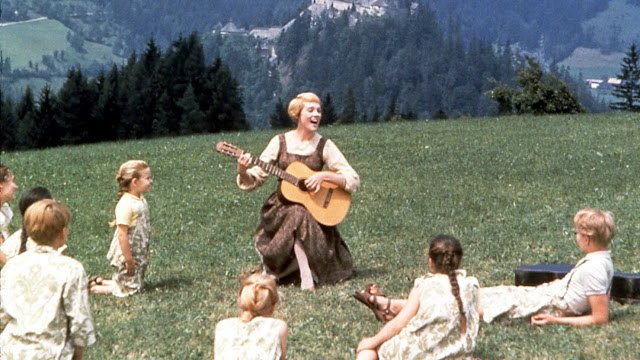
A major part of the film’s success though must surely be directly connected to Julie Andrews. This is a career – perhaps even a life – defining performance. And even the most cynical watcher can’t help but admit Andrews is a superb, gifted performer. Her singing is beautiful, and very, very few performers could have managed to make Maria charming, sweet and someone who want to hug, rather than twee or slappable. Andrews makes you really invest in every single event in the film: she’s hugely endearing (from singing in those hills, to her little stumble of excitement as she runs from the Abbey to take up a job at the von Trapps), she’s completely unaffected and when she’s hurt (by her seemingly hopeless love for the Captain) you just want to give her a hug.

No wonder the children love her. Who wouldn’t? Sure, the film’s weakest beat might well be its romance between Andrews and Plummer (for which Plummer is mostly to blame), but it captures a wonderful sense of family loyalty and protection. Everyone, at some point, is a sucker for stories where sad and lonely children are introduced to a life where they can mess around and have fun – and get that emotional investment the Captain has (accidentally) denied them. After spending the first two hours of the film getting to know this family and seeing it come together, we feel even more intently their fear and panic at being forced into goose-stepping line with Hitler’s war machine.

The film’s final sequence around the Abbey is also surprisingly tense: the family sheltering behind tombs and trusting in the half-truths of the Nuns and the wavering loyalties of wannabe SA officer Rolfe to make their escape. Wise’s films successfully communicates the stakes. It also mixes in some comedy even here: the final lines going to the Nuns confessing their sins of sabotaging those Nazi cars. All this before we go back to where we started – Maria walking the hills, full of music, this time accompanied by a beloved new family.

It’s that desire to be part of a loving family that perhaps explains why The Sound of Music has been so popular – and why so many people turn to it for comfort time and again. With its heart-warming songs and themes, it’s a warm comfort blanket that makes people feel part of its loving family. You can’t argue against it being manipulative – but that’s the nature of films, and manipulation as effective and good-natured as this is a sort-of triumph of film-making art.
Odds Against Tomorrow (1959)

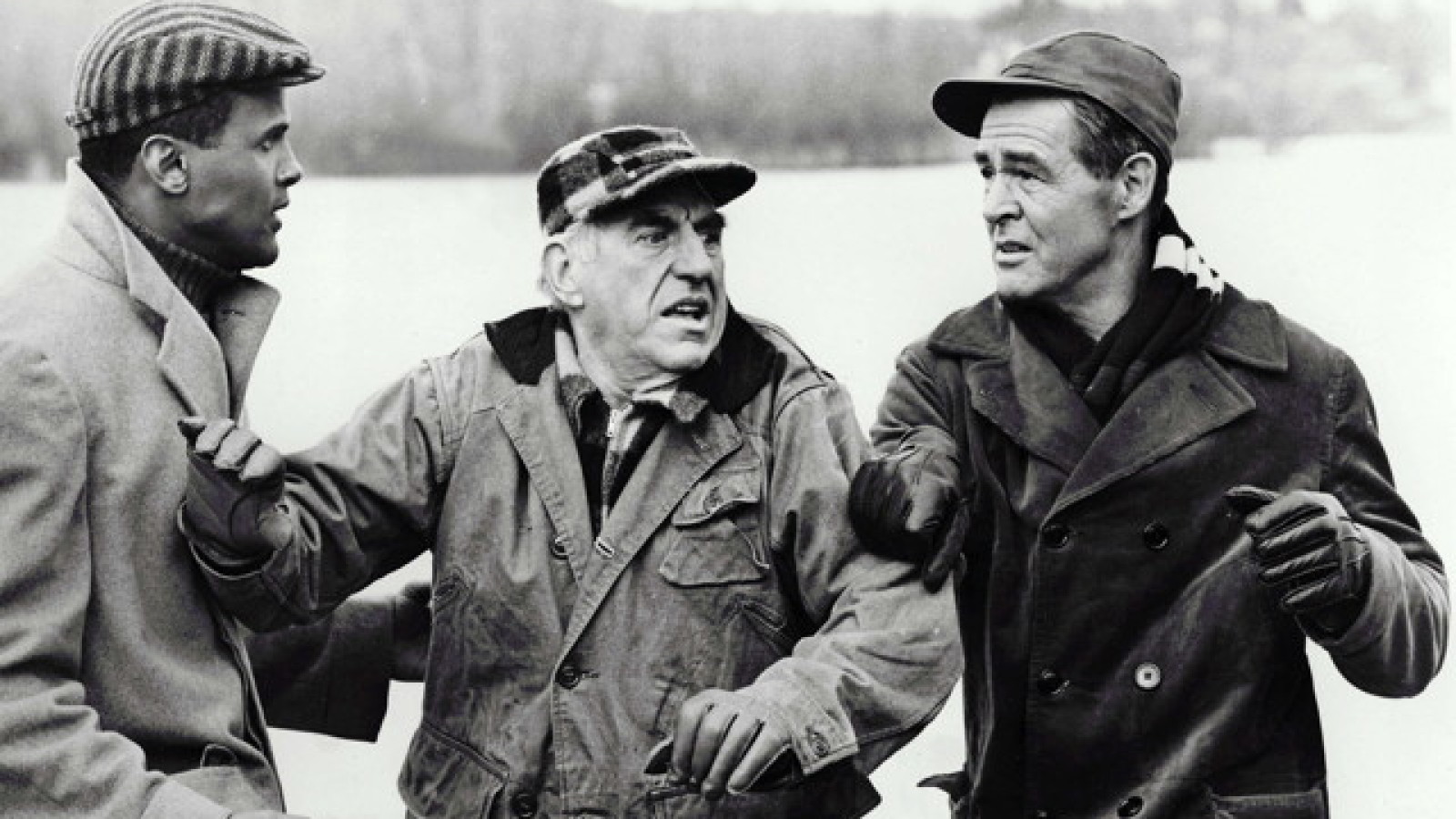
Harry Belafonte, Ed Begley and Robert Ryan are a mismatched crime team in Odds Against Tomorrow

Director: Robert Wise

Cast: Harry Belafonte (Johnny Ingram), Robert Ryan (Earl Slater), Shelley Winters (Lorry), Ed Begley (Dave Burke), Gloria Grahame (Helen), Will Kuluva (Bacco), Kim Hamilton (Ruth Ingram), Mae Barnes (Annie), Richard Bright (Coco), Carmen de Lavallade (Kitty), Lew Gallo (Moriarty)

Johnny Ingram (Harry Belafonte) life is on the skids. His career as a singer isn’t bringing in the money to fuel his gambling addiction or help support his ex-wife. Owing money to gangsters, he’s roped into taking part in a bank heist master-minded by bitter ex-cop Dave Burke (Ed Begley). It should all go smoothly. Unfortunately, Burke has also recruited Earl Slater (Robert Ryan) as muscle – and Slater has channelled all his own insecurities and resentments into virulent racism. Can Johnny and Slater work together to make the heist work?

Wise’s picture – with a script by the black-listed Abraham Polonsky – is on paper a crime drama. But it’s really hardly interested in the heist (which is almost laughably simple) the planning of which doesn’t even start until the film is nearly an hour old. Instead, the focus is on putting together a neat parable for racial divide in America. Because if even criminals are more preoccupied with feuding over the question of the colour of each other’s skin than making a score, why on Earth should we be surprised that such problems arise in every walk of life?

Attitudes are mapped out early in the film, largely thanks to Wise’s crisply efficient story-telling. Ingram playfully tips off a group of mixed-race kids to watch his car; Slater singles out a black child from this same group with a smilingly delivered racial epitaph. In the building, they both have strikingly different conversations with a black elevator attendant. Its clear tensions will abound – not least because Slater won’t work a job with a black man and Ingram is rightly disgusted with him.

Belafonte produced the film and he plays a very different type of black American than most films had seen. Black characters frequently fell into being either noble or deferential. Johnny is neither. He’s angry, bitter, drinks and has no interest in compromise of any sort. Johnny is a deeply troubled man, who seems to be making a mess of his life. Above all he doesn’t rise above racial abuse or shrug it off, but angrily confronts it. Fundamentally he’s a chippy screw-up, but he always retains sympathy because we can see he’s really a decent guy, for all his faults.

He’s just not one who’s willing to play the white man’s game to get ahead. He’s quite clear with his wife (very effectively played by Kim Hamilton) that he’s not willing to simply conform with a structurally unfair world. He’s also quite clear with Slater that he doesn’t want to hear whimsical memories of the South during the ‘good old days’. Belafonte does all this with a great deal of energy, even if you feel he doesn’t quite have the range and power for the role.

It’s interesting though that the film finds plenty of room to explore Slater. Played with a fragile self-loathing by Robert Ryan (one of Hollywood’s great liberals, whose career was made up of characters who persecuted minorities), Slater is deeply unsettled and insecure. He’s struggling to adjust to a more modern world where the man isn’t always the hunter-gatherer, and his wife (a rather sweet Shelley Winters) has the fixed job he can’t get. He doesn’t understand the world anymore.

All this makes Slater vulnerable, confused and even a bit pitiable – all qualities Ryan effortlessly brings out in the film’s finest performance – stumbling into bar fights where he responds with far too much violence. His face constantly seems to crumble into something a little like tears. He engages in a brief fling with a flirtatious neighbour (a blowsy Gloria Grahame) simply, it seems, to try and feel better about himself. The only thing that give him strength, it seems, is turning Johnny and all other black people into an alien “other” which he can lambast and attack.

This of course leads to barely concealed tensions during the robbery planning – where Slater repeatedly states he doesn’t trust Johnny to complete anything – and then during the robbery itself when the fundamental distrust between these two leads to a shoot-out and disaster. Caught in the middle, in a polished performance, is Ed Begley’s Burke, lacking the force of character to make this odd couple work together.

Wise’s film sometimes make some obvious choices – after the final climactic shoot-out, a policeman comments “which is which”, which is about as “under the skin we’re all the same” as you can get. But it’s told with a leanness and pace and by focusing on social issues rather than crime, it presents an intriguing snapshot of American attitudes. The vast majority of characters don’t share Slater’s kneejerk racism – but they also don’t even think of challenging it. No wonder Johnny Ingram’s so annoyed – and no wonder he sees that, for all the smiles, it’s a world run by and for the white man where your only chance of success is conform and shut up. Maybe the odds are against tomorrow.

Star Trek: The Motion Picture (1979)

The Enterprise crew head to space in a tedious misfire that almost killed the franchise: Star Trek: The Motion Picture

Director: Robert Wise

Cast: William Shatner (Admiral James T Kirk), Leonard Nimoy (Spock), DeForest Kelley (Dr Leonard McCoy), James Doohan (Montgomery Scott), Walter Koenig (Lt Pavel Chekov), Nichelle Nichols (Lt Uhura), George Takei (Lt Hikaru Sulu), Persis Khambatta (Lt Ilia), Stephen Collins (Captain Willard Decker), Majel Barrett (Dr Christine Chapel), Grace Lee Whitney (Lt Janice Rand), Mark Lenard (Klingon Commander)

In the late 1970s the success of Star Wars meant every single studio was checking to find anything that could be turned into the next space-set mega-hit. Paramount’s eyes fell on a TV show that had been cancelled over ten years ago but had attracted a cult following. Hell it even had the word “Star” in the title! Quickly rejigging plans for a sequel TV series, instead Star Trek found itself heading towards the big screen. With a budget probably bigger than the amount spent making every single episode and two-time Oscar winning director Robert Wise calling the shots, what could go wrong?

Well as it transpires almost everything. Has there ever been a duller, flatter, less-engaging film that started a thirteen film franchise? Star Trek: The Motion Picture seems to have been made by people who looked at everything that made Star Wars a huge success and then decided “we ain’t going to do that!” Then they looked at everything that occasionally made the TV series self-important and hard to take seriously and said “We’re going to have some of that!” What we end up with a stupefyingly boring film that takes an immense amount of time to do almost nothing, with a story that might have made a passable 40 minutes of television into an empty and tedious two and a bit hours. Truly it was The Motionless Picture.

Anyway the plot, such as it was, features the now Admiral Kirk (William Shatner) taking back the reins of the newly revamped USS Enterprise to confront a giant cloud that is destroying everything it comes into contact with – and is on a direct course of Earth. Getting the old gang back together – including dragging Dr McCoy (DeForest Kelley) out of retirement and welcoming back Mr Spock (Leonard Nimoy), Kirk takes the place of the Enterprise’snew captain Willard Decker (Stephen Collins) and zooms out to encounter the cloud. What does the machine at the heart of this cloud want? Who is the mysterious creator that V’Ger wants to return to?

Where did it all go so wrong? The key problem lies with the script – and blame for that lies with Gene Roddenberry, Star Trek’s creator who took direct personal control of it. Determined that only he would control the Franchise’s future – after all it was his baby – Roddenberry rejected or minimised as much as possible many of the elements many of traditional film narratives (like villains, inter-personal conflict or the need for characters to ‘learn lessons’) for a science-fiction story he obviously felt dripped with importance. However, this shapeless machine like cloud searching for its “creator” tells us precisely nothing at all about the nature of faith or questions of identity. Because firstly V’Ger has no character and, secondly, the film takes so long to get this (almost three quarters of its running time) that there is no time to explore any of these themes anyway. 

No parallels are drawn between the questions V’Ger is asking, and issues the core characters are dealing with. It makes for a big airey expanse of nothing. We learn nothing about our heroes personalities from this adventure, and they in turn are so little affected by it that at the end of the film they jet off to some new random adventure. A potentially interesting idea about progress and faith gets completely lost – despite ample opportunities to have built contrasts between V’Ger’s loss of faith and the barely-explored crises that Kirk (back in command after five years) and Spock (struggling to work out if he should purge all his emotions) are experiencing. Instead no comparisons are drawn, no insights are made and all three crises either peter out completely or utterly forgotten. It’s part of the film’s failure to really make us engage with any of these characters, or to find a reason to care about them – like Roddenberry felt investment was pandering. It’s also The Emotionless Picture.

On top of which the film was obviously so thrilled with having the budget to include the sort of sweeping space vistas the show could only dream of, that a huge portion of the film was given over to watching these images draft past the screen. Slow, 2001-like pans across space vistas, around alien crafts and then through the trippy details of V’Ger’s inards clog up the film. But while Kubrick invested those with intense meaning, Wise makes them dull as ditchwater and as empty as light show. The bar is set early on with Kirk being given a long – almost four minute – silent shuttle tour around the exterior of the Enterprise. By the time the film is eating up almost ten minutes of the Enterprise flying through V’Ger, the actors have exhausted their “stare in wonder” faces and the audience are dozing off.

It’s not helped by the sub-par acting by all involved. Shatner and Nimoy give perhaps their worst, most lifeless performances in the history of the franchise. Perhaps they were caught between the mess of the script, the lifeless pace, the pressure of bringing these characters to the big screen – or perhaps the film just doesn’t give them anything interesting to do. Kelley gets a few moments of irascible charm, but the rest of the cast have barely got a few lines to rub together. Stephen Collins as Decker looks like he doesn’t really understand what he’s involved with, while Persis Khambatta looks more animated after her character has been lobotomised than she did intact.

The film drags on with a sonorous and stately pace, making no points at all and lacking any real thematic depth whatsoever. It’s not helped by Robert Wise’s lost direction. Wise prepared for making the 80th live-action entry into the franchise by watching precisely zero episodes of the show –and his utter lack of comprehension of what made the series popular in the first place perhaps explains why none of it made it into the film. There is no charm or wit here at all – everything is handled with such portentous importance it only draws attention to how little there is going on.

And it looks so bad as well. The overwhelming 1970s beige and muted colours that have been chosen for the new uniforms make it look as dull and disengaging as the words that are coming out of the actor’s mouths. It becomes even easier to notice the blandness of everything you are looking at that isn’t a matte special effect when you notice how full the script is with filler. Other a third of the film gone before the Enterprise leaves space dock. A tedious non-drama about problems going to warp (in a sequence of embarrassingly bad “slowed down” time disturbance as the ship falls into a wormhole). Almost two thirds gone before the crew make contact with V’Ger our nominal antagonist. A reveal about V’Ger’s origins and the identity of the creator that would have been shock only to people who had never seen an episode of the show before or had been living under a rock since about 1969. 

There are precisely two good things about the movie. Firstly the music is superb – Jerry Goldsmith’s themes for the film (re-used for The Next Generation) and other bits of music, especially his martial Klingon music, is so perfect, so brilliant it was used in the franchise forever more. Secondly the opening sequence with the re-designed Klingons nailed a look, design and language for them that would also stick for the rest of time and the sequence itself is pretty exciting. Other than that, there is almost nothing to recommend the film. 

As an advert for making someone want to watch any Star Trek ever again, it’s a disaster. Having gone way over budget, the series only returned due to loyal fans paying over the odds at the box-office. Roddenberry was dispatched from any future involvement, and the series bounced back with its best ever film with Star Trek II – which corrected all the script mistakes this one made.

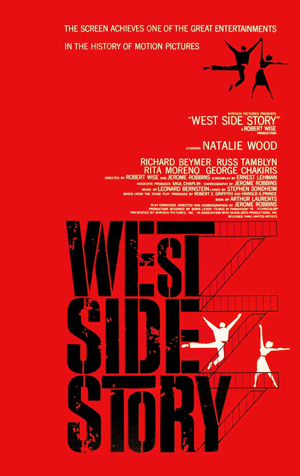
West Side Story (1961)


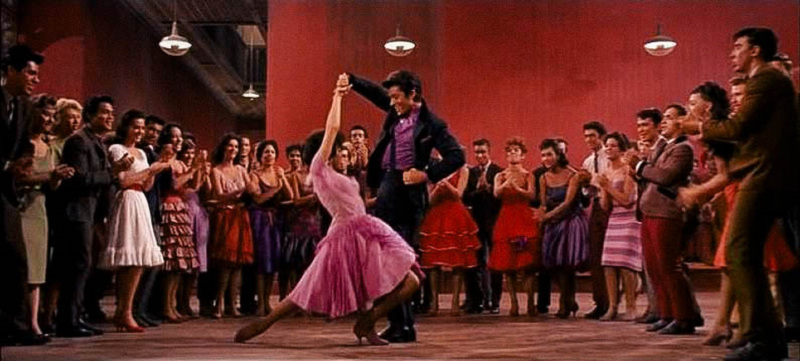
Dancers defy gravity and physics in the triumphant West Side Story

Director: Jerome Robbins, Robert Wise

Cast: Natalie Wood (Maria Nunez), Richard Beymer (Tony Wyzek), Russ Tamblyn (Riff Lorton), Rita Moreno (Anita Palacio), George Chakiris (Bernardo Nunez), Simon Oakland (Lieutenant Schrank), Ned Glass (Doc), William Bramley (Officer Krupke)

It’s strange to think now, but when it debuted on Broadway, West Side Story failed to win the Tony for Best New Musical (it went to The Music Man). Today, Bernstein and Sondheim’s masterpiece is a touchstone of musical theatre. Part of that surely must be connected to the fact that it’s so well known as a film – and that this triumphant movie production took 10 Oscars as well as holding a place in any list of Greatest Musicals on Film.

The story is of course Romeo and Juliet crossed with intricate ballet and light opera. On the streets of New York, the Jets (working-class white boys) and the Sharks (Puerto Rican immigrants) are two rival gangs fighting a street battle to control their district (via the medium of dance). But danger is about to explode when former leader of the Jets Tony (Richard Beymer) falls in love with Maria (Natalie Wood), the sister of Sharks leader Bernardo (George Chakaris). Will it end well? Surely not with these star-crossed lovers…

You can’t really begin to talk about West Side Story without first talking about the dancing. Not since Astaire and Rogers has a movie been defined so much by its physical grace and rhythmic control of movement. It’s awe-inspiring. Honestly, show-stoppingly, jaw-droppingly impressive. As the dancers defy gravity, physics and the limitations of a normal person’s body, you can’t help but want to spring to your feet and join in (don’t – I guarantee you are not as good). It’s simply amazingly good.

The opening Prologue sets the scene perfectly. It’s not easy to make a film about tough street gangs, where every fight scene is largely expressed through dance – the Prologue, however, does this perfectly, a stylised slow build of increasing musical tempo. From the simple device of clicking fingers, we build continually into an explosion of carefully controlled group choreography, where each of the twenty-odd dancers feels like an individual.

The camera choices are sublime: some shots hover in dramatic aerial shots. Tracking shots highlight the skill of the dancers. The crew dug pits into the tarmac to bury the cameras in so that they could stare straight up at the dancers at some points – during one brilliant sequence Chakiris and the Sharks seem to loom, God-like, over the viewer while moving in perfect synchronicity. It’s beyond a tour-de-force, it’s simply unlike anything else you’ve ever seen on film. The film would’ve deserved Oscars even if it had ended after ten minutes, it’s probably one of the best openings ever.

Fortunately it doesn’t, because there is more exquisite stuff to come. Moreno and Chakiris probably won their Oscars off the back of the scintillatingly “America”, a beautiful whirlygig, part debate, part argument, high-kicking joy of twirling dresses and pirouettes. It’s possibly the most exciting number in the whole film. “Cool” is an unbelievably wild and challenging dance number in a garage, that seems to throw in half a dozen different styles – the set itself seems to be struggling to survive under the rampant pace and passion of the dancers. It’s a deliriously giddy, passionate, dirty number with the actors clearly pushed way beyond their natural ease.

Famous Broadway choreographer Jerome Robbins directed the original production, and was the logical choice for the studio to choreograph the film. Robbins insisted he would only do so if he was also allowed to direct the entire film. A deal was eventually done where Robbins would direct everything involving music and dance, and seasoned professional Robert Wise would handle the rest. Robbins carries most of the credit for why this film really is unique – everything special and different about it is connected to his mastery of choreography.

As it happened, Robbins’ search for perfection was so great he ended up leaving the film running weeks behind and far over budget. After months of rehearsal, when the time came to film, Robbins would dramatically re-work the choreography to exploit locations. This was particularly expensive for the location. As take after take on expensive 65mm film mounted up, the producers eventually dismissed Robbins from the project after filming four numbers (“Prologue”, “Cool”, “America” and “I Feel Pretty”). Although the rest of the numbers used his choreography (and were directed by his assistants) they lack the inspired genius of the other four stand-out numbers. Wise, a skilled hired gun, took care of the rest of the filming.

It’s the weakness of West Side Story that very few things in the rest of the film live up to the heady, exhilarating joy of those core numbers. Both Beymer and Wood are uninspiring as the two leads. Wood is not remotely convincingly Puerto Rican, while Beymer is too clean-cut and nice-guy for a kid who was running a street gang not so long ago. The scenes focusing on these two drag– and are rather flatly shot considering the dynamism around anything involving dancing. Wood’s songs are at least memorable – largely because an uncredited Marnie Nixon supplies the singing – but Beymer’s voice replacement isn’t particularly inspiring and both “Maria” and “Tonight” get a bit lost here (he’s no Michael Ball, put it like that).

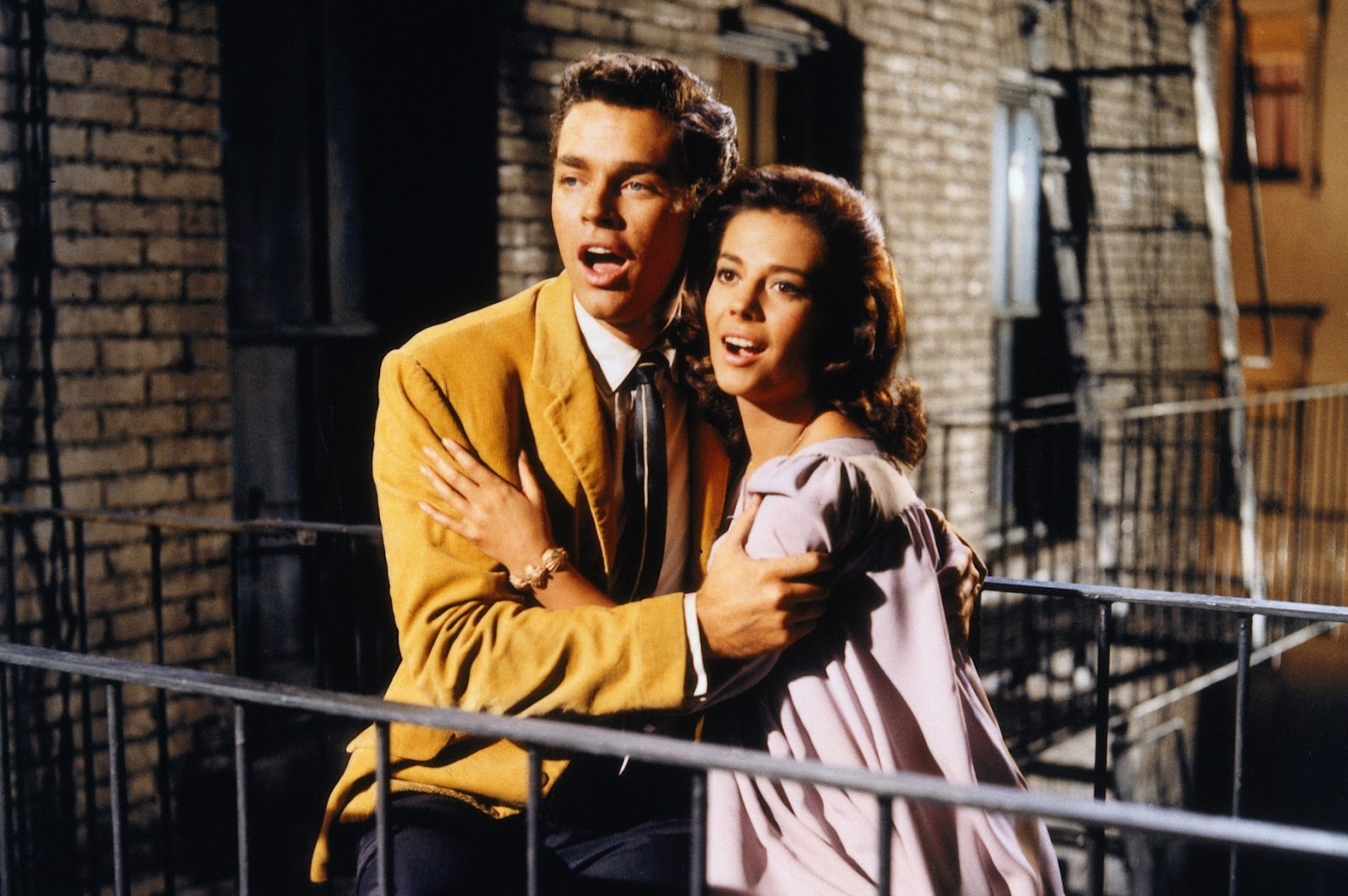
The script and storyline aren’t always the strongest. It’s a difficult to really remember any of the purely dramatic sequences. Tony and Maria’s meeting on the balcony summons up very little in the way of romantic frisson, let alone any favourable comparisons to Romeo and Juliet. (Truth be told, there is very little chemistry at all between the two performers). You get the feeling the film is reaching for a big socio-political message – hey kids, why don’t we all get along? – but never really quite gets there. It’s not quite got enough thematic weight behind it for the cultural acceptance angle it’s trying to push. But heck, Romeo and Juliet is a tough act to follow, so it’s not a surprise that the film works best as just a romance.

The big exception to the rule that the dramatic moments don’t hold a candle to the dance sequences is Anita’s assault by the Jets late on in the film – an unsettlingly visceral near gang-rape, which isn’t easy to watch, but works brilliantly. In fact any dramatic scene involving Rita Moreno stands out – she burns up the screen as the fiery Anita, a woman bubbling with passion but also with an emotional intelligence and sensitivity that nearly helps our heroes avoid disaster. Moreno’s dancing and singing are first class, but her acting throughout is similarly outstanding – any scene featuring her, your eyes are immediately drawn to her. She’s well matched as well by George Chakiris, another Oscar-winner, who’s a magnetic dancer and singer but also gives Bernardo a brilliant kindly pride laced with arrogance.

All this takes places in a regular technicolour wonderland of a setting. Daniel L. Fapp’s photography is marvellous, creating a rich palette that soaks up colour. Shots of a blood red sky at night set just the right ominous tone. He makes masterful use of colour and shade throughout. I’ve already talked about how the photography brilliantly helps build the impact of the dancers. But every scene is really carefully framed and presented, with the cages and barriers of the playground the gang fights over helping to hammer home the feeling of our heroes being trapped by fate. As you’d expect from Wise (the editor of Citizen Kane) the film is also brilliantly assembled in the editing room.

Parts of West Side Story are of course a bit dated. The dancers, for all their undeniable brilliance, are a little camp for rough and tumble street kids. The film’s costumes and settings look undeniably clean to modern eyes. The casting of Wood in particular as a Puerto Rican is odd today. It’s also probably too long a film – while the musical numbers could happily go on forever, other scenes drag a little. Most of the really strong, memorable material happens in the first half of the film. And like all brilliant works of art, it’s so distinctive it’s almost a little too ripe for parody. Some of the visual flourishes used to indicate fantasy sequences look slightly dated.

But these are niggles in a way, because even if parts of the film are a little bit below par, the overall impact of the film is quite extraordinary. There has never been – and I think never will be – a musical quite like this. I simply can’t imagine such a triumph of group choreography being made, or a film-maker spending such time and money to push the envelope of what it is possible for the human body to do in dance scenes. Despite its faults, I can’t imagine a viewer not being electrified by several sequences in this movie. And at the end of the day, what else is cinema for if not to bring our emotions and feelings to life in vibrant flashes?