Tag: Robin Williams

Awakenings (1990)

Awakenings (1990)

Decent performances from the leads can’t save a shamelessly manipulative, saccharine movie

Director: Penny Marshall

Cast: Robert De Niro (Leonard Lowe), Robin Williams (Dr Malcolm Sayer), Julie Kavner (Eleanor Costello), John Heard (Dr Kaufman), Penelope Ann Miller (Paula), Max von Sydow (Dr Peter Ingham), Ruth Nelson (Mrs Lowe), Alice Drummond (Lucy), Judith Malina (Rose), George Martin (Frank), Dexter Gordon (Rolando), Keith Diamond (Anthony), Anna Meare (Miriam), Mary Alice (Margaret)

There can be few things more terrifying than being trapped inside your own body, unable to engage with the world, but to be in a sort of waking coma for years. Imagine how wonderful – and how terrible – it might be if you briefly woke to normality, only to return to your catatonic shell? This actually happened to patients of Dr Oliver Sacks – here re-imagined as Dr Malcolm Sayer (Robin Williams) – in a Bronx hospital in 1969. Looking after catatonic survivors of the encephalitis lethargica epidemic of 1919-30, Sayer discovered they responded to certain stimuli: their name, music, catching balls etc. With an experimental drug he discovers he can restore the patients to ‘life’ – foremost among them Leonard Lowe (Robert De Niro), just a boy when afflicted – only to discover the effects won’t last and they are doomed to return to their coma-like state.

It’s such a terrible thing to think about that it even gives genuine emotional force to Awakenings an otherwise hopelessly manipulative, sentimental film that plays like a TV-Movie weepie. It certainly didn’t need the naked emotional manipulation that washes over the whole thing like a wave, with Randy Newman’s sentimental, tear-jerking score swells with every single heart-string tucking moment. Awakenings is so determined to make you feel every single moment it eventually starts to make the story less affecting than it really is. A simpler, less strenuous film would have been more moving rather than this film almost genetically engineered into ‘life-affirming’.

Everything in Awakenings feels like it is always trying too hard. Every moment is laid on for maximum emotional impact. Adapted from Oliver Sacks’ book chronicling individual cases, it presents a stereotypical Hollywood ‘feelings’ film, with lessons for all. Worse, there is a tedious ‘seize the day’ message that keeps ringing out of the film. The awakening is, of course, not only literal but metaphorical – the patients (and their doctors) ‘awoke’ to appreciate life and living more. It’s hard not to think at times there is something rather patronising about partially using Leonard’s brief experience as a lesson for Dr Sayer to stop being so damn timid and ask a nurse out on a date. As traumatic as it is for Leonard to return to his coma, at least Dr Sayer learned to live a little!

It’s a very fake attempt at a hopeful ending to an otherwise down beat true-story. Dr Sayer is a retro-fitted version of Oliver Sacks, sharing many of his characteristics – but not his sexuality or decades long celibacy – and the film presents him, as Hollywood loves to with geniuses, as a shy, awkward type who no-one of course could expect anything of. He combines this with quiet maverick tendencies, putting the patients first against the ‘numbers-first-risk-free’ obstructionist bureaucrats (represented, of course, by John Heard, though he does thaw a little) who run the hospital and poo-poo his ideas.

Awakenings is full of sickly moments of heavy-handed sentimentality – its opening shot of Leonard as a boy carving his name in a bench under the Brooklyn Bridge tells you immediately one of the first places he’ll go as an adult for a wistful smile – that keep trying to do the work for you. (Of course, all the nurses and cleaning staff offer up cheques to help pay for the patients drugs!) The story doesn’t need it. Just seeing the facts of these vibrant adults emerge for a brief time in the sun is moving enough. Leonard quietly, but with dignity, asking the hospital board for permission to go outside alone is more moving than watching him forcibly dragged from the door by porters or seeing him rant on the mental ward he’s been consigned to as a punishment. We don’t need Sayer to literally tell us some things are too sad for him to film, when we can see it on Williams’ face.

The leads are not always immune to the try hard nature of the film, but they do some decent work. De Niro (Oscar-nominated) brings a touching sweetness to Leonard, essentially a boy who wakes in the body of an adult. There is a genuine wonder in his eyes at the world around him – wonder that transforms into frustration at the continued restrictions placed on his freedom. There is something slightly studied about the physical effects (especially in the film’s final act) but De Niro understands that underplaying and quiet honesty is more moving than when the film pushes him towards grandstanding.

Williams is also very good – if at times a little mannered – as the quiet, awkward Sayer. With the less flashy – but potentially more complex role – he again shows how close humour is to pathos. It’s a performance with several little eccentric comic touches, but wrapped up in a humanitarian shell of earnestness that is quite affecting. It’s a shame that the film constantly undermines his restraint by using every conceivable trick of framing, scoring and composition to wring sentiment from him.

But then that’s Awakenings all over. You can imagine the script covered with annotations along the lines of ‘make them cry here’. And it worked with a great many people, the mechanical nature of the film working overtime to tickle the tear ducts. But the film’s utterly unnatural sense of artifice constantly prevents you from really feeling it. You are always aware of Marshall nudging you to remind you of the unbearable emotion and the tragedy of lives not lived. All easily washed down in a narrative structure as old as the hills – Sayer is an outsider who proves himself, he and Leonard fall out then come back together stronger than ever etc. etc. – that continually reminds you of its functional, manipulative nature.

Good Will Hunting (1997)

Good Will Hunting (1997)

Therapy saves the day in this well-written and acted, but rather earnest drama

Director: Gus van Sant

Cast: Matt Damon (Will Hunting), Robin Williams (Dr Sean Maguire), Ben Affleck (Chuckie Sullivan), Stellan Skarsgård (Professor Gerald Lambeau), Minnie Driver (Skylar), Casey Affleck (Morgan O’Mally), Cole Hauser (Billy McBride), John Mighton (Tom), Scott Williams Winters (Clark)

Two unknowns, Matt Damon and Ben Affleck, made a sensation in 1997 with their script for Good Will Hunting. It turned them into stars and the two youngest Oscar-winning screenwriters in history. Good Will Hunting is a heartfelt, very genuine film crammed with finely scripted scenes and speeches. It’s also an unashamed crowd-pleaser, a paean to friendship and opening your heart, all washed down with a bit of Hollywood-psychotherapy magic. It’s a basically familiar tale, told and performed with such energy that it made a huge impact on millions of viewers.

In Boston, orphan Will Hunting (Matt Damon) has a fiery temper and a rap sheet as long as your arm. He’s content shooting the breeze with best friend Chuckie (Ben Affleck), but he is also a preternatural genius, an autodidact with a photographic memory able to solve complex theoretical problems in hundreds of fields. It’s why he effortlessly solves the impossible proof Professor Gerald Lambeau (Stellan Skarsgård) pins up on a board at MIT, where Will works as a janitor. Lambeau is stunned, bailing out Will from his recent clash with the police – on condition he also sees a psychiatrist to resolve his anger management. Will reluctantly attends sessions with Lambeau’s old room-mate Dr Sean Maguire (Robin Williams), a recent widower – and the two of them slowly grow a father-son bond, while Lambeau pushes Will to not waste his talents.

Good Will Hunting is directed with a sensitive intimacy by Gus van Sant, with the camera frequently placed in careful two-shot, medium and close-up to bring these characters up-close with the audience. It’s an emotional story of grief, unspoken rage and trauma – but it manages to largely not present these in a sentimental or overly manipulative way. It’s gentle, patient and tender with its characters, not shying away from their rough edges, with an empathy for their wounded hearts.

Nowhere is this clearer than in Will himself. Matt Damon gives a charismatic, emotionally committed performance, as utterly convincing in genius as he is a surly, fragile young man hiding emotional trauma. He’s charming and easy to root for. He takes down smarmy Harvard types with a barrage of erudite opinions, is often self-deprecating, fiercely loyal to his friends and categorically on the side of the little guy. But he’s also aggressive, rude and capable of violence. He gets into fights for no reason, arrogantly assumes he can understand everyone better than they can themselves, and uses his intelligence as a weapon to pin-point and apply pressure to weak points.

It’s what he does throughout the film, from launching attacks at prospective therapists (accusing an illustrious MIT professor of suppressed homosexuality and mockingly supplying a string of psychobabble cliches to another) to cruelly exposing the limits of Lambeau’s intellect (which the professor is all too aware of, having to work night and day to even touch Will’s starting point). He analyses and strips down insecurities with dazzling displays of verbiage. It’s funny when he recounts doing this to an NSA recruiter: it’s less so when he reduces girlfriend Skylar to tears as she tries to get close to him, cruelly breaking down her life and personality into digestible, cliched clumps.

It’s all about pain of course. Good Will Hunting is rooted in the familiar Hollywood cliché of inner pain only being “fixed” by therapy. As always in Hollywood, sessions start with confrontation and end with a tear-filled hug as breakthroughs (that in real life take years) are hit after a dozen sessions. Will of course is using his intelligence to fuel his defensiveness – abandoned and poorly treated throughout his childhood, he pushes people away before they can get to close and holds the few people he trusts as tightly as he can. He can’t believe people want to help or care for him: Lambeau must be jealous, Skylar must be lying about loving him, Dr Maguire must be a fool.

It’s Dr Maguire who sees the lost little boy under the domineering, intellectually aggressive, angry exterior. Robin Williams won a well-deserved Oscar for a part tailor-made to his strengths. Maguire is witty, eccentric, cuddly – but also, like many of William’s best parts, fragile, tender and kind. It’s a part that allows Williams to combine his emotive acting and comic fire: he can mix grief-filled reflections on the weeping sore that is the loss of his wife, with hilarious flights of fancy on her late night farting (yup that’s Damon laughing for real in those scenes). Maguire is no push-over though: he throttles Will when he goes too far mocking the memory of his wife and gets into furious arguments with Lambeau over their differing opinions on what’s best for Will.

That’s the film’s other major thread: male friendship. Will’s friendship with Chuckie is the film’s key romance, and Benn Affleck gives a generous, open-hearted performance (although one scene of fast-talking cool when Chuckie stands in for Will at a job interview feels like a scene purely written to give Affleck “a moment”). Both these guys are fiercely loyal to each other – but it’s Chuckie who knows Will is wasting gifts and opportunities he would die to have, and who loves his friend so much he wants him to leave. Refreshingly, the slacker friends aren’t holding Will back here (he’s doing that himself) – they care so much they are trying to push him away.

If the film has a weakness, it’s the romance plotline, which feels like a forced narrative requirement to give Will something to “earn”. Minnie Driver does a decent job as a spunky, cool Harvard student – the sort of dream girl who quotes poetry but also tells smutty gags to Will’s mates – but she feels like an end-of-the-rainbow reward. Their relationship is underwritten and she bends over backwards to forgive and reassure Will at every opportunity: my wife probably isn’t the only woman watching the scene where Will punches the wall next to Skylar’s head during an argument and felt that she probably needs to get the heck out. For all the film wants a grand romance, honestly the film would probably have been better if it had focused more on the friendship between Will and Chuckie (the true love of his life).

Good Will Hunting truthfully does little that’s original. Our hero struggles with his past, guilt, anger – but learns to become a better man through the magic, sympathetic ear of therapy. What makes it work is the confident writing, which never shies away from its hero’s unsympathetic qualities and the sensitive, low-key direction of van Sant (the film never uses crashing violin-like moments to overegg emotion). It’s also superbly acted across the board – Damon, Williams, Skarsgård, Affleck and Driver are all excellent. It’s a warm tribute to the power of friendship. In short it gives you a pleasant, engaging and easy-to-relate to story. And who doesn’t want that?

The Fisher King (1991)

Robin Williams and Jeff Bridges go on a quest in Terry Gilliam’s decent but overlong The Fisher King

Director: Terry Gilliam

Cast: Robin Williams (Parry), Jeff Bridges (Jack Lucas), Mercedes Ruehl (Anne Napolitano), Amanda Plummer (Lydia Sinclair), Michael Jeter (Homeless Cabaret Singer), David Hyde Pierce (Lou Rosen), Lara Harris (Sondra), Harry Shearer (Sitcom actor), John de Lancie (TV Executive), Tom Waits (Veteran)

In 1991 Terry Gilliam was seriously worried he might be unemployable. After the famous feud with his producers over the editing of Brazil, his follow-up The Adventures of Baron Munchausen had flown over budget and bombed at the box-office. For Hollywood Gilliam was the worst kind of maverick – trouble with no record of financial success to give him the licence to do what he wanted. So he was thrilled to be offered the chance to direct The Fisher King, his first ever “for hire” job, a sentimental but surreal romantic buddy movie. It’s financial and critical success almost certainly saved his career.

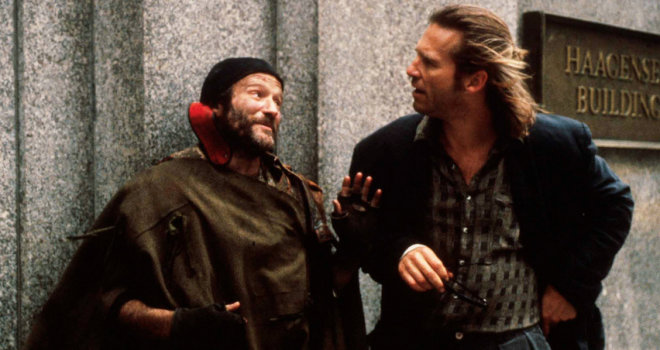
Jack Lucas (Jeff Bridges) is a New York radio shock jock, whose show accidentally provokes a lonely and confused man to massacre the customers at a late night bar. Three years later and Jack’s career is over and he is working as a co-owner of a video rental star (and live-in lover) with Anne Napolitano (Mercedes Ruehl). One day – drunken and suicidal – he is saved from a gang of young thugs by eccentric homeless man Parry (Robin Williams). Jack discovers three years ago that Parry was a respected professor of English literature, whose life fell apart after his wife was killed in the same bar massacre that ruined Jack’s career. The two men are drawn together – but can they save each other?

The film is based on the myth of the Fisher King, the king charged with finding the Holy Grail but could not find it for years – only for a fool to present it to the king full of water to drink, revealing it was there in the King’s possession the whole time. The fool helps because he is “purer” than those more worldly around him. The idea that Richard LaGravenese’s screenplay is leaning on is that these two characters – Jack and Parry – alternate between them the roles of Fisher King and Fool, both slowly doing things for each other that change their personalities and allow them to adjust back into the world and become comfortable with the people they are.

Reading that it should become clear that this is a sentimental film – and it certainly is. It’s also hellishly overlong for such a slight story of tragedy leading to overcoming personal crisis. We know watching the film from the start that Jack Lucas is a bad guy – and Gilliam shoots his opening scenes of Radio presenting with great skill, using high angles, extreme close-ups and shots that prevent us getting any real sight of Jack, making him as impersonal and contemptable as possible in his shallowness, pride and thoughtless cruelty. It’s not a mystery to expect that we are due to watch a triumph of the human spirit film, in which Jack becomes a better man. The film takes a very long time making this simplistic point.

The catalyst is Robin Williams, in a role tailor made for him as a hyper-active, manic personality mixed with tragedy and depression. To be honest Williams is frequently over indulged in the role – despite his Oscar nomination – heading over the top too often, and often over-egging the pudding both in Parry’s energetic enthusiasm and also in his moments of tragic depression. Parry is given a romantic sub plot with Amanda Plummer’s nervous office worker (a character who is little more than a collection of quirks than a personality, and it’s a shame it’s led to Plummer being typecast in such eccentric roles) that is almost insultingly slight and one-sided (he comes across a bit like a stalker) and lacks any of the charm needed for the story to work.

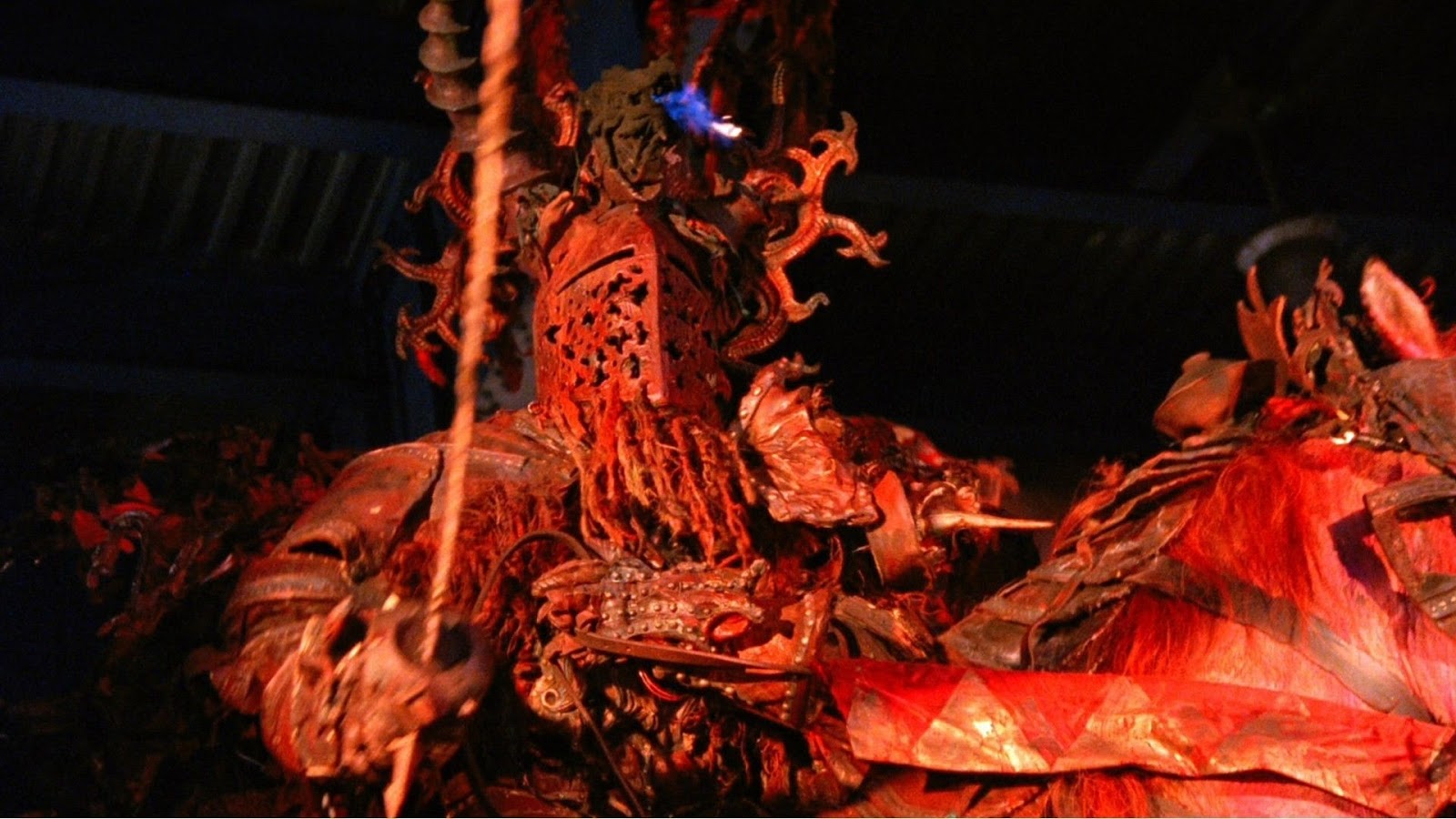
Parry is used to tie the film into further Arthurian flourishes with his obsessions with the legend. Parry visualises a sinister Red Knight – a mental expression of his grief and horror at his wife’s death, which takes the form of the appearance of his wife’s blood splattered face – which chases him through the city. Parry is also obsessed with the discovery of the Holy Grail, which he claims can be found in a millionaire’s faux medieval castle in the centre of Manhattan. This Arthurian stuff is often rather crow-barred in, but holds more interest than traditional plot-lines of people rediscovering their humanity and capability of bonding with others.

Jeff Bridges actually takes on the far harder role as Jack Lucas, a character who has to go on a firm development from start to finish. While Parry is a deliberately eccentric figure, Jack is the one who must journey from arrogance and pride to selflessness and humanity. Bridges does it very well, with a neat line in under playing and an ability to suggest the warmth, shame and self-disgust that Jack works hard to cover up. He’s also blessed to share scenes with Mercedes Ruehl who is outstanding (and Oscar winning) as his girlfriend, the most humane, engaging and real character in the film, a woman who seems at first blowsy and cheap (Jack clearly believes she is beneath him) but reveals more and more depths and capacity for honesty, love and generosity.

Gilliam has a sharp eye for the huge gap between wealth in poverty in 90’s New York, and how the two worlds are geographically only a width of a piece of paper, despite being worlds apart. His direction uses many of his flourishes with great effect. Fish eyed lens POV shots, low angles, stylistic dream sequences, a dream sequence where Grand Central station is full of dancing travellers like a mighty ballroom – many of the sort of things you see in his films are here. To be honest, I found some of the flourishes a bit overwhelming in a story that is so slight and so grounded in just four people’s interactions and quests for salvations. But it works, and Gilliam gets some moments of romantic and platonic love that really work. But it’s still a slight film that goes on far too long, and it eventually loses the viewer in its time-consuming journey towards expected heart-warming moments.

Dead Poet's Society (1989)

Robin Williams is an inspirational teacher (is there any other type in films?) in Dead Poet’s Society

Director: Peter Weir

Cast: Robin Williams (John Keating), Robert Sean Leonard (Neil Perry), Ethan Hawke (Todd Anderson), Josh Charles (Knox Overstreet), Gale Hansen (Charlie Dalton), Norman Lloyd (Headmaster Gale Nolan), Kurtwood Smith (Mr Perry), Dylan Kussman (Richard Cameron), James Waterson (Gerard Pitts)

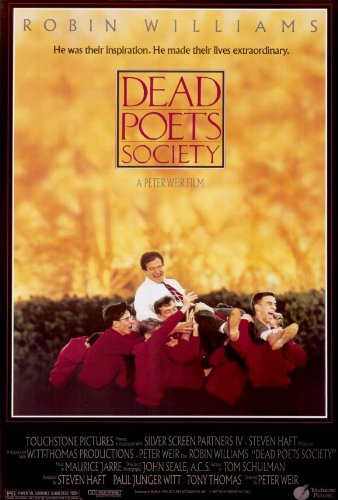
“Oh Captain, My Captain!” Your feelings for Dead Poet’s Society are probably directly linked to how you react to that desk-standing ending. A triumph of emotional film-making? Or garishly over-sentimentalised nonsense? I’ll go for the latter myself, as I found myself non-plussed and unengaged with this conventional “idealistic teacher changes lives of young boys” story. Seen it all before. 

In 1959 at elite, all-male prep school Welton Academy, four young students (Robert Sean Leonard, Ethan Hawke, Josh Charles and Gale Hansen) are surprised by the unorthodox teaching methods of their new English teacher, Welton Academy old boy John Keating (Robin Williams). Rather than teach the stuffy, facts based curriculum, Keating encourages the boy to use their hearts and minds, to be creative and above all to carpe diem as much as they can. The boys start an illicit poetry club (?) and begin to explore their own artistic leanings – but their conservative parents and school won’t stand for this challenge of the orthodox and when tragedy strikes it’s Keating who gets the blame.

Dead Poet’s Society already feels a bit dated, and it’s story line treads all too familiar ground of fusty seniors struggling to understand the artistic stirrings of the youngsters inspired by the sort of maverick inspirational teacher that everyone at one time or another has dreamed of being. Naturally of course (as per the rules of films) all the other teachers are either cynical, disinterested or box tickers. For a genuine artist like Weir, I was struck by how plodding this film was in its story and construction and also its ideas and themes. It’s a struggle between generations played out at a point in history where the cultural revolution of the sixties was just about to happen. These ideas were already over twenty five years old when the film was made – and this adds nothing really too the mix.

Instead we get the standard tropes we might expect, as the students play out expected and predictable plots. Nervy Ethan Hawke, at first too shy to speak, finds the courage to express himself. Josh Charles sets out to woo the girl he loves (at times this is more than a little creepy). Proto-rebel (and no doubt soon to be sixties activist) Gale Hansen begins bucking authority and writing scurrilous articles for the School newspaper. And Robert Sean Leonard begins to defy his domineering father’s wishes to focus solely and exclusively on a medical career by landing the part of Puck in a local play and dreaming of a career in the theatre.

Despite the focus of much of the film’s promotion (and in people’s memories) on Robin Williams’ central performance, the story line is all about these boys. And I will say there are some fine performances from these four principles – three of whom went on to have notable careers. Particularly fine is Robert Sean Leonard, who gets a meaty pile to play with as a young adolescent who lacks the courage to tell his father what he really feels and carries all this with a confidence and assurance (even though his Puck performance is hardly the work of genius the film insists it is!).

It’s unfortunate that most of what they do is the totally expected collection of school yard clichés, which builds towards an inevitable and predictable, sad, sentimental, ending. Keating is the standard inspirational teacher, given to flights of fancy and eccentric touches (tearing pages from books, leading the boys in sports designed to build their poetry skills, encouraging the boys skilfully to recite their own poetry) that will either leave you wishing you had him as a teacher or leave you cold. 

Watching it now, and seeing Keating interact with his students, you can’t help but feel his increasing closeness with the boys, his encouraging them to call him “Captain” (in one skincrawling moment he doesn’t even turn around when walking until one of them addresses him as this!), his taking them to plays, his obvious favouring of a few key students would all contribute to him struggling to get CRB cleared. I actually found his character rather grating, although the film does use a good few moments to underline how Keating rebukes the boys for their more thoughtless and pointless acts of rebellion and how he urges Neil to gain the support of his father before acting.

Nothing particularly wrong with Robin Williams performance though, even though the thing you feel impressed people the most was this most energetic of funny men restraining himself in a relatively straight and low-key part. It’s a role several actors could have taken on just as well, but Williams does a sound job.

It’s a shame that the film itself is so deeply bland. Its later sentimental touches become increasingly heavy handed and overbearing, and it’s parable of betrayal and corruption in a 1950s school hits its points equally hard. There is nothing really fresh or unique here, and the film itself never brings its story to life in a way that feels fresh or unique. It’s a film widely loved, but to be honest for the uninitiated has more than enough moments of weakness for you to want to check out of this class.

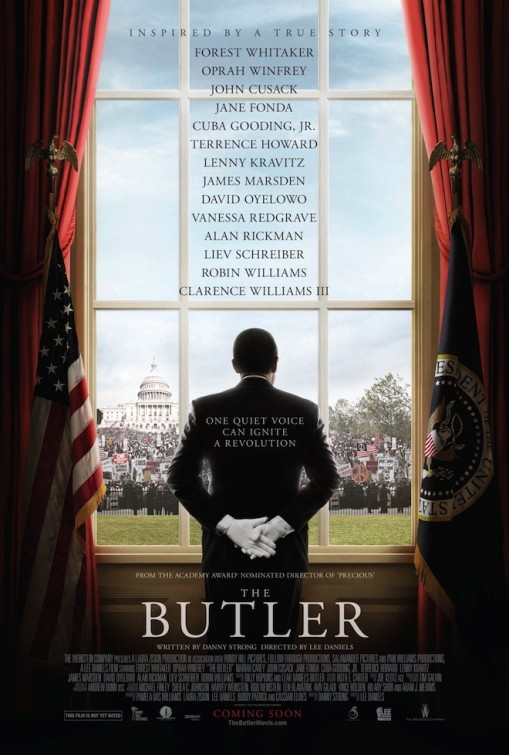
The Butler (2013)


Forest Whitaker takes on a lifetime of service, as the Civil Rights movement meets Downton Abbey

Director: Lee Daniels

Cast: Forest Whitaker (Cecil Gaines), Oprah Winfrey (Gloria Gaines), David Oyelowo (Louis Gaines), Cuba Gooding Jnr (Carter Wilson), Lenny Kravitz (James Holloway), Colman Domingo (Freddie Fallows), Yaya DeCosta (Carol Hammie), Terrence Howard (Howard), Adriane Lenox (Gina), Elijah Kelley (Charlie Gaines), Clarence Williams III (Maynard), John Cusack (Richard Nixon), Jane Fonda (Nancy Reagan), James Marsden (John F. Kennedy), Vanessa Redgrave (Annabeth Westfall), Alan Rickman (Ronald Reagan), Liev Schreiber (Lyndon B. Johnson), Robin Williams (Dwight D Eisenhower)

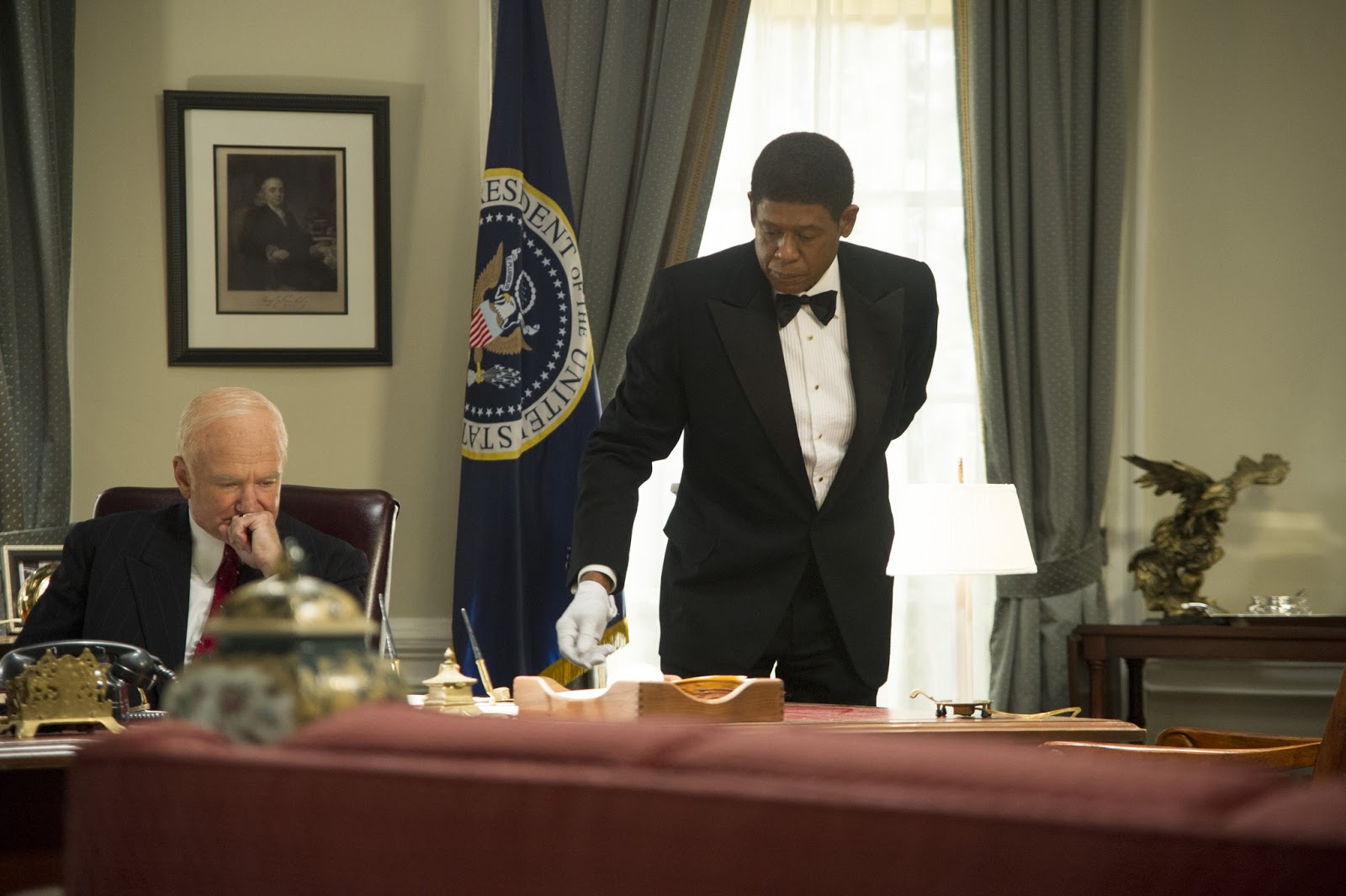
Cecil Gaines (Forest Whitaker) grows up on a plantation in the South; after his mother is raped and his father killed by the son of the house, the family matriarch (Vanessa Redgrave) takes him on as a house servant as a token gesture of regret. His training here sets him on the path to working in a succession of increasingly wealthy hotels and, finally, the White House. Over 30 years, he serves the Presidents in office, never involving himself or commenting on policy, proud of his service to his country. This often puts him in conflict with his Civil Rights activist son Louis (David Oyelowo), with his wife Gloria (Oprah Winfrey) stuck in the middle.

This is the sort of film that feels designed to win awards. It’s based on a vague true story (it changes nearly all the events of course) and it’s about a big subject. It’s got big name actors doing acting. It aims at big themes. What it actually is, is a film that misses its marks. It’s a film that spends time with big themes but has nothing to say about them, or in fact anything interesting to say full stop. It assumes that the historical context will do the work, and leaves it at that. Instead, it settles for trite sentimentality and cliché, personal stories played on a stage that makes those stories seem slight and inconsequential rather than giving them reflective depth.

The biggest problem about the film, leaving aside its heavy-handed sentimentality and mundane predictable storytelling, is that all the way through it feels like we are following the wrong story. It’s such a vibrant and exciting period of history, so full of events, passion and struggle: and instead we follow the story of Cecil, essentially a bland passive character who achieves very little and influences even less. There are vague references to leading “the regular life” and how working in domestic service is like some sort of subversive act to demonstrate the education and hard-working possibilities of the minority, but to be honest it never really convinces.

The film promises that Cecil was a man who had a profound impact on the people he served – but this doesn’t come across at all. Instead, the parade of star turns playing US Presidents are there it seems for little more than box office: we see them speaking about Civil Rights issues or planning policy, but we get very little sense of Cecil having any bond with them. The cameos instead become a rather distracting parade, as if the film was worried (perhaps rightly) that Cecil’s story was so slight and bland that they needed the historical all-stars to drum up any interest in it. It doesn’t help that the cameos are mixed – Rickman, Schreiber and Marsden do okay with cardboard cut-out expressions, but Cusack in particular seems horribly miscast. A braver film would have kept these pointless camoes in the background and focused the narrative on Cecil and his colleagues below stairs, and their struggles to gain equal payment with their white colleagues. This film is seduced by the famous events and names it spends the rest of the time backing away from.

The performance at the centre is also difficult to engage with. Forest Whitaker is such an extreme, grand guignol actor that it’s almost sad to see him squeeze himself into a dull jobsworth such as Cecil. Whitaker seems so determined to play it down that he mumbles inaudibly at great length (it’s genuinely really difficult to understand what he is saying half the time), slouching and buttoning himself into Cecil’s character. It doesn’t come across as a great piece of character creation, more a case of miscasting. Oprah Winfrey does well as his wife, although her character is utterly inconsistent: at times a drunk depressive, at others level-headed and calm. The link of either of these characters to the hardships of life as a Black American or their role in racial politics is murkily unclear.

The star turn of the film – and virtually all its interesting content – is from David Oyelowo, who ages convincingly through the film from idealist to activist to elder statesman. His story also intersects with the actual historical events that are taking place in America and he is an active participant – unlike Cecil the passive viewer, just as likely to switch the TV off as follow the news. Often I found myself wishing the film could follow his character rather than Whitaker’s.

That’s the problem with the film: what point is it trying to make? The film seems to want to honour Cecil’s service in the White house – but the film is a slow journey towards Cecil’s sudden revelation that maybe his son’s campaigning for Civil Rights was the right thing to do. This flies in the face of the film’s tribute to Cecil’s decades of quiet, unjudging service: the film can’t make up its mind whether it wants to salute Cecil for being an unjudging, dedicated servant to a long line of Presidents, or for having the courage to take a political stance towards the end. It’s having its cake and eating it. It’s this shallow lack of stance that finally makes it an empty and rather dull viewing experience.