Tag: Roger Allam

The Queen (2006)

Helen Mirren reigns supreme as her Majesty in The Queen

Director: Stephen Frears

Cast: Helen Mirren (Queen Elizabeth II), Michael Sheen (Tony Blair), James Cromwell (Prince Philip), Helen McCrory (Cherie Blair), Alex Jennings (Prince Charles), Roger Allam (Robin Janvin), Sylvia Syms (Queen Elizabeth, the Queen Mother), Tim McMullan (Stephen Lamport), Mark Bazeley (Alistair Campbell), Julian Firth (Jonathan Powell)

It’s easy to assume The Queen is a cozy piece of film-making, not least because writer Peter Morgan’s exploration of the Royal Family has become every one’s favourite costume drama viewing thanks to his series The Crown on Netflix. But that’s to forget the acute sense of the personal and the public Morgan has, and his ability to write himself into the minds of his participants. And he’s perfectly matched here with the wry eye of Stephen Frears. Together they create a film that uses a single moment of history to explore the nature of our institutions and the particular characters of the people that fill them.

The film follows the death and aftermath of Princess Diana, and especially the dramatic public reaction to the death that expressed itself both in unparalleled scenes of national public mourning and hostility to the Royal family. Both are things a lifetime of duty and service have failed to prepare Queen Elizabeth II (Helen Mirren) for – but are also things intrinsically understood by her new Prime Minister Tony Blair (Michael Sheen). As the public clamour for the Royals to join the public in an exhibition of public grief rises, it’s mixed with a furious demand for a royal ‘mea culpa’ for ruining the life of the “People’s Princess”. Could the Royal Family be finished?

Well of course it wasn’t, and perhaps it’s hard to understand for those who didn’t live through those crazy days of 1997. But there was never anything like it before – people wept in the streets as if they had lost a family member of their own. Princess Diana – a tireless campaigner for charities, who did a great deal to change public perceptions on AIDS among many other issues – was also a brilliant master of public opinion, far more attuned to the countries drift away from stiff-upper-lip reticence towards celebrity-worship sentimentality than the family she married into. As skilful a manipulator of the press, as she was a victim of their hounding, she’d made herself into someone larger than life. It’s the sort of modern cult of celebrity, that few others mastered – and certainly not in the Royal Family.

Diana hangs over the family in the film like a ghost, an embodiment of their sense that the country is drifting away from them. It’s a film where pace and speed are vital, Frears and Morgan brilliantly contrasting the rushing onslaught of events from the car crash to distraught, increasingly angry, crowds gathering outside Buckingham Palace with the relatively sedate official response, which was effectively a private retreat to Scotland and say and do very little. The film has a brilliant sense of the momentum of those crazy days, and of the clash between an institution straitjacketed by tradition and a world where the public exhibition of emotion is de rigour.

What the film finds however is the value in both, and in doing so perhaps becomes one of the greatest adverts for the monarchy – or at the very least for Elizabeth II – you will ever see. A lot of this comes from Helen Mirren superb performance as the Queen. It’s a role Mirren performs with a combination of Sphinx-like genius and a genuine fragility under a veneer of exactitude. Mirren’s Elizabeth is a woman whose sense of duty has led to a lifetime of living as a symbol, a profession that has demanded the avoidance of any sort of personal opinion what-so-ever (something Morgan leans on with his Alan Bennettish early scene, where the Queen chats with a maid about the recent General Election and regrets she never had the chance to tick a box for something). She’s a woman certain that she has performed her duty in the finest tradition of her family.

Her tragedy in the film is the bewildered sense of suddenly finding the country she thought she knew being completely different. Put simply, the destructive Diana, a difficult person privately but loved publically, is a woman she can’t understand – and a country that embraces her is one she struggles to understand as well. Mirren’s Queen has a sharply defined sense of her place and person, but finds herself questioning all that. While sharply refusing to be treated as fool, she has a distressed sense of suddenly being adrift in the world.

Morgan captures all this in a series of engaging “behind the scenes” moments, but his real trick is his sure touch with symbology. A magnificent stag on the grounds, being hunted by all and sundry, could easily have been a clumsy parallel with the Queen, but it’s delivered with real grace and serves as a true emotional catalyst for the Queen (twice!) as she finally begins to understand both her own situation, and the necessity for her to bend her own firm principles and tradition to meet the requirements of this new age.

It’s the main theme of the film, this conflict between tradition and modernism, but the film sees merit in both. Many of the formalities of court life are humoursly spoofed in their intricate pomposity, but the overblown sentimentalism and knee-jerk judgamentalism of the modern world are hardly much better. As Blair himself, the arch modernist, observes there will always be a place for a head of state who gives us a symbol to aspire to. Not least, because the burden of standing for things and being driven to play to the masses will eventually lead to the destruction of most political careers (the film mines a fair bit of material between the implicit comparison of Blair’s saint-like popularity in 1997 to the wreckage of his “Bliar” reputation in 2006).

Frear’s film is a gentle critique but also a sharp defence of the institution of the monarchy, as practiced by the Queen. It may pain her, but she will get on with it. Morgan’s script also suggests her quiet wisdom – the film’s coda has her suggesting that Diana, like all things popular today, will pass. 

The film is less sure footed elsewhere. It’s portrayal of New Labour at times leans a bit too heavily into public perception – Campbell (played by a bullying Mark Bazaely) as a brash blow-hard, Labour as being obsessed with spin and image, Cherie Blair as a judgemental Shrew. Other members of the Royal family sometimes bend into parody – by the time of the Crown, Peter Morgan was to find Prince Philip as a far more fascinating and richer character than he is here. But the performances are strong across the board, as if following their head of state in Mirren. Sheen’s re-creation of Blair is pitch perfect, and he also aptly understands the difficult balance in Blair between genuine decency and ambition. Roger Allam also provides a wonderfully dry cameo as the Queen’s old fashioned secretary, while Alex Jennings does a neat impersonation of a Charles desperate to be seen to be doing the right thing.

The Queen’s main interest though is showing that tradition and modernism can sit side-by-side – and that a leaning too far in either direction is harmful for all involved. It sprinkles in intriguing levels of criticism for Diana, but matches that with a respect for the Queen, that makes her real while keeping her a symbol. Helen Mirren’s performance deserved every price going, and the film itself rewards with each new viewing.
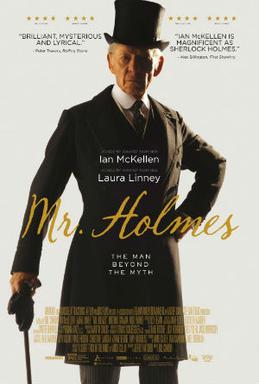
Mr Holmes (2015)

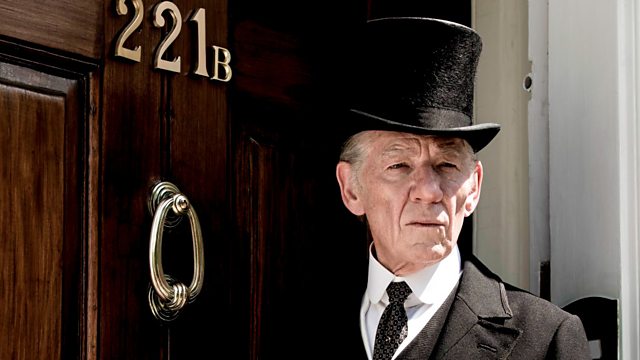
Ian McKellen is an ageing Sherlock trying to understand his past in Mr Holmes

Director: Bill Condon

Cast: Ian McKellen (Sherlock Holmes), Laura Linney (Mrs Munro), Milo Parker (Roger Munro), Hiroyuki Sanada (Taiki Umezaki), Hattie Morahan (Ann Kelmot), Patrick Kennedy (Thomas Kelmot), Roger Allam (Dr Barrie), Phil Davis (Inspector Gilbert), Frances de la Tour (Madame Schirmer)

It’s 1946 and over 35 years since Sherlock Holmes (Ian McKellen) last investigated a case. Living in retirement with his bees in Devon, with his housekeeper Mrs Munro (Laura Linney) and her inquisitive son Roger (Milo Parker), 93-year-old Holmes’ final “case” is to try and combat the deterioration of his own mental faculties. This focuses on his attempts to remember the details of his final case, investigating the wife (Hattie Morahan) of a client, a case where he knows something went terribly wrong, but cannot recall the exact details.

Condon’s film is a quiet, gentle piece which primarily becomes a character study of the Great Detective, trying to locate the man inside the thinking machine. This is a Holmes unlike any other, haunted by past mistakes and scared of losing the intellectual abilities that have been his principal purpose. Condon’s film also makes clear that much of what we know about Holmes was a cheeky “embellishment” by Watson in his stories – from the pipe and deerstalker to the address of 221B. This is a Holmes who failed all his life to form personal connections, and found this problem magnified by becoming a real-life fictional character, a person who knows no-one but is known by everyone.

This fascinating re-evaluation of Holmes is helped by Ian McKellen’s superb performance (in his second collaboration with Condon after Gods and Monsters). McKellen’s ability to convey the intellectual sharpness of Holmes is matched by his vulnerability and fragility as he feels those same powers begin to fail. This is a Holmes who can still sharply deduce where someone has been from a quick analysis, but needs to write Roger’s name on his cuff to help him remember whom he is talking to. McKellen’s performance slowly reveals the longing for emotional connection and his own regrets at the isolation that has dominated his own life.

The expressiveness of Ian McKellen’s eyes comes into play here, both their capacity for joy – and this is a Holmes who takes an intense pleasure in his own acuity – and the way McKellen is able to allow these eyes to glaze over with forgetfulness and flashes of senility. He also forms a wonderful bond with Milo Parker (very good, genuine and real) as Roger, the two of them forming an odd couple relationship that also gives Holmes a beginning of an understanding of what he has missed from a life without family and friends. 

Alongside this fascinating character study, the actual storyline is fairly tame – but then that’s hardly the point. The modern day plotline takes in physical and mental decline, isolation, fracturing family bonds and post-war Japan (where Holmes travels in search of “Prickly ash” a plant he hopes will help to counteract his mental decline). But it’s really a quiet framework to change this Holmes into a man who sees the world only in terms of logic and puzzles, and must learn to see the humanity and emotions that underlie people’s actions. It’s a Holmes who must learn to appreciate feelings, to express them and to tell “white lies” to save people from pain.

It’s no surprise that the past sequences – where a spry McKellen also plays Holmes in his late 50s – also revolve around this. The investigation cheekily features spiritualism (the pseudo-science that obsessed Conan Doyle in his later days) but the real point is Holmes failing to understand the pain and loss that underlie the desire to believe in the possibility of life after death – that loss is a traumatic event that cannot be hand-waved away with a presentation of facts, but a has a real lasting impact on people. Hattie Morahan captures this wonderfully, in a quietly emotional performance as a grieving mother.

The final resolution of this I found slightly less satisfying – perhaps because I thought of actual “canon” stories that showed Holmes expressing far more emotional intelligence than this film gives him the credit for understanding here (e.g. The Yellow Face). I’m also not sure if this failure would really have left any Holmes punishing himself with 35 years of isolation with bees. But it fits with the film’s concept of a Holmes who finds himself pained by loneliness.

This loneliness is hammered home throughout. Mycroft, Hudson and Watson are long dead. Watson himself is implied to be a man who never understood Holmes, that the “fictionalised” Holmes became more real to him than the flesh-and-blood man. That on Watson’s part the friendship became about the stories, with Holmes always triumphant, rather than reflecting who he was. Holmes finds this disconnection between his inner self and the world’s perception hammered home at every turn – at one point the film shows him watching a Rathbone-esque film (where he is played by Nicholas Rowe, the actor from Young Sherlock Holmes), where the case that haunts him plays out with a traditional ease. Completing this disconnection, Watson remains unseen in the film: a stranger whom Holmes was tied to forever.

All this makes for a thought-provoking film, with a delightful performance from McKellen making a truly unique and original screen Holmes. There are a host of fabulous supporting performances – Laura Linney does fine work as his insecure, lonely housekeeper who feels she is losing her son to the detective – and the film is a gloriously entertaining Sunday afternoon treat, which will make you think again about a man whom the whole world knows, but who may not know himself.

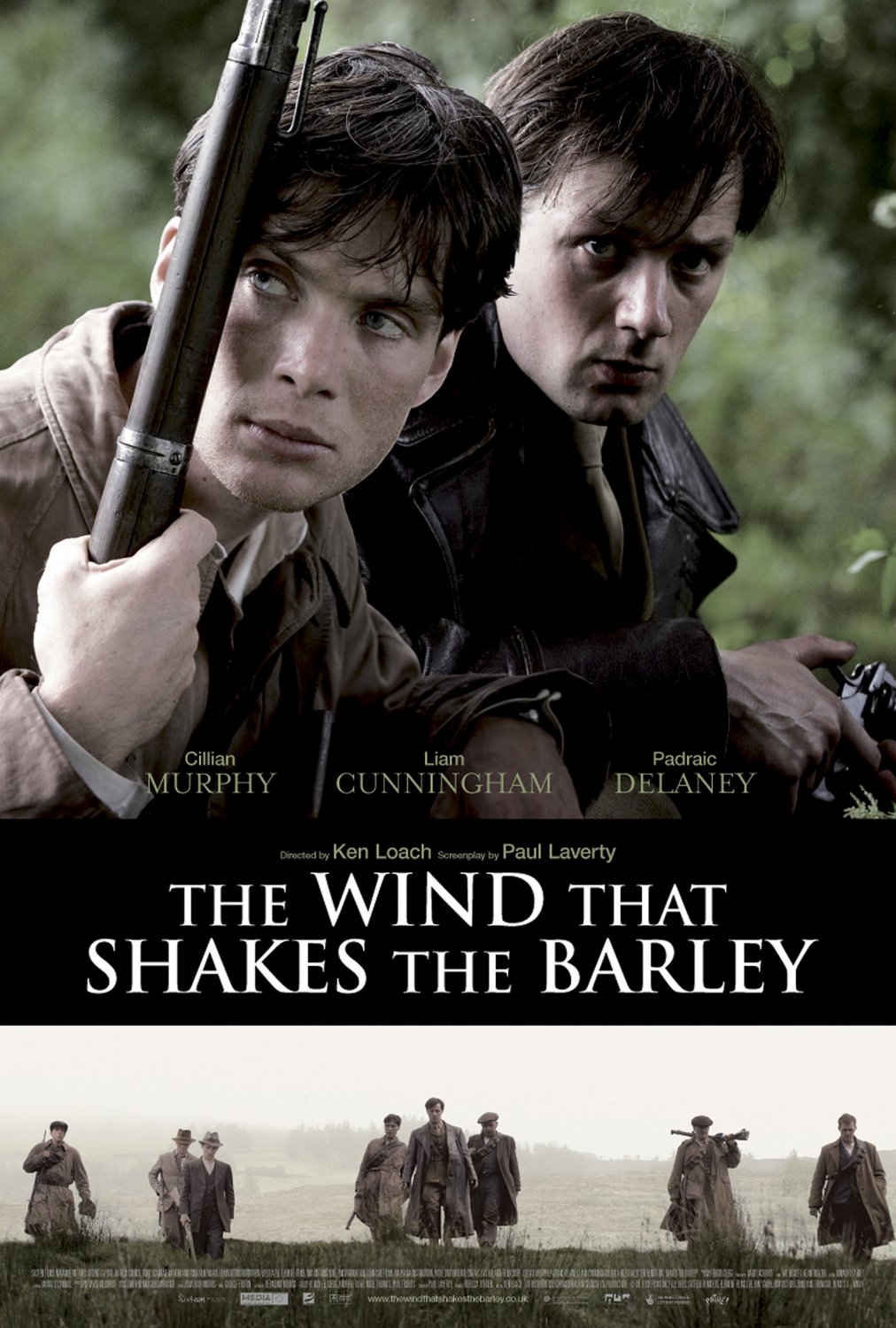
The Wind That Shakes the Barley (2006)

Cillian Murphy and Padraic Delaney take on the British in The Wind That Shakes the Barley

Director: Ken Loach

Cast: Cillian Murphy (Damien O’Donovan), Pádraic Delaney (Teddy O’Donovan), Liam Cunningham (Dan), Orla Fitzgerald (Sinéad Ní Shúilleabháin), Laurence Barry (Micheál Ó Súilleabháin), Mary Murphy (Bernadette), Mary O’Riordan (Peggy), Myles Horgan (Rory), Martin Lucey (Congo), Roger Allam (Sir John Hamilton), John Crean (Chris Reilly)

There are few directors in British cinema who have such impeccable left-wing credentials as Ken Loach. Each of his films is powered by a social and political conscience and chronicles the travails of those on the left, those struggling for the down-trodden and unfortunate, or those on the bottom rungs of society’s ladder. It was perhaps only a matter of time before he made a film about that blistering sore on the British conscience, Ireland (just as he is surely destined to eventually make a film about Palestine). It’s not a surprise that Loach’s film, with its vicious denunciation of British policy in Ireland, was met with a vitriolic response by much of the UK media, just as it was scooping Loach the first of his two Palme d’Ors at Cannes.

The film opens in the immediate aftermath of the First World War. Many of the Irish are in open revolt for independence, with Teddy O’Donovan (Pádraic Delaney) a leading IRA figure in Cork. His younger brother Damien (Cillian Murphy), a doctor, is persuaded to join the cause by his horror at the actions of the British “Black and Tan” troops in Ireland, vicious flying squads empowered to act with impunity. When the war eventually leads to a negotiated peace and the Anglo-Irish Treaty of 1922 that divides Ireland in two as a Dominion in the British Empire, the two brothers are divided. Teddy sees this as a stepping stone to peace for further gains later; Damien sees it as betrayal of the socialist message he and many others fought for, which will change only “the accents of the powerful and the colour of the flag”. A civil war across Ireland is inevitable between the government “pro-treaty” troops (supported by the British) and anti-treaty former-IRA members.

The history of Ireland is one of tragically missed opportunities, of poor British policy decisions throughout the nineteenth century (including delaying emancipation for Catholics, and a refusal to grant any level of Home Rule to Ireland for over 70 years, despite three votes on the issue in Parliament) eventually leading to many “peaceful” political movements in Ireland becoming completely discredited and the bullet seen as the only way to self-government. There is no doubt at all – as the film is not shy showing – that British policy in Ireland was often shameful, brutal, repressive, and helped enforce lasting bitterness and resentment, the impact of which is still felt today.

So, despite the furious backlash against the film as being anti-British in the press, it’s clear that The Wind That Shakes the Barley tells hard truths of the violence on both sides – of ransacked homes, murders, shootings and repression. Loach’s film unquestionably favours the Irish perspective and places their actions within a heroic context, while the British soldiers are nearly to a man foul-mouthed, arrogant, violent louts (although an officer does get a speech saying what do they expect since the black and tans are all bitter ex-front liners from France who have nothing else in their lives to come home to). But it makes a legitimate point, and it’s hard not to agree that British occupation of Ireland was, at best, a mistake and worst case a crime.

Loach’s film is harrowingly well-made, expertly shot by Barry Ackroyd, a testament once again to what a vivid and engrossing director Loach can be. Shoot-outs and violence are shot with icy-cold camerawork, mixed with handheld confusion. Political debates (of which there are many) are shot with passionate intimacy, the camera roving between the faces of those on both sides. The film’s reconstruction of Ireland in the 1920s is brilliantly done, and its engrossing recreation of the guerrilla warfare tactics of the IRA is fabulous. The acting is very good, with Cillian Murphy excellent and passionate in the lead role. Loach’s earnestness, married to his cinematic skill, is clear.

The real problem with the film is Loach’s left-wing politics, not his anti-British-establishmentism. To Loach the real tragedy in Ireland was not the civil war, but the compromise that large parts of the country made to sign the treaty with Britain and turn their back on aiming to turn a poor country into something closer to a socialist one, with collectivised industry, less power to the church and a greater equality between the rich and the poor. Loach’s film is squarely stacked in favour of the left-wing firebrands who continue the fight with the IRA, and firmly against those who support the treaty and look to gradually build a lasting peace.

To Loach, it feels like there is little real difference between the British and the pro-treaty forces. The They are both moral cowards and bullies who are fighting to maintain a status quo. There is no legitimate case made for the treaty. Those who support it in the film – like the increasingly nervous, twitchy pro-Treaty Teddy (as if Loach wanted to show him physically weighted down with guilt) – are either mealy-mouthed and guiltily shifty or hectoring bullies (like the priest who preaches pro-treaty/anti-socialism from the pulpit).

Loach is right that independence was a cause that bought everyone together, and in his argument that that the lack of a unifying idea of what the country would become next would inevitably lead to fracture and collapse. But never once in the film do we hear the voice of the ordinary Irish people, and what they wanted. Inconveniently, when put to the ballot, pro-treaty parties won the election of 1921, so the film has to have Damien (as is often the case with those on the extreme of both ends of politics I find) claim that the people didn’t understand what they were voting for, and if they did they would have agreed with him. The film’s final scene ends at a ruined house, but never once does the film (or Loach) reflect on how this embodies the catastrophic harm simple, everyday people were suffering over this period – and that they may have wanted a chance for the fighting to stop and a shift to peaceful progress towards greater independence rather than die in a ditch for nebulous political goals.

The film’s main enemy is actually compromise. Compromise is what Teddy and his gang accept when they plead for the chance for the fighting to stop, and for the country to settle for 80% of their demands now, and the rest later. Compromise is what Damien won’t settle for, and why he’ll restart a war to the death for his beliefs. Maybe it’s just me, but the art of living seems to be one of compromise and peace is built on agreements and a statesman-like acceptance that complete victory is often impossible without unacceptable loss. It’s a belief the film has no time for, and Loach seems to be advocating that the IRA should have completely rejected the treaty and instead fought to the bitter end (an action that would have probably turned Ireland into a wasteland) in the name of the socialist dream, rather than deal with reality.

It’s that which is the real problem with the film: its hard-headed clinging to the belief that any form of compromise is anathema, that death is preferable to altering your beliefs one iota, that prolonging a bloody civil war is the right thing to do rather than accept any agenda that doesn’t completely match your initial dream. Loach’s faith in his politics is admirable, but The Wind That Shakes the Barley sets out a didactic vision of Irish politics that gives no legitimate argument to the pro-treaty side, and only listens to the socialist wing of the anti-treaty group. It’s a one-sided view of history and, increasingly, a dangerous one.

The Book Thief (2013)

Sophie Nelisse is The Book Thief in this worthy, dull adaptation

Director: Brian Percival

Cast: Geoffrey Rush (Hans Hubermann), Sophie Nélisse (Liesel Meminger), Emily Watson (Rosa Hubermann), Nico Liersch (Rudy Steiner), Ben Schnetzer (Max Vanderberg), Heike Makatsch (Liesel’s mother), Barbara Auer (Ilsa Hermann), Roger Allam (Death)

Every year you get prestigious film versions of novels that have soared up the bestseller lists. Some of these are good or even great films. Other are so lifeless, listless and lacking in spirit they leave you wondering what on earth people got so fussed about the original for. That’s the case here with The Book Thief.

In late 1930s Munich, young Liesel (Sophie Nélisse) is fostered with a local decorator Hans (Geoffrey Rush) and his wife Rosa (Emily Watson). Liesel has a fascination with books – despite not being able to read and write – and soon Hans is teaching her literacy. Liesel has a compulsion to “borrow” books – first from a burning pile of Nazi forbidden tomes, then from the library of the wife of the local mayor. But it’s dangerous to draw too much attention to the family, particularly when they are hiding a young Jewish man, Max (Ben Schnetzer). 

I’ve not read The Book Thief. I can’t say that I feel the need to dash out and do so after this bland, middle of the road picture that makes Fascist Germany seem very picturesque. The film largely fails, like so many films before it, to translate the joy of reading into a visual language so the whole “book thief” concept of the title quickly gets pushed to the margins in favour of a series of episodic events based around Nazi Germany and Second World War tropes that already feel a bit tired. 

Percival’s award-baiting film doesn’t seem like it wants to bring (or is capable of bringing) something unique or interesting to the setting, instead going through the motions as prettily as possible. And the film does look great, I will give it that. It also sounds pretty damn good, not least through a playful and rich score from John Williams (his first original score for a non-Spielberg film for decades). But it never really gets anything special from the content. In fact, that very chocolate-box beauty of the film seems to run contrary to the setting of Nazi Germany. The awards-friendly beauty envelops the film like treacle.

The book was written from the prospective of Death, but, the film seems to drop this unique aspect as soon as it possibly can. Again, it’s a sign that the film cannot reproduce what worked in the book – by stripping out its most unique and interesting point, it makes the film feel as generic as it possibly can. Roger Allam is a wonderful choice as the richly voiced narrator – but he’s so rarely used in the film that when Death talks about how fascinating he found Liesel you are simply left wondering why. 

In fact that why is a real problem with the film – it’s what you’ll be asking all the way through. Why? Why is anything really happening? Why is Death telling us how different and striking this story is when everything we see in the film feels pretty familiar? What is the point of this film or the message it is trying to give us? For a film that tackles war, fascism, persecution of the Jews, and childhood innocence, it seems empty all the time.

And that’s the problem with the film. It’s all about the pretty presentation. The characters speak with forced German accents that make it feel even more like a pretty Hollywood Golden Age film. (By the way the bad Germans, like the Nazis, they speak only in German. Make of that what you will.) The acting is pretty good, Sophie Nélisse is a great find as the heroine. But there is nothing special about it at all. It’s seemingly made entirely as a prestige product for potentially winning Oscars. Any of the depths of uniqueness of the book seems to have been shaved off in service of that, and we’ve been left with a chocolate box that feels like it’s lacking the sweet richness you’d expect to find in it.

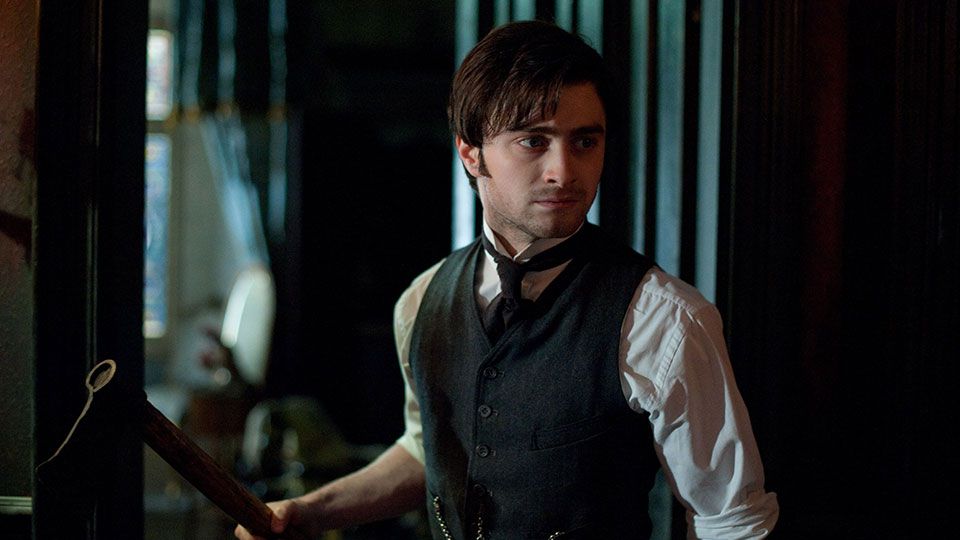
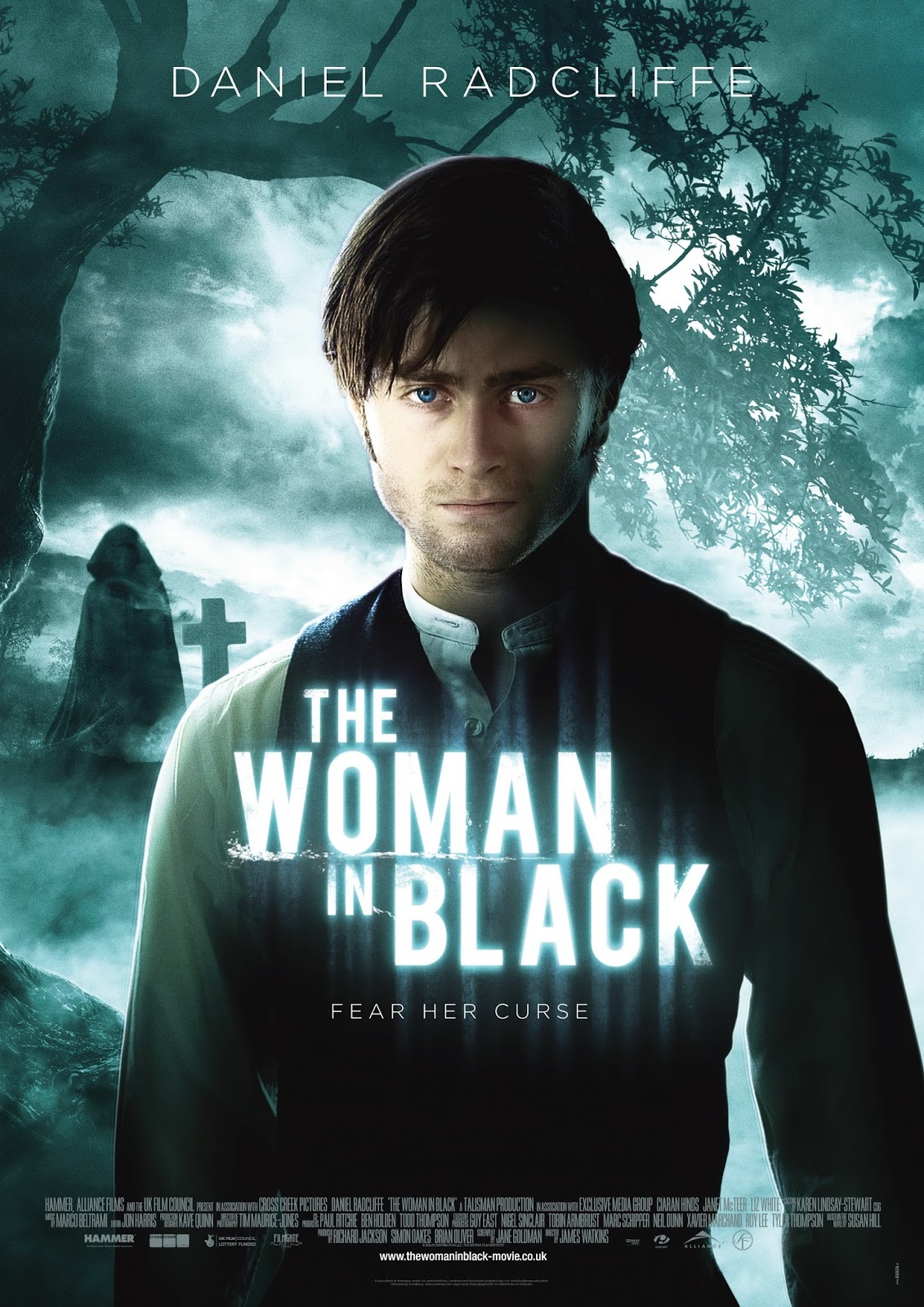
The Woman in Black (2012)


Daniel Radcliffe sneaks round a haunted house in the creepy but not haunting The Woman in Black

Director: James Watkins

Cast: Daniel Radcliffe (Arthur Kipps), Ciarán Hinds (Sam Daily), Janet McTeer (Elizabeth Daily), Liz White (Jennet Humfyre), Roger Allam (Mr Bentley), Tim McMullan (Jerome), Jessica Raine (Joseph’s nanny), Shaun Dooley (Fisher), Mary Stockley (Mrs Fisher), David Burke (PC Collins)

Susan Hill’s 1983 novel is a favourite modern ghost story – not surprising then, after a stage adaptation has been packing them in in the West End since 1987, that it hit cinema screens. Arthur Kipps (Daniel Radcliffe) is a widowed solicitor whose wife died giving birth to their son (now four years old). He is sent to an abandoned house in the countryside to review documents before the property is sold. The villagers nearby are hostile and wish him to leave. At the house he hears strange noises and sees a woman in black starring at him. Gradually the horrific nature of the house, and the curse on it, becomes clear.

The Woman in Blackis an effective and atmospheric scare-a-thon. It feels very creepy, it looks pretty good, it makes very good use of the sort of inherent terrifying nastiness you find in porcelain dolls, music boxes, creaking chairs, chintzy wall-paper and the wind whistling through the trees. It carries a lovely air of foreboding, and the shots (where we get them) of the woman in black herself carry a great feeling of menace and maliciousness. 

What is just as good though is its slim running time, because, effective as its jumps are, they are all structured in the same way. We get the haunted house late at night. We get Daniel Radcliffe walking round it slowly, breathing heavily, the camera carefully following him. We get slow camera movements around rooms until they begin to rest on an object or something appears in the corner of a frame. And then we get a crash of music and something flashes in front of the camera briefly. It’s a standard “boo” haunted house technique. Sure it’s very well pulled off indeed, and works great when it’s happening, but it’s a basic trick, using a sudden noise and distracting movement. 

Its good craftsmanship to make the same surprise (basically) constantly startling – but it’s like being on a rollercoaster. You can see each dip coming time and time again. You know exactly what’s going to happen, that you going to be plummeted down. And then when it happens you still have the adrenaline, driving your fear. But will you be scared after the rollercoaster has finished? Nope. 

That’s where the film’s sort of horror fails. There is nothing really lingering about this. Even when watching it late at night (as I did) it didn’t leave me unsettled five minutes after it finished. Effective horror films – The Shining – leave us with images and ideas that haunt us for years to come. This one barely lasts seconds. Compare it too, say, Blink, the classic Doctor Who episode. This comes up distant second-best. That works because it has a simple but brilliant idea (statues move!) and it has a brilliantly simple-but-very-hard-to-do way to avoid getting caught (don’t blink!). This just has things jump out at you. All the time.

This film is twice as long but has half the scares and dread of that. But all the film-makers can really think to do with this idea of a child-killing ghost is turn it into a “boo” monster. Charles Dickens’ The Signalman uses a premonition ghost like this to ominous effect – the ghost appears, that’s it. That’s all the haunting you need. Do you need the ghost moving around a house jumping out at Radcliffe? Nope. You start to feel the film-makers couldn’t think how to really extend this idea to fill a film (even one as short as 90 minutes), so needed to pad it out with no less than two extended sequences of Radcliffe creeping round a haunted house, sweating.

In the lead Daniel Radcliffe does his best but, to my eyes, seems hopelessly miscast. For starters he is manifestly far too young to be playing the father of a four-year-old child. Secondly, Arthur Kipps’ emotional trauma and depression seem to be just out of Radcliffe’s range – I’m not sure that Radcliffe is quite the actor I think of for world-weary misery. Now he does a decent job, but he neither looks nor feels quite right for the part. 

he Woman in Black is a B-movie done rather well, but a B-movie and nothing more. It exists to spook you and to make you jump. But, if it aspires to anything else, it never achieves it. As soon as it is finished you’ll never feel a need to see it again – and nothing from it will stick with you even an hour later. It’s a good atmosphere piece, but that’s really all it is. It’s as far from giving you a sleepless night as it could get.

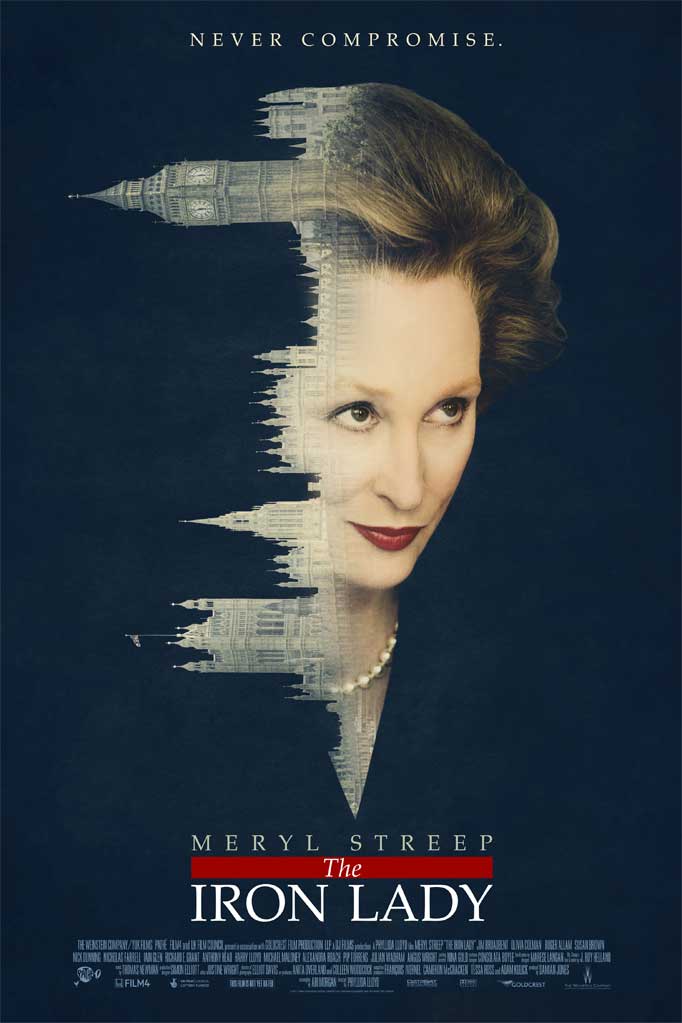
The Iron Lady (2011)


Meryl Streep impersonates the Iron Lady to excellent effect in this otherwise bland and forgettable, compromised mess of a picture

Director: Phyllida Lloyd

Cast: Meryl Streep (Margaret Thatcher), Jim Broadbent (Denis Thatcher), Olivia Colman (Carol Thatcher), Roger Allam (Gordon Reece), Nicholas Farrell (Airey Neave), Iain Glen (Alfred Roberts), Richard E. Grant (Michael Heseltine), Anthony Head (Sir Geoffrey Howe), Harry Lloyd (Young Denis Thatcher), Michael Pennington (Michael Foot), Alexandra Roach (Young Margaret Thatcher), John Sessions (Edward Heath)

In British politics has there been a figure as controversial as Margaret Thatcher? A domineering Prime Minister who reshaped the country (for better or worse depending on who you speak to), crafting a legacy in the UK’s politics, economy and society that we will continue to feel for the foreseeable future, she’s possibly one of the most important figures in our history. It’s a life rich for a proper biographical treatment; instead, it gets this film.

The film’s framing device is focused on the ageing Thatcher (Meryl Streep), now dealing with onset dementia and having detailed conversations with her deceased husband Denis (Jim Broadbent). Cared for by her daughter Carol (Olivia Colman), she reflects on her political career and the sacrifices she made personally to achieve these. Woven in and out of this are Thatcher’s increasingly disjointed memories of her political career.

The most surprising thing about this film is how little it actually wants to engage with Thatcherism itself. Perhaps aware that (certainly in the UK) Thatcher remains an incredibly divisive figure, the film’s focus is actually her own struggles with grief and approaching dementia. Her career as PM is relegated to a series of flashbacks and short scenes, which fill probably little more than 20-30 minutes of the runtime, shot and spliced together as a mixture of deliberately subjective memories and fevered half-dreams. Can you imagine a film about Thatcher where Arthur Scargill and the miners’ strike doesn’t merit a mention? You don’t need to: thanks to The Iron Lady it now exists. 

Perhaps Thatcher’s politics were considered to “unlikeable” – certainly, one imagines, by its writer and director – to be something to craft a film around, so it was thought better to brush them gently under the table. Instead the focus is to make Thatcher as sympathetic as possible to a viewer who didn’t share her politics, by concentrating on her struggles against sexism in the 1950s and her struggles with age late on. Why not accept what Thatcher stood for and make a film (for better or worse) about that? Perhaps more material on her actual achievements in office were shot and cut (the film does have a very short run time and underuses its ace supporting cast), but the whole film feels fatally compromised – which is more than a little ironic since it is about a woman famous for her lack of compromise.

In fact it’s rather hard to escape the view that Roger Ebert put forward: “few people were neutral in their feelings about [Thatcher], except the makers of this picture”. It’s a film with no real interest in either politics or history, the two things that defined Thatcher’s entire life. And as if to flag up the mediocre nature of the material they’ve chosen, it’s then interspersed with too-brief cuts to more interesting episodes from Thatcher’s life than those we are watching. Only when the older Thatcher hosts a dinner party and launches into a blistering sudden condemnation of Al-Qaeda and support of military action against terrorism (followed by her casual disregard of a hero-worshipping acolyte) do we ever get a sense of finding out something about her, or of seeing her personality brought to life.

The film’s saving grace is of course Meryl Streep’s terrific impersonation of Thatcher. I call it impersonation as the film so strenuously avoids delving into the events and opinions that shaped Thatcher that Streep gets very little opportunity to really develop a character we can understand, or to present an insight into her. Her performance as the older Thatcher – losing control of her mannerisms, deteriorating over the course of the film – is impressive in its technical accomplishment, but that’s largely what it remains. As the film doesn’t allow us to really know Thatcher, and doesn’t work with what defines her, it largely fails to move us when we see her weak and alone. So for all the accomplishment of Streep’s work, I couldn’t say this was a truly great performance – certainly of no comparison to, say, Day-Lewis as Lincoln or Robert Hardy as Churchill. I’d even say Andrea Riseborough’s performance in TV’s The Long Walk to Finchley told us more about the sort of person Thatcher was than Streep does here.

Despite most of the rest of the cast being under-used though, there are some good performances. Jim Broadbent is very good as Denis Thatcher, although again his performance is partly a ghostly collection of mannerisms and excellent complementary acting. However the chemistry between he and Streep is magnificent and accounts for many of the film’s finest moments. Olivia Colman does sterling work under a bizarre fake nose as a no-nonsense Carol Thatcher. From the all-star cast of British actors, Roger Allam stands out as image-consultant Gordon Reece and Nicholas Farrell is superbly calm, cool and authoritative as Airey Neave. Alexandra Roach and Harry Lloyd are excellent impersonating younger Thatchers.

The Iron Lady could have been a marvellous, in-depth study of the politics of the 1980s, and a brilliant deconstruction and discussion of an era that still shapes our views of Britain today. However, it wavers instead into turning a woman defined by her public role and views into a domestic character, and brings no insight to the telling of it. By running scared of Thatcher’s politics altogether, it creates a film which makes it hard to tell why we should be making a fuss about her at all – making it neither interesting to those who know who Thatcher is, nor likely to spark interest in those who have never heard of her.