Tag: Romance films

Morocco (1930)

Morocco header
Marlene Dietrich and Gary Cooper romance in the heat of Morocco

Director: Josef von Sternberg

Cast: Gary Cooper (Legionnaire Tom Brown), Marlene Dietrich (Mademoiselle Amy Jolly), Adolphe Menjou (La Bessiere), Ulrich Haupt (Adjutant Caesar), Eve Southern (Madame Caesar), Francis McDonald (Sergeant), Paul Porcasi (Lo Tinto)
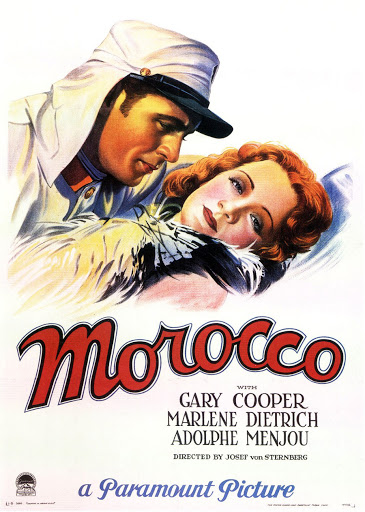
Josef von Sternberg was one of the greatest directors of early cinema – and Marlene Dietrich was his muse. Or was he her Svengali? Either way, they first worked together on German film The Blue Angel and such was the impression made by Dietrich, Hollywood was desperate to get her and von Sternberg together for a new picture that would channel her star power into ticket sales. Morocco is the picture they come up with, a romance tinged with heartbreak set in French occupied-Morocco around a Foreign Legion troop passing through town.

Dietrich was Amy Jolly, a woman of uncertain and shady past, new in town and making a living as a night club singer. There here routine encompasses everything from erotic singing in top hat and tails (complete with a bisexual vibe – you can tell this is pre-Code Hollywood?) to an apple selling singing routine. She’s loved by La Bessiere (a rather bland Adolphe Menjou), a stuffed shirt rich guy. But her heart belongs to man’s-man legionnaire Tom Brown (Gary Cooper), a toughened old soldier with a girl in every barracks town. Who will Amy end up with? Will she follow her heart or her head? Can she bear to live the life of a soldier’s mistress amongst the camp followers?

Writing it all down, there are probably few mysteries about the resolution you get from Morocco, which even at its 90 minute run time feels like an impossibly slim piece of fluff. But that hardly really matters when von Sternberg shoots the film with a romantic flourish and with Dietrich and Cooper as such compelling leads. It’s odd to think, looking at it now, that Morocco was acclaimed as one of the greatest films ever made on release (it’s not even the best or most lasting Dietrich/von Sternberg Hollywood collaboration of which there were five more to come).

But it lasts in history because it introduced Dietrich to the wider world. Von Sternberg took control over every aspect of her image to best present her to the world – including a torturous 45 takes of her first line (because after all the first line was the one that will make the first impression on an audience). Von Sternberg and cinematographer Lee Garmes choose lighting methods and angles that would enhance her features, and shot huge parts of the film to favour her (much to the annoyance of Gary Cooper, who resented von Sternberg’s shunting of him to the sidelines).
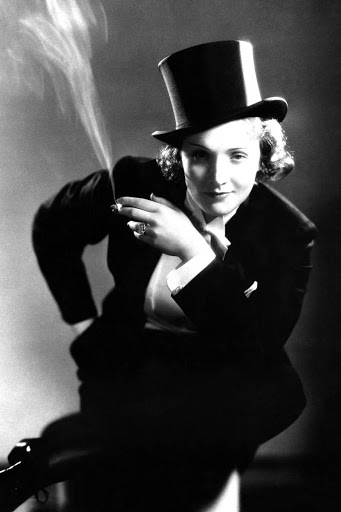
Von Sternberg was determined that Dietrich would make an impression: and she certainly did with her cabaret act, still probably the film’s highlight. Dressed in a striking male garb, her rendition of When Love Dies is sold on her confidence, sexual allure and tinge of bisexuality (viewers were scandalised and titalated that the routine ended with Dietrich playfully kissing a woman in the audience) to make a lasting impact. Von Sternberg lets the tension build as well by holding the camera calmly on Dietrich (in drag) while the audience at first boo before silencing and then being swept up in her performances. This is the approach taken for the rest of the film – and its rather weak plot – focusing on the a magnetic quality, the indefinable star quality some people have to just make you watch them.

It’s recognised by von Sternberg, who builds the film around her. It’s tempting to see Adolphe Menjou – the jilted would-be husband, in awe of the star – as a von Sternberg self-portrait, dressed as he is to resemble the director. But von Sternberg felt so confident over his control of Dietrich and her career, I suspect there is actually far more of him in lothario Tom Brown, the sort of man who may love a woman but also very much likes her to submit her will to his own. Brown may have his moments of decency – he wants Amy to have the best chance in life, which is clearly with La Bessiere rather than him – but he’s also an at times ruthless opportunist and adventurer, with a string of broken hearts behind him. Interestingly, considering their later films and her reputation, Dietrich’s Jolly is actually a fairly passive figure throughout the film, to whom events happen and who never feels in charge of her destiny. Perhaps more than a little of life drippling through to the screen?

Saying that the film has some bite in it, with the dialogue from Jules Furthman often rich, rough and ready, creating characters who speak at times bluntly but with a sort of urban poetry. Sadly, the dialogue scenes are often frequently the dullest in the film. Von Sternberg was still at the time a natural director of silent film, not the talkies. Hollywood itself had still not really learned how to do record dialogue and do camera movements at the same time, so most of the dialogue scenes are visually flat and rather forced (not helped by the storyline itself being often less then enthralling).

Where Morocco really comes into its own is when it falls back on visuals. As a director of pictures, von Sternberg is outstanding. The camera perfectly captures the bustle of the Moroccan market town. There is a beautiful sequence where Amy raises through a seemingly never-ending row of soldiers to try and find Tom. The Morocco in this film may bear almost no resemblance to the real Morocco – it’s clearly a Hollywood fantasy land – but it also looks at no time like it was shot on a Hollywood backlot. Tom Brown’s slow and sad browse through Amy’s dressing room, before deciding he should leave for her own good is hauntingly well done in near total silence, matched with beautifully empathetic camera moves. The final imagery, as our heroes head out into the sands of Morocco, is marvellous, a perfect collection of shots and reactions leading to an image for the ages.

And Morocco is a film of images strung together with a rather dull plot and a very stilted scenes of dialogue. Marlene Dietrich is at the centre of many of these images. This was her only Oscar nomination – but it’s not her finest performance. She’s still learning her craft and – above all you feel – still very much an elaborate prop for von Sternberg. The more they became something like equals the stronger the pictures would become. Gary Cooper was unhappy on the film – but actually his performance is remarkably strong and assured, dripping sexuality (von Sternberg also works a lovely little scene that pokes fun at Cooper’s height).

Morocco seems like a landmark of cinema that is of greater academic interest at times than it is dramatic. But when the dialogue fades away and the film is able to relax into the series of arresting images that make up most of it, it’s still a marvellous and intriguing work.
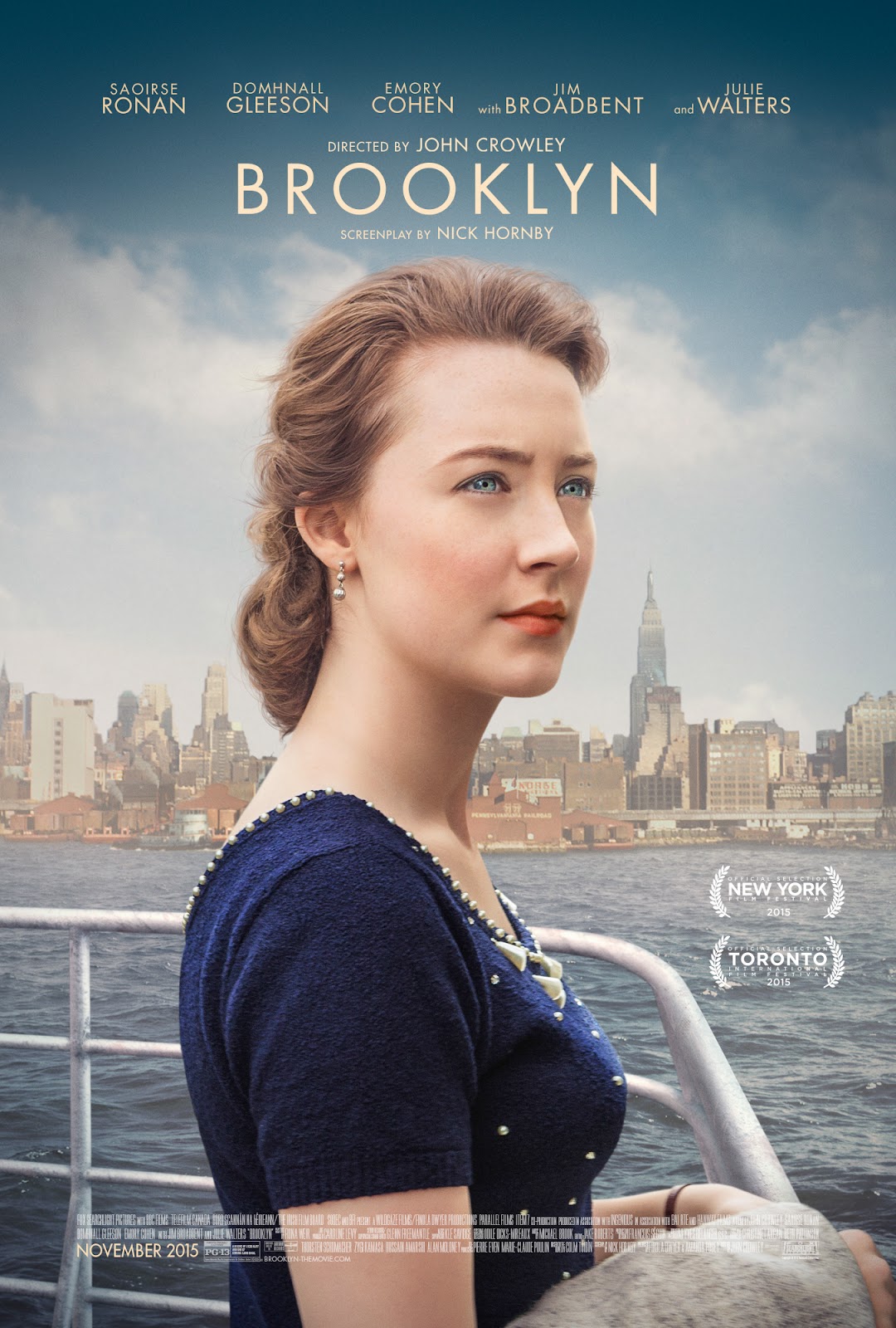
Brooklyn (2015)

Saoirse Ronan excels as an Irish immigrant in the USA, torn between two loves

Director: John Crowley

Cast: Saoirse Ronan (Ellis Lacey), Emory Cohen (Tony Fiorello), Domhnall Gleeson (Jim Farrell), Jim Broadbent (Father Flood), Julie Walters (Mrs Kehoe), Brid Brennan (Miss Kelly), Eva Birthistle (Georgina), Fiona Glascott (Rose Lacey), Jane Brennan (Mrs Lacey), Jessica Paré (Miss Fortini), Emily Bett Rickards (Patty), Nora-Jane Noone (Shelia), Eve Macklin (Diana), Jenn Murray (Dolores), Eileen O’Higgins (Nancy)

In the 1950s, Irish immigrants flocked to Brooklyn to build themselves a new life. Those who made the move often found themselves torn between two worlds – the lure of the new life they were building across the water, and the pull of the land of their fathers. Brooklyn, based on a successful novel by Colm Tóibín, places this conundrum in an intensely dramatic context by making the conflicting calls on its central character as much romantic as they are emotional.

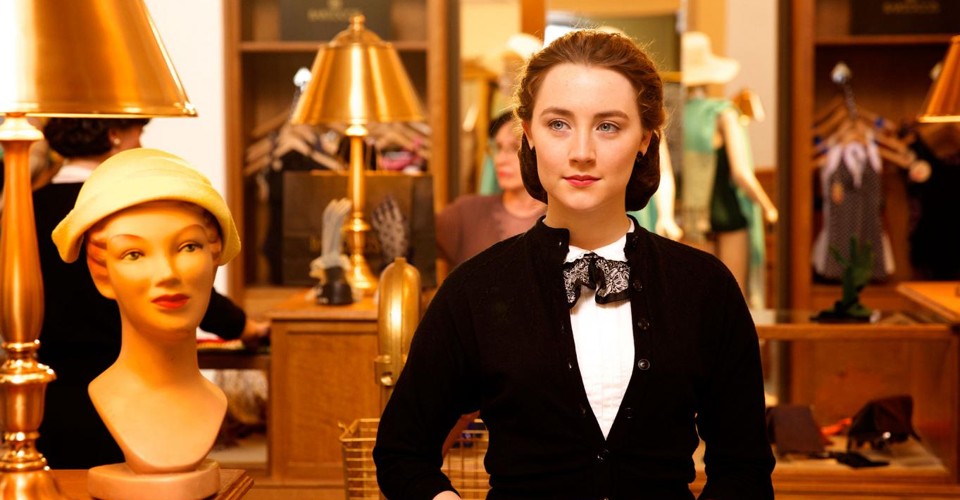
Ellis Lacey (Saoirse Ronan) is our homesick young woman, eager to build a new life in America. Sponsored by kindly priest Father Flood (Jim Broadbent, with more than a passing resemblance to Tóibín) and living in the boarding house of kindly-but-no-nonsense Mrs Kehoe (Julie Walters, in a role surely written for her) she finds work in a department store and trains at night as book keeper. She meets and falls in love with a sweet Italian American plumber Tony (Emory Cohen), but when tragedy occurs back in Ireland, on her return there she is strongly drawn to her homeland and to kindly, handsome Jim Farrell (Domhnall Gleeson). Which life will Ellis choose?

You can see why Brooklyn was so popular with Oscar voters, and why it struck such a chord with so many people. It’s reassuringly, warmly, old-fashioned, a big-hearted, brightly filmed, gorgeously mounted “woman’s picture”, the sort of story that Hollywood studios churned out in the 1940s and 1950s (you know, those sort of “who will she choose!” films). Crowley pulls the material together however with real emotional force, married with an interestingly different (if gently touched upon) theme of the immigrant experience.

Helped by a very good script by Nick Hornby, Brooklyn is not only emotionally moving but also much funnier than you might expect. Part of this is deliberate choice, expanding parts of the novel (particularly the dry humour of Mrs Kehoe, seized upon with relish by Julie Walters) that bring the funny, but also from the warmth, regard and humanity it invests its characters in. Ellis is a character so well drawn, whose feelings are so real, that we end up feeling deeply invested in her, and all the more ready to respond to her quick intelligence and dry (but gentle) wit. 

It’s a gift of a part for Saoirse Ronan, who is quite simply outstanding as a quiet, sheltered woman who grows, changes and decides to create her own destiny before our very eyes. (Helped by Hornby’s script again, which uses the Ireland-USA-Ireland structure to pinpoint many dramatic bookends and contrasts that Crowley subtly, and not forcefully, brings to the screen.) Ronan’s intelligence and her conflicting desires are clear in every scene, while her eyes seem able to communicate reserves of emotional depth. In two cultures where it isn’t easy for a woman to define her own destiny, Ronan brilliantly shows the difficulties many woman had in understanding or expressing what they want, in a world where they haven’t been set-up to think like that.

The film also doesn’t make it easier for her by making her two suitors – while radically different men – both such charming, lovely guys. Cohen’s Tony is a boyish enthusiast, full of hopes and dreams, who seems to represent everything that America has to offer Ellis. Domhnall Gleeson’s Jim is decent, honourable, kind, old-fashioned man who represents everything that she realises her Irish culture has for her – tradition, decency and a sense of self. It also speaks to how well drawn Ellis is by the film, and how deeply well-though out Ronan’s performance is, that it makes perfect sense that these two very different men would be drawn to her, and that both bring out different parts of her personality, which never feel contradictory.

It works as well because we’ve lived through everything Ellis has. She is present in nearly every scene in the film, and we see her change from a shy, scared, frightened woman on the boat from Ireland who needs to be cared for by an experienced emigrant fellow passenger (a very good cameo from Eva Birthistle) to a woman who flourishes in her new surroundings and the opportunities she is given. We need to feel that connection with her, since some of her behaviour (if it came from a man) would probably be seen as quite shabby indeed. But because we have such an understanding of her inner life – and because Ronan has such an empathetic and expressive face – we understand the reasons for her conundrum.

It’s that conundrum that lies at the centre of the film, and to be honest what dominates it. It works because it is done with such emotional truth (aided by Michael Brook’s excellent, heart-string tugging score that mixes American sounds with Irish folk to glorious affect), but the film is primarily a nostalgia romance. While it’s very setting makes you think about the immigrant life, it has very little to say really about either the cultural phenomenon or the impact it has on either the USA or Ireland (a charity Christmas meal for former Irish railway workers now all homeless is as close as it gets to talking about long-term integration). It doesn’t really matter, because the central story sweeps you up so much, but it does make the film more of a romance than the grander claims made for it by some as some sort of commentary on Irish immigration.

But there’s nothing wrong with such a handsome, romantic, emotional drama, or one that feels so reassuringly old-fashioned, even as it is made with touches of wit and confidence. Making some welcome comments on feminism, and led by Saoirse Ronan at her finest, it’s still a triumph of old-style, romantic, women’s pictures that you’d have to be pretty cold not to feel some sort of warming in your cockles by the end of it.

Call Me By Your Name (2017)

Timothée Chalamet and Armie Hammer are lovers drawn together in Call Me By Your Name

Director: Luca Guadagnino

Cast: Timothée Chalamet (Elio Perlman), Armie Hammer (Oliver), Michael Stuhlbarg (Professor Perlman), Amira Casar (Annella Perlman), Esther Garrell (Marzia), Victoire Du Bois (Chiara)

First love is a story everyone can relate to. Call Me By Your Name unfolds an engrossing early romance, where precocious 17-year old Elio (Timothée Chalamat) discovers his bisexuality through his deep attraction to his professor father’s (Michael Stuhlbarg) summer research assistant, 24-year old Oliver (Armie Hammer). An attraction which, over a long hot summer in Northern Italy in 1983, finally leads to a deep romantic and sexual bond forming between the two.

Refreshingly, Guadagnino’s film is relentlessly positive and devoid of tension or disapproval. You’d expect a romance such as this – especially a gay one – to lead to an eventual outburst of furious disapproval from someone or tear-filled remonstrations that what the couple have isn’t wrong. These are avoided completely, for something that feels intensely real and convincingly grounded, especially as it follows Elio’s stumbling attempts to identify his own sexuality and understand how his feelings affect him. 

This is also a showcase for acting, a film like this living or dying on the chemistry between the two lead actors, and Chalamet and Hammer have this in spades, suggesting from the very start a deep bond, that grows in emotional intensity. The relationship is a slow dance, with both of them blowing hot and cold at different times. Oliver’s first tentative approach is resoundingly rebuffed by Elio, only for Elio’s fascination with Oliver to grow into a deep unexpressed longing, which Oliver is nervous about responding to for a host of factors, from the age difference to his residence in Elio’s parents’ house. Even after the two come together, Elio’s confusion about his own feelings leads him to turn colder before the two finally find an equilibrium that works. 

It’s also a classic coming of age story, as Elio moves out of adolescence and into adulthood. Elio never feels like a traditional teenager in the first place, a musical prodigy and talented autodidact who seems to have read nearly everything (“Is there anything you don’t know?” Oliver jokingly says at one point after Elio explains the detailed history of a war memorial). But in other ways he is the same as any other teen: sex-obsessed and confused, spending a lot of time with two female friends who he seems to be unsure of his feelings are towards, indulging in explorative sexual fantasies and fumbled exploration of his own and others’ bodies, working out what he likes and what he doesn’t.

It leads to a superb performance from Chalamet (youngest ever nominee for Best Actor at the Oscars), who perfectly captures both the intelligence of Elio, and his confused lack of understanding of who or what he is. Chalamet’s body language – a mixture of awkward teen and assured adult, is a perfect physical expression of his part-adult, part-child psyche. Like any teenager, he’s at times selfish, greedy or plain annoying. But at many others he’s sensitive, delicate, vulnerable and desperate to express his love. Chalamet juggles all these competing emotions and hormonal drives brilliantly, and his face is a true instrument of expression, a sliding kaleidoscope of confused urges that compels your attention.

It’s a perfect match-up with Hammer, who is superb as just the sort of boisterous, confident, exciting and sexy presence you can imagine being drawn towards. But Hammer also laces Oliver with a tenderness, a concern and a gentleness beneath his joie de vive that really expands the character’s soul and makes him not just a force of vibrancy but also a genuinely lovely man. Hammer is very careful (as is the film) to avoid the possibility of Oliver being seen as a seducer, and it does this by giving him a touching restraint as well as manipulation-free openness, an honesty and an emotional freeness that helps make him more often the pursued rather than the pursuer.

Guadagnino lets this gentle love story unfold over a luscious, gorgeous Italian summer, with his camera drifting contentedly around the two lovers and their environment, as much a part of the dance of their initial attraction. The film is resolutely “in the moment” and has no flashbacks, flash forwards or any real reference to any narrative events outside of what we see on screen. It unfolds gracefully and naturally, with the camera work largely taking an unflashy but still warm view on everything we see.

Guadagnino deliberately treats much of the central romance element with reserve, avoiding too much nudity and panning discretely away from sexual encounters between the two. (I will say though, that he has no such reserve with Elio’s heterosexual encounters, where female nudity and sex are shown in full.) It does successfully preserve a sense of innocence and purity in the relationship – and keeps the focus on the fact that this love between the two is about them becoming better people, who understand themselves better, through the relationship. 

This positive message is reinforced by the acceptance of Elio and Oliver from all in the film, including Elio’s parents. Michael Stuhlbarg in particular has a scene near the end of the film of wonderful power – cementing his status from this film as a dream dad – with a speech to his son so full of acceptance, encouragement and love that you’ll feel your heart melt. Both Elio’s parents are very aware of the relationship and tacitly encourage it: according to this film at least, if you’re young and gay, growing up in a Bohemian, academic household does make your life easier! (Even Oliver comments that Elio has no idea how lucky he is.)

This film is also refreshing for its lack of casualties. Sure the two girls Elio and Oliver flirt with are disregarded swiftly, and the film gives only a little time to their rather shabby treatment, but generally it’s a film about learning who you are by spending time with someone else. And if that includes a few moments of teen awkward sexual exploration that are almost unbearable to watch (a scene with a curious Elio and a peach is a case in point, replete with queasy sound effects) then so be it.

Call Me By Your Name is a terrific coming-of-age tale, emotionally honest, true and mature and directed with a graceful ease and unshowy skill that is a testament to the deep confidence and grace of its director. With two superb performances and some excellent support work, it’s a glorious summer movie of love that will speak to you regardless of sexuality.

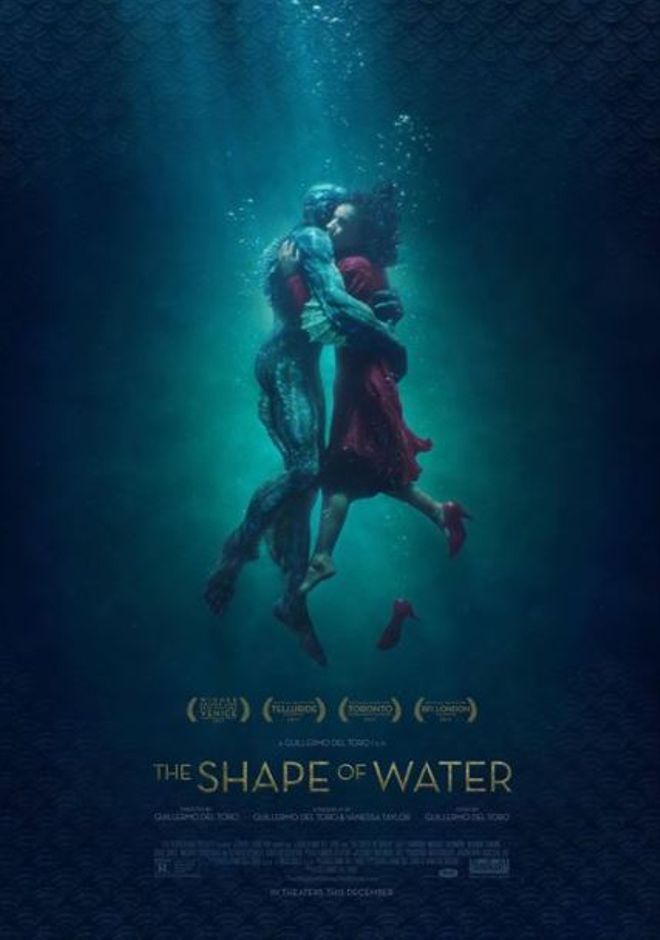
The Shape of Water (2017)


Sally Hawkins and Octavia Spencer work together to save a misunderstood creature in The Shape of Water

Director: Guillermo del Toro

Cast: Sally Hawkins (Elisa Esposito), Michael Shannon (Colonel Richard Strickland), Richard Jenkins (Giles), Doug Jones (The Creature), Michael Stuhlbarg (Dr Robert Hoffstetler), Octavia Spencer (Zelda Delilah Fuller), Nick Searcy (General Frank Hoyt), David Hewlett (Fleming), Lauren Lee Smith (Elaine Strickland)

Guillermo del Toro: part arthouse director, part thumping action director, who else could have made both Pan’s Labyrinth and Pacific Rim? The Shape of Water falls firmly into the former category, and continues the director’s long-standing interest in fairy-tales and fables, creating adult bedtime stories filled with romance and wonder, but laced with violence and human horror (and it’s always the humans who are the monsters). The Shape of Water has been garlanded with huge praise – but yet I’m not quite sure about it. Just not quite sure.

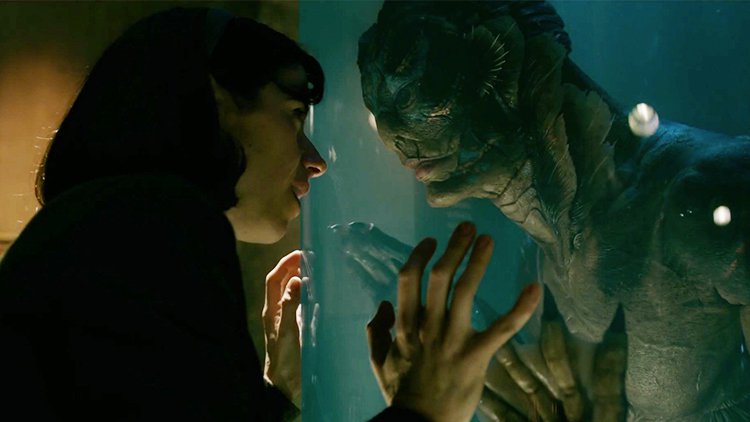
In 1962 in Baltimore, Elisa Esposito (Sally Hawkins) is a mute cleaner working in a government facility with her colleague, friend and effective translator Zelda (Octavia Spencer). Her only other friend is her neighbour, a gay out-of-work advert artist Giles (Richard Jenkins). The research facility takes delivery of a strange amphibious creature (Doug Jones), captured in the wild by sinister CIA man Richard Strickland (Michael Shannon). While Strickland and lead scientist Dr Hoffstetler (Michael Stuhlbarg) conduct tests on the creature, Elisa befriends it – the two of them drawn together by their isolation and inability to communicate verbally. When the decision comes from above to dissect the creature, Elisa decides to help it escape. 

The Shape of Wateris an adult fairy-tale that uses the structure, rules and heightened reality of the bedtime story. So we have Elisa as “the Princess without a voice”, the government facility as the evil castle, the creature as a mixture of damsel in distress and knight errant, and Michael Shannon’s vile government spook as a sort of perverted evil Queen. While the film is set in 1962, it’s aiming for a fantasy world feeling: Elisa and Giles even live above an old-school movie cinema, while the facility itself is a dank, subterranean concrete prison, part medieval dungeon, part industrial complex, dressed in a retro-1950s style. There’s no denying the film looks fantastically impressive.

The plot hinges on the growing bond between Elisa and the creature, which flourishes first into a mutual friendship, then semi-romance and finally into a full-blown relationship. If there is one part of the movie which I felt didn’t quite work, it was the build between friendship and love. While del Toro does some excellent work showing these two bonding over a common lack of language – she teaches him some basic sign language, they both share a love of music – I felt the jump between friendship and sexual attraction seemed a little big.

Del Toro films it all beautifully – and his empathy for both characters is very moving. But the film wants us to feel this deep connection for (and between) the two characters – and I’m just not sure I did. I’m not sure the film gives the time it needs for this development. Great as Michael Stuhlbarg’s (and excellent as his conflicted performance is) character is, could the film have removed his sub-plot and invested more time in the relationship? Yes it could – and I think this could have made a stronger movie. This is of course a personal reaction – I’m sure plenty of people will be bowled over by the romance of the film – but I didn’t quite buy it. For all the soulfulness of the film, I just didn’t find myself investing in this relationship as it built as much as I should.

This is despite Sally Hawkins’ expressive acting as Elisa. I find Hawkins a bit of an acquired taste: she is a little too twee, something about her eyes and vulnerable smile is a little too head-girlish. Of course that sprightly gentleness works perfectly here, but the character is more interesting when del Toro explores her depths, her desire and well-concealed resentfulness under a cheery exterior (practically the first thing we see her do is masturbate in the bath – a daily ritual timed to the second via egg timer, functionally getting these feelings out of the way before the day ahead). Hawkins mixes this gentle exterior and passionate interior extremely well throughout the film.

The principal supports are also excellent. It’s no coincidence that del Toro makes our heroes all outsiders: a mute, a black servant and an ageing gay man. As well as showing why these characters might be drawn together, it’s also a neat parallel commentary on attitudes of the time – Octavia Spencer in particular makes a huge amount out of a character that is effectively a voice for Elisa half the time, investing the part with a huge sisterly warmth.

Richard Jenkins is both very funny and rather sweet as a man scared of being alone and frightened about doing the right thing. Most of the film’s laughs come from him – but so does a large degree of its heart. Jenkins gets some fantastic material – from hints that he has been fired for social and sexual misdemeanors from his Mad Men-ish former job, to his growing realisation that his hand-drawn art is being left behind in a world embracing photography (“I think it’s my best work” has never sounded like a sadder mantra), and above all his hopelessly sad infatuation with the friendly barman at a local diner (the sort of hopeless crush you feel he must realise isn’t going to go anywhere good – but still manages to be endearing before it gets there).

Del Toro’s dreamy fable has plenty of potential monsters and obstacles in it – from government suits to Russian heavies – but the main antagonist is Shannon’s Strickland. Great as Shannon is in this role as a menacing heavy with a hinterland of insecurities and self-doubt, it’s a character that feels a little obvious. He’s the monster, you see! It’s a heavy-handedness the film sometimes uses – not least in its occasional references to the race politics of the era – that weights the deck, and tries to do a little too much of the work for the audience. Again, a film with one fewer sub-plot might have allowed this character greater depth. As it is, his vileness is established from the first second, which means the metaphor of his hand with its increasingly rotten, gangrenous fingers seems a little to on-the-nose.

But The Shape of Water is a labour of love, and a testament to love – and del Toro reminds us all what a luscious and romantic filmmaker he can be. The later romantic moments between Elisa and the Creature have a beauty to them – not least the moments when they immerse themselves together in water. Other moments are too obvious: an imagined song-and-dance routine is so signposted in advance that it carries little emotional impact. In fact, the film’s main fault may be it is too predictable: most of its plot developments I worked out within the first few minutes – but it sort of still works. After all, fairy-tales are predictable aren’t they?

Del Toro has made one from the heart here. It’s not a perfect film – it’s not a masterpiece, and I think it’s a less complex and affecting work than the brilliant Pan’s Labyrinth – but it’s made with a lot of love and a lot of lyrical romanticism. It looks absolutely astounding. It’s actually surprisingly funny and wonderfully acted: Richard Jenkins probably stands out, and my respect for Octavia Spencer continues to grow. Del Toro is gifted filmmaker, and he is working overtime here to make a romantic, sweeping, monster movie cum adult fairy-tale. All the ingredients are there: but somehow I didn’t fall in love. Did I miss it? Maybe I did. And I can’t think of much higher praise than I’m more than willing to go back and look again and see if I get more of a bond with it next time. But, for all its moments of genius, I found the delight was on the margins rather than the centre.

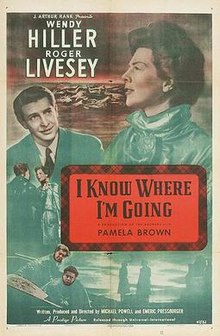
I Know Where I'm Going! (1945)


Roger Livesey and Wendy Hiller prove opposites can attract in Powell and Pressburger’s marvellous I Know Where I’m Going!

Director: Michael Powell, Emeric Pressburger

Cast: Wendy Hiller (Joan Webster), Roger Livesey (Torquil MacNeil), Pamela Brown (Catriona), Finlay Currie (Ruairidh Mhor), George Craney (Mr Webster), Nancy Price (Mrs Crozier), Catherine Lacey (Mrs Robinson), Jean Cadall (Postmistress), John Laurie (John Campbell), Valentine Dyall (Mr Robinson)

Joan Webster (Wendy Hiller) is a young middle-class woman with ambitious aims who has worked to secure a marriage to a wealthy, much older, industrialist. En route to the wedding in Scotland, she gets stranded on the Isle of Mull by a storm. There, she finds a world of very different values and principles than her own. She also finds herself thrown together with naval officer Torquil MacNeil (Roger Livesey) a man trying to return home for leave. Trapped on the island for days, Joan and Torquil find themselves romantically drawn together – however much Joan tries to avoid it.

Powell and Pressburger’s films all have a sense of filmic magic to them. They are the sort of films it’s very easy to fall in love with, and swear by. I Know Where I’m Going falls into that model extremely well – a dreamy romance in a stunning looking Scottish island, full of engaging characters and beautifully filmed. It’s a seemingly simple romance story, but it feels like a deep and engaging fable – it’s a film that shows how throwing a little uncertainty into a life can be a good thing.

Because Joan Webster categorically knows where she is going. The film’s entire build-up centres around her ambition and overwhelming focus. She literally dreams about marrying the engineering firm (yup that’s right, the firm itself not the man). She pushes her father into putting together a detailed itinerary for her entire journey. She seems to have no self-doubt whatsoever. So the magic of the film is that, deep down, it’s a about a woman realising that the place she has spent her whole life going, isn’t in fact where she wants to go. And the audience can see right away that she wants something else – much quicker than her!

This works because Powell and Pressburger get the romantic feeling of the island and its people so spot on. It’s very easy to get this Monarch of the Glen style Scottish idyll stuff feeling wearing and tedious. But somehow, it just sort of clicks. We don’t get the islanders’ charm and love of the simple life rammed down our throats, we just see how they behave and their simple contentment – and of course we have it compared all the time with Joan’s ruthless ambition. This combines really well with Powell and Pressburger’s lyrical style, their semi-magical romantic camera shots making the island seem hugely attractive (even when it is lashed with wind and rain).

By contrast our brief impression of the world outside Scotland seems cold and mechanical. It’s all offices, impersonal train booths, and besuited chaps giving stiff-collared responses. In a neat piece of cross cutting, one businessman even appears as if he has train steam puffing out of his top hat, like some human train. But we have hints that Joan has more romance under her skin than she would like to admit: as the train moves into Scotland (the film makes no real attempt at realism for its train shots) Joan dreams of the landscape they move through like some sort of tartan vision, with hills made of patchwork quilts. It’s one lovely image.

Then we have the arrival on the island – it’s got a charming, breezy openness about it. Out first introduction to Pamela Brown’s radiant Catriona is on a rainy hill with a pair of wolf hounds, before she bursts into a room (low angle cameras make her look even more romantic). Could the contrast with the mechanism of the rest of the world be more precisely made? There is a charming lack of interest in worldly affairs – the people are “not poor, they just haven’t got any money” – and what could be tiresome scenes set in ceilidhs and the like actually carry a lot of charm with them. Compare the vibrancy the islanders greet life with with the distant coldness of the wedding guests staying there – which group looks like the people you would like to spend time with?

The other thing that really works is the romantic relationship between Joan and Torquil doesn’t feel forced, or jump through too many clichéd hoops and feels organic and natural. The actors have fantastic chemistry, and the film playfully places them in a number of situations that drives this unspoken interest. It’s got more than a touch of screwball comedy about it – two people trapped together, one of them with mounting frustration – despite not really, as such, having a plot. 

Wendy Hiller is superb as Joan Webster – she brings a Katherine Hepburnish quality to the role: a determined, modern woman, a control freak in a situation where she has no power at all and hating every minute of it. What really works though is her own lack of self-knowledge. It’s clear to the viewer (and most of the characters) she is developing a deep attraction to Torquil, but Hiller makes it clear that Joan is completely unaware consciously of this. It’s a marvellous performance, totally relatable and hugely endearing, despite Joan’s ruthless certainty, because it’s always subtly puncturing that certainty with doubt.

Roger Livesey makes a perfect countpoint as Torquil. It’s a perfect role for him – a twinkly people-person, old-fashioned but not a stiff-upper lip cold-fish, who has dedicated his life to service, but can still enjoy himself. He also, in a way that many men in films of the time don’t, wears his feelings close to the surface. It’s clear he is in love with Joan from an early point, and every beat of his body language indicates this. At the ceilidh he can barely take his eyes from her – while his body language subtly (but not possessively) indicates his interest. He has an old-fashioned, casual, scruffy charm to him that never gets wearing. He’s also superb.

You’ve got a beautiful romance at the centre, with two characters it’s very difficult not to end up caring a great deal for. Beautifully acted – Pamela Brown is marvellous and Finlay Currie suitably gruff – it’s a film that feels distinctive, that makes charm and playfulness never feel wearing. Not much happens, but it’s beautiful, very sweet and extremely charming. You warm to these characters, and Powell and Pressburger create a world that feels incredibly attractive. There is some fine film-making here – from imaginative dream sequences, to intelligent visual choices that quietly influenced anyone making a film about the romance of the simple life. A little known treat.

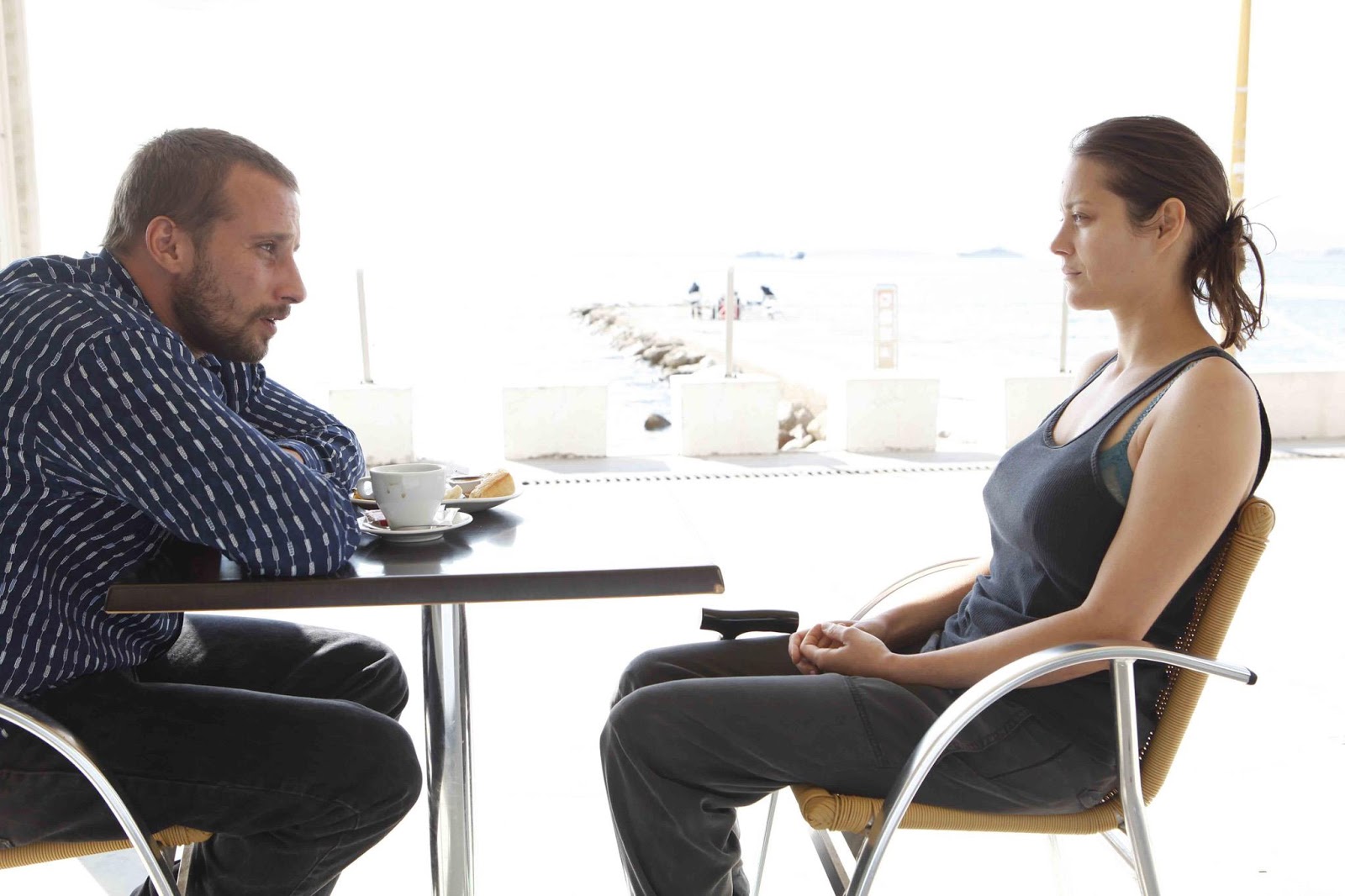
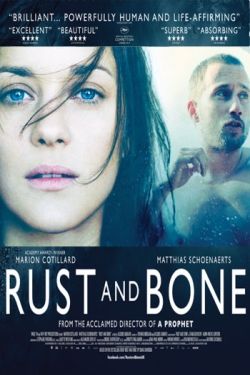
Rust and Bone (2012)


Matthias Schoenaerts and Marion Cotillard in an unusual romantic drama

Director: Jacques Audiad

Cast: Marion Cotillard (Stéph), Matthias Schoenaerts (Ali), Armand Verdure (Sam), Corinne Masiero (Anna), Céline Sallette (Louise), Bouli Lanners (Martial)

Audiad’s films combine cinematic artistry with profound, sometimes elliptical, character studies that provoke great work from talented actors. Rust and Bone is no exception.

It’s the plot of a melodrama, staged like social-realism. Written down it sounds like the purest Hollywood schlock: crippled killer whale trainer Stéph (Cotillard) enters into a friendship that grows deeper with would-be kickboxer Ali (Schoenarts), who has a troubled relationship with his 5-year-old son. But the realistic portrayal of the pain of losing your limbs (in a scene of raw intensity from Cotillard) and Ali’s troubled homelife, penchant for casual sex and occasional resorting to violence when frustrated, pegs the film style farcloser to a hard-edged Bicycle Thieves. The film also has a lyrical poetry about it, as their relationship gently develops from friends with benefits to genuine feeling, which stops it from feeling gritty or hard-edged.

The film’s main strength is the brilliance of its two leads. Cotillard is outstanding as a passionate free-spirit whose entire world ends overnight. Her expressive face carries a host of confused feelings which shift and reform across her like a human kaleidoscope. Stéph’s vulnerability is married with a great strength of character, but Cotillard avoids many of the clichés of movie paraplegics by making her a woman who adapts without anger to her new condition. Instead, after overcoming depression, Stéph is looking actively (and with a curiosity) for something new to fill her life with.

Cotillard is so wonderful in the role, it’s very easy to overlook Schoenaerts’ skilful underplaying and Brandoish physical mastery. Ali is, I’ve got to be honest, a hard character to like – selfish, childish, in many ways thoughtless, blunt and fixated on himself. He’s also a terrible dad. Not malicious or cruel, just easily bored and frustrated with his kid. This frustration appears with anyone who doesn’t react the way he wants – “You’re so annoying!” he whines at both Stéph and Sam. Despite this, Schoenaerts’ is the heart of the movie. The film is his story, and he makes a difficult character engaging enough to carry the audience with him.

Rust and Bone is a film constructed around brilliant scenes and striking moments. In a wonderful sequence, Stéph repeats the arm signals she used to train the whales: at first she seems sad, then a warmth of enjoyment crosses her face. It’s the prompt for her to revisit the zoo, but the visit seems bittersweet: we see hugs with her friends, but Audiad cuts out the dialogue, adding to Cotillard’s own confused feelings about her return. Later she visits the whale that crippled her. Her mood here (with the camera to her back) is hard to read – is she forgiving the whale? Is she saying goodbye to this part of her life? Moments like this work so well because of the brilliance and humanity of the performances of both leads and Audiad’s patience and control as a filmmaker.

Audiad packs this beautiful film with moments like this. I particularly liked the bookend images he uses for each act. Each sets up the act thematically, from a bloodied tooth spinning on a pavement to the cover of a transit van flapping in motion. Audiad bathes the film in a series of cool blue colours, interspersed with flashes of light at moments of suggested revelation. He also has the discipline not to belabour the points of scenes or hammer home the feelings of characters (sometimes leaving you wanting more definition for the emotions they experience).

For a film immersed (to a certain degree) in a social realist world, there are odd gaps in logic: after throwing Ali out of her home (at gun point!) over his serial disregard for Sam, his indirect responsibility for her losing her job and his stroppy temper, would Anna really happily allow Sam to visit him a few months later? The disappearance of Stéph for much of the final reel of the film also pulls the focus from the central relationship and makes the final ending both rather sudden and slightly pat, out of step with the rest of the movie.

Audiad does bring a degree of engaging ambiguity to the story. The relationship between Ali and Stéph is intriguingly hard to define. She seems drawn to him for his lack of guile and his treatment of her disability with a matter-of-factness free of pity or embarrassment (qualities that linger around many of her other interactions). However, shifts in her character over the course of the film are deliberately kept low-key and open-ended, allowing moments where she surprises herself and the audience with the strength of her feeling. Similarly, the lack of depth in Ali’s personality makes his emotional development halting and discordant – he is attracted to her physically, but which qualities in her cause those feelings to deepen? It’s not immediately clear watching it – and I suspect many viewers would have different opinions from watching this curiously inscrutable film.

It’s a thoughtful film, but somehow never quite as moving as you expect. I think a lot of your connection with it depends on how much you feel Ali deserves redemption, or if you can forgive the constant stream of selfish and thoughtless things he does. I’m not quite sure I did. Similarly Stéph remains, for all the expressive humanity Cotillard brings to her, strangely unknowable.

That’s partly the problem with the film. Despite its beauty, it’s a little too enigmatic to be completely engaging. Wonderfully shot, and strangely haunting as it is, I think this is one every viewer will have a personal reaction to. I can imagine many would be deeply moved by its blue-tinted mystery and fragile dissection of damaged souls. For me it didn’t quite have the impact I think the film needs, and I didn’t feel this love story quite coalesced into a something truly profound in itself. It’s a beautifully made and intelligent film but not one I fell in love with – though I can imagine many people have.

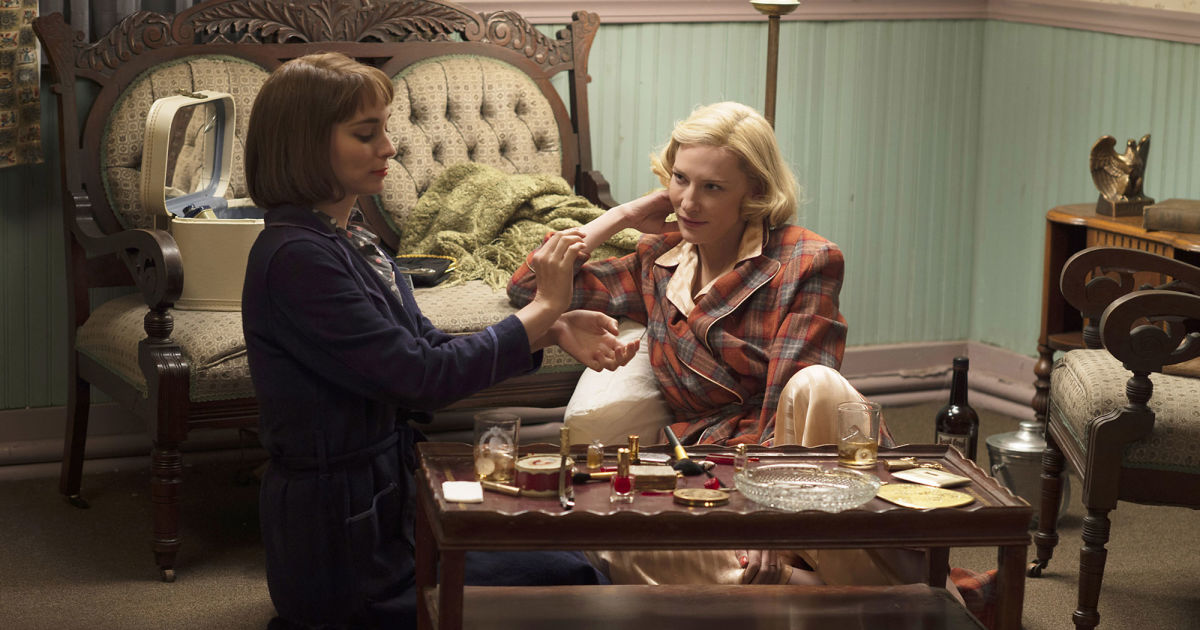
Carol (2015)


Rooney Mara and Cate Blanchett in a moving dance of love and romance

Director: Todd Haynes

Cast: Cate Blanchett (Carol Aird), Rooney Mara (Therese Belivet), Sarah Paulson (Abby Gerhard), Kyle Chandler (Harge Aird), Jake Lacy (Richard Semco), John Magaro (Dannie McElroy), Cory Michael Smith (Tommy Tucker), Carrie Brownstein (Genevieve Cantrell)

It’s the way of things that gay love-stories in Hollywood are invariably relegated to a sub plot – often one that has a certain tragical element to it. This is not the case here in Todd Haynes’ superlative romance, which places a lesbian love story at its centre, sensitively building the characters and romantic journey between them.

Therese Belivet (Rooney Mara) is a lost department store worker, drifting through life. One Christmas, working on the toy stall, she recommends a toy for the daughter of socialite Carol Aird (Cate Blanchett). A spark of attraction between the two is immediately apparent, and Carol invites Therese first to dinner, then to spend an evening together and finally a Christmas road trip across America, during which their attraction grows and deepens into a flourishing love.

This wonderful love story, almost a twist on Brief Encounter, is a brilliantly done, extremely engrossing and moving romantic film, a film that manages the rare feat in Hollywood movies of not making a homosexual relationship something that requires narrative punishment. Haynes’ luscious 1950s filming style, stressing the aesthetics and manners of the era, combines brilliantly with a subtly murky photography style that darkens and lightens at different points to create an immersive fairy-tale quality. It’s a perfect tapestry for a deeply caring and sensitive story, anchored by a superb script and wonderful performances.

It has now got to the point where it is axiomatic to say Cate Blanchett gives a wonderful performance – she is, after all, one of the best actresses in the world right now. She is quite simply perfectly cast as Carol, her features having the flexibility to appear both cold and distant and soft and caring, a switch she is able to make with the slightest of gestures. Her patrician manner is deconstructed brilliantly. Her character is initially established as an almost predatory figure, a determined and manipulative woman; it’s only over the course of the film that this persona is slowly taken apart, revealing waves of emotion and pain from years of denial, loneliness and a sense of being trapped. Each scene slowly prompts us to reassess and reevaluate her character, and Blanchett handles this journey with astounding skill, revealing a hinterland of pained, self-doubting isolation and desperation to experience real love behind her cool and confident exterior. It’s a performance of phenomenal skill and emotional force.

It’s matched brilliantly by Rooney Mara as the object of Carol’s affections – and it must be said at the very least a co-lead of the film. Therese is a woman sleepwalking through life when we first see her, trotting through the motions of her interactions with others – a clear void in her, waiting for something to happen to her, but clearly with no idea of what that might be. Similar to Blanchett, Mara’s gentle and sensitive exterior deepens over the course of the film as she becomes more assertive to those around her, more of a determiner of what she wants from her own life. Mara’s soulful eyes and gentle face make her a perfect audience surrogate, creating a character whose feelings, doubts, anxieties and growing confidence we become immersed in. The film is in many ways her story, and Mara’s expressive gentleness is vital to our investment in the story.

The road trip at the heart of the movie’s plot is a charming, lyrical dance between two people juggling an unspoken attraction: one of them on the edge of all times of saying it, the other drawn towards an attraction she is still trying to understand and express. Haynes perfectly captures the small playful moments of first love that pepper these scenes, the camera intimately placed to make us part of this growing partnership of equal minds and hearts. Slowly they grow physically closer – both in their ease of body language, and through their slow progress towards sharing hotel rooms and finally (in an achingly romantic scene) a bed.

It’s a film about romantic longing between two people, the instant attraction. Therese’s first glance of Carol is across a crowded room, with the camera panning past Carol in a POV shot and then returning to her, before cutting back to Therese, now seemingly alive with an attraction she doesn’t quite understand. The Brief Encounter structure of the film is established with the film opening with Carol and Therese’s (possible) last meeting in a dinner. We see their interrupted conversation leading to Carol’s departure, leaving after touching a hand on Therese’s shoulder – the camera lingering on Therese’s back and her unseen reaction (and contrasting it with a meaningless similar touch from a male friend). When this scene is replayed later, we see it more from Carol’s perspective – and her pulsating emotion and longing.

The reason these scenes work so well is that the film continually shows Carol and Therese struggling to hide their growing attraction in plain sight, to maintain the balance between expressing their feeling and keeping a plausible deniability. This feeling grows because the film has the patience to take its time with building this relationship– and because we are aware of Therese’s feelings earlier than she is.

The film’s sensitivity extends to the sympathy it feels for all its characters. As useless as many of the men in the story are, they are confused, distressed or lonely rather than malicious or cruel. Carol’s husband Harge could have been a bullying monster, but he actually comes across as a frustrated and deeply hurt man, who understands on some level his wife’s sexual preferences, but is unable to fully comprehend the implications of this. On paper it’s a thankless part, but Kyle Chandler is superb, his Mad Men features perfectly suited to the role of floundering masculine figure. Many of Therese’s would-be suitors are similarly drawn reasonably sympathetically, however laddy, over-keen or dull they may be – Haynes’ film has an understanding that they are products of their time. In a lovely scene Therese talks about homosexuality with one of her male suitors, who can barely countenance its existence, as if she was talking about the man in the moon.

Haynes’s mastery of the aesthetics of the material is present throughout. Haynes increases the feelings of being trapped or surrounded by a number of shots through windows, using mirrors, from the other side of doors – divides that stress the characters’ sense of being trapped and enclosed in their lives. He also carries across just a small teasing touch of the melodrama of 1950s films – though I would argue this is no way a melodramatic film – with a gun making a deliberately misleading appearance, and a few beats that briefly suggest the film is heading in an entirely different direction.

Carol is a wonderful, soulful and entrancing film. It’s about two people showing each other hidden depths about themselves, uncovering truths and building each other’s capacity for love and ability to admit and understand their feelings. It makes this a tender and endearing film, with two characters whose fates we become completely involved with. It also avoids passing any form of judgement over any of the characters. Filled with subtle moments, open to interpretations (even their first meeting is full of code, from the recommendation of a non-gender-conforming train set to Carol’s gloves left invitingly on the counter) that constantly ask us to review how open we feel the characters are being with themselves and others. With brilliant performances by Mara and Blanchett (backed by Chandler and a very sensitive performance from Sarah Paulson as Carol’s former lover), this wonderful film is both profoundly moving and very uplifting.

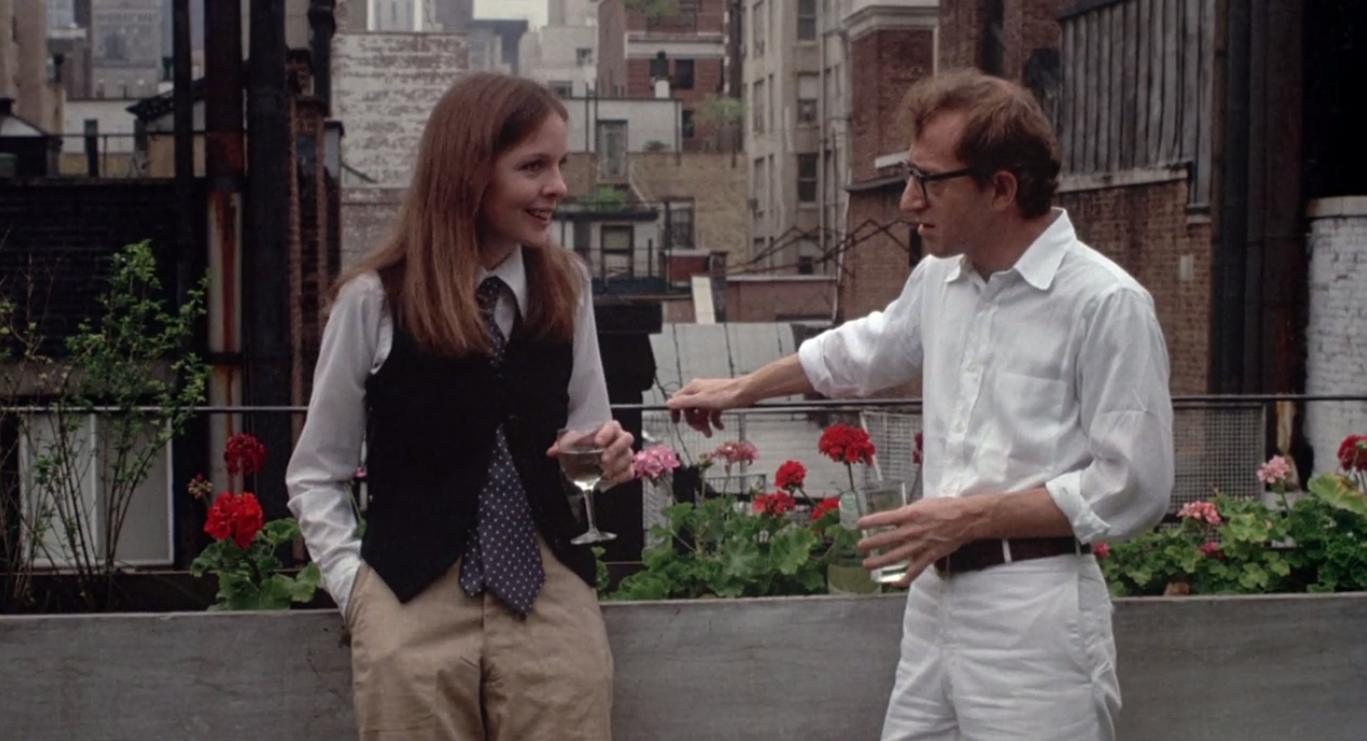
Annie Hall (1977)


Diane Keaton and Woody Allen on the quest for love and romance. How much of this is autobiographical eh?

Director: Woody Allen

Cast: Woody Allen (Alvy Singer), Diane Keaton (Annie Hall), Tony Roberts (Rob), Carol Kane (Allison Portchnik), Paul Simon (Tony Lacey), Janet Margolin (Robin), Shelley Duvall (Pam), Christopher Walken (Duane Hall), Colleen Dewhurst (Mrs. Hall), Donald Symington (Mr. Hall)

Why is love so damned difficult? And, as it is, why do we keep setting ourselves up for a fall with it? Why are we all such relationship addicts? These are questions that Woody Allen tackles in Annie Hall, the film that elevated him from comedian to Oscar-winning cinematic super scribe (he won three Oscars for the film – Picture, Director and Writer). Does it deserve its reputation? You betcha.

Alvy Singer (Woody Allen) is a neurotic New York comedian (is it any wonder he was seen as synonymous with Allen himself?), twice divorced and incapable of maintaining a relationship. He meets Annie Hall (Diane Keaton, Allen’s ex-girlfriend playing Allen’s character’s eventual ex-girlfriend, using Keaton’s real name as a character name – confused?) over a game of mixed doubles tennis, and their immediate chemistry and shared sense of humour leads to a romantic relationship. Their only problem? Their innate neurotic self-analysis that stands forever in the way of maintaining a relationship.

Annie Hall is a deliriously funny film – I actually think it might be one of the funniest I have ever seen – with an astounding gag-per-minute hit rate. Allen uses multiple techniques to deliver gags: commentary, voiceover, celebrity cameos, an animated interlude, “what they are really saying” subtitles, flashback, direct to camera address – and the blistering parade of delivery styles never seems jarring, but ties together perfectly. Large chunks of the film are inspired high-wire dances where a punch-line is a few beats away, and the film never settles into a style or becomes predictable. So many of the jokes have become so familiar due to their excellence that it’s almost a shock to see them minted freshly here – and the fact they all land so effectively is a tribute to the performers. 

In many ways, Annie Hall is a series of sketches loosely tied together with an overarching plot line. In fact Alvy’s constant commentary on events (a brilliant playing with conventional cinematic storytelling form), add to the feeling this is in some ways an illustrated stand-up routine by a gifted self-deprecating comedian. The material seems so synonymous with Allen’s personae (and the characters of Alvy and Annie so close to what we know about the actors who play them) it’s very easy to see the whole film as auto-biographical. Not that there’s anything wrong with that – particularly as the hit rate of the gags here is so phenomenally high. 

But what makes this film such a classic is that it is more than a collection of excellent jokes. Allen is also telling a story about romance – or rather or need for romantic connection, and how easily we can sabotage or undermine this through our own mistakes, errors and (above all) neuroses. Alvy Singer is almost chronically incapable of embracing happiness and contentment, with every good thing merely an interlude between crises. Annie is the most promising opportunity he has had for long-term contentment – and still his neurotic self analysis gets in the way. As such the film is about the quest for love – and the title Annie Hall(not the character) is a metaphor for this – to Alvy Annie Hall represents the perfect relationship, something he (and indeed she as well) will never accomplish. 

The film perfectly captures the dance of first meeting – the shy, stumbling early conversations of people who are attracted to each other but are both trying too hard (the subtitles here are a brilliantly funny choice – we’ve all thought to ourselves “what am I saying?” in that situation!). There is a wonderfully playful scene where Alvy panics over the cooking of lobsters – clearly playing up for Annie’s delighted engagement in it, as she photographs his distress. These photos appear in the background, framed on their wall, as their relationship breaks up relatively amicably later. At another point, Alvy attempts to recreate the same moment (same location, lobsters again) with a new girlfriend – only to be met with unamused, annoyed confusion. It’s a perfect little vignette that captures the magic of chemistry – and the difficulty of finding it or holding onto it.

Because what is striking is that Allen allows the relationship to break apart surprisingly early. Roger Ebert has written about Annie almost “creeping into” the film – and this is true. She is only briefly seen in the first 25 minutes (the first third of the film almost!) as the focus is on Alvy’s discussion of his background and childhood, and his past romantic failings and sense of disconnection from people. Then very swiftly after its establishment, the relationship is past its prime, with both parties finding it hard to keep the interest going. The second half of the film follows them amicably drifting apart – meaning this is probably the most romantic film about a long break-up ever made.

The film has a beautiful little wistful coda of Alvy and Annie meeting outside a cinema, each with new partners. In long shot we see them engage in an animated and engaged conversation while their new partners look on, nervously smiling. The magic link between them hasn’t faded away, and their importance to each other, and natural chemistry, hasn’t changed – but, the film seems to be saying, their natures work against them. It’s one of several touching moments in the film that demonstrate the heart that underpins the jokes. After their first break up, Annie calls Alvy round to get rid of a spider in the bath. He does so with comic incompetence, then in a still medium shot he comes to Annie in the corner of the frame sitting on the bed. They reconcile and then embrace tenderly – it’s a beautiful, moving, gag-free moment, all the more effective as its reality is contrasted with the humour throughout the rest of the film.

The film is a full of tender and real moments like these in between the jokes: it’s a nearly perfect balance between them. The parts are perfectly written for the actors: Allen is so brilliantly good here as Alvy that the character has essentially become the public persona of Allen (and allegedly his desire to never make a sequel was linked to his unease with the association between Alvy and himself). Diane Keaton (her real surname being Hall and her nickname Annie) also had this part perceived as a loose self portrait (her past relationship with Allen not helping). Truth told, it’s a very simple part and Keaton actually has to do very little in the picture beyond react (the focus is so strongly on Alvy) and deliver the role with charm – but she captures the sense of an era shift, a woman stuck between transitioning from the hedonistic 60s to the ambitious 80s, an ambitious free-spirit. The Oscar for the role was generous, but not undeserved.

For all the film’s emotional understanding and complexity, it’s the jokes though that you will remember, and they are glorious: Alvy’s schoolfriends telling us what they are doing now as adults; Alvy’s description of masturbation; the accident at the cocaine party; Christopher Walken’s monologue on driving; the puncturing of the pretention of a loud-mouth know-it-all in a cinema queue – it’s a blistering array of comic genius and it will have you coming back for more and more. It’s Allen’s most garlanded movie and it’s certainly the best balance he ever made between “the early funny ones” and his “later serious ones”. It’s simply shot, but told with heart, feeling and emotional intelligence and with dynamic, comic wit – it’s one of Allen’s greatest movies.

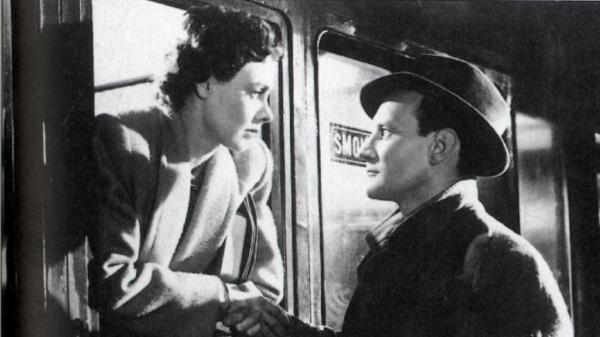
Brief Encounter (1945)


Love and life at a crossroads: Celia Johnson and Trevor Howard in one of cinema’s greatest love stories

Director: David Lean

Cast: Celia Johnson (Laura Jesson), Trevor Howard (Dr Alec Harvey), Stanley Holloway (Albert Godby), Joyce Carey (Myrtle Bagot), Cyril Raymond (Fred Jesson), Everley Gregg (Dolly Messiter)

Brief Encounter is often hailed as one of the most romantic films ever made. This is astonishing really, as it’s actually a film about an affair where two married people with young families toy seriously with the idea of walking out on these families to run off together. Put like that, you can imagine thinking, how could I sympathise with this situation? The film’s magic is that you do.

Laura Jesson (Celia Johnson) is a middle-class woman, married to loving but dull husband Fred (Cyril Raymond) with two young children. Every Thursday, Laura travels to Milford for the day for shopping and a trip to the cinema. One day she meets Alec Harvey (Trevor Howard), a married doctor who works one day a week at the Milford hospital. Enjoying each other’s company they agree to meet again, but quickly find their ease and comfort with each other developing into a deeper relationship – with infidelity on the cards.

Brief Encounter in many ways gets close to a perfect film. Its impact on people seems to be pretty near to universal. Perhaps because the film speaks to a certain universal truth: who hasn’t, at some point in their life, found themselves attracted to someone they shouldn’t be, and who hasn’t been tempted at some point to throw their life up in the air and embrace something new and exciting? The film carefully presents these temptations in a totally non-judgemental and empathetic way, and acknowledges the romance and enticement of the forbidden.

The film also perfectly captures the magical discovery of falling in love, the tingling excitement of every second spent in the company of that new found love-interest. It’s there throughout Johnson and Howard’s interactions: their smiling eagerness, the way their eyes light up and body language opens out when they speak to each other (compare to how closed off they are when speaking to anyone else). There is a relaxed pleasure about it – an innocence and spring-time joy that makes you forget that this is a couple toying with shattering their families in a passionate affair. There is a reason the film is set in a train station – it has a transient, chance-meeting sense about it, with the station being a “neutral” ground far away from both characters’ homes where it is easier for them to pretend to be “other people” – it removes many of the possibilities for the film’s would-be affair to be perceived as sordid or wrong.

The plot also hinges effectively on fleeting moments of chance that cause either joy or pain (usually the latter). Most obviously we have Doll’s interruption of their final moments – enough to make any of us scream at the screen – but their very first meeting is caused by the random chance of a piece of grit flying up at the right place at the right time. The relationship is only unconsummated due to Alec’s friend returning to a flat early (and his sneering contempt for Harvey’s planned adultery is the only scene where a third party shatters the illusion of a perfect romance that could cause no harm to anyone). The lovers encounter friends and have to concoct unconvincing spur-of-the-moment reasons for why they’re together. It’s this constant feeling of chance and chaos around the edges of the drama that provides the sense of danger that keeps this relationship alive and empathetic.

Laura and Alec are grown-up and intelligent adults, aware of the consequences of their actions, and the film keeps this constantly at the forefront. Part of the reason we can “relax” into this would-be affair is that we have already seen at the start that the relationship will end, meaning we can simultaneously root for this meeting of hearts and minds, while knowing that no one (other than the couple themselves) will be hurt. Imagine if the film had opened with Fred’s tear-stained face? Would all the romantic boat rides and illicit kisses on a country bridge still have made us feel warmly towards Laura and Alec?

Watching this film again, I actually started to think about how Lean developed as a director from these smaller scale, script-led Coward films to the sweeping, grandiose epics that he is best remembered for today. In Brief Encounter his command of mise-en-scene is so complete – and in Celia Johnson he has such an expressive actor – that the dialogue in voiceover (for all of Johnson’s excellent delivery) often feels superfluous; it tells us nothing that simply looking at the picture hasn’t already communicated. 

Look at the scene after Laura flees Alec’s borrowed apartment: Johnson’s stunned, panicked, guilty face is the camera’s focus, as we follow her, head down, moving fast through the streets without aim or direction, the score swelling behind her. Later she sits smoking on a park bench. Her conflicted emotions of guilt, shame and shock that she should do such a thing are clear, not just from the acting, but also the construction of the scene. Although the score helps, you could watch the scene silent and know exactly what was happening and what Laura was thinking about. But the film continues with Laura’s voiceover as she details everything her face is telling us. Take a look at the sequence here (64minutes and 42 seconds in):

Was it at points like this that Lean started to move towards his later films, where the language of cinema took the place of the language of speech? Later he would place so little information about the real Laurence of Arabia in that film’s script that nearly everything is interpreted from O’Toole’s expressive face. I think you can see the roots of it here – brilliant visual touches that capture the immediate intimacy between Alec and Laura, or the way the camera holds itself steadily on Laura while she prepares her evening make-up and calmly lies for the first time in her life to her husband. In the entire construction of this film, its detailed and perfectly paced building of a sense of Greek tragedy around a slim story, you see a master film-maker, a genius of visuals and compositions. You don’t need the extra explanation, it’s all there on the screen for us. 

Camera choices are sublime: look at the staging of Alec/Laura’s final meeting: first time round, the camera moves lightly past them, focused on Holloway and Carey’s characters. Despite that, we get an overwhelming sense that something important is happening just out of shot – reinforced when Dolly interprets them. Flash forward to the end of the film, as the scene is restaged – now Dolly practically forces herself into the frame (in one great shot, the camera watches Alec leave through the door before Dolly literally walks in front of the shot to sit down at the table). The careful, comfortable composition of Alec and Laura sharing the frame together – and the way she never does so with her husband (until the very end of the film) alone tells us visually as much about the relationships as any dialogue could.

What is fascinating is that this is remembered by so many people as being about the control of emotions. Watching it again, I remembered how far this was from the truth. Alec and Laura speak their feelings for each other with an almost wild abandon once the floodgates are open – Alec’s expression of devotion while they dry off in the boat house is as frank and heartfelt a declaration of love as you are likely to hear. Laura’s emotions – her joy and her pain – are not only written across her face, but spilled out across the screen in voiceover. The characters button this up when with others, but alone they are as high on love as a pair of first-date teenagers. Throughout, the writing of their dialogue is spot-on – from their initial slight shyness to the way their lines interlock and complement each other. Again, compare how Laura talks with Alec – naturally, freely, each line developing smoothly from the other – with how she communicates with everyone else in the film (haltingly, distant, talking at cross purposes, subject matter changing from line to line). I could do without chunks of the voiceover, but the dialogue is sublime, both in its style and its construction.

You can’t go far wrong either when you have actors as good as this, with such chemistry. Celia Johnson gives one of the most perfect, iconic performances in the history of cinema. Does she strike a wrong note once? I’ve already waxed lyrical about her expressiveness – but watch her in every scene, you always know what she is thinking. Her understanding of Laura is complete, and she brilliantly shows throughout the torn loyalties between the life she has and the one she could have – between making herself happy and doing “the right thing”. The film is really her story and Johnson creates a character I can’t imagine someone not relating too. Her voice is in a way ripe for parody with its crisp 1940s tones, but along with her beautifully expressive eyes under the surface of that stiff-upper lip sharpness, there are wonderful beats of emotion and desperation.

Trevor Howard is equally good as Alec Harvey – it’s amazing to think this was only his second film role. Harvey is a character we are slightly distanced from in comparison with Laura – it’s arguable that, since the film is delivered through Laura’s voiceover, we only see him (except in the opening moments) as Laura perceives him. Howard has a charm, a gentleness and an honour about him that make him a man we can relate to, but the actor also brings an edge of danger to him that make him a plausible would-be adulterer. Early in the film it’s Alec who makes the running, pushing for dinners and bunking off work for cinema trips. It’s he who sets up the possibility of consummating the relationship, and makes the first formal declaration of affection. In fact you can see, in that slight edge that Howard gives it, why some have plausibly argued that Harvey could be a serial seducer. But that’s subtext – like Johnson, Howard is perfect.

Brief Encounter is one of those films that rewards constant reviewing. It’s a brilliantly told, tightly structured and beautifully shot story that is also deeply moving and emotional, because it feels so real. It’s possibly one of the best expressions on film of falling in love, and all the excitement and danger that it brings. Perhaps that is why it moves us, and continues to have such appeal – all of us have had that excitement of spending every moment you can with someone else, of sharing everything with them. It’s an addictive and exciting feeling, and this film captures it perfectly. It also moves us because, deep down, we like sad tragic endings – they have real impact when we have related so strongly to the characters, and they stick with us. Because, you always remember when you have been heartbroken – and seeing it so vividly brought to life by Celia Johnson in a truly great performance helps to make this film permanently rewarding.