
Tag: Ron Silver

Reversal of Fortune (1990)

Reversal of Fortune (1990)

Irons Oscar-winning turn is the stand-out of an otherwise dry picture lacking in energy

Director: Barbet Schroeder

Cast: Glenn Close (Sunny von Bülow), Jeremy Irons (Claus von Bülow), Ron Silver (Alan Dershowitz), Annabella Sciorra (Sarah), Fisher Stevens (David Marriott), Uta Hagen (Maria), Jack Gilpin (Peter MacIntosh), Christine Baranski (Andrea Reynolds), Stephen Mailer (Elon Dershowitz), Felicity Huffman (Minnie)

It was a trial that engrossed America in the early 80s. Did Claus von Bülow (Jeremy Irons), second husband of millionaire Sunny von Bülow (Glenn Close), pump her full of insulin and leave her on the floor of their ensuite to die? Sunny von Bülow, in a permanent vegetative state, narrates this tale Joe-Gillis-style from her coma as Claus is convicted of her attempted murder and hires law professor Alan Dershowitz (Ron Silver) to appeal. But did Claus do it, or is he the victim of public perception?

Of course, no one can know (Sunny even tells us in voiceover, if we want the answer, we’re going to have to wait until we see her wherever she happens to be now). Answers are not on the cards for Reversal of Fortune, which struggles to find something engaging enough to take their place. With some decent lines and striking moments, it focuses on a long breakdown of the might-have-beens, disputed facts and point-of-views of those involved, leaving it up to you to decide if Claus is just a European eccentric with an unfortunate manner and sense of humour or a cold-hearted killer who twice attempted to murder his wife for her money.

Your interest in this will be roughly proportional with how engaging you would find a true crime podcasts without any expert debate. As a rundown of the core facts, it often settles for a series of rather dry scenes of Dershowitz’s legal team reading to each other the various ins-and-outs of the prosecution case, poking holes where needed. There is a singular lack of energy about this, despite the film’s, in many ways admirable, decision to focus on the nitty gritty of cases being built instead of showpiece court confrontations. What Reversal of Fortune fails to do is make this collection of facts and arguments compelling. There are very few scenes of questioning witnesses, consulting experts or uncovering evidence – no investigative energy so crucial to making this sort of film work.

On top of this, it’s hard not to take the film with a pinch of salt, since it takes its entire perspective from Dershowitz, a lawyer who (for all his work for those on Death Row) has shown himself more-and-more as being at least as interested in self-promotion as he is in justice, taking on any case if it brings media prominence. After all, he rolled from von Bülow to representing OJ Simpson, Harvey Weinstein and Jeffrey Epstein. The biggest argument against Bülow’s innocence today might be to say “take a look at that client list”.

Reversal of Fortune walks a fine line between acknowledging Dershowitz’s ambition, while stressing his moral unease. Ron Silver is very good at Dershowitz’s showmanship, self-conscious scruffiness and room-controlling charisma. He has slightly less scope to explore Dershowitz’s moral flexibility: Reversal of Fortune argues it’s important to protect the civil rights of rich people, to prevent precedents hurting the rights of those who can’t afford a houseful of lawyers to pick holes in their cases. Reversal of Fortune further weights the deck to make us see Dershowitz heroically by fictionalising an actual a Death Row case he’s worked on alongside the investigation, representing two young men who broke their criminal father out of prison (who later went on to kill someone). In the film several facts about this case are changed from reality to make them more noble and sympathetic, most crucially changing the race of those involved from white to Black and radically reducing the number of murders involved (as well as not mentioning they also broke another convicted murderer out of prison).

The real strength of Reversal of Fortune is the Oscar-winning performance of Jeremy Irons as Bülow. This was a perfectly fitting, gift of a part for Irons – did they tell him to be as Jeremy Irons as possible? His performance is sly and darkly witty. Bülow is forever making poor taste puns about his possible crimes that Irons’ savours like mouthfuls of the richest caviar. It’s a performance of arch strangeness, Irons playing Bülow as a man so unreadable, taking such a naughty delight in the side benefits of being accused of a crime (he jubilantly states at one point he never before got such good tables in restaurants), so full of elegant European-gentility, he just looks naturally guilty to the parade of straight-shooting American citizens with the power of life and death over him.

Irons’ is also masterful at suggesting this unflappable, dark humour and quirk is actually a desperate front for a man deeply scared but used to hiding his real feelings. Irons suggests Bulow is genuinely using this facade to control his fears and keep him in fighting. The key to the character is nerve: it’s what he describes backgammon as being about, poo-poohing the idea that it’s down to luck, saying winners hold their guts in place. It’s the key to his whole character, the same gambling guts what he’s banking on to get him through this (someone actually guilty would never behave like this right?), and Irons simultaneously plays this front and keeps the frightened man underneath constantly present.

It’s a fascinating, funny, hugely enjoyable performance that lifts the entire film which struggles and slackens the second Irons leaves the screen. Aside from him – and Glenn Close’s arch narration (her agent did fine work nailing her top billing for this) – Reversal of Fortune is a surprisingly dry, rather slowly paced film which, while it is mercifully light on speculation, is also unfortunately light on drama.

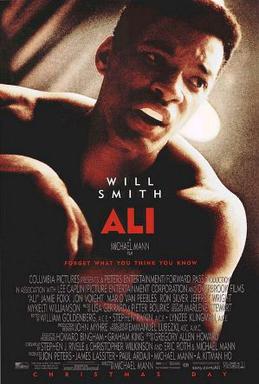
Ali (2001)

Ali (2001)

Will Smith captures The Greatest in a film that misses the fire and passion of Muhammad Ali

Director: Michael Mann

Cast: Will Smith (Muhammad Ali), Jamie Foxx (Drew Bundini Brown), Jon Voight (Howard Cosell), Mario van Peebles (Malcolm X), Ron Silver (Angelo Dundee), Jeffrey Wright (Howard Bingham), Mykelti Williamson (Don King), Jada Pinkett Smith (Sonji Roy), Nona Gaye (Khalilah Ali), Michael Michele (Veronica Porché), Michael Bentt (Sonny Liston), James Toney (Joe Frazier), Charles Shufford (George Foreman), Joe Morton (Chauncey Eskridge), Barry Shabaka Henley (Herbert Muhammad)

There is perhaps no greater sportsman of the 20th century than Muhammad Ali. Not for nothing did he call himself “The Greatest”. His impact on his sport is unrivalled, and his impact on our culture almost matches it. He’s one of those titanic figures that, even if you don’t care a jot for boxing, you know exactly who he is. Ali approved the film – and even more so, Smith’s performance – in Mann’s film that covers ten turbulent years in Ali’s life, from winning the title and changing his name, to refusing the Vietnam draft and losing his boxing licence and title, to reclaiming the title again in  the legendary “Rumble in the Jungle”.

If there is a major flaw about Ali, it’s that Ali was a man who was about so much more than just boxing – but Ali struggles to be more than a film about a boxer. It’s hard today to look at the film and not think that a black director would have had more connection with the emotional, cultural and political turmoil that defined Ali’s life in the 60s and 70s. Mann mounts all this well – and gives it plenty of empathy in the film – but his outsider perspective perhaps contributes to the film’s coldness.

Coldness is the prime flaw of the film. There was no sportsman larger than life than Ali. No public figure who demanded attention more, no boxer who fought his battles as much with wit, convictions and passion as well as fists as Ali. A film of his life needs to capture some of this magic alchemy: it needs to feel like a film that conveys the man Ali was. While there is no doubt there was a melancholy in Ali, a quiet inscrutability behind the pizzazz, this film leans too much into this. It does this while never really telling us anything about Ali’s inner life.

As two marriages are formed and collapse, we don’t get an understanding of what drew Ali to, and caused him to turn away from, these women. His relationship with the Nation of Islam ebbs and flows throughout, but other than a few on-the-nose statements from Ali, we don’t get an idea of how his faith defines him. We get his brave stand against serving in the Vietnam war, but not the emotional and intellectual conviction behind it (other than parading a series of famous quotes).

The film is packed with famous black figures – from Malcolm X to rival boxers and Ali’s support team – his father and family, not to mention three of his wives, but the relationship the film is most invested in is Ali’s mutual appreciation/attention-feeding verbal duels with boxing correspondent Howard Cosell (a pitch-perfect vocal and physical impersonation by Jon Voight). There feels something wrong about this film about a black icon, that his relationship with a white man feels the best defined.

But then it’s also a flaw with the film that its most striking, inventive and memorable sequences are all pitch-perfect recreations of filmed events. Will Smith perfectly captures the vocal and physical grace of Ali, and brilliantly brings to life his interviews with Cosell and his larger-than-life press conferences. The boxing matches are compellingly filmed, a perfect mix of slow-mo and immersive angles (they were largely fought for real, with few punches pulled). Ali’s final KO of Foreman in the Rumble in the Jungle, after several rounds of exhausting Rope-a-dope, is punch-the-air in its triumphal filming and scintillating excitement. But all of this stuff you could actually watch for real today. How essential is a film that uses actors to recreate, with better camera angles and superior editing, stuff that was filmed when it actually happened? Essentially if I want to see Ali stunning the world with his words, or sending Foreman to the canvas, would I choose to watch the man himself, or Will Smith’s perfect impersonation of him doing it?

There is nothing wrong with Will Smith’s performance though. For all his Oscar-winning work in King Richard, this is his finest performance. Bulked up to an impressive degree (Smith spent a year preparing for the film), he’s got Ali’s movements in and out of the ring to a tee and the voice is an unparalleled capture of The Greatest’s. It’s a transformative, exact performance – Smith has just the right force of character for the patter, but also brings the part a soulful depth that the film struggles to explore further. It’s a superb performance.

Enough to make you wish this was in a better, more passionate film. Ali was at the centre of a storm of civil rights and class war in America. He became the public face of a black community struggling to make its voice heard, sick of tired of being treated like second-class citizens by a country they were expected to die for in battle. The politics of the time is lost – Mario van Peebles has a wonderful scene as a troubled Malcolm X, but even he feels like a neutered figure – and the cultural impact of Ali is diluted.

The film ends with captions that dwell on Ali’s later boxing career and his marriages. That’s fine. But this a man who was so much more than what he just did in the ring. He used his position to take a stand on vital issues in America, at huge personal cost, when thousands of others would have settled down to mouth platitudes and make money. He took on the government and refused a compromise that would have allowed him to continue boxing, because he felt the war and America’s domestic policies were wrong. He was a brave leader of men, at a time of furious injustice. The film conveys the facts, but none of the glorious passion. It’s a photocopy of Ali, which is why its best bits are recreations of filmed events. It can’t quite understand or communicate the tumultuous feelings behind racial injustice in the 60s and 70s. It could – it should – have been so much more.