Tag: Rosamund Pike

Saltburn (2023)

Saltburn (2023)

Dreadfully pleased with itself and full of shallow insights and stunt clickbait moments

Director: Emerald Fennell

Cast: Barry Keoghan (Oliver Quick), Jacob Elordi (Felix Catton), Rosamund Pike (Lady Elspeth Catton), Richard E Grant (Sir James Catton), Alison Oliver (Venetia Catton), Archie Madekwe (Farleigh Stuart), Carey Mulligan (“Poor Dear” Pamela), Paul Rhys (Duncan), Ewan Mitchell (Michael Gavey), Sadie Soverell (Annabel), Reece Shearsmith (Professor Ware), Dorothy Atkinson (Paula Quick)
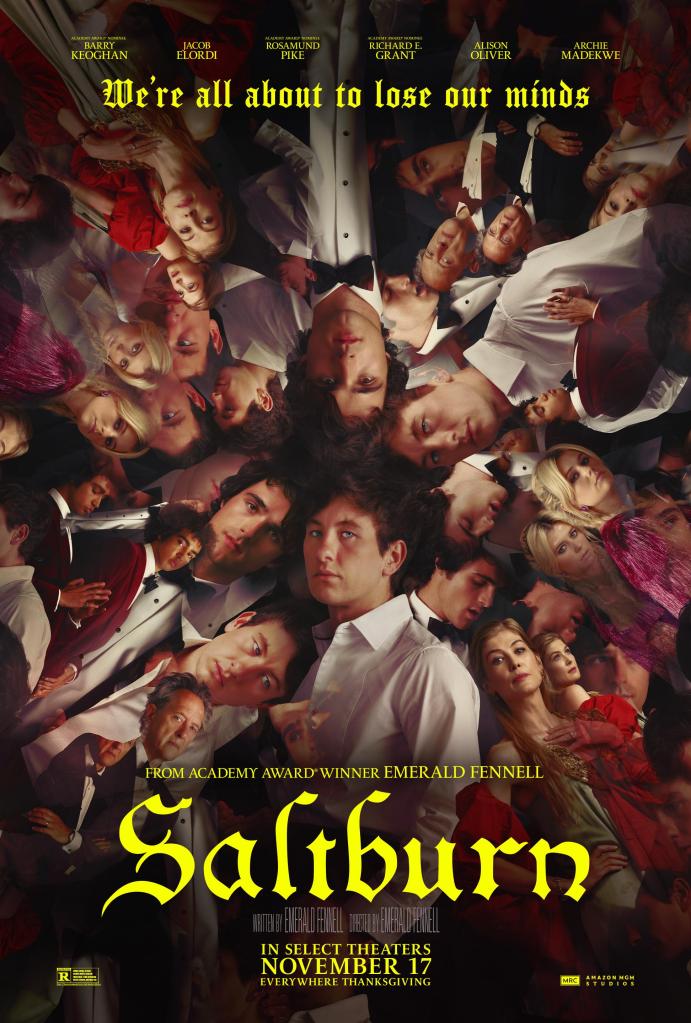
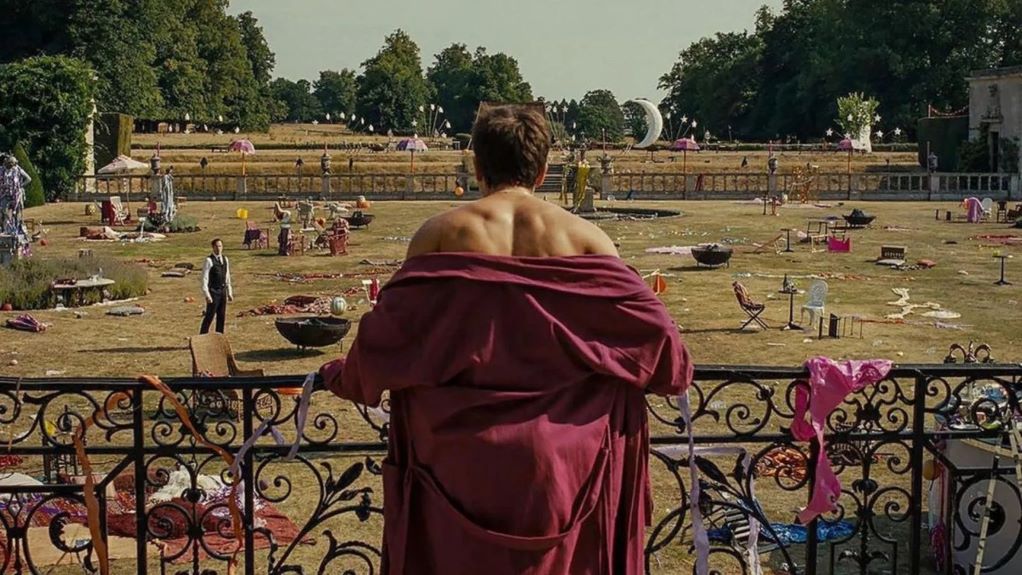
Promising Young Woman was a thought-provoking, very accomplished debut. It’s odd that Emerald Fennell’s sophomore effort plays more like a first film: try-hard, style-over-substance, very pleased with itself and its punky attempts to shock. Crammed full of moments designed to be snipped out and talked about – in a “you will not fuckin’ believe what just happened” way – Saltburn is a fairly trivial remix of ideas much, much better explored elsewhere, predictable from its opening minutes.

It’s 2006 and Oliver Quick (Barry Keoghan) is a scholarship student at Oxford University, socially awkward and very conscious of his Liverpudlian roots, struggling to fit in among the wealthy set that dominates his college. At the centre is Felix Catton (Jacob Elordi), fundamentally decent but blithely unaware of his privilege, who takes a shine to Oliver with his shyness, troubled working-class background and grief at the recent death of his alcoholic father. Felix invites Oliver to spend the summer at Saltburn, his luxurious family seat. There Oliver is welcomed – or does he inveigle his way? – into the lives of the Cattons, from seducing Felix’s sister Venetia (Alison Oliver) to charming his parents Sir James (Richard E Grant) and Lady Elspeth (Rosamund Pike). But is Oliver all he appears to be?

The answer, of course, is no. Which shouldn’t surprise anyone who has ever really encountered any form of unreliable narrator before. Fennell opens the film with a clearly older, well-dressed Oliver recounting the film’s story to an unseen person. It’s not much of a deduction from this alone, that Oliver is at best not to be trusted, is definitely potentially dangerous and is probably a lot worse. All that, inevitably plays out, in a film that so nakedly rips off Brideshead Revisited (or Recycled) and The Talented Mr Ripley that Oliver might as well be called Ripley Ryder.

“Ryder” would at least have been a witty name for a character who spends most of the film putting his (apparently) well developed manhood to effective use in manipulating and controlling people. Saltburn assembles a series of “shocking” moments of sexual weirdness from stalker-like sociopath Oliver – so much so, that the moments he merely wanders (or dances) around in the buff feel almost normal. Surely there was more than half an eye on hashtags when the film presents scenes like Oliver drinking spunky bathwater, performing oral sex on a woman during her period or dry humping then wanking over a grave. It’s not big and it’s not clever.

“Not clever” also sums up the film’s inane social commentary. Set in 2006, it seems to take place in a version of Oxford that probably hasn’t existed since 1956. Having been in a state-school kid at Oxbridge at this time, its vision of a university 98% populated by poshos jeering at working-class kids with the wrong sort of tux just isn’t true (in fact there were more state school students than private school kids at Oxford that year). In this fantasy, all the students are either from Old Etonians or maladjusted weirdos from state schools. It’s hard not to think this is Emerald Fennell (a woman so posh, her 18th birthday party was featured in Tatler) guiltily looking back at how her “set” at Oxford might have behaved to the less privileged students.

It boils down to a view of Oxford as an elitist social club laughing openly at anyone who can’t trace their descendants back to the House of Lords, where tutors are entranced by the idea that a place like “Liverpool” exists and snort at the working class student for being a clumsy try-hard by actually reading the books on the reading list with student life flying by in a series of hedonistic raves, hosted by the rich and famous. Maybe I was just in the wrong circles back in the day.

This portrait of Oxford as a play pen for the super elite is as damaging (it’s exactly the sort of false image that stops deserving people from wanting to go) as it is lazy, tired and false. But then, Saltburn compounds its boringly seen-it-all-before social commentary by trudging off down other, all-too-familiar paths as it turns its fire on those with their nose pressed up against the window of privilege. The film’s vilest member of the elite, Farleigh, is himself an interloper, turned aggressive gate-keeper. And, as is not a surprise, Oliver’s roots turn out to be far more comfortable than he is letting on. Oliver is a Charles Ryder who yearns for Brideshead so much, he starts destroying the Marchmain family to get it. Because, in his eyes, as an aspirant middle-class type he appreciates it more.

On top of this is layered a clumsy, Ripley-esque madness to Oliver, who can’t decide himself whether he is infatuated with the charming Felix (very well, and sympathetically, played by Jacob Elordi) or just wants to suck his soul dry. Barry Keoghan plays this Highsmith-styled sociopath with just enough flash and sexual confusion – and he does manage to successfully turn on a sixpence from wide-eyed wonder, to vicious anger. But the character again feels like a remix of something done better elsewhere, trading emotional depth for cartoonish bombast and clumsy on-the-nose point scoring.

The on-the-nose-ness runs through the whole film. It’s a film screaming to be taken seriously, from its 4:3 framing, to its jarringly satirical music choices, arty Gothic fonts, visual quotes from Kubrick and look-at-me love of tricksy camera shots (some of these, I will admit, are gorgeously done, even if the film frequently lingers on them so we can “see the work”). But it makes very little sense. How does Oliver manage to exert an influence, so profound and complete, over Felix’s parents? Why does the wool fall from everyone’s eyes one-at-a-time in quick succession? Does Saltburn feel sorry for the generous but emotionally dysfunctional Cattons or does it feel they deserve their fate?

Because so many of these ideas are so half-heartedly explored, it becomes a collection of scenes designed to shock, tricksy directorial decisions, some flashy performances (Rosamund Pike can certainly wittily deliver a slew of lines dripping with blithely unaware privilege) and twists that will only surprise those who have never seen a story about an outsider before. Jacob Elordi emerges best, creating a character of surprisingly revealed emotional depth, but most of the rest of Saltburn settles for flash and instant gratification. To use its own terms of reference, it’s as satisfying as premature ejaculation: fun for an all-too-brief second, then a crushing, shameful disappointment.
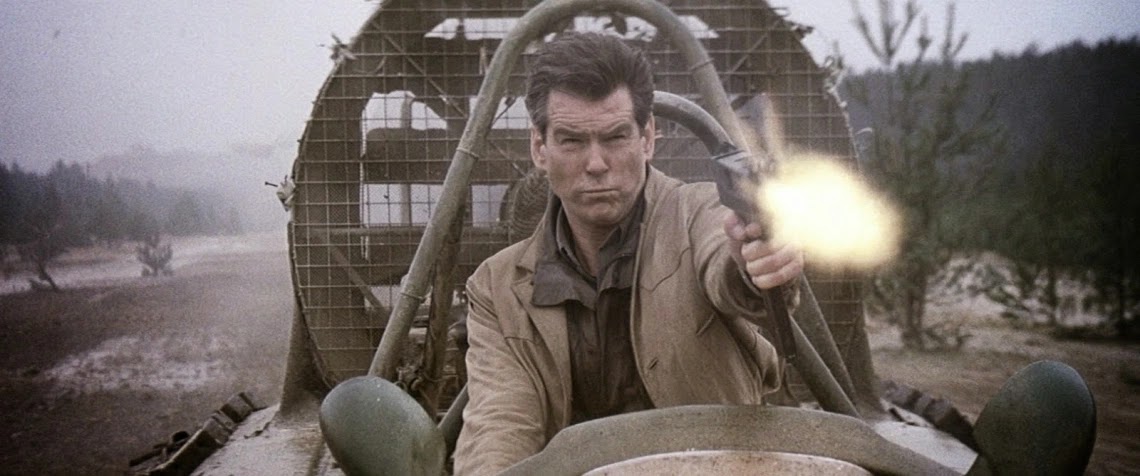
Die Another Day (2002)

Pierce Brosnan signs off as Bond with the mess that is Die Another Day

Director: Lee Tamahori

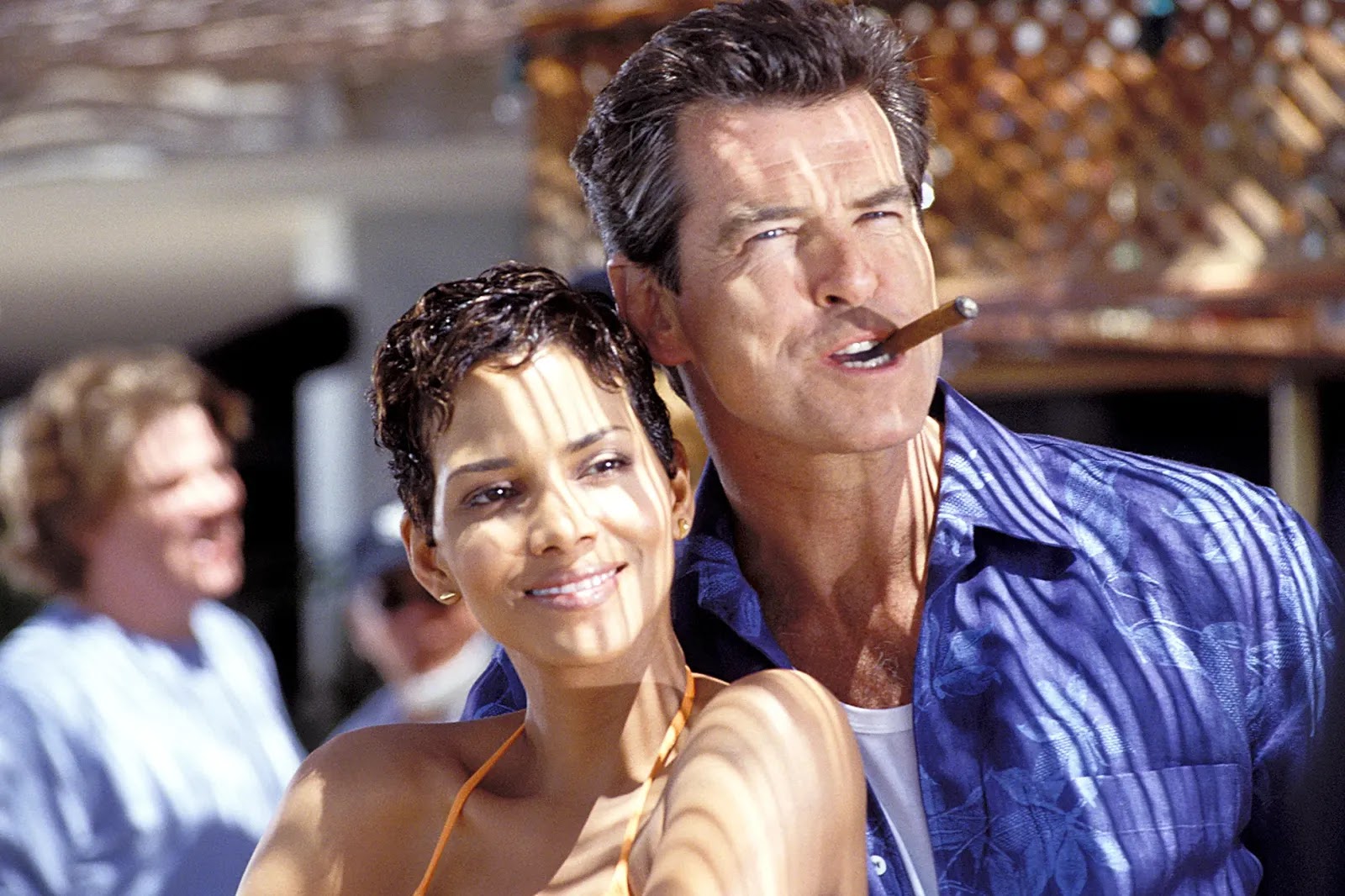
Cast: Pierce Brosnan (James Bond), Halle Berry (Jinx Johnson), Toby Stephens (Gustav Graves), Rosamund Pike (Miranda Frost), Rick Yune (Tang Ling Zao), Judi Dench (M), John Cleese (Q), Michael Madsen (Damian Falco), Samantha Bond (Miss Moneypenny), Colin Salmon (Charles Robinson), Will Yun Lee (Colonal Tan-Sun Moon), Kenneth Tsang (General Moon), Madonna (Verity)

Die Another Day was the highest grossing Bond film ever released. So why was it almost four years before another one was made? Put simply, because this one weren’t no bloody good. Released at the Bond series’ 40th anniversary, Die Another Day was meant to be a celebration of everything Bond – instead it’s like the final nail in the coffin of an entire lifecycle in the franchise that started probably around the early Roger Moore films. When Bond came back out after this, he was radically different. 

James Bond (Pierce Brosnan) is sent undercover to Korea to take out renegade Korean Colonel Moon (Will Yun Lee). The mission is a success – but Bond is betrayed and captured by the North Koreans. Coming out of Korean prison a year later, Bond is no longer wanted by MI6. So he goes off on his own to find out who betrayed him – and finds newly emerged diamond businessman Gustav Graves (Toby Stephens) might have something to do with it. With a trail that starts in Hong Kong and heads to Cuba, the UK, Iceland and back to Korea he’ll work alongside CIA agent Jinx Johnson (Halle Berry) to find out how this all ties together and get his revenge.

Die Another Day starts a bit like a Connery Bond – and about half way through it segues into being perhaps the most ridiculously overblown Roger Moore-esque Bond you’ll ever see. I suppose you could say this was the scriptwriters trying to capture the essence of 40 years in one movie. But actually it’s probably just incoherent scriptwriting and stupid storytelling. It starts trying to be grounded – Bond is captured and tortured for a year! – but then shrugs off any aftereffects of this year of hell with lackadaisical ease before throwing us into the sort of “Ice palace! Invisible cars! A weapon that channels the power of the sun!” malarkey that even Roger might have thought was a little bit too much.

It’s not helped by the fact that the entire film is so shoddily put together and so lazy in its execution. The one liners in this film are terrible – there are no double entendres in this film only single entrendres (words like thrust, pleasure, weapon and mouthful are used with gleeful abandon) – and far from being a playful exercise in Bond’s cheekiness are just hand-in-the-mouth embarrassing. But that’s almost as nothing compared to the woeful special effects. Even in 2002, nothing in this film looked real. 

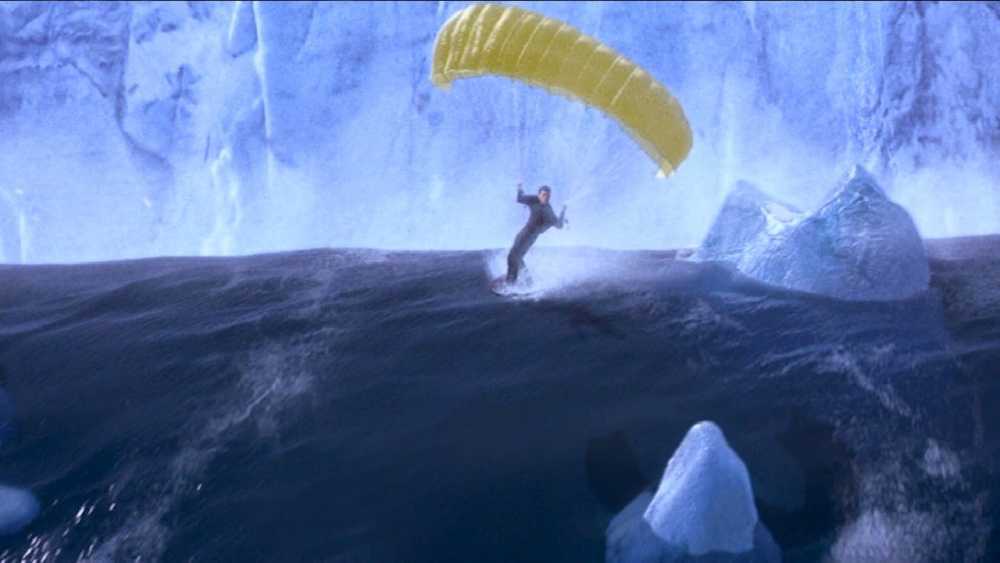
I hardly know where to start with the awful plasticky sheen of the effects here. The film opens with Bond and fellow agents surfing (!) into a deserted island – at the end of which Brosnan in front of blatant blue screen rips off his mask to show it-was-definitely-him. As if that wasn’t bad enough (Bond surfs? I’m out!) Bond surfs AGAIN in the movie halfway through, using a parachute as a sail to escape possibly the least convincing wave ever put onto film. It really has to be seen to be believed (or rather not believed). That’s not to mention the wonky overblown final plane sequence, or a laughably unrealistic looking Jinx dive from a cliff down into the water below.

Brosnan probably tries his best in all this, but even he can’t save this total mess. How does a film that started with Bond in prison and emerging damaged and on a gritty quest for revenge end with a villain wearing a robot suit controlling the sun? The script after the first 15 minutes gives Brosnan nothing to play with. The film loses all interest in the traitor plotline about halfway through, and when she is unmasked (in a twist that surprises no one at all) Bond barely seems to care. Pierce himself looks frankly too old and a little out of shape (his running in this film with his arms pumping up to his face looks terrible), something only magnified by the youth of his co-stars. 

Not that I’m saying his co-stars are any good either. When this film came out there was a brief flurry of excitement that Halle Berry’s Jinx would be worth a franchise of her own. That died shortly after the film came out – this is a character that acts tough when needed, but still needs to be saved twice in quick succession by Bond, who says faux-tough things like “Yo Mama!” but has barely two personality facets to rub together. Berry simply does her bit and meets the requirement of looking sexy and fighting. Mind you she still fares better than an embarrassing Toby Stephens, whose villain is so paper-thin the actor seems to have taken the bizarre decision to channel Alan Partridge. Rosamund Pike’s fencing MI5 agent barely registers.

Needless to say Bond beds her – as he beds all the women in this with a perfunctory inevitability that fits the box-ticking exercise of the whole film. The film is littered with references to past Bond films, although that is probably only going to make you want to watch almost any of the other films instead. Perhaps to try and up the ante and make this one “even biggerer and betterer than before” there are more gadgets than ever before. These are topped with the crowning turd of the invisible car, a nadir for the franchise, a senseless advantage (Bond at one point follows directly behind two walking heavies in the car – it’s invisible NOT silent for goodness sake!) and something so overblown that however much the producers at the time tried to justify it by pointing at military technology just sounds silly. Don’t get met started on the bizarre VR training sequence Bond carries out (later replayed for a grotesquely demeaning Moneypenny joke that made me feel sorry for Samantha Bond).

But then the whole thing basically sounds silly. Giving the villain a huge ice palace lair might have seemed like a cheeky nod, but again it just looks absurd and the producers desperately trying to find a location that hasn’t been used before. The entire film feels like a rushed attempt to get something out for the 40th anniversary (perhaps the rush helps explain the insane product placement, leading to the film being nicknamed Buy Another Day). The script has been assembled from the off-cuts of other Bond films. There are no fresh ideas at all and everything that happens in the film has the air of “well this sort of thing happens in Bond films”. The script and special effects feel half finished. Rather than a tribute to how Bond was done in the past, it feels like a tombstone. Here lies James Bond c. 1967-2002. No wonder under Daniel Craig he needed to be reborn as someone who felt vaguely in touch with something approaching reality.

Made in Dagenham (2010)

Up the Women! British comedy wallows in nostalgia but tells a still relevant tale of sexual equality

Director: Nigel Cole

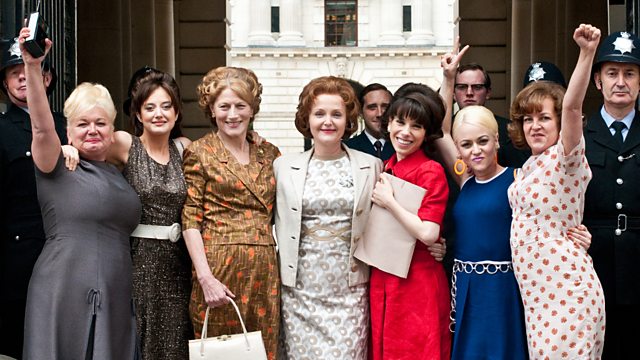
Cast: Sally Hawkins (Rita O’Grady), Bob Hoskins (Albert), Miranda Richardson (Barbara Castle), Geraldine James (Connie), Rosamund Pike (Lisa Hopkins), Andrea Riseborough (Brenda), Jamie Winstone (Sandra), Daniel Mays (Eddie O’Grady), Richard Schiff (Robert Tooley), Rupert Graves (Peter Hopkins), Kenneth Cranham (Monty Taylor), Nicola Duffett (Eileen), Lorraine Stanley (Monica), Roger Lloyd-Pack (George), Andrew Lincoln (Mr Clarke)

You’d like to think a film made ten years ago about a strike for equal pay in the 1960s would be more of a history piece than something that still carries real relevance today. But this is still a world where women are often paid less than a man, and where their work is often devalued or held as less “important” than their male counterparts. Made in Dagenham looks at all these issues with a rose-tinted, feel-good stance that aims to entertain first and make you think second. Nothing wrong with that, but it means the film is largely just a crowd-pleaser, when you feel it could be more.

At the Ford factory in Dagenham, the female sewing machinists are not paid as skilled workers, and are forced to accept less work. Frustrated at the patronising attitude from their all-male union reps, and encouraged by foreman Albert (Bob Hoskins, lovely in one of his cuddliest performances), the women decide to go on strike for equal play, led by Rita O’Grady (Sally Hawkins). As public attention builds, the Ford owners in America mobilise for a battle and the strike attracts the interest of Secretary for Employment Barbara Castle (Miranda Richardson), someone who knows the struggles a woman faces in a man’s world.

It’s no great surprise based on the fluffy, charming tone of this film that Nigel Cole’s previous credit was Calendar Girls. (Also no surprise that, like that film, this has been turned into a crowd-pleasing stage musical.) William Ivory’s script deftly sketches out some familiar movie-dynamics for its characters, establishes clear heroes and villains, gives us a good sprinkling of information and “things to think about”, mixes in at least one tragic sub-plot and provides a steady stream of high points, heart-string tugging moments and punch the air moments. As a piece of writing playing to the masses, it’s pretty flawless.

It’s in love with the 1960s details, with nostalgia dialled up to 11, with a love of the look, feel and styles of the era and plenty of sound cues mixed in that will have you tapping your toes. It’s all designed for you to have fun, and if that means some of the deeper questions get a bit lost at points, that doesn’t really matter. 

And there is more than enough enjoyable material to be seen in setting up a series of bigoted or patronising men (gamely played principally by Kenneth Cranham and Rupert Graves) and seeing them knocked down. You could argue that a slightly braver film would touch at the implications of what Richard Schiff’s corporate big-hitter says about equal pay: make it more expensive to make cars here and we will make our cars somewhere else. (In fact it was pretty hard to forget that, watching the film today, as Brexit has already caused at least three major car factory closures in the UK. In fact the film is very happy to talk all about equal pay for women in the Western World but never even raises the question of how we are quite content to have people in the third world slave away in conditions far worse than this for a few pennies an hour.) But that’s not the film’s point, and instead it’s all about those male-female relationships. 

Sally Hawkins does a good job as a woman slowly growing a social and political awareness and then turning that new-found enlightenment on her own domestic life with well-meaning but of-his-time husband Eddie (a sweet but cluelessly sexist Daniel Mays). It’s all conventional stuff, but Hawkins and Mays play it very well.

The real meat actually comes from plotlines elsewhere. Rosamund Pike is excellent as a woman with a first in history from Oxford, reduced to wheeling out nibbles for her patronising husband and keeping her ideas to herself. Geraldine James and Roger Lloyd-Pack get the tragic plotline of a couple struggling with his post-war undiagnosed PTSD, which gets most of the heart-string tugging. 

Eventually all is made well by Miranda Richardson’s Barbara Castle, floating into the picture to wave a magic wand and save the women’s bacon. Richardson thoroughly enjoys herself in a rather cardboard role, at least two scenes of which are solid exposition, in which Castle’s lecturing of two uppity civil servants is used to introduce the political context. By the end you won’t be surprised that good triumphs. But it’s a film which largely only looks to put a smile on your face, and doesn’t really look at the wider implications or injustices of unequal pay. To the film’s credit it has a final montage of the real Ford women talking about their lives and the battles they had to be respected, which gives it a bit of extra depth. A truly brave film would have found a few minutes – and that’s all it really needs – to look at the wider issues (then and today) economically and socially, and to make us think a little. As it is this just entertains, which is what you want, but it could be more.

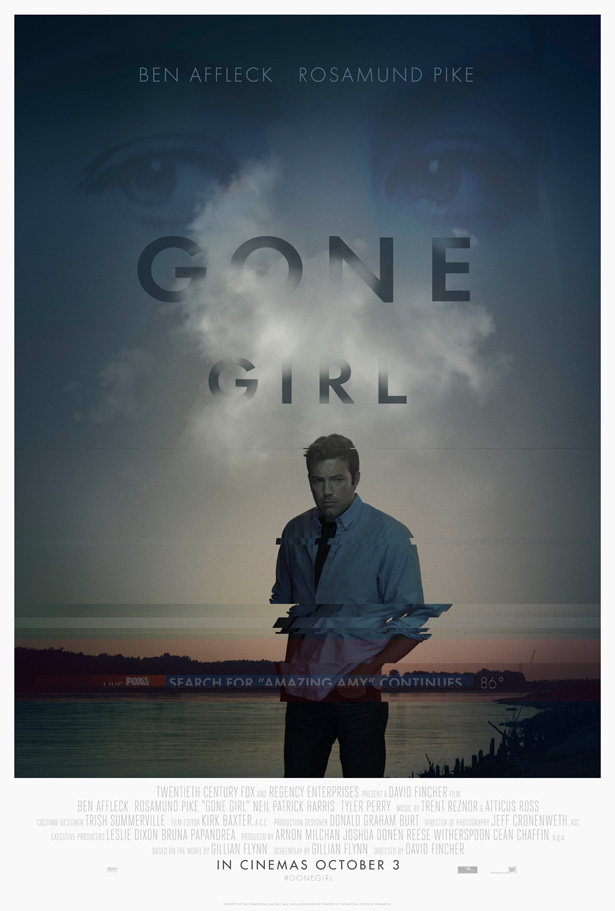
Gone Girl (2014)

Rosamund Pike is the Gone Girl leaving husband Ben Affleck in a difficult mess

Director: David Fincher

Cast: Ben Affleck (Nick Dunne), Rosamund Pike (Amy Elliott Dunne), Neil Patrick Harris (Desi Collings), Tyler Perry (Tanner Bolt), Carrie Coon (Margo Dunne), Kim Dickens (Detective Rhonda Boney), Patrick Fugit (Officer James Gilpin), Missi Pyle (Ellen Abbott), Emily Ratajkowski (Andie Fitzgerald), Casey Wilson (Noelle Hawthorne), Lola Kirke (Greta), Boyd Holbrook (Jeff), Sela Ward (Sharon Schieber), Lisa Banes (Marybeth Elliott), David Clennon (Rand Elliott)

In our modern media age, we’ve got massive expectations for how people are meant to behave. With so much of our perception of life filtered through the internet and films we’ve seen, we are reassured when we see behaviours we expect to see, and disconcerted when we see those we haven’t been trained to see. Not distraught enough at your wife going missing? Well you must have done it then!

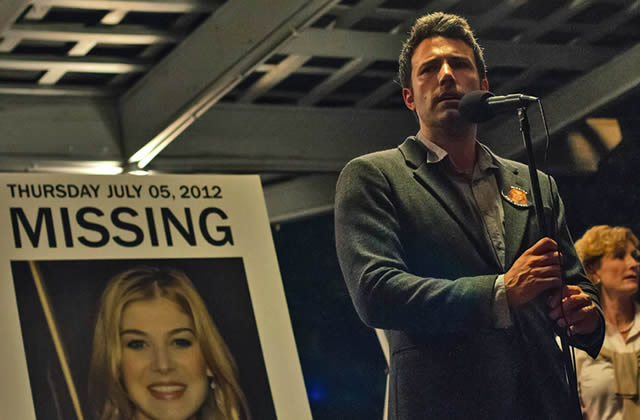
That’s the problem that faces Nick Dunne (Ben Affleck) in this chilling, intricate adaptation of Gillian Flynn’s best-selling book. Nick’s wife Amy (Rosamund Pike) goes missing in mysterious circumstances, possibly a kidnap, possibly a kidnapping gone wrong. The case becomes a media sensation, but the problem is Nick just isn’t expressive enough, won’t play the role of weeping husband. Instead he’s calm, distant and polite. So naturally rumour swirls that he did it – particularly after more and more manufactured evidence rears up to suggest he might have done. But does Amy have darker secrets than anyone might even suspect? Well to say any more would be a spoiler.

Fincher’s film is a tour-de-force of deliberately cold, polished looking perfection – which is designed to reflect back the surface perfection of the Dunnes’ deeply flawed marriage. Fincher’s film is in many ways a jet black social satire, using its almost outlandish shocks and twists to involve the audience in that “oh-no-they-didn’t!” way, in the same way that the Dunne media story fascinates the people in the movie.

“What have we done to each other?” Nick asks in voiceover early in the film, and it’s the question the film tackles obliquely: how much of the flashbacks to the relationship we see between Amy and Nick is real and how much springs from unreliable narration from Amy’s diary? Two handsome people living the American dream, but how much of it is an invented or projected narrative? Is their whole life a performance they are living for themselves and for others? Poor old Amy is even already semi-fictionalised person, a parents using her life as inspiration for a beloved children’s book character Amazing Amy.

So when Amy goes missing, the strain on Nick is very different from what you might expect. Rather than being consumed with grief, he feels wearied and dutiful about continuing a performance of a marriage which has long since ended. Nick’s actually too honest for this world – he won’t put on a show of how he is supposed to feel, he can only try not to make too much of a show of what he really feels. The mystery that builds around his and Amy’s marriage is born in this blunt honesty, of someone who won’t be what people want him to be. Of course that doesn’t stop Nick from being selfish or even a whiner.

Fincher mixes this intelligent commentary on society with, to be honest, the sort of bizarre extremism and bunny-boiling antics that make you unsurprised to hear he was inspired by Paul Verhoeven while making the film. It’s a film that shifts gears notably in the second half to become an increasingly gothic horror-thriller. A lot of this is powered also by Rosamund Pike’s excellent performance as Amy, a woman who seems almost completely cryptically unknowable, whose whole life has been a performance, and for whom taking on a series of roles and personalities is clearly not a challenge. Needless to say the person she turns out to be, and what she is capable of, is completely different from what the film leads you to expect.

It’s no surprise that a relationship featuring a person like Amy could go as south as the Dunnes’ has, but then Nick is hardly a saint either. Ben Affleck is just about perfect casting as a sort of All-American charmer gone to seed, a prickly fellow who wants privacy but also partly grows to enjoy the drama that surrounds him, once he works out the game he is playing. Fincher’s deliberately distant, smoothly clean-surfaced film frames modern day aesthetic perfection all round this seemingly dream couple.

The whole film is a nightmare vision of a love match gone wrong, of the after-effects of a beautiful story that has spiralled out into disappointment and everyday mundane life. And that struggle to keep the romance going in the familiar is at least something many of us can understand right? So it’s enjoyable to see that matched up with the freaky, semi-gothic blood and guts the film serves up in the second half, and the almost surreal Grand Guignol plot developments that power that half of the film (shot and scripted by Fincher and Flynn with a brilliant mixture of tension, horror and black comic delight at its extremity).

Like many Fincher films, there are several delightful performances. Pike is a revelation in a gift of a role, Affleck very good channelling his life lived in the spotlight. Carrie Coon is a stand-out as Nick’s exasperated, down-to-earth and loving twin sister. Kim Dickens is authorative and questioning as the police detective investigating the case, and Tyler Perry assured and cool as a hot-shot lawyer. Playing way against type, Neil Patrick Harris is pretty unforgettable as a slightly self-satisfied rich kid still holding a candle for Amy after all these years.

But the main success of the film is the whipper-sharp coldness of its execution, the cool tension Fincher ekes out of every moment, and the violent, Vertigo-ish obsession he gets out of every moment. Gone Girl works because it’s at first a chilling what-if story of a man in a media storm, which becomes a sort of black comedy so extreme that it pulls a delighted audience in to gasp at audacious characters getting away with outrageous things. As a black comic thriller it’s delightful.rela

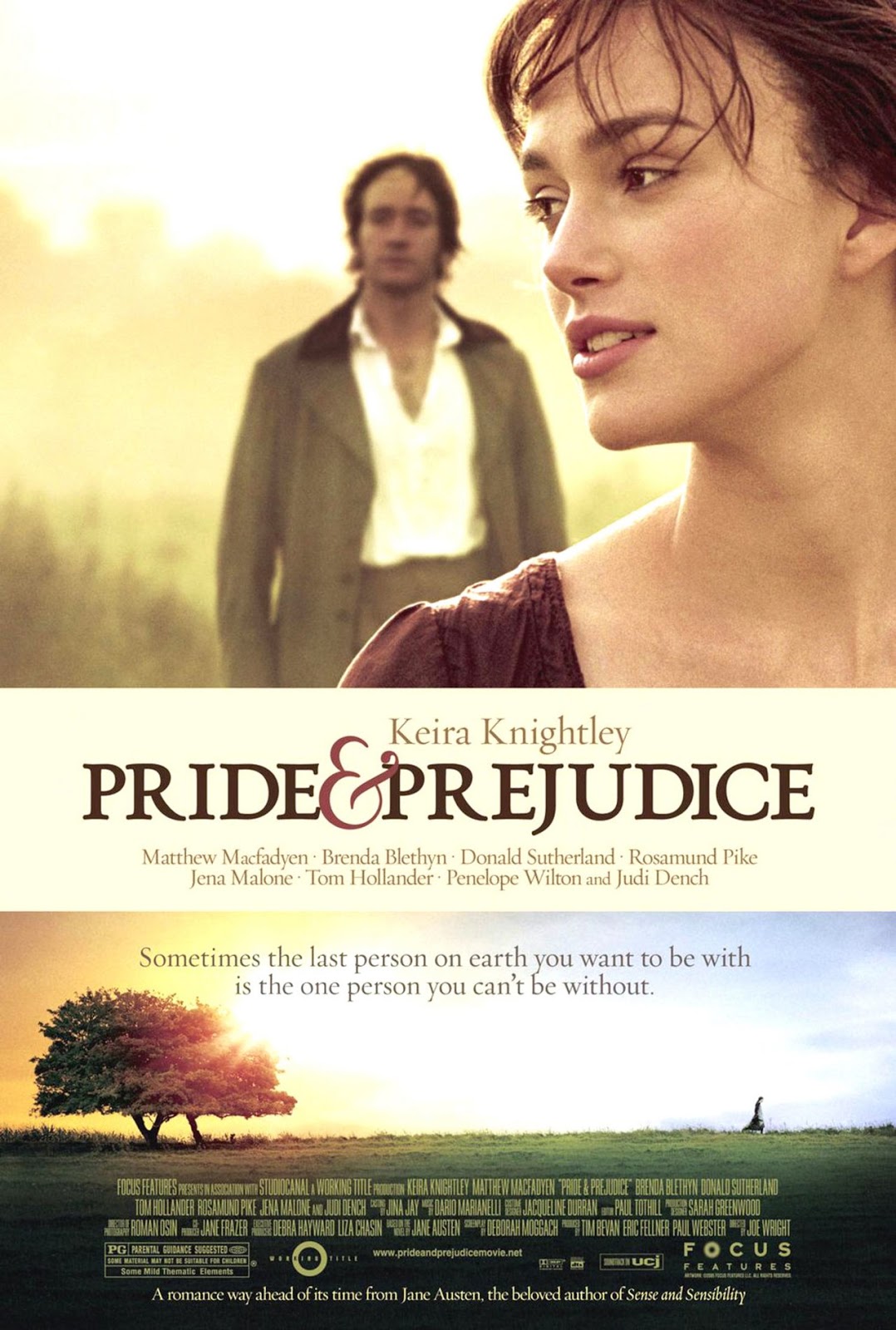
Pride and Prejudice (2005)


Keira Knightley and Matthew Macfadyen are drowned in the shadow of the BBC adaptation of Pride and Prejudice

Director: Joe Wright

Cast: Keira Knightley (Elizabeth Bennet), Matthew Macfadyen (Mr Darcy), Brenda Blethyn (Mrs Bennet), Donald Sutherland (Mr Bennet), Tom Hollander (Mr Collins), Rosamund Pike (Jane Bennet), Carey Mulligan (Kitty Bennet), Jena Malone (Lydia Bennet), Talulah Riley (Mary Bennet), Judi Dench (Lady Catherine de Bourgh), Simon Woods (Mr Bingley), Tamzin Merchant (Georgiana Darcy), Claudie Blakely (Charlotte Lucas), Kelly Reilly (Caroline Bingley), Rupert Friend (Mr Wickham), Penelope Wilton (Mrs Gardner), Peter Wight (Mr Gardiner)

I’ve written before about certain books having been adapted so successfully there feels very little point rolling out another. If ever an adaptation set this principle, it’s the 1995 BBC adaptation of Pride and Prejudice. Not only did it perfectly capture the spirit and style of the book, with perfect scripting and direction, but the two lead actors – Jennifer Ehle and especially Colin Firth – were simply perfect (for all his achievements, the first line of Firth’s obituary will forever be “Darcy Dies”.)

So Joe Wright and his team were already climbing a mountain when they announced plans to make a new adaptation of Jane Austen’s most beloved novel. What they’ve produced in the end is a well-made, handsomely mounted film full of visual invention – that has been pretty much rejected by nearly everyone I know who loves Austen. It’s a film that, in attempting to plough its own furlough, has ended up not really pleasing anyone: for the casual viewer it’s an entertaining but forgettable watch. For the Austen fan it’s just plain not right.

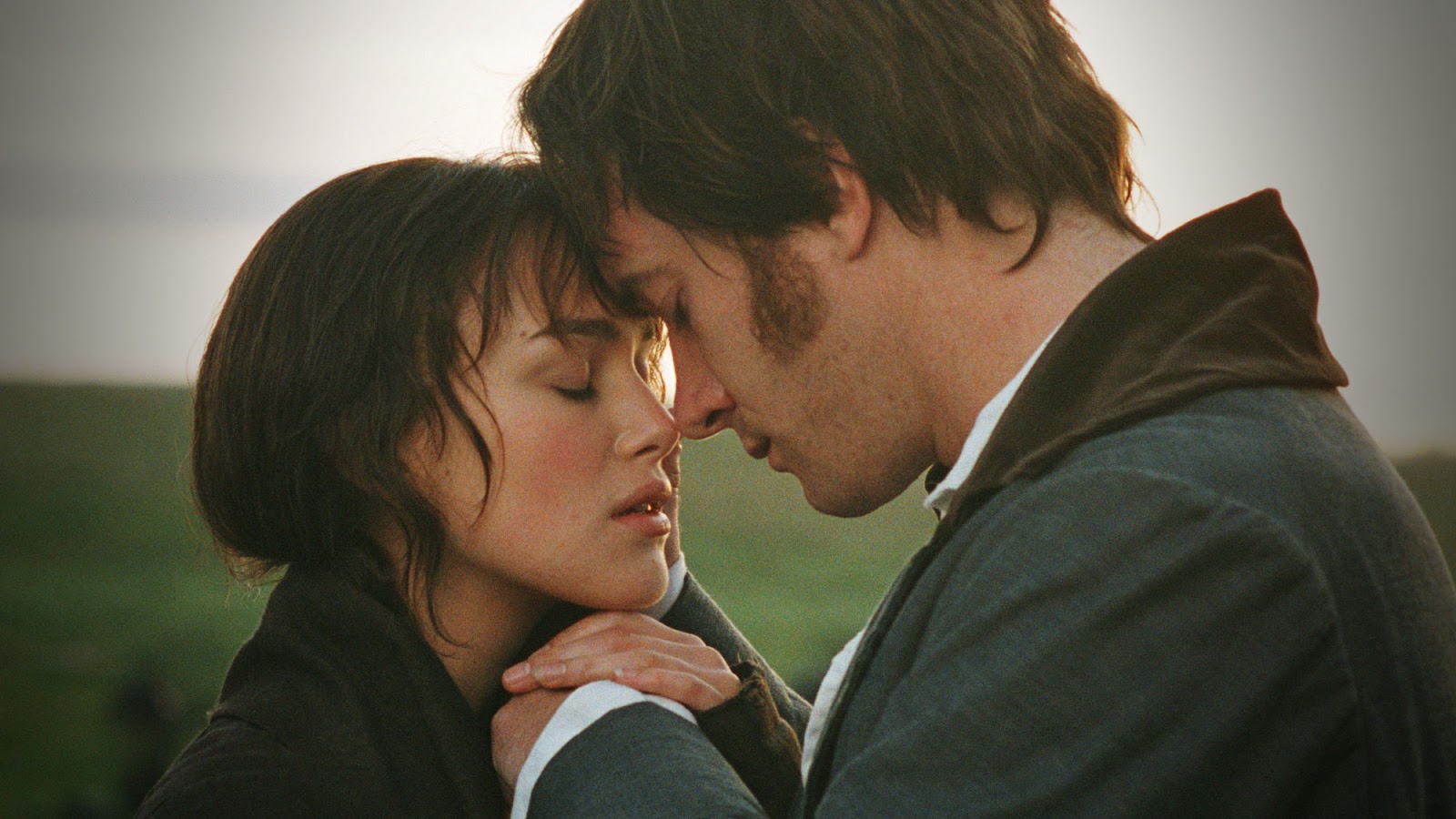
Structurally the film places Elizabeth’s relationship with Darcy slap bang at the centre, and has little to no interest in anything else. This leads to major themes and relationships being neglected or outright abandoned in some bizarre cut choices. The film wants to front-and-centre Lizzy’s increasing isolation – so Jane is dispatched from the film for almost over an hour. Even more oddly, Wickham is cut down to a few spare scenes – which makes her passionate sympathy for him and anger against Darcy make very little sense. All this isolation also means we never really understand the social implications and importance of marriage – in fact the whole thing is basically turned into a Cinderella romance: Rich Man Meets Poor Girl (And No One Else Matters). 

Which means a lot of the focus for the film lands on Keira Knightley. Is there a more controversial actor in film than Knightley? Oscar-nominated for the role, among my Austen-loving friends I have found only revulsion against her performance. She plays it with spirit but too much of a modern sensibility. She’s fine, but she’s just not convincing: she doesn’t look like her, she doesn’t have her warmth and wit and seems more like she’s wandered in from some sort of “flirty girls” comedy. Nothing really communicates the character’s intelligence and wit – and Knightley probably looks a little too modern for the whole thing to work. 

On top of that the film doesn’t want her to be too unsympathetic at any point, so dials down her judgemental nature, and also reduces any possibility of us judging her partiality for Wickham by mostly removing him from the film. However, this also removes many of the obstacles from the plot that stand in the way of romance.

Matthew MacFadyen does a decent job as “Nice Guy In A Period Drama”, but the character is just wrong for Darcy. Like Lizzy’s tendency to rush to judgement, Darcy’s apparent coldness and snobbery have been watered down to almost invisibility. His first announcement of love is so genuine, so gentle, so loving that you are amazed that Elizabeth dismisses him out of hand. It’s no surprise this Darcy turns out to be a decent bloke, the edges of the character have been completely shaved off. This puts a big old dent in the plot, reduces his character development, and ruins the impact of sweet later moments like Darcy’s uncertainty when the two meet at Pemberley. 

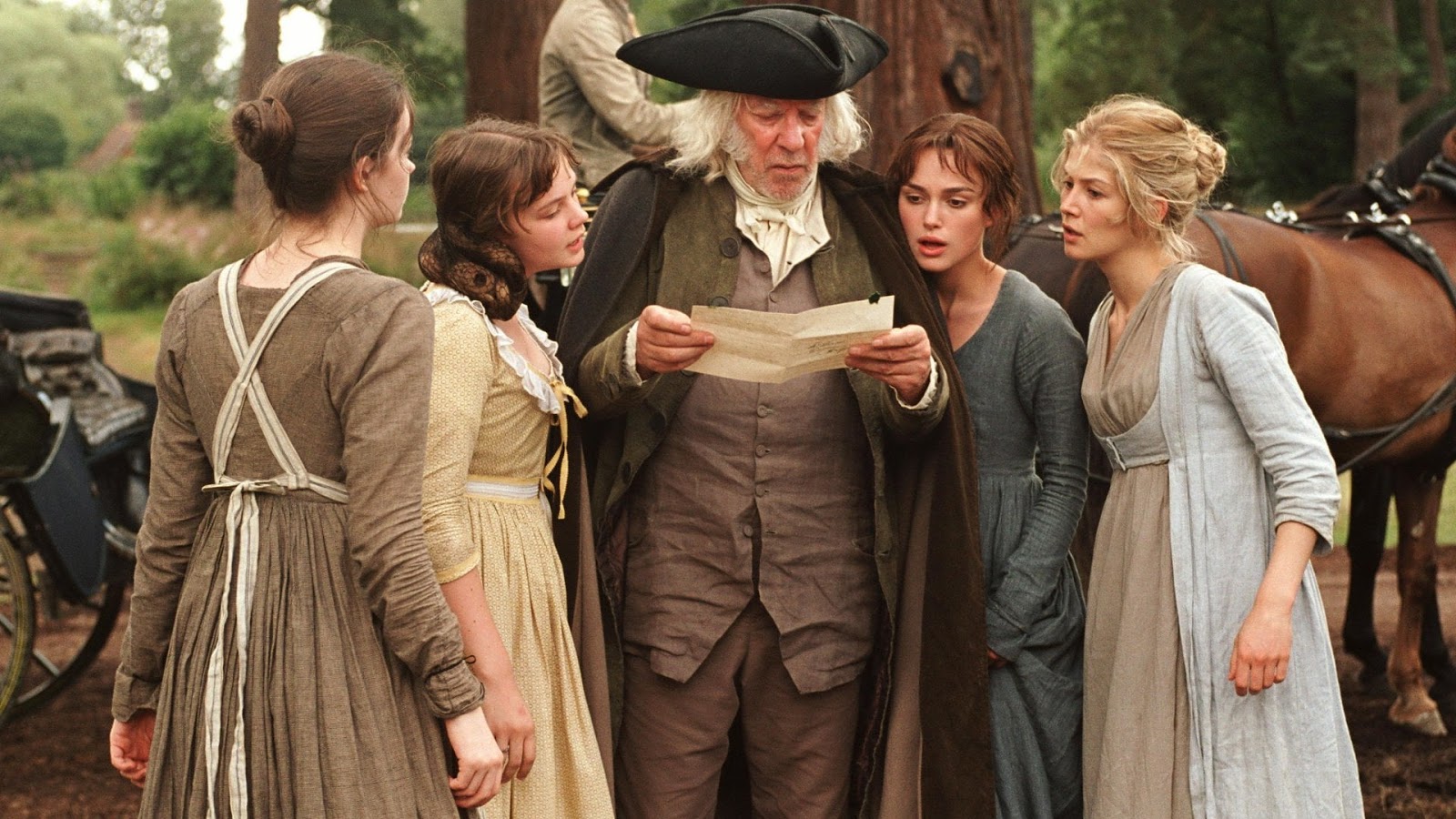
There are some good performances though. Tom Hollander is very funny as a social-climbing Mr Collins. Donald Sutherland gets so much warmth and twinkly good humour out of Mr Bennet that Wright even ends the film on him (another odd choice, but never mind). Judi Dench could play Lady Catherine standing on her head. Rosamund Pike is rather good as Jane – she totally feels right for the period. Brenda Blethyn largely manages to avoid turning Mrs Bennet into a complete stereotype. Saying that, Simon Woods portrays a version of Bingley so bumbling, tittering and awkward you are amazed either Jane or Darcy could be interested in him, let alone bear to spend time with him.

But then large chunks of the film feel odd. The screenplay works overtime to turn the film into a straight-forward star-crossed lovers story: so it’s Darcy and Elizabeth all the way, and the film is desperate to make them both likeable from the off. And if that means that, in a film called Pride and Prejudice, both the pride and the prejudice have to be junked to make sure even the stupidest audience member will like the hero and heroine, well that’s apparently a price worth paying. Lowering the Bennets’ social status as far as the film does, also turns the story into a full-on Cinderella territory. Darcy and Bingley are so posh an entire room falls silent when they walk in – in comparison the Bennets are so poor they share their house with pigs.

Ah yes the pigs. Why? The Bennets aren’t paupers. If they were, why would Collins want the place? Why would they be invited to the ball? Why would Bingley and Darcy even consider them as partners? Why would a family so aware of impressions have a home that is literallyfull of shit all the time? Why is Mr Bennet scruffy and unshaven – and why doesn’t anyone care? Who designed this? If the Bennets are so fixated on getting good marriages why do they literally live in a pig sty? It’s a visual idea that undermines the whole story.

I’m not joking. Here is a pig walking through the Bennet house.

It’s full of things like this that don’t feel right. The film junks most of the language of the original book, which makes it sound jarring (it even re-works Darcy’s first proposal: “in vain I have struggled, it will not do…” – large numbers of Austen lovers I know can recite those lines verbatim. This film apparently thought it could create a better version. It couldn’t). Large chunks of the film happen in the rain like some sort of version of Wuthering Heights. Why is that? Is it because professions of love in the rain are romantic in a Mills and Boonish sort of way? Or is it an echo back to Firth’s wet shirt?

Emma Thompson’s sublime adaptation of Sense and Sensibility demonstrated that it is completely possible to adapt an Austen novel into a two-hour film and still preserve the characters, relationships, major events and themes of the book, while also making a story that stands on its own two feet for non-Austen-ites. This film bungles its attempt to do the same. 

But there are things Wright gets right. The camera work and transitions are lovely. A long tracking shot that weaves in and around the ball early in the film, taking in every single character is not only a technical marvel but really gets across a feeling of what these hectic and bustling social events are like. There is a beautiful time transition at Longbourn, as Elizabeth rotates on a screen and the camera takes on a POV shot, showing the seasons changing each time the camera revolves around through 180 degrees. The cinematography is luscious and Wright – his first film – shows he was more than ready for the step-up from TV.

It’s just a shame that the film they made doesn’t quite work. It doesn’t capture the sense of the book. It doesn’t capture the sense of the characters. It makes bizarre and just plain wrong choices. It’s a decent film, but it is not a good adaptation of the novel. And that’s a major problem, because if you are going to adapt something as widely loved and revered as this, you better bloody well understand the novel – and I don’t think enough people here did. It’s told with a sweeping romantic style – but they are adapting the perception of Pride and Prejudice rather than the actual story. The chemistry and romance aren’t there: the film even ends with an odd sequence of Sutherland and Knightley, probably because there was better chemistry between these two than the two leads. It’s a film that basically doesn’t work at all.

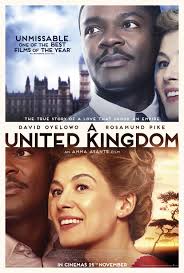
A United Kingdom (2016)


Rosamund Pike and David Oyelowo are a love match in underwhelming A United Kingdom

Director: Amma Asante

Cast: David Oyelowo (Seretse Khama), Rosamund Pike (Ruth Williams Khama), Terry Pheto (Naledi Khama), Vusi Kunens (Tshekedi Khama), Jack Davenport (Alistair Canning), Laura Carmichael (Muriel Williams-Sanderson), Jack Lowden (Tony Benn), Tom Felton (Rufus Lancaster), Charlotte Hope (Olivia Lancaster), Nicholas Lyndhurst (George Williams), Anastasia Hille (Dot Williams)

Some films just have a safe, crowd pleasing, “your whole family would like it” feel to them. A United Kingdom falls very neatly into this category. It’s a simple and straightforward story, told with a cosy safety that won’t challenge you or really stick in your memory.

Seretse Khama (David Oyelowo), heir to the throne of the Bamangwato tribe in what will become Botswana, is studying law in England in the late 1940s to prepare for his reign. He meets and falls in love with London girl Ruth Williams (Rosamund Pike) – and despite the protests of their families and their nations, they marry and resolve to build a life in his country working for the betterment of his people. But first they must overcome what seem insurmountable obstacles.

A United Kingdom is a very well-meaning film. It has an important story to tell about acceptance and prejudice. Many of the points it makes about the negative reactions to mixed race marriages and colonial politics are still painfully relevant today. It’s an earnest and good-hearted film. It’s just a real shame that it’s also not that special.

It’s well acted by the two leads, we can give it that. Sure they are presented as almost flawless individuals, but David Oyelowo and Rosamund Pike are engaging performers and give a lot of emotional weight to the story. Their courtship is sweetly hesitant and their relationship feels real and lived in. Oyelowo brings much of the magnetic charisma he has shown in a wide range of films to the part, and Pike’s neat mixture of prim Englishness, decency and stubborn self-determination work really well.

But the story it so simply done, the whole thing feels like a TV movie of the week. The film is flatly directed and conventionally shot: London is always dark, filmed through a blue lens, with rainwater or fog dripping off every shot. Africa by contrast is a vibrant, orange lensed place where every sunset and sunrise looks like a painting. Very few shots show much more imagination than that. There is no flair or originality to the cinematography, the composition of the shots, or even the musical score (which swells up stirringly at emotional moments and then fades instantly from memory). On every technical level, it can boast nothing more impressive than workman-like competence.

The narrative is equally simplistic: our heroes fall in love, deal with rejection, passionate speeches are made, allies are slowly won over and a deus ex machina finally makes everything fine. The stakes of what Seretse is putting at risk through his marriage are never made completely clear, despite all the talk of digging and diamonds. The final resolution of the entire problem is so simplified, contrived and rushed I almost had to double check the runtime to see if I missed anything. It’s all part of the same simplification in the story that sees sides change with confusing speed – Seretse’s sister goes from rejecting Ruth to treating her like a sister in a blink; Ruth’s father (distractingly played by Nicholas Lyndhurst, forever Rodney) is given one moment in a cinema to switch from prejudiced British working man to repentant father.

The characters themselves are very plainly drawn: they are either goodies or baddies with no attempt made to look at the deeper feelings or motivations behind them. For instance, Seretse’s uncle is shown as simply outraged by the marriage, with no attempt to explore why a marriage like this may not have been seen as ideal in a fragile community, or how it might have made holding a deal with the UK together difficult. Similarly, the Brit characters are almost to a man mustachio twirlers or bitchy mem-sahibs, callously sipping sherry as they thwart Seretse and Ruth’s plans. (Spare a thought for poor Tom Felton, yet again hired to play Draco Malfoy In A Different Historical Costume.)  Even Clement Attlee (so regularly beautified as the Prime Minister who oversaw the creation of the Welfare State and NHS) is portrayed here as a cold-hearted architect of realpolitik.

By making its lead characters so saintly and pure, and anyone who disagrees with them so cruel and sunk in villainy, the film weakens itself. Yes it has a sweet relationship at the middle, but it also manages to make this feel slightly lightweight, because the film itself is so flimsy. When their opponents are such cartoonish baddies, and their aims for their country so unclearly explained, it minimises the impact of the story. Instead of showing us the birth of a modern, democratic nation through the focal point of one couple’s struggle against prejudice and adversity, it makes both personal and national triumphs feel actually less impressive than they were – no more than a Sunday afternoon, Mills & Boon tale of a working class London girl and a handsome, “exotic” stranger.

A United Kingdom is an important story that has made itself into a slight one, a conventionally filmed and simplistically told tale that never carries the weight and impact it should do. Despite good performances from the leads, it’s really nothing special.

An Education (2009)


First love: Never as smooth as you think it will be

Director: Lone Scherfig

Cast: Carey Mulligan (Jenny Mellor), Peter Sarsgaard (David Goldman), Dominic Cooper (Danny), Rosamund Pike (Helen), Alfred Molina (Jack Mellor), Cara Seymour (Marjorie Mellor), Emma Thompson (Miss Walters), Olivia Williams (Miss Stubbs), Sally Hawkins (Sarah), Ellie Kendrick (Tina)

The education in question is the first sexual relationship of a girl who is 16 going on 17. Jenny (Carey Mulligan) is a schoolgirl and prospective Oxford candidate who finds herself winning the attention of charming older man David (Peter Sarsgaard). Jenny is swept off her feet by the world of classy bars, art and culture David introduces her to and begins to lose interest in her literal education: if all education can do is turn women into either lawyers’ wives or teachers what is the point?

Strangely for a film based on a man approaching middle-age taking advantage of a naïve and excited teenager, it’s strangely cosy and charming, with the whiff of “safe” family viewing. Nothing wrong with that of course, but the whole confection is just a little too slight, a little too well packaged, a little too carefully and thoughtfully put together to really leave a lasting impression. Instead it’s an enjoyable enough 90 minutes which doesn’t really have anything that stays with you.

What it does have going for it above all is the marvellous lead performance from Carey Mulligan. At the time best known for appearing in the Blink episode of Doctor Who, Mulligan cements her early promise by demonstrating what a charismatic and vibrant performer she is. Jenny delights in the ease with which David deceives everyone without it ever occurring to her that he might be lying to her, and this teenage arrogance could easily be smackably annoying – but Mulligan makes her deeply engaging and loveable. You want to protect her from making an irrevocable decision that will ruin her life at 16 (sort of the opposite to Bella in Twilight). But Mulligan’s endearingly engaging performance sweeps the audience up into Jenny’s fascination with the exciting life David seems to be offering, and makes you understand why she believes it to be a viable option. She’s a radiant centre to the film and it’s almost impossible to imagine it working at all without her.

It is in fact very well-acted throughout. Sarsgaard underplays the role, suggesting the underlying shallowness and weakness to David which is far clearer to the audience than the characters. The supporting cast are knock-outs: Rosamund Pike is hilarious as a sweet airhead, Alfred Molina embodies the gullibility of the striving middle-classes mixed with great reserves of unspoken love and affection, Olivia Williams is terrific in an underwritten part as Jenny’s concerned teacher.

It’s strange watching the film to see how it romanticizes the sort of behaviour that, if we encountered it today, would be denounced as grooming at best, paedophilia at worst. In fact, the film soft-peddles a lot of the unpleasantness of its characters: David and Danny, it is clear, are conmen and swindlers, though I suspect the film wants us to think of them more as charming rogues. I suppose it’s the impact of seeing the story from Jenny’s perspective, but some more outside commentary would perhaps have been interesting: it also might have been more interesting to see Jenny actually having to deal with the moral consequences of some of the actions that happen around her. 

This is a slight affair, almost a shaggy dog story. There are many more things it could have explored (the swindling career of David, the role of women in the 1960s, the changing perceptions of “blue stockings” and their career options) but instead it settles for being a charming period piece. It makes no secret of the fact that, deep down, we are not meant to trust David and nothing in the plot ever really surprises you. It’s a gentle amble through an ill-advised teenage romance. But, despite all that, it’s very well acted and Carey Mulligan proves she was set to become a star.