Tag: Roscoe Karns

Twentieth Century (1934)

Twentieth Century (1934)

A producer and his muse bicker, feud and fall in love in the theatre in this funny proto-screwball

Director: Howard Hawks

Cast: John Barrymore (Oscar Jaffe), Carole Lombard (Lily Garland), Walter Connolly (Oliver Webb), Roscoe Karns (Owen O’Malley), Ralph Forbes (George Smith), Charles Lane (Max Jacobs), Etienne Girardot (Mathew J Clark), Dale Fuller (Sadie), Edgar Kennedy (Oscar McGonigle)
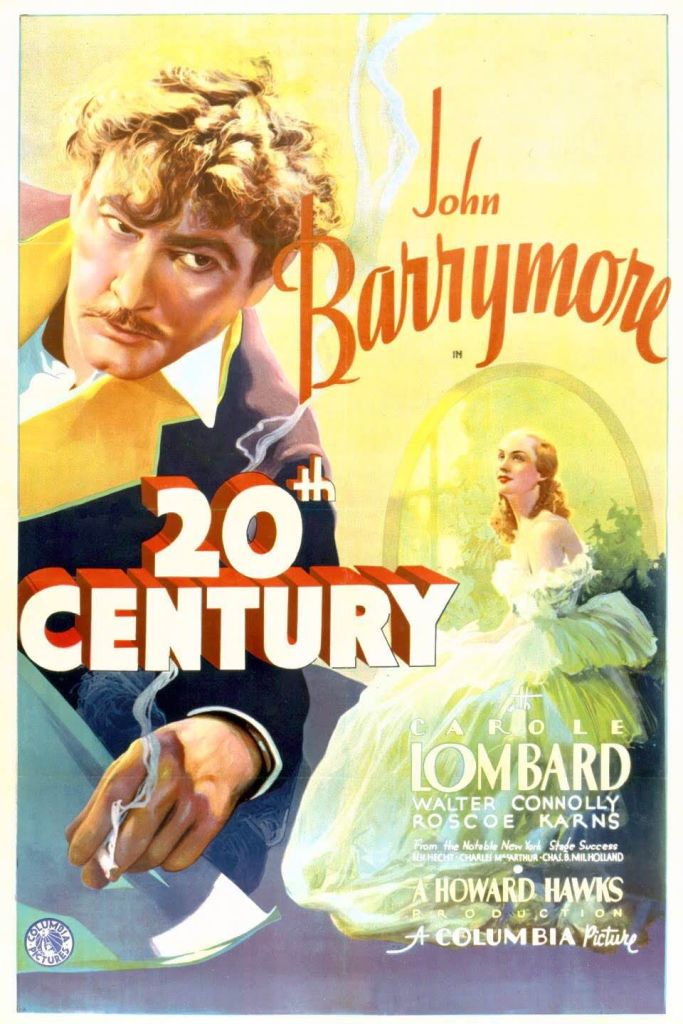
Oscar Jaffe (John Barrymore) is the biggest showman on Broadway. He can take the rawest stone and polish it into the brightest diamond. Lily Garland (Carole Lombard) is just such a stone, a lingerie model turned superstar of stage and screen. Trouble is, Jaffe is also a control freak who turns mentoring into manipulation. After three years Lily leaves – and Jaffe can’t get a hit without her. Smuggling his way onto the luxurious 20th Century Ltd express train from Chicago to New York, can Jaffe use the journey to win Lily back?

Hawks’ comedy is, along with It Happened One Night, one of the prototype screwball comedies. In some ways its even the best model. It has all the elements you expect: lightening fast dialogue, farcical set-ups, mistaken identities, ever more overblown rows, a dull second banana as the ‘new’ love interest, ludicrous misunderstandings and its heart a mismatched couple who get more of a thrill from fighting each other than they do from loving anyone else. You can see the roots for half the comedies that Hollywood produced over the next ten years here.

The film also captures the greatest screen performance by the leading actor of the American stage in the early years of the 20th century, John Barrymore. Barrymore’s performance is a delight –something near a self-parody – a larger-than-life role of bombast and wild-eyed eccentricity that should feel ridiculously over-blown, but actually really works. Jaffe is a force-of-nature, and that’s the performance Barrymore gives. He hurls himself into the fast-paced dialogue, delights in the physical comedy (from prat falls to swooning fits) and he gives the film most of its understanding of the mechanics of theatre (Hawks famously said he knew nothing about it). It’s a delightful, hilarious comic performance.

He’s well matched by a star-making turn from Carole Lombard, in one of her first roles. Initially overawed by working with Barrymore, Hawks coached Lombard to worry less about “acting” and to focus more on bringing her natural sharp-edged comedic instincts to the film. Something she does to huge success: you can feel the performance getting larger, wilder and more hysterically funny as the film goes on. By the time she’s half playfully, half furiously kicking at Barrymore’s stomach during one late argument in a train compartment, we’ve seen a brilliant comic actress find her stride. Lily goes from a talentless ingenue to a grand dame of stage and screen – but never loses (only conceals) her chippy rumbustiousness nature.

It’s all wrapped up in a neat parody of the artificial, overblown, performative nature of acting and theatrical types. These two are always putting on a show: either for themselves or for each other. Everything is filtered through their understanding of scripts and stories and their trade has made them artificial and unnatural people. If they feel larger-than-life, its because small intimacies don’t shift seats in the theatre. And the theatre is of course the real calling of an actor – not those shabby temptations of the big screen.

Not that the theatre is really that different. The film is book-ended by rehearsals for two almost identical Jaffe productions. Both of them are feeble Southern Belle dramas, with shock murders, deferential servants and stuffed with secrets and lies and plot reveals which could have been thrown together by chimps with typewriters. Between these, Jaffe stages a ghastly sounding Joan of Arc play and flirts with the most tasteless Life of Jesus play you could imagine (with an all-singing, all-dancing role for Lily as Mary). But then art seems to be less important than exhibitionism to these guys.

It’s not as if Jaffe’s style is designed to explore depth of character with his actors. For all his fine words in rehearsals, Jaffe is soon drawing chalk lines on the floor to tell Lily exactly where to stand on every line (the floor soon resembles a spider’s web of crossed lines and numbers) and finally gets the scream he wants from her in a scene by sticking a pin in her derriere. Lily is both infuriated and delighted by these methods – she keeps the pin as a treasured totem for years – but it’s clear acting is really an excuse for all the attention seeking screaming and shouting that they do anyway.

Twentieth Century makes for a neat little satire on the artificial nature of some acting, but at heart its mostly a very fast-paced, witty film that bottles two cracker-jack performers who engage in a game of one-up-manship to see who can deliver the wildest, hammiest and most entertaining line readings. Hawks directs with a confident assurance and the train-based finale (it does take nearly half the film to board the eponymous train) is a perfectly staged farcical comedy of entrances, exits and misunderstandings. The film itself is as theatrical as the personalities of its lead characters – and all the more delightful for it.
His Girl Friday (1940)

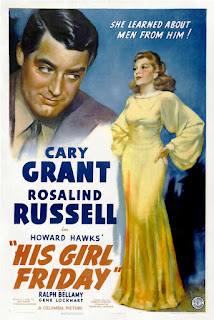
His Girl Friday header
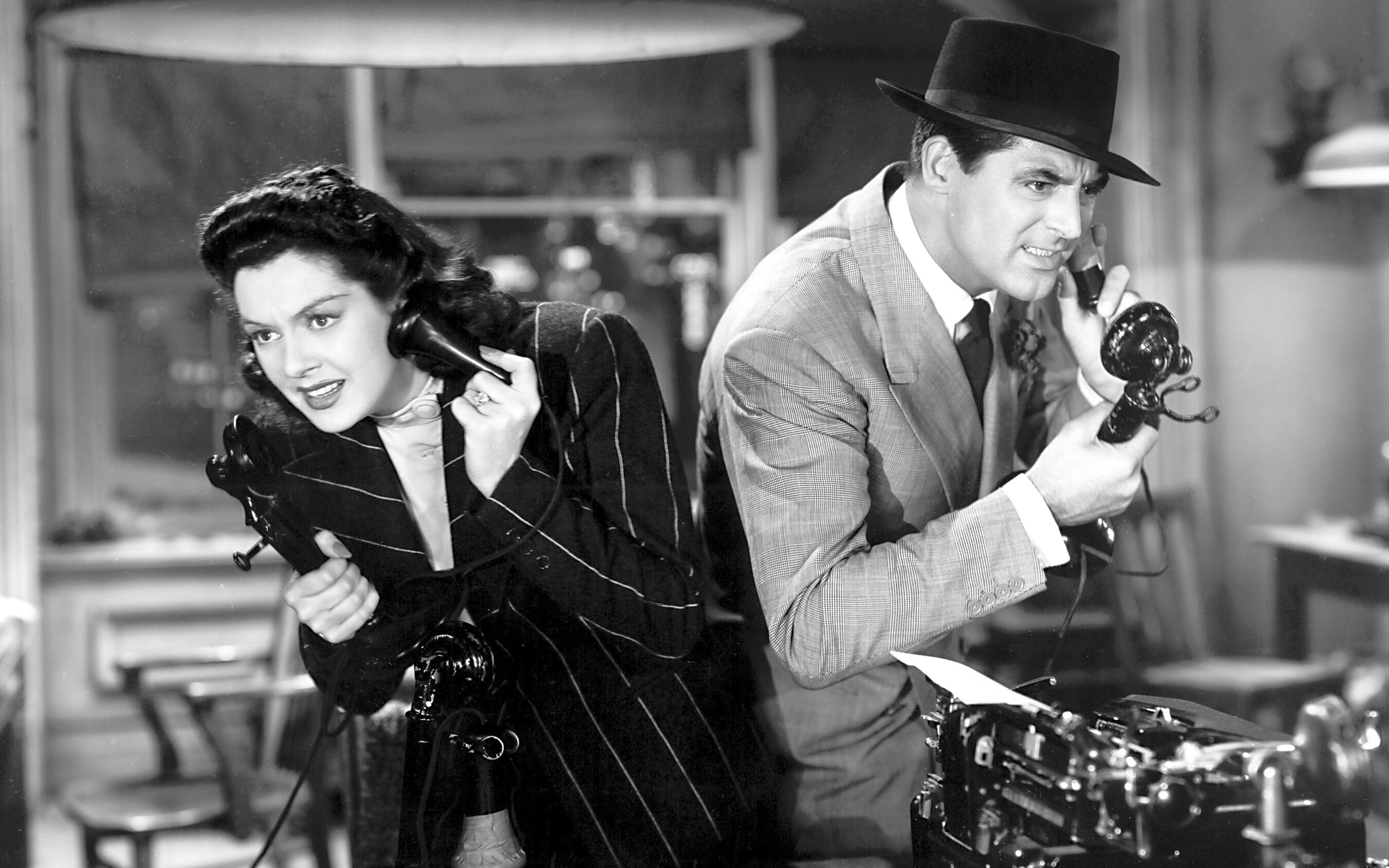
Rosalind Russell and Cary Grant bicker and spar in His Girl Friday, one of the all-time classics I’ve never quite clicked with

Director: Howard Hawks

Cast: Cary Grant (Walter Burns), Rosalind Russell (Hildy Johnson), Ralph Bellamy (Bruce Baldwin), Gene Lockhart (Sheriff Hartwell), Porter Hall (Murphy), Ernest Truex (Bensinger), Cliff Edwards (Endicott), Clarence Kolb (The Mayor), Roscoe Karns (McCue), Frank Jenks (Wilson), Regis Toomey (Sanders), Abner Biberman (Louie), Frank Orth (Duffy), John Qualen (Earl Williams), Helen Mack (Mollie Mallot)

There’s always one film classic that the world and his dog love to bits, but every time you watch it you just don’t get it. That classic for me is His Girl Friday. I’m not sure many films have appeared more than this one on film buffs’ lists of Top Ten Movies of All Time, but while I admire its many, many qualities, every time I’ve watched it – and it’s at least three now – I just don’t love it. More to the point I don’t find it funny (I know, I know I can practically hear your jaws hitting the floor), neither do I engage with or root for its lead characters (please don’t hit me).  I admire a lot of things about this film and how it is made. And I chuckle from time to time when I watch it. But for some reason even I’m not sure of, I’ve got no click with this film. Compared to The Awful Truth or The Lady Eve or The Philadelphia Story (all films this bears a lot of comparison with) I just don’t feel it.

It’s an adaptation of Ben Hecht and Charles MacArthur’s play The Front Page. In quite a modern touch, one of its lead characters is gender flipped. In the play, a newspaper editor tries to persuade his star reporter not to quit the game: in His Girl Friday the star reporter not only becomes a woman but, don’t you know it, the ex-wife of the editor, about to walk out (in more ways than one) to marry her dull fiancé. Cary Grant (who else?) is the fast-talking editor Walter Burns, Rosalind Russell the fast-talking star reporter Hildy Johnson. In fact, everyone is fast-talking, in the film that holds the world record for dialogue speed. Can Burns persuade Hildy to hold off leaving with fiancée Bruce Baldwin (Ralph Bellamy – sportingly playing up to his dull reputation) for one more day so she can cover the story of strangely naïve convict Earl Williams (John Qualen)? Let the madness ensue.

Let’s focus on all the good stuff first. Not least because my general lack of connection to a film loved by all and sundry is so personal, it almost defies analysis. Hawks was, rumour has it, won round to the idea of gender-swapping Hildy by hosting a read-through of the play at a dinner party with a shortage of people, meaning Hildy was read by a woman. That opened up a host of ideas around combining this with the classic re-marriage genre and bang away we go. It is, needless to say, a brilliant idea and adds such a spark to every single interaction between the two characters that it distinctly improves the play (later productions have often carried the idea – and the dialogue – across from this film).

On top of this, Hawks wanted to make this the fastest talking comedy film ever made. And boy does he succeed at that. The dialogue of this film is delivered with such rat-a-tat speed that clock watchers report it hits a rate of over 300 words a minute (try reading that many words out in one minute to see how fast that is). It gives the film a ferocious manic energy and thunder-cracker momentum and keeps the punchlines coming fast. It also needs gifted actors, which it sure-as-hell gets here. Grant possibly hits his comedic peak here, managing to still remain suave, cool and collected, even as he’s ripping through words and shifting verbal goalposts at dazzling speed. This is also Russell’s career highlight, embodying the image of the sort of spunky, arch and no-nonsense professional woman of screwball comedy that all others (even Hepburn) are measured against.

They race through a film that makes excellent use of long-takes, intelligent single-shot camera moves and careful, intelligent editing to highlight the electric speed of the zany dialogue. In particular, Hawks makes a brilliant motif of telephones (those old candlestick phones), which characters are forever hurling instructions down, using as escape tools from awkward moments and juggling conversations with (either from multiple phones or between the phone and people in the room). They are used for short, sharp, punchy lines – and it fits a film that is all momentum and short-hand. The ultra-smart, quotable banter, littered with one-liners, is the ultimate epitome of the popular style of dialogue at the time, which favoured this style over the speeches and deeper content that was seen as more of the preserve of theatre.

Walter and Hildy in this version also become the epitome of “the screwball couple”. The divorced partners who of course still love each other, largely because they recognise that no-one else will share their insane energy and obsession. Not to mention that fighting and feuding with their intellectual equal is a million times sexier (and better foreplay) than a thousand dinners at home with someone average will ever be. Ralph Bellamy does good work here (essentially, like Grant, repeating his role from The Awful Truth) as that dull, trusting man – the only one in the film who vaguely resembles a human being and therefore, obviously, the character the audience likes the least (who goes to the cinema to see someone like themselves on the screen, eh?)

There is so much right about His Girl Friday. The actors are sublime, the dialogue delivered perfectly, Hawks’ direction is pin-point in its mix of old-Hollywood classicism, and it’s very well shot. So why don’t I like it more? It’s that most personal feeling: I just don’t find it funny enough. Maybe that’s because I need to connect with characters more – and I don’t connect with Hildy and Walter. In some ways I don’t even like them. His Girl Friday is frequently an unapologetically cruel film: Hildy and Walter treat several people like crap, largely for their own amusement or as collateral damage in their own war of foreplay. At one point a desperate, lonely woman attempts suicide (she jumps out of a damn window falling a couple of floors) – Hildy and Walter are joking about it in seconds. They are cold, self-obsessed people and for all their superficial charm, there isn’t any touch of warmth to them at all. They are very artificial people in an artificial world. In all, I don’t really like them and I find it hard to careor want them back together (other than recognising that they deserve each other).

Believe me, I understand some comedy is cruel, I don’t have a problem with that. But I don’t think His Girl Friday realises it’s that kind of film. The Awful Truth has a very similar plot – but that had its characters recognise their own faults and also gave us reasons to care for them as human beings. His Girl Friday doesn’t do either of those things, meaning I laughed a lot in The Awful Truth and not so much in His Girl Friday.

Can you still bear to read on after such blasphemy? But there you go. Everyone has that stone-cold classic that they just can’t get on board with. This film is mine. I respect so much about it, but it neither tickles my funny bone nor makes me feel welcomed. I find it a cold and cruelly minded film, that looks down on people with scorn – from Bruce to criminal Earl Williams and most especially to his distraught girlfriend Molly – and invites us to do the same. It wants us to love the popular kids in the class and join them in spitting paper balls at the losers. This doesn’t do it for me. I know everyone loves it. Hell, I know I’m probably wrong. But I just don’t love His Girl Friday.

It Happened One Night (1934)

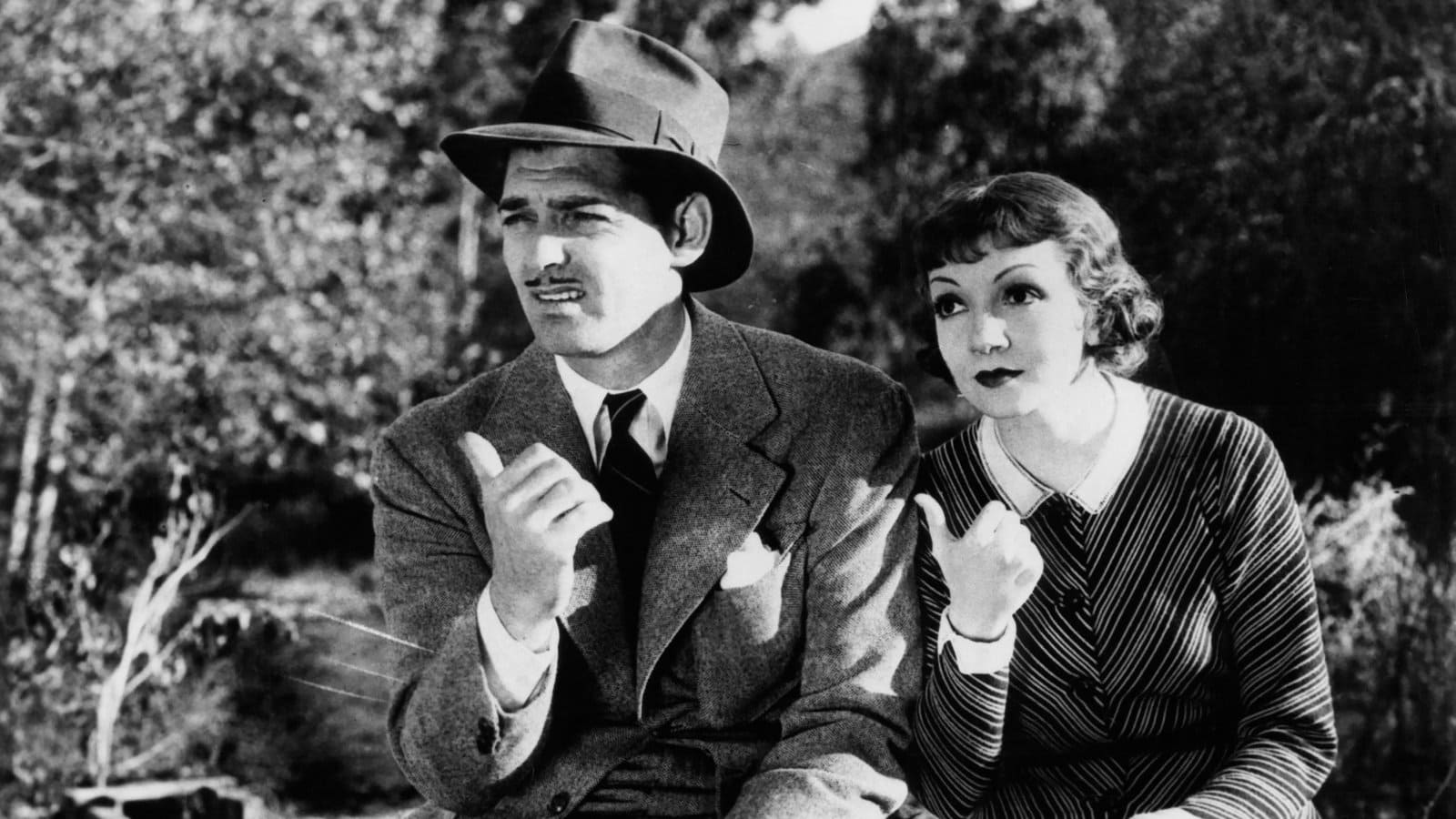
Clark Gable and Claudette Colbert as the original odd-couple who find love in It Happened One Night

Director: Frank Capra

Cast: Clark Gable (Peter Warne), Claudette Colbert (Ellie Andrews), Walter Connolly (Alexander Andrews), Roscoe Karns (Oscar Shapeley), Jameson Thomas (“King” Westley), Alan Hale (Danker), Arthur Hoyt (Zeke), Blanche Friderici (Zeke’s wife), Charles G Wilson (Joe Gordon)

Two contrasting people thrown together over a set period of time, at first rub each other up the wrong way but then, doncha know it, frustration turns to love and suddenly we’re nervously watching to see if a last minute complication will throw a spanner into the works. If it sounds like a classic set-up – that’s because it is. Where did you think the set-up came from? Capra’s comedy – which scooped the Big Five at the Oscars (Picture, Director, Actor, Actress and Screenplay) is one of the most influential films ever made – and one of the funniest and sharpest examples of great film-making from Hollywood’s Golden Age.

“Daughter escaped again, watch all roads, airports, and railway stations in Miami.” Heiress Ellie Andrews (Claudette Colbert) has eloped with daring-but-dull flying ace “King” Westley (Jameson Thomas) but her father Alexander (Walter Connolly) won’t wear it as he’s sure Westley is only after her money. So, Ellie literally jumps ship in Florida (swimming to shore from her father’s yacht, she’s got some guts that girl) and decides to make her way to New York to reunite with her husband. Hopping on a Greyhound bus to New York, she meets recently fired New York reporter Peter Warne (Clark Gable) and, after a series of unfortunate incidents, the two of them end up penniless and travelling across America together. Will their waspish banter blossom into something else?

It Happened One Night is so delightful, as soon as its finished, you fancy skipping back and watch it again. It’s such a brilliant, sexy, romantic comedy it’s odd to think nearly everyone involved wasn’t even sure they wanted to do it. Re-named from the less catchy Night Bus (and who cares if the film actually takes place over several nights), it was rushed into production to take advantage of Colbert’s availability (she only agreed to do it if it filming took four weeks). Gable was loaned out by MGM against his will. Capra and Colbert didn’t really get in and screenwriter Robert Riskin re-wrote the script on set. If you ever needed proof adversity leads to a classic, take a look at this.

It Happened One Night beautifully charts how two mismatched people can be surprised by how much in common they have. Both are, in their own way, fiercely independent. Ellie will marry the man she wants, and hang the consequences. Peter gets the spike permanently because his unique way of doing things doesn’t fit with his editor. They are both quick-witted people with dreams who don’t suffer fools. At first she thinks he’s smug (and in a way he is), he feels she’s entitled (after all its day two before she asks his name). But they bounce off each other from the start, each an equal match for wit (not to mention they both clearly fancy the pants off each immediately).

What’s going to bring the “walls of Jericho” tumbling down between these two? Forced into sharing a hotel room at night, Peter astounds Ellie’s expectations by throwing a sheet up between them, their own little wall of Jericho. Colbert judges perfectly this scene how Ellie’s exasperation also mixes with something pretty close to disappointment. After all she’s already cuddled up to Peter, sleeping on the bus – and Peter in no way objected. Later, in a mirroring hotel room scene Peter will speak openly about how he’s longed for a woman with freedom and spirit (and Gable does this with a beautiful wistfulness) – exactly the qualities he has seen grow in Ellie over their days together.

What works wonderfully is how naturally this relationship becomes first a friendship, then something deeper. Improvising a marital argument, pretending to be a plumber and his wife to put detectives off her scent, they complement each other perfectly. What’s fabulous about this scene, is that (to their surprise) they are equally delighted by how smart and witty the other is. Their gleeful giggling is not only very sweet, but also the start of a new chapter in their relationship. The scene culminates with one of the few moments of intimacy on film involving clothes going on, as Peter helps Ellie button up her blouse.

What’s endearing about them – helped by Riskin’s sparkling dialogue – is how they settle into ‘roles’ and eagerly bounce off each other. Peter increasingly effects a parody of self-importance, claiming to be a world expert on everything from donot dunking to hitchhiking. Ellie gleefully punctures his grandiose claims, but enjoys playing up to her own image of the heiress, at sea in the real world. This is how real people fall in love – and the film is confident enough to have them exchange private jokes we can’t hear on the backseat of a car. It’s gloriously romantic because it feels true.

Gable and Colbert’s chemistry is scintillating. Both are supremely funny, but also grounded. When they lark about they feel like real-life sweethearts. Colbert gives Ellie a wonderful vulnerability under the self-entitlement. She’s snappy and quick-witted but confused and even a bit frightened by her growing feelings. Gable’s easy charm also has a slight chip on his shoulder: but he’s also laid-back and more than willing to look silly, proud but self-aware with it. He’s also a hugely adept physical comedian (his demonstration of how to hitch-hike is hilarious).

Moments have passed into film lore. Gable’s extraordinarily silly hitch-hiking routine, cars streaming past, until Colbert flashes a bit of leg. This is a beautifully staged scene, a cheeky bit of sexuality a brilliant punchline to an extended showcase for Gable’s comic timing and Colbert’s reactive skills and composure. The dialogue exchanges between the two are superbly delivered. The film was a massive sleeper hit – it even has one of the best examples of reverse product placement, when the reveal Gable’s character didn’t wear an undershirt allegedly led to sales of that garment plummeting.

The direction from Capra is spot-on, classic Hollywood but mixed with some beautiful framing and some dynamic camera movements, including some lovely tracking shots particularly through the bus (Capra’s visual direction in a confined space here doesn’t get enough credit). Capra also ensures we don’t forget this was the time of depression: money is tight for everyone, many of those on the bus are desperate for work and the out-of-touch affluence of Ellie rightly raises heckles.

Above all, Capra creates a hugely sweet romance – with lashings of sexy chemistry but not a jot of sex. Wipes and fast transitions keep the pace up. The dialogue pacing is perfect. He uses light wonderfully: in the two hotel room scenes, light carefully divides up and then unifies our two leads, dancing off their Ellie’s eyes and reflecting how they are beginning to see each other in a new light. It has a reputation as a screwball comedy, but really its a carefully paced character comedy, where Capra lets the relationship flourish organically from scene-to-scene (only Peter’s “hold-the-press” editor and irritating fellow bus rider Shapely – the inspiration for Bugs Bunny – are characters who could walk into screwball unchanged).

Above all, he draws fresh, relaxed and emotional performances from the two leads. The bond between them has been so comfortably formed – and resonates so strongly – that the film can get away with being possibly the only romantic comedy in history where the couple never kiss and don’t share the screen in the final act. It’s a film where two characters bantering and sharing heartfelt truths, sleeping in separate beds on opposite sides of a sheet has more sexiness and emotion to it than a world of rumpy-pumpy. It Happened One Night is just about the perfect romantic comedy, oft-imitated but never-bettered. You’ll want to watch it again as soon as it finishes.