
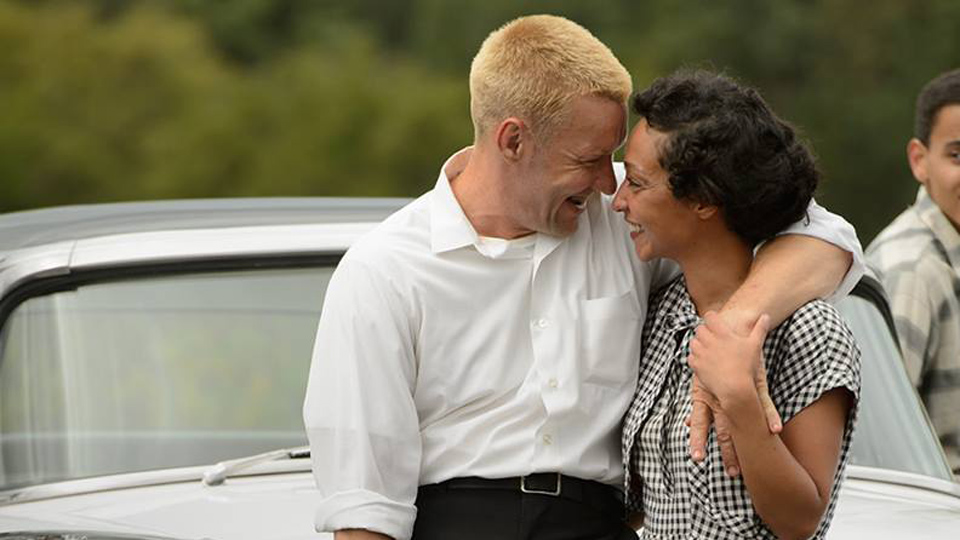
Tag: Ruth Negga

Loving (2016)

Joel Edgerton and Ruth Negga in a love story that fails to capture fire

Director: Jeff Nichols

Cast: Joel Edgerton (Richard Loving), Ruth Negga (Mildred Loving), Marton Csokas (Sheriff Brooks), Nick Kroll (Bernie Cohen), Michael Shannon (Grey Villet), Terri Abney (Garnet Jeter), Alano Miller (Raymond Green), Bill Camp (Frank Beazley)
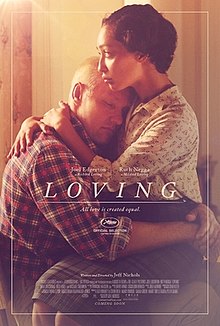
Imagine the idea of the state dictating whom you could and couldn’t marry. This was the predicament Richard and Mildred Loving found themselves in, when the appalling segregationist policies of America in the 1950s saw them arrested for the crime of a white man marrying a black woman. Over time, especially from the 60s onwards, their case was seized upon by Civil Rights movements as a possible cause celebre for repealing many of the worst excesses of laws against mixed-race marriages. But the Lovings themselves remained quiet, private and determined to lead as normal a life as possible, while others fought this battle for them in the court.

Jeff Nichols’ film is full of affection, empathy and regard for these very everyday, normal people. What it is not – for all the skill of Joel Edgerton and Ruth Negga’s performances in the leads – is a film that manages to raise any real interest at all. This is a frequently slow-moving story that manages to drain any drama out of what should be a really dramatic story.

Racial inequality is the sort of topic that desperately should be throwing up rage and anger. Imagine Spike Lee tackling this sort of content. Loving settles instead for being a polite, even rather patronising homage to the quiet lack of drive and energy in Richard Loving (in particular). The sort of film that honours his decision to, essentially, get involved as little as possible in the case, to avoid engaging as much as he can in the wider implications their legal battle has for the nation and to studiously resist any attempts to get either side involved in it.

This may be great for reality, but it’s strikingly poor drama. You feel that a drama that focused instead on those actively campaigning for the rights for equal marriage rights to be recognised, the ones who actually fought these battles in court and brought energy and fire to the debate might be a more interesting film. Instead this settles for being a film about regular, not special people, while around the edges of their lives far more interesting events and actions are constantly taking place. 

There are some things to admire in the making of the film – Nichols’ brings his usual poetic skill to it – but this is a glacially paced, unabsorbing, overlong film that manages to make a scintillating and passionate subject as dull as dish water. Negga and Edgerton both do fine jobs – and clearly really admire the everyday nature of their characters – but these softly spoken, unengaged people to whom events happen, but who never take a stand of any sort of try and shape these events or set the direction of their own life, slowly switches the audience off.

Where is the fire here? Nichols’ film instead tries to become a tribute to the honesty of the working man, to Richard’s everyday values, simple, homespun viewpoints. It hails his lack of education (the film dances around where on the education spectrum Richard would be placed today), social awareness or even opinions as something which somehow makes him more “real” than anything else. This attitude, to be honest, becomes both trying and even a little patronising in its bluntness and sense of importance.

Just in case we are ever in danger of ever forgetting that he is a working man, the film can’t go longer than about five minutes without showing Richard laying some bricks. Mildred gets a little more engagement with the social issues of the 1960s – and the film does a good job of suggesting that she was a woman of considerably more hinterland than her husband, but who loyally followed his lead in the world. But neither of them come into focus as truly engaging characters. And because they are so hard to invest in, because the story and their film gives us so little personality for either of them to latch onto,  in the end you don’t get as fired up by the injustice of their case as you should do.

Instead you are left thinking at the end that this sort of racism is bad because, well, we know it was at the start. Following the story of two basically boring people who were in the right place at the right time to become the face of overturning some terrible laws, doesn’t make them interesting and doesn’t make a story that focuses on their lives at the cost of any of the wider issues or actual battles that were being fought, suddenly interesting either.

Ad Astra (2019)

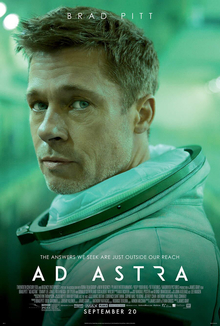
Brad Pitt goes out to the stars in Ad Astra

Director: James Gray

Cast: Brad Pitt (Roy McBride), Tommy Lee Jones (H. Clifford McBride), Ruth Negga (Helen Lantos), Liv Tyler (Eve McBride), Donald Sutherland (Colonel Pruitt), John Ortiz (Lt General Rivas

Man has looked up at the stars for as long as we can remember and imagined what lies out there. From Gods to other intelligent life form, every culture has been drawn to imagine beyond the bounds of Earth and dream of finding what is out there. It’s a dream that powers the life of leading US Astronaut H. Clifford McBride (Tommy Lee Jones), who in “the near future” led “The Lima Project” to Neptune to try and find intelligent life beyond the Solar System. Now missing 17 years, Clifford’s son Roy (Brad Pitt) has become a leading astronaut, tasked with leading efforts to find his father after a series of devastating power surges damaging the planet and killing thousands are traced back to the Lima. So Roy embarks on an epic voyage, from Earth to mankind’s bases on the Moon and Mars to Neptune in quest of his father.

James Gray’s artfully made film yearns for a moral and thematic depth that it doesn’t quite manage to achieve. Its structure is heavily inspired by Hearts of Darkness, with Marlow and Kurtz twisted into a Son-Father dynamic and many of the stop offs on the way McBride encounters eerily reminiscent of the adventures of Marlow. Is there a longer trek down the river than crossing the Solar System? 

Within this framework, Gray throws in an earnest meditation on the nature of mankind’s yearnings and how our instincts collide between our dreams for an unattainable unknown and the world around us. All of this accompanied by Pitt’s Conradesque voiceover, as McBride muses over his own internal struggles, doubts, inadequacies, frustrations and sorry all bubbling beneath his calmly controlled exterior.

Its Pitt’s film and Ad Astra is a reminder that he is an actor who looks to push himself to his absolute limits. Here he carries the whole film, for long stretches alone, his eyes conveying the cool professionalism and self-control of McBride, along with his own far-more-fragile-than-appears psyche. Carrying burdens of loss and regret, McBride seems to see crises that he encounters in space as relief from his own internal struggles. Whenever the shit hits the fan, McBride is the coolest man in the room (his commanding officers admiringly state his pulse rate never seems to go above about 80 in even the most life-threatening situations) and from tumbling from the outer atmosphere, evading pirates in a moon buggy in space or manually landing a spacecraft, he never fails at his professional duty. Only when confronted with the emotions of his own life is he left with his composure fractured.

Pitt conveys the isolation and pain of McBride extremely well, with acting and expressions so subtle they carry all the more emotional force. It’s a controlled and perfectly judged performance that powers the entire film, and bears a lot of the thematic weight of Gray’s invention. 

Gray’s direction is powered by clear memories of 2001 and Solaris (although I also felt echoes of Danny Boyle’s space horror Sunshine in its fascination with the dread and danger of the vastness of space not to mention Christopher Nolan’s Interstellar). It looks fantastic with a wonderful score, ambitiously grasping for importance.

Episodic as it moves from location to location, Gray’s film creates a convincing world of the future, where mankind has disputed colonies on the moon (space pirates roam between bases, taking hostages like Somalian pirates), space travel is commercialised (by Virgin of course) and people live and die on a far-flung underground base on Mars. While I did briefly think about the enormous cost of all this space travel with its huge fuel consumption and debris of discarded rocket sections (how on earth is this commercially viable?), not to mention the trouble that would be involved in erecting giant neon cowboys on the Moon, it’s convincing.

Gray’s film wants to delve into the mysteries of humanity, and McBride Snr’s entire life has been dedicated to the quest for finding out that we are part of something larger than ourselves, that we are not alone. Gray wonders perhaps if this shark-like desire we have for moving forward, the ruthlessness we display in leaving the past behind in quest for the future, perhaps mars us as a species, prevents us from finding contentment around us and leads to us damaging this world we have been given in our search to make it larger.

But the more Gray’s film closes its grip, the more themes seem to slip through its fingers. The journey is compelling in its creation of a series of worlds, Brad Pitt’s dedicated performance, and the sense of danger and the array of questions that the film throws up. But while 2001 in many ways manages to feel like it is about everything and nothing, so wonderfully engrained is the magical poetry in its soul, here it feels like the film gets less and less engaging the further the journey goes. The destination sadly cannot match the voyage, however beautifully filmed that voyage is.

Instead when the film arrives, we find it becoming more and more bogged down in father-son issues that feel just cheaper and less interesting than the more spiritual and enigmatic concerns the film has for much of the rest of its running time. Not helped by a disengaged performance from Tommy Lee Jones, the more the film heads into this territory the more it seems to lose the depth it aimed for earlier. Late attempts to restore the enigma, mystery and universality don’t succeed to completely restore the feeling that this is classic science-fiction poetry. It’s a shame as Gray’s film as many wonderful moments, beautiful craft in its making and a wonderful performance by Pitt – but it feels in the end as about much less than it could have been. But for all this, there is a magic unknowingness about it that could have it hailed as a classic in years to come.