
Tag: Sam Claflin

The Hunger Games: Catching Fire (2013)

Jennifer Lawrence and Josh Hutcherson head back into the area in The Hunger Games: Catching Fire

Director: Francis Lawrence

Cast: Jennifer Lawrence (Katniss Everdeen), Josh Hutcherson (Peeta Mellark), Liam Hemsworth (Gale Hawthorne), Woody Harrelson (Haymitch Abernathy), Elizabeth Banks (Effie Trinket), Lenny Kravitz (Cinna), Philip Seymour Hoffman (Plutarch Heavensbee), Jeffrey Wright (Beetee Latier), Stanley Tucci (Caesar Flickerman), Donald Sutherland (President Coriolanus Snow), Sam Claflin (Finnick Odair), Lynn Cohen (Mags), Jena Malone (Johanna Mason)

It’s a year on from Katniss (Jennifer Lawrence) and Peeta’s (Josh Hutcherson) victory at the 74th Hunger Games. They and the other victors live a life of relative luxury in the dictatorship of PanAm. Problem is Katniss’ humanity and defiance of the ‘rules’ from her victory have started to inspire whispers of discontent into open mutterings. When a “victor’s tour” fails to impact on her lustre, President Snow (Donald Sutherland) follows the suggestion of Games Maker Plutarch (Philip Seymour Hoffman) – let’s celebrate the 75th Anniversary by chucking two victors from each district back into the ring. As the only female victor from District 12, this means Katniss will either wind up dead – or be put into a position where she has to abandon her humanity to become the killer she never wanted to be. But is there another game going on inside the game?

Catching Fire is an entertaining, fast-paced, well made sequel to The Hunger Games that successfully broadens and deepens the franchise. Far from being a difficult middle chapter, it’s well structured to tell a pretty self-contained story that riffs on events from the first film without being enslaved to them. It also very sharply deepens the social and political commentary from the first film, widening our knowledge of PanAm and our understanding of its corrupt, murderous system.

Lawrence’s direction is punchy, pacey and provides plenty of emotional depth and scope. It’s a film that skilfully balances questions of trauma and the horrors of murder-for-entertainment, with poundingly exciting action sequences in the games themselves. In some ways Catching Fire is the only film in the series that ends (more-or-less) with a triumphant bang, and it’s possibly why the film is the most satisfying of the lot, with the cleanest structure. It also has the advantage of widening the outer edges of the world of the film, while still largely operating within the self-contained world of the games arena.

Within that, it also manages to keep us on our toes. Many of the same set-ups – both in the build-up to the games and the action in the arena itself – echoes or reflects what we’ve seen before. The film uses this to throw at us moments the surprise us – as allegiences are revealed – or provide opportunities for dark humour (such as the setpiece Katniss decides to use to showcase her skills this time round, markedly, darkly different from her archery display in the first film).

The film is entertaining and also thought-provoking. Within the confines of its 12A certificate, it doesn’t flinch from the oppressive horror of PanAm in the districts, where sudden executions and brutal beatings are an everyday occurrence. Similarly, it demonstrates even more the heartless opulence of the capital, a world of hedonism where no questions are asked about what props this whole system up.

And at the heart we have Katniss. Wonderful played, with a full-blooded emotional commitment from Jennifer Lawrence, Katniss is slowly become aware of her iconic status, but hasn’t changed dramatically from the at-times judgmental, prickly, abrasive loner she was at the start. She’s a reluctant figure-head for a new movement, but that’s what makes her both so effective and so moving. She’s not pretending or playing a hero – she simply does the right thing, because that’s what she believes she should do. Sure she makes a host of poor character choices, but that’s what genuine people do.

Lawrence’s grounded emotional realism in the lead, helps sets the tone for the whole franchise as something surprisingly gritty, dangerous and at times quite emotionally challenging. Hutcherson does fine work as the true heart of the film series, a decent, kind man who not only sees but also brings out the best in other people. Claflin is very good as a matinee idol victor who keeps us guessing on his motivations. Harrelson and Banks provide skilled depth to characters that could have been flamboyant cartoons. Sutherland enjoyably quietly munches some scenery as the dastardly Snow, while Hoffman coasts showily but effectively.

Catching Fire bursts along with a great deal of flair and lets us really see how despotic regimes like this operate. Katniss is manipulated into situations designed to fit a narrative that will cement the position of the regime. Ordinary people are corrupted by the wickedness around them. Humanity is seen as a dangerous quality. It’s intriguing and way more insightful than you might expect from a YA blockbuster. And its treated with a profound respect by everyone involved.

And it works because it also tells a cracking, entertaining story, revolving around richly drawn characters with fully fleshed out hinterlands and personal story arcs. For all it takes place in a dystopian future, it feels a real and grounded story. And its hard not to relate to a film where the central character, for all her flaws, is fighting for her right to not kill, maim and slaughter those around her for entertainment: who clings to her humanity despite all temptations to the contrary.

Catching Fire is also blessed with being the neatest, most straight-forward and cinematic of the stories (it’s the only film in the series that ends with anything near a triumphant bang rather than a searching question – for all that it’s a compromised triumphant bang). Told with verve, smoothness and pace it’s a very entertaining movie – and surprisingly rewarding.
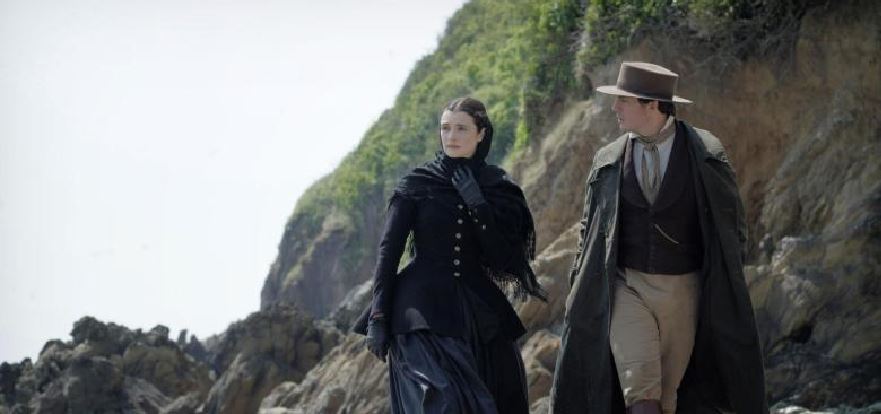
My Cousin Rachel (2017)


Rachel Weisz and Sam Claflin in a dance of romance and suspicion in My Cousin Rachel

Director: Roger Michell

Cast: Rachel Weisz (Rachel Ashley), Sam Claflin (Philip Ashley), Iain Glen (Nick Kendall), Holliday Grainger (Louise Kendall), Simon Russell Beale (Court), Pierfrancesca Favino (Enrico Rainaldi), Andrew Havill (Parson Pascoe), Andrew Knott (Joshua)

Did she? Didn’t she? That’s the key phrase this deliberately ambiguous film returns to again and again. Is Cousin Rachel a serial schemer, seductress and possible murderer? Or is she just – well I guess just really unlucky? It’s a difficult line to tread –ambiguity is extremely challenging to bring to film, as it’s a medium that’s pretty decisive in what it shows us first-hand. But My Cousin Rachel pulls this off with a creepy aplomb.

At some point in the 1830s, Philip Ashley (Sam Claflin) receives a letter from his cousin and guardian Ambrose, who has recently passed away in Italy. The letter obliquely accuses Ambrose’s wife, his cousin Rachel (Rachel Weisz), whom Philip has never met, of poisoning Ambrose. As Ambrose died before he could prepare a new will, Philip inherits his estate – but still harbours a rage against Rachel, suspecting her of murder. However, when Rachel comes to stay with him, Philip finds himself increasingly drawn towards, and besotted with, her.

Roger Michell gracefully directs and writes this intriguing little mood piece, a fine chamber-piece thriller. With an unsettlingly lyrical score and shot with a beautiful eye for the Cornish countryside, My Cousin Rachel not only grips, but rings true with anyone who has either (a) fallen blindly in love, (b) suffered from romantic obsession or (c) been paralysed with jealousy. Which is probably just about everyone.

The film relies for its success largely on Rachel Weisz’s exceptionally intelligent and thoughtful performance as Rachel. She looks perfect for the role – she’s both the sort of woman men would fall wildly in love with, and old enough to settle into an unsettling, semi-incestuous flirtation with Philip. Her performance works because Weisz plays the part with exceptional skill, never tipping the wink to the audience, but skilfully modulating and adjusting her performance with every scene so that you remain as uncertain about her actions and motives as anyone else.

Apparently Weisz made her own mind up on Rachel’s guilt and innocence, but never told Michell or Claflin. Intriguing to think that while they shot scenes of domesticity or passion, that only one of those involved really knows what’s happening – a mood that totally carries across to the viewer. Weisz plays the part with complete strength of conviction and straightness – every scene is played as if the feelings in it were completely true and bereft of manipulation. She makes it unreadable, while having a face overflowing with emotion and feeling. Does she understand Philips feelings early and manipulate him? Or does she genuinely not expect his romantic intentions?

Michell skilfully shows how Rachel wins over people with ease. Even the dogs immediately gravitate towards her. Parson Parscoe and his family flock around her. Philip’s servants smarten themselves up and make every effort to make a good impression on her. His godfather Nick seems to oscillate continually in his judgement of her, but even he seems powerless in her presence. The camera carefully hovers and focuses in on Rachel, with many shots focusing on her face alone – seducing us as much as the rest of the characters. We almost never see her except in scenes with Philip – so we have the same information as he does for making our minds up.

Sam Claflin is equally key to the film as Philip. In many ways Philip is quite the whiny teenager – you could easily dismiss him as a romantic young idiot, an obsessive would-be Romeo, who makes a series of terrible decisions through listening to his penis rather than his head. But despite that –/ perhaps because his errors and mistakes seem so universal – it’s easy to sympathise with him. Rather than want to slap him anger, you want to do so in frustration – “don’t do that, you idiot!” Michell and Claflin play his increasing disintegration brilliantly. Is it poison? Or is it his increasing jealousy and obsession unhinging him? Who hasn’t been involved in an unequal romantic obsession?

It’s not a perfect film. Philip’s obsession with Rachel is alarmingly sudden – perhaps too sudden. Towards the end, Michell becomes slightly too enamoured with mystery – a final, lingering shot introduces an element of uncertainty about a character we have never had cause to suspect, which feels like a little too much. At times the lingering camera seems to be trying to suggest more in the performance than Weisz seems willing to give away.

But these are quibbles. The film is well-directed and filmed, and terrifically acted – Glen and Grainger are very good in key supporting roles – but it’s a triumph for Rachel Weisz. Weisz seems like an actor it’s easy to overlook, maybe because she has never quite got the star vehicles her talent matches – but this film is a clear reminder that, at her best, she is an extremely gifted performer.

Their Finest (2016)


Gemma Arterton and Bill Nighy do their bit for the war effort by making movies in Their Finest

Director: Lone Scherfig

Cast: Gemma Arterton (Catrin Cole), Sam Claflin (Tom Buckley), Bill Nighy (Ambrose Hilliard), Jack Huston (Ellis Cole), Helen McCrory (Sophie Smith), Eddie Marsan (Sammy Smith), Jack Lacy (Carl Lundbeck), Rachael Stirling (Phyl Moore), Richard E Grant (Roger Swain), Paul Ritter (Raymond Parfitt), Henry Goodman (Gabriel Baker), Jeremy Irons (Secretary of War)

During World War Two, Catrin Cole (Gemma Arterton) is hired by the Ministry of Information to write dialogue for propaganda films – to be specific “the slop” (the women’s dialogue). She pitches the semi-true story of two young women who take a boat to Dunkirk to rescue soldiers, and is hired to work with Tom Buckley (Sam Claflin) to write a screenplay. Among the cast of this film is Ambrose Hillaird (Bill Nighy), an ageing matinee idol having trouble accepting his days of playing young heroes are behind him. Together they overcome initial difficulties to create a film that moves the nation.

Their Finest is a gently amiable piece of film-making, totally predictable but still rather entertaining for all that. You won’t exactly be gripped or compelled by it, but you certainly won’t feel cheated out of your time watching it. It doesn’t have much in the way of originality about it – and you can see most of its jokes and events coming a mile off – but it’s still got a certain charm and warmth about it. And it’s crammed full of some very fun “film-within-a-film” scenes, both seeing the film the team create and the work (and backstage politics) that go into making it. There are also some neat gags (and wry comments) about the casual sexism of the day – and the film (without dwelling on the issue) makes a number of heartwarming moments out of its lead character succeeding against the odds on her own merits.

It also has a couple of fine performances, not least from an engaging and bright Gemma Arterton, who brings a great deal of quiet depth and dignity to Catrin. Catrin has a sweet lack of self-confidence about her – a gentle doubt, that she must learn to overcome over the film. She makes an affecting and empathetic lead. It also helps that she has a great screwball comedy chemistry with Sam Claflin. Claflin’s part is far more conventional – the gruff man with the heart of gold – but he nails the part’s humanity and its comic grumpiness.

The film’s main weapon of entertainment is Bill Nighy, in a part almost certainly written for him so well does it match his strengths. Hilliard is just the sort of vain, pompous, arrogant preener that Nighy can play in his sleep – a man who needs to be flattered and praised into doing anything, who assumes when he first reads the script he’s being offered the role of the young hero not the drunk uncle. What Nighy does so well with parts like this, though, is bring them depth and pathos. Hilliard may be an egotist, but he’s gently comforting in tragedy and has a profound sadness and insecurity behind him about where his career and life is going. So, while he brings a lot of the film’s comedy, he’s also a large part of its heart, elements that emerge increasingly as the film progresses.

The sequences that follow the making of the film are very funny. Jack Lacy is wonderfully sweet and genuine as an actual war-hero, an American serving in the RAF, parachuted in by the Ministry of War to send a propaganda message to the USA. Lacy’s Carl is well-meaning and loves films (not least his hero worship of Hilliard) but a hopeless actor, who can’t help smiling at the camera after every line. It’s a neat indication of the film’s well-judged tone that he is never a butt: the crew work hard to improve him, he’s eager to learn, he’s completely lovely – and when a character does complain about the extra work he is causing, Henry Goodman’s Alexander Korda-ish producer simply states “he has done things none of us would be brave enough to do”.

Because there is a harder realism about this film. It doesn’t shy away from the dangers and brutality of war – there are bombings and people die. Some deaths are characters we know, others are on the edges of the story. “I’m a bit emotional today. My landlady was killed last night” one character states. Each of our lead characters encounters a dead body, or knows someone who has been killed. There is a genuine danger of obliteration or invasion just on the edges of the comedy. It’s a neat balance that the film keeps, between pathos and light comedy.

The film-within-a-film, The Nancy Starling, is a brilliant pastiche of 1940s British war films, instantly recognisable and affectionately amusing. But it’s also, when we finally see parts of the film, rather moving. It has a real emotional force to it – the film-makers achieve the difficult balance of giving us a pastiche we can chuckle at it, but also a pastiche that feels like it would genuinely move the people watching it in the film. 

Their Finest’s main problem might be that partly because it’s so quietly unassuming and gentle, it is almost completely bogged down in predictability. Most of the character arcs can be seen coming a pile off – my wife and I were able to practically write the scenes ourselves as they happened. There is very little original here. Even the stories of actors’ pretensions and film-making disasters have a breezy air of familiarity about them – the sort of stuff we’ve seen in films about film-making hundreds of times before. In fact, what’s striking is that a film so predictable and familiar remains entertaining and endearing – which is surely some sort of testament to the acting and direction.

Their Finest is perfect for what it is: an entertaining, weekend-afternoon film that will pop a gentle smile on your face. There is nothing particularly deep or memorable about it beyond that. It has some fine performances, some good jokes and it will make you laugh. But will you remember much about it within a few hours? Probably not. Is it a film that you can imagine revisiting to discover new gems in it? Again probably not. Is it a film that will entertain you on a Sunday afternoon? Absolutely.