Tag: Sam Riley

Firebrand (2024)

Firebrand (2024)

Atmospheric film attempts to redefine Katherine Parr, but fails to make a successful dramatic case

Director: Karim Aïnouz

Cast: Alicia Vikander (Katherine Parr), Jude Law (Henry VIII), Eddie Marsan (Edward Seymour), Sam Riley (Thomas Seymour), Simon Russell Beale (Bishop Stephen Gardiner), Erin Doherty (Anne Askew), Ruby Bentall (Cat), Bryony Hannah (Ellen), Junie Rees (Princess Elizabeth), Patsy Ferran (Princess Mary)

For years people had this muddle-headed idea that Henry VIII was a jolly fat-man with a charmingly eccentric habit of constantly marrying the wrong woman. In fact, this homicidal tyrant was one of history’s definitive arseholes, his hands scarlet red with the blood of anyone who annoyed him (including at least two of his wives). His last wife, Katherine Parr, is similarly often remembered as a dutiful matron than a dynamic and intelligent woman (who wrote a book on theology and ruled as regent for several months).

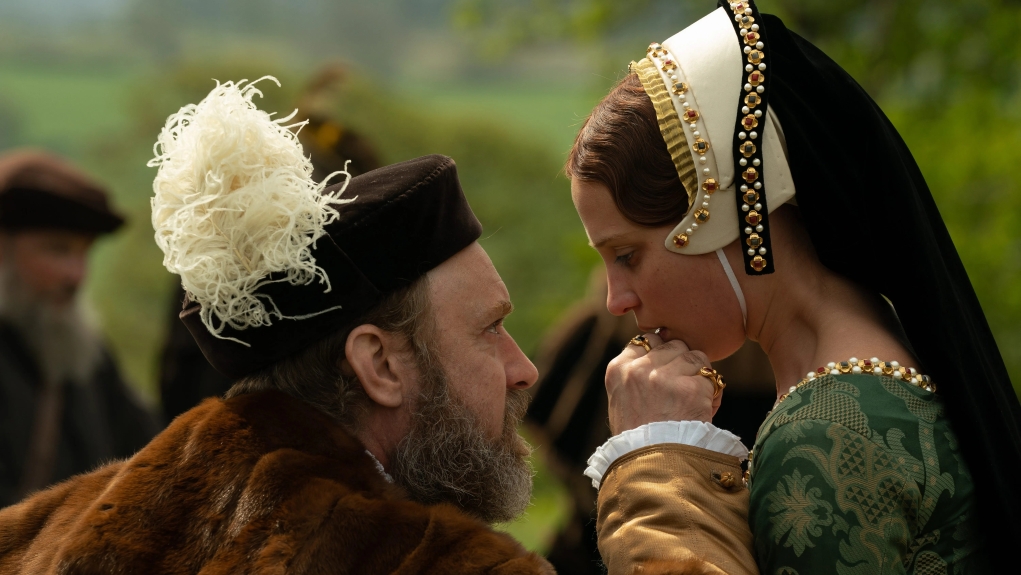
Firebrand is a noble attempt to challenge that narrative, drawing focus towards Katherine Parr’s (Alicia Vikander) zeal for religious reform and the near-fatal attention it brought her from the hard-core traditionalists around Henry VIII (Jude Law) not least Bishop Stephen Gardiner (Simon Russell Beale). This reimagining of the final months of Katherine Parr’s marriage to the bloated tyrant tries its very best to reclaim her as a major figure in the founding of the Church of England and if, in the end, it doesn’t quite manage this, it’s still good to have Katherine reclaimed from history’s trivia corner – and links her closely to the eternally popular Elizabeth I (poor Mary remains a dowdy fanatic, played by a gloomy looking Patsy Ferran – feminist sympathy can only go so far.)

Aïnouz does give Firebrand a freshly claustrophobic and sinister feel behind the costume details (bringing the sort of outsider eye that Kapur bought to Elizabeth). It has an imposing, doom-laden score of moody strings and sudden, discordant noise, frequently presenting the English countryside not as lush environment, but misty place pregnant with unknown menace. It’s a fine mood setter for a land where reformist religious practices are ruthlessly suppressed by a religiously conservative king (Henry’s only interest in reform being what he personally could get out of it – in his case a divorce and a mountain of monastery cash).

In the candlelit gloom of the court, the capricious king makes life as unpredictable and dangerous as he is. Henry is accompanied everywhere by a group of fawning hangers-on, whose job is to whooping up the court to collapse into hysterics whenever the king says anything approaching a joke. The most effective thing about Firebrand is it’s presenting of a Henry VIII who is one part Harvey Weinstein to two parts Josef Stalin. Jude Law gives a masterclass in preening cruelty and psychopathic bullying, as man so used to getting what he wants even the slightest suggestion he can’t sends him into a spiral of spittle-flecked rage. Firebrand plays up his corpulence, the suppurating stench of his ulcers (Law, in method style, wore a cologne that stank of piss during filming) making this king a million miles from the broad-shouldered Holbein image.

Henry paws openly at attractive court ladies and delights in humiliating those around him. He uses physicality as a weapon of control, constantly grasping people by the fae or neck to draw them towards him. Law is superbly cruel and domineering, while being pathetically needy, demanding complete and total affection from his wife and yo-yoing between randy affection and assault if he doubts for a second anything other than her complete devotion.

If only the film was able to make as compelling a case for Katherine Parr’s undoubted qualities, as it does for the King’s negatives. Alicia Vikander has a hard job – Katherine is rarely, if ever, not under observation so must constantly hide her thoughts and emotions behind a stoic shield. But it’s a shield that partly deadens her performance. Firebrand only finds a few moments, at its start, for Katherine to truly be herself, in the presence of Erin Doherty’s passionate firebrand Anne Askew (whose Protestantism overlaps with a socialistic political view which doesn’t quite ring true for Tudor England).

Vikander and Doherty’s relationship is one of the film’s most interesting, with more than a hint of romance between these two reformers, one who has never compromised and another who compromised so much she literally married her persecutor. Aside from that, Vikander has to work hard to try and communicate her fierce commitment to reform behind her eyes – something that’s a lot harder than using her skill at telegraphic her hatred and fear of Henry. Her management of the king does provide moments of interest, notably a fascinating sequence when Katherine publicly humiliates a potential mistress in order to re-spark the king’s interest in her (Henry, like other egotists, liking nothing more than young women fighting over him).

But Firebrand struggles to translate Katherine’s religious views into either something politically compelling or dramatic. Instead, it largely resorts to working hard to tell usthat Katherine was a feminist icon, the inspiration for Elizabeth I and the true mother of the Church of England – rather than showing it. It also has to awkwardly rework the actual historical events to facilitate this.

As such, we have her roundly rejecting the advances of Sam Riley’s lecherously ambitious Thomas Seymour (in real life she immediately married him on Henry’s death – showing even intelligent people can fall for terminally selfish idiots), arrested, imprisoned and threatened with burning (in real life Katherine avoided this by publicly submitting utterly to Henry’s ‘superior’ judgement in all things religious) and an optimistic ending of her and Elizabeth planning a feminist protestant utopia (as opposed to Elizabeth’s affair with Seymour that permanently fractured their relationship). Firebrand ends with a paean to how Parr’s writing laid the foundations of Anglicanism, which feels quite a reach to make from one book.

Strangely however, the film’s biggest historical deviation of fact – her final solving of her Henry problem – despite being a clearly fictional flourish is surprisingly satisfying (not least because of the vileness of Law’s Henry) and manages to ring spiritually true for what a parade of people (and Katherine as well probably) would have liked to do to the murderous maniac if given the chance. But it’s also too little, too late in a film that otherwise is a little too dry, a little too lacking in narrative drive. For all it wants to build up the reputation of Katherine Parr, it gives Vikander far too little meaty content to really play with while ceding much of the interest to its wallowing in the cruelty of the king.

Rebecca (2020)

REBECCA
Lily James and Armie Hammer do their best in an overblown Rebecca the swops Gothic chills for lovely costumes and locations

Birector: Ben Wheatley

Cast: Lily James (The second Mrs de Winter), Armie Hammer (Maxim de Winter), Kristin Scott Thomas (Mrs Danvers), Keeley Hawes (Beatrice Lacy), Ann Dowd (Mrs Van Hopper), Sam Riley (Jack Favell), Tom Goodman-Hill (Frank Crawley), Mark Lewis Jones (Inspector Welch)

Hitchcock’s film version of du Maurier’s novel casts a long shadow. Few have taken up the challenge to film it since – and Ben Wheatley’s is the first film version in nearly 80 years. But you can be pretty certain that, unlike Hitchcock’s, this one probably won’t be being watched 80 years from now.

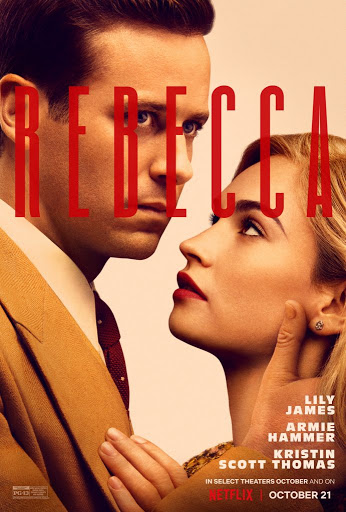
In Monte Carlo, a young woman (Lily James) meets and falls in love with rich Cornish landowner Maxim de Winter (Armie Hammer), a widower on holiday. They marry and return to his seat at Manderley. However, on arrival the second Mrs de Winter finds that she is living in the shadow of Maxim’s deceased first wife, Rebecca. This feeling is encouraged by the passive aggressive manipulation of Rebecca’s devoted housekeeper Mrs Danvers (Kristin Scott Thomas). Slowly, the second Mrs de Winter starts to worry that even her sanity starts to be slipping.

Wheatley is a director with a love of thriller and horror, and he really should be a natural fit to take on du Maurier’s gothic creepiness. But Wheatley feels almost constrained by the period title and beauty. This is a film that totally misses its gothic beats, instead settling for being a lusciously filmed costume drama. It has only a few traces of the unsettling psychology or air of ghostly possession that the story requires, and even those are chucked in haphazardly and then forgotten in order to make way for a pretty sunset or generic shot of Lily James looking sad in the rain.

The inescapable feeling on watching this is that Wheatley actually wants to turn the story into a more conventional romance. The age difference between Maxim and the second Mrs de Winter has been almost removed.  With Armie Hammer too young and Lily James too pretty, there is no ambiguity to Maxim’s feelings or motivations, nor any power imbalance to their charming, sunlit courtship, filled with carefree drives and charming beach picnics. Gone are the suspicions (for both the second Mrs de Winter and us) as to what a rich, sophisticated older man could see in a shy, unremarkable, average-looking girl who’s employed as little more than a servant.

It also removes much of the vulnerability and uncertainty Mrs de Winter should feel, by bringing her onto more equal terms with her husband. From du Maurier’s vision of an innocent woman feeling out of her depth as she’s plunged into an alien world, unable to break through the hauteur of a distant, older husband, we instead get far more of a conventional whirlwind romance that sours when the couple return home.

It’s not really the fault of the two leads, who give sterling work. Lily James has just about the right vulnerability to her, even if she’s still got a bit more spark than the quiet, demure character needs. But James has a fabulous sense determined earnestness to her, an eagerness to do the right thing and not let anyone down (her greater dignity and strength also pays off in sequences where Mrs de Winter takes on a stronger position in the marriage).

As Maxim, Armie Hammer has the right sort of authority and conveys the distance and coolness of the character, even while he is clearly too young and at times seems a bit hampered by his accent and setting. (Like some American actors, he at times struggles to fully comprehend the issues of class within the film.) Perhaps the main weakness to the casting is, by playing up his charm and romanticism, you never really think for a moment that this is a bloke who might have murdered his wife. It also makes him never feel like the sort of chap who could honestly ever have though about dispatching his new wife. It again strips out much of the darkness and dread of the original.

Needless to say, Kristin Scott Thomas has a ball as Mrs Danvers, the obsessed and bitter housekeeper, a part that hardly pushes her to her limits but which she delivers more than enough in. Wheatley pays homage to several of Hitchcock’s shooting decisions around the character, and the conveying of her menace is probably the film’s most successful beat.

However, the film fails at too many other important points. The sense of the previous Mrs de Winter haunting the home is lost completely. Too often the creepiness and psychological fear the film is aiming for gets lost, with periodic bursts of Cornish singing used too obviously to suggest unsettling menace. One very successful sequence set in a room of mirrors just serves to flag up how painfully absent the sense of threat and fear are from the rest of the film. To be honest, it’s a film that needs more darkness, more shadows. Instead everything is lit with all the prestige handsomeness of Merchant Ivory and Sunday dramas. Why did Wheatley go for this visual approach? Did he feel that it was expected from the lovely locations and luscious costumes?

And the costumes and the sets do look lovely. The shooting colours are vibrant and beautiful. It’s very grand and charming and it turns a haunting novel with dark deeds at its heart into something safe and neutered.

 The final product is what happens if a combination of styles are thrown together in a way that service not the story, but how each element of it could be best presented. When the film wants to show off the set and costumes, it’s bright and beautiful. At the few times it wants to suggest ghostly intimidation, we get some chanting and a few darkened rooms and billowing curtains. Neither plays well off the other and the film ends up feeling professionally mounted but workmanlike. It’s a shame as Wheatley could have really made something of this. But it feels like he has been forced into a prestige costume drama straightjacket.

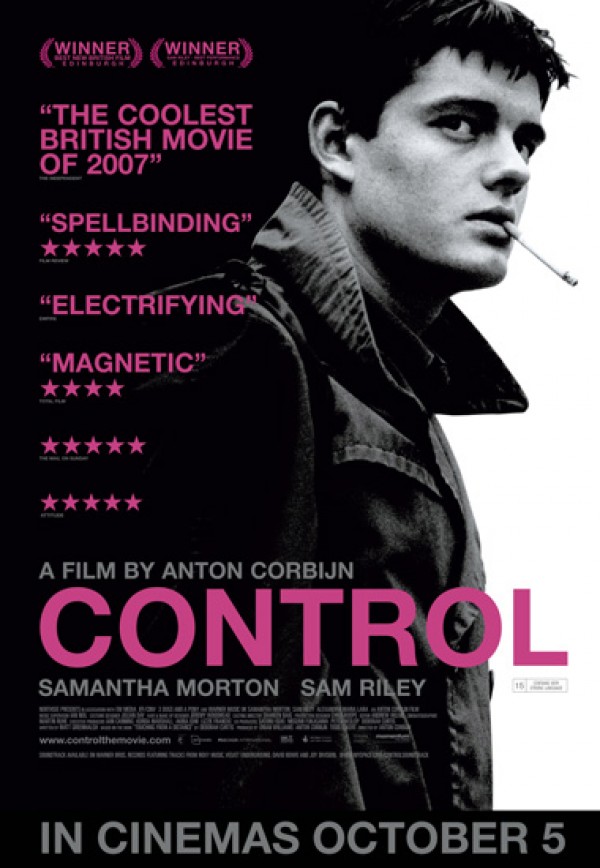
Control (2007)

Sam Riley excels in this heartbreak life story of Ian Curtis

Director: Anton Corbijn

Cast: Sam Riley (Ian Curtis), Samantha Morton (Deborah Curtis), Alexandra Maria Lara (Annik Honoré), Joe Anderson (Peter Hook), Toby Kebbell (Rob Gretton), Craig Parkinson (Tony Wilson), James Anthony Pearson (Bernard Sumner), Harry Treadaway (Stephen Morris), Andrew Sheridan (Terry Mason), Matthew McNulty (Nick Jackson)

Depression is no respecter of fame or success. You can have everything many people would give their right arm for, and still find the prospect of life overwhelming. Control is a heartfelt, deeply affecting film about Joy Division lead singer Ian Curtis, who committed suicide shortly before a career-changing tour of America. Anton Corbijn knew Curtis and the band personally, and his deep connection with this story is obvious in every frame of this beautifully shot film.

In 1975, fresh out of school, Ian Curtis (Sam Riley) marries Deborah Woodruff (Samantha Morton). Curtis is a would-be poet, but finds his interest piqued when he attends a gig by the Sex Pistols and quickly forms a band – Joy Division – with a group of friends. Powered by Curtis’ imaginative lyrics, the group starts to make a name for itself, taking on a manager Rob Gretton (Toby Kebbell) and winning the attention of the influential Tony Wilson (Craig Parkinson). However, all is not well with Curtis: beginning to suffer increasingly from epilepsy, Curtis is also falling in love with a young Belgian journalist Annik Honoré (Alexandra Maria Lara) while still in love with – although increasingly lacking in mutual understanding with – Deborah. These pressures slowly build up on Curtis.

Control is a film about a person’s longing to have security and a sense of mastery over their own life, but finding they lack both this and the emotional strength to deal with the consequences. Curtis is a man buffeted by competing pressures and desires, as well as a paralysing fear that epilepsy will eventually claim his life. He is frequently unable to relax, and tries his utmost to divorce himself from the reality of his situation by living as much as he can in the moment, ignoring until it is impossible the burdens of making choices about his life and relationships.

Living in the moment is what, for Curtis, makes it all possible. You can see it in reflection in his performances of Joy Division songs – the intense focus, mixed with the channelling of his own epileptic fits into a series of mesmeric on-stage dances, filled with wild and jerky movements. The entire film suggests much of Curtis’ output could be retrospectively seen as a cry for help, many of his lyrics about concerns that would eventually lead to him taking his own life. At one point, Curtis sings heartbreakingly of his isolation in a recording studio booth – with Corbijn cutting straight to the rest of the band and studio technicians talking and going about their business in the studio, oblivious to the underlying desperation that runs through it.

Because the film makes clear no one knew how to help Curtis or even how to identify his problem. To his manager and the band, its all part of the rough and tumble of rock ‘n’ roll. To his studio, it’s the artistic personality. Doctors seem to barely understand how to treat his epilepsy and miss all the signs of the personal stress it places on him. Neither his wife nor girlfriend can imagine that his guilt and self-loathing run as deep as they do. 

Corbijn’s beautifully evocative black and white photography adds hugely to this sense of dream-like non-reality around Curtis’ life, against the backdrop of some beautifully rendered Macclesfield locations. It helps wonderfully capture the sense of Curtis’ life somehow never coming fully into colour, as well as adding a deeply affecting air of melancholy over every frame. It’s also perfect for capturing the atmosphere of the 1970s clubs and bars that the band experienced.

The photography gives the film a feeling of the classic kitchen-sink dramas of the 1960s, and that is no bad thing, adding a certain depth to the tragedy of a working-class lad swept up by success and largely unable to cope with the burdens of expectation. Curtis is shown to be constantly overwhelmed by the pressure of live performance and the expectations of fans and viewers, yet also desperate to continue to have this channel to express himself.

Corbijn doesn’t give him a free pass though, and shows how he deliberately distanced himself from Deborah and their child. Often silent and disengaged, with a glazed look of a man who would rather be anywhere else than having to support a wife and child before he was 20, Curtis and Deborah’s marriage is one of affection but no shared interests of outlook. Deborah clearly provides Curtis with no kindred-spirit feeling, but he uses her as an emotional prop. Simultaneously he uses Annik for the same, while conducting an affair that clearly gives him a deep sense of shame, but finds impossible to resist. It’s living in the moment again: clearly, at every point, he would rather forget the other woman altogether, and is incapable of making the final life-altering decision needed.

This balance works so well because Sam Riley is astonishingly good as Curtis – real, pained, gentle, tender, selfish, with eyes that seem to have the life and will to go on drain out of them as the film goes on. Riley’s performance is pitch-perfect, and his empathetic brilliance for this man who did not know how to express his own feelings clearly is deeply moving. Over the film you see a sensitive man slowly fall apart in self-loathing, feeling trapped in his own life and unable to break free.

The film is stuffed with excellent performances, with Samantha Morton very good as Curtis’ deeply caring wife who unwittingly smothers him with demands – demands that are more than fair considering she is left frequently to hold the baby while her husband disappears for days on end. Alexandra Maria Lara has less to work with, but does a lot with Annik. Toby Kebbell provides some much needed lightness as Joy Divison’s manager, a blistering, foul-mouthed force of nature who can’t even begin to entertain the idea that his lead singer might consider ending his life.

The final sequence of the film, as Curtis (off camera) decides to follow-through on committing suicide (his second attempt to do so, another clear sign of those around him being totally unable to respond to the signals) is unbearably sad, ending with a beautifully evocative, tear-inducing shot of the crematorium releasing its ash – the last vestige of this lost life – into the sky to drift and disperse freely in a way Curtis never could. Control is a modern classic of British realism and possibly one of the finest music biopics ever made. Corbijn has the soul and eye of an artist, and brings all this to bear on a deeply heartfelt and moving film.

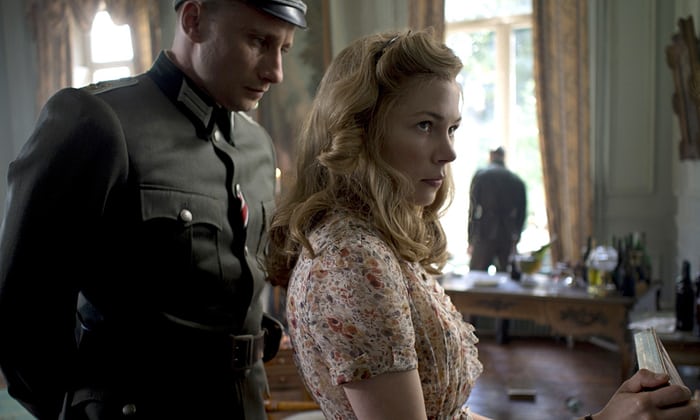
Suite Française (2015)

Matthias Schoenaerts and Michelle Williams love across the divide in this disappointing French Occupation epic

Director: Saul Dibb

Cast: Michelle Williams (Lucile Angellier), Kristin Scott Thomas (Madame Angellier), Matthias Schoenaerts (Oberleutnant Bruno van Falk), Sam Riley (Benoit), Ruth Wilson (Madeleine), Margot Robbie (Celine), Lambert Wilson (Viscount de Montmort), Harriet Walter (Viscountess de Montmort), Clare Holman (Marthe), Alexandra Maria Lara (Leah), Tom Schilling (Oberleutnant Kurt Bonnet), Eric Godon (Monsieur Joseph), Deborah Findlay (Madame Joseph)

The story behind the writing of Suite Française is compelling. Living in Nazi-occupied France, Irène Némirovsky began work on a five-novel series, Suite Française, which she intended to depict life in her homeland under German rule. She had only written two of the five books when she was arrested by the Gestapo as a Jew, and tragically died in Auschwitz. The books were written in a small notebook and kept by Némirovsky’s daughter while she moved from hiding place to hiding place evading the Nazis. Sixty years later, donating her mother’s papers to an archive, she deciphered the notebook and discovered the novels. They were published as a single volume to great success in 2004, regarded as an accomplished piece of literary fiction and a remarkable work of contemporary witness. 

The short summary of the novel’s richness and complexity provided by this film can’t really compete. Based on the second of the two novels, the story takes place in a small French village in 1940. Following the arrival of the Germans, officers are billeted in people’s homes: Lucile Angellier (Michelle Williams) and her mother-in-law (Kristin Scott-Thomas) are assigned sensitive musician Bruno van Falk (Matthias Schoenaerts), while their neighbours, farmers Benoit and Madeleine (Sam Riley and Ruth Wilson), are forced to accommodate bullying officer Kurt Bonnet (Tom Schilling). As hostilities between the French residents and the German occupiers grow, so does the attraction between Lucile and Bruno, but Bonnet’s pursuit of Madeleine threatens to ignite the simmering tensions in the community.

Suite Française manages to turn its promising material into a conventional, chocolate box wartime romance – you can’t help but think that it does a great deal of disservice to the original novel. It’s filmed in an unremarkable style (there are at best 1-2 imaginatively done shots and sequences) and poorly paced. With its short runtime (barely more than an hour and a half), it constantly feels rushed. Quite simply it’s a story about simmering tensions in a confined environment – it needed more time for us to get a sense of the drama building, of the resentments between the Germans and the French growing. Because the film is so short we don’t get that at all.

Most notably, in a film about a romance between a French woman and a German officer, there is no sense at all of the risks that French women who started relationships with German officers were running. Besides a few small throw away lines, there is no sense of the physical danger and the social stigma that would be applied to these women. Instead, the tension of Lucile falling for Bruno seems to be based more on whether her mother-in-law will discover that she’s considering cheating on her (absent, unfaithful) husband. Even Celine the promiscuous farmgirl (a wasted Margot Robbie in a terrible wig) doesn’t seem to be running any risks of reprisals from the villagers when she’s banging a German officer in the woods.

This, however, is where the film’s rushing undermines it. If it had allowed us to develop a sense of the resentment, shame and loathing the occupied French felt for their German oppressors, a feeling of the whole town being willing to close doors on anyone they perceive as being too close to the  Germans, we could have felt a real danger for Lucile in flirting with a dalliance with Bruno. As well as giving the situation a bit of stakes, it would have made it a lot more emotionally engaging too. We could have witnessed her inner conflict at considering a romance with the enemy, and the emerging feelings between them would have had the conflict of a forbidden love. Instead the film rushes us as quickly as it can towards getting Bruno and Lucile into a passionate clinch, at times taking giant unsupported leaps forward in their relationship, so when it arrives it packs no punch.

This passionate clinch undermines the film. If it wasn’t going to take the time to really build the relationship through lingering glances and brief moments, convincingly charting the journey from hostility and suspicion to a forbidden attraction, it should have cut the relationship down to being something that tempts them both but which they cannot express. Have these two recognise a deep bond between them, a bond that in another time would have brought them together but cannot in the time of war. It’s a film where the only physical contact between them should feel like a window on what might have been – not a passionate locking of lips and sexy fondle or two. Think how much more affecting that might have been.

It would also have fit the structure of the film far better. As Lucile finally finds herself having to choose a side – deciding whether to help a renegade hunted by the Germans or not – her decision to sacrifice her chance of love with Bruno might have worked much better. Similarly, Bruno having to revert to the soldier taking responsibility for the growing persecution of the villagers would have been more affecting. (It further doesn’t help that the film doesn’t give time for Williams and Schoenaerts to build up an effective chemistry.) By chucking them into a clinch as soon as it can, the film undermines its message and also manages to make itself feel more like “Mills and Boon in Occupied France” than the serious tragedy it could have been.

When the film finally focuses on the battles between the French and Germans in its final third, it’s much more interesting than the slightly tired romance. Here we get tensions, stakes, drama – and finally a sense of the danger that being in this situation could have. After the rather soft focus romance that comes before, it really seizes the attention.

Williams does a decent job as Lucile, Scott Thomas could play her austere mother-in-law with hidden depths standing on her head (the film fumbles the unexpected alliance between these characters late on). Schoenaerts is a bit wasted in an underwritten role but does good work. The best performances largely come from the second tier: Lambert Wilson is excellent as the local Viscount who wants to try and work with the Germans but quickly finds himself out of his depth. Harriet Walter is similarly strong as his wife, as is Ruth Wilson.

But Suite Française could have been so much better than the movie that it actually becomes. A film that focused on the dangers of occupation and the tensions of a small community would have been great. A film that rushes through a Romeo and Juliet style romance, without building the sense of forbidden love, is a film that just doesn’t work.

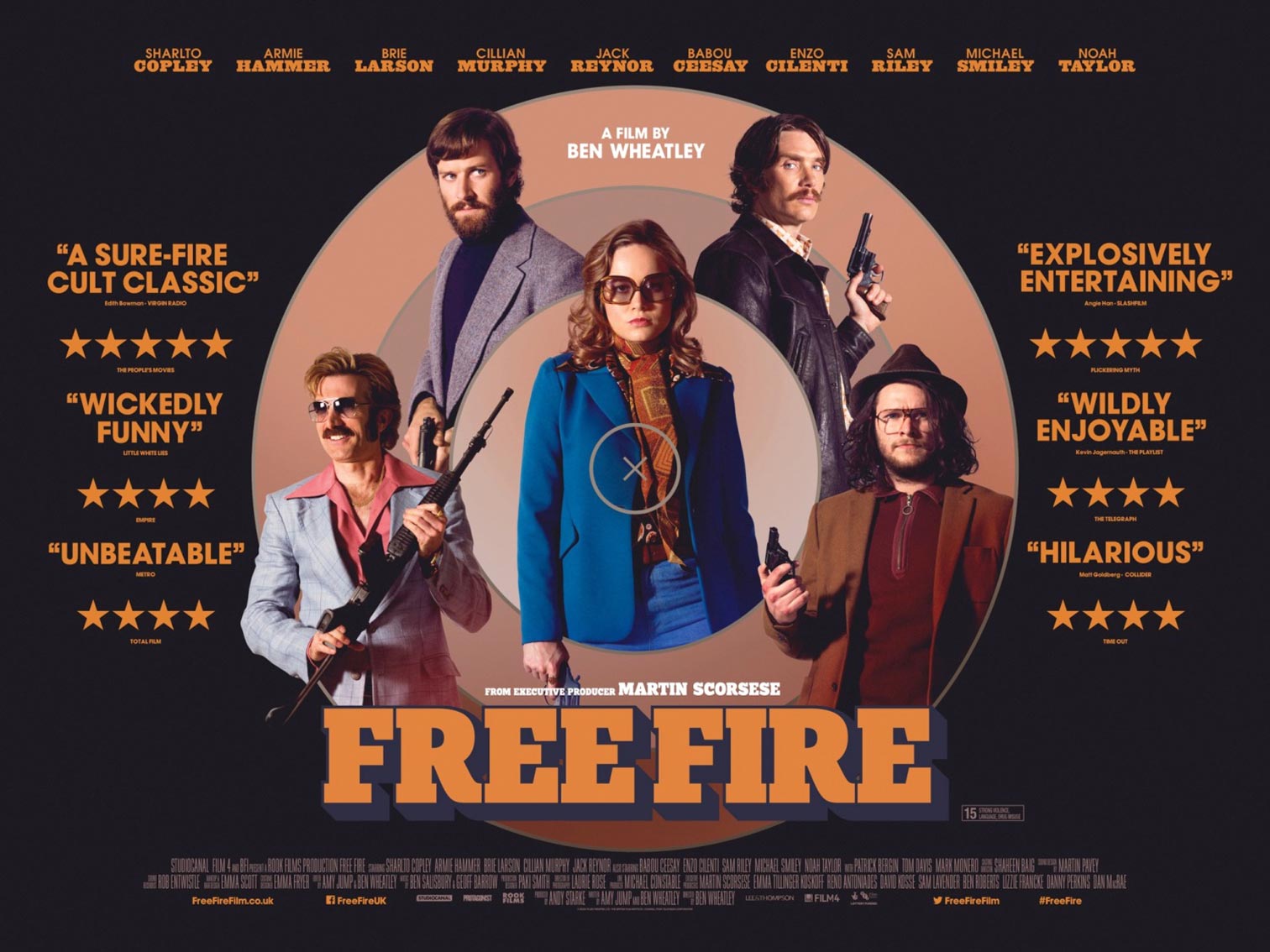
Free Fire (2016)


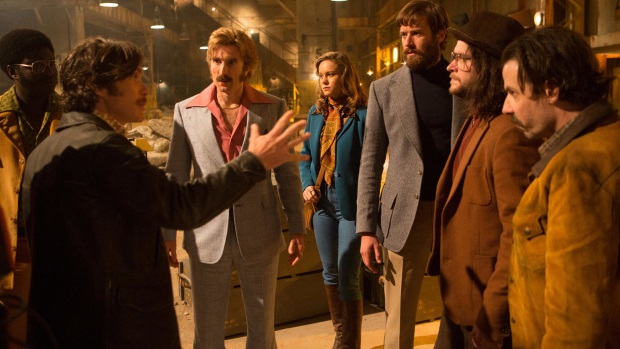
The calm before the storm in Ben Wheatley’s gun-fight Free Fire

Director: Ben Wheatley

Cast: Sharlto Copley (Vernon), Armie Hammer (Ord), Brie Larsen (Justine), Cillian Murphy (Chris), Jack Reynor (Harry), Babou Ceesay (Martin), Enzo Cilenti (Bernie), Sam Riley (Stevo), Michael Smiley (Frank), Noah Taylor (Gordon), Patrick Bergin (Howie)

At some unspecified point in the late 1970s, IRA men Chris (Cillian Murphy) and Frank (Michael Smiley) meet with Vernon (Sharlto Copley), via an intermediary Justine (Brie Larsen), to buy a lot of guns in an abandoned New York warehouse. Unfortunately, Frank’s druggy brother-in-law Stevo (Sam Riley) the night before was badly beaten by one of Vernon’s men Harry (Jack Reynor), after Stevo had maimed Harry’s cousin. Next thing anyone knows, guns are drawn and the shooting starts…

And that shooting lasts for the course of the rest of the film. Free Fire is like some sort of slightly odd concept album. As if Wheatley and co-screenwriter Amy Jump sat down and wondered “can we make a gunfight that basically lasts the entire course of a film”? The answer was, as it turns out, yes they could. Was it actually a good idea? Well that’s less clear.

The good stuff first. The film looks terrific, and is very well shot. The mix of beige and slightly over-saturated colours capture a hilariously flashy look at the 1970s. Soundtrack choices are very well made. The sound design – surely the main focus of any film focused on gunfights – is excellent, with bullets sounding like they are ricocheting past your ear. It’s cut with intelligence and clarity – it’s always immediately clear where you are and where everyone else is (Wheatley even patiently films our characters entering the warehouse through a series of doors – and old trick but it immediately gives us the geography).

The screenplay is also pretty funny in places, and does a good job of sketching out characters incredibly quickly. It’s lucky it also has a fine cast of actors to inhabit these swiftly drawn characters. Best in show is probably Armie Hammer as a suave, cock-sure hired gun who clearly believes the whole shebang is a little beneath him. Cillian Murphy as the nominal lead makes an engaging double act with Michael Smiley. Sharlto Copley adds maverick, overblown colour as a cocky weapons dealer. Brie Larson plays the long game as the intermediary whose loyalties seem a little unclear. Sam Riley is engrossingly pathetic as the whining loser whose actions lead to the whole disaster.

The gun fight itself is a neat combination of the realistic and the comic book. Our heroes are hilariously inaccurate with their weapons (as you expect most people would be in this situation) but this doesn’t stop every single character getting shot in the arms, legs and other body parts multiple times. Adrenalin means they largely shrug these off for the first half hour of the film, but by the final third each character is unable to walk and visibly struggling with growing shock and loss of blood. I’ll admit it’s rather fun to see a gunfight conducted largely by people crawling around on the floor groaning, in between whining and complaining at each other.

Structurally there isn’t a lot to the film. There is a twist of sorts as both sides are double crossed (the identity of the double crossers should be worked out by most astute watchers) and the film occasionally throws enemies together in odd partnerships and alliances. But the plot is basically a real-life survival film – who is going to get out of this warehouse alive?

Which is what brings us back to this concept album idea. Yes this an entertaining enough film – and it’s very short – but is a single gun fight between characters we’ve only vaguely got to know in the opening 10 minutes really enough to sustain long term interest? Is this something I can imagine re-watching? It’s got some funny lines and some decent moments, but honestly no not really. It’s an inventive idea, like a challenge Wheatley has set himself. But instead of seeing what is clearly a talented director playing with toys and seeing if he can make a film centred solely around an action set-piece, imagine if he turned that creative fuel on making an actual film. We know he can – he’s got some fine material on his resume. So why make this?

Free Fire feels like a conscious attempt at making a cult film, with its 1970s aesthetic, its eclectic cast of characters, its witty moments and punchy action sequences. I’ll agree it’s very different from anything else I’ve seen. Does that necessarily mean that it’s a good film? I’m not sure. It’s a challenge and almost a joke. It’s different from action scenes in Hollywood blockbusters – but at the end of the day, for all the fact that the gun shots have consequence, it’s just an extended action set-piece without context. Very entertaining but kind of empty.

Pride and Prejudice and Zombies (2016)

Sisters doing it for themselves. As I’m sure the film would have said in the dialogue if it had the guts.

Director: Burr Steers
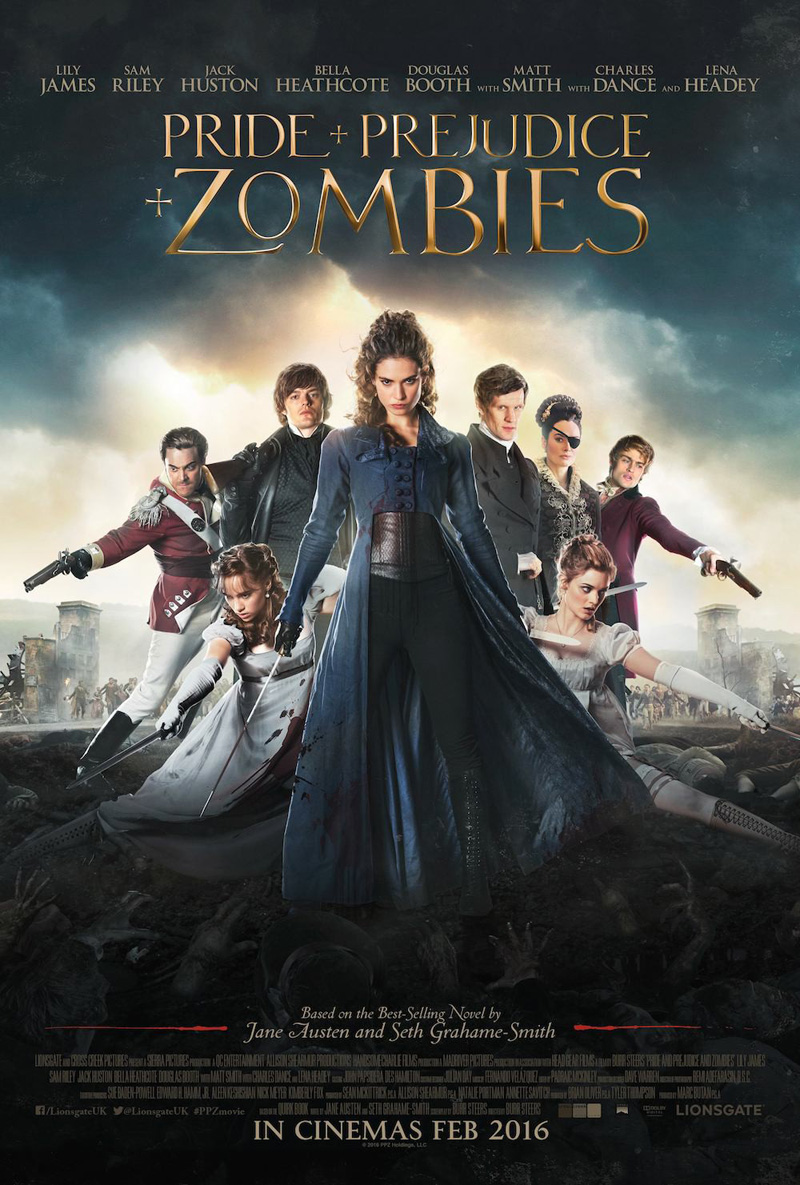
Cast: Lily James (Elizabeth Bennet), Sam Riley (Fitzwilliam Darcy), Jack Huston (Wickham), Bella Heathcote (Jane Bennet), Douglas Booth (Mr. Bingley), Matt Smith (Mr. Collins), Charles Dance (Mr. Bennet), Lena Headey (Lady Catherine de Bourgh), Sally Phillips (Mrs. Bennet), Aisling Loftus (Charlotte Lucas)

Back in the 1990s, Harry Enfield and Chums did a sketch in which The Terminator (played by Martin Clunes) arrives in early 20th-century England, and spends a weekend at a country house searching for his victim. His violent antics are met with po-faced, stiff upper lip responses from the Upper Crust members of the household and uncomplaining reserve from the servants. It’s very funny. It sticks in the mind. It brilliantly mashes up costume drama with sci-fi drama. It’s five minutes long.

This film is effectively the same gag but stretched far beyond any possible welcome to an agonising 104 minutes, in which the same comic beat is repeated over and over again. “Oh look! Those posh girls/blokes in frocks are discussing tea and table arrangements! And now they are slaughtering a herd of zombies! While continuing the conversation! What larks!”

Pride and Prejudice and Zombies was the poster child of a mercifully short-lived literary novelty: classic novels rewritten with genre elements. This trend also saw sea monsters inserted into Sense and Sensibility and hard-core sex scenes inserted into Jane Eyre (the worst of all, as the author had the cheek to suggest that Bronte would of course have got those scenes in if she could). It was a best-seller, but only in the sense that it was the ultimate ‘I-don’t-know-what-to-get-you-for-Christmas’ gag gift. But years after the moment had passed, the movie adaptation lumbered towards the big screen.

Morbid curiosity made me watch it (over several nights on Netflix, I hasten to add) and it’s exactly what it appears to be: a student sketch that is worthy of maybe a slight smile for the first few minutes, but then totally collapses the longer it goes on. Now I like Jane Austen films and I like zombie films but still I didn’t like this. Firstly it’s a terrible zombie film – the action moments are poorly shot and hard to follow, the action dull and the “laws” around the zombies in the movie are inconsistent (some zombies are super killers, others are lumbering brainless beasts). Secondly, all that Zombie stuff makes it a pretty bad Austen film. Worst of both worlds.

The Austen bits are (unsurprisingly) by far the best bits. There is a good cast here: Lily James and Matt Smith in particular would be very well cast in a proper adaptation. Anything interesting comes largely from Austen (the characters, the emotions, the bulk of the watchable stuff in the first half) anything dull from the source material (the zombies, the action, the final 30 minutes). The idea of society being fundamentally unchanged by a zombie invasion makes no sense at all (would money still be the driving factor in a world destroyed by the undead?). Much of the fighting involving the female characters has a slightly uncomfortable leering sexuality about it (“Look at those hot chicks pull knives from their undergarments! Phrroooaaahhh!!!!”) as well as being far too over choreographed.

Zombies is a pointless film of a forgotten fad. It’s one of the worst zombie films ever made. It wastes our chance to see some of these actors give decent performances in a proper adaptation. Pleasingly, it bombed catastrophically at the box office, probably because it appeals to no one: the zombie action isn’t anywhere good enough to interest the genre fan, the Austen fan is more likely to bung on their Firth/Ehle DVD than check this mess out. None of them are missing anything. Zombies isn’t the must-see abomination it needed to be to have any shelf life – it’s a blatant attempt to rake some more cash from a horse flogged to death. If you want to get a sense of it, save yourself 135 minutes and watch that Harry Enfield sketch instead. I guarantee you’ll laugh a heck of a lot more.