Tag: Sam Rockwell

See How They Run (2022)

See How They Run (2022)

Smug, semi-spoof murder mystery which can’t decide whether it loves or scorns the genre

Director: Tom George

Cast: Sam Rockwell (Inspector Stoppard), Saoirse Ronan (Constable Stalker), Adrien Brody (Leo Köpernick), Ruth Wilson (Petula Spencer), Reece Shearsmith (John Woolf), Harris Dickinson (Richard Attenborough), David Oyelowo (Mervyn Crocker-Harris), Charlie Cooper (Dennis), Shirley Henderson (Agatha Christie), Pippa Bennett-Warner (Ann Saville), Pearl Chandra (Selia Sim), Paul Chahidi (Fellowes), Sian Clifford (Edana Romney), Lucian Msamati (Max Mallowan), Tim Key (Commissioner Harrold Scott), Jacob Fortune-Lloyd (Gio)

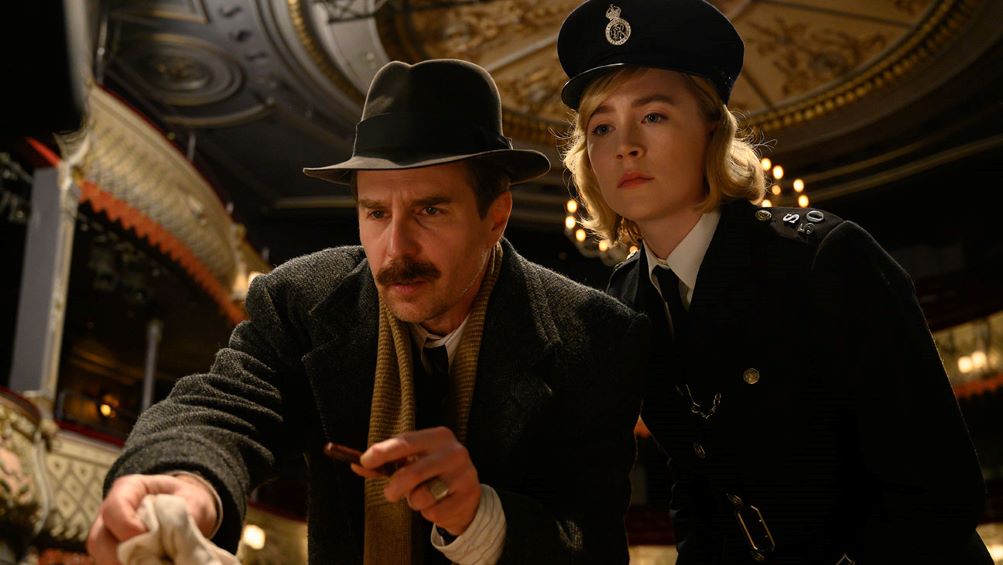
It’s the 100th performance of Agatha Christie’s The Mousetrap (“how much longer can it run”, the characters ask. If only they knew…) and producers are in talks for a big movie adaptation. At the party, boorish American film director Leo Köpernick (Adrien Brody) offends absolutely everyone – and promptly gets murdered. Not only are the cast (including Richard Attenborough – wittily impersonated by Harris Dickinson) suspect, but also the film producers which, contractually, can only go into production when the play closes. Investigating: dishevelled Inspector Stoppard (Sam Rockwell) and his super enthusiastic sidekick Constable Stalker (Saoirse Ronan).

See How They Run desperately wants to be a witty commentary on Agatha Christie style locked-room mysteries. It even opens with a voiceover from Brody’s Köpernick, full of scorn for the medium and its cliches before revealing, as per form, that as the least sympathetic character he himself is about to be knocked off. To be fair, there are one or two decent jokes. But the presence of Reece Shearsmith just made me think: Shearsmith and Steve Pemberton’s anthology dramady Inside No. 9 would have pulled off the same idea, but with far more wit and better understanding of Christie, in half an hour. And certainly with better jokes.

Instead See How They Run feels like it has only the most superficial understanding of Christie, based more on watching a few scenes of Poirot rather than reading the books. Rian Johnson’s Knives Out made a wittier, smarter and more enlightening commentary on Christie in its updating of the form, than this comedy ever manages. It’s never quite clear whether the makers want this to be a genuine Christie-style mystery or an inversion. Stoppard and Stalker go about their investigation in a traditional manner. The suspects all have motives of a sort. There is a definite mystery.

But it’s all lightweight and uninformed. Christie tropes are nudged and then ignored, as if the writers don’t understand them. What better opportunity could you have for Christie’s love for one mysterious character in the story turning out to be an actor in the group in disguise (invariably summarised by Poirot as “the performance of his/her life!”). There actually is a mysterious character here – but it turns out to be another person. Christie tropes around red herrings, secondary crimes, poison – all of them go unexplored.

The film ends with a deliberately counter-intuitive action sequence: but it’s not clear to me why. It’s neither particularly funny, nor does it feel like it has anything to say about the form other than offering an ending we might not expect. There is a nudge on the fourth wall (it’s the ending Köpernick wants) but what point is being made here? Is the action ending endorsing Köpernick’s belief that Christie-style mysteries are formulaic or boring, or is the shoot-out meant to look excessive and ridiculous? Is it implying everything we are watching is Köpernick’s dying fantasy? Is it a gag? I have no idea at all, and that sums up this tonal mess.

It’s a film that wants to have its cake and eat it. It tries to present a genuine murder mystery – and to be fair, when it does this, it does make for a good guessing game – but also wants to take potshots at the genre. It ends up doing neither particularly successfully. And there’s something a bit unlikeable about a film that wants to feed off the audience’s love of a Golden Age detective mystery, but also kinda wants to tell you how the thing you like is actually a bit stupid – and by extension so are you.

Its humour all too often feels a little studenty and obvious – the naming of Rockwell’s character as Stoppard being a case in point (although it does make for one good gag when Pearl Chandra’s charming Shelia Sim denounces another character as “a real hound, inspector”). It eventually feels like a rather smug film, which just goes to show how hard it is to make a Christie-style mystery.

If there is a decent joke in the thing, it’s that it manages to build a film where the plot of The Mousetrap is vital to the outcome, without ever revealing anything about what happens in The Mousetrap. (Presumably, the Christie estate would have had their guts for garters if they did.) Any moment where it looks like we might learn a major event in the play, a character interrupts or someone says “I already know”. These narrative gymnastics are the most inventive thing about it.

The other thing it’s got going for it is a performance of immense charm and comic likeability from Saoirse Ronan, who has rarely been as sweet, bubbly and adorkable as she is here. Ronan’s comic timing is excellent, and Stalker’s mixture of dogged determination and chronic over-enthusiasm provides virtually all the film’s highlights. Rockwell ambles through a (perhaps deliberately) under-written role, but most of the rest of the excellent cast feel under-utilised. Who casts Shearsmith and gives him not a single joke? Sian Clifford to deliver about three lines? David Oyelowo and Ruth Wilson do a lot with very little, but it’s telling that the final act appearance of Lucian Msamati and Paul Chahidi as a master-and-servant double act provides almost as much humour as the rest of the cast put together.

See How They Run passes the time – but that’s really about that. It doesn’t really have anything smart or funny to say about murder mysteries and it never offers anything truly unique or striking to justify itself (other than Ronan’s lovely performance). It’s straining as hard as it possibly can to ape the Coens or (most of all) the quirk of Wes Anderson, but totally lacks the skill and finesse of either. It feels like a film commissioned off the back of Knives Out success: but to be honest if you want to see something that brilliantly riffs off Christie while also being a bloody good mystery, just watch that instead.

Frost/Nixon (2008)

Frost Nixon header
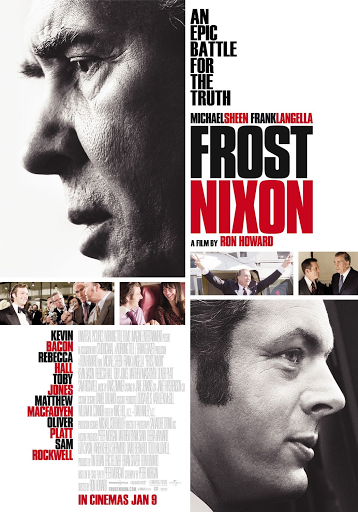
Frank Langella and Michael Sheen face-off in famous interviews in Frost/Nixon

Director: Ron Howard

Cast: Frank Langella (Richard M Nixon), Michael Sheen (David Frost), Kevin Bacon (Jack Brennan), Rebecca Hall (Caroline Cushing), Toby Jones (Irving “Swifty” Lazar), Matthew MacFadyen (John Birt), Oliver Platt (Bob Zelnick), Sam Rockwell (James Reston Jnr), Clint Howard (Lloyd Davis)

If there is a bogeyman in American politics, it will always be disgraced President Richard Nixon. Because, however divisive Donald Trump is, Nixon will always be the king who was toppled, the man some consider a crook and a war criminal, others a gifted politician and negotiator. The truth is somewhere, as always, in the middle – but what seems inarguable is that Nixon was a man of deep personal flaws, which contributed considerably to his fall. Peter Morgan’s play explored the complexities of Nixon’s character through his famous TV interviews with British talk show host David Frost, a man with a few chips of his own. Ron Howard takes what was already a fairly cinematic script by Morgan, and produces a smoothly professional, entertaining and very well acted film.

After Richard Nixon (Frank Langella) has been forced into resigning, he is in the political wilderness. Watergate engrossed the world, with hundreds of millions of people tuning in to follow every detail. Who in television could resist those numbers? Certainly not David Frost (Michael Sheen), who believes if he can secure an exclusive interview with Nixon he could have a television package that could pull in millions of viewers, make Frost a fortune, and catapult him into the front ranks of TV interviewers. Slowly the project comes together. But both participants have a lot to prove: for Nixon this could be a chance of redemption; for Frost to prove he is more than a chat show host better suited to grilling the Bee Gees than the President. With both men underestimating each other, who will emerge on top in the interviews?

One of Ron Howard’s greatest strengths as a director is his ability to elicit fine performances from good actors. This is the real bonus he brings to this faithful adaptation of Morgan’s award-winning play. He presents it with a highly skilled professionalism and a refreshing lack of distraction that allows the audience to focus on the acting and the dialogue, its real strengths. Frost/Nixon is sharply written – with Peter Morgan’s expected mix of careful research and dramatic licence (most especially in a late-night phone call between the two men before the final day’s filming) – crammed with fine lines, well drawn characters and fascinating insights into both politics and television.

Perhaps Howard’s finest decision was to ensure the two stars of the play (in both the West End and Broadway) were retained for the film. Langella and Sheen’s performances – already brilliant in the stage version, which I was lucky enough to see – are outstanding here, both of them completely inhabiting their characters. The comfort and familiarity between the two performers are crucial – and ensure that the vital scenes between the two characters carry an electric charge.

Langella brilliantly captures the physicality and voice of Nixon, but also finds deep insights into the President’s tortured soul. He communicates Nixon’s sense of inadequacy and bitterness, his resentment at having to fight all his life for things others have been gifted. He balances this with Nixon’s pride and paranoia that constantly leads him to cheat others first. Langella’s Nixon, lost and bored in retirement, is desperate to regain his statue, but also tortured by a guilt and regret he can hardly bring himself to name. Under his robustness and confidence, lies deep shame and sorrow. It’s a brilliant capturing of perhaps the most psychologically complex leader America ever had.

Sheen is just as superb as Frost. As you would expect from an accomplished mimic, the voice is almost alarmingly accurate (he makes a better Frost than Frost did!). But just as insightful is his understanding of Frost’s psychology. Just like Nixon, Frost is a hard-working lad from a poorer background who has had to fight for everything he has. Sheen’s Frost is a phenomenal hard worker – producer, financier and star of his own career – who works hardest of all to appear an effortlessly confident dilettante. Sheen’s Frost balances immense pressures – facing personal and financial ruin – with an assured smile, keeping every plate spinning by never allowing a moment of doubt.

It leads into fascinatingly different attitudes to the interviews themselves. Nixon prepares in detail – and determines his best strategy is long winded answers that present his case and prevent attack. Frost is so focused on delivering the interviews that he sacrifices his actual interview preparation (certainly more so than he did in real life). Morgan uses the conventions of boxing dramas – corners, breaks between ‘rounds’, advice from their trainers – to capture a sense of gladiatorial combat.

However, the play is more complex than this. The reason why Frost struggles to land a glove on Nixon in earlier interviews on his domestic and foreign policies is that Nixon genuinely believes he is in the right – but (perhaps as Frost understood) the final interviews based on Watergate will see a more vulnerable Nixon as on that subject he knows he’s in the wrong. I suspect the real Frost knew that to get to Nixon on that final topic, he needed to be ‘softened up’ first to feel comfortable and produce a revelation.

Because the film is refreshingly positive in its view of television. A medium that films often attack for being trivial and boiling things down to soundbites and snippets, here acknowledges the strengths that can bring. A single snippet of an apologetic and crushed Nixon is worth thousands of words – and small moments can turn a TV programme from a failure to an event. Howard uses the power of the close-up at these moments to demonstrate how TV can zero in with a merciless gaze on a single moment. It’s a defence of the power of TV and its ability to reduce things down to moments.

Howard’s understanding of the strengths that lie at the heart of the play – and to tell the story simply – is what makes an already cinematic play translate wonderfully to the screen. With Langella and Sheen outstanding (with the supporting cast all equally excellent), the film entertainingly demonstrates the preparation and delivery of the interviews, while offering shrewd psychological insights into two men who had a lot more at a stake – and in common – than at first appeared. Professional, handsome and captivating, this is Hollywood movie making at its best.

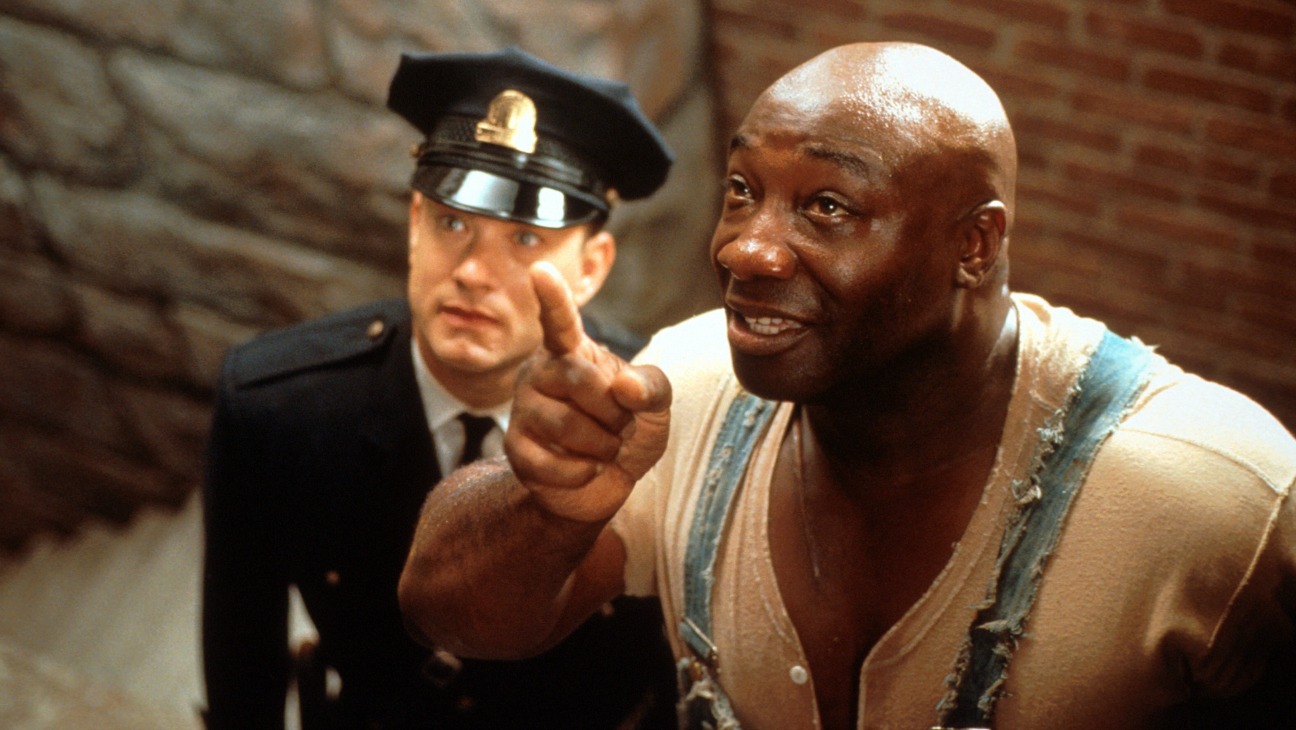
The Green Mile (1999)

Tom Hanks and Michael Clarke Duncan excel in the over-long but moving The Green Mile

Director: Frank Darabont

Cast: Tom Hanks (Paul Edgecomb), David Morse (Brutus Howell), Bonnie Hunt (Jan Edgecomb), Michael Clarke Duncan (John Coffey), James Cromwell (Warden Hal Moores), Michael Jeter (Edward Delacroix), Doug Hutchison (Percy Wetmore), Sam Rockwell (William “Wild Bill” Wharton), Barry Pepper (Dean Stanton), Jeffrey DeMunn (Harry Terwilliger), Graham Greene (Arlen Bitterbuck), Patricia Clarkson (Melinda Moores), Harry Dean Stanton (Toot-Toot), Dabs Greer (Old Paul)

Stephen King’s novels are often thought of solely as horror novels – but that’s to forget that he also carries with him a profound sense of the human condition and a sharp ability to create moving and surprising human stories. That’s why his works can inspire films as diverse as The Shining and The Shawshank Redemption. The Green Mile, the second King novel bought to the screen by Frank Darabont, definitely falls into the latter camp – probably why it has continued to be met with warmth and regard decades after its making.

In present day Louisiana, Paul Edgecomb (Tom Hanks – played as an old man by Dabs Greer after Hanks’ make-up tests proved unconvincing) recounts his days in 1935, working as a prison guard on “the Green Mile”, the death row section of a prison. Paul’s life was changed forever with the arrival of a gentle giant, John Coffey (Michael Clarke Duncan), a seemingly simple-minded man found guilty of raping and murdering two young girls. However, John doesn’t match the personality Paul expects of a hardened criminal – and events soon prove he is far more than just an ordinary prisoner…

Frank Darabont’s adaptation of King’s novel – an adaptation King still lists as his favourite adaptation of his work – is long at almost three hours, and frequently takes its time. But it does so too carefully, and in detail, build the world it sits in – namely the prison – and the characters who live in it. Everything is carefully paced in order to create the sense of a real world, with (most of its) characters defying easy conventions or definitions. 

We know of course that the guards on this cell are largely decent, hard-working and respectful of the prisoners – not least because they are led by Tom Hanks at his most everyday, grounded and quietly moral. Darabont is very good at letting the world breathe – and, as a skilled scriptwriter, also in sketching character quickly and clearly. Both guards and prisoners are fully crafted characters, and while some of them do verge a bit more on the cartoonish villainy, their motivations and feelings feel real. 

You could criticise the film for the sentimental views built into this. All the guards are basically decent men – apart from Doug Hutchinson’s cowardly, whining bully Percy Whetmore, who owes his job to his family background, picks on the prisoners, reads porn and is motivated only by wanting to “see one cook”. While the film tries to give him some depth, a weakness of character, he’s basically easy for us to dislike. Similarly among the prisoners, all of them are polite, calm and resigned to the justice of their fate – minus an appalling, virulent racist hill-billy (played by Sam Rockwell with a manic intensity). There are very little doubts about who we are supposed to be rooting for here.

Racism as a whole gets only the barest of mentions. A few slurs are thrown at African-American John Coffey, but no real mention that in 1930s Louisiana there was little chance of a black man getting any form of justice at trial. Typically the only characters to espouse racist views fall squarely into the villain’s camp. Perhaps the intent is to show the prison as a melting pot of sorts – the final stop-off for people’s lives, where all men are basically equal, and the guards taking to heart their role as custodians for their final moments. But it’s also a bit of a cop-out.

We’re shown in detail the work Edgecomb and his team put into ensuring the prison is run smoothly and justly, and that the executions are committed as humanely as possible (frequent rehearsals – with Harry Dean Stanton rather funny as an eccentric stand-in condemned man – are called for). The good guards and good prisoners form bonds – and while this adds to the sentimentality, it perhaps makes sense in a system where the most extreme price is to be paid for their acts, and that any other judgement is unnecessary. We see three executions throughout the film, each carrying its own tone: one is a “how-it-should-be-done”, one is a horrifying, tortuous disaster, with Percy sabotaging the humane elements out of spite, the third sees Edgecomb finally questioning the role he has chosen for his life.

It’s not a film that touches a great deal on the morality – or otherwise – of legal executions, but it does use the setting to explore questions of faith and spirituality. Because what is going to put such things into your mind quicker than working in a place where life and death is literally your business? Some of this is more heavy handed than others – John Coffey’s initials should be a bit of a give-away – but the film does ask questions of what is important to us as people, and at what points should we question the decisions we take about how we live our lives.

These questions of faith don’t quite coalesce into something truly coherent, as it never quite feels if the film wants to deal with the implications of John Coffey’s gifts of healing. The possibilities of a wider world outside our understanding never really come together, and instead Coffey’s gift of healing by touch seems to be a blessed skill that he has developed rather than something more profound. There is also something troubling about the film’s sole black character (in 1930 a segregated Louisiana of all places) serving the purpose to heal white people and be sacrificed.

But when the film focuses on story and character rather than its rather unclear themes, it does well. Hanks is very good in the lead role – Darabont wrote the film specifically for him – with solid support from Morse, Pepper and DeMunn as the main “good” guard characters. Michael Jeter gives some heartfelt work as eccentric prisoner Delacroix. But the stand-out – in every way – is Michael Clarke Duncan, whose John Coffey is sweet, naïve, polite, gentle but also carries a suggestion of pain and guilt beneath his surface which is expertly sketched out.

The Green Mile may be overlong, but it’s hard to work out what you would cut as it’s a film that relies so strongly on mood, atmosphere and careful world creation. Well scripted and confidently directed by Darabont, it may be hard to work out exactly what it wants to say – but it has a richness and confidence to it, as well as an emotional force, that sometimes makes you feel that doesn’t really matter.

Jojo Rabbit (2019)

Taika Waititi directs and is an imaginary Hitler in his coming-of-age/Nazi Germany satire Jojo Rabbit

Director: Taika Waititi

Cast: Roman Griffin Davis (Johannes “Jojo Rabbit” Betzler), Thomasin McKenzie (Elsa Korr), Scarlett Johansson (Rosie Betzler), Taika Waititi (Adolf Hitler), Sam Rockwell (Captain Klenzendorf), Rebel Wilson (Fraulain Rahm), Alfie Allen (Lt Finkel), Stephen Merchant (Deertz), Archie Yates (Yorki)

A comedy set in Nazi Germany? Well if there is one thing you need to get right, it’s the tone. Taika Waititi’s comedy about a boy with an imaginary friend who just happens to be a version of Adolf Hitler more or less does so – although I’d argue it’s less a comedy and more of a terrifying condemnation of the horrific powers of indoctrination. But that sells a lot less well in trailers doesn’t it?

Set in late 1944, the boy in question is Johannes (Roman Griffin Davis – a revelatory performance) a ten-year old who wants to be a passionate Nazi but is undone by his own underlying sweetness. Not that it stops him believing everything he’s told by the regime and its theories around Jews, re-enforced by his imaginary best friend, a childishly stroppy version of Adolf Hitler (played by Waititi himself). Nicknamed Jojo Rabbit after his failure to kill a rabbit on a Hitler Youth indoctrination camp, then later blowing himself with a grenade meaning he can no longer qualify for military service, Jojo sees his dreams of becoming the ultimate Aryan fading away. Things become even more conflicted when he discovers his secretly anti-Nazi mother Rosie (Scarlett Johansson) is hiding a teenage Jewish girl Elsa (Thomasin McKenzie) in the walls of his late sister’s bedroom.

Waititi’s film returns to his affectionate roots of coming-of-age stories but in an entirely different setting – here the child must grow up by learning to reject the vile ideologies that have been hammered into him by the system. Waititi shoots the entire film from the perspective of the child’s view of the world, meaning the horrors of the war are kept largely at a distance from us (until a sudden and terrible event brings them overwhelmingly into frame). The Nazi world around Jojo looks like some glorious Enid Blyton summer, the colour of which only gradually disappears from the film as event proceed. It’s a neat visual way of capturing the child’s innocence.

This also means many of the characters are seen from Jojo’s perspective. Most obviously Adolf Hitler (the imaginary one), played with gleeful comic gusto by Waititi, is far from the actual dictator but is a sort of ten-year-old’s idea of what he might be like, childish, oddly innocent in places, prone to strops – but also has enough darkness in him (which emerges more and more as the film goes on) to show that he is still part of the hateful ideology the real Hitler promoted. Similarly, Jojo’s first impression of Elsa is shot and framed like some sort of creepy horror film – matching the ideas that have been indoctrinated into him by the regime that the Jews are a near-Satanic threat.

That indoctrination is a big part of the film’s primary themes. An early sequence at a Hitler Youth camp is less funny – even if it does have moments of brash comedy and some good jokes – more horrifying for the mantra of violence, race hate and slaughter that the regime is preaching almost every second that its representatives appear on screen. It’s actually chilling seeing this group of impressionable kids succumbing so completely to the excitement of this relentless onslaught of propaganda. The passion that the Nazis inspire is wonderfully caught by Waititi in the credits, with Leni Reifenstahl footage beautifully recut to the Beatles singing in German – it’s hard to miss the parallels. (The film makes some neat use of modern music, with David Bowie also popping up).

Jojo however is still a sweet, kind, generous boy under the surface – however much he has swallowed the constant message from his government that he should aspire to being a cold eyed killer. Waititi’s message is that there is still hope in the roots of next generation, however much the current generation does it’s best to mess that up. It’s something that his mother – exquisitely played by an Oscar-nominated Scarlett Johansson with a wonderful sense of playfulness hiding an intense sadness – clings to desperately, knowing the sweet boy she loves is still largely there, however twisted he is by a cruel ideology.

It’s the relationship with Elsa that helps bring that out, with Thomasin McKenzie wonderful as an initially hostile young girl, determined to never be a victim, who softens and thaws as she senses the kindness in this boy. Her hiding is all part of Rosie’s own defiance of the regime and its oppression, the horrors of which – from random searches to executions – slowly begin to creep into the film. 

If there is a problem with the film, it is that the darker elements of this film – and there are many – often play a little awkwardly against the more comedic and even farcical elements. Waititi as an actor gets the tone right – but others, particularly Rebel Wilson as an oppressive Nazi – head too far into unfunny, tonally flat farce. Sam Rockwell does a decent job as a German army officer, even if his obvious bitterness for the war effort and contempt for Nazism makes him an unlikely candidate to be running an indoctrination camp, but even he veers sometimes too far onto the side of flat farce. Other than Waititi, only Stephen Merchant as an officious Nazi official – including a running joke of continuous Heil Hitler greetings – gets the balance right between comedy and darkness.

It’s a balance the film doesn’t always make very successfully – but it’s balanced by the warmth that it feels for Jojo, the excellence of Griffin Davis and McKenzie’s performances, and the moments of genuine shock and trauma that surprise the viewers and head the film openly into very darker territory. Less a comedy and more a plea to allow children to be children, not victims of the views and desires of adults, it’s a thought provoking film.

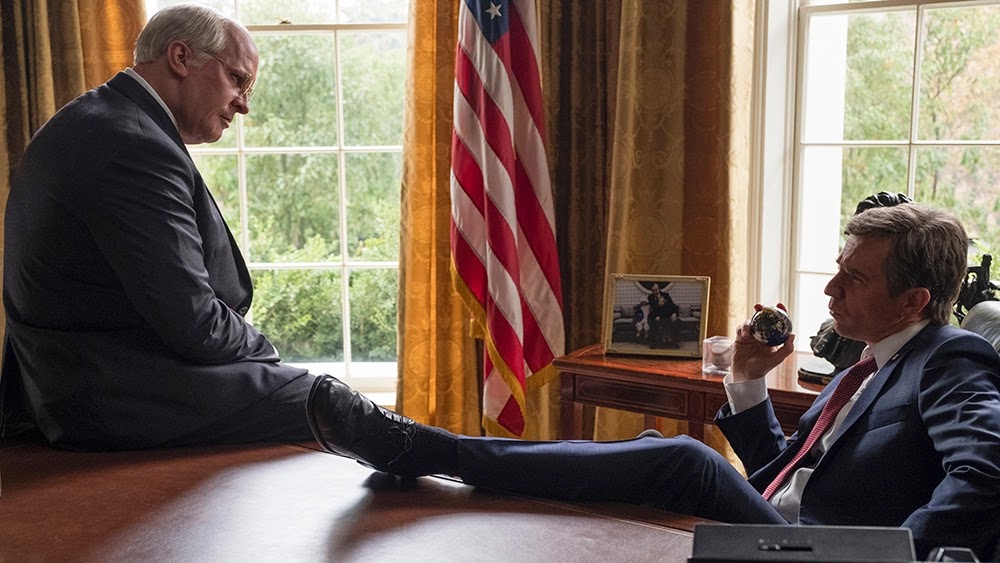
Vice (2018)

Christian Bale slaps on the make-up as Dick Cheney in Vice

Director: Adam McKay

Cast: Christian Bale (Dick Cheney), Amy Adams (Lynne Cheney), Steve Carell (Donald Rumsfield), Sam Rockwell (George W Bush), Alison Pill (Mary Cheney), Lily Rabe (Liz Cheney), Jesse Plemons (Kurt), Tyler Perry (Colin Powell), Justin Kirk (Scooter Libby), LisaGay Hamilton (Condoleezza Rice), Eddie Marsan (Paul Wolfowitz), Bill Camp (Gerald Ford), Don McManus (David Addington)

There is a film to be made about the turmoil of the Bush presidency. It’s not this film. Adam McKay’s flashy, clumsy, cartoonish, smug, tedious, overlong, arrogant and polemical film quickly outstays its welcome, drowning any legitimate ideas and theories it has under a wave of high-minded, angry shouting at the viewer, frequently mistaking flash and bombast for actual political insight and producing the sort of heavy-handed, angry political commentary that wouldn’t look out of place in a cheap student review. And flipping heck I’m on the liberal left!

Anyway, the film follows the career of Dick Cheney (Christian Bale under an impressive pile of make-up) from his early wash-out days. Told by his wife Lynne (Amy Adams) to buck his ideas up or lose her, Cheney becomes an intern for Congressman Donald Rumsfeld (Steve Carell), rising through the ranks due to his ruthless efficiency and loyalty, becoming Chief of Staff under Ford and Secretary of Defence under Bush. So he’s a natural choice for the inexperienced George W Bush (Sam Rockwell) to balance the presidential ticket. In return, though, Cheney wants control over a few areas – energy, foreign policy, defence etc. etc. – that the lazy Bush has no interest in overseeing. So a quiet, backroom politician changes the office of the Vice President to become the most powerful man in the world. Boo hiss.

McKay’s intention with this film is to reveal the hollowness, greed and utter lack of integrity in its subject. Well he never lets us forget this aim – I don’t think I’ve ever seen a film that so openly hated its lead character, which so completely refused to see any redeeming qualities in him whatsoever. Christ, even Downfall took a few minutes to show Hitler was generally kind to those who worked for him. The film is so unrelenting in its loathing for Cheney that it starts to feel like a being shouted out for over two hours by an “it’s the end of the world” fanatic on a street corner. This does not make for good entertainment.

The film has no subtlety whatsoever. Not for a single second does it even consider the remote possibility that anyone in the Republican party might, perhaps, just maybe, even if it was only some of the time, believe that they were doing something for a principled reason, even if it was a principle those on the left don’t agree with. Instead, all the characters are shown as selfish, greedy and corrupt, using ideology solely to gain power and then using power only to enrich themselves. It’s the sort of lazy political views that turn people off liberals – the idea that anyone who doesn’t share a liberal viewpoint is by definition evil. Some of us grew out of this kneejerk assumption that everyone who doesn’t agree with us is self-serving and cruel. Not McKay. 

On top of which, McKay’s film is made with the overt flash and brio that is the hallmark of the hack director using the tools of cinema with no understanding of their proper use. Wonky camerawork, cutting between timelines, throwing in newsreel footage, breaking the fourth wall, using strange camera angles, chucking in cameo actors to amusingly comment on events (Alfred Molina and Naomi Watts principally) and editing it with flash don’t make you a great director. They make you someone who has seen a lot of films and lot of techniques, but has no understanding of how to use them to craft an overall effect, instead thinking that if you throw all of them at the wall at once, you’ll be a master craftsman.

The film is full of studenty bits of invention that must have seemed oh-so-clever on paper in McKay’s script. Forty minutes in, with Cheney’s career looking over with the end of the Bush presidency, McKay starts running the credits – only to snap back into the film with the fateful phone call from Dubya. It’s clever and raises a quick chuckle, but doesn’t add anything to a sense of turning point in Cheney’s life. It’s followed by a clumsy metaphor of moments being like tea cups balanced on top of each other (inevitably these are later shown tumbling down) to represent how key moments of history build on each other. The real nadir is a moment when Dick and Lynne fall back into cod-Shakespearean dialogue in the bedroom as they discuss a possible vice presidency. ‘We don’t have Shakespeare’s psychologically insightful dialogue’ (I paraphrase) says the voiceover, before this skin-crawling hand-in-mouth sequence that shows McKay knows as much about Shakespeare as he does subtle political commentary.

Ah yes the voiceover. Perhaps not knowing how to marshall his childish political points in actual scenes and dialogue, McKay uses a voiceover from Jesse Plemons’ ground-forces marine to spell out as bluntly and crudely as possible the basic and trivial points it wants to make. The damn film already feels like being hectored by a crank, so why not make it feel even more like a polemic by having a character bitterly explain why everything is wicked and evil at you? The narration bores – and joins the general feeling of the rest of the film, that it goes on forever and ever and ever and never, ever, ever says something really interesting or revealing.

The performances are a mixed bag. Bale gives a decent turn as Cheney, capturing his mannerisms and conveying a sense of dark ambition, but it’s a role he could play standing on his head. Amy Adams turns Lynne into a Lady Macbeth, in a reheat of her performance from Paul Thomas Anderson’s The Master. Every other performance is a crude cartoon – Carell’s Rumsfeld a putty-faced joke, Sam Rockwell’s Bush (an impossibly generous Oscar nomination) a cartoonish buffoon. Everyone else coasts through it, patting themselves on the back.

There is an argument to be made that Cheney’s legacy is far from good, and it’s certain that we are paying a heavy price for interventions in Iraq. Many of the policies were less than savoury and left a less than positive benefit. But this film hammers these points home with all the charm of a ranting, drunk politics student who has read one book and watched a lot of YouTube videos. With McKay’s soulless, clumsy, look-at-me direction layered on top, this is a flat out terrible film. Save yourself what feels like much more than its two hour run time. In fact I’ll summarise it for you: CHENEY IS EVIL AND HORRIBLE AND HE (LITERALLY) HAS NO HEART. There you go. You don’t need to see it now.

Three Billboards Outside Ebbing, Missouri (2017)


Frances McDormand is looking for justice in Martin McDonagh’s razor sharp Three Billboards Outside Ebbing, Missouri

Director: Martin McDonagh

Cast: Frances McDormand (Mildred Hayes), Woody Harrelson (Sheriff Bill Willoughby), Sam Rockwell (Officer Jason Dixon), John Hawkes (Charlie Hayes), Peter Dinklage (James), Abbie Cornish (Anne Willoughby), Lucas Hedges (Robbie Hayes), Željko Ivanek (Sergeant Cedric Connolly), Caleb Landy Jones (Red Welby), Clarke Peters (Abercrombie), Samara Weaving (Penelope), Kerry Condon (Pamela), Darrell Britt-Gibson (Jerome), Amanda Warren (Denise), Kathryn Newton (Angela Hayes)

How do we deal with grief? What might it drive us to do? How does it make us behave – and what sort of person can it make us become? Martin McDonagh’s superbly scripted and directed, brilliantly acted film explores these themes in intriguing and compelling depth, consistently surprising the audience, not only with unexpected plot developments, but also wonderfully complex characters, whose personalities and decisions feel as distanced from convention as you can get.

Mildred Hayes (Frances McDormand) is a grieving mother, who feels let-down by the police and justice system as they have failed to locate and arrest the rapist who murdered her daughter. She hires three large billboards on a quiet road out of her town in Ebbing, and places on each of them a stark message: “Raped while dying”, “And still no arrests?” and “How come, Chief Willoughby?”. The billboards lead to Sherriff Bill Willoughby (Woody Harrelson) doing what he can to re-open the case – a case with no real evidence or leads. But the local community – many of whom adore Willoughby – are increasingly angered by the billboards, not least Willoughby’s semi-protégé, controversial red-neckish officer Joe Dixon (Sam Rockwell). The billboards lead to increasingly violent disagreement in the small community – and surprising allegiances developing.

McDonagh’s black comedy-drama balances immense sadness and searing rage with jet-black humour. McDonagh’s distinctive (and often foul-mouthed) style runs through the entire film. It’s a film that not only defies real categorisation, it also defies expectations. You would expect this film to be a commentary on a heart-rending grieving mother struggling against an indifferent, incompetent, racist (or all three) legal system. Perhaps even a film that will build towards a sort of “whodunit” murder mystery. All these expectations are constantly turned upon their head. Any obvious, traditional narrative development – and lord the film plays with this throughout its runtime – is diverted. You never know where the film is going – and you would certainly never have guessed its conclusion from the opening. 

Our expectations are immediately inverted when Woody Harrelson’s Sheriff meets with Frances McDormand’s mother in the opening moments. We expect him to be indifferent, annoyed or bitter – instead he’s liberal, concerned, sympathetic and hurt, while understanding why Mildred has done what she has done. Mildred, who we expect to be moved by, whose pain we expect to empathise with – instead she’s burning with fury and resentment, is amazingly confrontational and unyielding, and her ideas for investigating the crime border on the ruthlessly right-wing. Far from the predictable drama you might expect, you are thrown into something unusual – and real.

The storyline continues throughout in this vein – McDonagh never takes the expected route, but constantly pushes towards something unexpected. His trademark spikey dialogue throws you off balance – this is surely one of the few films where you’ll see a son affectionately call his mother “an old c**t”, or a happily married, middle-class couple address each other with a stunning, loving crudity. Pay-offs to plot developments are confidently unorthodox, and devoid of the expected sentimentality. The murder mystery element of the story is played with in a unique way: even the crime itself remains unexplored and unexplained, with only a few grim photos and a few hints dropped in dialogue as to what happened.

Instead, the film focuses on how grief and upheaval affects a community. All of the characters deal with a profound personal loss over the course of the story, and the impact of this on them leads not just to anger and rage, but also in some a profound reassessment of their life and choices. It’s a film that looks at the struggle we have to control the narratives of our own lives, to not be a victim but instead to give the things that have happened to us meaning and importance. Each character wants to find a way to make the things that have happen to them have meaning, and to find a sense of closure. It asks what can and can’t we forgive, and how far do we need to take actions to find a sense of closure. The film’s open-ended conclusion both points towards suggested answers to these questions, while at the same time offering few.

Frances McDormand gives a compelling performance in the lead role, as a domineering, strong-willed woman who resolutely refuses to be a victim, but wants revenge. Burning with a simmering rage at the world, and quick to respond with aggression and even violence, McDormand never allows the character to become fully sympathetic, but constantly challenges us. It’s the sharpest-edged grieving mother you’ll see on film, as full of prejudice and judgemental behaviour as she is pain and guilt. She attacks each scene like a bull in a china shop, and Mildred Hayes is a smart, ruthless woman who takes no prisoners.

The part was written especially for McDormand, as was that of Joe Dixon for Sam Rockwell. Rockwell, one of those eminently reliable supporting actors, gives an extraordinary powder-keg performance as an on-the-surface dumb, racist bully with poor impulse control, who is barely able to hide a vulnerable mummy’s-boy complex and a strangely touching sense of loyalty. Rockwell is dynamite in each scene, but constantly gives us interesting and varied line-readings, changing our perceptions of his character with each scene. 

To briefly address a controversy that has arisen about the film.  McDonagh has explored extremes like this in the past – his work in the past has humanised murderers, child-killers, terrorists and executioners, while not excusing their actions. The film has courted controversy by refusing to condemn Dixon’s racism, or for not ‘punishing’ the character enough, but it instead asks us to understand why Dixon has done or said the things he says – and to empathise with the pain, despair and anger in his own life. Is Dixon a racist? He’s a product of his time and place, I’d say he’s really just very angry, without understanding why, and without having the emotional intelligence to deal with it. He might have done unpleasant things – in the film doesn’t dodge this – but it asks us to question why he might have done this, rather than paint him as a demon.

Equally brilliant (perhaps one of his greatest performances) is Woody Harrelson as the surprisingly liberal, good-natured, patient and humane Sherriff Willoughby. Surely no one could expect the authority figure in a film of this nature to be the most sympathetic and likeable character in the film, the one with perhaps the most moving personal story. Harrelson is simply superb in the part, and his gentle, lingering regret hangs over the film.

But the whole cast is marvellous. Hawkes is a deeply troubled and pained man hiding it under anger and mid-life crisis. Dinklage is a sad eyed, lonely man. Cornish sports a slightly unusual accent but is warmly loving and very normal as Willoughby’s wife. Hedges is impressive as Mildred’s son, whose life is made increasingly difficult by his mother’s unwillingness to compromise. Landy Jones is excellent as the empathetic billboard manager, too good for this town. Peters brings a reassuring air of authority and dignity to the film. With the dialogue a gift for actors, there isn’t a weak performance in the film.

McDonagh’s fine, simple direction adds a Western-style sweep to the action and allows the story to speak for itself, working with the actors to bring out some brilliant, unique characterisations. It’s an intelligent and thought-provoking film, that constantly pushes you in unexpected directions and asks intriguing and challenging questions about profound issues, especially grief. Despite this, it’s a laugh-out-loud black comedy, that will move you and which has the courage to leave many of its plot issues open-ended and true-to-life. It asks questions, but it also acknowledges that life doesn’t give us answers. It also reminds us that we can never judge people from our initial impressions or expectations.