Tag: Sandra Bullock

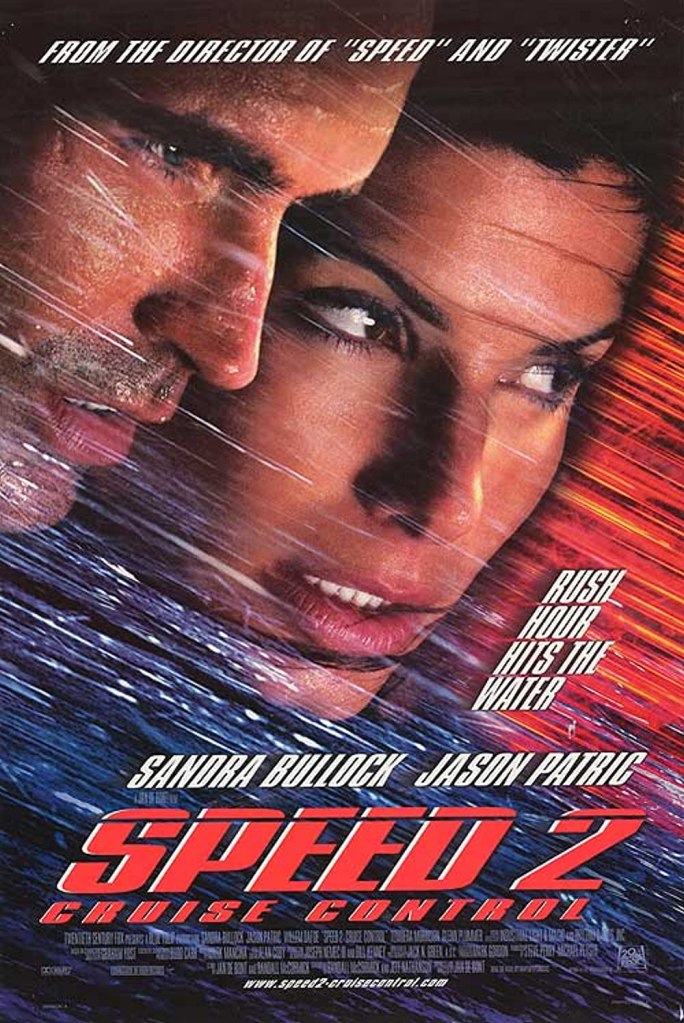
Speed 2: Cruise Control (1997)

Speed 2: Cruise Control (1997)

It seemed like such a good idea at the time… Keanu Reeves wisely passed on Speed 2 – so should you

Director: Jan de Bont

Cast: Sandra Bullock (Annie Porter), Jason Patric (Alex Shaw), Willem Dafoe (John Geiger), Temuera Morrison (Officer Juliano), Glenn Plummer (Maurice), Brian McCardie (Merced), Christine Firkins (Drew), Mike Hagerty (Harvey), Colleen Camp (Debbie), Lois Chiles (Celeste), Royale Watkins (Dante)
In 1996 Keanu Reeves turned down a huge salary for Speed 2. Everyone in Hollywood thought he was mad. On June 13th 1997, Speed 2 was released. On June 14th everyone thought Keanu Reeves was a genius. It’s quite something when one of your best ever career moves was not doing a movie. But God almighty Keanu was right: time has not been kind to Speed 2 – and even when it was released it was hailed as one of the worst sequels ever made. It’s like de Bont and co sold their souls for Speed and in 1997 the Devil came to collect.

Keanu’s Jack Traven is clumsily replaced by Jason Patric’s Alex Shaw – although the dialogue has clearly only had the mildest tweak as Shaw has inherited Traven’s job, friends, personality and girlfriend Annie (Sandra Bullock – elevated to top billing but even more of a damsel-in-distress than in the original). Alex and Annie are wrestling with making a long-term commitment – see what I mean about this script only be mildly tweaked? – when they decide to take an all-or-nothing cruise. Shame the cruise liner is hijacked by deranged computer programmer turned bomber Geiger (Willem Dafoe). With the boat powering through the water towards a collision on shore, can Alex save the day?

You’ve probably noticed the disparity between the title Speed and the setting: a slow-moving cruise liner. At one point, Alex asks how long it would take an oil tanker to move out of a collision course with the liner – “At least half hour – that’s not enough time!” he’s told. The very fact that a debate whether 30 minutes will be enough time in a flipping film about speed shows how far this sequel has fallen. How did anyone not notice this?

Pace is missing from the whole thing. The script is truly dreadful. Paper-thin characters populate the cruise liner, none of whom make even the slightest impression. At one point a character breaks an arm and then immediately shrugs off the injury to steer the ship. The script is crammed with deeply, desperately unfunny “comedy” beats. Bullock’s character seems to have transformed into a ditzy rom-com wisecracker – with a “hilarious” running joke that she’s a terrible driver (geddit!??!) – and, instead of the charming pluck she showed in the first film, is now an irritating egotist. She still fares better than poor Patric, who completely lacks the movie star charisma of Reeves and utterly fails to find anything that doesn’t feel like a low-rent McClane rip-off in his character.

It’s like de Bont forgot everything he knew about directing in the three years between the two films. If anything, this feels like a well below average effort from a novice director. The humour is dialled up with feeble sight gags and the film takes a turgid 45 minutes to really get going (most of which is given over to derivative romantic will-they-commit banter between Patric and Bullock).

de Bont basically flunks everything. He fails the basic directing test of confined-spaces thrillers like this by never making the geography clear to the viewer. I challenge anyone to really understand how characters get from A to C on this boat. The long introductions are supposed to establish these basics (see Die Hard for a masterclass in this), but here you haven’t got a clue about what’s where or why some locations are more risky than others. There is a spectacular lack of tension about the whole thing – it’s not really clear what Dafeo’s lip-smacking, giggling, leech-using (yes seriously) villain actually wants or how his scheme works, and the momentum of the boat towards unspecified destruction is (a) hard to see on the open water with no fixed point to compare the speed with and (b) even when we get that, not exactly adrenalin fuelled anyway.

de Bont’s comedic approach to much of the material might have worked if he had any sense of wit or comic timing in his direction. Or if Patric had been more comfortable with the wit the part requires. Bullock instead feels like she has to joke for all three of them, to disastrous effect. There are a couple of semi-comic sidekicks sprinkled among the supporting players, but none of them raises so much as a grin. The film can’t resist implausible in-jokes, like bringing back Glenn Plummer’s luckless character to have his boat swiped by Alex (they even leave in a mildly altered “what are you doing here?” line, as if they didn’t realise until shooting it that Keanu wasn’t going to be there).

It ends with a loud crash of a boat into the shore which cost tens of millions of dollars (at the time one of the most costly stunts ever) but just looks like a fake boat ripping through a load of backlot buildings. It’s a big, loud, dull, slow ending to a film that looks like it was made by people who had no idea what they were doing but enough power to ignore anyone who might have been able to point out what they were doing wrong. Speed 2 remains the worst sequel ever. Reeves went off to make The Matrix. Who’s the idiot?

Speed (1994)

Speed (1994)

Thrills never came faster (or as much on a bus) as they did in Speed one of the greatest action films of the 90s

Director: Jan de Bont

Cast: Keanu Reeves (Jack Traven), Dennis Hopper (Howard Payne), Sandra Bullock (Annie Porter), Jeff Daniels (Harry Temple), Joe Morton (Lt Herb McMahon), Alan Ruck (Doug Stephens), Glenn Plummer (Maurice), Beth Grant (Helen), Hawthorne James (Sam), Carlos Carrasco (Ortiz)

For most of the 90s, nearly every action film made was promoted as “Die Hard in/on an X”. We had determined, maverick heroes fighting alone against the odds on trains, planes, mountains, aircraft carriers, Alcatraz… You name it, it was Die Hard-ed. But which one was the best? It might just be Die Hard on a Bus – or rather Speed. A never-ending rush of propulsive excitement, Speed is one of the most entertaining films of the 90s. It’s possibly the best high-concept actioner ever made and if you don’t come out of it with a sort of daffy grin on your face there’s something wrong with you.

“Pop quiz, hotshot. There’s a bomb on a bus. Once the bus goes 50 miles an hour, the bomb is armed. If it drops below 50, it blows up. What do you do?” And there’s the whole set-up right there. Detective Jack Traven (Keanu Reeves) is the hotshot, who has already foiled mad bomber (Dennis Hopper’s scheme to hold a lift full of hostages for ransom. Now, for round 2, he’s got to try and keep a bus moving over 50mph through the streets of Los Angeles. Helping him out is passenger Annie Porter (Sandra Bullock) who takes the steering wheel, and best friend Detective Harry Temple (Jeff Daniels) who’s trying to find the bomber. It’s pedal to the metal all the way.

The fact that Speed is as good as it is, is a miracle. Graham Yost’s original script had the bus not going above 20mph (it was called Minimum Speed – and sounds hilariously like the Father Ted spoof where Dougal was trapped on a milk float that couldn’t go below 5mph). It was set entirely on the bus and ended with it exploding into the Hollywood sign. The hero was a wise-cracking smart-ass John McClane type, the bomber was revealed to be his friend Harry and one of the passengers was a cowardly lawyer who met a grizzly end. Die Hard director John McTiernan passed on this unpromising mess, recommending his regular cinematographer Jan de Bont instead.

De Bont – in what remains the only good movie he directed – helped restructure the film into three acts: hostages in a falling lift, hostages in a speeding bus, hostages in an out-of-control subway train. Joss Whedon rewrote the dialogue (Yost generously attributes “98.9% of the dialogue” to Whedon). The bomber became a separate character – with the insane energy of Dennis Hopper behind him. Bullock’s part became a combination love interest and comic sidekick. And Keanu Reeves’ Jack Traven, from being a McClane knock-off, turned into an earnest, dedicated, insanely brave and determined police-officer. And that lawyer was turned into Alan Ruck’s out-of-his-depth wide-eyed tourist. Boom: suddenly, we had a film that felt a little unique.

From there, what made it work was the propulsive pace. An opening act with a lift in peril, sets up the race against time, perilous stakes and dangerous risks (powered by an effective strings and drums soundtrack by Mark Mancina). There is a perfectly poised battle of wits between Hopper’s mastermind bomber and Reeves’ cop. Split second decisions and acts of chance have life-saving consequences. The dialogue is just the right side of cracking wise, with enough earnestness to temper the spice. The whole first act makes a hell of a movie in itself. Like the best of the Bond pre-credit sequences, you could go home happy at the end of it – and having never even seen a bus.

But hang about because that bus is well worth waiting for. More wildly exciting than a one-vehicle chase scene has any right to be, de Bont brilliantly cranks the tension up and never lets go. You’ll grip the edge of your seat as Traven races through town and down the freeway to try and get to the bus before it hits that ominous 50mph – even though, of course, we know there is no chance of him succeeding. Because, after all, if he did Reeves wouldn’t need to jump from a car to a bus at 50mph. de Bont – a skilled cinematographer – has the camera duck and weave among the traffic so hard you’ll feel the g-force throwing you back in your seat.

That’s before we even have the bus itself charging through traffic, with the reluctant Annie at the wheel. Throwing itself through crowded streets, around hair-pin bends and over huge gaps in unbuilt freeways, the entire film is basically an opportunity to gorge yourself on an unlikely vehicle doing gripping stunts at insane speeds. We also get the peril of Jack’s attempts to defuse the bomb on the run – when, inevitably, the fuel tank is damaged the film has the wit enough for Annie to say “what, you felt you needed another challenge?”. It’s, frankly, exciting, expertly shot and edited stuff.

And it also works because the characters are lightly – but very warmly – sketched. Reeves – at the time still best known as “Dude”-ing his way through Bill & Ted – shaved his hair to look more like Hollywood’s idea of an action hero. But what makes him stand out is the sincerity, politeness and rather endearing determination to save lives and serve his community. It’s the trademark Reeves sweetness that has made countless action films afterwards work – he’s never an alpha male or a ‘damn the consequences’ maverick. Bullock became an overnight mega-star with a performance overflowing with charm and wisecracking girl-next-door vulnerability. No one did lip-smacking villiany like Hopper. Daniels is great and the bus was crammed with reliable character actors who craft people we care about from crumbs.

That and the relentless excitement of almost every scene. I’ll agree that the third act resolution on the speeding subway train effectively just re-treads elements of the first two acts. Is it any wonder that Speed 2 was such a disaster when even the original can’t go through less than two hours without repeating itself? But you won’t care, because if the film doesn’t have you firmly in its grip by then, there must be something wrong with you.

De Bont never again even got near the outstanding quality of this ultimate thrill ride. But then, when you’ve touched action-thriller perfection, does that matter? Speed is the best high-concept, Die Hard rip-off ever made – so much so that you feel a bit churlish mentioning that as part of its DNA. Superbly paced, totally gripping and guaranteed to leave you with a big cheesy grin on your face, I’ve seen it more times than I can count and still I feel floored by it. You’ll believe a bus can fly.

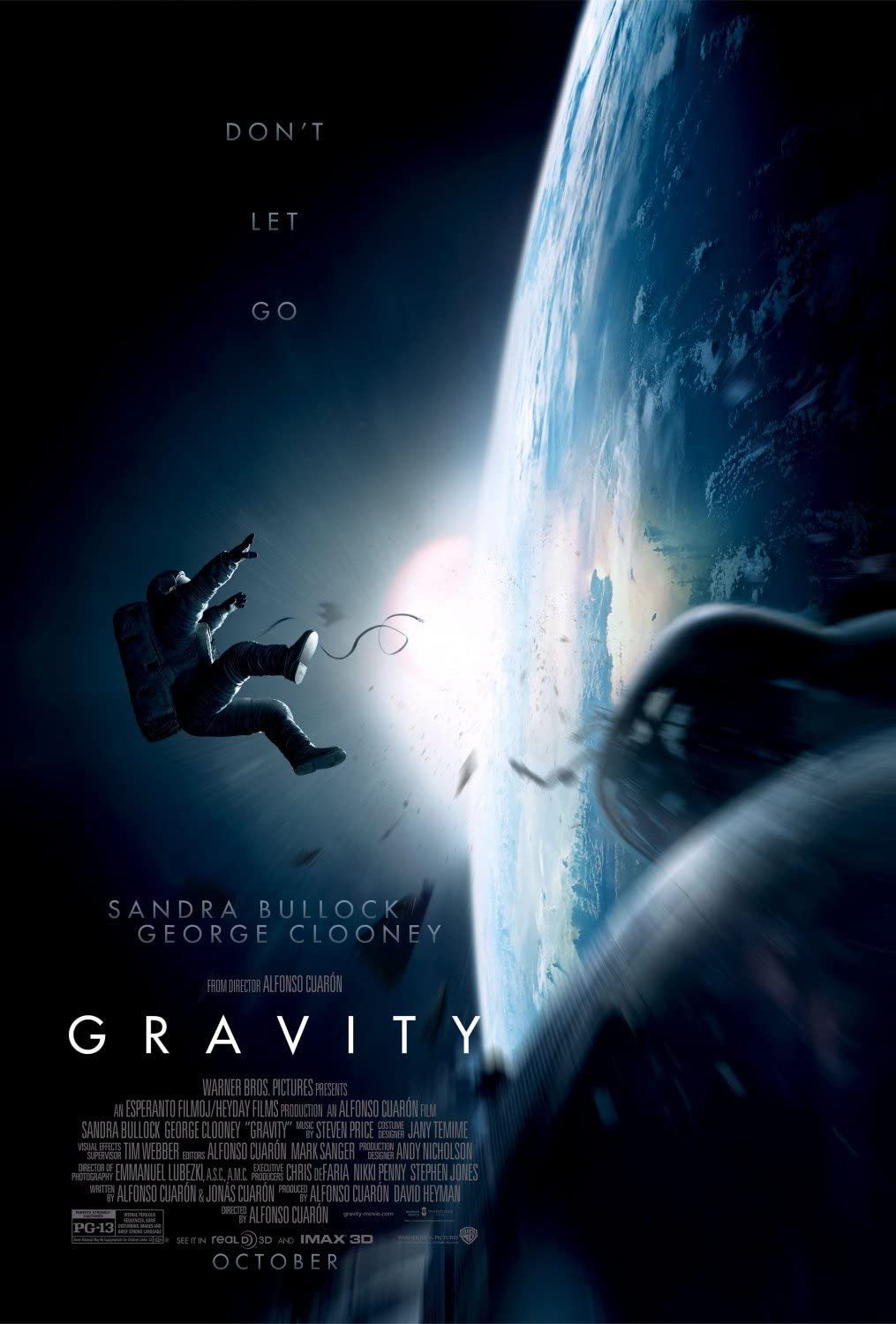
Gravity (2013)

Sandra Bullock is stranded in space in Gravity

Director: Alfonso Cuarón

Cast: Sandra Bullock (Ryan Stone), George Clooney (Matt Kowalski), Ed Harris (Voice of Mission Control)

It’s often been said space is mankind’s final frontier. It’s beautiful and awe-inspiring. But it’s also a terrible place, a void where the normal rules that dictate how our bodies operate are completely suspended. We can only breathe what we carry with us and the lack of any atmosphere or gravity means a few metres might as well be a million miles. It’s in many ways the perfect conditions for a survival film – which, at its heart, is what Gravity is.

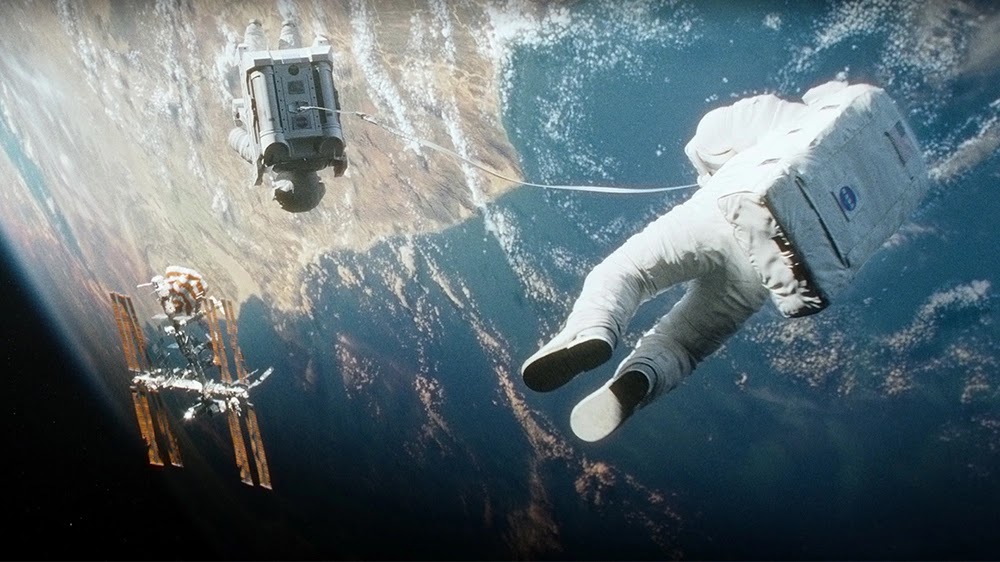
On a mission in space to repair the Hubble telescope, a collapsed satellite triggers a chain reaction of space debris hurtling in orbit at extreme velocities. Turned into a vast number of deadly bullets flying completing an orbit once every 90 minutes. This shrapnel destroys the mission, leaving specialist Dr Ryan Stone (Sandra Bullock) and mission commander Matt Kowalski (George Clooney) as the only survivors – and left with their only chance of return to Earth being to travel somehow to one of the other space stations in orbit and hitch a ride home on one of their escape pods.

Cuarón’s film is an engrossing and edge-of-the-seat 90 minute thrill ride, combined with a quietly meditative reflection on how our internal pain can make us drift through life. The film is titled Gravity but it’s there to draw attention to what is missing in the film. Not only the obvious – the lack of pull on her body – but also the lack of grounding in Stone herself. In mourning for the loss of a child, Stone has very little ties to earth or indeed anything. She is drifting through her life emotionally, much as she drifts through space itself. When asked why she likes it up in space, she replies “the silence”. She’s a woman untethered from life on earth in more ways than one.

So this is a film that is not just a survival but also a rebirth. We see Stone go through immense, dangerous moments of tension and terror, battling against all the odds to survive and return home. At the same time, the film carries an emotional weight because it’s also about Stone making a conscious decision to survive, to decide to re-engage with and commit to the world – to choose life if you like. Someone suffering from grief and depression as she does at the start of the film, may well have understandably embraced despair. Instead, the film is her coming to terms with the loss of her daughter, and a resolve to live her life for her.

All of this happens of course in the vast majesty of space, a vision beautifully captured by Cuarón. Filmed in an immersive style, with several long takes that don’t draw attention to themselves – a shot length that serves the purpose of the story not vice versa – and Cuarón is happy to use quicker cuts where needed. The camera follows the journey of Stone in epic and intimate detail, with shots exchanged between vast panamas of the astronauts as dots in space, to extreme close ups that bore into Stone’s eyes and capture her emotions from guilt, to hope, to terror. 

The long opening shot, that ducks and weaves around the weighless astronauts in space as they repair the Hubble telescope is of course a technical marvel, but it also brilliantly established the situation and the joy and fear of being an astronaut, of being allowing in the darkness and emptiness of space. It sets the scene perfectly from later shots that throw you into the adrenalin burning terror of spinning wildly in space with no resistance to slow you down or dodging debris moving at thousands of kilometres per second through space.

In fact the film is almost unbelievably tense – probably the most tense space film since Apollo 13 and in that we actually knew they were coming home alive (in a nice nod to that film, Ed Harris ‘reprises’ his role as mission controller in a voice-only cameo). With its brilliant immersive style, and the emotional bond it swiftly builds with the viewer, it means you will find you hardly draw breath along with the heroes. I’ve seen the film three times and each time after the first viewing I was sure it wouldn’t have the impact the first viewing had. But goddamn it, it works every time. The film is quick – at little under 90 mins – but you won’t feel it (in fact if anything you might be relieved).

Cuarón won the Oscar for direction, and the film is not just a load of flash and technical marvel (although it has a lot of both). It’s grounded in a very simple emotional story of survival, matched with an internal story (not overplayed) of resolving and dealing with grief. A lot of that works from the effectively unflashy performance from Sandra Bullock, who is very good in a part that requires not just physical but also emotional commitment. She’s well supported by George Clooney, who is perfect as the charming but calm and controlled mission commander who mentors her through the early stages of survival in space.

The film has a series of breathtaking set pieces – collapsing Hubbles, spinning astronauts in space, desperate space walks trying to grab any inch of objects to stop them drifting into space, collapsing space stations, burning up on re-entry – all of them shot with an elegance that marries technical excellence and dazzling camerawork and vision with a powerful story. A bag of tricks but one that is delivered with real heart.

The Blind Side (2009)

Sandra Bullock sets her own rules, campaigning for a better life for a young black man in The Blind Side

Director: John Lee Hancock

Cast: Sandra Bullock (Leigh Anne Tuohy), Tim McGraw (Sean Tuohy), Quinton Aaron (Michael Oher Tuohy), Jae Head (SJ Tuohy), Lily Collins (Collins Tuohy), Ray McKinnon (Coach Cotton), Kathy Bates (Miss Sue), Kim Dickens (Mrs Boswell)

Sandra Bullock won an Oscar for this sweet but unchallenging film, the sort of thing you could have expected to see on TV in the 1990s as a “movie of the week”. She plays Leigh Anne Tuohy, a determined and driven woman who adopts and mentors Michael Oher (Quinton Aaaron), a gentle giant of a teenager who has grown up in foster care and who struggles with shyness. Michael has been accepted by his school for his potential skill, but the school can’t cater for his requirements for a less traditional teaching model (he struggles with reading and confidence). All that changes as Leigh Anne pushes for Michael to get the support he needs and encourages him to excel as a footballer.

This is the sort of naked crowd pleaser that will leave a smile on your face – and probably escape your mind after a few days. It’s devoid of challenge and ticks every single box you would expect this kind of rags-to-riches story to cover – the initial struggle, the growth in confidence, the setback, the rebound, the happy ending. It’s all there – and packaged very well by Hancock (heck the film won a surprise nomination for Best Picture).

It’s powered above all by a forceful, larger-than-life performance by Bullock, the sort of “personality” part that the actor has always excelled at (there is no doubt she’s a hugely engaging performer and always has been). Bullock grips the film by the horns and rips through the expected scenes. She’s a glamourous rich woman who isn’t afraid to go toe-to-toe with the local gangsters! She’s wealthy but she’s still in touch with her roots! She’s beautiful but she wears the trousers in the household! It’s everything you would probably expect, and Bullock can more or less play it standing on her head. She brings all her expert comic timing and exuberance to bear and mixes it with an emotional concern and empathy rarely called for in the romcoms that have made up much of her career. In a weak year (Carey Mulligan in An Education was her only plausible rival for the little gold man) she took the prize.

It’s probably the only thing that The Blind Side will be remembered for, however much most people will enjoy it when watching it. Its story of good triumphant and a disadvantaged young man getting the chance to come to peace with himself and turn his life around, are bound to put a smile on most faces. There are lots of funny lines, and Leigh Anne is such a powerhouse she makes a chalk-and-cheese partnership with anyone she shares a scene with. But it’s basically not got a lot more to it than just showing you a rags-to-riches tale, with a few slight notes of racial tension thrown in (and then barely even explored in any depth). A more interesting film might have taken more note of the differences between the Tuohy’s background and the poverty of Michael’s childhood neighbourhood and the fate of the rest of the people who grew up (none of whom had his advantages). But this is more interested in presenting an unlikely, balsy, champion of the underdog promote his life.

I suppose you could say that this film tells the story of the troubled background and eventual success of a young black man and not only filters all this through the experience of a family of wealthy white people, but also suggests that the chances of a black man achieving this without the support of a white family was practically impossible. But, then this isn’t a film with a political agenda. It’s just trying to tell a charming, uplifting story. Take it on those terms and it’s enjoyable. Try to delve into it any deeper and it will puff up and disappear in a burst of feelgood warmth. But the only reason it will be remembered – the only reason why it even remotely stands out – is as the film Sandra Bullock won an Oscar for.

The Prince of Egypt (1998)

Animated DeMille epics in the rather brilliant The Prince of Egypt

Director: Brenda Chapman, Steve Hickner, Simon Wells

Cast: Val Kilmer (Moses), Ralph Fiennes (Ramesses II), Michelle Pfeiffer (Tzipporah), Sandra Bullock (Miriam), Jeff Goldblum (Aaron), Danny Glover (Jethro), Patrick Stewart (Pharaoh Seti), Helen Mirren (Queen Tuya), Steve Martin (Hotep), Martin Short (Huy), Ofra Haza (Yocheved)

When Dreamworks Studio was put together by three Hollywood mega hotshots (Katzenberg, Spielberg and David Geffen), Jeffrey Katzenberg, former head of Disney, finally got the chance to make his animated version of The Ten Commandments. The Prince of Egypt was the first project under the Dreamworks animation label – and it was intended to beat Disney at its own game. It succeeded – so well that many people think it actually is a Disney film. Is that a good thing?

Anyway, the story should be familiar. In Ancient Egypt, Moses (Val Kilmer), the child of Jewish slaves, is adopted by Pharaoh (Patrick Stewart) as a baby after being found in the bulrushes. Moses grows up as brother to Ramesses (Ralph Fiennes) the future Pharaoh – until the shock of finding out his heritage leads him to flee Egypt. But an encounter with the burning bush (voiced again by Kilmer) gives him a new mission – back to Egypt to demand of Ramesses “Let My People Go”. Will he succeed? Well: There Can Be Miracles (When You Believe).

It helps you to believe in miracles when a film looks as gorgeous as this one does. The animation is amazing, not just because of its quality and richness, but the imagination of its images. From the framing of Pharaoh and later Rameses around the Egyptian architecture around them, to an extraordinary dynamic shot of Moses throwing his sandals from the room when encountering the burning bush, to the haunting interpretation of the killing of the firstborn, it’s brilliant. 

It doesn’t stop there either, with the final parting of the Red Sea awe-inspiring in its scale. But the film does equally beautiful work with the smaller, more intimate moments: each character feels real and lived in, and the film perfectly captures smaller moments of affection, love and hurt with genuine emotional force. It’s a terrifically well-made film.

And of course it has a classic story – it’s literally stood the test of time. So imaginative are the visuals – and so impressive is its scope and scale – that it almost dwarfs the DeMille style it’s quietly apeing. In fact, I’d worry whether it is a film that will have greater appeal to movie-lovers and parents than perhaps it does to children. There isn’t much in the way of humour – even the film’s nominal comic characters, a pair of cynical Egyptian priests (and near con artists) voiced by Steve Martin and Martin Short, are on the side of the oppressive baddies. There are a few decent songs in there – I rather like the Les Miserables style oomph of “Deliver Us” – and the film makes great use of the beautiful voice of the late Israeli singer Ofra Haza. But there is no getting around that this is a serious piece of film-making, with nary a comic camel in sight.

But this is no bad thing at all, and I think it stands The Prince of Egypt in good stead as it’s a film you’ll like more the older and more mature you are watching it. Not least the wonderfully complex relationship it explores between Moses and Ramesses – these two wild young men start as carefree kids (the first thing we see them do is smash up a temple building site in the film’s most cartoonish sequence, a sort of Wacky Races chariot drag race), and each become dramatically changed by responsibilities. Moses ascends to a higher plane of responsibility and humanity – but Ramesses finds himself forced into defending to the death a system of government he seemed at best disinterested in as a young man.

The film actually carries a great deal of sympathy for Ramesses. It’s in many ways a tragedy of the brother relationship between these two princes of Egypt getting shattered by events. But Ramesses is a lonely, almost needy figure, who needs Moses’ affection and respect. Ralph Fiennes mines a lot of vulnerability for this man struggling to fill his father’s shoes, who just wants Moses to chuck this whole prophet business in and go back to being his only friend. Ramesses becomes a complex, vulnerable and rather sad man – unable to deal with the pressure of his role and desperate to revitalise a lost connection with Moses, the hatred he eventually feels for his former brother born almost exclusively from rejection. 

Moses isn’t quite as interesting a character – he’s more of a waster who becomes a stand-up guy – but the film successfully builds an aura about him. It struggles a bit more with those Old Testament morals: we are meant to condemn Pharaoh’s slaughter of the Jewish firstborn that opens the film, but God’s massacring of the the Egyptian firstborn (for all Moses’ discomfort with it) is presented as being primarily the fault of the Egyptians’ stubbornness.

But then that steers us into theological territory, which no animated epic for kids can really manage to set new ground with. Instead, let’s focus on the many things the film does right. First and foremost that striking visual imagery and beautiful animation, and the depth and shading it gives to the characters. The all-star cast do extremely well – even Jeff Goldblum is fairly restrained – and it’s got some great songs. It deserves to be shown as often as The Ten Commandments on the television.

Crash (2005)

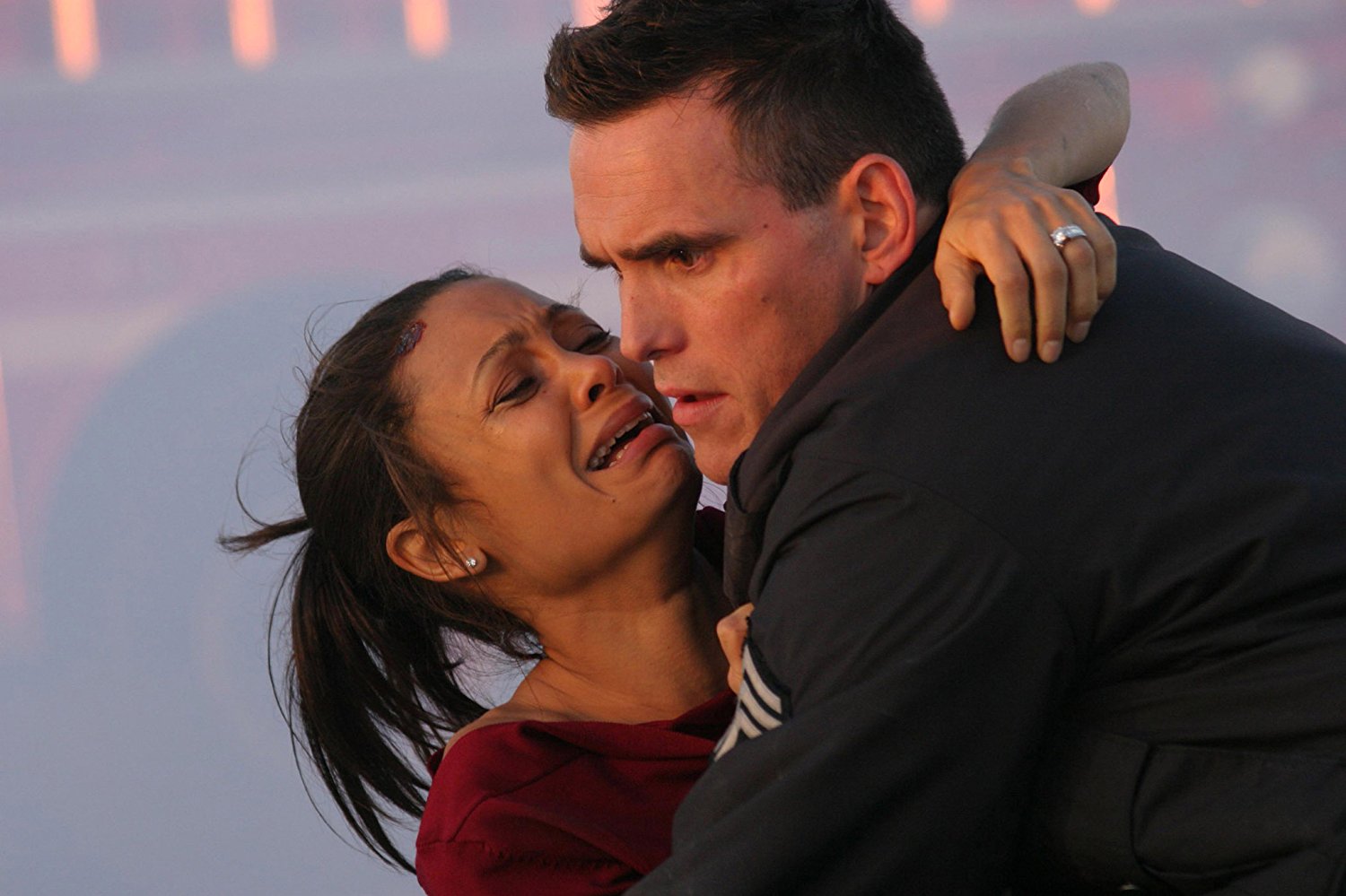
Matt Dillon and Thandie Newton deal with racism in tedious best picture disaster Crash

Director: Paul Haggis

Cast: Sanda Bullock (Jean Cabot), Don Cheadle (Detective Graham Walters), Matt Dillon (Sgt John Ryan), Jennifer Esposito (Ria), Brendan Fraser (DA Rick Cabot), Terrence Howard (Cameron Thayer), Ludacris (Anthony), Thandie Newton (Christine Thayer), Michael Peña (Daniel Ruiz), Ryan Phillippe (Officer Tom Hansen), Larenz Tate (Peter), Shaun Toub (Farhad), Bahar Soomekh (Dorri), William Fichtner (Flanagan), Keith David (Lt Dixon), Bruce Kirby (‘Pop’ Ryan), Beverly Todd (Mrs Waters)

If you had to name the least popular Best Picture winner, there is a fair chance the name you’d come up with Crash. Crash was a surprise winner in 2005, beating out Ang Lee’s tender gay-cowboy classic Brokeback Mountain. Crash was a little independent movie, filmed in and around Los Angeles, that seemed to be tackling big themes – racism, humanity, fate, blah blah blah. To be fair, Paul Haggis’ film is giving it a go. But what you get is just hugely, well, average. It’s not a film that has aged well, and it’s not a film that has enough depth to it to overcome the general cynicism towards it.

The film follows a kaleidoscope of events in Los Angeles, each of which revolves around clashes between different races, with stories that are shown to interlink. So we have an ambitious DA (a miscast Brendan Fraser) and his wife (a pretty good Sandra Bullock) carjacked by two gangbangers (Ludacris and Larenz Tate). A TV director (Terrence Howard) and his wife (Thandie Newton) are pulled over then assaulted by a bigoted cop (Matt Dillon), despite the fears of his nervous liberal partner (Ryan Phillippe). A locksmith (Michael Peña) deals with racial suspicions from the DA’s wife, and from a Persian shop owner (Shaun Toub), who is himself the victim of racial abuse. A cop (Don Cheadle) and his partner (Jennifer Esposito) investigate two undercover cops who shot each other, monitored by the DA. And so it goes on.

Crash could be pretty much relabelled Racism Actually. In fact, it shares a lot of traits with Richard Curtis’ loosely assembled series of shaggy dog stories, feeling as they do like off-cuts and half assembled scraps of ideas from Haggis’ writing desk. But what he ends up wheeling out here is a manipulative, cliché-filled pile of earnest claptrap, in which basically a series of unpleasant characters behave unpleasantly towards each other. You can see why the ageing academy might have warmed to it – it’s a film that looks at racism, by exploring how, gosh darn it don’t you know “everybody is a little bit racist” sometimes. 

On top of that, Haggis’ film relies overwhelmingly on coincidence and the tired “we are all linked together” clichés. It wants to try and make big statements about the prejudices and victimisation that we all suffer in our different ways – but it delivers them in such a clumsy and manipulative way your nose ends bruised by the number of points hit on it. For starters, do people really throw around racial slurs as readily and immediately as the characters in this film do? Surely the real danger of racism is not the people who shout racist nicknames and get angry immediately – isn’t the real danger of racism its incipient nature, the quiet whispers behind closed doors or the barriers gently but firmly put in the way? 

This film turns racism into something loud, obvious and crass. And then it produces a film that does the same thing. The script is full of scenes which never feel real, – every conversation in the piece turns into a clumsy series of “we all hold prejudiced views” or “I’ve got more depths than you think” statements that always feel fake. Not once do the characters sound like real people. It’s the sort of clumsy, crappy, thuddingly worthy film-making that ostentatiously believes itself to be great film-making, when in fact it’s as average as cornflakes.

Even the more effective moments only work because they are so manipulative: the confrontation at gunpoint between the locksmith and shop owner, and the rescue of Thandie Newton from a burning car by Matt Dillon’s brutish cop. When they are happening, these moments are strangely gripping – but literally the instant they finish, you are struck by how Haggis has filmed them in such an operatic, balls-to-the-wall way you would have to work pretty hard not to be swept up in them. Effective manipulation is still manipulation – and manipulation really shouldn’t be this easy to spot. Certainly not within seconds of it happening.

But nearly all the characters are so simple and cookie-cutter that, despite the quality of the acting, you never connect with them. It doesn’t help that Haggis’ unsubtle screenplay is desperate to point up “surprise” personality twists – the “you think they are like this, but look: here they behaving totally differently. People are more complex than you think!” card is played so often it starts getting worn out. All of this serves to boil down to a trite message that when we try and get along with each other everything eventually might work its way out. Oh please, give me a break.

The acting, though, is actually pretty good. Sure Brenda Fraser is horribly miscast, and Don Cheadle is stuck with a terrifically boring cop who has to hold some of the narrative threads together, but there are plenty of decent performances. Sandra Bullock gets to show she has some solid dramatic chops, Thandie Newton is a pretty much a revelation as a seemingly shrewish wife, Terrence Howard mines a lot out of a clichéd middle-class black man going through a mid-life crisis. Ludacris and Lorenz Tate are excellent as the two gangbangers, although their dialogue and actions never feel real at all. Michael Peña is very endearing as just about the only outright likeable character. Dillon got a lot of praise (and an Oscar nomination) as the racist cop and he is fine (though dozens of actors could do what he does here), even though the character is thin as paper and relies on having the two of the best impact scenes.

Dillon’s character is a good example of the film’s moral shallowness. Perhaps it’s the #MeToo era, but do I think that Dillon’s clearly racist manner and his sexual assault on Newton’s character is cancelled out because he saves her from a fire and treats his dying Dad well? I mean, what is this sort of laziness? The film says “ah ha look viewer you thought he was a bad guy, but look at his depth”. So forget the sexual assault because he saved his victim’s life the next day. Wow. Don’t get me started on the contrived weighting of the scales the film puts together so that our opinion is shifted on Phillipe’s good cop. The film is full of this sort of clumsy, ham-fisted, chin stoking, liberal garbage that feels overwhelmingly patronising.

But then this is a film that doesn’t trust you to think. It is the ultimate middle-class, hand-wringing exercise in “oh if only we could fix the world through good things” nonsense. It shouts and shouts and shouts at you about racism, but never really tells you anything other than that bad-tempered, ignorant people will do bad-tempered ignorant things. It smugly says “of course we are better, but guess what viewer, this sort of thing does happen”. Only of course the script is so thin, the general film-making so thuddingly average and unsubtle, the story and morality so shallow, that its preachy hectoring only really serves to turn you off.  Anyone with a brain will get the message within the first 10 minutes. The film takes another hour and a half to catch up with you. The worst Best Picture winner ever? It’s gotta be up there.